
Christmas at Gaylord Palms 2018 review

Christmas has arrived at Gaylord Palms in Kissimmee near Disney World! The Gaylord resorts are well-known for their world class dining, entertainment, and luxurious rooms, Gaylord Palms presents its annual ICE event featuring the endearing Christmas classic A Christmas Story. In addition to the life-size exquisitely designed ice sculptures, Christmas at Gaylord Palms also offers guests fantastic shows, games, food, Christmas-themed drinks at the bar, a Cirque show, and gorgeous dancing lights display in the main atrium. There is no shortage of events and offerings to uplift your holiday spirits! Fortunately, I had the privilege of attending the media event for this highly anticipated celebration, and I am looking forward to sharing my experience with you in hopes that you make time for this most festive event to brighten all your holidays this season.

When attending an event at the Gaylord Palms, the best way to begin your evening is with a dining reservation at one of the award-winning restaurants. My friend Paula and I made reservations at Old Hickory Steakhouse to start Christmas at Gaylord Palms. I cannot recommend this restaurant enough. From the exemplary service to the steak grilled to medium rare perfection, this dining experience will enhance your Christmas at Gaylord Palms exponentially. Our server recommended bold pinot noir to pair with our center cut fillets along with creamy mashed potatoes and grilled mushrooms. With three atrium designs at the resort, you will get the sensation of dining outdoors in the cool air without the bugs and humidity. Some tips for planning you dining experience at Old Hickory: the meat and seafood sections are sold without accompanying side dishes, but you have the option to select family-style sides including many options from potatoes to mushrooms to vegetables and more. Whether you select a boldly seasoned steak or mouthwatering seafood, you will greatly enjoy and vividly remember your time at Old Hickory.

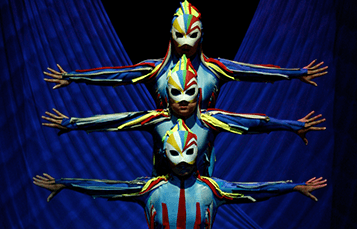
After dinner, we headed for the St. Augustine atrium to take in the Cirque show and dancing lights! Unfortunately, I misread the schedule and thought that checkin was from 7-8pm, so we missed Cirque. But on the plus side, that gives me incentive to return this season to enjoy the show. Ever since Disney pulled the plug on the Osborne Family Spectacle of Dancing Lights in exchange for shallow map projection shows at Hollywood Studios, I make sure to visit all the dancing light shows in the area because that feeling of being looking at or being surrounded by choreographed displays of thousands or millions of lights cannot be replaced. There is a high degree of immersion, dimension that cannot be replicated by the projection of light onto a building. There are several different musical numbers for the lights, and each one takes full advantage of the space and creates Christmas splendor with each and every twinkle of each and every light dancing during the show.

In the lower level of the convention center, the Alpine Village awaits you! While the Cirque and dancing light shows are complimentary with your evening, the majority of the offerings for Christmas at Gaylord Palms are located in the Alpine Village, which requires additional admission. In this wintery village, you’ll find snow tubing, Santa’s snow throw, Mrs. Claus, the Sweet Shoppe, Christmas market, and the flagship attraction ICE featuring A Christmas Story. Because this was the media event, Gaylord Palms provided us with quite the spread of handcrafted sweets from the artisan chefs at the resort. After sampling the delicious treats that the resort so magnanimously provided for our enjoyment, we decided to try our hand at the snowball throwing midway game! Until I held a snowball in my hand, I would not have believed that was possible given the village is not kept below freezing. But sure enough, I received a bucket of snowballs to throw at the targets. I didn’t hit a’one. Perhaps you will have better luck!

Next to Santa’s Snow Throw is the snow tubing attraction. Up until now, no one had ventured down the slope. So, I decided to break the ice, snow to speak ;). Here’s a tip, in case the ride greeter neglects to tell you to pick up a tube on your way through the queue, pick up one! I literally walked past the greeter twice and they never told me to pickup a tube and neither did they hand one to me. So, thank you ride attendants at the top of the slope for accommodating me by giving me one. Once I slid down the snowy slope, then many more guests flocked over to the snow tubes! For those of us who live in Florida, this is a rare opportunity to have some snowy fun indoors! It is so much fun! So don’t miss out on the slopes in Alpine Village.

Next to the slopes is the Italian ice stand, but my friend Paula and I were still stuffed from dinner and the holiday treats that we had to turn down that offering. I will make it a point to get one when I return. Near the entrance to ICE and close to the Marketplace are Mrs. Claus house and the Sweet Shoppe. Both of these houses offer shows! With Mrs. Claus show being an hour long, we did not have time to enjoy that one, so it’s another offering I want to experience when I return. The show in the Sweet Shoppe wasn’t starting again for over a half hour, so we took this time to experience that movie that plays for 24-48hrs every year on a TV channel. A Christmas Story!.

Bring gloves! I always encourage guests to bring gloves because it is incredibly cold. However, as much as I preached to my friend to bring gloves, guess what I didn’t do? Bring gloves. Haha. Pretty much, my hands were completely numb by the time we passed THE END. When I say A Christmas Story, you likely have several individual scenes that instantly come to mind. Fortunately for you, each of those scenes are captured by the artisan ice sculptors. Only Hemingway could find the words to describe the beauty of the experience. Prior to entering the frigid exhibit, you get to learn about how the history of ice sculpting and how the team of sculptors create the amazing sculptures that successfully translate the iconic movie to live experience. Just before walking down the ramp into the arctic temperatures, you will be given a parka; however, I also encourage long pants and warm socks. From the moment you walk into the first room, you will be awestruck by the sheer size and beauty of the ice-tastic creations.  These are not just your average ice sculptures that you may find at weddings, galas, or even theme parks; these are quite literally life size representations of entire scenes (characters, setting props, and all) from A Christmas Story. And not just white or clear ice, these sculptures are in living color! As I walked through the flagship attraction at ICE, I was amazed at how effectively the movie was captured. I really did feel that I was watching the movie from start to finish. Since it’s a movie that also has some memorable lines of dialogue, there are signs with those quotable moments. Returning as the final display on the tour during the experience is the absolutely stunning ice nativity. I’ve seen a lot of still nativities in my day, but this one is always the most beautiful! You may even find yourself singing O Holy Night along with the background music.

Closing out our evening, Paula and I took our seats in the Sweets Shoppe for the live comedy show featuring a hilarious crossover between Babes in Toyland and The Nutcracker as told by two incredibly funny performers as the Sugarplum Fairy and Nutcracker. Highly interactive, I was reminded of the line from a Rocky Horror Picture Show live shadow cast when the live cast yells “this movie sucks without audience partici–” and Dr. Frank responds with “–pation.” Because the show itself is funny, but the entertainment factor is increased ten fold by engaging the performers and playing along. Although you can sometimes tell that an actor is or isn’t having fun in a movie, picking up on how much an actor in a live production is far more noticeable. And these two were having a blast! The Sugarplum Fairy and Nutcracker were genuinely interested in my enjoyment and truly displayed enthusiasm for their show. Do not miss this show. It’s only 20mins, and I imagine it will have multiple showings each evening. I love the addition of a comedy show to Christmas at Gaylord Palms! So much is stunning, inspirational, heartwarming, and more; but you know what, sometimes you just want to laugh too! And you will laugh a lot during this performance! The actors even asked me if I wanted to take a pic with them on stage. How incredibly nice of them! Do yourself a favor, and make time for the show. Oh yeah, don’t forget to say hi to the gingerbread man out front too.

Opening Friday, November 16th, Christmas at Gaylord Palms featuring ICE should definitely be on your list of events to attend this year. If you dine at one of the restaurants, your parking will be validated (and parking is not cheap). You may be familiar with A Christmas Story but you’ve never seen it like this.

Merry Christmas!

Ryan is a screenwriting professor at the University of Tampa and works in creative services in live themed entertainment. He’s also published prolifically on theme parks and produced a peer-reviewed study. If you like this article, check out the others and FOLLOW this blog!

Follow him!

Twitter: RLTerry1

Instagram: RL_Terry
Thrillz (theme parks): Thrillz.co

Theme Park or IP Park?

With all the recent, present, and future changes coming to the legacy theme parks of Central Florida and Southern California, are we witnessing the next evolution in theme parks? I’ve been tossing around the idea of exploring this trend, and those same feelings were echoed recently on the No Midnight Podcast (a Disney-centric podcast that unpacks history and discusses current happenings in the parks). After listening to the episode, it’s become clear that this anecdotal observation I’ve made is shared by others. As I love exploring the history of the parks from a scholarly perspective (as evident in my past articles and book), this is a topic that deserves consideration.

In order to truly explore this trend that some of us in the theme park blog and podcast communities have observed, it’s important to take a brief look at the development of the very concept of a theme park. And before you think that Disneyland was the first theme park concept, think again. Contrary to popular belief, Universal Studios Hollywood was the first to pioneer the idea of a theme park. More than 40 years before Disneyland was opened, the founder of Universal Studios (studio) German immigrant Carl Laemmle, opened his 250-acre-movie-making ranch, just north of Los Angeles, to the public for a mere $0.25. More than side income for the trailblazing studio, most well-known for its pioneering of the horror film, the original studio tour began on the outdoor backlot in March 1915. Laemmle desired to immerse guests into the magic behind the screen. The happy marriage, however, was not to last very long. Upon the introduction of cinema sound, Laemmle was forced to close the studio “park” to the not-so-quiet guests in order to facilitate appropriate recording sound for the motion pictures. The Universal Studios tour would remain closed to the general public for over 30 years. But, in 1961, the studio would once again open its gates to a new generation of movie lovers through the still world famous studio tram tour.

Combining inspiration from what Laemmle began 40 years prior, visionary Walt Disney made the decision to create an entire land that would immerse guests into the world (or land) of Disney. More than an amusement park, Walt Disney set out to create a multi-dimensional experience complete with continuous coherent storytelling from the architecture to the attractions and restaurants themselves. Even before the park would open its doors in 1955, Walt Disney produced a television special that sought to energize enthusiasm for the groundbreaking concept that took the stories, settings, and characters from the screen and translated them to exist in the real world. Disneyland was so popular that Walt began to develop an idea that would forever change the theme park business forever. The “Florida Project,” as it was called, would eventually become Walt Disney World. Sadly, Walt passed away before the park would open, but Walt Disney World is the manifestation of Walt’s ultimate dream. Disneyland was first and is the park that Walt built, but Disney World is truly what Walt envisioned when he dreamt his innovative idea inspired by his imagination.

In the mid 20th century, Universal Studios Hollywood, Knott’s Berry Farm, Busch Gardens parks, SeaWorld parks, and later in the 20th century Universal Studios Florida were all opened to eager crowds! Each of these parks had a distinct theme, a specific story into which guests were immersed. With the cases of Busch Gardens and SeaWorld parks, the storytelling was also accompanied by a conservation message. Attractions were built that matched well with the theme of the respective land. It’s important to note that, for the most part, there was significant thought put into an attraction fitting into the design (architecture) of the land in order to never take the park guest out of the overarching theme of the area FIRST and the whether or not a particular intellectual property (IP) works in that land second. Make the attraction fit the theme, not retheme the area to match the attraction. Whereas I am oversimplifying this practice or concept, the point is to get you thinking of how theme parks processed new attractions for the longest time; that is, until Universal Studios Islands of Adventure redefined themed entertainment.

Entire volumes of articles could be written on how Islands of Adventure (IOA) redefined themed entertainment; but for the sake of argument, the impact will be streamlined. Prior to IOA, theme parks, including Disney and Universal, were largely built with theme first and properties second. Now, themed entertainment designers are busy taking major IPs, placing them in the park, and then rethemeing around it. Each land or area is themed to the attraction versus the attraction designed to fit the theme of the park area. But in doing so, does this negate the very concept of a theme park, traditionally speaking? What happens when the movie is no longer relevant?

Unlike the other theme parks, at the time, Universal’s IoA was different in that it took popular IPs with entire universes (or worlds) if you will, and built vast lands in which there are attractions based on the movies/books represented. Prior to this, the closest examples were Disney-MGM Studios and Universal Studios. But even with the two aforementioned examples, they weren’t concerned with lands of the movies, but integrating the movie properties into the backlot look and feel of the park. With Disney-MGM (now Hollywood Studios, until it changes again) and Universal Studios Florida, the theme was a combination of Hollywood and the magic of motion pictures. So individual movie or TV properties were included as part of the them park experience, and guests were prevued to studio audience opportunities or the ability to audition to be on a show (think Nickelodeon Studios). The theme was “the movies” or “Hollywood.” From the architecture, to street names, to real-life locations, both of these parks that incorporated different movies or TV shows into the layout and design. The location was largely Hollywood, but could include New York City, San Francisco, a canyon in Arizona, or Amity Island. The attractions were built into the existing landscape versus selecting a property then changing the environment to match the IP. As these “movie parks” have been moving away from the magic of moviemaking to more immersive experiential environments, the “theme” has been changing rapidly. One could draw the conclusion that the “theme” of these parks is now an anti-theme. An anti-theme in that there are a variety of experiences that do not exist within a themed landscape that connects them together.

The theme of Islands of Adventure was just that, islands of adventure. Each island around the lagoon was a different land inspired by a different IP. Personally, Jurassic Park, Harry Potter, and Seuss Landing are my favorite islands! Arguably, Jurassic Park was the centerpiece of the then-innovative concept as it was the biggest fandom represented. Today, that crown rests on the Wizarding World of Harry Potter (since 2010). Not only was IoA the first to pioneer this concept of individual themes within the park, it was the first to create an immersive world in extreme detail. And it was the Wizarding World of Harry Potter that completely changed the theme park game, rewrote the rules, and began the trend away from “theme” parks to IP parks. Instead of a collection of attractions around a shared theme (or collection of themes), now parks are trending toward a park that is a collection of disconnected IPs. While Magic Kingdom has the different themed lands, the overall theme of magic kingdom was largely fantasy and adventure not connected to any specific singular IP. And in each of the lands, there were attractions that fit the theme of the lands, some of which had movie counterparts. But the focus was not on the individual movies as much as it was the idea of escaping to, being transported to a world of high flying adventure or whimsical fantasy.

Ever since the Wizarding World of Harry Potter opened, Disney and Universal parks (mainly) but also joined by Movie Park Germany and MotionGate Dubai are principally concerned with attaching movie and literary IPs to the park for the guests. Reminiscent of the space race between the US and Russia of the mid 20th century, the race for theme parks is for IPs for the parks. This pattern continues into the film distribution and production company interests for new content–content that will lend itself to successful translation from screen to park. It’s more important than ever for media conglomerates and umbrella companies that have theme park and distribution interests to know what movies or entire franchises make for viable theme park lands and attractions. I cover this very topic in my study and book On the Convergence of Cinema and Theme Parks, which you can buy an Amazon! Just because a movie or entire franchise is popular, does not mean that it is material for a theme park. For more on that topic, checkout the book.

While building entire lands based upon a popularly established IP to create an immersive environment looks and sounds like a great idea to draw the enthusiastic crowds and significantly increase revenue, there is a darker side to this that will not be realized or observed for years down the road. With the more traditional theme park design, attractions can be changed out of the show buildings far more easily than having to retheme and rebuild an entire land. But why would thinking about the ability to change a land be important? Because it is not unreasonable to arrive at the conclusion that a particular IP may not continue to be popular after an IP has had its run. Although not as big as Star Wars or Harry Potter, the former A Bug’s Life is an example of the lengths a park has to go to to remove and rebuild. Razing to the ground and rebuilding is always more costly than building a’fresh. But this does not seem to detour the parks from moving from the traditional theme park concept to an IP park. A collection of IPs that a company either owns or licenses. In the concept of a collection of IPs, is there actually an over all theme? There appears to be more evidence to suggest that theme, in the traditional sense, is lost when focusing on attaching IPs.

With the continuing trend to focus on IP acquisition instead of original themes, it would appear that the traditional theme park may be dying in exchange for IP park. Take Disney’s Hollywood Studios for example. The theme was “Hollywood” or movie-making. What is the theme now? Well, to be honest, the answer that query is vague at best. You’ve Star Wars land on one side of the park, Toy Story in the middle, and a little bit of Hollywood in the front. No consistency in theme. With the Twilight Zone Tower of Terror and Aerosmith being licensed from CBS (Sony), and the facade of the Chinese Theatre licensed from TCL, the theme is NOT Disney IPs. Same with Universal Studios, the theme is not Universal IP because other than the first two installments, all others are Paramount. Not to mention that Simpsons is Fox. Even the headliner Wizarding World of Harry Potter is Warner Brothers (AT&T). Looking at the Disney and Universal parks, I am left in a state of confusion when attempting to understand the theme of the respective parks. So, since a consistent and coherent theme cannot be identified, I am left with the conclusion that there is no theme–just a collection of original and licensed IPs.

While many may not see the differences between the concepts of a theme and IP park because, on the surface, they both look indifferent from one another, the difference seems to be the story or the diegesis of the park, as a whole, from entry gate to back of the park. So, it’s not a matter of semantics. Going from IP to IP, the experience is disrupted, and reminds you that you have not actually been transported to any of these worlds. Part of what makes the traditional theme park a powerful conduit of creating an experiential continuous story is the ability for the park to consistently suspend your disbelief. To understand the difference a little better, think of it this way: the trending IP park concept is a series of “theme parks” joined together by a unifying gate. Instead of the overarching unifying theme that connects all the areas of the park together in one coherent, continuous story, the IP park is a concourse that takes you to different themed lands. So, the importance is not in the theming of the park as a whole, but in the individual lands within the gate. Think of it as a mall. A mall is a “single gate” structure (whether indoor or outdoor mall) that has many different stores. No two stores are the same (even if carrying similar products). The entryways and hallways/concourses are glorified conduits for transportation to and from the various anchor and supporting stores. That’s not unlike the IP park. Wizarding World of Harry Potter Diagon Alley and Hogsmeade, Toy Story, Pandora, and Star Wars lands are examples of your anchor stores with the other areas as supporting stores.

There is a magic that is lost in transitioning from the theme to IP park. Not that the newly emerging IP heavy lands are lacking in a great experiential factor–obviously, that is not the case–but the park as a whole demonstrates a perpetual identity confusion. If you cannot state the theme of a park in a single statement (much like the logline of a movie), then it is does not have a theme, but a collection of IPs with individual themes. Each of the IPs (whether original or licensed) are incredibly fun, immersive, and innovative, but just because you have a collection of IPs does not mean they make a theme park. More like a theme mall. Whatever the case, it appears that there is a trend away from the conventional theme park to the emerging IP park and any studio-based theme park is transitioning away from any connection to Hollywood or the magic of moviemaking. We are at a transitional stage in themed entertainment, and we will see an increasing number of separate IPs housed around a series of concourses to each experience.\

Ryan is a screenwriting professor at the University of Tampa and works in creative services in live themed entertainment. He’s also published prolifically on theme parks and produced a peer-reviewed study. If you like this article, check out the others and FOLLOW this blog!

Follow him!

Twitter: RLTerry1

Instagram: RL_Terry

Thrillz (theme parks): Thrillz.co

“Dr. Seuss’ The Grinch” (2018) movie review

Seuss’ beloved Christmas classic gets a brightly animated treatment. Universal and Illumination Entertainment’s The Grinch starring Benedict Cumberbatch as the furry green Christmas-hater with a loyal dog named Max. Dr. Seuss’ works are no strangers to screen adaptations. Many of his books have been adapted to animated successful TV specials and movies, including my favorite adaptation How the Grinch Stole Christmas (1966). We have the original award-winning 1966 version narrated by Boris Karloff and animated by Chuck Jones, the moderately entertaining live-action 2000 version, and the one we are reviewing today, a truly watch-worthy feature-length animated feature that has the soul of the original with some heartwarming additions. Needless to say, as much as there is to like about this new version, it does not rise to the same level as the Jones’ original, but is certainly superior to the Jim Carrey version. In addition to the main plot points from the book, this film takes some creative liberties to introduce new scenes and provide additional character development for the Grinch, Cindi Lou Who, and Cindi’s mom. Much like with the previous feature length animated and live-action films, this one too contains the quintessential Seussian architecture that lacks any straight lines (incidentally, this same concept is embraced at Seuss Landing at Universal Orlando’s Islands of Adventure). From the top of Mount Crumpit to Whoville town square, if you are a fan of the book and original, then you will certainly enjoy this one and may even add it to your holidays this season. Oh yeah, Angela Lansbury has a cameo as the Whoville mayor!

Ordinarily this is where I summarize the plot, but we all know the story, so let’s jump right into this particular version. Arguably, two of the greatest, profound, and most celebrated Christmas stories feature a central character who hates Christmas; of course, one is an old British miser and the other is furry and green. Collectively, Charles Dickens’ Scrooge from A Christmas Carol and Dr. Seuss’ Grinch from How he Grinch Stole Christmas confront the commercialism, greed, loneliness, and the results of hardening one’s heart to friends, family, and the spirit of generosity. Themes that are just as relevant today as they were when first penned. The plots are so simple, yet so incredibly profound and inspirational. Both these stories benefit from simple plots and complex characters. Many of us have been either a Grinch or a Scrooge in our lives, or perhaps you know of one now; and it’s because of the relatability that we can identify with the characters. Taking the tentpole elements of the original animated version and adding a modern touch, 2018’s The Grinch seeks to capture the imagination of young audiences but concurrently providing a wonderful experience for adult audiences too.

One of the most memorable elements in the production design of the original animated classic is the stark contrast between the warm Whovillian homes and the cold, dankness of the Grinch’s lair. One is full of smiling faces while the other is solitary. Anyone who’s read Dr. Seuss’ books notices that there is something incredibly unique to his designs. As pointed out in the opening remarks, there are no straight lines anywhere in a Seuss book or even at Seuss Landing at Islands of Adventure. While this may not seem like a big deal–it is. Truly, it’s one of the illustrated elements that gives the images their trademark look. I greatly appreciate the Illumination Entertainment artists for successfully carrying this over to the film. Even down to the drinking glasses, there are no straight lines anywhere to be found. Another highlight from the original is the music! More specifically, the songs. Instead of simply including the original songs in this feature length adaptation, they were reimagined for a new generation. Although I feel You’re a Mean One Mr. Grinch suffered in the translation, the rest of the songs worked really well, and were a lot of fun! In addition to songs inspired by the original, there are song numbers integrated that you may recognize from today’s Christmas music. The new number that was the most fun was the Whovillian Christmas carolers played by Pentatonix singing God Rest Ye Merry Gentlemen. Not just the song itself, but the choreography of that number was perfect! It combined the stereotypical “annoying caroler” trope with slapstick comedy in a chase scene of sorts.

Because of the feature length runtime of the movie, the writers have the ability to provide subtext that is often more difficult in short films. Not that the original is lacking–certainly not–that’s why it stands the test of time and continues to be adored by millions. Chuck Jones’ animated masterpiece is still teaching us today. That being said, with the additional storytelling time, we learn a bit more about the Grinch and Cindy Lou’s parallels to one another. Both of them have a stated mission and external goal at Christmas. The Grinch wants to steel Christmas away disguised as Santa Claus, and Cindy Lou wants to capture Santa in order to give her mom a Christmas well-deserved since she is a single mother raising a family. Giving and steeling Christmas. That contrast provides a lot of opportunity to play around with the meaning and value of Christmas to the hopeful and the jaded. Both the Grinch and Cindy Lou start their missions with the same two words: Santa Claus. But what they do with those words couldn’t be more polar opposite than the North and South Poles. Further parallels between these two iconic characters is the method executed to achieve their respective goals. Both of them plan and assemble a team, equipment, and traps without anyone finding out. And like each other, both are successful at achieving their goal. The Grinch does steel (what he thinks is) Christmas and Cindy Lou does capture (whom she thinks is) Santa Claus. It’s that chance encounter between faux Santa and Cindy Lou that alters the course of the evening and Christmas morning. Two completely separate plans intersecting in providence that teaches that Christmas “doesn’t come from a store…maybe Christmas…perhaps…means a little bit more!”

Much like with the live-action version, we have new characters introduced in this one too. However, the focus is never off primarily the Grinch followed by Cindy Lou. It’s important to note that keeping your central and opposition characters the focus enables the internal needs and external goals to be developed more effectively than shifting focus between too many characters and subplots. Speaking of which, who are the central and opposition characters? Contrary to the “good guy” being the typical protagonist and the “bad guy” being the typical antagonist, this story flips that script and it works beautifully! In The Grinch, the Grinch is our central character and Cindy Lou is actually the character of opposition. The “good guy” is not always your central character. The Grinch has the external goal to steel Christmas from Whoville accompanied by the internal need to make other suffer as he has; opposing his goal is Cindy Lou who also had her own set of internal and external goals. But in this story, the character opposing the central character’s goal/need is actually the “good guy.” Interesting stuff, right?!? Think of main characters in terms of central and opposition, not protagonist and antagonist.

Outside of the Grinch and Cindy Lou, there are important supporting players. Our favorite dog is back, and endearing as ever! Max is even given a bit more screen time and substance in this version. He is truly the Grinch’s only friend, and although gets taken advantaged of, it’s clear that the Grinch does care for him. There is a story of loyalty here, and it’s an element that cannot be overlooked. If the Grinch was completely evil, then Max would likely not stay with him. So, the fact that Max remains by his master’s side teaches us that there must be some good in the Grinch somewhere. We are told that his heart is two sizes too small–not non-existent. How’s about that character of Fred?!? I fell in love with him instantly. Fred, the plus-sized reindeer, plays an important role in the story that I cannot go into without revealing a spoiler. However, I can tell you that he is adorable; and he, Max, and the Grinch form a non-traditional family that works incredibly well in this film and plays into the Grinch realizing that there is value in love, friendship, and community.

Perhaps this animated feature is not as magical as the original; but you now what, it is still incredibly well directed, written, acted, and animated. I am someone who watches the original every year and even have the book. Still, I am able to find tremendous value in this version, and will likely add it to the list of movies that I watch every November and December. There is something for everyone in this movie, and you may even find your heart growing three sizes as a result of this new take on the timeless charming tale of How the Grinch Stole Christmas. Echoing the end of Seuss’ The Cat in the Hat, what does Christmas mean to you? What would you say if the Grinch asked you?

Merry Christmas!

Ryan is a screenwriting professor at the University of Tampa. If you like this article, check out the others and FOLLOW this blog!

Follow him!

Twitter: RLTerry1

Instagram: RL_Terry
Thrillz (theme parks): Thrillz.co

“Overlord” full movie review

Surprisingly deep! The best kind of bait and switch is when you go in with moderately low expectations and get blown away by how incredibly well an experimental film dances the line between two genres and provides us with rich writing and excellent direction. At the end of the day, it is still a glorified B-movie, but it’s a B-movie that has so many A-list qualities about it. Often when the term experimental is attributed to a film or movie, it is usually because of a particular stylistic choice by the director; however, I chose that description for this movie because it blends the war (WWII) genre with horror and action to create a movie experience that is incredibly thrilling and creepy. Not for the weak stomached, this movie contains quite a lot of war and horror violence, but the gore and violence are never the focus but used to enhance the visceral experience of the movie. The focus of the movie is on the mission of the American soldiers to take out a signaling tower for the Nazi forces, and we never forget that. For all the complexities of the film, the plot is superbly simple and the main characters moderately complex. If there is one singular fault of the movie, it is that the character of opposition (Wafner) is not as interesting as our central character of Boyce. Supporting the lead cast are fantastic side characters who are mostly there for some comedic relief. While the horrors of Nazi medical experimentation led by the sadistic Josef Mengele are still stomach-churning to this day, the end of this movie contains a brilliant payoff that takes what the Nazis may have been doing right before D-Day, and turns it against them. The Nazi’s are defeated by a member of a group that would have been on their extermination list. If you’re thinking that this is going to be another Dead Snow, you would be wrong. Takes what Dead Snow did well and combines it with the best of WWII movies to deliver an exhilarating movie!

Hours before the real life D-Day, a small group of American soldiers survive a airborne battle above France, and must work together, through their differences, to destroy a signaling tower in village near Normandy in order to allow the Allied forces to storm that infamous beach to deliver France from the clutches of Nazi occupation. The US soldiers soon realize that there is more going on than an oppressive Nazi occupation in the village. As the soldiers inch their way toward the former church, now a Nazi camp, they discover that the evil Nazi medical experimentation goes way beyond unethical and even immoral to downright sadistic. In an effort to solidify the Third Reich’s rein over the world, they have developed a serum to make super soldiers that has some horrific side effects. The allied forces must face not only the Nazi forces but the undead as well.

Why does this movie work as well as it does? Easy. The screenplay by Billy Ray and Mark L. Smith and direction by Julius Avery. Ray is known for Captain Philips and The Hunger Games, Smith for The Revenant. Avery is still relatively new to directing feature films, but demonstrates a strong ability to work with a blended genre that provides audiences with an exciting big screen time. With Avery still earning his chops for feature films, the fantastic screenwriting and story serve as a solid foundation upon which the other elements are built. At first glance, this movie seems like one that would essentially one that is just schlocky fun, or perhaps one that tries to take itself seriously but fails miserably in a way that makes it painful to watch, and ultimately forgettable. But to great surprise, the movie not only delivers a thrilling WWII horror movie but one that is produced with dimension, depth, and visual precision. Although not writing or directing, J.J. Abrams penchant for incredible visuals and heart-pumping action is seen throughout the movie.

Before discussing the performances and visuals of the film, I want to focus more on why this film is much deeper than it first appears. On the surface, it is a WWII action horror movie but beneath the surface, the screenwriters confront the audience with concepts and questions that are creatively woven into the high concept plot. Chief among these is found in our central character of Boyce. He’s a young black male fighting alongside these hard-hearted soldiers. While his counterparts are mostly jaded, he maintains a morally sound world view amidst the harsh realities of war. The fact that the film depicts a young black male as the hero during a time in our country that was about to experience great civil rights unrest, is a testament to the creative and effective approach to this story. He plays the role that is often given to a white actor, but I immensely enjoyed the charisma and talent he brought to this role that shows a progressive film. Regarding the rest of the American soldiers, each soldier represents a different kind of character, providing audiences one with whom they may be able to identify.

In addition to the fantastic casting choice in Boyce (Jovan Adepo), the screenwriters also confront the audience with the question of what truly separates us from our enemies when the only means to defeat them is stooping to their level. Including a message such as this one allows us to use the situation as an allegory in our present culture that is growing increasingly divided, and hate seems to abound. Where do you draw the line in the course of war or a philosophical battle? Ostensibly giving the middle finger to the damsel in distress, this film delivers an independent badass heroine in Chloe (Mathilde Ollivier). Such a strong female character in this movie, Chloe refuses to stay in her home and allow the American soldiers to fight for her. And she is so strong that even the most masculine of the soldiers accepts her tenacity and unbreakable spirit. Fortunately, the movie does not turn her into a love interest for the American soldiers. Many of the solders find her attractive, but she is never objectified by the Americans; however, she is objectified by the despicable Nazis. But fortunately for her, the infatuation the Wafner has with her, eventually brings about his demise.

Overlord delivers it’s visual tension brilliantly. And this is in party to the high degree of visual storytelling in this movie. The action sequences and special effects are extremely well produced. Avery’s movie rises above what we generally expect out of high concept action/horror movies to provide audiences with gritty, gnarly special effects and makeup effects. There is a realness to the atrocities of war felt in this movie that can be greatly appreciated. That realness is achieved by a large percentage of practical effects supplemented with digital effects. As I have pointed out before, relying upon mostly CGI robs the audience and the actors of authenticity. CGI cannot completely replicate the way real light bounces off real objects and into the camera. That sound mix, tho! If anything assaults your senses as much, if not more than the gruesome visuals, it is the ridiculous good sound design and mix. Definitely watch this film in IMAX or Dolby Digital (or the equivalent) if it is available in your area.

If you are seeking a horroresque gritty action movie, then this is one that you do not want to miss. It’s got everything you want from a movie that dances the line between horror and action. I cannot think of another horror action movie that does this as well with the exception of James Cameron’s Aliens (though, that one leans more towards action than horror).

Ryan is a screenwriting professor at the University of Tampa. If you like this article, check out the others and FOLLOW this blog!

Follow him!

Twitter: RLTerry1

Instagram: RL_Terry
Thrillz (theme parks): Thrillz.co

“Bohemian Rhapsody” full film review

Ready Freddie? Adapted from the Queen Wikipedia article, comes the anticipated tribute film Bohemian Rhapsody. Mostly directed by Bryan Singer, but after his unexpected departure, directed by Dexter Fletcher, this could be one of the first films to almost not be a film at all, yet produce an Oscar-worthy performance in Malek’s Freddie. It’s a good thing that your favorite Queen songs are sort of in the movie because the screenplay is off key. In short, the problem with this biographical film can be traced back to the weak writing and misguided direction. Anytime a film has to change directors in the middle of production (for whatever the reason), the film has a high chance of suffering in the transfer of power. There are exceptions; for instance, Poltergeist was directed by Tobe Hooper and Spielberg, and became one of the best horror films of all time. On the topic of writing, paraphrasing Hitchcock, a writer (or director) should start the scene as close to the end of the scene as possible in order to streamline the plot and keep the focus on conflict moving the scene forward. Unfortunately, this movie starts each scene as close to the beginning of the scene as possible and cuts it off just before the ending. Whereas the camera lingered in A Star is Born in order to allow the emotion of the scene to sink in, this camera lacks focus and moves around the scene in a way to document what is doing on, not show us the story and subtext. Speaking of subtext, Bohemian Rhapsody is very much a textbook example of “on the nose” storytelling. There is a great lack of subtext anywhere in the film.

A celebration of the timeless music of Queen, this film chronicles the band’s beginnings to the famous Live Aid concert. Following the band from playing in bars to headlining sellout concerts at world-famous venues, this film takes you behind the scenes to watch the development of the band and–also–spending some time with Freddie’s personal life. Witness Freddie Mercury defy what his family wanted for him and what popular culture defined as a lead singer, and become the icon that he is.

Although the film is lacking in almost every area of storytelling, there is one standout element that cannot be ignored, despite the poor writing and direction. And that is Rami Malek’s performance as Freddie Mercury. Now, I am not a huge Queen fan; yes, I know the same handful of Queen songs that most people know and really enjoy listening and rocking out to them. But, I do not know enough about Freddie in order to know how close Malek’s performance was to capturing the real man. Mainly because I was a really young when he passed away. However, even not knowing much about the real Freddie, I can still assess a great performance, and Malek’s impressed me from start to finish. I thoroughly enjoyed watching him! The commitment to his character is incredible. Not only does he resemble Freddie, but at no point did I ever feel that I was watching an actor play Freddie, but it was like watching Freddie himself (what I know about Freddie, anyway). It will be interesting to watch to see whether or not he gets an Actor in a Leading Role nomination even though the rest of the film will not likely show up on the Academy’s radar. Perhaps the film would have been better if it had been a Freddie Mercury biopic instead of covering the band as a whole. But due to Queen having so much control over the story, the focus consistently shifts from Freddie to the band so that there is no true direction for the conflict to go in order to deliver a powerhouse of a film.

The storytelling is so incredibly disconnected that there are moments that do not feel like a movie at all. Other than the recreation of the Live Aid performance (with a crowds of bad CGI and real shots of the same group of spectators over and over), the best scenes in the film are during the intimate moments between Freddie and Mary. These are the only times that I feel that the film is diving deep, and attempting to evoke emotional responses from the audience. Even during some of the moments that should have been the most gut-wrenching and impactful such as Freddie’s coming out or when he finds out that he has AIDS, just play off as surface-level; they fall flat. Never once does this film dive deep into anything. As soon as the story is about to hit a home-run, it bunts the ball. Fasts-forward to first base, if you will. I am also shocked at the lack of music in this movie. With the title being Bohemian Rhapsody and being about Queen, I half expected that moments would feel like a rock concert. By no means, did I want to watch a 2hr music video or vicariously attend a concert, but I had hoped that the music would have been a bigger part of the story. And the title song is not a significant part of the movie. Honestly, a more precise title would have sinply been QueenBohemian Rhapsody is never completely performed in its entirety.

If you don’t like to read Wikipedia articles, but want to learn the same information, then checkout Bohemian Rhapsody this weekend. Or if you are a fan of the entire band–not just Freddie–then this movie is for you. Although you get very few songs performed in their entirety, you will hear Under Pressure, We Will Rock YouWe Are the Champions, and others.

Ryan is a screenwriting professor at the University of Tampa. If you like this article, check out the others and FOLLOW this blog!

Follow him!

Twitter: RLTerry1

Instagram: RL_Terry

Thrillz (theme parks): Thrillz.co