THE HUNGER GAMES: THE BALLAD OF SONGBIRDS & SNAKES movie review

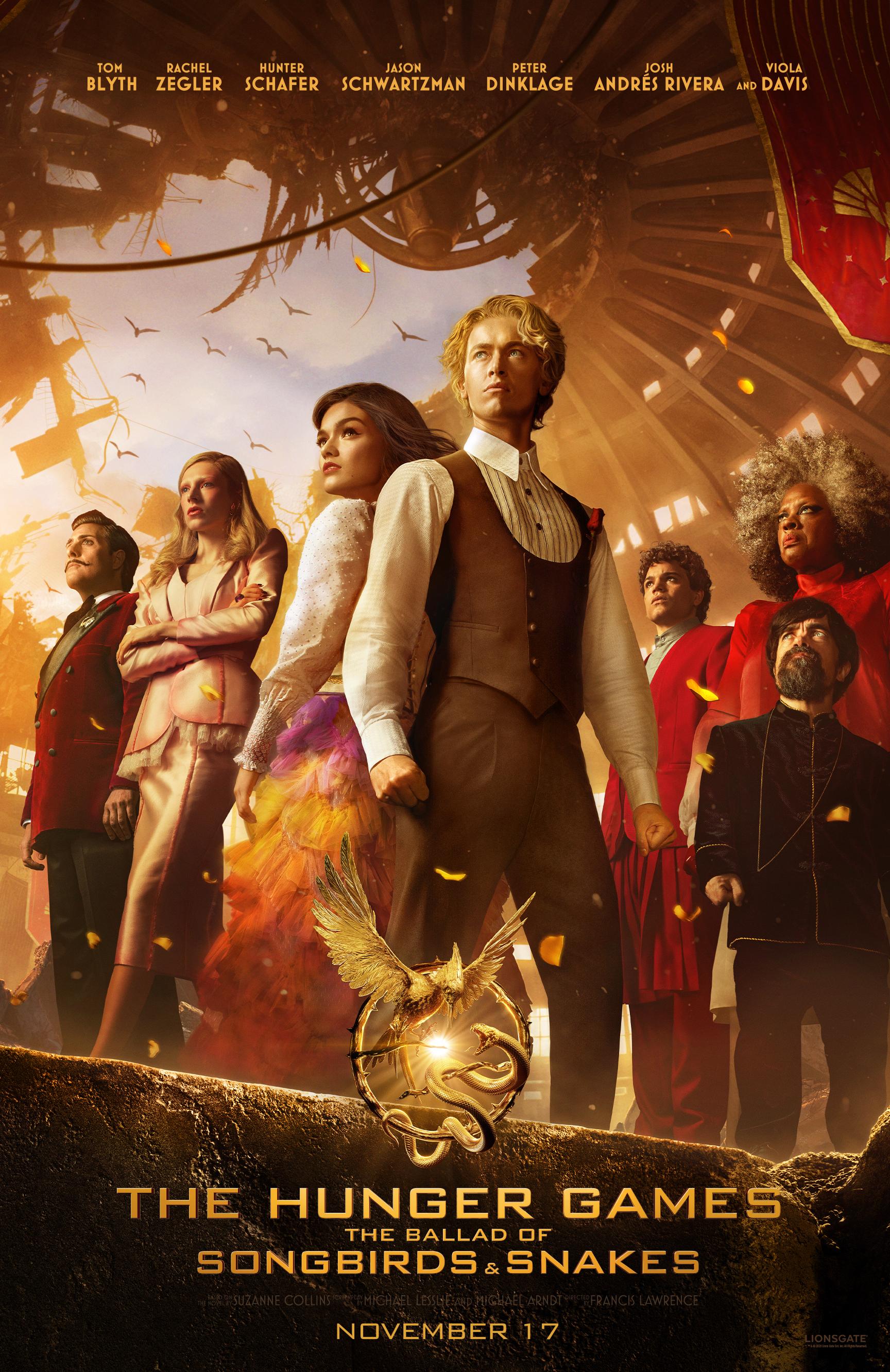
Starts strong, ends off-key. Return to the gritty world of Panem in The Ballad of Songbirds & Snakes. What we have here is too much story crammed into a single movie, which results in poor pacing and forced character and plot development. Despite the uneven screenwriting, there is no doubt that you will be completely enthralled by Rachel Zegler’s (West Side Story) charismatic and courageous Lucy Gray! Moreover, you will also be charmed by her excellent chemistry with Tom Blyth’s (future President) Snow. But the performance that stands out the most is Viola Davis’ campy, delightfully ruthless Dr. Gaul (Game Maker)! In contrast to the struggling third act, the first two acts are well-written, but the third act desperately tries to keep your attention. Ultimately, there is enough material both presented and hinted at, in the film, to support two or even three films. Perhaps audiences were hungry for more Panem, but this movie leaves audiences feeling overstuffed, with little room to breathe and digest the story.

Years before he becomes the tyrannical president of Panem, 18-year-old Coriolanus Snow remains the last hope for his fading lineage. With the 10th annual Hunger Games fast approaching, the young Snow becomes alarmed when he’s assigned to mentor Lucy Gray Baird from District 12. Uniting their instincts for showmanship and political savvy, they race against time to ultimately reveal who’s a songbird and who’s a snake.

Come for the event-like movie, but stay for Davis’ and Zegler’s performances. I don’t know if Zegler’s Lucy Gray felt like she came from District 12 or not, but her command of the character is fantastic! And how could Zegler be cast in the Hunger Games and not take advantage of her beautiful voice? If she ever wants to switch careers or add to her entertainer resume, she can add country singer to it, because her country singing should be opening for the likes of Dolly, Reba, or Shania. I am confident that she could own that country stage for an entire set, and audiences would be ecstatic! Beyond the singing, her Lucy Gray feels human. And by that, I mean both strong and vulnerable, with deep convictions for how she treats others. While many will be drawn to her character’s confidence and independence, I am drawn more to her flaws and vulnerabilities, because it is that with which we struggle that makes us most human.

Viola Davis’ Dr. Gaul steals every scene in which she appears. I cannot think of this role belonging to any other actor after witnessing her bring this sinister character to life. I know nothing of this character from the book, as I have not read it, but it feels like a role that was written for Davis. Even though there is a significant element of camp in her performance and physical appearance, she isn’t always over the top–in fact–there is a great deal of emotive nuance to her character. And that’s in part of what makes her character great–she strikes a perfect balance between camp and playing it straight. As diabolical as President Snow is in the original trilogy, her character is far more terrifying and dangerously sly. She doesn’t simply enjoy the Hunger Games, she is the Hunger Games. Suffice it to say, she slays with this role, and the film benefits greatly from her immense screen presence.

Not to be overlooked, Blyth’s Coriolanus Snow is a complex character, with whom the audience will empathize. Granted, the character isn’t quite as likable as he should have been, to achieve the full effect of the struggle of empathizing with him now with the foreknowledge of whom he becomes, but he does connect with the audience. Blyth’s performance is mildly uneven, but not so much so that it isn’t sufficiently compelling. It’s really in the third act that the performance is hit or miss, but that blame is partly laid upon the poor screenwriting in the last act. When he is on screen with Zegler or Davis, his performances shines best. The chemistry he shows with Zegler is solid, as is his interactions with his closest friend.

Since we are familiar with the games from the original trilogy, this movie is more of a character study and origin story for future President Snow than it is about the history of the games. After the prologue, which takes place one year before the first Hunger Games, the rest of the movie takes place during the tenth anniversary of the games. Ever since Disney’s Maleficent, there has been a trend to give villains origin stories so we can understand why they are how they are. And I am on the fence about this, as I believe that some people are born predisposed to sociopathy or psychopathy; and some system is not to blame, but rather it is a heart and mind struggle within that individual. But I digress. It is established that Snow comes from a once proud, well-to-do Capital family, but in the wake of his General father’s death, the family struggles to keep their house and food on the table. Coriolanus Snow struggles with needing to provide a future for his cousin and grandmother, but not lose his humanity in the process. Unfortunately, we’ve seen the original trilogy, so we know what happens. Lucy Gray and Dr. Gaul may steal steal the scene, but no mistaking it, this story is about the emotional and psychological development of future President Snow.

And I’d be remiss not to mention that it was a treat to see that Peter Dinklage still “drinks and knows things” (for my fellow Game of Thrones fans).

If you’re interested in returning to Panem, definitely catch The Hunger Games: the Ballad of Songbirds & Snakes on the big screen. I saw it in Dolby Cinema at the screening. As I honestly, could take or leave the exhausting YA genre, I do feel there could be another movie or two in this Hunger Games saga. I’d like to see more of Dr. Gaul and future President Snow.
Ryan teaches Film Studies and Screenwriting at the University of Tampa and is a member of the Critics Association of Central Florida and Indie Film Critics of America. If you like this article, check out the others and FOLLOW this blog! Interested in Ryan making a guest appearance on your podcast or contributing to your website? Send him a DM on Twitter. If you’re ever in Tampa or Orlando, feel free to catch a movie with him.

Follow him on Twitter: RLTerry1 and LetterBoxd: RLTerry

“KIN” movie review

Too little plot spread across too much movie. Although I have not seen the short film Bag Man on which this movie is based, it is clear that there were many good elements in the short but unfortunately not enough plot, character development, nor turning points were added to take this short, and turn it into a feature length science-fiction urban fantasy movie. The pacing is inconsistent. My friend who screened the film with me last night likes to refer to this concept as the accordion dilemma. Long, drawn out boring parts that are quickly pushed together for an exciting moment, then stretched out again. Personally, watching this movie felt like sitting on the I-4 between Orlando and Tampa. There is also the concern that the film is depicting the wrong image for young men. One can easily read this movie as a troubled young man, with an ex-con brother and grieving father, who only feels powerful when he has a firearm at his side. Not the kind of message we want to send to young people. Had the film focussed more on character development, and the relationship between the two brothers, then this may have made a solid drama. As it stands, the film sits at an uncomfortable crossroads between genres that ultimately fails to deliver a memorable movie.

When salvaging one of the hundreds of vacant buildings in run-down Detroit, Elijah (Myles Truitt) stumbles across the remains of a battle between futuristic-looking soldiers. Near the soldiers is a powerful ray gun that he claims as his own. At home, his father (Quaid) is still grieving over the loss of his wife and troubled over the return of his other son, now ex-con Jimmy (Reynor). When Jimmy asks his father for $60K to pay off a gang that protected him in prison ran by Taylor Bolek (Franco), his father tells him to get a job. When Jimmy executes a plan to acquire the money by arranging a heist with the Taylor’s gang, and things go wrong, Jimmy finds himself on the run. Fearful for his brother’s life, Jimmy persuades Elijah to come on a road trip to Lake Tahoe where the plan is to meet their father later on. Soon, both brothers find themselves running for their lives from a sadistic gang and other-worldly soldiers. Fortunately, Elijah has a weapon that will do more than simply protect and destroy.

The Baker brothers have included many effective elements for telling their story in this film; however, proper pacing, a sense of urgency, character and plot development are not connected fluidly. Furthermore, there are many sequences of just driving–endless driving. Much like the Hobbit movies featured lots of scenes of running. My favorite scene in the movie is when Jimmy is teaching Elijah how to drive, and has him doing donuts in the parking lots of a seedy motel. The look on Elijah’s face was priceless, and it was in that moment that a real connection was felt between the brothers. Otherwise, the rest of the scenes in the movie are forgettable. Even the “sci-fi twist” that is referenced in marketing materials feels more like a mechanical explanation than a resolution that packs a punch.

Visually, the film worked. Clearly, the Baker brothers have sufficient experience at communicating messages through imagery–and no mistaking it–that is incredibly important to a motion picture. This is likely due to their experience in directing commercials, which successfully tell stories in 30secs or less. Unlike other science-fiction films that rely almost entirely on digital effects, in a refreshing manner, the Baker brothers pair the practical with the digital to create a sense of realism in the film. Even the futuristic weapons and other technology feel grounded in reality–they play by the same rules of physics we do. The film may suffer from a terrible screenplay; but it excels in areas such as cinematography and editing. Not entirely sure what possessed a studio junior executive to green-light this, but I imagine they won’t be green-lighting projects for a while now. From what I’ve been told about the short film, the ending of this feature adaptation was changed. My guess is that it was changed in order to setup a sequel–a sequel that we will probably never be seen if the film does poorly this weekend at the box office.

If you enjoy science-fiction urban fantasy movies, then you may find some entertainment value in this. The movie works better as the pilot to a limited run series on Netflix, Hulu, or Prime than a feature film. Perhaps that is where this story will wind up. With changes to the screenplay, it could find a life on a streaming service; but as feature film, it did not deliver the simple plot and complex characters needed.

Ryan teaches screenwriting at the University of Tampa. If you like this article, check out the others and FOLLOW this blog! Interested in Ryan making a guest appearance on your podcast or contributing to your website? Send him a DM on Twitter!

Follow him!

Twitter: RLTerry1

Instagram: RL_Terry

“13 Reasons Why” television review

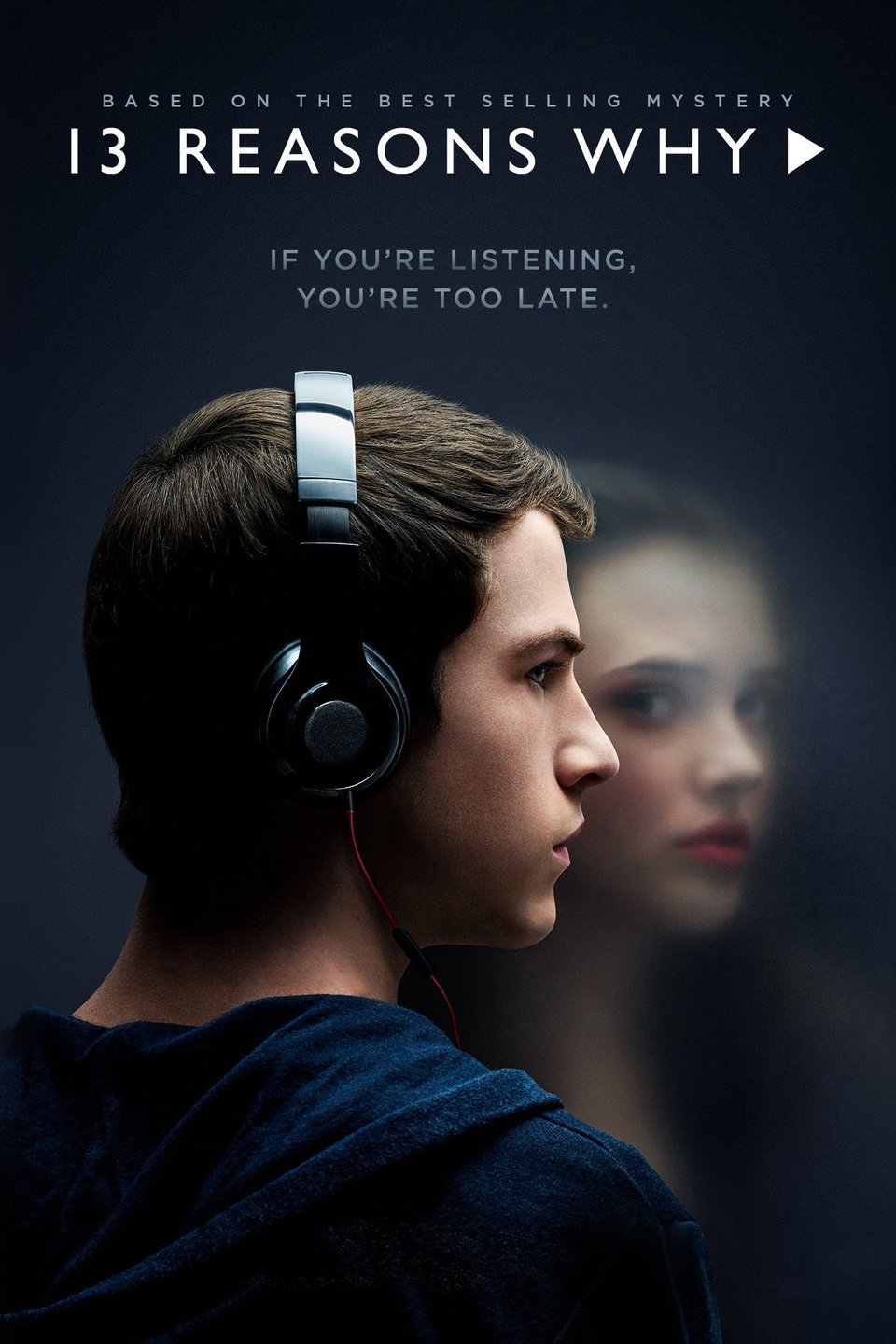
A fascinating approach to the exploration of the butterfly effect in terms of how that theory plays out in interpersonal relationships. Or, the most comprehensive anti-bullying PSA out there. Unless you have been off the social media grid, there is little doubt that you are unaware of the impact and following of the Netflix original show 13 Reasons Why. Although it took a few weeks for the show to really catch on, once it became a topic of memes, Tweets, and other social media posts, the popularity of the show spread quicker than a viral meme. Responses to the show have been quite polarizing. There is the camp that feels strongly that the show provided an organic unfiltered approach to the gradual mitigation of one’s psycho-social health upon constant negative encounters with peers and bullying; likewise, there is the camp that feels equally strongly that the show glamorizes the ultimate pay-back effect of making peers and authority figures feel responsible for an individual’s decision to commit suicide, and therefore plants the idea that you can exert the pinnacle of revenge by telling your story after the fact. At the end of the day, one’s response to the show will depend on how one interprets the rather meta narrative. Beyond the contentious diegetic components of the show, the production value and editing are superior to other YA shows and even movies.

It’s been quite a while since I reviewed a television show, so I though that this one would be quite interesting to delve into. I’ll be up front and state that I belong to the camp that feels the show is a mirror to bullying and those who suffer psycho-socially moreso than the camp that feels the show supports the belief that it’s perfectly acceptable to blame others for how one feels. Not that I do not see evidence of the latter–I do–but I think the danger in that camp is throwing out the important anti-bullying messages too. Again, it comes down to how YOU interpreted the show’s narrative. The beauty of shows like this one–like this one, in that there is much left up to interpretation–is the simple fact that it gets people talking about a taboo topic or topics that are seen as difficult to talk about. Doesn’t matter the camp to which you may belong; this show accomplished what I believe it set out to do: get people talking about bullying, relationships, and sexual assault in an organic way. Whether you feel that Hannah (Katherine Langford) was justified in her decision, was selfishly seeking attention and desired revenge, or the one that best describes me: disagree with her decision to commit suicide but understand how she got to that point, 13 Reasons Why provides audiences (mostly those in their 20-30s) with ample material to explore the narrative itself and the impact it has had upon the present cultural climate.

Much like in the same vein as the prologue in Shakespeare’s Romeo and Juliet in which we are prevued, through dramatic irony, to the unalterable fact that “two star-cross’d lovers” take their lives and [the audience] will spend the next two hours watching events unfold upon the stage thus learning how and why, Netflix’ 13 Reasons Why begins with the unalterable fact that a young lady has taken her life, and you’ll spend the next 13 episodes learning just why. While the show in question may not completely align with a Shakespearean tragedy, there are many similar components in the story. Moreover, had the show been shot in grayscale and set in the 1950s, it could have easily been a film noir. As it were, it can be classified as a neo noir show. But what keeps audiences engaged with each and every episode is the anxiety that builds up in regards to just why is Clay (Minnette) on those tapes, because everything the audience sees is the nicest guy next door that you could ever meet. There is also a ticking time bomb plot device mildly used because there are only six double-sides tapes and one single (13 sides in total); so the closer we get to the end, the more tension builds. As I cannot comment on the best-selling novel by Jay Asher because I have not read it, the writing of the television adaptation is absolutely brilliant–it’s designed to be addictive and succeeds in keeping eyes glued to “whatever device you are using” to watch the show. Interestingly, just like Clay cannot put the tapes down, neither can many out here put the show down.

Throughout the story, we encounter significant peers and authority figures in Hannah’s life that either directly or indirectly contributed to her decision to end her life and leave the tapes. Yes, I am aware that ultimately she made the decision–that is not what I am arguing for or against here. My point is, we encounter different people who each possess unique character attributes, flaws, and personality traits that impacted Hannah’s psyche. Exploring each character could be entire reviews in and of themselves, so I will be brief. You have characters ranging from disclosing secrets for the sake of showcasing art to not being brave enough to stop something horrible, from stalking those who you feel are more popular than you to something as simple as abandoning your friends at “FML” coffee sessions, and even a character who is so blinded by friendship that they cannot see and return the love of another, finally there is a character who cannot hear cries for help, for those cries are falling upon deaf ears. Each character represents a different character archetype. Along the lines of films and shows that personify the seven deadly sins, this show personified character traits that should be avoided in order to not contribute to someone’s overwhelming negative outlook on life. In short, do not be a dick. Treat one another with respect and love.

(This paragraph contains some mild spoilers) Although one of the characters has two tapes, each tape focuses on a particular person and the thing he or she did to add one more marble to the scale, slowly tipping it. For those who have dealt with perpetual taunting, teasing, or bullying or experienced it while going through K-12 school and living with the emotional scares as an adult, the show does an excellent job of not shying away from the little things, as well as the big, that each break you down a little at a time. Furthermore, the show also provided audiences with brief glimpses into what drives a potential school mass shooter to begin plotting his or her revenge and that one student’s suicide can prompt another because of the hurt someone else may be facing that feels unbearable–or brought on by the guilt of having contributed to the former’s decision to kill herself (Hannah). I think what hurts the full potential of the show’s ability to call for positive change is never taking a stance on Hannah’s suicide–never does a character state that what Hannah did was wrong, or that it deeply hurt those who DID love and respect her. Of course, the moral implications are topics best saved for another day and another forum.

Upon reading the news of a sequel, I cannot escape the fact that this story does not need a sequel–it IS a complete story; however, there could be “13 reasons” why the attempted suicide in the show during the final episode happened or why another character began to plot for a school mass shooting. Those are potential spin-offs that take place within the same universe and with the same characters. In terms of the show’s production value and editing, I was impressed with the subtle nuances of the present day versus the flashbacks. As a rule of thumb, I do not usually care for flashbacks. I mean, if you spend most of your time in a flashback(s), then let THAT be your main story. That being said, 13 Reasons Why successfully integrates the flashback into the diegesis because it makes the present story just as interesting to watch as the past stories. I also loved the color temperature changes from the present to the past. The stylistic editing techniques employed enable the audience to know when they are watching a flashback versus present day. In addition to the editing, there are also wardrobe, makeup, and costuming differences as well. Over all, this show is definitely one to watch in order to fully grasp just how much the little negative interactions or experience with one another can add up to leave someone feeling like there is no way out or whether or not they have the strength to go on.

“Miss Peregrine’s Home for Peculiar Children” movie review

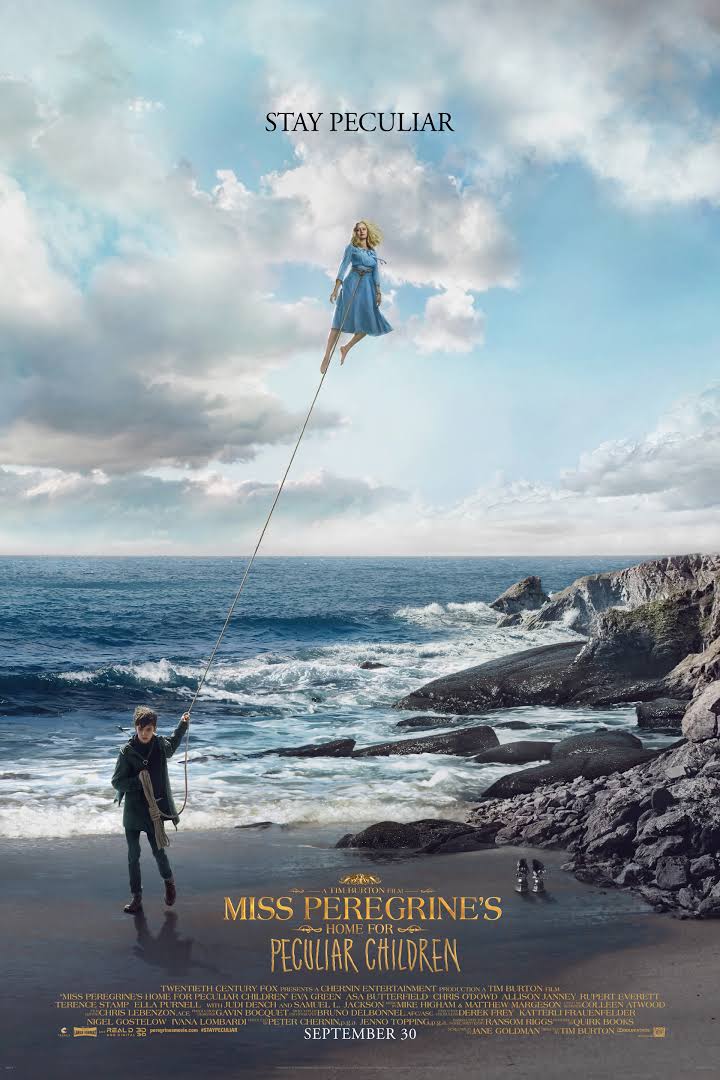
missperegrinneSurprisingly exciting! Twentieth Century Fox brings another YA novel to the screen. Tim Burton’s Miss Peregrine’s Home for Peculiar Children (from here on out noted at Miss Peregrine) is both a fish out of water story combined with a magical adventure that mildly comments on the human condition. Of all the YA movies that have been produced over the last few years, this one provides a much more dynamic experience than many of the others. Burton delights audiences with the classic Burton style that many of us have grown up with. In more recent years, I have often commented that he is essentially a parody of himself–a.k.a. Burt Porn (as coined by my friend Leon in Germany)–not true with Miss Peregrine. Get ready for a return to the class Burton that brought us timeless movies such as A Nightmare Before Christmas and Edward Scissorhands. The great cast is supported by the appearances of Samuel L Jackson and Dame Judi Dench. From Florida to Wales, this movie is sure to whisk you away to daring adventures requiring rather peculiar abilities to defeat those who would seek to take what isn’t theirs to have.

All Jake (Asa Butterfield) knew was his ordinary life. He had a rather blah home life, an eccentric grandfather, and a job that he hated. Until one day, something peculiar happened. In his grandfather’s dying breath he told Jake to find the island. With his parents finding his sports of what he saw at his grandmother’s death to be quite bizarre, they forced hi to visit a psychiatrist. Upon finding a mysterious letter, Jake is determined to find the home in which his grandfather grew up. Accompanied by his cynical father, Jake returns to the island where his grandfather grew up. Only he could never have expected the adventure and run of this life that he will soon find himself. Stumbling across the children’s home ran by Miss Peregrine (Eva Green), Jake teams up with the most unusual but fascinating people who are in a rush against time to defeat those who are out to destroy them.

If I had to name one takeaway from this film, it would be that it reminds me of the 1980s/90s Tim Burton before he “went down the rabbit hole.” It combines his surreal and gothic filmmaking style juxtaposed against his flare for the colorful and bizarre. Although it is not an original concept by any means, if you’re a fan of Fox’s film adaptations of or the animated series X-Men, then you will likely enjoy this movie! Not having read the book, I cannot comment on the film’s alignment and commitment to the literary work written by Ransom Riggs; but, from what I have read online–even the author himself–is pleased with Burton’s translation from page to screen. Very few directors would have been so successful at bringing this story to life more than Burton.  Despite an apparent successful translation from book to movie, the film suffers from an overload of mythology, exposition through dialog, and lacks the thrills to completely balance out the former two elements. Although this movie may feel like one that you have seen before, it does offer a glimpse into Burton’s prime years and perhaps offers a hope that the acclaimed visionary director can once again impress us with his fantastical but highly effective cinematic storytelling.

One of the most successful elements to the X-Men’s plight as individuals born with peculiar abilities is the fact that they are human. They hold onto their humanity (the good guys anyway). Miss Peregrine’s children do not appear to offer the same level of humanity as their X-Men counterparts. The impact of the X-Men’s abilities is felt not only by the X-Men themselves but by the community at large. For the most part, Miss Peregrine’s children’s abilities largely leaves no impact upon themselves or others. Almost plays off more as a convenient plot device than character attributes. Hugo‘s Asa Butterfield’s fake American accent does not really suit his character of Jake. In a world of fantastical dynamics and depth, he plays off as a boring, flat character. In screenwriting, it is vitally important for the writer to cause the reader/audience to love the protagonist and/or love to hate the antagonist. I found it hard to love Jake or truly hate Barron (Jackson).

So, the movie may not have the amazing principle cast that we are accustomed to in a Burton movie; but, it does still contain Burton magic and some exciting and beautiful visuals. It is also a lot of fun to watch! In addition to being fun to watch, it contains some rather disturbing imagery and cringeworthy moments. But that’s par for the course with classic Burton. One of my favorite parts in the movie is the action-packed climactic sequence accompanied by dark humor. It’s a great combination of humor and visceral conflict. If you’re looking for a fun movie to watch this weekend, then this one is a solid pick! Furthermore, if you desire to get a glimpse into a more classical Burton film, then you’ll find utter delight in this one as well.

“The Divergent Series: Allegiant part 1” movie review

AllegiantPossibly a strong finish for the Divergent Games! Of course, we won’t know just how well it finishes until the second part. Surprisingly, The Divergent Series: Allegiant part 1 provides fans with a good start to a well-executed conclusion. After the weak sequel, it was quite unexpected that the series would begin to complete this YA series on such a high note. Unlike the disappointing conclusion of The Hunger GamesAllegiant brings back your favorite characters you love and love to hate in a very satisfying ending in the dystopian adventure to rescue a people from themselves. At the end of the day, the Divergent series will never be as successful or generate the same fandom as The Hunger Games; but simply comparing the last two films in both franchises, this is clearly the superior finish (or should be). Although Roth’s socio-political themes and subtext were fairly clear, all be it still weak, in the first two films, the message is a little vague and incoherent in Allegiant. Two YA franchises down and one to go. We will just have to see what lies in store for the Maze Runner series. Just like the Divergent series has a week middle, hopefully the weak sequel in The Maze Runner will pave the way for a strong conclusion as well. One thing is for sure, Allegiant contains far more action than the previous films which almost makes the weak and still completely explained plot worth the approximate 2-hour run time.

The first part of the final chapter in the Divergent Series takes us beyond the wall into a desolate wasteland. Follow Beatrice/Tris (Shailene Woodley), Four (Theo James), Caleb (Ansel Elgort), Peter (Miles Teller), and Christina (Zoe Kravitz) as they embark on a journey to seek help from the outside in order to stop the civil war in dystopian Chicago (or modern day Detroit). With newly asserted leader of the faction less system Evelyn (Naomi Watts) and Amity turned Allegiant leader Johanna (Octavia Spencer) at odds with one another, war is brewing in the streets and all hell is about to break loose. Barely escaping Evelyn’s security team, Tris and her band are rescued by a team from an organization of pure bloods who oversees the “Chicago Experiment.” This group of researchers and scientists led by David (Jeff Daniels) recruits Tris and her team to develop a plan to save Chicago, or so they think. When Four discovers what is really going on, he must convince Tris and the rest of her band of rebels to make right what is going incredibly wrong.

For me, and I am sure other critics, analyzing this particular series, The Hunger Games, and Maze Runner gets boring. Because, for the most part, they all have the same plot, same fallacies, and similar subtext. They are all extremely socio-political methods to spread the message that only teenagers are special and are capable of saving the world from corrupt adults. Although these movies are aimed at Generation Z (anyone born after 1995), they still attract attention from Y/Millennials (~1982-1994) and Generation Xers (~1965-1981). That is important because Generation Z does not have the spending power that generations X and Y do. In order to maximize the income potential of the films, the studios have to appeal to Generation Zers in such a way that it will also bring their Millennial friends and potentially Generation X parents. Since schools are constantly preaching the message that teenagers are the future, they are special, and uncontaminated by the greed of the world, it makes sense to create films based on books that carry that theme. The negative side effect to this approach is creating a generation(s) that automatically distrust adults and their respective decisions regarding the environment, politics, and society. Just as Allegiant depicts what happens when there is such great division among a people who view the approach to peace so very differently will devolve into a war-like state, it’s entirely possible that reinforcing this division between Generation Z and X/Y could symbolically arrive at the same precipice.

The production value and design in Allegiant definitely outshines the prior two installments. That is important due to the fact that Roth’s political subtext definitely becomes a little muddled in this last chapter. Although there is definitely way too much cheesy CGI, it is far less than the previous film. And other than some of the outlandish technology used in the story, for the most part, the defense, security, and surveillance technology used by the various characters makes sense and is perfectly believable in their universe. There is even a real reference to 21st century earth’s scientists experimenting with the human genome. That helps to create a sense of futuristic realism in the Divergent universe. One of the biggest problems I have with the plot is the still unexplained history of how exactly the Chicago experiment began. Perhaps the director and writers did not feel it was necessary to provide a clear history through character exposition, but I am still a little confused as to how the Pure Bloods and Damaged became so incredibly separate. Another thing, if there are thousands (if not millions) of Pure Bloods in existence, then why use the Chicago Experiment as a method to see if a Pure Blood can be born out of all of it??? I guess that is why it’s not worth overly analyzing films such as this one.

For what it’s worth, Allegiant is an exciting start to the last chapter in the Divergent Series! Far more entertaining than the last one. If you were disappointed by Mockingjay Part 2 than rest assured that you will definitely enjoy the conclusion of this franchise. Not a bad way to spend your Spring Break or an afternoon over the weekend. But, I wouldn’t bother seeing this film in IMAX or 3D. However, I can see some benefit to the experience of this film by watching it in a D-Box auditorium.