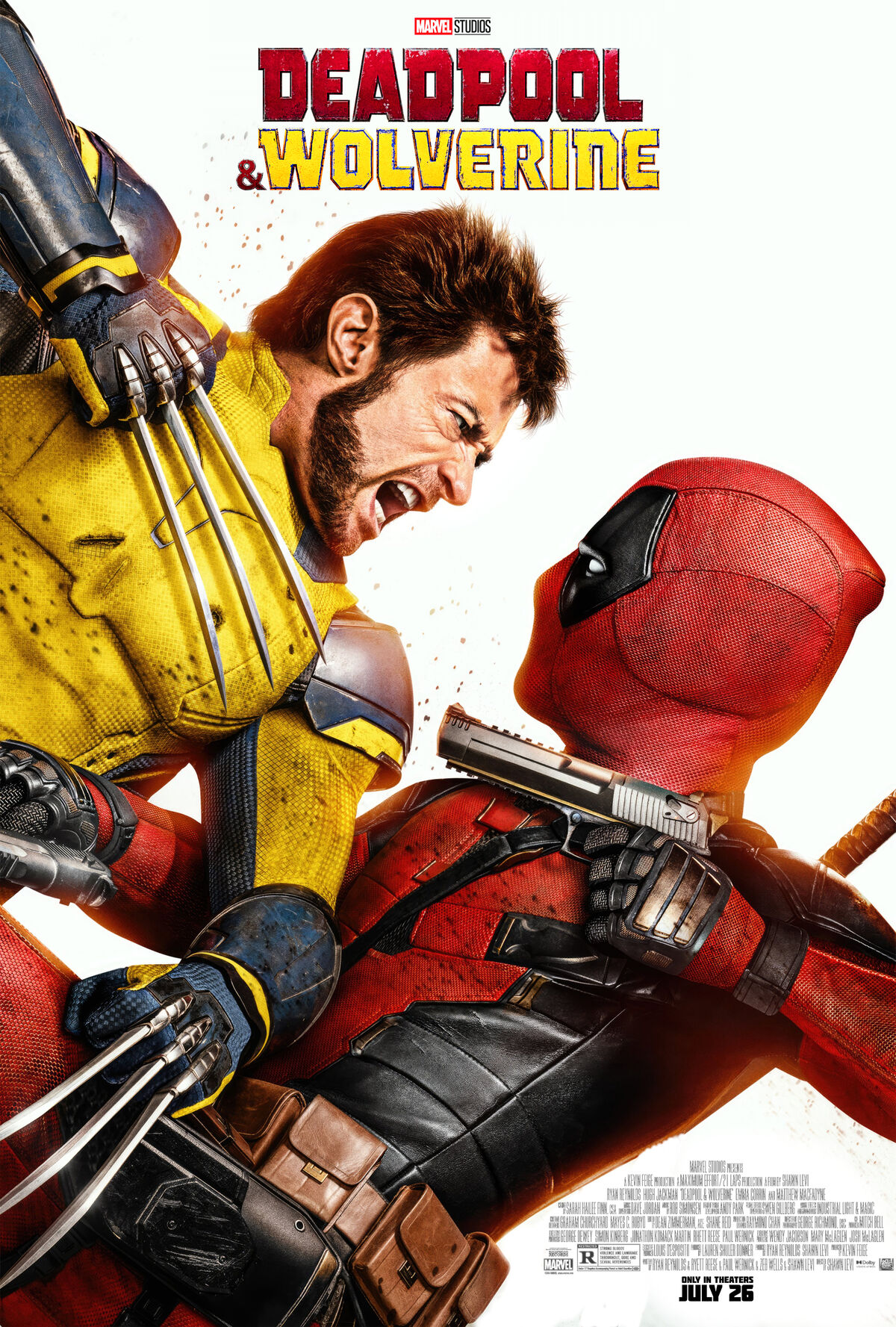
DEADPOOL & WOLVERINE movie review

Exhausting. Deadpool & Wolverine is a step down from its predecessors in terms of quality and cleverness of storytelling. While clearly intended to be a movie that reinvigorates the MCU, the screenwriting is both pandering and derivative. While effective in smaller doses, the hyper-meta humor is overplayed to the point of being obnoxious. Moreover, there are many gags that are recurring to the point of boredom. While expertly choreographed, shot, and edited, the endless barrage of fight sequences overstays its welcome. In terms of the premise, the whole multiverse idea that has been integrated into so many superhero movies (both MCU and DCEU) is overplayed. Had the movie been closer to 90-100 minutes, then perhaps the pacing would’ve been better and the Deadpool jokes, satire, and gags would not have felt overplayed, but the 2+ hours runtime works against the full potential of the narrative. If you can’t get enough of the Deadpool schtick, then you’ll undoubtedly like this movie. But if you were hoping for something as clever as the first two Deadpool movies, then you may be as disappointed as was I.

When the multiverse is threatened by a powerful Omega class mutant, Deadpool’s services are retained to protect the multiverse from complete collapse. In order to defeat this new deadly enemy, Deadpool teams up with the Wolverine, whom is recovering from psychological injuries.

Because of the movie’s setup, I had hoped that Deadpool and Wolverine’s goal would have been to eliminate all timelines except the sacred timeline (I guess that’s supposed to be the real/our world), putting an end to the multiverse, but that wasn’t the motivation or goal. So, I suppose that means the multiverse theory will continue steamrolling through this and other franchises. The whole multiverse theory needs to die. At this point, it is way past its half-life and rather limiting on the stories that can be told. Sounds counterintuitive, right? For how could a multiverse limit the stories that can be told? Simple. Everything is connected in a codependent sort of way. In a cinematic (including television counterparts) multiverse, no story, character, or plot is truly independent of the other; therefore, a filmmaker is unable to craft an original story; for any story involving the characters in a multiverse, has to fit in with the rest of the multiverse.

In a manner of speaking, a multiverse actually mitigates freedom of expression and variety of storytelling. When filmmakers return to crafting original expressions of stories and plots for comic book characters, then the quality of comic book movies may agin reach the levels of the Burton-verse. To this day, Batman 89 and Batman Returns are still the two best examples of superhero/comic book movies with X-Men the Animated Series being the best example of a superhero/CBM television series.

Fortunately, Hugh Jackman’s Wolverine’s gritty, no nonsense personality helps to balance out Ryan Reynolds’ manic Deadpool. While I have many reservations with this movie, I cannot deny the great chemistry between the two of them. Jackman’s X-Men the Animated Series inspired Wolverine was my favorite part of the whole movie. Partly because I grew up with X-Men TAS and have enjoyed the X-Men 97 series. Seeing that yellow and blue suit filled me with such happiness. Additionally, there are other nods to X-Men TAS and the Fox X-Men movies, including a particular surprise cameo that I know my friend Shawn of the Solving for X podcast will immensely enjoy! (If you’re an X-Men fan, then you should add this podcast to your lineup). What I liked most about this movie was the X-Men dynamic. Even though I have my reservations, I am curious how this newest iteration of cinematic X-Men will be adapted for the big screen. It is my hope that it will have the quality of storytelling of X-Men TAS that successfully addressed difficult topics in the real world both creatively and accessibly, all while bringing everyone to the table. Just as Professor X dreamed humans and mutants could engage in meaningful discourse one day.

Breaking the fourth wall and meta-humor can be effective tools for both humor and plot/character development; however, recurring pot shots and real-world references detract from the cleverness of the humor, and can ultimately take the viewer out of the movie. More so than the previous installments in the Deadpool franchise, this one is particularly packed with, what I am calling, hyper-meta humor. Hyper in that it’s so over the top and repetitive that it loses its charm quickly and grows stale. Most movies serve as a means of escape from the dullness, harshness, or complexities of reality; this is certainly true of superhero/comic book movies–or rather, was. I don’t know about you, but I don’t go into most movies hoping to be reminded of reality. Unless of course, for example, it’s based on a true story or a melodrama that is intended to evoke a real-world emotive response. So many of the jokes in Deadpool & Wolverine take me out of the movie, especially one recurring pot shot, that I won’t mention, that is borderline disrespectful of an historic Hollywood institution.

Despite most of the movie, in my opinion, to be lacking in genuine, clever humor, I manages to at least laugh here and there. The problem with a movie built entirely on the humor of middle school boys is that the move is ironically inappropriate for that same age group. When the first Deadpool released (by 20th Century Fox), they did the responsible thing by reminding parents that, even though this was a superhero movie, that its intended audience was 17+. I’ve yet to see an effort on Disney/Marvel’s part to remind potential audiences that this movie is rated R, and not appropriate for younger audiences due to the sexual innuendoes and language. Violence wise, other than the increased amount of blood, it’s on par with many PG-13 movies. When Deadpool hit the scene, he was different from that of most other superhero characters at that point, and his schtick was refreshingly funny; now, with the increased amount of middle school base humor in many comic book movies (mainly the MCU), it’s no longer refreshing and now borderline obnoxious. If I had to select one word that best describes Deadpool & Wolverine it would be obnoxious.
Ryan teaches Film Studies and Screenwriting at the University of Tampa and is a member of the Critics Association of Central Florida and Indie Film Critics of America. If you like this article, check out the others and FOLLOW this blog! Interested in Ryan making a guest appearance on your podcast or contributing to your website? Send him a DM on Twitter. If you’re ever in Tampa or Orlando, feel free to catch a movie with him.
Follow him on Twitter: RLTerry1 and LetterBoxd: RLTerry

DOCTOR STRANGE IN THE MULTIVERSE OF MADNESS movie review

Plot sacrificed for visual FX. While Raimi’s horror adjacent direction gives Doctor Strange in the Multiverse of Madness a unique aesthetic when compared to the typical superhero movie (with the exception of Batman Returns, which has long sense been praised for its otherworldly horror-adjacency), it isn’t enough to carry the story. Better brush up on End Game and Wanda Vision because you may be slightly lost the whole time. So full disclosure, I’ve only seen End Game once and do not subscribe to Disney+. Unfortunately, this movie does not sufficiently provide exposition for those of us that do not eat, sleep, breathe the MCU because Wanda/Scarlet Witch’s motivation for her antihero behavior cannot be fully realized and understood without the events of Wanda Vision (from what I’ve been told about the show). That’s the problem with the ever-expanding MCU–but–it’s also a brilliant marketing and merchandising move. Simply because, if you want to be able to understand the motivations of the characters in the movies, you have to watch the TV shows and every single movie (main line and side line). Specific to this movie itself, there is clearly a thoughtful story, but it’s ultimately held back by the wandering plot. Ironically, you may be asking yourself a variation of the cliche question actor’s ask directors: what’s my motivation? Instead, you’ll find yourself asking: what’s Wanda’s motivation???

Dr Stephen Strange casts a forbidden spell that opens a portal to the multiverse. However, a threat emerges that may be too big for his team to handle.

Story and plot are NOT the same thing. Without getting into a lot of what I teach in film studies and screenwriting, story is the overarching narrative whereas the plot is the map (how you get) from beginning to end. Raimi’s playing up on the whole witchy aspect to this movie, was great for someone like me that loves horror, but it seems that the horror-adjacency of the movie merely compensated for the slapdash plotting. While many that watch this movie have undoubtedly seen End Game multiple times, subscribe to Disney+ to watch all the shows, and have read the comics, many have NOT. Granted, a subgenre movie such as this should not play to the lowest common denominator because then the fanboys and girls in the audience will feel slighted or unappreciated, At the same time, the writers and director should have considered integrating sufficient exposition for those that do not watch all the ancillary material. Wouldn’t have taken much to provide enough exposition so that rewatching End Game or subscribing to Disney+ for Wanda Vision, What If?, and Loki wouldn’t be a prerequisite for this movie.

For those that love visual effects, you will likely be impressed, if not blown away by the mesmerizing landscape of digital imagery; however, there are many times in the movies that the characters do not feel that they are existing within the same world in which the dazzling display of graphics exist. You cannot replace the way real light bounces off real objects into the camera lens. Not opinion–fact. Perhaps one day, we will get an MCU (and this applies to the “whatever it’s called these days” DCEU) movie that spends as much time crafting tangible sets as it does investing into digital imagery. In no multiverse will characters look to truly be within a world that primarily exists in the expression of 0s and 1s on a computer. The only saving grace for the aesthetic of this movie, and the moments we see the cinema stylo (hand of the artist), is when Raimi leans into the horror-adjacency of this MCU entry. Whenever the movie took a turn towards horror, I enjoyed it the most, and felt it was trying to be different–not your typical superhero movie.

It’s really no spoiler that Captain Picard is back as Professor Charles Xavier! Okay, so I know he is really Sir Patrick Stewart, but he will always be the definitive Starfleet captain to me. X-Men fans, like me (see, I do like superhero movies that aren’t Batman Returns), we’ve been waiting for that moment in which we witness the integration of the X-Men into the MCU. And I’ll give the writers and Raimi this: how Professor X was integrated into Doctor Strange in the Multiverse of Madness was both meaningful and strategic. It wasn’t too much, didn’t feel forced, and the applause this cameo garnered from the audience (including myself) was outstanding! At my screening, the moment Sir Patrick Stewart reprised his role as the definitive (live-action) Professor X elicited more applause and cheers than any other moment in the movie. I am eager to witness how the X-Men are woven into the fabric of the MCU.

If you can watch this movie in a premium format like Dolby Cinema, IMAX, or Cinemark’s X-treme, then that is the best way to experience it. It is a BIG SCREEN movie for sure! While I am often highly negatively critical of superhero movies, I am thankful that they are getting people back to the cinema in masses.

Ryan teaches Film Studies, Screenwriting, and Digital Citizenship at the University of Tampa. If you like this article, check out the others and FOLLOW this blog! Interested in Ryan making a guest appearance on your podcast or contributing to your website? Send him a DM on Twitter or email him at RLTerry1@gmail.com! If you’re ever in Tampa or Orlando, feel free to catch a movie with him.
Follow him on Twitter: RLTerry1

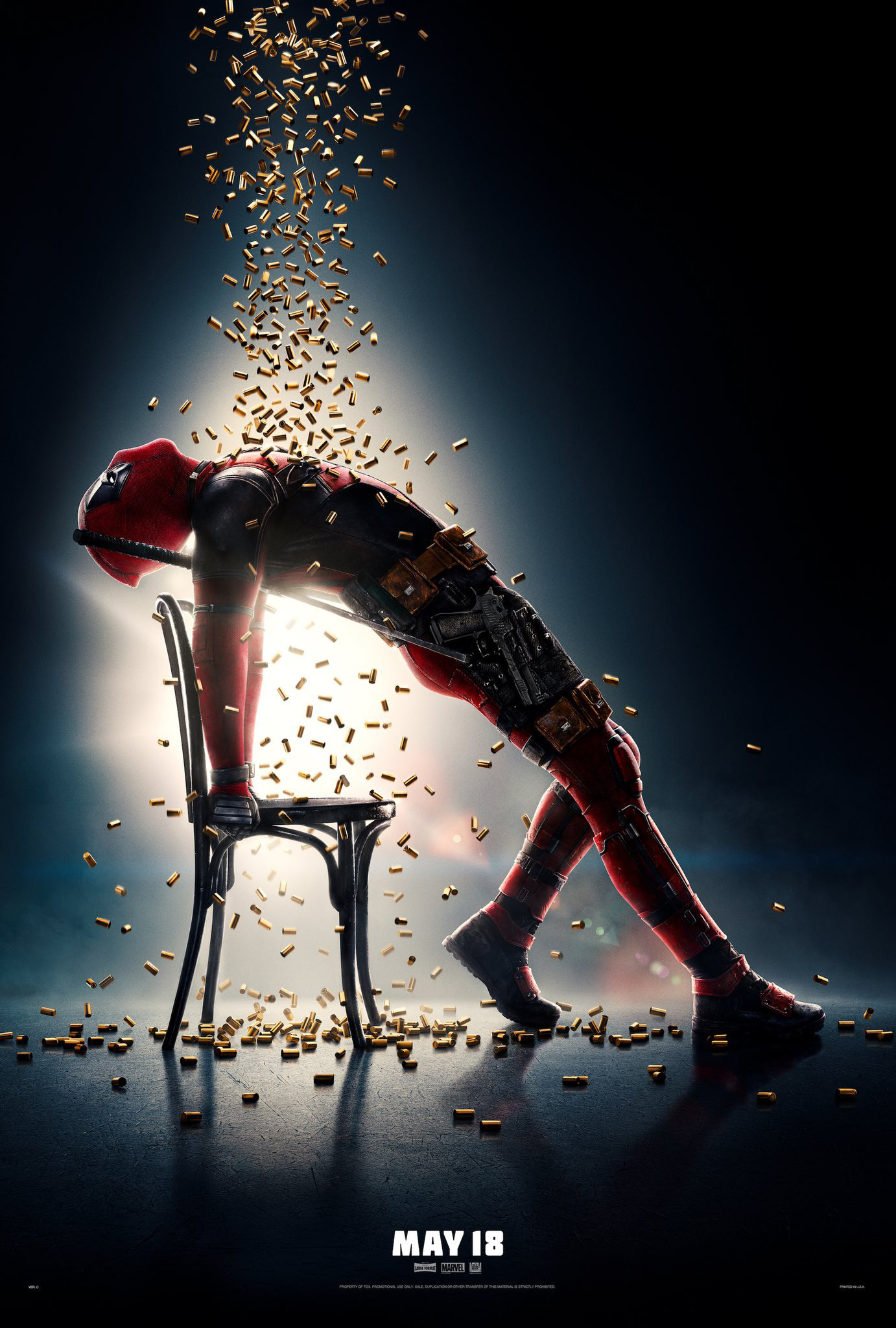
“Deadpool 2” movie review

“Deadpool, can you hear me?” Subversive, irreverent, brilliant, meta. It very well may be better than the first. How often do we get to say that about direct sequels? Ryan Reynolds’ witty, crass, charmingly naughty superhero is back to take even the most unrelentingly serious movie patron, and drive them to complete laughter. The square peg of the X-Men’s round universe returns with non-stop action, antics, and fourth-wall breaking humor virtually deconstructing everything from the opening credits to the post-credit scenes. Nothing new there; however, Deadpool assures the audience that the story they are about to see is a family movie. And after watching it, it may be unconventional, but it’s a solid family film. Maybe not “family entertainment,” by the Disney definition, but about family nevertheless. Speaking of which, we may have just watched the final Deadpool as we know it before it gets the Big D sanitization treatment, should Comcast (NBC Universal) not swoop in to save 20th Century from the otherwise inevitable Disney acquisition. Deadpool 2 isn’t just better than the first one simply because it’s funnier, more risqué, or more clever; in measurable ways, it possesses stronger villain(s), stronger opposition to the goal, and a better plot overall. Not your everyday “family” film, but filled with emotional tugs at your heart strings, all the same. Just with a heaping helping of self-aware and self-deprecating bawdy humor.

For two years, Wade Wilson/Deadpool (Ryan Reynolds) has continued his mercenary work, taking down villain after villain, crook after crook; but, after he fails to kill one of his targets on an extra-special day to him, he is faced with tragedy. Through a series of bizarre events–yes, even bizarre for Wilson–Wilson finds himself in a maximum-security prison ran by the DMC (Dept of Mutant Control) along with a renegade 14yo mutant named Russell. When Cable (Josh Brolin), a high-tech assassin, arrives from the future to take out a target that he claims leads to total destruction, Wilson must battle inner and outer demons in order to get his heart into the right place. Knowing he’s facing the most dangerous villain he’s ever encountered, Wilson forms the X-Force, a diverse “superhero” group of many talents in order to apprehend the target to prevent the world from plunging into complete chaos.

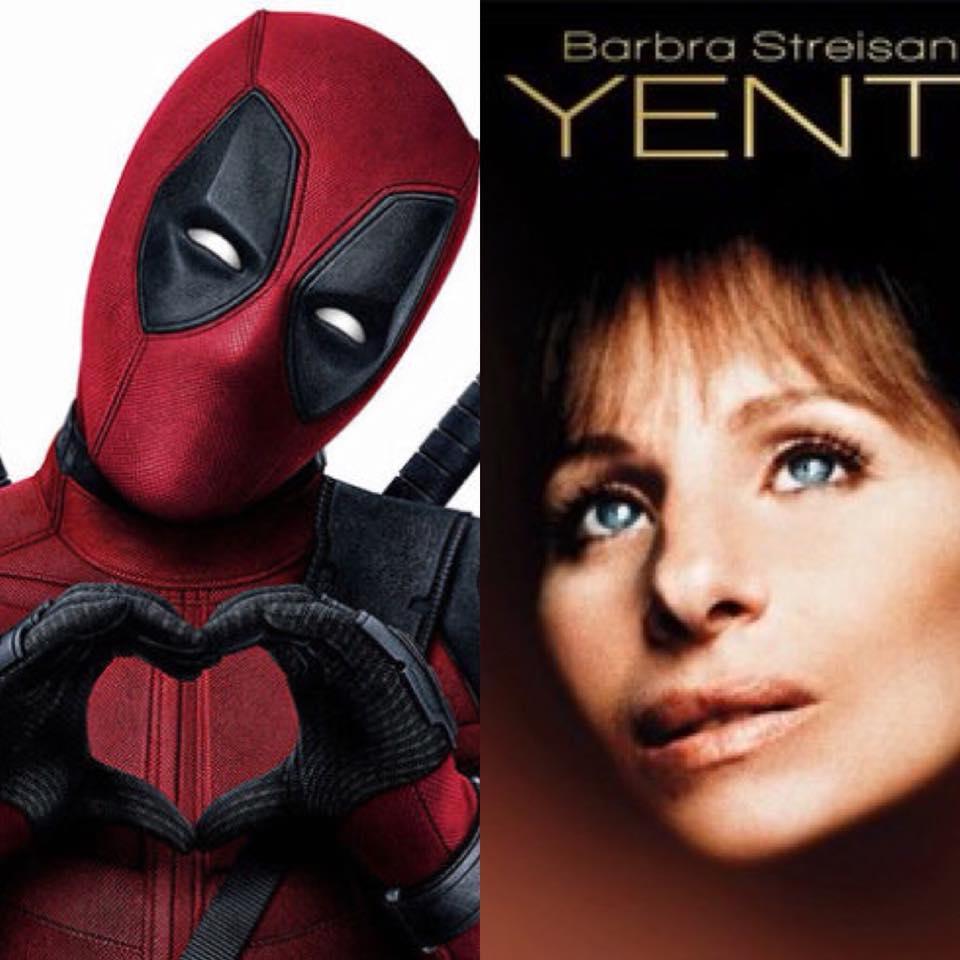
There is a comedic power in the plot of Deadpool 2 that invites the audience, at every turn, to laugh with the movie as it laughs at itself. There are a few running schticks throughout the film, but my favorite is the continued references to Barbra Streisand’s groundbreaking film Yentl featuring the iconic Streisand ballad Papa, Can You Hear Me? To which, Deadpool points out sounds an awful lot like Do You Wanna Build a Snowman from Disney’s Frozen. And it’s the implication of Disney appropriating Streisand’s song where the “Disney joke” was likely cut from the movie. Other jokes carry over from the first film such as the X-Men mansion with only Negasonic Teenage Warlord and Colossus roaming around. Some of the schticks from the first movie are transformed for this direct sequel. Contrary to the Wade Wilson from the first film, this one, this one diverts from his persistent aversion to companionship and a desire to be the “lone ranger,” as it were, and expresses a need for family. This desire for family serves as the backdrop of running jokes, gags, and extreme snark.

Streisand isn’t the only female vocal artist highlighted in the film, Dolly Parton’s 9 to 5, Pat Benatar’s We Belong, and Cher’s If I Could Turn Back Time are all featured, all that we were missing was Cyndi Lauper’s Time After Time. Unlike the completely unconventional opening credit sequence from the first Deadpool, this sequel’s opening credit sequence takes a page out of the James Bond handbook, complete with the new single Ashes by Celina Dion. Like the opening credit sequence from the first film, this one also replaces the names with jokes that certainly aid in setting the irreverent mood of the film. Although a film should never primarily rest upon the music, as the plot should stand on its own, the score and featured songs are incredibly important assets that can greatly enhance the experience. Deadpool 2 contains a few montages set to song that will certainly have you rolling over laughing. Sometimes it’s the complete contrast or juxtaposition that the lyrics provide against the action in the foreground that drive the audience to complete hysterical laughter.

For all the first film got right, one of the elements missing from it was a well-developed, dynamic villain (more specifically, opposition to the external goal). Deadpool 2 provides solid central opposition to the external goal (which, for spoiler sake, I won’t mention) flanked by two villains taken directly out of the X-Men comics (and X-Men: the Animated Series). Cable, mentioned earlier, and the Juggernaut. Not to pigeonhole Cable into the villain category, there is more to this villain than first meets the eye. He can be more accurately described as an anti-hero because of his reasons for returning to the past to stop Armageddon, so to speak. Knowing Cable’s backstory, his goals, and that which he sees as opposition to his goals, gives him a character depth seldom seen in many superhero villains. When a villain (or anti-hero) can get the audience to empathize with his or her plight, then the villain succeeds in being well-developed and complicated. Having a complicated villain enables the audience to love or love to hate the villain. But in both cases, the audience loves to see the villain (or anti-hero) on screen. Supplementing the cast of villains in Deadpool 2, is the iconic X-Men character Juggernaut. His introduction into the film comes at a strategic turning point that launches the plot into the showdown.

The film makes an important observation about the lack of plus-sized lead characters in superhero movies. Russell is a plus-sized mutant who wants so desperately to be a superhero, but sends the message to Wilson (and by extension, the audience) that there should be room for non-athletic types in the superhero universe. It’s an important message that I think would have played out more effectively had the actor not been so childish. I understand that the character is a 14yo mutant who is still struggling to find his place in this world and understand his powers, but I kept seeing the actor and not the character. The ability to bring a character to life without the actor showing is part of the art of acting. In most cases, the audience wants to see the character, not the actor playing him or her. I liked the character of Russell, just think he could have been portrayed by another actor who could have more effectively driven the message home that diversity in the superhero universe mans more than male, female, straight, gay, etc. It should also incorporate a diversity of body types. Having non-athletic body types represented in lead characters–superheroes specifically–is an element that I hope continues to improve.

There truly is so much to enjoy about Deadpool 2. Behind the ballsy jokes, suggestive poses, and hilarious meta observations, is solid writing and direction. With the Disney acquisition of 20th Century Fox all but complete, with the wild card of Comcast’s (NBC Universal) bidding 19% more than Disney in cash that could alter the direction of the deal, I hope that we did not witness the last Deadpool free of Disney sanitization. Knowing that they strong-armed Fox into cutting a Disney joke from the film during post-production, does not help matters any. Hopefully, the third installment of Deadpool will be just as funny, if not funnier than the first two. Oh yeah, it should go without saying but this NOT a superhero movie for kids.

Don’t Pass GO, Don’t Collect Your Oscar

Corporate monopoly is the enemy of creativity and variety. The biggest news in entertainment this week was the talks between Disney and Fox to sell most of 21st Century Fox to The Walt Disney Company. Whether the talks are still going on behind closed doors or not presents a fascinating topic to discuss! This deal, which would be the biggest film/media deal ever, has far reaching effects upon the industry. Some may even argue that it has danger written all over it. If there wasn’t already a rigid oligopoly amongst the studio/distribution companies, there will be if this goes through. Should this go through without the government swooping in to save the day with monopoly claims in the vein of the historic Paramount Decision, the lion’s share of the cinematic marketplace would be controlled by Disney, TimeWarner (Warner Bros.), and Comcast (Universal), with Sony (Columbia) and Viacom (Paramount) bringing up the rear. Five. That’s right. Five companies would essentially determine the future of the industry, and control the majority of the motion pictures released in theaters and the content on cable television (and the streaming services that access it). It’s a mirror image of the 1940s. Instead of The Big Five and The Little Three, we have The BIG Three and the Little Two.

From the big screen to the small screen, you will notice the effects in the programs you watch. When one company controls the majority of any marketplace, it usually spells disaster for the consumer; furthermore, it means that there will be a primary gatekeeper in future artists getting his or her work out there. Not to mention that the programming on FX and other Fox (non-broadcast) subsidiaries could begin to gradually feel and look more like ABC programming. Could this put shows like The Simpsons and Family Guy on an endangered species list of sorts? Not right now. The deal, in off-and-on talks, would sell off 21st Century Fox (movie studios) and not Fox or Fox Sports (an acquisition of that sort would not be permitted because it WOULD be illegal). So, even if this buyout were to happen, The Walt Disney Company would still continue to be the brunt of many jokes on The Simpsons and Family Guy. A buyout could mean, however, that program options will seem less varied and just more of the same ABC-schlock that already pervades the bandwidth. The two companies that have the most TV programming are Fox and Disney, with Sony (CBS), Viacom (non-broadcast Nickelodeon), Comcast (NBC), and TimeWarner (CW) trailing in original programming. That being said, TimeWarner has done very well with The CW, and I hope it continues to churn out programs such as Vampire Diaries, Supernatural, Riverdale, etc.

Beyond the negative impacts on content, which, in all honestly, can be quite subjective in nature, are there legal or ethical implications here? Is there perhaps a past precedent that could be used in the courts to stop such a buyout (or sellout rather–Fox)? Let’s look at the most famous suit brought against the major motion picture studios: The Paramount Decision [(U.S. V. PARAMOUNT PICTURES, INC., 334 U.S. 131 (1948)]. Prior to the Paramount Decision, the motion picture industry was controlled by a few companies that were heavily vertically integrated. The Studio owned the facilities, production companies, staff (under long-term contracts), the films themselves, distribution channels, and the movie theaters. When the studios were growing so large that they began infringing upon the free marketplace, the US Government forced the (then) eight major/minor studio players to end the practice of block booking (meaning, films would now be sold on an individual basis), divest themselves of their respective theatre chains (sell them off), and modify the practice of long-term employee contracts (though, this would continue until the 1960s). This marked the beginning of the end of the Studio System, AKA Hollywood’s decentralization. There are many similarities between the situation in the late 1940s and today. In fact, it’s a little worse today because the industry is mostly controlled by five (instead of eight) companies, and these companies have heavy investments in streaming and television programming.

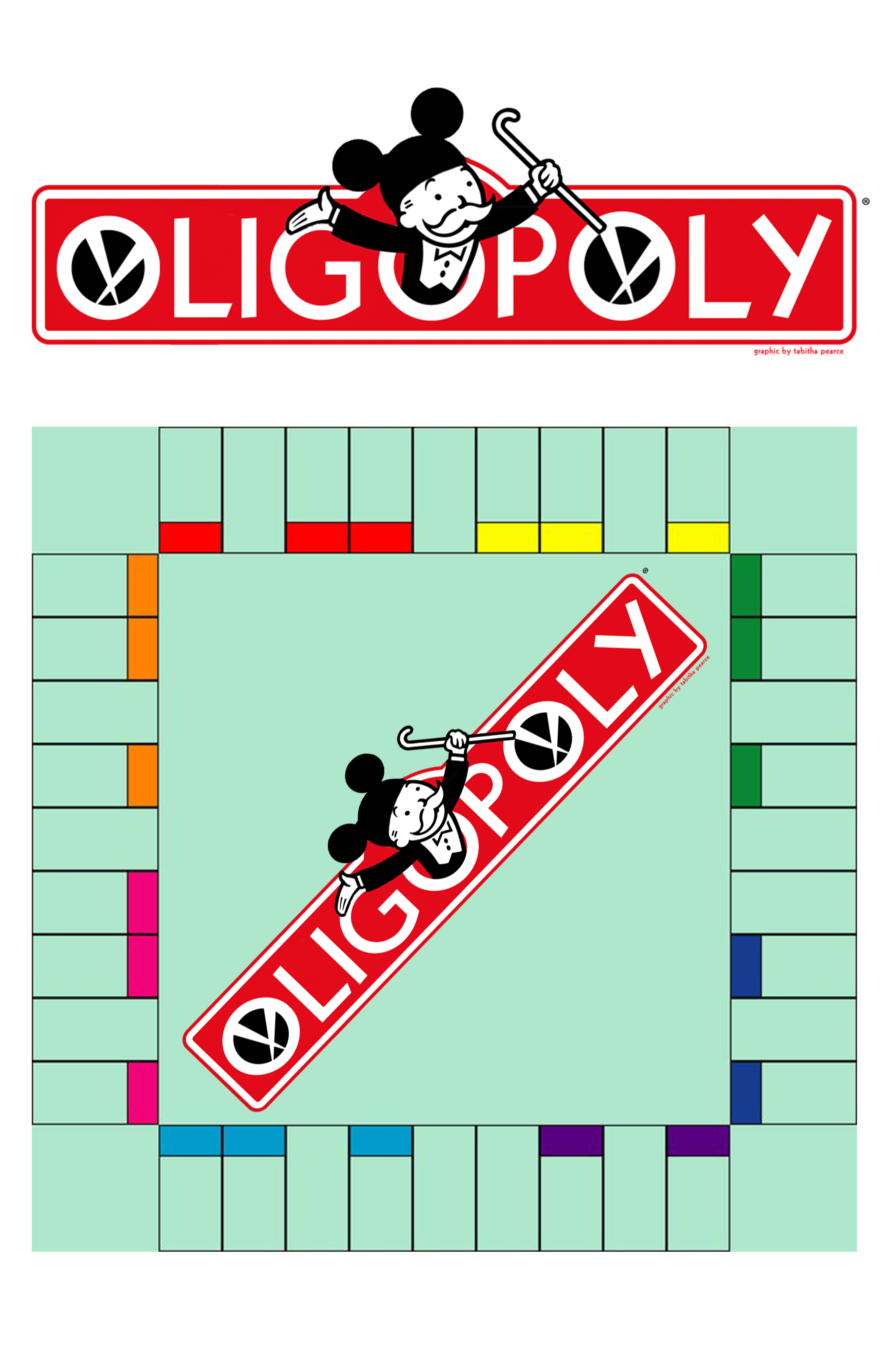
The problem with the current state of capitalism in the Unites States isn’t worries of monopolies but oligopolies (monopolistic practices between a few firms that essentially control a market). Certainly the state of the film industry already lends itself to an oligopoly because of the few companies; but the buyout of 21st Century Fox by The Disney Company would greatly increase this issue of a blatant oligopoly. If a monopolist (in many other industries) did what Disney is doing, neither the public nor the government would stand for it; but because it’s Disney, and because it’s the film industry, most of the general public is unaware of the negative consequences of such a buyout. Technically speaking, oligopolies are not illegal nor is monopolistic competition; however, this can be a slippery slope towards stifling creativity or making is increasingly difficult to break into any given industry as a newly emerging competitor. Incidentally, monopolistic competition causes the variety or level of differentiation of similar products (i.e. moves and TV shows) to become less heterogeneous and nearly come across as homogenous. For many, it will feel like there are only two primary companies controlling the majority of programming on TV and a few companies controlling a large portion of the movies that get released in movie theaters.

When a strong oligopoly exists within a specialized industry (for our purposes, media & entertainment), one of the side effects is a concept known as parallel exclusion. This concept can be described as the collective efforts of the few industry leaders who essentially act as the main gatekeepers to prevent or make it difficult for would-be newcomers to enter the arena. Parallel exclusion is nothing new, and has been in the news as recently as the last 2-3 decades within the airline and credit card industries. Throughout the eighties and nineties, Visa and MasterCard essentially blacklisted any bank that set out to do business with AmEx. Thankfully, the U.S. Justice Department stepped in when the manner in which the exclusionary rules were written crossed legal, fair trade boundaries. There were similar issues within the airline industry as well. When a few companies control the content or services in the marketplace, antitrust issues are raised.

Although we are not facing a technical monopoly with the possible acquisition of Fox by Disney, we are looking at an abuse of power that leads to anticompetitive conduct. If nothing else, the consumer should be worried about having fewer options for programming. Not that the number of programs or movies will shrink, but there will be little difference between what is released under the Disney banner and the Fox name (if it’s still even called that). In a deal like this, it’s the consumer who gets the short end of the stick. The consumer would be wise not to give Disney a pass just because there are a small group of big film studios instead of just one. While Marvel fans may be excited that the X-Men can join the MCU (Marvel Cinematic Universe), there is the possibility of a lack of competition between brands thus mitigating innovation and ingenuity. Competition is the mother of innovation just as necessity is the mother of invention.

Because the Walt Disney Company is primarily focussed on producing the biggest movies possible (after all, they made five of the 10 most successful films last year), the mid-budget dramas and comedies that used to thrive in Hollywood–you know, the ones that cause you to cry and laugh–would dwindle in number–there would be little room for them to make their respective ways into theaters in a predominantly Disney controlled industry. What we are essentially talking about here is a corporate cinematic monolith, the likes of which, has never been seen before.

Written by R.L. Terry

Graphic by Tabitha Pearce

“Logan” movie review

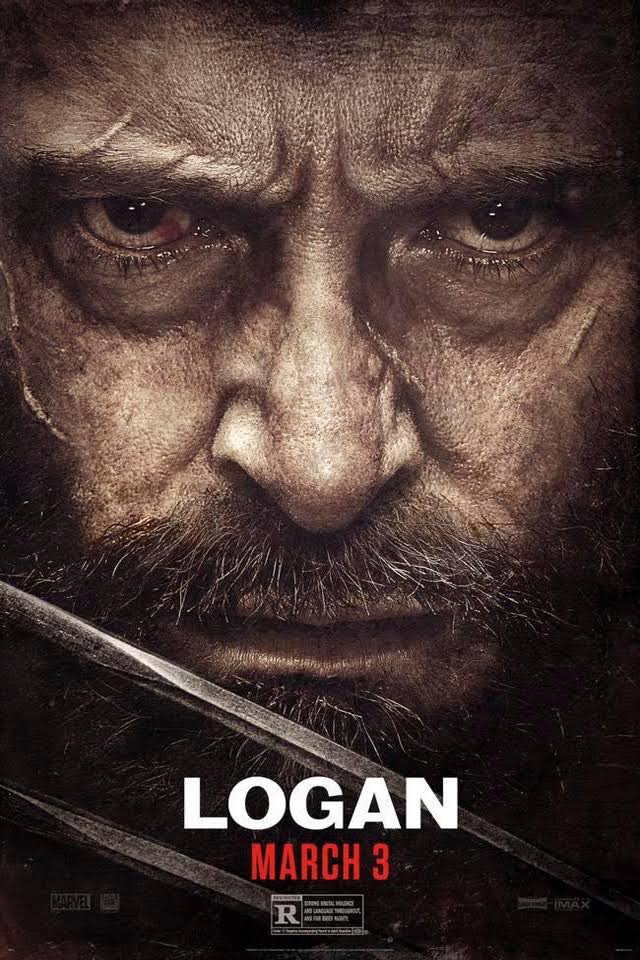
loganUncanny! 20th Century Fox, Marvel, and TSG Entertainment’s Logan is a compelling, grizzly, organic superhero movie that is the last to feature Hugh Jackman as Logan (Wolverine) and Patrick Stewart as Professor Charles Xavier. Prepare to have your mind blown as the action unfolds in such a way that your heart will be pounding, racing, and pumping adrenaline through your body and then tug at your heartstrings as emotions run high. Logan is quite possibly the most comprehensive and diegetically dynamic superhero movie ever, and perhaps best X-Men film in the long, successful franchise. With a penchant for thrilling, action, and even horror films, director James Mangold pulls out all the stops in the last chapter in the story of The Wolverine. While there have been several films about Logan/Wolvervine outside of the main X-Men films, this cinematic adventure will have you on the edge of your seat with anxiety and holding back tears simultaneously. Some of the responsibilities of the final chapter of a character or an actor portraying a long-standing character are striking a delicate balance between nostalgia, closure, but still providing audiences with a new story; overwhelmingly, this film delivers the absolute best as we bid farewell to Hugh Jackman and Patrick Stewart from the X-Men universe and exceeds any and all expectations.

In the not too distant future, an aging Logan (Jackman) is caring for an increasingly ailing Professor X (Stewart) near the US/Mexican border. With the professor’s cognitive health in a downward spiral, Logan illegally acquires medications that ease the Professor’s seizures…seizures that are telekinetically powerful enough to leave devastation in their wake–and have. Logan is challenged to hide the Professor from the world in an effort to shield him from those who seek to kill him. While operating as a limo driver, Logan encounters a bizarre woman at a funeral who begs for his help. As Logan has always been the solitary type who mostly cares for himself, he ignores her cry for aid. In a bizarre turn of events, he finds himself caretaker of her daughter when she is found dead in her hotel room. After she follows Logan to the hideout, Professor X pleads with Logan to take her to a place called Eden. This soon becomes a bloody road trip as the three of them hide from and attempt to outrun those who want to kill Logan, the Professor and take the girl back to Mexico.

What do James Mangold’s 3:10 to Yuma and Logan have in common? They are both grisly western films. Evidence of this is not only seen in the character development, pacing, and overall tone of the film, but can also be seen within the film itself as Professor X and Laura (Dafne Keen), the young girl traveling with Logan and Xavier, watch a western film on TV–a film that Xavier references several times as he reminisces about films from his childhood. While many think that the American Western film died out with Hollywood Golden age, it has certainly not retreated from cinemas. In fact, many of Quinten Tarrantino’s films are westerns, the original Star Wars: A New Hope was a post-modern western, and Mangold’s Logan is yet another example of a reimagination of the American Western film. Reading the film as a western enhances the visceral experience of the film. Although directors seldom pit cowboys against indians anymore, there are subtle references to that relational dynamic from early western movies within this film. Much like the Lone Ranger and many of John Wayne’s characters, Logan is also a solemn solitary character being pulled into a world built upon the idea of relationships but his baggage makes it incredibly difficult. Emotions run high in Logan; and it’s these emotions that provide audiences with a comprehensive experience that fulfills the desire for gritty action plus moments that may stir you to tears.

Although we are just coming out of this year’s award season, it’s entirely possible that Logan may be the first superhero motion picture to be nominated and even win Best Picture at next year’s Oscars. All the elements that make up a Best Picture nominee can be found in Logan. It has drama, romance, a little humor, feels organic, deals with prejudice (by extension), and is based on a book–a comic book that is. The R rating is also important because it (1) serves as further evidence in the direction Fox is going to proceed with films like Deadpool and X-Force–gearing toward an adult audience (2) it allowed for audiences to see the Wolverine at full bloody force, which has been a desire for quite sometime and (3) the degree to which the film can deal with real adult problems physiologically and emotionally. The financial success of Logan will depend on adult audiences speaking the word about the outstanding nature of the film and even bringing more mature younger superhero fans to see the movie. Since most of the film contains disturbing imagery in regards to both the bloody violence and with Professor X’s debilitating cognitive disorder (most likely a severe form of dementia), I would not recommend bringing those under 13 to the film until you have screened it for yourself. It’s an incredible, film; but, there is content that may not sit well with those that are quite young.

Before Logan begins, fans of Deadpool will be excited to know that there is a short film (glorified promo, really) for Deadpool that does a successful job at promoting the highly anticipated sequel to last year’s blockbuster. Its placement is also important to Logan in that it provides some levity before the rather somber tone of the feature film that follows Ryan Reynolds’ offensively endearing witty charm as Deadpool. Logan is proof that superhero films can take the more serious route without sacrificing the art of the story. Both Jackman’s and Stewart’s acting is on point, and probably some of the best of their respective careers. Stewart, more specifically, delivers a command performance as Professor X and demonstrates that an accomplished actor who was primarily first known as Captain Picard can excel in both the horror (Green Room) and superhero genre films, all the while continually adding the touch of class that comes with his formal Shakespearean training as a performing artist.

This is NOT repeat NOT a kids superhero movie. Unless you have screen the film first, I would not recommend bringing anyone under the age of 13 with you to the cinema for Logan. There may not be “adult” content in the conventional sense; but, there are themes, subtext, and some violent content that may not be suitable for a younger audience who typically flock to superhero genre movies. Over all, Logan is an outstanding film, not just of the superhero variety, but also in general. From the writing to the directing and technical elements, this movie is a fantastic example of a superhero film that attempts to be and successes at breaking the mold and cementing itself as serious cinema.