BEETLEJUICE BEETLEJUICE movie review

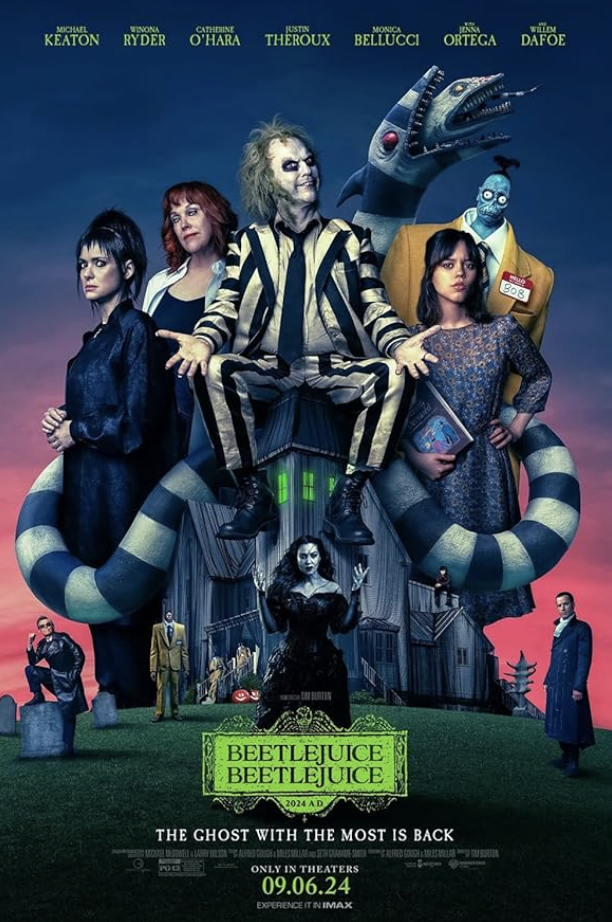
Forgettable and messy. The long awaited and much anticipated sequel to the campy cult classic Beetlejuice is unfortunately an underwhelming return to the fantastical, whimsical universe of colorful and dynamic characters. I’m left asking myself, this is the story for which Burton has been waiting???

Three generations of the Deetz family return home to Winter River after an unexpected family tragedy. Still haunted by Beetlejuice, Lydia’s life soon gets turned upside down when her rebellious teenage daughter discovers a mysterious portal to the afterlife. When someone says Beetlejuice’s name three times, the mischievous demon gleefully returns to unleash his very own brand of mayhem.

Beetlejuice Beetlejuice is a disjoined mess of setup after setup, with little development or meaningful resolution. Even though it successfully channels some of the charm and macabre whimsy of the original, this one is missing something vital–heart. What is most painful to witness is that there is actually a good and even compelling story in there, but its’ buried beneath a garbage heap of subplots and characters that are little more than the equivalent of an NPC (video game-speak for non player character). While the screenplay is abysmal, the bright spots in the movie are Michael Keaton’s delightful reprisal of Beetlejuice, despite his reveal appearing too early in the story. Other highlights of the movie are the quintessentially Burton special makeup and practical effects, including miniatures and puppetry. And composer Danny Elfman lends his distinctive authorship to the score. For fans of the original, this one is likely going to disappoint, but perhaps for those that may be getting introduced to the world of Beetlejuice for the first time, will seek out the original campy classic. At the end of the day, it’s not all bad, but it’s far from good. At best, it’s sufficiently entertaining.

Before getting into what didn’t work, which is substantive, I’d be remiss not to spotlight what the movie did right. The big question, did Burton and Keaton revive ol’ Beetlejuice? And the answer is, yes. The character of Beetlejuice himself is the reason the movie has enjoyable moments and will keep you moderately entertained. Keaton delivers a Beetlejuice that makes you forget that he hasn’t played this character in nearly 40 years. For the most part, he captures the energy, wit, sarcasm, and offbeat charm of his original incarnation. Unfortunately, that cannot be said for the rest of the performative dimension. But more on that later.

Over all, the design of the movie harkens back to the Burton’s golden age in the 80s and 90s, except when he lays practical effects over CGI backgrounds or oscillates between both mechanical and digital in jarring ways. From beginning to end, movie magic is witnessed everywhere. Burton was committed to capturing the imagery of the original in both the costumes and set design, and by in large, he accomplished just that. This movie is a reminder that computers cannot replace the way real light bounces off real objects into the camera lens. The magic of motion pictures is a combination of tactile, chemical, performative, and lighting elements. Despite the Afterlife lacking true camp value, it was a successful return to the imaginative world created by Burton in the original movie.

Regrettably, the movie fails to deliver a compelling or even coherent story. It’s a disjoined mess of ideas that couldn’t have possibly made sense on paper, let alone on the screen. The first act moves along sluggishly, but picks up pacing in the second and third; however, very little (if anything of meaningful value) is developed or resolved that is setup in the first and second acts. There are literally entire characters that serve little to no purpose in the story. And, without getting into spoilers, there is a compelling plot that is excellently setup, but the development and resolution is so sloppy it just hurts the narrative all the more. Even a notable cameo is completely wasted as it bears little importance to the story. It’s hard to even call it a story because it’s lacking a plot, a central character, and a character of opposition; there isn’t even a real goal to be achieved. While the character of Beetlejuice is known for his chaotic behavior, the narrative need’t exhibited the same level of randomness and chaos as exhibited by our title character.

Speaking of characters, the reason that the performative dimension is sorely lacking any modicum of substance is because the characters are given nothing to do. There is little reason for anyone to be doing anything. Furthermore, the Delia and Lydia we get in the original are not the Delia and Lydia we witness in this movie, and Lydia’s daughter Astrid is simply not believable as an angsty teenager. With a little motivation and dimension, the characters would’ve likely been highly entertaining and compelling; but, they are lacking any dimension whatsoever.

Tonally, the movie is all over the place. All over the place except for the one place it needed to be. And that is camp. For a movie that should’ve eat, slept, breathed camp, it plays it too seriously and tonally inconsistent. Yes, there are what we would usually refer to as campy costumes and characters in the movie, but the context is lacking that camp aesthetic and sensibility, for which Burton is (or used to be) known. Contributing to the tone of the movie is the Elfman score that only feels like Elfman sometimes. It’s like a composer imitating Elfman. Yes, we get the classic Beetlejuice theme music, but other than that, I’d be hard -pressed to identify any other musical moments that felt like Elfman.

The movie does deliver some entertaining moments, but sadly they are few in number. When the movie works, it works! But it simply does not work sufficiently enough. Also, the lines “…strange and unusual” and “it’s showtime” are nowhere to be found. There was also a setup for a much-needed scathing critique on influencers and influencer culture, but that setup too wasn’t developed. So many great ideas that are completely disconnected.

Watch if you simply want to enjoy some movie magic and familiar characters, but don’t expect to be quoting this sequel like you do the original. I’ll leave you with this, the fact that Lydia’s TV show is titled “Ghost House” is a nice nod to the original title of Beetlejuice.

Ryan teaches Film Studies and Screenwriting at the University of Tampa and is a member of the Critics Association of Central Florida and Indie Film Critics of America. If you like this article, check out the others and FOLLOW this blog! Interested in Ryan making a guest appearance on your podcast or contributing to your website? Send him a DM on Twitter. If you’re ever in Tampa or Orlando, feel free to catch a movie with him.

Follow him on Twitter: RLTerry1 and LetterBoxd: RLTerry

BEETLEJUICE THE MUSICAL review

Stick to the movie. While I seldom review stage productions, whenever there is an adaptation from screen to stage, I am interested in reviewing it! Touring the country this year are Broadway versions of Beetlejuice, Moulin Rouge, Mrs. Doubtfire, and Clue. Quite the season for screen to stage adaptations. The film professor and critic in me is curious as to the narrative and experiential success of the stage version of a beloved classic movie. Some movies lend themselves to stage versions such as Moulin Rouge and Clue, but others require a bit more imagination such as Beetlejuice and Mrs. Doubtfire. I went into Beetlejuice with an open mind, as I had not read any of the reviews prior to watching it. Since I rarely watch trailers before I screen a film, I wanted to be as fair as possible to a Broadway show based on a movie. Suffice it to say, Beetlejuice the Musical failed to live up to the experience, reputation, and storytelling of the Tim Burton classic Beetlejuice.

Unfortunately, my impression of the musical was off to a negative start as the performance was delayed by 30-minutes–then compound that with two additional technical problem totaling about 30 more minutes of delays, and the musical was going to have to really work some magic to overcome the hobbling out the gate.

Since I am an expert in cinema (not Broadway), I am going to stick to my opinion of the translation from screen to stage, including narrative, design, and music.

The two areas wherein the show suffers most greatly is in narrative and music. But before I talk about the story and music, I want to focus on what the musical did well. And that is the set desigg, lighting, and effects.

Even though the set design, lighting, and effects may not be directly lifted from the stylized versions created by Tim Burton, there is a distinct style to the designs employed by the musical. All the sets feel like extensions of the movie, but still an original enough expression thereof. We even get the sandworm!! The appearance of the sandworm puppet was incredibly uplifting and brought the biggest smile to my face! Classic Burton designs are steeped in German expressionism, and that doesn’t entirely come through in the set designs; however, there are plenty of exaggerated shapes, harsh shadows, and emotive expressions in the design that remind us that this is a work inspired by the creative mind of Tim Burton. The technical theatre dimension of the show was outstanding! I adored the lighting and other effects that set the atmosphere and ambiance on stage.

The Broadway musical is a near complete departure from the movie version, and in the opening number Beetlejuice acknowledges that this is not the movie–however, it would have benefitted from being closer to the movie. When the musical is aligned with the movie, it works very well! Regrettably, when it departs from the movie, the plotting, characters, and music suffer. The best scenes in the show are the dinner party, the Netherworld, and the finale, all very much inspired by the movie. Throughout the show, there are movie moments recreated, but far too few. At least we got the memorable “I, myself, am strange and unusual” line. The stage Beetlejuice feels like a different character than Michael Keaton’s in the movie.

The dialogue and performative dimension of each character was forgettable. No one feels like they are an extension of the movie version, but a different character altogether. Even the dialogue was awful. I get it: Beetlejuice’s schtick is his crass, crude humor. But in the movie, it was always balanced out by more grounded characters and a tone of whimsy. This Beetlejuice is crass and crude simply to be crass and crude–with little paying off dramatically. While I appreciate some of the additional jokes, most were simply better suited for a standup routine than for a narrative work. The characters were speaking with the voices of the musical’s writers and not the voices of the characters as written for the movie. Each character is trying to be more over-the-top than the previous character, and what we wind up with is a cacophony of loud, boisterous, annoying characters.

The story is dramatically changed from the movie. To call it an adaptation is being generous, because there is little that is the same in both the plots from the movie and stage versions. Perhaps this is what happens when you take a 1.5hr movie and try to write a 2.5hr musical. There is simply an insufficient amount of plot to fill that additional hour. I suppose the foundation is the same, but the narrative is expressed very different in the stage version compared to the movie. When moments from the movie were included in the stage version, I literally clapped–that was about the only times I clapped during the performance. This musical should have stuck more closely to the plotting and characters of the movie instead of trying to improve upon it. Even though I will admit that some of the narrative connective tissue in the movie is a bit weak and some story elements feel disjointed, it’s in far more stable shape than the story from the musical.

Lastly, conspicuously absent from the stage version is the iconic Danny Elfman score. While there are moments in the musical’s songs and score that are somewhat reminiscent of the Elfman score, its absence was sorely felt. Not once did I hear the Beetlejuice theme music, not even in the overture or prologue. Elfman’s music is as stylistic as Burton’s cinematic visions, and this musical could have benefitted greatly from the music of Elfman. I had hoped that the musical numbers would have been like the musical numbers from The Nightmare Before Christmas, but they were not. They felt like generic AI-generated Broadway songs from another non-Burton-inspired intellectual property. Elfman’s music for films such as Beetlejuice, Batman and Batman Returns, and Nightmare Before Christmas cannot be lifted for and used for any other movie or stage production. His music is a tangible extension of the characters, plot, and atmosphere of the story. What we got was generic modern Broadway music and songs.

All in all, I was unimpressed with the musical, but I appear to be in the minority on my opinion of the show. My advice to anyone thinking of seeing this show is to go into it not wanting a stage adaptation of the movie, but rather a reimagination of the characters and concept from the movie.

Ryan teaches Film Studies and Screenwriting at the University of Tampa and is a member of the Critics Association of Central Florida and Indie Film Critics of America. If you like this article, check out the others and FOLLOW this blog! Interested in Ryan making a guest appearance on your podcast or contributing to your website? Send him a DM on Twitter. If you’re ever in Tampa or Orlando, feel free to catch a movie with him.
Follow him on Twitter: RLTerry1 and LetterBoxd: RLTerry

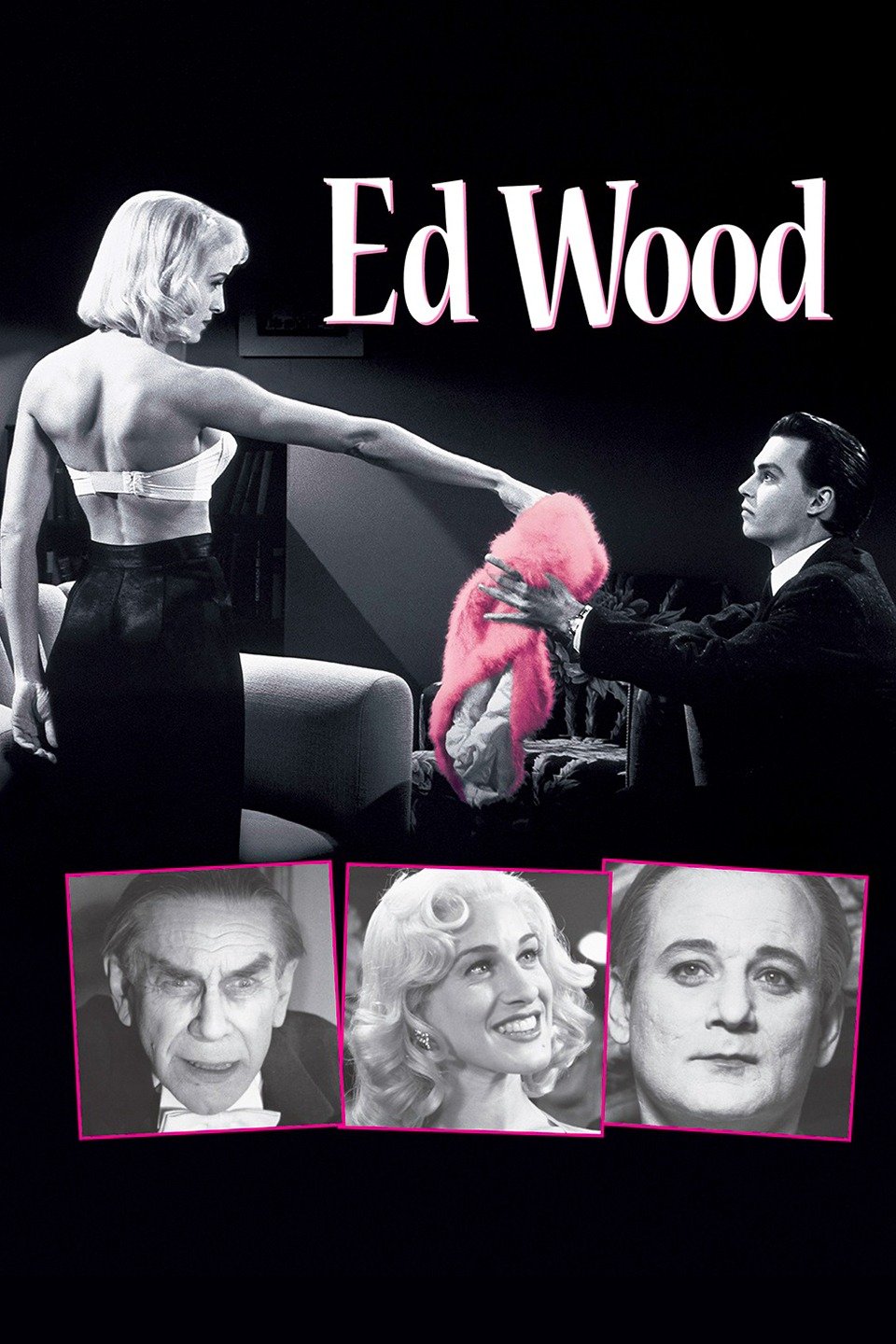
Tim Burton’s “Ed Wood” (1994) Film Review

Catch a falling star and put him in your movie. “What a picture.” As many horror and horror-adjacent movies I’ve seen over the years, I am still finding those that I am familiar with–yet–have never taken the time to watch. And Ed Wood is one of those movies. Even if you know the story, and have even seen clips of the movie in your cinema studies class, believe me, you want to seek out this brilliant motion picture about the dark side of show business. There is perhaps no greater example of posthumous notoriety and success in cinema than the late filmmaker Edward D. Wood, Jr., most famously known for Plan 9 from Outer Space and casting the great Bela Lugosi in his final screen appearance. While his Z-grade movies were laughed at during their day, these movies provide inspiration to artists everywhere that you can pursue your dreams even when your harshest critics and financiers dismiss you. Ed Wood was a creator with a passion for bringing joy through entertainment into people’s lives. Perhaps his films were poorly produced, written, directed, and virtually everything else, but what this films demonstrate is a love of filmmaking and respect for great talent that flew in the face of a “town that chews you up and spits you out.” Ed Wood was in motion pictures for the art and love, not for the business. Tim Burton’s quasi biographical film about the production of Glen or Glenda and Plan 9 from Outer Space, and the relationship between Bela Lugosi and Wood is a beautiful portrait of love and respect. Of all the fantastic performances in this film, Martin Landau’s Bela Lugosi is a command performance that rightly earned him an Oscar for Supporting Actor. If you’ve ever had a dream, this film serves as inspiration and provides darkly comedic anecdotes that shine a light on the lengths independent filmmakers have to go in order to find a way to finance and produce films. This film is a sort of ode to all the misfit creatives out there, and probably the most sincere and personal film that Burton has ever made.

Because of his eccentric habits and bafflingly strange films, director Ed Wood (Johnny Depp) is a Hollywood outcast. Nevertheless, with the help of the formerly famous Bela Lugosi (Landau) and a devoted cast and crew of show-business misfits who believe in Ed’s off-kilter vision, the filmmaker is able to bring his oversize dreams to cinematic life. Despite a lack of critical or commercial success, Ed and his friends manage to create an oddly endearing series of extremely low-budget films. (IMDb)

From a visionary director, i

All the technical elements scream classic Tim Burton! From the moment the movie opens, even if you did not know that this was a Burton film, you would instantly identify the stylistic opening as quintessentially Burton. And not just the choice to make the movie grayscale, but the production design has a gothic poetry to it. Burton was able to successfully capture the look and feel of 1950s Hollywood. He was careful to recreate the world of Ed Wood, all the way down to the character blocking in the movies within the movie. For example, you can compare the recreated Ed Wood movies within this biopic to the real deal, and many are practically carbon copies. I appreciate this because it makes the filmmaking we see in the movie feel all the more real when what’s being shot in the movie is the same as was shot in real life. Perhaps Burton didn’t shut down Hollywood Boulevard like QT did for OUATIH, but he painstakingly transports the audience of the then 90s and even today’s audience to an era of independent film production that produced movies that look like they belong on an old UHF station.Most of the scenes are set in dank, warehouses or the empty streets of a nondescript section of the city. Other scenes are simply in a humble home. The filmmaker Ed Wood never shot a frame that he didn’t like; moreover, this practice was so extreme that he would ignore complete technical blunders and horrendous acting that was so bad that it achieved a kind of grandeur or cult status that can be appreciated decades later because Wood’s love of movies and movie making shines through in every frame of his masterful disasters.

Just as Ed Wood loved every frame of everything he ever made, the visual design of this film has got to be loved by Burton. His signature is on every scene. No mistaking it, there is more to the reasons for recreating Ed Wood’s Hollywood than just making an accurate biopic. Much like Norma Desmond took audiences on a journey into the life of a faded once-great(est) star of the silent era, It’s in these very dark corners and abandoned places where the true love of motion picture making lives, where the only reward for wrapping a picture is the love of the work itself and the cheers of those whom stood by you and helped take the idea from concept to screen. Ed Wood represents geek culture of the 1950s, future icons of horror and science-fiction are featured as unappreciated in their time. Fortunately today, geek culture is alive and well, and even celebrated. Yeah, there are obnoxious stans out there, but most of us movie and horror geeks simply love the medium and enjoy having fun with movies that still capture our imaginations. The director Ed Wood was not unlike many of us; he had a dream, and stopped at nothing to realize it. While I do not care much for Burton’s work after the 80s and 90s, he is a filmmaker that showed audiences through BeetlejuiceBatman Returns, Nightmare Before Christmas, Edward Scissorhands, Mars Attacks, and Ed Wood that he loves the art of motion pictures. When you went to a Burton picture in the 80s and 90s, you knew that you would witness the hand of the artist. In both Ed Wood’s and Tim Burton’s films, there is an effervescent life, a joy in their films that technically and critically “better” pictures only wish they had.

We cannot talk about Ed Wood without spending some on Landau’s Oscar-winning performance as Dracula himself Bela Lugosi! I was blown away by how sincere the performance was. What we saw Renee Zellweger do with Judy Garland in last year’s Judy, Landau did with Lugosi in Ed Wood. If I didn’t know any better, I would have said that I was watching Lugosi in this film. Both vocally and physically, Landau transforms into the famous Hungarian actor. From the moment we first see him laying in the coffin (creative latitude on Burton’s part), Landau captures our imaginations. Landau delivers a performance of a faded film star that Gloria Swanson would be proud of. In many respects, the characters of Bela Lugosi and Norma Desmond are similar. While Norma wasn’t living in near poverty, she was living in a world in which the parade of fans long sense passed her by; likewise, Lugosi fell into such obscurity that even people in the business thought he was dead. Landau embodies the mind and soul of someone that feels completely abandoned by the world and the fans that once loved to see his pictures. And it wasn’t the fame or money that Lugosi missed per se, but bringing joy to millions and simply the feeling of being wanted or needed is what Lugosi missed most. While Landau received negative criticism from the family and friends of Lugosi because his family said that Lugosi never used profanity or slept in coffins, there is no doubt that this is one of the finest performances of Landau’s career and in biopics.

Everything about this motion picture works brilliantly! I’m only disappointed that it took me this long to finally make time to watch it. Even though there is something in this movie for everyone, I feel that it impacts cinephiles and filmmakers the most. Though, there is a high degree of relatability for anyone that has ever had a dream and stops at nothing to continue to pursue it. Amid the recreation of all the tacky filmmaking and notoriously bad acting, there is a warmth and charm that will stick with you long after the credits role.

Ryan teaches screenwriting at the University of Tampa. If you like this article, check out the others and FOLLOW this blog! Interested in Ryan making a guest appearance on your podcast or contributing to your website? Send him a DM on Twitter or email him at RLTerry1@gmail.com! If you’re ever in the Tampa area, feel free to catch a movie with him!

Follow him!

Twitter: RLTerry1

Instagram: RL_Terry

“Miss Peregrine’s Home for Peculiar Children” movie review

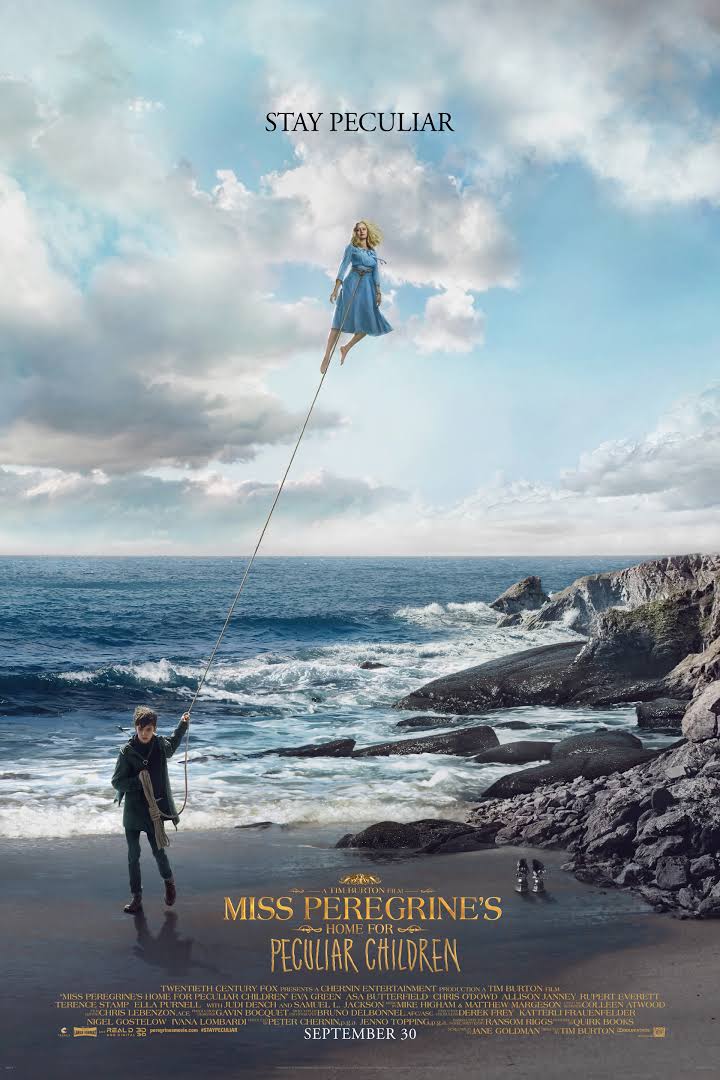
missperegrinneSurprisingly exciting! Twentieth Century Fox brings another YA novel to the screen. Tim Burton’s Miss Peregrine’s Home for Peculiar Children (from here on out noted at Miss Peregrine) is both a fish out of water story combined with a magical adventure that mildly comments on the human condition. Of all the YA movies that have been produced over the last few years, this one provides a much more dynamic experience than many of the others. Burton delights audiences with the classic Burton style that many of us have grown up with. In more recent years, I have often commented that he is essentially a parody of himself–a.k.a. Burt Porn (as coined by my friend Leon in Germany)–not true with Miss Peregrine. Get ready for a return to the class Burton that brought us timeless movies such as A Nightmare Before Christmas and Edward Scissorhands. The great cast is supported by the appearances of Samuel L Jackson and Dame Judi Dench. From Florida to Wales, this movie is sure to whisk you away to daring adventures requiring rather peculiar abilities to defeat those who would seek to take what isn’t theirs to have.

All Jake (Asa Butterfield) knew was his ordinary life. He had a rather blah home life, an eccentric grandfather, and a job that he hated. Until one day, something peculiar happened. In his grandfather’s dying breath he told Jake to find the island. With his parents finding his sports of what he saw at his grandmother’s death to be quite bizarre, they forced hi to visit a psychiatrist. Upon finding a mysterious letter, Jake is determined to find the home in which his grandfather grew up. Accompanied by his cynical father, Jake returns to the island where his grandfather grew up. Only he could never have expected the adventure and run of this life that he will soon find himself. Stumbling across the children’s home ran by Miss Peregrine (Eva Green), Jake teams up with the most unusual but fascinating people who are in a rush against time to defeat those who are out to destroy them.

If I had to name one takeaway from this film, it would be that it reminds me of the 1980s/90s Tim Burton before he “went down the rabbit hole.” It combines his surreal and gothic filmmaking style juxtaposed against his flare for the colorful and bizarre. Although it is not an original concept by any means, if you’re a fan of Fox’s film adaptations of or the animated series X-Men, then you will likely enjoy this movie! Not having read the book, I cannot comment on the film’s alignment and commitment to the literary work written by Ransom Riggs; but, from what I have read online–even the author himself–is pleased with Burton’s translation from page to screen. Very few directors would have been so successful at bringing this story to life more than Burton.  Despite an apparent successful translation from book to movie, the film suffers from an overload of mythology, exposition through dialog, and lacks the thrills to completely balance out the former two elements. Although this movie may feel like one that you have seen before, it does offer a glimpse into Burton’s prime years and perhaps offers a hope that the acclaimed visionary director can once again impress us with his fantastical but highly effective cinematic storytelling.

One of the most successful elements to the X-Men’s plight as individuals born with peculiar abilities is the fact that they are human. They hold onto their humanity (the good guys anyway). Miss Peregrine’s children do not appear to offer the same level of humanity as their X-Men counterparts. The impact of the X-Men’s abilities is felt not only by the X-Men themselves but by the community at large. For the most part, Miss Peregrine’s children’s abilities largely leaves no impact upon themselves or others. Almost plays off more as a convenient plot device than character attributes. Hugo‘s Asa Butterfield’s fake American accent does not really suit his character of Jake. In a world of fantastical dynamics and depth, he plays off as a boring, flat character. In screenwriting, it is vitally important for the writer to cause the reader/audience to love the protagonist and/or love to hate the antagonist. I found it hard to love Jake or truly hate Barron (Jackson).

So, the movie may not have the amazing principle cast that we are accustomed to in a Burton movie; but, it does still contain Burton magic and some exciting and beautiful visuals. It is also a lot of fun to watch! In addition to being fun to watch, it contains some rather disturbing imagery and cringeworthy moments. But that’s par for the course with classic Burton. One of my favorite parts in the movie is the action-packed climactic sequence accompanied by dark humor. It’s a great combination of humor and visceral conflict. If you’re looking for a fun movie to watch this weekend, then this one is a solid pick! Furthermore, if you desire to get a glimpse into a more classical Burton film, then you’ll find utter delight in this one as well.

The Art of BATMAN RETURNS (1992): a retrospective movie review

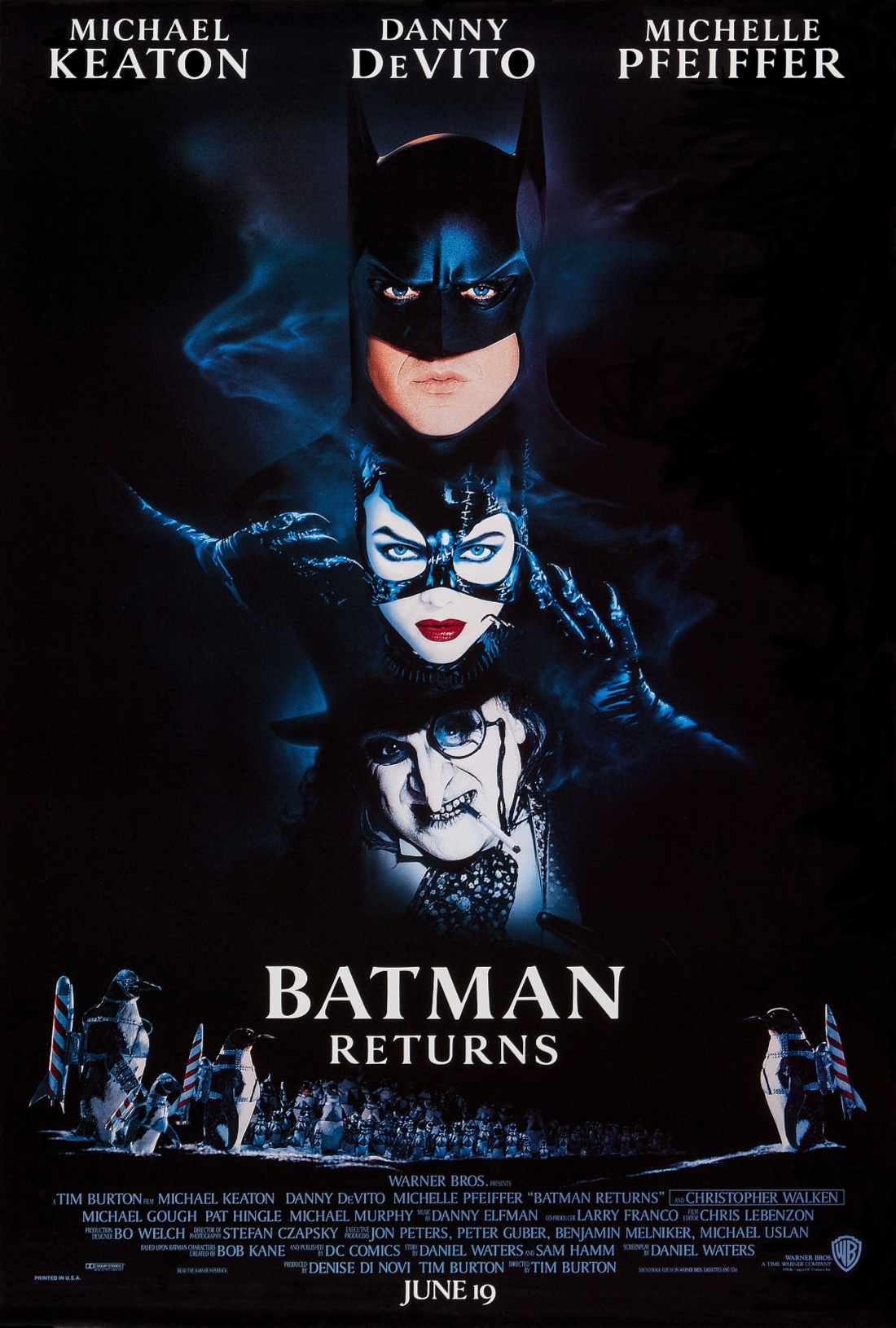
By far, still the sexiest Batman movie! With the reviews from fans and critics alike regarding this weekend’s release of the highly anticipated Suicide Squad ranging anywhere from horrible to moderately enjoyable, I decided to rewatch and review the Batman movie that is still considered by many, and yours truly, to be the most Batman out of all of them. Released in 1992, Tim Burton’s Batman Returns boasts a star-studded cast complete with the German expressionistic filmmaking style and gothic production design often associated with this iconic superhero franchise. The brilliance of Batman Returns can be witnessed in recognizing that Tim Burton provided audiences with an art house film masquerading around as a superhero Hollywood blockbuster. From the architecture to the costumes and cinematography, this Batman movie has more in common with art than a movie. Not that movies lack artistic appeal, quite the contrary–after all cinema is the art of visual storytelling; but there is a certain artistic charm that surrounds Batman Returns uncommon in other superhero movies. In other words, the focus was more on the art of a Batman story than the plot. Many comic book enthusiasts also regard this installment (as well as its predecessor) as very close to the comics in plot and visual design. Furthermore, hands down, the most memorable element of the movie is Michelle Pfeiffer’s Catwoman, and with good reason. Incredibly sexy, seductive, slightly psycho, playful, and conniving. Juxtaposed against Danny DeVito’s monstrous Penguin, Michael Keaton’s timeless Bruce Wayne/Batman, throw in the self-centered and ruthless Christopher Walken’s Max Shreck, and you have a brilliant cast bringing to life iconic characters under the direction of a then-visionary director before he became a parody of himself.

Beneath the streets of Gotham City lies a world of water, waste, and The Penguin. Abandoned by his wealthy parents, Oswald Cobblepot is raised by the Penguins of the former Gotham City Zoo. He grows to resent the world above and the blue bloods of society that cast aside those who they deem as undesirable. High above the sewers, Selina Kyle is nervously tending to her boss’ every need. Not the most meticulous secretary–oh sorry, assistant–she has failed her ruthless boss Max Shreck for the last time, and gets shoved out a window to be nursed back to life by cats. Both abandoned and left to die, but return to life with revenge and warped justice on the mind. During the annual tree lighting ceremony, The Penguin and his henchmen thwart the celebratory atmosphere with gunfire, looting, chaos, and violence. Valiantly defending the good citizens of Gotham, Batman fights off the havoc that The Penguin with which The Penguin is enveloping the city. However, all the public knows is the good, kindhearted Penguin with a love of public service? Although initially setting out to kill Batman, in an ironic twist of fate, sparks begin to fly between Batman and Catwoman AND Bruce and Selina. Revenge, love, violence, and trademark gadgets. This Batman movie has it all.

Even the most dedicated Batman fans will admit that this film certainly has cinematic problems. But why are the flaws in this movie somehow forgiven but the flaws in Batman v Superman or this weekend’s Suicide Squad held against them respectively? Rewatching this Batman movie reveals that it is likely held is such high regard by superhero movie buffs and fans of the comics alike due to of the A-list talent and the artistic or stylistic approach to this story. Because the focus of the film is definitely on the art versus the plot, narrative flaws can easily be overlooked as the experience of this film rests upon the feel and look of everything more so than the plot in and of itself. It is rare for a superhero film to also be so incredibly artistic. And that is why this particular Batman movie stands unique amongst all the others that have been produced over the decades. The passion for visual design is seen in every shot, every costume, and in the sexiness of the interpersonal relationships between the characters. Just like with interpretive art, various interpretations of tone, feel, message, and impression can be found throughout Batman Returns. Regarding the tone of the film, it repeatedly switches from a campy melodrama to tragic love story to action/adventure. In many ways, this film is representative or even self-reflexive of cinema from the 1930s to the 1950s. Paralleling the film’s repeated switches of tone and pace, the characters also change personalities, demeanors, and motives. Moreover, control over situations constantly changes hands throughout the movie. Whether as the audience or a bystander in the movie, it is difficult, at times, to discern the villain from the hero. The magic of this Batman movie is that it bridges the boundaries of so many different interpretations of the Batman universe over the years into a film that embodies the art of filmmaking.

Not a direct follow up to the successful 1989 Batman, this installment is often celebrated as the most Batman of the Batman movies; it’s the one that somehow manages to reflect more about the hero and his world than any other on-screen representation he’d enjoyed before or since. It’s a celebration of the Dark Knight that succeeds, in large part, by its refusal to go too dark, but remains off-kilter and uncomfortable, just enough, all the way through. Likewise, the villains are psychotic, larger than life, and legendary. From the tragic character of The Penguin thrown into the river in a warped Moses fashion on Christmas to the beaten down mousy secretary turned bondage clad 1990s feminist Catwoman, Batman Returns is a quintessential Tim Burton film before he just went way too bizarre in recent years. Both The Penguin and Catwoman can be seen as two different mirrors for our caped crusader. Penguin represents a child of wealth who was abandoned by his parents (not unlike our Bruce Wayne) and Catwoman represents the sensual side of Batman that we seldom get to see but we know it’s there because he is human. The combination of characters, settings, and behaviors makes this film a fun, erotic, and entertaining Batman movie. The stratified emotions, experiences, and interpretations provides audiences with a dynamic story that plays out beautifully on screen. In fact, the film is so entertaining to watch that you will likely forget that the pacing, plot, and structure of the film lacks critical value.

If you are leery about spending money to watch Suicide Squad this weekend, I suggest rewatching–or for some of you watching for the first time–Tim Burton’s artistic masterpiece Batman Returns. If for no other reason, you will enjoy the brilliantly sexy Catwoman, tragic monstrous Penguin, and the definitive Batman/Bruce Wayne as played by Michael Keaton. Such fantastic actors and characters!

Ryan teaches Film Studies and Screenwriting at the University of Tampa and is a member of the Critics Association of Central Florida and Indie Film Critics of America. If you like this article, check out the others and FOLLOW this blog! Interested in Ryan making a guest appearance on your podcast or contributing to your website? Send him a DM on Twitter. If you’re ever in Tampa or Orlando, feel free to catch a movie with him.

Follow him on Twitter: RLTerry1 and LetterBoxd: RLTerry