SHELBY OAKS horror movie review

A cautionary tale of when YouTubers confuse content with cinema.
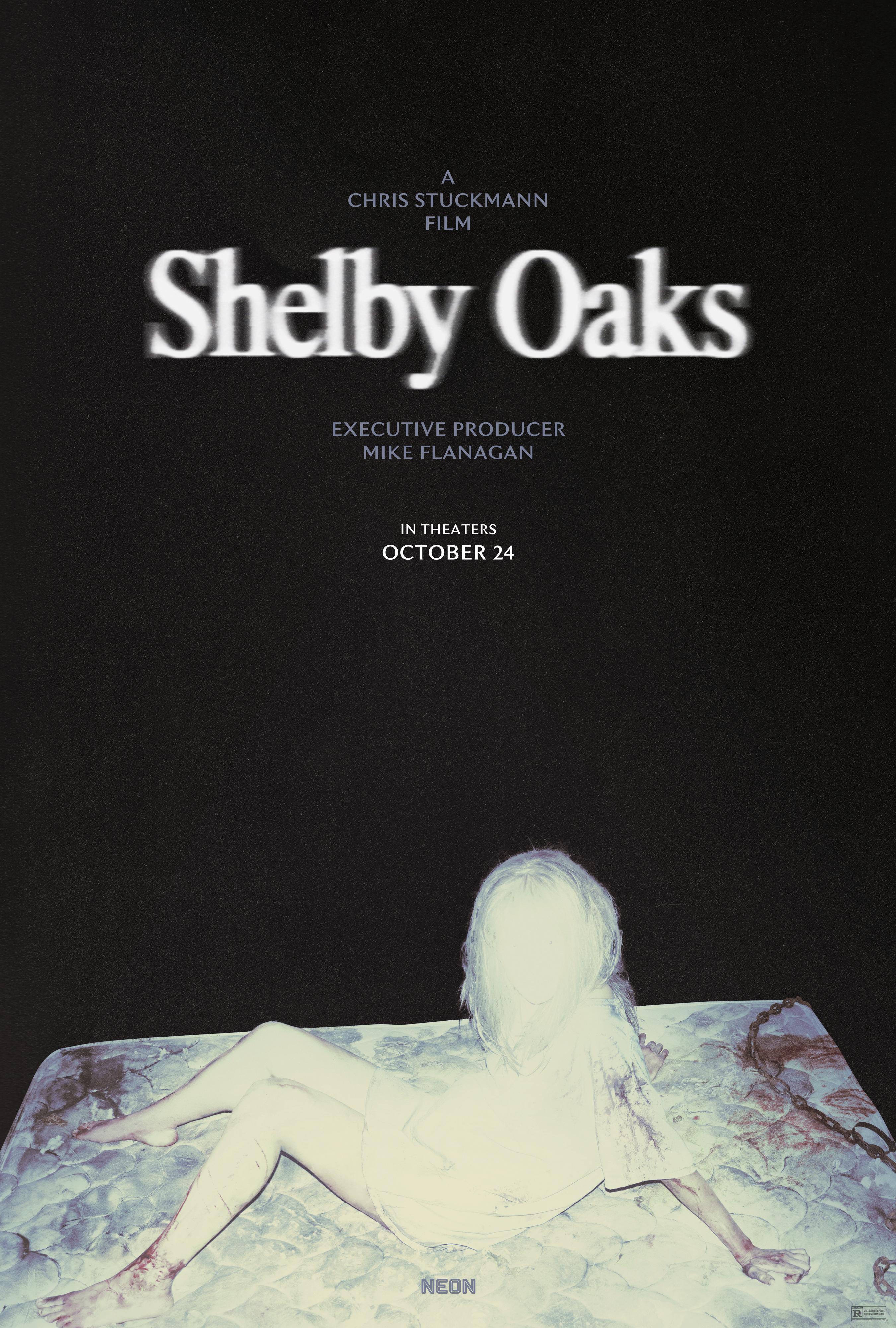
Chris Stuckmann’s Shelby Oaks arrives with all the makings of a breakthrough: (1) it’s one of the most successful Kickstarter-funded indie films ever, and (2) it’s directed by one of YouTube’s most popular influencer-critics. In fact, I’ve used some of his videos in my own classroom—good material: informative, engaging, and accessible for budding cinephiles. But therein lies the rub: informative and engaging does not a motion picture make. The premise, though, is undeniably intriguing—a reimagining of familiar horror tropes with contemporary urgency. Stuckmann delivers a film that has the bones of something potent—think The Blair Witch Project meets Rosemary’s Baby: paranoia, obsession, and the horror of the unseen, all wrapped in a missing-person mystery and topped with a bow of supernatural dread.

Shelby Oaks is about Mia’s search for her long-lost sister and paranormal investigator Riley becomes an obsession when she realizes an event from her past may have opened the door to something far more sinister than she could have ever imagined.

Like many contemporary filmmakers–particularly those that got their start on YouTube–Shelby Oaks excels in technical achievement and marketing. The cinematography is confident and atmospheric, drenched in moody lighting that evokes gothic horror. There is little doubt that Stuckmann clearly understands shot composition, pacing within the frame, even editing in-camera and the importance of visual tone. All the technical elements are quite impressive for a debut feature. And if all a motion picture was–was the visual elements–it’d be easy to admire. But it isn’t. Even Hitchcock knew that. Which is why Hitch never wrote his own screenplays–he generated the idea, even outlined entire scenes and sequences–but he knew that he needed to work with a screenwriter, that understood the material, in order to fully realize his movie idea for the screen. What is greatly lacking in contemporary cinema is an understanding of what makes a great story–plot structure, mechanics, and the emotional substructure.

But Shelby Oaks falters where too many YouTube-born filmmakers stumble—storytelling. Shelby Oaks has a great idea for a movie, but not a fully realized narrative. At its core, the narrative never builds sufficient momentum. Why? Simple–because there’s no real opposition. “Evil,” in the abstract, isn’t conflict. Opposition must manifest into something tangible between the character and his or her external goal, whether that’s a person, a system, or her own inner demons. For all the supernatural activity in the film, there never truly emerges a character of opposition. The result is a macabre mystery that depicts scenes and sequences wherein Mia’s pursuit unfolds, but without the benefit of a tangible sense of escalation or even revelation. Shelby Oaks is more of a proof of concept rather than a complete story.

Stuckmann, for all his film knowledge, seems more comfortable replicating tone and texture than constructing narrative architecture. His background in reviewing movies gives him an eye for what looks right—but not yet the discipline to shape what feels right. He understands what sells, what gets views, and even genre conventions. But sadly, none of the characters, including Mia, possess real dimension or agency. She and the rest of the characters are vehicles for mood rather than emotional engagement.

What works on YouTube—enthusiasm, charisma, and technical dissection—doesn’t automatically translate to cinema. His channel reveals a deep love of horror and a commendable understanding of its visual language, yet Shelby Oaks exposes the gap between appreciating a genre and authoring it. The film lacks what isn’t needed in (and can even get in the way of) YouTube content: storytelling mechanics, structure, and the discipline of narrative design. It’s one thing to analyze story beats; it’s another to build them, to shape character arcs, rhythm, and tension through the grammar of storytelling rather than the syntax of spectacle. Often, YouTube videos have great hooks, but they lack the narrative substance behind the hook.

What’s most frustrating is how close Shelby Oaks comes to working. The concept is rich, and the craftsmanship is undeniably strong. Stuckmann clearly loves cinema, and there’s passion behind every frame. But cinema isn’t content creation—it’s storytelling. And storytelling requires more than aesthetic confidence; it demands structure, development, and resolution.

The YouTube garden is flourishing with emerging directors, cinematographers, and editors—talented creators who’ve mastered the language of cameras, lighting, and cutting for attention. But what it’s not producing are writers. The art—and science—of writing seems to be withering in the age of influencer cinema. Many creators know how to make something look good but not why it should matter. Storytelling requires patience, discipline, and a willingness to think beyond the thumbnail and algorithm. In a culture where speed and spectacle drive engagement, screenwriting—the slow, deliberate architecture of character, conflict, and change—feels almost antiquated. And yet, it remains the soul of cinema. Without writers, we get films that resemble content: sleek, competent, and hollow.

Shelby Oaks stands as a cautionary tale of when YouTubers confuse content with cinema. Furthermore, this movie is an example of the hollowness of contemporary cinema, how cinema is feeling more and more disposable as the months and years pass the silver screen. The tools are there, the ambition is there, but without mastery of story, all that remains are haunting images in search of a heartbeat.
Ryan is the general manager for 90.7 WKGC Public Media in Panama City and host of the public radio show ReelTalk “where you can join the cinematic conversations frame by frame each week.” Additionally, he is the author of the upcoming film studies book titled Monsters, Madness, and Mayhem: Why People Love Horror. After teaching film studies for over eight years at the University of Tampa, he transitioned from the classroom to public media. He is a member of the Critics Association of Central Florida and Indie Film Critics of America. If you like this article, check out the others and FOLLOW this blog! Follow him on Twitter: RLTerry1 and LetterBoxd: RLTerry
“The Resurrected” (1991) Horror Film Review

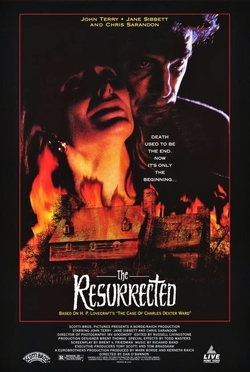
Not the Easter resurrection that many of us celebrate this weekend, but the brilliant Lovecraftian horror film that you’ve likely never heard of, much less seen! Often when it comes to holidays, I enjoy reviewing films that fit the theme of the special day. And with Easter coming up on April 12th, what better film to review than one actually entitled The Resurrected? I don’t know about you, but until this past weekend, I’d neither seen nor heard about this film. After watching it, I am blown away as to how such an outstanding horror film got left to obscurity. Attempting to understand how this became a forgotten film, I came up with a combination of a couple reasons (1) it was straight-to-VHS and (2) there was another little horror film that you may be aware of from 1991 that took the world by storm (and still mesmerizes and terrifies us today). Ever hear of the film called The Silence of the Lambs??? Because of the critical and audience success, not to mention winning the Big 5 Academy Awards, it’s entirely possible that the success of SOTL cast a big shadow on The Resurrected (aka Shatterbrain). Now, I am not claiming that the latter is on the same critical level as the former, SOTL is the superior motion picture; however, with SOTL being a horror film, I believe that it stole attention away from The Resurrected. Perhaps the following review will inspire people to seek out this film. The Resurrected was Dan O’Bannon’s first feature length film following his directorial debut his of Return of the Living Dead. If his name sounds familiar, that because you either know Return of the Living Dead or perhaps his work on the greatest sci-fi horror of all time Ridley Scott’s Alien, for which he wrote the original screenplay. With such horror and cinematic pedigree, it’s no wonder why The Resurrected was such a fantastic entry into the horror library! 

As the title suggests, this film deals with the return of what was dead, or what Freud calls the uncanny. From the German word unheimlich, meaning unholy, the return of the repressed, or the appearance of that which should have remained hidden, audiences encounter a Dr. Frankenstein like character whose obsessive experiments have taken a turn for the mad and macabre. Fixated on and fascinated with bringing the dead back to life, Charles Dexter Ward (Chris Sarandon) builds an unsettling laboratory in an old family estate where he shuts himself off to his wife and the world so he can work uninterrupted as he dabbles in a combination of witchcraft and science to reanimate the dead. When his wife Claire (Jane Sibbett) suspects that her husband may be up to something far more sinister than the “science” he claims he’s working on, she hires private investigator John March (John Terry) to look into her husband’s research. When March discovers that Charles Dexter Ward may not be whom he claims to be, all hell breaks lose—almost quite literally.

Between Return of the Living Dead and The Resurrected, I am astonished as to why O’Bannon never returned to the director’s chair. Perhaps it’s because MGM did not believe in this film enough to give it a theatrical release. Since MGM also released Ridley Scott’s Thelma and Louise that year, maybe its resources were tied up in that film’s road to the Oscars; therefore, it didn’t care enough about O’Bannon’s second film. It’s a shame because he has a stylistic approach that’s both poetic and shocking. Fortunately, his direction is stylized in ways that enhance the audience experience without detracting from the story and becoming an attraction for the sake of being stylized. Stylization with substance, that is O’Bannon. Instead of including shocking visual material for purposes of being mere gimmicks, he uses these moments to drive the plot and character development forward; everything in the film is intentional designed to move the story forward. I love seeing the hand of the director in a movie, and The Resurrected is oozing with evidence that O’Bannon cared about every frame of every moment in his sophomore film. What this film is, is the combination of what O’Bannon learned from working with Ridley Scott on Alien and what he learned from his freshman film Return of the Living Dead. Every screenplay needs a writer who cares, and every film need a director who cares. 

While it’s unfortunate that this film is seldom part of horror discussions, it certainly isn’t the first 90s horror film that seems to have fallen off the radar. The way The Resurrected flew under the radar reminds me of John Carpenter’s In the Mouth of Madness. Fortunately for the latter, it has found a cult following in recent years, but the former still hasn’t received the attention form horror audiences that it both deserves and earned. Which is unfortunate because this movie offers the kind of genre charm that was quintessentially 80s/90s.

What a screenplay! Everything about this story works so incredibly well. There are three genres at work in Brent V. Friedman’s screenplay for The Resurrected: neo-noir, science-fiction, and supernatural. While successfully crossing genres can be dangerous, with a risk of not delivering on any of them, Friedman proves that he is a master visual storyteller that can create the stuff of nightmares without relying simply on shock or gore. In fact, the moments of visceral horror are very few. But when they hit, they HIT! The A story is the traditional detective meets gorgeous client with an unusual request, the B story is about a mad scientist, and the C story is where we get into the supernatural. Each of these stories weave in and out of one another beautifully to create a truly outstanding work of poetic horror. Fans of direct or inspired adaptations of H.P. Lovecraft horror, will absolutely love the storytelling in this film. In fact, I may recommend this film to all horror fans, but feel that it is required watching for Lovecraftian horror fiends! Friedman’s screenplay works so well, that you will feel that O’Bannon write it himself. One of the common areas of weakness in late 1980s-early 90s horror is pacing. Lots of great practical effects, production design, and even performances, but the writing can be poorly paced and vapid. Not so with this film! So between O’Bannon’s excellent direction and a gripping screenplay, The Resurrected will hook you from the very first scene and hold your attention hostage for the entire film.

Beyond the strong direction and writing, perhaps my favorite park of the movie is the spinechilling practical and special effects! No CGI could ever look nearly as dimensional as all the practical effects generated by modeling, stop motion, miniatures, fake blood, prosthetics, and more! Nowadays, I find it difficult to buy into an actor interacting with something that isn’t really there. Oh we see it after the motion graphic artists and editors work their magic, but no amount of quality of CGI can authentically replicate the way real light bounces off real objects, then into the camera lens. The special effect artists did things that are mindblowing even by today’s standards for visual effects. While my area of expertise is not the mechanics and optics of special effects, I can usually extrapolate a good idea of how something was accomplished, but I am at a loss for words with the effects I witnessed in The Resurrected. One moment in particular that I want to mention, as I don’t want to give away all this movie has to offer, has to do with the reanimated remains of a human body that are dissolving into some grotesque creature that is violently growling and gnashing its teeth. An incredible feat of cinematic proportions! And that’s only one of the most elaborate practical effect scenes; strategically places throughout the movie are glorious moment of special effects that immerse the audience into the macabre Lovecraftian story, and prove that something real, dimensional, tanglible to interact with will always be far more convincing than actors interacting with chroma-green abstract objects on set.

This really is one of the best horror movies that you’ve never heard of, much less seen. While you cannot currently stream it anywhere, except through more nefarious means, you can buy the Blu-Ray on Amazon and other retail outlets. Whether you prefer genre or more complex horror, you will find something to love about this movie.

Ryan teaches screenwriting at the University of Tampa. If you like this article, check out the others and FOLLOW this blog! Interested in Ryan making a guest appearance on your podcast or contributing to your website? Send him a DM on Twitter or email him at RLTerry1@gmail.com! If you’re ever in the Tampa area, feel free to catch a movie with him!

Follow him!

Twitter: RLTerry1

Instagram: RL_Terry

“Annabelle Comes Home” horror movie review

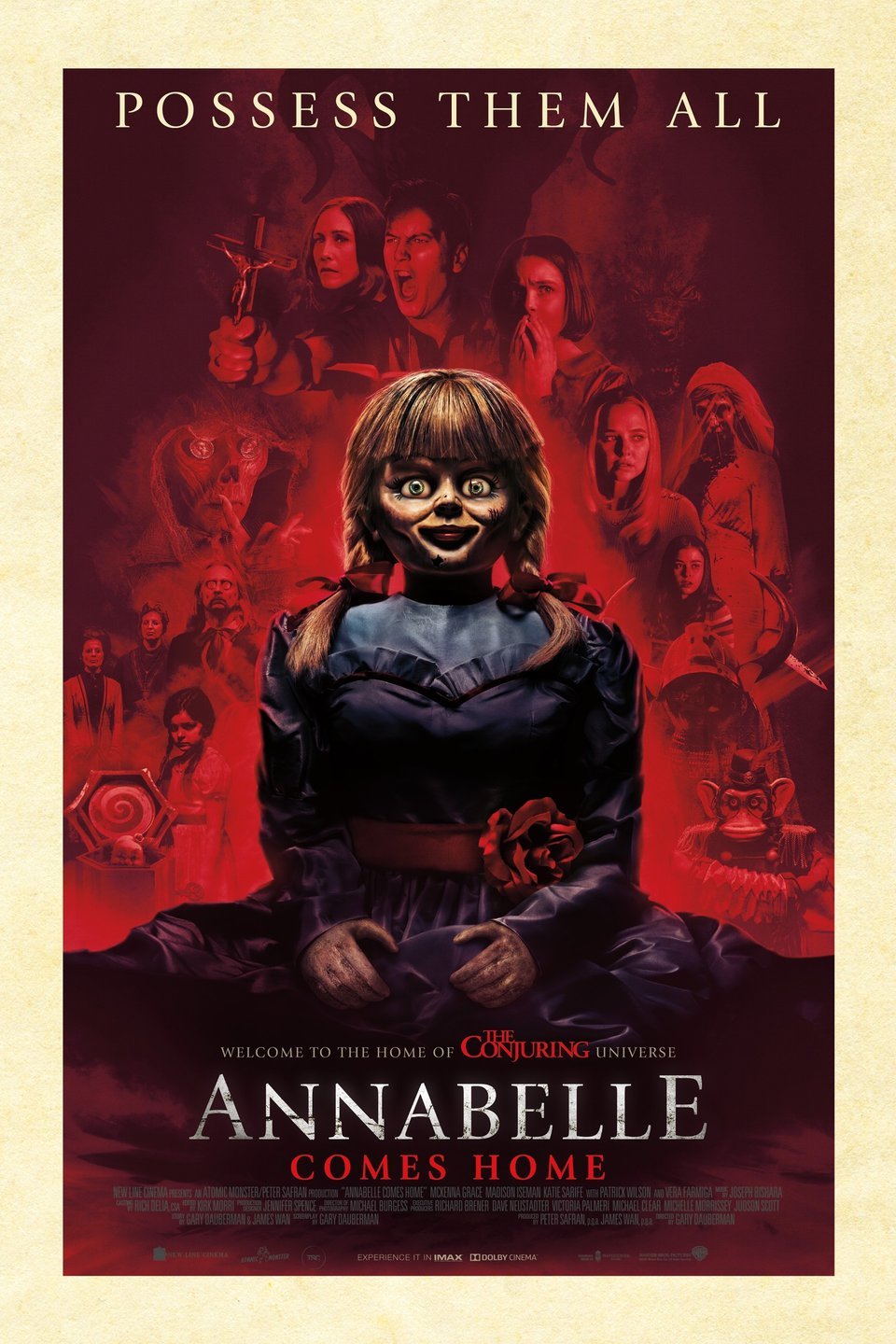
“Miss me?” Adventures in Babysitting meets The Conjuring Universe. Well it’s not bad, but not as strong as Creation. Still, it’s better than the first one. Annabelle Comes Home hit theatres Tuesday, June 25th with a new story to further develop the WarrenVerse. Inspired by the documented paranormal investigations of Ed and Lorraine Warren, the third installment in the Annabelle franchise follows on the heels of the first Annabelle. From the very first shot to the last, this installment delivers a highly atmospheric horror movie that is not built upon jump-scare after jump-scare, but instead focusses on suspenseful windups. Unfortunately, therein lacks a substantive delivery following the engaging windup. Central to the movie is a small cast of three leading characters, so there was such a fantastic opportunity to develop these characters; regrettably, even within this intimate setting with a small group, the characters mostly fall flat. The movie has a strong first act, and transitions into the second act very well; however, we spend most of our time in that second act going in circles until the anticlimactic showdown. Because of the terrifying atmosphere created in the film, there is an excellent haunted house feel to it that I liked a lot. I generally prefer atmosphere to jump scares, although both are important and should be included in the right amounts. Ultimately, the movie fails to provide a compelling story but makes for a mostly fun horror movie.

Following the bizarre events and exorcism at the nursing students’ apartment, Ed and Lorraine Warren place Annabelle in the backseat of their car to take to their cursed artifact room at their house. To protect the world from the evil conduit Annabelle, they place her on a chair in a glass case made from glass from Trinity Church. On the eve of the Warren’s daughter Judy’s birthday, Ed and Lorraine leave for an overnight trip and leave their daughter under the care of a babysitter. While Judy and her babysitter are baking a cake, the babysitter’s friend shows up and offers to watch the cake and house while Judy uses her new rollerskates. When in the house alone, she breaks the house rule and enters the Warren’s occult museum. In this room, she unleashes an evil that will stop at nothing until it claims a soul.

Although this installment in the Annabelle franchise is better than the first one, the story is weak compared to the second one, which met with both highly positive audience and critic reviews. Like with so many horror movies, this one also suffers from an underdeveloped plot and flat characters. The plot is so underdeveloped that there is ostensibly no plot at all. It’s as if the screenwriters (James Wan and Gary Dauberman) took the premise and wrote five principle characters for it, but then forgot that the screenplay should (1) follow the three-act structure (2) include characters with well-defined external goals and internal needs and (3) start each scene as close to the end of the scene as possible. While most of the characters lack any kind of real emotional development, the character of Daniella is the only one that goes on any kind of emotional journey that allows her to grow as a result of the conflict with Annabelle. Leading and chief supporting characters in a screenplay need to have an external/measurable goal motivated by an internal need. The external goal is aligned with the action plot and the internal need is aligned with the subplot. But when your story seems to be plotting along aimlessly, therein lies a problem because it’s difficult to support character goals when there is no real end in sight. Once we are in the second act, the story just moves in circles until the anticlimactic, forced showdown lacking in any true realization.

What this movie lacks in story, it makes up for in atmosphere, production design, and non-repetitive scares. There is a sense of foreboding from the moment that the movie begins, and continues throughout. Essentially, it becomes a haunted house movie complete with all the lighting, music, and entrapment. Even before I thought much about the story and characters, when the credits began to roll, my first thought was “this would make for a great HHN house.” The atmosphere of terror is achieves though lowkey lighting, harsh shadows, the cinematography, and haunting score. The movie is not overstuffed with scares, and when there are jump scares, they are never repeated. It also helps that we only have three main characters that are all trapped in this haunted house and act as our conduit through which we also experience the evil entity in the house. If you wanna feel transported to a haunted house, then this movie does an excellent job of making you feel like you are right there with the characters. In the past, we have spent some time in the Warren’s house, but this is the first time that we spend nearly the entire movie in their literal house of horrors. The manner in which the camera movies and the music rises and falls assists in the creation of suspense, and the movie will hold you in suspense nearly the whole time. Unfortunately, the problem is that the payoff after the windup is lackluster at best. Great suspense, pool payoff. When crafting suspense in plot or with the camera, remember that the payoff should equal the windup.

If you are a horror fan, then I definitely recommend watching it in the cinema; but for general audiences, it’s one that can be enjoyed just as well at home when it hits Amazon Prime or other streaming services.

You can catch Ryan most weeks at Studio Movie Grill Tampa, so if you’re in the area, let him know and you can join him at the cinema.

Ryan teaches screenwriting at the University of Tampa. If you like this article, check out the others and FOLLOW this blog! Interested in Ryan making a guest appearance on your podcast or contributing to your website? Send him a DM on Twitter!

Follow him!

Twitter: RLTerry1

Instagram: RL_Terry

A24’s “Hereditary” (2018) horror film review

Arthouse meets mainstream in this outstanding horror film! This terrifyingly good nightmare will haunt you long after you leave the theatre. After all the hype A24’s latest generated out of the Overlook Film Festival, many were wondering if it could live up to the accolades. Suffice it to say, it did all that and more. It’s been characterized by many as The Exorcist for a new generation, and rightly so. In fact, elements of the plot, setting, and characters can be likened to not only The Exorcist, but The Shining and The Witch as well. When you have a film that’s being compared to two of the pioneering films in supernatural horror and a popular modern one, then you know the film is exceptional. Relying chiefly upon an overwhelming sense of dread from the onset and intense emotional agony, Hereditary will assault your mind and eyes with that which cannot be unseen or unfelt. Wrier-director Ari Aster’s thrilling masterpiece will likely join the canon along side other great horror films as it is one that pushes the boundaries of what a horror film can do. Unsettling beyond measure, this is the type of film that leaves a lasting impression upon the minds and eyes of the audience. Furthermore, the danger of describing this film in too much detail can mitigate the phenomenal experience that should be this film. Not for the faint of heart, I suggest taking someone along with you to watch this amazing horror film unless you want to brave the disturbing narrative alone.

Following the death of not so beloved Ellen Leigh, her daughter Annie Graham’s family begins to uncover cryptic secrets of a bizarre and terrifying nature. Annie’s ancestry contains generations of psycho-social disorders that begin to point to a sinister family heritage. When a tragic death befalls the Graham family, the beautiful mountain home turns into a house of nightmares. The deeper Annie goes into the grim history of her family, the more she unravels a sinister secret that will test the limits of human psychology and just how far one will go to protect loved ones while remaining sane. When the search for answers peals back the vein between the physical and supernatural worlds, Annie learns that her family’s inherited an insidious fate of the darkest of natures.

Hereditary delivers a new kind of horror, or should I say a classical approach to the post-modern horror experience. Classical in the sense that it relies upon the auteurist craft of visual storytelling, complex characters, and an overwhelming sense of dread brought on my the score and cinematography to assault your mind, ears, and eyes instead of simply terrifying the eyes. Instead of including cheap jump scares, prolific gore, blood soaked murders, or terrifying images, Hereditary transfers the horror from the screen into the minds of the audience. When a horror film gets into the mind of the audience, that is truly where the horror lies. What isn’t said, heard, or seen is far more powerful than what can be seen with the naked eye. Clearly the suspenseful nature of the film is taken out of the Hitchcock playbook while the horror craft is inspired by the Kubrick (The Shining) and Friedkin (The Exorcist) approaches. Audience are kept on edge and pleasurably uncomfortable  (Carol Clover’s pleasurable unpleasure theory) by sequences of events that cannot be completely discerned as being real or figments of the Graham family imagination, given the heritage of mental illness. You will be terrified by, not only the uncanny events and sinister secrets of the film, but the dark family psychodrama with characters suffering from internal torment.

Toni Collette’s captivating, terrifying performance as Annie Graham is one that screams Oscar contender. We will be hard-pressed to encounter another more compelling and gritty performance the rest of the year. Although horror has always been popular and bankable, it has largely been passed over by The Academy until recent years with major wins by Get OutThe Shape of Water, and even Ex Machina’s visual effects. The genre that can trace its cinematic roots back to the dawn of indie and commercial motion pictures is finally being embraced at the Academy and Golden Globe awards. There are no shortage of reasons why critics and fans are praising everything about Hereditary. What’s there not to like??? There is little doubt that Collette’s portrayal of a tortured daughter and reluctant mother will be the most most exceptional performances of a female actor this year. Whether talking horror or other genres, the role of Annie Graham will go down in the record books as one of the most gut-wrenching characters of contemporary cinema. Her command performance is spellbinding as you get forcibly sucked into this twisted world of a family-heirloom evil that is showered by outstanding remarks by critics and fans across the spectrum. With landmark wins for the horror genre for actor, actress, picture, and more, it’s entirely possible that we got a look at one of the films that will earn many nominations and even some wins at the next award season.

It’s important to note that this isn’t simply a “scary movie.” Scary horror is simple to achieve; sheer terror, nightmare-inducing horror is difficult to create. The former is mostly concerned with the moment; include a jump scare, some violent gore, or a creepy figure. Whereas with the latter, the writer/director is pre-occupied with creating a simple plot, complex characters, and an atmosphere filled with dread to successfully carry the film from beginning to end. Hereditary is frightening on every level. To Hereditary’s credit, it delivers what audiences want plus subverting the expectations of the genre to generate true primal fear in the experience of this horror masterpiece. It’s far too easy for for a writer/director of a horror film to give audiences what they want to see. The danger in that approach is delivering a film that only has temporary value. Like getting a sugar-rush for energy versus proper nutrition. The effects of the “scare” provide nothing after the shallow energy has been used. Shallow versus depth. On the opposite end of the spectrum. a horror film that is too deep often fails to deliver what general audiences want to see and only cinephiles, like yours truly, find appreciation in the story. Hereditary contains the kind of masterfully crafted visceral imagery, emotional agony, and psychological trauma that creates a powerful, penetrating horrific experience that will give this film an evergreen life.

Not for the timid, this film will test the limits of your imagination and ability to sleep without fear of nightmares. Brilliantly frightening, this motion picture harnesses the power of how to effectively impact the mind and body of the audience. From moments of sheer terror to tormented souls caught in a dark family psychodrama, throw in a healthy dose of ominous evil and you have a don’t-miss cinematic experience. Exceptional characters, plot, a nightmarish score and more, give this film reachability and material to discuss in future film studies classes.