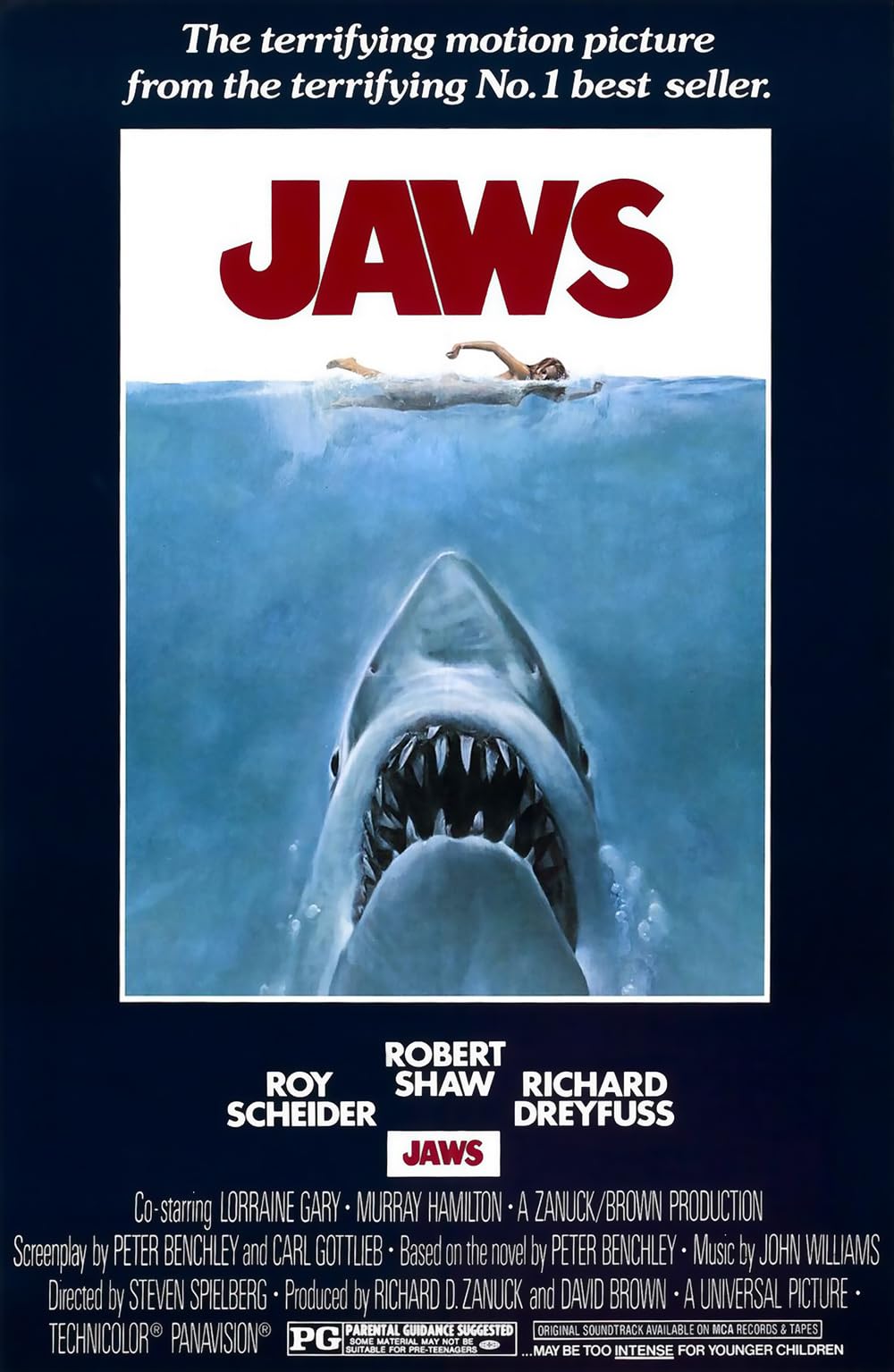
JAWS 50: Celebrating Fifty Years of Cinematic Legacy

“[We’re] gonna need a bigger boat” as we celebrate the 50th anniversary of the massive, radical game-changing effects of Steven Spielberg’s career-defining JAWS.

Jaws was the first official blockbuster. Looking back at the original crowds of 1975, you’d think the movie was a one-night-only big event. Hence the term blockbuster. The adjective blockbuster, commonly attributed to big summer movies, literally derives from the fact that queues for the box office wrapped around city blocks. It busted the block, so to speak. And the rest is history! Coupled with the summer release date and ticket sales, the allure of Jaws generated levels of enthusiasm and interest never seen before. The film took in so much money at its opening, that it nearly made up the entire production budget by the end of the first week. Furthermore, distribution and marketing companies began to use Jaws as a model for future marketing efforts in order to attempt to generate another blockbuster effect.

Fun fact, two years earlier The Exorcist commanded massive crowds of people that wrapped around blocks to see the provocative motion picture. But, the initial release of the film was rather small and it’s marketing was much more reserved. In contrast, Jaws‘ marketing was unlike anything that had been seen before and it’s initial release was a extreme wide release, and upon that initial release crowds were already wrapping around the block. The Exorcist may have achieved the massive crowds first, but it was earned over time; whereas with Jaws, it was instantly a blockbuster from day one.

Never before had there been such a popular and critically successful film in cinemas. Much in the same way Alfred Hitchcock’s Psycho is often credited, and rightly so, for being the first modern horror film and forerunner to the classic slasher; likewise, Spielberg’s adaptation of Peter Benchley’s novel Jaws is credited as the first modern creature feature horror film and forerunner to the blockbuster (or event movie). I am not negating King Kong, Creature from the Black Lagoon, or other predecessors; it’s important to take note of the word modern. Aside from excellent, visionary direction, both Psycho and Jaws have three important elements in common (1) powerhouse cast (2) strategic suspense and (3) a brilliant, oft-parodied, burned in your mind musical score.

Instead of building a thriller on shock value, disturbing imagery, or jump scares, author Peter Benchley’s screenplay for Jaws focussed on crafting a cinematic atmosphere that had an intimate, claustrophobic feel built upon well-crafted drama through character development and conflict, at the center of which is a little heart. Different from contemporary creature features, Jaws picks off swimmers in the single digits and those attacks all happen at a single beach on a small island off the coast of Massachusetts. And instead of an entire agency hunting down the man-killer shark, three unlikely men are forcibly thrown together in order to track down and eliminate the terror from the waters off Amity Island.

Simply stated, Jaws is thematically rich from beginning to end, and there is no way to capture all the nuances of the film in this section; however, I’d be remiss not to spend some time on the emotive power of the landmark horror film. At the core of Jaws’ expressive meaning, it explores themes of greed, scientific hubris, and the consequences of unchecked ambition. Suffice it to say, the most prominent theme in the film is the folly of man. The folly of man is expressed through the character-driven story more than it is the search and destroy of the shark.

Chief Brody’s fear of the water and his struggle to protect his community from the shark reflect universal anxieties about the unknown and the fragility of human safety. In a manner of speaking, Chief Brody journey is one of redemption for the death of the little Kitner boy. Matt Hooper represents scientific hubris and dangers of unchecked bravado. And Quint’s obsessive quest to hunt and kill the shark serves as a cautionary tale about the dangers of pride and arrogance, highlighting the destructive power of man’s hubris in the face of nature. Interestingly, all three men are seen as outsiders. Chief Brody and his family are new to town, Hooper is a white collar guy in a blue collar town, and Quint is socially an outsider, despite being a fixture in the community. During the 1970s, there were growing fears of outsiders coming into communities to upset the natural order of things.

Keeping the principle cast and environment small, Spielberg was able to focus attention on character development and interpersonal relationships in order for the drama to perform strongly and naturalistically. Big things do come in small packages. Coupled with the strong performances from the entire leading cast, this brilliant combination of cinematic elements works together to give us some of the most memorable lines, scenes, and cinematography in movie history. Furthermore, real people swept up into an impossible situation and foolish decisions enable the audience to identify with the characters and the setting in ways that make the terror feel all the more real and close to home–or the beach.

While Bruce is often thought to be the villain of Jaws–and no mistaking it, he is definitely an antagonist–I argue that the true opposition to the goal in the plot is Amity’s mayor. If we accept the goal is to apprehend or kill the man-eating shark, then Mayor Vaughn serves as opposing that action. Perhaps you’ve never thought of the true villain of Jaws being Mayor Larry Vaughn. A close analysis of the plot reveals that Jaws (Bruce) functions more as a catalyst for the principle conflict between Chief Brody and Mayor Vaughn. Other than the death at the beginning of the film, the Mayor is indirectly responsible for the remaining deaths. After all, it’s due to his utter complacency, negligence, and classic greed that led to the other deaths.

For most of the film, we spend far more time with Chief Brody’s continued conflict dealing with the social pressures, desires, and ill-fated decisions of his boss than we do with shark attacks. Mayor Vaughn fails to acknowledge the sheer gravity of the dangerous situation, and close Amity’s beaches in order to keep his citizens safe. Interestingly, even Jaws channels some of the anxiety of the 1970s. After all, the primary reason why Mayor Vaughn refused to close the beaches was because it would economically depress his town that literally depends on the summer dollars. In effect, he fed them to the shark. Seems like a villainous action to me. Bruce was just being a shark, Vaughn was the true villain.

Jaws forever changed cinemas and became the inspiration for countless other filmmakers. Another prominent filmmaker even cited it as part of his inspiration for a film that would be like a combination of Jaws and a haunted house, set in space where “no one can hear you scream.” In addition to serving as inspiration, many films have tried imitating it, putting their own spin on the premise. Even comedic satires featuring similar plot points have released over the years. The film’s box office success solidified Spielberg as a visionary director. Interestingly, the movie sparked a renewed interest in marine biology and conservation. Its timeless appeal continues to captivate audiences with thrilling storytelling, unforgettable characters, and groundbreaking practical effects. Jaws will forever hold a special place in the annals of film history and continue to be a holiday horror film that hundreds of thousands around the U.S. watch every 4th of July. 
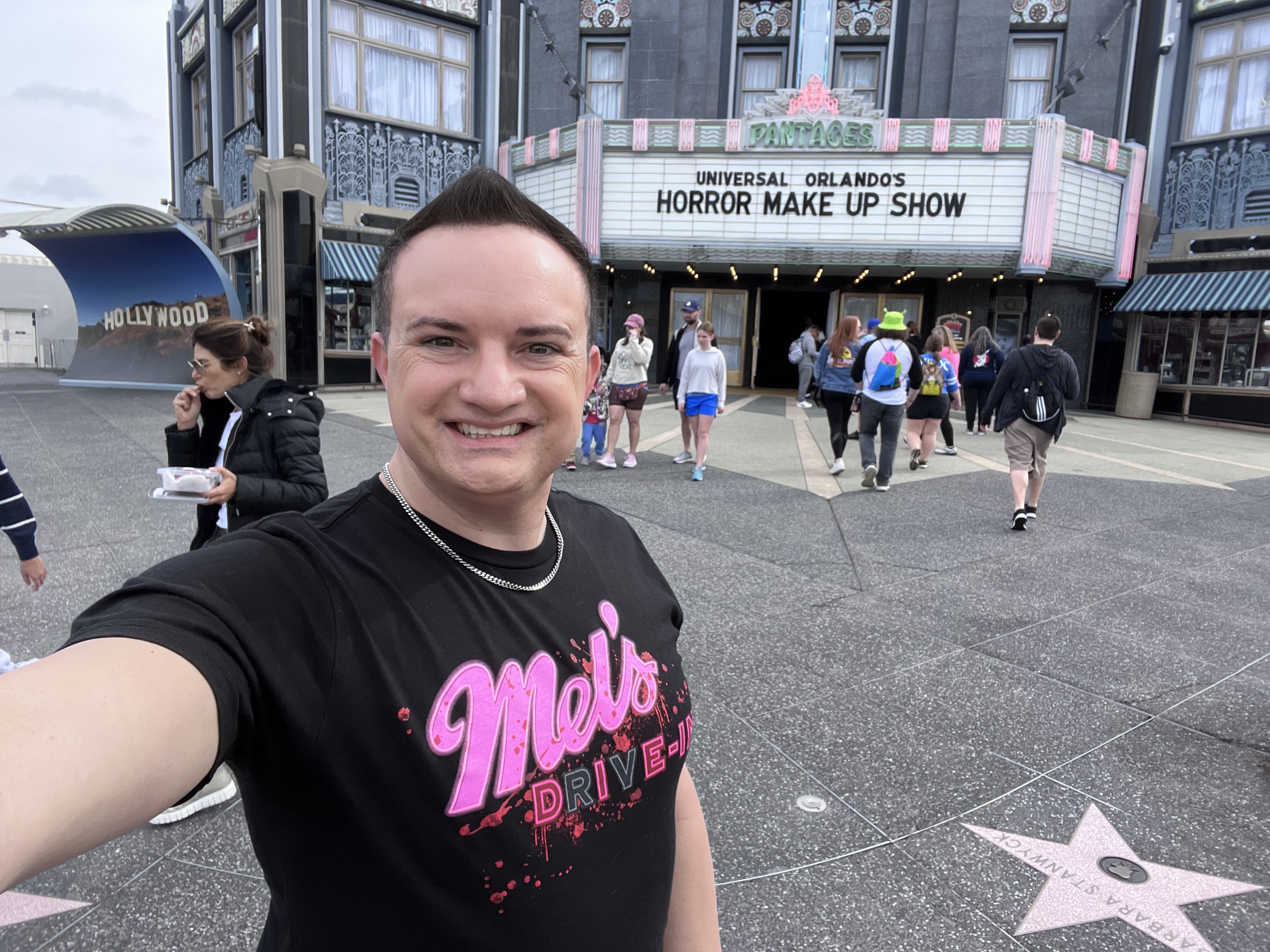
Ryan is the general manager for 90.7 WKGC Public Media in Panama City and host of the public radio show ReelTalk “where you can join the cinematic conversations frame by frame each week.” Additionally, he is the author of the upcoming film studies book titled Monsters, Madness, and Mayhem: Why People Love Horror. After teaching film studies for over eight years at the University of Tampa, he transitioned from the classroom to public media. He is a member of the Critics Association of Central Florida and Indie Film Critics of America. If you like this article, check out the others and FOLLOW this blog! Follow him on Twitter: RLTerry1 and LetterBoxd: RLTerry

TWISTERS movie review

Plot chasers. Despite the great chemistry between the leads of Daisy Edgar-Jones and Glen Powell, this cinematic storm is lacking the necessary elements in both thoughtful plotting and character development to form a compelling story. And while most of the special effects are excellent, it comes off feeling like one long storm chase. If it wasn’t for Edgar-Jones and Powell, I’d just as soon watch the Weather Channel instead. Twisters tries to be too many different kinds of stories, and isn’t successful at any one of them. There is an attempt at underscoring the outside-action narrative(s) with a heart-felt inside-emotional story, but even that isn’t fully developed. While there are some well-written scenes that will pique your interest, aside from the disaster porn dimension of the movie, there isn’t much here of any great interest.

Haunted by a devastating encounter with a tornado, Kate Cooper (Edgar-Jones) gets lured back to the open plains by her friend, Javi, to test a groundbreaking new tracking system. She soon crosses paths with Tyler Owens (Powell), a charming but reckless social-media superstar who thrives on posting his storm-chasing adventures. As storm season intensifies, Kate, Tyler and their competing teams find themselves in a fight for their lives as multiple systems converge over central Oklahoma.

The lack of a compelling narrative has far less to do with Lee Isaac Chung’s directing than it does Mark L. Smith’s screenwriting. No real surprise there since his other recent screenwriting credit is The Boys in the Boat, which also suffered from poor plotting and character development. While Joseph Koskinki receives a story-by credit, clearly he has demonstrated that he is a much better director (Top Gun: Maverick) than he is a writer. Both Twisters and The Boys in the Boat have a compelling story to tell, but the plotting itself (the map of how you get from beginning to end) lacks meaningful direction or focus. The movie sets up one story of overcoming trauma, then becomes a white collar vs blue collar story, then turns into a story about storm profiteering, which morphs into a melodrama about overcoming fear and guilt, just to finish as a romcom. All the while, the external goal of the story, which is setup successfully in the beginning, doesn’t get revisited and become clear until the third act. There is about as much narrative depth in Twisters as any given episode of Storm Chasers. Where is will give Smith, Kosinski, and Chung credit is that they didn’t choose to make this a “preachy” movie about ecoterrorism or climate change. Sometimes bad storm just happen. And that’s what makes them scary; there is no explanation.

Even though the themes of the movie are not very well developed, I like that Smith was trying to do with the subtext of the movie. Without getting into spoilers, there is an attempt at spotlighting how some people that appear that they are trying to help storm victims are actually more interested in profiting off the disaster. Which, I imagine does happen in real life. The movie also has something to say (and this was actually pretty well developed) about not judging the level of competence or motivation based on face-value or first impressions. The very people that look unprofessional may be even more professional and genuine than the ones that appear like they have it all together.

Other than some badly CG’d dandelion fuzz (which should’ve been done practically, c’mon). the rest of the special effects in the movie are excellent. Okay, so maybe excellent is being a bit generous, but I’m trying to give the film some credit for not putting me to sleep. I screened the film in Dolby Cinema, which is the best way to watch this movie because aside from the chemistry between the leads, the reason to watch this movie is for the storms and disaster porn thereof. Perhaps the story is on SyFy or Weather Channel levels, but the storm effects are executed very well. I was disappointed that we did not get a flying cow as a nod to one of the most memorable moments in the wildly popular original Twister. It’s well-known that the first movie literally built and destroyed houses to achieve the full effect and impact of the tornadoes, and it appears that Twisters used miniatures and models for some of the disaster scenes. Practical beats CGI nearly all the time. Also like the first movie, this one also appeared to integrate real footage of tornadoes and the disaster left in their wake.

The force that keeps this movie from falling completely apart is the chemistry between our leads of Daisy Edgar-Jones and Glen Powell. Playing Kate and Tyler, respectively, there is a throwback style (almost romcom-like) romance between the two in the vein of “will they, won’t they.” Even though Kate is our central character, it’s Tyler that receives more thoughtful development. Kate is largely the same from beginning to end, despite a great setup for overcoming trauma and guilt. Both of these characters (and their respective actor) keep this movie from falling completely flat. The playful chemistry between the two gives the film a human dimension that it is sorely lacking otherwise. Moreover, I like the fact that the budding romance between the two did not become the focus of the movie, but it certainly adds to the film in a constructive way. Both Edgar-Jones and Powell have an old-school charm that feel refreshing to see in contemporary cinema.

Whether or not you have recently rewatched the first movie, you can confidently go into this movie knowing all you need to know. There is little, if any, connection to the original 1996 blockbuster. For those that are super fans of the original, I imagine there are more nods to the first movie than that which I identified. If you’re looking for movie this summer to escape the heat with the whole family, then this is a good pick, but don’t expect much more than a mildly entertaining couple of hours.

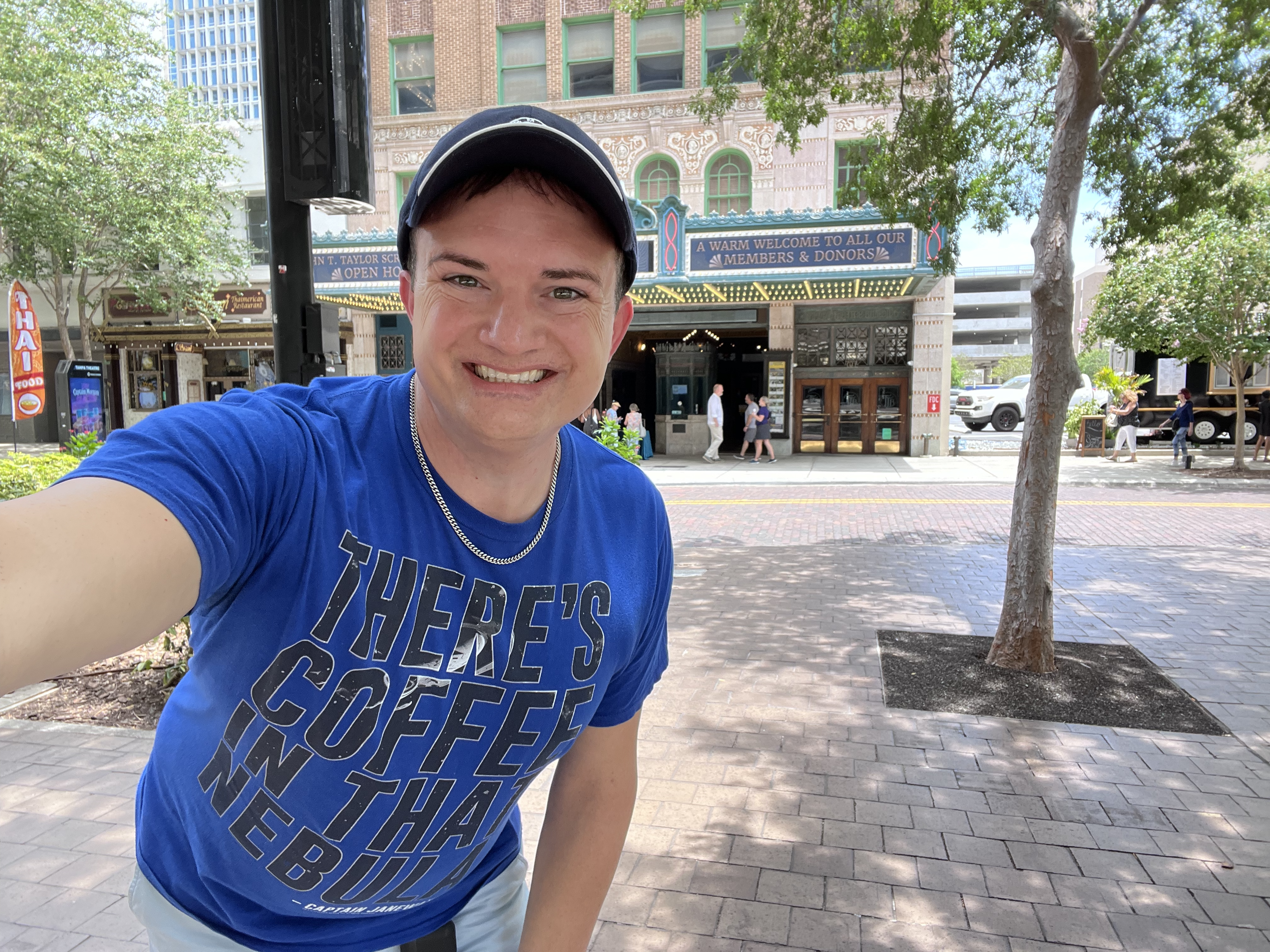
Ryan teaches Film Studies and Screenwriting at the University of Tampa and is a member of the Critics Association of Central Florida and Indie Film Critics of America. If you like this article, check out the others and FOLLOW this blog! Interested in Ryan making a guest appearance on your podcast or contributing to your website? Send him a DM on Twitter. If you’re ever in Tampa or Orlando, feel free to catch a movie with him.

Follow him on Twitter: RLTerry1 and LetterBoxd: RLTerry
JURASSIC PARK 30TH ANNIVERSARY retrospective analysis

Timeless and terrifying! In honor of Jurassic Park‘s 30th Anniversary, I want to revisit why the film works so incredibly well, and never gets old. Simply stated, it’s the original’s connection to and foundation in horror, which was largely abandoned after the first installment in the decades long franchise.

Just like Dr. Alan Grant states at the beginning of the film, “raptors have far more in common with present day birds than they do with reptiles,” that same analogy can be drawn with the original Jurassic Park and its proximity to horror compared to action-adventure. Borrowing from Dr. Grant, the original Jurassic Park has far more in common with sci-fi/horror than it does with action-adventure, hence why it has held up over the years and continues to be a favorite film for many cinephiles and fans alike.

While all the sequels, including Jurassic World are far more action-adventure than the original, Jurassic Park can be likened to Ridley Scott’s Alien. The latter is a quintessential space sci-fi/horror with action-adventure sequels just like the former. And like Jurassic Park, the original Alien is considered far superior to that of the sequels. But why is this? There are many reasons from script to director to cinematography; but at the end of the day, it’s the fact that both these critically acclaimed and admired films have their respective roots in the American horror film and not action-adventure movies. More so than any other genre, horror is (1) uniquely American and (2) the most time tested, given it can trace its roots back to the 1890s and was perfected by Universal Pictures in the 1920s and 30s.

So what separates Jurassic Park from the sequels? Both have life-threatening dinosaurs, both have action, both have adventure, etc. But, only the original carries with it social commentary, rich subtext, and well-developed themes told through a brilliant combination of horrific frights and believable sciences taking place within a world of fiction grounded in reality. Furthermore, the focus in both Jurassic Park and Alien is largely on the drama between the characters and the oppositional forces in the film. The sequels in both franchises place far less emphasis on well-developed conflict and drama, and instead sacrifice those golden elements of cinematic storytelling for high-concept CGI-filled adventure movies with lots of dinosaurs or aliens. The proliferation of gimmicks and effects is often used to hide a weak story. Fortunately, Jurassic Park provides audiences with a strong plot told through exceptional cinematic storytelling.

Jurassic Park‘s screenplay benefitted from being penned by the award-winning author Michael Crichton who also wrote the novel by the same name. Often times, when the author of the novel also writes the screenplay, the screenplay forms a stronger foundation upon which the technical elements can be build. A more recent example of a brilliant screenplay adaptation of a novel is Gone Girl, the author of the novel was the screenwriter. Although a screenplay is visually driven whereas a novel is internally driven, when a novelist with a penchant for visual storytelling writes the screenplay for the movie adaptation, the screenplay tends to contain better developed characters, strong subtext, effective conflict, and excellent dialogue.

Crichton created incredibly memorable characters who each spoke with their own voice. Casting the right actors to portray the characters is obviously important–and the cast for Jurassic Park is exemplary–but even before the actor steps into the character’s shoes, the character has to be created. Each character in Jurassic Park possesses unique traits, strengths, weaknesses, dialect, and behaviors. Instead of the conflict being arbitrary, the conflict develops through the interpersonal relationships between the characters and the relationship between the characters and the opposition–human and nature.

I was in elementary school when the movie hit theatres in the summer of 1993; and although under 13, my parents allowed me to go see the movie. It was my second PG-13 film, with Batman Returns being the first, and what an experience! Not unlike Dr. Grant’s reaction to his first encounter with a dinosaur in the film, my reaction to Spielberg’s masterpiece was eyes-wide-open, mouth gaping wide, and racing endorphins. And then comes the macabre contrast in Acts II and III. “Ooo, ahh–that’s how it begins, and then there’s running and screaming” (Dr. Ian Malcolm, The Lost World). Aptly stated.

The opening scene hooks the audience with a disaster, but does not reveal much about the dinosaur in the secured transport–brilliant. Because this scene did not show a dinosaur, the audience’s curiosity is pricked which creates an eagerness to see a dinosaur and a degree of nervousness or apprehension accompanying that curiosity. We wanted to see more. If you’re familiar with Hitchcock’s bomb theory, he states “you must never let the bomb go off.” More than simply shock audiences with the death of that employee at the beginning of the movie, this scene serves as information more than a glimpse at that which would be horrific in real life.

This delay of seeing a dinosaur forces the audiences to pay more attention to the characters, dialogue, and conflict than looking for the next dino. Furthermore, the delay in seeing a dinosaur, perfectly setup audiences for the grand reveal on the way from the helipad to the Visitors Center. Interestingly, if you add up all the screen time that dinosaurs receive in the film, you’ll find that they are only on screen for about 20-minutes. Just like Hitchcock transferred the terror from the screen into the minds of the audience after the Psycho “shower scene,” Crichton and Spielberg did the same with Jurassic Park.

It’s the soft introduction to the man-made dinosaurs that makes the horror of the dinosaurs feel so much more intense later on in the film–and make you scream! In terms of the type of science-fiction horror film Jurassic Park could be classified as, it shares many commonalities with man vs nature and man vs technology horror films. Crichton is known for his believable science within his works of fiction. It is obvious that genetics and paleontology were researched enough to use real, hard science to inspire a fictional science that feels just out of reach of the current trends in the science, technology, and engineering fields. Pair that with horror, and you have a solid cinematic film.

The brilliance of horror films is how they can creatively comment on or provide a different perfective on a anthropological or psychological observation; moreover, it can be helpful when exploring philosophical questions. And these topics are visually explored through the movie and externalize the themes. One area that separates popcorn action-adventure movies from horror films is the cultural significance of the subtext and themes. Typically, action adventure movies do not carry with them social commentary nor significantly pull on our emotions and tap into our most primal fears. Jurassic Park contains all of this.

There is something about horror films that beckons the audiences to find enjoyment in, that which in real life, would not be enjoyable—and not only see it once, but repeat it. And furthermore, find the unfamiliar and grotesque fascinating to behold as what should remain hidden comes to light. Certainly the dinosaurs in the movie should have remained “extinct,” but were brought back to life and engaged in violence in which we find enjoyment. 

Some of the themes found in Jurassic Park that are told through the visceral horror and tense dramatic moments are: man vs nature, foolishness and folly, greed, wisdom vs knowledge, man vs technology, and parenting. Why don’t the Jurassic films have the chache that the original does? You try to find to find rich themes such as these in the subsequent films. They don’t exist. Why? Because it is far more difficult to explore what it means to be human and social constructs in a scifi action movie than in scifi horror. An action movie would be ill-equipped to tackle questions of a philosophical nature because the focus is largely on the action itself and not necessarily the characters, and almost never the subtext and theme.

For an action film to delve into that which causes the film to take on an intellectual nature, it would lose the attention of those who simply want a good popcorn movie. Don’t get me wrong, there are excellent action-adventure movies that contribute to the world of cinema in exceptional ways. Indiana Jones Raiders, Doom, and Last Crusade do that. Obviously, the inability to reconcile nature’s resistance to control is one of the most important themes of Jurassic Park.

Dr. Ian Malcolm tells the group that “life finds a way,” and it immediately becomes the film’s mantra (and a quotable line), true in every demonstrable, measurable way; the dinosaurs survive outside their design and engineering, the lost children survive with the help of a kid-averted paleontologist who discovers his parental side, humanity survives despite meddling in the natural order of things by playing God because that’s what we do–we survive. Every character in the film either understands or is reminded of this–some of them, by force when it’s too late–through the course of events.

Jurassic Park uses horror film techniques in a brilliant fashion to force its audience into considering the larger philosophical questions mentioned in the previous paragraph. It reinforces those questions with clever parallels: Dr Grant’s way of paleontology is about to go “extinct” due to the rise of computer technology (the line “don’t you mean extinct” came from a comment behind-the-scenes regarding CGI encroaching upon animatronics, puppetry, and special effects); the power of the natural world is exponentially magnified when the park’s technology failure is combined with a disastrous tropical storm; money causes literally every ill in the film, even when it is being used for supposedly admirable purposes; and “you were so pre-occupied with whether or not you could, you didn’t stop to think if you should.”

The inability to reconcile nature’s resistance to control is one of the most important themes of the film, of course. Ian Malcolm tells the group that “life finds a way,” and it abruptly becomes the tale’s rallying cry, true in every conceivable way; the dinosaurs survive outside their engineering, the lost children survive with the help of a paleontologist who discovers his paternal side, humanity survives despite its meddling because it’s what we do. Every character in the film either understands this, or is made to by the course of events. Interestingly, we are cued into the theme of life finding a way early on in the film, in the idea foreshadowed on the helicopter ride to the park. Remember when Dr. Grant tied the two female ends of the seatbelt together in order to make it function? “Well, there it is.”

Beyond exploring themes, it’s the intent of the film that determines whether is a thriller (suspense) or horror film. The films speak for themselves. If the intent is to horrify, then it’s a horror film; if the intent is to thrill, then it is a thriller. In all fairness, Jurassic Park is borderline; but it’s the level of shock, fear, and dread that may just be enough to tip the scale toward horror instead of thriller, and certainly evidence enough to prove that it is NOT simply a dark action-adventure movie. Much like Stanley Kubrick’s The Shining and Scott’s Alien, Spielberg’s Jurassic Park is also an intellectual film.

Whereas an action-adventure movie would have provided audiences with a few minutes collectively of some surface-level chit-chat above ethics in order to technically give the film a theme, Jurassic Park provides audiences with an entire film about ethics that will have them talking about the various dilemmas and challenges facing the characters throughout the film. It’s brilliant! And quite the rarity these days. The hand of Spielberg’s penchant for horror (Jaws and Poltergeist) is seen in Jurassic Park from requesting that Crichton rewrite the original screenplay to be more cinematic and less internally driven because Spielberg desired to take the novel and adapt it to screen as a Jaws on land. If his intent was to make a sequel to Jaws, then we have to conclude that his intention was to horrify audiences in some measurable amount.

With a film as dynamic as Jurassic Park, it may be nearly impossible to prove that it is a horror film at its roots; but, the body of information provided in this article help to support the thesis that it is a horror film based upon the intention, conflict, themes, and visceral terror. “Well, there is it.”

And don’t miss the Jurassic Park 30th Anniversary celebration going on at Universal Orlando Resort! If you’ve never been to the Jurassic Park area, then you need to!

Ryan teaches Film Studies and Screenwriting at the University of Tampa and is a member of the Critics Association of Central Florida and Indie Film Critics of America. If you like this article, check out the others and FOLLOW this blog! Interested in Ryan making a guest appearance on your podcast or contributing to your website? Send him a DM on Twitter. If you’re ever in Tampa or Orlando, feel free to catch a movie with him.

Follow him on Twitter: RLTerry1 and LetterBoxd: RLTerry

THE FABELMANS film review

An intimate portrait of an ultimately underwhelming quasi autobiographical story. Steven Spielberg’s The Fabelmans looks gorgeous and delivers a performative dimension with heart, but the story, largely inspired by his own life, struggles to capture the magic in which it so eagerly wants to wrap audiences. Tony Kushner’s screenplay, with story by Spielberg, starts and finishes well; however, the middle (or development stage) lacks focus and stakes, and even ventures into needless satire. If audiences are seeking a film about the transformative power of filmmaking and following one’s passion–despite the odds–then they will be better off with the Italian cinematic masterpiece Cinema Paradiso. This film is best experienced on the big screen because of the beautifully crafted cinematography, so if you plan to see it, do not wait for it to hit Peacock or Amazon Prime to view at home. Clearly this is the most personal motion picture from the king of the box office form the late mid 1970s to mid 1990s, but hopefully now that he has made his fictionalized autobiographical picture, he will get back to thrilling and entertaining audiences with pictures that are talked about decades later.

Young Sammy Fabelman (Gabriel LaBelle) falls in love with movies after his parents take him to see The Greatest Show on Earth. Armed with a camera, Sammy starts to make his own films at home, much to the delight of his supportive mother. But a dark family secret threatens his idyllic family.

While The Fabelmans attempts to inspire audiences through its central character of Sammy’s journey, audiences may find it difficult to connect with a central character from an upper middle, if not, upper class family that experiences fewer obstacles to the pursuance of art than does a typical working class individual. Why is this important? Because the film focuses on Sammy’s struggles (primarily during his teenage years). While Sammy certainly experiences emotional and psychological struggles, it’s difficult for audiences to connect with a central character that has far fewer financial and time obstacles than most people experience when pursuing passions. It’s far easier to pursue art as a career when sufficient financial backing is present. It’s characters that have to scrimp, save, and balance making a living while pursuing art (or other less conventional passions) that impact audiences most.

Michelle Williams (Mitzy, Sammy’s mom) delivers an outstanding performance! Moreover, Gabrielle LaBelle (Sammy), and the rest of the cast all display exceptional chemistry and dimension. There is a surprising cameo at the end of the film that is the icing on the cake of this exemplary cast. From the cast to the characters themselves, audiences will be impressed by the authenticity of the Fabelman family. Unfortunately, that same authenticity is not reflected in all the ancillary characters. Even in Spielberg’s big blockbuster films like Jaws, ET, and Jurassic Park, the cast is always excellent! That’s likely because each of the characters feels like an everyman, someone that could be you or someone in your life.

A closer look at the plot reveals a lack of a substantive goal(s) for Sammy. Fortunately, his mother Mitzy has a goal, but I won’t get into spoilers. Kushner’s screenplay neglects to provide Sammy’s outside/action story with high stakes. He’s never at risk of losing anything–personally–anyway. Therefore, he’s always in a safe position. One may be able to attempt an argument on losing his family, but that is more relational than an actual goal to achieve or fail to achieve. Dealing with life or a day in the life of are NOT plots nor goals. Aside from remaining alive, there is nothing measurable to gain or lose. For example, his goal could be to complete a particular picture or to land a job with a studio, but neither are that to which all the scenes point. Much like with many other movies and films as of late, this one isn’t written well. Lots of ideas, some of which are refreshing, but not woven together in a compelling narrative.

In terms of the relationship between Sammy and his camera, and Sammy and his family, I appreciate the film’s commentary on how a true artist experiences great pressure from family and friends as they work on their art. It can mean, making self-centered decisions that support the creation of art versus being emotionally or physically available to family and friends. Furthermore, the film teaches us that the camera itself never lies–it captures that which is placed in front of it–but it’s the editing (or montage) process that can selectively tell a particular story from the collection of raw footage. Sometimes the camera shows us things that we are afraid to confront otherwise.

Undoubtedly, there will be critics and general audiences that praise the film for being Spielberg’s most personal. And it is–but–therein lies part of the problem with the storytelling. A filmmaker directing a film that is ostensibly about their life demonstrates a huge ego trip. It also means everything that is dramatized is highly subjective, giving way to feelings weighing greater than facts. When a motion picture is biographical in nature (even when it’s a fictionalized account), audiences want to know how it really happened.

The middle of the film, specifically when Sammy’s Jewish family is relocated from their beloved Arizona to northern California, is plagued with caricatures of both school bullies and Christians. Due to the subjective nature of this narrative, one cannot help but wonder if the bullies were exaggerated and if the ridiculous level of cult-like fanaticism of his Christian girlfriend were misrepresented and mischaracterized for dramatic purposes. If Spielberg and Kushner were making fun of any other faith group, it would be seen as disrespectful. But they will get a pass because in Hollywood, it’s perfectly acceptable to make fun of members of the Christian community–but–completely unacceptable to stereotype or satire any other faith group or subset of the general population. If it’s evaluated as in poor taste to treat other groups with disrespect, then it should be viewed the same way here. Spielberg and Kushner could have found more tasteful ways to highlight the religious conflict in Sammy and his girlfriend’s relationship, and methods that were good-natured teasing or fun, but it was clearly more of an importance to show the girlfriend as a fanatic.

The opening sequences and scenes paired with the final scene of the film are thoughtfully crafted to transport audiences to a world of awe and wonder, and for those scenes, I applaud the film. Unfortunately, the film gets bogged down with a convoluted mess of ideas in the middle that do not add to the experience of the film, or send constructive messages to the audience.

Ryan teaches Film Studies and Screenwriting at the University of Tampa and is a member of the Critics Association of Central Florida. If you like this article, check out the others and FOLLOW this blog! Interested in Ryan making a guest appearance on your podcast or contributing to your website? Send him a DM on Twitter. If you’re ever in Tampa or Orlando, feel free to catch a movie with him.

Follow him on Twitter: RLTerry1

My Return to the Cinema at Universal Orlando Resort!

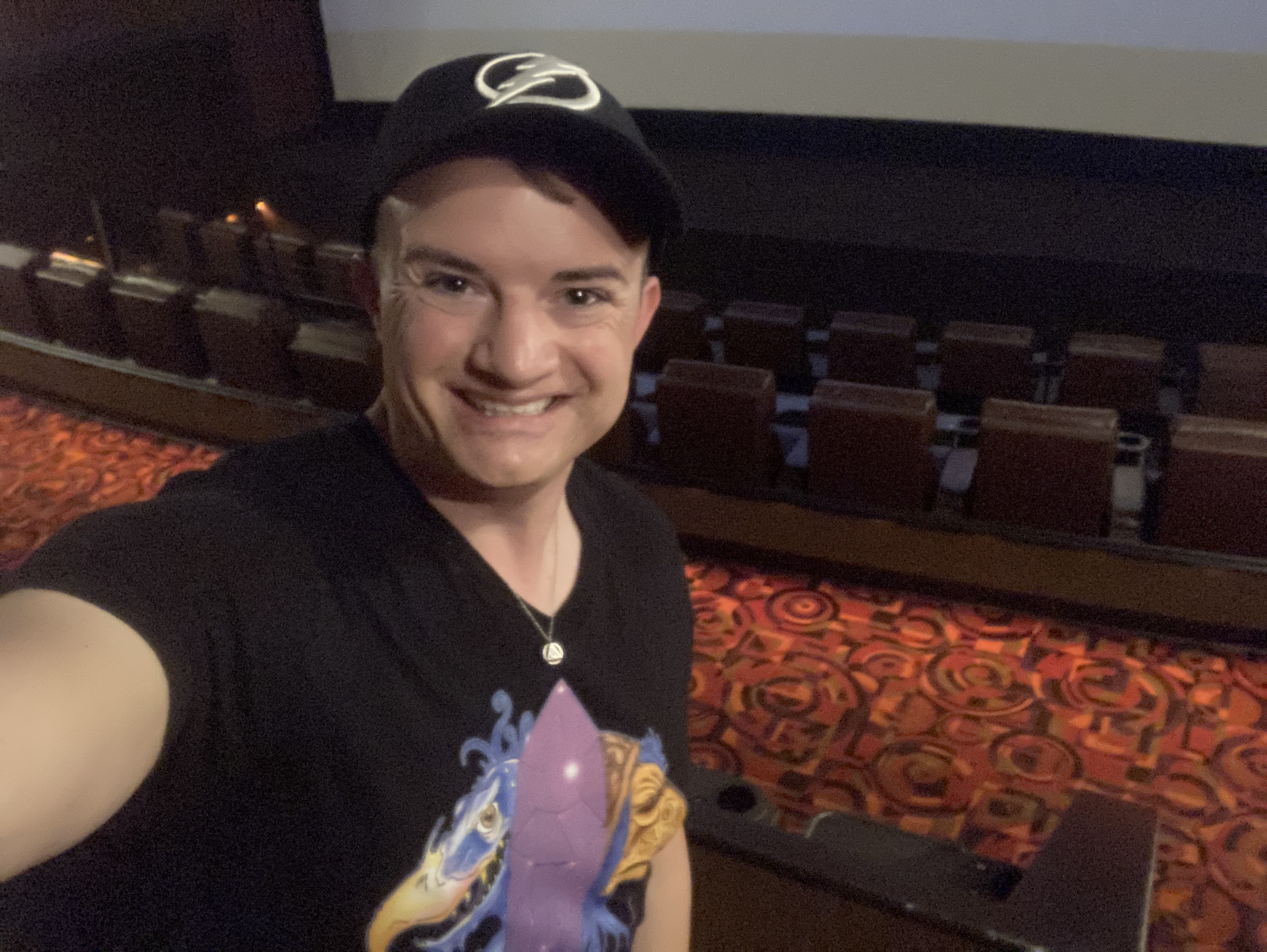
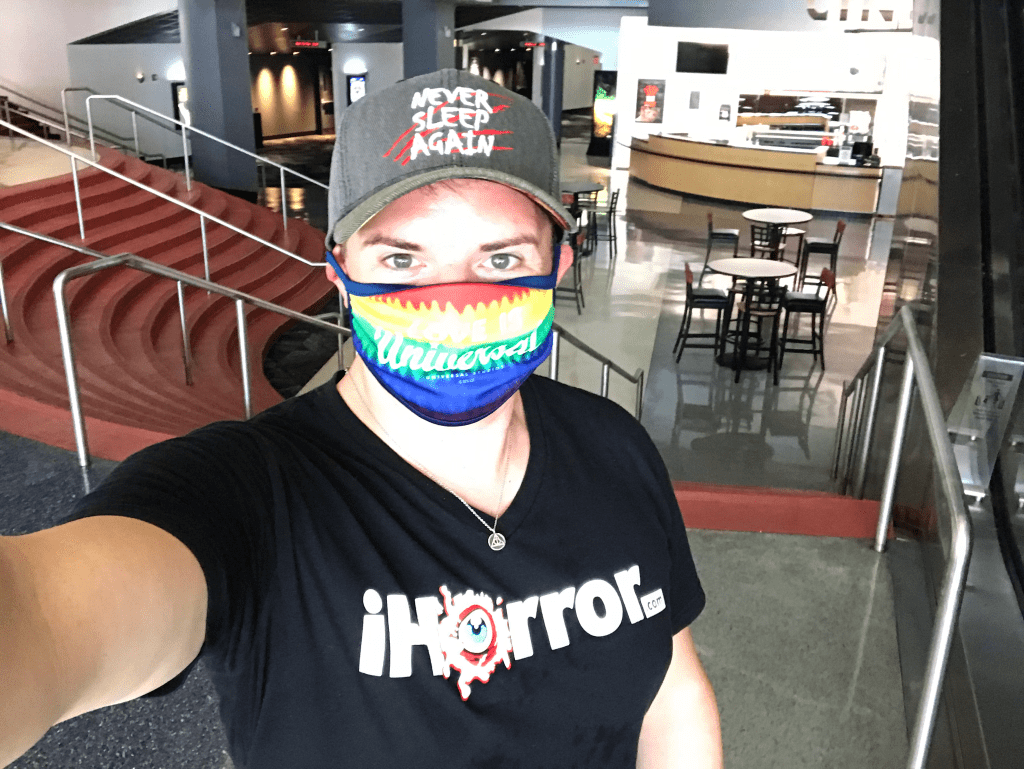
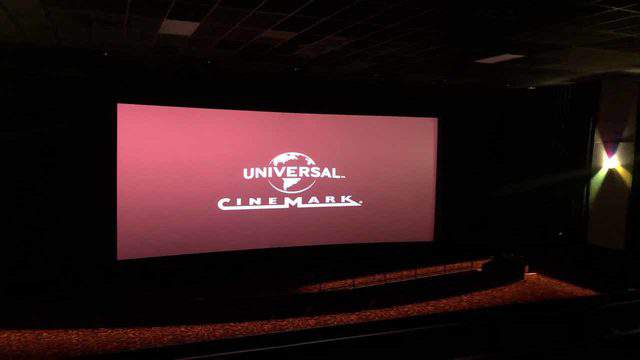
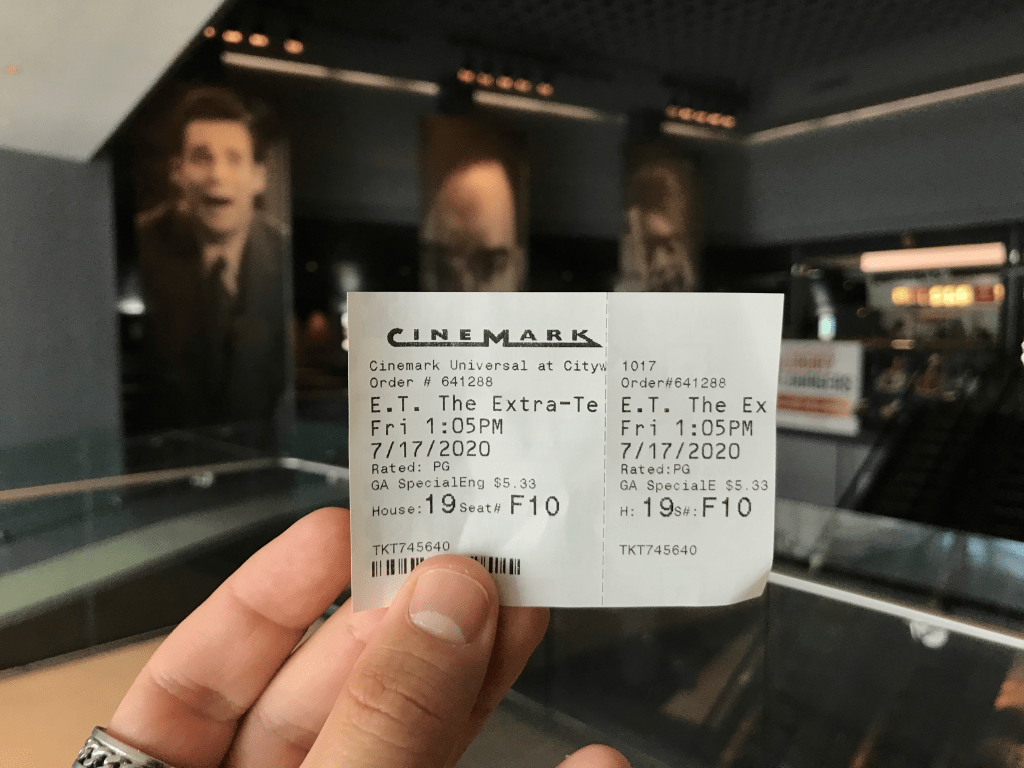
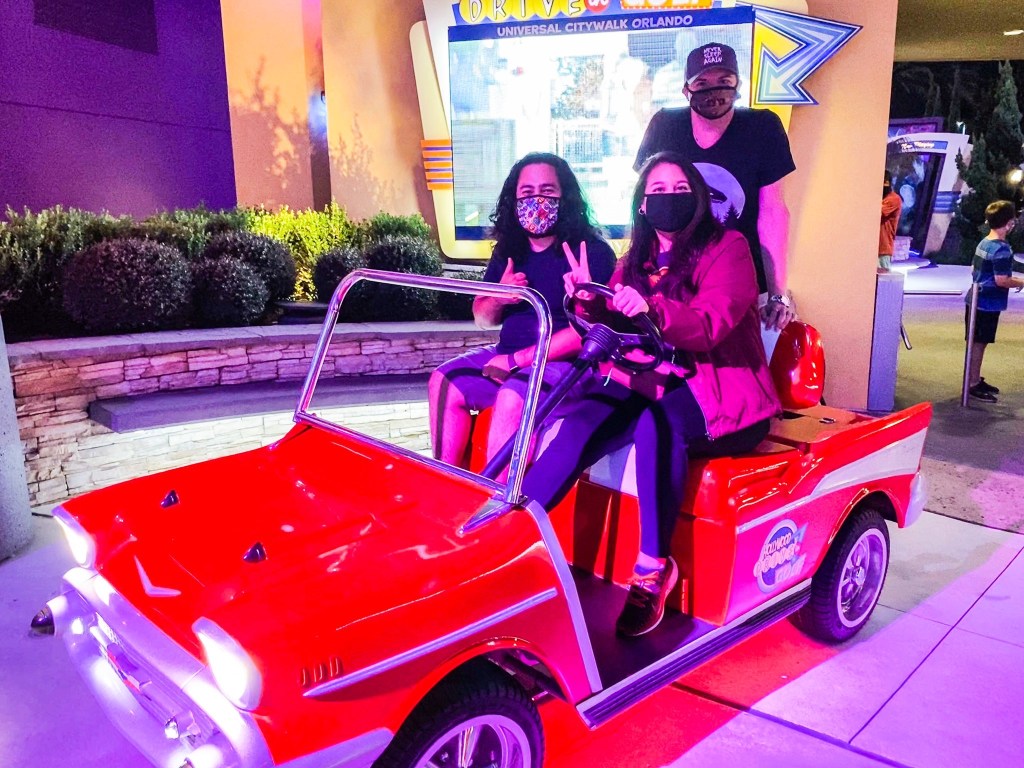
On Friday, July 17th, I returned to the cinema! I’ve been waiting for this day since the middle of March when movie theatres closed during the COVID-19 shutdown. From the moment I learned that the theatres around me (Tampa & Orlando) would begin reopening in mid-July, I was eagerly awaiting the opportunity to once again sit in a recliner in an auditorium in front of a giant screen with surround sound to experience the magic of motion pictures as cannot be replicated, even in the very best at-home VOD experiences. The smells, the sights, the people (in their respective masks), and the energy all help to create the immersive cinematic experience that has been a staple of motion pictures since the earliest days of film distribution. And what better way to return than seeing E.T., Terminator 2: Judgement Day, and Jurassic Park over the weekend at the Universal Orlando Cinemark at CityWalk. The former two, I had never seen on the big screen before, and I never turn down an opportunity to see the latter. There is a magic to arriving at the box office to pickup your ticket, walking inside, being greeted by a smiling face and directed to your auditorium where you take a seat to watch a movie at the exact same time as other others in attendance. You will laugh together, cry together, scream, together. That “togetherness” creates an infectious energy in the room that transcends the mind and heart. Watching movies at the Universal Orlando Cinemark also provided me with the ability to watch the movies then ride them! Both E.T. and Jurassic Park are attractions at Universal Orlando (while T2-3D is a former attraction), so I could watch the movie then experience the ride! How cool is that?!? Although some of you live in areas that have not reopened movie theatres, others do live near cinemas that have reopened; and I hope this article serves as encouragement to leave the couch in your living room behind, and return to the cinema!

Friday, July 17th couldn’t come quickly enough for me. As soon as I heard that was the day that movie theatres would begin reopening, I was primed to return to the cinema to properly experience motion pictures. It’d been nearly four months to the day since I had watched a new movie. Yes, I know what you’re thinking–why not just watch “new” movies on streaming services? That’s one band wagon that I refused to climb aboard. Although I could write an entire article on just why I don’t care to watch “intended to be theatrical release” movies at home, in short and among other reasons, I am far more at ease and comfortable sitting by myself in an auditorium than I am sitting alone in my own living room. And it’s not just the temptation to look at my phone or have my MacBook close by. Watching “theatrical” first run movies on VOD at home lacks the experiential factor that comes along with theatrical movies, not to mention the lack of structure at home. Also the sheer number of films to choose from can be quite daunting; I prefer knowing that there are 1-3 new movies coming out most Thursday nights. When I wasn’t attending press screenings, I would watch whatever was new on Thursday evenings. VOD doesn’t offer that. With the VOD platform, there are dozens of titles that release weekly. It’s overwhelming. Plus, after-movie conversations with the staff at the movie theatre or friends are so much fun! Watching at home deprives us of the opportunity to share in discussions and heated debates over what we just watched together for the first time.

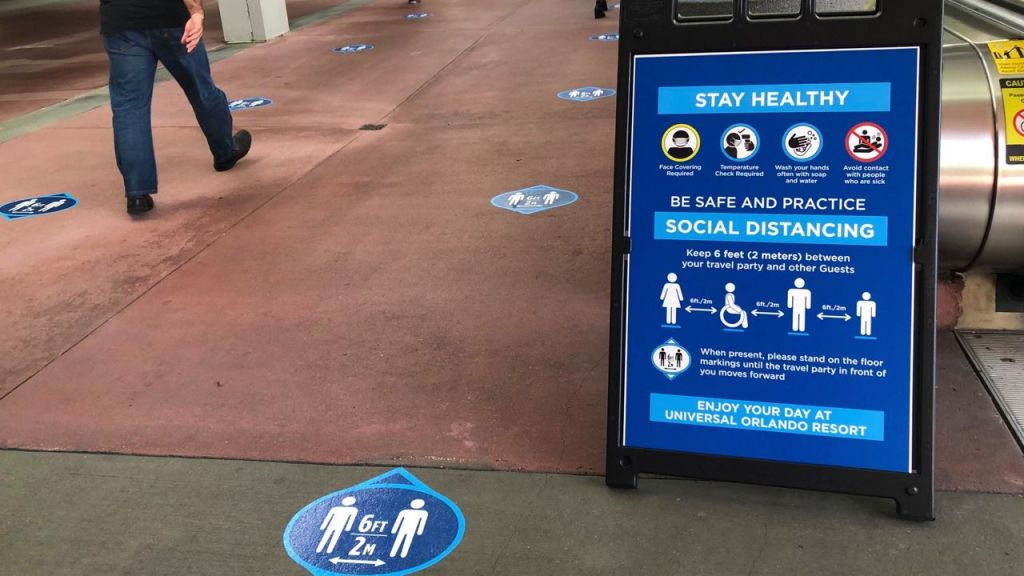
This article is about my experience at the cinema; but in case you’re wondering, Universal Orlando Resort has been a model company in our post-shutdown economy and world. Disney World: we are going to open in July; Universal Orlando: hold my beerand we’ll do it better. From the passholder days on June 3-4 (to which ALL UOAPs were able to attend) to today, Universal is keeping guests safe whilst delivering the magic and opening up the gateway to epic adventures. Even before you get to CityWalk, all Guests and Team Members undergo temperature checks. And yes, Team Members and Guests were wearing masks and following social distancing markers. So any reports to the contrary, are grossly exaggerated. Take it from me, I have literally been there ten times since the reopening, so I’ve seen the park on multiple days. That same attention to health and safety in the theme park was carried directly over to Universal’s movie theatre partner Cinemark.

Much like Universal, Cinemark was on their A-game from box office to exit. When I bought my ticket to E.T., I was able to see on the seat selection monitor just how the company was implementing social distancing. Every row was divided up into two-seat sections. After every two available seats, there were two empty seats. And with the theatre using big recliners, that put six-ish feet between parties. Yes, that means that if you’re a party of three or more, that you cannot sit immediately together. However, if you are a larger travel party, you can purchase tickets together early, and seats will be blocked off on either side of your travel party. The concession stand had social distancing markers in place, and even turned-off every other Freestyle Coke machine. But the Coke machines weren’t the only things that were intentionally turned off to promote social distancing; even the restrooms were setup to accommodate the “six-foot rule.” In the men’s room, every other stall was cordoned off. Of course, what funny is that most guys know that you never take the urinal stall directly next to another guy. So, I thought that was kind of humorous.

Inside the auditorium, I observed that all guests were wearing masks except when eating or drinking. Now, before you get your feathers all ruffled, just like restaurants permit dine-in guests to remove masks when eating, then movie theatres should NOT be thought of any differently. And I’ve also heard the “what about the ventilation system” argument why theatres shouldn’t reopen. If we do not expect Target, the supermarket, schools, places of business, libraries, and gas stations to turn off their environmental systems (and some of those are places that you spend extended amounts of time at, especially if you are still reporting into an office or store for work), then movie theatres should NOT be held to a different standard. Upon leaving the movie, I observed (what appeared to be).a third party cleaning company that was preparing to go inside and clean the auditorium for the next showing. Clearly, Cinemark and Universal have thought through how to maintain a safe environment for all guests and staff. As John Hammond would put it, “sparred no expense.”

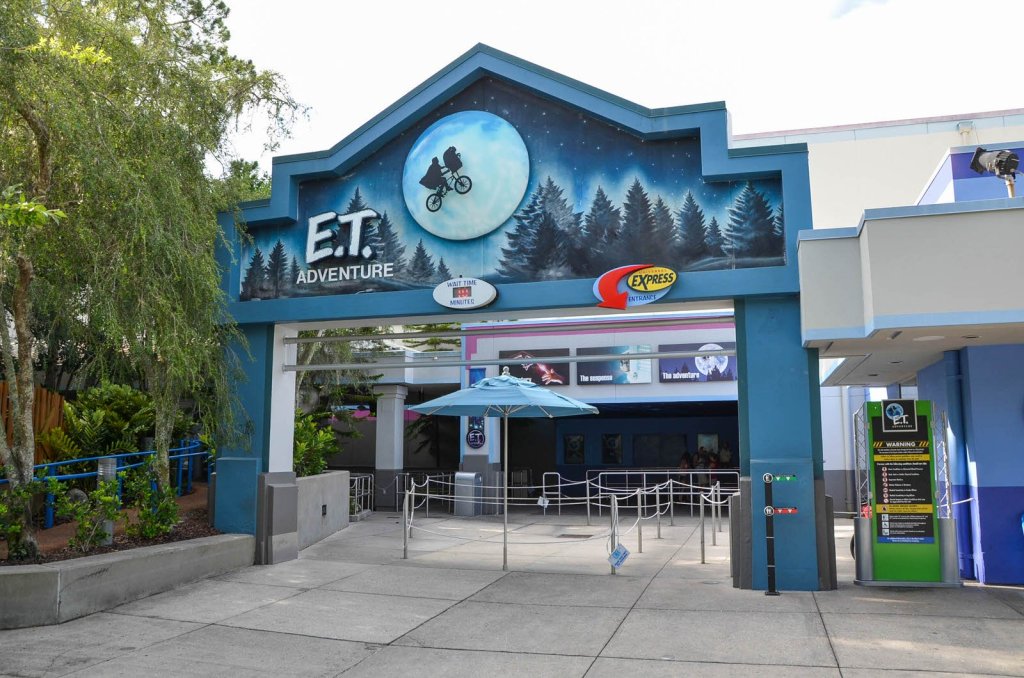
The first movie I chose to watch on my return was E.T. the Extra Terrestrial. This is a movie that is particularly dear to my heart because it inspired one of only two remaining opening-day attractions left at Universal Studios Florida (the other being the Horror Makeup Show). I adore the movie, but it’s the attraction that gives it a special place in my heart. Whenever I ride it, I am reminded of my family, and in particular my sister since she comes down to Florida to visit me a few times a year, and we always go to Universal together. When I am riding that bicycle through the forest and through the Green Planet, I feel that my sister is next to me saying “I’ll. Be. Right Here.” Watching this timeless classic on the big screen for the very first time was a breathtaking experience. I cried so many times during the movie, and yes I laughed too. It was like watching it for the very first time, period. I’d like to say it took me back to seeing it in theatres as a kid, but this came out before i was born. Compared to watching it on TV at home, this was a totally different experience that immersed me in the world of the movie. For the runtime, I could shut out the chaos and confusion of the world in which we presently live, and get lost in this cinematic fantasy that has delighted audiences for nearly four decades.

After I watched the movie, I went to visit a friend of mine working in Islands of Adventure before heading back to Universal Studios to ride the E.T. Adventure, then take in the new Bourne Stuntacular show that is in the former T2:3D show building. Although I had seen the show during it’s opening weekend, I wanted to go back to the former home of the T2 attraction before watching T2: Judgement Day on the big screen for the first time! So after returning ET to the Green Planet and following Jason Bourne, I went back to the Cinemark to watch Terminator 2: Judgement Day. And WOW! That film still holds up incredibly well. more than twenty-five years later, and that movie still delivers the spectacular in spades. Yes, even the old CGI effects still look killer (well, most of them anyway). The picture, the sound, everything transported you from that auditorium to the streets of LA along side John, Sarah, and Arnold. Words cannot capture the magic of the moment of sitting there, watching another timeless motion picture on the big screen.

The next day, I met up with the Always the Critic podcast to watch Jurassic Park together! Since there were four of us, we couldn’t all sit together, but we were all able to watch the movie together, and that’s the most important element. Now, Jurassic Park is a film that I did get to see in theatres in 1993 and upon re-release in 2013, 2015 (leading up to Jurassic World), and in 2018, so this was not as mindblowing as the former two; however, it is my favorite movie of all time and I never miss a chance to see it on the big screen. Having the opportunity to watch it with new pod-friends was an experience that will long be remembered. It was so much fun when we all go together immediately following the movie to talk about how amazing it was to see on the big screen surrounded by incredibly sound technology. We even commented on how we jump at certain parts even though we know that they are coming up. Something about seeing it in a movie theatre with other people that still makes you jump and react much in the same way you may have done when you did see it for the first time.

There are other movies that I plan to see on the big screen such as Jaws, Indiana Jones and the Raiders of the Lost Ark, select Harry Potter films, and more. I hope that this idea of running old and new classic movies continues into the Halloween season so we could get screenings of The Exorcist, Rosemary’s Baby, A Nightmare on Elm Street, Psycho, Halloween, Friday the 13th, SCREAM, Misery, Carrie, The Shining, and so many others! Perhaps this is how cinemas will reimagine their business model. In addition to the new movies that will eventually be released in theatres, they will continue to show motion pictures that have contributed significantly to the human experience over the decades.

Should you choose to attend your local cinema, make sure they are following local, state, and federal guidelines and ordinances. Many movie theatres will require masks even if local government bodies do not, and that’s okay. I don’t like wearing one when I go out, but I wear one without complaint because I want to be cooperative and responsible. If your cinema is taking the recommended CDC and DOH precautions, then return with confidence that your health and safety are priorities for your cinema. You will probably see the theatre staff happier than ever because they (1) have their jobs back and (2) are incredibly thrilled to welcome you once again to the movies. By returning to the cinema, this will provide the empirical data necessary for distribution companies to justify releasing new movies in theatres once again. Without butts in seats, it makes it difficult to make a decision to release a movie theatrically. Your return to the cinema will do your mind and body good, it will help to bring back jobs, pump money into the economy, keep the cinematic experience alive for generations to come, and bring a smile to your face.

There are inherent risks with life; everyday we get out of bed, there are risks. Yet, we still get up and go about our day. You don’t allow the possibility of a car accident to stop you from driving, so don’t allow the possibility of contact with COVID-19 to stop you from living your best life ever. Do your best not to treat your return to the cinema (or theme parks) any differently. Now, don’t be selfishly reckless either; follow the guidelines and ordinances for your state or city without complaint. Wear your mask, if asked to do so (which is probably all movie theatres and theme parks right now), maintain the 6ft rule as reasonably possible, and above all, exhibit a positive, optimistic attitude in order to continue to build the general level of confidence that we will not live in fear but take the necessary precautions to promote health and safety for all. So, it is plain to see that movie theatres CAN and WILL intentionally make accommodations and implement precautions to promote health and safety to mitigate the spread of COVID-19. I never once felt unsafe at any point in my return to the cinema. Return to your cinema this weekend!

Ryan teaches screenwriting and American cinema at the University of Tampa. If you like this article, check out the others and FOLLOW this blog! Interested in Ryan making a guest appearance on your podcast or contributing to your website? Send him a DM on Twitter or email him at RLTerry1@gmail.com! If you’re ever in Tampa or Orlando, feel free to catch a movie with or meet him in the theme parks!

Follow him on Twitter: RLTerry1