HOW TO MAKE A KILLING movie review

A darkly comedic commentary on when ambition becomes obsession and obsession begins to rationalize itself as virtue.
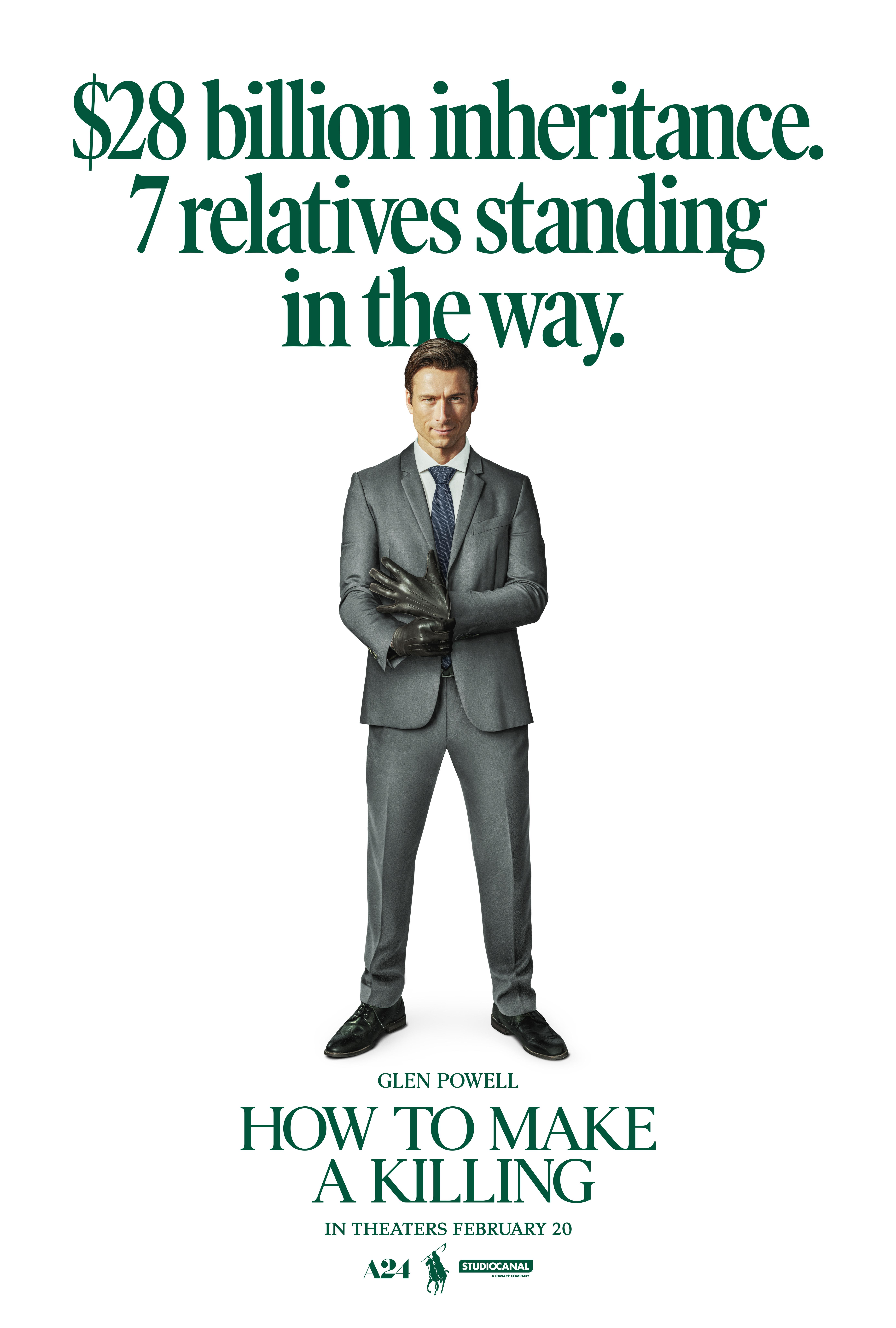
There is a fine line between genius and insanity—and How to Make a Killing lives in that narrow corridor where ambition becomes obsession and obsession begins to rationalize itself as virtue. Writer-director John Patton Ford delivers a smart, sophisticated dark comedy that feels as if it has the soul of a 1940s/50s film noir but expresses itself through more contemporary cinematic means. From the moment the movie opens, you are invested in the fascinating confession of the central character of Becket.

Disowned at birth by his wealthy family, Becket Redfellow (Glen Powell) will stop at nothing to reclaim his inheritance, no matter how many relatives stand in his way.

At its heart, the film reminds us that obsession rarely announces itself as corruption. It presents as vision. As discipline. As genius. Only later do we recognize the erosion of ethics beneath it. Read superficially, the film is a crime drama about financial manipulation and moral compromise. Read more carefully, it is a character study about how the love of money—so often misquoted, so rarely understood—can metastasize into something corrosive. “The love of money is the root of all kinds of evil” is not a condemnation of wealth itself, but of fixation. It is obsession, not currency, that corrupts. And this film understands that distinction with unsettling clarity.

Based upon an early 1900s novel, Ford’s film aligns with and falls within the vein of The Big Short in subject matter but not in spirit. Both explore financial ambition as a moral gamble, but where McKay’s film is kinetic and self-aware—almost gleefully explanatory—How to Make a Killing plays like a contemporary noir stripped of voiceover and venetian blinds. It shares The Big Short’s suspicion of capitalism’s ethical elasticity, yet rejects its comedic distance. Instead, it sinks into fatalism. If McKay’s film feels journalistic—an exposé delivered with sardonic flair—this one feels like a cautionary tale whispered from a holding cell. The satire is muted. The consequences are personal. The system may be flawed, but the focus here is the individual who chooses to exploit it. Tonally, the film feels spiritually aligned with 1940s and 50s film noir. One could easily imagine this plot transposed to postwar America—smoke-filled offices, whispered deals, fatalistic narration. Though not shot as neo-noir, its moral architecture is noir to the core: ambition curdling into self-destruction, intelligence weaponized against itself, inevitability closing in with quiet precision.

Becket is not written as a villain–which is to say that he isn’t written as a classical villain from the outset. But that is the point. He is written as intelligent, disciplined, and—crucially—persuasive to himself. Each unethical decision is internally justified. Each moral line crossed is reframed as strategic necessity. The film traces how obsession reorders one’s moral hierarchy: legality becomes negotiable, relationships transactional, consequences theoretical. It is not greed in caricature form—it is incremental self-deception. Ignoring one’s conscious repeatedly will eventually mitigate the decibel to little more than a whisper before being muted altogether. However, what keeps him from turning completely from sympathetic victim to full-bodied sociopath is that Becket’s conscious does persuade him that there is a line that even he won’t cross.

We, the audience, find ourselves in an uncomfortable position. We root for Becket because we recognize his drive. We admire his focus. We even understand his resentment. Yet we simultaneously want him to stop—to walk away before the inevitable collapse. The film’s framing device, opening where his journey will likely end, casts the entire narrative under the shadow of consequence. It is not a question of whether the fall will come, but how long denial can postpone it and we are held in suspense as to what is going to eventually bring about his downfall. What distinguishes How to Make a Killing from lesser character studies is its restraint. The writer-director demonstrates equal competence in both disciplines—an increasingly rare balance. Nothing feels indulgent. Nothing feels didactic. The film never moralizes overtly; it trusts the narrative arc to indict the behavior. The pacing is clean and deliberate. The plot is simple—but the characters are complex. That is the formula for enduring storytelling.

The film also explores the many faces of wealth—and the different kinds of monstrosity it can produce. There are those who flaunt their prosperity with vulgar bravado, mistaking excess for authority. There are others who manipulate and exploit with a polished smile, weaponizing charm and access as currency. And then there are those who inflate their own sense of importance, confusing proximity to power with moral superiority. Yet the film wisely tempers its critique. Not all wealth is predatory. There are figures of means who genuinely open doors, who extend opportunity—even if their motivations are tinged with ego or paternalism. This nuance prevents the story from collapsing into caricature. The danger, the film suggests, is not wealth itself, but the moral distortion that can accompany its pursuit—or its performance.

Becket’s love interest represents the one thing in his life that isn’t transactional. She falls for him before the money enters the frame—before the inheritance becomes a possibility, before ambition curdles into obsession. He loves her too, in his way. What she offers him is not leverage, not access, not advancement—but something rarer: affection without calculation and companionship without contingency. In another life—or perhaps in another genre—that might have been enough. But noir rarely permits redemption. His compulsion, his fixation on the promise of sudden elevation, becomes the crack in the foundation. The inheritance is not necessity; it is temptation. And temptation, once entertained, demands escalation. The tragic irony is that he already possesses what he claims to be chasing—love, validation, belonging—but he cannot recognize it because he has convinced himself that worth must be quantified. In reaching for more, he loosens his grip on the one relationship capable of saving him. And in true noir fashion, the loss will not feel dramatic when it happens—only inevitable.

There is also a pointed commentary on relationships built upon status, influence, and net worth. The film suggests that when affection is contingent upon achievement—when love materializes only after measurable success—it is less love than leverage. Becket’s romantic entanglement is not merely subplot; it is thematic reinforcement. In the second and third acts especially, he is not simply pursuing someone—he is being pursued by someone whose interest aligns conspicuously with his rising value. That dynamic becomes the first step toward moral descent. Toxic relationships here are not explosive; they are aspirational. And that makes them more insidious. The film quietly warns that those who crave financial or social influence often exploit weakness and tragic flaw, convincing their target that they are both reward and refuge. The toxin may look exquisite—may even taste intoxicating—but it corrodes judgment long before its damage is visible.

How to Make a Killing is not a loud film. It is a steady one. And in tracing the psychology of a man who convinces himself he is justified, it offers a sobering reminder: the most dangerous moral collapses are the ones that make perfect sense to the person committing them–that is, until the pattern is difficult to reverse.
Ryan is the general manager for 90.7 WKGC Public Media and host of the show ReelTalk “where you can join the cinematic conversations frame by frame each week.” Additionally, he is the author of the upcoming film studies book titled Monsters, Madness, and Mayhem: Why People Love Horror. After teaching film studies for over eight years at the University of Tampa, he transitioned from the classroom to public media. He is a member of the Critics Association of Central Florida and Indie Film Critics of America. If you like this article, check out the others and FOLLOW this blog! Follow him on Twitter: RLTerry1 and LetterBoxd: RLTerry
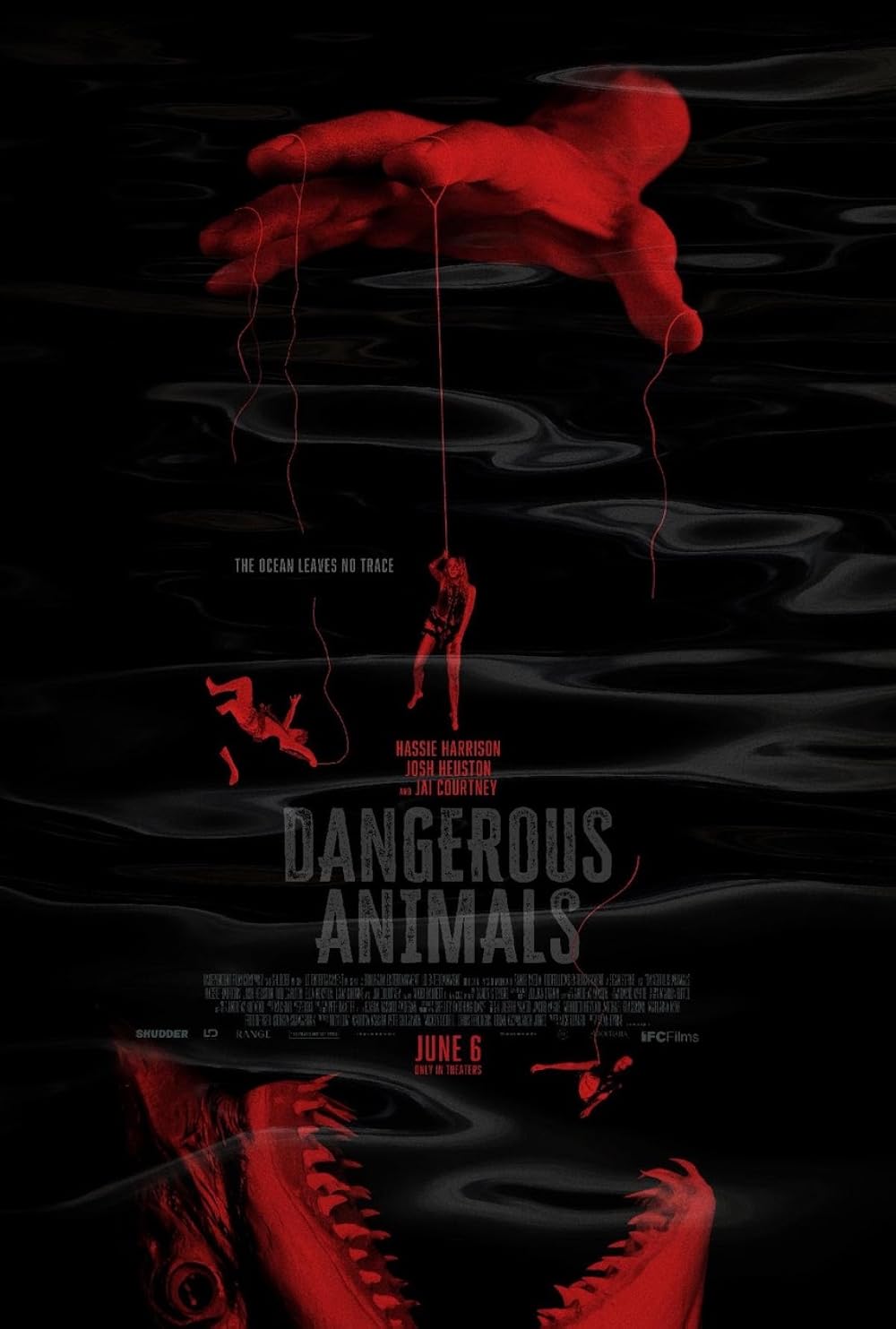
DANGEROUS ANIMALS (2025) horror movie mini review

Sufficiently fun. Dangerous Animals is the kind of horror movie that is sufficiently fun and entertaining once, but not a movie that commands a rewatch. The premise is fantastic: a serial killer that kidnaps young tourists (usually young women) and feeds them to sharks as he uses a old VHS camcorder to capture the victim’s demise. Dangerous Animals takes inspiration from other movies such as Shark Night (2011), Cabin by the Lake. and even The Silence of the Lambs. Between truncated first and third acts, is a protracted second act that foils any suspense, tension, or proper pacing setup in the first act. Performatively, the film is quite good; had it not been for the compelling and entertaining performances, the movie would’ve fallen quite flat for me. Like with many indie films, the cinematography and editing outclass the screenwriting. The evidence of thoughtful directing is there, but its potential is hampered by the poorly paced and structured screenplay. This feels like a short film idea that was augmented to fit a feature length runtime. Without giving it away, there is a particular scene about a third of the way through the movie that is straight-up an homage to an iconic scene from Silence of the Lambs, which I really appreciated. Releasing on the 6th of June, if you enjoy shark and/or horror movies, then its worth checking out. But like I said, for me, as sufficiently entertaining as it was, it isn’t one that I am going to rewatch anytime soon.

Ryan is the general manager for 90.7 WKGC Public Media in Panama City and host of the public radio show ReelTalk about all things cinema. Additionally, he is the author of the upcoming film studies book titled Monsters, Madness, and Mayhem: Why People Love Horror. After teaching film studies for over eight years at the University of Tampa, he transitioned from the classroom to public media. He is a member of the Critics Association of Central Florida and Indie Film Critics of America. If you like this article, check out the others and FOLLOW this blog! Follow him on Twitter: RLTerry1 and LetterBoxd: RLTerry
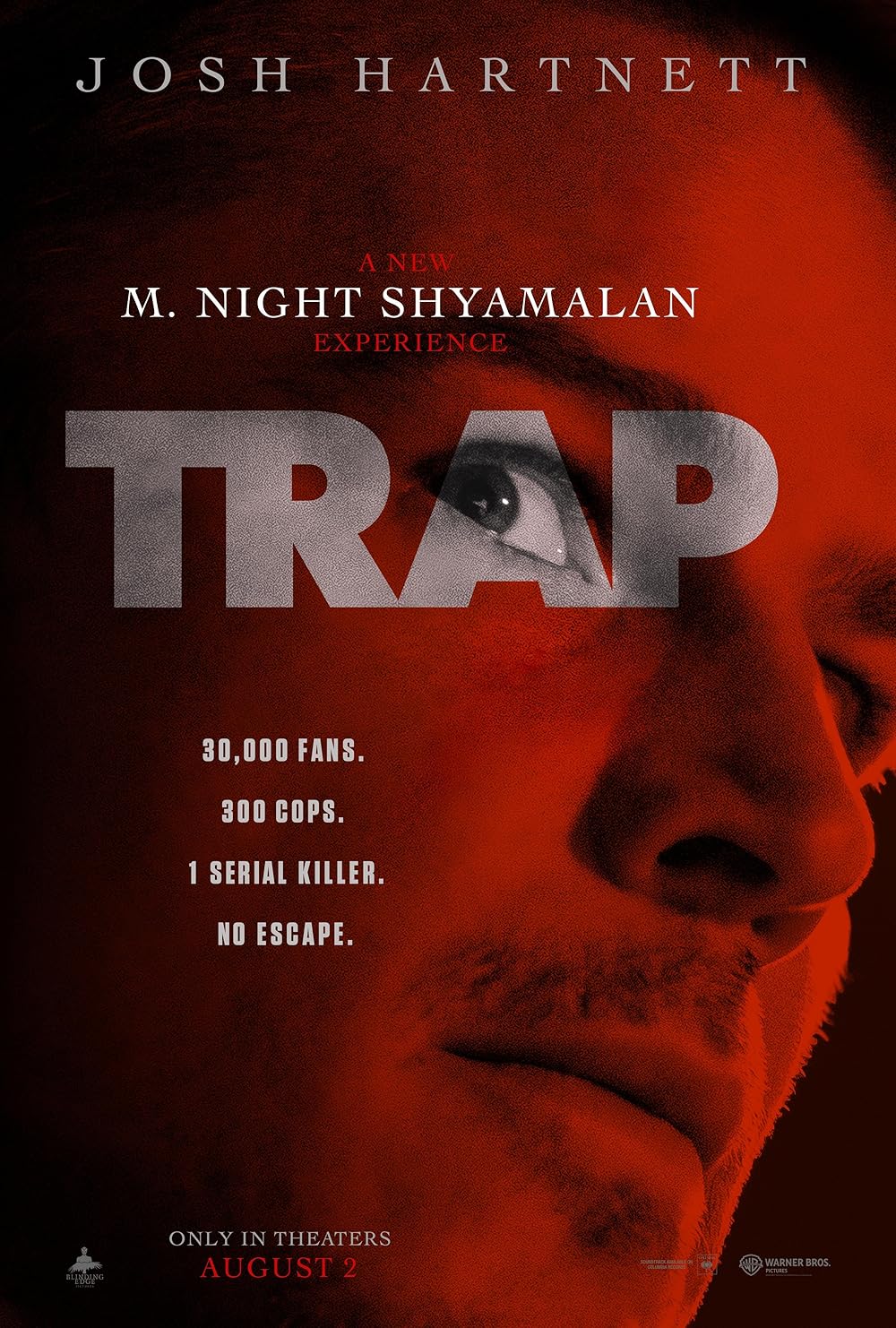
TRAP movie mini-review

A mediocre thriller that is sufficiently enjoyable. M. Night Shyamalan’s TRAP, starring nineties heartthrob Josh Hartnett, is a perfectly satisfying way to spend a rainy afternoon. The most enjoyable aspect of the movie is the performative dimension. Hartnett delivers a chilling performance as the serial killer The Butcher. Before you @ me, his identity is revealed early in the movie. But that’s the point, it’s not a movie that builds its suspense on the identity of the killer; rather, the suspense is built upon how he is going to escape the FBI after being tracked to the Lady Raven concert in Philadelphia. Hartnett’s performance is completely unsettling from the beginning when we sense that there is something a little off about his character. There is a side-plot that goes nowhere, that feels superfluous, but otherwise, it is a tightly written script with thoughtful pacing and a nice payoff. I appreciate this vehicle that allows Hartnett to showcase the range of his talent. Because he pulls off warm and charming and completely unnerving. The cameo by screen legend Hayley Mills was a nice touch, and Shyamalan’s daughter also delivered a solid performance as the trusting daughter. While I cannot say that I was particularly wowed by this movie, I can say that I enjoyed my time well enough. It’s a fun movie that provides a thrilling ride for the relatively brief runtime.

Ryan teaches Film Studies and Screenwriting at the University of Tampa and is a member of the Critics Association of Central Florida and Indie Film Critics of America. If you like this article, check out the others and FOLLOW this blog! Interested in Ryan making a guest appearance on your podcast or contributing to your website? Send him a DM on Twitter. If you’re ever in Tampa or Orlando, feel free to catch a movie with him.

Follow him on Twitter: RLTerry1 and LetterBoxd: RLTerry
“Office Killer” Throwback Thursday movie review

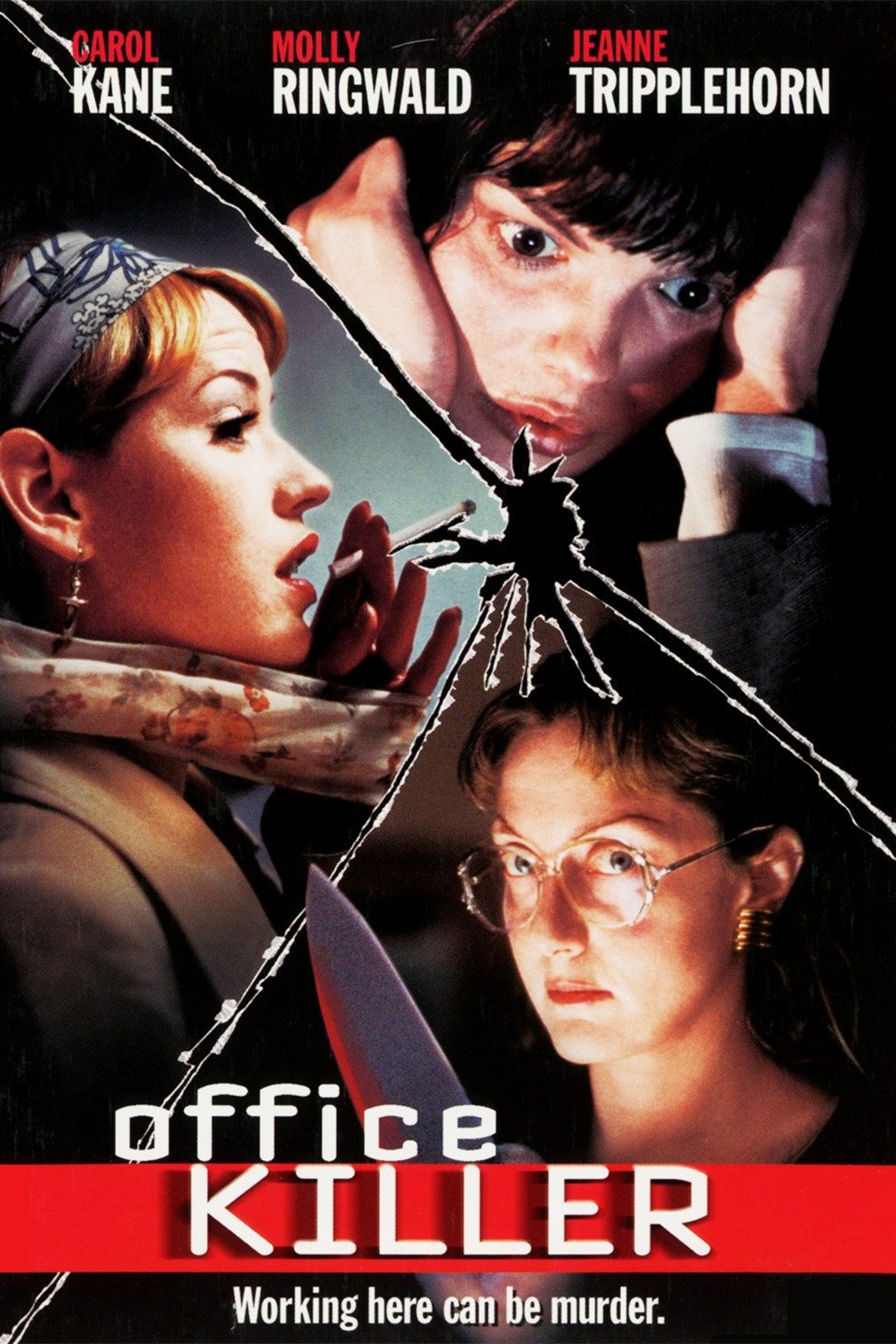
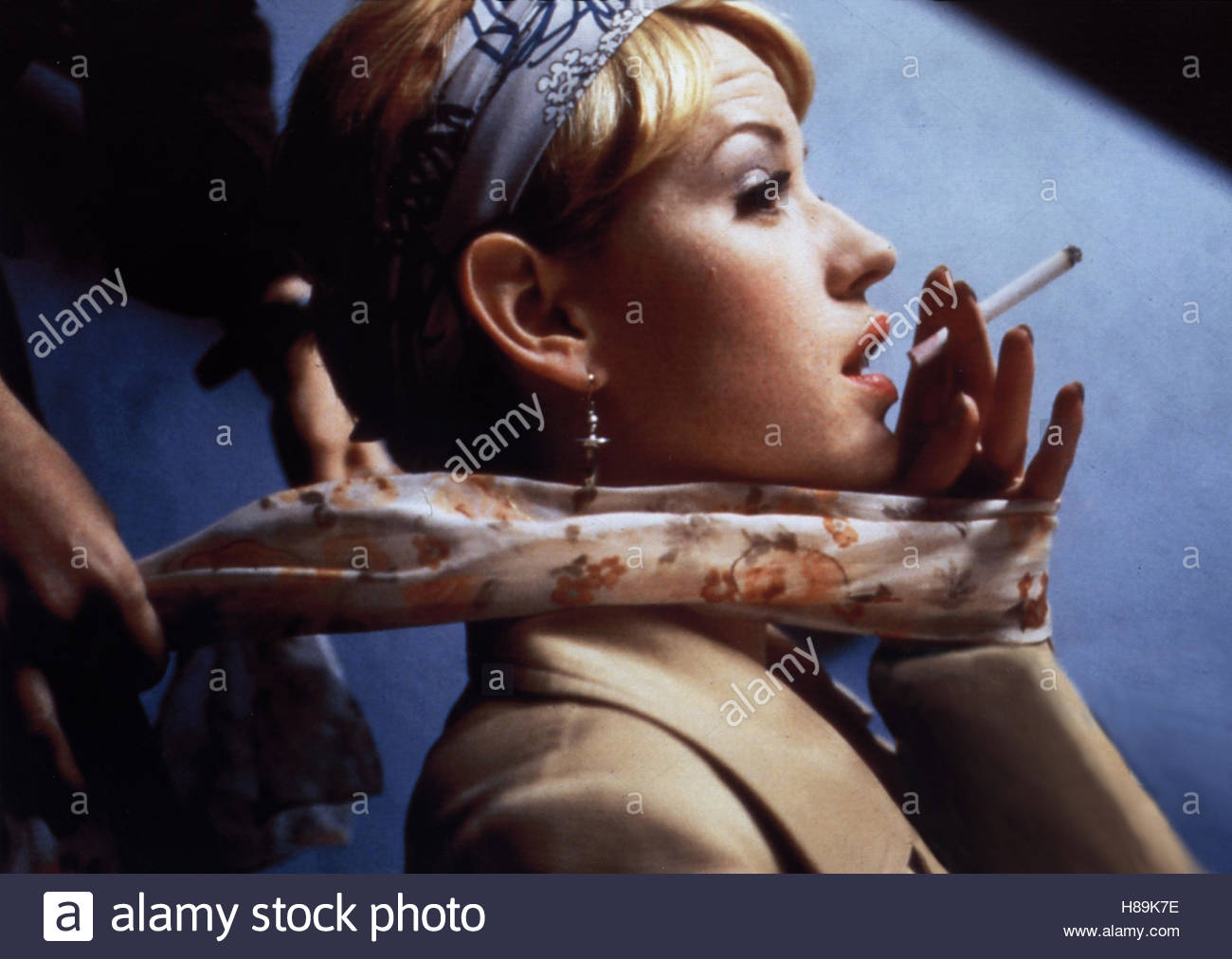
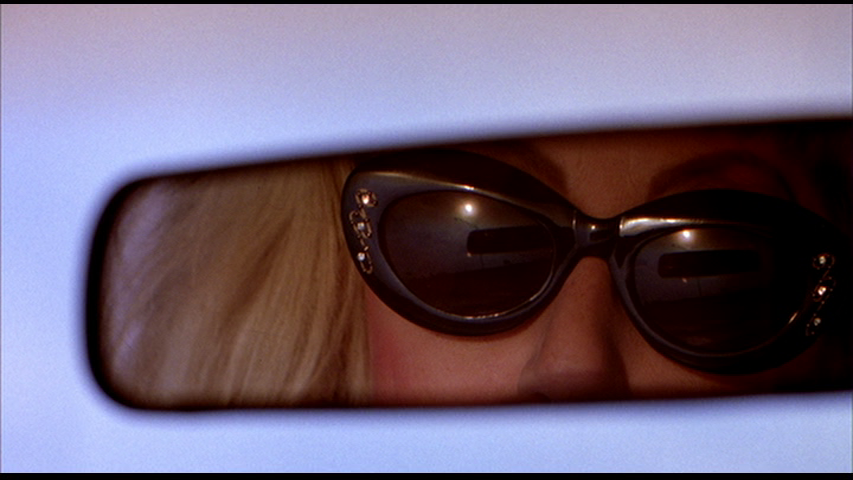
Ever see one of those indie horror-comedies that was panned by the critics when it came out a couple decades ago just to realize that if it was released today that it would be the talk of the horror community? Well, that is 1997’s Office Killer starring Carol Kane (When a Stranger Calls), Molly Ringwald, and directed by famed photographer Cindy Sherman. Kane delivers an outstandingly bananas performance that is a combination of Norman Bates and Patrick Bateman. Sherman certainly displays her adoration for the cinematography of Hitchcock’s films in many of the scenes in how the shots are framed and blocked. You’re hard-pressed to find many reviews of this horror-comedy even on LetterBoxd. It’s baffling to me why this movie hasn’t received more attention from the horror community on Twitter, blogs, and podcasts. Perhaps it’s because it is no incredibly obscure that you have a hard time even finding it on DVD, let alone streaming. A friend of mine had to order his copy of the movie from Spain. That is how difficult it is to find this movie. Even the few reviews I found were not flattering–except a couple that write about what I witness in this movie. The title works in two ways (1) it’s a description of how even in the 90s there was a fear that computers would kill the traditional office environment and (2) the literal description of a slasher in the office. Furthermore, there are plenty of moments and kills that serve as a freudian commentary on the American workplace. So I suppose it’s up to me to direct attention to this horror gem!

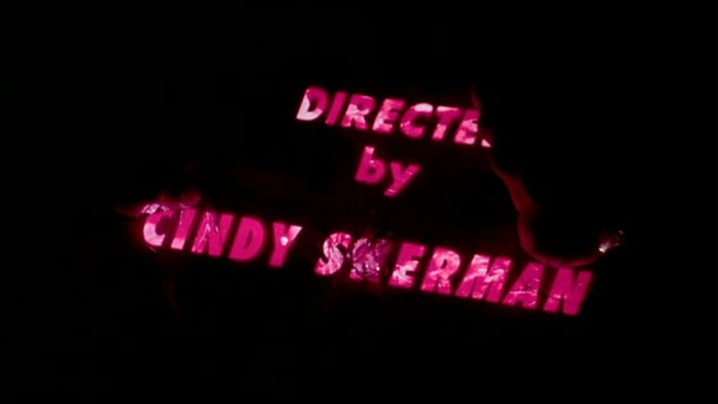
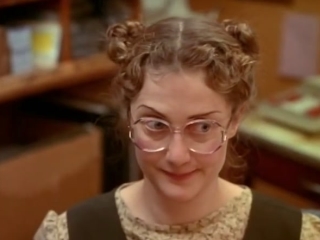
From the beginning, I had a feeling that I was in store for a highly artistic indie darling of a movie as soon as I saw the fantastically creative opening credits accompanied by a creepy score. Following the opening credits, there was a very Hitchcock shot that intrigued me and tipped its hat to Sherman channeling her award-winning photography into the moving images on the screen. Typically, horror movies don’t have narration but we begin with a narration. Not knowing anything about this movie, I was completely unsure of what to expect. Even the first kill didn’t tell me that I was about to watch a slasher. But as I learned more about Dorine (Kane), the more I was sucked into her world and completely intrigued by her choices and lack of social awareness. Playing opposite Kane is the indelible Molly Ringwald as the bitchy, judgy coworker Kim. Her performance is great! Not great in that it’s a phenomenal performance, but great in that she showed that she can play a character that is in stark contrast to most of the characters she has played throughout her longstanding career. Most of the performances are caricatures of various people found in a typical office. In fact, I’m curious if The Office ever parodied Office Killer because it seems like a missed opportunity if not. If you are aware of an episode that pays homage to Office Killer, let me know!

Perhaps the strength of this movie is not the acting (albeit, Kane is fantastic), but the strength is in the production design, costuming, plot, and Freudian themes. On the plot. Yes, the plot. You may be scratching your head because most reviews have slammed the plot. But I feel that 1997 critics and even those who come across this film today largely missed the point of the plot. It’s not supposed to be a compelling story with thought provoking imagery and characters, it’s supposed to be a 70/80s horror movie that is darkly funny! It’s just happens to be taking place in the mid 1990s. Perhaps this movie came out too close to the 70s/80s and thus felt old and cheesy. I posit that if this movie came out today, that it would be praised for its embrace of what we love about 70s/80s slasher movies! We don’t watch and rewatch these movies because they have incredible plots. We watch them because they are lots of fun! And Office Killer is incredibly fun to watch. While we may not know precisely why Dorine’s switch flipped and she went full–what I’ll call–Norman Bateman, we are given indicators of her unstable psyche through her flashbacks to her sexually abusive father and complacent mother, and of course the present story of most of her coworkers bullying her. Those three elements, plus the opportunity, work together to set her up to be a total psycho. Her actual kills may not be creative–that is, the method by which she kills–but the creativity comes into play afterwards with the corpses piling up in her house. She talks to them, plays with them, articulates them in such a manner that they become her action figures so to speak. It’s incredibly creepy but in a comedic way.

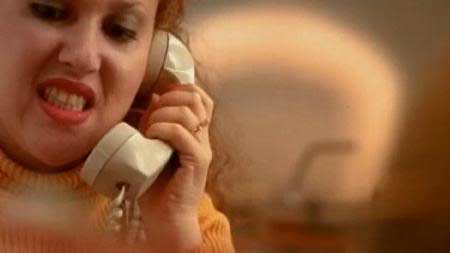
Now for those Freudian elements. This is what I find most fascinating about the movie; and what should provoke conversations amongst cinephiles and horror enthusiasts. One of the earliest shots in the movie is an extreme closeup (or ECU) of a staff member’s mouth as she is on the phone. Her red lipstick accentuates her mouth and points to the Freudian oral fixation. The scenes that follow depict female office staff members in a variety of different capacities and situations. It appears as though Sherman was painting a portrait of the male gaze over the female body. Moreover, what this movie appears to comment on and depict is Freud’s study on Fetishism. According to Freud’s study, and not to over simplify, fetishism is a fixation on an object or physiological practice of a substitution for intercourse following a sexual desire awakening in the body and mind. In more contemporary terms, the definition of fetish has evolved beyond just sexuality, but is generally still associated with sexual practices. Since likely paternal sexual abuse happened to and her mother turned her head to the allegations, in an effort to deal with the trauma, Dorine substituted what she wanted to do to her parents and others who abuse or bully her by engaging in slasher-style killings.

Each of the kills is a warped poetic justice based upon what Dorine saw as wrong with the victim. A great example of this is the attempted strangling of Kim. Since Kim ran her mouth constantly, Dorine sought to silence her voice. This same idea can be applied to the other kills too, and even in how the corpses are treated in Dorine’s basement. There is a playful nature in Dorine’s approach to the kills and even more so with her interactions with them afterwards. The depths of her psychosis are revealed one layer at a time. Even when you think that Dorine is about to get caught, she gets away with it; she alludes her would-be captors by searching the want ads and heading for another job in an office–perhaps your office! With each kill, Dorine integrated an element of that victim into her own life. She goes from mousy, frumpy to stylish and seductive. Her office underwent a transition and so did she. Dorine killed her former self to become the self that she wants to be. There is so much to enjoy about this horror comedy, and it baffles me that more horror fans and cinephiles have not talked about this movie. If you can somehow get ahold of a copy, then I highly recommend it if you enjoy slasher movies with a tough of style and laughter.


You can catch Ryan most weeks at Studio Movie Grill Tampa, so if you’re in the area, let him know and you can join him at the cinema.

Ryan teaches screenwriting at the University of Tampa. If you like this article, check out the others and FOLLOW this blog! Interested in Ryan making a guest appearance on your podcast or contributing to your website? Send him a DM on Twitter!

Follow him!

Twitter: RLTerry1

Instagram: RL_Terry