“Get Out” movie review

getoutThe epitome of the American horror film. Jordan Peele’s Get Out is an outstanding work of horror cinema, in that the American horror film is the best genre for creatively commentating on the various social, economic, and psychological constructs of life in such a way that can be visually thought-provoking. And the best part about this film is Peele does not pull out any of the usual horror tropes or clichés until the showdown. Before you begin to think that Universal Pictures and Blumhouse are pulling a bait-n-switch–selling you a psychological thriller when the film is really a heavy drama–think again. Get Out is every bit a horror film as its more traditional counterparts. In terms of its contribution to the library of horror films, the movie is flawless. From the writing to directing to acting and even the score, editing, and cinematography, Get Out is a film that you should definitely “get out” to watch. With a current 100% on Rotten Tomatoes, this film is certain to grab prolific attention from movie patrons, film studies, and social studies professors alike. It’s a brilliant film to discuss in future American horror film classes. Never before has a film been used in such a creative and visceral way to comment on how one culture appropriates the best of another for purposes of exploitation or simply because it has something that you want, and then attempt to change, assimilate, or remove altogether because that which you want is seen as wasted on the originator. “A mind is a terrible thing to waste.”

Most romantic relationships between two people enter the anxious “meet the parents” stage, and Chris (Daniel Kaluuya) and Rose’s (Allison Williams) 5-month relationship is no different. Rose takes Chris out of the city to visit her parents’ lavish country home along a peaceful lake. Rose’s parents Missy (Catherine Keener) and Dean (Bradley Whitford) are eager to meet their daughter’s boyfriend and welcome them with open arms, hugs, and tea. When her parents begin to be overly accommodating, Chris begins to think that there is a little more than meets the eye at Rose’s parents’ place. Whereas Chris’ first impression of Rose’s family and friends was just their nervous attempt to work through Chris and Rose’s interracial relationship, now he dreads that there is something unsettling going on. After encountering an old acquaintance of his who has changed to be quite peculiar, Chris’ goal is to get himself and his girlfriend to safety. During his investigation into her family and the uncomfortable actions of the hired help, Chris could never have imagined what he comes to find out. Truth can be scarier than fiction.

It is difficult to explore some of the themes and subtext of this film without giving too much away, but I’m going to try my best to analyze what I can without spoiling anything for those who plan to see the movie. The first element I took note of in the film was the choice of music. Not so much a score (although, there is a score to the film), the music selections in the film serve as an allusion to the overall message and theme in the film. For those who know a little something about music history, you may pick up on the strategic selection and placement of the various songs and musical scores used throughout the film. There are moments in which the music does not seem to match up with the mood or tone of the film–at least, at face value. However, as you delve deeper into the film, you will realize that the music fits in all too well with the plot. I’ll give you this: think about the origins of the music in the film when you watch it. Before music, such as jazz and hiphop, became popular amongst a predominantly white society, it originated amongst the black community.

Another aspect of the film that hints at the big reveal in the turning point just before the third act is the physique, athletic talent, and sexual stereotypes of black males. You’ll notice that clues are dropped here and there, albeit subtly, at the relationship between Rose’s family & friends and members of the black community. The worship of Chris’ body by many of Rose’s family friends makes for an incredibly uncomfortable sequence of encounters at the outdoor picnic. The unsettling weird encounters between Chris and all the people he meets at Rose’s family home each work to grow the level of tension and terror in the film–the fear of something dreadful looming on the horizon. Without relying upon a proliferation of jump scares and visceral horror, Peele successfully increases the level of anxiety to terrifying levels in the film. Reminiscent in the ways that Hitchcock or Kubrick may have directed this film–in terms of relying upon the fear of something not visible to the naked eye–Peele incorporates the feeling of uneasiness every moment he can without over saturating the plot. Perfect amount of all the elements that make up the American horror film can be found in this deeply disturbing narrative.

**Spoiler Alert** (you can skip to the last paragraph to avoid it)

In an effort to truly appreciate this brilliance of this film, it is necessary to disclose information that could potentially spoil the big reveal. Early in the film when Chris asked Rose if she ever dated a black guy before, she said that he was her first. This was in preparations for the trip to meet Rose’s parents. While on the tour of the home, Rose’s father mentioned a story of his dad losing in the Berlin Olympics to now famous Jesse Owens and commenting on how a black man beat a white man. Chris finds the commentary a little peculiar. Furthermore, during the first night there, Rose’s mom hypnotizes Chris to quit smoking–this sets up a plot device used later. Just before the third act, as tensions are extremely high (oh but don’t worry, they get higher), Chris stumbles across a box of photos of what look to be Rose and previous people she dated. He was not the first black guy she dated. Piecing together the fact that one of the picnic guests was an acquaintance of his from back in Brooklyn who no longer looked or acted the same way–much more white now–Chris urges Rose to leave with him.

Skipping ahead. Chris finds himself strapped to a chair and watching a video that is clearly meant to brainwash him. Many years ago, Rose’s family discovered a way to neurologically alter individuals to take what they want and leave that which was undesirable: malicious appropriation of bodies in order to serve as a vessel for individuals who saw themselves as elite. This is social commentary on how back males are often exploited for economic gain in areas such as football, basketball, track, and even music and fashion too. So, Peele was using this horror film to comment on how many in the white community have stolen from or appropriated elements from the black community in order to further their own gain or develop ways of entertaining the masses without proper acknowledgement, formal recognition, or even payment. For example, the jazz music at the beginning of the film. That style of music came out of black culture before it was rebranded high class white music for nightclubs, shows, and weddings. Further evidence of this social commentary can be found in other areas of talent that many want to steel for their own and then reprimand the black community or not being ‘more white.’ I could go on and on. Fascinating stuff!

**End Spoiler Info**

If you enjoy psychological thrillers that do not rely upon the usual tropes found in horror films similar to this one–on the surface level anyway–then “get out” to see Get Out this weekend. Although the runtime is a little longer than typical horror films (2hr 10min), the time will fly right by as you are glued to the seat and mesmerized at the combination of horror and deep sociological theming. Thought provoking, this film will prompt hours of discussions between friends and family who choose to go to the film together. As it is a horror film, do not plan to see it alone. Horror is the one genre that is best experienced in a group setting.

Written by R.L. Terry

Edited by J.M. Wead

Disney’s “A Christmas Carol” (2009) movie review

d_a_christmas_carolAn exhilarating visual array of breathtaking motion-capture animation with a touch of the macabre! Disney’s A Christmas Carol directed by Robert Zemeckis is an outstanding adaptation of the literary classic. Instead of attending the cinema this week, with the box office offerings on the anemic side as we gear up for the bulk of Oscar season heavy hitters, I decided to rewatch Disney’s A Christmas Carol. Charles Dickens’ masterpieces have long sense been a source of inspiration for film adaptations of literature. Specifically, A Christmas Carol was actually one of the earliest films period–let alone adaptations. The first adaptation of A Christmas Carol was a British film in 1901 titled Marley’s Ghost. This classic work has been adapted for film, theatre, radio, and television more than 100 original/separate times, collectively. But why??? Why this novel? Quite possibly, this single work of literature has been brought to life for the stage, speaker, or screen more than any other with only a few possible exceptions. Perhaps, because it is simply timeless–transcends all generations. Writer-director Robert Zemeckis showcases his ability to put his spin on the timeless tale by perfecting the motion-capture animation techniques that made his adaptation of The Polar Express so visually stunning. Although Patrick Stewart’s Scrooge in the TNT original movie from 1999 is my favorite Scrooge, I feel strongly that Zemeckis’ film is closest adaptation to the spirit of the novel and brings it to life in the way Dickens himself may have imagined.

London may be anxiously awaiting the arrival of Christmas Day, but the old miser Ebenezer Scrooge (Jim Carrey) could not care any less. He much prefers the company of his money and micro-managing his humble clerk Bob Cratchit (Gary Oldman) at his counting house. After begrudgingly allowing Cratchit to have Christmas Day off, Scrooge heads home. Upon arrival to his stately but lonely townhouse, Scrooge encounters the ghost of his dead–and there is no doubt about that–business partner Jacob Marley (Oldman). In an effort to spare Scrooge his horrifying fate, Marley informs Scrooge that he will be listed by three spirits (Carrey). The ghosts of Christmas past, present, and yet to come respectively take Scrooge on a terrifying journey through his his life in hopes of transforming his selfish bitterness and embrace the selfless love and joy of Christmas.

Prior to analyzing this adaptation, as it is a story most of us know and cherish, I’d like to look at why. Why has this work of literature been adapted for nearly every storytelling medium? The short answer is that it is a story that is as relevant today as it was in the 1800s. Much like with his other masterpieces, Dickens captures so much about the human condition, in what amounts to a short story. The novel is not terribly long. With many in the U.S. feeling as though, much like in Dickens’ world, that we are being divided up into the rich and poor, this novel rings especially true. In fact, there are definitely high profile people in our economy echoing Scrooge’s words “have we no prisons; have we no work houses???” Not that we have a physical debters’ prison or work houses (in the old fashioned sense), but there are certainly elements of our society which parallel them. The story hits close to home for many. Furthermore, the novel, and subsequent adaptations, are regarded so highly because Dickens encapsulated every aspect by which mankind judges one another: past, present, and future. This is the foundation of a single person or people as a unit. Through Scrooge, Dickens shows us that if we look at our past, present, and future, then we can see the impact we have on those around us and even ourselves. By seeing how we really are, we can make the decisions to develop an approach to change ourselves to be about the business of mankind.

Interestingly, the ghosts show Scrooge how Christmas past was a time of magic (although it ended in heartbreak for Scrooge), Christmas present depicts how commercialism and greed have all but wiped out the magic with a glimmer of hope as shown by Cratchit and Fred, and Christmas yet to come shows Scrooge–and us–a world without the magic of Christmas: a world that we created. Another reason why this story is so powerful is because Dickens wrote the character of Scrooge to be a complex, multi-layered human who acts very much like a mirror to many of us. On the surface, he looks like a stereotypical old miser, but after looking into his past, we are given a glimpse of how he evolved–not unlike many of us. This story is also powerful for those who recognize the religious origins of Christmas or not. The focus of the story is on generosity, hospitality, love, compassion, as well as selfishness, greed, and sociopathy; but, it very much includes and makes reference to the religious underpinnings of this special time of year. Simply stated, this is a dynamic story of redemption that transcends generations of people.

Zemeckis’ adaptation is a beautiful usage of 3D storytelling technology. Ordinarily, I am not a fan of 3D movies, but this one is an exception for sure. I did not watch it in 3D last night, but I remember watching it in 3D when it came out in 2009 at the [then] Downtown Disney AMC. Zemeckis is one of few directors who knows how to use 3D effectively without it seeming like a gimmick. His use of 3D in A Christmas Carol greatly enhances the visceral appeal of the movie. One of the principle differences between this and other adaptations is just how supercharged it is with visual effects, intense chase scenes, and flying through the street of London. But, as Scrooge himself acknowledged, spirits can do anything–they’re spirits. Zemeckis does not hold back on the dark elements of the story. If you have read the novel, you will recognize that there are very dark parts. In many respects, A Christmas Carol is a supernatural horror film. After all, how else was Scrooge going be so scared that he would make a 180 and change his miserly ways???

It’s no surprise that Jim Carrey can be seen in the character of Scrooge; however, it is not as apparent that he is the infrastructure of the look of the characters he voiced, as was the case with Tom Hanks’ characters in Zemeckis’ The Polar Express. And this trend is even less apparent with Firth’s, Oldman’s, and Wright’s, respective characters. I love Zemeckis’ embrace of the macabre mood of the story. So often, adaptations of this story lose the very horrifying elements that absolutely terrify Scrooge. Although I remember hearing parents comment that this version was too scary for their kids, I think that having a version that is skewed towards teens and adults was important. Another great element in this film: the score! Alan Silvestri’s score sneaks in some traditional Christmas carols, but you have to listen for such as “God Rest Ye Merry, Gentlemen” when its distinctive cadences turn sinister during a perilous flight through London.

There are few Christmas movies that capture the spirit of the season better than A Christmas Carol. Zemeckis’ adaptation is my pick for best translation of page to screen. The cinematic excellence of Disney storytelling is woven throughout this film and makes for a thrilling journey. If you are planning to watch some Christmas movies this holiday season, I highly recommend this version of A Christmas Carol. But if you have very young children, it may be a little too scary for them. Whether you are young or young at heart, the magic of Christmas rings all too loudly in this timeless story brought to screen once again.

“Allied” movie review

alliedQuite the duplicitous plot! Robert Zemeckis’ Allied released by Paramount Pictures is a thrilling tale of espionage and love. We have certainly seen a few different “spy” movies over the last couple of years; some more about espionage and others more about the drama that ensues afterwards. Fortunately, Allied feels like a genuine spy movie that actually contains espionage. The production design and costumes are a beautiful throwback to the fabulous 40s. You’ll find yourself reaching for a glass of champagne and swing dancing to Benny Goodman’s timeless big band jazz hit Sing, Sing, Sing. There is one city synonymous with WWII, espionage, and romance and you will appropriately return to that iconic city of Casablanca in Allied. This is definitely not a reimagined Casablanca but there are indirect references to that movie sprinkled throughout this new story. Films like this one require top notch talent, and both Brad Pitt and Marion Cotillard deliver outstanding performances to accompany this staple in film genres. Not limited to the love story between Pitt’s and Cotillard’s respective characters, the movie also includes some deadly shootout scenes and dangerously close encounters with the Nazis behind enemy lines.

Commander and intelligence officer Max Vatan (Pitt) is stationed in the famous city of Casablanca in French Morocco where he teams up with French resistance movement leader Marianne Beausejour (Cotillard). Impressed by her ability to so effectively blend in and create her authentic cover, Vatan soon finds himself falling in love with his partner. Following the assassination of a Nazi ambassador, Beausejour and Vatan flee to London to start their life together. Everything is going beautifully for the happy couple in their second year of marriage with a child when Vatan’s superiors confront him with the suspicion that Marianne is in fact a Nazi spy. Refusing to believe it to be true, Max must now conduct his own investigation into his wife’s history to protect the ones he loves so dearly.

I absolutely adored the look and feel of the film as it echoes the era of the Golden Age of Hollywood. Although this movie plays off a tad listless as a result of failing to elicit a strong emotional response from the audience, it is not without it outstanding elements. It benefits from solid acting and beautiful cinematography as well as some fantastic symbolism. Robert Zemeckis’ talent for visual storytelling is clearly visible in this period film. The weakness in the ability to successfully leave a lasting emotional impact on the audience is in the writing and executive producership of Steven Knight (Eastern Promises). For films that are not as much about the spectacle as they are the drama between characters and the challenges faced therein, it is vitally important that the personal/interpersonal relationships transcend the screen and directly impact the audience. All the makings were there for a deeply moving cinematic story, but it just doesn’t quite make that transition from the mostly superficial and distant.

Mirror, mirror, on the wall…(interesting fun fact: this misquoted line from Snow White is actually “magic mirror on the wall”). But, I digress. The strategic use of mirrors is an  incredible use of visual storytelling and symbolism. For those who have studied film or literary rhetoric, the mirror is a classic means of conveying duplicity (two sides, faces, etc of a character). Even without knowing that this was a spy movie, I would have been able to infer that from how the mirrors are shot and placed within the composition of the 24 frames a second. When using powerful symbolism as part of the visual story, it conveys so much more meaning in a scene than words could actually describe. Mirrors have long sense been a powerful metaphor even before moving pictures. But motion pictures allow for a greater use of the importance it plays in a cinematic story. Not limited to duplicity, mirrors can also be used as a metaphor for self-reflection. Whether talking duplicity or reflection, the mirror aids in conveying so much to the audience in this movie.

Ordinarily, I am not a fan of classic films getting remakes; however, there are always exceptions when the core or essence of the film is held in tact but the production design, direction, and cinematography are brought up to speed with contemporary cinema. If you’re a fan of WWII era films or the timelsss spy movie, then you will definitely enjoy Allied. After witnessing the significance of Casablanca in this movie, I am actually looking forward to a remake if there ever is one. Provided. That the overall look and feel of the movie is in line with classical motion picture storytelling. I could definitely see Robert Zemeckis directing a remake of Casablanca. Occasionally there are directors who can strike the balance between a classic tale told through contemporary technology, and Zemeckis definitely struck that balance in Allied.

Don’t allow the weak writing to dissuade you from watching it; there is actually a lot to enjoy in this film. After the slow burn during the first act, acts II and III are full of intrigue and suspense.

“Miss Peregrine’s Home for Peculiar Children” movie review

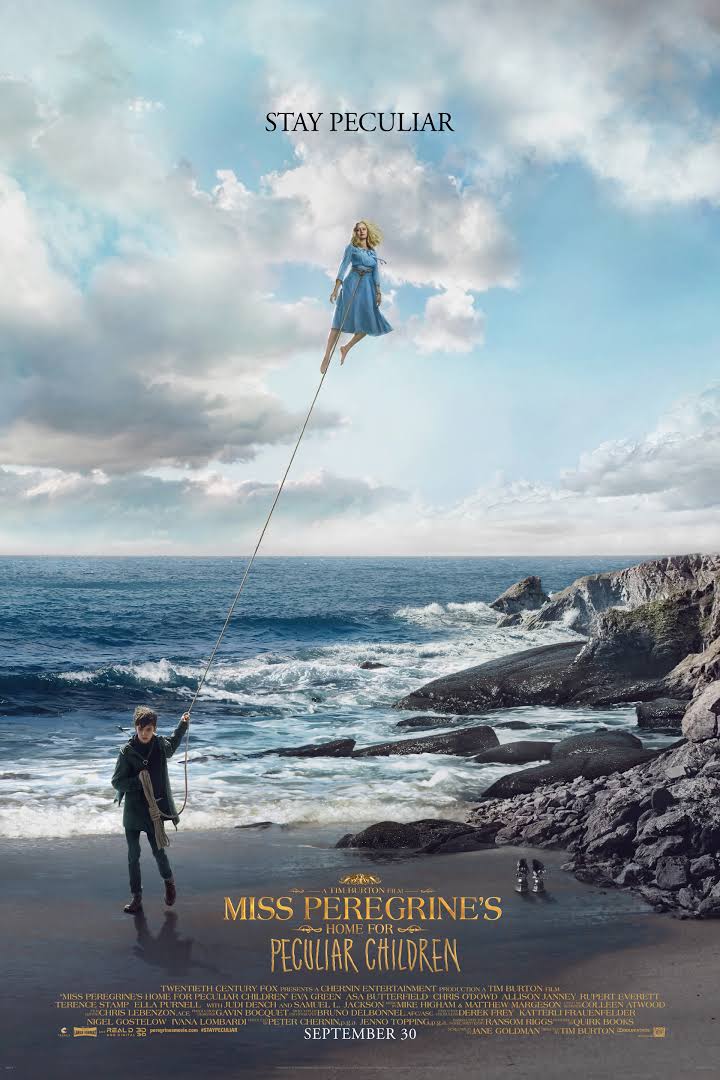
missperegrinneSurprisingly exciting! Twentieth Century Fox brings another YA novel to the screen. Tim Burton’s Miss Peregrine’s Home for Peculiar Children (from here on out noted at Miss Peregrine) is both a fish out of water story combined with a magical adventure that mildly comments on the human condition. Of all the YA movies that have been produced over the last few years, this one provides a much more dynamic experience than many of the others. Burton delights audiences with the classic Burton style that many of us have grown up with. In more recent years, I have often commented that he is essentially a parody of himself–a.k.a. Burt Porn (as coined by my friend Leon in Germany)–not true with Miss Peregrine. Get ready for a return to the class Burton that brought us timeless movies such as A Nightmare Before Christmas and Edward Scissorhands. The great cast is supported by the appearances of Samuel L Jackson and Dame Judi Dench. From Florida to Wales, this movie is sure to whisk you away to daring adventures requiring rather peculiar abilities to defeat those who would seek to take what isn’t theirs to have.

All Jake (Asa Butterfield) knew was his ordinary life. He had a rather blah home life, an eccentric grandfather, and a job that he hated. Until one day, something peculiar happened. In his grandfather’s dying breath he told Jake to find the island. With his parents finding his sports of what he saw at his grandmother’s death to be quite bizarre, they forced hi to visit a psychiatrist. Upon finding a mysterious letter, Jake is determined to find the home in which his grandfather grew up. Accompanied by his cynical father, Jake returns to the island where his grandfather grew up. Only he could never have expected the adventure and run of this life that he will soon find himself. Stumbling across the children’s home ran by Miss Peregrine (Eva Green), Jake teams up with the most unusual but fascinating people who are in a rush against time to defeat those who are out to destroy them.

If I had to name one takeaway from this film, it would be that it reminds me of the 1980s/90s Tim Burton before he “went down the rabbit hole.” It combines his surreal and gothic filmmaking style juxtaposed against his flare for the colorful and bizarre. Although it is not an original concept by any means, if you’re a fan of Fox’s film adaptations of or the animated series X-Men, then you will likely enjoy this movie! Not having read the book, I cannot comment on the film’s alignment and commitment to the literary work written by Ransom Riggs; but, from what I have read online–even the author himself–is pleased with Burton’s translation from page to screen. Very few directors would have been so successful at bringing this story to life more than Burton.  Despite an apparent successful translation from book to movie, the film suffers from an overload of mythology, exposition through dialog, and lacks the thrills to completely balance out the former two elements. Although this movie may feel like one that you have seen before, it does offer a glimpse into Burton’s prime years and perhaps offers a hope that the acclaimed visionary director can once again impress us with his fantastical but highly effective cinematic storytelling.

One of the most successful elements to the X-Men’s plight as individuals born with peculiar abilities is the fact that they are human. They hold onto their humanity (the good guys anyway). Miss Peregrine’s children do not appear to offer the same level of humanity as their X-Men counterparts. The impact of the X-Men’s abilities is felt not only by the X-Men themselves but by the community at large. For the most part, Miss Peregrine’s children’s abilities largely leaves no impact upon themselves or others. Almost plays off more as a convenient plot device than character attributes. Hugo‘s Asa Butterfield’s fake American accent does not really suit his character of Jake. In a world of fantastical dynamics and depth, he plays off as a boring, flat character. In screenwriting, it is vitally important for the writer to cause the reader/audience to love the protagonist and/or love to hate the antagonist. I found it hard to love Jake or truly hate Barron (Jackson).

So, the movie may not have the amazing principle cast that we are accustomed to in a Burton movie; but, it does still contain Burton magic and some exciting and beautiful visuals. It is also a lot of fun to watch! In addition to being fun to watch, it contains some rather disturbing imagery and cringeworthy moments. But that’s par for the course with classic Burton. One of my favorite parts in the movie is the action-packed climactic sequence accompanied by dark humor. It’s a great combination of humor and visceral conflict. If you’re looking for a fun movie to watch this weekend, then this one is a solid pick! Furthermore, if you desire to get a glimpse into a more classical Burton film, then you’ll find utter delight in this one as well.

“Kubo and the Two Strings” movie review

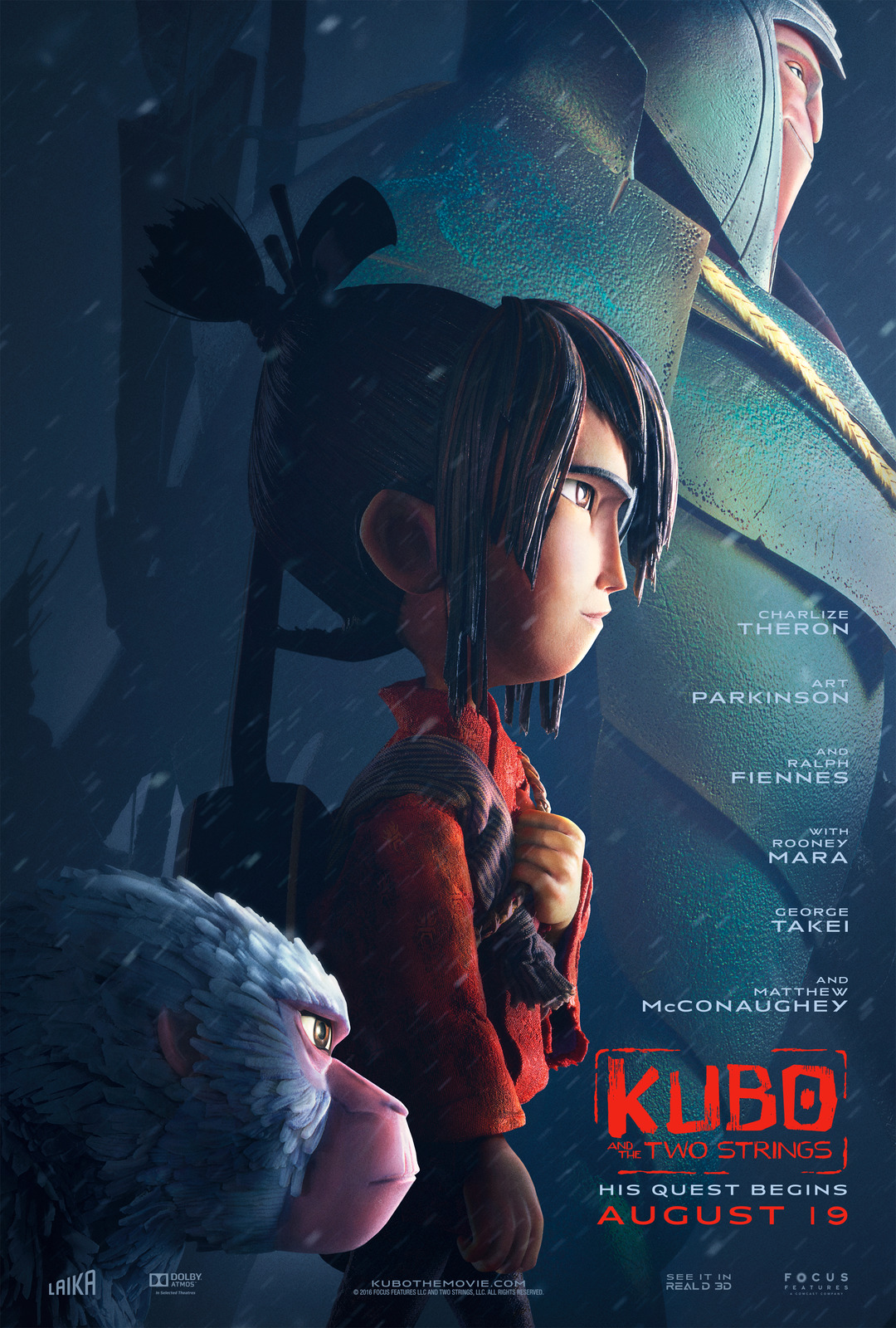
kuboAbsolutely beautiful! A dazzling display of the best that cinema can be! Laika and Focus Features’ Kubo and the Two Strings is truly a testament to the art of motion pictures! Brilliantly animated in an eye-catching stylistic way, this film provides audiences with a simple and intimate journey through a dynamically epic world of adventure, laughter, and tears. Directed by Travis Knight, from the opening to the final fade to black, Kubo is arguably the best animated feature length film to hit theaters in a long time. It contains the incredible storytelling that few films, live-action or animated, strive for but often fail to accomplish. Rarely, do audiences witness a perfect film, but this one comes very close to being perfectly written, directed, acted, shot, edited, and produced. With an A-list of vocal talent behind the characters in this immaculately animated world, Kubo will surely impress all those who watch this fantastical story. In some ways, I could argue that this film displays signs of being self-aware. Self-aware in that this simple but effective visual story is all about the very concept of storytelling. Cecil B. DeMille said, “the greatest art is the art of storytelling;” and this film proves that, in a world of high concept blockbusters that are produced to simply generate revenue at the sacrifice of storytelling, there are films with beautiful imagery, writing, and even a great message that hold true to the very idea what launched more than 100 years of cinema.

Following a daring escape from an unknown enemy across a treacherous ocean of tsunami sized waves, a young women survives a nearly fatal crash and washes upon the shore of a beach in the shadow of an imposing mountain with her infant. Many years later, Kubo (Art Parkinson) has grown up to be a young man with a passion for storytelling that he learned from his mother. Never having fully recovered from the accident, so many years ago, Kubo has the responsibility to take care of his mother. Harnessing his talent for magical origami, a stringed instrument, and storytelling, Kubo makes a little money each day for him and his mother. Little did Kubo know that his mother’s warning to not stay outside of their home after dark was for good reason. Soon, Kubo will find himself on an epic journey to unlock a secret legacy that he could have only dreamed of. Along his journey, he meets up with a monkey (Charlize Theron) and a man-beetle (Matthew McConaughey) who protect and teach him along the way. Don’t blink, even for one second, because you may very well miss something of grave importance.

The first thing you will observe in this movie is the exquisite and stylistic combination of two different animation methods. Claymation, which most are familiar with, and the lesser used papermation. Although typically used by themselves to tell an animated story, the brilliant combination of both methods to concurrently tell this epic story will leave a lasting impression upon you. There is a beauty in this film unmatched by any other in recent times. In many ways, the visual appeal of this movie reminds me of the early Walt Disney and Pixar animated films. Audiences can easily witness the absolute passion in every movement, detail, and landscape. I was completely sucked into Kobo’s fantastic world of Japanese influence. In addition to outstanding technical achievements in animation, lighting, and cinematography, Kubo is a film that is equally outstanding in its ability to tell a simple but inspirational story. It is the epitome of an ideal relationship between artists and engineers. This film successfully combines an artisan handcrafted charm with the precision of sophisticated visual storytelling technologies in a dazzling display of cinematic art that will surely be cherished for a lifetime.

Simple. The plot is so simple but yet very much profound. While so many studios are cranking out franchises, adaptations, complex plots, and young adult dramas, the Laika production company chose a different route. It chose a route that proves that the mastery of visual storytelling that showcases the art of cinema is still alive. In a world of the business of moviemaking, Kubo returns us to the art of filmmaking. Not confined to art house theaters in Greenwich Village or West Hollywood, this film is evidence that truly artistic masterpieces are still desired by the American audience. “The art of making art, is putting it together” (Sunday in the Park with George). Knowing that just the leaf ship sequence at the turning point between the first and second acts took 19 months to create, design, and produce, it is clearly apparent that a tremendous amount of time, love, and energy went into every frame of this stunning movie. As someone who has a passion for the very concept of storytelling, this film brought tears to my eyes because of the sheer beauty of the film and the experience of watching it on the big screen. Although it is an endearing film filled with love and adventure, it is also quite scary during some of the intense conflict between Kubo and those who wish to do him harm. From Kobo’s magical origami birds and samurai warrior to the playful banter between Monkey and Beetle, I was awestruck at the brilliance of the film in both writing and visuals.

I highly recommend this film for those who have not seen it yet. I only wish I had made it to the movie before last night. After hearing what others have said and written about this movie, I have come to the same conclusion that many have voiced: this film is exceptional by any known measurable means of evaluating a film. If any animated film this year is destined for an Oscar nomination or win, this one is it.

Ryan teaches screenwriting at the University of Tampa. If you like this article, check out the others and FOLLOW this blog! Interested in Ryan making a guest appearance on your podcast or contributing to your website? Send him a DM on Twitter or email him at RLTerry1@gmail.com! You can catch Ryan most weeks at Studio Movie Grill Tampa, so if you’re in the area, feel free to catch a movie with him!

Follow him!

Twitter: RLTerry1

Instagram: RL_Terry