“The Current War” historical movie review

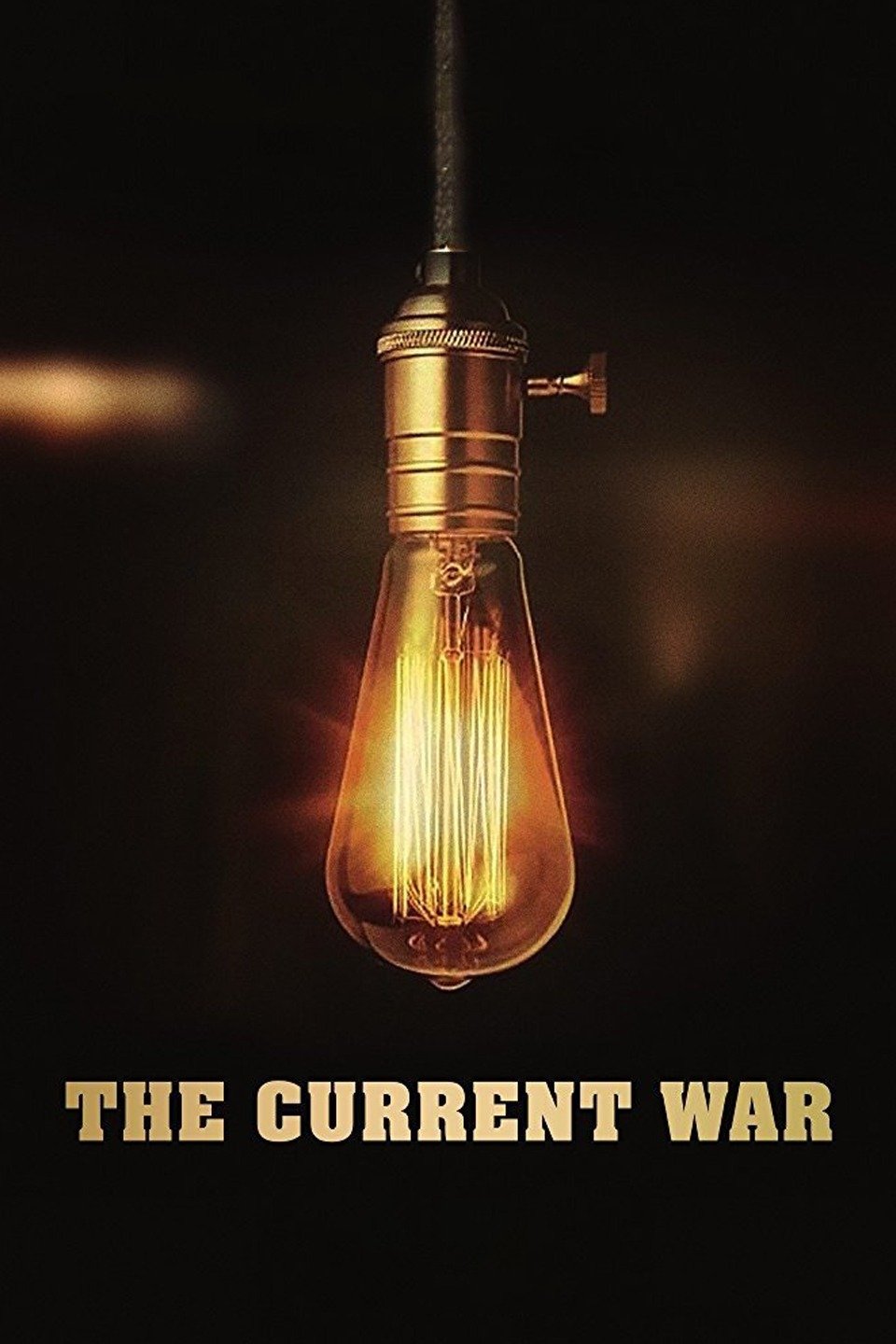
When the History Channel comes to cinemas. Despite what the title and tagline suggests, this movie is not electrifying and unfortunately plays off as forgettable Oscar bait. The only difference between this movie and one that you may catch on The History or Discovery Channels is the A-list cast. For students of history or those whom normally seek out and enjoy historical movies, you will most likely find this story interesting if not fascinating. Perhaps nearly as interesting as the historical background of this movie is the story of this movie’s journey from concept to screen. After the collapse of The Weinstein Company, this movie’s fate to never see the distribution was all but sealed. Enter from stage left Executive Producer Martin Scorsese to save this movie. With the backing of Scorsese, director Alfonso Gomez-Rejon recut the film to that which he originally intended before Harvey has his way with it (and others in Hollywood). While the details of the plot lack anything truly memorable, and the characters are one-dimensional, where this film shines is in the cinematography and editing. All throughout the movie, the camera becomes a character in and of itself, providing audiences with carefully crafted angles and beautiful tracking shots that attempt to draw us into the story on an intimate level with this cast of legendary inventors and businessmen. Perhaps we would be talking cast too had they been given anything to work with. Ultimately, the screenplay is to blame for this steady but low wattage story of one of the greatest chapters in US history.

Thomas Edison (Benedict Cumberbatch) and George Westinghouse (Michael Shannon)– the greatest inventors of the industrial age — engage in a battle of technology and ideas that will determine whose electrical system will power the new century. Backed by J.P. Morgan, Edison dazzles the world by lighting Manhattan. But Westinghouse, aided by Nikola Tesla (Nicholas Hoult), sees fatal flaws in Edison’s direct current design. Westinghouse and Tesla bet everything on risky and dangerous alternating current. (IMDb)

Upon watching this movie, it is clear that screenwriter Michael Mitnick forgot the cardinal rule of composing a well-developed screenplay with visual dimension: dramatize don’t tell (or simply show). Everything needed for a great screenplay is here: two central characters that equally function as the character(s) of opposition, a well-defined external goal (providing the electricity for the Chicago World’s Fair), motivated by an internal need (to prove that he is the best). It’s a relatively simple plot with complex characters–well characters that should have been more complex than they were written to be. Unfortunately, the plot was made complicated by too much technical jargon and felt too “telly” because of the perpetual exposition dumps. Further evidence of the weak screenwriting is witnessed in the lack of character development. What we are left with is a simple (yet dull) plot and simple characters. This would explain why all the elements for a great historical movie are there, but it still feels kind of weird.

As fantastic as the cinematography is, it certainly needed something to work with in order to deliver the luscious imagery we get in this movie. Fortunately, the cinematographer was given gorgeous sets, outstanding costumes, and locations that function as de facto characters. Good thing too, because the cinematographer was not given a script or characters to highlight. The stylistic cinematography provided by Chung-Hoon illuminates the dark with visually stunning choices that exude a strong commitment to visual storytelling. Had Chung been given a visually-driven screenplay, then perhaps we might be talking Oscar noms next year. Performing as strongly as the cinematography is the editing. If you like the way Broadway movies are edited, then you will enjoy the editing techniques employed to cut together this story. Just as this is a movie about inventors (of either inventions or clever ways of acquiring patents), the editing feels highly inventive for this style of movie. Whereas the screenplay feels very History Channel, the editing is fresh, sharp, and never feels dull (unlike the story itself).

Personally, what I found most interesting was the Edison story. Not because he was my favorite character, quite the contrary. After all, Edison comes off as the Ray Kroc of electricity. Why I was particularly interested in his story is because I’ve had the opportunity to visit the Ford and Edison Winter Estates in Fort Myers, Florida. For example, I’ve seen that same lightbulb map at the museum as well as one of his laboratories. Having visited his winter nome (which functioned as his supplementary research lab), I could literally place myself in his world. One of the labs that used to exist on the property has since been relocated to Henry Ford’s Greenfield Village, which is home to many historical houses and buildings that have been relocated from their original standing place to the living museum. After the movie has provided me with the inside story on Edison, next time I visit his Winter Estate, I will view it with new eyes. If you have the opportunity to visit Greenfield Village or the Ford and Edison Winter Estates, I highly encourage you to take your time to walk through the history of two of the greatest minds that transitioned us into the modern era though ingenuity and determination.

Ryan teaches screenwriting at the University of Tampa. If you like this article, check out the others and FOLLOW this blog! Interested in Ryan making a guest appearance on your podcast or contributing to your website? Send him a DM on Twitter or email him at RLTerry1@gmail.com! You can catch Ryan most weeks at Studio Movie Grill Tampa, so if you’re in the area, feel free to catch a movie with him!

Follow him!

Twitter: RLTerry1

Instagram: RL_Terry

“Zombieland: Double Tap” horror comedy mini review

Worth the wait! Whereas some sequels try to imitate the original, Zombieland: Double Tap functions as a hilarious companion piece to the original. Perhaps the plot isn’t as compelling, and lacks the social commentary of the original, but you will undoubtedly have a fantastic time watching this movie. Personally, I enjoyed it even more than the first one. Believe me, I was as shocked as you are right now. If you loved the chemistry between all the characters in the first tone, you will be delighted to know that the characters are just as strong thanks to the return of the original writers and director! To be fair, this doesn’t function as a stand-alone movie, and needs the relationship with the original for much of the humor. However, as I mentioned, this is a companion piece to the first one. There is demonstrable growth witnessed in our ensemble case of central characters, but they aren’t the only ones to have developed off screen over the last decade. Hoards of new zombies have evolved that pose quite the threat to our favorite zombie hunters. In addition to encountering new zombies, we are introduced to some new human survivor characters as well. While this movie may not be as deep as the original, it does a great job of driving home the message of the importance of family. Even when your family is make-shift, the needs for love, acceptance, and even independence are still the same. Highly recommend for fans of the original! Be sure to stay for the end credits scene featuring Bill Murray.

Ryan teaches screenwriting at the University of Tampa. If you like this article, check out the others and FOLLOW this blog! Interested in Ryan making a guest appearance on your podcast or contributing to your website? Send him a DM on Twitter or email him at RLTerry1@gmail.com! You can catch Ryan most weeks at Studio Movie Grill Tampa, so if you’re in the area, feel free to catch a movie with him!

Follow him!

Twitter: RLTerry1

Instagram: RL_Terry

“The Addams Family” Animated Movie Review

Not creepy, mysterious, or spooky, but it’s certainly kooky and fun. Duh duh duh dum, snap snap. Just in time for Halloween is The Addams Family! I went into this movie not expecting much. A friend of mine loves all things Addams Family (even his drag persona is Katrina Von Addams), so he wanted to see it together. And to be perfectly honest, I enjoyed the movie. Is it predictable? Yes. Is the screenwriting weak? Yes. But is it a fun way to just kick back with a movie that entertains sufficiently enough? Yes. The voice cast is great and the character designs feel inspired by the earliest drawing in The New Yorker magazine. For me, the characters feel like the Addams Family that we have known for over 75 years. And just like the family themselves, the plot defies all logic. But that doesn’t take away from the good time I had watching it. It provided me with precisely what I needed, about an hour and a half of turning off my brain to have fun with endearing characters that have had a home on the small and big screen alike over the years. During the opening credit sequence, I saw that Bette Midler was in it! I literally yelled Bette Midler in the auditorium because that elated me. No surprise, she plays the role of grandma–a witch. The Divine Miss M returned to her witchy roots. In addition to Midler, you will enjoy the voice talents of Oscar Isaac, Charlize Thereon, Allison Janney, Chloe Grace Moretz, and other familiar names. The theme of the story is acceptance and individuality, which bodes well for this movie. Although we never dive deep into this topic, the B and C stories parallel one another in theme, but approach the topic from different perspectives that touch on immediate family, extended family, and friends/neighbors. Even though the characters are not as dark as I was hoping they’d be, you do get some trademark Addams Family macabre humor at the mansion. While the movie does not open up with the iconic theme song, the end of the movie includes a tribute to the original TV series opening that will leave you with a smile. If you’re searching for a great animated movie, then this is not it; but if you are looking for a fun way to spend 1.5hrs with your kids or friends, then this movie works very well.

Ryan teaches screenwriting at the University of Tampa. If you like this article, check out the others and FOLLOW this blog! Interested in Ryan making a guest appearance on your podcast or contributing to your website? Send him a DM on Twitter or email him at RLTerry1@gmail.com! You can catch Ryan most weeks at Studio Movie Grill Tampa, so if you’re in the area, feel free to catch a movie with him!

Follow him!

Twitter: RLTerry1

Instagram: RL_Terry
“Joker” Film Review

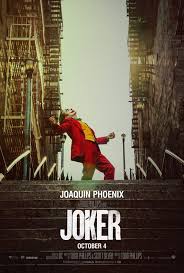
A truly phenomenal motion picture with a tour de force lead performance and relevant social commentary for today’s audience. Warner Bros’ highly anticipated Joker opens everywhere this week. Once again, we get an origin story of Batman’s favorite nemesis. Only this time, it’s told through an extremely heavy film that is less about the violence, that so many seem to be fixated on, and more about the unapologetic character study of someone whom has suffered egregious psychological and physiological trauma at the hands of those whom are supposed to be loving caregivers, friends, or mental health professionals. Prepare yourself to go down the rabbit hole of the mind of a madman in this no holds barred exploration of the far reaching effects of untreated trauma, grief, and schizophrenia. From a critical perspective of analyzing this as a motion picture, I find there is so much to admire! If I was to grade this film on a 1 to 10 scale, it would honestly be 8s, 9s, and 10s across the board. But you know what, if I am to be perfectly candid with my readers, I did not particularly care for the story, lack of likable characters, or even this iteration of The Joker. While I cannot deny the critical achievement of this motion picture (or film), as a movie, I did not care for it. I know some may use the terms film and movie interchangeably, but I often differentiate between them when drawing a distinction between art and entertainment. Some movies are both. For example, since we are in the Batman universe for this one, I will point out that my favorite Batman movie is equal parts film and movie, an “arthouse film masquerading around as a superhero movie,” and that would be Batman Returns. Even after watching Joker, my favorite iteration of the iconic character is still Jack Nicholson’s in Batman (89). That being said, Joaquin Phoenix is acting circles around Jack in this film and blows us away with his spectacular performance as this version of Joker.

Forever alone in a crowd, failed comedian Arthur Fleck (Joaquin Phoenix) seeks connection as he walks the streets of Gotham City. Arthur wears two masks — the one he paints for his day job as a clown, and the guise he projects in a futile attempt to feel like he’s part of the world around him. Isolated, bullied and disregarded by society, Fleck begins a slow descent into madness as he transforms into the criminal mastermind known as the Joker. (IMDb)

This film is extremely heavy. Usually I don’t make it a point to mention that element of a film; but in the case of this one, it is important that you go in knowing what’s in store for you. Joker is both a character study and an exploration of our present day society as viewed through a 1980s lens. It also sets up Batman, but that is only a small part of this film. Prior to reviewing the performance of Phoenix, I feel it’s important for me to mention that I don’t see him as portraying The Joker as much as I do an authentic, genuine, terrifying madman. It’s no surprise to my readers that I prefer the Burtonverse to the Nolanverse when talking Batman, so my Bat-par is set by 89 and Returns. Nicholson is the standard against which I measure up all other iterations of Joker. And suffice it to say, Joaquin Phoenix’ Joker is not Joker. A brilliant performance as a sociopath, a psychopath, or just plain crazed serial killer with a sordid past brought on by unimaginable trauma, YES; but “Joker,” he is not. Joker is not just a madman, he’s an intelligent, calculating, organized crime boss with a penchant for murder and mayhem that is told through exemplary, if not sinister, showmanship! At the end of the day, Joker is an entertainer. We love to watch him on screen, and even root for him sometimes. There is little reason to root for this Joker. He may start out as an underdog who kills two men in defense; but then starting with the third victim, he is just interested in killing, anarchy, and watching the world burn. He lacks what we love about this iconic villain, and for that reason, I do not feel that this he IS Joker.

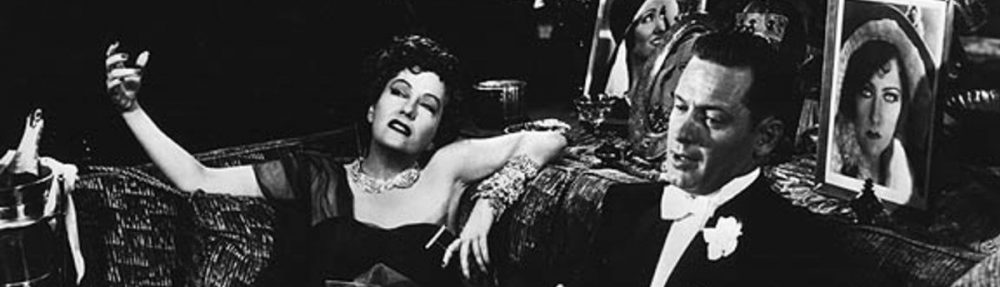
While I may not see Phoenix as portraying The Joker (and this has much more to do with the screenplay than his performance), his performance as this madman is off-the-charts great and could possibly be the best performance delivered by Phoenix ever. There is an unapologetic, candidness about this performance that feels incredibly genuine–no pretense about it. Phoenix is 110% committed to this character and stays true to Arthur Fleck the entire time. He is vulnerable and terrifying all at the same time. When analyzing the performance of Phoenix, I am reminded of Norma Desmond’s lines from Sunset Boulevard when she states “my eyes, I can say anything with my eyes” and “we didn’t need dialogue, we had faces.” Phoenix could have played a mute Arthur Fleck, and we would still have known precisely what he was thinking and more importantly feeling. He embodies the sage screenwriting words of “dramatize, don’t tell.” Phoenix is consistently committed to the character of Arthur Fleck from beginning to end. And I say “Arthur Fleck” because I don’t believe him to be portraying The Joker. In an exchange on Twitter with my friend Jeremiah that I had (as I was writing), I was reminded of what I learned in geometry, “every square is a rectangle, but not every rectangle is a square.” From that we can extrapolate that a theory could be “every Joker is a madman, but not every madman is The Joker.” I’ve seen a lot of great performances over the decades, but I can honestly say that this lead performance by a male actor is among the best I’ve ever witnessed. Perhaps Nicholson is still my favorite Joker, but Phoenix’ Joker is certainly the most realistic portrait of the descent from slightly crazy to utter destructive madness to the point that one laughs as the world implodes around them.

Joker is rich with poignant thought-provoking social commentary on our current state of affairs (albeit exaggerated) as the divide between the rich and poor is growing ever so rapidly. Just as American Psycho used the self-centered, consumer-centric, self-indulgent late 1980s to comment on the late 90s//early 2000s, this film also uses the early 1980s lens to comment on the late 2010s/early 2020s. The choice to use the early 1980s as the setting isn’t only because 80s is popular right now, what with Stranger Things, American Horror Story 1984, IT, and more, it’s because it was a highly transitional time in the country. The 1960s was pretty much peaceful, the 1970s was experimental that turned chaotic, and everything came to a head in the early 80s before the economy turned around and the late 80s ushered in the bountiful, progressive 1990s. So the choice to set this film in the inner city of the early 1980s allows it to comment on similar issues that are plaguing us today. Perhaps not to this extreme, but we encounter conflicts that parallel the ones outlined in the film. Instead of treating mental illness, often our society masks it with medication or hides it from view to deal with it later (only later never comes). The rich just keep getting richer, and the poor just keep getting poorer, all while the rich blame the poor for their circumstances and standby and watch the lower rungs on the ladder just fall off; survival of the fittest, one might say. Self-centeredness runs rampant throughout the streets of Gotham as it does in our own cities and towns today. Everyone is so concerned with themselves that they stop to think about building a community that builds up one another to construct a society that is just as much about the quality of life for its citizens as it is the produces and services it can crank out. How do you view our world? As a factory or as a community?

I wish I had known just how heavy this film was going to be before I watched it, as I was not prepared for how dark it was. There are no moments of levity in this film, which I find to be particularly dangerous for audiences. As a screenwriting lecturer, I remind my students that it’s important to use levity strategically even in dark dramas or horror movies. It serves the purpose of not leaving the audience in a depressed state and allows for the writer to deliver an impactful punch when the audience least expects it. Levity relieves negative stress and resets the emotional barometer. I was feeling so oppressed by the tone of this film that I nearly left the cinema because I couldn’t’ take the darkness anymore. And that says a lot, considering that I watch a lot of dark movies and TV shows. Beyond the absence of levity, there aren’t any likable characters. To put it bluntly, everyone is an asshole. The treatment of everyone’s fellow man is despicable. It’s important for a film to establish one or more characters that the audience can identify with and even root for, but I find that everyone is so unlikable that I cannot connect with any of them. Yes, those whom have experienced trauma will likely identify with Arthur, but even he offers nothing redeeming or endearing. Unfortunately, Joker is a film that I may never watch again, despite praising it for its critical achievement as a motion picture.

If you are searching for a film that offers a prolific amount of content for purposes of a character study or cinematic study, then this is an excellent one to put on your list. Personally, I did not care for the story even though by all measurable accounts it’s a great film. But I suppose sometimes there comes along films that we acknowledge for their artistic and critical achievement but do not necessarily need to see again.

Ryan teaches screenwriting at the University of Tampa. If you like this article, check out the others and FOLLOW this blog! Interested in Ryan making a guest appearance on your podcast or contributing to your website? Send him a DM on Twitter or email him at RLTerry1@gmail.com! You can catch Ryan most weeks at Studio Movie Grill Tampa, so if you’re in the area, feel free to catch a movie with him!

Follow him!

Twitter: RLTerry1

Instagram: RL_Terry
“JUDY” Biopic Film Review

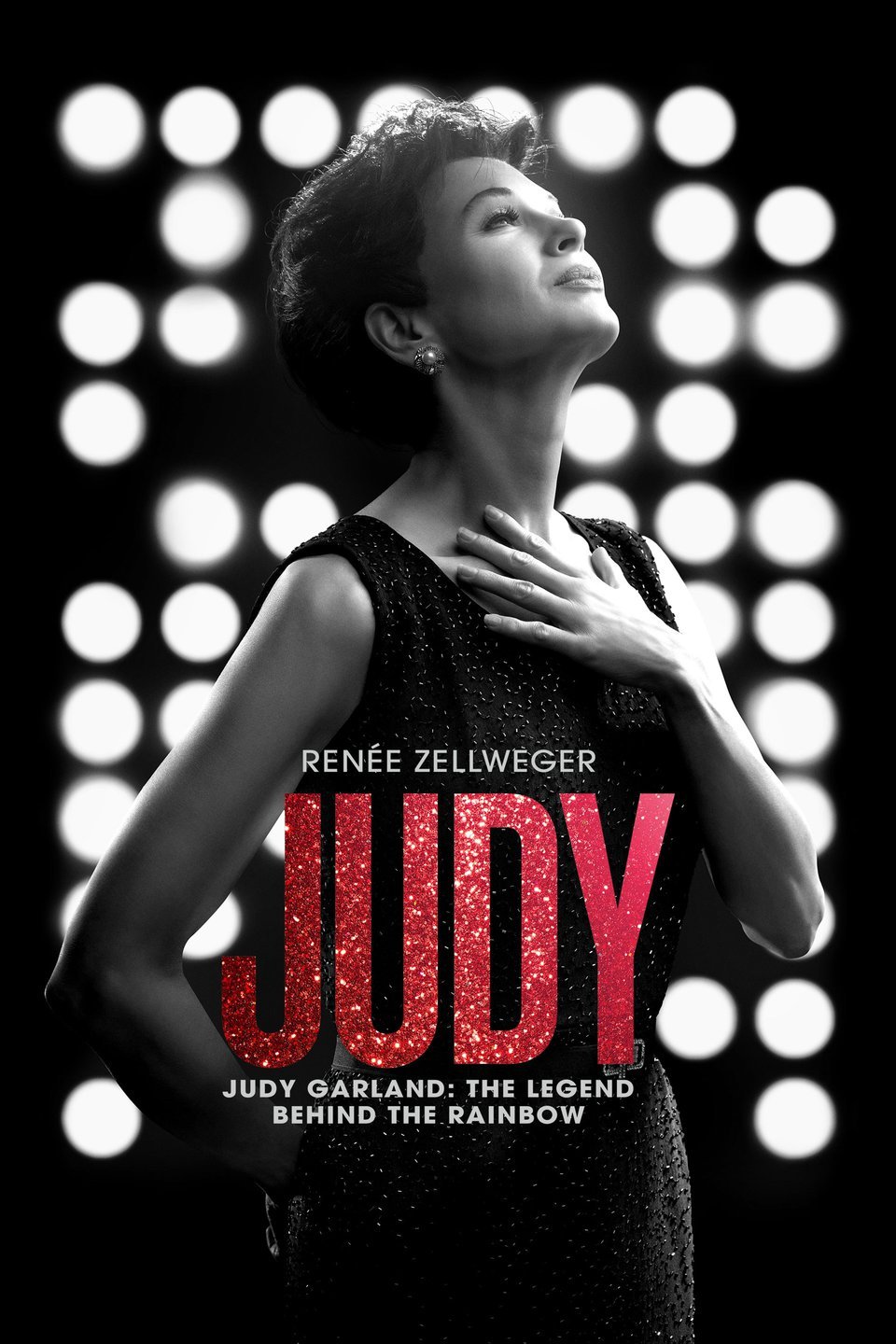
A truly gripping motion picture that will bring you to tears during this somewhere over the rainbow redemption story. Bring tissues. Renee Zellweger is captivating as Judy Garland, and you’ll swear that you’re watching Garland on the big screen. Although we may be familiar with the broad strokes career of the legendary entertainer, this film goes beyond the headlines and tabloids to deliver a true life story that could ironically be titled A Star is Born, or perhaps reborn. Ironic in that this film shows the life of a movie star after the lights have faded and the offers stop coming in, much like the movie she starred in. It’s a rise and fall story, of sorts, but is more precisely a fall and rise story as the movie focusses in on the last year of Judy Garland’s life. If you are worried that the film ends on her death, you can be relived that the film chooses to stop the story prior to the end of the iconic star’s life. And it works so incredibly well! While there are many movies (not unlike A Star is Born) that focus on the rise and fall of a talent in showbusiness, this movie skips all the glitz and glamor to paint a realistic portrait of what it is like for those whom grow up in front of the camera, controlled by those around them, just to wind up in front of booing crowds, empty bank accounts, homelessness, and a tumultuous custody battle. Not to mention her addiction to pills that was caused by abusive treatment at the hands of the old studio system because of being force fed pills from an early age. Whether you are a fan of the iconic diva or not, if you love command performances, then you do not want to miss the uncanny performance of Zellweger as Judy. All the way down to the mannerisms, vocal inflections, and over all behavior, she IS Judy. Although we all know of the tragic ending, no mistaking it, this film is an inspirational story of redemption.

The money is gone, career on the rocks, and risking the loss of custody of her two youngest children, that is the last year’s of Judy Garland’s life. Unfortunately the other side of the rainbow for Judy was anything but magical. Three decades after starring in one of the greatest film musicals of all time The Wizard of Oz, the beloved actress and singer is in dire straights. She is left with virtually nothing except her name and what remains of her timeless voice that charmed millions throughout her early illustrious career. In order to prove that she can provide for her two youngest children, she accepts a gig in London playing to sold-out shows at the Talk of the Town night club. While there, she reminisces with friends and fans, fights her depression and anxiety over performing, and begins a whirlwind romance with her soon-to-be fifth husband.

“For one hour, I am Judy Garland, and the rest of the time I am just like everyone else…I want what everyone wants, I just seem to have a harder time getting it” is a paraphrased quote from the movie, but it illustrates how the actress and singer felt about her relationship with the world. The movie chronicles her inability to stay afloat financially in Los Angeles and must accept a gig in London where her personal troubles continue to follow and haunt her. Her character is so incredibly relatable because many of us have found ourselves in traps that we have stepped in and are at a loss as to how to get out. If you thought this was going to be another cliche musical biopic, then you would be mistaken. No pretense about it, this is an unapologetic look at the dark side of Hollywood in perhaps one of the greatest stories that is right up there with Norma Desmond. Now, I am not equating Judy with what is, in my opinion, the greatest film of all time Sunset Boulevard, but her story is not unlike the one experienced by Norma. The movie also comments on the far reaching effects of childhood trauma on the adult psyche. No one understood the extent that she was abused by the studio system except for Judy herself. If her present-day handlers knew what she went through during the years that American fell in love with The Wizard of Oz, Meet Me in St. Louis, and more, then they would not-so-casually write her off as a wrecked hasbeen who mismanaged her money and relationships. The film deals with perception versus reality. Strategically placed in the film are flashbacks to her childhood at MGM that provide context for moving the present story forward as each moment reveals a new layer to the legendary entertainer.

Zellweger delivers a performance for the ages in this film. More than a spot-on impression, she transforms into Judy Garland to the extent that you will almost believe that you are watching the iconic actress and singer on the big screen. It is clear that Zellweger studied Judy Garland for months in order to get into character. Her movement, speech pattern, posture, and other behaviors completely sell the audience on this audacious portrayal of such an icon. Never once does she break character and allow the actor to shine through, she remains committed to this phenomenally genuine portrayal of Judy Garland. We all know Zellweger can sing, after all, she wow’d us in Chicago (a rare example of when the movie adaptation IS better than the live show); but nothing will prepare you for the power of her singing in this movie. Other than Have Yourself a Merry Little Christmas, you will hear Zellweger sing other famous songs by Garland such as Get Happy, The Trolly Song, Come Rain or Come Shine, and of course the encore of Over the Rainbow during the movie’s climactic, emotionally charged, showdown. Even when singing, Zellweger is determined to deliver the songs just as a late-40s Garland did, complete with all the stubbornness, anxiety, and even anger. I truly hope that Zellweger is nominated for this role.

Perhaps the reason why Liza Minelli was quite objectionably vocal about her mother’s portrayal in this movie is because there are creative liberties taken by the writers in order to further dramatize Judy’s story. As I’ve told my screenwriting class, dramatize don’t tell. If a “based on a true story” or biographical film was simply concerned with the timeline of events, the cold hard facts, and cause and effect, then it might feel more like a police procedural or college lecture. Hence why it is imperative that writers DO get a little creative in the dramatization of events for cinematic purposes. For instance, the facts are largely correct in this story as I have compared them to Wikipedia and other newspaper articles, but where I can see the difference is Judy’s reaction to the timeline of events. Articles and tabloids may be able to show what happened, but it is up to the screenwriters to dramatize the reaction to the conflict. So perhaps that is what Liza is upset with, she doesn’t agree with the story details between what we know from Hollywood history. One of the tangential components in the movie is Judy meeting up with “Friends of Judy” at the end of one of her shows. Judy joins them, rather than be by herself for a night of poorly made omelets and casual singing around a piano. It’s an emotionally moving tribute to all the gays who’ve loved her over the years. In all likelihood, this was written for the movie as there is no way of verifying if this night ever happened. This is the scene where I feel that she should’ve sang Have Yourself a Merry Little Christmas because tonally it was similar to that scene in Meet Me in St. Louis. Instead, she sings Get Happy.

Maybe this is an unconventional redemption story, but that quality is clearly communicated through the film. Rising up against the internal and external monsters in your life that have dragged you down so far that there is no end in sight. Whereas Judy may not have changed as dramatically as Scrooge did in  A Christmas Carol, she does change during the climax of the movie. If you want to know just how, then you need to go out and watch it!

Ryan teaches screenwriting at the University of Tampa. If you like this article, check out the others and FOLLOW this blog! Interested in Ryan making a guest appearance on your podcast or contributing to your website? Send him a DM on Twitter or email him at RLTerry1@gmail.com!

Follow him!

Twitter: RLTerry1

Instagram: RL_Terry