TOP 10 FILM SCORES OF THE 1970s: AN ECLECTIC DECADE OF TRANSFORMATION

Film scoring in the 1970s was nothing short of revolutionary. This was a decade in which composers and filmmakers experimented with sound in bold, unprecedented ways. Sweeping orchestras still had their place, but they now shared the stage with eerie minimalism, jazz-infused soundscapes, synthesizers, and even progressive rock. The result was a period of extraordinary breadth and innovation—one that gave us some of the most iconic film music ever written.

At the heart of this decade stood John Williams and Jerry Goldsmith, two composers who dominated in very different ways. Williams revived the lush, symphonic tradition and brought it back to the masses with scores that became cultural phenomena. Goldsmith, meanwhile, was the chameleon—endlessly inventive, prolific, and daring, whether working with avant-garde techniques, electronic experimentation, or lyrical orchestrations. Yet the decade was not defined by them alone. Outsiders like Goblin, with their phantasmagorical score for Suspiria, or directors such as John Carpenter, who electrified horror with nothing more than a chilling piano rhythm in Halloween, proved that iconic film music could be born outside the studio system. Jazz, soul, and early R&B also found their way into major works, mirroring the diverse cultural pulse of the era.

The soundscape of the 1970s was one where tradition collided with innovation. Bernard Hermann closed out his legendary career with Taxi Driver, a jazz-infused urban nightmare that distilled both character and city into sound. Jerry Goldsmith, the consummate innovator, moved effortlessly from the operatic choral terror of The Omen to the avant-garde dissonance of Alien and the melancholy trumpet of Chinatown—not to mention his enduring Star Trek theme, launched in The Motion Picture. Mike Oldfield’s Tubular Bells, adapted for The Exorcist, demonstrated that minimalist rock could chill as deeply as any orchestra. And Williams resurrected the grand symphonic tradition with Jaws and Star Wars, reintroducing sweeping themes and leitmotifs to a new generation. Taken together, these works made the 1970s both a bridge and a launchpad: honoring the past while daring to explore the future.

Audiences witnessed a resurgence of the full-bodied symphonic score, reviving the golden-age practice of leitmotif-driven composition. But while many scores channeled old Hollywood, these same scores were blazing new trails–trails that future filmmakers would tread and further develop in their own voices. Yet the 1970s were hardly a return to tradition alone. From fragmented jazz and abrasive brass to minimalist repetition that conveyed inevitability, film scores proved that music could disturb and destabilize as effectively as it could uplift. Musical expressions across a wide spectrum were represented and fused throughout the decade. This eclecticism was witnessed in the integration of jazz, rock, and popular styles into film scoring. Jazz, long associated with improvisation and urban grit, seeped into dramas and thrillers, while progressive rock and folk elements brought an otherworldly quality to European cinema.

This embrace of contemporary genres reflected the cultural currents of the 1970s, when popular music increasingly shaped the everyday soundscape. Although electronic instruments are often associated with the 1980s, experimentation with synthesizers truly began in the 1970s. By blending traditional compositional techniques with new technology, composers created atmospheres that felt immense, uncanny, and otherworldly. Horror, in particular, became the proving ground for these sonic experiments. From the satanic choral grandeur of The Omen to the eerie repetition of The Exorcist, the avant-garde unease of Alien, and the surrealism of Suspiria, horror films became laboratories for innovation—setting trends that rippled across genres.

The eclecticism of 1970s film scoring mirrored the turbulence and transformation of American life during that same decade. The United States was navigating a shifting cultural landscape—post-Vietnam disillusionment, Watergate’s erosion of political trust, an energy crisis, and social movements that challenged the norms of race, gender, and identity. Just as the nation was renegotiating its sense of self, film music was renegotiating its role in storytelling. The return of grand symphonic scores reflected a yearning for stability, heroism, and mythmaking in a time of uncertainty. At the same time, the rise of dissonance, minimalism, and electronic experimentation resonated with audiences living through an era of anxiety and rapid change. Just as the decade was defined by eclectic fashion, political unrest, and artistic upheaval, so too was its film music characterized by hybridity, boldness, and the breaking of old rules. The cinema became a cultural mirror, wherein the nation’s contradictions—fear and hope, nostalgia and progress, tradition and innovation—were set to music.

The 1970s also reasserted film scores as cultural touchstones, in ways not witnessed since Herrmann’s Psycho. John Williams work and name became instantly recognizable beyond the movie theatre, entering the cultural lexicon in a way few film scores had before. Jerry Goldsmith pushed the boundaries of what film music could evoke, Nino Rota created hauntingly elegant themes with operatic weight. Meanwhile, Mike Oldfield’s Tubular Bells proved that a minimalist rock piece could achieve global recognition and forever alter the sound of horror. Collectively, these works and more reestablished film music not merely as background support, but as a defining element of a film’s identity—inseparable from its success and enduring in the popular imagination.

The 1970s forever changed how we would hear cinema.

This week, on my show ReelTalk on WKGC Public Media, I sat down with music professor Dr. Steven DiBlasi to countdown our Top Ten Film Scores of the 1970s. Our respective lists both aligned and diverged, covering the wide spectrum of great, memorable film music that was the 1970s. Below, you will find our respective Top 10 lists, but for the full conversation (approx 1hr), you’ll want to listen to the episode!

Listen

Top 10 Film Scores of the 1970s

Mine (Ryan’s)

Dr. DiBlasi’s

  • 10. Taxi Driver (Bernard Herrmann, 1976)
  • 9. The Godfather (Nino Rota, 1972)
  • 8. Chinatown (Jerry Goldsmith, 1974)
  • 7. The Omen (Jerry Goldsmith, 1976)
  • 6. Alien (Jerry Goldsmith, 1979)
  • 5. Star Wars (John Williams, 1977)
  • 4. Jaws (John Williams, 1975)
  • 3. Suspiria (Goblin, 1977)
  • 2. Halloween (John Carpenter, 1978)
  • 1. The Exorcist (Mike Oldfield, 1973)
  • 10. The Petrified Forest (Toro Takemitsu, 1973)
  • 9. Days of Heaven (Ennio Morricone, 1978)
  • 8. Space is the Place (Sun Ra, 1974)
  • 7. A Clockwork Orange (Wendy Carlos, 1971)
  • 6. Don’t Look Now (Pino Donaggio, 1973)
  • 5. Shaft (Isaac Hayes, 1971)
  • 4. Taxi Driver (Bernard Hermann, 1976)
  • 3. Chinatown (Jerry Goldsmith, 1974)
  • 2. Hurricane (Nino Rota, 1979)
  • 1. Star Trek: TMP (Jerry Goldsmith, 1979)

Ultimately, the 1970s was a transformative decade of film music, both a bridge and a launchpad. It bridged the golden age of orchestral scoring with the bold experimentation of the modern era, while launching the blockbuster tradition and electronic innovation that would dominate the decades to come. The eclecticism of 1970s film music remains its hallmark, and its influence can still be heard in how cinema sounds today.
Ryan is the general manager for 90.7 WKGC Public Media in Panama City and host of the public radio show ReelTalk “where you can join the cinematic conversations frame by frame each week.” Additionally, he is the author of the upcoming film studies book titled Monsters, Madness, and Mayhem: Why People Love Horror. After teaching film studies for over eight years at the University of Tampa, he transitioned from the classroom to public media. He is a member of the Critics Association of Central Florida and Indie Film Critics of America. If you like this article, check out the others and FOLLOW this blog! Follow him on Twitter: RLTerry1 and LetterBoxd: RLTerry
HOW TO TRAIN YOUR DRAGON (2025) movie review

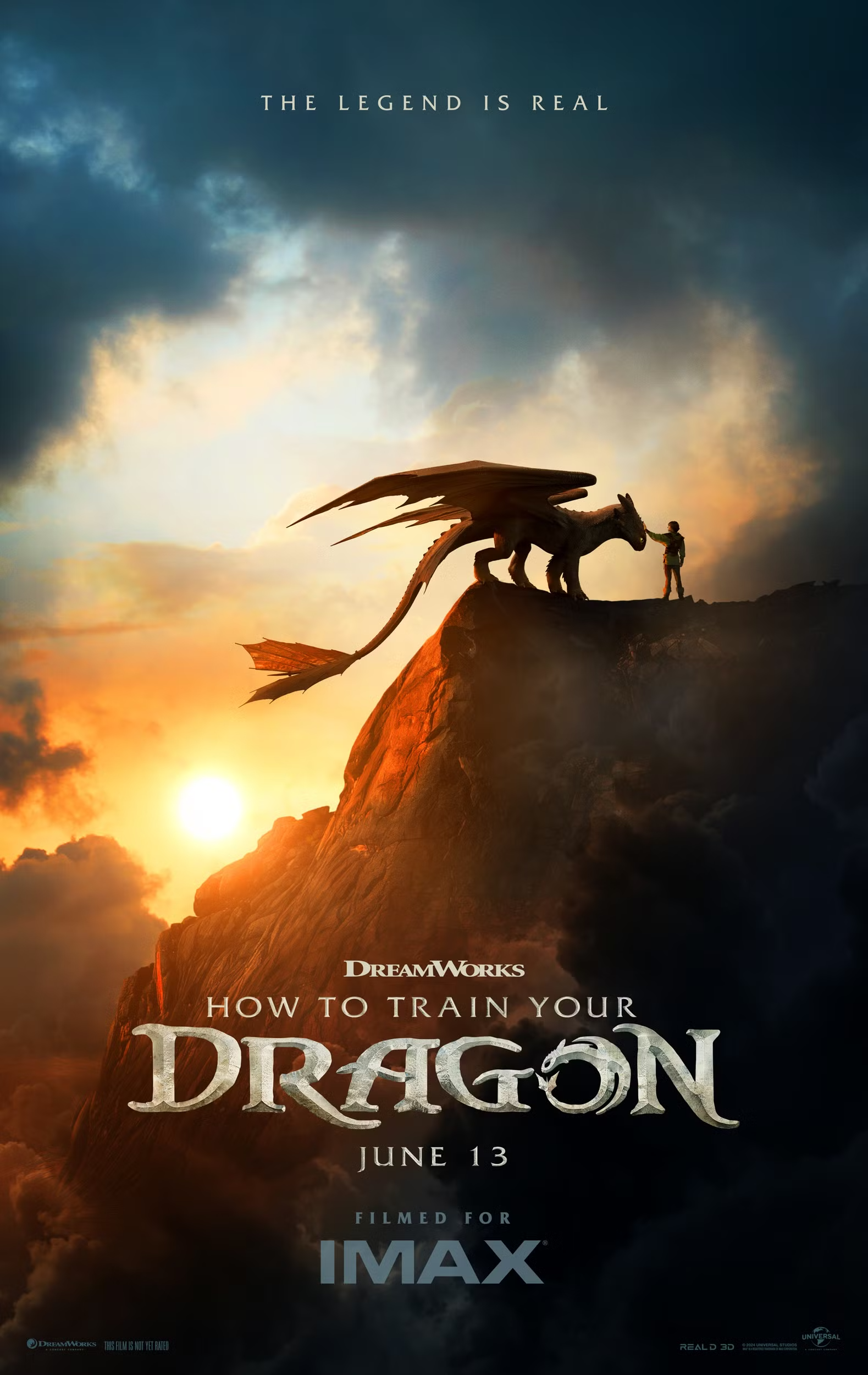
Timeless. Universal and DreamWorks’ live-action remake of the Academy Award-nominated How to Train Your Dragon (2010) proves that some stories continue to resonate through the ages. Of course, “ages” in this context is only fifteen years. Returning to helm this project, HTTYD veteran writer-director Dean DeBlois crafts a fantasy world that’s incredibly tangible–even the dragons. His combination of puppetry, practical effects, and CGI give the dragons and the land of Berk a naturalism that feels connected to the world on screen. While this live-action remake plays it very close to the original, in terms of scenes and sequences, the heartfelt story will still capture your imagination and serve as a fantastic film for Father’s Day this weekend.

On the rugged isle of Berk, a Viking boy named Hiccup defies centuries of tradition by befriending a dragon named Toothless. However, when an ancient threat emerges that endangers both species, Hiccup’s friendship with Toothless becomes the key to forging a new future. Together, they must navigate the delicate path toward peace, soaring beyond the boundaries of their worlds and redefining what it means to be a hero and a leader.

While it would be easy to chalk 2025’s HTTYD up to an exercise in business theory, given that much of the movie is shot-for-shot of the original, it would be disservice to the audience experience for those that may be seeing this story on the big screen for the first time. Because anyone under the age of 18 (if not 21) either wasn’t yet born or doesn’t remember watching it in the cinema in 2010. And this is a BIG SCREEN movie. If fact, I’d argue that watching HTTYD in a premium format at your local cinema is the best way to return to Berk, particularly if you did see the original animated film in cinemas (as did I). I’ve read reviews that fill the spectrum from “lifeless and lazy” to “better than the original;” neither extreme reaction or interpretation is entirely accurate, in my opinion. Given that much of the story is the same, all the way down to shots, scenes, dialogue, and sequences, I’m choosing to review the film as if watching it for the first time, as many will be watching it for the first time on the big screen.

Since the story is largely unchanged from the original, I don’t want to spend a significant amount of time on it; however, there are themes that leapt off the screen this time even more than when I first saw the original. Perhaps its’ because a lot has happened in our country and around the world in the last fifteen years.

In true allegorical fashion, HTTYD crafts a parable of prejudice and reconciliation that resonates with our contemporary sociocultural landscape. Through its depiction of dragons as misunderstood creatures feared and vilified by Viking society, the film speaks directly to the way some cultures and communities are often dehumanized by dominant cultures. Initially framed as mindless beasts bent on destruction, dragons embody the constructed image of “the other”—not inherently evil, but made threatening through narratives rooted in ignorance and fear.

Through Hiccups’s hero journey, our own fears and prejudices are challenges. His character arc hinges on that pivotal moment with Toothless when he is about to kill him. Not only does Toothless challenge Hiccups’s prevailing ideology, but reframes his worldview of dragons and the people of Berk entirely. “I looked at him, and I saw myself,” he says, distilling the film’s core thesis: true empathy begins when we stop projecting monstrosity onto others and instead recognize shared sentience. In contrast, his father Chief Stoick represents the institutional stronghold of fear and tradition. His transformation from dragon-slayer to dragon-defender is a microcosm of generational reckoning—a character arc that underscores how systemic prejudice can begin to unravel when met with vulnerability and truth.

Thematically, the film’s narrative expands beyond simplistic binaries of good and evil to explore the broader existential anxieties that provoke violence and division. In doing so, HTTYD transcends fantasy and enters the realm of social commentary. It reminds us that the instinct to “other” those who are different is not innate but learned—and, crucially, unlearnable. At a time marked by cultural polarization and survivalist rhetoric, the film dares to imagine a world in which peace is possible—but only if we choose empathy over fear.

Writer-director DeBlois crafts a Berk that feels like a real place, perhaps a place from our own world history. Instead of layer upon layer and scene upon scene of blue and green screens, DeBlois opts to eschew the sterile sterility of digital backlots in exchange for a fantastical world grounded in the tactile weight of reality. Rather than relying on synthetic blue-screen environments, the production team committed to crafting full-scale Viking arenas, longhouses, and coastal villages—sets brimming with texture, history, and atmospheric weight. Filmed on location in Northern Ireland, the practical environments not only enhance the visual authenticity but immerse the audience in a world that feels as lived-in as it is mythic. These tangible structures blend seamlessly with the region’s craggy terrain, lending the film a geographic and cultural specificity that deepens the narrative.

Likewise, the film’s flight sequences are not mere visual spectacle—they are balletic displays of aerodynamic realism. Thanks to a synergy between practical rigging and digital enhancement, the VFX team captures the exhilarating sweep and dive of dragon flight with a physicality rarely achieved in CGI-heavy cinema. Specialized camera systems were deployed to trace every soar and swoop with kinetic precision, preserving the wonder and danger of airborne movement. The result is not just believable—it’s breathtaking. This nuanced and layered approach to the fusion of practical and CGI effects was also in part what made the dragons feel incredibly real. Dragon puppets were used to inform the CGI timing, lighting, and choreography. Later, CG animators seamlessly replaced the physical heads with digital models, preserving actors’ eye-lines and interactions. Mason Thames is rarely acting opposite a tennis ball on a boom pole; his Hiccup is interacting with a dragon set piece that is fully articulate.

Whether the original breathtaking animated film is one that you’ve seen a dozen times or you’ve never seen the original, the live-action remake of the critically acclaimed HTTYD is worth your time at the cinema. Furthermore, this film would make for an outstanding diversion for dads and their kids over this Father’s Day weekend, regardless of ages. Some stories, characters, and themes are timeless, and can still speak to us years later.

Ryan is the general manager for 90.7 WKGC Public Media in Panama City and host of the public radio show ReelTalk “where you can join the cinematic conversations frame by frame each week.” Additionally, he is the author of the upcoming film studies book titled Monsters, Madness, and Mayhem: Why People Love Horror. After teaching film studies for over eight years at the University of Tampa, he transitioned from the classroom to public media. He is a member of the Critics Association of Central Florida and Indie Film Critics of America. If you like this article, check out the others and FOLLOW this blog! Follow him on Twitter: RLTerry1 and LetterBoxd: RLTerry
MISSION: IMPOSSIBLE–THE FINAL RECKONING film review

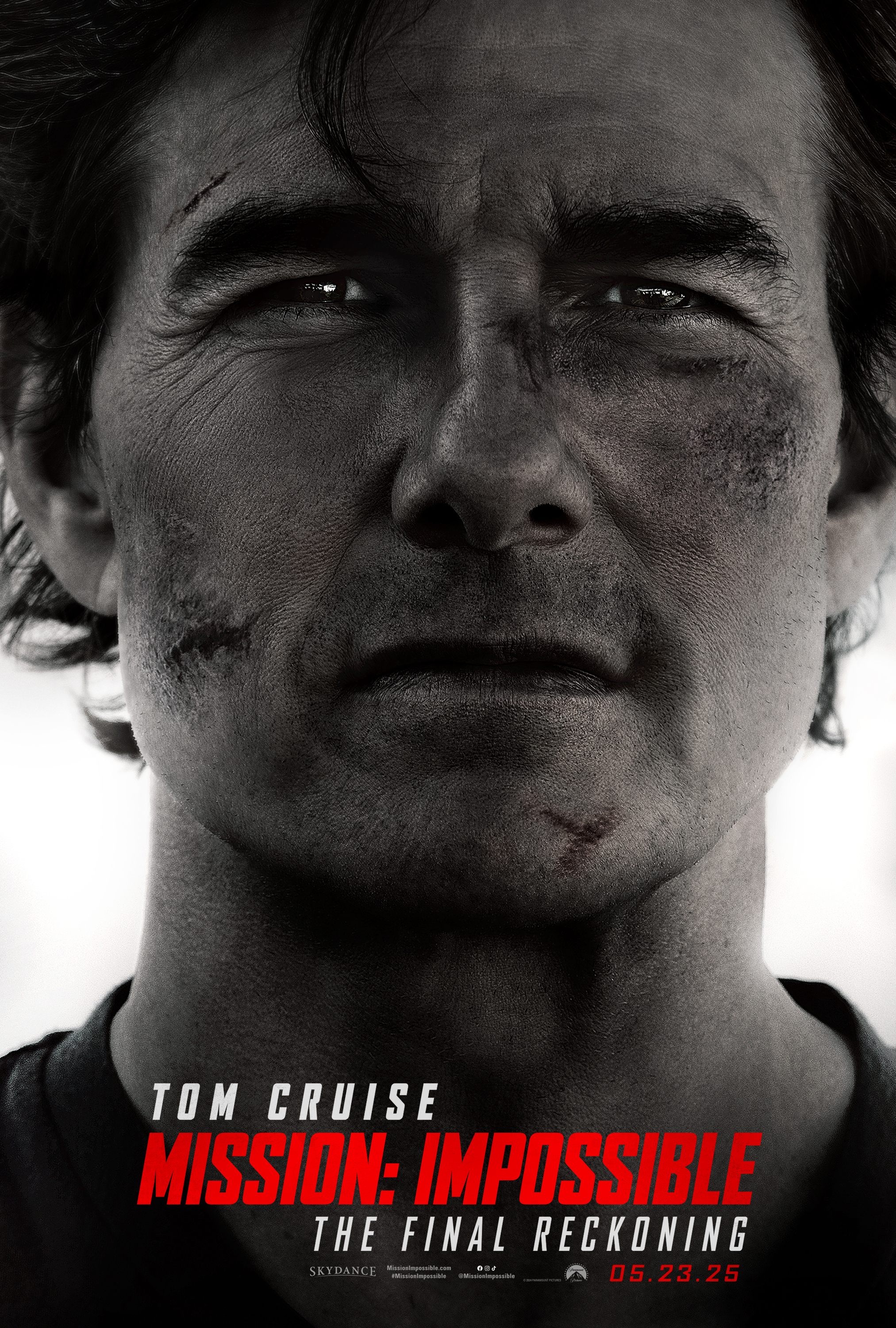
What a picture! Mission: Impossible–The Final Reckoning is an exhilarating end to a 29 year old journey. The scale and scope of the final chapter in Tom Cruise’s tenure as Ethan Hunt is out of this world. Beyond any shadow of a doubt, the cast and crew of this film delivered their best to “all those that [they] will never meet.” That’s us–the audience–we are those they will likely never meet. Such a fitting climax to one of the biggest franchises ever to hit the big screen. For everything the movie did right and excellent, it’s not without some shortcomings in the screenwriting. While the first act starts off a little clunky, it does eventually falls into place during the first act. Additionally, fans of the franchise will love the narrative connections to the preceding films, particularly Mission: Impossible and Mission: Impossible III. This is truly a cinematic spectacle deserving of every second on that big silver screen. Tom Cruise proves that he is still the definitive movie star.

Ethan Hunt and the IMF team race against time to find the Entity, a rogue artificial intelligence that can destroy mankind.

Writer-director Christopher McQuarrie brings Mission: Impossible (in its current incarnation) to a climactic close after 29 years. More than delivering a bombastic conclusion to the genre-defining franchise, he connects this film to all the preceding M:I films through both plot and character. Every moment feels earned–this movie and the cast and crew thereof–spare no expense of time or money in providing audiences with a spectacular cinematic experience that reminds us why big screen stories need the BIG SCREEN. Even though I do take issue with McQuarrie’s screenwriting in the first act–the first 15 minutes, or so, do feel a little disjoined and rushed–thankfully the remainder of the first act does fall into place. Not only do the characters have heart underscoring all the electrifying action sequences, the filmmakers involved in this have a heart for the audiences around the globe.

The IMF (Impossible Mission Force) oath reads, “We live and die in the shadows, for those we hold close, and for those we never meet.” And, in this movie, I don’t think that it merely means that the covert operatives and spycraft engineers carry out their missions behind the scenes of life, the way in which the line is delivered, I am all but certain that it’s a wink or nod to the audience indicating that McQuarrie, Cruise, and everyone involved make motion pictures for those they know, their friends and family, and everyone else out in the world that they may likely never meet. There is probably no other working actor out there that so vocally champions cinema like Tom Cruise. This is particularly true during and after COVID with his release of Top Gun: Maverick. Even in a press conference wherein Cruise was asked about the proposed international filmmaking tariffs by a reporter, and he redirected them to The Final Reckoning, because “we’re here to talk about the movie.” The trademark charisma, physics-defying stuntwork, and charm that Cruise brings to the screen serves as evidence why he truly is the definitive movie star working today.

Picking up in the months following the train incident from Dead Reckoning, The Final Reckoning thrusts audiences right into the middle of a world on the brink of WWIII. The entity has infected the internet and it looks like the end of the world, as we know it. Once again, Hunt is being hunted down by his government (and probably other governments too) because he refuses to let the United States have the key that would potentially give them control of the entity’s source code, because no one should be entrusted with that level of power or responsibility–not even Hunt and his IMF team. Ethan Hunt continues to stand up for what is right, the greater good even when it is the most unpopular stance or opinion to hold. Hunt and his team desire to destroy the entity so no one has access to its power and the entity cannot destroy the world so it and Gabriel can remake it in their image. The Final Reckoning forces us to look inward, and ask ourselves how we would react when faced with a world on the brink of disaster. Could we resist giving into our innate self-centered nature, even when disguised as the most logical choice? This movie is a challenge to humanity to always hold onto hope even when it appears to be impossible.

After the clunky start to the movie, the narrative begins to find its tone, pacing, and direction. I wouldn’t be surprised if there is a “McQuarrie Cut” that adds in cut scenes at the beginning. Other than the stars themselves, the star of this movie is practical effects and filmmaking themselves. The CGI is minimal, and is rarely front and center. McQuarrie and Cruise lean into practical effects, mechanical magic, and other elements that give the film a tangible dimension. You cannot replace the way real light bounces off real objects and into the camera lens in this outstanding motion picture. The Final Reckoning is as much a celebration of the decades-old franchise (and TV show even before the original movie in 1996) as it is a celebration of classical filmmaking. Even the scenes and sequences that felt a little too death-defying or unrealistic, they certainly feel naturalistic within the world on screen (though, I’d be lying if I said that some came a little close to being even unbelievable in a Mission: Impossible movie). Even thought he aerial stuntwork in this movie is the most intense we’ve seen, this movie also includes a lot of underwater stuntwork and action sequences. And I must say that is’t he dark, claustrophobic underwater sequences that had me on the edge of my seat. It really is nothing short of incredible what McQuarrie, Cruise, and their teams were able to do in this motion picture.

For fans of the franchise, particularly those that have rewatched the whole franchise leading up to this moment, there are characters from the past that appear in substantive ways and even plot points that were never fully explored int eh past are brought full circle. Few, if any, characters feel like one-dimensional space-fillers–which can easily happen in an action movie–every character has a purpose, has a motivation. We care about our central characters’ survival, we experienced a gut-wrenching death in Dead Reckoning, so we know that these IMF agents are human, they can die. All the more reason why we are completely invested in their survival.

Even though we may get a Mission: Impossible movie in the future, maybe even one with one or more of the IMF team members from this original run of movies, Cruise has stated, in not so many words, that this movie represents his final Mission: Impossible movie in which he is the star. If we have future M:I movies, I’d like to see him make an appearance or play a supporting role, because Tom Cruise IS Mission: Impossible. What I love about these movies is that they seek to entertain first and include any more thoughtful ideas or questions in the subtext or emotional drivers of characters. Entertainment first. So many movies nowadays have such a cynical view of life and traditional values, but here is franchise built on that which brings us all together as a community. High concept? Sure, but that high concept nature of the M:I movies has never meant a meaningless or vapid experience. These movies, and others like them (regardless of genre), are what cinema is all about. And I am sure going to miss looking forward to the next Mission: Impossible movie.

Thank you Tom. And thank you McQuarrie and past writers and directors for 29 years of unparalleled thrills and excitement on the silver screen.

Ryan is the general manager for 90.7 WKGC Public Media in Panama City and host of the public radio show ReelTalk about all things cinema. Additionally, he is the author of the upcoming film studies book titled Monsters, Madness, and Mayhem: Why People Love Horror. After teaching film studies for over eight years at the University of Tampa, he transitioned from the classroom to public media. He is a member of the Critics Association of Central Florida and Indie Film Critics of America. If you like this article, check out the others and FOLLOW this blog! Follow him on Twitter: RLTerry1 and LetterBoxd: RLTerry