SEND HELP (2026) horror movie review

Send Help is the rare survival thriller that understands the most dangerous thing on a deserted island isn’t nature—it’s the workplace baggage you bring with you.
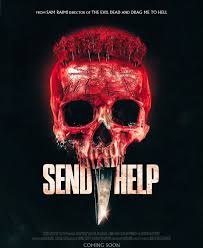
Send Help plays like a postmodern riff on Misery—less interested in replicating its mechanics than in reconfiguring its psychological cruelty for a contemporary workplace horror. One can also detect traces of Survivor, the underseen Office Killer (1997), and even a one-way echo of Fatal Attraction, though Raimi’s film resists the lurid sensationalism of those predecessors in favor of something more controlled, more ideologically curious. I went into Send Help expecting one kind of movie and walked out having experienced something far more interesting—and far more satisfying. What initially presents itself as a straightforward survival thriller gradually reveals a different set of priorities: character over carnage, tension over spectacle, and psychology over shock. The turn is not a bait-and-switch so much as a recalibration, one that rewards patience and attention.

A woman (Rachel McAdams) and her overbearing boss (Dylan O’Brien) become stranded on a deserted island after a plane crash. They must overcome past grievances and work together to survive, but ultimately, it’s a battle of wills and wits to make it out alive.

Despite containing remarkably little gore, Send Help is punctuated by moments of excruciating intensity—scenes engineered to linger in the mind the way Misery’s hobbling scene does, not because of what is shown, but because of what is anticipated. Raimi understands that true discomfort is often born from restraint. Violence, when it arrives, is not gratuitous; it is precise, purposeful, and deeply unpleasant.

Where Send Help distinguishes itself most clearly is in its thematic ambition. Raimi trades his trademark splatter for commentary on workplace dynamics—particularly the lived experience of women navigating environments shaped by misogynistic men, institutional indifference, and power imbalance. The film proposes that monsters are created—that violent behavior can be traced back to environment, circumstance, and provocation. While the film makes this argument with conviction, I remain unconvinced by its absolutism. Environment can shape behavior, yes—but it does not absolve agency. Some monsters are forged by their surroundings; others choose monstrosity despite them. Under most circumstances, we remain responsible for our actions.

That tension—between explanation and excuse—is where Send Help becomes most interesting. The film is less persuasive as a moral thesis than it is as a provocation, forcing the audience to wrestle with where empathy ends and accountability begins. In that sense, the island setting becomes more than a survivalist conceit; it is a crucible. A demented Gilligan’s Island, stripped of whimsy and comfort, where rescue is uncertain and survival demands agency. The film is clear-eyed about one thing: help does not always arrive. Sometimes survival requires seizing control rather than waiting to be saved.

Visually, the setting is striking—lush, isolating, and quietly menacing. The CGI animals, however, are nearly laughable, though thankfully used sparingly enough not to derail the experience. When Raimi relies on atmosphere rather than digital intrusion, the film is at its strongest.

Excellent casting anchors the film, thoughtful writing gives the conflict weight, and the thrills feel refreshingly old-school—earned through escalation and dread rather than excess. All of it is quietly underscored by moments of dark comedy that arrive not as winks to the audience, but as pressure valves, reminding us that sometimes the most unsettling laughs are the ones that catch us off guard. McAdams’ and O’Brien’s chemistry is exceptional. They play off one another with a rhythmic precision that feels almost musical—each reaction, pause, and escalation perfectly calibrated. Their dynamic does much of the film’s heavy lifting, grounding the psychological tension in something human and volatile. One hopes this pairing is not a one-off; there is genuine electricity here worth revisiting.

There is also an unintended—but revealing—meta-text hovering around O’Brien’s presence. In a recent Entertainment Weekly article, O’Brien noted that he has been repeatedly told by agents, producers, and directors that he needs an Instagram account—that without it, he risks losing roles deemed “appropriate” for him. He has no intention of starting one. As a film scholar, I find this deeply troubling. When talent, suitability, and longevity are increasingly filtered through social media metrics rather than craft, presence, and screen intelligence, the industry risks confusing visibility with value. Send Help, perhaps inadvertently, becomes part of that conversation—raising questions about how we identify monsters, merit, and worth in systems increasingly governed by optics.

Ultimately, Send Help is not a perfect film, nor is it a subtle one. But it is a thoughtful, unsettling, and frequently compelling genre exercise—one that uses survival horror as a vehicle for interrogating power, agency, and responsibility. Raimi may be experimenting here, but the experiment is a worthwhile one. If nothing else, Send Help reminds us that the most terrifying scenarios are not those where monsters appear—but those where we are forced to decide what kind of people we are when no one is coming to save us.
Ryan is the general manager for 90.7 WKGC Public Media and host of the show ReelTalk “where you can join the cinematic conversations frame by frame each week.” Additionally, he is the author of the upcoming film studies book titled Monsters, Madness, and Mayhem: Why People Love Horror. After teaching film studies for over eight years at the University of Tampa, he transitioned from the classroom to public media. He is a member of the Critics Association of Central Florida and Indie Film Critics of America. If you like this article, check out the others and FOLLOW this blog! Follow him on Twitter: RLTerry1 and LetterBoxd: RLTerry
“Doctor Strange” movie review

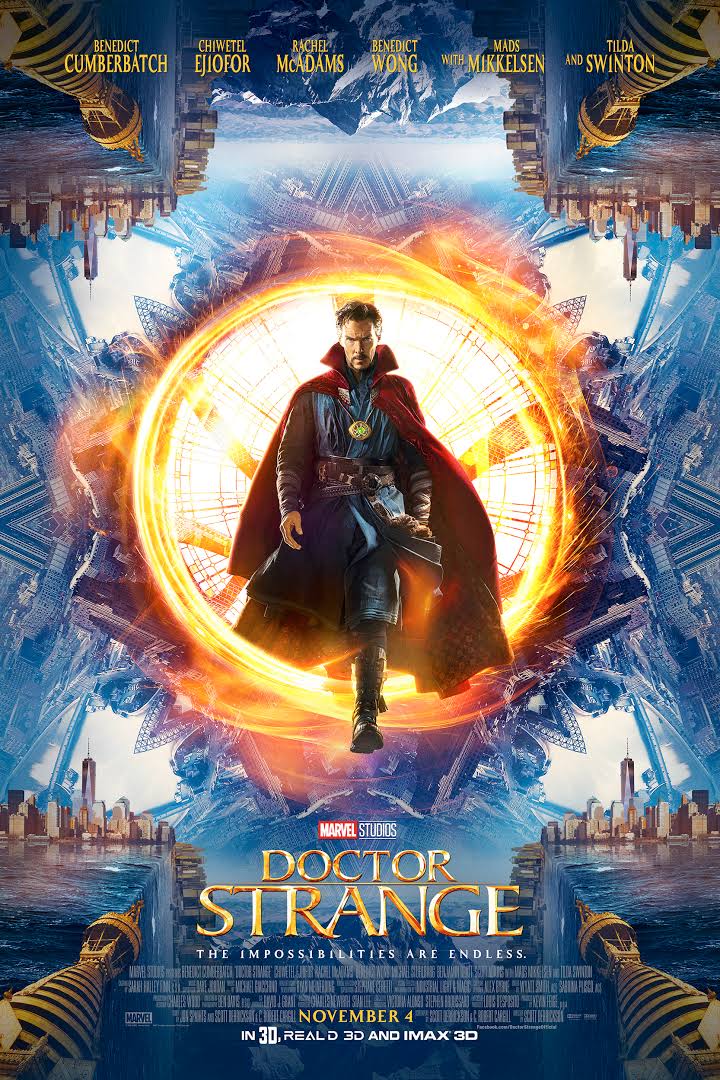
drstrangeA perfect blend of stunning visual effects, character development, and even a hint of the avant-garde in this strange superhero film of East-meets-West. Unpredictable. That is definitely not a word typically associated with superhero genre movies. Not that the plot was entirely unpredictable, but Benedict Cumberbatch delivers a very Patrick Stewart-esque performance as the neurosurgeon turned mystic Dr. Strange in the film that bares his name. This is a superhero film that strikes a strategic balance between traditional superhero storytelling and social commentary. Not without the trademark explosions and dynamic action sequences, Doctor Strange is clearly concerned with and focusses on the character development of Dr. Strange. In a film that could have so easily rested its laurels upon the innovative, intriguing, and exquisite visual effects, it chose to place more emphasis on the drama between characters. Ordinarily, if you follow my blog, you know that I do not typically write positively about superhero films, with some exceptions such as: Batman ReturnsDeadpoolX-Men: Days of Future Past, or Guardians of the Galaxy; however, Marvel/Disney’s Doctor Strange was incredibly enjoyable as both a movie AND film (and yes, there is a difference). For those in the audience who perhaps struggle with being self-centered, the plot and character development in Doctor Strange will likely ring true and act as a mirror of how you may actually come across to people; and furthermore, how to break the cycle. Although this is clearly a typical blockbuster movie, there are trace-amounts of many elements often found in art house films in the stylistic way some of the sequences are shot. Doctor Strange, a truly multidimensional experience.

From Italian sports cars, European watches, and Armani suits to a rundown far eastern temple, famous neurosurgeon Dr. Stephen Strange’s life radically changes after a severe car accident leaves him without full use of his hands. As an expert in the field of bio-medical science, Dr. Strange seeks assistance from traditional western medicine. Convinced that no one except he alone can repair the nerve damage in his hands, Dr. Strange turns to eastern medicine following an encounter with someone who now walks who was paralyzed. Learning that the mysterious enclave of monk-like mystics is a front to a battle beyond the plains of normal existence, Dr. Strange is faced with the decision to use his newly acquired abilities to help fight against the evil seeking to rip the fabric-work of the earth from beneath the feet of millions of innocent citizens or use his powers to regain full use of his hands. With such a deep desire to go back to his successful life in western medicine and to repair a relationship he squandered (Rachel McAdams), he is faced with a monumental decision.

No slow wind up here. Doctor Strange‘s prologue is a breathtaking array of choreography and a dizzying spectacle of Inception-like folding of matter and energy visual effects. Instead of wondering why or who, the audience will be in sheer amazement at the beauty of it all. Opening with a prologue like this was critically important for this comic book icon that many had not heard of prior to the announcement of the movie (‘many’ as in those who are unfamiliar with the comics). Director Scott Derrickson (Exorcism of Emily Rose and Sinister) has clearly approached the Marvel universe from a different direction that most others, and it shows just how perfect a decision it was of Marvel/Disney to select him for the job. Although I was greatly impressed with the visual effects and fight choreography, I was worried that I was going to need to take a dramamine to make it through the majority of the movie. But then, it happened. A veritable bait-and-switch. From an action-packed Matrix-y sequence through a view of Manhattan as seen through a kaleidoscope of shapes and distortions to an operating table, I did not know the direction this film was going. Perfect. So often superhero movies are basic–fun–but basic. I also appreciated the humorous juxtaposition between the seriousness of surgery against the backdrop of late 1970’s rock music. Just within the first few minutes of this film, I was convince that this movie was going to be unconventional but strangely enjoyable.

Such a great cast! Part of the success of any movie is the cast and the respective roles they deliver. Not merely selected for their respective appearances, the main cast of Doctor Strange each brings a unique blend of talent into the mix. Cumberbatch plays an eccentric ego-maniacal self-centered high on himself doctor extremely well. So well that his development was quite convincing on his journey from selfishness to selflessness. Playing opposite him most of the movie is Tilda Swinton (Wes Anderson veteran actress seen in movies such as The Grand Budapest HotelMoonrise Kingdom, and more recently in the Cohen brothers’ Hail, Caesar!) as the Ancient One. She provides the ideal counterbalance to Strange’s over-inflated ego. Difficult to read, I was never quite sure which team she was on, and you’ll have to watch the movie to find out. Her performance was dynamic and convincing. Cast in the role of spurned lover Dr. Christine Palmer, Rachel McAdams does her McAdams thing so incredibly well. I also greatly appreciate how even when dressed in hospital scrubs she still graces the screen with her beauty. She may have bet spurned by Strange, but she gives it right back to him. Each and every member of the principle and supporting cast truly contributed to the success of the storytelling in this film.

At the core of this film is solid writing. The characters are multidimensional and the writing contains a bountiful buffet of bright, brisk entertainment that typically seems to do justice to the feel of the comics. Not saying the all the Marvel Movies (whether Disney or Fox) are better comic book adaptations than D.C. (Warner Bros), but they operate on a tried and true method of delivering a visually driven story that appeals to general audiences. Due to the fact that Doctor Strange and other Marvel movies DO rely upon tried and true methods of cinematic storytelling, there is little to no risk for the production and distribution companies. On that note, the D.C. movies are typically more edgy and riskier. Despite the rather dark plot of Doctor Strange, there is sufficient humor here and there to keep the audience from entering into a stagnate emotional state.

Whether you are familiar with the comic book series Doctor Strange or not, this is definitely a movie and film worth watching. Even if you have not seen the other Marvel movies (which is doubtful but possible), you can watch this one and not feel lost at all. That is likely due to the fact that Disney/Marvel knew that most people were unfamiliar with this character and needed to be introduced to him and his universe. If you’re into innovative visual effects, then you will be in awe at the effects and editing of Doctor Strange as well.

“Southpaw” movie review

SouthpawA ‘champion’ of a movie! Move over Cinderella Man, and make way for an incredible story of prestige, loss, overcoming challenges, and triumph. Southpaw is a surprisingly fantastic movie with dynamic characters and an incredible story. Follow one man from being on top of the world to self-destructive behavior that costs him nearly everything. Ordinarily, I do not give sports-related movies a second thought because I don’t follow any particular sporting event; however, had I let this one pass me by, I would not have had such a great cinematic experience. To be honest, it’s not screaming ‘early Oscar nom contender,’ but there is the off chance it could get the recognition. Never having attended a boxing match before, I am unsure of the adrenaline that rushes through the bodies of the audience. But, if it is anything like what I experienced during the third act of the movie, then I can totally understand why sporting events, such as boxing, can be quite the visceral thrill.

Southpaw is about champion boxer Billy “The Great” Hope (Jake Gyllenhaal) and his triumphs and tragedies. Holding the Light Heavyweight title, he is on top of the world in his professional boxing career. Furthermore, he has a beautiful and loving wife Maurine (Rachel McAdams) and an adoring daughter Leila (Oona Lawrence). After he decides–well, after being urged–to take time off from the boxing circuit, his agent is hell-bent on getting him back in the ring and sign a contract with HBO. Finding it difficult to ignore the fame and emotional high of the eyes of the world being on him, Billy turns down the opportunity to focus on his family. Following a speaking engagement at a New York City children’s home (the home both he and his wife grew up in), a brawl breaks out in the lobby and Maurine is shot. Devastated, Billy takes out his anger on nearly everyone except Leila. But, one drunken night, after he crashes his car in the front yard of his palatial estate, the court finds him unfit to be a parent and sentences him to rehab. Having lost his wife, and now his daughter, and all of his possessions, he must rebuild his name and career in order to win back his daughter despite the odds being against him.

The movie opens on a gritty scene during the championship for the boxing light heavyweight title. This intense opening is quite indicative of the entire movie. This is the type of movie that will rock you down to the very core. In many ways, the story is told through various perspectives. Believe me, it’s mostly objectively shot; but, there are definitely times that the camera gives us a subjective or point-of-view perspectives and other times the subjectivity is implied. This is an important element to the narrative because, from what little I know about boxing, it is a sport that is personally intense and highly affects the boxer physically, mentally, and emotionally. Unlike other sports which are not nearly as violating or invasive, the boxing ring is one that requires amazing stamina, discipline, and courage. Unfortunately, throughout his career, Billy was never one to focus on his defense. And this is a character flaw that transcends the ring into his life. On the subject of the coverage of the boxing matches, the cinematography is crafted so that it truly feels like you have been transported from the cinema into a great ring-side seat. This greatly increases the realism of the movie and grittiness of the plot.

Not surprising, the main focus of the plot is on Billy’s character development. But, not unlike Billy, both his daughter and his new trainer Titus “Tick” Wills (Forest Whitaker) also go through their own respective developments. In many ways, Leila and Titus embody some of the very same struggles and challenges that Billy is going through. Although Billy made decisions that lead to his fall from fame and glory, the tragic death of his wife affected him in ways in which no one is ever prepared emotionally. The writers and director of this movie were very successful is transferring the pain of Billy, Leila, and Titus from the screen into the minds of the audience. However, despite the fact that there are many elements that I appreciate about the movie, I do feel the Billy’s recovery time should have been a little bit longer and taken him to darker places in order to truly get to the very core of what his character must have been feeling and to better support the more inspirational aspects to the narrative. He went from rock bottom back to the top a little too quickly.

One of the refreshing parts to the movie was the inclusion of humor here and there. Due to the dark nature of the subject and the mental anguish experienced by Billy, it would have been all too easy to allow the low places of the film to be filled with utter despair and anger, but I was quite pleased that the writers included a little bit of humor sprinkled throughout the narrative. Wasn’t over the top, or tasteless, or thrown in there, it felt very natural and added to the believability of the story. In fact, the dialog as a whole, was well-crafted and allowed the characters to become real for the audience.

If you enjoy movies about overcoming obstacles, metaphorically returning from the dead, and the feeling of being on the edge of your seat, then you should definitely check out Southpaw. Even if you’re like me, in that you don’t typically watch sports-related movies, you should still see this fantastic story with excellent acting and character development.