Candyman (2021) Review

Candyman (2021) - IMDb

Sweet on the outside, sour on the inside. A visually impressive attempt to provide a thoughtful exploration on duality and identity, is overshadowed by heavy-handed ideology. Nia DaCosta delivers audiences a spiritual sequel to the cult horror film Candyman (1992) that is grounded in much of the lore of the original, yet forges a new frontier that simultaneously serves as a vehicle for horror legend Tony Todd to pass the hook onto Yahya Abdul-Mateen II. DaCosta is joined by writer-producer Jordan Peele and screenwriter Win Rosenfeld to “tell everyone” who dares to look in a mirror and call out his name five times. Admit it, even in our most rational state, we are still a little apprehensive to stare at our reflection and call out Candyman, Candyman, Candyman, Candyman, Candym–. That’s the power of horror films! These fictional stories on screen have their mystical ways of affecting the collective conscious in such a manner that we change or question our behavior. Another great example of this effect is the iconic highway scene in Final Destination 2. And challenging audiences was certainly what the three screenwriters had in mind when writing the story for Candyman (2021). Unfortunately, the agenda-driven message steels the focus away from the stunning visuals, and ultimately fails to effectively paint a portrait of reality that invites all to engage in the important conversations the film is trying to have, instead, alienating audience members that don’t share the filmmakers’ opinions. Suffice it to say, this film is Peele for the course.

In present day, a decade after the last of the Cabrini towers were torn down, rising star artist Anthony (Abdul-Mateen II) and his partner move into a loft in the now gentrified Cabrini. A chance encounter with an old-timer exposes Anthony to the true story behind Candyman (Todd). Anxious to use these macabre details in his studio as fresh grist for paintings, he unknowingly opens a door to a complex past that unravels his own sanity and unleashes a terrifying wave of violence. (IMDb)

If you’ve never seen the original Candyman, don’t worry. While having seen the original will certainly help audiences to appreciate world-building and backstory elements, there is enough context given to help those that may be unfamiliar. Following the screening I attended, I heard individuals negatively critique the retconning of plot elements in the original; truth is, the parts of the original that were reimagined to fit the backstory of 2021’s Candyman were thoughtfully adapted.

While I have my reservations with the film, I would be remiss to not highlight the excellent direction, cinematography, editing, costuming, production design, and even the performances! Visually, the movie is stunning! All the mise-en-scene elements work together to create a BIG SCREEN experience. And talk about outstanding performances. Back in the heyday of the slashers (late 70s through the 90s), we did not expect to be impressed by the performances of the cast. And while there are notable exceptions of horror films WITH brilliant performances, usually it’s not expected. Over the last 7–10 years, horror films have been stepping up their performance game. The lead and most of the supporting cast will all captivate you. Unfortunately, there are useless characters like Brianna’s (Anthony’s girlfriend’s) brother and his boyfriend. Having no real affect on the plot, this interracial gay couple was little more than a token that could be removed from the movie, and the movie still play out the same way. However, if it weren’t for these two characters, the movie would be lacking ANY humor. So I suppose that was their purpose, to add humor.

There are so many beautifully crafted shots and shot sequences in this film. From juxtapositions of the old meeting with the new to geometric shapes and lines, there are many excellent compositions. The production and set design and lighting, of this film, are used in similar ways that the designs in expressionism are used. Expressionism uses the design of buildings, costumes, lighting, and camera angles to externalize emotions, psycho-social states of being, and ideas. And with expressionism being part of the formula of horror (expressionism+surrealism+Poe+Freud), it makes sense how and why there would be this care shown in the mise-en-scene.

All the backstory elements are communicated through the brilliant use of shadow puppets. The shadow puppet sequences are perhaps my favorite recurring diegetic device used in the film. Not only do these shadow puppets provide exposition, they also move the plot forward in action and subtext.

The idea of shadow puppets as a storytelling device is best explored in Plato’s Cave. French film theorist Jean-Louis Baudry likened the movie theatre to Plato’s famous allegory Plato’s Cave found in Plato’s Republic. But since we’re not all film or philosophy theorists, here is a quick explanation of Plato’s Cave:

The allegory states that there exists prisoners chained together in a cave. Behind the prisoners is a fire, and between the fire and the prisoners are people carrying puppets or other objects. This casts a shadow on the other side of the wall. The prisoners watch these shadows, believing them to be real. Essentially, what Plato is exploring is the concept of “belief vs knowledge.” The prisoners (or audience) in this analogy believe the images on the wall as reality; when in actuality, it is only the puppeteers version of reality. The analogy goes on further to describe a prisoner breaking free and venturing from the cave out into the real world. Two things happen (1) the newly freed prisoner completely rejects the imagery in the cave and returns to warn the prisoners of their one-dimensional view of reality, and risk being killed for a radical view, or (2) the freed prisoner fears or cannot reconcile actual reality and retreats back into the cave, where there is comfort in the surroundings, to warn the prisoners not to leave. Therefore, this highlights how a lack of knowledge leads to blind belief.

Despite being centuries old, the allegory is appropriate for filmmaking. After all, the audience watches images on a screen. We’re meant to believe it to be real, but we know it’s false. Only when we step out of the theater back into reality can we take what we’ve learned in the cinema and apply it to our lives. In a literal sense, a movie is just a series of images. But digging deeper, they present unique ideas and themes that we can take with us into the real world. Numerous movies utilize this concept in their plots and themes. You have probably seen films where a character believes one reality and then becomes exposed to another, greater reality and is never the same. In the case of 2021’s Candyman, DaCosta, Peele, and Rosenfeld have metaphorically trapped the audience in an ideological cave to present their versions of our reality that exists outside the cinema’s doors.

The movie has some great kills! But it highlights a moral problem plaguing this movie. From the art gallery to the critic to the girls at the prep school, the only victims, to meet their gruesome demise ON screen, are white characters. While there are a couple of off-screen deaths of black characters, the only ones in the visible mise-en-scene to meet with Candyman’s iconic hook are white. Had this movie been directed and/or written by a white writer-director and only killed and disparaged black characters, there would already be a #cancel campaign on Twitter. In my five years as a film professor and seven years as an active critic, I cannot ever recall a horror movie (in particular, a slasher movie) that ONLY killed black characters and disparaged the black community in virtually every scene from the opening to the closing. So if that would not be tolerated by the public–and for good reason, a movie released like that in 2021 (or ever) would be in incredibly poor, despicable, disrespectful taste–then the inverse should not be acceptable here.

I get what DaCosta, Peele, and Rosenfeld are trying to do with this horror movie. From the time of Cabinet of Dr. Caligari and Nosferatu, horror has been used to comment on societal observations to either warn of an impending dangerous ideology, to provide allegorical material that can be used as a framework to better understand marginalized groups, or even to challenge systems or institutions. Which is why horror is often far more truthful than a straight drama. Of course, one can make the argument that this is a fictional film in a fictional Chicago, which is not untrue; however, the problem therein is that little (if anything) in this fictional Chicago sets it apart from the real world, except for the supernatural character of Candyman, because these filmmakers have a point to make. But the problem here is that the very people that these writers want to challenge are the very people that are being unfairly represented in the movie. How is any of that constructive to the conversations of race relations and policing??? Short answer: it’s not.

The symbolism I did appreciate in the film are the moments that we explore the duality in ourselves and our environments. This is represented through literal and metaphoric reflection. Mirrors (or reflections) are regularly used to communicate duality. One of the best examples in recent years, in how mirrors are an effective cinematic device, is the mirror scene in I, Tonya. Just before her final competition in the film, as Tonya is applying her high contrast makeup, we witness in the mirror the internal struggle. On the outside, she is this accomplished figure skater (probably the best athlete the sport has ever seen) but on the inside she is tormented by her mother, her abusive marriage, and what she did or didn’t know about the incident. Likewise, in Candyman we explore the history and identity of Anthony and his neighborhood. Anthony has a secret in his past that has been painted over, that is trying to resurface, and his neighborhood of Cabrini Green has a sordid history that it has tried to cover and hide behind a fresh coat of paint. History is always there. It cannot be erased. And if it’s not dealt with, it can become a specter and haunt you and your environment. The mirrors and other reflective surfaces of Candyman are brilliantly used to communicate this idea of duality.

It is clear that DaCosta is a gifted director, but I hope that she works with different writers in the future that can find that balance of commenting on or raising awareness of something important, but also finding the ways to bring everyone to the table for a thoughtful discussion. The power of cinema, and in particular horror films, is that it can bring diverse groups of people together from all walks of life to both be entertained and challenged through screams, jumps, and laughter.

This image has an empty alt attribute; its file name is profile_pic.jpg

Ryan teaches American and World Cinema at the University of Tampa. If you like this article, check out the others and FOLLOW this blog! Interested in Ryan making a guest appearance on your podcast or contributing to your website? Send him a DM on Twitter or email him at RLTerry1@gmail.com! If you’re ever in Tampa or Orlando, feel free to catch a movie with or meet him in the theme parks!

Follow him on Twitter: RLTerry1

2018 in Review Plus My 10 Best and Worst Films

I’ve read everything from 2018 has been the best year for cinema in recent years to the worst. Aside from the valid argument that “best” or “worst” are highly subjective when basing it on a qualitative criteria, there is no doubt that it has certainly been a year with a lot of variety. There have been some great films and complete dumpster fires. If I were to evaluate 2018 cinema, I would say that this year’s selections skew much closer to best than worst in recent years. Personally, I feel that it has been an exciting year! This observation is evident through the plethora of dynamic conversations on #FilmTwitter. While I do not feel that there is any singular standout film in 2018, there are ones that I feel help to make this a banner year, a truly memorable time in cinema for blockbusters, auteur, and indie films. The combination of new releases in the theatre, through streaming services at home, or sometimes both concurrently, provides audiences with an unprecedented ability to access a wide assortment of movies and films to satisfy even the most discerning cinematic palate.

While it is certainly up for debate how 2018 performed compared to past years, there is little debate that the horror (and horror adjacent) genre has become increasingly mainstream. But is that what the horror community wants? As a longtime fan of the American horror film, I gotta be honest with you that I am not a huge fan of how popular this genre has become. For the longest time, to be a fan of the horror genre was something niche. It was seen as this weird or macabre subculture to which outcasts, geeks, and goths, for example, belonged. Without writing an entire research paper on the subject (which, now that I think about it, may be a good idea), the horror community felt like a family or perhaps a neighborhood. Now it’s getting to the point that it feels like a city. Horror has always been popular and bankable, but it hasn’t been until the last couple of years that it has exploded among a wide array of movie lovers. With the growing affinity among general audiences, that sense of family is slowly fading.

Perhaps it’s the idea that our attraction to the repulsive, the “pleasurable unpleasure” as Freud would say, does not feel as special as it once did. If there is a positive side to more and more people looking to be entertained by horror, it is the number of horror films and shows released. Standout movies and shows from 2018 are A Quiet PlaceHereditaryHalloweenThe Haunting of Hill HouseAmerican Horror Story: Apocalypse, and The Chilling Adventures of Sabrina. All highly successful and extremely well made, a few award-nominated and winning even! For 2019, many of us are eagerly awaiting the remake of Pet SemataryIT: Chapter 2Us, and others. I love how there seems to be new horror movies and films coming out all the time. Gives me new movies to watch! But the tradeoff is a lot of “new fans” who think they know the genre in the same way as us lifers; furthermore, flock to, not only the cinema, but to Halloween Horror Nights at Universal Studios to create 2-3hr waits for the world-class haunted mazes/houses, many of which are based on horror films and shows. HHN28 was the most crowded that I’ve ever seen it. Maybe it will be up to us lifelong fans of the horror genre to stick together to discuss what we’ve loved and have demonstrated an appreciation for a long time.

Horror isn’t the only genre or subject that has received a lot of attention in 2018, we also had some incredibly strong “non straight white male” writers, directors, central characters, and actors. From incredible performances delivered by Toni Collette, Viola Davis, Glenn Close, and Olivia Colman to films such as BlindspottingWidows, Boy Erased, and Can You Ever Forgive Me?, just to name a few, we have certainly seen a much-needed increase in representation from those whose stories had more difficulty making it to the silver screen. There are many other fine examples of this shift in cinema, and I hope that this trend continues into 2019 and beyond. With all the outlets for storytellers now, it’s a great time to have the money and resources to bring hidden stories to life for all the world to see.

Okay, enough with some of my 2018 observations, here is my Top 10 Films of 2018 list followed by my most disappointing films list. If I wrote a formal review on my blog, I added the link to the title. Some films are so bad that I don’t even bother reviewing them on here. Haha.

Top 10

Honorable Mention: Annihilation

10. Halloween

9. Tully

8. Widows

7. Green Book

6. A Simple Favor

5. A Quiet Place

4. Won’t You Be My Neighbor?

3. A Star Is Born

2. Hereditary

  1. The Favourite* After a lot of thought as I’ve been reviewing 2018, and when I was selecting my picks for the Oscars, I realized that I actually liked The Favourite a little more then ASIB. So, I’ve updated my blog to reflect that. (01/22/19).

Bottom 10

10. Christopher Robin

9. Happy Time Murders

8. 15:17 to Paris

7. Rampage

6. Skyscraper

5. AXL

4. Death Wish

3. Truth or Dare

2. Slender Man

  1. KIN

Check to see if I’ve reviewed a movie from 2018 that you are interested in by typing the title into the search bar at the top of the page. There are 44 reviewed NEW 2018 films on my blog plus more than 250 other films! For horror fans, checkout my All The Horror blog from October that has 31 brief reviews of horror and Halloween movies. Odds are, you’ll find some for which you are looking!

Ryan is a screenwriting professor at the University of Tampa. If you like this article, check out the others and FOLLOW this blog!

Follow him!

Twitter: RLTerry1

Instagram: RL_Terry

Thrillz (theme parks): Thrillz.co

“Mary Poppins Returns” full film review

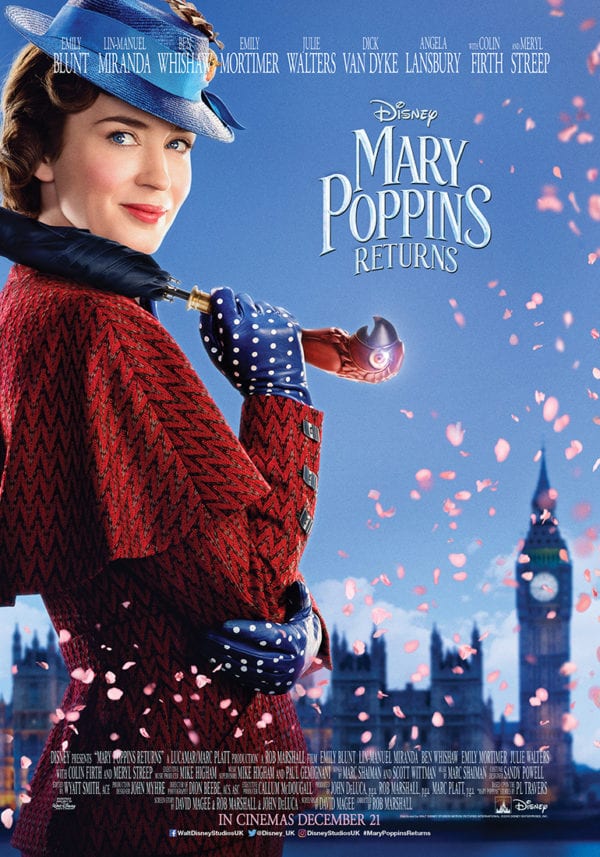
A spoonful of nostalgia isn’t enough to make the narrative go down. The highly anticipated Mary Poppins Returns hits theatres this week. Unfortunately, this film gets lost in nostalgia, neglecting the need to tell a new story. Instead, we get more than half a movie full of frivolity that lacks any coherent meaning or substance that is more concerned with hitting the same plot beats with similar songs at the same moments in this version as it was with the original. Visually, the movie is flawless and the animation sequences were a welcomed visit from the past. Reminded me of, if the animation from Bedknobs and Broomsticks and Mary Poppins got together, this is what you’d get. When creating a sequel that doubles as a remake, connections to the original are important but should not be at the diegetic forefront. Mary Poppins Returns exists in a gray area that is neither a sequel nor a remake. Had Mary Poppins Returns been a full-on sequel or remake, then perhaps the narrative would have faired better. As it stands, it sits uncomfortably in the middle and suffers from a bit of an identity crisis. Perhaps this version is lacking in critical value and complex characters, but it ranks highly in entertainment value. There isn’t anything particularly memorable about it except for the special appearances by Dick Van Dyke and Angela Lansbury, but the movie offers a couple hours of whimsical fun.

In depression-era London, the Banks family faces one of the greatest hardships a family can face–losing their home. Compounding the present state of affairs, the family is also coping with the recent loss of Michael Banks’ wife and mother of their three children. With help from the family’s longtime maid/cook Ellen and Michael’s sister Jane, the family hopes for the best while planning for the worst. With only five days until the house is repossessed, Michael remembers that his father left him shares of that infamous bank from his childhood; but when certificates of shares in the Fidelity Fiduciary Bank turn out to be missing, all hope seems lost until Michael, his children, and Jane get the surprise of a lifetime. Mary Poppins returns! Michael and Jane’s beloved nanny from their childhood returns to look after the family during this crisis. In true Mary Poppins fashion and accompanied by the lamplighter Jack, she whisks Michael’s children into a fun-filled adventure through the streets of London and into a world of imagination.

At the bedrock of the original are these lessons that must be learned. In many ways, Mary Poppins was a teacher to both Jane, Michael, and George. Although the lessons varied by character, they had one common denominator: life’s priorities. And there were no true villains–that is–evil or villainous out of malcontent or cruelty. And the songs had strong meaning, not just fun, creative lyrics to a show-stopping accompaniment. Furthermore, there was strong character development in the central characters. The character arcs of George and the kids were measurable. Even Mr. Dawes Sr. demonstrated measurable change. There are the elements of substance that make the original a timeless classic that transcends the decades and generations to remain a beloved film. Mary Poppins Returns fails to deliver any of these elements to the audience. Instead, chooses to get lost in the nostalgia of the original. Relying on the abstract of nostalgia to carry this remake-sequel.

While Michael’s lesson is clearly to learn to be a child again, his children learn the lesson to be quasi adults by teaching their father and working to solve the family’s financial crisis. Those two idea are in direct contradiction. Mary Poppins is no longer acting like a teacher but she seems more concerned with being an actual nanny moreso than the governess that was the original. If the lesson to be learned was to have the imagination or hope of a child, then that should have been taught, not two different lessons in direct contrast. George Banks may have been had his priorities in the wrong place, but he was not evil, nor was Mr. Dawes Sr. evil–he too had his priorities all askew. In Mary Poppins Returns, Colin Firth’s Mr. Wilkins is downright cruel for no reason other than simplistic greed. Simple motivators are a good place to start but should be developed to be more complex to add to the conflict. Firth’s character is completely uninteresting.

Talk about memorable songs in the original; I imagine you can recite most lyrics by memory, unlike this version with lyrics so convoluted and complex that they are largely forgettable. At the time of listening, the lyrics are poignant and work at the given emotional or plot beat, but then they are mostly forgotten. The songs in this one seem to exist only for the amusement of the audience. And the vaudeville number. Let’s talk about that for a moment. For starters, I love Mary’s wig that she borrowed from Catherine Zeta Jone’s Chicago costume. The music and lyrics in that number were incredibly entertaining–but–these same lyrics are quite risque in places. I was shocked that they were in a movie aimed at kids (despite the PG rating). And comparing the songs from the original to the ones in this version, each and every song in Mary Poppins Returns sounds similar AND comes at precisely the same beat as they did in the original. Each and every song in this one is an answer to the counterpart in the original. With one conspicuous exception, there is no equivalent for the Sister Suffragette. With Jane’s heavy involvement in workers’ rights (much like her mother’s women’s rights), it seems odd that she was not given a song since were were giving everyone else songs equivalent to the original. Yes, I am aware that Sister Suffragette is not in the Broadway musical, but it should have had a place in Mary Poppins Returns.

Structurally, the first two acts are all over the place. Fortunately, the film finishes with a strong third act. Everything seems so forced, rushed. Pacing matched the original. It’s as if the emotional beats and plot points from the original were mapped out and a “new” story was conformed to fit the old diegesis. There are even moments that can be completely removed from the story and not effect the outcome. For example, the entire Meryl Street scene has no impact on the realization of the narrative. Screenwriting 101 teaches us that each and every scene should point the audience toward the end–each scene should culminate in something important. Think of each scene as a paragraph in a larger story and each line of dialogue as a sentence in a larger paragraph. Each paragraph has a beginning, middle, and end; just like a story has a beginning, middle, and end. If a scene does not advance the plot, then it should be reworked or removed. We never revisit the cracked pot or truly embrace the idea of giving oneself a new perspective from which to view life. The song is fun, but that is all I can say about that scene. And there are other scenes in the movie that do little to advance the plot, but this is the most obvious one.

The movie is not without its entertainment value. If you are looking to escape reality for a couple of hours, then you are in the right place. You will be delighted with the whimsy and magic of this story. Perhaps the screenplay is poorly conceived, but everything else (from a technical perspective and performance perspective) works very well. If you enter the film with a heavy heart or some degree of sadness, the movie will help you forget your troubles for a moment and put a smile on your face and maybe even a tear or two in your eyes. Emily Blunt may not be a perfect Mary Poppins but she is practically perfect as the beloved nanny.

Ryan is a screenwriting professor at the University of Tampa. If you like this article, check out the others and FOLLOW this blog!

Follow him!

Twitter: RLTerry1

Instagram: RL_Terry

Thrillz (theme parks): Thrillz.co

SeaWorld Christmas Celebration 2018 Review

I’ve said it before, and I will say it again, no theme park does Christmas better than SeaWorld! From the food to shows to lights, SeaWorld Christmas is a spectacular event. With so much to see and do, you’ll want to experience it multiple nights in order to make sure you create memories that will last for a lifetime. Although I’ve attended Christmas Celebration in the past, it is so magical that I just love experiencing it again and again. Perhaps you are like me in that you attend as many theme park and resort events at possible at Christmas, but if you can only select one for you and your friends/family, then I highly suggest SeaWorld Christmas Celebration!

Before we get into the shows (which are largely unchanged from previous years), I want to talk about the food. Oh, and speaking of food, you’ll want to treat yourself to the sampler lanyard (5 or 10 items) for all the delectable food and drink cabins. My invitation to the media event came with the 5 item sampler, but I can see the advantages of the 10 item option if you plan to attend multiple nights or are there with another person or group. As far as the 5-item lanyard, my friend Dani and I were able to share it and had plenty to eat and drink. Prior to setting out into the park, the SWO public relations team provided many food and drink items for us during the media mixer. My favorite is the s’mores waffle cone! Absolutely delicious. We also had the Christmas dinner and candied popcorn. Out in the park, we had the donut pulled pork sandwich (not included in the sampler), brisket macaroni and cheese, and chicken and waffles! Yes! Chicken and waffles, you heard me. For drinks, we had the Jingle Juice. All the speciality beverages I saw were hot (just FYI). For a cold beverage, there are options but they are not the specialty drinks.

We attended Clyde and Seamore’s Countdown to Christmas, Winter Wonderland on Ice, and Shamu’s Christmas Miracle. Unfortunately, we did not attend O Wondrous Night because of scheduling conflicts. Of course, we also enjoyed the Sea of Trees show on the lagoon that runs throughout the evening. Clyde and Seamore’s show is always hilarious!! You are in for a laugh for sure. Since we were attending during the same showtime as O Wondrous Night, it wasn’t terribly packed but was nicely filled. Largely unchanged, this show is pretty much the same as it was last year, but it is still such a fun show and will have you laughing the whole time. One of my favorite parts of the show is actually the pre-show when the audience all joins together to sing familiar Christmas songs and carols. Although it is a show geared towards the younger members of the audience, there are jokes and references for us adults to chuckle as well. At one point, one of the trainers forgot his line, and there was a comedically self-aware moment. And the Frozen jokes were great. New for this year were some meta jokes about the stores in the mall. So incredibly funny! Poor Blockbuster haha. Do yourself a favor and sit down for a heaping helping of laughter and merriment as Clyde and Seamore Countdown to Christmas!

Winter Wonderland on Ice returns this year! Arrive early for the preshow! Enjoy the beauty of the violin as a fantastically talented violinist plays Christmas music as you wait for the show to begin. Much like the Christmas on Ice show at Busch Gardens, this show features many talented figure skaters in beautifully choreographed skating numbers to your favorite Christmas songs. To be honest, I still prefer the Busch Gardens show, but those skaters are at the park year-round so they can put more time into the show design. That being said, with SeaWorld placing the show on the water’s edge, the exquisite Sea of Trees can be seen behind the ice stage. Since the show is outdoors, SeaWorld is able to integrate some lite pyrotechnics in the show! As a figure skating hobbiest, I have a high degree of appreciation for these shows. I love watching the movements and picking out the ones that I am able to do! Note: I still have a long way to go haha. Bayside Stadium is packed for this show, so make sure to arrive early.

The Christmas Village at Port of Entry is always a treat! With special a’cappella groups, the Christmas village train set, and of course, you can meet Rudolph and Friends! This is the area where you can also enjoy hot chocolate, eggnog, craft beer, and cookies! Located near the Christmas Village is Santa’s Base Camp where you can meet the big man himself. With many places to sit down and relax, this is a great place to slow down and take in the smells and songs that make this “the most wonderful time of the year.” I came across the most adorable plushies, once of which is a promotional item! I saw a Shamu with a Santa hat and a Santa Sloth!! There is also a hedgehog and other cuddly plushy animals that will be hard to resist.

Merry Christmas!

Ryan is a screenwriting professor at the University of Tampa and works in creative services in live themed entertainment. He’s also published prolifically on theme parks and produced a peer-reviewed study. If you like this article, check out the others and FOLLOW him!

Follow him!

Twitter: RLTerry1

Instagram: RL_Terry

Movies: R.L. Terry ReelView

“Fantastic Beasts: the Crimes of Grindelwald” review

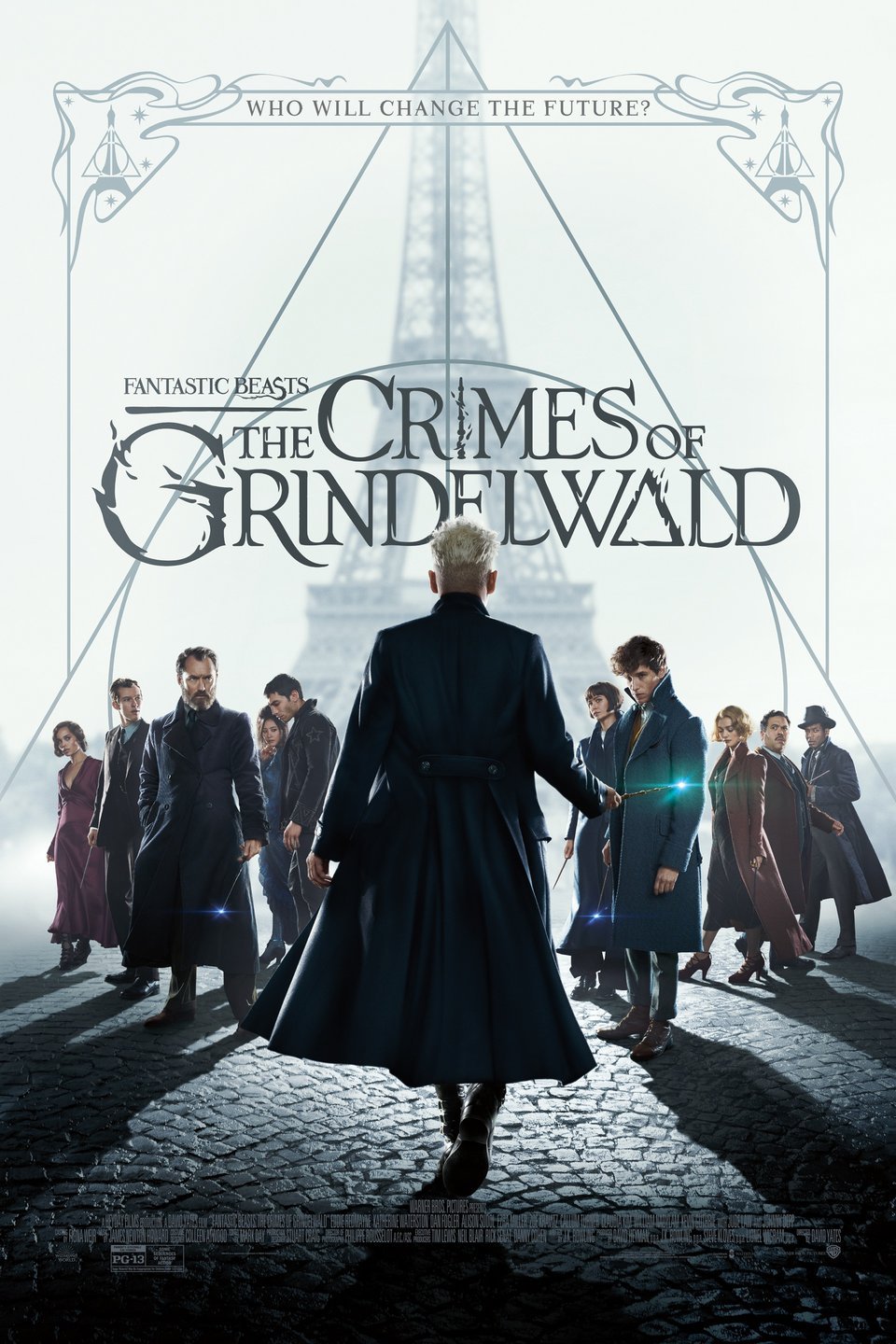
Fantastic Beasts: the crimes of screenwriting. I am still not entirely sure what I watched last night. J.K. Rowling’s plot for the second film in the Fantastic Beasts is all over the place, goes in every direction except intentionally forward. When the Harry Potter spinoff franchise needed an Empire Strikes Back, it gets an Attack of the Clones. Referencing a hyperbolic statement from J.K. that made its way around Twitter, I am totally in belief that she did, in fact, write the screenplay in 25mins. From pacing issues to odd tonal shifts and a lack of focus, the screenplay suffers from a case of sequelitis. The Crimes of Grindelwald appears to rely on technical marvel and spectacle more so than a compelling narrative. The movie is full of new and familiar characters (plus some Harry Potter cameos), fantastical beasts, and explosive sequences of events, but ultimately loses air ad runs flat. Much in the same way that the first movie felt like the preface to a book, this one feels that it too has the goal to simply setup the next chapter. Moreover, the movie feels like too little plot stretched over too much runtime. Which is a shame, because there is clearly an attempt to provide an escapist allegory for primarily racism and, to a lesser extent, sexuality. Subtext of heavy psycho-social and moralistic themes is nothing new to the Rowling-verse, but Grindelwald simply gets lost on its journey to deliver a powerful thought-provoking story paired with high-flying adventure. This sequel is certainly darker than its predecessor, but fails to provide a well-developed plot that will drive the remaining films forward.

In an effort to thwart Grindelwald’s plans of raising pure-blood wizards to rule over all non-magical beings, Albus Dumbledore enlists his former student Newt Scamander, who agrees to help, unaware of the dangers that lie ahead. Lines are drawn as love and loyalty are tested, even among the truest friends and family, in an increasingly divided wizarding world (IMDb).

Many movies have A, B, and C stories. The A story is the central plot that focusses on the central and opposition character’s external goal; and the B and C stories are typically the subplots that focus on character development, internal needs, and/or supporting character stories. The problem with this movie is that it randomly switches focus, tone, and direction arbitrarily without any rhyme or reason. Each of the A, B, C, D….in short, there are too many stories (plots) in this movie…plots–individually–are interesting. And stacked in an effective manner, could provide quite a bit of meat in this sandwich. Unfortunately, the focus of the layers and ingredients is on the arrangement or presentation of the sandwich more so than allowing the famished to sink their teeth into the otherwise delicious sandwich. Or think of it as the shifting staircases in Hogwarts; you could ascend and descend the staircases for hours and still not make any real progress toward your destination. Structurally, the movie suffers from a shifty foundation. So convoluted is the plot, that it continually introduces new information and elements just for surprise, shock, or brief entertainment value rather than setting up the story in the first act, throwing the characters into crisis mode in the second act, then providing solid resolution or realization in the third. It’s like one really long first act and a rushed second and third acts. As I warn my screenwriting students about science-fiction or fantasy writing, often times, these screenwriters are so wrapped up in world-building that the plot and characters suffer. Perhaps the characters in Grindelwald are complex enough (but truly debatable) but the plot is far from simple. After two movies, it appears that J.K.’s talent for writing novels is not as evident in screenwriting. Hence why many parts of this movie feel better suited to a novel than movie.

I could go on and on about the plot holes and pacing problems, but I feel I’ve made my evaluation sufficiently enough. So, now I want to switch gears to discussing what IS interesting about the movie. There are elements and attempts at themes (and subtext) that almost worked. Had more attention been paid to the logistics of screenwriting, then these would have been thought-provoking or at least meaningful. Upon my initial watch (and full disclosure, I plan to watch it again b/c I’ve heard it’s better on the second screening), the themes of racism, ethics, and sexuality are clearly present. Instead of a classic approach that features two differing ethnic races, the two races are the magical and no-mag (or muggles), skin color or country of origin do not factor into the equation. Grindelwald seeks to elevate the magical above the no-mag because he feels that the magical race is superior to the no-mag and can prevent the world from plunging into war. Ironically, his views insight mass violence and death. Furthermore, he wants the no-mag to serve the magical because the no-mag are disposable. Clearly, there are parallels between the American Civil War and Wold War II. Moreover, Grindelwald’s determined for the magical to stop hiding from the rest of the world and should come out to show the regular humans that they are the superior race–the super race, if you will.

Speaking of “not hiding,” the film also touches on sexuality in the wizarding world. For the first time, a character’s sexuality is pivotal to the plot and thus affords J.K. and WarnerMedia to comment on that in the story. Not a spoiler since J.K. stated it in a tweet, Dumbledore was in a romantic relationship with Grindelwald when they were much younger. It was always rumored that Dumbledore was gay, but this film puts those rumors to rest by addressing his past. Unlike a film that would simply add this character trait to the plot for the sake of inclusivity, Grindelwald allows for this to be an important part to the plot because Dumbledore and Grindelwald made a pact when they were in love never to fight each other directly. This theme of being free to love whom you will is also witnessed in the relationship between Jacob and Queenie. According to the present laws, Jacob and Queenie are not permitted to marry because a magical individual cannot engage in a romantic relationship with a non-mag. Queenie could wind up in the Ministry of Magic’s prison. In the end, Queenie couldn’t live with the divide between her and Jacob that the Ministry created, so she chooses a new future for herself. Although only directly touched on in one scene, there is also some commentary on ethics. At one point, Dumbledore tells Scamander that he appreciates that Scamander always does what is right, not what will best suit him or support a particular side of a conflict. He is concerned with only engaging in decisions that are ethically sound regardless of the personal benefit.

Even more than its predecessor, Fantastic Beasts: the Crimes of Grindelwald works diligently to convince you that these movies belong in the same universe as the original Harry Potter movies. The return to Hogwarts and a few familiar character appearances work to connect this film to the rest of the Wizarding World, but at times feel incredibly forced. You will also learn more about Dumbledore’s long lost, secret brother, the origin of Voldemort’s pet snake, and the lineage of Bellatrix Lestrange. With three more movies to go, there is still time to turn this franchise around for the better, but that will largely hinge on the next movie.

Ryan is a screenwriting professor at the University of Tampa. If you like this article, check out the others and FOLLOW this blog!

Follow him!

Twitter: RLTerry1

Instagram: RL_Terry

Thrillz (theme parks): Thrillz.co