
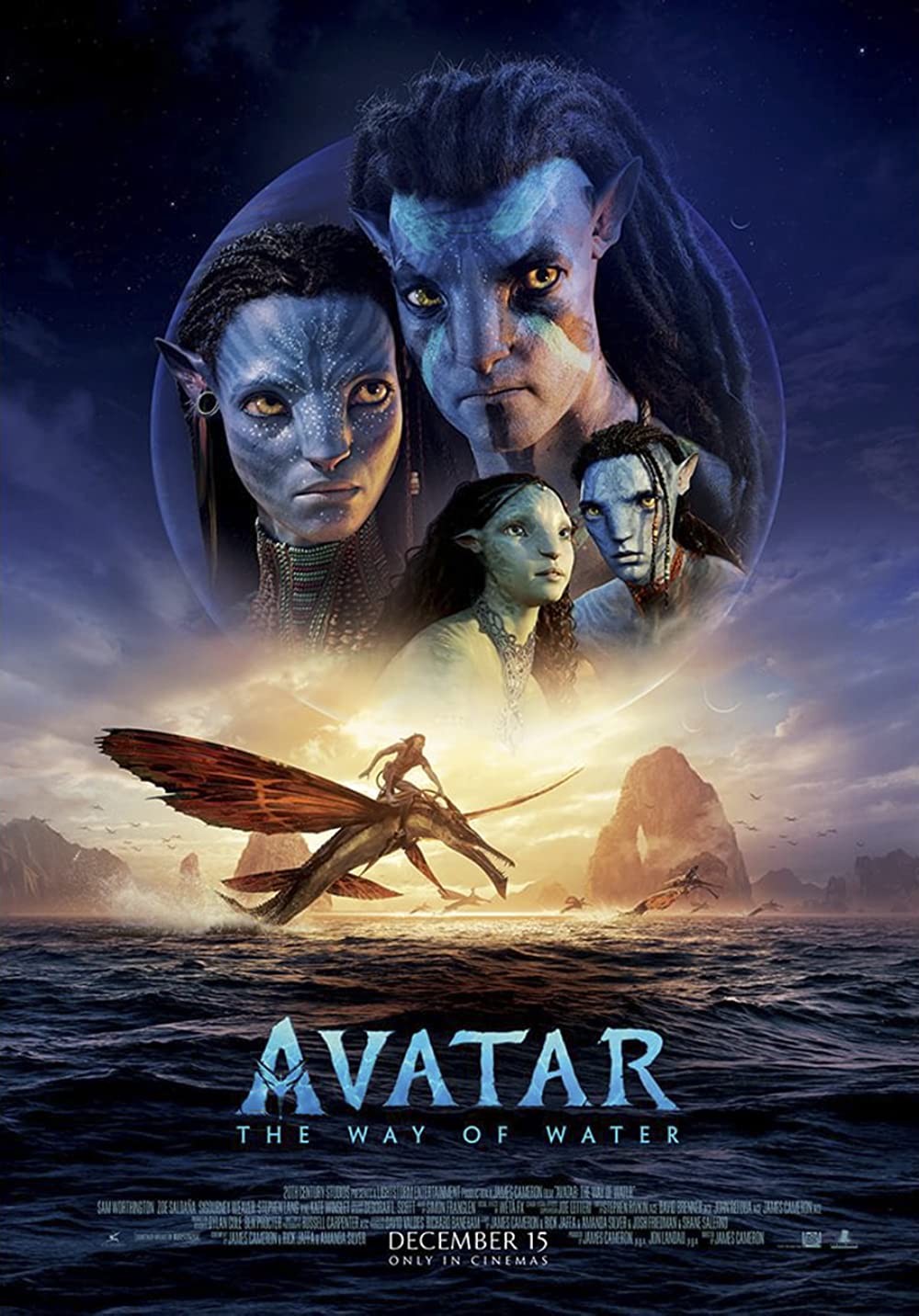
AVATAR: THE WAY OF WATER movie review

AKA The Way of Woker. James Cameron’s highly anticipated followup to Avatar (2009) is an ambitious world-building visual effects extravaganza that is a predictable, poorly paced and plotted movie, which is plagued by many problematic elements in both substance and form. Moreover, it’s a 3-hour movie that feels like a 3-hour movie, for which no amount of impressive visual displays can compensate. Often times, a filmmaker’s ideology can be interpreted through a critical analysis (or close reading), but the blatantly anti-west (or pro applied postmodernism) sentiment is right there on the surface of this troublesome movie. Suffice it to say, all the themes can be summarized as the destruction of modernity, which is manifested in various motifs. From beginning to end, Cameron’s Avatar: the Way of Water is anti-military (literally uses Marines “semper fi”), anti-western medicine, and propagates postcolonial theory (which I write about in my review of Black Panther: Wakanda Forever). It’s one thing to critique or question a societal observation; it’s another to actively work to completely deconstruct and shame entire groups of people and cultures. Cinema is a powerful tool because film is a reflection of life and can help us better understand the human experience; however, Cameron’s latest movie is a reflection of his disdain for the west (by extension, modernity), and wielded more like an offensive weapon than clever storytelling tool. The themes, reeking of applied postmodernism, aren’t the only problematic issues plaguing this 3-hour epic, but the story structure itself suffers from poor pacing and a proliferation of subplots that fail to work together to craft a compelling narrative.

Jake Sully and Ney’tiri have formed a family and are doing everything to stay together. However, they must leave their home and explore the regions of Pandora. When an ancient threat resurfaces, Jake must fight a difficult war against the humans.

Overstuffed with one-dimensional characters devoid of character arcs, Cameron appears to be more concerned with his ideology than creating thoughtful characters. Heroes that are projected as nearly flawless and invincible seldom connect with audiences because it is often our flaws, failings, and lessons-learned that connect us to one another. When villains fail to display any likable qualities, the villain fails to connect with audiences, thus erasing any possible entertainment value. More specifically, central and opposition characters should share similar goals; however, what makes villains and heroes different is HOW they express their methodologies to reach the goal(s). The most interesting characters of opposition are those with human dimension and characteristics that can be appreciated; likewise, the most interesting central characters are those with flaws and weaknesses that make them relatable. Our heroes are flawless and our villians utterly detestable. That is NOT a good character mix or balance.

Moreover, the film’s characters demonstrate a gross representation problem. Nearly all the human characters are white men–not one person of color and only one prominent female character. In a day and age in which reasonable, fair representation in media is important (again, as film is a reflection of life, it should look like real life), Cameron ignores fairness in representation. While some may find this to be a coincidence, it is not. Every diegetic element of the mise-en-scene montaged into a film is intentional. Because of the clear manifestation of postcolonial theory, this can be read as Cameron’s method for perpetuating the sentiment that white people (particularly men) are toxic by nature. Before you say I am extreme in this interpretation, in a recent interview, Cameron stated, “testosterone is a toxin that must be worked out of the system.” Not only is this a shameful statement, it’s grossly inaccurate. Neither testosterone nor estrogen are problems that need solved. Both are biology, plain and simple. Each respectively amoral.

Cameron’s anti-military sentiment is the most provocative of all his themes concerning the complete destruction of modernity (the goal of applied postmodernism). Where he crosses the line, is referencing the para-military presence as Marines, and evoking the rallying cry of semper fi. Undoubtedly, this is not going to sit well with the U.S. military and general public (nor should it). Ostensibly painting one’s country/military in a negative, inaccurate light is inexcusable. Again, it’s one thing to critique, it’s another to actively shame and attack. If he wanted to use a para-military force, he would have been better off crafting this one to be FORMER military that have been privatized for exploratory and extraction purposes. Sell swords as Game of Thrones would put it. Even that may have painted the military in a negative light, but it wouldn’t have been so blatant and aimed at a particular branch of the U.S. armed forces.

With all the themes, symbols, and motifs Cameron includes in the movie, the plotting is insufficient to support such a mess of ideas and stories. Perhaps he should revisit the screenwriting tenants of writing lean or starting a scene as close to the end as possible, and ending it as soon as possible. These tenants of screenwriting help to prevent a bloated, fatty screenplay. As it stands, the storytelling in Avatar: the Way of Water is clunky and forced. Often times the reason for something happening is simply because the plot needed it. This makes for a predictable story, one that is devoid of anything remotely constructive, fun, or inspirational.

Lastly, I’d be remiss if I failed to mention the many references to Flight of Passage in the World of Pandora at Disney’s Animal Kingdom. Many of the creatures from the flagship attraction and surrounding area are found within this movie. I rather enjoyed identifying elements that were lifted from the hugely popular and impressive attraction. If you do see this movie and have been to Pandora, then look to see if you can find some of the land and sea creatures from the attraction.

At the end of the day, this movie is a reminder that spectacular visual effects does not a great movie make.

Ryan teaches Film Studies and Screenwriting at the University of Tampa and is a member of the Critics Association of Central Florida. If you like this article, check out the others and FOLLOW this blog! Interested in Ryan making a guest appearance on your podcast or contributing to your website? Send him a DM on Twitter. If you’re ever in Tampa or Orlando, feel free to catch a movie with him.

Follow him on Twitter: RLTerry1

EMPIRE OF LIGHT film review

Underwhelming. Sam Mendes’ Empire of Light tries to be too many things, and winds up being none of them sufficiently enough. Furthermore, it’s a story out of time that would have played better had it come out 30-40 years ago. Moreover, it’s poorly paced, and Olivia Coleman’s Oscar-reaching performance is simply not enough to save this film that so desperately desires your affection. Is it a story about the challenges of a mixed race couple in the 1980s? Is it a story about the love and healing nature of cinema? Is it a story commenting on and challenging ageism in romance? Or, is it a story about trauma and mental illness? It’s all of those subjects–and–none of those. None of them effectively enough, anyway.

A romance develops in a beautiful old cinema on the south coast of England in the 1980s.

In an age in which mixed-race couples are increasingly common, movies about the healing power of cinema have been done–and much better (ie Cinema Paradiso), and films about mental illness are common, the story that needed to be the central focus was the one on ageism in dating. And yet, that subplot takes the furthest backseat to the others. Empire of Light never lands on any one outside/action story paired with an inside/emotional story. Neither does Coleman’s character effectively go though a growth arc–she is largely the same at the end of the movie as she is at the beginning–save the healing power of cinema (which isn’t her chief struggle).

This film stands as another example of a director with an idea(s) that should have worked with a screenwriter, because any screenwriter with his/her weight in salt would’ve cautioned Mendes against the plethora of subplots and inner-needs. A closer look at this film suggests that Mendes desired to create this generation’s Cinema Paradiso, but the movie simply doesn’t deliver on that theme or subplot. Like with all the other themes and motifs, the narrative feels desperately forced. I’ll leave you with this: where the film does excel.

Empire of Light ‘shines’ best through the brilliant eye of director of photography Roger Deakins. It’s because of his incredible talent that the film looks as gorgeous as it does. Furthermore, the setting and production design shine brilliantly. I wish that the outside/action story included the renovation of the older auditoriums and ballroom. Would’ve made for a fantastic manifestation of one of the inside/emotional stories.

Ryan teaches Film Studies and Screenwriting at the University of Tampa and is a member of the Critics Association of Central Florida. If you like this article, check out the others and FOLLOW this blog! Interested in Ryan making a guest appearance on your podcast or contributing to your website? Send him a DM on Twitter. If you’re ever in Tampa or Orlando, feel free to catch a movie with him.

Follow him on Twitter: RLTerry1
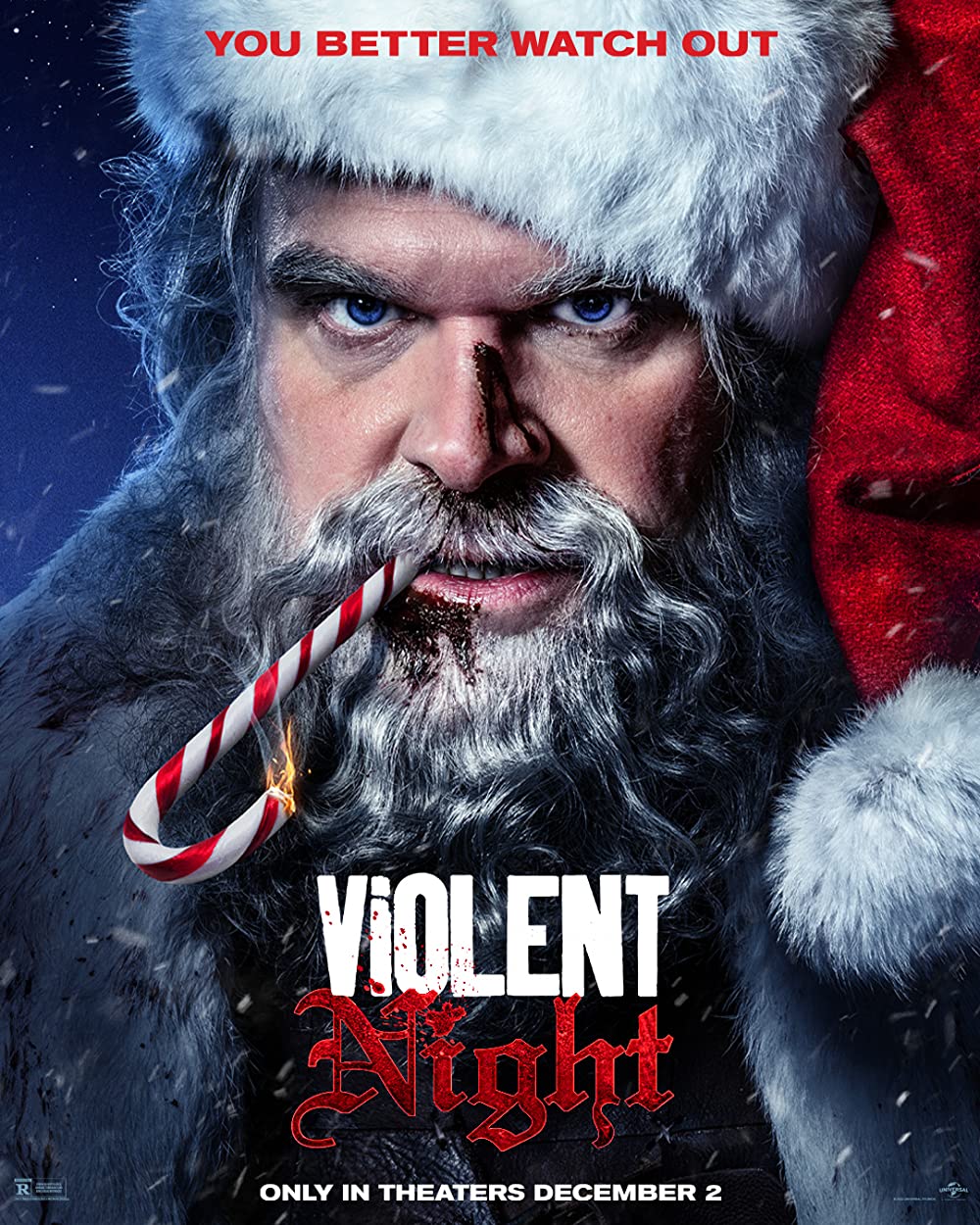
VIOLENT NIGHT Christmas movie review

Highly entertaining and hilarious! Better watch out burglars, Santa’s coming to town. Universal Pictures’ Violent Night hits theatres this week. And you don’t want to miss this fantastically fun horror-adjacent Christmas action movie, which is equal parts Die Hard and Home Alone with some Krampus thrown in for good measure–and it that still has plenty of Christmas spirit! Not since Krampus have we had such unconventional Christmas movie in cinemas. Not quite unsettling enough to be a horror movie, but gorier than a typical action movie, Violent Night sits comfortably in the middle (but a little closer to action). One of the things that makes both Gremlins and Krampus work so well is that the violence is played for laughs, and audiences will find that to also be true in this movie. Even though the violence is prolific, it is schlocky and even campy, at times. Despite the creative, gory kills and pulse-pounding action sequences, Violent Night takes times to impart valuable lessons in family, hope, and even redemption. It simultaneously acknowledges how hard the holidays can be on folks that have become disillusioned with Christmas and yet manages to show the importance of never losing hope in the magic of Christmastime. Even though we may not know how it works; it’s important not to allow cynicism of this world to overpower the optimism of hope the holidays bring. With a solid screenplay, effective direction, and entertaining kills, Violent Night is an instant modern classic that is sure to find its way onto annual watch-lists every December.

An elite team of mercenaries breaks into the Lightstone family compound on Christmas Eve, taking everyone hostage inside. However, they aren’t prepared for a surprise combatant: Santa Claus is on the grounds, and he’s about to show why this Nick is no saint.

I often remark that some of the best movies are those with a simple plot and complex character, and that is what we have here! On the surface, it may be a horror-adjacent heist movie, but beneath the creative kills and campy characters lies a movie that has a lot to say about the various feelings about Christmas (and the holidays in general).

Before you dismiss this movie as just a schlockfest, there is discernible depth to this story that will resonate with audiences of all walks of life and opinions on the magic of Christmas. The commentary on the Christmas season is witnessed in the characters, specifically Santa, Trudy, and Scrooge. By extension, other manifestations of holiday feelings are expressed through the rest of the cast of Lightstones and mercenaries. Santa has become a Christmas cynic himself, because of the rampant entitlement and greed of the world, Trudy holds true to the magic of Christmas despite the negative stressors of her family, and Scrooge represents the idea that Christmas is nonsensical and worthless. All real feelings. Furthermore, the film does not shy away from discussing the gross consumerism that is so often, yet unfortunately, at the forefront of Christmas.

A growing trend for films that aim to be character studies is to neglect the plot. Not true with Violent Night! Again, the surface is a gory action movie, but at its core, it is a character study on reactions to Christmas. Even character studies need to have a well-structured plot, because the outside/action story is a visualization of the inside/emotional story. We get both in this fantastically fun movie! Santa must reconcile his purpose with the state of the world, Trudy must reconcile her belief in the magic of Christmas within her dysfunctional family, and Scrooge (more specifically pre-Christmas Eve Scrooge) gets his just desserts for reining terror. Moreover, I appreciate how the movie provides thoughtful commentary on some of the worst people–and I am not talking about the mercenaries (tho they are deplorable people), but the Lighthouse family members represent people we know from our own lives.

Much like Krampus (but far more violent and a little less scary), Violent Night is a cautionary tale on the dangers of selfishness, greed, and toxic celebrity-ism. We’ve all been Santa, Trudy, or one of the other characters in the movie. Don’t miss the schlock, hijinks, and heart of the action-packed Violent Night this Christmas season.

Ryan teaches Film Studies and Screenwriting at the University of Tampa and is a member of the Critics Association of Central Florida. If you like this article, check out the others and FOLLOW this blog! Interested in Ryan making a guest appearance on your podcast or contributing to your website? Send him a DM on Twitter. If you’re ever in Tampa or Orlando, feel free to catch a movie with him.

Follow him on Twitter: RLTerry1
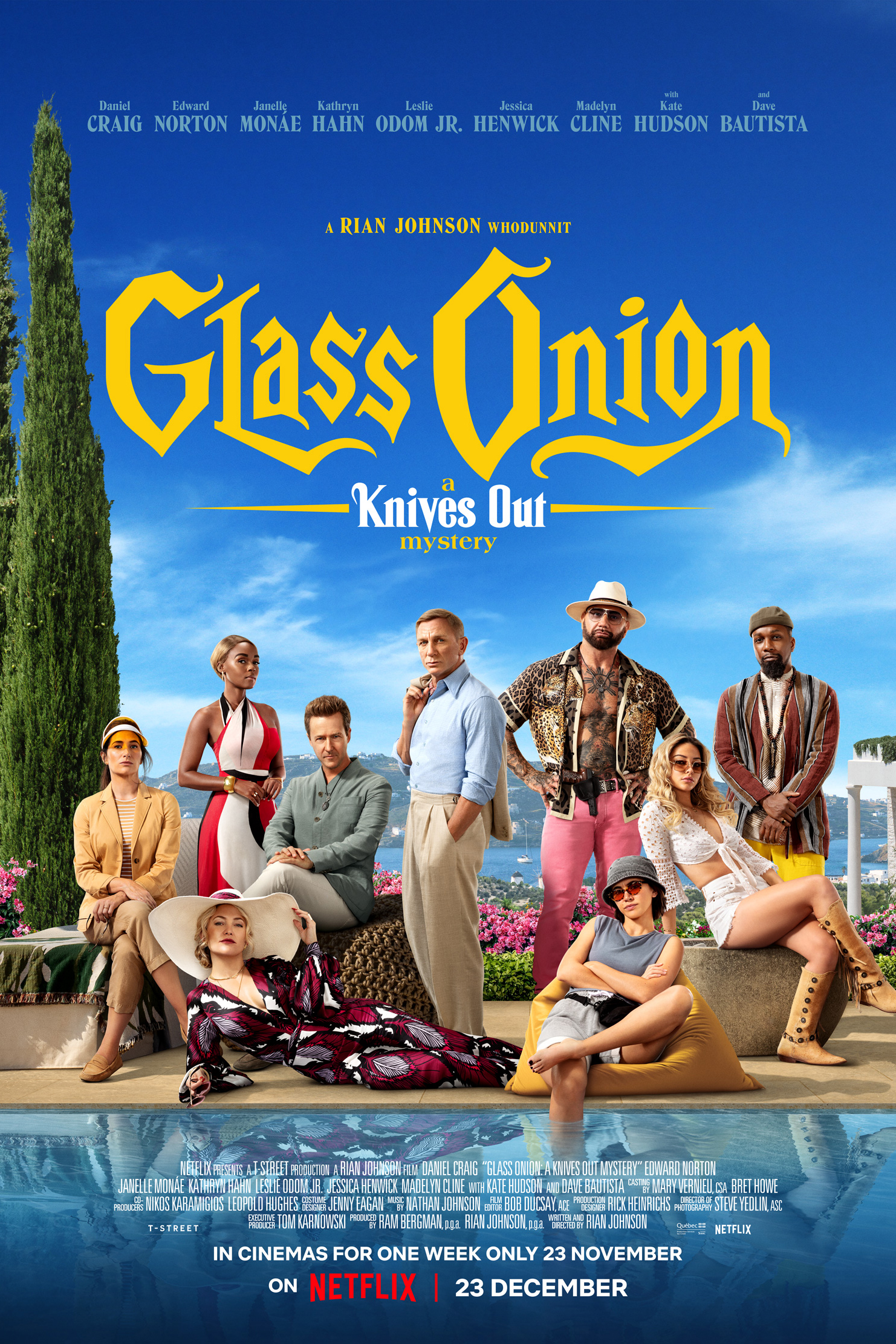
GLASS ONION: A KNIVES OUT MYSTERY whodunit movie review

Cloth Mask: a COVID Mystery. The real mystery is why Johnson didn’t turnover his idea for this chapter in the fledgling franchise to a different screenwriter. World famous detective Benoit Blanc is back, but this mystery suffocates under constant reminders of the varying degrees of response to COVID-19. At the core of this Knives Out installment is an intriguing mystery; however, throughout the whole movie, the audience is reminded of about two years of recent history that most people would rather forget. The best part of the movie is a cameo, near the beginning, of a truly legendary TV detective. Even if you don’t want to watch the whole movie, watch the first few minutes, because you will undoubtedly love the cameo as much as I did.

Tech billionaire Miles Bron invites his friends for a getaway on his private Greek island. When someone turns up dead, Detective Benoit Blanc is put on the case.

Before I break down my thoughts on the movie, just who is that legendary TV detective that surprises us with a heartwarming cameo? None other than Dame Angela Lansbury, aka Murder, She Wrote‘s Jessica Fletcher! Knowing she makes her final film appearance in a murder mystery is incredibly poetic, and will absolutely thrill audiences.

While there is certainly a time and place for films that depict or are an abstract representation of events and people from real life, for purposes of inspiring conversations, most fictional films should transport us, be a momentary break from the negative stressors of life. From beginning to end, Glass Onion is a manifestation of COVID Theatre–and not for purposes of parody or satire–because it’s neither funny enough to be parody nor clever or thoughtful enough to be satire. Even though Rian Johnson is reprising his role as the writer-director of this one, the loss in quality from the brilliant Knives Out to this installment is rather conspicuous. Perhaps this is yet another example of why some directors need to stick to directing, and turn their ideas over to a screenwriter. Evidence of the poor pacing and structure is demonstrably witnessed in the simple fact that nothing big happens for an hour and fifteen minutes into the movie.

Another troubling aspect of this movie is the showdown. And no, I am not about to get into spoilers. But it’s a subject matter that certainly requires critiquing. Keeping in mind that when Glass Onion was written, Johnson could not have possibly known about now-recent headline-grabbing events (in Europe presently) about a group that feels by being a (to quote the movie) a disruptor that they can get their way. And in the film, something rather disturbing happens that could very well serve as inspiration for the continued despicable actions of this group. When these events began happening a few months ago, Johnson (or Netflix) should have rewritten and shot the ending because as it stands, the ending is tasteless.

The set and production design of the movie is nothing short of impressive. While the constant reminders of COVID do nothing to transport us to another world, the setting of this movie certainly does! I absolutely love witnessing the hand of the artist in the design of the palatial house and manicured gardens of the location where the murder mystery takes place. Much like the house in the original Knives Out felt like the Game of Clue, this one delivers a similar feel, which causes the house to feel like a character in and of itself.

While the story execution and writing leave much to be desired, the casting is great! Daniel Craig’s Benoit Blanc is just as entertaining as he was in the first movie. Outside of the foghorn leghorn detective, Jannelle Monáe delivers a fantastic performance as the ex-wife of our murder mystery weekend host Miles Bron, enthusiastically played by Edward Norton. You’ll recognize many to the other cast members and there are a few cameos that will garner a laugh or two. Some of the characters aren’t given much to do, so they become filler. But for the characters that have something of substance to do, they are mostly entertaining.

Unlike the previous movie, this one feels very “Netflixy,” so it’s not one that benefits from a theatrical viewing. Watching it at home will be sufficient enough. However, an advantage to watching it during its limited theatrical run is avoiding spoilers on social media.

For more on the movie, visit Netflix.com/GlassOnion.

Ryan teaches Film Studies and Screenwriting at the University of Tampa and is a member of the Critics Association of Central Florida. If you like this article, check out the others and FOLLOW this blog! Interested in Ryan making a guest appearance on your podcast or contributing to your website? Send him a DM on Twitter. If you’re ever in Tampa or Orlando, feel free to catch a movie with him.

Follow him on Twitter: RLTerry1

DEVOTION film review

DEVOTION delivers an endearing story with heart, but the unevenly paced screenplay lacks the gravitas to be truly impactful or memorable. Unfortunately, this Naval Air Force biographical drama arrives on the tailwinds of Top Gun: Maverick, to which it will undoubtedly get compared (though they are different). It’s a decent film with an important, historical story to tell, but the film is held back by the lack of strategic focus and the competing story threads.

Elite fighter pilots Jesse Brown (Jonathan Majors) and Tom Hudner (Glen Powell) become the U.S. Navy’s most celebrated wingmen during the Korean War.

We cannot discuss this film without addressing the white elephant in the room, the wildly popular, critical and box office smash hit Top Gun: Maverick. Both films feature character-driven stories in the Air Force, one fictional, while the other is biographical. Funnily, both feature Glen Powell in a central role. Speaking of casting, Devotion has a solid cast, but often times, neither the lead nor supporting characters are given much to do.

Even though I was unfamiliar with this true story prior to watching the film, it certainly seems to have hit all the factual points (which–don’t get me wrong–is important in a biographical drama), but the facts of the account never fully manifest into a cinematic story. Furthermore, there are three competing story threads, each vying to be the main outside/action story (1) the Korean War mission (2) the friendship between Tom and Jesse and (3) the relationship between Jesse and his family. Underscoring each of these is the inside/emotional story of Jesse’s professional and psychological struggles being the first person of color in the Naval Air Force.

The screenplay lacks focus, lacks direction. None of the outside/actions stories ever emerges as the main (or A-story). In an effort to dramatize everything that was going on in Jesse’s life professionally and personally, the screenplay never completely landed on any one of them. Because of this lack of focus, audiences will likely experience difficulty in connecting with any one of the characters; empathize? Yes. Truly connect? Therein lies the struggle.

Compared to the cinematography and editing of Maverick, Devotion noticeably struggles. Regrettably, this struggle would have been less noticeable had both films not been released in the same year (and yes I am aware Maverick experienced delays due to shuttered theatres and mitigated operations from 2020–2021). As much as I tried to separate the two films, Maverick was such an incredible film that it’s nearly impossible to evaluate them independent of one another.

Devotion is a middle of the road film, from technical achievement and screenwriting perspectives. It’s neither bad nor great; because it has an important story to tell, and it’s clear that everyone’s hearts were in the right place, it does make for a good film, but one that won’t likely stick with you as long as Maverick did.

Ryan teaches Film Studies and Screenwriting at the University of Tampa and is a member of the Critics Association of Central Florida. If you like this article, check out the others and FOLLOW this blog! Interested in Ryan making a guest appearance on your podcast or contributing to your website? Send him a DM on Twitter. If you’re ever in Tampa or Orlando, feel free to catch a movie with him.

Follow him on Twitter: RLTerry1