SUNSET BOULEVARD 75th Anniversary Retrospective

The magic of Sunset Boulevard is still capturing the “eyes of the world” from all those “wonderful people out there in the dark” seventy-five years later.
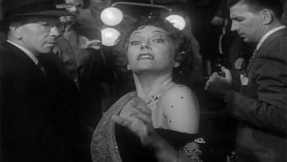
NormaDesmond

There is little question that Billy Wilder’s masterpiece Sunset Boulevard still captures the eyes, hearts, minds, and souls of audiences seventy-five years later. It continues to stare unblinking into the soul of Hollywood—and, perhaps uncomfortably, into the faces of all those people out there in the dark. Billy Wilder’s mordant masterpiece starring Gloria Swanson as Norma Desmond endures not only because of its sharp wit, noir elegance, and unforgettable performances, but because it remains a mirror for an industry—and an audience—forever tempted to trade substance for novelty. Its barbed satire of fading stars, disposable talent, and a studio system eager to discard the past feels eerily prescient in an era when algorithms decide what stories are worth telling and studios recycle intellectual property like celluloid scraps. Watching it now, one realizes the film is not merely a relic of old Hollywood’s cynicism—it is an indictment of the complacency of contemporary audiences and the short-term greed of the modern industry. Sunset Boulevard has not grown old; it’s the world around it that has refused to grow up.

Since its release on 10th of August in 1950, it has been the inspiration to countless films. But what does it mean to you? What makes it special or stand out to you? Perhaps you just see it as an iconic film; or just maybe, you see it as representing something personal to you. From classic noir cinematography to some of the most quoted lines of all time, Norma Desmond’s spirit lives on. So much for Joe Gillis’ line about her “still waving proudly to a parade that has long since passed her by;” she is still as alive today as she ever was. Serving as a mirror to the current state of Hollywood, Billy Wilder’s film shed light on the darker side of celebrity that still haunts to this very day. This timeless movie provoked Hollywood to take a cynical and honest look at itself, and the dangerous price of stardom–especially when the star is fading into obscurity. Poignantly arriving near the end of the Golden Era (or Studio System), this cinematic masterpiece continues to be the epitome of a Hollywood and anti-Hollywood film for all eternity. Beyond what it meant historically or industry-wise, it holds meaning and significance for many who watch it. One of its strengths to withstand the test of time is the fact is its ability to connect with people visuals and emotionally. That, combined with solid technical aspects, makes for a dynamic cinema experience.

Part of what still beckons the “eyes of the world” is the movie’s ability to tell the story within a story. Gloria Swanson’s performance as Norma Desmond is so perfectly calibrated that audiences sometimes forget she was playing a role at all. Billy Wilder and Charles Brackett deliberately wove elements of Gloria Swanson’s real life into Norma’s backstory, yet the parallels are only part of the truth. Swanson was both exactly Norma Desmond and nothing like her—especially when you consider her remarkable adaptability and forward-thinking nature. She saw greatness in the character and the film, and saw this as her triumphant return to the screen in an important picture. In many ways, Gloria took a role that was essentially making a mockery of everything she once stood for. Like Norma Desmond, Swanson was one of Hollywood’s highest paid performers from the teens until the early 1930s. Following the advent of talkies in 1927 and the changes in the studio system thereafter, her career floundered. Yet, she carried herself with poise, theatricality, and unapologetic glamour—qualities that translated naturally into Norma’s imperious, otherworldly presence. If you’re looking for a real life “Norma Desmond,” then look to silent film actress May Murray—she did live in the past after her star faded, and was reported to have been rather eccentric. Gloria, however, proved that those ghosts didn’t have to haunt you if you kept moving forward. Which she did—in radio, television, theatre, fashion, and even technology.
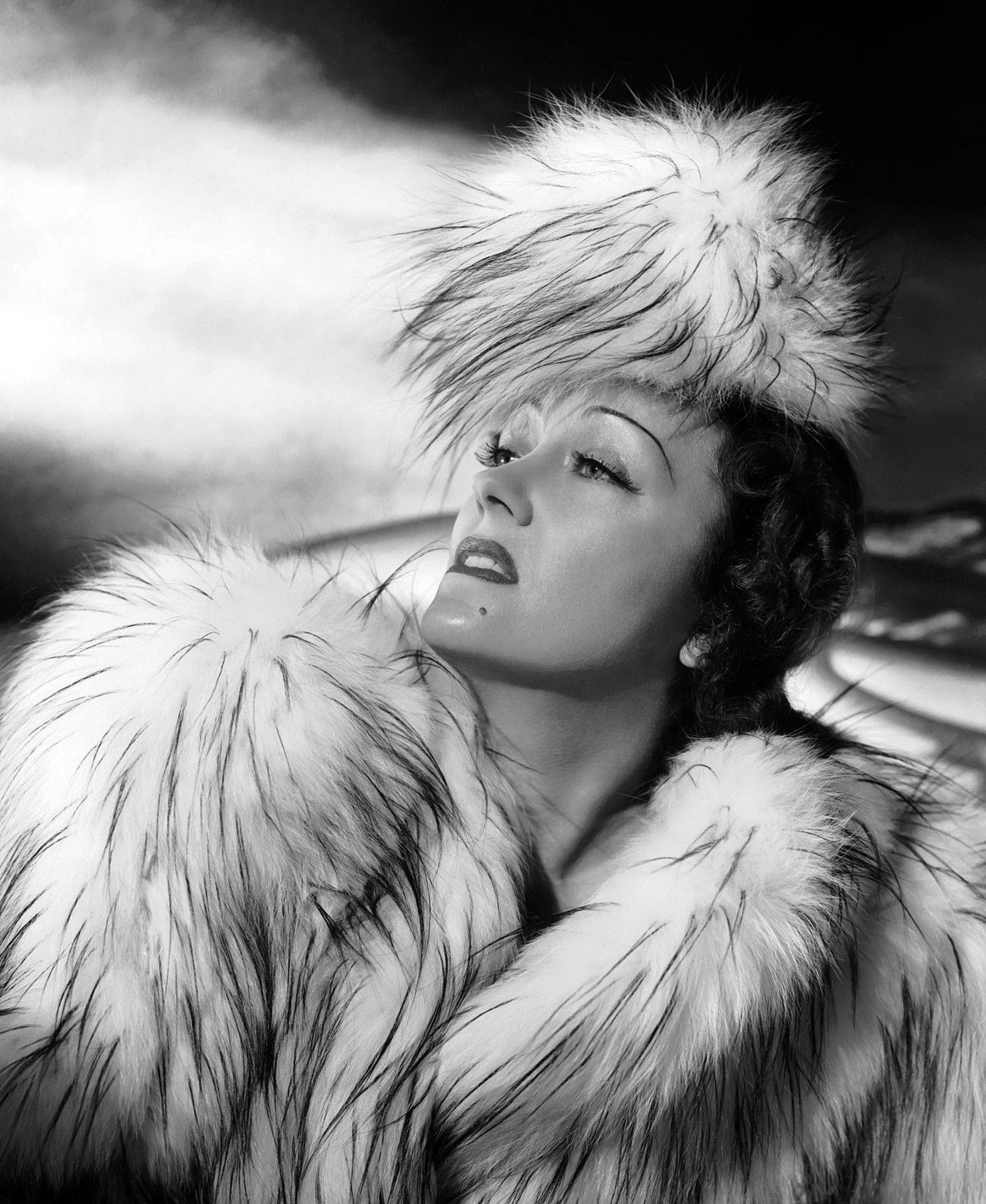
1941: American actress Gloria Swanson (1899 – 1983) plays glamorous film star Leslie Collier in ‘Father Takes a Wife’, directed by Jack Hively. (Photo by Ernest Bachrach)

The role of Norma Desmond was originally offered to Mae West and then Mary Pickford, but both turned it down. Pickford recommended Gloria. Suffice to say, the role cannot be imagined to have been brought to life by anyone else. No one could capture the character of Norma Desmond like Gloria Swanson. Throughout the movie, we witness the psychological breakdown of a woman who is already seriously afflicted with chronic depression and even agoraphobia. I feel as though many actors, and even some industry professionals who are not performers, can truly understand what must have been going through the mind of Norma Desmond. Actually, even for those who are not involved in entertainment or media can still see someone who felt betrayed and left alone to drift away. We’ve all been there. Feeling like we have so much to give the world, our community, or to the arts, and no one to take or acknowledge it. Norma isn’t going through anything that we have not been through. Essentially, Norma’s significant other, or partner, was her celluloid self, the studio, the industry. And when her partner left her, never to return, she developed serious psychological and cognitive disorders. Each person who chooses to watch her downward spiral into insanity, should be able to identify with her on some level regarding something in their life. For Norma, it was being back on screen again. For you, it may be something else.

Paramount-Gate-287x162

Fascinating elements of this story include the bewildering world of what lies between the glory and the fall of a celebrity who feels as though she built Hollywood, more specifically Paramount Studios. Never before had there been a movie that was developed around the idea of what happens to a star after they are rejected by the very business that created them. Serving as the inspiration to the opening scene of American Beauty nearly 50 years prior, Wilder set the standard in the dead body of the protagonist narrating the film. Like the fog over London, Gillis’ spirit hovers over the entire movie, narrating the course of events that lead to his demise. Joe gets to do what any of us would enjoy doing–getting to observe what happens after we die and how everyone reacts. Just like having a soundtrack to your life would be amazing, getting to narrate your story after you die would be equally, if not more so, enamoring.

William (Bill) Holden’s character of Joe Gillis is the prime representation of a starving artist. He lives in a tiny apartment, has a few credits to his name and is in danger of having his car repossessed. That describes many artists today, thus allowing other aspiring screenwriters and filmmakers to identify with his frustrations. Like a true film noir, the ending is tragic for the protagonist. Part of the suspense is wondering just when will he meet his end and why. For those who are trying to make it in the industry as a screenwriter, the grief and depression Joe must been feeling is something with which aspiring screenwriters can empathize.

Sunset Boulevard contains something for everyone: elements of mystery, action, romance, and deceit are woven meticulously throughout the film. This allows for the story to transcend decades of movie evolution and maintain such a high regard in the minds of all the “people out there in the dark.” And, even land a spot on the Great White Way in Andrew Lloyd Webber’s Sunset Boulevard Broadway musical. It’s been rumored that Paramount plans to make a movie version of the Broadway show, but that rumor has been floating around Hollywood for years. As much as the the musical is a tribute to the original, the movie will always be more impactful because the stage simply cannot bring you as close to eyes of the actor as the screen can. And, Norma “can say anything with [her] eyes.” But, thanks to Barbra Streisand keeping the songs alive, “With One look” and “As if We Never Said Goodbye” are brilliantly written to capture the feelings and state of mind of Norma.
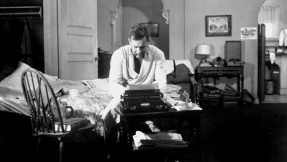
GillisWriting

Regarding the screenplay itself, it is not a matter of what’s going to happen as much as it is how’s it going to happen. This pioneering non-linear structure served as yet inspiration for another film that would not be produced for nearly 60 years. Along with All About Eve and Citizen KaneSunset Boulevard played an instrumental role in the development of the 1994 blockbuster Pulp Fiction. A lesser known 2001 movie borrows many plot points from Sunset Boulevard including the movie title being a street name, entitled Muholland Drive starring Naomi Watts, Justin Theroux, and Laura Harring. Sort of a neo-noir, this is a more modern twist on the foundation Wilder laid with his masterpiece. On that note, now-a-days, non-linear films aren’t necessarily anything special, but at the time, Sunset Boulevard broke ground that would be the standard in abandoning traditional story structure. To me, the screenplay was written in such a way that many people can find his or her own story in the screenplay. Perhaps, someone feels like they are Norma–all but forgotten. Perhaps, there is a starving artist out there who can understand the predicament Joe Gillis was in–just trying to get ahead. To a lesser extent, there may be Betty Schaefer’s watching the movie who feel they have a lot of talent, but very little is recognized and want to find a creative outlet.

Unlike previous films, this movie was also ahead of its time in terms of including dark sarcasm and humor as chief elements in the film. Other aspects that capture the ears of the world, to Miss Desmond’s disapproval, are the famous lines from the movie. Ironically, Desmond despised dialog; however, her movie possesses the coveted numbers 7 and 24 spots on AFI’s Top Movie Quotes list. At number 24, “…I am big! It’s the pictures that got small;” and at number 7, ranking above “Louis, I think this is the beginning of a beautiful friendship” and “what we have here, is a failure to communicate” is the often misquoted “Alright Mr. DeMille, I’m ready for my closeup.” There are many other more obscure, yet brilliant lines of dialog and exchanges between characters, landing the screenplay in the WGA’s Best Screenplays of All Time list at number 7! It’s important to now only appreciate the movie as a movie, but to appreciate the story itself. Let us never forget that “someone sits down to write a picture” and fool ourselves into thinking that most of the time the “actors make it up as they go along.” Part of what makes this a timeless classic, and even a sort of Bible if you will, is the brilliant writing.

“[Cinema] is BIG. It’s the [movies} that got small.” In Sunset Boulevard, Norma Desmond’s defiant declaration—“I am big. It’s the pictures that got small”—was meant as a lament for the silent era’s fall to talkies; but in 2025, it resonates as a prophecy for cinema in the age of streaming. Norma wasn’t just talking about herself; she was articulating a truth about the grandeur, spectacle, and communal magic of the movies—an art form designed for towering screens and shared gasps in the dark. Today, as streaming platforms flood audiences with bite-sized content, algorithm-churned thrillers, and disposable franchise spin-offs, the scope of cinema has been compressed to fit living rooms and phone screens. Norma was right: cinema is big, but it’s the movies that have been miniaturized—scaled down in ambition, craft, and cultural weight—until they often feel like little more than moving thumbnails. The tragedy isn’t Norma’s inability to adapt, but that the industry has stopped aspiring to be as big as she was.

One of the elements that stands out in the movie is the meticulous placement of lighting. Film Noirs are one of the best examples of how effective lighting can be in playing an intricate part of the storytelling process. Lighting can show us whether or not someone may have two personalities, whether someone is dark and sinister. Since films did not have access to color, in the same way we do today, lighting in a grayscale movie was very important. Since colors could not be distinguished, lighting played that role. In many ways, the lighting in a film noir is like the Norma of the movie itself. Color has caused lighting to be used in a different way. For more practical reasons that aren’t always artistic in nature. Furthermore, another element that makes a film noir a film noir is the cinematography. After all, the term noir is French for dark. So, essentially film noir simply means dark film. It holds up to the definition due to the physically dark scenes; and furthermore, the state of being psychologically dark. The 9-time Academy Award nominated cinematographer John F. Seitz is responsible for creating the haunting visuals and shadows that dominate most of the movie.
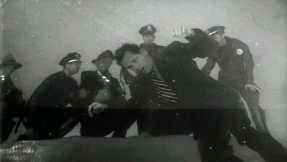
GIllisPool

One of the shots that is the most puzzling is how Wilder was able to shoot Joe Gillis’ floating body in the pool. Now-a-days, that is simple enough–even YouTubers do it–but in 1950, how does one accomplish such a special effect? The use of mirrors in the film went beyond macabre and haunting set pieces; a mirror was also used to shoot this scene. Seitz placed a mirror at the bottom of the pool and shot facing down towards the mirror while Holden floated in the water with the police officers around the deck. This gave the illusion the camera was in the water facing up.Thanks to the iconic cinematography, the mansion “stricken with a creeping paralysis” appeared lonely and massive. There is no better example of this than when Gillis descends the grand staircase to a party where he and Desmond are the only guests on an expansive tile dance floor recommended by Rudolph Valentino.

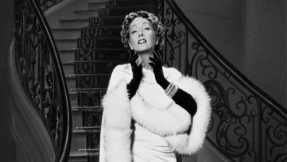
“Alright, Mr. DeMille, I’m ready for my closeup.”

Some of the most memorable cinematography comes at the end of the movie. Wilder and Seitz chose to shoot parts of the finale in slow motion to create an uneasy feeling in the minds of the audience. As Norma begins to descend the grand staircase one final time, she is shot in slow motion, as if it were Norma’s dream coming to life–her big come-back. Pardon, she never left; the pictures left her. In her mind, she is playing princess Salome entering the palace; when in all reality, it’s not movie cameras, but news cameras documenting her psychological decline into insanity. With her famous line “I’m ready for my closeup,” she encroaches upon the camera operator determined to get the closeup she wants, even though it is fixed at a medium shot. The audience, she is so desperate to connect with again, is tragically out of her reach.
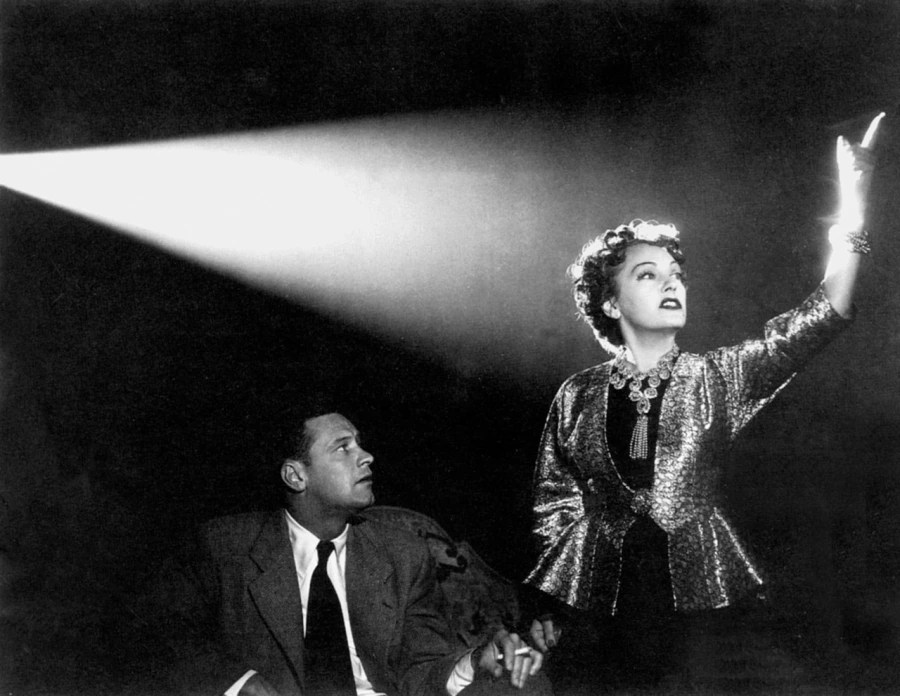
Sunset Boulevard serves as a haunting reminder that cinema’s survival depends on more than novelty—it thrives on depth, craft, and stories that demand to be remembered. Wilder’s film shows us a Hollywood already willing to discard its own history for the next marketable thing, a cycle that feels alarmingly familiar in an age of streaming debuts and algorithm-curated “originals” designed for convenience over impact. Norma Desmond’s tragic insistence that she is still “big” speaks not just to her own faded glory, but to the enduring power of cinema when it aspires to grandeur rather than pandering to trends. The film urges today’s audiences to resist the allure of quick, disposable entertainment and to champion works that challenge, inspire, entertain, and linger in the mind. If we let convenience replace artistry, aesthetics to replace great storytelling, we risk playing our own part in the slow fade-out of the movies we claim to love.

Sunset Boulevard means a lot of things to a lot of people. And, each person may have their own respective reasons as to why this film holds a special place in the minds and heart of those who love cinematic art. This movie truly embodies the latin inscription around Leo the Lion in MGM’s logo “Ars Gratia Artis.” Art for Art’s Sake. To me, it is one of the purest examples of artistic cinema. It also served as a mirror, to the dismay of the big producers of its day, highlighting the state of the industry at that time. People still remain mesmerized at this timeless feature because of all it has to offer. This is partly due to the fact that it as relevant today as it was in 1950. It’s entirely possible that there are Norma Desmonds today in their decaying estates watching their movies on TCM or AMC under the delusion that they remain stars that command the attention of the world.

Regardless if you are a filmmaker or a connoisseur of movies, Sunset Boulevard captures the eyes of the world today. And, it will continue to be a source of inspiration and entertainment for decades to come.
Ryan is the general manager for 90.7 WKGC Public Media in Panama City and host of the public radio show ReelTalk “where you can join the cinematic conversations frame by frame each week.” Additionally, he is the author of the upcoming film studies book titled Monsters, Madness, and Mayhem: Why People Love Horror. After teaching film studies for over eight years at the University of Tampa, he transitioned from the classroom to public media. He is a member of the Critics Association of Central Florida and Indie Film Critics of America. If you like this article, check out the others and FOLLOW this blog! Follow him on Twitter: RLTerry1 and LetterBoxd: RLTerry
THE NAKED GUN (2025) movie mini review

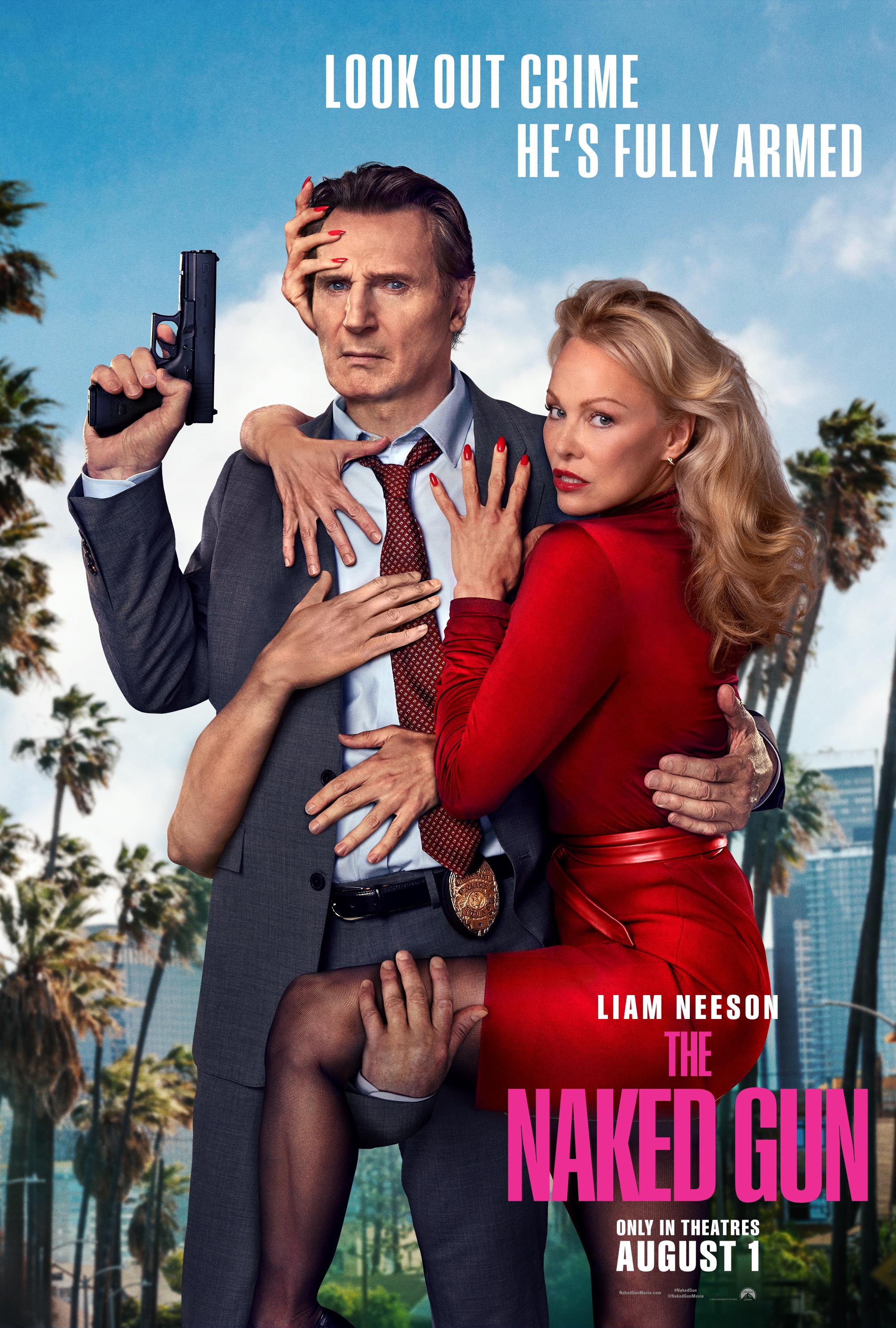
Best comedy since SPY! The Naked Gun (2025) is a spectacular noir/detective-comedy that has it all: smart screenplay, sensational cast, and it clocks-in at just under 1.5hrs. This reboot/reimagining of the beloved classic tiptoes along a treacherous tightrope: how to honor a slapstick legacy while avoiding the hollow echo chamber of recycled gags. Remarkably, thanks to a razor-sharp script, a fully committed cast, and a surprisingly fresh narrative, it pulls it off with chutzpah and precision. Directed by Akiva Schaffer, The Naked Gun is a masterclass in tonal balance, threading the needle between absurdity and plot progression, all while leaving room for character beats that land harder than a collapsing filing cabinet. Every setup pays off, every non sequitur doubles as a stealth punchline, and, most critically, the story and characters matter.

At the center of the madness is Liam Neeson, weaponizing his deadpan gravitas in a way that would make Leslie Nielsen nod in approval from the great beyond. As Frank Drebin Jr., he’s not playing his father’s shadow—he’s illuminating a new one. His comedic chops are precision-engineered. Neeson doesn’t mug for the camera or chase punchlines; he commits, deadpanning his way through verbal landmines, visual gags, and escalating mayhem with the kind of straight-faced sincerity that made Leslie Nielsen legendary. The secret ingredient to his delivery? His restraint. Marrying glamour and goofiness is Pamela Anderson, fresh off her outstanding performance in The Last Showgirl. Her tone, cool gaze, and knowing glances lend a classic noir energy to the role, but it’s her self-awareness and comic precision that elevate the performance. She glides through scenes with old-Hollywood poise in the vein of Lauren Macall, only to puncture the atmosphere with a well-timed double entendre or whip-smart aside.

In a cinematic landscape where many reboots are content to wink at the audience and roll credits, The Naked Gun dares to be funny—consistently, inventively, and unapologetically so. It doesn’t just recapture the soul of the original; it gives it a new pair of shoes and sends it running headfirst into traffic. And you’ll be laughing all the way.

Ryan is the general manager for 90.7 WKGC Public Media in Panama City and host of the public radio show ReelTalk “where you can join the cinematic conversations frame by frame each week.” Additionally, he is the author of the upcoming film studies book titled Monsters, Madness, and Mayhem: Why People Love Horror. After teaching film studies for over eight years at the University of Tampa, he transitioned from the classroom to public media. He is a member of the Critics Association of Central Florida and Indie Film Critics of America. If you like this article, check out the others and FOLLOW this blog! Follow him on Twitter: RLTerry1 and LetterBoxd: RLTerry
MISSION: IMPOSSIBLE–THE FINAL RECKONING film review

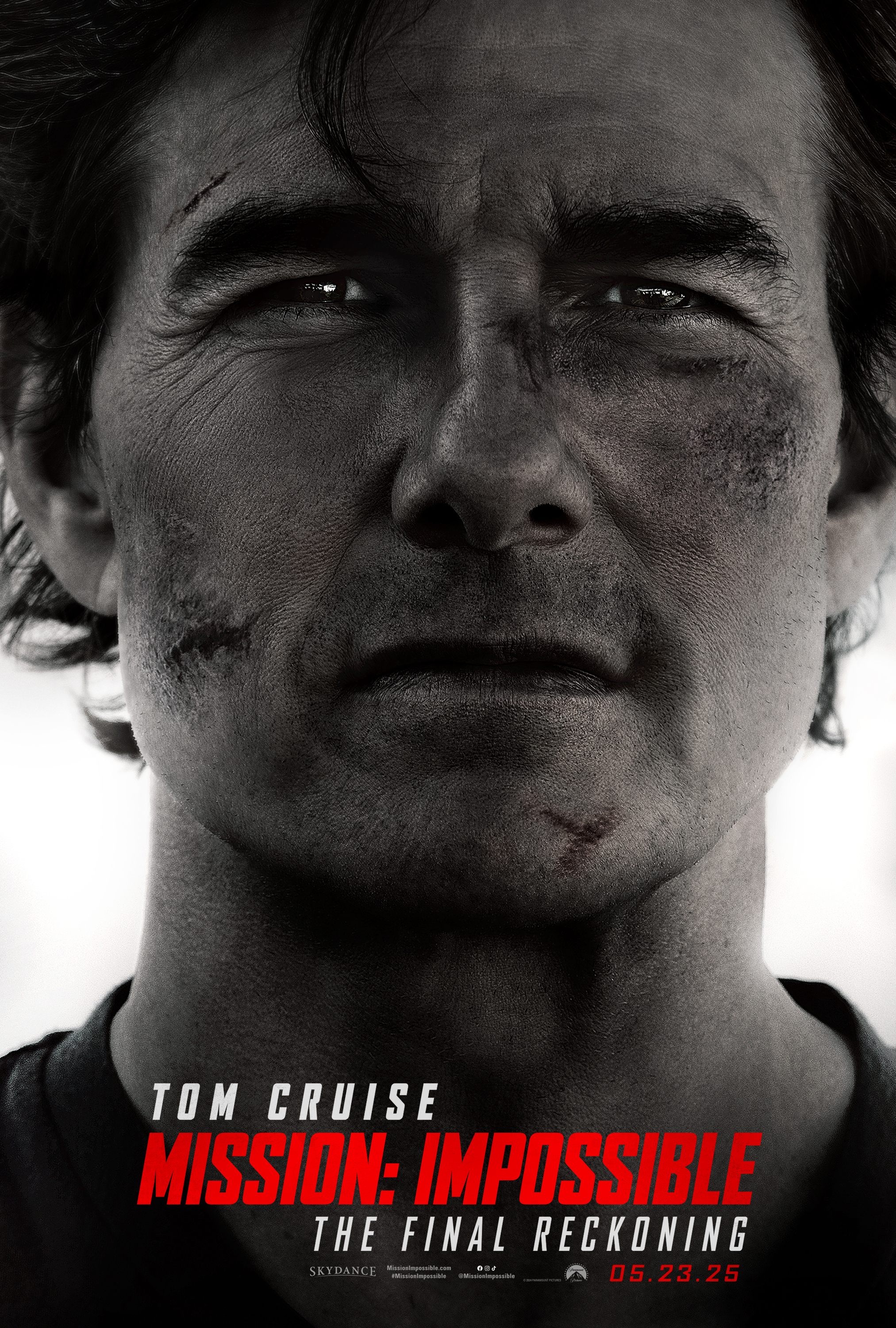
What a picture! Mission: Impossible–The Final Reckoning is an exhilarating end to a 29 year old journey. The scale and scope of the final chapter in Tom Cruise’s tenure as Ethan Hunt is out of this world. Beyond any shadow of a doubt, the cast and crew of this film delivered their best to “all those that [they] will never meet.” That’s us–the audience–we are those they will likely never meet. Such a fitting climax to one of the biggest franchises ever to hit the big screen. For everything the movie did right and excellent, it’s not without some shortcomings in the screenwriting. While the first act starts off a little clunky, it does eventually falls into place during the first act. Additionally, fans of the franchise will love the narrative connections to the preceding films, particularly Mission: Impossible and Mission: Impossible III. This is truly a cinematic spectacle deserving of every second on that big silver screen. Tom Cruise proves that he is still the definitive movie star.

Ethan Hunt and the IMF team race against time to find the Entity, a rogue artificial intelligence that can destroy mankind.

Writer-director Christopher McQuarrie brings Mission: Impossible (in its current incarnation) to a climactic close after 29 years. More than delivering a bombastic conclusion to the genre-defining franchise, he connects this film to all the preceding M:I films through both plot and character. Every moment feels earned–this movie and the cast and crew thereof–spare no expense of time or money in providing audiences with a spectacular cinematic experience that reminds us why big screen stories need the BIG SCREEN. Even though I do take issue with McQuarrie’s screenwriting in the first act–the first 15 minutes, or so, do feel a little disjoined and rushed–thankfully the remainder of the first act does fall into place. Not only do the characters have heart underscoring all the electrifying action sequences, the filmmakers involved in this have a heart for the audiences around the globe.

The IMF (Impossible Mission Force) oath reads, “We live and die in the shadows, for those we hold close, and for those we never meet.” And, in this movie, I don’t think that it merely means that the covert operatives and spycraft engineers carry out their missions behind the scenes of life, the way in which the line is delivered, I am all but certain that it’s a wink or nod to the audience indicating that McQuarrie, Cruise, and everyone involved make motion pictures for those they know, their friends and family, and everyone else out in the world that they may likely never meet. There is probably no other working actor out there that so vocally champions cinema like Tom Cruise. This is particularly true during and after COVID with his release of Top Gun: Maverick. Even in a press conference wherein Cruise was asked about the proposed international filmmaking tariffs by a reporter, and he redirected them to The Final Reckoning, because “we’re here to talk about the movie.” The trademark charisma, physics-defying stuntwork, and charm that Cruise brings to the screen serves as evidence why he truly is the definitive movie star working today.

Picking up in the months following the train incident from Dead Reckoning, The Final Reckoning thrusts audiences right into the middle of a world on the brink of WWIII. The entity has infected the internet and it looks like the end of the world, as we know it. Once again, Hunt is being hunted down by his government (and probably other governments too) because he refuses to let the United States have the key that would potentially give them control of the entity’s source code, because no one should be entrusted with that level of power or responsibility–not even Hunt and his IMF team. Ethan Hunt continues to stand up for what is right, the greater good even when it is the most unpopular stance or opinion to hold. Hunt and his team desire to destroy the entity so no one has access to its power and the entity cannot destroy the world so it and Gabriel can remake it in their image. The Final Reckoning forces us to look inward, and ask ourselves how we would react when faced with a world on the brink of disaster. Could we resist giving into our innate self-centered nature, even when disguised as the most logical choice? This movie is a challenge to humanity to always hold onto hope even when it appears to be impossible.

After the clunky start to the movie, the narrative begins to find its tone, pacing, and direction. I wouldn’t be surprised if there is a “McQuarrie Cut” that adds in cut scenes at the beginning. Other than the stars themselves, the star of this movie is practical effects and filmmaking themselves. The CGI is minimal, and is rarely front and center. McQuarrie and Cruise lean into practical effects, mechanical magic, and other elements that give the film a tangible dimension. You cannot replace the way real light bounces off real objects and into the camera lens in this outstanding motion picture. The Final Reckoning is as much a celebration of the decades-old franchise (and TV show even before the original movie in 1996) as it is a celebration of classical filmmaking. Even the scenes and sequences that felt a little too death-defying or unrealistic, they certainly feel naturalistic within the world on screen (though, I’d be lying if I said that some came a little close to being even unbelievable in a Mission: Impossible movie). Even thought he aerial stuntwork in this movie is the most intense we’ve seen, this movie also includes a lot of underwater stuntwork and action sequences. And I must say that is’t he dark, claustrophobic underwater sequences that had me on the edge of my seat. It really is nothing short of incredible what McQuarrie, Cruise, and their teams were able to do in this motion picture.

For fans of the franchise, particularly those that have rewatched the whole franchise leading up to this moment, there are characters from the past that appear in substantive ways and even plot points that were never fully explored int eh past are brought full circle. Few, if any, characters feel like one-dimensional space-fillers–which can easily happen in an action movie–every character has a purpose, has a motivation. We care about our central characters’ survival, we experienced a gut-wrenching death in Dead Reckoning, so we know that these IMF agents are human, they can die. All the more reason why we are completely invested in their survival.

Even though we may get a Mission: Impossible movie in the future, maybe even one with one or more of the IMF team members from this original run of movies, Cruise has stated, in not so many words, that this movie represents his final Mission: Impossible movie in which he is the star. If we have future M:I movies, I’d like to see him make an appearance or play a supporting role, because Tom Cruise IS Mission: Impossible. What I love about these movies is that they seek to entertain first and include any more thoughtful ideas or questions in the subtext or emotional drivers of characters. Entertainment first. So many movies nowadays have such a cynical view of life and traditional values, but here is franchise built on that which brings us all together as a community. High concept? Sure, but that high concept nature of the M:I movies has never meant a meaningless or vapid experience. These movies, and others like them (regardless of genre), are what cinema is all about. And I am sure going to miss looking forward to the next Mission: Impossible movie.

Thank you Tom. And thank you McQuarrie and past writers and directors for 29 years of unparalleled thrills and excitement on the silver screen.

Ryan is the general manager for 90.7 WKGC Public Media in Panama City and host of the public radio show ReelTalk about all things cinema. Additionally, he is the author of the upcoming film studies book titled Monsters, Madness, and Mayhem: Why People Love Horror. After teaching film studies for over eight years at the University of Tampa, he transitioned from the classroom to public media. He is a member of the Critics Association of Central Florida and Indie Film Critics of America. If you like this article, check out the others and FOLLOW this blog! Follow him on Twitter: RLTerry1 and LetterBoxd: RLTerry
MISSION: IMPOSSIBLE–DEAD RECKONING PART 1 movie review

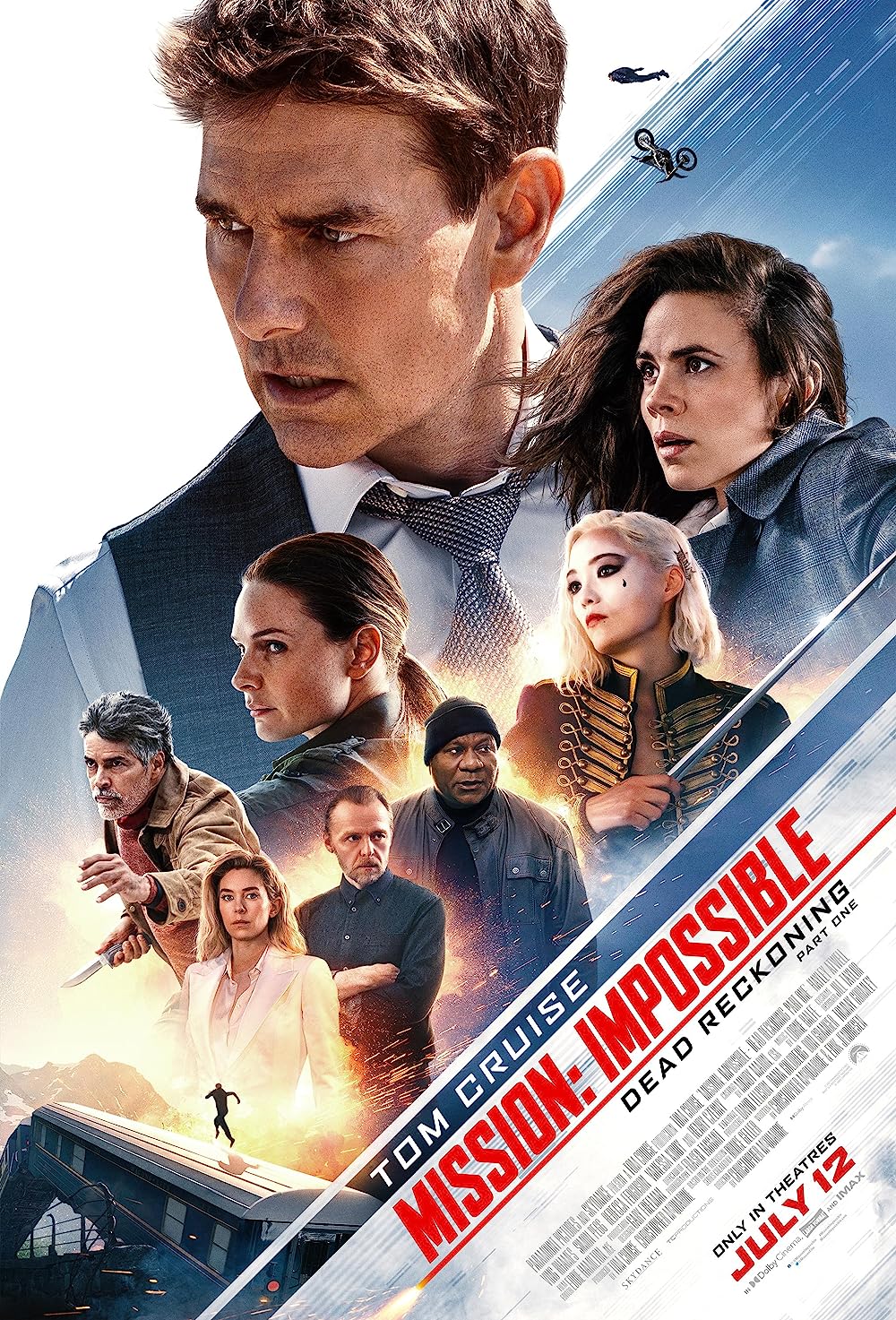
Exhilarating! Pure, unadulterated cinema! Tom Cruise and the whole Mission Impossible team deliver what is likely the most epic movie of the year!! It’s thrilling, funny, and suspenseful from beginning to explosive ending! Part 1 is both a complete story and sets up Part 2 exceptionally well. If I am to be objective, Mission: Impossible III delivers the best story; however, audiences are still going to love this movie because feels like cinema in every measurable way. Move over James Cameron, Christopher Nolan, and yes even Martin Scorsese, for it is Tom Cruise whom knows how to deliver cinema to audiences.

Ethan Hunt (Cruise) and the IMF team must track down a terrifying new weapon that threatens all of humanity if it falls into the wrong hands. With control of the future and the fate of the world at stake, a deadly race around the globe begins. Confronted by a mysterious, all-powerful enemy, Ethan is forced to consider that nothing can matter more than the mission — not even the lives of those he cares about most.

After the massive success, both critically and financially, of Top Gun: Maverick I was curious to witness whether or not Cruise would pull off another cinematic hit. Suffice it to say, he did just that! The last remaining movie star, in the classical sense, Tom Cruise continues to deliver entertaining and thoughtful cinema. In an era overridden by form over function motion pictures (though, there is certainly a place for those stylistic films), Mission Impossible: Dead Reckoning Part 1 (MI7) proves that cinema is should generally concern itself with both the form and function equally. By sticking to foundational screenwriting conventions, pairing it with sequences that make the most of every square inch of that big silver screen, the entire MI team demonstrate why cinema is not only about the art of the narrative but also in a larger-than-life experience.

The entire auditorium was electric at the screening I attended. I don’t think I felt the level of kinetic energy at the cinema since Top Gun: Maverick. It even surpassed the high-energy of the more recent The Flash. Perhaps it is the combination of classical espionage/action plotting and epic-sized set pieces and locations. While MI7 feels very much contemporary, it also never forgets its roots in both the previous MI movies or in the original TV show. Of course there are those that will overly critique the dialogue, more specifically its lack of subtext, but I argue that it is on brand with and perfectly appropriate for this genre movie. Does that mean writers and directors should simply aim for status quo? No, MI3 proved that MI movies can be exciting and full of heart, complete with characters rich with dimension. But the dialogue should not significantly impact the overall experience of this movie.

Without getting into spoilers, the mission, should you choose to accept it, is to stop the character of opposition from unleashing a destructive artificial intelligence (AI) on the world. Talk about timely social and tech commentary. The film broaches topics such as truth (subjective/interpretive truth) and truth (as in universal truth). By extension, this same idea is carried over into fact vs opinion and predictive decisions (in the vein of Minority Report). In short, the crisis that Ethan is attempting to prevent is one that would completely disrupt, retcon, and violate the very informational fabric of life. Think Skynet. While I wouldn’t characterize MI7 as being inordinately deep or thoughtful, concerning truth and AI, it does posit these questions and subjects, which provides opportunities for more discerning audiences to discuss the advantages and disadvantages of AI. More specifically, the dangers of AI falling into the wrong hands.

The set pieces and locations are cinematic in both scale and scope. From the beginning of the movie on a submarine in the Bearing Sea to the Alpine vistas of Austria, the best way to experience this motion picture is in a premium format at your local cinema. Moreover, the biggest screen with best sound possible will make the car chases and Tom Cruise’s stunts all the more outstanding! Even though we’ve all seen that stunt in which Cruise launches himself off the mountain on a motorcycle in various promotional content for this movie, watching it in the third act of the film was still so incredibly impressive!

While Cruise performing most of his own death-defying stunts is unparalleled and impressive enough, what makes these car chases and stunts even more adrenaline-pumping is the fact so little CGI is used. Tom Cruise is literally launching himself off a mountain, and he (and others) are literally driving cars through the streets of Rome. The lack of overt CGI or relying upon it to take the real danger out of the stunt sequences removes just that–the danger. These stunt sequences are all the more exciting because they are real–there is little to no simulation employed. Not to over simplify, but the dimension of real beats the flat, lifeless CGI sequences every time. Real>artificial.

And that’s precisely what we have here real cinema! On a personal note, I am so incredibly grateful for Tom Cruise keeping cinema alive! He has demonstrated through Maverick and now with MI7 that he understands what it means to craft cinematic stories for the silver screen! Before you @ me, I am fully aware that cinema takes various forms, form intimate character studies to the avant-garde, but the power of a genre movie that follows screenwriting conventions should never be devalued. Genre movies are what helped build cinema, and folkslike Tom Cruise keep them coming to entertain and thrill us.

Ryan teaches Film Studies and Screenwriting at the University of Tampa and is a member of the Critics Association of Central Florida and Indie Film Critics of America. If you like this article, check out the others and FOLLOW this blog! Interested in Ryan making a guest appearance on your podcast or contributing to your website? Send him a DM on Twitter. If you’re ever in Tampa or Orlando, feel free to catch a movie with him.

Follow him on Twitter: RLTerry1 and LetterBoxd: RLTerry
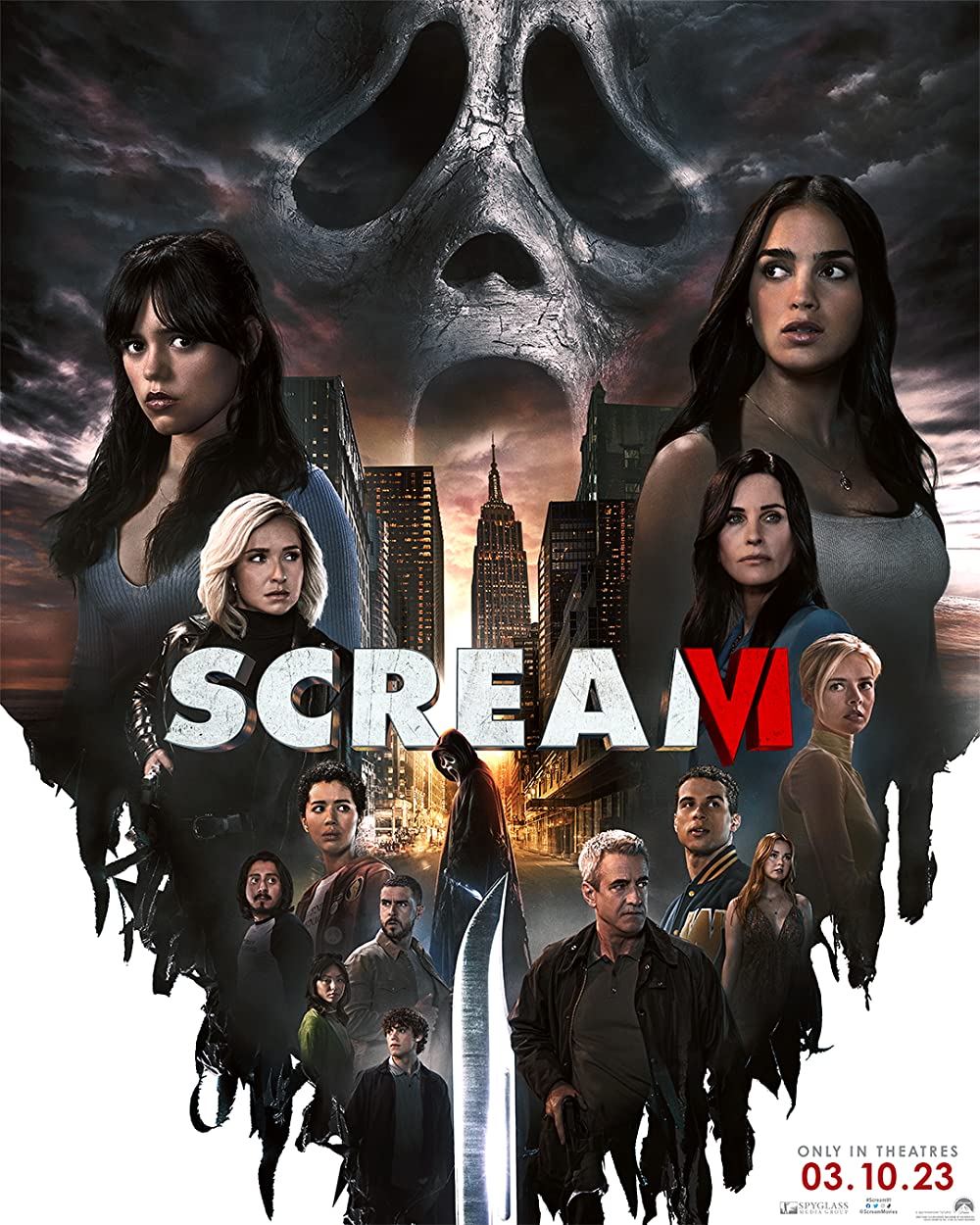
SCREAM VI horror movie review

Ghostface takes Manhattan. Mostly forgettable, S6REAM is neither bad enough nor good enough to be remembered. This forgettable installment in the SCREAM franchise is written by the brilliant Ready or Not’s James Vanderbilt and Guy Busick, but you wouldn’t know it from the contrived, clunky plot the two screenwriters developed. More violence does not a great horror movie make; the amped violence is employed as a tool to compensate for the vapid storytelling. Overstuffed with characters and lacking in any real suspense or thoughtful plotting, SCREAM VI is what happens when stories are dumbed down for TikTok attention spans and those that eat up YouTube trash. The Ready or Not duo should have spent more time understanding why Kevin Williamson’s excellent original screenplay works rather than creating some insipid fan fiction featuring the iconic Ghostface. Suffice it to say, SCREAM 6 is enjoyable enough for legacy fans, but remaining invested in this movie will undoubtedly prove to be an exercise in tolerance for the absurd. 

Four survivors of the Ghostface murders, leave Woodsboro behind for a fresh start in New York City. However, they soon find themselves in a fight for their lives when a new killer embarks on a bloody rampage.

The SCREAM franchise is famous for its (usually) thoughtful social commentary on the horror genre (more specifically, the slasher); by extension, these meta observations are applicable to society in general. Scream VI provides commentary on franchises and (to my delight, as a film professor) film studies! In fact, Samara Weaving’s character is a film studies professor with an expertise in horror (just like me!). What’s ironic is that for all the knowledge the screenwriters demonstrate in a critical analysis of tropes or patterns of a horror franchise, this movie fails to provide anything meaningful to add to the conversation.

The detrimental problem in this lack of anything new is that the movie loses any kind of real thrill; moreover, it loses any ability to resonate with audiences because of failing to tap into those most primal fears at the bedrock of horror. The very tropes the movie highlights are the very tropes that form obstacles that the movie never overcomes. Furthermore, the problematic screenwriting feels like a copy of a copy of a copy of a copy rather than anything innovative. It doesn’t redefine what it means to be a franchise, it falls victim to the same parasitic infection innate in most franchises.

One promise the movie’s publicity makes—and fulfills—is the amped up violence, both in terms of body count and level of trauma. And there are most certainly going to be those that use the violence as a barometer for satisfaction in watching the film. This is a flawed evaluation method because it has little to nothing to do with the actual storytelling methodology nor quality. Due to the exponentially increased violence, the pacing of the movie is in high gear the whole time, leaving little to no room for emotional resets or breathing room to build suspense or any tangible tension. S6REAM is a lackluster offspring of Wes Craven and Kevin Williamson’s desperately trying to evoke an affection for the legacy property. 

Because of the overstuffed cast, there is little time to develop any level of empathy for the characters. The only characters to have any real agency are Gale Weathers and Samantha Carpenter. Even Kirby’s character (whom gets a highly anticipated return) is lacking in dimension or growth arc. Other problems in casting include Jena Ortega whom I cannot take seriously as a final girl because she may as well be Rey from Star Wars for all her invincibility and lack of flaws. I never felt once that her life was in any real danger. An important quality for a final girl is strength, failure, and resilience. Tara is lacking in all these important qualities.

Scream VI (and the predestined Scream 7) may prove to be the nails in the coffin for the slasher. It will take a screenwriter(s) or director that cares about going back to the roots and building upon the soul of legacy properties or the tropes to breathe life into the former screen king of the horror genre. In other words, screenwriters and directors that care about story integrity. 

Ryan teaches Film Studies and Screenwriting at the University of Tampa and is a member of the Critics Association of Central Florida and Indie Film Critics of America. If you like this article, check out the others and FOLLOW this blog! Interested in Ryan making a guest appearance on your podcast or contributing to your website? Send him a DM on Twitter. If you’re ever in Tampa or Orlando, feel free to catch a movie with him.

Follow him on Twitter: RLTerry1 and LetterBoxd: RLTerry