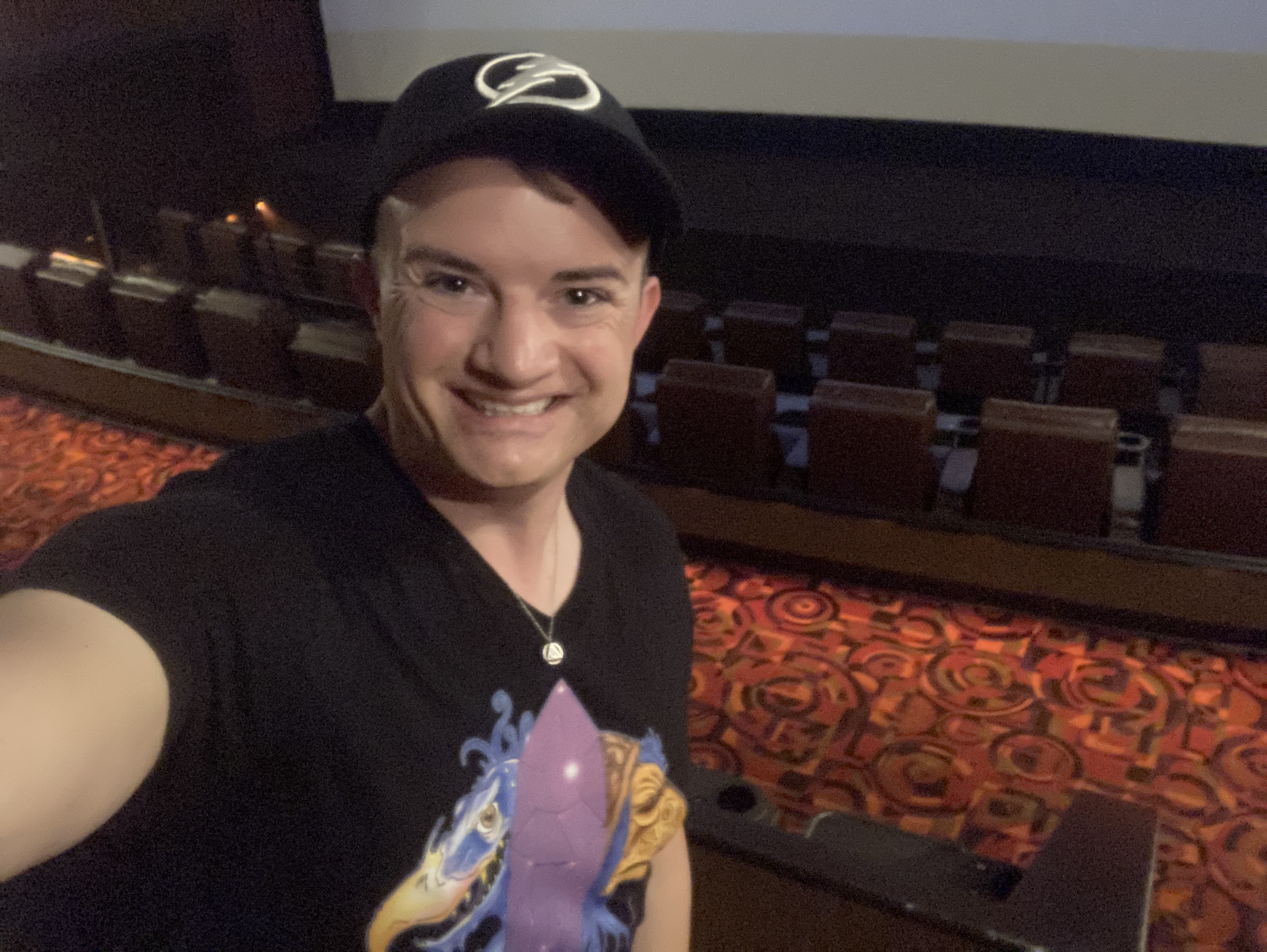
SHELBY OAKS horror movie review

A cautionary tale of when YouTubers confuse content with cinema.
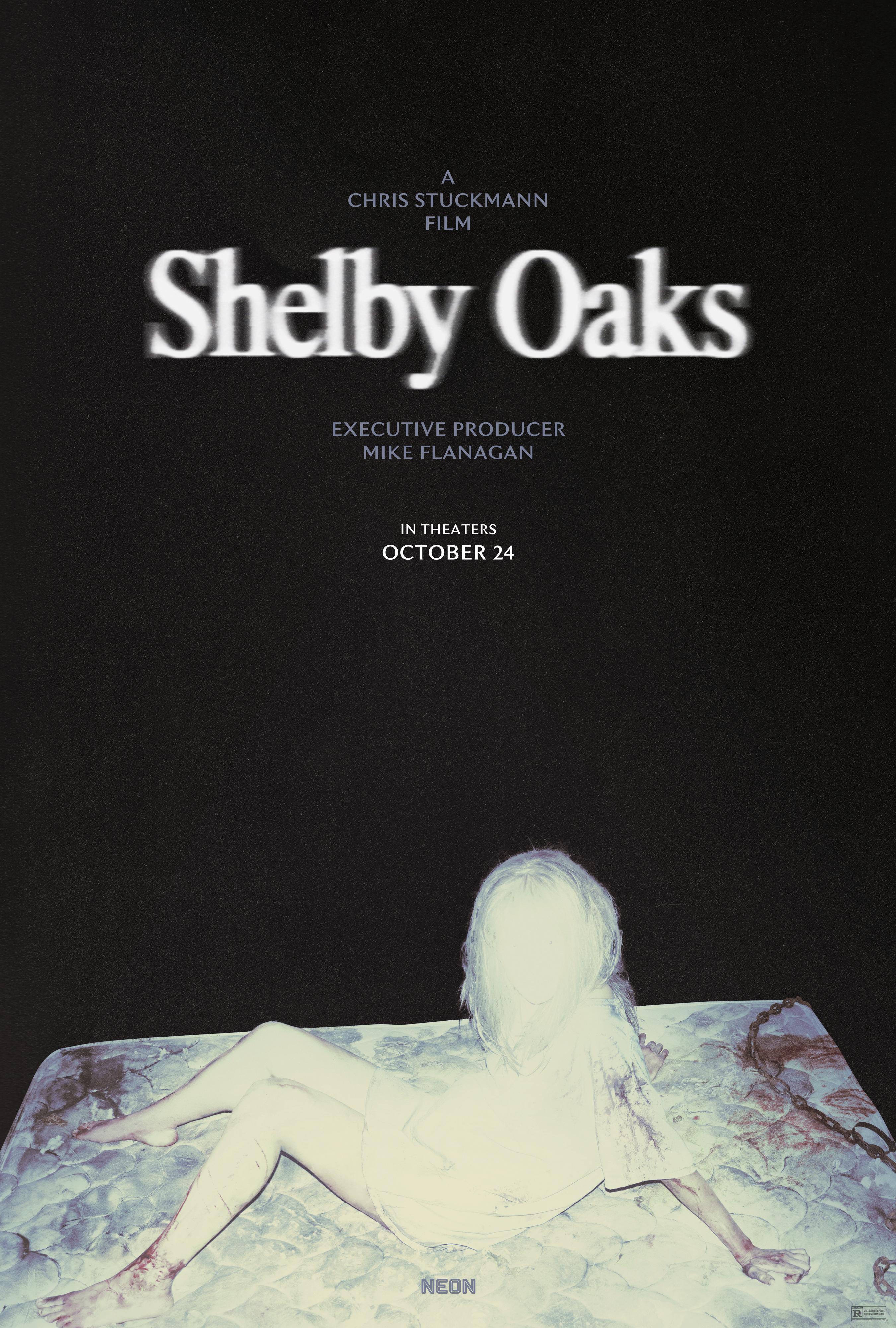
Chris Stuckmann’s Shelby Oaks arrives with all the makings of a breakthrough: (1) it’s one of the most successful Kickstarter-funded indie films ever, and (2) it’s directed by one of YouTube’s most popular influencer-critics. In fact, I’ve used some of his videos in my own classroom—good material: informative, engaging, and accessible for budding cinephiles. But therein lies the rub: informative and engaging does not a motion picture make. The premise, though, is undeniably intriguing—a reimagining of familiar horror tropes with contemporary urgency. Stuckmann delivers a film that has the bones of something potent—think The Blair Witch Project meets Rosemary’s Baby: paranoia, obsession, and the horror of the unseen, all wrapped in a missing-person mystery and topped with a bow of supernatural dread.

Shelby Oaks is about Mia’s search for her long-lost sister and paranormal investigator Riley becomes an obsession when she realizes an event from her past may have opened the door to something far more sinister than she could have ever imagined.

Like many contemporary filmmakers–particularly those that got their start on YouTube–Shelby Oaks excels in technical achievement and marketing. The cinematography is confident and atmospheric, drenched in moody lighting that evokes gothic horror. There is little doubt that Stuckmann clearly understands shot composition, pacing within the frame, even editing in-camera and the importance of visual tone. All the technical elements are quite impressive for a debut feature. And if all a motion picture was–was the visual elements–it’d be easy to admire. But it isn’t. Even Hitchcock knew that. Which is why Hitch never wrote his own screenplays–he generated the idea, even outlined entire scenes and sequences–but he knew that he needed to work with a screenwriter, that understood the material, in order to fully realize his movie idea for the screen. What is greatly lacking in contemporary cinema is an understanding of what makes a great story–plot structure, mechanics, and the emotional substructure.

But Shelby Oaks falters where too many YouTube-born filmmakers stumble—storytelling. Shelby Oaks has a great idea for a movie, but not a fully realized narrative. At its core, the narrative never builds sufficient momentum. Why? Simple–because there’s no real opposition. “Evil,” in the abstract, isn’t conflict. Opposition must manifest into something tangible between the character and his or her external goal, whether that’s a person, a system, or her own inner demons. For all the supernatural activity in the film, there never truly emerges a character of opposition. The result is a macabre mystery that depicts scenes and sequences wherein Mia’s pursuit unfolds, but without the benefit of a tangible sense of escalation or even revelation. Shelby Oaks is more of a proof of concept rather than a complete story.

Stuckmann, for all his film knowledge, seems more comfortable replicating tone and texture than constructing narrative architecture. His background in reviewing movies gives him an eye for what looks right—but not yet the discipline to shape what feels right. He understands what sells, what gets views, and even genre conventions. But sadly, none of the characters, including Mia, possess real dimension or agency. She and the rest of the characters are vehicles for mood rather than emotional engagement.

What works on YouTube—enthusiasm, charisma, and technical dissection—doesn’t automatically translate to cinema. His channel reveals a deep love of horror and a commendable understanding of its visual language, yet Shelby Oaks exposes the gap between appreciating a genre and authoring it. The film lacks what isn’t needed in (and can even get in the way of) YouTube content: storytelling mechanics, structure, and the discipline of narrative design. It’s one thing to analyze story beats; it’s another to build them, to shape character arcs, rhythm, and tension through the grammar of storytelling rather than the syntax of spectacle. Often, YouTube videos have great hooks, but they lack the narrative substance behind the hook.

What’s most frustrating is how close Shelby Oaks comes to working. The concept is rich, and the craftsmanship is undeniably strong. Stuckmann clearly loves cinema, and there’s passion behind every frame. But cinema isn’t content creation—it’s storytelling. And storytelling requires more than aesthetic confidence; it demands structure, development, and resolution.

The YouTube garden is flourishing with emerging directors, cinematographers, and editors—talented creators who’ve mastered the language of cameras, lighting, and cutting for attention. But what it’s not producing are writers. The art—and science—of writing seems to be withering in the age of influencer cinema. Many creators know how to make something look good but not why it should matter. Storytelling requires patience, discipline, and a willingness to think beyond the thumbnail and algorithm. In a culture where speed and spectacle drive engagement, screenwriting—the slow, deliberate architecture of character, conflict, and change—feels almost antiquated. And yet, it remains the soul of cinema. Without writers, we get films that resemble content: sleek, competent, and hollow.

Shelby Oaks stands as a cautionary tale of when YouTubers confuse content with cinema. Furthermore, this movie is an example of the hollowness of contemporary cinema, how cinema is feeling more and more disposable as the months and years pass the silver screen. The tools are there, the ambition is there, but without mastery of story, all that remains are haunting images in search of a heartbeat.
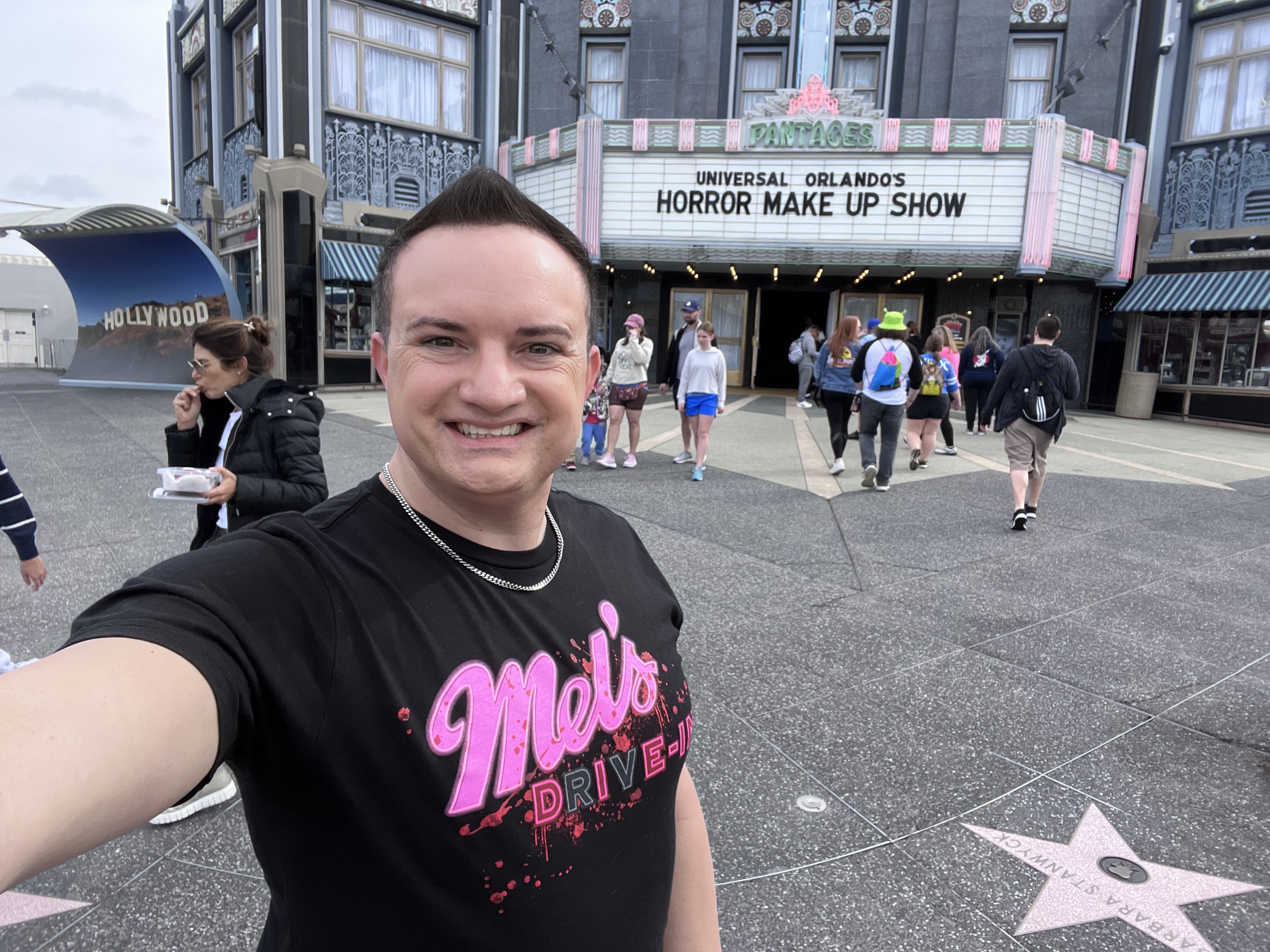
Ryan is the general manager for 90.7 WKGC Public Media in Panama City and host of the public radio show ReelTalk “where you can join the cinematic conversations frame by frame each week.” Additionally, he is the author of the upcoming film studies book titled Monsters, Madness, and Mayhem: Why People Love Horror. After teaching film studies for over eight years at the University of Tampa, he transitioned from the classroom to public media. He is a member of the Critics Association of Central Florida and Indie Film Critics of America. If you like this article, check out the others and FOLLOW this blog! Follow him on Twitter: RLTerry1 and LetterBoxd: RLTerry
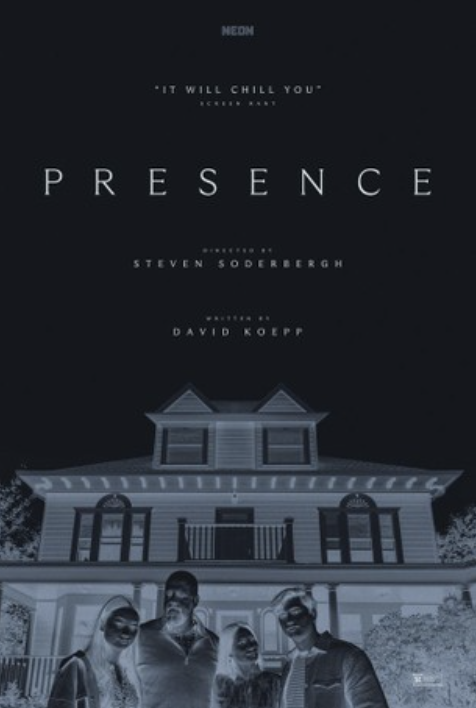
PRESENCE horror film review

It’s, well, interesting. As soon as I saw that David Koepp was the screenwriter, I was instantly intrigued. While I’m hit or miss with Soderbergh, I’m generally hit with Koepp. But, I find this film’s apparatus to be more interesting than the story itself. While Presence is ostensibly a ghost story, it derives much of its intrigue–not from its narrative–but from its formal and technological apparatus. Soderbergh, known for his experimental approach to filmmaking, employs an innovative first-person perspective; however, this stylistic choice, coupled with Soderbergh’s meticulous control over framing, lighting, and movement and Koepp’s minimalist screenplay, resulted in elevating the film’s formal qualities above its forgettable plot and one-dimensional characters.

In short, the film is about a family that moves into a suburban house and becomes convinced they’re not alone.

The film unfolds through the perspective of an unseen spectral presence, effectively turning the camera into an active participant rather than a passive observer. This shift from traditional storytelling to experiential cinema foregrounds the act of seeing and being seen, inviting viewers to consider their own complicity in the voyeuristic aspects of horror. The film’s reliance on long takes and fluid camerawork creates an unsettling sense of omnipresence, emphasizing the medium’s ability to manipulate space and perception.

While Koepp’s screenplay is serviceable in its exploration of haunted house tropes, it often feels secondary to the film’s preoccupation with its own form. Koepp’s screenwriting is characterized by minimalistic dialogue and a structure devoid of conventional plotting. Rather than relying on his penchant for exposition-heavy scripts, Koepp wrote a screenplay that relied primarily on subtext and visual cues, thus inviting the audience to experience the story through mood versus visually-driven stimuli. The film’s thees such as literal and metaphoric isolation, family dysfunction, and the effects of trauma, feel much more like scaffolding for Soderbergh’s technical experimentation than an actual story. Koepp’s unconventional screenplay paired with Soderbergh’s experimental filmmaking results in a film wherein the mechanics of cinema take precedence over traditional storytelling.

Ultimately, Presence is most compelling when considered as an exercise in film form rather than a compelling story itself. The filmmaking apparatus generates a more profound engagement than its plot and characters, which hurts the potential this film had given its pedigree of talent. Soderbergh and Koepp crafted a film that is less about a haunted house and more about reimagining the voyeuristic capabilities of cinema itself. By leveraging cutting-edge camera systems and post-production techniques, Soderbergh set out to blur the line between observer and observed, in an attempt to create an uncanny sense of intimacy and detachment, but it failed to stick with this critic long after the credits rolled.

Ryan is the general manager for 90.7 WKGC Public Media in Panama City and host of the public radio show ReelTalk about all things cinema. Additionally, he is the author of the upcoming film studies book titled Monsters, Madness, and Mayhem: Why People Love Horror. After teaching film studies for over eight years at the University of Tampa, he transitioned from the classroom to public media. He is a member of the Critics Association of Central Florida and Indie Film Critics of America. If you like this article, check out the others and FOLLOW this blog! Follow him on Twitter: RLTerry1 and LetterBoxd: RLTerry
“I, Tonya” film review

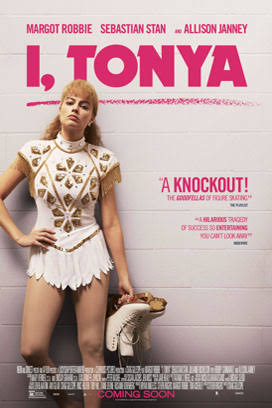
Of skates and class. Margot Robbie stars as the first US woman to successfully land a triple axel…also the most infamous woman in the history of US Figure Skating in what is likely one of the most difficult and controversial biographical films ever produced. Tonya Harding is back in the headlines and on TV, and even on the ice if you caught last night’s 2-hour Truth and Lies special on ABC. While most Olympiad names are forgotten within a short amount of time, Harding and Nancy Kerrigan’s names will always have notoriety through the years. Nearly 25 years later, we find ourselves still talking about Tonya Harding. The biopic I, Tonya directed by Craig Gillespie and written by Steven Rogers provides audiences with an unapologetic glimpse into Harding’s early life through “the incident.” It is unlike any biographical film that I have ever seen before. Most often, biopics slant toward making the central character more likable than perhaps they were in real life. This film approaches Harding from the perspective of not shying away from her foul-mouthed, inability to take responsibility, violent temper; instead, showing us an authentic Harding who struggled through life to break the chains of classless poverty and emerge onto the scene as a professional figure skating record-setting champion. While this movie does not set out to prove what really happened, it does show what is likely to have happened. Although “the incident” is what everyone remembers, this movie shows a struggling young person attempting to change but thwarted at every angle by hearing that she cannot because she isn’t what America is looking for and has no class. But why couldn’t it have been just about the skating???

Tonya Harding (Margot Robbie) took to ice like a fish takes to water. She was an ice skating prodigy from the soft age of four when she took her first lesson from coach Diane Rawlinson (Julianne Nicholson). Growing up poor, she faced obstacle at every triple toe loop. From mental and physical abuse to sexual abuse, she weathered it all. Her mother LaVona (Allison Janney) was a monster of a woman who pushed and pushed in order to toughen “soft” Tonya. Even hot-tempered Tonya found love–albeit brief–with Jeff Gillooly (Sebastian Stan). The mental and physical abuse continued and only worsened after she set the world record for being the first US woman to successfully land a triple axel in 1991. But she would come in fourth in the 1992 Olympics. She fell into despair after that crushing defeat. When the US Figure Skating association gives Harding a second chance at the 1994 Winter Olympics, all seems like it is finally going her way, and she would finally experience the success she dreamt of her entire life, until “the incident.” Of course, as we all know, she went on to become a national punchline, material for comedians and sitcoms, and the most well-known name in the US after Bill Clinton.

Even though crime and ice skating are central elements in this film, it is truly a commentary on class and abuse. From the moment the movie opens with Harding and her mother smoking a cigarette at the ice rink in Harding’s hometown of Portland juxtaposing them against the pretty and proper coach with her students, we know that we are about to watch a story of class warfare. All Harding wanted was to excel at the sport she was naturally gifted at. Only one small problem: society and the figure skating association made it incredibly difficult–if not nearly impossible–for Tonya Harding to break free of her roots in classless poverty. But don’t allow the beginning of the film fool you into thinking she Harding is a kind soul who finds herself the underdog, she has a volatile temper and foul mouth that constantly gets her into trouble during practice and in competition. This film is an underdog story, but quite the unconventional one. Because we already know going in that she went from the first woman to land a triple axel, national champion to disgraced skater and unsuccessful boxer. For all its various plot points, the common theme throughout the movie is whether or not to allow your financial station in life to determine your behavior on and off the ice. Class has little to do with money, but rather, is a state of mind and demeanor. Perhaps we have a better idea of why Tonya behaved the way she did. The film never excuses her behavior or indirect knowledge (after the fact) of what her husband mastermind, but peels back the 24-hr 1990s news coverage in order to empathize and understand what made Tonya tick.

Is it possible for a square peg to fit into a round hole? Certainly, the life of a figure skater, especially one who represents the US on the global stage, is incredibly structured, polished, and constructed in such a way that the skater always looks his or her best to the public–a facade if you will. But, the once bright career of Harding serves as evidence that if you don’t come from the right family, have the right costume (or clothes), or speak eloquently, then the arena has no place for you. Perhaps that is why Harding still has fans despite her infamy. Although according to the film, she could have spoken up a lot sooner to help the investigation along instead of being fully consumed by having to make the 1994 Olympic team and indirectly covering for her ex-husband, she was dealt a dirty hand by judges and rivals who felt she just didn’t belong with them; and America generally liked an underdog. Unfortunately, this underdog got caught up in a scandal the followed a long history of irreverent behavior. The media coverage certainly did not help Harding’s case any. With the availability of CNN’s 24-hour news coverage, birthed out of the Gulf War now able to capture everything in order to have stories constantly grabbing audience attention, the film paints a picture that the media treated her unfairly and convicted her before the court’s decision to prohibit her from ever competing or coaching again, and the subsequent stripping of titles. Just some food for thought.

The topic of abuse is not shied away from in this film. We witness Tonya suffering from the brutal tongue of her mother, as well as constant physical abuse. Because there lacked the number of social programs for the protection of children and teenagers we have today, and schools were not as in tuned to abuse at home, she had little choice but to deal. Eventually, she would succumb to lashing out in similar ways to what which she experienced every day growing up in that house–house, not home. Her mother attempts to rationalize and excise her behavior because she tells Tonya that fear and anger will drive her to be a champion, but that doesn’t change the lasting affect the lifelong abuse had upon Tonya. It’s entirely possible that Tonya sought out Jeff because she was used ot abuse and felt that she needed it. Talk about warped.

The quality of this biopic is incredible! I absolutely loved the “interview” footage in the 4:3  format whereas the main narrative was in 16:9. Felt like we were watching actual news coverage in 1998. At first, I thought we were, but then I recognized Margot Robbie behind the exquisite makeup and costuming job. It has such an organic–no pretense–feel to the film. Robbie and her costars had me fully convinced that they were their respective characters. All around, the commitment to character was outstanding. Robbie commented in an interview that she studied footage of Harding for over a year, and it shows brilliantly! When the actual footage rolls at the end of the film, it is incredibly difficult to tell the real Tonya from her screen counterpart. Robbie’s monologue in front of the mirror is certainly one for the record books because of just how authentic and powerful it is. The production design and cinematography create a time machine; you will feel as though you have been whisked back 20-30 years throughout the film. Authenticity in spades. Director Craig Gillespie should be immensely proud of the film he crafted! Excellent writing, acting, technical elements. This biographic motion picture has it all. And will certainly get you to once again talk about Tonya Harding.

Highly recommend for those who enjoy controversial biographical films. The high profile critics are not exaggerating when referring to it as one of, if not the, best film of the year. There is so much to like, and for some, hate about this film. Whether you believe her to be criminal or not, there is no doubt that you will be blown away by the quality of this motion picture.