WHEN CINEMA SANG: TOP TEN MOVIE SONGS OF THE 1980s

When we look back at the films of the 1980s, it’s impossible to separate the images on screen from the songs that scored them. This was the decade when movie music didn’t just underscore the action—it defined it. A single track could embody the spirit of a film while simultaneously capturing the mood of an entire generation. And remarkably, so many of those songs remain with us today. They’re still streamed on playlists, still belted out at karaoke, still instantly recognizable from their opening chords. The 1980s gave us movie songs that became cultural landmarks, and in many ways, they’ve never stopped playing.

Among the long arc of cinema history, the 1980s stand out as the high-water mark of the movie song. This was the era when a soundtrack single could leap to the top of the charts overnight, transforming into a cultural event in its own right. Whether it was an infectious pop hook or a soaring power ballad, these songs weren’t just background music; they were stitched into the fabric of the films and the culture itself. Think of the triumphant synth-drenched pulse of Flashdance…What a Feeling, the high-octane rush of Danger Zone, or the emotional catharsis of Wind Beneath My Wings. The decade leaned into the marriage of sound and image with unapologetic boldness, and in doing so created songs as enduring as the films they came from—sometimes even more so.

Why have they endured? Partly because they articulated universal experiences—ambition, risk, heartbreak, friendship—in melodies and lyrics that were at once sincere and unforgettable. The 1980s were an era of spectacle, melodrama, and unabashed emotion, and the songs mirrored that ethos. They became sonic shorthand for youth, energy, rebellion, and joy. In an age when MTV amplified every movie track into a visual pop event, these songs weren’t merely incidental—they were emotional anchors, marketing juggernauts, and narrative engines. Nothing’s Gonna Stop Us Now carried Mannequin’s optimism beyond the multiplex and into wedding halls. Dolly Parton’s 9 to 5 gave voice to working-class frustration while climbing the radio charts. And Don’t You (Forget About Me) is now inseparable from Judd Nelson’s raised fist in The Breakfast Club. These weren’t just songs in movies; they became shorthand for the decade’s imagination.

Why don’t we have these same kind of songs today? There’s been a cultural shift–most noticeably in the 2020s, but has its roots in the mid to late 1990s. By the 1990s and 2000s, the conditions that made such songs possible began to fade. Pop soundtracks increasingly licensed pre-existing hits rather than commissioning originals. Franchise filmmaking turned toward instrumental scores and brand cohesion rather than big, show-stopping anthems. And as music videos lost their central cultural role, so too did the symbiotic relationship between cinema and pop radio. The cultural machine that once elevated a movie song into a generational anthem simply no longer works the same way.

Reflecting upon more recent years, much of 2020s pop and movie music is created in a climate of deep cynicism and fragmentation. Songs today are often crafted for algorithms, for virality on TikTok, or as ironic counterpoints in film soundtracks rather than as emotional anchors. Other songs carry with them a tone of anger or polarization. Audiences, steeped in skepticism toward institutions, media, and even each other, tend to reward irony, detachment, or knowing self-parody over the kind of unguarded sincerity that defined the 80s. A song that earnestly belts out its hopes risks being labeled “cheesy” or “dated,” whereas in the 1980s, that very boldness was the point.

One of the most striking contrasts between the 1980s and the 2020s is the sense of permanence. The movies and music of the 1980s were made with a boldness that seemed intent on lasting—on making an impression that would outlive the decade itself. By contrast, much of today’s popular culture, both in film and in music, feels designed for rapid consumption rather than long-term resonance–its largely disposable.

Songs today are often crafted not for endurance but rather for algorithms—engineered to spike on streaming platforms, go viral on TikTok, or capture a brief window of attention on curated playlists. In that sense, music has become increasingly functional: it serves a moment, a meme, a mood, but rarely aspires to the kind of cultural monumentality that defined the best of the 1980s. The hooks are short, the structures lean toward repetition, and the lifespan of a hit can sometimes be measured in weeks rather than years. The same phenomenon is evident in today’s movies. Franchise blockbusters dominate the box office, but their cultural imprint often fades once the next installment arrives. Films are built as nodes in larger intellectual property ecosystems, not as singular artistic statements. Just as contemporary songs often feel interchangeable—quickly eclipsed by the next release—so too do many films function as disposable content, part of a cycle of endless consumption rather than enduring cultural landmarks.

By comparison, the movies and songs of the 1980s embraced scale and spectacle not just for immediate impact but for legacy. A hit song wasn’t simply filler for a soundtrack; it was an anthem meant to outlive its film, designed to thrive on the radio, MTV, and in the cultural memory. Similarly, films were often built as self-contained phenomena: E.T., Top Gun, Back to the Future—movies that carried an aura of event cinema and refused to feel like disposable installments. This is not to say that contemporary culture lacks quality (although that appears to be increasingly true, in the opinion of this scholar and critic), but rather that its structures encourage disposability. With so much “content” (the use of content versus film or music is intentional) being produced at such speed, both music and movies are often designed to capture attention briefly rather than to linger. The result is a cultural landscape that feels ephemeral, where few works are positioned to endure in the way that 1980s soundtracks and films continue to do.

Suffice it to say, the movie songs of the1980s sought to define a generation; today, music and movies often just try to define a moment.

It appears all too clear that in the 1980s, movies weren’t just stories we watched; they were songs we sang, dances we learned, and emotions we carried. It wasn’t simply a golden age of movie music—this era was the last time cinema’s soundtrack felt like the heartbeat of the culture. In our present times, wherein pop culture often reflects uncertainty and disillusionment, the 1980s (extending into the 1990s) stand as the last great era when music from movies felt larger than life, confident enough to aim for forever. Moreover, these songs transcend generations by speaking directly to universal desires—love, empowerment, joy, escape—modern songs often feel locked, chained to their cultural moment or fixated on a particular socio-political lament.

The 1980s–when cinema sang! What the 1970s did for cinematic scores, the 1980s did for music that wrapped us in the cinematic experience.

This week, on my show ReelTalk on WKGC Public Media, I sat down with returning guest and friend of the show music professor Dr. Steven DiBlasi to countdown our Top Ten Movie Songs of the 1980s. Our respective lists both aligned and diverged, covering the wide spectrum of great, memorable movie songs. This is where I am going to direct you to listen to the show (approx 1hr) to avoid spoilers, but if you’re more of a reader than a listener, then you can find our ranked lists below.

Listen

Top Ten Movie Songs of the 1980s

Mine (Ryan’s)

Dr. DiBlasi’s

  • 10. Stir It Up (Beverly Hills Cop)
  • 9. Trust (Batman)
  • 8. Danger Zone (Top Gun)
  • 7. Wind Beneath My Wings (Beaches)
  • 6. Nothing’s Gonna Stop Us Now (Mannequin)
  • 5. 9 to 5 (9 to 5)
  • 4. Goonies R Good Enough (The Goonies)
  • 3. Maniac (Flashdance)
  • 2. NeverEnding Story (The NeverEnding Story)
  • 1. Flashdance…What a Feeling (Flashdance)
  • 10. In Your Eyes (Say Anything)
  • 9. The Heat is On (Beverly Hills Cop)
  • 8. Don’t You Forget About Me (The Breakfast Club)
  • 7. Footloose (Footloose)
  • 6. Fight the Power (Do the Right Thing)
  • 5. Take My Breath Away (Top Gun)
  • 4. Purple Rain (Purple Rain)
  • 3. Eye of the Tiger (Rocky)
  • 2. The Power of Love (Back to the Future)
  • 1. Ghostbusters (Ghostbusters)

Ryan is the general manager for 90.7 WKGC Public Media and host of the public radio show ReelTalk “where you can join the cinematic conversations frame by frame each week.” Additionally, he is the author of the upcoming film studies book titled Monsters, Madness, and Mayhem: Why People Love Horror. After teaching film studies for over eight years at the University of Tampa, he transitioned from the classroom to public media. He is a member of the Critics Association of Central Florida and Indie Film Critics of America. If you like this article, check out the others and FOLLOW this blog! Follow him on Twitter: RLTerry1 and LetterBoxd: RLTerry
TOP 10 FILM SCORES OF THE 1970s: AN ECLECTIC DECADE OF TRANSFORMATION

Film scoring in the 1970s was nothing short of revolutionary. This was a decade in which composers and filmmakers experimented with sound in bold, unprecedented ways. Sweeping orchestras still had their place, but they now shared the stage with eerie minimalism, jazz-infused soundscapes, synthesizers, and even progressive rock. The result was a period of extraordinary breadth and innovation—one that gave us some of the most iconic film music ever written.

At the heart of this decade stood John Williams and Jerry Goldsmith, two composers who dominated in very different ways. Williams revived the lush, symphonic tradition and brought it back to the masses with scores that became cultural phenomena. Goldsmith, meanwhile, was the chameleon—endlessly inventive, prolific, and daring, whether working with avant-garde techniques, electronic experimentation, or lyrical orchestrations. Yet the decade was not defined by them alone. Outsiders like Goblin, with their phantasmagorical score for Suspiria, or directors such as John Carpenter, who electrified horror with nothing more than a chilling piano rhythm in Halloween, proved that iconic film music could be born outside the studio system. Jazz, soul, and early R&B also found their way into major works, mirroring the diverse cultural pulse of the era.

The soundscape of the 1970s was one where tradition collided with innovation. Bernard Hermann closed out his legendary career with Taxi Driver, a jazz-infused urban nightmare that distilled both character and city into sound. Jerry Goldsmith, the consummate innovator, moved effortlessly from the operatic choral terror of The Omen to the avant-garde dissonance of Alien and the melancholy trumpet of Chinatown—not to mention his enduring Star Trek theme, launched in The Motion Picture. Mike Oldfield’s Tubular Bells, adapted for The Exorcist, demonstrated that minimalist rock could chill as deeply as any orchestra. And Williams resurrected the grand symphonic tradition with Jaws and Star Wars, reintroducing sweeping themes and leitmotifs to a new generation. Taken together, these works made the 1970s both a bridge and a launchpad: honoring the past while daring to explore the future.

Audiences witnessed a resurgence of the full-bodied symphonic score, reviving the golden-age practice of leitmotif-driven composition. But while many scores channeled old Hollywood, these same scores were blazing new trails–trails that future filmmakers would tread and further develop in their own voices. Yet the 1970s were hardly a return to tradition alone. From fragmented jazz and abrasive brass to minimalist repetition that conveyed inevitability, film scores proved that music could disturb and destabilize as effectively as it could uplift. Musical expressions across a wide spectrum were represented and fused throughout the decade. This eclecticism was witnessed in the integration of jazz, rock, and popular styles into film scoring. Jazz, long associated with improvisation and urban grit, seeped into dramas and thrillers, while progressive rock and folk elements brought an otherworldly quality to European cinema.

This embrace of contemporary genres reflected the cultural currents of the 1970s, when popular music increasingly shaped the everyday soundscape. Although electronic instruments are often associated with the 1980s, experimentation with synthesizers truly began in the 1970s. By blending traditional compositional techniques with new technology, composers created atmospheres that felt immense, uncanny, and otherworldly. Horror, in particular, became the proving ground for these sonic experiments. From the satanic choral grandeur of The Omen to the eerie repetition of The Exorcist, the avant-garde unease of Alien, and the surrealism of Suspiria, horror films became laboratories for innovation—setting trends that rippled across genres.

The eclecticism of 1970s film scoring mirrored the turbulence and transformation of American life during that same decade. The United States was navigating a shifting cultural landscape—post-Vietnam disillusionment, Watergate’s erosion of political trust, an energy crisis, and social movements that challenged the norms of race, gender, and identity. Just as the nation was renegotiating its sense of self, film music was renegotiating its role in storytelling. The return of grand symphonic scores reflected a yearning for stability, heroism, and mythmaking in a time of uncertainty. At the same time, the rise of dissonance, minimalism, and electronic experimentation resonated with audiences living through an era of anxiety and rapid change. Just as the decade was defined by eclectic fashion, political unrest, and artistic upheaval, so too was its film music characterized by hybridity, boldness, and the breaking of old rules. The cinema became a cultural mirror, wherein the nation’s contradictions—fear and hope, nostalgia and progress, tradition and innovation—were set to music.

The 1970s also reasserted film scores as cultural touchstones, in ways not witnessed since Herrmann’s Psycho. John Williams work and name became instantly recognizable beyond the movie theatre, entering the cultural lexicon in a way few film scores had before. Jerry Goldsmith pushed the boundaries of what film music could evoke, Nino Rota created hauntingly elegant themes with operatic weight. Meanwhile, Mike Oldfield’s Tubular Bells proved that a minimalist rock piece could achieve global recognition and forever alter the sound of horror. Collectively, these works and more reestablished film music not merely as background support, but as a defining element of a film’s identity—inseparable from its success and enduring in the popular imagination.

The 1970s forever changed how we would hear cinema.

This week, on my show ReelTalk on WKGC Public Media, I sat down with music professor Dr. Steven DiBlasi to countdown our Top Ten Film Scores of the 1970s. Our respective lists both aligned and diverged, covering the wide spectrum of great, memorable film music that was the 1970s. Below, you will find our respective Top 10 lists, but for the full conversation (approx 1hr), you’ll want to listen to the episode!

Listen

Top 10 Film Scores of the 1970s

Mine (Ryan’s)

Dr. DiBlasi’s

  • 10. Taxi Driver (Bernard Herrmann, 1976)
  • 9. The Godfather (Nino Rota, 1972)
  • 8. Chinatown (Jerry Goldsmith, 1974)
  • 7. The Omen (Jerry Goldsmith, 1976)
  • 6. Alien (Jerry Goldsmith, 1979)
  • 5. Star Wars (John Williams, 1977)
  • 4. Jaws (John Williams, 1975)
  • 3. Suspiria (Goblin, 1977)
  • 2. Halloween (John Carpenter, 1978)
  • 1. The Exorcist (Mike Oldfield, 1973)
  • 10. The Petrified Forest (Toro Takemitsu, 1973)
  • 9. Days of Heaven (Ennio Morricone, 1978)
  • 8. Space is the Place (Sun Ra, 1974)
  • 7. A Clockwork Orange (Wendy Carlos, 1971)
  • 6. Don’t Look Now (Pino Donaggio, 1973)
  • 5. Shaft (Isaac Hayes, 1971)
  • 4. Taxi Driver (Bernard Hermann, 1976)
  • 3. Chinatown (Jerry Goldsmith, 1974)
  • 2. Hurricane (Nino Rota, 1979)
  • 1. Star Trek: TMP (Jerry Goldsmith, 1979)

Ultimately, the 1970s was a transformative decade of film music, both a bridge and a launchpad. It bridged the golden age of orchestral scoring with the bold experimentation of the modern era, while launching the blockbuster tradition and electronic innovation that would dominate the decades to come. The eclecticism of 1970s film music remains its hallmark, and its influence can still be heard in how cinema sounds today.

Ryan is the general manager for 90.7 WKGC Public Media in Panama City and host of the public radio show ReelTalk “where you can join the cinematic conversations frame by frame each week.” Additionally, he is the author of the upcoming film studies book titled Monsters, Madness, and Mayhem: Why People Love Horror. After teaching film studies for over eight years at the University of Tampa, he transitioned from the classroom to public media. He is a member of the Critics Association of Central Florida and Indie Film Critics of America. If you like this article, check out the others and FOLLOW this blog! Follow him on Twitter: RLTerry1 and LetterBoxd: RLTerry

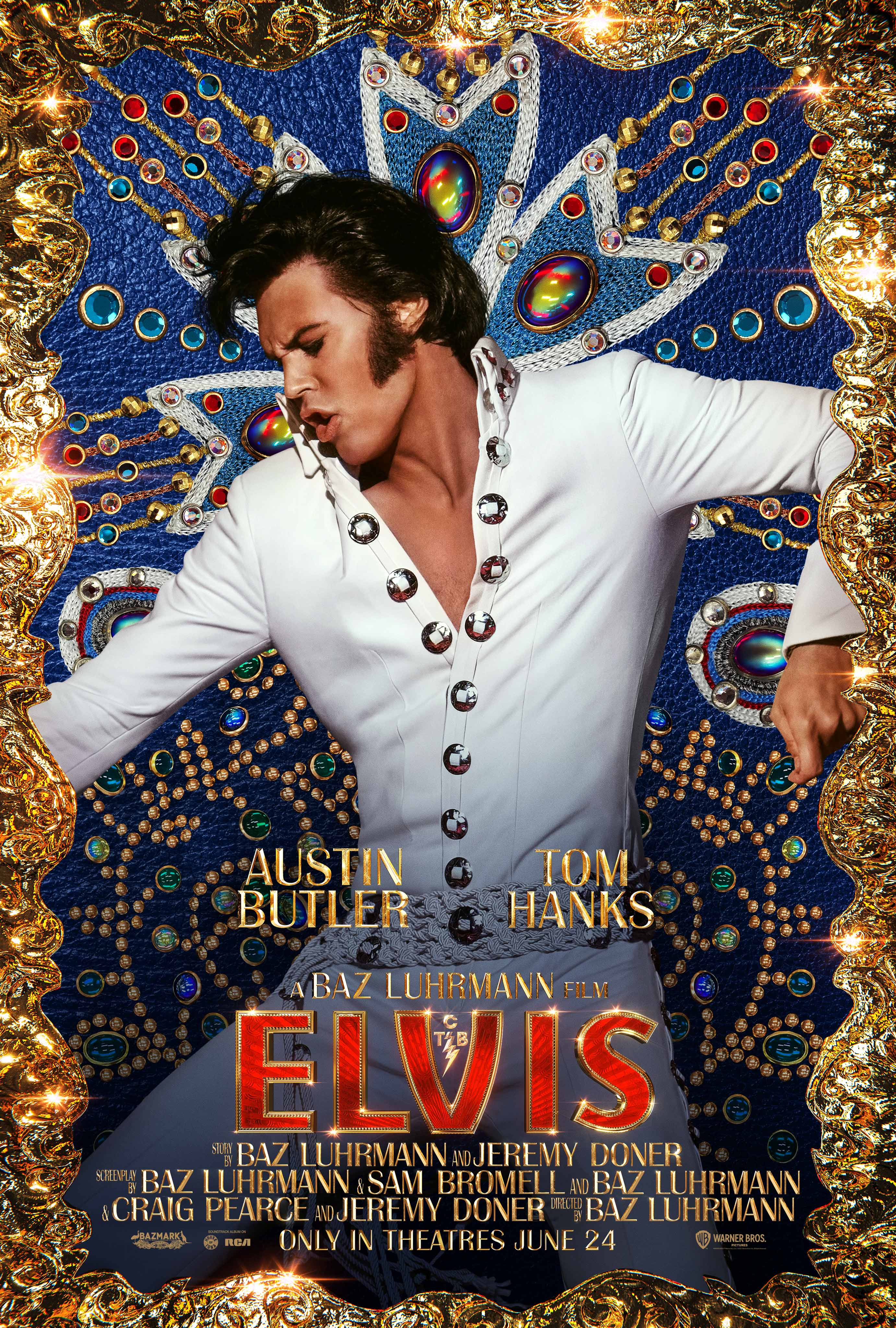
ELVIS biopic review

The King of visually spectacular biopics! Tom Hanks and Austin Butler deliver command performances that transcend impersonations and transform them into The Colonel and The King. You’ll want to sing along with this dazzling tribute to the King of Rock ‘n Roll from visionary director Baz Luhrmann. A landmark biographical motion picture for both the technical achievement and performative elements of the mise-en-scene; however, the screenwriting (inclusive of plotting and narrative) lacks the gravitas of the visual elements. Needless to say, my initial reaction to the film was higher than it is now that I’ve had some time to think on it. That’s not to say that I wasn’t impressed by it–I was! Parts of it, anyway. The more I thought about the screenwriting, the more frustrated I became with the film. Frustrated in that it felt like a hybrid biographical film meets documentary. Furthermore, the full impact of the story is hampered by the poor pacing. Perhaps Elvis would have made for a better limited run HBO series. Of course, then you’d not likely have Luhrmann at the helm, which is ultimately why this film works as well as it does. From his humble beginnings to Graceland and Vegas, the film includes milestones in Elvis’ legendary career. The influence of rhythm and blues and gospel music on Elvis’ life is witnessed throughout the filmWhile the storytelling may be weak, the sensory explosion of the film coupled with the performances are the reasons to watch this on the big screen.

Elvis Presley rises to fame in the 1950s while maintaining a complex relationship with his manager, Colonel Tom Parker.

What performances! Both Butler and Hanks are sure to wow you with their portrayal of The King and the Colonel. We could definitely see some Best Makeup Oscar nominations for both, especially for the Colonel. Other than when it was established that Elvis put on a significant amount of weight (but we cut back to Butler’s slender Elvis), he completely embodied the legendary entertainer. From his voice to his signature pelvic moves, everything about Butler screamed that he was truly Elvis. With so many impersonators out there, and some very good ones, it’s difficult for an actor to take on an iconic role such as this, and elevate it from impersonation to transformation. Fortunately for Elvis, Butler transformed with great authenticity. Moreover, Hank’s unbelievable transformation as the Colonel is on par with the Oscar award-winning hair and makeup of Jessica Chastain’s Tammy Faye last year in The Eyes of Tammy Faye. Although Butler certainly has the moves to drive you wild, it’s really Hanks’ story. Oh you get lots of Elvis, but the main action plot is really told from the perspective of The Colonel. Which is why there are narrative problems.

The movie opens and ends with The Colonel, with all the Elvis in the middle. Because of the competing plotlines, the movie suffers from poor pacing and clearly misguided diegetic direction. Audiences are never able to go as deep as they would like because as soon as we begin to focus on one element of Elvis’ or The Colonel’s life, we are then thrust into a different chapter in Elvis’ life. While that may seem like the movie to too quickly paced, it actually has the opposite effect by dragging it down. Stays too long in some places, whilst not enough in other places. BioPics like this often suffer from poor plotting, because they are ultimately a visualization of a Wikipedia page. Lots of information and chronological events, but little time and room to become emotionally involved with the characters. If this movie had not been about Elvis, and was just another tragic story of an entertainer from humble beginning, hitting it big, losing themselves, just to have a major comeback before an untimely death, then I would probably not care about these characters as much as I do. I am invested in them because of who they are, not because of the journey I witnessed in the film.

The technical achievement of the film is off the charts good! The stylistic cinematography and editing choices are Luhrmann’s signature style. It’s an experiment of the apparatus of film, and how it can be manipulated and crafted to take a typical BioPic, and transform it into a cinematic experience. And that’s what Elvis is, an experience! It is a brilliant combination of stagecraft and cinema. Yes, some of the sets look like they are on a stage, but that adds to the dimension and character of the film. It gives it this other worldly feel that wouldn’t be achieved simply by using all real places (as many still exist). Several times during the film, the cinematography and editing made me feel like I was literally at an Elvis concert! A sensory explosion that only Luhrmann could dream up. The down side to this approach is that there is so much emphasis on the visual elements and the technical achievement of the film that the actually storytelling suffers….sometimes feels like a bad television limited run series.

While I have my reservations with the screenwriting, there is no doubt in my mind how much fun I had with this film! Whether you’re a lifelong fan of Elvis or not, you will have a wonderful time!

Ryan teaches Film Studies and Screenwriting at the University of Tampa. If you like this article, check out the others and FOLLOW this blog! Interested in Ryan making a guest appearance on your podcast or contributing to your website? Send him a DM on Twitter or email him at RLTerry1@gmail.com! If you’re ever in Tampa or Orlando, feel free to catch a movie with him.

Follow him on Twitter: RLTerry1

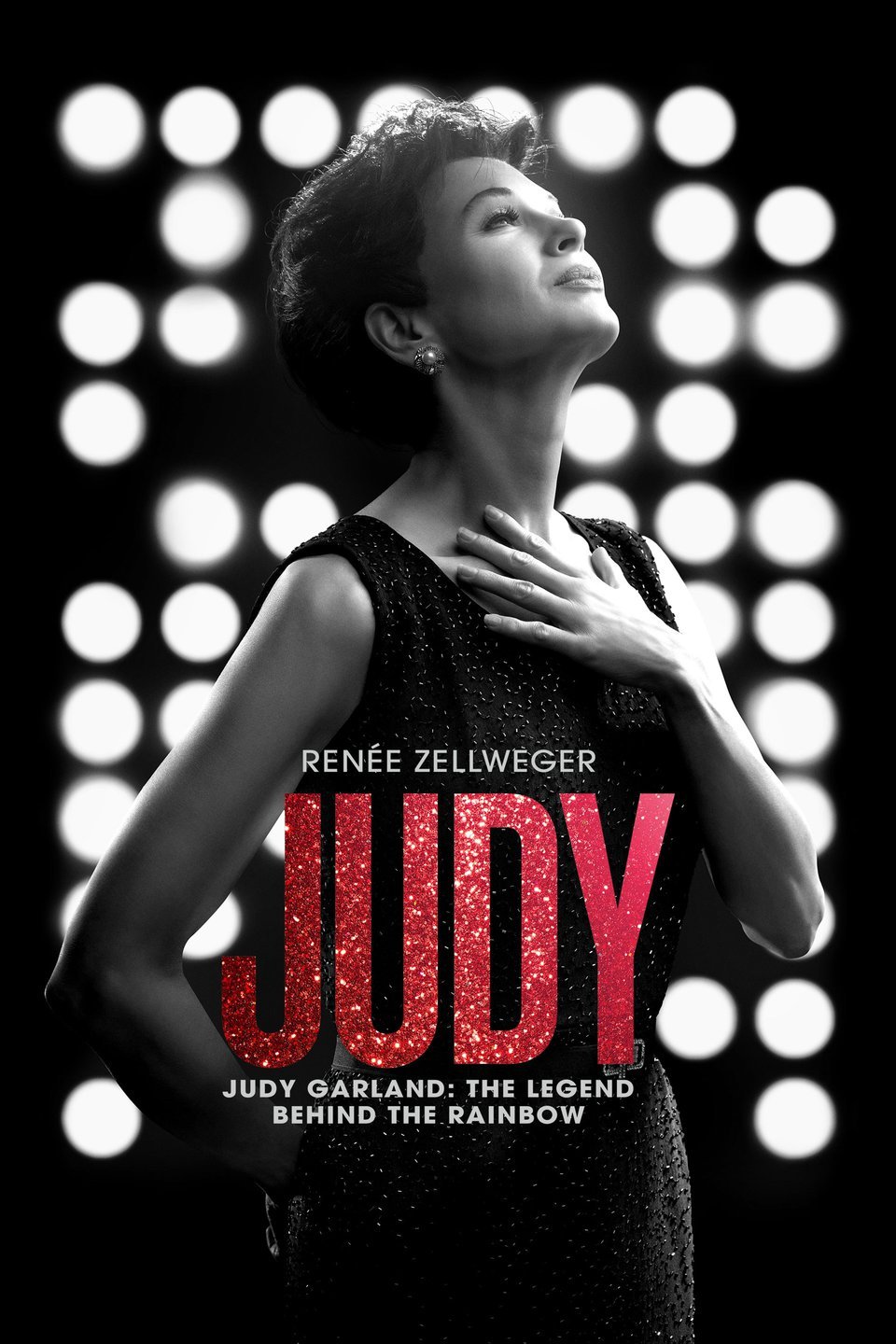
“JUDY” Biopic Film Review

A truly gripping motion picture that will bring you to tears during this somewhere over the rainbow redemption story. Bring tissues. Renee Zellweger is captivating as Judy Garland, and you’ll swear that you’re watching Garland on the big screen. Although we may be familiar with the broad strokes career of the legendary entertainer, this film goes beyond the headlines and tabloids to deliver a true life story that could ironically be titled A Star is Born, or perhaps reborn. Ironic in that this film shows the life of a movie star after the lights have faded and the offers stop coming in, much like the movie she starred in. It’s a rise and fall story, of sorts, but is more precisely a fall and rise story as the movie focusses in on the last year of Judy Garland’s life. If you are worried that the film ends on her death, you can be relived that the film chooses to stop the story prior to the end of the iconic star’s life. And it works so incredibly well! While there are many movies (not unlike A Star is Born) that focus on the rise and fall of a talent in showbusiness, this movie skips all the glitz and glamor to paint a realistic portrait of what it is like for those whom grow up in front of the camera, controlled by those around them, just to wind up in front of booing crowds, empty bank accounts, homelessness, and a tumultuous custody battle. Not to mention her addiction to pills that was caused by abusive treatment at the hands of the old studio system because of being force fed pills from an early age. Whether you are a fan of the iconic diva or not, if you love command performances, then you do not want to miss the uncanny performance of Zellweger as Judy. All the way down to the mannerisms, vocal inflections, and over all behavior, she IS Judy. Although we all know of the tragic ending, no mistaking it, this film is an inspirational story of redemption.

The money is gone, career on the rocks, and risking the loss of custody of her two youngest children, that is the last year’s of Judy Garland’s life. Unfortunately the other side of the rainbow for Judy was anything but magical. Three decades after starring in one of the greatest film musicals of all time The Wizard of Oz, the beloved actress and singer is in dire straights. She is left with virtually nothing except her name and what remains of her timeless voice that charmed millions throughout her early illustrious career. In order to prove that she can provide for her two youngest children, she accepts a gig in London playing to sold-out shows at the Talk of the Town night club. While there, she reminisces with friends and fans, fights her depression and anxiety over performing, and begins a whirlwind romance with her soon-to-be fifth husband.

“For one hour, I am Judy Garland, and the rest of the time I am just like everyone else…I want what everyone wants, I just seem to have a harder time getting it” is a paraphrased quote from the movie, but it illustrates how the actress and singer felt about her relationship with the world. The movie chronicles her inability to stay afloat financially in Los Angeles and must accept a gig in London where her personal troubles continue to follow and haunt her. Her character is so incredibly relatable because many of us have found ourselves in traps that we have stepped in and are at a loss as to how to get out. If you thought this was going to be another cliche musical biopic, then you would be mistaken. No pretense about it, this is an unapologetic look at the dark side of Hollywood in perhaps one of the greatest stories that is right up there with Norma Desmond. Now, I am not equating Judy with what is, in my opinion, the greatest film of all time Sunset Boulevard, but her story is not unlike the one experienced by Norma. The movie also comments on the far reaching effects of childhood trauma on the adult psyche. No one understood the extent that she was abused by the studio system except for Judy herself. If her present-day handlers knew what she went through during the years that American fell in love with The Wizard of OzMeet Me in St. Louis, and more, then they would not-so-casually write her off as a wrecked hasbeen who mismanaged her money and relationships. The film deals with perception versus reality. Strategically placed in the film are flashbacks to her childhood at MGM that provide context for moving the present story forward as each moment reveals a new layer to the legendary entertainer.

Zellweger delivers a performance for the ages in this film. More than a spot-on impression, she transforms into Judy Garland to the extent that you will almost believe that you are watching the iconic actress and singer on the big screen. It is clear that Zellweger studied Judy Garland for months in order to get into character. Her movement, speech pattern, posture, and other behaviors completely sell the audience on this audacious portrayal of such an icon. Never once does she break character and allow the actor to shine through, she remains committed to this phenomenally genuine portrayal of Judy Garland. We all know Zellweger can sing, after all, she wow’d us in Chicago (a rare example of when the movie adaptation IS better than the live show); but nothing will prepare you for the power of her singing in this movie. Other than Have Yourself a Merry Little Christmas, you will hear Zellweger sing other famous songs by Garland such as Get HappyThe Trolly SongCome Rain or Come Shine, and of course the encore of Over the Rainbow during the movie’s climactic, emotionally charged, showdown. Even when singing, Zellweger is determined to deliver the songs just as a late-40s Garland did, complete with all the stubbornness, anxiety, and even anger. I truly hope that Zellweger is nominated for this role.

Perhaps the reason why Liza Minelli was quite objectionably vocal about her mother’s portrayal in this movie is because there are creative liberties taken by the writers in order to further dramatize Judy’s story. As I’ve told my screenwriting class, dramatize don’t tell. If a “based on a true story” or biographical film was simply concerned with the timeline of events, the cold hard facts, and cause and effect, then it might feel more like a police procedural or college lecture. Hence why it is imperative that writers DO get a little creative in the dramatization of events for cinematic purposes. For instance, the facts are largely correct in this story as I have compared them to Wikipedia and other newspaper articles, but where I can see the difference is Judy’s reaction to the timeline of events. Articles and tabloids may be able to show what happened, but it is up to the screenwriters to dramatize the reaction to the conflict. So perhaps that is what Liza is upset with, she doesn’t agree with the story details between what we know from Hollywood history. One of the tangential components in the movie is Judy meeting up with “Friends of Judy” at the end of one of her shows. Judy joins them, rather than be by herself for a night of poorly made omelets and casual singing around a piano. It’s an emotionally moving tribute to all the gays who’ve loved her over the years. In all likelihood, this was written for the movie as there is no way of verifying if this night ever happened. This is the scene where I feel that she should’ve sang Have Yourself a Merry Little Christmas because tonally it was similar to that scene in Meet Me in St. Louis. Instead, she sings Get Happy.

Maybe this is an unconventional redemption story, but that quality is clearly communicated through the film. Rising up against the internal and external monsters in your life that have dragged you down so far that there is no end in sight. Whereas Judy may not have changed as dramatically as Scrooge did in  A Christmas Carol, she does change during the climax of the movie. If you want to know just how, then you need to go out and watch it!

Ryan teaches screenwriting at the University of Tampa. If you like this article, check out the others and FOLLOW this blog! Interested in Ryan making a guest appearance on your podcast or contributing to your website? Send him a DM on Twitter or email him at RLTerry1@gmail.com!

Follow him!

Twitter: RLTerry1

Instagram: RL_Terry

“Rocketman” Movie Musical Review

Well, it’s better than BoRhap, but I should’ve rocketed passed this one. Before you throw tomatoes at me, as my opinion is clearly in the minority on this one, let me start out by stating that I do not care for rock n roll fever dream musicals. If you are unfamiliar with that subgenre of movie musicals, they are best described as those musicals that are surreal, nonlinear, and ultimately driven by emotion and image versus action or plot. Think of a poem versus prose. If you’re looking for an example of this type of movie, then look to Across the Universe. If you enjoyed Across the Universe or are simply a fan of Elton John’s music, then you will definitely enjoy Rocketman. If you are like me and do not care for the modern approach to a musical or unfamiliar with Elton John’s music beyond Step into ChristmasRocketman, or The Lion King, much like me, then you may want to consider blasting past this one. As outstanding as Taron Egerton’s impersonation of Elton John is, I am not ready to give him an Oscar nod. Personally, I do not consider excellent impersonations on par with acting. Impersonation and acting do not weigh the same, in my opinion. However, his performance appears to be highly committed and accurate to Elton John, which adds immense support to the tagline Taron Egerton is Elton John. Furthermore, this performance provides demonstrable evidence that Egerton is capable of a wide range of future roles. Where I do hope the film sees Oscar-nominations is in the spectacular costuming and mesmerizing production design. Those costumes were absolutely mind-blowing! For fans of Elton John’s music or simply the modern approach to the movie musical, then this will certainly be one to catch in the cinema on the big screen.

Rocketman is a modern movie musical that takes audiences on a fever dream journey through the highs and lows of Sir Elton John’s career from his breakout years to headlining Madison Square Garden to addict recovery and his resurgence in the 1980s.

Even before I told my friend that I did not care for the movie, she already knew. Why? Because she knew that I didn’t care for modern musicals; therefore, she extrapolated a hypothesis that I did not like Across the Universe. She knows me very well. Now, before you think that I only like classic musicals, let me elaborate. When I say modern, I am referring to a modern approach to the narrative structure and execution of the musical numbers. For instance, I absolutely loved La La Land and greatly enjoyed The Greatest Showman. However, both of those are classical in their respective approaches to the movie musical. In terms of Broadway, I love Sunset Boulevard and Mamma Mia, both of which are chronologically modern, but the former is still a classically structured musical and the latter’s worldwide success is attributed to the timeless music of ABBA, with which I am very familiar. If I use Mamma Mia or Mamma Mia Here We Go Again as modern movie musicals, that I liked, to which I compare Rocketman, then I assess that if I was more familiar with Elton John’s music, then I would have probably enjoyed the movie a lot more. After all, I went into it with the certainty that I was going to enjoy it. As there are no real shortcomings in the movie (except for some of the clunky dialogue), I am left with the evaluation that I simply do not care for this type of storytelling, so that is why I did not care for the movie.

My favorite moments in the movie are the ones between Elton and Bernie, specifically the one just before a concert in which Bernie urges Elton to reconnect with his child-self to remember why he loved music to begin with. Elton refuses to acknowledge his life before his Elton John persona, and snaps at Bernie. Two seconds later, he reaches out his hand to grab Bernie’s and apologizes. This shows the complexities of their longstanding platonic friendship, and therefore visually communicates the strength and depth of their relationship. At the core of this movie, it is about the rise, fall, and rise of the central character that is guided by an unreliable narrator. The nonlinear narrative begins in the present day, then flashes back to the past. And this goes back and forth until the showdown wherein we move past the moment that we opened with to jump forward to Elton’s recovery and end BEFORE The Lion King. I know. I was hoping that we were going to get a reference to The Lion King and then end the movie. Because this is a rock n roll fever dream musical, it was important to establish Elton John as an unreliable narrator because we then interpret what we are about to watch through a highly subjective lens. Subjectivity is important in the interpretation of a dream, and this story is very dream-like. Since the movie begins with an addict Elton John and ends with a recovered Elton, this unreliability allows for a greater character growth arc that is emotionally driven. Emotion is of vital importance because this story has far more in common with a poem than prose.

Perhaps the narrative execution is not to my liking, but the musical numbers are highly engaging and lots of fun to watch. If you love the music of Elton John then these musical numbers will tug at your heartstrings or make you jump to your feet and dance along with the movie. The first act is quite strong, and the second act is moderately strong, but the third act is a little clunky. Still, every moment of this movie was more enjoyable than BoRhap. The movie would have played stronger for me had it not been filled with one-dimensional characters wrapped up in a lackluster plot. But hey the music and costumes are great! If you want the full experience of Rocketman, then I feel that you want to watch it in a Dolby Cinema auditorium for the exquisite audio and picture quality. Whereas BoRhap was mostly about the music, this one is all about the imagery followed by the music.

You can catch Ryan most weeks at Studio Movie Grill Tampa, so if you’re in the area, let him know and you can join him at the cinema.

Ryan teaches screenwriting at the University of Tampa. If you like this article, check out the others and FOLLOW this blog! Interested in Ryan making a guest appearance on your podcast or contributing to your website? Send him a DM on Twitter!

Follow him!

Twitter: RLTerry1

Instagram: RL_Terry