ORDINARY ANGELS movie review

Warms the most cynical of hearts. Two-time Academy Award-winning Hilary Swank makes a triumphant return to the silver screen in Ordinary Angels. Her outstanding performance in this remarkable true story will stir your soul, and remind us that with all the conflict and self-centeredness in the world, that there are still those that strive to make it a better place, even if it’s just helping one person. Despite some pacing issues, most notably in the second act, and some forced dialogue here and there, Ordinary Angels genuinely surprised me by how well it was written and directed. Moreover, there is a discernible emotive dimension to the editing and cinematography as well. Many movies based on true stories can feel like an extension of a Wikipedia article, but not so with this film. From beginning to end, it is a moving story that provides hope for humanity even when we feel broken.

Sharon (Swank), a struggling hairdresser, finds a renewed sense of purpose when she meets Ed (Alan Ritchson), a widowed father, working hard to care for his two daughters. With his youngest critically ill and waiting for a liver transplant, the fierce woman single-handedly rallies an entire community to help.

Okay, let’s address the white elephant (for many) in the room, and get it out of the way. Yes, Ordinary Angels is a motion picture from a faith-based production company. And even I have written how those types of movies are often poorly written and acted. Generally, the technical aspects of production are on par with more mainstream studios; but the writing and acting usually suffer. Suffice it to say, that is not the case here. I was shocked by how much I enjoyed the story and how the story was crafted.

The conflict is real, relatable, and raw. The characters feel like real people, flaws and all, especially Sharon and Ed. Whether it’s a true or fictional story, I always strive to find a character(s) with whom I can identify with his or her struggles and goals, because it’s our flaws and dreams that bring us together.

Why? Relatability. Characters in motion pictures need to feel relatable. Sometimes that relatability is identified in paralleling struggles or conflicts in our own lives to that which we observe on the screen. That which is most personal is most relatable. Furthermore, often times the best heroes are those that are just as broken as those around them, but it’s the overcoming of emotional or psychological baggage that greatly resonates with us.

It’s been a while since we’ve seen Hilary Swank on the silver screen, and it was so refreshing to see her once again. She brings such gravitas to every scene in which she is featured in Ordinary Angels. Throughout this performance, there are hints of the indelible quality she brought to us in Boys Don’t Cry and Million Dollar Baby. Sharon feels like your hairdresser or your friend or neighbor. She’s the perfect every man because there is neither pretense nor anything particularly special about her, save her infectious, brassy energy. And as much fun as she’s having on the outside, she is broken on the inside. That is, until she reads of the story of the little girl who needs a liver transplant and lost her mother the year prior.

And before you begin thinking this otherwise self-centered alcoholic mother with a son from whom she is estranged does everything without care for herself, you learn that she is using her philanthropic skills to help fill a void in her own life. Yes, she cares deeply for the little girl and her family; however, deep down, Sharon is also hoping to makeup for her failures as a mother. But through her journey helping this little girl, Sharon learns how to acknowledge the demons in her own life, and to grow from them instead of always compensating for or excusing them. True healing begins in the heart.

The character of Ed is also incredibly relatable. He represents an every man whom is angry at the world, angry at God, angry with himself, and full of stubborn pride. After losing his wife, five years after she gave birth to our dying little girl, he feels abandoned by the faith he once held dear. And how many of us wouldn’t feel exactly the same after losing a loved one, and on the verge of losing another, all while trying to manage a household on a shoestring budget with medical bills mounting? His response is a very human response. I particularly like his behavior after there is a light at the end of the tunnel–he is still wrestling with all those same anger issues, but demonstrates the beginning of recapturing his faith in God and humanity.

While the subject matter is rather dark–the dire straights in which the little girl’s family finds themselves–and the fact without a liver, the little girl will most certainly die, there are moments of levity that serve as emotional resets. My biggest problem with the writing is the second act in which pacing is rather sluggish. There is about 10-15mins that could’ve easily been carved out of the second act in order to maintain proper pacing throughout the entirety of the movie. Furthermore, there are moments in which the dialogue feels more plot-driven than character-driven. Not to the point it turns into a melodrama, but some lines feel a trifle artificial.

If you’re looking for a motion picture that shows that there is still hope for humanity, hope that we can–despite differences–help one another, help our neighbor, then this is a picture to check out while it is still in cinemas.

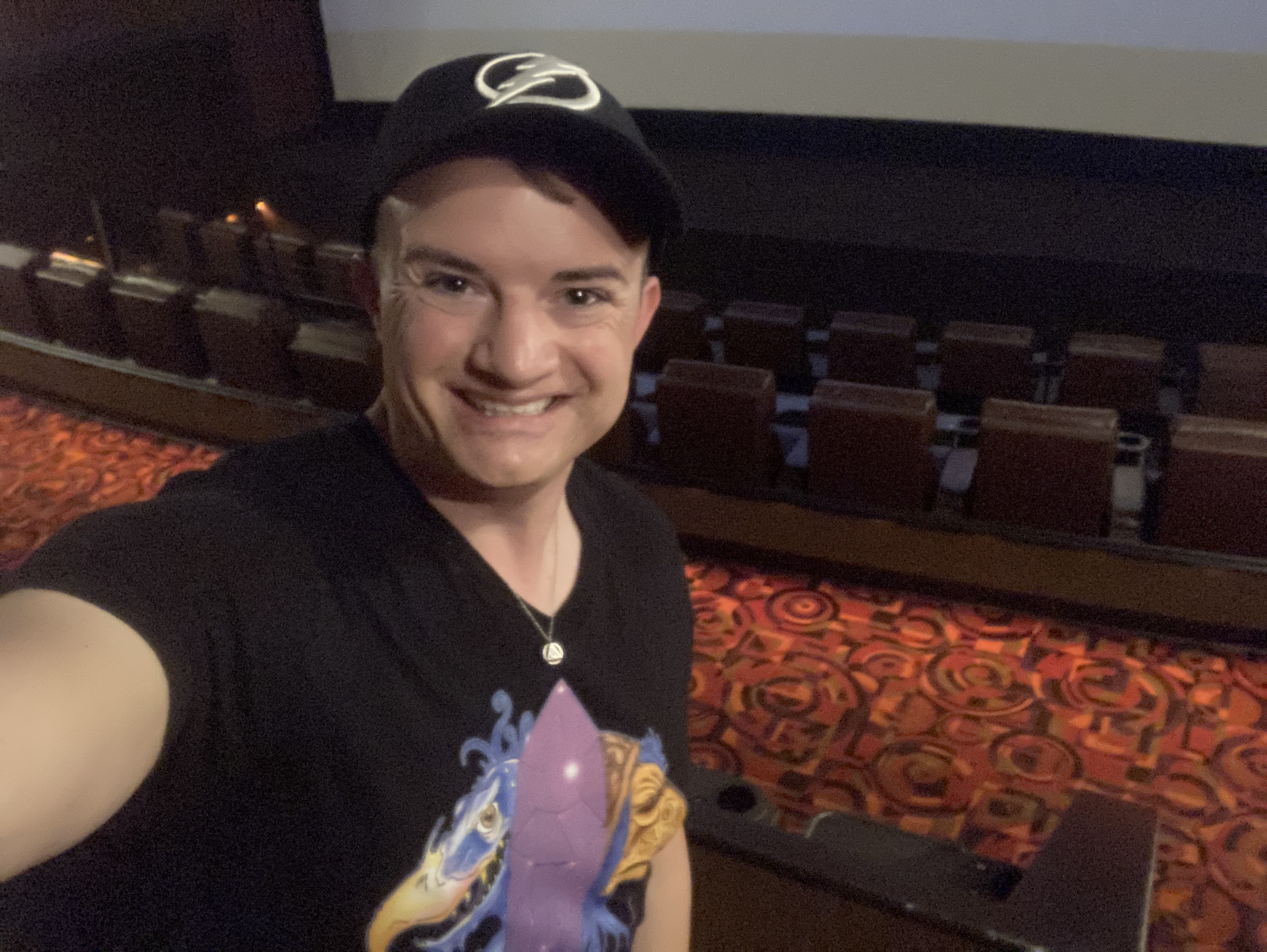
Ryan teaches Film Studies and Screenwriting at the University of Tampa and is a member of the Critics Association of Central Florida and Indie Film Critics of America. If you like this article, check out the others and FOLLOW this blog! Interested in Ryan making a guest appearance on your podcast or contributing to your website? Send him a DM on Twitter. If you’re ever in Tampa or Orlando, feel free to catch a movie with him.
Follow him on Twitter: RLTerry1 and LetterBoxd: RLTerry

DUNE: PART TWO movie review

A visually spectacular motion picture with a killer score that’s the storytelling equivalent of a bridge to nowhere. Denis Villeneuve’s DUNE: PART TWO is perhaps the most movie you will watch this year, as there is such a prolific amount of a variety of subplots and conflict that all converge in a single intersection to create figurative gridlock on the highway of cinematic storytelling. There is no argument, Dune: Part Two delivers cinematic scale and scope, but the grand potential of this modern-era epic is hampered by poor screenwriting.

Paul Atreides unites with Chani and the Fremen while seeking revenge against the conspirators who destroyed his family. Facing a choice between the love of his life and the fate of the universe, he must prevent a terrible future only he can foresee.

Word to the wise, be sure to rewatch the first movie before watching Part 2, because you will likely feel as lost as I was in trying to follow the central characters and main plot. With so much going on, the plot map is all over the place; in fact, one can hardly call it a map, as it’s lacking any meaningful direction. Think of an entire limited run series, jampacked into a single movie. I spent most of my time feeling completely lost in attempting to follow the outside/action plot. Fortunately, there is more action in this second installment compared to Dune: Part 1, but, ironically, more action makes for an even less engaging movie. And since the first part was sleep inducing enough, I was shocked it was possible to achieve twice.

The real star of this movie isn’t one of the A or B-listers, it isn’t the director or writer, but it’s Hans Zimmer. Zimmer’s score is mesmerizing and immersive. It truly feels like a character in and of itself. There is a beautiful otherworldly quality about his score that draws you in (too bad there’s nothing of great substance into which to be drawn) to the Duniverse. An extension of the environment is how the score plays throughout the movie.

Not even the movie’s performative dimension is sufficiently engaging, save Austin Butler, his deplorable character of Feyd-Rautha is the most entertaining out of the ensemble. Except for a few moments here or there, the performative dimension is completely uneven as some actors over-act, others under-act, some are clearly phoning-in, whilst others are visibly bored with their character. Character development, or lack thereof, is another storytelling process that is rushed in some places and creeping along in others. Ultimately, there lacks any characters with whom the audience can empathize or with which to connect as there isn’t a single likable character in the whole Duniverse. But perhaps that’s the idea: sometimes in the real world, it can be difficult to identify the most likable side in a conflict, and that is what we have here. One of life’s complexities.

During the second act (and I use that term loosely as it feels like one big second act) of the movie, there is a sequence of scenes that take place on a grayscale planet–and it looks gorgeous!!! This was probably my favorite part of the movie because it felt like an old-school gladiator-like epic in a classic sword and sandle picture.

If there were miniatures used in the film, I had difficulty identifying them. Nearly everything that wasn’t a sand dune felt like it was computer-generated. When the special/visual effects, ships, and palaces feel more computer than practical, it takes me out of the movie. That’s not to say the CGI isn’t high fidelity–it certainly is. Speaking to the quality of Dune: Part Two‘s CGI, it is exceptionally well-made. But the problem is, and yes, I know I’ve said it a hundred times, you cannot replace the way real light bounces off real objects into the camera lens. Had this movie leaned into practical effects, models, and sets more, then used the CGI for extreme wide shots or to fill in what couldn’t be made through craftsmanship, then it may have helped to compensate for the poor writing.

It’s well-known that Frank Herbert’s novel was a response to the global powers and conflict during the Cold War. That thematic idea is carried into David Lynch’s original Dune in 1984 and even in the SyFy Channel limited run series from 2000. Even though there are elements of the Cold War commentary in this adaptation of Dune, the socio-political themes and critiques are far less cohesive. While I greatly appreciate the ability to read a film differently over the years and identify what a film’s message or commentary could mean at that given time, the ability to be read differently over time does not negate the need for coherency, cohesion, and consistency. What Villeneuve and Jon Spähts’ movie is missing is consistency in representation in their interpretation of the socio-political commentary they find is more important or relevant to spotlight today.

On a side note, one of the parts of the movie that I did find surprising was Rebecca Furguson’s character’s (I don’t even remember her name) unborn baby being treated like a person. There is even a scene in which it is all but acknowledged that a human exists within her character’s womb. Certainly caught me off-guard, because the manner in which this part of the movie is presented challenges the dominant ideology so often found in media and pop culture today.

If you plan to watch it, definitely watch it in cinemas in a premium format such as Dolby. I must say, I am glad I screened it in Dolby because the score, sound design, and the grand scale is what I enjoyed most.

Ryan teaches Film Studies and Screenwriting at the University of Tampa and is a member of the Critics Association of Central Florida and Indie Film Critics of America. If you like this article, check out the others and FOLLOW this blog! Interested in Ryan making a guest appearance on your podcast or contributing to your website? Send him a DM on Twitter. If you’re ever in Tampa or Orlando, feel free to catch a movie with him.
Follow him on Twitter: RLTerry1 and LetterBoxd: RLTerry

ARGYLLE movie review

A perfectly choreographed espionage action movie with a dash of whimsy! Matthew Vaughn delivers a wildly entertaining genre-bending spy movie that simultaneously subverts and satisfies expectations for enigmatic espionage movies. Written by Jason Fuchs, Argylle delivers that metaphoric roller coaster ride that we love in this genre-blend. Bryce Dallas Howard shines opposite the gritty-charm of Sam Rockwell in the lead roles, and they are surrounded by an all-star cast of supporting characters. And that technicolor-spectacular sequence at the end is clearly inspired by the dance scenes from Romy and Michele’s High School Reunion and Dirty Dancing. One part fish-out-of-water and another part reluctant hero, this movie is just the thing to start February off with a blast at the cinema.

Reclusive author Elly Conway (Howard) writes best-selling espionage novels about a secret agent named Argylle who’s on a mission to unravel a global spy syndicate. However, when the plots of her books start to mirror the covert actions of a real-life spy organization, the line between fiction and reality begin to blur.

As entertaining as the movie is, we do not actually know the significance of the content in the secret file(s) nor do we know why our heroes must send the files to the former head of the CIA; however, the movie is so much fun to watch, that it almost doesn’t matter–though, I am a little bothered that I was not informed as to the point of the whole sequence of missions, duplicitous relationships, and endless masquerades. But ultimately, Vaughn uses the power of declaration to state that the object to be retrieved is in fact important. And for what it’s worth, that’s all that really matters in this light-hearted espionage action movie.

Much of the movie exists in that liminal space between reality and fantasy, wherein so many authors find themselves as they create compelling characters and craft enigmatic plots to thrill the reader. A well-written character speaks with their own voice and metaphorically take on a life of their own. I appreciate how we are placed in a subjective point of view throughout the move so we can experience the unfolding story from Elly Conway’s perspective. Moreover, the film also has something substantive to say on art as a reflection of life. Writers of all types often take inspiration from their own lives, and mold it to fit the type of story they want to write. We also see this in subject matter experts as authors of fictional stories based on their real life work or inspired by the nature of their work. Whether or not Vaughn and Fuchs intentionally gave Argylle this depth is neither here nor there, the point is that there are opportunities here to closely read the film as a commentary on an artists relationship with their art.

Without getting into spoilers, it’s difficult to talk about too much (this is a spy movie after all) of the plot. Suffice it to say, this movie has some wild twists and turns, reversals, and reveals, but they all feel grounded in the reality of the world that has been created for us on the screen. I appreciate the movie’s foundation in classical story structure, because it allows for character complexities to be revealed through simple plotting–simple plot, complex characters.

If you enjoyed The Beekeeper, then you will also enjoy Argylle. While the former is the stronger movie, I must say that Argylle‘s whimsical nature makes it equally as entertaining.

Ryan teaches Film Studies and Screenwriting at the University of Tampa and is a member of the Critics Association of Central Florida and Indie Film Critics of America. If you like this article, check out the others and FOLLOW this blog! Interested in Ryan making a guest appearance on your podcast or contributing to your website? Send him a DM on Twitter. If you’re ever in Tampa or Orlando, feel free to catch a movie with him.

Follow him on Twitter: RLTerry1 and LetterBoxd: RLTerry

THE BEEKEEPER action movie review

UnBEElievably good! Jason Statham absolutely kills it in this explosive, roller coaster of an action movie! And like any good, balanced beehive, this movie balances high octane action with plenty of humor. And it’s not without its scathing commentary on crimes against the most vulnerable in society. The Beekeeper is here to save you from the January movie doldrums and one to catch on the BIG SCREEN!

One man’s brutal campaign for vengeance takes on national stakes after it’s revealed he’s a former operative of a powerful and clandestine organization known as Beekeepers.

Genre films are the foundation upon which so many other movies are built and by which they are inspired. And the action movie is one of those that is part of the periodic table of film elements. David Ayer’s latest demonstrates why genre movies should not be undervalued because they work! There is beauty in simplicity (regardless of genre), and what we have here is a classical 80s style action movie set in the present day. Furthermore, Statham delivers what he does best, fantastical fight sequences, gritty, sardonic humor, and unstoppable action.

Beyond genre itself, The Beekeeper also demonstrates the importance of crafting a movie around a movie star. We have so few movie stars anymore–Tom Cruise is the last true one–but there are others that are very much star-like–and Jason Statham is one of those. But the truth is, movie stars are dying.

For as long as cinema has been around, audiences have been drawn to that which is familiar–they already know what to expect. Delivering that which is familiar but in a new way, is the magic formula for cinema at its finest (and by extension TV, music, theatre, etc). And the classical star system of the studio system era was one of the man mechanisms for generating excitement and buzz surrounding the movie. Without going down a tangential road on why the death of the movie start is one of the reasons why cinema is dying, the long and short of it is that movie stars are a brand, moreover there were directors that were a brand, branding was a huge part of cinema for the longest time. And with the rise of franchises comes the fall of the movie star.

Why bring any of this up when talking about The Beekeeper? Because this movie shows the power of a genre film crafted around a movie star-like actor. We know what to expect with Statham, and we love the humor and action that Statham brings to most of his movies. He goes full Statham in The Beekeeper, and we are wildly entertained because of that! This movie woudl simply not work with anyone else. Much like without Bruce Willis and Allan Rickman, Die Hard would not be half as fun and timeless as it is, The Beekeeper would not be half as entertaining without the charisma of Jason Statham.

Amidst all the fantastically choreographed action sequences and explosions, is a surprisingly thoughtful core. Not only does The Beekeeper deliver on gritty impact, but it also delivers sufficiently enough on commentary spotlighting how the most vulnerable in our society are preyed upon by big tech, including toxic, criminal data mining. My sister and brother-in-law experienced a situation very similar to the big event that sets Adam Clay on his relentless rage against the machine that doesn’t stop until he reaches the Queen of the beehive.

Since it’s in the trailer, it’s not a spoiler. The big event consists of a kindly older lady whom has taken care of Adam Clay (Statham) and provided him with space to care for his beehives and make exquisite honey. Her computer is taken hostage by malware, and the support team she contacts is actually a criminal data mining company that steals money by way of a victim screensharing their computer and the company stealing/copying identity and password information. One the data mining company has some key information, then they are able to wipe out a victim’s entire finances. But the tragedy doesn’t stop there. When Adam’s hive has been attached, he stops at nothing to avenge his kindly neighbor.

I appreciate how the movie spotlights this real tragedy that truly impacts lives of the most vulnerable in our society. It also shows how deep the corruption goes and where it leads. Those at the very top may just be those that seem untouchable by the law and systems of justice. Perhaps this situation is exaggerated for purposes of making a movie, but it wouldn’t’ surprise me to learn that what we witness in the movie is similar to what truly happens in our real world.

The Beekeeper is a highly entertaining action movie that will completely thrill you! Between the electric fight sequences and Statham’s gritty charm, you are guaranteed to have a fantastic time at the cinema!

Ryan teaches Film Studies and Screenwriting at the University of Tampa and is a member of the Critics Association of Central Florida and Indie Film Critics of America. If you like this article, check out the others and FOLLOW this blog! Interested in Ryan making a guest appearance on your podcast or contributing to your website? Send him a DM on Twitter. If you’re ever in Tampa or Orlando, feel free to catch a movie with him.

Follow him on Twitter: RLTerry1 and LetterBoxd: RLTerry

TOP 10 FILMS of 2023

While this has largely been a 3.5 kind of year, there are a handful of standout films that left a lasting impression upon me in all the right ways. And here are my picks for the Top 10 films of 2023.

For a list of the Critics Association of Central Florida award winners and runners-up, click HERE.

10. COBWEB

Terrifying! Completely unnerving from beginning to end. The best horror film of the year! Everything works incredibly well from the atmosphere to characters to kills and even the jump scares. Go in as blind as possible because any information hinting at the plot may spoil the fantastic surprises.

9. CREED III

Heart pounding! Michael B. Jordan’s CREED III is an excellent, gripping motion picture! Quite possibly the best in the now-trilogy. Moreover, it is the first Best Picture contender in 2023. Reminds us that movies that focus on simple plots with complex characters are often times make for the best stories. The tertiary installment in the Creed series is a a revenge story on the backdrop of the power the past can have over us if we fail to face it in the ring. This moving story is certain to stir up the feels! 

8. JESUS REVOLUTION

Healing and uplifting. Jesus Revolution is a biographical drama that simultaneously depicts the past whilst critiquing the present. Based on a true story about the radical search for truth, comes a motion picture that is simultaneously concerned with critiquing our present world as much as it is depicting historical events. Through exploring the past, the journey’s true value is not merely a better understanding of the past, but the impact on our present world. The real power of this motion picture is the ability for it to use a story from the past as a provocative lens through which to understand the current state of affairs in both popular culture and the Church.

7. MISSION: IMPOSSIBLE–DEAD RECKONING part 1

Truly exhilarating cinema! Tom Cruise and the whole Mission Impossible team deliver what is likely the most epic movie of the year!! It’s thrilling, funny, and suspenseful from beginning to explosive ending! Part 1 is both a complete story and sets up Part 2 exceptionally well. If I am to be objective, Mission: Impossible III delivers the best story; however, audiences are still going to love this movie because feels like cinema in every measurable way. Move over James Cameron, Christopher Nolan, and yes even Martin Scorsese, for it is Tom Cruise whom knows how to deliver cinema to audiences.

6. AIR

Nothin’ but net! “AIR” is an outstanding biographical drama that will inspire anyone with a gut feeling, that they’re onto something great, to ”Just Do It!” The allstar cast shines brilliantly, and the screenwriting is excellent! Definitely look for this high stakes, high energy underdog story next awards season. Who would have ever thought that the origins of the single best known athletic shoe would have this much ‘sole.’ It’s funny, emotionally moving, and educational. More than the risky financial move that would either launch the struggling NIKE company to success or shutter the athletic division, this story is one of resilience. Resilience in business and in character. In many ways, this movie is “Mrs. Harris Goes to Paris” meets “The Social Network,” two films to which this one will undoubtedly be compared. Every scene in this film exemplifies exceptional screenwriting and directing. The story snaps, crackles, and pops.

5. MAY DECEMBER

Unnerving and spectacular! From start to finish, you’ll never know where the film will lead you, but you are in for one phenomenal ride! not sure. The moral decay underlying the relationships depicted in the film is both repulsive and intriguing at the same time. On one hand, you want to run away; on the other, you are sucked into the nexus of a relationship you want to be real and healthy, but you already know that it is not. Todd Haynes direction is exemplary and Sammy Burch’s screenplay is fantastic. This dark comedy is one that will deliver both laugh out loud moments and that which is dark and disturbing.

4. OPPENHEIMER

Sensational! Christopher Nolan’s highly anticipated cinematic spectacular Oppenheimer is an extraordinary motion picture that delivers a story as explosive as the subject matter. Not since Nolan’s earlier work on pictures such as Memento and The Prestige have I enjoyed both the form and function of his stylistic brand of filmmaking. Although the film chronicles the development, use of, and subsequent scientific and sociological affects of the A-Bomb, the story it really about the rise and fall of J. Robert Oppenheimer. Moreover, the subtext of the story is one that carries with it such commentary as the true cost of notoriety and serving one’s country and the destructive nature of unsubstantiated witch hunts. It’s a character-driven story more than it is a plot-driven story about the creation of the A-Bomb.

3. THANKSGIVING

I know what you did last Thanksgiving! Eli Roth’s Thanksgiving is IKWYDLS meets Jaws with a dash of Scream in a scathing critique of toxic, insatiable consumerism that is destined to be an instant holiday horror fave! Complete with great kills and stuffed with laughs, it’s a highly entertaining slasher! Eli Roth challenges audiences to ask themselves to what extent will they devolve in order to get 50% off a waffle iron. The slasher has a formula, and Eli Roth is serving it up in heaping helpings that simultaneously check all the boxes for the horror stable yet find ways of seasoning it with style and flare. While some non-slasher fans may get hung up on all the nods to classic slashers, it’s how Roth uses the homages and references that express his original recipe for this future holiday horror classic. Beyond the cleverness of the screenplay, Eli Roth has crafted a horror movie that is entertaining from the first course to dessert. Thanksgiving is a well-written and directed holiday slasher that delivers a clever story, thoughtful plotting, and fun characters. I can totally see the John Carver mask becoming one that you may very well see on Halloween along with Ghostface, Jason, Michael and the rest.

2. BLACKBERRY

Positively kinetic! This wildly entertaining biographical drama just clicks on so many levels! From beginning to end, the film commands your attention as it delivers razor sharp dialogue and outstanding performances. Whether you are a former CrackBerry addict like myself (2007–2011) or are fascinated by how the world’s first smartphone came to be, there is something for everyone in this film. There is a Greek tragic or mythological quality about this film as it reminds me of the story of how Icarus flew too close to the sun and had his wings clipped. BlackBerry was king of the smartphone world for however brief a time, but its impact upon the industry will be felt in perpetuity. But this movie isn’t about the history of smartphones per se or even the company Research in Motion itself, but rather three human stories of the men whom founded, developed, and (two of which) eventually crashed the company. So, it’s a very human story. BlackBerry simultaneously created a new communications device and completely re-imagined how cell service works on principle, even though the company went down in flames. The characters are fascinating and the story mesmerizing. Easily one of the year’s best films!

1. GODZILLA MINUS ONE

Pure cinema!! Not since the original Godzilla (and King Kong) has there been a better kaiju film. It has epic action, heartfelt character moments, and a story of redemption. Definitely my favorite film of the year!! Don’t miss seeing this one on the big screen. The movie is just as much (if not more so) a human interest piece as it is a monster movie. There is kaiju-sized heart at the center of this film. From both technical achievement and narrative perspectives, Godzilla Minus One is a truly outstanding motion picture, the likes of which we haven’t witnessed on the big screen in a long time. This is a surprisingly emotional story, delving deep into relatable themes focusing on the human spirit and survival in times of uncertainty and chaos. Furthermore, it’s a story of redemption that will tug at your heart strings as you become fully invested in the story and characters.

Ryan teaches Film Studies and Screenwriting at the University of Tampa and is a member of the Critics Association of Central Florida and Indie Film Critics of America. If you like this article, check out the others and FOLLOW this blog! Interested in Ryan making a guest appearance on your podcast or contributing to your website? Send him a DM on Twitter. If you’re ever in Tampa or Orlando, feel free to catch a movie with him.

Follow him on Twitter: RLTerry1 and LetterBoxd: RLTerry