THE BEEKEEPER action movie review

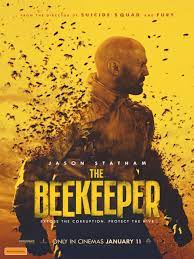
UnBEElievably good! Jason Statham absolutely kills it in this explosive, roller coaster of an action movie! And like any good, balanced beehive, this movie balances high octane action with plenty of humor. And it’s not without its scathing commentary on crimes against the most vulnerable in society. The Beekeeper is here to save you from the January movie doldrums and one to catch on the BIG SCREEN!

One man’s brutal campaign for vengeance takes on national stakes after it’s revealed he’s a former operative of a powerful and clandestine organization known as Beekeepers.

Genre films are the foundation upon which so many other movies are built and by which they are inspired. And the action movie is one of those that is part of the periodic table of film elements. David Ayer’s latest demonstrates why genre movies should not be undervalued because they work! There is beauty in simplicity (regardless of genre), and what we have here is a classical 80s style action movie set in the present day. Furthermore, Statham delivers what he does best, fantastical fight sequences, gritty, sardonic humor, and unstoppable action.

Beyond genre itself, The Beekeeper also demonstrates the importance of crafting a movie around a movie star. We have so few movie stars anymore–Tom Cruise is the last true one–but there are others that are very much star-like–and Jason Statham is one of those. But the truth is, movie stars are dying.

For as long as cinema has been around, audiences have been drawn to that which is familiar–they already know what to expect. Delivering that which is familiar but in a new way, is the magic formula for cinema at its finest (and by extension TV, music, theatre, etc). And the classical star system of the studio system era was one of the man mechanisms for generating excitement and buzz surrounding the movie. Without going down a tangential road on why the death of the movie start is one of the reasons why cinema is dying, the long and short of it is that movie stars are a brand, moreover there were directors that were a brand, branding was a huge part of cinema for the longest time. And with the rise of franchises comes the fall of the movie star.

Why bring any of this up when talking about The Beekeeper? Because this movie shows the power of a genre film crafted around a movie star-like actor. We know what to expect with Statham, and we love the humor and action that Statham brings to most of his movies. He goes full Statham in The Beekeeper, and we are wildly entertained because of that! This movie woudl simply not work with anyone else. Much like without Bruce Willis and Allan Rickman, Die Hard would not be half as fun and timeless as it is, The Beekeeper would not be half as entertaining without the charisma of Jason Statham.

Amidst all the fantastically choreographed action sequences and explosions, is a surprisingly thoughtful core. Not only does The Beekeeper deliver on gritty impact, but it also delivers sufficiently enough on commentary spotlighting how the most vulnerable in our society are preyed upon by big tech, including toxic, criminal data mining. My sister and brother-in-law experienced a situation very similar to the big event that sets Adam Clay on his relentless rage against the machine that doesn’t stop until he reaches the Queen of the beehive.

Since it’s in the trailer, it’s not a spoiler. The big event consists of a kindly older lady whom has taken care of Adam Clay (Statham) and provided him with space to care for his beehives and make exquisite honey. Her computer is taken hostage by malware, and the support team she contacts is actually a criminal data mining company that steals money by way of a victim screensharing their computer and the company stealing/copying identity and password information. One the data mining company has some key information, then they are able to wipe out a victim’s entire finances. But the tragedy doesn’t stop there. When Adam’s hive has been attached, he stops at nothing to avenge his kindly neighbor.

I appreciate how the movie spotlights this real tragedy that truly impacts lives of the most vulnerable in our society. It also shows how deep the corruption goes and where it leads. Those at the very top may just be those that seem untouchable by the law and systems of justice. Perhaps this situation is exaggerated for purposes of making a movie, but it wouldn’t’ surprise me to learn that what we witness in the movie is similar to what truly happens in our real world.

The Beekeeper is a highly entertaining action movie that will completely thrill you! Between the electric fight sequences and Statham’s gritty charm, you are guaranteed to have a fantastic time at the cinema!

Ryan teaches Film Studies and Screenwriting at the University of Tampa and is a member of the Critics Association of Central Florida and Indie Film Critics of America. If you like this article, check out the others and FOLLOW this blog! Interested in Ryan making a guest appearance on your podcast or contributing to your website? Send him a DM on Twitter. If you’re ever in Tampa or Orlando, feel free to catch a movie with him.

Follow him on Twitter: RLTerry1 and LetterBoxd: RLTerry
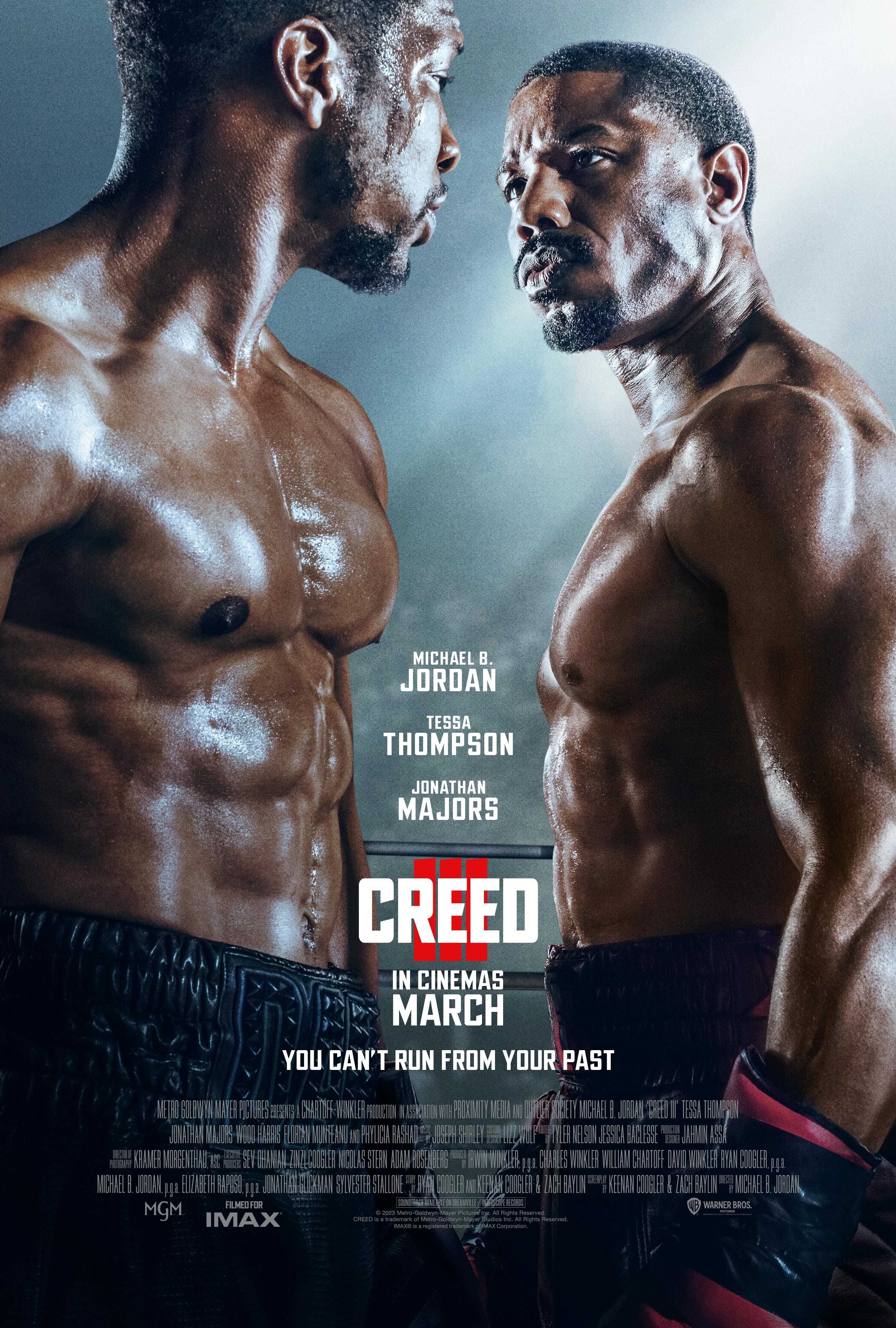
CREED III movie review

Heart pounding! Michael B. Jordan’s CREED III is an excellent, gripping motion picture! Quite possibly the best in the now-trilogy. Moreover, it is the first Best Picture contender in 2023. Reminds us that movies that focus on simple plots with complex characters are often times make for the best stories. The tertiary installment in the Creed series is a revenge story on the backdrop of the power the past can have over us if we fail to face it in the ring. This moving story is certain to stir up the feels! Ryan and Keenan Coogler’s story paired with Jordan’s directing and the iconic Sylvester Stallone’s producing combine to craft a story that is both visually and emotionally driven. Add in the A-list cast, and Creed III becomes one film that you do not want to miss seeing on the big screen, and preferably in a premium format. Audiences will feel as though they are in both the boxing ring that we can see and the psychological fighting ring that we must feel. Like with the previous Creed (and even Rocky movies), it’s not about the boxing, it’s not about the athletics, it’s about the characters; however, the setting and backdrop of a boxing match and physical endurance training is the conduit through which the story unfolds. While some critics have negatively reacted to the simple plot, need I remind my contemporaries that conventional storytelling is never to be undervalued. For it is when the plot is accessible that the complexities of character dynamics and thoughtful subplots work in tandem to support excellence in storytelling.

Still dominating the boxing world, Adonis Creed is thriving in his career and family life. When Damian, a childhood friend and former boxing prodigy resurfaces after serving time in prison, he’s eager to prove that he deserves his shot in the ring. The face-off between former friends is more than just a fight. To settle the score, Adonis must put his future on the line to battle Damian — a fighter who has nothing to lose.

Five years removed from Creed II, I was wondering if this next installment would be on par with the previous two outstanding movies, and suffice it to say, it most definitely is. In fact, I may even go onto say that this is my favorite of the series. And why is that? It’s the characters. Yes, most of the characters are ones with which we are already familiar, but the addition of an old, estranged friend of Adonis’ is the injection of emotional and physiological complexities that this film needed to force our hero of Adonis Creed to continue to grow as a person, a father, and as a professional. His Journey parallels Damian’s (Dame) journey as they are both fighting the demons of their respective pasts. Each of them express or deal with their pasts in their own ways, yielding vastly different results. And it is the divergent path both these fighters took after a fateful encounter one night that set Adonis on the path to forget the past and Dame on a self-destructive past that would lead him to seeking revenge on the man he claims lived his life.

While the outside-action story is expressed through a boxing match and simple revenge plot, the inside-emotional story concerns itself with a greater degree of introspection as expressed through the respective emotional journeys and fights with the past. Suffice it to say, Adonis and Dane are two sides of the same coin. Both characters react to the events of the past divergently. Wherein the audience will relate most is the idea of battling the past to move on, and failing to confront the past, no matter how painful, can lead to being held prisoner of past events that fester as time goes on.

Each of us has a past that we either tried to escape or allow to define us; either way, that gives the past immense power over our lives and decisions, even affecting those around us. The action plot of the boxing match is a manifestation or personification, if you will, of the battle raging inside both Adonis and Dame. Adonis expressed this influence of the past through a facade of overcoming and resillence, while Dame expressed this influence though unforgiveness (which is like you drinking poison hoping it’ll harm the other person) and resentment. Through the catharsis of the boxing match, Adonis and Dame confront the past with both links and separates the estranged friends.

Creed III is exciting and well-paced. Audiences will be on the edge of their seats as the story unfolds. Yes, there are moments of predicability, as this is a type of story that has been told before, but don’t allow that to dissuade you from making your way to the movie theatre to catch this future best picture contender. Are aspects of this story cliche (or paint by numbers), yes; however, as Patrick DeWitt reminds us in The French Exit through the timeless Michelle Pfeiffer, never forget that a cliche is “a story so fine and thrilling that it’s grown old in its hopeful retelling.” And Creed III is certainly thrilling!

Ryan teaches Film Studies and Screenwriting at the University of Tampa and is a member of the Critics Association of Central Florida and Indie Film Critics of America. If you like this article, check out the others and FOLLOW this blog! Interested in Ryan making a guest appearance on your podcast or contributing to your website? Send him a DM on Twitter. If you’re ever in Tampa or Orlando, feel free to catch a movie with him.

Follow him on Twitter: RLTerry1 and LetterBoxd: RLTerry
BONES AND ALL horror adjacent movie review

Intriguing concept, poorly written. The highly anticipated film from director Luca Guadagnino (Call Me By Your Name) leaves a mediocre taste on the palate. Moreover, Bones and All represents another example of the result of concentrating more on atmosphere and technical elements than on strategic storytelling and proper plotting. “A day in the life of…” or simply “dealing with life” is not a goal; therefore, a plot it does not make. Vapid dialogue and lack of diegetic purpose plague this rather gothic romance. However, the gore is handled tastefully. The most pleasant surprise in the film is the cameo by veteran horror actress Jessica Harper of Suspiria fame! She may only be on screen for a few minutes, but her performance will captivate audiences! Unfortunately, the rest of the film is largely forgettable. In contrast to many other films this year that greatly exceed the two hour runtime, this one clocks in at a sluggishly paced two hours and ten minutes.

Love blossoms between Maren (Taylor Russell), a young woman on the margins of society, and Lee (Timotée Chalamet), a disenfranchised drifter as they embark on a 3,000-mile odyssey through the backroads of America. However, despite their best efforts, all roads lead back to their terrifying pasts and a final stand that will determine whether their love can survive their differences.

While the concept is interesting (although Warm Bodies did it better), the execution is sloppy. And I am not talking about the dining habits of our central characters. I’m talking about the disregard for screenwriting conventions. There are many refreshing ideas in the film, but the ideas are not fleshed out sufficiently. I applaud the film for delivering an original expression of an extension of the zombie genre, but I wish the story had been better paced and structured–oh yeah–an external goal for the central characters would’ve been nice too.

Although the film boasts solid casting choices (especially the Harper cameo), the visual aesthetic the central characters bring to the screen is not supported by compelling talent or character arcs. There simply wasn’t much to these characters; they are borderline one-dimensional. Lots of potential for depth, but the characters are largely the same at the end as they are at the beginning.

For all the potential for the film to serve as a social commentary on feeling alone in the world, the film never thematically lands on any particular ideology or observation of society. Extrapolating from the thematic evidence the audience is given, the film is most likely attempting to craft a story depicting when someone feels alone in the world, but surprised to find out that they are not. When relationships with your fellow man (be it platonic or romantic) are actually possible.

Despite the film taking place in the late 1980s (an era that is growing blasé as a setting for film and TV), it shares a lot in common with gothic romances because of the subject matter. Seems like every other movie releasing takes place in the 1980s, which is beginning to become tiresome and unimaginative. But, I suppose we have Stranger Things to thank for that. On the topic of visual aesthetics and production design, the film’s various midwest settings feel like a character in and of themselves. I appreciate design most when you can see the hand of the artist.

Perhaps Bones and All works better as a novel because it is overwhelmingly internally driven. Not having read the novel, I can merely infer what may have been lost in the novel to screen adaptation. Most likely what is lost is that which cannot be shown on screen, so I cannot fault the screenwriters for that. Where I do find fault is neglecting a proper outside/action story driven by a plot that points and builds to a climactic showdown and resolution. We have plenty of internal need (aka inside/emotional story), but simply dealing with life or finding love is not sufficient for purposes of compelling cinematic storytelling.

Ryan teaches Film Studies and Screenwriting at the University of Tampa and is a member of the Critics Association of Central Florida. If you like this article, check out the others and FOLLOW this blog! Interested in Ryan making a guest appearance on your podcast or contributing to your website? Send him a DM on Twitter. If you’re ever in Tampa or Orlando, feel free to catch a movie with him.

Follow him on Twitter: RLTerry1

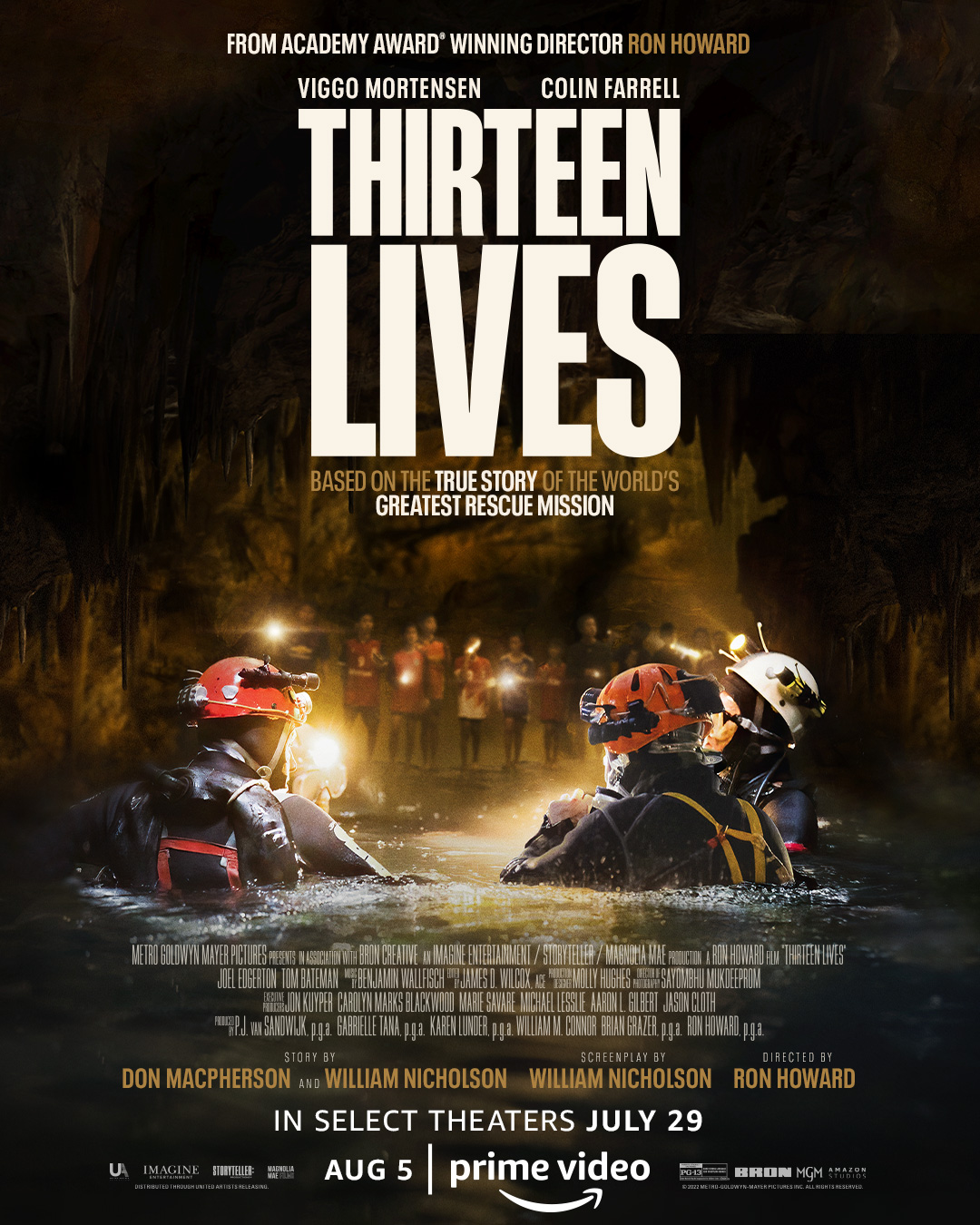
THIRTEEN LIVES docudrama mini review

Interesting. Ron Howard’s big screen adaptation of the true story of the daring rescue of the Thai youth football (soccer) team from the flooded cave is faithful to the wikipedia page, but with an impressive addition of underwater cinematography. Thirteen Lives chronicles the seemingly impossible rescue that captured the attention of the entire world in summer 2018. While Howard’s docudrama is well-made all the way around, what audiences will find most fascinating is the mechanics of the rescue. It took thousands of volunteers in the labyrinth of caves, mountain peaks, and basecamps to bring all the boys and their coach to safety. Although none of the performances particularly stand out, the film delivers solid casting. Thirteen Lives is a different kind of “based on the true story” film, because it does not have particularly strong plotting to map-out the narrative. On one hand, it is a simple plot rescue the boys, but the film ultimately plays as a blow by blow description of what happened. Upon viewing the film, I thought to myself, why not just make a documentary instead; and then it occurred to me, that there would have been little to no footage of the inside of the caves. Therefore, docudrama was the way to go. There really isn’t much in the way of connective tissue between plot points; events just happen. That’s not to say that what we are watching isn’t terrifying in places–it certainly is–especially if you have kids; but at the same time, it doesn’t feel like a cinematic story in the conventional sense. Even though we all know how the true story ends, the film focuses on the steps that were taken in order to rescue the youth soccer team. Is it good? Well, it’s not bad. It just kind of is. Often we see based on a true story films that take so much dramatic license that it’s no longer a faithful big or small screen adaptation; sometimes, character or situational nuances or motivations are lost in translation. Thirteen Lives is so incredibly focuses on a dutiful adaptation, that it sometimes forgets that it’s also supposed to be finding the narrative amongst the facts. I wouldn’t wait to see this on the small screen, catch it during its limited theatrical run because the visuals are impressive.

Ryan teaches Film Studies and Screenwriting at the University of Tampa. If you like this article, check out the others and FOLLOW this blog! Interested in Ryan making a guest appearance on your podcast or contributing to your website? Send him a DM on Twitter or email him at RLTerry1@gmail.com! If you’re ever in Tampa or Orlando, feel free to catch a movie with him.

Follow him on Twitter: RLTerry1

House of Gucci mini review

“A triumph in mediocrity.” From the brilliance of The Last Duel to the dullness of House of Gucci, director Ridley Scott is all over the cinemascape this year. Rodolfo Gucci, in his deconstruction of Aldo Gucci’s talent for design encapsulates the experience of this film by the summation that it merely exists without having any lasting impact of the soul of design. Phenomenal cast, intriguing historic story, fascinating look into one of the most storied companies of all time, but it’s ultimately all held back by a director phoning in his vision and a screenplay that is about as one-dimensional as the conglomerate that would eventually oust the Gucci family from their own fashion house. Individually, all the actors in the lead and secondary ensemble cast are outstanding. Unfortunately, the screenplay (and director) give them nothing substantive to do. So, there are many scenes in which each is clearly going for their respective Oscar or Golden Globe nomination.

What a disservice to the sensational true story, because there is a great story in this lackluster mess somewhere. Structurally, the first two acts drag on and on and on in a meandering direction that is suppose to point to and setup the third act, which consequently is the best part of the film. Regrettably, the third act is incredibly rushed (plot, murder, conviction, family ousted, all within 10mins it seems). I mean, those are some of the most interesting plot points of the whole story about (to quote the subtitle of the novel on which this is based) “…the sensational story of murder, madness, glamour, and greed.” One screenwriting convention is referred to as saving the best for last, but I don’t think the practice is meant to be taken that literally (it’s actually more or less directed at dialogue ending on a strong note). Perhaps the most intriguing dimension in this film is how it will likely prompt you to read up on the family and company after you get home. Just in terms of reading the Wikipedia entry, there was more intrigue than in the whole of House of Gucci. Which is saying a lot, since this film was pretty much a Wikipedia article.

If you’re a student of history or fashion, then you will likely find the background of interest. While this film is certainly not a runway film, there is commentary on art of versus the commercialization of fashion that exists within the mediocre narrative. Is is bad? No, not inordinately so. Is it good? Not particularly. Unless you want to see the fantastic performances on the big screen, I suggest at-home viewing of this film is sufficient.

Ryan teaches American and World Cinema at the University of Tampa. If you like this article, check out the others and FOLLOW this blog! Interested in Ryan making a guest appearance on your podcast or contributing to your website? Send him a DM on Twitter or email him at RLTerry1@gmail.com! If you’re ever in Tampa or Orlando, feel free to catch a movie with him.

Follow him on Twitter: RLTerry1