
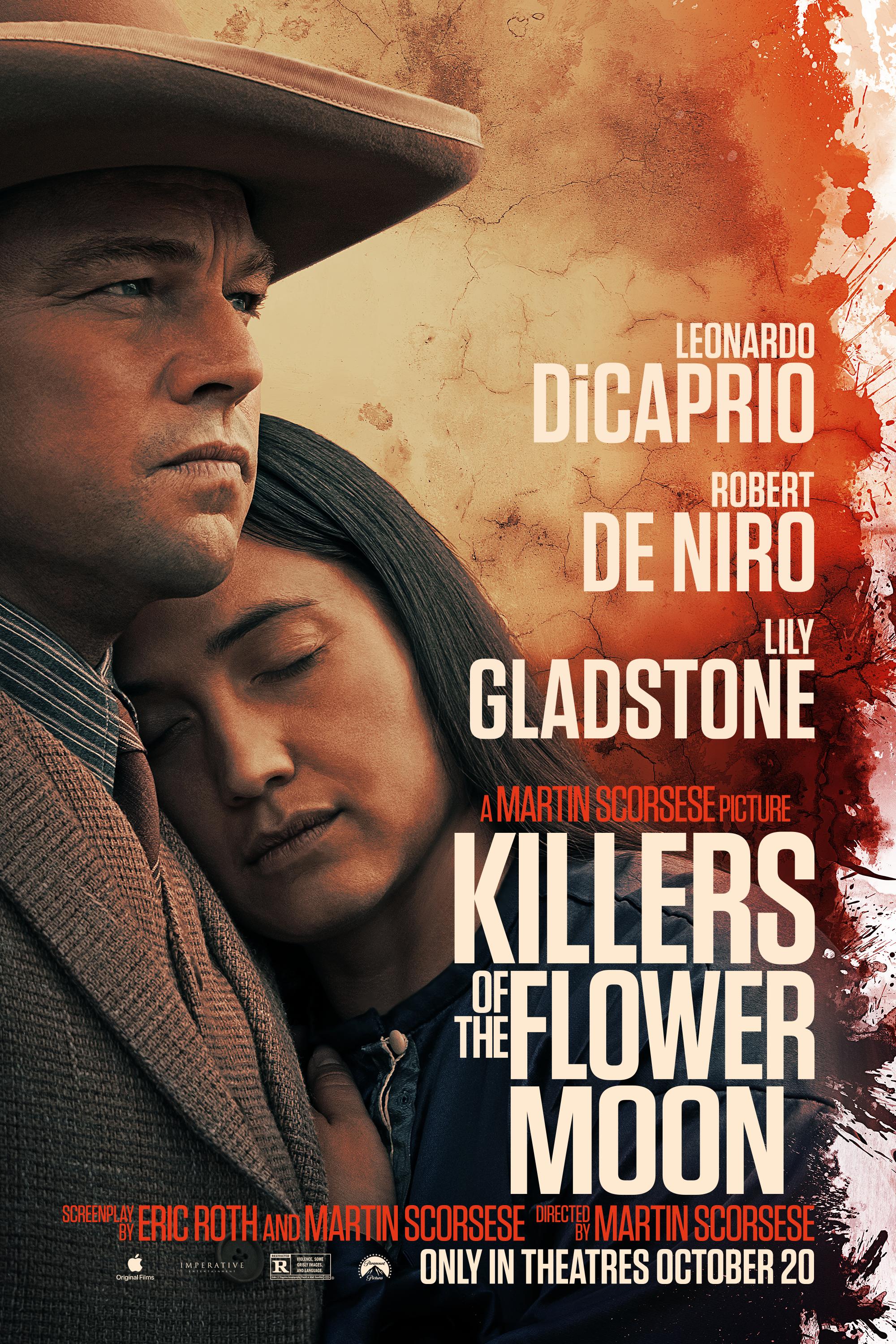
KILLERS OF THE FLOWER MOOON film review

Killers of the tension: an important story in desperate need of a better screenplay and editor. It’s a 3.5hr film that feels every bit of 3.5hrs. I’ve nothing against long run times per se; however, the run time needs to be justified dramatically. But unfortunately, the screenplay mechanics and editing (or lack thereof) hold this otherwise compelling story back from the great potential it demonstrably had. Lacking in any significant tension, this film had me looking at my watch after the first hour and a half. I kept waiting for it to kick into gear, but it never truly managed to amp up the tension. Furthermore, all the individual narrative elements never develop strong connective tissue. Even the performative dimension is good, but there lacks any singular performance that truly stands out. While cinema knows no run time, some stories are best told in 90 or 120mins, and this is definitely one of them.

In the 1920s, members of the Osage Native American tribe of Osage County, Oklahoma, are murdered after oil is found on their land, and the FBI decides to investigate.

One of the most highly anticipated films of the year over-promises and under-delivers. Which is a real shame because it depicts such an important story. While many will fixate on the run time alone, that would be unfair as it’s not the run time that is to blame for the lackluster narrative nature of this film. Rather, it is the screenplay mechanics and lack of precision editing.

As I have written many times previously, most directors are not writers. Are some? Well, sure. But most are not equally gifted in both areas. However, many writer-directors allow their ego to get in the way of excellence in writing because they feel it’s the only way to be a true auteur. Scorsese has nothing to prove to solidify him as an auteur, He is inarguably one of the greatest directors of all time. Scorsese’s Taxi Driver is one of the greatest films of all time and it’s under 120mins (2hrs). However, between The Irishman and now Killers of the Flower Moon, it’s as if he feels compelled to intentionally create films with prodigious run times to separate them from streaming content. Cinema knows no run time. Cinema is an experience, and that experience can be had in 90mins as well as 180mins. Like Nicole Kidman says, cinema is where we come together to experience the same film at the same time on a giant screen. Stories that have both plots and characters that are larger than life or incredibly intimate encounters. But I digress.

When a director is writing the screenplay, or has a significant role in the screenplay, then there lacks adequate checks and balances for screenwriting structure and mechanics. The long and short of it is that the story, ethos and all, may make sense in the director’s mind, but that doesn’t mean that it makes sense for the audience. Whereas when the screenwriter and directors are separate individuals, the screenwriter is able to focus solely on the pages in front of him or her without interference from a director. Killers of the Flower Moon strikes me as the type of story that would’ve benefitted from the director not being involved in the actual process. Because of all the nuance of the story and relationships between characters, perhaps this is a situation in which author David Grann writes the first draft and another more established screenwirter comes in from behind and shapes it into its film form (on page, anyway). We saw this with Jurassic Park, in which Crichton’s original screenplay was too novely and David Koepp was responsible for the final screen version.

Even though the screenplay is partly responsible for the improper pacing and lack of dramatic tension in the film, it shares the blame with the film editing (or dramatic montage). Alfred Hitchcock stated that writers and directors should “start each scene as close to the end of the scene as possible” What this means is that each and every scene should be lean and mean, only leaving room for that which advances either plot or character in a dramatic direction. The editing issue that plagues Killers of the Flower Moon is that scenes were either started too early or weren’t cut off in dramatic time. There is almost too much information in each scene that the lack of meaningful, precise editing acts as an anchor, dragging the film’s pacing. Contrary to popular belief, there is no too fast or too slow when it comes to the cadence of a film; but, there is such a thing as proper pacing. It’s the ideal pacing for the dramatic elements in the story.

Killers of the Flower Moon will make you want to read the book or simply look up information on the murders and investigation thereof. The film looks gorgeous and the performative dimension is solid, but as a total package, the film is underwhelming.
Ryan teaches Film Studies and Screenwriting at the University of Tampa and is a member of the Critics Association of Central Florida and Indie Film Critics of America. If you like this article, check out the others and FOLLOW this blog! Interested in Ryan making a guest appearance on your podcast or contributing to your website? Send him a DM on Twitter. If you’re ever in Tampa or Orlando, feel free to catch a movie with him.
Follow him on Twitter: RLTerry1 and LetterBoxd: RLTerry

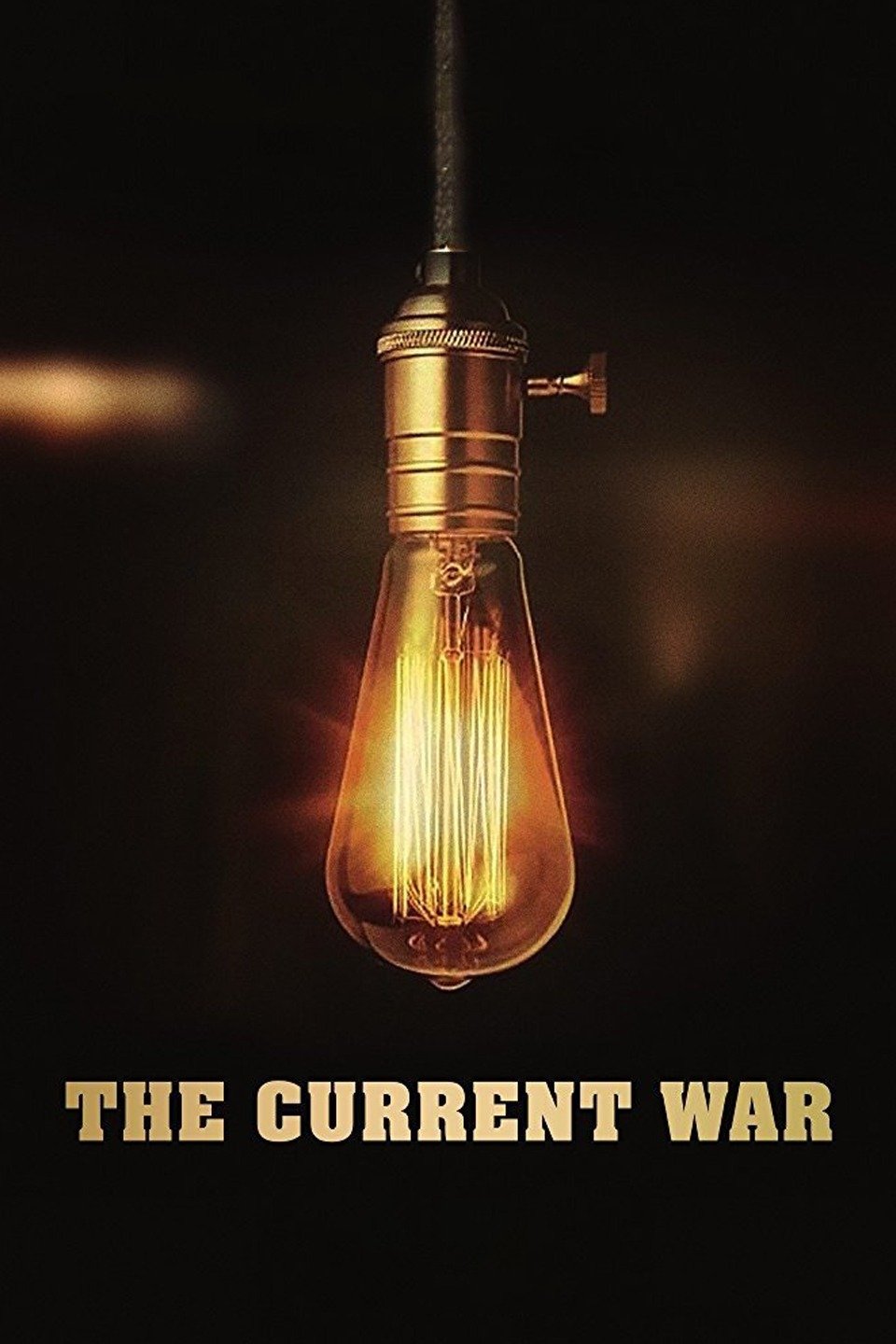
“The Current War” historical movie review

When the History Channel comes to cinemas. Despite what the title and tagline suggests, this movie is not electrifying and unfortunately plays off as forgettable Oscar bait. The only difference between this movie and one that you may catch on The History or Discovery Channels is the A-list cast. For students of history or those whom normally seek out and enjoy historical movies, you will most likely find this story interesting if not fascinating. Perhaps nearly as interesting as the historical background of this movie is the story of this movie’s journey from concept to screen. After the collapse of The Weinstein Company, this movie’s fate to never see the distribution was all but sealed. Enter from stage left Executive Producer Martin Scorsese to save this movie. With the backing of Scorsese, director Alfonso Gomez-Rejon recut the film to that which he originally intended before Harvey has his way with it (and others in Hollywood). While the details of the plot lack anything truly memorable, and the characters are one-dimensional, where this film shines is in the cinematography and editing. All throughout the movie, the camera becomes a character in and of itself, providing audiences with carefully crafted angles and beautiful tracking shots that attempt to draw us into the story on an intimate level with this cast of legendary inventors and businessmen. Perhaps we would be talking cast too had they been given anything to work with. Ultimately, the screenplay is to blame for this steady but low wattage story of one of the greatest chapters in US history.

Thomas Edison (Benedict Cumberbatch) and George Westinghouse (Michael Shannon)– the greatest inventors of the industrial age — engage in a battle of technology and ideas that will determine whose electrical system will power the new century. Backed by J.P. Morgan, Edison dazzles the world by lighting Manhattan. But Westinghouse, aided by Nikola Tesla (Nicholas Hoult), sees fatal flaws in Edison’s direct current design. Westinghouse and Tesla bet everything on risky and dangerous alternating current. (IMDb)

Upon watching this movie, it is clear that screenwriter Michael Mitnick forgot the cardinal rule of composing a well-developed screenplay with visual dimension: dramatize don’t tell (or simply show). Everything needed for a great screenplay is here: two central characters that equally function as the character(s) of opposition, a well-defined external goal (providing the electricity for the Chicago World’s Fair), motivated by an internal need (to prove that he is the best). It’s a relatively simple plot with complex characters–well characters that should have been more complex than they were written to be. Unfortunately, the plot was made complicated by too much technical jargon and felt too “telly” because of the perpetual exposition dumps. Further evidence of the weak screenwriting is witnessed in the lack of character development. What we are left with is a simple (yet dull) plot and simple characters. This would explain why all the elements for a great historical movie are there, but it still feels kind of weird.

As fantastic as the cinematography is, it certainly needed something to work with in order to deliver the luscious imagery we get in this movie. Fortunately, the cinematographer was given gorgeous sets, outstanding costumes, and locations that function as de facto characters. Good thing too, because the cinematographer was not given a script or characters to highlight. The stylistic cinematography provided by Chung-Hoon illuminates the dark with visually stunning choices that exude a strong commitment to visual storytelling. Had Chung been given a visually-driven screenplay, then perhaps we might be talking Oscar noms next year. Performing as strongly as the cinematography is the editing. If you like the way Broadway movies are edited, then you will enjoy the editing techniques employed to cut together this story. Just as this is a movie about inventors (of either inventions or clever ways of acquiring patents), the editing feels highly inventive for this style of movie. Whereas the screenplay feels very History Channel, the editing is fresh, sharp, and never feels dull (unlike the story itself).

Personally, what I found most interesting was the Edison story. Not because he was my favorite character, quite the contrary. After all, Edison comes off as the Ray Kroc of electricity. Why I was particularly interested in his story is because I’ve had the opportunity to visit the Ford and Edison Winter Estates in Fort Myers, Florida. For example, I’ve seen that same lightbulb map at the museum as well as one of his laboratories. Having visited his winter nome (which functioned as his supplementary research lab), I could literally place myself in his world. One of the labs that used to exist on the property has since been relocated to Henry Ford’s Greenfield Village, which is home to many historical houses and buildings that have been relocated from their original standing place to the living museum. After the movie has provided me with the inside story on Edison, next time I visit his Winter Estate, I will view it with new eyes. If you have the opportunity to visit Greenfield Village or the Ford and Edison Winter Estates, I highly encourage you to take your time to walk through the history of two of the greatest minds that transitioned us into the modern era though ingenuity and determination.

Ryan teaches screenwriting at the University of Tampa. If you like this article, check out the others and FOLLOW this blog! Interested in Ryan making a guest appearance on your podcast or contributing to your website? Send him a DM on Twitter or email him at RLTerry1@gmail.com! You can catch Ryan most weeks at Studio Movie Grill Tampa, so if you’re in the area, feel free to catch a movie with him!

Follow him!

Twitter: RLTerry1

Instagram: RL_Terry