JURASSIC WORLD: REBIRTH movie review

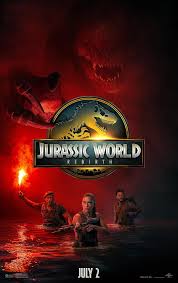
Possesses dino DNA, but missing strands and sequences, leaving an uneven and forgettable movie. Jurassic World: Rebirth begins with an intriguing enough premise, but the characters are poorly written, which is then amplified by way of a subplot that only serves to clutter the story. After a rough first two acts–except for a thrilling and fantastically written T-Rex chase scene (that was part of Crichton’s original novel and script for Jurassic Park)–the third act is surprisingly exciting and suspenseful, and at times terrifying.

Zora Bennett (Scarlet Johansson) leads a team of skilled operatives to the most dangerous place on Earth, an island research facility for Jurassic World. Their mission is to secure genetic material from dinosaurs whose DNA can provide life-saving benefits to mankind. As the top-secret expedition becomes more and more risky, they soon make a sinister, shocking discovery that’s been hidden from the world for decades.

Perhaps Koepp’s screenwriting works best when the original version of a script is written by the novel’s author (which, I know wasn’t possible for this movie in more ways than one), and he then crafts the original version to be more effective for the screen. To put it simply, no one knows what is going on or when/where they are. Harsh? Not really, when the movie opens with lazy exposition through on screen text describing an event that happened 17 years ago…keep that in mind, 17 years (placing it in line with Jurassic World not Jurassic Park). But then the characters talk about the research and development facility as if it was connected to the original park–not possible. Even popcorn movies should adhere to the logic of their own world building. It’s as if no one thought about the events that unfold in this movie, and how they relate to the previous movies. Kind of basic storytelling logic.

There are many elements of this movie that fail to make any logical sense (and again, that is the logic setup by the movie itself) or are setup, and never developed or connected to any motivation or stakes. To go into them, would take too much time.

Aside from logic problems, the movie is plagued by poorly written characters, an extraneous, shoehorned subplot, and weak first and second acts (with one exception in the second act that was thrilling). While I appreciate the minimalistic cast of characters compared to the cast of characters in all the Jurassic World movies, there are two competing groups that are pretty much independent of one another and could have each been in their own movie altogether. Yet, somehow, they are sloppily fused together in this movie. For argument’s sake, we’ll call them the Mercenaries and the Family. The Mercenaries and their outside/action plot are fine–I’d even go so far as to say ‘that’ story is sufficiently interesting. The Family and their plot felt extraneous and ultimately of little importance to anything that happened. It’s as if there were two different movie ideas (1) centered on the Harvesters and (2) the Family. And I think either by itself would have made for a better movie than putting them together. These decisions left the movie feeling muddled and crowded.

There is a T-Rex sequence in the second act that is fantastic! It very much harkens back to the sci-fi horror-adjacency of the original movie. Of course it helps that Crichton’s original Jurassic Park novel and screenplay thereof contained a similar sequence. Fun fact: this sequence in the novel and original Crichton screenplay served as the inspiration for Jurassic Park: The Ride at Universal Studios parks. It plays out wonderfully in this movie, like a short film in and of itself, because it’s setup well, developed strategically, and resolved thrillingly.

Even though there are a couple of characters that are almost fun or compelling to watch (almost), the rest are more disposable than a red solo cup at a frat party. You’ll find yourself rooting for the dinosaurs to win. Of all the characters, there is one particularly so annoying and deplorably behaved, that you’ll want the first dinosaur you see to pick him off, (and question why on earth his girlfriend would be with him and why the dad would let the boyfriend walk all over him–answer, bad writing). Other characters are one-dimensional or the casting choice never sells the character. All around, there are many character and casting problems, resulting in a movie wherein you’ll hope the next dino attack happens soon–and preferably ends with one less character.

Where the movie “finds a way” to leave you on a high note, is in the third act. Despite the slapdash screenwriting throughout the first and second acts, the third act is wildly entertaining and even at times, terrifying! It almost compensates for the first hour and forty-five minutes. The (weird) dinos are “monsters” again, and the various chase sequences each offer something different (even though one is a recreation of the Kitchen Scene from the original movie). The stakes are raised and the level of terror leaps off the screen. So often, movies start well and fail to stick the landing; with this one, it fails to stick the launch but definitely sticks the landing.

SUffice it to say, if you took the first two acts from The Lost World: Jurassic Park, and paired them with the third act from Jurassic World: Rebirth, then you’d actually have a pretty good, memorable movie.

As an OG Jurassic Park fan (and Lost World apologist, except for the third act), I hate having to write reviews such as this one for a franchise installment. But, the more I thought about this movie, the more stupid it became. I suppose it’ll make for a fun enough 4th of July weekend watch, but doesn’t do much beyond that.

Perhaps, these movies will “find a way” back to greatness one day–doubtful as it seems.
Ryan is the general manager for 90.7 WKGC Public Media in Panama City and host of the public radio show ReelTalk “where you can join the cinematic conversations frame by frame each week.” Additionally, he is the author of the upcoming film studies book titled Monsters, Madness, and Mayhem: Why People Love Horror. After teaching film studies for over eight years at the University of Tampa, he transitioned from the classroom to public media. He is a member of the Critics Association of Central Florida and Indie Film Critics of America. If you like this article, check out the others and FOLLOW this blog! Follow him on Twitter: RLTerry1 and LetterBoxd: RLTerry
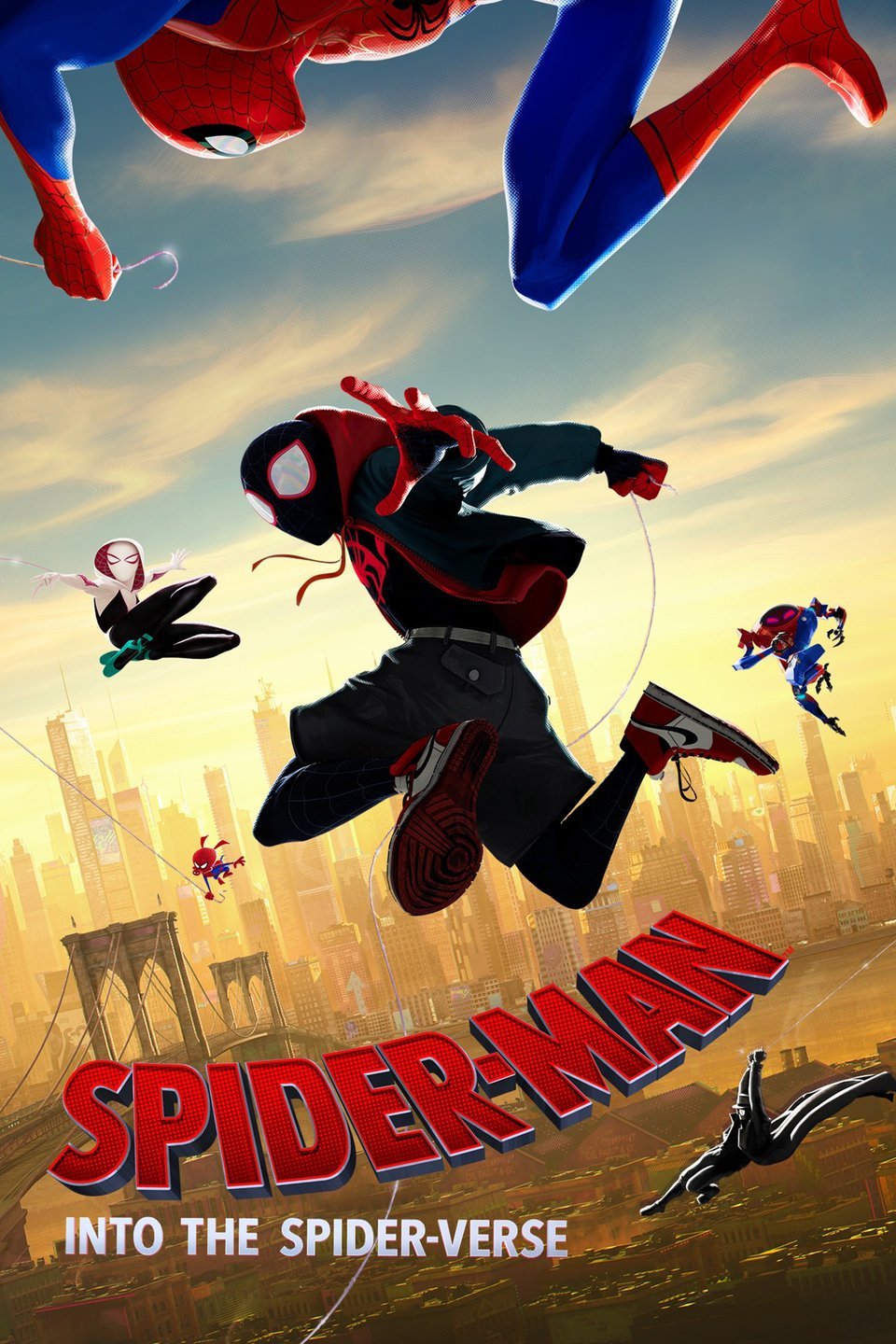
“Spider-Man: Into the Spider-Verse” brief film review

Now THIS is the amazing Spiderman! Eat your heart out Tom Holland and move over Incredibles and Ralph for the best animated feature of 2018. Even if you do not care for comic book or superhero movies, by in large, but love excellent motion pictures (animated or live-action), then I can almost guarantee that you will thoroughly enjoy and greatly appreciate Sony’s Spider-Man: Into the Spider-Verse. Although there have been a handful of animated films that I have liked in recent years, I have not felt emotionally and physiologically engaged with an animated feature to this degree since Kubo and the Two Strings. What both these animated features have in common is groundbreaking artistic precision that typifies the art of animated visual storytelling. Not only does Spider-Verse blow all other animated films out of the water this year, in terms of its contribution to the art and science of motion pictures, I put it on par with Kubo. The attention to production design details and mindblowing editing set the bar incredibly high for animated features moving forward. While the visuals have been likened to an acid trip, do not allow that to dissuade you because never once did I find the avant-garde artistic expression dizzying or obnoxious. It was completely immersive. There was genuine, tangible emotion felt in every frame. And the Stan Lee cameo was priceless. Underscoring everything on screen is the phenomenal screenplay upon which this mesmerizing animated feature is built. Undoubtedly, you will find yourself emotionally invested in the central character of Miles and the chief supporting cast, including the fantastic villain King Pin. There is so many layers to this story, and it works on several levels such as: family, love, self-sacrifice, and more. Highly recommend this film!

Ryan teaches screenwriting at the University of Tampa. If you like this article, check out the others and FOLLOW this blog! Interested in Ryan making a guest appearance on your podcast or contributing to your website? Send him a DM on Twitter or email him at RLTerry1@gmail.com! You can catch Ryan most weeks at Studio Movie Grill Tampa, so if you’re in the area, feel free to catch a movie with him!

Follow him!

Twitter: RLTerry1

Instagram: RL_Terry

“Green Book” full film review

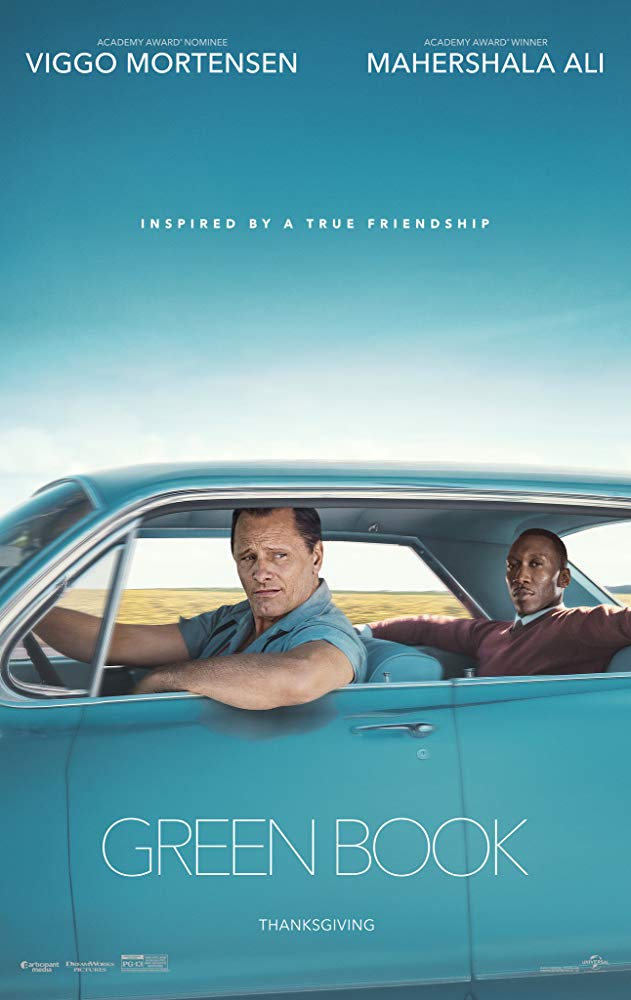
A timely thought-provoking dramedy in the style of “Driving Miss Daisy” with a charming lead cast that provides a platform to analyze racism, class, and other prejudicial issues set in the Jim Crow era South. Based on the true story, writer-director Peter Farrelly uses a buddy road trip comedy approach to tell an important, hard-hitting story that is just as relevant today as it was during the Jim Crow days of the deep south. More than relevance though, it’s an important film that can potentially start conversations about racism, classism, and many other isms or social phobias we face today. Socioeconomic and racial bigotry still exists. Perhaps those issues aren’t as formal as the Jim Crow days, but these are issues that are still alive today and need to be addressed. Film is a powerful medium for challenging the status quo or starting conversations about topics that are otherwise hard to discuss. Sometimes, a film plays it safe while dealing with tough topics such as racism. Hidden Figures and The Help come to mind. The topic is definitely at the crux of the plot, but it doesn’t go right for the jugular of the offending party. However, the screenplay written by Farrelly, Nick Vallelonga (son of Tony, the central character), and Brian Currie is an unapologetic exploration of the realities of where parts of the country were and to some degree still are. The film’s heavier moments are counterbalanced by the comedic banter between Dr. Shirley (Mahershala Ali) and Tony (Vigo Mortensen), and it is infectious! You may read that this film’s plot is predictable in many ways, and that is not untrue. However, the power of this movie is not in the mechanics of the plot, but its topical power and character dynamics and conversation between the characters that gives the film the award-winning quality it has.

Based on a true story, Dr. Don Shirley (Ali) is a world-class African-American pianist who’s about to embark on a concert tour in the Deep South in 1962. In need of a driver and protection, Shirley recruits Tony Lip (Mortensen), a tough-talking bouncer from an Italian-American neighborhood in the Bronx. Despite their differences, the two men soon develop an unexpected bond while confronting racism and danger in an era of segregation.

Being from the deep south originally, there are many elements and encounters in this film that I have witnessed. Not that racism is limited to the deep south, as we can see evidence of it all over the country, but the racism depicted in the movie still exists, to this day, in the south. Perhaps it’s not as formal or widely accepted as it once was, but remnants of the Jim Crow days can still be found in the smaller towns. However, this film is about more than racism during the Jim Crow days, it’s also tackling classism between the highly educated, wealthy white collar professional and the streetly educated, lower middle class blue collar professional. Furthermore, the film also takes a moment to highlight the degree to which gay males were criminalized in the south. Corrupt law enforcement is not new to film or media, but this film makes it a point to not depict all white law enforcement officers the same. While many of the law enforcement officers are shown as unethical, Green Book includes a friendly, concerned officer who helps Tony and Dr. Shirley on their return trip home.

I love the visually-driven stark contrast between Dr. Shirley and Tony that is supported by strong dialogue and subtext. Within a short amount of time, we learn precisely what makes each of our leading characters tick and just how different they are. Shirley is a high-class, highly educated, white robe and gold jewelry wearing Jamaican-American concert pianist who lives above Carnegie Hall and Tony is a working-class Italian-American, Bronx-dwelling, bouncer at the famed Copacabana night club. They couldn’t be from two more different worlds. Yet, Shirley sees precisely what he needs in Tony as a valet/chauffeur as he makes his way through the bigoted south. Both actors deliver exemplary performances, packed with quite the savage zingers and sarcasm. Mortensen literally packed on the extra pounds that you saw in the movie, much in the same way we witnessed Charlize Theron put on the weight for her brilliant performance in Tully. Both actors are playing characters completely opposite of their typical ones. In his first role since Moonlight, Ali couldn’t be any further from his drug-dealing character in that movie. And we seldom get to see Mortensen in comedic roles, but his facial expressions and infectious energy are well-suited to his role in Green Book.

One of the most powerful takeaways from this film is not the fact the American south was (and still is to a lesser extent) a hotbed of bigotry and inequality that was direct, it’s the indirect racism that that hid behind smiles and “legacy” laws and still hides behind tradition today. In several scenes, the reasons for Shirley’s treatment was because of long-standing rules or laws that just are the way they are. Those in power do not question whether a rule is fair because that’s the way it’s always been. And I think that form of racism is even more dangerous than the more violent kind because it’s far more prevalent even today. The film also deals with classism because Shirley looks down upon Tony even before the road trip begins. From the moment that Shirley and Tony meet, Shirley looks down upon Tony and is consistently spouting savage comments. Whereas one’s level of education or job does not determine the level of class one displays in real life, I appreciate this trope in Green Book because it helps to paint the socioeconomic contrast that pairs nicely with the racial contrast in order to setup conflict along the road trip. Whereas racism may not be something you’ve directly experienced, there is a strong possibility that you may have encountered or experienced economic or educational prejudice. Although the “caught in the act” scene between Shirley and the other male guest at the YMCA was a little “on the nose,” because it happened at a YMCA, this scene provides an opportunity to show that homophobia was (and still is, to an extent) very real in the deep south. It was even criminalized, as evident by the law enforcement detaining the men in the movie. So, if you’ve never experienced racism or classism, maybe this is something you’ve experienced in a more modern context. These areas are so very important because they allow so many people in the audience to identify with one or more areas of prejudice.

The screenplay for Green Book is so incredibly well-written! But the movie magic that allows the film to be as impactful as it is, is due to the on screen chemistry between Mortensen and Ali. However, back to the screenplay. It was brought to my attention that last year’s Phantom Thread is similar in pacing to Green Book, and that is in part due to the “slow moving” plot. But here is why I did NOT like Phantom but love Green Book: every moment in Green Book is important and full of meaning. There is not one wasted moment in the plot. Each line of dialogue was carefully constructed to drive the character development and plot forward. There is a beautiful authenticity to every moment of this film. Sometimes that authenticity is offensive (the language and attitudes of many of the southerners) and other times it is refreshingly candid. I was completely sold on Ali’s and Mortensen’s respective characters in every movement and every speech. I believe each and every character to be true to life, full of dimension and depth. Perhaps that depth is scary but other times it is heartwarming. Excellent banter is difficult to write, but the screenwriters demonstrate an uncanny ability to take a scene and make it both funny and dramatic all at the same time.

I am not sure where this this film falls in my ranking of picks for the year, but I can honestly say that it is one of my favorites. My two favorite parts of this film are the performances and screenwriting. It’s a timeless story, based ON a true story, that is a narrative that we need today as we seem to face increased prejudice between various groups of people. Is Green Book going to cure the problem with racism and classism on display in the United States? No. But this film does show that by spending time with other people from different backgrounds or cultures, we can combat these actions by learning to love and accept those who are different from ourselves.

Ryan is a screenwriting professor at the University of Tampa. If you like this article, check out the others and FOLLOW this blog!

Follow him!

Twitter: RLTerry1

Instagram: RL_Terry

Thrillz (theme parks): Thrillz.co