NOW YOU SEE ME: NOW YOU DON’T movie review

The real magic is in how this movie made it past opening night.
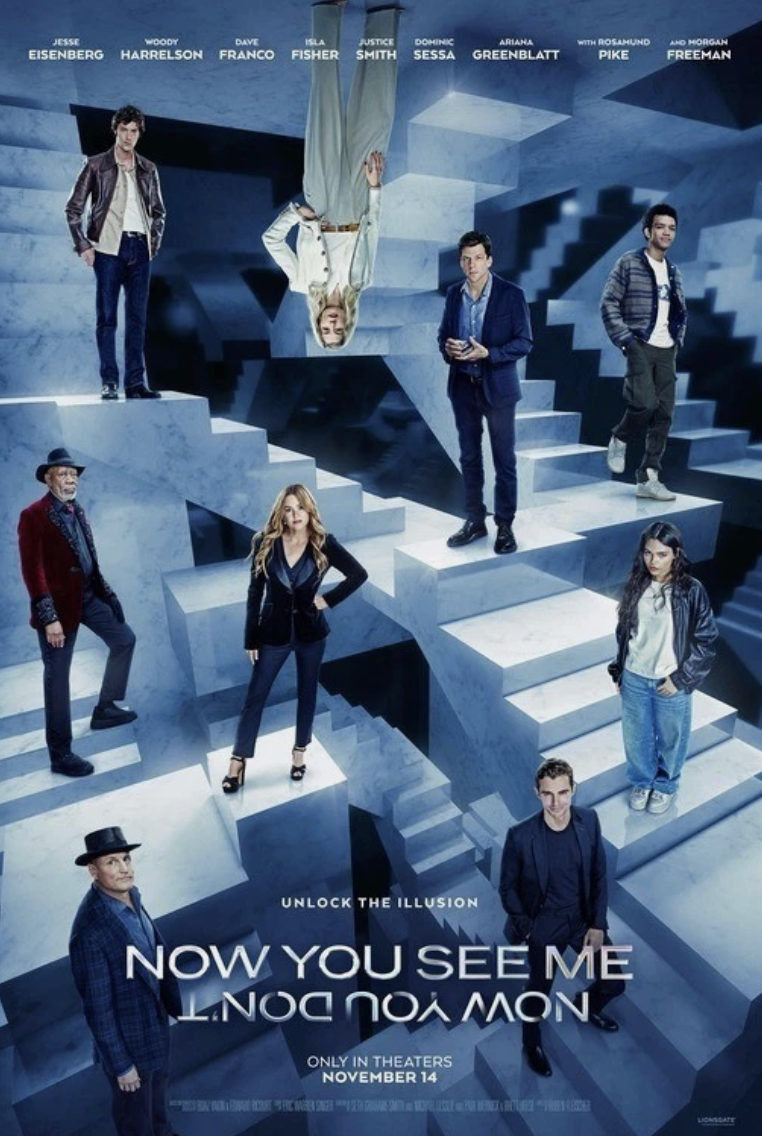
“He was an illusionist…he wasn’t a very good illusionist.” Although that comedic line is delivered by Madeline Kahn in CLUE (1985), it seems rather fitting for the tertiary installment in the Now You See Me series. Now You See Me: Now You Don’t is a cinematic magic trick without magic—an illusion performed with all the spectacle of a streaming-original and none of the wonder that made the first film such a delightful surprise. What should have been a clever caper wrapped in misdirection, sleight of hand, and showmanship instead plays like an inflated pilot episode for a franchise desperate to convince us it still has something up its sleeve.

The Four Horsemen and a new generation of illusionists try to bring down a worldwide criminal network.

Let’s begin with the one element that is genuinely spellbinding: the château sequence of scenes. The production design on display here is fantastic—one of the best production designs of the year. Every room, corridor, and shadow-drenched chamber seems crafted with the meticulous eye of an artisan. Sadly, aside from the technical achievement, this setting is little more than a backdrop to the action within its labyrinthine corridors. In another movie, this location could have been a character unto itself; here, it’s little more than an exceptionally beautiful stage for an otherwise uninspired performance. Still, credit where is due: the château alone might be the only reason this movie deserves to be seen anywhere larger than a laptop screen.

The returning cast—those legacy performers who anchored the earlier installments—slip back into their roles with charm and chemistry. Harrelson always delivers an entertaining performance–ever since his days on Cheers. The rapport between the legacy cast is believable–a once-close group of friends that hasn’t seen one another in a decade, even if the screenplay material underserves them. And yes, Morgan Freeman’s cameo is a genuine delight, a sprinkle of prestige the film desperately needed. But not even Freeman can pull a rabbit out of this hat.

Unfortunately, the three new teenage cast members derail what little fun the film attempts to muster. Obnoxious, self-righteous, and utterly allergic to accountability, they embody the worst tendencies of modern franchise youthification. The film props them up as the only ones who can “fix the world,” all while they display a profound lack of understanding of that very world’s complexities. It’s a toxic ideological cocktail—one part hubris, one part naïveté, shaken vigorously and served without nuance. Their presence doesn’t invigorate the franchise; it infantilizes it.

An overview of the plotting reveals that Now You Don’t contains more holes and narrative gaps than those the O.J. jury was willing to ignore. Motivations shift without cause, twists are telegraphed from miles away, and the screenplay is so preoccupied with its social commentary that it forgets to construct a believable story around it. The message—about the wealthy exploiting the poor—is noble in theory but executed with such superficiality that it borders on parody. It’s activism-by-template, the cinematic equivalent of most “thoughts and prayers” tweets.

Worse, the film contains no meaningful tension. It coasts on comic-book logic without embracing the fun of comic-book storytelling. Stakes evaporate. Consequences vanish. Nearly every set piece feels contrived rather than orchestrated. Magic, by its nature, requires misdirection, timing, and a suspension of disbelief; this film offers none of those. What should have been a thrilling high-wire act is instead a leisurely stroll with training wheels–or perhaps a trite-cycle of a movie.

Now You See Me: Now You Don’t is a movie that wants to dazzle but barely flickers. It lacks cinematic gravitas, emotional investment, and narrative cohesion. And much like a forgettable card trick, it should ultimately disappear from cinemas—preferably before anyone attempts to resurrect this franchise again. It’s time to vanish.
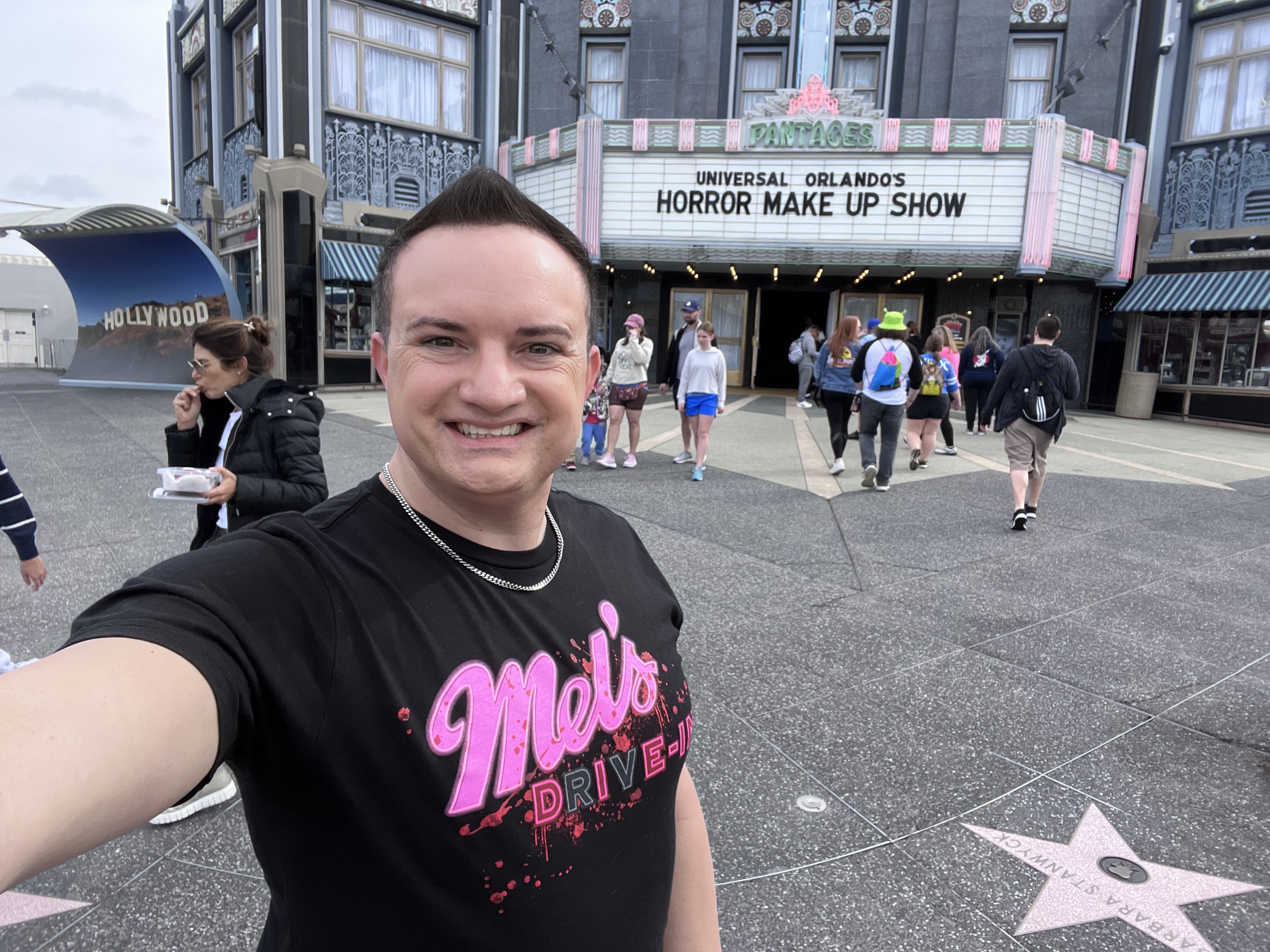
Ryan is the general manager for 90.7 WKGC Public Media and host of the show ReelTalk “where you can join the cinematic conversations frame by frame each week.” Additionally, he is the author of the upcoming film studies book titled Monsters, Madness, and Mayhem: Why People Love Horror. After teaching film studies for over eight years at the University of Tampa, he transitioned from the classroom to public media. He is a member of the Critics Association of Central Florida and Indie Film Critics of America. If you like this article, check out the others and FOLLOW this blog! Follow him on Twitter: RLTerry1 and LetterBoxd: RLTerry
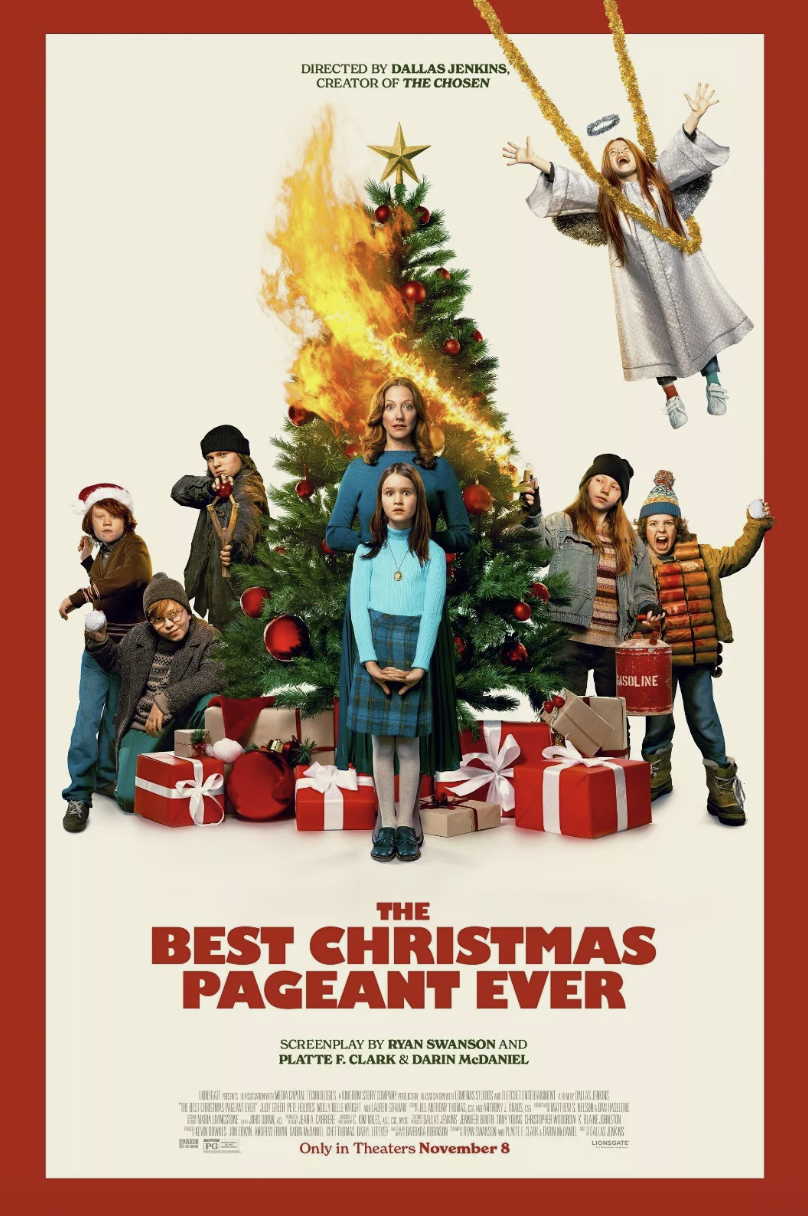
THE BEST CHRISTMAS PAGEANT EVER movie review

A heartwarming reminder of the importance of community. The movie also delivers a thoughtful critique of misplaced values. Based on the beloved 1971 children’s novel by Barbara Robinson, this big screen adaptation is a solid way to kick off the holiday season with a Christmas movie that is sure to fall into the annual movie rotations for many. Although the screenwriting demonstrably lacks refinement, there is still much to like about the movie. After a rocky first act, the movie finds its tone, despite the rough dialogue and poor pacing. Over all, it is an enjoyable movie that I will likely watch again before the Christmas season is over.

The Herdmans are six siblings who have a reputation for being the worst kids in the world. However, when they take over the local church Christmas pageant, they just might teach a shocked community the true meaning of Christmas.

Tonally, this movie falls somewhere between A Charlie Brown Christmas and A Christmas Story. While this movie may not have the same degree of memorable scenes that will find their way into the cultural zeitgeist, there are moments of hilarity and thoughtful poignancy. The movie shies not away from spotlighting the various prejudices and classism that permeate every town, particularly small towns and even amongst the imperfect people that makeup a church, but also uses the various social dynamics, at play, in the film to show how we can change for the better–after all, this is a redemption story. But it’s not a redemption story in the way we have seen in the past, with characters like Scrooge; rather, this is a redemption story about characters that talk the talk, but struggle to walk the walk. Moreover, this redemption story also follows those that are angry with the world and take out that anger and resentment on those around them. All around, this movie is full of imperfect people across the spectrum that need a wakeup call.

The movie works best when it leans into naturalism, but occasionally falters or feels uneven when it tries to strike a balance between typical faith-based movies and more mainstream ones. Some of the characters and conflicts feel like relatable albeit exaggerated versions of real life, while others feel incredibly forced and unnatural. From what I can remember, the Herdmans are more–how shall I say–earthy and raw in the book than in this film adaptation. And while we get glimpses of this, it would’ve been nice to have witnessed more of their behavioral aberrations to drive home how different they were perceived to be from their community. It’s here where we witness that Dallas Jenkins may be a better producer than director.

Bringing her trademark blend of strength, vulnerability, and sense of humor is Judy Greer as Grace, our house mom that unwittingly takes on the biggest event in her small town. All around, the principle cast is solid with a few standout performances. Some of those standout performances are from Knylee Heiman as the manic and terrifying Gladys, Beatrice Schneider as the crass Imogene, and Lorelei Olivia Mote as the self-centered diva Alice. The characters that work best are those that demonstrate stylistic differences compared to the rest of the cast. In other words, it’s the character actors that stand out in this film–and for good reason–they are both funny and act as an exaggerated reflection of real life people. We each know of people in our own lives that feel like these move people. I feel that if more characters were given something to do by the screenplay or director, that the performative dimension would’ve been above average.

Thematically, the movie reminds us that family and community traditions (particularly at Christmastime) are an important part of the human experience; however, the movie continues the conversation by its provocative reminder that traditions devoid of love and flexibility can become a trap or even a monster. It’s not the tradition itself that is important; it’s the love and community building that is most important. The tradition is merely a vessel through which we can extend love to one another. Just like Charlie Brown and his friends are reminded that Christmas is about the birth of baby King in a nondescript manger in a lowly town and, by extension, the radical changes He will bring to the world through His birth, life, death, and resurrection, the townsfolk in Emmanuel (the town in the movie) are reminded that Jesus was born for everyone, including the Herdmans, “the worst kids in the world.” And that we should care more about one another than we do keeping traditions the same simply for the sake of tradition.

After watching the movie, I am inspired to go back a reread the book. I remember reading it as a kid, and I imagine perhaps other kids of the 70s, 80s, and 90s remember reading the book as well.

Ryan taught Film Studies and Screenwriting at the University of Tampa for over eight years and has a book releasing next year titled Monsters, Madness, and Mayhem: Why People Love Horror. Recently, he has taken over 90.7 WKGC NPR in Panama City, and will be launching a film talk show soon. Additionally, he is a member of the Critics Association of Central Florida and Indie Film Critics of America. If you like this article, check out the others and FOLLOW this blog! Follow him on Twitter: RLTerry1 and LetterBoxd: RLTerry

ORDINARY ANGELS movie review

Warms the most cynical of hearts. Two-time Academy Award-winning Hilary Swank makes a triumphant return to the silver screen in Ordinary Angels. Her outstanding performance in this remarkable true story will stir your soul, and remind us that with all the conflict and self-centeredness in the world, that there are still those that strive to make it a better place, even if it’s just helping one person. Despite some pacing issues, most notably in the second act, and some forced dialogue here and there, Ordinary Angels genuinely surprised me by how well it was written and directed. Moreover, there is a discernible emotive dimension to the editing and cinematography as well. Many movies based on true stories can feel like an extension of a Wikipedia article, but not so with this film. From beginning to end, it is a moving story that provides hope for humanity even when we feel broken.

Sharon (Swank), a struggling hairdresser, finds a renewed sense of purpose when she meets Ed (Alan Ritchson), a widowed father, working hard to care for his two daughters. With his youngest critically ill and waiting for a liver transplant, the fierce woman single-handedly rallies an entire community to help.

Okay, let’s address the white elephant (for many) in the room, and get it out of the way. Yes, Ordinary Angels is a motion picture from a faith-based production company. And even I have written how those types of movies are often poorly written and acted. Generally, the technical aspects of production are on par with more mainstream studios; but the writing and acting usually suffer. Suffice it to say, that is not the case here. I was shocked by how much I enjoyed the story and how the story was crafted.

The conflict is real, relatable, and raw. The characters feel like real people, flaws and all, especially Sharon and Ed. Whether it’s a true or fictional story, I always strive to find a character(s) with whom I can identify with his or her struggles and goals, because it’s our flaws and dreams that bring us together.

Why? Relatability. Characters in motion pictures need to feel relatable. Sometimes that relatability is identified in paralleling struggles or conflicts in our own lives to that which we observe on the screen. That which is most personal is most relatable. Furthermore, often times the best heroes are those that are just as broken as those around them, but it’s the overcoming of emotional or psychological baggage that greatly resonates with us.

It’s been a while since we’ve seen Hilary Swank on the silver screen, and it was so refreshing to see her once again. She brings such gravitas to every scene in which she is featured in Ordinary Angels. Throughout this performance, there are hints of the indelible quality she brought to us in Boys Don’t Cry and Million Dollar Baby. Sharon feels like your hairdresser or your friend or neighbor. She’s the perfect every man because there is neither pretense nor anything particularly special about her, save her infectious, brassy energy. And as much fun as she’s having on the outside, she is broken on the inside. That is, until she reads of the story of the little girl who needs a liver transplant and lost her mother the year prior.

And before you begin thinking this otherwise self-centered alcoholic mother with a son from whom she is estranged does everything without care for herself, you learn that she is using her philanthropic skills to help fill a void in her own life. Yes, she cares deeply for the little girl and her family; however, deep down, Sharon is also hoping to makeup for her failures as a mother. But through her journey helping this little girl, Sharon learns how to acknowledge the demons in her own life, and to grow from them instead of always compensating for or excusing them. True healing begins in the heart.

The character of Ed is also incredibly relatable. He represents an every man whom is angry at the world, angry at God, angry with himself, and full of stubborn pride. After losing his wife, five years after she gave birth to our dying little girl, he feels abandoned by the faith he once held dear. And how many of us wouldn’t feel exactly the same after losing a loved one, and on the verge of losing another, all while trying to manage a household on a shoestring budget with medical bills mounting? His response is a very human response. I particularly like his behavior after there is a light at the end of the tunnel–he is still wrestling with all those same anger issues, but demonstrates the beginning of recapturing his faith in God and humanity.

While the subject matter is rather dark–the dire straights in which the little girl’s family finds themselves–and the fact without a liver, the little girl will most certainly die, there are moments of levity that serve as emotional resets. My biggest problem with the writing is the second act in which pacing is rather sluggish. There is about 10-15mins that could’ve easily been carved out of the second act in order to maintain proper pacing throughout the entirety of the movie. Furthermore, there are moments in which the dialogue feels more plot-driven than character-driven. Not to the point it turns into a melodrama, but some lines feel a trifle artificial.

If you’re looking for a motion picture that shows that there is still hope for humanity, hope that we can–despite differences–help one another, help our neighbor, then this is a picture to check out while it is still in cinemas.

Ryan teaches Film Studies and Screenwriting at the University of Tampa and is a member of the Critics Association of Central Florida and Indie Film Critics of America. If you like this article, check out the others and FOLLOW this blog! Interested in Ryan making a guest appearance on your podcast or contributing to your website? Send him a DM on Twitter. If you’re ever in Tampa or Orlando, feel free to catch a movie with him.

Follow him on Twitter: RLTerry1 and LetterBoxd: RLTerry

JESUS REVOLUTION movie review

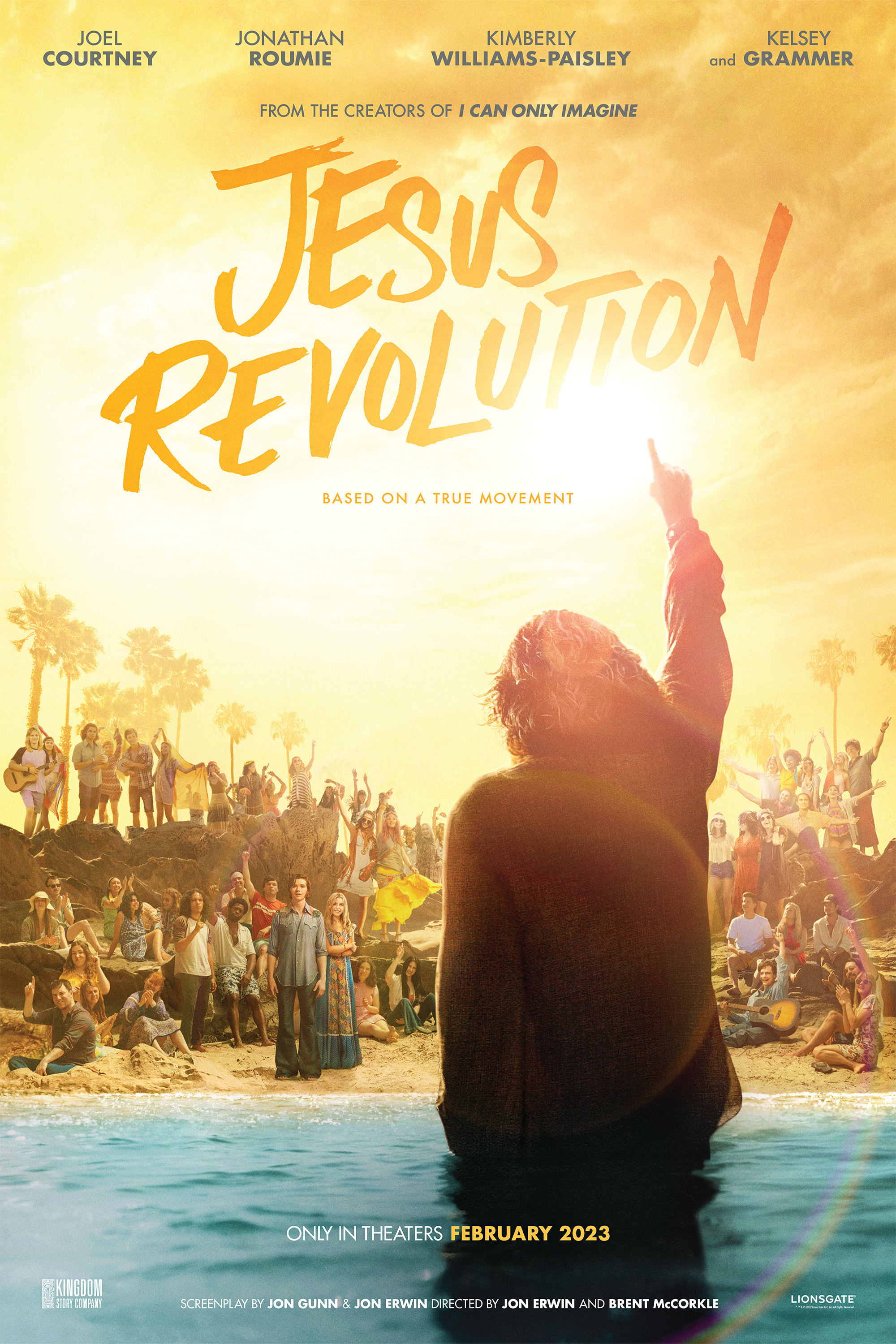
Healing and uplifting. Jesus Revolution is a biographical drama that simultaneously depicts the past whilst critiquing the present. Based on a true story about the radical search for truth, comes a motion picture that is simultaneously concerned with critiquing our present world as much as it is depicting historical events. Through exploring the past, the journey’s true value is not merely a better understanding of the past, but the impact on our present world. The real power of this motion picture is the ability for it to use a story from the past as a provocative lens through which to understand the current state of affairs in both popular culture and the Church.

In the late 1960s and early 1970s, Greg Laurie and a sea of young people descend on sunny Southern California to redefine truth through all means of liberation. Inadvertently, Laurie meets a charismatic street preacher and a pastor who open the doors to a church to a stream of wandering youth. What unfolds is a counterculture movement that becomes the greatest spiritual awakening in American history.

Directors Jon Erwin and Brent McCorkle demonstrate that they are just as concerned about the story itself as they are the methodology of crafting a film. Moreover, Jesus Revolution is the first faith-based film (that isn’t a sword and sandal epic) to take itself seriously as a motion picture. Believe me, I was as shocked as critic to find that the cinematography and editing are quite good! Not to mention the excellent lead cast. Cowriting the screenplay with Erwin is the central figure in the film Greg Laurie. Which does give me pause, because individuals writing a biographical drama based on them or major events in which they were a central figure often leads to a lack of authenticity. However, the screenplay is helped by Erwin and Jon Gunn, which is probably why the film feels as honest as it does.

The variety of characters portrayed in the film gives audiences someone with whom to connect. Which isn’t to say that the character with whom you connect is always a positive reaction; perhaps the character with whom you connect is one that is more concerned with ritual, image, and piety than with people and relationships. At the end of the day, this is a film about radical love, and how we need to concern ourselves with not what divides us but with what brings us together.

The biggest draw in the cast is Frasier himself! Kelsey Grammer plays Chuck Smith, the pastor of a dying church, whom is confronted with his own prejudgments about young people and hippie culture. It takes the radical street preacher Lonnie Frisbee and his skeptical-of-Christianity daughter to transform his world view. While Grammer is not the central character in Jesus Revolution, he is the one that you may be coming to see, especially with the highly anticipated revival of his smash hit Frasier. Suffice it to say, Grammer is the best actor in the movie, but he is surrounded by a solid lead cast that shows that faith-based films can deliver quality performances. Through candid arguments and authentic portrayals of raw conflict and reactions, this character-driven motion picture will hold up a mirror to your face and ask you which of these characters you are.

Both the cinematography and editing are on point. There are some absolutely gorgeous shot sequences and even some stylistic editing choices that exponentially increase the quality of this picture compared to most other faith-based films. Where most faith-based films fail is in the ART and SCIENCE of what it takes to craft a compelling picture. More than an objective eye to capture the outside-action plot, the camera is used in the same way an author uses a pen to write a novel. In cinematic terms we call this the camera stylo. There is certainly an auteur quality to this film that is just as concerned with how the story is being presented, and not just what is being presented to audiences.

What I appreciate more than the technical achievement of the film is the fact it doesn’t shy away from how awful christians can be to one another and to outsiders. One thing this faith-based film is not, is an echo chamber for those that already believe. The film is sure to make some people feel uncomfortable; and you know what, it’s not non-believers that this film seeks to make the most uncomfortable (although there is certainly a proselytizing message in the film), the those that are made the most uncomfortable with themselves are judgey christians that care way more about their club than for a hurting world in search for truth and in need of the kind of radical love that Jesus was all about.

Ryan teaches Film Studies and Screenwriting at the University of Tampa and is a member of the Critics Association of Central Florida and Indie Film Critics of America. If you like this article, check out the others and FOLLOW this blog! Interested in Ryan making a guest appearance on your podcast or contributing to your website? Send him a DM on Twitter. If you’re ever in Tampa or Orlando, feel free to catch a movie with him.

Follow him on Twitter: RLTerry1 and LetterBoxd: RLTerry

PLANE action movie mini-review

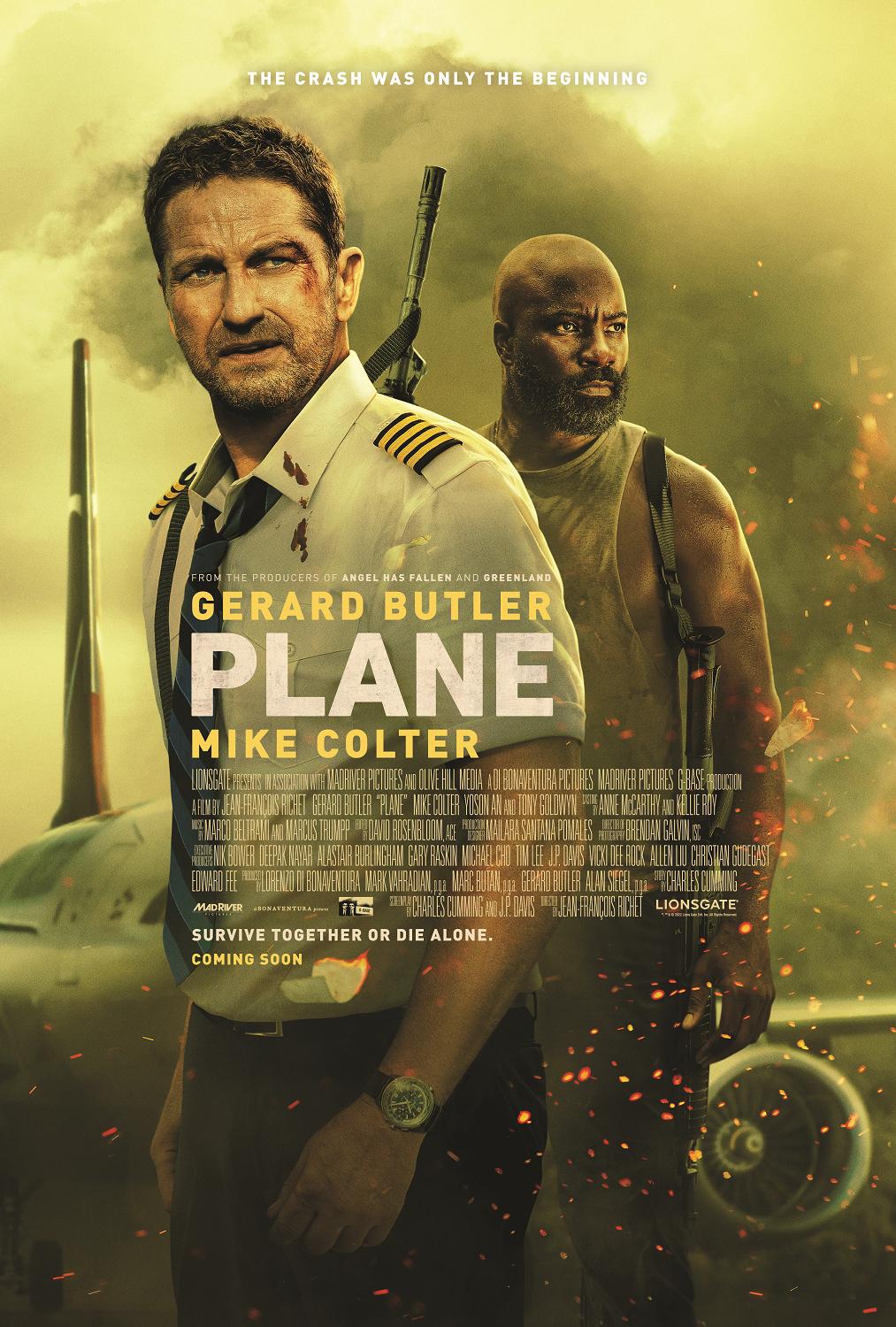
Not too plane; this non-stop action-adventure has some flavor. Received my annual dose of mindless disaster movie fun in the Gerard Butler captained Plane. Schlocky movies work best when they know precisely what they are, and rock it. Which is precisely what we have here, a sufficiently entertaining over-the-top disaster/rescue movie that understood its flight plan, and stuck to it.

Pilot Brodie Torrance (Butler) saves passengers from a lightning strike by making a risky landing on a war-torn island — only to find that surviving the landing was just the beginning. When dangerous rebels take most of the passengers hostage, the only person Torrance can count on for help is Louis Gaspare (Mike Colter), an accused murderer who was being transported by the FBI.

From takeoff to landing, Plane is exactly what you need to reset your cinema palate from the awards contender-heavy autumn to prepping for what 2023 cinema has in store for us. Strap in for Gerard Butler and Mike Colter to take you on a white knuckle adventure filled with CG squibs and death defying action. To be honest, as moderately enjoyable as the movie was, with some Die Hard dialogue and one-liners thrown in there, it would have increased the entertainment value significantly. All you need to know is that the movie is fun! Also, never forget that it’s perfectly fine for a movie to be entertaining for an hour-and-a-half and that’s it. Not everything needs to be deep, inspirational, thoughtful, avant-garde, or provocative. It’s when movies that are clearly schlocky try to be something grander, that they crash and burn. Think of Plane as some good ol’ junkfood. Perfect for one of those weekends wherein the weather is cold, snowy, or rainy.

Ryan teaches Film Studies and Screenwriting at the University of Tampa and is a member of the Critics Association of Central Florida and Indie Critics of America. If you like this article, check out the others and FOLLOW this blog! Interested in Ryan making a guest appearance on your podcast or contributing to your website? Send him a DM on Twitter. If you’re ever in Tampa or Orlando, feel free to catch a movie with him.

Follow him on Twitter: RLTerry1 and LetterBoxd: RLTerry