TOP 10 FILM SCORES OF THE 1970s: AN ECLECTIC DECADE OF TRANSFORMATION

Film scoring in the 1970s was nothing short of revolutionary. This was a decade in which composers and filmmakers experimented with sound in bold, unprecedented ways. Sweeping orchestras still had their place, but they now shared the stage with eerie minimalism, jazz-infused soundscapes, synthesizers, and even progressive rock. The result was a period of extraordinary breadth and innovation—one that gave us some of the most iconic film music ever written.

At the heart of this decade stood John Williams and Jerry Goldsmith, two composers who dominated in very different ways. Williams revived the lush, symphonic tradition and brought it back to the masses with scores that became cultural phenomena. Goldsmith, meanwhile, was the chameleon—endlessly inventive, prolific, and daring, whether working with avant-garde techniques, electronic experimentation, or lyrical orchestrations. Yet the decade was not defined by them alone. Outsiders like Goblin, with their phantasmagorical score for Suspiria, or directors such as John Carpenter, who electrified horror with nothing more than a chilling piano rhythm in Halloween, proved that iconic film music could be born outside the studio system. Jazz, soul, and early R&B also found their way into major works, mirroring the diverse cultural pulse of the era.

The soundscape of the 1970s was one where tradition collided with innovation. Bernard Hermann closed out his legendary career with Taxi Driver, a jazz-infused urban nightmare that distilled both character and city into sound. Jerry Goldsmith, the consummate innovator, moved effortlessly from the operatic choral terror of The Omen to the avant-garde dissonance of Alien and the melancholy trumpet of Chinatown—not to mention his enduring Star Trek theme, launched in The Motion Picture. Mike Oldfield’s Tubular Bells, adapted for The Exorcist, demonstrated that minimalist rock could chill as deeply as any orchestra. And Williams resurrected the grand symphonic tradition with Jaws and Star Wars, reintroducing sweeping themes and leitmotifs to a new generation. Taken together, these works made the 1970s both a bridge and a launchpad: honoring the past while daring to explore the future.

Audiences witnessed a resurgence of the full-bodied symphonic score, reviving the golden-age practice of leitmotif-driven composition. But while many scores channeled old Hollywood, these same scores were blazing new trails–trails that future filmmakers would tread and further develop in their own voices. Yet the 1970s were hardly a return to tradition alone. From fragmented jazz and abrasive brass to minimalist repetition that conveyed inevitability, film scores proved that music could disturb and destabilize as effectively as it could uplift. Musical expressions across a wide spectrum were represented and fused throughout the decade. This eclecticism was witnessed in the integration of jazz, rock, and popular styles into film scoring. Jazz, long associated with improvisation and urban grit, seeped into dramas and thrillers, while progressive rock and folk elements brought an otherworldly quality to European cinema.

This embrace of contemporary genres reflected the cultural currents of the 1970s, when popular music increasingly shaped the everyday soundscape. Although electronic instruments are often associated with the 1980s, experimentation with synthesizers truly began in the 1970s. By blending traditional compositional techniques with new technology, composers created atmospheres that felt immense, uncanny, and otherworldly. Horror, in particular, became the proving ground for these sonic experiments. From the satanic choral grandeur of The Omen to the eerie repetition of The Exorcist, the avant-garde unease of Alien, and the surrealism of Suspiria, horror films became laboratories for innovation—setting trends that rippled across genres.

The eclecticism of 1970s film scoring mirrored the turbulence and transformation of American life during that same decade. The United States was navigating a shifting cultural landscape—post-Vietnam disillusionment, Watergate’s erosion of political trust, an energy crisis, and social movements that challenged the norms of race, gender, and identity. Just as the nation was renegotiating its sense of self, film music was renegotiating its role in storytelling. The return of grand symphonic scores reflected a yearning for stability, heroism, and mythmaking in a time of uncertainty. At the same time, the rise of dissonance, minimalism, and electronic experimentation resonated with audiences living through an era of anxiety and rapid change. Just as the decade was defined by eclectic fashion, political unrest, and artistic upheaval, so too was its film music characterized by hybridity, boldness, and the breaking of old rules. The cinema became a cultural mirror, wherein the nation’s contradictions—fear and hope, nostalgia and progress, tradition and innovation—were set to music.

The 1970s also reasserted film scores as cultural touchstones, in ways not witnessed since Herrmann’s Psycho. John Williams work and name became instantly recognizable beyond the movie theatre, entering the cultural lexicon in a way few film scores had before. Jerry Goldsmith pushed the boundaries of what film music could evoke, Nino Rota created hauntingly elegant themes with operatic weight. Meanwhile, Mike Oldfield’s Tubular Bells proved that a minimalist rock piece could achieve global recognition and forever alter the sound of horror. Collectively, these works and more reestablished film music not merely as background support, but as a defining element of a film’s identity—inseparable from its success and enduring in the popular imagination.

The 1970s forever changed how we would hear cinema.

This week, on my show ReelTalk on WKGC Public Media, I sat down with music professor Dr. Steven DiBlasi to countdown our Top Ten Film Scores of the 1970s. Our respective lists both aligned and diverged, covering the wide spectrum of great, memorable film music that was the 1970s. Below, you will find our respective Top 10 lists, but for the full conversation (approx 1hr), you’ll want to listen to the episode!

Listen

Top 10 Film Scores of the 1970s

Mine (Ryan’s)

Dr. DiBlasi’s

  • 10. Taxi Driver (Bernard Herrmann, 1976)
  • 9. The Godfather (Nino Rota, 1972)
  • 8. Chinatown (Jerry Goldsmith, 1974)
  • 7. The Omen (Jerry Goldsmith, 1976)
  • 6. Alien (Jerry Goldsmith, 1979)
  • 5. Star Wars (John Williams, 1977)
  • 4. Jaws (John Williams, 1975)
  • 3. Suspiria (Goblin, 1977)
  • 2. Halloween (John Carpenter, 1978)
  • 1. The Exorcist (Mike Oldfield, 1973)
  • 10. The Petrified Forest (Toro Takemitsu, 1973)
  • 9. Days of Heaven (Ennio Morricone, 1978)
  • 8. Space is the Place (Sun Ra, 1974)
  • 7. A Clockwork Orange (Wendy Carlos, 1971)
  • 6. Don’t Look Now (Pino Donaggio, 1973)
  • 5. Shaft (Isaac Hayes, 1971)
  • 4. Taxi Driver (Bernard Hermann, 1976)
  • 3. Chinatown (Jerry Goldsmith, 1974)
  • 2. Hurricane (Nino Rota, 1979)
  • 1. Star Trek: TMP (Jerry Goldsmith, 1979)

Ultimately, the 1970s was a transformative decade of film music, both a bridge and a launchpad. It bridged the golden age of orchestral scoring with the bold experimentation of the modern era, while launching the blockbuster tradition and electronic innovation that would dominate the decades to come. The eclecticism of 1970s film music remains its hallmark, and its influence can still be heard in how cinema sounds today.
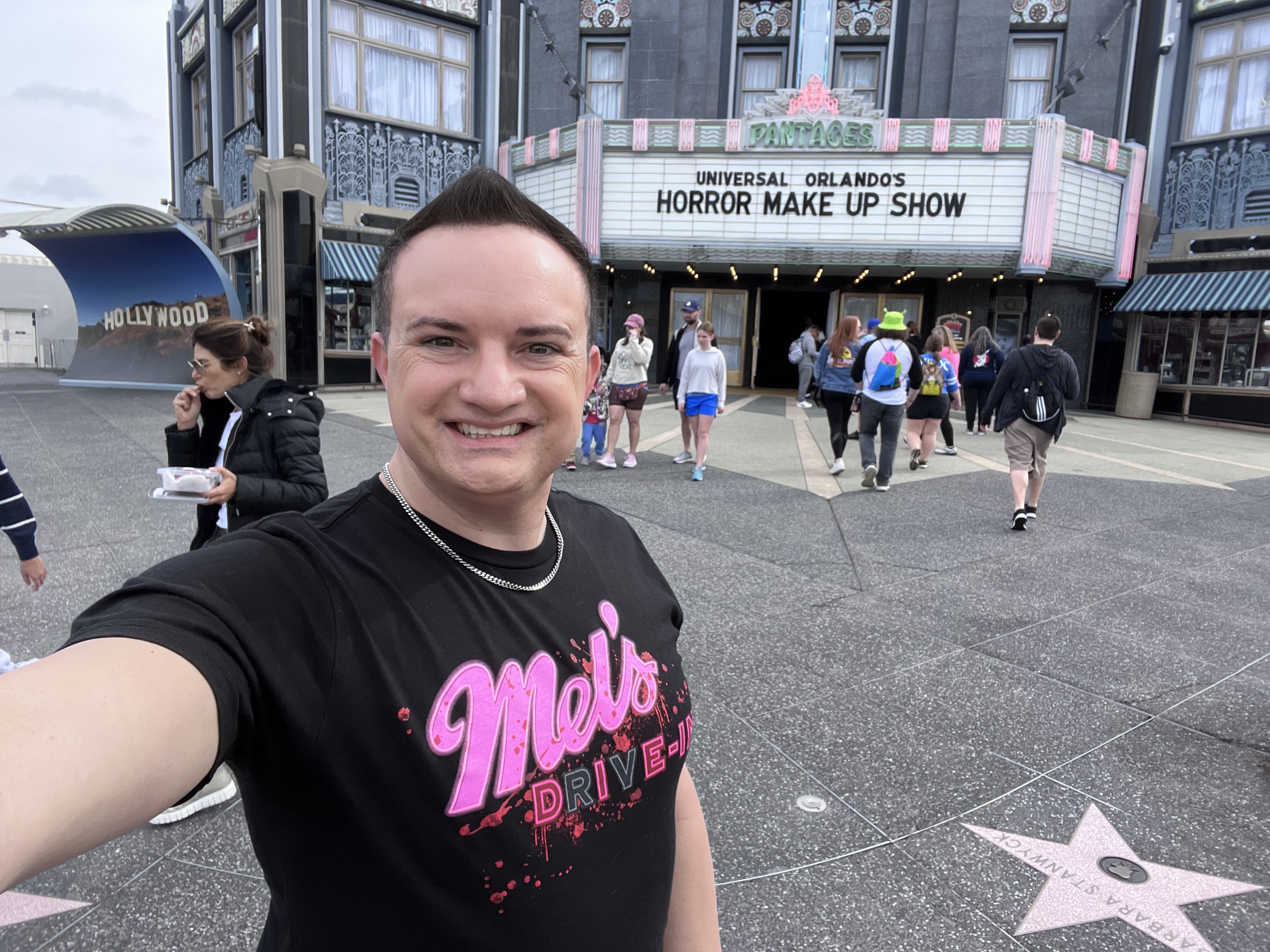
Ryan is the general manager for 90.7 WKGC Public Media in Panama City and host of the public radio show ReelTalk “where you can join the cinematic conversations frame by frame each week.” Additionally, he is the author of the upcoming film studies book titled Monsters, Madness, and Mayhem: Why People Love Horror. After teaching film studies for over eight years at the University of Tampa, he transitioned from the classroom to public media. He is a member of the Critics Association of Central Florida and Indie Film Critics of America. If you like this article, check out the others and FOLLOW this blog! Follow him on Twitter: RLTerry1 and LetterBoxd: RLTerry
Sinister Summer: “Jaws” Retrospective Horror Film Review

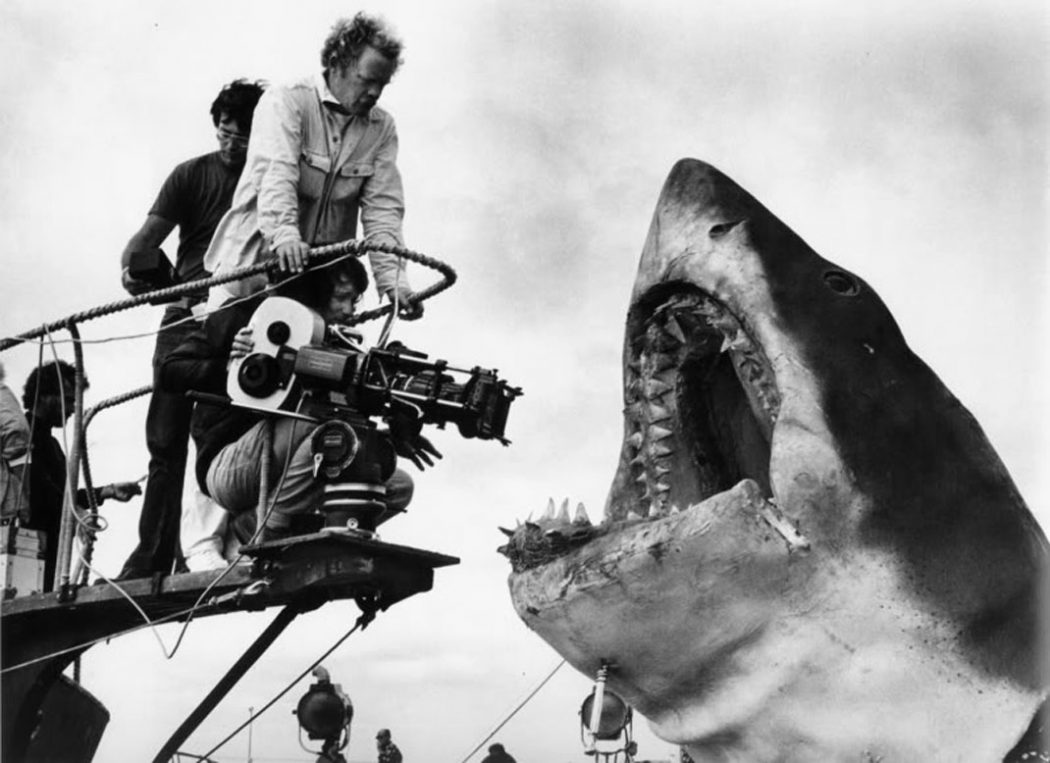
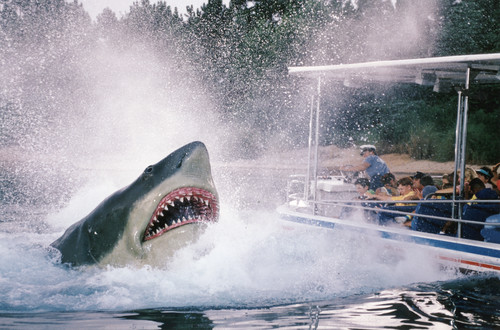
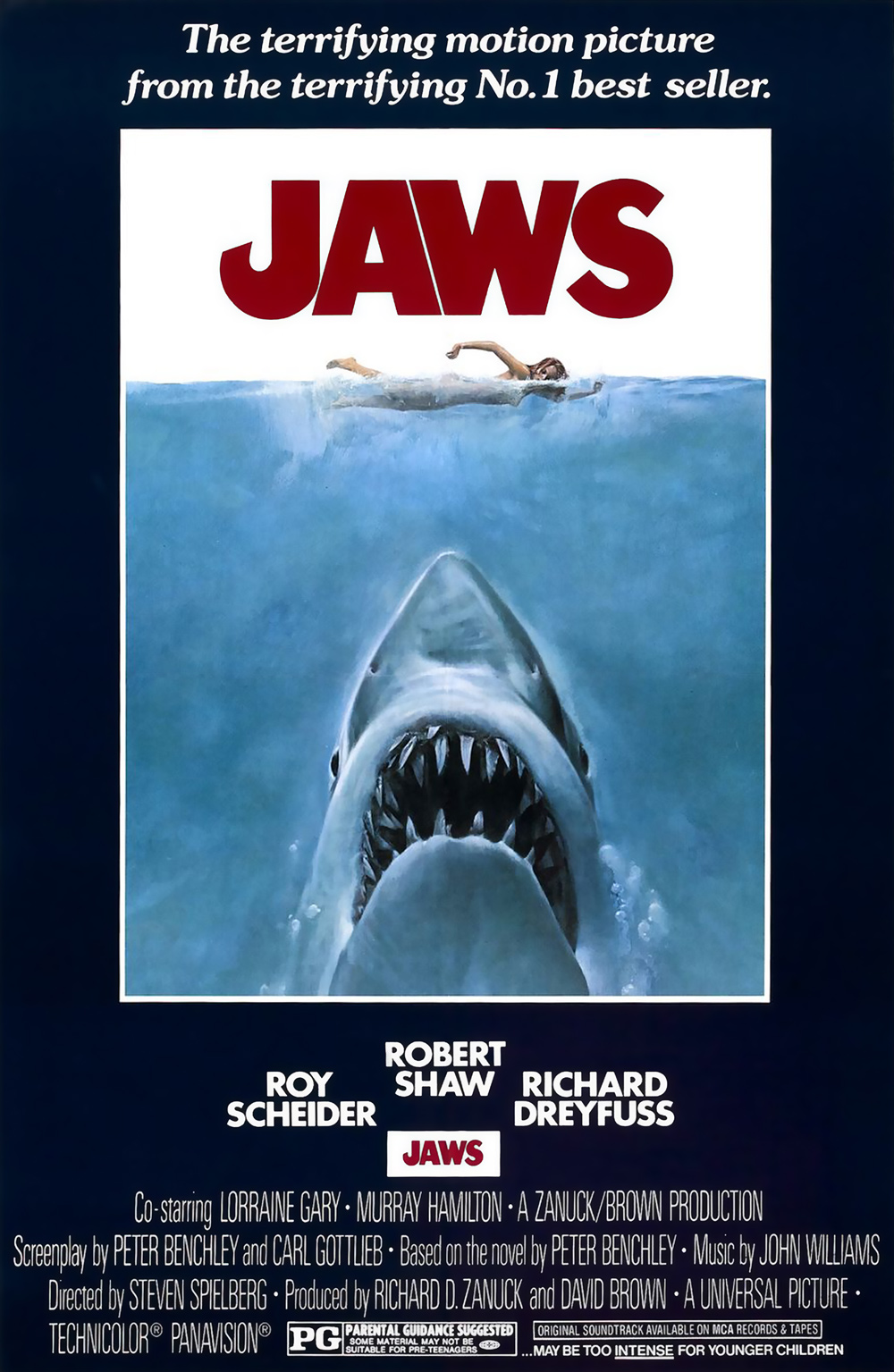
The original blockbuster! With The Meg opening tonight, the next article in my Sinister Summer series is a retrospective on Jaws (1975). And, we still “need a bigger boat” after all these years. Beginning with the iconic minimalistic score by John Williams, Steven Spielberg’s Jaws is still keeping people out of the water more than forty years later. Beyond the film, you can still face off with the most famous shark in cinema history at Universal Studios Hollywood. A favorite for folks to watch on July 4th each year (as I do), this film became the standard for the modern horror creature feature. And at only four minutes on screen, Bruce (Jaws’ nickname), successfully terrified audiences then and continues to frighten beachgoers today. For all intents and purposes, this iconic film set the bar for and essentially created this subgenre of horror movies featuring man-eating monsters from the natural world that exist in places where we typically find joy and relaxation. The ocean, theme parks, rivers, lakes–these innocent places become the setting for unimaginable terror.

If you are old enough to have watched it in theatres in 1975 or fortunate enough to have attended the special 40th Anniversary screenings back in 2015, then you can attest to the film’s evergreen ability to scare you out of your wits. When I watched it on the big screen in 2015, the auditorium was filled nearly to capacity with kids, teenagers, and adults. To see this iconic film on the big screen was truly a memorable experience. Especially so around where I live, since the gulf beaches are just down the road. The atmosphere was incredibly fun. All of these fans, most of which had likely seen Jaws before, were gathered together to relive the terrifying experience of a man-eating shark terrorizing a small New England town during the July 4th holiday season. But why would so many people pay to see a film that they had seen at no additional cost on TV or watched on DVD/BluRay?

Much in the same way Alfred Hitchcock’s Psycho is often credited, and rightly so, for being the first modern horror film and forerunner to the classic slasher; likewise, Spielberg’s adaptation of Peter Benchley’s novel Jaws is credited as the first modern creature feature horror film and forerunner to the blockbuster (or event movie). I am not negating King Kong, Creature from the Black Lagoon, or other predecessors; it’s important to take note of the word modern. Aside from excellent, visionary direction, both Psycho and Jaws have three important elements in common (1) powerhouse cast (2) strategic suspense and (3) a brilliant, oft-parodied, burned in your mind musical score.

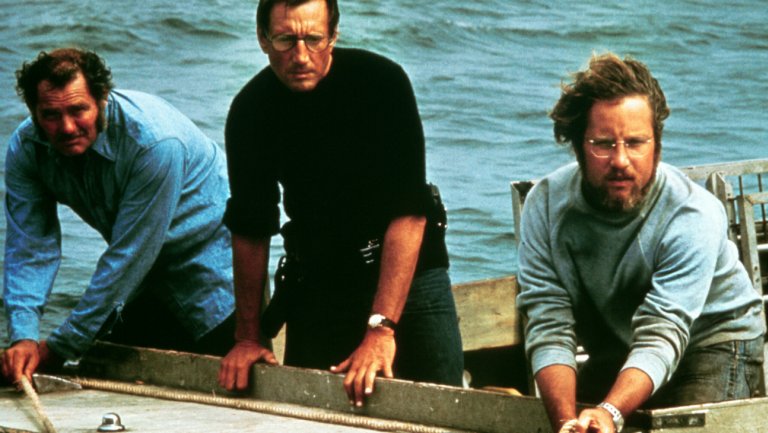
It probably seems like you were born with John William’s two-note Jaws theme in your head, much like Bernard Hermann’s Psycho screeches. The terrifying suspense of Jaws comes in the form of a PG movie. That’s right, Jaws is rated PG. But this film delivers a bigger and more memorable punch than any gory torture porn horror film ever could. The groundbreaking structure of both these legendary films are the prototypes from which their respective branches of horror films are derived. They are the blueprint, if you will, for suspense and horror. The manner in which the suspense is drawn out for most of the movie assists in the ability to enjoy it over and over again, without it ever feeling like a B movie. The drawn out suspense engages you emotionally and psychologically. The feeling of dread lingers and lingers. In fact, you don’t truly see Bruce until the third act of the film when he jumps out of the water in an attempt to bite off the arm of Chief Brody. This intentional drawing out of suspense makes the delivery of that moment pack a powerful punch, an assault on the eyes and mind. Both Psycho and Jaws benefit from an excellent cast. The respective casts could not have been any better. Interestingly, in order to not allow the cast to overpower the story or shark, Spielberg didn’t choose actors with an instant command presence. But they displayed a strong presence nevertheless. It never feels as if they are acting, but truly become the characters they are portraying. The relatability of the characters is partly due to the screenplays, but it takes phenomenal actors to successfully bring these characters to life. Spielberg would repeat this same successful approach to creating blockbusters E.T. the Extra Terrestrial and Jurassic Park.

For more on suspense, checkout this video featuring Hitchcock himself.

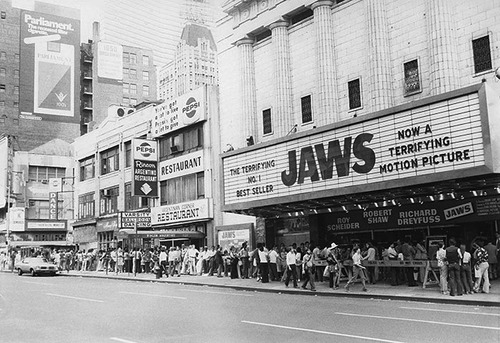
When Jaws is referred to as the original blockbuster, it’s not simply due to being the first film to break the $100mil box office sales mark, toppling the records previously set and held by The Exorcist and The Godfather. That is a valid observation, but is ultimately incidental. Reasoning behind this thriller’s ability to create the concept of a blockbuster movie is the fact Jaws was seen as an event not to be missed. Looking back at the original crowds of 1975, you’d think the movie was a one-night-only big event. Hence the term blockbuster. The common adjective attributed to big summer movies literally derives from the fact that queues for the box office wrapped around city blocks. It busted the block, so to speak. And the rest is history! Coupled with the summer release date and ticket sales, the allure of Jaws generated levels of enthusiasm and interest never seen before. The film took in so much money at its opening, that it nearly made up the entire production budget by the end of the first week. Furthermore, distribution and marketing companies began to use Jaws as a model for future marketing efforts in order to attempt to generate another blockbuster effect. After Jaws in 1975, the next big blockbuster would be George Lucas’ Star Wars IV: A New Hope in 1977. All these factors contribute to the iconic status of Jaws in terms of its contribution to film business.

Instead of building a thriller on shock value, disturbing imagery, or jump scares, author Peter Benchley’s screenplay for Jaws focussed on crafting a cinematic atmosphere that had an intimate, claustrophobic feel built upon well-crafted drama through character development and conflict, at the center of which is a little heart. Different from contemporary creature features, Jaws picks off swimmers in the single digits and those attacks all happen at a single beach on a small island off the coast of Massachusetts. And instead of an entire agency hunting down the man-killer shark, three unlikely men are forcibly thrown together in order to track down and eliminate the terror from the waters off Amity Island. Keeping the principle cast and environment small, enabled the drama to perform strongly. Big things do come in small packages. Coupled with the strong performances from the entire leading cast, this brilliant combination of cinematic elements works together to give us some of the most memorable lines, scenes, and cinematography in movie history. Furthermore, real people swept up into an impossible situation and foolish decisions enable the audience to identify with the characters and the setting in ways that make the terror feel all the more real and close to home–or the beach.

While Bruce is often thought to be the villain of Jaws–and no mistaking it, he is definitely an antagonist–I argue that the true opposition to the goal in the plot is Amity’s mayor. If we accept the goal is to apprehend or kill the man-eating shark, then Vaughn serves as opposing that action. Perhaps you’ve never though of the true villain of Jaws being Mayor Larry Vaughn. A close analysis of the plot reveals that Jaws (Bruce) functions more as a catalyst for the principle conflict between Chief Brody and Vaughn. Other than the death at the beginning of the film, the Mayor is indirectly responsible for the remaining deaths. After all, it’s due to his utter complacency, negligence, and classic greed that led to the other deaths. For most of the film, we spend far more time with Chief Brody’s continued conflict dealing with the social pressures, desires, and ill-fated decisions of his boss than we do with shark attacks. Mayor Vaughn fails to acknowledge the sheer gravity of the dangerous situation, and close Amity’s beaches in order to keep his citizens safe. In effect, he fed them to the shark. Seems like a villainous action to me. Bruce was being a shark, Vaughn was the villain.

Often the central character’s development hinges on the direct and indirect conflict with the opposition to the goal of the plot. In this scenario, Mayor Vaughn stands between Brody and Bruce. The moments in which Brody demonstrates measurable growth in his character arc are when he attempts to stand up to the Mayor showcasing a contrast between public safety and a combination of politics and economics. Unfortunately, we never witness Brody truly standing up to the Mayor to enact measurable change per se; however, it isn’t needed because we witness several moments of Brody shouldering the responsibility of protecting the citizens of Amity as a civil servant. By contrast, Vaughn is more preoccupied with a warped view of  civic responsibility that places more importance on increasing the bottom line of the local businesses than public safety. He rationalizes his position opposing the advice of Brody by engaging in classic psychological defense mechanisms such as denial, displacement, and projection. Vaughn’s actions throughout the film depict an elected leader with misplaced priorities in order to better his own career.

The success of Jaws and reasons why it continues to stand the test of time has more to do with the beauty in simplicity and strategic marketing than Spielberg’s filmmaking. Don’t get me wrong, Spielberg is an excellent storyteller and directed many of our favorite films such as this one, Jurassic ParkE.T.Poltergeist (with Tobe Hooper), and more, but it’s the strong screenplay and innovative marketing efforts that give Jaws the chutzpah it has. Jaws quite literally changed the way studios market “blockbuster” films. Prior to Jaws‘ release, the only films to get wide, general releases were B-movies and exploitation films, but Universal Pictures took the chance at cramming Jaws into as many screens as possible, and it paid off in spades! Jaws wasn’t the first film to book theatres in this was, but it was the first to be well-received by by critics and fans. The film was an instant success!

Even if you trust the statistics that you are more likely to be injured or die in a car accident than be attacked by a shark, Jaws still leaves you wondering what may lurk in the depths of the ocean, and by extension lakes and rivers (thanks in part to Animal Planet’s River Monsters). There is a lingering feeling, even if in the back of your mind, that a man-eating shark could live in our oceans. That is the power of this film and why it has continued to pervade popular culture for more than 40 years. Its influence on popular culture is certainly not limited to the dozens or imitations such as Lake PlacidPiranha, Deep Blue Sea, or parodies like Sharknado, but it serves as the inspiration for Discovery Channel’s Shark Week, the Monster Jam monster truck Megalodon, theme park attractions, and the music is often used in unrelated TV shows and movies. Lines, imagery, music, and characters are permanently embedded in the psyche of the general public.