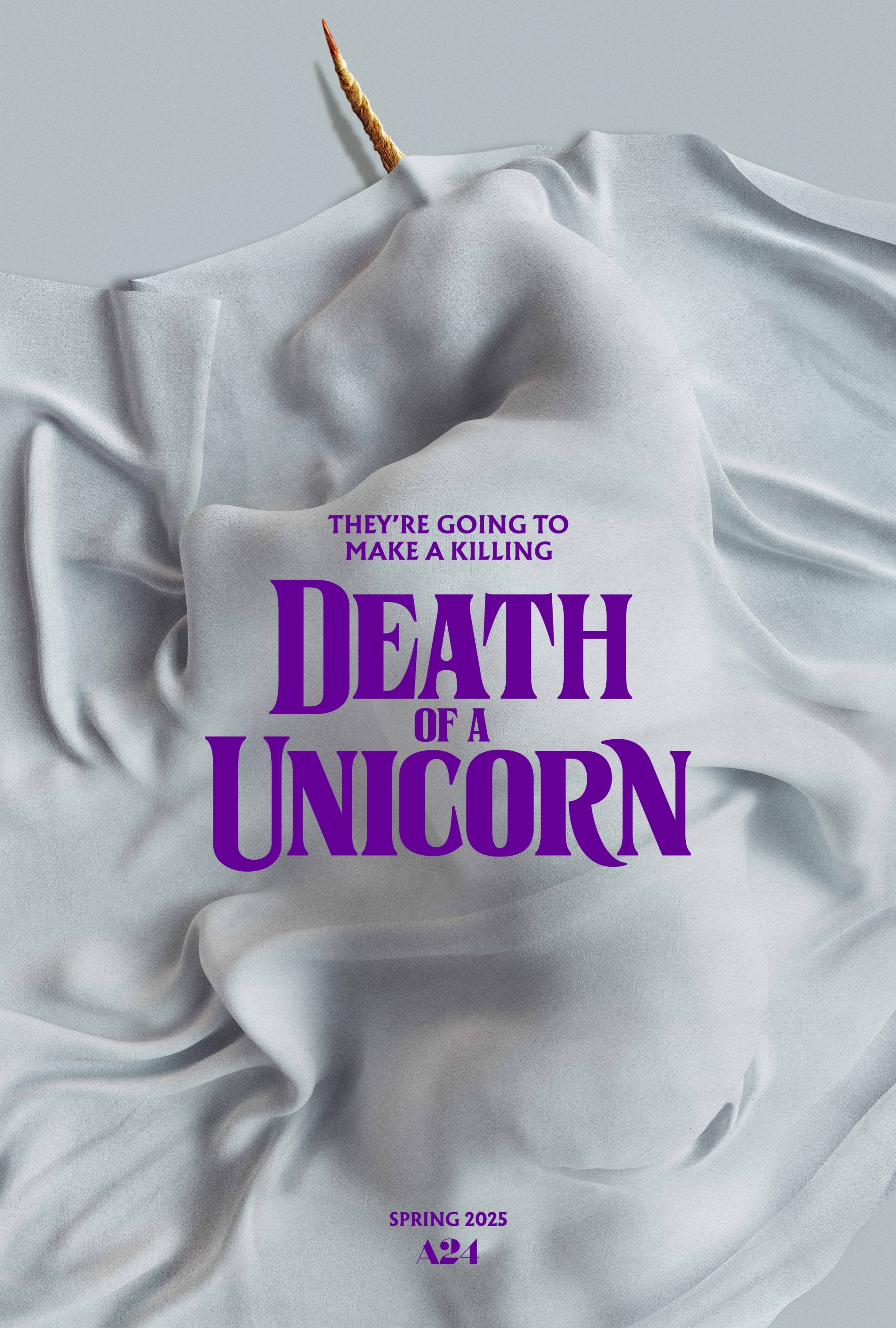
DEATH OF A UNICORN horror comedy mini review

Loads of fun! Death of a Unicorn is Atypical for A24 in all the best ways possible. It’s entertaining, well-written, and smartly balances horror and comedy. While it delivers the social critiques and commentary that are par for the A24 course, the outside/action plotting is strong!

When a man and his daughter accidentally hit and kill a unicorn with their car, his boss tries to exploit the creature’s miraculous curative properties — with horrific results.

While the first act drags a bit, the rest of the movie is a wildly engaging roller coaster ride as folklore and the contemporary world collide in a unicorn gorefest that simultaneously explores the flawed nature of a self-centered moral compass and acts of greed disguised as altruism. Knowing very little of actual unicorn mythology and lore, this movie piqued my curiosity to learn more about these magical creatures because the literary and cultural history is rather fascinating.

Looking to the unicorns themselves, this movie employs a combination of both practical and digital effects to bring the illusive creatures to life. By combining puppetry and computer generated imagery, the unicorns feel lifelike and the reactions from the cast appear to be borne out of genuine fear and desperation for survival. Speaking of the cast, I feel that Rudd and Ortega were miscast in the movie. I don’t buy either one of them in their respective roles, and feel that a better casting may have helped the delivery of the first act.

Clearly, writer-director Alex Scharfman has a fondness for old school creature features, and I can appreciate much of how he adapted the classic creature feature to fit a contemporary sensibility. Death of a Unicorn could become a modern creature feature that is revisited throughout the years–only time will tell.

What I appreciate most is that you can read the whole critique on big Pharma and abuse of natural resources and exploitation of wildlife, BUT you could just as easily enjoy it for the Jurassic Park-inspired survival story. Honestly, it did JP better than JP3 onward.

While I may not be high on the first act or the casting of the two leads, this is still one of my favorite A24 films. In fact, it probably ranks as the most entertaining A24 release for me.

Ryan is the general manager for 90.7 WKGC Public Media in Panama City and host of the public radio show ReelTalk about all things cinema. Additionally, he is the author of the upcoming film studies book titled Monsters, Madness, and Mayhem: Why People Love Horror. After teaching film studies for over eight years at the University of Tampa, he transitioned from the classroom to public media. He is a member of the Critics Association of Central Florida and Indie Film Critics of America. If you like this article, check out the others and FOLLOW this blog! Follow him on Twitter: RLTerry1 and LetterBoxd: RLTerry

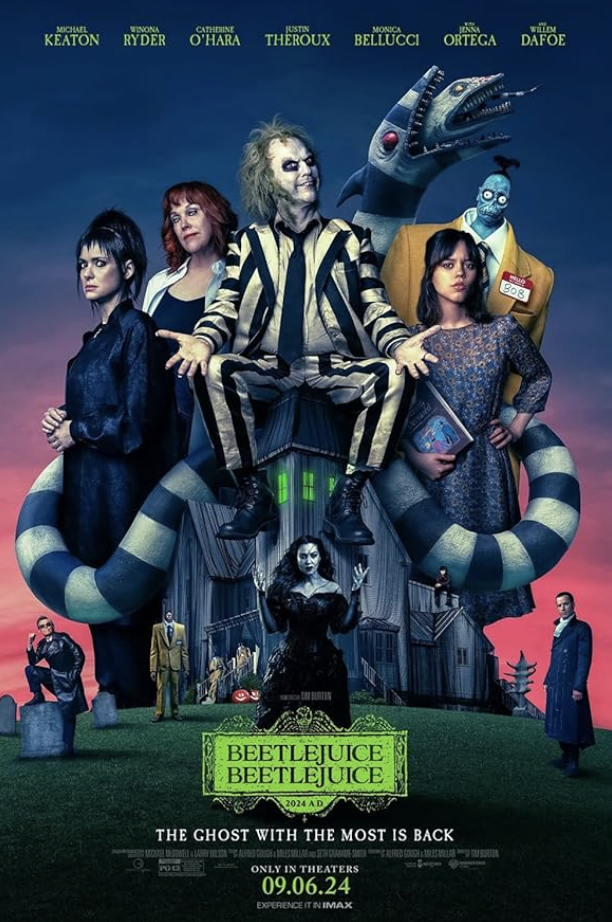
BEETLEJUICE BEETLEJUICE movie review

Forgettable and messy. The long awaited and much anticipated sequel to the campy cult classic Beetlejuice is unfortunately an underwhelming return to the fantastical, whimsical universe of colorful and dynamic characters. I’m left asking myself, this is the story for which Burton has been waiting???

Three generations of the Deetz family return home to Winter River after an unexpected family tragedy. Still haunted by Beetlejuice, Lydia’s life soon gets turned upside down when her rebellious teenage daughter discovers a mysterious portal to the afterlife. When someone says Beetlejuice’s name three times, the mischievous demon gleefully returns to unleash his very own brand of mayhem.

Beetlejuice Beetlejuice is a disjoined mess of setup after setup, with little development or meaningful resolution. Even though it successfully channels some of the charm and macabre whimsy of the original, this one is missing something vital–heart. What is most painful to witness is that there is actually a good and even compelling story in there, but its’ buried beneath a garbage heap of subplots and characters that are little more than the equivalent of an NPC (video game-speak for non player character). While the screenplay is abysmal, the bright spots in the movie are Michael Keaton’s delightful reprisal of Beetlejuice, despite his reveal appearing too early in the story. Other highlights of the movie are the quintessentially Burton special makeup and practical effects, including miniatures and puppetry. And composer Danny Elfman lends his distinctive authorship to the score. For fans of the original, this one is likely going to disappoint, but perhaps for those that may be getting introduced to the world of Beetlejuice for the first time, will seek out the original campy classic. At the end of the day, it’s not all bad, but it’s far from good. At best, it’s sufficiently entertaining.

Before getting into what didn’t work, which is substantive, I’d be remiss not to spotlight what the movie did right. The big question, did Burton and Keaton revive ol’ Beetlejuice? And the answer is, yes. The character of Beetlejuice himself is the reason the movie has enjoyable moments and will keep you moderately entertained. Keaton delivers a Beetlejuice that makes you forget that he hasn’t played this character in nearly 40 years. For the most part, he captures the energy, wit, sarcasm, and offbeat charm of his original incarnation. Unfortunately, that cannot be said for the rest of the performative dimension. But more on that later.

Over all, the design of the movie harkens back to the Burton’s golden age in the 80s and 90s, except when he lays practical effects over CGI backgrounds or oscillates between both mechanical and digital in jarring ways. From beginning to end, movie magic is witnessed everywhere. Burton was committed to capturing the imagery of the original in both the costumes and set design, and by in large, he accomplished just that. This movie is a reminder that computers cannot replace the way real light bounces off real objects into the camera lens. The magic of motion pictures is a combination of tactile, chemical, performative, and lighting elements. Despite the Afterlife lacking true camp value, it was a successful return to the imaginative world created by Burton in the original movie.

Regrettably, the movie fails to deliver a compelling or even coherent story. It’s a disjoined mess of ideas that couldn’t have possibly made sense on paper, let alone on the screen. The first act moves along sluggishly, but picks up pacing in the second and third; however, very little (if anything of meaningful value) is developed or resolved that is setup in the first and second acts. There are literally entire characters that serve little to no purpose in the story. And, without getting into spoilers, there is a compelling plot that is excellently setup, but the development and resolution is so sloppy it just hurts the narrative all the more. Even a notable cameo is completely wasted as it bears little importance to the story. It’s hard to even call it a story because it’s lacking a plot, a central character, and a character of opposition; there isn’t even a real goal to be achieved. While the character of Beetlejuice is known for his chaotic behavior, the narrative need’t exhibited the same level of randomness and chaos as exhibited by our title character.

Speaking of characters, the reason that the performative dimension is sorely lacking any modicum of substance is because the characters are given nothing to do. There is little reason for anyone to be doing anything. Furthermore, the Delia and Lydia we get in the original are not the Delia and Lydia we witness in this movie, and Lydia’s daughter Astrid is simply not believable as an angsty teenager. With a little motivation and dimension, the characters would’ve likely been highly entertaining and compelling; but, they are lacking any dimension whatsoever.

Tonally, the movie is all over the place. All over the place except for the one place it needed to be. And that is camp. For a movie that should’ve eat, slept, breathed camp, it plays it too seriously and tonally inconsistent. Yes, there are what we would usually refer to as campy costumes and characters in the movie, but the context is lacking that camp aesthetic and sensibility, for which Burton is (or used to be) known. Contributing to the tone of the movie is the Elfman score that only feels like Elfman sometimes. It’s like a composer imitating Elfman. Yes, we get the classic Beetlejuice theme music, but other than that, I’d be hard -pressed to identify any other musical moments that felt like Elfman.

The movie does deliver some entertaining moments, but sadly they are few in number. When the movie works, it works! But it simply does not work sufficiently enough. Also, the lines “…strange and unusual” and “it’s showtime” are nowhere to be found. There was also a setup for a much-needed scathing critique on influencers and influencer culture, but that setup too wasn’t developed. So many great ideas that are completely disconnected.

Watch if you simply want to enjoy some movie magic and familiar characters, but don’t expect to be quoting this sequel like you do the original. I’ll leave you with this, the fact that Lydia’s TV show is titled “Ghost House” is a nice nod to the original title of Beetlejuice.

Ryan teaches Film Studies and Screenwriting at the University of Tampa and is a member of the Critics Association of Central Florida and Indie Film Critics of America. If you like this article, check out the others and FOLLOW this blog! Interested in Ryan making a guest appearance on your podcast or contributing to your website? Send him a DM on Twitter. If you’re ever in Tampa or Orlando, feel free to catch a movie with him.

Follow him on Twitter: RLTerry1 and LetterBoxd: RLTerry

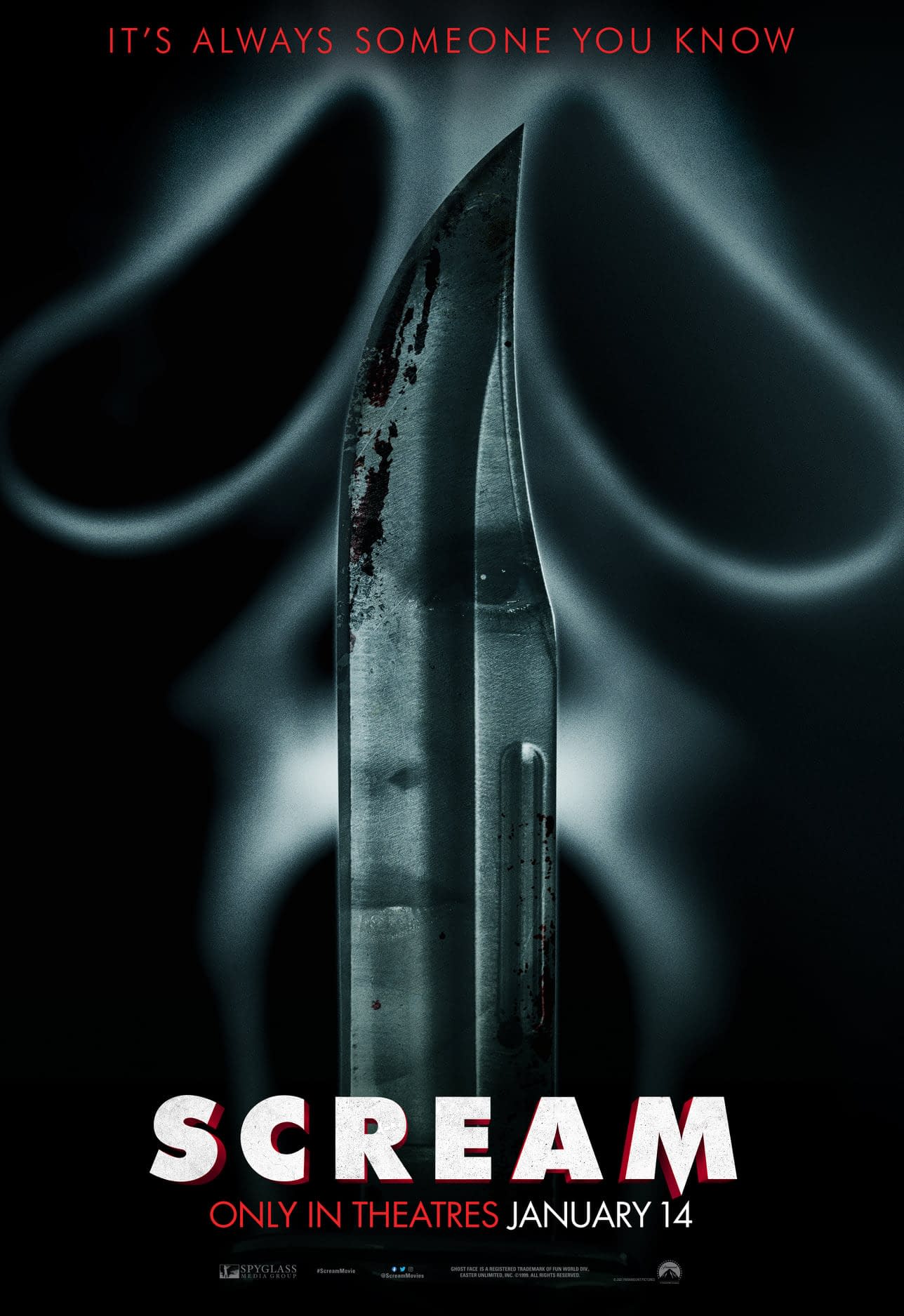
SCREAM (2022) horror movie review

Familiar yet fresh. From the duo that brought you the smash hit Ready or Not comes the next instabment in the beloved SCREAM franchise. It’s been just over twenty-five years since Casey answered that fateful phone call from Ghostface and just over a decade since the late, great Wes Craven gifted us with SCRE4M before his tragic passing. And, now audiences are returning to Woodsboro. In a filmscape overstuffed with pretentious, stylized horror films that often forget that plot and characters are more important than the pretty packaging, comes a fresh interpretation of the classical slasher that is sure to thrill you! While the new SCREAM isn’t without its diegetic flaws (but, to go into that would mean spoilers), it is still entertaining and fun. Clearly, the screenwriters channeled the soul of the original SCREAM, a perfect film in my opinion, but put a relevant spin on it in order to resonate with contemporary audiences. What I can say, without going into spoilers, is that this movie has too many characters; to the point that some of them feel like furniture. Where you may connect quickly with the movie is in subtext of the film, which is grounded in a commentary on the slasher versus elevated horror (a term I absolutely detest, as I’ve previously written) and toxic fandoms versus studio execs green-lighting rebookquels or requel (as the movie states). These are the conversations that fans of horror have all the time, and you will find yourself vicariously engaged in the conversations as the characters are having their debates on screen. After the flop that was Halloween Kills, I was anticipating another vapid, pandering attempt to revive a legendary cinematic property. But, I was pleasantly surprised by how much I enjoyed this movie. We didn’t know we needed another SCREAM movie, but turns out that we did. 

Twenty-five years after a streak of brutal murders shocked the quiet town of Woodsboro, Calif., a new killer dons the Ghostface mask and begins targeting a group of teenagers to resurrect secrets from the town’s deadly past.

Not only are Sidney, Gale, and Dewey back, but you’ll see some other familiar faces too. Here is where we can directly compare Halloween Kills and Scream (2022). Both movies brought back leading and supporting characters (and actors), but Scream succeeds in developing all of them enough for audiences to care about whether they live or die. Now, Scream does suffer from being overstuffed with ancillary characters, to the point that some are one-dimensional; however, the screenwriters do manage to give each some agency–some more than others. Other than rooting for Sidney, Gale, and Dewey to survive the blade of Ghostface, you may be hard-pressed to truly care whether some of the other characters live or die. Fortunately, as little as you may care about a particular character in this movie, you’ll still find yourself caring way more than you did for the cast of Halloween Kills.

The kills are great! And best of all, it doesn’t devolve into a completely unrealistic bloodbath. Yes, it is a little gorier and violent than the original (or even the subsequent previous sequels), but not overly so. This iteration of Ghostface may not have the one-liners of its predecessors, but Ghostface manages to get some zings in there. Unsurprisingly, there are many homages to the original SCREAM, but there are nods to other horror properties as well–the shower scene from Psycho makes a little cameo, and we spend a great deal of time with the Stab movies. Instead of rules to surviving a horror movie, we have rules to surviving a Stab movie or requel. Dylan Minnette’s character’s name is Wes, which is a great touch! In fact, the entire movie is dedicated to the life and legacy of the late, great Wes Craven.

This movie works because it takes itself seriously as a Scream movie (and by extension, the slasher), but allows itself to have fun along the way. Perhaps Generation Z does not appreciate the slasher for the cultural phenomenon that it was, but this movie may just be the thing to get them interested in discovering just how brilliant and fun slashers are. I feel confident that you will enjoy Scream as much as I did! Yes, I have my plotting and diegetic problems with it, but it doesn’t take away from the fun factor. This movie succeeds where Halloween Kills failed–it never forgot its roots in greatness. It remembered its branding, and stayed the course. Even though it may not be quite as good as SCRE4M, and with the original being peerless, this fifth installment justifies its existence and delivers laughs and thrills. Much like with Wes Craven and Kevin Williamson’s incomparable original, this one also knows what it is, and it rocks it!

And here is where you should stop reading unless you don’t mind spoilers. 

Okay, if you’re continuing to read, I will interpret that as consent, and I will talk about elements of the film that involve spoilers. Not because I want to spoil it, but because it’s difficult to talk about the topics I want to address whilst completely avoiding them.

One of the best elements of the original SCREAM is the absolute perfection that the opening excruciating 13-minutes (that’s right 13), which is, in my opinion, the best and most effective opening of a film period. That opening literally does everything an opening should–you know precisely what the stakes are and what the film is about. Anyway. As to whether the opening of Scream (2022) is precisely 13-minutes, I do not know because I was not looking at my watch (but it feels that it could be 13-minutes). But I was eager for the opening for comparative analysis purposes. I wasn’t looking to see if it was as intense or brilliant as the original (because, let’s face it, that’s an overwhelming task), but I was looking to see if we would know everything we need to know and how high the stakes are going to be. Sadly, we learn that Tara (Jenna Ortega) did not die in the opening scene. And it was this poor decision that hung over me for the entire film. Because once we learn that Tara did not die, instantly any of the suspense and high stakes we had were rendered ineffective and futile. Tara should have died because then audiences would have realized that the stakes are high, and that no one is safe from the knife of Ghostface. Suffice it to say, this poor decision did not ruin the movie for me–I still had a lot of fun with it–but the power of the opening was muted and lacked anything memorable.

There are two arguments (or topics) at the center of the new Scream (1) elevated horror versus slashers and (2) toxic fans versus reboots/remakes. What I love about this, is that these two topics are such a part of the #PodernFamily (podcasters) and #FilmTwitter (film pundits and fans on Twitter) pantheon of conversations and arguments on a daily basis, especially when it comes to horror and legacy cinematic properties. Early on, in fact it’s in the opening scene, we are informed of Tara’s taste in horror: she prefers elevated (excuse me while I vomit at the term) horror like The Babadook, Hereditary, and The Witch. She slams slashers like STAB for being schlock devoid. Turns out, she underestimated the power and social commentary of slashers. Perhaps she should’ve spent more time in horror, because then she would’ve learned that horror has always been the most progressive of all the genres–not just in the last decade. Further along in the movie, we witness a debate over fans versus “requels” (wherein a movie is a combination of a reboot and sequel). While I am not a generally fan of rebooting a legacy franchise or tacking on a sequel that we didn’t need cinematically, so much of what is said in the entertaining exchange of the marketplace of ideas is incredibly meta because of how pervasive it is within the film community. And the plot of Scream (2022) plays right into both of the aforementioned commentaries on horror movies.

Of all the kills, my favorite one is right out of Once Upon a Time…in Hollywood. And I’ll leave it at that. 

Ryan teaches American and World Cinema at the University of Tampa. If you like this article, check out the others and FOLLOW this blog! Interested in Ryan making a guest appearance on your podcast or contributing to your website? Send him a DM on Twitter or email him at RLTerry1@gmail.com! If you’re ever in Tampa or Orlando, feel free to catch a movie with him.

Follow him on Twitter: RLTerry1

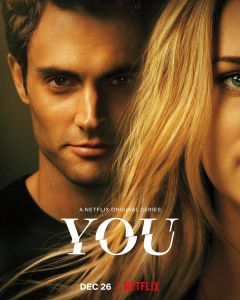
Netflix “YOU” Season 2 Review

Wow! That was bonkers good! I don’t know about you, but I binged the entire series in two nights. Simply couldn’t put it down, a fitting bibliophile metaphor as it were. Your favorite book-loving serial killer is back–and he’s moved. Now living in LA, a city he repeatedly detests, Joe (now Will) has his eyes set on a new object of his undying affection, appropriately named Love. He fled Brooklyn to LA to reinvent himself and find a new life–as so many people so when they movie to Los Angeles. But his eyes are not on the silver screen, they are on a hipster organic grocery store and book shoppe. Once he begins his job there, the hijinx are in high gear! After the critical success and highly positive audience reception of Season One, I honestly didn’t expect Season Two to hit the bar that the first one did–I was wrong. After being informed on the Bingeables Podcast during our recording of Don’t Trust the B in Apt 23 that Season Two was even better than Season One, I was intrigued! While it was already on my list of shows to watch, I quickly moved it to the front of the queue. In order to talk about how and why this season works as well, if not better, than the first, it will be necessary for me to go into spoilers. So consider this your spoiler warning. If you plan to see it, and have not, stop here, go binge the show, then come back. Believe me, you’ll want to binge it because it is just that good!

One of the main characteristics of the experience watching YOU that was such a staple in season one was just how much we rooted for our antihero Joe Goldberg, despite him being a sadistic, book thumping, stalker. Perhaps it’s his good looks, oddly loving heart (and I do mean odd), and authenticity. While we may find his behaviors detestable, contemptible, and reprehensible, there is a refreshing since of authenticity that we seldom witness anymore in an age of social media facades and social pretenses. It’s this fascinating dichotomy that we love about Joe/Will. For purposes of this article, I will refer to him as Will, as that is his name for most of this season. Whereas in Season One, Will was lacking an equally intelligent and cunning character of opposition, he has met his match in Candace–yes–that Candace. You can’t outrun murder, or in this case, attempted murder. Candice is back, and she is pissed.

We pickup at the tail end of Season One when Candace surprises Joe at the bookstore. Only this time, she is in control of the situation. But does she turn him into the police? No, that would be too easy. Her goal is to ruin him and make him as scared as she was. She prefers executing a slow, painful defeat. He decides to flee to the one city that he hates more than any other: Los Angeles. Where else do you go to reinvent yourself and hide from the world? Once Will relocates to LA, the hijinks and prolific number of crimes ensue!

All those thrills and chills from season one are back with vengeance in season two. Furthermore, the series continues positing the questions and making observations about masculinity, femininity, friendships, romantic relationships, and social media. One of the biggest differences between this season and the last is that we now have the stalker becoming the stalked. So there is the stalking between Love and Will, but then Will is being stocked by Candice. And even Candice is being stalked during the season. So many layers! Don’t worry, all these layers are not confusing. There is plenty of exposition laying pipeline along the way to understand the various dynamics. While Will goes even darker than in the previous season, you will undoubtedly still root for this antihero. The added complexity of Candace gives way to a more intriguing plot that will have you on the edge of your seat. In addition to the present story, you also get to learn more details about how the relationship between Candace and Joe ended. And you will be blown away! No wonder why Joe was so shocked to see her at the end of Season One.

At first, Will recognizes his psychological problems and refuses to engage in romantic thoughts or behaviors with Love, but soon he falls into his old ways but approached them differently. There is far more rationalization than before, and that makes everything so much more frightening. It doesn’t take long for Will to give up on keeping Love at arm’s length, he’s soon back into his old ways as she is now the object of his affection. More so than in the first season in which Will targeted people that came between him and Beck, this time, he targets those who seek to blow the cover on his darker side that could end his friendship turned relationship with Love. Unlike Beck, Love genuinely returns Will’s affections, which actually complicates things. In addition to his romantic affections, Will also quasi adopts a teenage girl in his apartment complex because he feels that she needs someone to talk to and look after her since her sister (her guardian) is off chasing stories a lot of the time. This friendship adds in another relationship that Will has to protect at all costs. Not only must he not disappoint Love (and her brother, with whom she has a co-dependent relationship) but he must not disappoint his neighbor.

Although I saw the big twist coming shortly before it was revealed, it was still a pleasant surprise! It was the perfect way to end this absolutely bonkers season. While Will thought he was alone in his personal struggles, he now knows that others share his same penchant for stalking and “protecting” loved ones. But therein lies the conflict and a newfound fear for Will, he now knows that he may become someone whom needs You’s special blend of stalking and protecting. He goes from apex predator, if you will, to being knocked down a rung on the food chain.

I appreciate You‘s commentary on modern relationships, masculinity, and femininity. A lot has changed in dating over the last 10-20 years, and You has a way of creatively exploring all the added complexities that social media and the re-defining of traditional gender roles in relationships. You also depicts different kinds of relationships. We have the warped-yet-traditional romantic relationship between Will and Love, the bro-mantic friendship between Forty and Will, the lesbian relationship between Love’s best friends, and the quasi-parent-child relationship between Will and Ellie (his neighbor’s kid sister). Each of the aforementioned relationships contain their own respective set of unique dynamics that Will must navigate in order to keep his dark secret hidden from those whom he legitimately loves. Of course, with a devoted love like his, you may be better off with enemies. Beyond friendship and romantic relationships, You also provides commentary on sexuality and the expression of it. This season plays around with the various ways people express their sexuality and personalities. Characters that you first think are heterosexual are, in fact, homosexual, and those whom you first think are homosexual are, in fact, heterosexual. It’s fascinating to see characters refusing to comply with the de facto rules society has for both groups of people, and express themselves however they like regardless of sexual orientation.

We witness much more of the Dexter side to Will. And, the wildly popular show gets referenced in this season. Like Dexter, Will has a quality about him that we just cannot seem to help but root for. Not in the same way as Dexter, because he primarily only killed those whom were criminals in some form or fashion. Although Will demonstrates some of the same habits, he also regularly kills innocent people that find out his secret, and that’s the different between the two anti-heroes. But not all the killing is due to Will’s penchant for forcibly creating relationships. Love joins in on the action when she realizes that Will is not unlike herself. Interestingly, it is not Will whom has the highest body count, it’s Love. The one kill that Will does have is technically accidental, whereas Love’s are completely intentional crimes of passion. Simply stated, Love and Will are made for one another.

What a fantastic season! And a third season has been greenlit, so we may get to see what Will makes of his new next door neighbor.

Ryan teaches screenwriting at the University of Tampa. If you like this article, check out the others and FOLLOW this blog! Interested in Ryan making a guest appearance on your podcast or contributing to your website? Send him a DM on Twitter or email him at RLTerry1@gmail.com! You can catch Ryan most weeks at Studio Movie Grill Tampa, so if you’re in the area, feel free to catch a movie with him!

Follow him!

Twitter: RLTerry1

Instagram: RL_Terry