
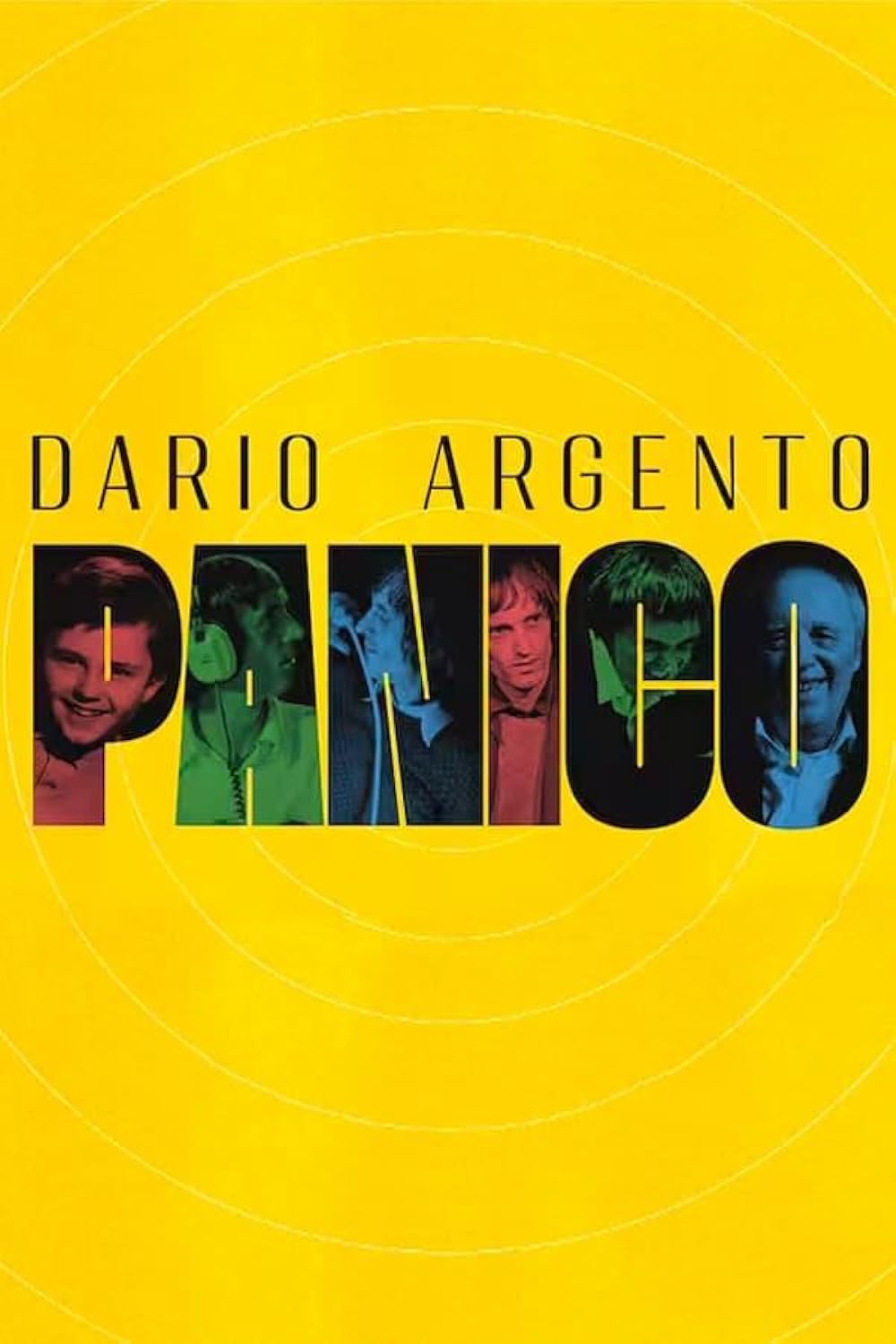
Dario Argento PANICO documentary review

Informative but bland. For a director who’s responsible for some of the most vibrant and stunning films that continue to influence and captivate audiences decades after their initial release, comes a documentary about Dario Argento that is ultimately underwhelming and lifeless. From his hypnotic, phantasmagorical, symphony of terror in Suspiria to his nightmarish Opera and his quintessential giallo in The Bird with the Crystal Plumage, Argento has been crafting cinematic sensory explosions for over 50 years. But this documentary plays more as a podcast, for it leans more heavily into talking heads (one of which is Argento himself) than it does incorporating behind the scenes or footage of his movies. Argento is visually driven storyteller, but this documentary is such that you can turn off the screen and get nearly the same experience listening to the stories.

The documentary starts off very well. Argento is bring driven by the documentary filmmaker to an Italian countryside hotel. Underscoring this scene is mysterious music, and as Argento looks out the window, we see memorable clips from from Suspiria. Suzy arriving at the Freiburg train station. The forest with the dance academy student frantically running for her life. And ad he is pulling up to the hotel, we cut to the vibrant crimson Tam Dance Academy arrival scene from Suspiria. That opening intercut with scenes from Suspiria set me up to enjoy a fantastic, engaging documentary. Unfortunately, the opening of the doc overpromised because the rest of the documentary underdelivered.

While the documentary provides family history and his early days as a writer and producer, most of the doc concerns itself with his feature films from The Bird with the Crystal Plumage to his most recent work. The films that receive the lion’s share of attention are Bird, Inferno, and Opera. No, you didn’t misread that, nor did I forget to include it, but Suspiria represents a small part of the feature-length doc, even though it is inarguably Argento’s greatest motion picture and the one that is best known worldwide. It’s be like a documentary on Spielberg that spent little time with Jurassic Park or with Batman Returns in a documentary about Tim Burton. I am left with questioning the documentary filmmaker on why Argento’s most well known film only has a place in the doc when that iconic, hypnotic Goblin score is the subject.

The documentary continues through Argento’s incredible career, both in Europe and the US. The section on Opera delivers the most footage from behind the scenes, and is fascinating to watch. But throughout much of the documentary, where there should (or could have been) footage, there was a talking head(s). Granted, the talking heads consisted of heavy hitters like Guillermo del Toro, but even that wasn’t enough to make the interviews more engaging. In terms of variety of personalities in the doc, the filmmakera brings together industry professionals and members of Argento’s family, including his ex-wife and daughters.

Panico is certainly informative, but lacks any visual or experiential appeal. All that said, I am thankful that Argento is still around to participate, because it was wonderful to hear from him as his movies and legacy are being expressed through a documentary.
Ryan teaches Film Studies and Screenwriting at the University of Tampa and is a member of the Critics Association of Central Florida and Indie Film Critics of America. If you like this article, check out the others and FOLLOW this blog! Interested in Ryan making a guest appearance on your podcast or contributing to your website? Send him a DM on Twitter. If you’re ever in Tampa or Orlando, feel free to catch a movie with him.
Follow him on Twitter: RLTerry1 and LetterBoxd: RLTerry

Cinecittà World & Movie Park Germany: Placing Guests in the Magic of Movie Making

cinecittaworld1The overall theme of movie-based theme parks has gone from exposure and education to simulation and immersion—much more experiential. Instead of seeing how Harry Pottermovies are made, guests at Universal Studios (FL and CA) and other studio-parks want to feel like they are Harry and his friends. And, this is not something that could be achieved by the former models of the original concepts for Universal Studios Parks or Disney’s Hollywood Studios. So, the parks have to change in order to remain relevant and viable tourist destinations. Concurrently, movie and television studios are going through their own evolutionary process. In many ways, a careful examination of modern cinema compared to its predecessors reveals that storytelling has been removed from its pedestal to play second fiddle to salesmanship.

Spectacle and visceral thrills are the principal drive for the modern (1990s-present) cinema-based theme park attractions; and, for some, they confirm the worst tendencies identified within the Hollywood blockbuster: the epitome of apparently vacuous rollercoaster experiences. According to researcher Geoff King, “the label ‘thrill ride’ is a term often used approvingly in Hollywood publicity and by some film reviewers in the press, presumably because a thrill ride is precisely what many viewers want from modern cinema.” The late 1980s and the 1990s saw the arrival of theme park attractions that claim to allow the park guest to ride the movies; movies became theme park attractions. But now, theme park attractions are inspiring films. Beyond being the inspiration for films, the idea of being able to market a horror, action, or epic film or film franchise or the ability to create themed attractions from the narrative is at the forefront of studio executives’ minds, as cross-promotion is an important financial strategy.

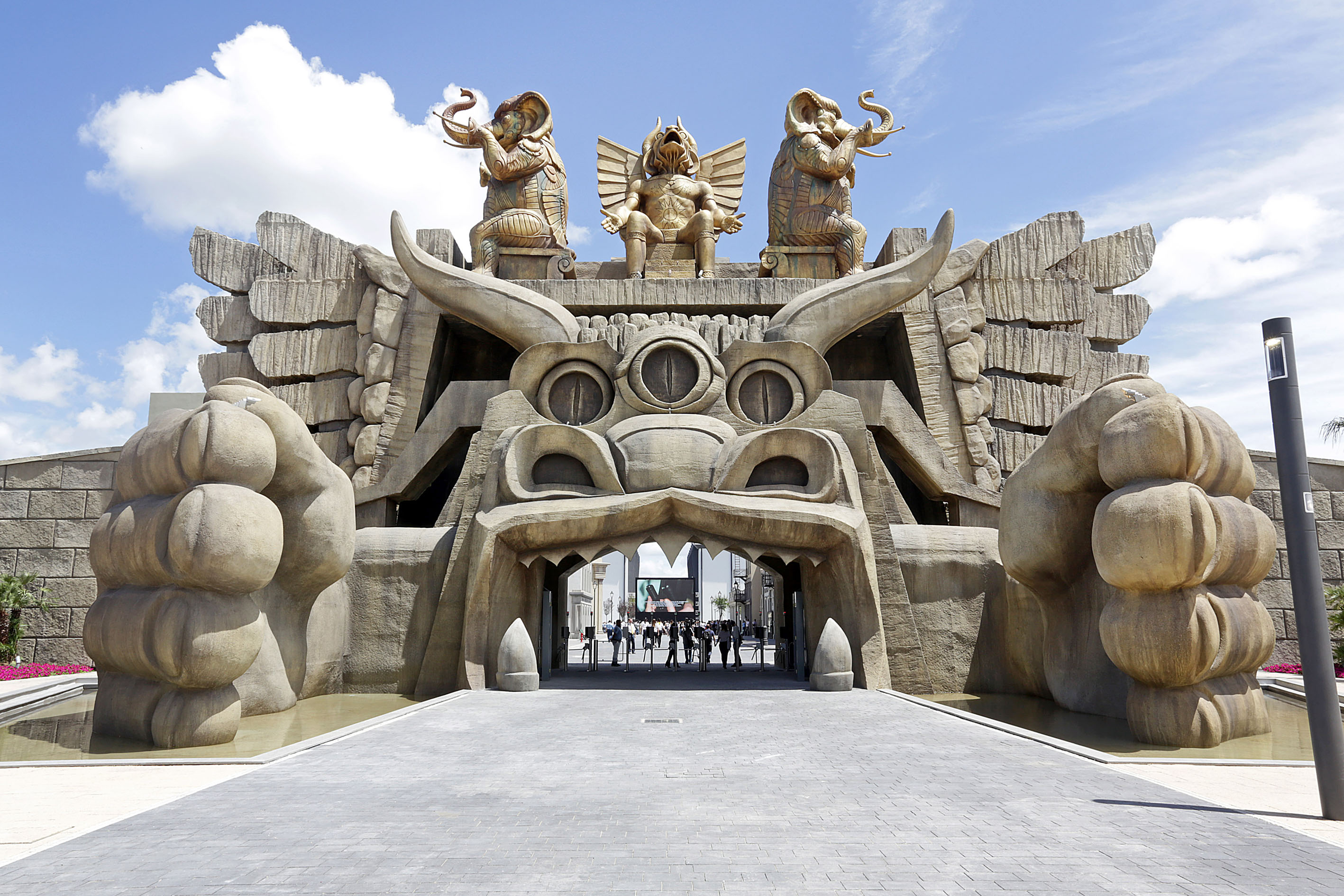
Creating attractions from cinema is not unique to the United States. The former Italian cinema powerhouse, from the early to mid twentieth century, Cinecittá Studios, known as the “Hollywood on the Tiber” is following suit with its American counterparts and converting the production lot(s) into a movie-based theme park. Located outside Rome, Cinecittá Studios, Italian for “Cinema City,” opened its gates in 2014 to the public to experience the magic of movies on this side of the screen. President of Cinecitta World Emmanuel Gout states, “Here, the idea is that people will also enter not only sets, but the confusion of a place where we are shooting movie. Everything will be illusion…the visitor will become a protagonist of the day, becoming a star, becoming involved in some fake movie.”

The model of this theme park appears to be more reminiscent of how the classic American movie-based theme parks were setup; however, there is one big difference. At the new Cinecitta Studios (theme park), park guests will actually don costumes and take hold of props to act in scenes from movies. So, in many ways, this park differs from its American counterparts because it is not defaulting to digital simulations and special visual effects; instead, it’s using practical technologies to create the illusion that the guest is actually on the set in the movie as a character in a given scene. Still, three-time Academy Award® winning production designer Dante Ferretti knows that audiences and guests want more than an immersive experience into movies, but want thrills as well. So, there are rollercoasters and water slides, amidst Roman and Egyptian ruins, to accommodate those guests seeking more conventional amusement park attractions.

Away from hustle and bustle and bright lights of Hollywood, past the palm treelined streets and white sand beaches of Florida, and beyond the Roman ruins on a century-old Italian studio lot is another example of the convergence of cinema and theme parks. Movie Park Germany is a cinema-based theme park in Bottrop-Kirchhellen. It “is a unique theme park, which is devoted entirely to movies. The former Warner Bros Movie World has six theme areas and more than 40 attractions and shows. It will not take long before you feel like a movie star or cartoon hero!.”

Much in the vein of Universal Studios Florida, Movie Park Germany blends both the benefits of an amusement park with movie-based themes throughout the whole park. Its motto is “Wow! I’m in the Movies.” According to the website, “Our visitors will not only have the opportunity to meet well-known series Heroes but also get to enjoy first class entertainment like an action-packed stunt show as well as two song and dance shows. For those guests who like it a bit more spooky, the park transforms itself at sunset into an extraordinaire chamber of horrors. In short: There’s a personal highlight for everyone!.” Unlike Universal Studios parks which have a Halloween theme for two months a year, Movie Park Germany holds on to the very cinema theory that birthed out of Germany and found its way to Hollywood—German Expressionism. Some of the first movies were horror movies, and it is refreshing to see that this park is holding on to its horror heritage throughout the year.

Although many theme park enthusiasts first think of Florida and California, it is clear that there are many beautifully conceived and designed parks all around the world that are just beckoning for adventure to be had.