
“The Founder” movie review

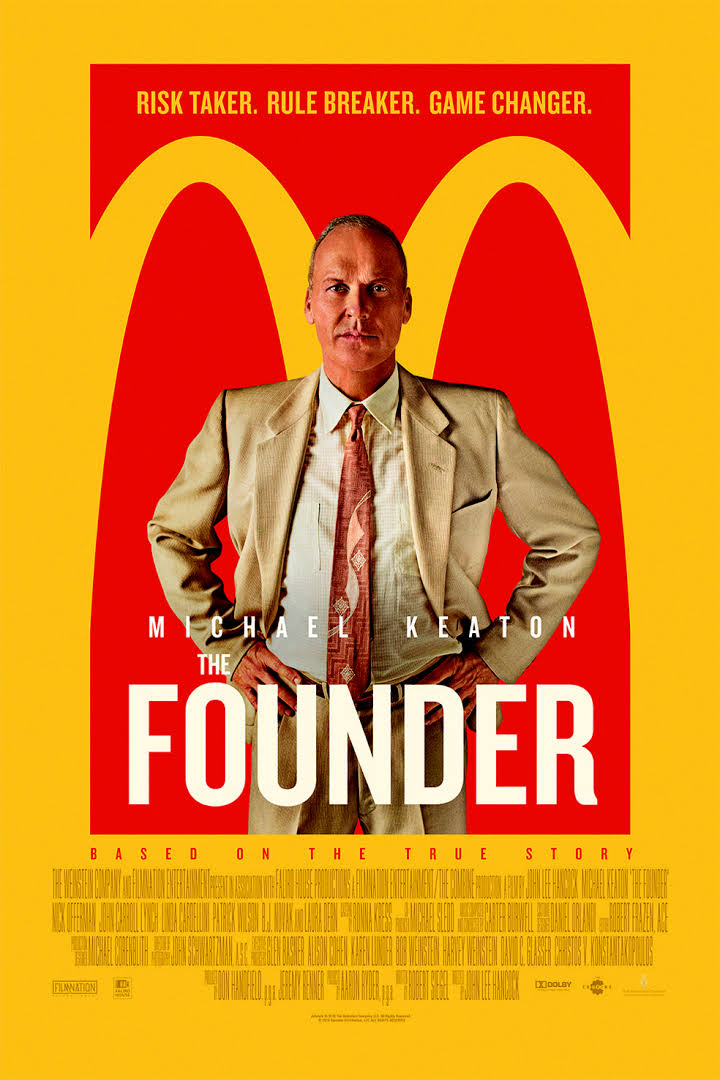
thefounderOutstanding biopic that typifies what the American dream actually looks like–but that’s the scary part. Michael Keaton’s portrayal of Ray Kroc, the (self-proclaimed) “founder” of McDonald’s, is positively brilliant! Comparing his look and performance to the real Ray Kroc seen before the credits roll, there is no doubt that director John Lee Hancock (known for The Rookie and The Blind Side) made the right choice. The Founder takes us on a journey from Southern California to Illinois and beyond as we follow the course of events that radically revolutionized an entire industry and gave birth to one of the most recognized brands in the world as well as the very concept of modern franchising. What Henry Ford did for American motorcars, Kroc did for American “speeedee” service food. Ray Kroc realized the American dream by stopping at nothing until he built his empire, even if it meant stealing from a business and breaking up a marriage–all within the confines of the law. We’ve all heard about “the American dream;” well, The Founder depicts what it takes for that dream to come true. If you’re willing to be a cut-throat bully with few if any inhibitions, then you can build an empire and claim to be the founder of another’s company or even run a country.

This biopic drama tells the story of how Ray Kroc (Keaton), a 55 year-old milkshake machine salesman from Illinois, met Mac (John Carroll Lynch) and Dick (Nick Offerman) McDonald in San Bernardino, CA during a sales transaction that would start something big. Who would’ve guessed that a man who was the definitive door-to-door salesman would see great potential in a small-town burger joint. Recognizing the great potential for a successful franchise, Kroc entered into a business proposition that would change the quick service food industry forever and essentially perfect the business practice of franchising. Over a relatively short amount of time, Kroc maneuvered himself into a position of power and dominance over the brothers, and eventually took the very company they founded away and never looked back. Kroc stopped at nothing when appropriating the intellectual property of the McDonald brothers to build a vast empire that would find its way into thousands of towns and become just an American an icon as the flag, churches, or the eagle.

Although the film is presently foundering in box offices, it is definitely worth a watch because of depicting the story of one man’s American dream that would essentially steal the laurels from baseball and apple pie to become a larger than life symbol of America recognized throughout the world. It’s unfortunate that this film is not garnering more attention because the writing, directing, and acting are absolutely brilliant. Full of irony and ambiguity, The Founder could have easily been called or at least subtitled Birth of a Salesman. While watching the movie, I could not help but compare the plot of this film with the iconic play Death of a Salesman by Arthur Miller. Both tell stories of salesman but the end result is vastly different. Both Willy Loman and Ray Kroc were dedicated to their respective craft of salesmanship; however, Kroc took the practice of sales and pitches to the next level–in fact he created his own game in which only he could win. Where else have we seen a bully play by his own rules and build an empire into a brand in and of itself? I’ll allow you to draw that conclusion. Further irony can be seen in Ray Kroc’s surname. His sheer cunning, predatory ways of conducting business can easily be likened to the crocodile itself. Despite receiving credit for inventing the fast food assembly line, much like Ford did for American car manufacturers, the “speedee” service was invented by Dick and Mac McDonald of San Bernardino. Thankfully, the brothers are receiving the credit that they deserve–albeit posthumously.

It’s difficult not to root for the villain in this film. Even though you tell yourself that he was a monster and a complete leach to the McDonald brothers, his first wife, and other friends, you may still find yourself in his corner because of McDonald’s being the American icon that it is. The cognitive dissonance that many will experience during diegesis of this film is fascinating in and of itself. Early on, you will find yourself rooting for Ray Kroc because he comes off as an underdog. He is able to provide decently for him and his wife, but it is evident that his business is in the process of collapsing. Even after striking the proverbial deal with the McDonald brothers, you may still root for him because the brothers make it difficult for Kroc to actually engage in successful franchising. The tide begins to subtly shift when the chain begins to take off. When the brothers deny Kroc a request to renegotiate the terms of the contract in order to boost capital and revenue, Kroc hires a new business partner who provides the knowhow to shift the focus from running a burger chain to being a real estate mogul. That shift from only burgers to real estate is what truly built McDonald’s Corporation into the giant that it is today. Interestingly, when confronted by the brothers on a break in the contract, Kroc points out that they could take him to court and probably win, but by the time he would drag them through hearing after hearing, and trial after trial, the brothers would be completely bankrupt. Much like the milkshake substitute that boosted revenue and mitigated refrigeration costs, but contained no milk, a handshake deal with Kroc is just as fake.

The set designs and costumes in The Founder are impressive and so incredibly well executed that audiences will be transported from 2017 to 1950s America. From the cars to the architecture to the print advertising and marketing, this movie boasts an authenticity that is on par with larger budget period films. The supporting players in the film are equally captivating too. Parks and Rec‘s Nick Offerman and John Carroll Lynch are absolutely perfect as the McDonald brothers, and I cannot think of two better actors to bring these “hidden figures” of fast foot history to life. It’s unfortunate that Laura Dern is underutilized as Ethel, Kroc’s first wife, because she is a dynamic actress capable of adding significantly to a film. Although not featured on screen a lot, Patrick Wilson plays Rollie Smith, an early investor, but his acting excellence is still showcased well. Finally, Linda Gardellini is captivating as the future Mrs. Ray Kroc–problem is, that she is married to Rollie Smith at the time they meet. It’s her suggestion to switch from real ice cream and milk to instant milkshake powder that sets the final dominos in motion to topple the McDonald brothers. In continued irony, the story of McDonald’s contains people who are excited about fake food product. But those were the times the characters lived in. The chemistry between the characters helps to reinforce the authenticity of this biographical motion picture.

Ray and Joan Kroc are well known philanthropists–in their later years. In fact, Joan Kroc left most of her vast fortune to many charities. The most well-known recipient of the inheritance is NPR. Even today, if you listen to the programming, you will hear the Estate of Joan Kroc mentioned as a supporter of the public radio organization. Whether you appreciate NPR or not, one cannot help but think that all the philanthropy of the Kroc (namely Joan) is a result of easing the conscience since the Kroc fortune can be likened to blood money. It’s entirely plausible that much like Marion Crane figuratively cleanses her spirit in the infamous Psycho shower after having stolen the money from her employer, Joan may have very well given her fortune away in an effort to ease her conscience and do good with the figuratively ill-gotten money.

Such an incredibly fascinating movie! If you enjoy historical dramas about American icons, then you will definitely enjoy The Founder. It may prompt you to grab a McDonald’s burger and fries after the movie or perhaps never go there again after learning the company’s history. Whatever the case, it cannot be denied that the story of McDonald’s is incredibly interesting and IS the product of persistence and business ingenuity. If there is anything inspirational to take away from this film, it is the power of that persistence and looking for potential in the most unlikely of places.

Written by R.L. Terry

Edited by J.M. Wead

“Split” movie review

splitIntensely captivating! M. Night Shyamalan stages a successful return to the horror-thriller genre in the brilliantly intriguing motion picture Split. When Universal Pictures, arguably the king of the American horror film, Blumhouse Productions, and Shyamalan combine their respective visual storytelling skills, the result is a dynamic thriller full of outstanding twists and turns. Shyamalan, long known for surprise or bizarre endings, provides audiences with the biggest surprise of all: he is back, and it’s a completely satisfying cinematic experience! Beginning with 2015’s The Visit, Shyamalan has been working on a comeback; and Split is the final evidence needed to support his successful return to the silver screen. James McAvoy delivers an outstanding performance–or should I say performances–every minute of the film. Although the concept of building a suspense-thriller around a character with dissociative identify disorder (DID), formerly known as multiple personality disorder, is not a new one–after all Norman Bates is the most iconic example. M. Night Shyamalan puts his own spin on the character-type by adding his special blend of what can only be referred to as “shyamalan-ness.” You’ll definitely want to see it again in order to catch everything that you missed the first time.

A film that many psych majors will find fascinating! While the mental divisions of those with dissociative identity disorder have long fascinated and eluded science, it is believed that some can also manifest unique physical attributes for each personality, a cognitive and physiological prism within a single being. Though Kevin (McAvoy) has evidenced 23 personalities to his trusted psychiatrist, Dr. Fletcher (Betty Buckley), there remains one still submerged who is set to materialize and dominate all the others. Compelled to abduct three teenage girls led by the willful, observant Casey (Anya Taylor-Joy), Kevin reaches a war for survival among all of those contained within him – as well as everyone around him – as the walls between his compartments shatter apart. (IMDb).

Just when you think the movie is going one direction, it throws you for an unpredictable loop. Split provides audiences with the same level of captivation as M. Night delivered in Signs or even in The Visit. Very much character-driven, this film could have easily taken a turn for the campy or par-for-the-course approach to a central character with DID; but Shyamalan proves that a familiar premise can be crafted into a whole new experience. After the incredible success of 1999’s The Sixth Sense, audiences everywhere set the bar for Shyamalan quite high–in fact he was prematurely compared to a 21st century Alfred Hitchcock. While it is highly unlikely that any director will reach the iconic status of Hitchcock, Shyamalan was seen as a director who would provide a similar experience to that which earned Hitchcock the moniker the master of suspense. Evidence of his admiration of Hitchcock can be been in the title sequence of Split. It bares a striking resemblance to the opening title sequence from Psycho. 

However, the danger in prematurely setting expectations too high is that you may likely be setting yourself up for disappointment. And that is precisely what happened with Shyamalan. From killer plants to invisible supernatural entities, he began to lose the cache he earned in the early 2000s. M. Night would spend years disappointing audiences to the point that he became a joke–a parody–perfect material for Family Guy. Then just when all hope for Shyamalan to regain the admiration of movie patrons–especially those who enjoy horror/suspense/thrillers–he gives us The Visit in 2015. That film was the glimmer of hope he needed to begin to rebuild his status as a thriller/suspense/horror filmmaker. And with the incredibly satisfying Split, M. Night Shyamalan is BACK!

Films like Psycho and Split only work as well as their respective director and cast–primarily the villain. Obviously, Psycho stands up to the test of time and will forever be a favorite of many cinephiles and a testament to the power of visual storytelling, Split had to be a new experience while still channeling the director that Shyamalan admires and patterns himself after. The success of Split rested upon the performance of McAvoy as Kevin (and the 23 others with a 24th on the horizon). McAvoy’s performance in this film is quite possibly the best of his career. Each identity is clearly seen as individuals. From his facial expressions to his gait to the manner in which he carries himself, every identity is unique in voice and appearance. Even in the middle of a conversation, one identity goes away while another surfaces into “the light.” Although there are only a few identities that have prominence in the diegesis, the others give audiences just enough nuance to register them as having a presence in the subconscious of Kevin.

For all the excellence in cinematic storytelling Split has to offer, there is no denying that it may be controversial in that it uses DID to construct a “beast.” There are already members of the mental-illness community who have expressed disdain for the subject matter and context of the film. However, prematurely dismissing this film as offensive to those suffering from cognitive disorders would be ill-conceived. After screening the film, it is clear that the focus is not on DID itself (or any other cognitive disorder that Kevin may have), nor is Kevin crafted to be an unredeemable monster; but, this film uses DID and the character of Casey (one of the young ladies who is captured at the beginning of the film) as tools through which to explore childhood trauma, abuse, and coping mechanisms. Isn’t that what films do? Push the envelop in an effort to provide a different perspective on an issue, problem, or circumstance? Horror is often concerned with “other” scenes–revealing that which should remain hidden–and Shyamalan does precisely that in Split.

If you enjoy horror, suspense, or thriller films, then you are definitely going to enjoy Split. There is so much to take in, that you may want to watch it again in order to catch everything that you may have missed the first time. Even if you are skeptical or think the content may be offensive to the mental-illness community, you may be surprised that there is a lot that can be gleaned from the narrative. With brilliant performances, excellent writing, and outstanding direction, Split should be on your radar of films to watch this weekend.

Written by R.L. Terry

Edited by J.M. Wead

“A Dog’s Purpose” movie review

adogspurposeYou’re going to need tissues! Ever wonder what your dog was thinking? You’ll find out in Universal, Amblin Entertainment, and Walden Media’s glorified Hallmark movie that follows the soul of a loving dog. As such, A Dog’s Purpose is one of those films that is so simple yet emotionally touching. Based on the novel written by W. Bruce Cameron, this movie will tug at even the toughest of hearts. Although the film does not follow a traditional diegetic arc, three-act structure, and is filled with constant verbal exposition in the form of a voiceover, it is still enjoyable and works as a great date movie. No critical thinking required. Still, the author’s tagline “a novel for humans” can be seen in the social commentary on primarily human relationship dynamics followed by the relationship between a pet and his or her owner. Filled with moments of laughter and tears, A Dog’s Purpose is a film that everyone who either has or has ever had a dog should see. If you’re a cat person like me, then there isn’t much here for you–sorry. However, I was moved to tears during a scene in which the focus was on a human romantic relationship getting rekindled. You will never look at your dog the same way again and will likely go home and hug him or her just as a friend of mine did after she screened the film with me.

A Dog’s Purpose is about a dog who discovers the purpose for his existence as he is reincarnated into different dogs over the course of his life. Finding himself part of different families–or as he likes to refer to them–as packs, Bailey does his best to affect humans by influencing their respective needs to laugh and love.

Despite the rather two dimensional nature of A Dog’s Purpose, there is a deeper theme within the mostly shallow story if you examine the film closely enough. Not shallow in that there lacks emotional appeal or enjoyment, but shallow in that there is very little that is complex and dynamic in the narrative. Although Bailey spends most of his on screen life with Ethan (K.J. Apa), Bailey’s soul finds itself in other dogs who are part of their own respective family. Doing a close reading of the film reveals that each family unit represents a different kind of relationship dynamic or lack thereof. I won’t spoil it by describing each type of relationship, but knowing that there is social commentary on human and pet relationships could likely increase the appeal and enjoyment of the film for those who prefer movies with a more cerebral plot. Interestingly, the movie includes families/human relationships that represent a good cross-section of the types of relationship dynamics that exist in our lives.

For those who typically enjoy Hallmark movies, then you’ll definitely enjoy this one. Last January we had glorified Lifetime movies and this year it must be Hallmark’s turn. As I have not read the novel, I cannot comment on differences between the book and the film adaptation.

Written by R.L. Terry

Edited by J.M. Wead
“Patriots Day” movie review

patriotsdayEmotionally intense–not for the faint of heart. Patriots Day is the dramatic account of the Boston Marathon Bombing and manhunt for Dzhokhar Tsarnaev and his brother Tamerlan Tsarnaev. Starring a powerhouse cast on top of extensive research, this film couldn’t come at a better time when there exists such a low general public opinion of law enforcement. Boston Police Department (BPD) shines as it shows that law enforcement officers and officials truly care about the city they are responsible for protecting. Although tragedies often are more conducive for a documentary film, writer-director Peter Berg combines the information found in a doc film with cinematic storytelling techniques to successfully construct a narrative that will rock you to the core and keep you on the edge of your seat. With the inclusion of first person, news, and surveillance footage, Patriots Day does not shy away from the visceral horror that befell the City of Boston and surrounding areas. You think you may know the story, as I did, but nothing will prepare you for coming face to face with one of the most tragic events in modern U.S. history.

Ordinarily, this is where I summarize the plot; but the plot is mostly known all too well. Fortunately, this film goes beyond the news reports and constructs a diegesis (story/narrative) around the stories of eye-witnesses, victims, the wounded, medical first responders, and law enforcement–both local and federal.

Mark Wahlberg, John Goodman, Kevin Bacon, J.K. Simmons, and the rest of the principle and supporting cast deliver outstanding portrayals of the real men and women who were instrumental in the response to and apprehension of the bombers as well as those who fell victim to the arson and shrapnel. It isn’t often that films depicting tragedies are produced this close to the events contained therein. Occasionally, there are films about tragedies that are truly better suited for a documentary; but, in order to convert it to a cinematic motion picture, a love story is added for diegetic affect. That is not the case with Patriots Day. The focus is on the BPD, FBI, and medical first response to the bombing and massive manhunt that ensued immediately after the explosions. There are certainly romantic relationships indirectly connected to the narrative, but they are mostly included to juxtapose the everyday life that everyone thought they were going to have on April 15, 2013 against the horrifying events that transpired at America’s longest running marathon, which has become such an iconic event each year.

Logistically and diegetically, there is a simple answer as to how this tragedy was so successfully translated to the silver screen so close to the day it occurred whereas other tragic events (mass shootings, bombings, aero-spacial, maritime, etc) are more conducive for and translate to a documentary better. This tragic event is a combination of (1) the explosions themselves (2) the manhunt afterwards and (3) the impressive work of law enforcement. There is more to this story than the bombing itself. Certainly the bombing was the catalyst for the events that ensured afterwards, but the real story is of the incredible actions of law enforcement and other first responders. While there seems to be a general focus in broadcast news media on the negative actions–whether perceived or otherwise–of law enforcement officers, this powerful film shows police officers in a positive light–shows them as individuals who love the city under their protection and stop at nothing to protect the innocent. This is so important in today’s climate of scrutiny of public safety officials.

The cinematography, visual effects, and production design are flawless. So incredibly realistic that you will likely feel transported from your seat into the film itself. To my surprise, the film included interviews with key figures directly involved with or affected by the Boston Marathon Bombing. It’s not uncommon to include photos with textual exposition on the lives of central figures in a historical film; but this film goes beyond telling you “where they are now” or what happened after the events in the film. It includes video footage of interviews–you get to hear from the individuals upon whom the characters were based. I could not think of a better ending to a film such as this one. Patriots Day works because it is the best of what a documentary offers with the brilliance of cinematic storytelling techniques.

For those of you who appreciate historical films depicting tragic events, then this is one that you need to watch. It is not a film to be enjoyed in the conventional sense, but one that packs a powerful message and neither glorifies nor undermines the real historic event. Such a visceral film. Rated R for adult language.

Written by R.L. Terry

Edited by J.M. Wead
“Hidden Figures” movie review

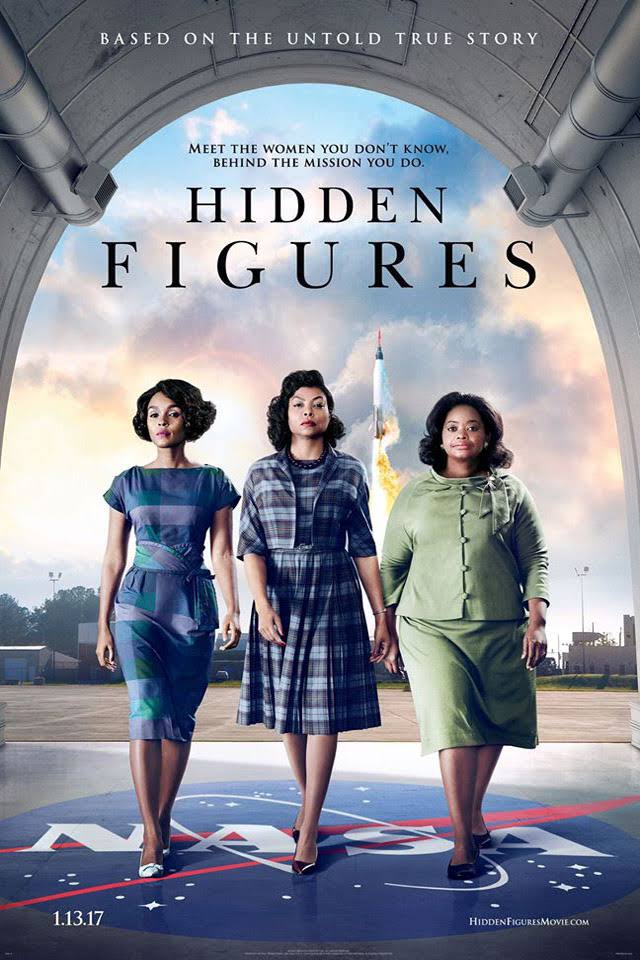
hiddenfiguresAn absolutely out-of-this-world biographical film! 20th Century Fox, PepsiCo, and TSG Entertainment present Theodore Melfi’s incredible film depicting the lives and careers of three African-American women whose work was extremely influential in the early days of NASA’s Mercury, Atlas, and Apollo missions. In all likelihood, there may not have been successful launches, orbits, and landings if it weren’t for these brave women who refused to back down and take the back seat to white men and women at a time that even government buildings still segregated restrooms, water fountains, and “community” coffee pots. Every once in a while, there is a biographical drama that packs a powerful socio-political message within a simple but brilliant story that is told incredibly successfully. Hidden Figures is a film that should have been released many years ago. How stories like this one go untold, is bewildering. Between the powerful performances, excellent writing, meticulous direction, and fantastic score, this is definitely a film to catch in theaters this weekend. Although Hidden Figures has been on a limited release since December, it receives its nationwide release this weekend and one to watch for when Oscar nominations are released.

Hidden Figures is the story of three absolutely brilliant African-American women who served as the problem-solving geniuses behind some of NASA’s greatest space operations in all of history including John Glenn’s (Glen Powell) first earth orbit and Alan Shepherd’s symbolic penetration of earth’s atmosphere into space. Katherine Goble (Taraji P. Henson), Dorothy Vaughn (Octavia Spencer), and Mary Jackson (Janelle Monae) work as computers (the term used at the time before the conventional modern use) at NASA’s Langley facility near Washington D.C. Never assigned to a permanent position, these talented ladies work tirelessly to support NASA’s operations and aspirations of space exploration. At a time in which it was incredibly difficult for persons of color–much less women–to climb out of temporary and entry-level jobs, these women do not permit archaic societal norms to stop them from reaching their greatest potential as an engineer, programmer, and mathematician respectively. This untold story will move you as these three women, that society and NASA determined could not be more than computers, are significantly instrumental in launching the space program that indirectly united people from all over the world and cemented the U.S. as a then-leader in space exploration.

What a story! And the best part about it is that it is based on actual events and three real women who are responsible for the success of NASA’s early space programs and even help to launch some of the more contemporary missions. Unlike many biographical dramas, there is a comprehensive nature to this film as it contains two important stories. There is the foreground story featuring the women at the center of the movie, but there is also the story of the state of the U.S.’ domestic socio-political policies at a time of civil rights unrest–especially in places like Virginia. Both stories parallel one another and serve to pack a powerful punch. After watching this film, it is clear that this film wishes it had existed in the 1960s. Within the former story, the focus is primarily on the life and career of Katherine Goble followed by Dorothy Vaughn, and to a lesser extent, Mary Jackson. Each woman specializes in a different STEM (as it is now commonly referred) area. Katherine is a mathematical genius matched by none, Dorothy understands early computer language better than anyone at NASA, and Mary is an aspiring engineer with a brilliant mind for aerospace design. The latter story, underscoring the socio-political civil rights unrest, is certainly highlighted in the film but never takes the focus completely off the story in the foreground; however, is vitally important to this powerful story with a message that those who you least expect to rise to be leaders in their respective fields, can and will! Despite all the challenges coming from within the work place and the country itself, these three women prove that you should never be afraid to be the best. Being good, isn’t good enough. Be the best!

Although this is truly a powerful film with a beautiful message that is just as relevant today as it would have been 50 years ago, it never quite hits the mark that I had hoped it would and perhaps that is due to the PG rating. Suffice it to say, there are some remarkable scenes with powerful speeches, but the film is just shy of the level of intensely as it should have contained. I realize that some of what transpired in the Space Task room, wind tunnels, and courtroom may have been taken from transcripts for authenticity, as this is a movie, I feel that there should have been more of a dramatic license taken out to increase the emotional impact of the film. It certainly has a moderately high emotional impact, but there was definitely the potential to take it up several more degrees. Two scenes come to mind. (1) Katherine challenging the segregation policies at NASA as it relates to common comforts such as restrooms and coffee and (2) Mary petitioning the court to permit her enrollment for graduate level engineering classes held at an all-white school. Dorothy also has a couple of encounters with her superior (Kirsten Dunst) but they are more subtle–no less powerful and important to the film. In regards to the scene in which Katherine confronts Mr. Harrison, the scene feels a little cut short of where it should have ended and Mr. Harrison’s (Kevin Costner) response could have been more dramatic. When inside the courtroom as Mary was addressing the judge, this would have been the perfect time for a speech that would have brought a flood of tears to the eyes, but it stops short of where it could have gone too. Over all, the screenplay is excellently written. These are just two areas that I feel could have struck a more powerful emotional cord. As it is, these scenes are still some of the most brilliant in the film and leave an impact.

One of Mr. Harrison’s lines in the film contains a large degree of irony. The line was something to the effect of “How can the U.S. government justify NASA when it is consistently unable to get into and explore space?” The irony therein is seen in today’s defunding of NASA for, essentially, that very concept. NASA did not lose the bulk of its government funding due to any particular presidential administration but from remaining in the 80s and never launching into the 21st century. After the Space Shuttle program, NASA did very little to grow–its technology and engineering remained fairly stagnant. Sure, communication technologies greatly benefited from NASA engineers, but that is not what made NASA an exciting organization from the 60s thru the 90s. What made NASA great was the perception of being explorers–exploration excited a society! Once NASA no longer appeared to be focused on exploration and shifted its focus to communication technologies, it lost that public support that was such a part of what brought so many people together. In many ways, the perceptions and issues facing NASA prior to and during the early missions is plaguing it today. Instead of an inability to launch a man into space and orbit the earth (later to land on the moon), there is now the demonstrable evidence and perception that NASA has an inability to create manned vessels capable of exploring space. Satellites and camera are great, but nothing parallels the actual exploration of space by humans. If NASA could one again be seen as explorers, then perhaps a new generation would petition the government to once again proactively support the iconic organization.

Hidden Figures is definitely not to be missed while it is in theaters. It is a larger than life story that is best appreciated on the big screen. For those in the audience who remember the early days of NASA, there is plenty of vintage footage to accompany the modern cinematic storytelling in this film. Even Kennedy’s famous “we will go to the moon” speech is in this movie. More than a biography of the glory days of NASA, this is a story of three women who, against all odds, rose to the challenges they faced on a daily basis to prove that women are capable of anything that a man can do. Between breaking the sound barrier, gravitational pull, and paving the way for equal rights and treatment in the workplace, this film will hit close to home for many who know what it is like to feel oppressed for who they are.

Written by R.L. Terry

Edited by J.M. Wead