“The Conjuring 2” movie review

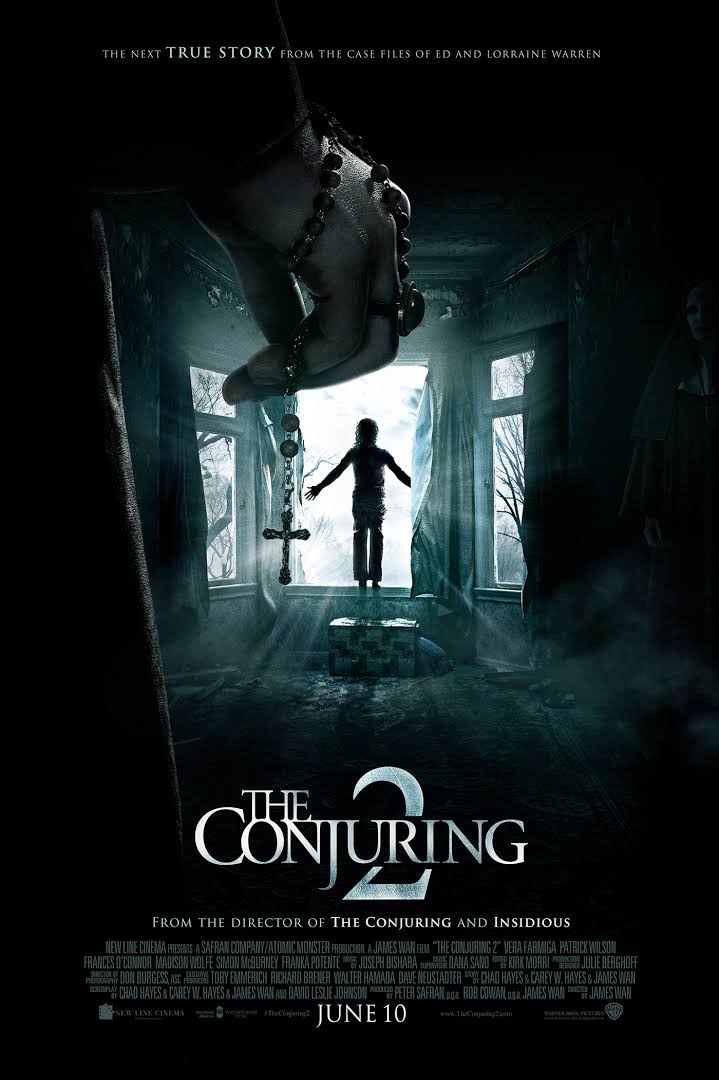
Conjuring2Outstanding horror film! Director James Wan has once again provided audiences with a brilliant work of the macabre and supernatural. From the writing to the directing to the acting and cinematography, Conjuring 2 is on par with, if not better than the first. Sometimes the best stories are true ones. And, although elements of the story have to be fictionalized in order to construct a cinematic narrative, grounding the Conjuring movies in the real work of Ed and Lorraine Warren (Patrick Wilson, Vera Farmiga) infuses a dynamic emotional response that directly impacts the increased frightening nature of these films. One of the observations that I appreciate most about, not only this but the predecessor, is not relying upon the jump-scare to curdle the blood. Are jump scares part of the movie? Well, of course! What fun would a horror film be without the entire theatre gasping for breath, jumping, or screaming together??? But Wan goes beyond the jump scare and channels his inner Hitchcock to build suspense and intrigue. The horror film is best appreciated in a group setting. It is a genre that specifically engages the audience on a visceral level. Wan is truly a master at his craft; and I love witnessing how he continues to prove his ability to develop creative horror films.

Ed and Lorraine Warren are back; and have been called upon, by the Catholic church, to investigate the, what’s been dubbed as the “Amityville” of London. Following a self-imposed sabbatical after the investigation of the infamous Amityville haunting on Long Island, Ed and Lorraine fly to London’s Enfield neighborhood to evaluate a reported haunting and possession. Struggling single mother of four Peggy Hodgson hopes that Ed and Lorraine will be able to drive the evil out of her home, and more specifically her youngest daughter Judy. In an effort to discover the truth behind the well-documented alleged demonic haunting and possession, Ed and Lorraine find that they have also become a target. Facing their most challenging case, Ed and Lorraine are determined to help the Hodgson family and drive the evil from the house.

Following the increasing trend for a film, including but not limited to horror, to begin with an elaborate prologue, Conjuring 2 starts with a fantastic moving shot of the famous eyelet windows of the 112 Ocean Avenue house in Amityville. Often filmed from the outside, this shot sequence takes place inside the attic. A much more intimate feel, this was an excellent choice for establishing the case that launched Ed and Lorraine Warren into the public eye. There have been numerous movies and documentaries based on the arguably most infamous haunting in the United States, so it was not necessary for Wan to spend too much time on it. It is, however, a very important scene because the plot/case of Conjuring 2 is directly related to the experience that the Warrens went through during the Lutz investigation. Beyond the establishing a connection between the Amityville and Enfield cases, beginning with the Warrens in the middle of the 112 Ocean Avenue investigation allows for Wan to visually show how and why the Warrens would seek a self-imposed sabbatical from supernatural and demonic investigations. Moreover, this sequence of events that provides copious amounts of plot development material are also instrumental in significant contributions to character development. Although this prologue lasts less than ten minutes, it contains prolific information vital to the plot of Conjuring 2.

It should not be of surprise that Wan uses the camera very strategically to tell this visually driven story. From the rule of thirds to lighting to creative use of angles and movement, the camera is instrumental in setting the macabre mood of the film. One of the visual storytelling elements that Hitchcock was most known for, especially in Psycho, is using the camera’s placement and angle to foreshadow something or someone. Wan takes a page from the Hitchcock handbook and utilizes the camera movement in such a way that you are predisposed to feeling certain that something or someone is about to appear or emerge from the shadows but your game is thrown off when that doesn’t happen–but then totally happens when you least expect it! Throughout the diegesis, you will encounter moment when the characters are faced with inner demons that parallel or symbolize the actual evil entities in the film. Having this subplot concurrent to the foreground aids in creating and maintaining an emotional connection to the characters. Shocking the audience both emotionally and physically. By eliciting dynamic and comprehensive responses to the horror on screen, the film becomes an immersive experience–that is the brilliance behind this dark and sinister tale.

Beyond the exceptional direction by Wan, part of what makes the Conjuring franchise so successful is the exquisite casting. Patrick Wilson (Insidious) and Vera Farmiga (Bates Motel) are perfectly cast in these films. From what I have read about the real Ed and Lorraine Warren, Wilson and Farmiga respectively stay true to the real-life people they are portraying while adding in the necessary acting skills necessary to increase the impact and believability of the film. The quality of the acting that Wilson and Farmiga bring to the film is outstanding. Sometimes, a horror film can have an compelling plot but the actors are so uninteresting that it prohibits the story from making the impression that it should. Wilson and Farming make the characters of Ed and Lorraine Warren interesting to watch and add a performance quality to the film that keeps your attention the whole time. The degree to which they add a sincere care for the victims of hauntings to their respective characters is refreshing and will stay with yowling after the movie closes. As the Warrens are reoccurring characters in the Conjuring franchise, it is vitally important that they are as interesting to watch as the plot itself since their cases are the inspiration for the whole franchise, at least put to this point.

If there is one negative element in the film, it is the weak showdown. Not weak in that it was anticlimactic or uninteresting, but that it felt a little rushed. At 2hrs and 15mins, the film is longer than the average horror film, so it was not necessary to rush the climax of the film. It certainly does not mitigate the experience of the movie, but I feel that it could have been a little more intense. That being said, if you are looking for an excellent movie to kickoff your weekend, then this one is it! At last check, it out-performed both Now You See Me 2 (which should’ve been entitled Now You Don’t) and Warcraft. Even if you have not seen the first Conjuring, you will still enjoy this installment. However, seeing the first one will help you to better understand the Warrens and their unconventional line of work. Can’t wait to see where James Wan and the Warrens take us next!

“Pawn Sacrifice” movie review

Pawn_SacrificeOf chess and men. Pawn Sacrifice is based on the true story of chess prodigy Robert “Bobby” Fischer and his quest to become the world’s greatest chess player. The game at the center of the movie takes place during the height of the cold war against the USSR. Director Edward Zwick crafts a gripping story complete with beautiful cinematography and a brilliant cast. Toby Maguire brings a neurotic charisma and acute anger to the infamous chess player that few could have done so successfully while staying true to the real life Bobby Fischer. Although watching a chess game sounds like it would make for a dreadfully boring and static story, screenwriter Steven Knight (et al) provides a screenplay reeling with intense psychological “chess” moves while remaining focussed on the game that “captured” the eyes of the world. Not surprisingly, the pretentious and unrevealing title kept general audiences from watching it, even though it was initially released during the autumn movie graveyard of September. If there was ever a mystery as to why Fischer’s mental stability greatly suffered as a result of the tournament, this movie sheds light on the obsessive compulsive struggles of a man who was focussed on beating the Soviets at their own game.

American and world-renown chess legend Bobby Fischer faces his greatest challenge yet: the world’s best chess grandmaster Soviet Boris Spassky. From the time he was 12 years old, Fischer began to capture the attention of the chess community of New York and soon the whole country. It was clear that Fischer was truly a prodigy who was destined for greatness in the strategic calculating game. In addition to having a brilliant mind for planning, predicting, and observation, he equally suffered because of his strength. Finding it nearly unbearable to tolerate anything that even slightly aggravated him, Fischer became as notorious as he was talented. Representing the United States, Fischer sees this as a strategic opportunity to outsmart and beat the Soviets, as the game is symbolic of the actual cold war that both countries were involved in. Follow his personal journey of triumph and defeat as he must play the most important game of his life with millions of people watching–some wanting him to succeed while others want him to fail.

The greatest strength in this bio pic is that it takes an otherwise boring game to watch; and creates an atmosphere of intrigue and suspense that parallels both the Cold War itself and the personal/interpersonal relationships between Fischer and his staff, family, and the public. What’s even more astonishing is that this somewhat fictional counterpart to the documentary on Bobby Fischer was able to be sourced for a feature-length narrative film. Unlike the documentary, Pawn Sacrifice goes back to the childhood and adolescent years of the prodigy in order for the audience to make a better connection with his character than can typically be done in a documentary. While the famous 21-match game takes up nearly half the screen time, there is still sufficient material, focussing on the development of Fischer, that it creates an atmosphere that draws you into the game in the latter half of the movie. Although the movie is about Fischer and chess, the degree to which Fischer shows dedication, immense passion, and uncompromising intellect can serve to make a connection with anyone who is passionate about a lifelong dream or aspiration.

One of the elements of Fisher’s upbringing that played a huge role in his anti-communistic paranoia is his mother’s communist activism. Sadly, that part of his life is merely touched upon and not explored very much. Spending more time on his mother’s activism and his hatred of anything remotely communistic could have provided more support for his bizarre behaviors during the tournament against the Soviets. While Fischer is at the center of the movie, he has two excellently written side kicks: (1) a patriotic attorney who attempts to keep Fischer on the right track as an American symbol and (2) a chess grandmaster priest who coached Fischer when he was younger and one of the only players to ever beat him. The character dynamics make the group intriguing to watch. Each so very different, but require the other in order to journey towards the chess world championship. It took amazing determination and long-suffering resilience to attempt to contain the unpredictable and extremely temperamental Bobby Fischer.

If you are looking for a movie to inspire you to be a better chess player, then you may be a little disappointed because you will see much more slapping of the time clocks than the movement of the pieces on the board; however, Zwick does cinematically work in some movements and strategy into the diegesis of the film. Thankfully the movie is shot beautifully and possesses an excellent pacing with strong diegetic structure. There is also some wonderful production and set design that will likely get overlooked since the game is really the focus and mostly occurs in very nondescript rooms. Pawn Sacrifice highlights one of the most famous chess games in all of modern history while getting a glimpse into the mind of a genius turned expat in the end.

“The Kings of Summer” movie review

KOS-PosterA unique coming-of-age story in the vein of Stand By Me. However, unlike the more conventional coming of age stories, the subtext and themes of then first-time feature director Jordan Vogt-Roberts’ film, written by Chris Valletta, are merely touched upon but seldom followed through in any meaningful way. The deadpan comedy and one-liners are simply tossed around instead of providing deeper meaning or introspect that may have increased the emotions felt throughout the movie. It’s a very surface level movie that fails to substantially deliver the dynamic quality narrative that is typically expected of these films. That isn’t to say that it is without merit; quite the contrary, it is enjoyable and is successful in taking you back to that time when you felt that no one understood you and you wanted to be treated like an adult, but still clung to the reckless freedom of hormonal youth. Understanding the consequences of one’s behavior is a regularly visited theme in the movie. With gorgeous outdoor cinematography and relatable characters, The Kings of Summer contains a little something for everyone who has ever thought of running away and building a cabin in the woods for you and your buds.

The Kings of Summer is about three teenagers Joe (Nick Robinson), Patrick (Gabriel Basso), and Biaggio (Moises Arias) who run away from their respective dysfunctional families and make a life for themselves out in the woods by building a house and living off the land. Ever since Joe’s mother died, he just does not get along with his father Frank (Parks and Rec‘s Nick Offerman). In turn, his father has anger and resentment issues he too is working through with the untimely passing of his wife. Unfortunately, Frank takes out his anger on Joe and both have nearly become alienated from one another. Making valid points about Joe’s behavior but not delivering those points with understanding, Frank and Joe just do not get along. With Patrick also not getting along with his helicopter parents (Megan Mullally and Marc Even Jackson), Joe convinces him to join with their new friend Biaggio and rule their own lives and answer to no one except each other. Forming a friendship pact, the three seem inseparable. However, even this three-fold cord has struggles and disagreements, jealously and rage. The young men are forced to work through life’s problems while dealing with the chemical and psychological changes of growing up.

Have you ever just wanted to escape life? Just quit and run away to a tropical island or mountain valley? That is just what you will encounter in The Kings of Summer. Coming-of-age stories are usually some of the films that find their way onto favorite lists or those to which so many people can relate because they deal with issues many of us face while in that transitional time from teenager to adult. From lakeside high school parties to hormones and independence, this film includes some of the various turning points and learning opportunities one likely encounters while discovering who he or she is. Ordinarily, films such as this, deliver the content in such a way that it offers deeper meaning or emotional connections in the narrative. And although there are some themes and moderate introspect, the film does not go far enough in connecting the audience with the teenagers or adults in the movie. There were several lines of dialog that alluded to potential conflicts and personal struggles that could have been revisited to offer more substance in the film. That being said, the writer and director do provide relatable characters who are each very different from the other in an effort to provide audiences with a character to whom they can identify. It is important for coming-of-age movies to not only contain relatable characters but relatable situations as well. And this movie does that, just not to the extent it had the capacity to do.

One of the interesting themes that can be read in The Kings of Summer is questioning one’s sexual orientation. Much like in Wes Craven’s A Nightmare on Elm Street 2, in which the protagonist’s sexual orientation is questionable, you can find similar themes in this film. Throughout the movie, Joe is regularly making speeches on and offering up pithy comments about masculinity. Quite regularly, Joe lectures Patrick and Biaggio about what it means to me a man. At times, Joe even becomes defensive when his masculine ways are questioned. As Shakespeare penned, “…thou doth protest too loudly…” It is entirely possible that Joe is struggling to come to terms with his sexual preferences. This could explain why he would go to such drastic measures to escape his rigid father in order to discover who he is when he has to provide for himself. Other supporting evidence of this theme is simply the fact that he doesn’t get the girl even though he tried much more than Patrick. When Patrick winds up with the girl, Joe is outraged and never quite gets over it. There are also the frequent trips to Boston Market instead of truly “being a man” and hunting for food. Maybe he’s simply trying too hard to deny who he is developing to be? Perhaps. But, there are additionally also other themes that can be read in this unique coming-of-age story.

Although this film did not receive the national attention in 2013 that it really should have, it is definitely one that is worth a watch if you enjoy this sub-genre of Drama. Ordinarily, ensemble casts can hinder effective character development and excellent storytelling, but the cast in this film is handled moderately well. If there had been more focus on the personal struggles or if the film included an external goal, then it would have definitely been better and perhaps more popular. Stories in general–especially visual stories–require the principle characters to not only have internal goals, but a clearly defined external goal as well. Often the external goal can echo the internal one, but it is important to show a tangible goal. Unfortunately, the latter is lacking in the diegesis of The Kings of Summer. This movie won’t likely ever have the nostalgia or cache of Stand By Me, but it does offer up a fun story with an excellent cast and some personal growth that will keep you entertained for the hour and a half runtime.

You can catch Ryan most weeks at Studio Movie Grill Tampa, so if you’re in the area, let him know and you can join him at the cinema.

Ryan teaches screenwriting at the University of Tampa. If you like this article, check out the others and FOLLOW this blog! Interested in Ryan making a guest appearance on your podcast or contributing to your website? Send him a DM on Twitter!

Follow him!

Twitter: RLTerry1

Instagram: RL_Terry

“Regression” movie review

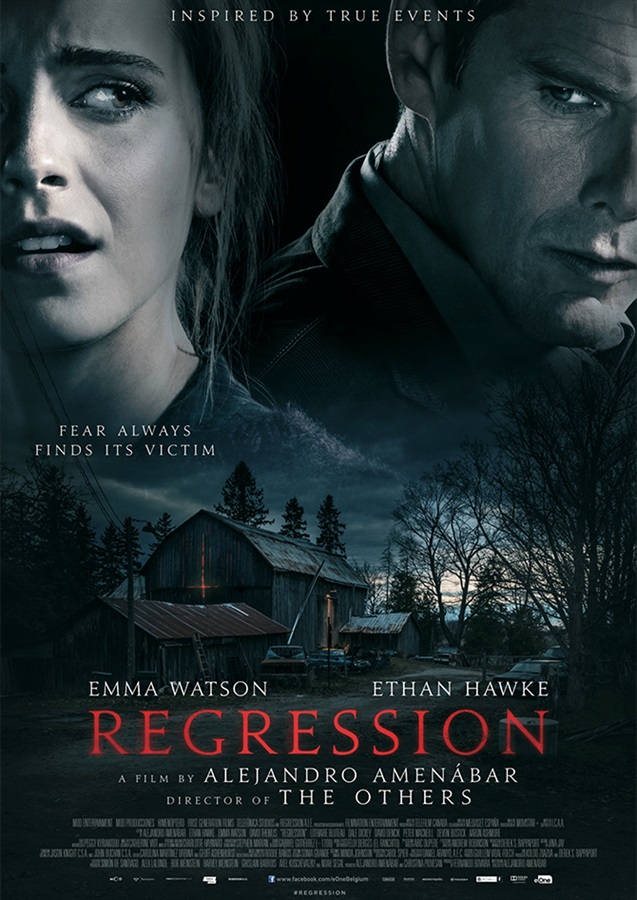
RegressionIntimately disturbing and suspenseful. Emma Watson and Ethan Hawke star in a film that is one part crime drama and one part supernatural thriller. Inspired by actual cases and claims of growing Satanic cults in the Midwestern part of the country in the late 80s and early 90s, Regression follows one detective’s journey through science, superstition, and organized religion to discover the truth of what happened to a seventeen year old young lady named Angela (Emma Watson) who claimed her father molested her. Opening with the interrogation of her father, Detective Bruce Kenner (Ethan Hawke) is confronted with the conundrum of a suspect who does not deny the vomit-inducing allegations, but is greatly struggling to remember what happened. Cool color temperatures, dreary weather, effective acting, and a creepy small town all come together to make creepy psychological thriller of good versus evil.

Occurring at a time that reports of Satanic cults with blood curdling rituals began to hit a high, Regression brings you face to face with now-discredited psychological therapy practices, blood sacrifice, and sexual deviance. Follow detective Bruce Kenner as he attempts to put the puzzle of what actually happened to Angela together in order to solve this perplexing mystery. First approaching this as a disturbing but typical minor molestetion case, Kenner quickly learns that there is much more to this case than meets the eye. As evidence is uncovered and truths are made known, this investigation goes much deeper and crosses public safety and family boundaries.

This is one of those plots that is difficult to analyze without giving away key parts of the mystery. If you enjoy watching films that contain prolific symbolism and question institutions that exist for physical and spiritual protection, then you will undoubtedly find this film, from the Weinstein Company that flew under the radar, intriguing. Although it is definitely a slow burn, it never moves too slowly and does provide enough of a hook to keep you going. Be sure to pay close attention to every line of dialogue because (hind sight being 20/20 and knowing the ending) there are definitely clues dropped here and there that all point to the answers for which Kenner is looking.

The investigation at the core of the plot is three fold: spiritual, scientific, and legal. Bruce Kenner partners with both a local psychology professor and a reverend to uncover what happened to Angela. As one might expect in a movie such as this, the professor and reverend have vastly different approaches to this mystery. For psychology students or professionals watching this film, you will witness the practice of regression as it plays a significant part in the investigation. The aforementioned practice also raises awareness to invasive psychological therapy techniques. As this film technically falls within the horror genre, it is definitely not short on social commentary. With physical evidence in short supply and a suspect who cannot remember what happened, Kenner relies upon the psychological evidence gather by the professor. Little do our investigators know that these aggressive interview techniques play more into the mystery than they could have known.

Ugh. There is so much more about be plot I’d love to analyze but that would take the fun out of watching it and ruin the mystery for you. So switching gears. From a technical perspective, the film is not remarkable in any way. Neither is it lacking in cinematography or direction. However, movies in this sub genre of horror can so often feel and look like a Lifetime original movie, especially because it includes a significant female character who claims to have been molested. Thankfully, director Alejandro Amenabar (The Others) provides audiences with a “Lifetime” plot that is still cinematic enough to avoid the stigma of “another Liferime movie in theatres.” Emma Watson and Ethan Hawke display excellent acting prowess along with a few of the other key players in this narrative. For the most part, the acting is on par with this crime drama. All the filmmaking elements come together nicely to keep your attention for the hour and a half runtime.

If you enjoy mysteries that confront science and religion, then you will definitely enjoy this film. Right now, it is one of the movies included with your Amazon Prime subscription. Rated R for some visual sexual content, it is pretty tame as far as rated R movies go. There is a gritty and real feel to the movie that might be a little too terrifying for some viewers. However, this IS a psychological thriller that contains many of the earmarks of a good horror film.

“On Cinema and Theme Parks” (part 12 of 12)

My BookThe world of the business of media convergence is a fascinating and rapidly changing world! And, the convergence of cinema and theme parks is a dynamic example of how one form of media can be integrated into another in order to create a new experience for audiences around the world. Media conglomerates with theme park investments are often exploring what to do in order to remain competitive and increase the number of guests through the turnstiles. Sometimes this means using their own IPs to develop new rides or attractions, maybe an entire new park altogether, or perhaps striking a deal with another media company in order to use another’s IP as the source material for new attractions.

The opposite is also true. Media conglomerates with theme park interests may look to their own respective parks for the inspiration for the next movie. This was definitely the case with Disney’s Pirates of the Caribbean and is the case in the film Tomorrowland, in which an entire section of a park is the basis for a movie. It is all storytelling. But the stories being told take different shapes and are told through various means. And, even video game companies are getting in on the action. On May 7, 2015 Universal Parks and Resorts and Nintendo announced a first-ever partnership. Universal Parks and Resorts acquired the theme park rights from Nintendo to include the legacy video game company’s characters and games in new attractions and character meet and greets (BusinessWire, 2015).

At their respective roots, both movies and theme park attractions (and even entire parks themselves) tell stories. The medium through which they tell their stories is very different, but nevertheless helps to support one another. Media conglomerates have demonstrated this concept by taking existing movie/TV IPs and translating them into attractions and taking existing theme park attractions and translating them into movies. At its heart, the purpose of this study is to develop recommendations for media conglomerates when making decisions that are potentially worth millions of dollars, and could be a major success or a big flop.

Despite the more artistic or niche films still being amongst the individual favorites of the participants, the shared favorite movies were high concept and aimed at broad audiences, and typically fell into the science-fiction or fantasy/adventure genres. Specifically, the movie Jurassic Park and the Jurassic Park ride were cited numerous times. If an attraction were too disconnected from the story or plot of the movie, serving as the basis for the ride, then it appears to be received negatively. On the contrary, when a movie-based theme park attraction combines the best of the plot or characters, in a given movie, with a conventionally thrilling ride design, then it is received very well and enjoyed immensely.  Furthermore, the attraction needs to tell a story within the length of the ride from queue to exit. Fluid, coherent stories are driving forces behind the likability of an attraction or movie. Prompting the generation of emotional connections or responses from audiences/guests, in respect to the story of a movie or attraction, is key to creating reflections that will evoke nostalgic memories down the road; and thus, compel the audience member or park guest to experience the movie or ride again—perhaps with friends, family, or their children.

Well-executed themed design to support the story of a theme park attraction based on a movie is just as important as the story or intellectual property themselves respectively.  Story is the plot or sequence of events that take place during the ride experience (again, this is from the queue to the exit). Theme encompasses the building design, audiovisual elements, physical movement, and special effects during the attraction. The goal of an attraction or park area’s theme should be to completely immerse the park guest into the world being used as the basis or inspiration for the ride or section of the park. Everything from the employees to the restaurants to the surrounding buildings needs to work together to create an experiential degree that essentially transports the guest from the real world into the world of the park or ride. When developing themed areas of a park, designers need to be careful not to allow the outside world into what should amount to an escape from reality. Not that iconic brands or companies cannot be integrated into the theming of a park at all; but it needs to be more indirect, thus allowing the theme to continue and the story not be broken by outside invaders, so to speak.

The reason many attractions at movie-based theme parks were originally developed was to take Tom Gunning’s (1986) idea of the cinema of attractions and translate it literally. However, with the increasingly digital climate of movie making, the practical, analog effects and techniques that once made for the basis of attractions, are no longer foundation enough for successful attractions in today’s marketplace of themed entertainment ideas. Simply stated, it just isn’t exciting to watch an editor sit behind a computer creating digital effects. Despite the making of a movie just not being as secret or magical nowadays, it is still important for a movie-based theme park to hold onto its roots and work to creatively develop new ways of exhibiting this art that still mystifies to this day—just in different ways than it used to. For movie-based theme parks that exist on studio lots or house sound stages, it is imperative that studio tours continue and build areas that can be rented out for current productions. Even though many people know how movies are made presently, the art, skill, and magic of how similar effects and shot sequences were accomplished before the aid of computers (at least to the extent they are instrumental today) in classic movies has a place in the modern movie-based theme park. Hitchcock: the Art of Making Movies was cited as an example of this type of offering guests want to see alive in the parks.

The goal of a movie or theme park attraction is to generate some type of pleasurable experience in the movie patron or park guest. For both movies and themed parks, the idea needs to be to craft a story that will stimulate physiological and psychological/emotional responses from the audience/guests. A movie should contain a story or sequence of events that generate fear, affection, anxiousness, or levity in the bodies of the patrons. These responses are very much physiological. In the environment of a theme park attraction based off a given movie, these same physiological responses need to be generated by the use of movement and special or visual effects. When generating these physical responses, the patron or guest will instinctively develop psychological or emotional responses to accompany the complementary physiological response. Even if the physiological strain placed on the bodies is by all accounts a negative one, the park guest will most likely be compelled to experience it again and again because studies have shown an attraction to or affinity for sensations of pleasurable un-pleasures.

The principal idea behind this study is to create a predictable model for producers and designers. And, there has been a prolific amount of information to supply the evidence that creative designers, producers, and project managers need in order to make well-informed decisions in the beginning stages of the themed entertainment or motion picture production process. Developing a model for creative decision-making is not as simple as ‘include these things and your idea will be successful,’ as the creative process can be very subjective. However, with enough supporting evidences, a media conglomerate or other company with theme park investments can make decisions with sufficient empirical evidence pertaining to the projected success of an attraction or theme park. This study has outlined a model that is grounded in scholarly research, anecdotal evidence, and first-person focus groups and interviews.

For the complete study, head over to AMAZON and purchase the book. These 12 sections merely touch on some of the main points from the study but by no means take the place of reading the whole book. Hopefully these sections prompt a desire to experience the book/study in its entirety. It’s written to be enjoyed by anyone who loves movies and theme parks. What good is a study if it’s written of that only academics can understand. I have uncovered fascinating knowledge and insight into the craft of the relationship between cinema and themed entertainment that I want to share with the world.

To return to the beginning of the series, click HERE