BLUE BEETLE superhero movie review

High energy! Blue Beetle is a charismatic superhero movie that delivers vivacious action, laughs, and heart. Undoubtedly, Blue Beetle will become a fan-favorite superhero in the coming years ahead. However, the full potential of this movie to forge new frontiers for heroes and characters we haven’t had on the big screen before is ultimately curbed by some character choices and recurring thematic expressions.

Jaime Reyes suddenly finds himself in possession of an ancient relic of alien biotechnology called the Scarab. When the Scarab chooses Jaime to be its symbiotic host, he’s bestowed with an incredible suit of armor that’s capable of extraordinary and unpredictable powers, forever changing his destiny as he becomes the superhero Blue Beetle.

Before you begin thinking that if you’ve seen one superhero origin story, you’ve seen them all, Blue Beetle manages to make fresh a familiar plot to keep audiences entertained. The strength of Blue Beetle is in the casting, lesser so the characters themselves. That’s not to suggest that none of the characters are crafted and developed well, but there are some odd character/screenwriting choices that mitigate the full impact the movie could have had.

Susan Sarandon and Xolo Mariduēna are the standout performances and characters in the movie. Sarandon’s villain and Xolo’s hero are a perfect match for one another. She was cleverly fiendish and he was humble and strong. For me, it’s these two characters and cast members that made the movie for me. I cannot think of two other actors that could have brought these characters to life as well as these two. It’s also incredibly poetic: a screen legend and a relatively newcomer to the big screen. The chemistry and narrative poetry between our hero and villain was excellent. Anytime I get to enjoy Sarandon’s performances on the big or small screen is a good day!

While the plot for this origin story is fairly standard, the method of expression and the character choices give it an air of originality. But it’s in some of the expression of themes and characters that the movie falters, curbing the full potential of the story. Specifically, this is witnessed in the comedic stylings of George Lopez and the recurring commentary and themes borne out of postcolonial theory. While Lopez’ character was intended to be the comedic relief, the method of expression of his comedy became obnoxious and even exhausting. Moreover, his character plays right into negative stereotypes that the movie could have easily avoided.

Likewise, there is conspicuous, recurring imagery and commentary on postcolonial theory that mitigates the positive affects of the movie. It’s as if the screenwriter was message first and plot second. Even when filmmakers desire to exhibit their personal interpretation of a worldview, it is important that the filmmaker employs more clever means of expressing these opinions.

To bring us around to a more positive note, there is a wonderful depiction of a father-son (and father-family) relationship, and I highly respect the movie for this. Far too seldom do we get movies that spotlight healthy relationships between fathers and their families (in this case, the focus is on the father-son relationship). It’s so very important in narrative storytelling to remind the world of the important role a father plays in his family. Does that mean mothers cannot provide the same emotive dimension? Of course not. But there are many more movies that depict healthy, constructive mother-family relationships. This was a brilliant opportunity to spotlight the love a father has for his family and the love the family has for him.

Blue Beetle represents an MCU type of storytelling in a DC movie, but DC still manages to make this expression of a superhero their own. I really like Jaime/Blue Beetle, so I hope that I see him on the big screen again.

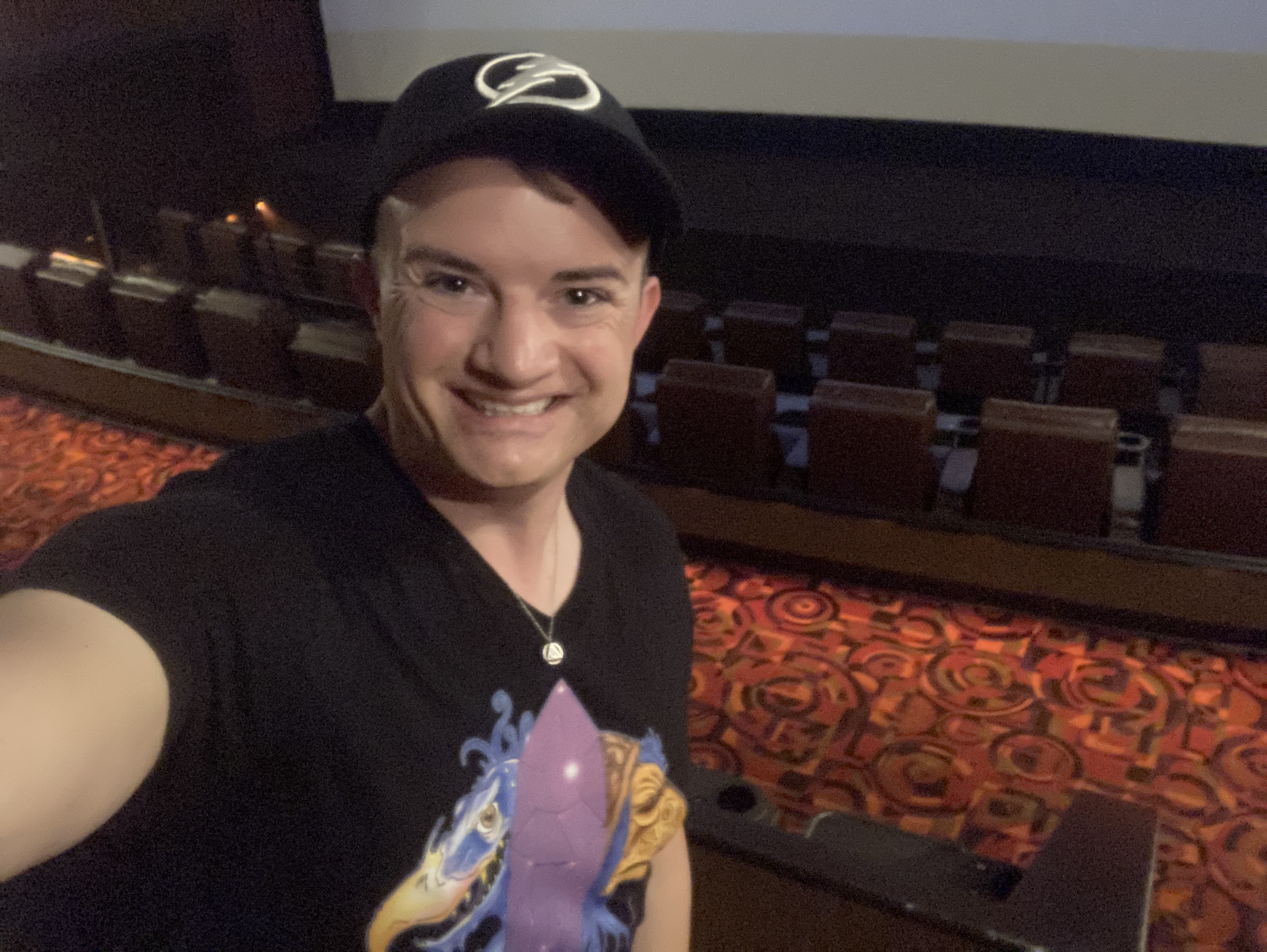
Ryan teaches Film Studies and Screenwriting at the University of Tampa and is a member of the Critics Association of Central Florida and Indie Film Critics of America. If you like this article, check out the others and FOLLOW this blog! Interested in Ryan making a guest appearance on your podcast or contributing to your website? Send him a DM on Twitter. If you’re ever in Tampa or Orlando, feel free to catch a movie with him.

Follow him on Twitter: RLTerry1 and LetterBoxd: RLTerry

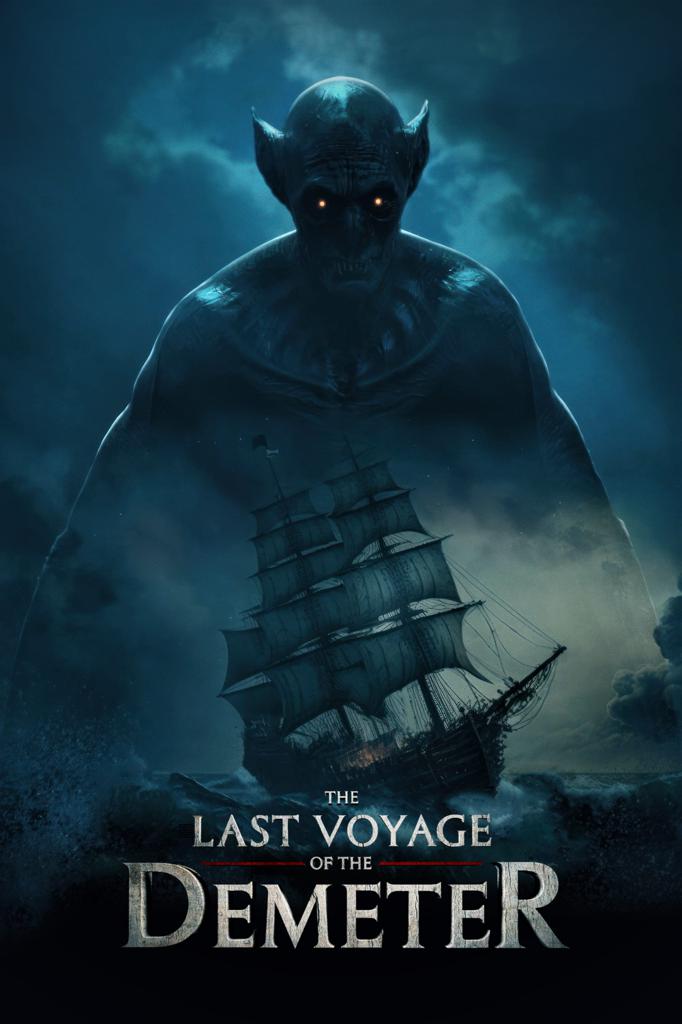
THE LAST VOYAGE OF THE DEMETER horror movie review

Fangtastic! Universal meets Hammer horror in a gothic tale that explores what may have happened on the domed Demeter carrying one thirsty passenger. While seemingly most contemporary horror movies take place in the real world, The Last Voyage of the Demeter transports us back in time to a fantastical world full of sailing vessels, ominous castles, and terrifying folklore. More than a backdrop on which the story unfolds, the atmosphere and sets are characters in and of themselves. If the gothic setting wasn’t enough, the score will certainly wrap you in the nightmare of this movie. If you love classic horror, this is right up your alley as it’s in the same ‘vein’ as such foundational early to mid 20th century horror motions pictures including Nosferatu and Dracula and even late 20th century horror pictures like the original Alien. While it remains to be seen if this is Universal’s second attempt at the defunct Dark Universe, between this movie and the Universal Monsters last at Epic Universe theme park (still under construction), the manner in which this movie ends certainly lends credence to an attempt to revive the dead Dark Universe.

After accepting mysterious cargo from an anonymous customer, the crew of The Demeter experience horrific events aboard the doomed sailing vessel as it makes it way from the harbors beneath the Carpathian Mountains to London.

Neither Bram Stoker, F.W. Murnau, nor Carl Laemmle included much information on the doomed voyage of the Demeter after it left the harbor beneath the Carpathian Mountains. All we know is that mysterious cargo (which we know is the coffin and/or dirt belonging to Count Dracula/Orlak) is dropped off and only the ghost of a ship arrives in London. And that’s the beauty of this movie, the filmmakers only needed to begin and end in the right places. Therefore, everything that unfolds on the ship is pure speculation and imagination. When adapting an existing IP, this is how it should be done. And while this is the best example in recent years of how to find new stories within an existing IP, Disney did something similar with Rogue One, which is my favorite in the Disney Wars movie universe.

We already know The Demeter and crew aboard are doomed, so the charm or terror in this movie isn’t what’s ultimately going to happen–rather–how is it going to happen. And director André Øvredal and writer Bragi Schut Jr. do an excellent job at making the events captivating and even surprising. No one is safe on the sailing cargo vessel, and I do mean no one. Our storytellers craft a narrative that is completely inspired by the past writings and movies yet it takes the story of Dracula to new levels, most of which I appreciate, though there are some elements of the story that I feel are not in line with established vampire lore.

Without getting into spoilers, it’s difficult to discuss what I would like to bring to to the discourse; however, I’d be remiss if I didn’t convey that there is a character we know from nearly all iterations of Dracule or Nosferatu that appears to be setup, but it’s never delivered. Without knowing the direction Universal is going with this movie, I must say that this was a missed opportunity to organically bring this character into what appears to be a relaunch of the Dark Universe.

Both Universal and Hammer horror are being channeled in this newest Dracula movie! You have the gothic stylings of early Universal horror coupled with the amped violence of Hammer horror. Working together, this two distinctly stylistic expressions of horror are used effectively in the crafting of the aesthetic and tone of this movie. Further evidence of the inspiration taken from early Universal and Hammer horror can be witnessed in the haunted house upon the sea concept. I am also reminded of Alien when I think of the setting, the claustrophobia, and the no escape dynamics of this movie. In Alien, it was a Xenomorph in space where “no one can hear you scream,” except we are in a sailing vessel at sea where no one can hear you scream.

As a huge horror fan, especially of the classics, I am eager to see where this movie takes Universal horror. Usually, I am not a fan of starting a franchise (when it is intentionally started), but this movie demonstrates that Universal may have learned its lesson from the failed launch of the last Dark Universe. I definitely see potential in this return to classic Universal monsters, and am along for the ride.

Ryan teaches Film Studies and Screenwriting at the University of Tampa and is a member of the Critics Association of Central Florida and Indie Film Critics of America. If you like this article, check out the others and FOLLOW this blog! Interested in Ryan making a guest appearance on your podcast or contributing to your website? Send him a DM on Twitter. If you’re ever in Tampa or Orlando, feel free to catch a movie with him.

Follow him on Twitter: RLTerry1 and LetterBoxd: RLTerry
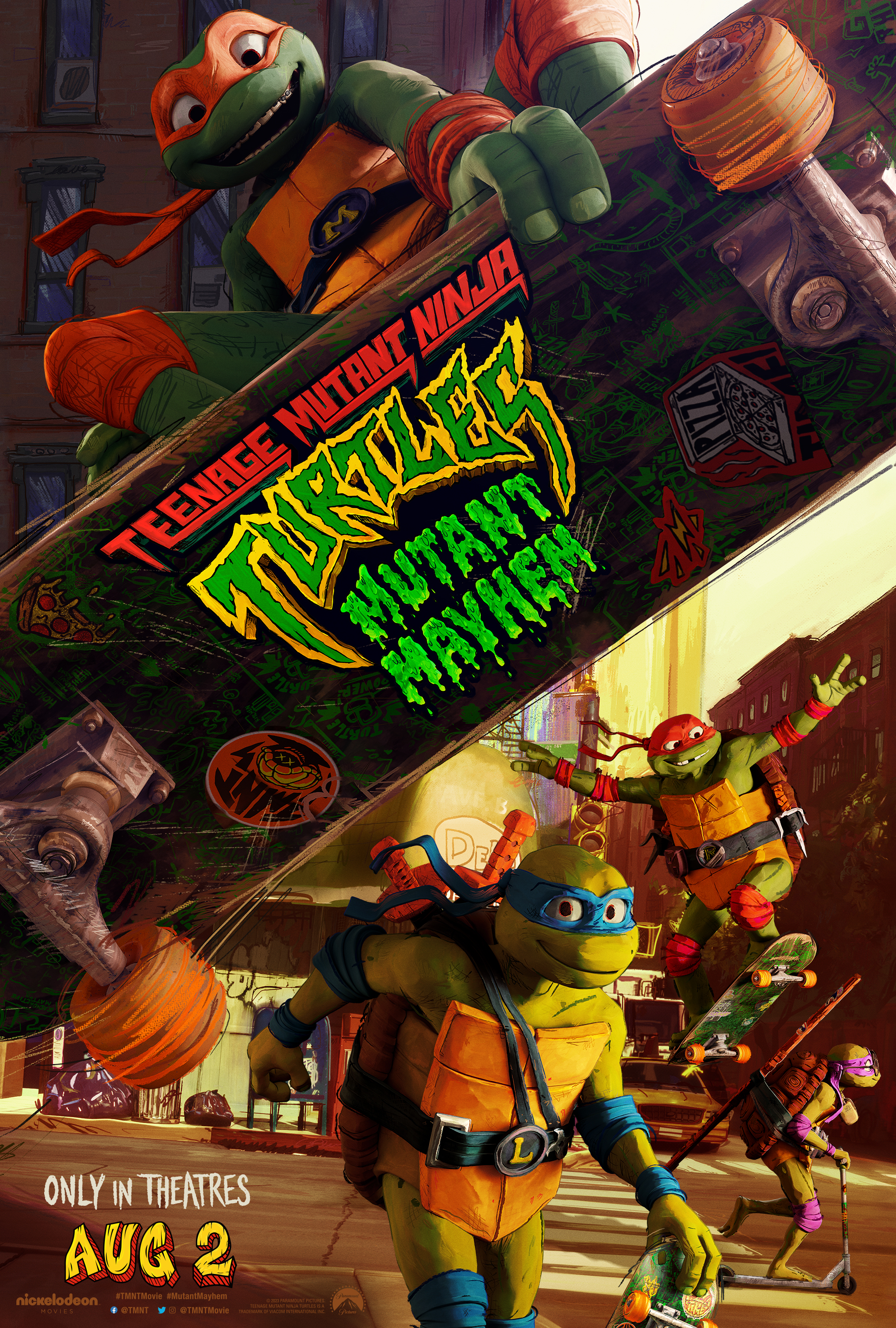
TEENAGE MUTANT NINJA TURTLES (2023) movie review

Cowabunga, you’ll have fun! Whether or not you grew up with the Teenage Mutant Ninja Turtles (TMNT) 1980s animated television show, the comic books, or even the other movies, there is so much to be enjoyed in the new TMNT movie. At just over 1.5 hours, you’ll be invested in this Mutant Mayhem that functions as a standalone origin story, plus a foundation from which to launch subsequent sequels. While Shredder is not the villain, stick around for his subtle debut in a mid-credits scene.

After years of being sheltered from the human world, the Turtle brothers set out to win the hearts of New Yorkers and be accepted as normal teenagers. Their new friend, April O’Neil, helps them take on a mysterious crime syndicate, but they soon get in over their heads when an army of mutants is unleashed upon them.

Since I have not watched any TMNT shows or movies since the animated series in the 1980s, I can’t comment on what is or isn’t canon or what would or would not be, but I can say that from what I remember about the old show, this feels like a reimagination that is simultaneously fresh yet familiar. Perhaps some characters are interpreted differently for this movie than they have been in the past, but the character dynamics, conflict, and relationships make sense within this world. Nicely plotted and paced TMNT moves quickly and leanly–sometimes a little too leanly, but I digress. Most of the humor in the movie works well, but there is one recurring joke that does grow tiring to the point that the punch is less funny than it would have been had the joke been setup and developed more sleekly.

The movie is incredibly postmodern in the sense that the characters reference real life celebrities, TV shows, movies, etc. And while it was cute for a short while, the constant pop-cultural references grew a little tiresome. It’s like salt: fantastic in small amounts; unhealthy in large amounts.

I’ve said it before, and I will say it again, I cannot figure out why studios and writers insist on sprinkling in adult language in a movie that is undeniably geared towards kids (if for no other reason, it is released by Nickelodeon). Reminder: you do not need to include foul language (in however small amounts) in order for adults to watch…they are going to watch anyway, and maybe even be more inclined to introduce their kid(s) to the TMNT.

Suffice it to say, TMNT is a lot of fun, and if you’re looking for a throwback superhero movie with some heart, then I’ve no doubt that you’ll enjoy this movie.

Ryan teaches Film Studies and Screenwriting at the University of Tampa and is a member of the Critics Association of Central Florida and Indie Film Critics of America. If you like this article, check out the others and FOLLOW this blog! Interested in Ryan making a guest appearance on your podcast or contributing to your website? Send him a DM on Twitter. If you’re ever in Tampa or Orlando, feel free to catch a movie with him.

Follow him on Twitter: RLTerry1 and LetterBoxd: RLTerry
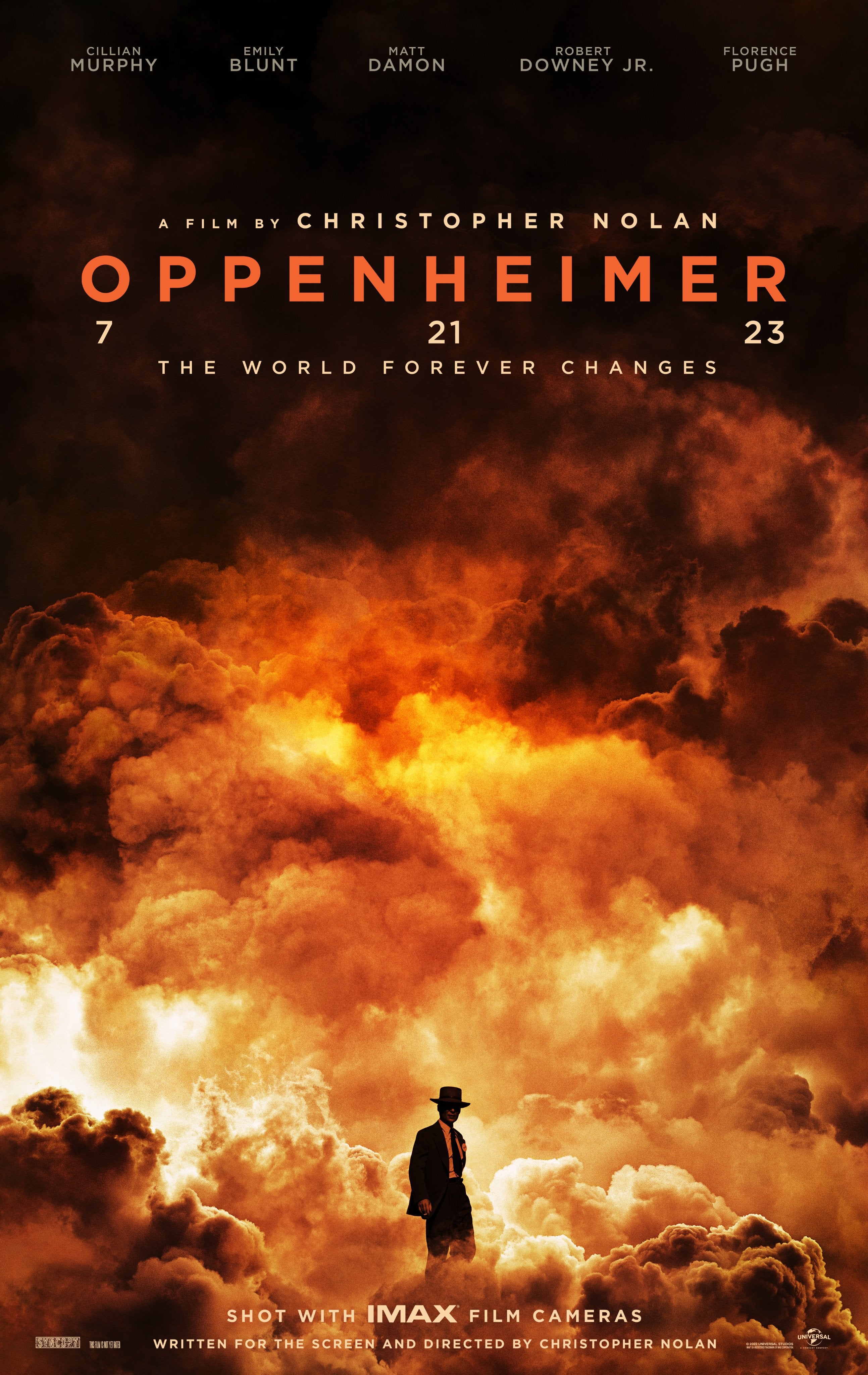
OPPENHEIMER film review

Sensational! Christopher Nolan’s highly anticipated cinematic spectacular Oppenheimer is an extraordinary motion picture that delivers a story as explosive as the subject matter. Not since Nolan’s earlier work on pictures such as Memento and The Prestige have I enjoyed both the form and function of his stylistic brand of filmmaking. Although the film chronicles the development, use of, and subsequent scientific and sociological affects of the A-Bomb, the story it really about the rise and fall of J. Robert Oppenheimer. Moreover, the subtext of the story is one that carries with it such commentary as the true cost of notoriety and serving one’s country and the destructive nature of unsubstantiated witch hunts. It’s a character-driven story more than it is a plot-driven story about the creation of the A-Bomb.

Oppenheimer is the story of American scientist J. Robert Oppenheimer and his role in the development of the atomic bomb. The film explores how one man’s brilliance, hubris, and relentless drive changed the nature of war forever, led to the deaths of hundreds of thousands of people and unleashed mass hysteria, and how, subsequently, the same man’s attempts to end one World War began a Cold War that would last for nearly fifty years.

While I have some reservations in the structural integrity of Nolan’s plotting in this film, which no strangers to my blog should know since that is often where I am hardest on films, his plotting and characterization hasn’t been this strong since Memento and The Prestige.

It should come of no surprise that Nolan’s latest motion picture excels in technical achievement. And I am not mentioning that to in anyway detract from that achievement; but, I mention that because had the film simply been an exercise in pushing the boundaries of filmmaking, then it would be another intentionally avant-garde vanity project. Which, it is not. Oppenheimer excels in both form and function; it shows care for both how the motion picture is montaged and presented and for the function of both plot and character.

With few exceptions, whether the plotting of a film is linear or non-linear, the plot should still follow foundational storytelling conventions to achieve the full impact it desires. Contrary to a postmodernist view of rules of art, just because one breaks the rules does not mean that a work of art or endeavor is somehow more substantive or meaningful in value. Nolan strikes a fantastic balance between form and function in this picture to completely transport audiences to the world of Los Alamos, NM in the mid-20th century.

Not since Dario Argento’s masterpiece Suspiria have I witnessed a motion picture employ the use of lighting, color (or lack thereof), and score to such a fantastical and effective level. These visual and auditory elements combine to immerse audiences in both the narrative and emotive dimensions of Oppenheimer’s story. Never overshadowing the story, but working in tandem with it, the visual and audible elements of the mise-en-scene craft a picture that simultaneously feels part of our world and yet somehow other worldly. Moreover, the story of Oppenheimer is told through both subjective and objective camera placement. In less experienced hands, this could have proven to be disastrous, but Nolan demonstrates his command of the screen in the uncanny combination of both.

One of the most stylistic montage and editing devices used is the black and white (more accurately described as grayscale) imagery for a specific timeline. And it would appear to my observation that it is indeed grayscale stock film–not desaturated in post-production. This observation is in part gleaned by way of the effects of lighting on the film stock. From a story organization perspective, this use of grayscale film stock helps in understanding the part of the non-linear timeline in which we find ourselves.

Where Nolan often struggles is in character authenticity. More times than not, the characters in his films are often lacking in believability, relatability, and vulnerability. Not that his characters are generally flawless, but they have demonstrated a lack in that which makes us most human. Each and every character in this film feels incredibly human–true to life. Whether or not the film is an accurate representation of the real-life counterparts, is not something on which I can comment. But, the characters, as presented, are relatable and feel authentic within their world. On the topic of characters, Nolan also injects humor into this film, which isn’t characteristic of his past films; and that use of humor helps to provide tension relief as an emotional reset between dramatic beats or scenes.

The central theme in the film is the true cost of notoriety and serving one’s country. And this is expressed primarily through Oppenheimer’s relationship with the development of the A-Bomb, but supplemented by his interactions with Albert Einstein, and therein Einstein’s relationship with his Theory of Relativity and success as the greatest scientific mind of all time. Or, as Oppenheimer puts it, “the greatest scientific mind of his day.” The story has to be seen to truly felt, but Oppenheimer spotlights how when one’s usefulness is seen as exhausted or no longer relevant to one’s country, that one is disposable.

We not only witness this in the film, but in real life as well. To this day, there are those that fought for their country that are not treated with the dignity and respect they both earned and deserve. The film paints a rather negative portrait of federal government operations as it relates to international and domestic policies. Suffice it to say, after Oppenheimer delivered the A-Bomb, he was soon thereafter cast aside as his (objectively reasonable) opposition to further development of weapons of mass destruction began to influence policy decisions. And this rise and fall story isn’t relatable to merely the government, but can be said of any company or organization that hails one as a visionary one minute, but after the project is realized, the same company or organization moves on. Fame is fleeting.

While many brilliant scientists were undoubtedly envious of Oppenheimer’s commercial success (except for Einstein, whom was a soothsayer of sorts), perhaps the rise and fall of Oppenheimer serves as a reminder that there are many whom have had notoriety forced upon them, but the oft infamy that follows can create a figurative prison out of which there is no escape.

Another observation I make, into the film’s themes and motifs, is the depiction of communism vs capitalism. Unfortunately, the loudest on social media do not likely have an accurate interpretation of what communism and capitalism are. And without getting into details, suffice it to say, the film does not accurately portray either communism or capitalism. So, I worry that many will watch the movie and begin to make connections and associations that are not accurate. On the topic, I’ll leave you with this: destructive ideologies that devalue individuality, based in universal truth and logic, in exchange for group identity based on emotions and impossible utopias is still an enemy of the people today.

This film is not to be missed on the biggest screen AND on 70mm film. Seeing a picture on film is truly magical. The depth lighting and shadow and richness of the color spectrum will always be expressed the best on celluloid. A chemical reaction beats 0s and 1s any day. Oh, and there is no reported use of CGI in this motion picture.

Ryan teaches Film Studies and Screenwriting at the University of Tampa and is a member of the Critics Association of Central Florida and Indie Film Critics of America. If you like this article, check out the others and FOLLOW this blog! Interested in Ryan making a guest appearance on your podcast or contributing to your website? Send him a DM on Twitter. If you’re ever in Tampa or Orlando, feel free to catch a movie with him.

Follow him on Twitter: RLTerry1 and LetterBoxd: RLTerry

THE MIRACLE CLUB movie review

Charming. The Miracle Club is an intimate portrait of the importance and catharsis of the painful act of forgiveness, both asking for and granting. If miracles were recurring, they’d be called regulars, as it stands, miracles are real but rare. Moreover, sometimes the smallest of, what we may characterize as, miracles, is the most transformative.

There’s just one dream for the women of Ballygar to taste freedom: to win a pilgrimage to the sacred French town of Lourdes. With a little benevolent interference from their local priest, a group of close friends get their ticket of a lifetime.

The plot is simple, but the characters incredibly complex. And thanks to the outstanding performances of the lead cast Dame Maggie Smith, Kathy Bates, Laura Linney, and Agnes O’Casey, this character-driven story will capture your mind and soul. Both believers and skeptics will find the characters authentic, lacking in any pretense.

Each character demonstrates the type of vulnerability that draws us in to connect with one or more of them, as we share many of the same questions, fears, anxieties, strengths, and weaknesses. From a character that was estranged from their family and hometown to a character harboring regret and resentment to one that feels they made a decision that potentially harmed their child, there is quite the portrait of traumas, sages of grief, and regret on display to inquire conversations following the close of the film.

Taking place in the picturesque town of Lourdes, the film transports audiences to stunning landscapes populated with gothic architecture. Never does it feel like a travelogue, but the setting itself is a character, in a manner of speaking.

This review is relatively short, because much of what there is to analyze is spiritual and philosophical in nature, and you have to see it to truly understand. Suffice it to say, wherever one falls on the spiritual spectrum, there is so much that is relatable in this film.

Ryan teaches Film Studies and Screenwriting at the University of Tampa and is a member of the Critics Association of Central Florida and Indie Film Critics of America. If you like this article, check out the others and FOLLOW this blog! Interested in Ryan making a guest appearance on your podcast or contributing to your website? Send him a DM on Twitter. If you’re ever in Tampa or Orlando, feel free to catch a movie with him.

Follow him on Twitter: RLTerry1 and LetterBoxd: RLTerry