HOW TO TRAIN YOUR DRAGON (2025) movie review

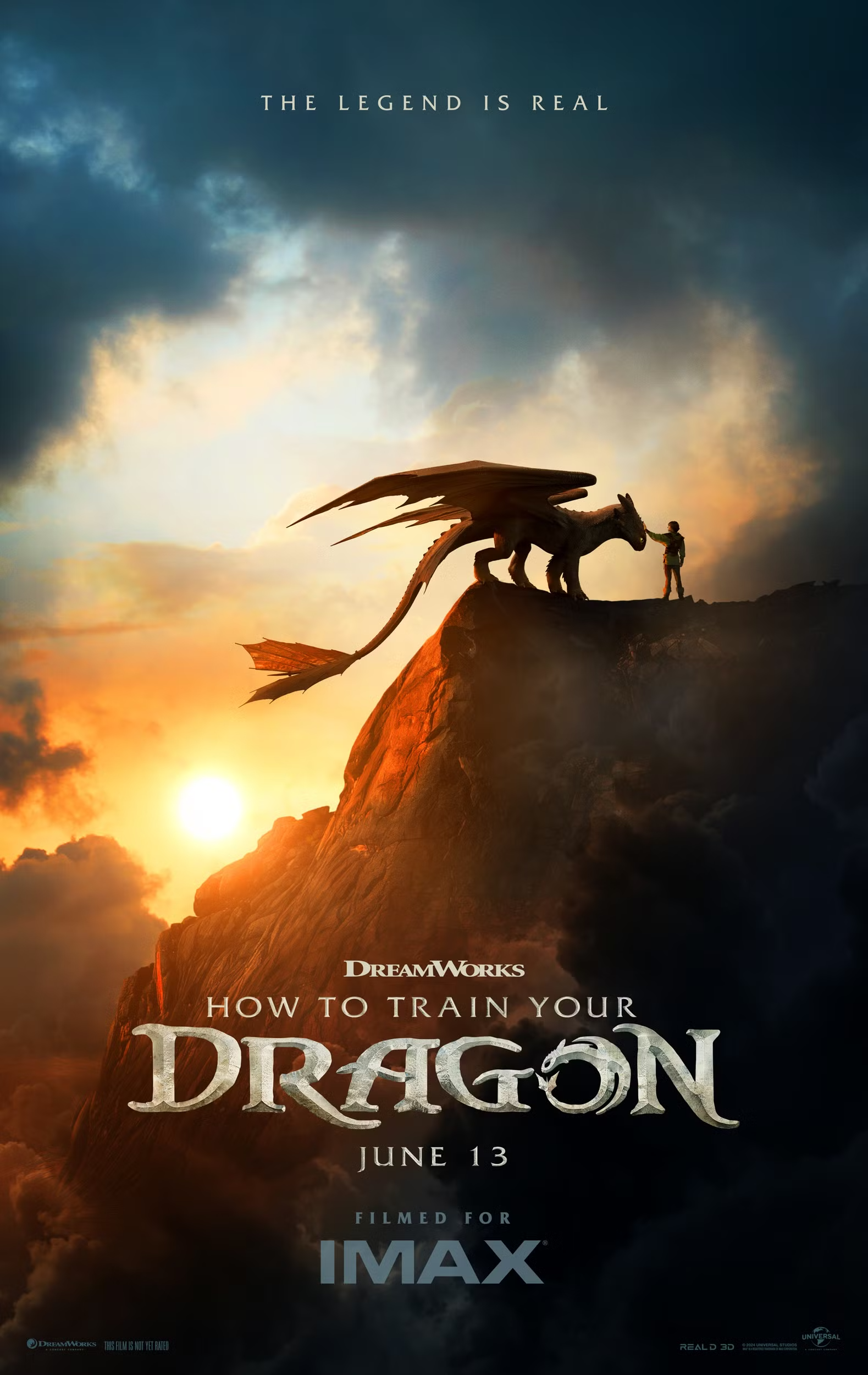
Timeless. Universal and DreamWorks’ live-action remake of the Academy Award-nominated How to Train Your Dragon (2010) proves that some stories continue to resonate through the ages. Of course, “ages” in this context is only fifteen years. Returning to helm this project, HTTYD veteran writer-director Dean DeBlois crafts a fantasy world that’s incredibly tangible–even the dragons. His combination of puppetry, practical effects, and CGI give the dragons and the land of Berk a naturalism that feels connected to the world on screen. While this live-action remake plays it very close to the original, in terms of scenes and sequences, the heartfelt story will still capture your imagination and serve as a fantastic film for Father’s Day this weekend.

On the rugged isle of Berk, a Viking boy named Hiccup defies centuries of tradition by befriending a dragon named Toothless. However, when an ancient threat emerges that endangers both species, Hiccup’s friendship with Toothless becomes the key to forging a new future. Together, they must navigate the delicate path toward peace, soaring beyond the boundaries of their worlds and redefining what it means to be a hero and a leader.

While it would be easy to chalk 2025’s HTTYD up to an exercise in business theory, given that much of the movie is shot-for-shot of the original, it would be disservice to the audience experience for those that may be seeing this story on the big screen for the first time. Because anyone under the age of 18 (if not 21) either wasn’t yet born or doesn’t remember watching it in the cinema in 2010. And this is a BIG SCREEN movie. If fact, I’d argue that watching HTTYD in a premium format at your local cinema is the best way to return to Berk, particularly if you did see the original animated film in cinemas (as did I). I’ve read reviews that fill the spectrum from “lifeless and lazy” to “better than the original;” neither extreme reaction or interpretation is entirely accurate, in my opinion. Given that much of the story is the same, all the way down to shots, scenes, dialogue, and sequences, I’m choosing to review the film as if watching it for the first time, as many will be watching it for the first time on the big screen.

Since the story is largely unchanged from the original, I don’t want to spend a significant amount of time on it; however, there are themes that leapt off the screen this time even more than when I first saw the original. Perhaps its’ because a lot has happened in our country and around the world in the last fifteen years.

In true allegorical fashion, HTTYD crafts a parable of prejudice and reconciliation that resonates with our contemporary sociocultural landscape. Through its depiction of dragons as misunderstood creatures feared and vilified by Viking society, the film speaks directly to the way some cultures and communities are often dehumanized by dominant cultures. Initially framed as mindless beasts bent on destruction, dragons embody the constructed image of “the other”—not inherently evil, but made threatening through narratives rooted in ignorance and fear.

Through Hiccups’s hero journey, our own fears and prejudices are challenges. His character arc hinges on that pivotal moment with Toothless when he is about to kill him. Not only does Toothless challenge Hiccups’s prevailing ideology, but reframes his worldview of dragons and the people of Berk entirely. “I looked at him, and I saw myself,” he says, distilling the film’s core thesis: true empathy begins when we stop projecting monstrosity onto others and instead recognize shared sentience. In contrast, his father Chief Stoick represents the institutional stronghold of fear and tradition. His transformation from dragon-slayer to dragon-defender is a microcosm of generational reckoning—a character arc that underscores how systemic prejudice can begin to unravel when met with vulnerability and truth.

Thematically, the film’s narrative expands beyond simplistic binaries of good and evil to explore the broader existential anxieties that provoke violence and division. In doing so, HTTYD transcends fantasy and enters the realm of social commentary. It reminds us that the instinct to “other” those who are different is not innate but learned—and, crucially, unlearnable. At a time marked by cultural polarization and survivalist rhetoric, the film dares to imagine a world in which peace is possible—but only if we choose empathy over fear.

Writer-director DeBlois crafts a Berk that feels like a real place, perhaps a place from our own world history. Instead of layer upon layer and scene upon scene of blue and green screens, DeBlois opts to eschew the sterile sterility of digital backlots in exchange for a fantastical world grounded in the tactile weight of reality. Rather than relying on synthetic blue-screen environments, the production team committed to crafting full-scale Viking arenas, longhouses, and coastal villages—sets brimming with texture, history, and atmospheric weight. Filmed on location in Northern Ireland, the practical environments not only enhance the visual authenticity but immerse the audience in a world that feels as lived-in as it is mythic. These tangible structures blend seamlessly with the region’s craggy terrain, lending the film a geographic and cultural specificity that deepens the narrative.

Likewise, the film’s flight sequences are not mere visual spectacle—they are balletic displays of aerodynamic realism. Thanks to a synergy between practical rigging and digital enhancement, the VFX team captures the exhilarating sweep and dive of dragon flight with a physicality rarely achieved in CGI-heavy cinema. Specialized camera systems were deployed to trace every soar and swoop with kinetic precision, preserving the wonder and danger of airborne movement. The result is not just believable—it’s breathtaking. This nuanced and layered approach to the fusion of practical and CGI effects was also in part what made the dragons feel incredibly real. Dragon puppets were used to inform the CGI timing, lighting, and choreography. Later, CG animators seamlessly replaced the physical heads with digital models, preserving actors’ eye-lines and interactions. Mason Thames is rarely acting opposite a tennis ball on a boom pole; his Hiccup is interacting with a dragon set piece that is fully articulate.

Whether the original breathtaking animated film is one that you’ve seen a dozen times or you’ve never seen the original, the live-action remake of the critically acclaimed HTTYD is worth your time at the cinema. Furthermore, this film would make for an outstanding diversion for dads and their kids over this Father’s Day weekend, regardless of ages. Some stories, characters, and themes are timeless, and can still speak to us years later.
Ryan is the general manager for 90.7 WKGC Public Media in Panama City and host of the public radio show ReelTalk “where you can join the cinematic conversations frame by frame each week.” Additionally, he is the author of the upcoming film studies book titled Monsters, Madness, and Mayhem: Why People Love Horror. After teaching film studies for over eight years at the University of Tampa, he transitioned from the classroom to public media. He is a member of the Critics Association of Central Florida and Indie Film Critics of America. If you like this article, check out the others and FOLLOW this blog! Follow him on Twitter: RLTerry1 and LetterBoxd: RLTerry
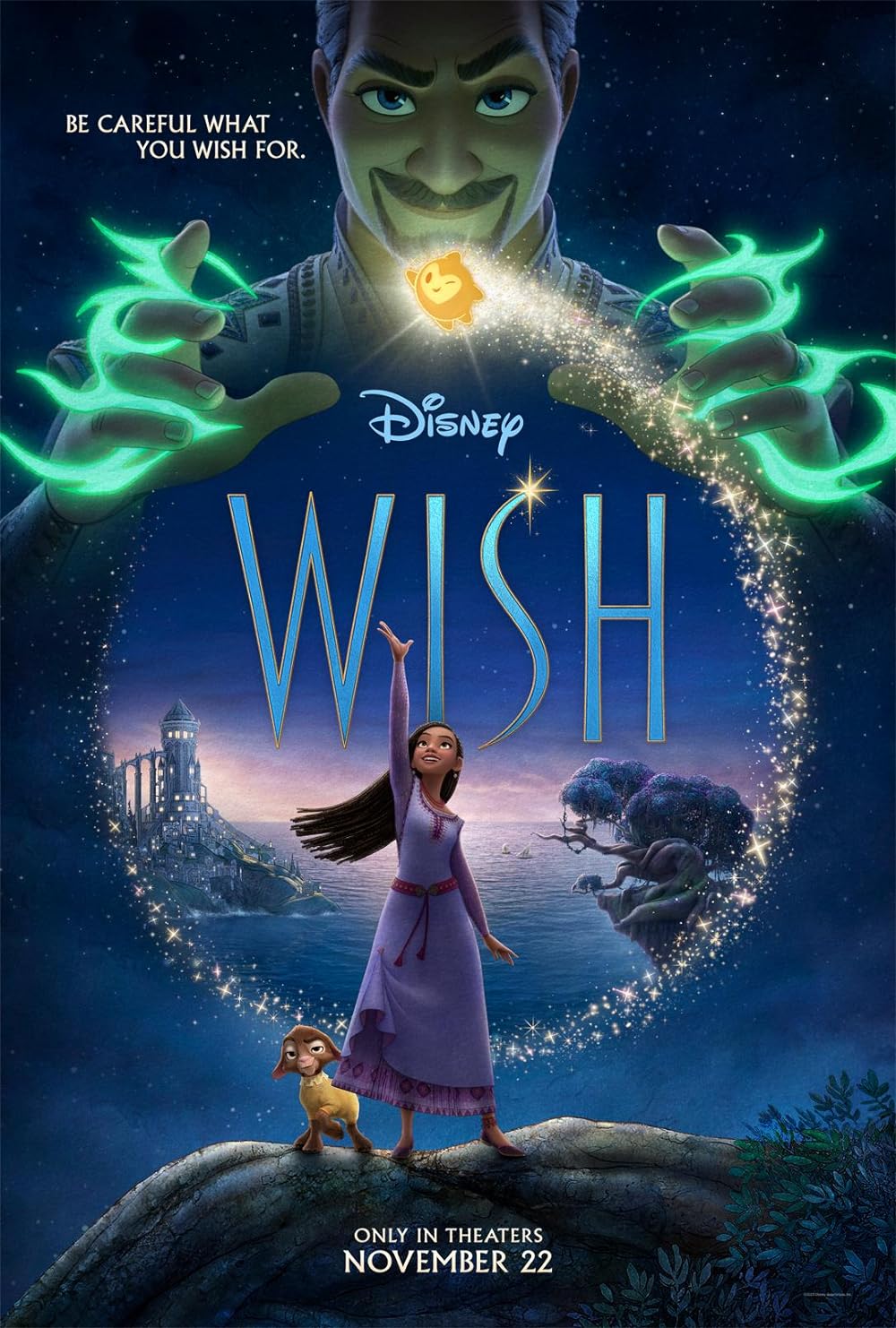
Disney’s WISH movie review

Disney should’ve wished upon a star for a better screenplay. But hey, at least we have an actual villain again! Wish attempts to be a return to the classic Disney animated feature form, but it fails to recapture the magic. Still, there are glimpses of that former Disney magic that are encouraging, and perhaps it’s a sign of what is to come in the next few years. And I am talking about the hand-drawn inspired matte-like backgrounds. Unfortunately, the CG cast and foreground elements detract from the magic of that classic Disney animation. Suffice it to say, the dichotomy of animation styles is distracting. Wish doesn’t have so much a story idea problem as it does a plotting and story execution problem, which plagues this movie. Moreover, what the movie lacks in thoughtful plotting, it strives to make up for in the musical numbers–forgettable as they may be. Most likely, the movie won’t be remembered for its story per se, but rather for the setups for future animated classic remakes as Wish is the origin story for the Disney wishing star. To that end, there are a couple of hidden Mickeys and moderately subtle nods to other Disney characters; and these nods are tastefully handled until they are not–and incredibly overt to the point of being obnoxious.

Young Asha makes a wish so powerful that it’s answered by a cosmic force, a little ball of boundless energy called Star. With Star’s help, Asha must save her kingdom from King Magnifico and prove that when the will of one courageous human connects with the magic of the stars, wondrous things can happen.

Even though I have many reservations in the execution of this movie, I admire it for the originality in creating an origin story for THE Disney wishing star, which we first witness in Disney’s Pinocchio. And the rest is history. This same star guides Peter Pan to Never Never Land, Cinderella wishes upon it, and so many more characters. To the screenwriters’ credit, the idea for Wish is a refreshing turn from the direction Disney movies (live action and animated) have been going for years now. All the building blocks for a great story and plot are there, but it’s as if the builders of the story didn’t follow the architect’s plans as closely as they should have. Suffice it to say: great idea, poorly executed. The result is rushed character and plot development.

Something that Wish does mostly well: it represents the return of the classically-inspired Disney villain. And while Magnifico can’t hold a candle to Ursula, Maleficent, the Horned King, or even Yzma (my personal favorite Disney villain), he does fill the vacancy that has been present since after The Princess and the Frog (2009) and Tangled (2010). For thirteen years, we’ve needed a villain, and Magnifico has shown us why. Nevermind that he isn’t nearly as memorable as the aforementioned villains, but he demonstrates why it’s important for a movie to have a villain. Yes, I am aware that (1) it’s more accurately described as a character of opposition and (2) the villain needn’t be the bad guy. But, I digress.

We love villains that we love to hate, or villains that are the flip side of the coin to our central character. In fact the best villains have many of the same attributes as our hero, and maybe even some of the same goals, but their methods of achieving these warped goals are twisted. At its most basic level, a well-written movie has a central character, that central character has an external goal motivated by an internal need, and there is a character standing between the central character and his or her goal.

The plotting may be weak, but the subtext and theming are quite strong! The movie provides commentary on ideas such as socialism, censorship, and authoritarianism. Unfortunately, I cannot get into all the supporting material without venturing into spoiler territory, but I want to spotlight the commentary, because it works well. The movie clearly demonstrates that the censorship of ideas can lead to a loss of uniqueness and individuality. And even the ability to learn and grow as unique individuals. This parallels the tyrannical banning of books in our public schools being experienced by some states in our country, including the one from which I write this review. One thing that the history of the world has taught us is that anytime mass censorship (often government or other large institution-based) is exerted upon a people, the society becomes a prison for those that live in it. They, in essence, become entrapped in Plato’s Cave allegory.

It’s difficult to get into all the details of how the movie provides a negative critique on socialism, but this theme can be read in the dark side of lofty promises of government-provided housing, occupational, food, and other resources. For there is a cost–and a great one at that. In the movie, this cost is expressed through wishes and Magnifico’s reign over the Kingdom of Rosas. Even though all the characters were enjoying the freely available resources of Rosas, in the end, they realize that nanny-like state took away individualism and freedom of choice. In a movie landscape that is ever-so-more-regularly advocating the advantages of socialism, this movie is a testament to “be care what you wish for” because everything in life does come at a cost. For the Kingdom of Rosas, it was wishes, for you, it maybe something entirely different but no less important to your individuality and freedom of choice.

Lastly, I want to touch on the magic of those hand-drawn-inspired backgrounds. There are so many scenes in which the background looks straight-up like a matte painting, and I love it! I wish the entire movie looked hand-drawn; it wouldn’t fix the story execution or screenwriting issues, but it would have given the movie a more magical, almost tangible quality. Hand-drawn animation (and I will include stop-motion animation in this critique) has real dimension. With stop-motion animation, the dimension is in the objects and the lighting thereof; with hand-drawn animation, the magic is in the imperfections and motion.

Specifically looking at Golden Age through The Black Cauldron, the hand-drawn animation had literal depth because of Walt’s patented multiplane camera. Artists would draw onto glass panes, layer and space them, and the camera would shoot the linear image, giving the two-dimensional image depth of field. The hand-drawn-inspired backgrounds of Wish are encouraging because this may be a sign of what is to come for Disney animation. Unfortunately, the magic gets lost in this movie because of the distracting dichotomy of animation styles. It’s removes the characters from the background, from the world in which they live, and you never quite buy these characters are part of the setting.

Perhaps Wish suffers from story execution problems, but there is hope that Disney animation may be making a turn for the better.

Ryan teaches Film Studies and Screenwriting at the University of Tampa and is a member of the Critics Association of Central Florida and Indie Film Critics of America. If you like this article, check out the others and FOLLOW this blog! Interested in Ryan making a guest appearance on your podcast or contributing to your website? Send him a DM on Twitter. If you’re ever in Tampa or Orlando, feel free to catch a movie with him.

Follow him on Twitter: RLTerry1 and LetterBoxd: RLTerry
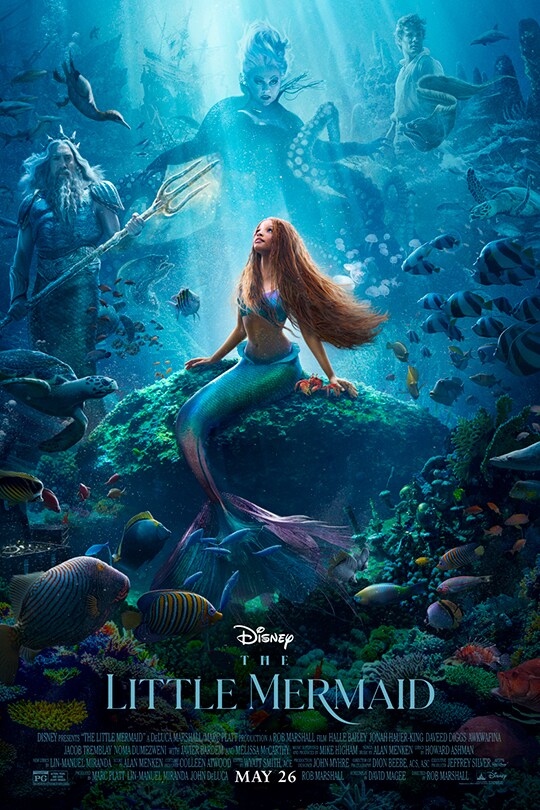
THE LITTLE MERMAID (2023) movie review

written by Dr. Leo Genco

Some treasures are best left under the sea. This familiar Disney formula is only good for one thing: lining the coffers. The Little Mermaid has wonderful, bright, appealing visuals with a few new decent songs, that prove Disney is unable to capture the magic of their 2D animated films. This is unfortunate, because under the sea of this movie is the potential for a great innovative rendition of The Little Mermaid. Why? Well, Disney attempted to provide a newer telling of the original while pandering to the original material. This creates a dichotomy of moral themes in the movie, and it shows. There is a lot to unpack. If you want to skip to what the movie does right, you can skip to the end.

Let’s get the most obvious issues out the way, since they were consistently topics of discussion prior to the film’s release: race, ethnicity, and gender swapping of characters. These changes are typically common to improve diversity, and it can be done. You can look at Nick Fury in the Marvel Comics, or John Stewart as the Green Lantern in the DC Comics. One of the best race change movies is the Preacher’s Wife. The issue with the change here is how the director and writers tried to justify the change. Instead of changing the race of a whole group to maintain consistency, only individuals are changed and are rationalized through a simple bit of dialogue exhibition. Most of the human characters are an eclectic group of non-white ethnicities and races but Prince Eric is still white! The story justifies these differences by changing the location of the kingdom and having the queen adopt Eric into the family. The kingdom is not a port for the mainland but on an island, somewhere in the Americas, and this causes massive changes in the story. The whole scene with the chef and Sebastian was removed. Someone will wonder if the scene was cut because the chef was French. The essence of the original was stripped to justify the demographic changes, which would not be a problem if the movie did not pander to the original material.

The singing varies between songs and actors. The cast of a mix between stage and film actors would do that, but the main problem is how the songs were constructed. For some reason, the director added more characters into the script, but they did not contribute to the songs at all. It is very common in musicals to have the background and side characters sing the chorus and harmony for the lead singer. But this is not true for The Little Mermaid. People are expecting a chorus for Under the Sea and Kiss the Girl. This is not coming from a nostalgia perspective of the original songs. Under the Sea is a song about the sea living as a musical band of species. The dialogue before Kiss the Girl called for the various sounds of nature. For both songs we are expecting a strong sound, especially when the chorus hits. Sadly, both songs are reduced to two or three singers max and are sung as a solo piece for the majority. Overall, songs match the deaf tone of the movie.

While the animation of the under the sea creatures on par with the Lion King (take that as you will), I am not talking about the animals but the human actors who had little to not animated faces throughout their dialogue. Only three characters were animated, Queen Selina, Grimsby, and Ursula. When I say animated, I mean that their facial expression, voice, and body language spoke. Everyone seemed stiff, which is weird because Halle Bailey is a stage actor. You would think Ariel would have the most body expression because she can’t talk for half the movie. Ariel needs to be animated the most. Arial did not seem to be a curious, explorative person, but a blank manikin until a scene which required an over-the-top reaction. Luckily, this was not consistent throughout the movie. As I will mention later, the acting in the new scenes was great.

For some movie goers, background context to main characters is essential. I, on the other hand, prefer context to characters that is required to understand the journey of the main character. This means, that background context should progress information for the main character, not for the audience. The early introduction to multiple character’s background hurt the movie in two ways: (1) these small scenes for a backstory break up the pacing of the storytelling, creating jarring transitions between scenes, and (2) too many themes or messages were introduced into the film too fast. When you introduce a backstory, you need to follow through and close that story, and when you give too much information at once, people tend to forget or care about the small stories. On top of that, the movie told Ursula’s backstory but did not provide a satisfying delivery of her end. Overall, the introduction of the characters with backstory was not the best way to start the movie.

Two things carried the movie for me, the new scenes and songs and the queen and Grimsby. Adding new scenes and songs felt real. The acting in the scenes felt genuine, minus the random dancing scene halfway through the movie. These scenes had fresh magic Disney needed, but again, the director pandered to the original movie, and this created a lot of disconnect. The problem when recreating 2D animation as a real-life movie is the expression that comes from drawn imagery. This is why the drawings of human movement are different from how humans move. It allows the animator to create expressions you are physically unable to express but want to. The new scenes of the movie did not have a previous expectation of certain expressions. I believe this element allowed the actors more freedom to act.

God bless queen! Out of all the characters, the two actors who were able to pull it off throughout the whole movie was the queen and her trusty councilman, Grimsby. They were amazing. They had facial and body expressions. I had chills when the queen was on screen. Grimsby was played perfectly and became that comedy relief when the gender swapped bird, Scuttle, failed. I loved these characters, and I enjoyed every minute of screen time with them. While I would put Ursula in this category, her character was written incorrectly. While she was played very well, her lines were the least to be desired. She was written more as a grown woman who throws temper tantrums like a child than the cunning slimy sea witch, she was in the original 1991 movie. So, the queen and Grimsby saved the movie, at least for me.

Dr. Genco is a guest contributor and fellow university colleague. Follow him on Instagram at Leo.Genco.

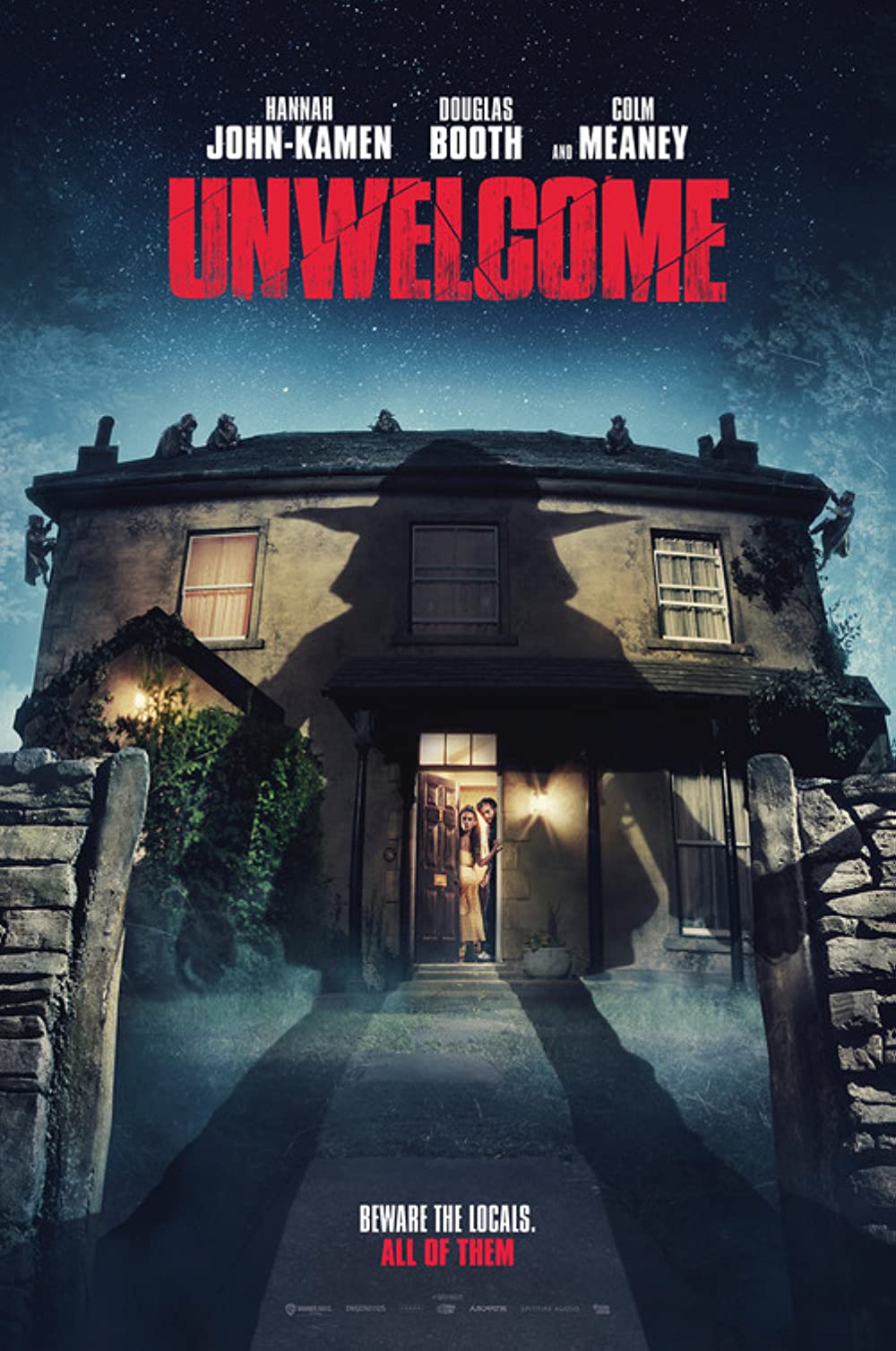
UNWELCOME horror movie review

Whimsical and creepy. Jon Wright’s Unwelcome is a dark fantasy steeped in Irish folklore, but with a sinister spin. While the first act is a bit clunky, after the intense prologue that is, once the second act kicks into gear, the movie delivers on thrills and kills—and cheers for practical effects!! Fellow Trekkies will also enjoy the cameo from Star Trek’s Chief O’Brien.

A couple escape their urban nightmare to the tranquility of rural Ireland, only to hear stories of mysterious creatures who live in the gnarled, ancient woods at the foot of their garden. As warned by their new neighbors, the creatures come when called to help souls in dire need of rescue, but it’s crucial to remember that there’s always a dear price to pay for their aid.

Unwelcome draws audiences in with its immersive atmosphere and chilling mythos, but falters in pacing. After a gripping prologue, the first act struggles to find its footing to keep the pacing suitable for the rest of the setup. Often times this screenwriting problem occurs when the writer and/or director attempts to add greater gravitas to the story than is required or needed. Moreover, there is time spent with side characters and establishing setting that delays the transition to the development stage of the story, which would have benefitted the overall pacing of this quasi-methodical horror film. Once audiences are launched into the second act, the remainder of the film unfolds nicely.

Even though this is in-part a dark fantasy, when the kills hit, they hit! Wright (along with cowriter Mark Stay) strike a fantastic balance between horror and fantasy, simultaneously satisfying the expectations for both. While the kills may not be inordinately creative, they are sufficiently entertaining. By relying on practical effects, the experience of the film increases in dimension significantly. And I’m not just talking about the kills, but the excellent puppetry, makeup effects, and prosthetics of the little people. Over all, Unwelcome is a decent horror film that deserves a watch if you enjoy folklore-based stories that are familiar yet still find ways of surprising you.

Ryan teaches Film Studies and Screenwriting at the University of Tampa and is a member of the Critics Association of Central Florida and Indie Film Critics of America. If you like this article, check out the others and FOLLOW this blog! Interested in Ryan making a guest appearance on your podcast or contributing to your website? Send him a DM on Twitter. If you’re ever in Tampa or Orlando, feel free to catch a movie with him.

Follow him on Twitter: RLTerry1 and LetterBoxd: RLTerry
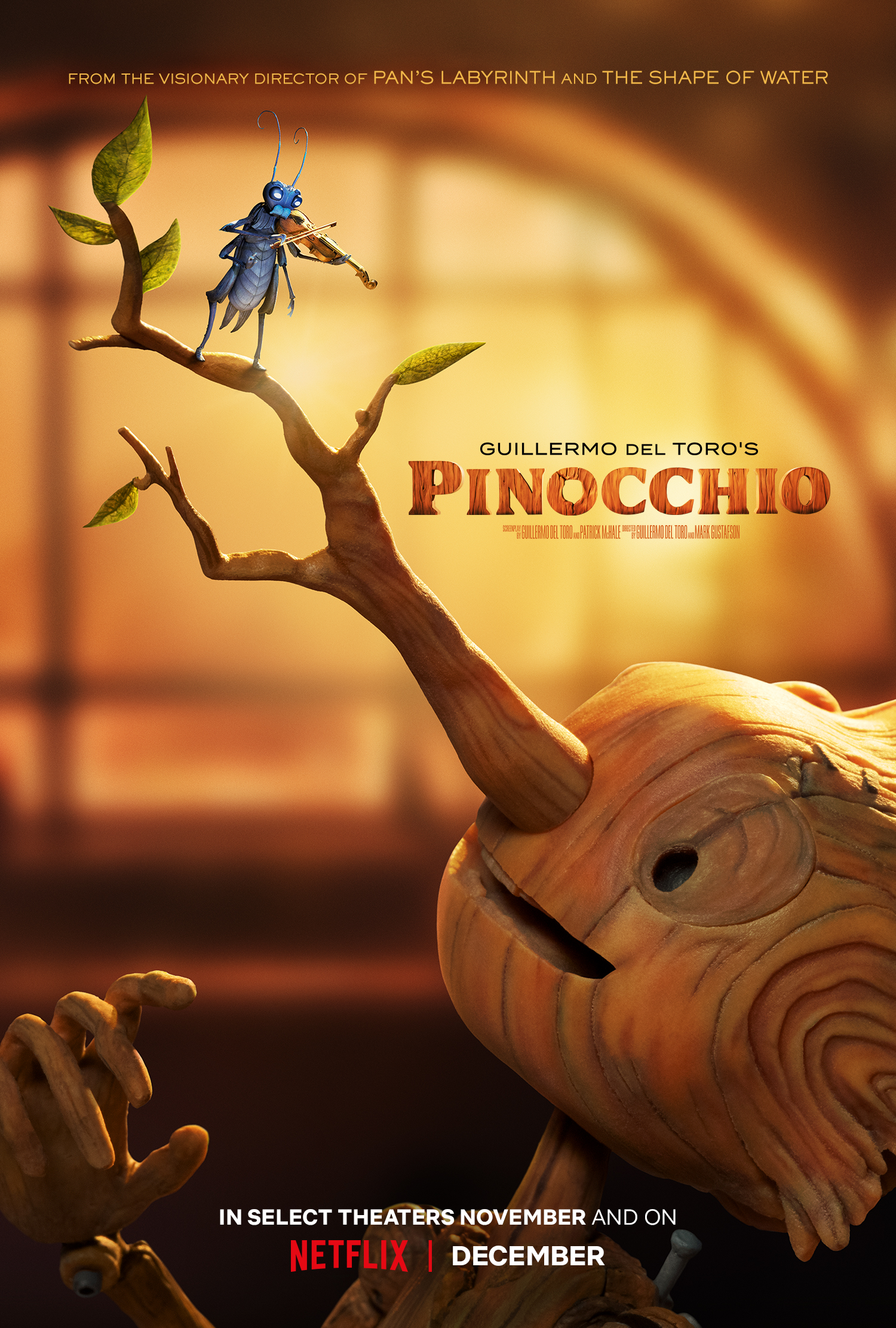
GUILLERMO DEL TORO’S PINOCCHIO motion picture review

Positively avant-garde! Easily among the best pictures of the year, period. Guillermo del Toro’s Pinocchio is a brilliant stop-motion picture that will stir the hearts and minds of any audience! In many ways it’s reminiscent of 80s dark fantasies such as The NeverEnding Story and The Dark Crystal. Which should come as no surprise that del Toro worked in collaboration with the Jim Henson Company. Audience will be completely transported to the post-World War I Italian world that del Toto meticulously recreates, complete with the fascist movement, which underscores much of the film. Not since Kubo and the Two Strings have we had such a gorgeous, imaginative animated feature film–a film that was robbed of its deserved and earned Beast Animated Film Oscar (no, Zootopia is in no universe a superior film). Let’s hope that the Mouse doesn’t rob Pinocchio of it’s well-deserved Academy Award for Best Animated Feature.

The story may seem familiar: A father’s wish magically brings a wooden boy to life in Italy, giving him a chance to care for the child. But you’ve never seen Pinocchio like this before!

Before you dismiss Del Toro’s Pinocchio as another soulless, cash-grab remake, this much more macabre version of the titular puppet’s story delivers immense depth and dimension. Not only of technical achievement, but of theme, plot, and character development. This animated film proves that animation isn’t only for kids, because this film is far more thoughtfully crafted than most live action films this ear. And yes, I agree with recent comments from Quintin Tarrantino that we are experiencing one of the worst eras of cinema in history. No doubt this is true. However, this year has seen some real winners such as Top Gun: Maverick and now Pinocchio. Suffice it to say, this is not your kid’s Pinocchio. And, although there are important life lessons in the film, it goes to places, both figuratively and literally, that may not be appropriate for kinds under 12 years of age. While Pinocchio is in its limited theatrical run, see it on the BIG screen!

While there are certainly plot beats which are shared by the original 19th century story, the 1940 Disney adaptation, the wretched Robert Zemeckis’ remake earlier this year, and countless stage adaptations (funnily enough, I saw the operetta Pinocchio this week as well), Guillermo del Toro’s Pinocchio takes on a life of its own. It isn’t often that the filmmaker added a possessive to the film title. Whereas it’s commonplace for Disney to add Disney’s… to literally everything, it’s uncommon for director’s or producers to add a possessive to the film’s title. Notable exceptions include Tim Burton’s Nightmare Before Christmas (directed by Henry Selick), Bram Stoker’s Dracula (directed by Francis Ford Coppola), and now Guillermo del Toro’s Pinocchio. This possessive form of title is often employed to signify (1) the filmmaker’s confidence in his or her work of motion picture art and (2) to separate it from all other versions of the same story (and/or title). Moreover, this often indicates to audiences that they are about to witness the work of a true auteur (not the case when we see Disney’s…–that’s just plain branding).

Is it del Toro’s arrogance or an ego trip that prompts such chutzpah in this film’s title? Not at all. Del Toro has been working on this passion project for over 15 years. Before you feel that’s an exaggeration, let the finished motion picture be the demonstrable evidence of meticulous work frame-by-frame in this nearly two-hour film. Images are most often captured at 25-frames-per-second, so to achieve the fluid motion del Toro has, you just do that math. Del Toro crafted intricate animation captured by a camera that is repeatedly started and stopped over the course of day, weeks, years. Each mouth, arm ear, eye, literally any object that has movement, is moves a little at a time, frame-by-frame. Not only does del Toro’s craftsmanship translate to beautiful, seamless movement by the characters and environment in the film, he successfully captures the visual and emotional miracles that can only be accomplished through stop motion animation. There’s a reason why we go back to the Rankin & Bass Christmas classics every year; there is immense simplicity and beauty in stop-motion animation. Why? Same reason why practical effects will always be superior to (overt) CGI effects–depth, dimension, the way real light bounces off objects and into the camera lens.

Even though the film is quite dark from the moment the atrocities of war are witnessed, it is not without its levity and uplifting scenes. To get into a central theme of the film involving stages of grief (which makes it unique compared to other iterations), would mean venturing too far into spoilers, which I would like to avoid, and with that theme, there are many scenes that force the audience to confront what many fear most. Because of this theme, one might think the film is somber most of of the time, and fortunately, this is not true. There are plenty of moments that break up the sadness to inject a healthy dose of laughter. And more often than not, we have Sebastian J. Cricket to thank for that! (I’m sure the “J” is a playful jab at Disney). DelToro’s sardonic, raconteur cricket always has the perfect witty remark or anecdote to provide insight into a given plot point or emotional beat. Because of Sebastian J. Cricket’s running commentary and moral/ethical guidance, the audience is willing to go on this emotional roller coaster. The moment of levity allow for an emotional and psychological reset to face the darker moments.

Outside of the imagery of the stages of grief, there are other fascinating areas of social commentary in the film as well. I love how del Toro moves the real boy imagery, how it’s traditionally interpreted: wood vs. flesh, to one that posits ideas of what it means to be a real man. These arguments are mostly seen in the Mussolini’s youth armies scenes. In the world of fascist Italy, to be a real man meant taking up the arms and creeds of Mussolini’s Italy to fight the allied forces. Pinocchio must decide what it means to be a real man. Another area that is interesting is the relationship between Geppetto and the village (Catholic) Church. While there may be various ways of interpreting this imagery and these scenes, which are bookends for the film, I feel it is best interpreted as Geppetto never compromising on his faith in God even though the Catholic Church, at that time in Italy, was being infiltrated by Mussolini’s fascist ideals (cleverly disguised to sway some in the faith community).

Lastly, we cannot talk about this film without highlighting the moving score and outstanding original songs. While Pinocchio is not a musical, it has several original songs that will move audiences! Not only does this film boast exquisite animation, but it delivers outstanding original music and lyrics as well. Audiences will find both diegetic and non-diegetic musical numbers in the film. This combination works incredibly well to wrap audiences in the mesmerizing story!

Even though Guillermo del Toro’s Pinocchio is coming to Netflix in December, look to see if it’s playing at theatre near you for the full experience!

Ryan teaches Film Studies and Screenwriting at the University of Tampa and is a member of the Critics Association of Central Florida. If you like this article, check out the others and FOLLOW this blog! Interested in Ryan making a guest appearance on your podcast or contributing to your website? Send him a DM on Twitter. If you’re ever in Tampa or Orlando, feel free to catch a movie with him.

Follow him on Twitter: RLTerry1