“Deadpool 2” movie review

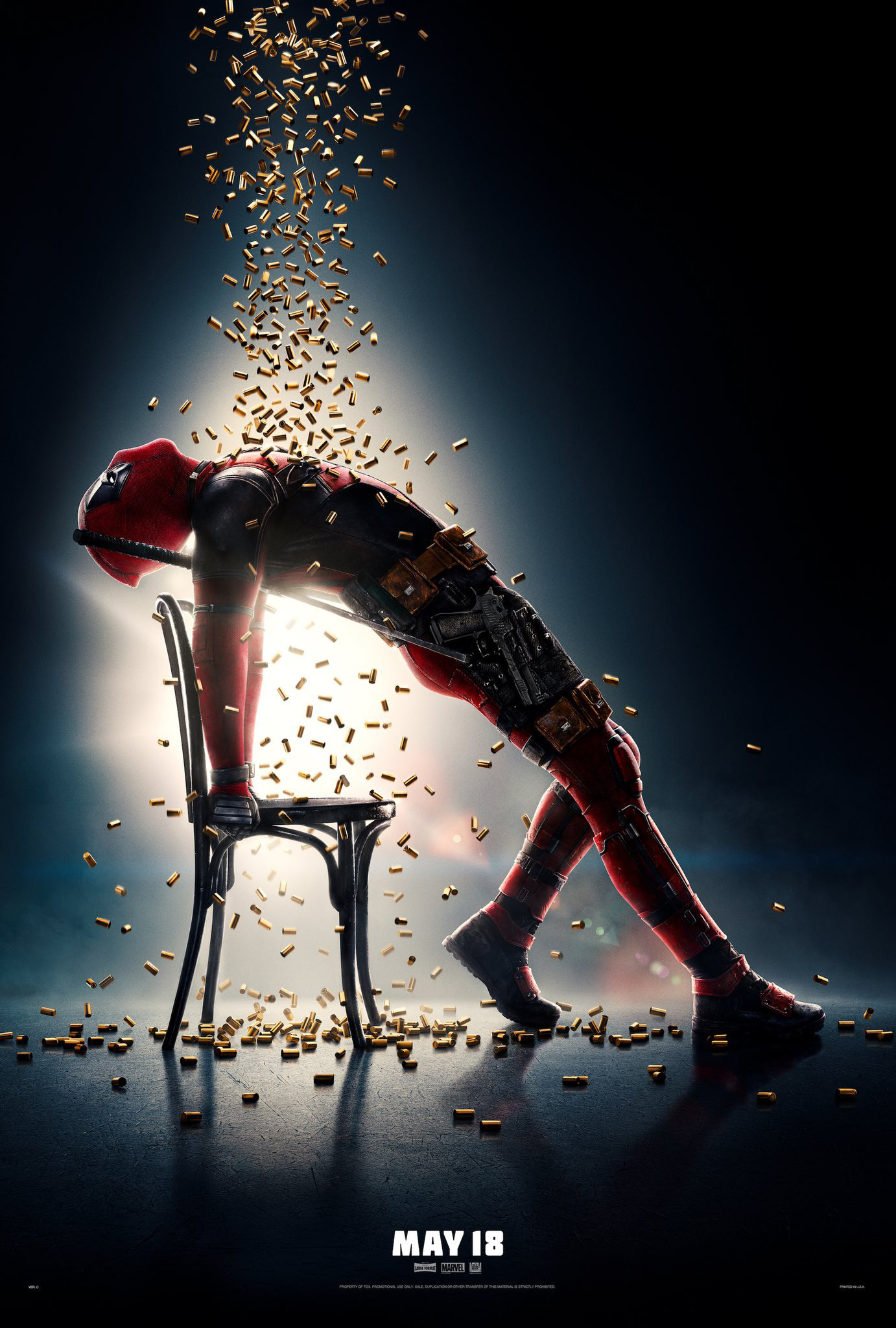
“Deadpool, can you hear me?” Subversive, irreverent, brilliant, meta. It very well may be better than the first. How often do we get to say that about direct sequels? Ryan Reynolds’ witty, crass, charmingly naughty superhero is back to take even the most unrelentingly serious movie patron, and drive them to complete laughter. The square peg of the X-Men’s round universe returns with non-stop action, antics, and fourth-wall breaking humor virtually deconstructing everything from the opening credits to the post-credit scenes. Nothing new there; however, Deadpool assures the audience that the story they are about to see is a family movie. And after watching it, it may be unconventional, but it’s a solid family film. Maybe not “family entertainment,” by the Disney definition, but about family nevertheless. Speaking of which, we may have just watched the final Deadpool as we know it before it gets the Big D sanitization treatment, should Comcast (NBC Universal) not swoop in to save 20th Century from the otherwise inevitable Disney acquisition. Deadpool 2 isn’t just better than the first one simply because it’s funnier, more risqué, or more clever; in measurable ways, it possesses stronger villain(s), stronger opposition to the goal, and a better plot overall. Not your everyday “family” film, but filled with emotional tugs at your heart strings, all the same. Just with a heaping helping of self-aware and self-deprecating bawdy humor.

For two years, Wade Wilson/Deadpool (Ryan Reynolds) has continued his mercenary work, taking down villain after villain, crook after crook; but, after he fails to kill one of his targets on an extra-special day to him, he is faced with tragedy. Through a series of bizarre events–yes, even bizarre for Wilson–Wilson finds himself in a maximum-security prison ran by the DMC (Dept of Mutant Control) along with a renegade 14yo mutant named Russell. When Cable (Josh Brolin), a high-tech assassin, arrives from the future to take out a target that he claims leads to total destruction, Wilson must battle inner and outer demons in order to get his heart into the right place. Knowing he’s facing the most dangerous villain he’s ever encountered, Wilson forms the X-Force, a diverse “superhero” group of many talents in order to apprehend the target to prevent the world from plunging into complete chaos.

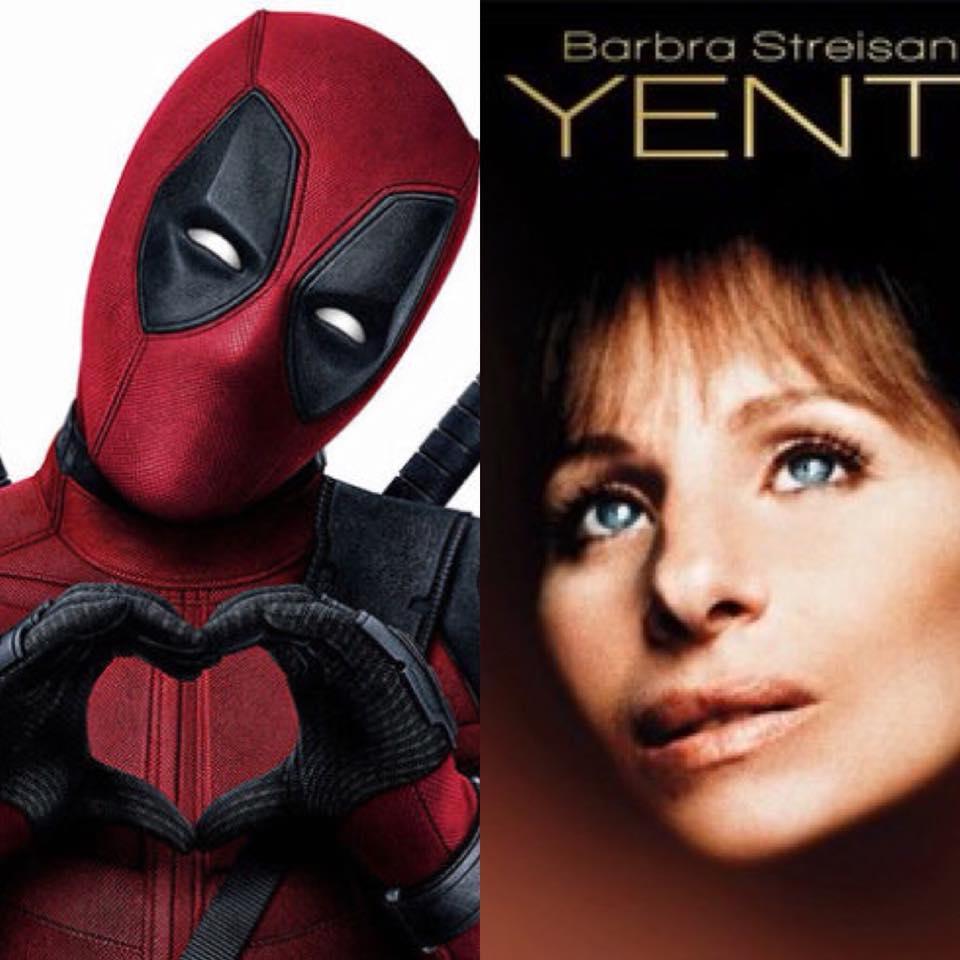
There is a comedic power in the plot of Deadpool 2 that invites the audience, at every turn, to laugh with the movie as it laughs at itself. There are a few running schticks throughout the film, but my favorite is the continued references to Barbra Streisand’s groundbreaking film Yentl featuring the iconic Streisand ballad Papa, Can You Hear Me? To which, Deadpool points out sounds an awful lot like Do You Wanna Build a Snowman from Disney’s Frozen. And it’s the implication of Disney appropriating Streisand’s song where the “Disney joke” was likely cut from the movie. Other jokes carry over from the first film such as the X-Men mansion with only Negasonic Teenage Warlord and Colossus roaming around. Some of the schticks from the first movie are transformed for this direct sequel. Contrary to the Wade Wilson from the first film, this one, this one diverts from his persistent aversion to companionship and a desire to be the “lone ranger,” as it were, and expresses a need for family. This desire for family serves as the backdrop of running jokes, gags, and extreme snark.
Streisand isn’t the only female vocal artist highlighted in the film, Dolly Parton’s 9 to 5, Pat Benatar’s We Belong, and Cher’s If I Could Turn Back Time are all featured, all that we were missing was Cyndi Lauper’s Time After Time. Unlike the completely unconventional opening credit sequence from the first Deadpool, this sequel’s opening credit sequence takes a page out of the James Bond handbook, complete with the new single Ashes by Celina Dion. Like the opening credit sequence from the first film, this one also replaces the names with jokes that certainly aid in setting the irreverent mood of the film. Although a film should never primarily rest upon the music, as the plot should stand on its own, the score and featured songs are incredibly important assets that can greatly enhance the experience. Deadpool 2 contains a few montages set to song that will certainly have you rolling over laughing. Sometimes it’s the complete contrast or juxtaposition that the lyrics provide against the action in the foreground that drive the audience to complete hysterical laughter.

For all the first film got right, one of the elements missing from it was a well-developed, dynamic villain (more specifically, opposition to the external goal). Deadpool 2 provides solid central opposition to the external goal (which, for spoiler sake, I won’t mention) flanked by two villains taken directly out of the X-Men comics (and X-Men: the Animated Series). Cable, mentioned earlier, and the Juggernaut. Not to pigeonhole Cable into the villain category, there is more to this villain than first meets the eye. He can be more accurately described as an anti-hero because of his reasons for returning to the past to stop Armageddon, so to speak. Knowing Cable’s backstory, his goals, and that which he sees as opposition to his goals, gives him a character depth seldom seen in many superhero villains. When a villain (or anti-hero) can get the audience to empathize with his or her plight, then the villain succeeds in being well-developed and complicated. Having a complicated villain enables the audience to love or love to hate the villain. But in both cases, the audience loves to see the villain (or anti-hero) on screen. Supplementing the cast of villains in Deadpool 2, is the iconic X-Men character Juggernaut. His introduction into the film comes at a strategic turning point that launches the plot into the showdown.

The film makes an important observation about the lack of plus-sized lead characters in superhero movies. Russell is a plus-sized mutant who wants so desperately to be a superhero, but sends the message to Wilson (and by extension, the audience) that there should be room for non-athletic types in the superhero universe. It’s an important message that I think would have played out more effectively had the actor not been so childish. I understand that the character is a 14yo mutant who is still struggling to find his place in this world and understand his powers, but I kept seeing the actor and not the character. The ability to bring a character to life without the actor showing is part of the art of acting. In most cases, the audience wants to see the character, not the actor playing him or her. I liked the character of Russell, just think he could have been portrayed by another actor who could have more effectively driven the message home that diversity in the superhero universe mans more than male, female, straight, gay, etc. It should also incorporate a diversity of body types. Having non-athletic body types represented in lead characters–superheroes specifically–is an element that I hope continues to improve.

There truly is so much to enjoy about Deadpool 2. Behind the ballsy jokes, suggestive poses, and hilarious meta observations, is solid writing and direction. With the Disney acquisition of 20th Century Fox all but complete, with the wild card of Comcast’s (NBC Universal) bidding 19% more than Disney in cash that could alter the direction of the deal, I hope that we did not witness the last Deadpool free of Disney sanitization. Knowing that they strong-armed Fox into cutting a Disney joke from the film during post-production, does not help matters any. Hopefully, the third installment of Deadpool will be just as funny, if not funnier than the first two. Oh yeah, it should go without saying but this NOT a superhero movie for kids.
Are Theme Parks Pricing Millennials Out of the Ability to Experience the Magic?

If you’re a Millennial like me, then you may have asked yourself the same question. In fact, I read an article recently on another Theme Park website that explored how changing demographics are changing the theme park business. Fascinating article. However, there was an item of mention that troubled me. When commenting on the observation of the addition of food and wine festivals, expensive up-sell experiences, and line-skipping passes to appeal to adults without kids, it was stated in the form of this development being great for Millennials. And that got me to thinking. Is it, though? Considering the current economic climate and the career status of those who are in their early 20s and to early to mid 30s, are these new trends truly accommodating of this group?

Instead of limiting this topic to the changing population (baby booms versus baby busts), I think it’s more effective to explore this topic of how changing demographics are changing the theme park business with the addition of the income criteria coupled with population. This is an important element to add to the discussion because it’s no surprise that it’s taking much longer to land a full-time position earning a truly livable wage for us than it did for our parents (see images 1-3). In fact, the Pew Research center (image 4) shows that our parents had far more purchasing power when they were rearing us than we do today. Essentially, non high-level mangers or non-executives have exponentially less disposable income correlating to the cost of living than our parents did in the 1980s, 90s, and early 2000s. Furthermore, it’s much harder to get a mortgage than it was 10-20yrs ago, rent rates are way up, and student loans enter repayment. When theme parks keep adding expensive up-sell experiences in order to capture the young single adult or young couple without kids (as we are currently in a baby bust that doesn’t look like it will change with GenZ), I am not entirely sure they are considering the financial burdens and increasing cost of living that 20 and 30-somethings currently face. Our parents COULD afford more vacation than we can today.

Whenever I see a Twitter, Instagram, Facebook, or blog post about a new experience at Disney Parks especially, but also Universal Parks, lesser so at Busch Gardens and SeaWorld (who DO tend to cater to where current finances are for Millennials), I wonder who is actually paying for these experiences? Most of these special tour and dining experiences are in excess of $100/person and often much more. After paying for either day tickets or annual passes, hotel nights (if applicable), plane tickets or fuel for the car, I find it difficult to believe that the typical Millennial is able to afford these experiences. Therefore, if the typical Millennial possesses an inability to afford all the increases and special experiences in the parks, then perhaps this “changing of the theme park business” is actually not a good thing for those of us who are in our 20s and 30s. Seems to me, that the more logical course of action would be to follow the median economic status of the biggest group of park guests.

According to the the article that inspired me to write mine, the largest group of park guests is trending toward late GenX and Millennials (with GenZ not being too far behind) without kids. It makes perfect sense for the parks to add in “adult” activities in order to entice Gen-Xers and Millennials such as food and wine festivals, line-skipping passes, and special events, but the prices of these events is outpacing the income of the group that the theme parks know will soon surpass the number of “families” that are guests at the parks. The disadvantage of a proliferation of high-priced up-sells is alienating the very group of current and potential park guests that is outpacing the more traditional families that have been the main source of income for the parks. More than anything else, in terms of spending money on entertainment, Millennials are looking for a good deal–more than our parents–because we have much higher overhead and less purchasing power than they did when they were out ages taking their kids (us) to the parks. Therefore, it’s important for the current theme park business model to recognize the desire for Millennials to continue to support and enjoy the parks as more traditional families get smaller and Baby Boomers getting older with currently empty or soon-to-be-empty nests.

Although it seems common sense for the parks to adapt their respective business models to accommodate the finances of Millennials, the opposite appears to be coming to pass. Instead of packing better deals for young professionals without kids, the trend seems to be catering to only upper-middle and upper class individuals and families. The antithesis of what should be done in order to capture the next generation planning vacations to the parks. If the trend of continuing to add expensive additions to your park ticket continues, then theme parks will become as exclusive a destination as a European vacation or exotic cruise. “This park wasn’t built to cater only to the super rich, everyone in the world has a right to enjoy…” as Dr. John Hammond countered the lawyer’s desire to charge exorbitant prices during the lunchtime debate scene in Jurassic Park (one of my favorite scenes from the iconic film)Disney and Universal should borrow a line from Hammond and modify the business model to create magic for Millennials–especially Disney Parks, as they are increasingly catering to only the super rich.

So yes, we are experiencing theme parks changing their business models to adjust for fewer families and more singles/couples without children. And Food and Wine festivals are a huge hit! I truly enjoy them. But, in developing offerings that attract adults without kids, the parks are in danger or pricing Millennials out of enjoying the magic. Millennials are looking for those after-hours events, food and wine fests, and line-skipping passes but not at the cost of not being able to go to begin with. Theme parks should reevaluate the pricing structure and take the current economic times facing millennials into question. Millennials represent the majority of folks soon to be going to the parks as young professionals, with the traditional families of 3-5 becoming less common. But, Millennials are burdened by rising rental costs, rising student loan repayment cost, lower salaries than our parents, and rising cost of transportation.

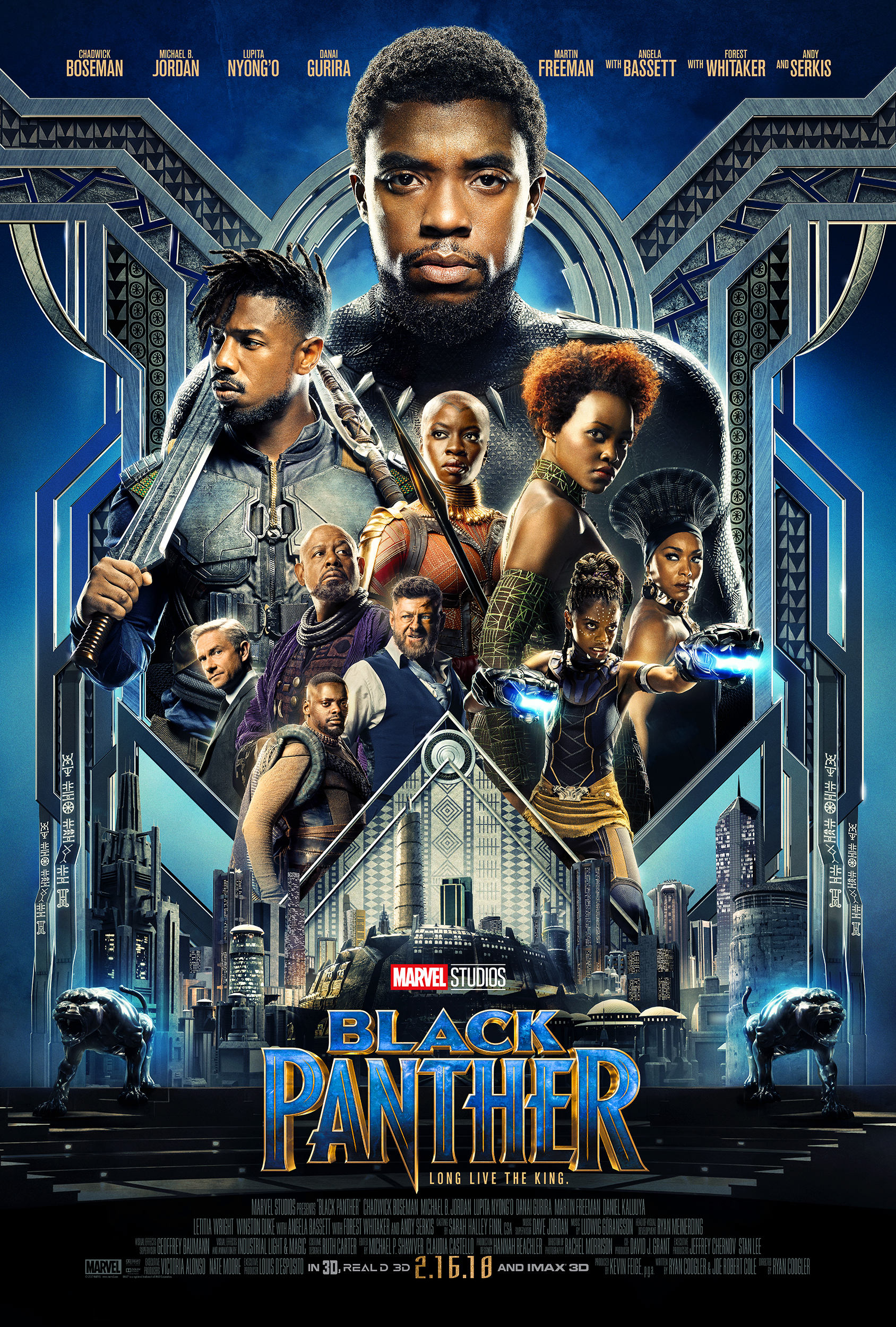
“Black Panther” movie review

A groundbreaking new perspective on the typical high concept superhero movie. Marvel’s Black Panther directed by Ryan Coogler is the type of movie that began with the desire to make a bold statement and then a narrative was built around the message. If you’ve heard it’s unlike any superhero movie you’ve seen before, then you’ve heard correctly. One of the things I’ve always appreciated about the Marvel universe (and DC by the same token) is the diversity of the characters. There are characters from a variety of backgrounds, creeds, cultures, ethnicities, etc that are represented in the characters. However, just because the characters were there does not mean they received reasonable screentime (or page time in comics). Up to this point, X-Men’s Storm (my favorite Marvel character) seems to be the only black character who receives comparable screen and page time to that of her white male or female counterparts. In a world that should teach us that our universe is a diverse place, filled with incredible people from a variety of backgrounds and origins, the representation of black heroes lagged behind. The beauty of Black Panther is not that is was simply created to finally give a predominantly black cast in a superhero universe the spotlight, the beauty is that the movie has something to teach everyone. There is a particularly strong message for young black boys and girls that their mythology is as fascinating as the Greeks and Romans, and that they can achieve greatness through teamwork, education, and loyalty.

Chadwick Boseman plays King T’Challa, of Wakanda, the fictional African nation housing secret sci-fi technology, who must step up and embrace the weighty responsibility of his birthright after the assassination of his father. When T’Challa returns home Wakanda to take his rightful place as king, a powerful enemy suddenly reappears and challenges T’Challa’s claim to the throne — and as Black Panther — T’Challa gets tested when he’s drawn into a conflict that puts the fate of Wakanda and the entire world at risk. Faced with treachery and danger, the young king must rally his allies and release the full power of Black Panther to defeat his foes and secure the safety of his people. (IMDb)

Although there is a lot of technology in Wakanda (and by extension, in the film), the focus is not on gadgetry or superpowers but on how T’Challa can be a better king than his father who made a poor judgment call that ultimately cost him his life and put the land of Wakanda at risk of rape, pillage, and plunder. That is a message that resonates with everyone–we all want to strive to be better as we go through life. Perhaps we are trying to be better than we were as kids or maybe you are trying to be a better parent than yours were. Whatever the case, we can all place ourselves in T’Challe’s boots. There is also a powerful message regarding how isolation can be detrimental to society at large. Not that the film is advocating the loss of sovereignty–Wakanda is highly sovereign–but there is the message that a country with so much to offer should return some of that to the world in order to help create a better society, more opportunities for growth, and the sharing knowledge that can heal and protect.

The cast is incredible! So many talented performers who truly bring their respective characters to life. My only negative critique regarding the cast is the underused Michael B Jordan as the main opposition character. His charisma shines brightly on screen! But sadly, he does not get much screen time. He is the type of opposition character that you love to see, but unfortunately, you don’t get that much time with him. Although many may be quick to liken Black Panther to Captain America—and for good reason, both shoot straight and almost piously righteous–there is a big difference between the two–and it’s a good one. Black Panther is humanized by his endearing relationship with his brilliant sister Shuri portrayed by the delightful Letitia Wright. Honestly, she was my favorite character in the entire movie. Every moment she was on screen was outstanding. She was the only one who wasn’t bruting–always positive–and has the BEST lines. Just her character alone is enough to give the movie rewatchabiity. On the topic of dialogue, I would like to have seen a powerful monologue that embodied the message of the film and evoked strong emotion. There are emotional parts, but I think an acute moment would have done the film well.

The film opens with a beautiful long tracking shot of exquisite editing that has a mystical feel to it. The opening alone is enough to hook your attention for the remainder of the narrative. No surprise here that all the technical elements were exemplary. There were only a few times that the visual effects felt artificial. For all the action movie tropes in the film, it plays as more of a character-driven story than action-driven. And that’s the brilliance of Black Panther. Simple plot, complex characters–that’s what I tell my screenwriting students at the University of Tampa.

Intensely riveting, Black Panther is clearly a standout Marvel film distinguished from the others in the MCU. All the elements that give it the fresh take on the superhero movie genre work to its advantage. You’ll certainly be left with a lasting impression.

Star Wars and Nintendo: Battle of the Parks

The big question is which will be the bigger draw??? Although it first debuts in Tokyo for the 2020 Summer Olympics, Universal Studios Japan’s Super Nintendo World is one of the most highly anticipated theme park expansions, rivaled only by Star Wars: Galaxy’s Edge (Star Wars Land) at Disney parks in the US debuting next year! Two enormous intellectual properties (IPs) that will undoubtedly drive up guest attendance by exponential amounts. But which will prove to be the more popular expansion? Arguably, both lands will significantly impact the attendance of, character meet-and-greets in, and merchandise of the parks. The competition is heating up between Universal and Disney parks and resorts–reminds me of the US and Russian space race of the mid-1900s. While there is no doubt that both lands will be major successes, therein lies a question of which one will prove to be more popular. Not that it truly matters in the grand scheme of things, but it’s one of those things that is interesting to talk about and synthesize some research.

After the opening of both Wizarding World of Harry Potter (WWoHP) lands at Universal Studios Florida (and subsequently the Hollywood expansion), it was no surprise that Disney World was running to catch up, hence the opening of Pandora: the World of Avatar. As amazingly beautiful and detailed as Pandora is, it has not managed to draw the continued crowds and fandom that the WWoHP has been doing since 2010. According to the website Touring Plans, the increase from 2015 to 2017 attendance at Animal Kingdom rose marginally on the average whereas the Miami Herald reports that the increase at Universal Orlando during this same time period was more significant, and the forthcoming TEA Connect and AECOM reports are predicted to show greater growth at Universal than Disney World. Suffice it to say, the fanbase for Harry Potter far exceeds that of Avatar; however, the great battle for the crowds is currently between Star Wars: Galaxy’s Edge combined with Toy Story Land and Super Nintendo World with further Harry Potter/Fantastic Beasts developments in the worksTo understand which is likely to out-perform the other, one has to delve into the individual fanbases and economic impact of both properties primarily in question–Star Wars and Nintendo.

Unfortunately, there is little to no empirical way to quantify the number of fans either property has because of all the variables. Furthermore, movie ticket DVD/BluRay/VOD sales cannot be weighed against video game console and interactive media (video games) sales to determine fanbase size because it would not be an equitable means of measurement. Understanding the fanbase is crucial to predicting which property will be the bigger draw, which will have the biggest economic impact on its respective park. At the end of the day, both expansions are winners. Both will prove to provide vast positive affects upon the parks. Still, the friendly competition gives rise to the question which will be the bigger success. While the number of fans cannot be realistically quantified, the amount of revenue generated by Star Wars and Nintendo CAN be quantified, and that is precisely what Statista does. According to Statista (and the more than 18K sources from which the company compiles the information), Star Wars has generated $7.5B in revenue compared to Nintendo‘s $75B. What??? Yes, that’s right. Nintendo exceeds Star Wars in revenue 10x. While Nintendo may far exceed Star Wars in revenue generation, it’s important to note that Star Wars is the leading movie franchise in terms of merchandise sales. Yes, more than Harry Potter (and I’m house Ravenclaw). And merchandise sales is a HUGE component of theme park operations and sales.

Since park guests base their visit on more than just a single land, the presence of Toy Story Land at Disney World and Wizarding World of Harry Potter should also be taken into account when determining whether Disney World or Universal Orlando will see the bigger boost to attendance and increase in revenue. Arguably, Harry Potter (inclusive of Fantastic Beasts) is the bigger franchise family based on book sales, ticket sales, current theme park attractions, etc. Therefore, Star Wars land has to be big enough to not only compete against Nintendo World but also Harry Potter. One of the biggest advantages that Star Wars has over Nintendo and Harry Potter is merchandise sales and collections. Star Wars has exponentially more memorabilia and collectors than Nintendo, mostly because of the success of the films and the fact that Star Wars predates Nintendo by several years. But I imagine that Universal will continue to rely upon WWoHP for the bulk of the merchandise sales at the park since it can compete with Star Wars Land on that playing field. Analyzing the fandom of Nintendo is a little more difficult than that of Star Wars because Star Wars is the big umbrella under which all the movies, video games, and merchandise fall. Fans identify themselves as a Star Wars fan, whereas the fans of Nintendo’s product line are more prone to identify with a particular game franchise (Mario, Pokemon, Zelda, etc) more so than identifying with Nintendo proper. All evidence points to both brands being strong, viable candidates that will provide a close competition.

Both Star Wars and Nintendo are worldwide phenomena–no question. Combine Star Wars with Toy Story and conversely Nintendo with Harry Potter, and you have two powerhouse destinations for theme park fans. With the recent expansions at Universal Studios Florida and Hollywood, Disney World/Disneyland needs to ramp up their game–go into hyperspeed. Star Wars: Galaxy’s Edge pulls into space dock in 2019 just in time for episode IX. We are still a few years away from a domestic Super Nintendo World, and do not know much about it; however, we do have an idea of what to expect at the Universal Studios Tokyo and can by extension apply that knowledge to Universal Orlando. From what we know so far, Star Wars land will be a completely immersive environment that will essentially transport park guests to a “galaxy far far away.” If the WWoHP is the best example of the successful translation from book to screen to theme park for a world of fantasy, then Star Wars land will be on par with the best.

An interesting element to think about is the future of both Star Wars and Nintendo. It’s old news at this point that the most recent Star Wars movie The Last Jedi was not popular with longtime fans–new fans, yes–longtime fans, no. Nintendo is successfully holding onto both the old and new fans because the video games and consoles continue to appeal to those who had an NES as a kid or just bought last year’s Switch. Even legacy properties are holding onto what made them popular, but incorporating trends in interactive media (the term now often used to define that which was formerly video games). Mario Builder is an example of the aforementioned concept. If Star Wars continues to lose its longtime fans, abandons them for the new fans, then the new land may not fair as well as Nintendo World. Fantastic Beasts and Where to Find Them was a new generation Harry Potter movie that largely appealed to BOTH the old and newer fans. Therefore, it could be said that Universal Orlando’s most popular themed lands may have a longer life than Star Wars if the movies keep dropping the older fans. Just something to think about.

The Battle of the Parks is hot, and will just keep getting hotter! Fortunately, healthy competition breeds innovation, so whether or not Universal or Disney has the better new land expansions, the real winner in this battle is the consumer! Both parks will greatly benefit from the expansions and only time will be able to tell which one wins this race to be the best.

Are the Slow Times a Thing of the Past?

Remember when there were some select weekends each year, like clockwork, that the central Florida theme parks were slow? Yeah, well so do those who run the parks. Over the last few years, there have been a number of new specialty events from A Celebration of Harry Potter to RunDisney, Food & Wine Festivals and more to fill those used-to-be slow weekends. Prior to the addition of many of these events, January and February were typically slow, same with August and September. Even Busch Gardens and SeaWorld have cashed in on eliminating the slow times that locals counted on to enjoy the parks without the bulk of tourists. Fortunately for locals, Super Bowl Sunday (after 3pm anyway), Mothers Day, and Labor Day are still the slowest three days (on average) but that may change in the future too. Moreover, while these events bring in thousands that would otherwise have waited until Springtime, Summer, or the Holidays to visit the parks, these events have a downside too. Think local. The annual passholders that, by in large, provide the regular cash flow that is typically unaffected by the economy, find that it’s getting more and more difficult to enjoy the parks without the constant heavy crowds.

Just a few years ago, there was an ebb and flow to the park attendance. Waves of tourists would come in usually over the Summer months, followed by the holidays at Thanksgiving and Christmastime, then the Spring Break weeks of March and April. When you live, say within an hour or two of the parks, you pick the weekends or weeks (if you work weekends) that don’t fall within those times. Or, perhaps you used to. With the increase in the number of RunDisney events, special celebrations, and festivals, there is far less of an ebb and flow–now it’s constantly busy. If we look at this as a mathematical equation, then perhaps we can develop a solution that not only provides the specialty/seasonal events aimed mostly at tourists but also integrate some local-centric events too. What you do to one side of the equals mark, do to the other side. The yin and yang.

A solution to the increasing issue with locals losing the times that used to be slow could be adding more annual passholder exclusive events. Universal has done this before, but it greatly limited the number of passholders that could take advantage of it, and the slots filled up nearly as quickly as the RunDisney events. An easy event to offer annual passholders at the theme parks to show how much the parks appreciate the dedication (and the money on a regular basis) is a time that the park is closed to day-ticket holders. Even twice a year. And for the parks not to place a cap on the number of annual passholders that could attend. No special musical guests, special merchandise, nor special shows need to be added. Just keep the park operating as normal but close at an early time to day guests, and remain open for six hours for annual passholders.

Disney could close Magic Kingdom to day guests at 7 as it usually does for the other hard ticketed events, Universal Studios and Islands of Adventure could close at 5 as with other events, and Busch Gardens & SeaWorld could close at 6 as they do for special events. Then keep the parks open for the next six hours. Showing appreciation for annual passholders in this fashion will reaffirm to those who are thinking of canceling to renew their passes. Furthermore, it will also compensate for the lack of slow times that used to exist–the times that passholders counted on. Furthermore, passholders of all socio-economic classes could enjoy the exclusive operating hours because many hard ticketed events are out of the price range for those who already spend a large sum of income on passes, food, and the occasional stay-cation at a resort. Moreover, with some parks, there has been a mitigation of passholder appreciation. Overall, Universal, Busch Gardens, and SeaWorld show regular appreciation through events, “bucks” for in-park purchases, BOGO ticket offers, and more; however, there is a selection of parks that feel buttons are an adequate form of appreciation beyond complementary park admission. A’chem.

With the disappearing slow times, if the theme parks show appreciation to passholders by having the parks open only exclusively for passholders–even if just 6hrs on a Friday or Saturday–then passholders would feel that there are still a few times a year (collectively between the parks) that they can enjoy them without the wall-to-wall crowds and 60+ min waits in queue for an attraction.