THE MARVELS movie review

by Amanda Firestone, Guest Contributor and Film Professor

I don’t know about you, but I’m burned out on superhero movies. By the time we got to Infinity War (2018) and Endgame (2019), I wasn’t sure I could sit through another CGI-explosion, epic battle fight fest. And I didn’t – until Wakanda Forever hit the screen (2022). While I loved seeing Shuri become Black Panther, that same drained feeling returned after two hours and forty-one minutes in the theater seat. Leaving the cinema, I complained to my spouse that superhero filmmakers squeeze in fight after fight, sacrificing tight storytelling. For what? I’m not sure.

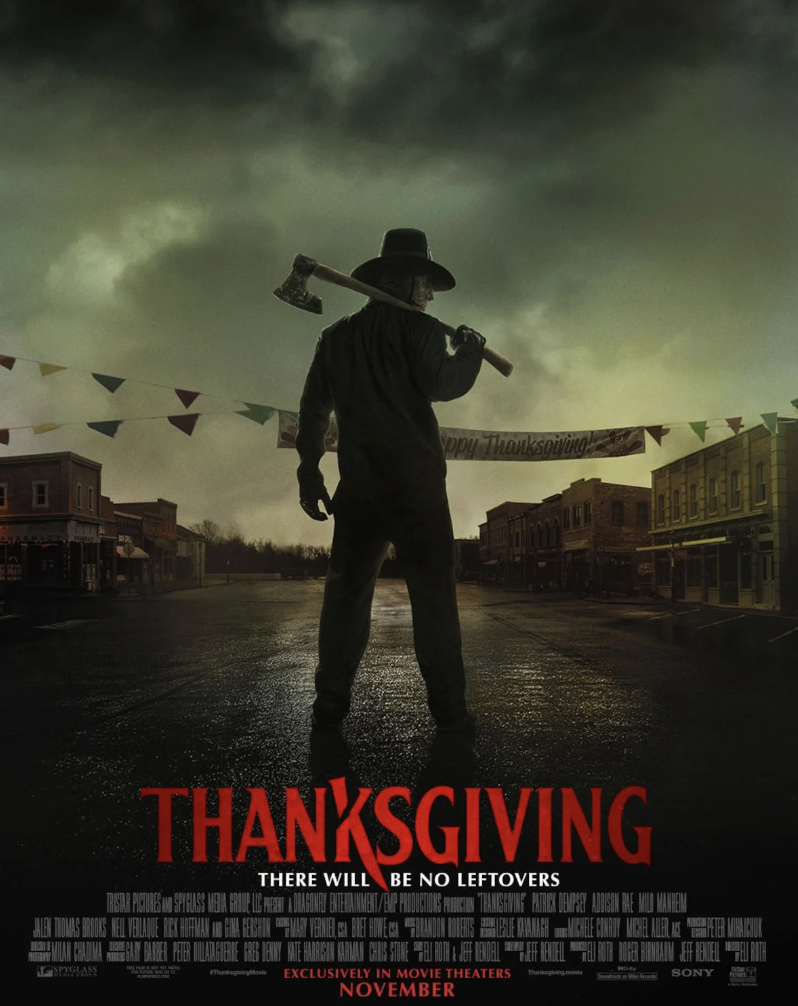
Like Wakanda Forever, the draw for me to see The Marvels is the woman-led cast. When I look at the MCU lineup, I can’t help but notice that men’s stories are prioritized, particularly in Phases One and Two. While women characters are important to the teams or the general narratives, they frequently are outnumbered by their men counterparts. The Marvels unfailingly centers audiences on Carol Danvers, Monica Rambeau, and Kamala Khan. While the ever-present Nick Fury provides support, the three heroes strategize together to defeat their common enemy, Dar-Benn, who is also a woman.

In many ways, the joy of the film is the simplicity. It brings together three characters who initially have some friction. They build trust and confidence in their team, and then they fight the baddie. For my taste, Nia DaCosta understood the assignment; the movie is one hour and forty-five minutes long, and that means the pacing is solid without so many of those masturbatory fight scenes that bog down other Marvel films.

Another way that The Marvels avoids bloat is by bypassing frequent rehashing of MCU information. When I was leaving the theater, the critic behind me complained that he didn’t know what was going on because the film didn’t take the time to explain all of the backstories for the Marvels. He hadn’t seen their respective origin stories. We all know the MCU is sprawling, and very few fans are die-hard completists. The film spent the first 15-20 minutes introducing each character and situating her in her world. It was sufficient to say, “hey, this one’s a loner superhero; this one’s a teenaged superhero with a fangirl crush on the loner; this one’s a scientist superhero who has family drama with the loner.” For people who see The Marvels as their intro to the MCU, they have Captain Marvel, Ms. Marvel, and WandaVision to seek out if they want to add more layers to their knowledge. But, those other sources are not necessary to understand the heart of the movie – build a team and fight the baddie.

Speaking of villains, another success for this movie is Dar-Benn, a Kree Accuser who becomes emperor after the destruction of the Supreme Intelligence. The sun that her planet orbits is dying and as a result, so is the planet. Dar-Benn is a ruler on a mission to save her people – at any cost. While her methods are brutal, there’s a lot of empathy to be had for her, which makes her conflicts with The Marvels more interesting on an emotional level, particularly as we head to the final showdown.

I felt so much joy watching this film. Yes, there was some fanservice in the picture (one of the most dangerous creatures in the universe features prominently), and as a Marvel fan it’s nice to see those call backs. More than that, it was just an all-around great popcorn flick. There was a great balance of levity, seriousness, and intensity. I cared about the characters, and that’s especially true for the newcomers like Dar-Benn. It’s well-worth the cost of the ticket and the time.

Assessment 4.5/5 stars

Dr. Amanda Firestone is an Associate Teaching Professor at the University of Tampa where she teaches film and media studies classes including Women in Film. She is the co-editor of Resist and Persist: Essays on Social Revolution in 21st Century Narratives, Harry Potter and Convergence Culture: Essays on Fandom and the Expanding Potterverse, and The Last Midnight: Essays on Apocalyptic Narratives in Millennial Media

THE KILLER (2023) movie mini-review

The sleeper. David Fincher’s The Killer is lethargic and uninteresting. It’s an uninspired and predictable deconstruction of a hitman that is self-indulgent, lacking any concern for the audience experience.

After a fateful near-miss, an assassin battles his employers, and himself, on an international manhunt he insists isn’t personal.

From the opening credits that are reminiscent of a 1990s movie-of-the-week (MOW) to the exhaustive voiceover narration from beginning to end, this is one movie that you neither want to see in cinemas nor allocate time for at home to watch on Netflix. I am reminded of Fox and FX’s Deliberate Intent (2000), which was a MOW about a first amendment scholar whom is recruited by an attorney to sue Paladin Press after a hit man commits a triple murder by allegedly following a its how-to manual titles Hitman. The deconstruction of the book and hitman contained therein was far more engaging than this sleep-inducing character study by Fincher. Seems hard to believe that a movie about a hitman could lack less dimension and interesting qualities than sheet of cardboard. I kept waiting for the first act to transition into the second, but it’s nearly two hours of a first act and a very rushed third. Anticlimactic best describes the conclusion to this sleep-inducing character study.

Ryan teaches Film Studies and Screenwriting at the University of Tampa and is a member of the Critics Association of Central Florida and Indie Film Critics of America. If you like this article, check out the others and FOLLOW this blog! Interested in Ryan making a guest appearance on your podcast or contributing to your website? Send him a DM on Twitter. If you’re ever in Tampa or Orlando, feel free to catch a movie with him.

Follow him on Twitter: RLTerry1 and LetterBoxd: RLTerry

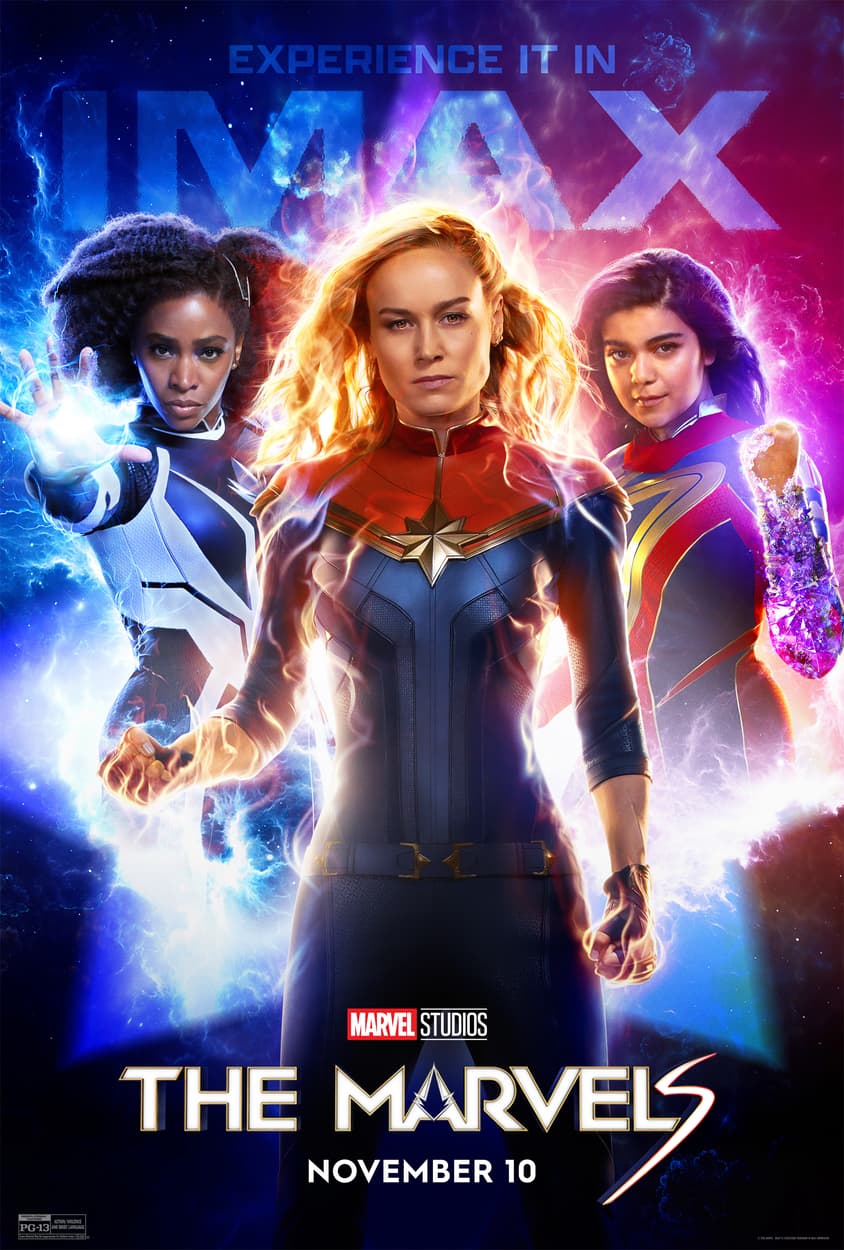
KILLERS OF THE FLOWER MOOON film review

Killers of the tension: an important story in desperate need of a better screenplay and editor. It’s a 3.5hr film that feels every bit of 3.5hrs. I’ve nothing against long run times per se; however, the run time needs to be justified dramatically. But unfortunately, the screenplay mechanics and editing (or lack thereof) hold this otherwise compelling story back from the great potential it demonstrably had. Lacking in any significant tension, this film had me looking at my watch after the first hour and a half. I kept waiting for it to kick into gear, but it never truly managed to amp up the tension. Furthermore, all the individual narrative elements never develop strong connective tissue. Even the performative dimension is good, but there lacks any singular performance that truly stands out. While cinema knows no run time, some stories are best told in 90 or 120mins, and this is definitely one of them.

In the 1920s, members of the Osage Native American tribe of Osage County, Oklahoma, are murdered after oil is found on their land, and the FBI decides to investigate.

One of the most highly anticipated films of the year over-promises and under-delivers. Which is a real shame because it depicts such an important story. While many will fixate on the run time alone, that would be unfair as it’s not the run time that is to blame for the lackluster narrative nature of this film. Rather, it is the screenplay mechanics and lack of precision editing.

As I have written many times previously, most directors are not writers. Are some? Well, sure. But most are not equally gifted in both areas. However, many writer-directors allow their ego to get in the way of excellence in writing because they feel it’s the only way to be a true auteur. Scorsese has nothing to prove to solidify him as an auteur, He is inarguably one of the greatest directors of all time. Scorsese’s Taxi Driver is one of the greatest films of all time and it’s under 120mins (2hrs). However, between The Irishman and now Killers of the Flower Moon, it’s as if he feels compelled to intentionally create films with prodigious run times to separate them from streaming content. Cinema knows no run time. Cinema is an experience, and that experience can be had in 90mins as well as 180mins. Like Nicole Kidman says, cinema is where we come together to experience the same film at the same time on a giant screen. Stories that have both plots and characters that are larger than life or incredibly intimate encounters. But I digress.

When a director is writing the screenplay, or has a significant role in the screenplay, then there lacks adequate checks and balances for screenwriting structure and mechanics. The long and short of it is that the story, ethos and all, may make sense in the director’s mind, but that doesn’t mean that it makes sense for the audience. Whereas when the screenwriter and directors are separate individuals, the screenwriter is able to focus solely on the pages in front of him or her without interference from a director. Killers of the Flower Moon strikes me as the type of story that would’ve benefitted from the director not being involved in the actual process. Because of all the nuance of the story and relationships between characters, perhaps this is a situation in which author David Grann writes the first draft and another more established screenwirter comes in from behind and shapes it into its film form (on page, anyway). We saw this with Jurassic Park, in which Crichton’s original screenplay was too novely and David Koepp was responsible for the final screen version.

Even though the screenplay is partly responsible for the improper pacing and lack of dramatic tension in the film, it shares the blame with the film editing (or dramatic montage). Alfred Hitchcock stated that writers and directors should “start each scene as close to the end of the scene as possible” What this means is that each and every scene should be lean and mean, only leaving room for that which advances either plot or character in a dramatic direction. The editing issue that plagues Killers of the Flower Moon is that scenes were either started too early or weren’t cut off in dramatic time. There is almost too much information in each scene that the lack of meaningful, precise editing acts as an anchor, dragging the film’s pacing. Contrary to popular belief, there is no too fast or too slow when it comes to the cadence of a film; but, there is such a thing as proper pacing. It’s the ideal pacing for the dramatic elements in the story.

Killers of the Flower Moon will make you want to read the book or simply look up information on the murders and investigation thereof. The film looks gorgeous and the performative dimension is solid, but as a total package, the film is underwhelming.

Ryan teaches Film Studies and Screenwriting at the University of Tampa and is a member of the Critics Association of Central Florida and Indie Film Critics of America. If you like this article, check out the others and FOLLOW this blog! Interested in Ryan making a guest appearance on your podcast or contributing to your website? Send him a DM on Twitter. If you’re ever in Tampa or Orlando, feel free to catch a movie with him.

Follow him on Twitter: RLTerry1 and LetterBoxd: RLTerry

SOUND OF FREEDOM movie review

Aleatoric. (Music theory folks will get it). Sound of Freedom is like Taken meets Argo, but the compelling true story ultimately falls slightly flat because of poor pacing. However, the film delivers on both technical merit and casting. While some outlets have described Sound of Freedom as a faith-based film from the same studio that produces the successful television series The Chosen, that is an inaccurate reading at best and an attempt to disparage the film’s quality at worst. Because this movie most definitely delivers on high production value and casting; but unfortunately, the performative dimension and screenplay are underwhelming. Feeling more like a visualization of the Wikipedia entry or Congressional testimony, Sound of Freedom‘s ambition is tapered by screenplay mechanics.

After rescuing a boy from ruthless child traffickers, Tim Ballard (Jim Caviezel), a federal agent, sets out on a dangerous mission to locate and free the boy’s sister, along with other children caught up in the nightmare of sex trafficking. With time running out, he quits his job and journeys deep into the Colombian jungle, putting his life on the line to free her from a fate worse than death.

There is certainly a compelling, gripping, gritty screenplay based on the true story of Tim Ballard’s mission to free children caught up in sex trafficking, but the plotting and pacing of the screenplay hold the film back from achieving the potential is so clearly demonstrates. While the screenwriting lacks finesse, there is no doubt that this film forces the world to face the nightmarish and closeness of the reality of human (specifically, child in this film) slavery and sex trafficking. Most acknowledge the importance of fighting human trafficking, but few realize how close to our own country this subject matter hits.

We often think of human trafficking as something that happens in foreign lands, but most of those that pay for such reprehensible services are operating out of the United States. Sound of Freedom is a grim reminder of the real war that is being waged in which innocent people are bought, sold, and traded as disposable commodities.

Visually, the film looks fantastic! Clearly, there was immense thought placed into the quality of image. Moreover, this same level of thought is witnessed in the settings and even in the casting. This film reminds me of the type of motion picture that we often see from Annapurna productions. In terms of the visual tone, it falls between arthouse and mainstream, which is to the film’s detriment, because had it stuck to either the look/feel of Taken or Argo, then the film would have been more surefooted. On the plus side, though, clearly Angel Studios has show the world that they are capable of releasing high quality motion pictures that can compete with the larger Hollywood studios.

Clocking in at around 2.25 hours, the film’s second act feels incredibly drawn out. I’ve written before about the litmus test I give myself, which evaluates pacing, and to that end, I did look at my watch about 1.5 hours into the film. Structurally, the first and third acts work sufficiently well, but the second act is augmented to needlessly extend the runtime. As this interpretation of the true story has it, there is enough plot for about 1.5-1.75 hours, meaning there is about 30-minutes that could have been cut out to streamline the motion picture.

I mentioned my observation that many outlets and other critics are referring to Sound of Freedom as a faith-based film, and there is little evidence to support that reading since there lacks any type of salvation or proselytizing message in the film. Because I’m sure we can all agree that God’s children are not for sale. If there is a message in the film, that is it. A universal truth that is applicable to and relatable by all.

Ryan teaches Film Studies and Screenwriting at the University of Tampa and is a member of the Critics Association of Central Florida and Indie Film Critics of America. If you like this article, check out the others and FOLLOW this blog! Interested in Ryan making a guest appearance on your podcast or contributing to your website? Send him a DM on Twitter. If you’re ever in Tampa or Orlando, feel free to catch a movie with him.
Follow him on Twitter: RLTerry1 and LetterBoxd: RLTerry

MISSION: IMPOSSIBLE–DEAD RECKONING PART 1 movie review

Exhilarating! Pure, unadulterated cinema! Tom Cruise and the whole Mission Impossible team deliver what is likely the most epic movie of the year!! It’s thrilling, funny, and suspenseful from beginning to explosive ending! Part 1 is both a complete story and sets up Part 2 exceptionally well. If I am to be objective, Mission: Impossible III delivers the best story; however, audiences are still going to love this movie because feels like cinema in every measurable way. Move over James Cameron, Christopher Nolan, and yes even Martin Scorsese, for it is Tom Cruise whom knows how to deliver cinema to audiences.

Ethan Hunt (Cruise) and the IMF team must track down a terrifying new weapon that threatens all of humanity if it falls into the wrong hands. With control of the future and the fate of the world at stake, a deadly race around the globe begins. Confronted by a mysterious, all-powerful enemy, Ethan is forced to consider that nothing can matter more than the mission — not even the lives of those he cares about most.

After the massive success, both critically and financially, of Top Gun: Maverick I was curious to witness whether or not Cruise would pull off another cinematic hit. Suffice it to say, he did just that! The last remaining movie star, in the classical sense, Tom Cruise continues to deliver entertaining and thoughtful cinema. In an era overridden by form over function motion pictures (though, there is certainly a place for those stylistic films), Mission Impossible: Dead Reckoning Part 1 (MI7) proves that cinema is should generally concern itself with both the form and function equally. By sticking to foundational screenwriting conventions, pairing it with sequences that make the most of every square inch of that big silver screen, the entire MI team demonstrate why cinema is not only about the art of the narrative but also in a larger-than-life experience.

The entire auditorium was electric at the screening I attended. I don’t think I felt the level of kinetic energy at the cinema since Top Gun: Maverick. It even surpassed the high-energy of the more recent The Flash. Perhaps it is the combination of classical espionage/action plotting and epic-sized set pieces and locations. While MI7 feels very much contemporary, it also never forgets its roots in both the previous MI movies or in the original TV show. Of course there are those that will overly critique the dialogue, more specifically its lack of subtext, but I argue that it is on brand with and perfectly appropriate for this genre movie. Does that mean writers and directors should simply aim for status quo? No, MI3 proved that MI movies can be exciting and full of heart, complete with characters rich with dimension. But the dialogue should not significantly impact the overall experience of this movie.

Without getting into spoilers, the mission, should you choose to accept it, is to stop the character of opposition from unleashing a destructive artificial intelligence (AI) on the world. Talk about timely social and tech commentary. The film broaches topics such as truth (subjective/interpretive truth) and truth (as in universal truth). By extension, this same idea is carried over into fact vs opinion and predictive decisions (in the vein of Minority Report). In short, the crisis that Ethan is attempting to prevent is one that would completely disrupt, retcon, and violate the very informational fabric of life. Think Skynet. While I wouldn’t characterize MI7 as being inordinately deep or thoughtful, concerning truth and AI, it does posit these questions and subjects, which provides opportunities for more discerning audiences to discuss the advantages and disadvantages of AI. More specifically, the dangers of AI falling into the wrong hands.

The set pieces and locations are cinematic in both scale and scope. From the beginning of the movie on a submarine in the Bearing Sea to the Alpine vistas of Austria, the best way to experience this motion picture is in a premium format at your local cinema. Moreover, the biggest screen with best sound possible will make the car chases and Tom Cruise’s stunts all the more outstanding! Even though we’ve all seen that stunt in which Cruise launches himself off the mountain on a motorcycle in various promotional content for this movie, watching it in the third act of the film was still so incredibly impressive!

While Cruise performing most of his own death-defying stunts is unparalleled and impressive enough, what makes these car chases and stunts even more adrenaline-pumping is the fact so little CGI is used. Tom Cruise is literally launching himself off a mountain, and he (and others) are literally driving cars through the streets of Rome. The lack of overt CGI or relying upon it to take the real danger out of the stunt sequences removes just that–the danger. These stunt sequences are all the more exciting because they are real–there is little to no simulation employed. Not to over simplify, but the dimension of real beats the flat, lifeless CGI sequences every time. Real>artificial.

And that’s precisely what we have here real cinema! On a personal note, I am so incredibly grateful for Tom Cruise keeping cinema alive! He has demonstrated through Maverick and now with MI7 that he understands what it means to craft cinematic stories for the silver screen! Before you @ me, I am fully aware that cinema takes various forms, form intimate character studies to the avant-garde, but the power of a genre movie that follows screenwriting conventions should never be devalued. Genre movies are what helped build cinema, and folkslike Tom Cruise keep them coming to entertain and thrill us.

Ryan teaches Film Studies and Screenwriting at the University of Tampa and is a member of the Critics Association of Central Florida and Indie Film Critics of America. If you like this article, check out the others and FOLLOW this blog! Interested in Ryan making a guest appearance on your podcast or contributing to your website? Send him a DM on Twitter. If you’re ever in Tampa or Orlando, feel free to catch a movie with him.

Follow him on Twitter: RLTerry1 and LetterBoxd: RLTerry