
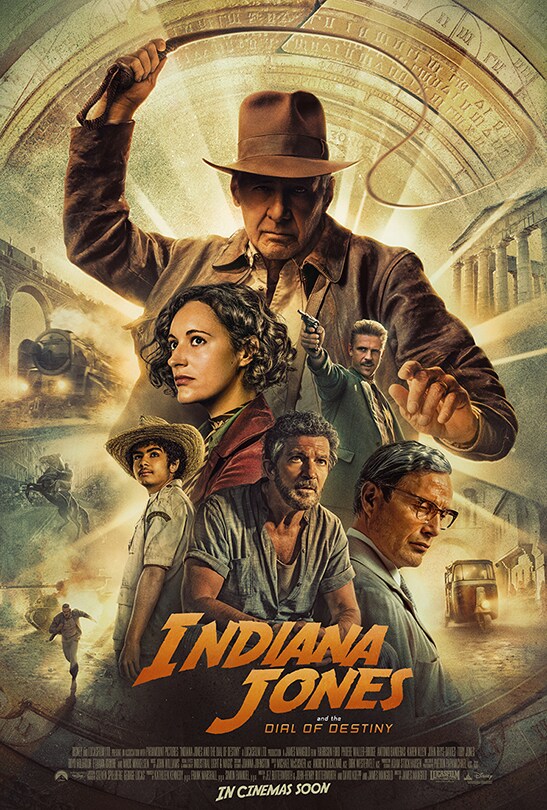
INDIANA JONES: AND THE DIAL OF DESTINY movie review

And the dial of mediocrity. While the movie’s charm lies in the classical action-adventure premise and tone, Harrison Ford’s final performance as the titular adventurous scholar ends with a forgettable movie devoid of the humor, tension, scale and scope of the first three Indiana Jones movies. Moreover, the screenplay suffers from poor pacing and lack of character-building. However, it’d be unfair to characterize the movie as being completely uninteresting. In fact, Indiana Jones: and the Dial of Destiny is a fun enough throwback movie for the whole family to enjoy.

Daredevil archaeologist Indiana Jones races against time to retrieve a legendary dial that can change the course of history. Accompanied by his goddaughter, he soon finds himself squaring off against Jürgen Voller, a former Nazi who works for NASA.

The James Mangold helmed fifth and final installment in the Indiana Jones franchise is neither bad nor good enough to be memorable. Moreover, neither does the movie deliver in setting nor technical achievement.

Speaking of technical achievement, any overly negative reports of the de-aging of Ford, in the protracted prologue, are greatly exaggerated, nor does the CGI in the rest of the movie feel obtuse or too overt. On the contrary, I was greatly concerned for the exchange of practical effects for CGI on the levels of being distracting. While I noticed here and there, it wasn’t what I would characterize as highly conspicuous.

Gone is the grand scale and scope of the first three Indiana Jones movies in exchange for a world that feels as if it could fit in a space the size of Guam. For an action-adventure movie, it struggles to deliver on either. If we boil it down to its storytelling DNA, does it check off the basic requirements of an action-adventure movie? Sure. I won’t take that away from the movie. But does it excel at any one of those elements? Aside from remaining clean enough for the whole family to enjoy, no, it does not. While it is certainly a better story than Crystal Skull, unfortunately, Crystal Skull is more memorable than this installment (albeit, for all the wrong reasons). Dial of Destiny certainly feels way closer to the first three Jones movies than Crystal Skull ever will. It is of the same DNA, but not expressed nearly as thoughtfully or charismatically as the original trilogy.

As I’ve stated countless times before, (except for rare occasions) when a movie’s writer (or editor) and director are the same person(s), then there fails to be a sufficient check and balance system narratively. Mangold has shown that he is capable of both, I cite Logan, but that was perhaps the exception while Dial is the rule. There is a good story in this movie, but nothing was executed by storytellers that truly cared. I was shocked to see David Koepp’s name attached to this movie, because he took Michael Crichton’s original Jurassic Park screenplay and shaped it into the masterful story we’ve been enjoying for three decades. Crichton provided the novel and screenplay bones and circulatory system, but Koepp crafted the muscle and skin. Dial of Destiny does not feel like a Koepp screenplay, but perhaps Mangold flexed his directorial muscles too much and Koepp’s genius was lost.

Oh, as an aside, no Helena, that’s just called stealing. Perhaps go back to school and take an economics class. Come to think of it, that would have been a funny Jones line in the movie. And the movie was in desperate need of comedic relief.

The movie opens with plundering Nazis, in classic Jones fashion, and we are introduced to a 30, 40-something Dr. Henry Jones Jr. The prologue (which makes up most of Act I) delivers all the trappings of a classic Indiana Jones movie, but it goes on, and on, and on for nearly a half-hour. And it wouldn’t’ be so bad if this half-an-hour significantly impacted events in Acts II and III, but it ultimately sets up very little. Is it a fun and somewhat exciting method for returning audiences to the 1930s and 40s world of Indiana Jones, definitely. But does it fail to justify its protracted sequence of events? Also yes. The movie’s pacing would have beeb greatly helped by cutting the prologue down to 10–15-minutes. Think: opening of Indiana Jones: and the Last Crusade. I’ve a feeling that’s what Mangold was going for in this movie.

There is one plot device that this prologue does foreshadow, and if you think it’s never going to go there, guess again. I’ll leave it at that to avoid spoilers.

I’d be remiss not to comment on the charm of the movie. While it may suffer from many problems that hold it back from reaching beyond mediocrity, there is no doubt that it delivers the throwback premise and tone we love about these classical action-adventure movies. I just wish it had more action and adventure in the storytelling mix. I appreciate the movie for remaining true to form (in its most simplistic form, but form nevertheless), and not increasing adult visual content or language in order to be perceived as with it. Increased adult content is not the mark of a franchise maturing over time, in fact, it’s a cheap gimmick that devalues. There are certainly times and places for it, but an Indiana Jones. movie was not it. So it can be praised for keeping the content, tone, and form of classical action-adventure alive–on life support–but alive.

Not sure why Disney is releasing this for the week of July the 4th, because it works much better as a Father’s Day movie.
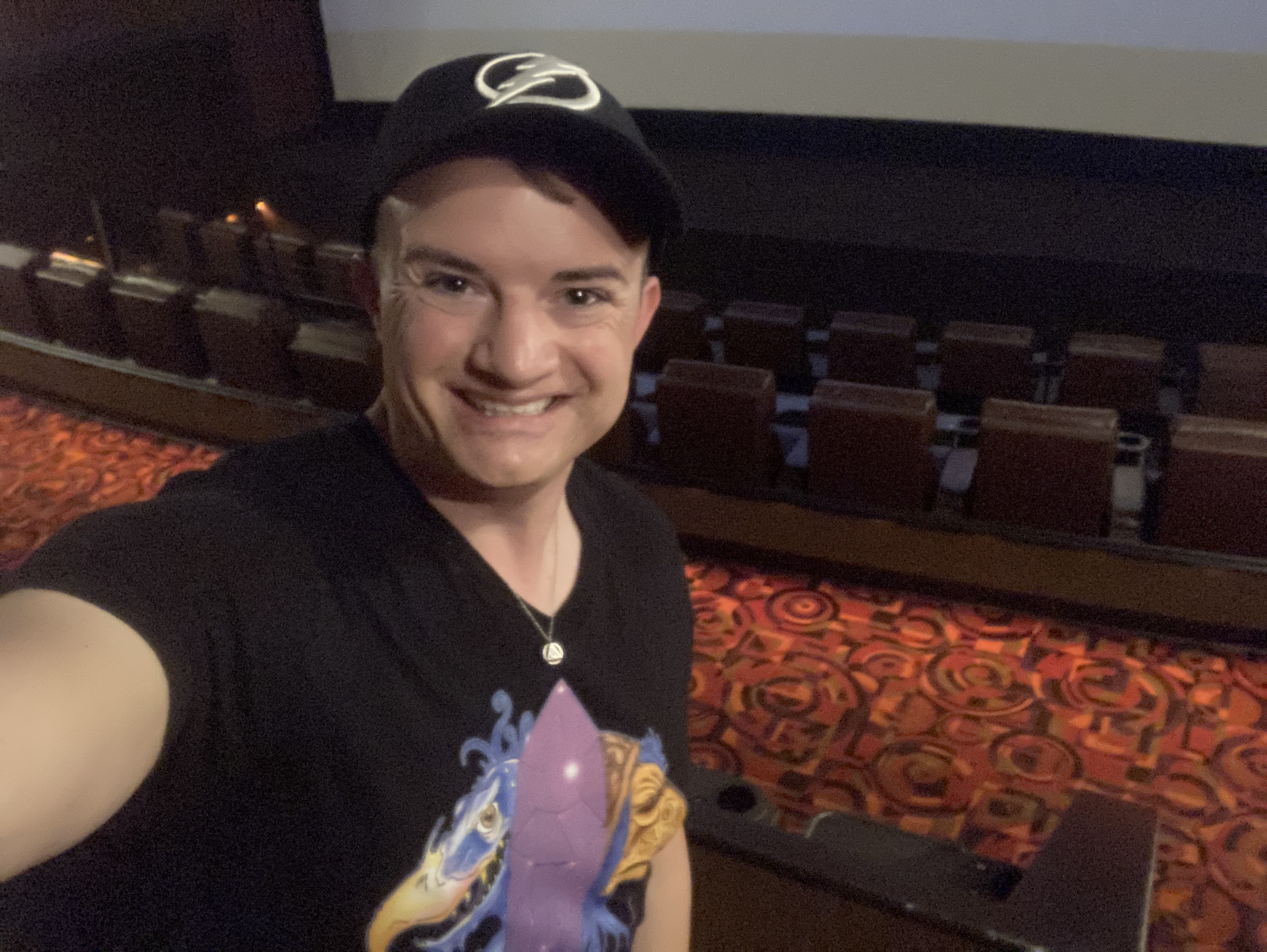
Ryan teaches Film Studies and Screenwriting at the University of Tampa and is a member of the Critics Association of Central Florida and Indie Film Critics of America. If you like this article, check out the others and FOLLOW this blog! Interested in Ryan making a guest appearance on your podcast or contributing to your website? Send him a DM on Twitter. If you’re ever in Tampa or Orlando, feel free to catch a movie with him.

Follow him on Twitter: RLTerry1 and LetterBoxd: RLTerry

THE FLASH movie review

Electrifying! From beginning to end, The Flash is a highly entertaining, funny, well-written thrill ride with a tremendous amount of heart! In an oversaturated superhero/CBM (comic book movie) live-action cinema landscape, dominated by MCU (and MCU-adjacent) movies, comes a breath of fresh air that works both visually and narratively.

Worlds collide when the Flash uses his superpowers to travel back in time to change the events of the past. However, when his attempt to save his family inadvertently alters the future, he becomes trapped in a reality in which General Zod has returned, threatening annihilation. With no other superheroes to turn to, the Flash looks to coax a very different Batman out of retirement and rescue an imprisoned Kryptonian — albeit not the one he’s looking for.

Andy Muschietti delivers a superb superhero motion picture that defies expectations set for anything the DCEU had to offer audiences. Christina Hodson’s fantastic screenwriting paired with John Francis Daley, Jonathan Goldstein, and Joby Harold’s story, provides a solid foundation upon which Muschiette crafts the motion picture for the screen. Nearly everything about this picture works incredibly well, except the CGI battle sequence at the end that felt right out of an early 2010s video game. In addition to the compelling visual storytelling, Muschietti and Hodson successfully, and organically) pay homage to Tim Burton, Zach Snyder, and even Richard Donner. Never before has a superhero multiverse been explored so well! Where other multiverse movies struggle narratively, this one excels in both form and function. And of course, the movie features THE definitive Batman Michael Keaton in a triumphant return to the screen as the Burton-verse caped crusader! While many other films in recent times have placed far less emphasis on plotting than visual composition, The Flash delivers on both.

Just when the general public and critics alike were genuinely wondering if there was anything left in the DCEU, The Flash is the strongest cinematic story to come out of this universe of characters since Wonder Woman, and perhaps the most fun superhero movie since Batman Returns. I know, positively using The Flash in the same statement as Batman Returns is high praise, as it’s my opinion that Batman Returns is the best comic book (or superhero) movie of all time. While The Flash isn’t as campy as the Batman 1960s TV series or the Schumacher movies, it strikes a balance between camp and melodrama in the same vein as Batman Returns struck a brilliant balance between camp and gothic romance. Wherein character expression may lean into camp. The Flash delivers heartfelt thoughtfulness in character interpersonal dynamics and plot. We empathize with Barry Allen’s obsessive plight to save the life of both his mother and father.

Simple plot, complex characters. That is precisely what you get in this movie. I know, what must he be thinking equating a multiverse setup with simple plot. That’s because the plot can be boiled down to when Barry Allen realizes that he has the ability to travel back in time, he returns to stop the death of his mother, but in doing so, unleashes a cataclysm of effects throughout the space-time continuum that must be corrected. There is one plot: save the life of his mother and father, whom is on trial for the death of his mother. Everything that Barry/The Flash does revolves around the central plot of stopping the death of his mother which will keep his father from being accused of her murder. No matter where we go in the multiverse, the external goal motivated by the internal need never changes.

The complexities in the narrative are character-driven. Barry Allen (Sr.) is hyper-focused on stopping the murder of his mother, no matter the cost, Bruce Wayne/Batman is wrestling with his identity as the caped crusader in a world that doesn’t need him anymore (or so it seems), and Barry Allen (Jr.) is struggling to find his place in the world as he is caught between childhood and adulthood. And the central plot connects all these characters and forces them to grow emotionally and psychologically. Apart from the central plot, none of the character growth would occur. Never once does the focus of the story shift, but the central themes of identity, overcoming trauma, and the dangers of obsession with control allow the movie to explore deeper meanings in the otherwise high concept story.

The central cast is fantastic! Never having seen The Flash TV show, I cannot comment on that expression of Barry Allen/The Flash, but Ezra Miller delivers a compelling performance of the lightning-fast superhero struggling with anxiety. We haven’t has a superhero that feels this genuinely human and vulnerable since Tim Burton’s Bruce Wayne/Batman played by Keaton. While they express their humanity differently, both play their respective everyman identities and super-alter egos with equal charisma and authenticity that is maintains its own identity depending on if they are wearing their respective masks. The idea of and meaning of the masque is something that entire books have been written on, but for the sake of argument, the masque represents a different identity and should be expressed differently unless, for dramatic purposes, the character’s humanity peaks through the superhero masque.

Miller’s portrayal of Allen/Flash is one that is unapologetically relatable and without pretense. Furthermore, I appreciate the inclusion of an individual struggling with anxiety, social awkwardness, and comes from average beginnings with no superhuman characteristics other than the ones bestowed through the electrical/chemical accident.

Many articles and podcasts have been published on Michael Keaton’s Batman, so I won’t spend too much time on him; however, we cannot talk The Flash without acknowledging the impact of the definitive Batman and Bruce Wayne returning to the big screen in a big way! At very first sights of Keaton, the Batcave, and the iconic Burton Batmobile, there were waves of applause and cheering from the audience, but nothing compares to the sheer deluge of cheering, shouting, and applauding for Michael Keaton when he appears in his Batman uniform for the first time since 1992. If this was a live performance in front of a studio audience, then all action would have stopped on stage for several minutes as the audience showed their affection for Keaton’s Batman. Even though he is not the central character, he factors heavily into the second and third acts of the movie. And you know what? He’s still got it!

Where the film simultaneously delivers and falters is in the integration of heavy CGI. The CGI works very well in the various effects of The Flash’s super speed and when exploring the multiverse; where the CGI is conspicuously unrealistic is in the final battle scenes. This is where and why the Tim Burton Batman movies will forever be timeless, but prolific use of CGI will date a film. You cannot replace the way real light bounces off real objects into the camera lens. There is a sense of real danger when practical effects, stunts, and pyro is used–it’s REAL–the danger is real. There is a dimension to practical sets and effects that CGI will never be able to replicate. Simply stating, the CGI in the battle sequences at the end takes the audience out of the film. However, the film doesn’t cheapen out on anything at Wayne Manor, the Batcave, Batmobile, or Batplane.

The score for The Flash is excellent, especially when Danny Elfman’s iconic Batman theme is integrated into the original score for this film. While I could have gone for the film to lean a little more heavily into the Elfman Batman theme, I appreciate the nuance of the theme when anything Burton-verse is on the screen. Outside of the Elfman Batman theme, the orchestration feels like an extension of each scene that never becomes the center of attention, but is always present.

About the cameos. Yes, there are some great cameos, but I am not going to disclose them as you need to experience them for yourself. What I will divulge on that subject is the conspicuous absence of Michelle Pfeiffer’s definitive Catwoman. Even though she’s stated in interviews that she hasn’t been asked to reprise her career-defining role, even thought she admittedly would love to wield the whip again, I thought that perhaps is was all a ruse and she would surprise us in this movie. But with the unparalleled positive response from audiences concerning Keaton’s return to the Batsuit, then perhaps we will get the incomparable Michelle Pfeiffer as Catwoman one last time.

Thrilling and fun for the whole family, I highly recommend watching The Flash. It was certainly the most fun I’ve had at the cinema all year.

Ryan teaches Film Studies and Screenwriting at the University of Tampa and is a member of the Critics Association of Central Florida and Indie Film Critics of America. If you like this article, check out the others and FOLLOW this blog! Interested in Ryan making a guest appearance on your podcast or contributing to your website? Send him a DM on Twitter. If you’re ever in Tampa or Orlando, feel free to catch a movie with him.
Follow him on Twitter: RLTerry1 and LetterBoxd: RLTerry

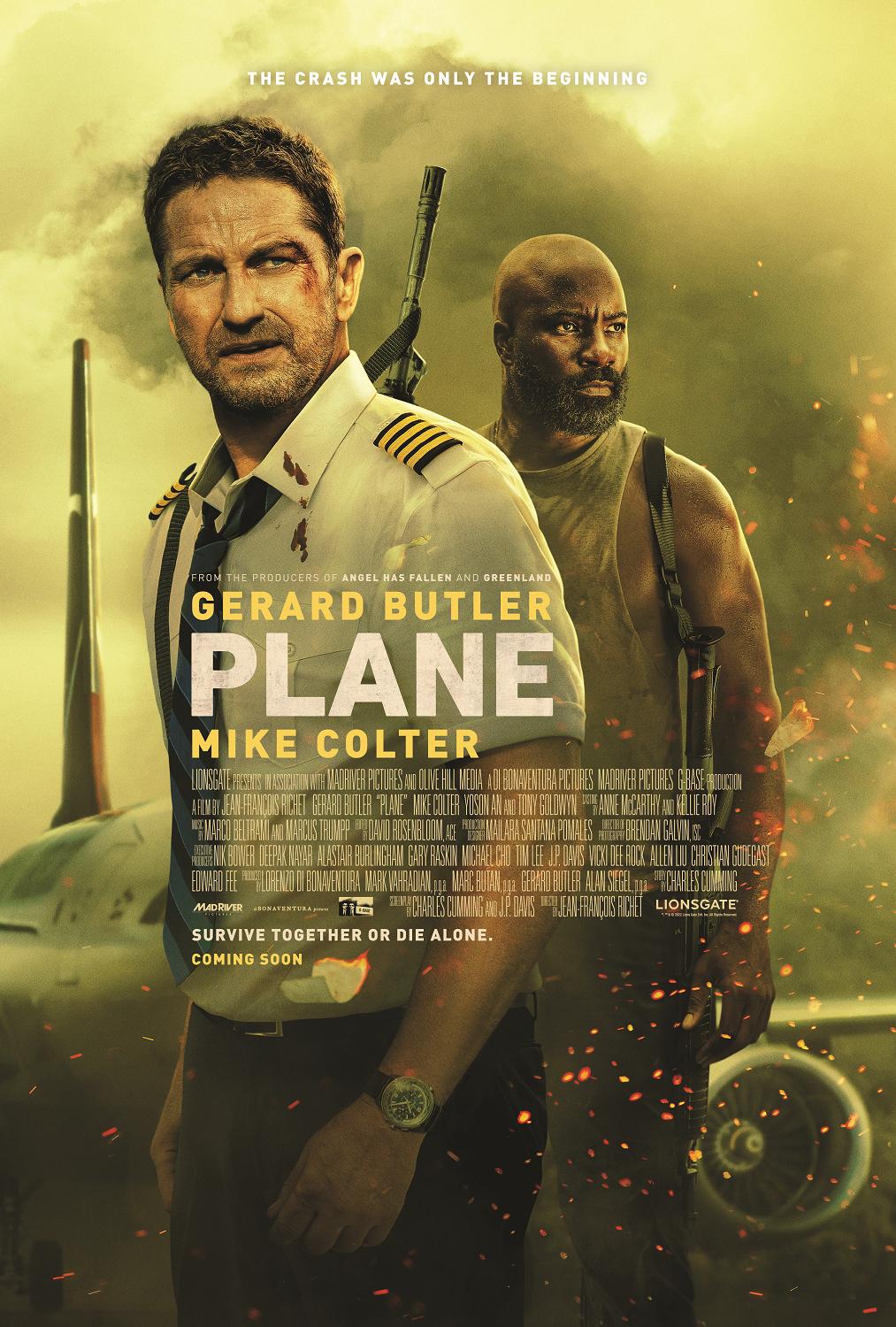
PLANE action movie mini-review

Not too plane; this non-stop action-adventure has some flavor. Received my annual dose of mindless disaster movie fun in the Gerard Butler captained Plane. Schlocky movies work best when they know precisely what they are, and rock it. Which is precisely what we have here, a sufficiently entertaining over-the-top disaster/rescue movie that understood its flight plan, and stuck to it.

Pilot Brodie Torrance (Butler) saves passengers from a lightning strike by making a risky landing on a war-torn island — only to find that surviving the landing was just the beginning. When dangerous rebels take most of the passengers hostage, the only person Torrance can count on for help is Louis Gaspare (Mike Colter), an accused murderer who was being transported by the FBI.

From takeoff to landing, Plane is exactly what you need to reset your cinema palate from the awards contender-heavy autumn to prepping for what 2023 cinema has in store for us. Strap in for Gerard Butler and Mike Colter to take you on a white knuckle adventure filled with CG squibs and death defying action. To be honest, as moderately enjoyable as the movie was, with some Die Hard dialogue and one-liners thrown in there, it would have increased the entertainment value significantly. All you need to know is that the movie is fun! Also, never forget that it’s perfectly fine for a movie to be entertaining for an hour-and-a-half and that’s it. Not everything needs to be deep, inspirational, thoughtful, avant-garde, or provocative. It’s when movies that are clearly schlocky try to be something grander, that they crash and burn. Think of Plane as some good ol’ junkfood. Perfect for one of those weekends wherein the weather is cold, snowy, or rainy.

Ryan teaches Film Studies and Screenwriting at the University of Tampa and is a member of the Critics Association of Central Florida and Indie Critics of America. If you like this article, check out the others and FOLLOW this blog! Interested in Ryan making a guest appearance on your podcast or contributing to your website? Send him a DM on Twitter. If you’re ever in Tampa or Orlando, feel free to catch a movie with him.

Follow him on Twitter: RLTerry1 and LetterBoxd: RLTerry

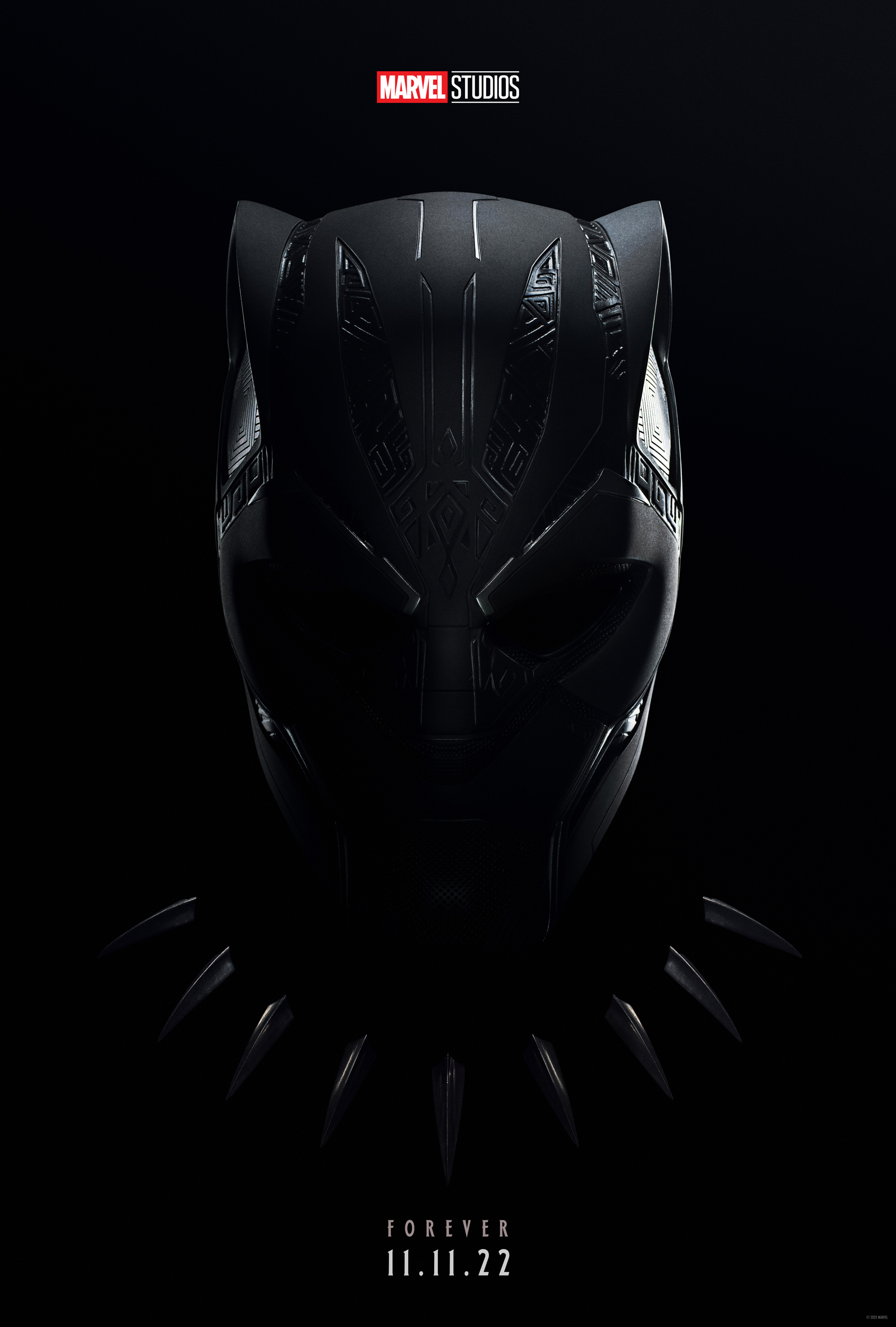
BLACK PANTHER: WAKANDA FOREVER movie review

Wakanda Forever a.k.a. Postcolonial Theory: the Movie. The overly long, poorly paced latest installment in the MCU feels disjointed. Black Panther: Wakanda Forever goes on forever, and ever, and ever, and ever, because the movie is overstuffed with subplots to nowhere and one-dimensional (or plot device) characters that serve little substantive purpose except to augment the runtime. About 45-minutes can easily be carved out of the movie, and the action plot would be largely unaffected. Other times, it feels as if entire sequences or scenes are missing, because the editing (montage or assembly) is choppy. The absence of the late Chadwick Boseman is felt from beginning to end, and the movie constantly struggles to find its footing as it moves forward in the MCU. The tributes to Boseman at the beginning and of the movie are tastefully, and reverently crafted. While the writing of the movie is insufferable, the performative element of the mise-en-scene is chiefly supported by the incomparable Angela Bassett. Wouldn’t be surprised to see her receive a Golden Globe nomination for actress in a supporting role next year. There is a good followup to Black Panther somewhere in this nearly 2.75hr movie, but it must’ve been caught up in the snap.

Queen Ramonda (Bassett), Shuri (Letitia Wright), M’Baku, Okoye and the Dora Milaje fight to protect their nation from intervening world powers in the wake of King T’Challa’s death. As the Wakandans strive to embrace their next chapter, the heroes must band together with Nakia and Everett Ross to forge a new path for their beloved kingdom.

The command performance by Bassett is the highlight of the movie! Every scene that features her instantly increases in quality and gravitas. With just one look, she steels the scene and convinces you that what she is saying or feeling is incredibly important. Unfortunately, the rest of the characters are largely one-dimensional and lack meaningful arcs or characters development. One of the biggest problems is the writers’ refusal to bloody your central character, which holds the other lead and supporting characters back from forming empathetic connections with the audience. Princess Shuri is nearly a deus ex machnina in and of herself. In other words, we have (Star Wars) Rey: Vol.2 featured in Wakanda Forever.

When characters are too perfect, too capable (to an uncanny level), and the writer(s) refuses to bloody the central character, then the characters lacks–well–character (or a believable human dimension). Meaning, there is little doubt the character will succeed, and typically success is paired with a false sense of dread or suspense that the character will undoubtedly achieve that which will make them a de facto superhuman. Simply stated, superhuman (or superhuman-like) characters are neither fun to watch nor do they service the plot in a meaningful way. More like characters as a plot device.

Functioning as an overt attempt at subtext, there is a constant reminder of the narrative’s embrace of the cynical postcolonial theory, which is the overarching idea of the systematic deconstruction of The West in order to save the other, thus erasing universal truths and metanarratives from the world.

The goal of postcolonial theory is to decolonize our world: the systemic undoing of colonialism in all its manifestations and impacts. Powerful, albeit difficult to support with logic, postcolonial theory is concerned with the critique of the affects when a dominant culture interjects its values, beliefs, and cultural norms upon another culture. Twice in the film, Martin Freeman’s character is referred to as a colonizer in a rather pejorative attempt at humor. Not limited to the relationship between Wakanda and the rest of the world (mainly The West), but the same overt parallel is dramatized between another important world in the movie and The West.

This theoretical approach to sociology and scholarly activism advocates that colonized people react violently in order to maintain their increasingly fragile mental health and self-respect. Postcolonialism has formed the radical foundation upon which many marxist politics are built. Objective knowledge (and by extension science, facts, universal truth)—that which is true for everyone, regardless of cultural values—is seen as unobtainable because knowledge is a construct of the dominant group’s worldview, and must be forcibly removed from the world. Which is a large part of the movie–the elimination of The West. This factors into two competing story threads.

But why is this a dangerous theory upon which to build an entire movie? The framework of postcolonial theory urges those that see themselves as oppressed (even if that oppression was decades or centuries ago), to abandon evidence-based, rigorous testing, research, and critical thinking in exchange for assumptions, subjective observations, and hypotheses. Ironically, postcolonial scholar-activists attack systems of power by erecting systems of power. The radical, proactive denial of the existence of universality actually pushes a different universality (hmm…sounds like a metanarrative…but aren’t those supposed to be bad?).

Another cynical theory that is manifested in this movie is feminist theory. Whereas I do not feel the need to spend too much time on this more commonly known theory, it’s important to note that all the lead and chiefly supporting characters are women–powerful–women, and all the villains are men–inept or evil–men. When writers craft a mix of characters, there should be room for both, as that would be more representative of real life. Both the X-Men and The Avengers showcase a great mix of both powerful, cunning, intelligent men and women. Therefore, general audiences can connect with a character(s).

Augmenting the runtime of the movie is both a subplot that ostensibly goes nowhere and a supporting character that is little more than a plot device. Without getting into spoilers, there is a subplot featuring Freeman’s Everett K. Ross that fails to add anything substantive to the movie. Just when you think it’s going to provide a reveal about a rather mysterious characters from other MCU movies and Wanda Vision, nothing happens. If you remove this subplot from the movie, little to nothing changes. Connected with this subplot is a supporting character that is (supposed to be) the MacGuffin. But the writers attempt to give this character gravitas. Unfortunately, but there isn’t enough substance to this character, thus rendered one-dimensional. Furthermore, this character could be removed without changing much. And what little would change, could easily be given to another character of plotting element.

No doubt that Black Panther: Wakanda Forever will be a huge financial success at the box office, but without the late Chadwick Boseman, the movie feels like a bunch of ideas from a woke writers room that were thrown against the wall, and forcibly connected as coherently as possible. But, the movie does create a way, albeit of little to no surprise, for the Black Panther to continue protecting Wakanda.

Ryan teaches Film Studies and Screenwriting at the University of Tampa and is a member of the Critics Association of Central Florida. If you like this article, check out the others and FOLLOW this blog! Interested in Ryan making a guest appearance on your podcast or contributing to your website? Send him a DM on Twitter. If you’re ever in Tampa or Orlando, feel free to catch a movie with him.
Follow him on Twitter: RLTerry1

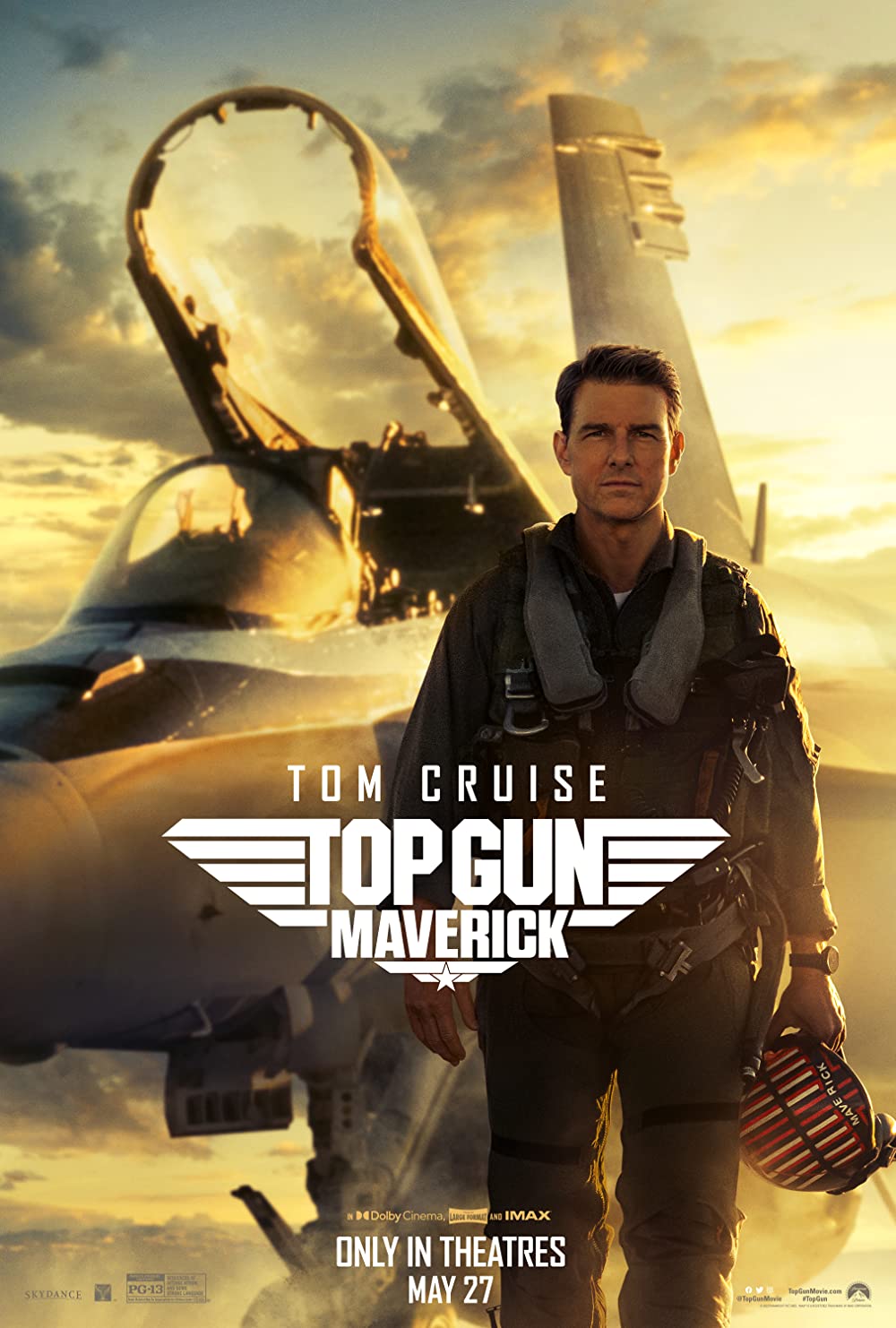
TOP GUN: MAVERICK motion picture review

What a picture! Cinema at its finest! Top Gun: Maverick is the high energy, funny, exhilarating motion picture cinemas and audiences need–and–it’s full throttle heart! Furthermore, the absolutely brilliant combination of screenwriting, directing, and all the technical elements combine to acknowledge and build upon the nostalgia without resting its laurels on it or hiding behind the cultural and cinematic touchstone that was the original Top Gun. I didn’t know a long-awaited sequel more than 30-years from the original could be THIS good–in fact–it’s better than the original. We are talking Wrath of Kahn compared to Star Trek the Motion Picture here. Maverick represents that some stories, characters, and themes are truly timeless. Even the most casual fans of the original will be touched by everything this film has to offer. I cried several times, and I am not alone. Multiple fellow critics have remarked this film moved them to tears as well. Familiar, yet fresh doesn’t begin to capture the magnitude of diegetic and cinematic success of delivering the surprisingly perfect experience of this film that could very well be on its way to Best Picture of the Year nominations. Maverick is the film that we need as a country, as a world right now! Its plot is equal parts character and action-driven, and no scene or character is wasted or simply inserted to satisfy some nostalgia checkbox. Not only a love letter to the cinematic phenomenon that was Top Gun, it’s ostensibly a love letter to the cinematic experience in terms of scale and scope of the adrenaline-pumping high-flying adventure! We need this film at such a time as this. It’s an uplifting, positive, constructive motion picture for all! Fly, don’t walk to your nearest cinema that offers premium formats like IMAX or Dolby to experience this epic story on the BIG SCREEN.

After more than 30 years of service as one of the Navy’s top aviators, Pete “Maverick” Mitchell is where he belongs, pushing the envelope as a courageous test pilot and dodging the advancement in rank that would ground him. Training a detachment of graduates for a special assignment, Maverick must confront the ghosts of his past and his deepest fears, culminating in a mission that demands the ultimate sacrifice from those who choose to fly it.

What is Top Gun: Maverick‘s secret ingredient, wherein lies the magic that made this motion picture work on every single level? The answer: there is no single element. Maverick an incredibly rare lightning in a bottle sequel! Moreover, it’s a lightning in a bottle film period. But if I was to hone in on what I feel is the reason why this film is as impactful, humorous, and exciting as it is, then I’d place a little more credit on the power of Peter Craig and Justin Marks’ screenplay! Yes, Joseph Kosinski’s direction and Tom Cruise’s creative producer guidance play a major roles in the visual storytelling, this action movie owes the depth of its storytelling to the screenplay. While we could boil down the screenplay to a combination redemption-hero story, there is so much more to Maverick than that.

Since this is at the beginning, it’s not a spoiler. The film opens in a nearly carbon-copy to the original, down to the text on screen, Top Gun theme, Danger Zone, and sequence of shots. The mention of the opening is incredibly important for you to know. There is no doubt that Kosinski and Cruise intentionally crafted the throwback opening to channel the nostalgia factor at the very beginning. This must be distinctly understood, or nothing wonderful can come from the story Craig and Marks wrote for you. From the very beginning, audiences are invested in this story because their nostalgia adrenal glands have been stimulated. And as far as direct throwbacks, that is pretty much were it stops. Is that to say there aren’t a few strategically placed (and very brief) flashbacks sprinkled throughout the film? No, there are perfectly setup and executed flashbacks and visually and dialogue-driven references (and Easter eggs) used in the film, but they are supportive, yet pay off dramatically. No moment or reference from the original is simply used to remind you that this is a Top Gun film.

Simple plot, complex characters. It’s a lot easier said than done. When teaching screen writing for film or situation comedies, I drive this point home nearly as often as dramatize don’t tell. The plot of this film is very simple: thwart the enemy from illegally enriching uranium. The depth of the film comes from the well-written and developed characters. And our characters in this larger than life film are few in number. And because it’s not overstuffed with lead and supporting characters, the characters are each given agency (granted, some characters are given a higher degree of agency than others, but my point is that they have purpose, needs, wants, and flaws). Because I am avoiding spoilers, I am not going to go into any details because you need to experience these characters for yourself.

There are many rich themes in this film. From a commentary on advancement in technology versus the human spirit to a commentary on not being so quick to discount the wisdom of those who have come before, to an exploration of redemption, ego, and sacrifice, there is something for everyone! The screenwriters chose to focus on telling a good story and not any of these things. Yes, these elements add immense richness to this motion picture, but at the end of the day, it’s simply a great story with excellent plotting.

Undoubtedly, something you’re looking forward to is all the aerial cinematography! It helped make the original the visual spectacular that it was! And that same quality is true in Maverick, but with an exception. It’s an extension of the storytelling NOT the focus of the film. The film isn’t saying “here, check out my stunning, high octane cinematography and effects (which are used to cover up a mediocre story);” it’s saying to audiences, “hey, check out my stunning, high octane cinematography and effects that pair excellently with my powerful, compelling story!” The attraction isn’t the cinematography or editing (tho, both are exceptional), the attraction is/are the story, plot, and characters! You will be moved by this film, and driven to laughter, tears, and excitement!

Again, don’t miss seeing. Top Gun: Maverick on–not only on the big–the BIGGEST SCREEN in your area! If you sleep on this film, and wait for it to hit Paramount+, then you will deprive yourself of what is the greatest cinematic experience since, since, since I don’t know when.

Ryan teaches Film Studies and Screenwriting at the University of Tampa. If you like this article, check out the others and FOLLOW this blog! Interested in Ryan making a guest appearance on your podcast or contributing to your website? Send him a DM on Twitter or email him at RLTerry1@gmail.com! If you’re ever in Tampa or Orlando, feel free to catch a movie with him.

Follow him on Twitter: RLTerry1