“Red Sparrow” film review

Intense. Riveting. Spine-tingling, A masterful spy thriller crafted in a classical fashion with sex appeal. Red Sparrow will harness your full attention from the opening. Directed by Francis Lawrence, this spy movie is the level of excitement that 2015’s Bridge of Spies wished it was. Whereas many espionage movies fail to develop a plot that keeps you guessing from beginning to end–allowing you to feel like a covert operative or detective–this film delivers a mesmerizing story filled with intriguing characters and close calls. In many ways, this film contains elements that could be likened to a Hitchcockian suspense thriller with influences from Billy Wilder and David Fincher. Jennifer Lawrence displays an uncanny performance that truly shows the versatility of the Oscar-winning actress. With tensions rising between the US and Russia in real life, this films comes at a perfect time because we may find ourselves in a cold war that’s reminiscent of the latter part of the 20th century. Not for those who are weak in the stomach, this film contains cringy visceral horror that will get under your skin. Without the need to rely on science-fiction gadgetry to carry the story, this film provides well-developed characters and an intriguing plot that’s filled with twists and turns.

Prima Bolshoi Ballet ballerina Dominika Egorova (Jennifer Lawrence) is faced with a bleak and uncertain future following a severe career-ending injury while on stage performing. Her high-ranking uncle persuades her to attend Sparrow School: an institution that trains seductive spies in order to pry information from targets by using extreme sensuality. Sparrows turn their minds and bodies into weapons for the state. Being determined to remain special, Dominika completes the sadistic training more quickly than the other students and is recruited for a covert assignment to track and report on an American CIA operative (Joel Edgerton) who Russia feels will lead them to the mole within their own ranks.

The beautiful opening of Red Sparrow is abruptly ended when Dominika suffers a horrific injury that instantly ends her ballet career. This acutely intense moment will cut you directly to the bone–you will undoubtedly wince or cringe, feel the break in your own legs. This is but a taste of what is to come throughout the movie. In an exquisite fashion, the gorgeous dance at the opening is juxtaposed against the alleged drug deal gone bad. Paralleling one another, the event that unfolds concurrently enable the plot to get a quickly paced fantastic start out the gate. Unfortunately, this excellent start does lead into a slower paced latter half of Act I. However, there is important background information that is revealed during Act I that foreshadows and sets up the remainder of the turning points in the plot. You will also notice the use of the color red in many places during the movie. Analyzing the shades of, and placement of the crimson hue has the potential to generate conversations between cinephiles.

The color red is not the only symbol in the movie that can be analyzed; there is a theme of your body belonging to the state. Essentially, this can be read as a commentary on celebrity. As a prima ballerina, Dominika’s body was weaponized for the stage and figuratively belonged to the Bolshoi and by extension to the public. Much in the same way her Sparrow weaponized body literally belongs to The State. It’s her body, but the Bolshoi and The State determine her career. But she is determined to not allow herself to become a commodity that can be abandoned, traded, or punished. This can be said about conventional celebrities and the public. In a manner of speaking, the public decides whether or not you are worth seeing on screen and how you should behave. Back during the days of the Studio System, this was a big problem because the Studio controlled your image, who you dated, slept with, when/if you had kids, your marriage, and more. There was mass exploitation in that system, and one of the reasons why it was ended. The empowering message of rebelling against The State, who is determined to own you and your body, can be witnessed through the covert actions of Dominika.

In the grand Hitchcockian fashion, there is a lot of suspense that increases tension but does not always provide a release. Though Hitch would have handled the level and pacing of the suspense more perfectly, you can read his famous bomb theory in Red Sparrow. Hitchcock knew how to take a two-dimensional situation and find a third-dimensional approach to impress the audiences and hold firm their attention. And to the film’s credit, there are a few times that the level of suspense coupled with the symphonic score channels Hitch. Unlike many spy movies that rely too heavily on a love story, the film brilliantly leaves you wondering whether or not Lawrence and Edgerton are in love or rather it is a facade employed in order to extract vital information for their respective allegiances. The level of romance and eroticism is just enough to add the sex-appeal to the relationship without the movie becoming about the romance between two individuals who serve two opposing countries.

Not for the faint of heart, there are some incredibly intense moments in the film that might make you queasy in the stomach. But the movie chooses to place more emphasis on the action, plot, and characters more so than that which threatens your eye. It’s certainly a new breed of spy movie, but it’s one that is incredibly interesting and will hold your attention for the more than 2hr runtime.

“The Post” movie review

The Fourth Estate, triumphant! Steven Spielberg’s The Post is a historic biographical drama depicting the story behind the infamous Pentagon Papers that set a monumental precedent in the US Supreme Court following a ruling in the favor of the freedom of the press. Probably the most significant ruling affecting journalism, this film goes beyond the cold, hard facts of the case and into the offices and houses of those who were responsible for shedding light on the lies the US government was spinning to keep the War in Vietnam going. In a manner of speaking, this film could be read as Spielberg’s ode to US journalism, and by extension, to the free press at large. While traditional ink and paper newspapers may be slowly becoming a thing of the past, Spielberg’s film shows that the press has an important place in a democratic society. Without the free press, a nation’s government could easily lie and maliciously mislead its people to serve its own gain. No surprise, Meryl Streep’s and Tom Hanks’ acting is simply brilliant; while the rolls may not seem incredibly complex, it’s the beauty in simplicity that demonstrates the excellent commitment to character that we all have come to respect over the years for these Oscar-winning actors. The Post is a historical drama brought to life for the screen through precise editing, beautiful cinematography, and a gripping score.

Unrest grows at home while the US is deep in the middle of the Vietnam War. With conflicting reports coming out of the warzone, the people of the United States have only the word of their government to assure them the war is going well but they have to continue sending the boys overseas to “win.” After a rogue journalist leaks papers from the Pentagon describing how the US is losing and it keeps sending boys overseas to keep up appearances to the New York Times, the attorney general places a restraining order on the iconic newspaper to prohibit it from publishing the classified material. After word of this unprecedented extension of power, the editor-in-chief of The Washington Post Ben Bradlee (Hanks) comes to have a copy of the papers and desires to publish them in order to show the American people what the government has really been up to. Only one small problem, the owner of The Washington Post Katharine (Kay) Graham (Streep), the first woman to own a major newspaper, is unsure if the papers should be published because she seeks to take the paper public and this could damage that–not to mention that she and Bradlee could go to jail. Go beyond the pages of a history book to witness the thrilling drama unfold as you find out just why The Pentagon Papers was such a big deal.

While many critics and fans of the movie are touting it as the “best movie of the year” or commenting to managers at cineplexes that it’s “amazing,” I am not convinced that it truly is “the best” or as “amazing” as it’s being heralded. Before you go questioning my taste in movies, I completely agree that The Post is an excellently made film–there is nothing wrong with it. For all intents and purposes, it is a perfect film. But just because it’s figuratively perfectly produced and directed, does not mean that it is “amazing.” In many ways, this movie reminds me of Spielberg’s Bridge of Spies. It too is a perfectly made historic drama (coincidentally also starring Hanks) that falls within the same subgenre of drama as The Post. When I think of a Spielberg film, I have come to expect a wow factor. And it’s that lack of a wow factor that troubles me in awarding this film with an accolade such as “best picture.”

Usually, there is a particular scene that evokes strong emotion, perhaps it’s a powerful monologue or heated emotionally-driven exchange between two characters, there are other methods for evoking an eruption of feeling and emotion within the mind and body. Never once did I feel my emotions run high with this film. And I happen to be an entertainment journalist, I teach media writing at a popular university, and spent time in broadcast news. I have a love for the media, the press, and publishing. I also spent time in a media law class in graduate school analyzing the very papers in question, and I still did not feel emotionally woken up by the film. I find the film very well written, produced, shot, directed, acted, scored–everything is done with extreme precision. But, that’s what I have come to expect from Spielberg, Streep, and Hanks. Yes, to be able to consistently deliver excellence is nearly uncanny; but when I know what to expect, it’s much more difficult to surprise or wow me. That’s what is missing from this film in my opinion–the wow factor.

On the socio-political spectrum, I find the commentary on women in leadership is brilliant! Quite happy that the film chose such an incredible woman’s story to tell so cinematically well. The character of Kay Graham is not only an inspiration to aspiring female leaders, but she is an inspiration to all who find themselves in positions of influence or power for which society does not feel he or she is suited. Whereas this prejudice can affect men and women, history has shown that is has affected women more. And this film is a breath of inspiration for young women who will become future leaders around the world. Brave. Kay Graham was an incredibly brave woman who fought the good fight and proved that she could make the tough decisions that are required in order to grow a company. I also find that The Post serves as a beacon of hope that the press is here to serve the American people in a day and time that our government’s leaders claim that the press at large is “fake news.” Newspapers are here to serve the governed NOT the governers. Let the Pentagon Papers be a sign that our leaders are not past deception even if it means sending our military to certain death in order to keep up appearances.

The Post is definitely a movie that all journalists should watch. And not just “conventional” journalists. But anyone who takes part in publishing written, audio, or video media content. Especially those who cover governmental affairs should watch this historical drama highlighting a huge turning point in the freedom of the press.

“The Greatest Showman” movie musical review

Stunningly sensational! Ladies and gentlemen, children of all ages witness the larger than life movie musical adaptation of the life of P.T. Barnum directed by Michael Gracey. Dazzling! 20th Century Fox’s The Greatest Showman is an incredible work of motion picture and performing arts magic. Never before has the magic of the American circus been captured so brilliantly. As the movie stares, “a man’s station is truly limited only by his imagination.” From the costumes to the music and choreography, this film is sure to inspire anyone who has a dream and wants to realize it. The music will have you singing along, clapping, and even tapping your toes because the emotions will get you right to the core. Ordinarily, a movie like this could generate an interest in budding performing artists and showbusiness enthusiasts to “run away and join the circus,” but the big top had its swan song earlier this year. One can only speculate that had this film been released last year that the circus that still bears his name Ringling Bros. and Barnum & Bailey would still be touring today. Sadly, the circus had its final performance in May 2017. From the moment the movie opens, you will be completely immersed in the world of P.T. Barnum, a world unfamiliar with the concept of shows that were sheer spectacle, illusion, and simply designed to put smiles on faces. It’s entirely possible that this may prove to be the greatest films of 2017, and certainly one of the greatest movie musicals ever made.

Simply stated, The Greatest Showman is the film adaptation of the life of P.T. Barnum (Hugh Jackman) and depicts how he was inspired to essentially create the very concept of showbusiness. From his successes to his failures, this movie showcases the very beginning of the American circus, a tradition that would last for nearly 150 years. Filled with incredible original music, this original movie musical displays how one man’s vision became a worldwide sensation.

My first observation of this film is just how polarizing it seems to be. On one hand, some critics and websites praise it for being an absolute delight while others are rating it rotten. Unapologetically, I feel strongly that this film musical is nearly flawless. As to how accurately it reflects the life of P.T. Barnum, I cannot speak to that because I have not spent hours researching his life; however, from what I do know about him, the movie seems to have captured the inspiration and vision accurately, as well as his faults and pitfalls. While standard holiday issue biopics are nothing new, what with The Darkest Hour also on the horizon this season, Gracey turns what could have been just another biographical film about an American icon into a larger than life dazzling display of precise choreography, effective montages, and just plain fun! Ringing Bros. may have closed the bigtop for the last time, but the soul of P.T. Barnum lives on in what Feld Entertainment (parent company to Ringling Bros and Barnum & Bailey) does. Without P.T. Barnum, we may not have the concept of showbusiness as we know it today. Despite staying away from the usual meaty themes found in Christmastime biopics, this film packs a powerful punch and supports the need for entertainment and the arts in our lives.

The high degree of passion Jackman displays for his character cannot be overstated. Though Gracey shows his directing prowess in this film, it is the labor of love of Jackman who has been trying to get this movie musical made for the better part of a decade. While the cliche underdog story may not be anything new, the method through which the story is told is a must-see spectacle. What works best in the movie are the extravagant and intricately choreographed musical numbers. The infectious and inspirational songs of The Greatest Showman were written by La La Land Oscar winners Benj Pasek and Justin Paul while the brilliant choreography was staged by Ashley Wallen. Each and every musical number is powerful and truly adds to the fantastic experience of this film. Moreover, this movie musical typifies the height of the visual and performing arts in terms of the ability to create an imaginative atmosphere that generates sheer delight in the minds and eyes of the audience.

In many ways, this movie is an extension of the circus that many of us grew up watching as kids and even adults. The circus was never about deep, complex stories; it was about entertaining audiences of all ages and bringing smiles to faces. And this film will certainly bring joy into your life this holiday season! Such a perfect movie for the week leading into Christmas because it is fun for the whole family.

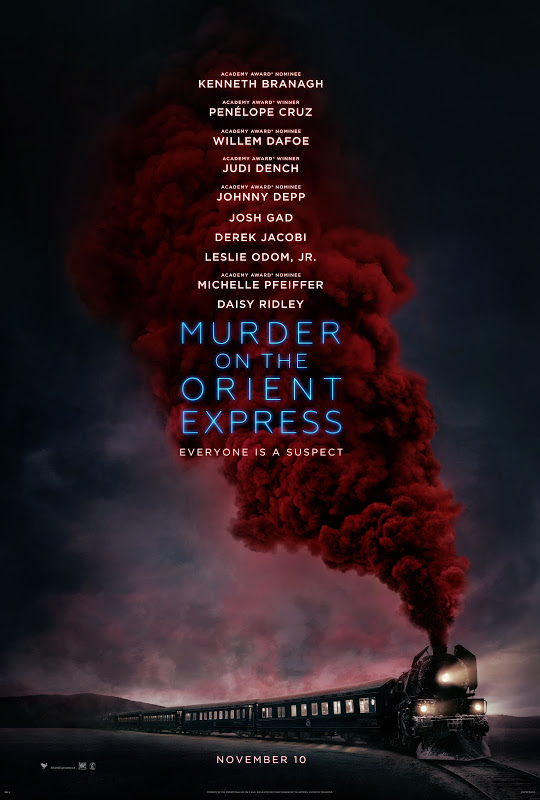
“Murder on the Orient Express” (2017) Film Review

The classic Hollywood style mystery successfully pulls into the station. Grab your ticket from the box office and board the legendary Orient Express with this all-star cast. Kenneth Branagh’s adaptation of the timeless Agatha Christie novel is as bold and elaborate as Hercule Poirot’s famous mustache. Feel as though you are traveling aboard the famous transcontinental train as you attempt to put all the pieces together to solve the mystery right along with “quite possibly the greatest detective in the world.” Hollywood style movie mysteries are nearly a thing of the past, but Branagh stokes the fire in the engine of the once popular genre and conducts an exciting journey through the classic whodunit plot. The film’s namesake is a novel that has inspired so many mystery novelists, and hopefully this film inspires a new generation of filmmakers to create their own movie mysteries fit for the big screen. Because the 1974 version including a cast ranging from Ingrid Bergman to Anthony Perkins to Sean Connery has not stood the test of time as well as it was thought to have done, this cleared the tracks for Branagh’s adaptation of Christie’s most famous novel.

After he successfully solves the mystery of the theft of precious religious artifact from the Wailing Wall area of Jerusalem, Hercule Poirot (Branagh) is beseeched to head back east to solve another mystery. Over the years, Poirot has made many friends, and one of these friends is the son of the railroad tycoon who owns the opulent Orient Express. When a passenger doesn’t show, Poirot is given his seat and boards the transcontinental train bound for western Europe. Although Poirot was promised a rail journey free of crime, a nice break, and to be pampered during his travels, he finds himself solving the most peculiar of mysteries–a most gruesome murder. The victim: an unscrupulous man with many enemies. When a freak avalanche forces the Orient Express to stop on a breathtaking, precarious stretch of track, Poirot finds the time to interview each and every one of the suspects—confined to the twelve first and second-class passengers who might have had access to the victim’s cabin. When each piece of evidence opens one Pandora’s Box after another, and the web of lies and connections between the passengers grows to Poirot’s mustache proportions, Poirot faces a complex mystery that prompts him to call his very approach to crime solving into question.

Nevermind the solution to the tentpole mystery novel is one of the worst-kept secrets in British literature history, Branagh crafts a cinematic mystery full of intrigue, revenge, lies, deceit, and the central murder. The plot revolves around a seemingly perfect crime committed on a railcar with no access to the outside, and only the passengers and crew on board the suspects. But even Poirot is stumped at the who, how, and why. Whether you know the ending or not, this film provides an excellent example of a genre that harkens back to Hollywood’s golden era. There was once a time that mysteries and musicals were a staple of the industry, but times change. Still, Branagh shows audiences that the timelessness of an old fashioned whodunit cannot be overstated. Since the ending of the mystery is known by so many people, Branagh was challenged with providing the audiences with something different, something that creates a new take on a well-known story. He accomplishes this by throwing in some additional subplots, character connections, and evidence that suggests that the solution may turn other otherwise than it does in the novel. The changes he brings to the story are organic and fit in well. The end result is a fantastic film that keeps your attention from beginning to end, even for those who know–or think they know–the solution to the mystery.

From the sweeping landscape shots of the Alps to the wide variety of shots to bring the audience onto the train with the rest of the passengers, the production design is excellent. The attention to the detail and visual elegance of the story are treated with creative precision, just as the Christie plot is woven together. Production designer Jim Clay’s meticulously recreated Orient Express is truly something to behold. Unfortunately, despite Branagh’s decision to shoot on 65mm film, there are times that the train set feels almost too perfect–a little artificial–similar to The Polar Express. Although there are times that the production design is not being showcased to the degree that it should to increasingly immerse the audience into the world of Poirot, there are plenty of beautiful shots that serve as a testament to the opulence of rail travel that once was. Of the few weak areas of this film, the cinematography is the weakest because it could have been used to truly create a visually stunning film and not fall victim to surrealism. Patrick Doyle’s score complements the film by feeling like an extension of the plot itself, in time and space. The combination of big band, jazz, and orchestral music immerses the audience into this world. All the technical elements work effectively to transport you from your seat to a compartment on the legendary train.

Branagh’s screen adaptation of Christie’s characters is brilliantly entertaining and developed well. Each character represents a different type of person, a different walk of life. No two characters are alike, which makes great for interjecting some social commentary into the mystery. From a professor spouting pro-Nazi sentiments to a nurse turned missionary, you will find the characters intriguing in and of themselves, never mind how they may be connected to the victim. Alexandra Byrne’s costumes are perfect appointed extensions of the characters that wear the authentic period clothing. Each costume was designed to be as much a part of the respective character as the accents, hairstyles, and backstories. Josh Gadd proves that we can successfully play a serious role, which will prove to bolster his career, Willem Dafoe is perfect as the professor, Dench portrays the princess in only a way that she could so successfully accomplish, and the rest of the cast are all excellent. Coming in a close second to Branagh’s screen time, as the iconic inspector Poirot, is the beautifully talented Michelle Pfeiffer as the widowed heiress Mrs. Hubbard (Lauren Bacall’s character in the original). She truly showcases her talent for adding depth to the characters she plays in order to make them complex and memorable. The diverse cast of characters is incredible to watch and couldn’t have been deleted better for this highly anticipated film.

Climb aboard The Orient Express for the whodunit that started it all. Branagh’s fresh take on the classic tale would satisfy even the harshest of critics Agatha Christie herself. He treats the source material with the respect it deserve, all the while, adding in new material to craft a new experience for those tho have read the novel and/or seen the original film adaptation of this story. Do yourself a favor and don’t ask anyone whodunit, because you need to experience the solution for yourself. Perhaps you can solve it more quickly than Poirot. Don’t let the train leave the station before you pack your bags and travel back to a time when trains went full-steam ahead into adventure and intrigue.

Don’t Pass GO, Don’t Collect Your Oscar

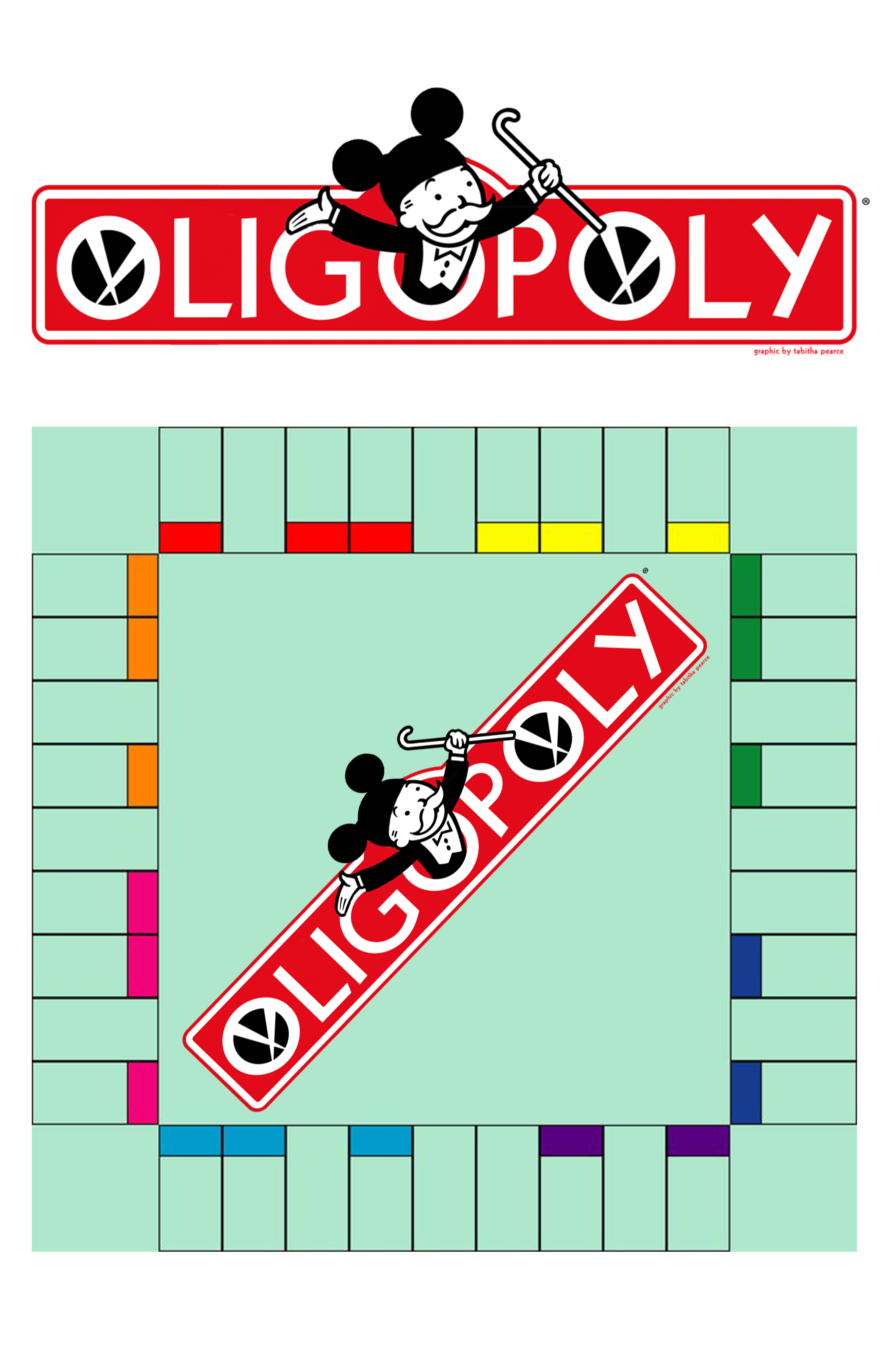
Corporate monopoly is the enemy of creativity and variety. The biggest news in entertainment this week was the talks between Disney and Fox to sell most of 21st Century Fox to The Walt Disney Company. Whether the talks are still going on behind closed doors or not presents a fascinating topic to discuss! This deal, which would be the biggest film/media deal ever, has far reaching effects upon the industry. Some may even argue that it has danger written all over it. If there wasn’t already a rigid oligopoly amongst the studio/distribution companies, there will be if this goes through. Should this go through without the government swooping in to save the day with monopoly claims in the vein of the historic Paramount Decision, the lion’s share of the cinematic marketplace would be controlled by Disney, TimeWarner (Warner Bros.), and Comcast (Universal), with Sony (Columbia) and Viacom (Paramount) bringing up the rear. Five. That’s right. Five companies would essentially determine the future of the industry, and control the majority of the motion pictures released in theaters and the content on cable television (and the streaming services that access it). It’s a mirror image of the 1940s. Instead of The Big Five and The Little Three, we have The BIG Three and the Little Two.

From the big screen to the small screen, you will notice the effects in the programs you watch. When one company controls the majority of any marketplace, it usually spells disaster for the consumer; furthermore, it means that there will be a primary gatekeeper in future artists getting his or her work out there. Not to mention that the programming on FX and other Fox (non-broadcast) subsidiaries could begin to gradually feel and look more like ABC programming. Could this put shows like The Simpsons and Family Guy on an endangered species list of sorts? Not right now. The deal, in off-and-on talks, would sell off 21st Century Fox (movie studios) and not Fox or Fox Sports (an acquisition of that sort would not be permitted because it WOULD be illegal). So, even if this buyout were to happen, The Walt Disney Company would still continue to be the brunt of many jokes on The Simpsons and Family Guy. A buyout could mean, however, that program options will seem less varied and just more of the same ABC-schlock that already pervades the bandwidth. The two companies that have the most TV programming are Fox and Disney, with Sony (CBS), Viacom (non-broadcast Nickelodeon), Comcast (NBC), and TimeWarner (CW) trailing in original programming. That being said, TimeWarner has done very well with The CW, and I hope it continues to churn out programs such as Vampire Diaries, Supernatural, Riverdale, etc.

Beyond the negative impacts on content, which, in all honestly, can be quite subjective in nature, are there legal or ethical implications here? Is there perhaps a past precedent that could be used in the courts to stop such a buyout (or sellout rather–Fox)? Let’s look at the most famous suit brought against the major motion picture studios: The Paramount Decision [(U.S. V. PARAMOUNT PICTURES, INC., 334 U.S. 131 (1948)]. Prior to the Paramount Decision, the motion picture industry was controlled by a few companies that were heavily vertically integrated. The Studio owned the facilities, production companies, staff (under long-term contracts), the films themselves, distribution channels, and the movie theaters. When the studios were growing so large that they began infringing upon the free marketplace, the US Government forced the (then) eight major/minor studio players to end the practice of block booking (meaning, films would now be sold on an individual basis), divest themselves of their respective theatre chains (sell them off), and modify the practice of long-term employee contracts (though, this would continue until the 1960s). This marked the beginning of the end of the Studio System, AKA Hollywood’s decentralization. There are many similarities between the situation in the late 1940s and today. In fact, it’s a little worse today because the industry is mostly controlled by five (instead of eight) companies, and these companies have heavy investments in streaming and television programming.

The problem with the current state of capitalism in the Unites States isn’t worries of monopolies but oligopolies (monopolistic practices between a few firms that essentially control a market). Certainly the state of the film industry already lends itself to an oligopoly because of the few companies; but the buyout of 21st Century Fox by The Disney Company would greatly increase this issue of a blatant oligopoly. If a monopolist (in many other industries) did what Disney is doing, neither the public nor the government would stand for it; but because it’s Disney, and because it’s the film industry, most of the general public is unaware of the negative consequences of such a buyout. Technically speaking, oligopolies are not illegal nor is monopolistic competition; however, this can be a slippery slope towards stifling creativity or making is increasingly difficult to break into any given industry as a newly emerging competitor. Incidentally, monopolistic competition causes the variety or level of differentiation of similar products (i.e. moves and TV shows) to become less heterogeneous and nearly come across as homogenous. For many, it will feel like there are only two primary companies controlling the majority of programming on TV and a few companies controlling a large portion of the movies that get released in movie theaters.

When a strong oligopoly exists within a specialized industry (for our purposes, media & entertainment), one of the side effects is a concept known as parallel exclusion. This concept can be described as the collective efforts of the few industry leaders who essentially act as the main gatekeepers to prevent or make it difficult for would-be newcomers to enter the arena. Parallel exclusion is nothing new, and has been in the news as recently as the last 2-3 decades within the airline and credit card industries. Throughout the eighties and nineties, Visa and MasterCard essentially blacklisted any bank that set out to do business with AmEx. Thankfully, the U.S. Justice Department stepped in when the manner in which the exclusionary rules were written crossed legal, fair trade boundaries. There were similar issues within the airline industry as well. When a few companies control the content or services in the marketplace, antitrust issues are raised.

Although we are not facing a technical monopoly with the possible acquisition of Fox by Disney, we are looking at an abuse of power that leads to anticompetitive conduct. If nothing else, the consumer should be worried about having fewer options for programming. Not that the number of programs or movies will shrink, but there will be little difference between what is released under the Disney banner and the Fox name (if it’s still even called that). In a deal like this, it’s the consumer who gets the short end of the stick. The consumer would be wise not to give Disney a pass just because there are a small group of big film studios instead of just one. While Marvel fans may be excited that the X-Men can join the MCU (Marvel Cinematic Universe), there is the possibility of a lack of competition between brands thus mitigating innovation and ingenuity. Competition is the mother of innovation just as necessity is the mother of invention.

Because the Walt Disney Company is primarily focussed on producing the biggest movies possible (after all, they made five of the 10 most successful films last year), the mid-budget dramas and comedies that used to thrive in Hollywood–you know, the ones that cause you to cry and laugh–would dwindle in number–there would be little room for them to make their respective ways into theaters in a predominantly Disney controlled industry. What we are essentially talking about here is a corporate cinematic monolith, the likes of which, has never been seen before.

Written by R.L. Terry

Graphic by Tabitha Pearce