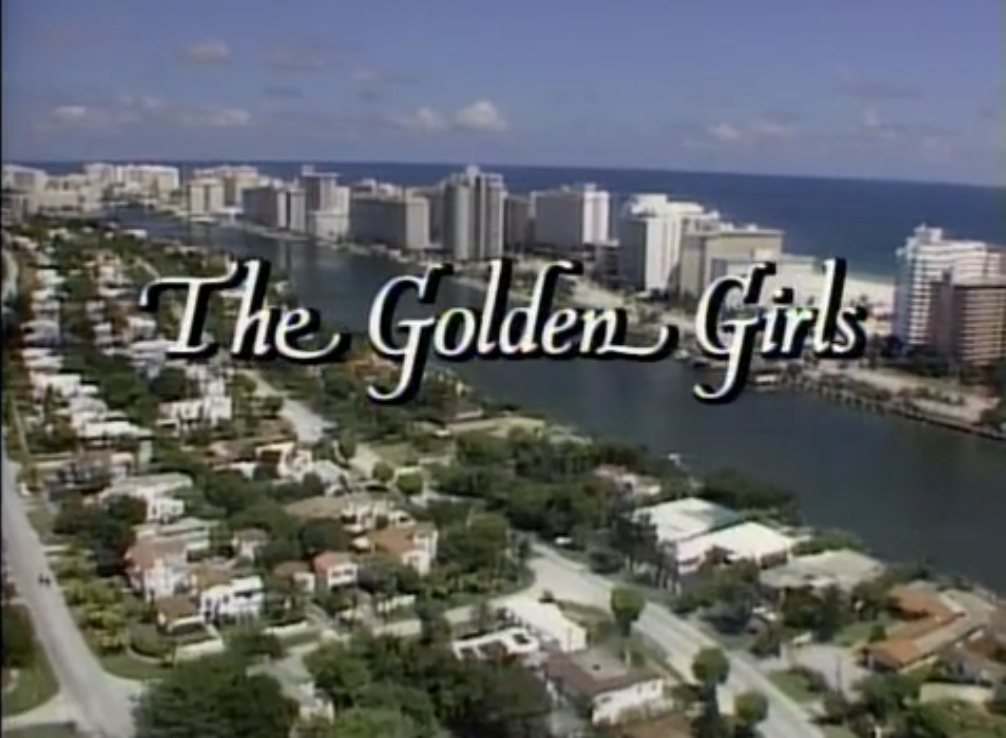
“The Golden Girls” Television Show Review

The_Golden_Girls_opening_screenshotThank you for bein’ a friend! Those now iconic lyrics opened Touchstone Television’s (Walt Disney Company) show on NBC for 180 episodes over 7 successful seasons. Earning multiple awards from Emmys to Golden Globes, this series is also one of only three sitcoms in which each principle actor received an individual Emmy. The Golden Girls was ranked in the top ten shows for six out of its seven seasons, TV Guide (2013) ranked it 54/60 in the highest rated programs of all time, and the Writers Guild of America (WGA) ranks it at 69 out of the top 101 best written series of all time. So many accolades. Created by Susan Harris, the show ran along side another 80s hit The Facts of Life. The theme song, written by Andrew Gold and recorded by Cynthia Fee, is also ranked among the top theme songs of all time. No wonder why it is still running and bringing us endless laughter (currently runs on Hallmark Channel). Much like I Love Lucy has never been off the “air” in its entire existence, The Golden Girls has also been kept on a channel somewhere since it first debuted on September 14, 1985. From laughter to tears, these four women have been such a part of Americana and continue to be referenced in pop culture. Not limited to any particular demographic or cultural group, this show transcends all kinds of racial, ethnic, gender, economic, and cultural barriers. But why has this sitcom (situation comedy) continued to be popular for now 31 years? Let’s explore!
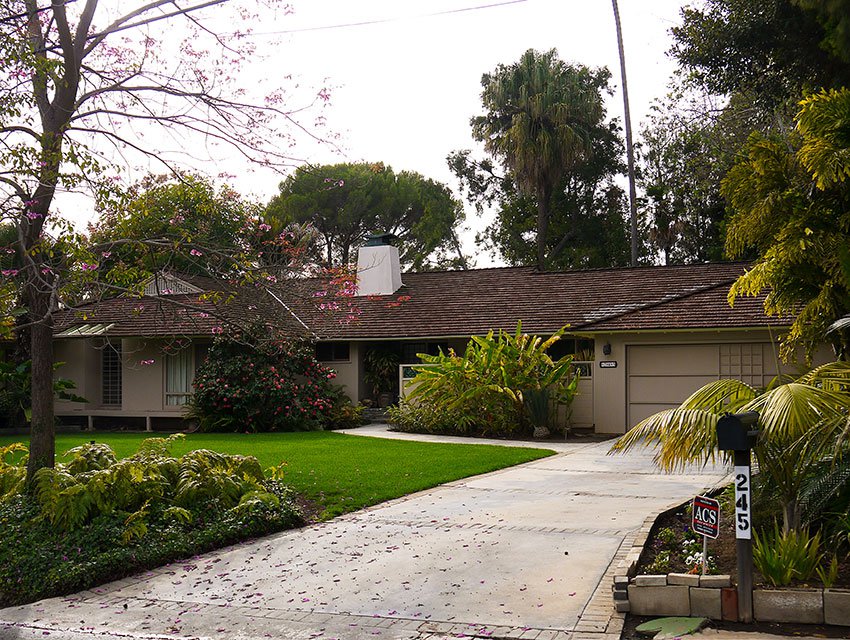
GG_HouseIt’s been 31 years since we were first introduced to Dorothy, Blanche, Rose, and Sophia at an upper middle-class home in the residential neighborhoods of Miami, FL. Ever since 1985, these four single older women have been coming into our living rooms and, for many, have become part of the family. The sitcom represents a radical move by the Walt Disney Company and NBC in that the show featured so many taboos, at that time, in broadcast television. In many ways, the show was 2-3 decades ahead of its time. The very unique nature of the show is part of why it was such success. However, the continued success of the show goes way beyond just being uncanny for its day. For a show to stand the test of time, it cannot be, in whole anyway, (1) a product of its generation (2) contain proliferated pop culture references that significantly support the plot (3) must have exquisite writing (4) have a phenomenal cast that is as interesting to watch and listen to as the plots are engaging and (5) contains characters that one can identify with decades down the road. Over all, the show has to be unique, timely, and just written and acted exceptionally well. As this is a sitcom, in short, the jokes and conflict have to still be relevant in society for many years down the road. Although entire critical analysis articles could be written about each of the characters (and actors) respectively, the focus of this article is a general overview of why the show is endearing even to this day.
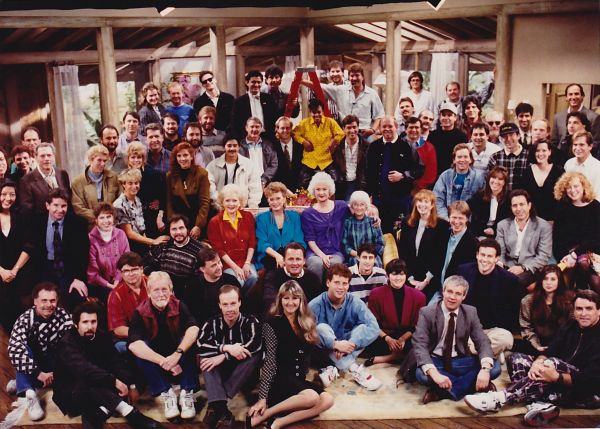
GG Cast CrewBehind every successful show (especially dialog-driven ones), there is solid writing. After creating the show and writing a few episodes, Susan Harris became less directly involved in the series. The head writers of the show (for four seasons) were Kathy Speer and Terry Grossman who would each receive numerous awards during the series’ run. Following the fourth season, they turned the reigns over to Mort Nathan and Barry Fanaro who would also go to win awards as well. Other than eccentric 80s attire, it’s the comedic conflict, sarcasm, quick witted remarks, and self-deprecating humor that keeps audiences coming back for more. No matter how many times I have seen each episode, I still laugh every time; the shows never becomes boring. The four women boasted incredibly sharp humor and were very secure in themselves. The creative leadership knew that the show had to leave its mark on television. Quite regularly, the plots were used to not necessarily address outrageous ideas, but important ones. Important ideas and values that had not been addressed in television before. What stands out most about the writing? The fact that progressive values were part of the show’s DNA. From ethnic, racial, religious, cannot forget sex and dating, and of course aging. At its core, the Golden Girls simply made aging fabulous! A good test to understand just how brilliant the writing and comedy is by turning off the picture and listening to the show as if it was a radio broadcast. Most likely, you will find yourself laughing just as much as if you were watching it. You can follow the story without the visuals to accompany it.
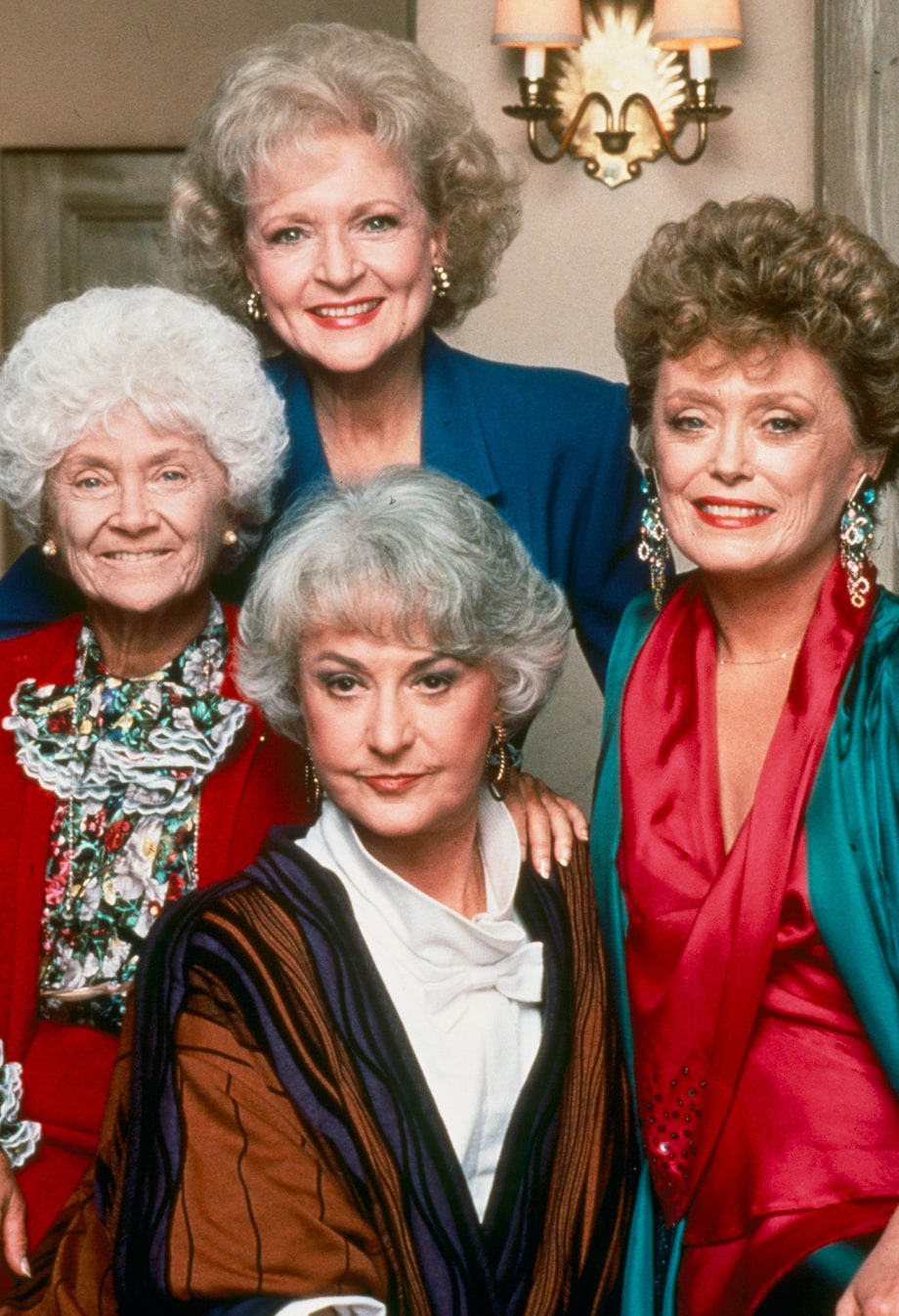
GG_Group_ShotBut isn’t television a visual medium? Yes. However, sitcoms are much more similar to live theatre than small cinema. Part of this is because a traditional sitcom is shot in front of a live audience. Just like stage actors feed off of the laughs from the audience, sitcom actors go through similar motions during a performance. Brilliant dialog and plot structure animates characters, and boy were these ladies animated! You won’t find four closer friends. These ladies could insult one another viciously and still remain intimately, but platonically, close. Each and every episode was so very interesting and feels new overtime. Not even a show like Friends holds up as well as The Golden Girls. The relationship between the four women was incredibly dynamic. Hardly an episode goes by that there aren’t alliances, betrayals, misunderstandings, or love triangles. Sometimes we venture to doctor’s offices, restaurants, or the parks; however, most of the time is spent inside the sun drenched Florida multi-champer house. Comparing the show’s floorpan to the exterior of the house, such a floorpan simply cannot exist. Haha. But that’s part of the fun. Unlike movie or television drama, a situation comedy is able to bend logic and make up for that with comedic timing and material. Moreover, the fashion of the girls definitely cannot be ignored. From flashy to trashy, these girls have it covered. The best part of the fashion choices is that, for the most part, the choice of clothing is an extension of the characters themselves. The fashion alone, is something that could be analyzed and actually has been in the past.
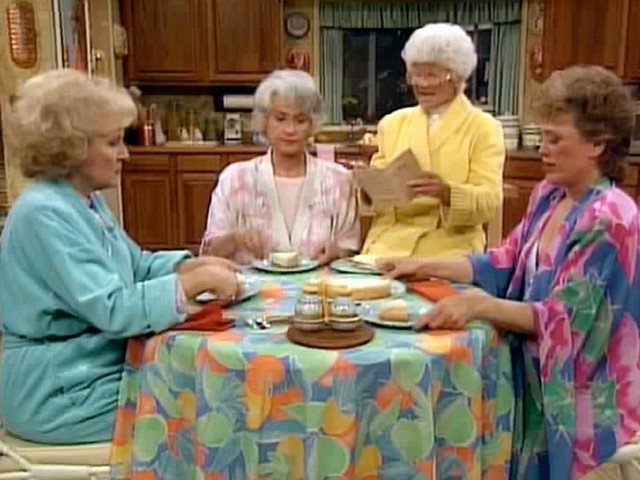
GG around tableWhile aging, women’s rights, and dating were reoccurring themes and tied directly to the show’s premise, other once taboo social topics were important milestones in the series’ development as well. Although there are a few social issues that could be mentioned, the one that is the most prominent after the ones that have been mentioned are topics dealing with gay men and women. Nearly a quarter of a century before the Supreme Court’s historic ruling on the legal definition of marriage equality, The Golden Girls had already tackled that subject and brought it into the mainstream. There are a few times that a gay character was the focus of a show, but the episode that stands out the most is when Blanche finds out that her brother is gay (and later there is an episode where he introduces her to his fiancé). This is one of the toughest episodes for Blanche and one other best examples of character development. She faced a situation that thousands of parents and siblings face everyday across the country. Before Will and GraceGleeThe New Normal, and other popular shows, these four women highlighted real world problems and social issues that continue to be battled today. Indirectly, gay social issues and stigmas were also dealt with. In the episode where Rose is contacted by a hospital regarding the possibility of her having contracted HIV through a blood transfusion, the girls take the then-unpopular stance that HIV/AIDS was not a punishment for being gay but a disease that knows no social, ethnic, sexual orientation, or religious barriers. They brought out the fact that it could happen to anyone. The brilliance of how these once-taboo subjects were handled is seen in how, amongst conflict and tears, the girls somehow still managed to bring humor into the mix, and leave you with a smile.
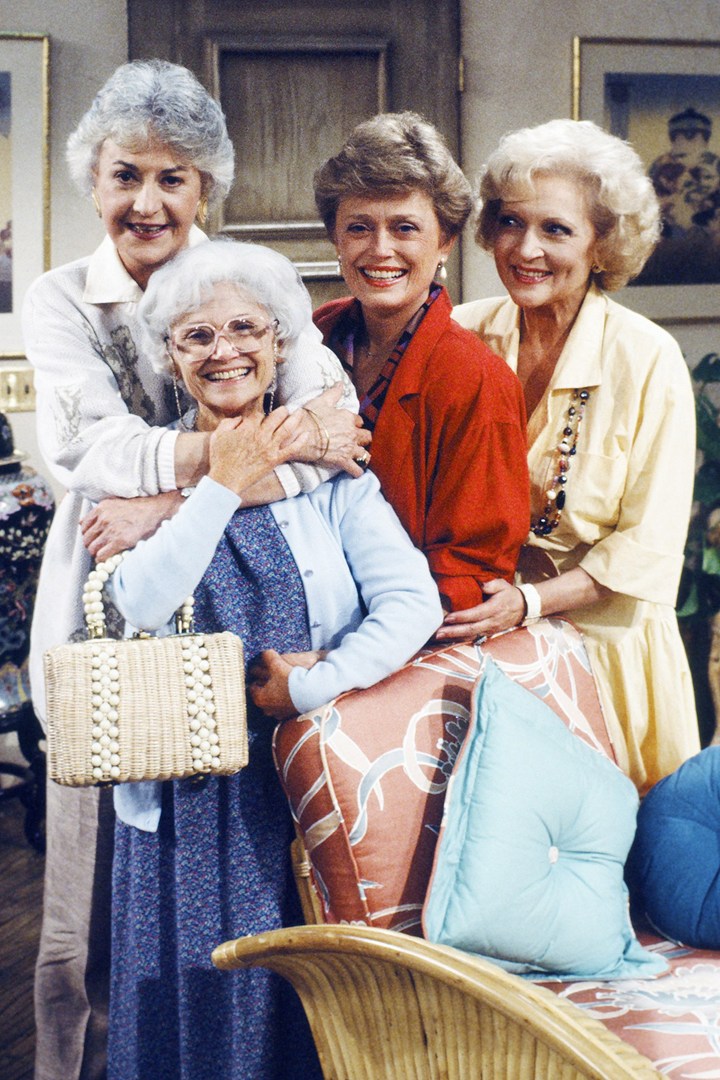
GG hugAfter watching this show for many years, it still has the ability to make me laugh uncontrollably at times. And, that sentiment is felt by many who have continued to visit the home of Dorothy, Blanche, Rose, and Sophia over the decades. There is so much to explore in this show, and why it continues to be popular today. From the writing to the acting and humorous conflicts to dealing with hard topics of bigotry, disease, sexual orientation, and aging, The Golden Girls continues to be a show that can help you laugh on the worst of days. Although there are shows that have attempted to be a modern day Golden Girls, none can hold a candle to these amazing performers and writers. There is a magic quality to the show that can never be duplicated.
“Skull Island: Reign of Kong” Theme Park Attraction Review

IMG_5531“What’ve they got in there…King Kong?” (Malcolm, Dr. Ian 1993). That is precisely who you will encounter on your expedition into the jungles of Skull Island at Universal Studios Islands of Adventure this summer! Fortunately, I was able to take part in a soft opening on Saturday afternoon and am able to share my thoughts with you. The presence of King Kong at Universal Orlando Resort represents a long awaited triumphant return ever since Revenge of the Mummy took the place of Kongfrontation at Universal Studios Florida (original park). Although the ride design is completely different than the previous attraction, it is exquisitely designed and integrates trending themed entertainment attraction technology with practical effects and animatronics. From the queue to the ride path itself, you will be completely immersed into the dark and frightening world of Skull Island. Along your expedition, you may encounter prehistoric-sized creatures, the dead, and maybe even the undead.

Please visit Thrillz.co for the ultimate theme park review website!

IMG_5512For those who have been hanging in and around Islands of Adventure for the last week, you may have had the opportunity to partake in a soft opening of the highly anticipated attraction. If not, definitely plan a trip to the park soon in order to experience the newest attraction (although, the Hulk coaster is reopening soon). What I appreciate most about Skull Island: Reign of Kong is the attention to detail, experiential storytelling, and production design. As an entertainment scholar, I was incredibly impressed with the ability to see horror film theories and frameworks woven throughout the experience. Now, is that something that the typical park guest is going to notice? Probably not. However, the fact that feel that I am going through the diegesis of a horror film serves as empirically-based observational evidence that the ride meets the expectations of both spectacle and narrative. As I mentioned on Twitter, the writings of Freud, Carol Clover, Geoff King, and Linda Williams are alive and well!

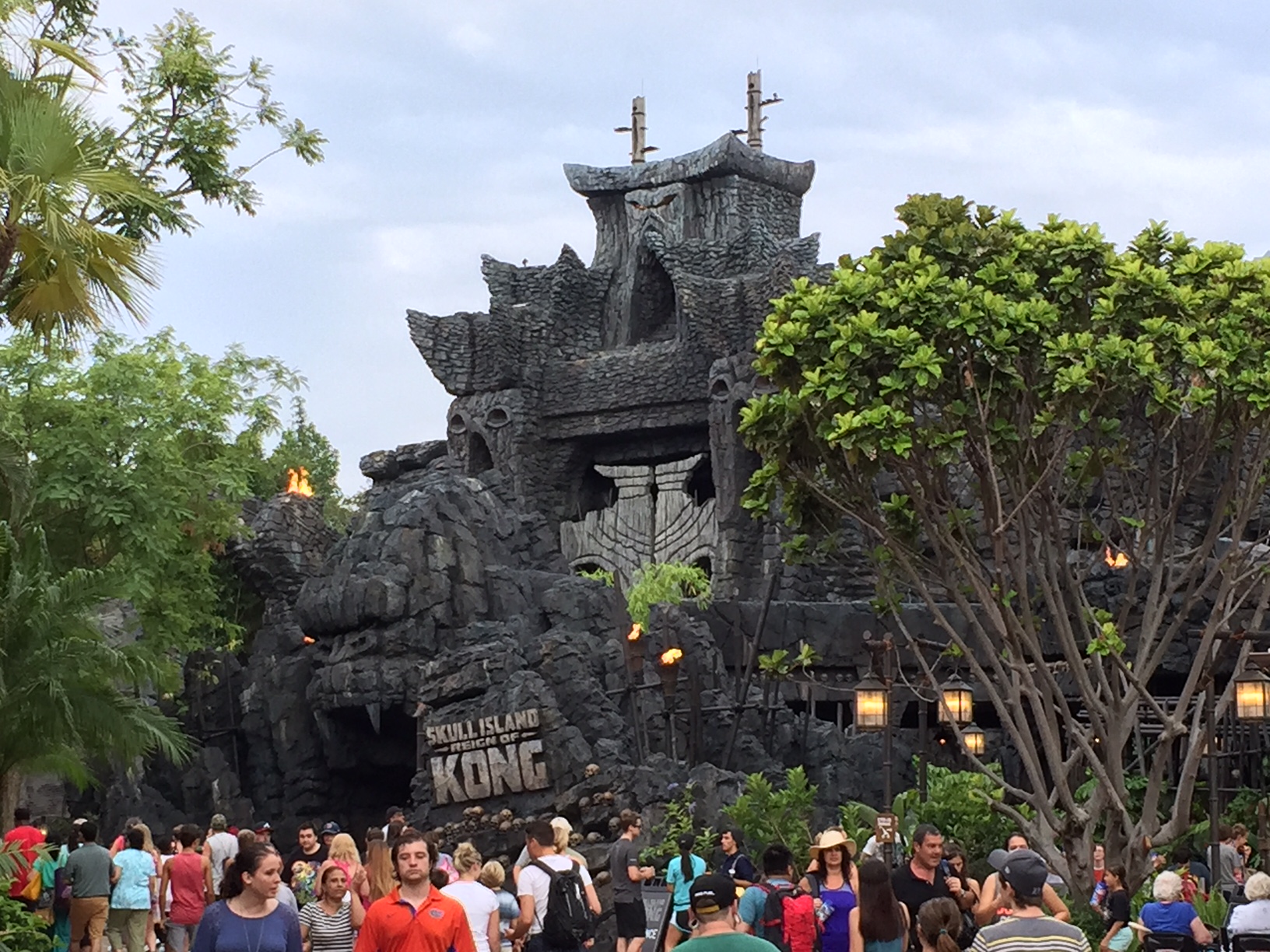
IMG_5445The experience of the attraction begins even before you enter the queue. As you gaze upon the exterior design of the attraction, you will begin to feel drawn into the world of Skull Island. What lies beyond the massive 100% to scale gate? Once the thoughts of feeling compelled to venture into the jungles behind the gate enter you mind, you will have no choice but to sign up for the next expedition. If you have been to a Disney, Universal, SeaWorld, or Busch Gardens theme park, you are already familiar with the theme and story of the attraction beginning at the queue. The Reign of Kong queue is full of creative design to capture your attention and compel you to further descend into the dark catacombs. Prior to entering the indoor part of the queue, the outside is lightly themed with bamboo, greenery, and some rock formations. Thankfully, you have a great view of Kong’s massive stone gates. The heaviest of the queue theming begins once you enter the catacombs.

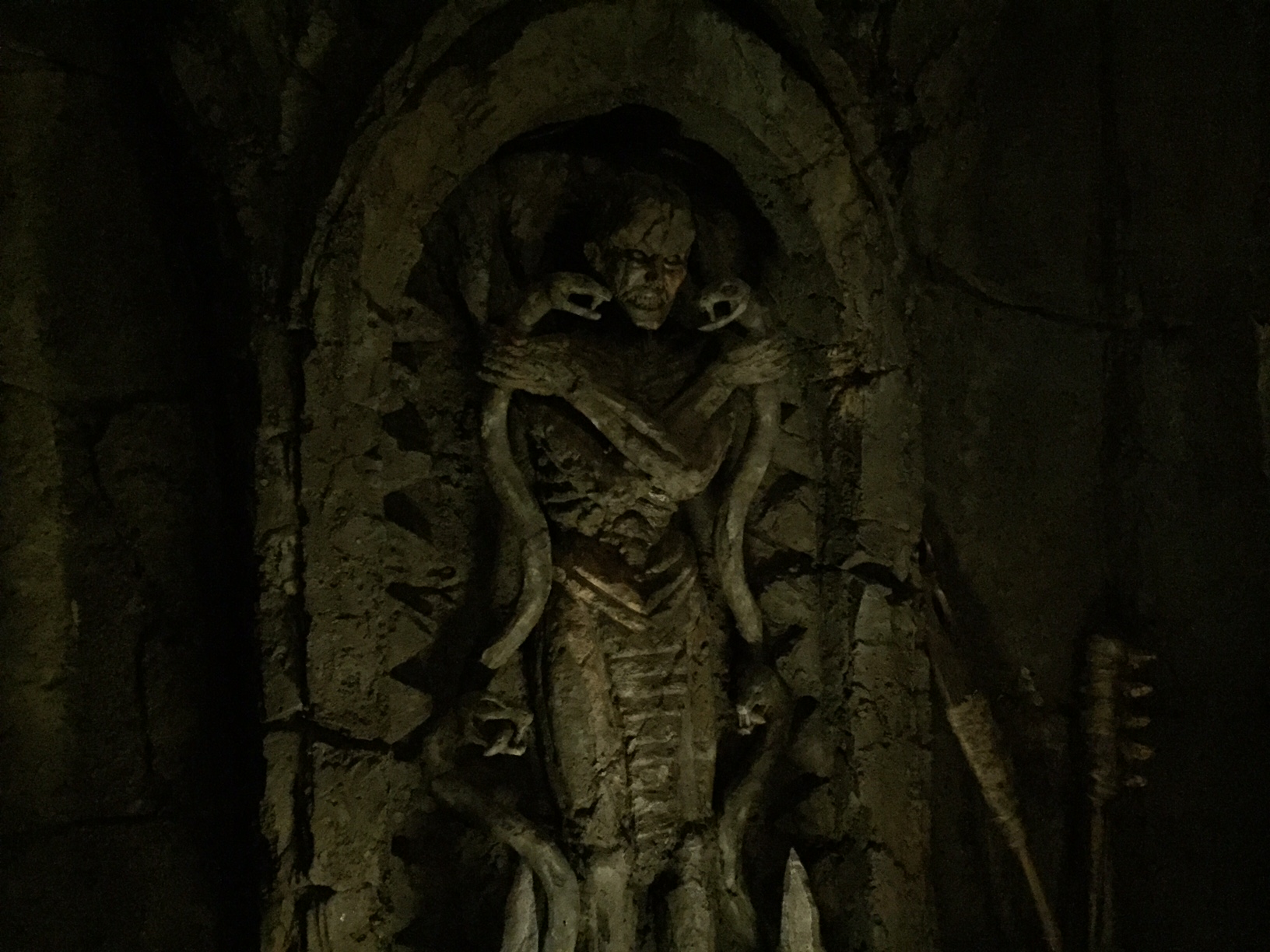
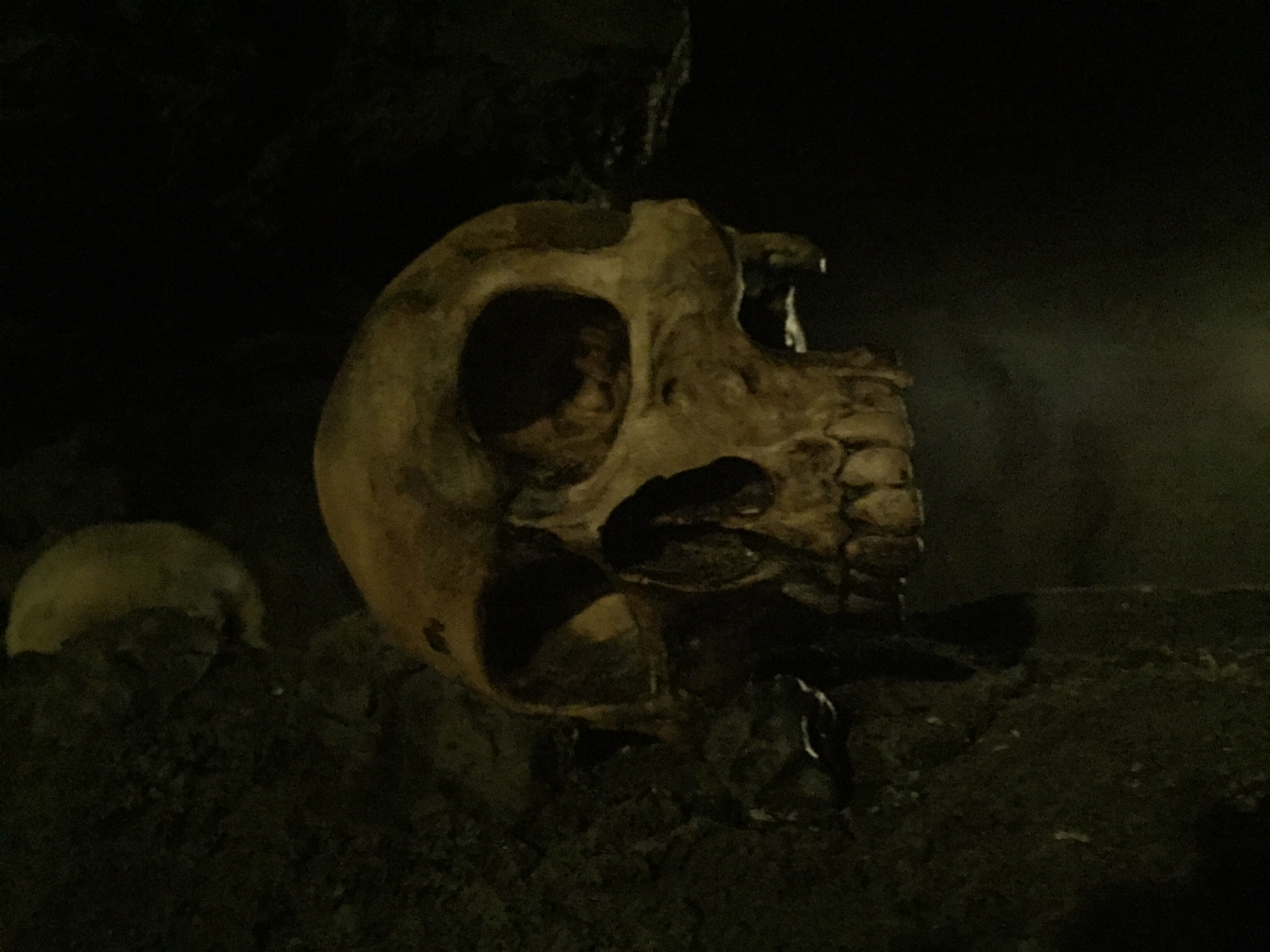
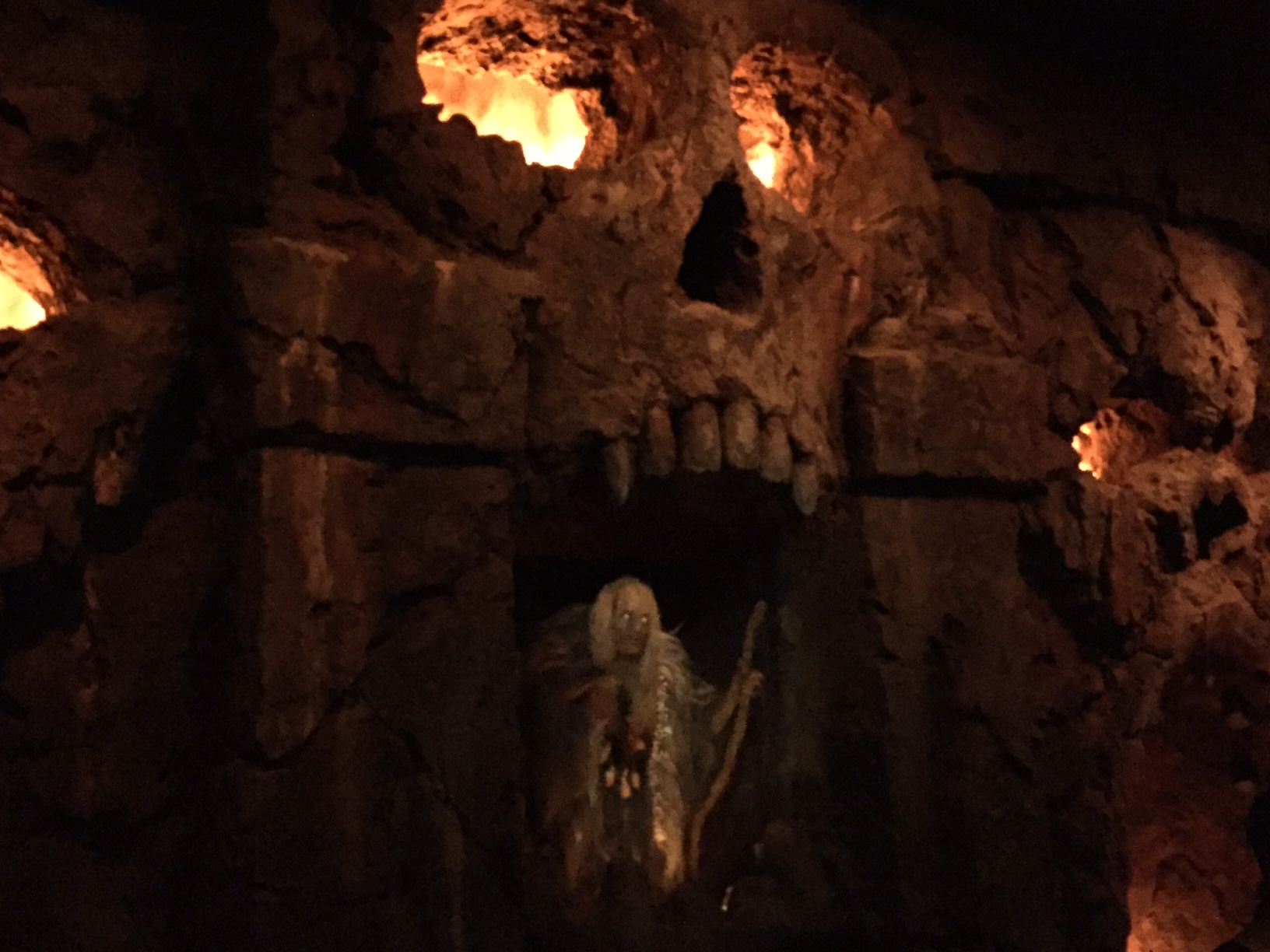
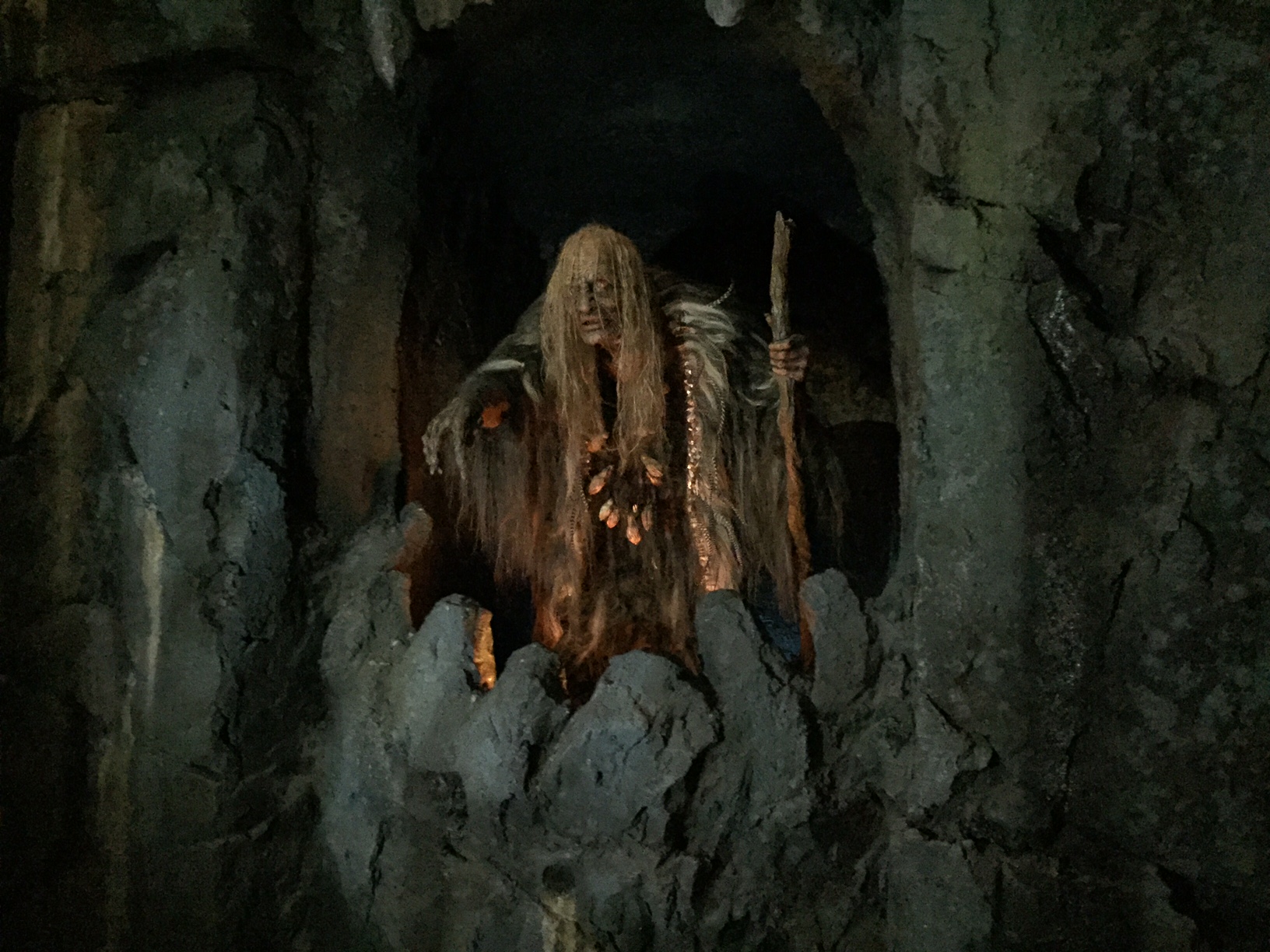
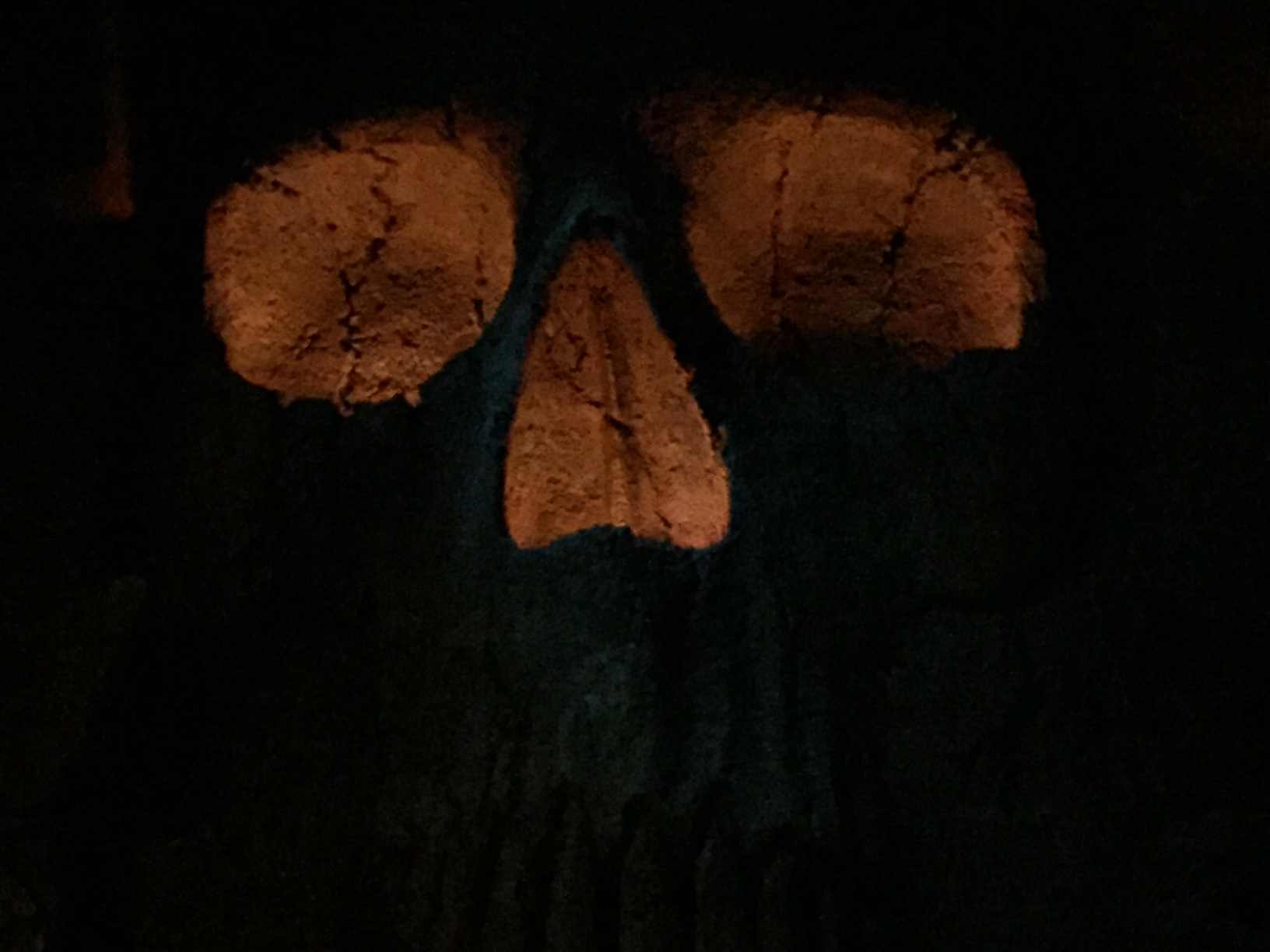
IMG_5515It’s not called Skull Island for nothing. Between the entrance to the catacombs and the loading platform, there are hundreds if not thousands of skulls within the rock walls and openings. This is where I can really infer the adherence to horror film theories explored and defined by the scholars I referenced earlier. Just like going to see a horror film with the foreknowledge that voluntarily subjecting oneself to terror is part of the experience, the same can be said about this attraction. In Freud’s writings on the principle of unheimlich or what we refer to as the uncanny, he explains that we are psychologically drawn to that which should otherwise remain hidden. Certainly skulls of the dead are items that should remain hidden beneath the earth; however, they possess an attraction that begs for one’s attention. Moreover, scholar Carol Clover writes prolifically on the concept of the unpleasurable pleasure. What does she mean by that? This concept is a framework through which to view why we are drawn to that which would otherwise terrify us. In real life, if you were to see a foreboding cavern filled with low-key lighting and the remains of the dead, you would most likely run IMG_5526away. But since we know that this is a ride at a theme park, we are totally okay with venting further and further into the dark now knowing what awaits. Because we are aware that we are in a safe zone, it’s okay to experience otherwise unpleasurable sights and sounds. Just like going to see a horror movie. Both Linda Williams and Geoff King write on similar topics and theoretical frameworks that deal with spectacle, pleasure, and attraction. The sheer spectacle of the queue is enough to beckon anyone; and from the radio announcer, 1930s music, and witch/priestess’ frightening words, there is a coherent and steadily flowing narrative throughout the attraction queue. Even if you have never heard of King Kong (I know, that is doubtful), after passing thousands of skulls and listening to the witch-priestess chant in an unknown language about Kong, that plus the fire and cavernous rumblings tell you that Kong must be powerful and terrifying. Even after the witch-priestess causes fire and darkness, do you turn back? Of course, not!

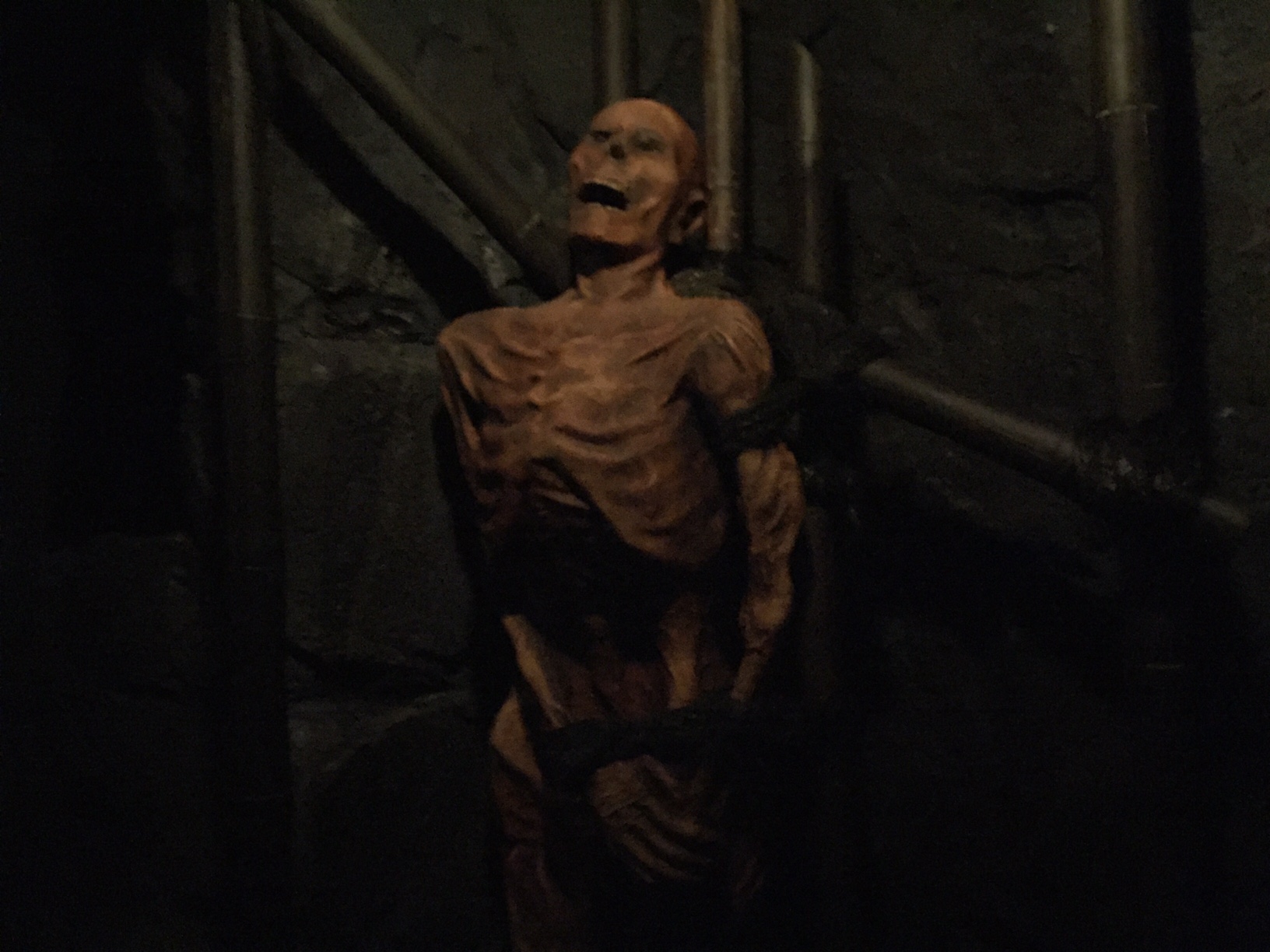
IMG_5528One of the most interesting additions to the queue concept that has never been done before, except during Halloween Horror Nights (HHN) is including entertainment team members commonly known as scare-actors. Scare-actors are entertainment cast, in themed costume, whose goal is to frighten you with a classic jump-scare. Ordinarily, this is something that is only done during HHN since everyone who has come to the event is there with the intention of being scared. Interesting to use the same concept on a daily operations attraction. But, this is a frightening attraction and setup very similarly to a horror film. So, looking at it that way, it is a logical progression in queue development to include live performers who can increase the scare factor. IMG_5527Additional animatronics are also integrated into the queue in order to heighten the sensations of terror among the park guests. After meandering and wandering through the catacombs of Skull Island, you finally locate your ride vehicle and driver who is going to take you on an expedition beyond the stone gate. Following picking up safety glasses in order to protect your eyes from harm–oh the irony–you board the expedition vehicle. After riding in the front row on the the truck, I would advise not sitting there. So often, row one on a ride is the best no matter what is said about every seat providing an equal experience; however, on this attraction, I would advise sitting in the middle or back if at all possible.

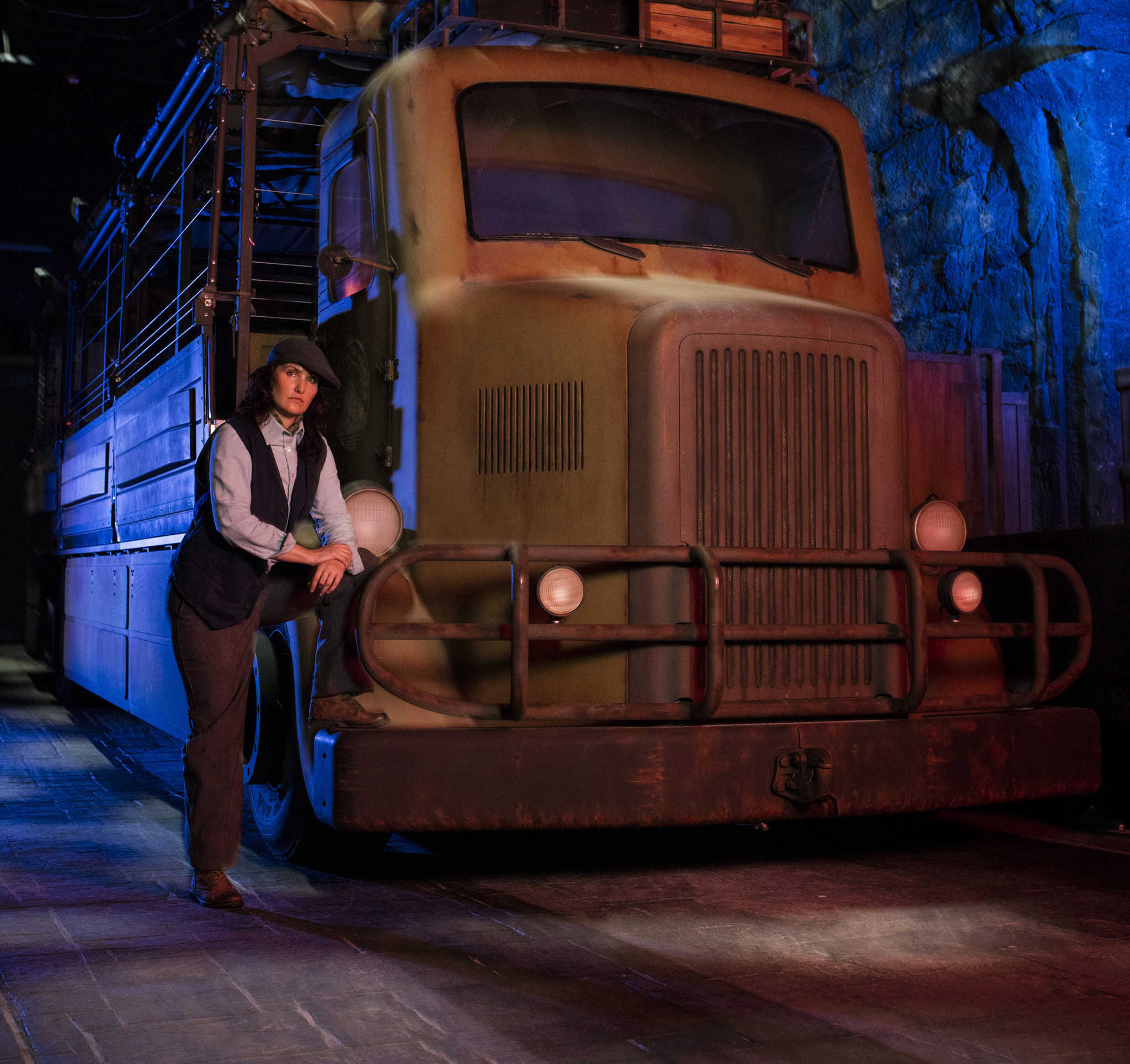
KongVehicleThe ride vehicle at Reign of Kong is massive. It seats up to 78 park guests. So, the benefit to that is moving large crowds efficiently and quickly. Of course, there was no Express Pass queue during the soft opening, so that will definitely mitigate the efficiency and speed of loading standby (or standard queue) guests once it officially opens. At first, I thought the driver was real! The driver moved naturally and in a non-robotic fashion. Turns out that the drivers are, in fact, animatronics! Just goes to show the quality of immersion, storytelling, and theming went into Kong. The image in this paragraph is from publicity photos and shows a real driver; but the animatronic driver sits right up front behind the wheel. So Cool! Once you leave the IMG_5510loading dock, you proceed through the catacombs and outside to the pathway leading to the colossal stone gate. Unlike the forced perspective that is often found in the Disney and Universal parks out of logistic and engineering necessity usually, the King Kong gate is full scale. In many ways, you will feel just like Jurassic Park’s Malcolm when the doors open and you venture out into the wilds of Skull Island. During rainy weather, the attraction designers paved a way for the vehicles to bypass the gate which does take away from some of the initial impression but ultimately will not negatively affect the park guests’ experience on the ride.

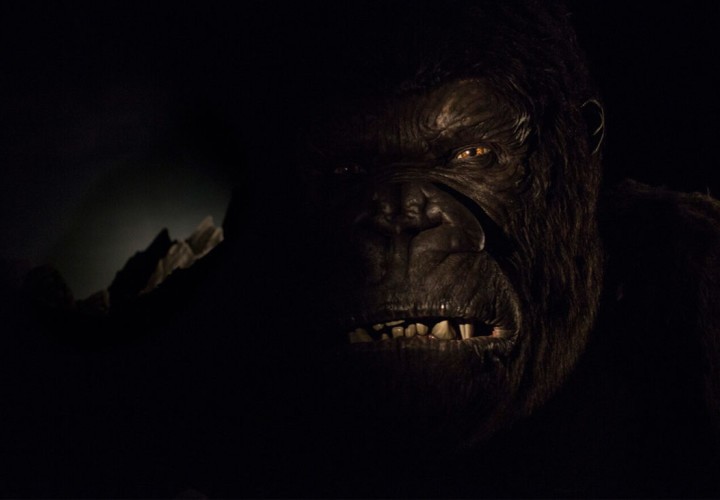
SkullIslandBatHaving experienced the Kong attraction as part of the famous studio tour at Universal Studios Hollywood, I was very interested to see how that same technology was integrated into this stand alone attraction in Florida. Although the rides are not identical, Skull Island: Reign of Kong at Islands of Adventure borrows heavily from the Universal Studios Hollywood counterpart. After proceeding through the stone gate, you will encounter prehistoric sized creatures over head and on the ground. You won’t be able to ignore the giant gorilla skull and bones just inside the gate. As your driver is working on his or her PhD, you will have the opportunity to Kong_T-Rexmeet some of his or her colleagues in the field along the expedition. As to not spoil the actual ride portion of the attraction, I will not go into too much detail but provide more of an overall analysis of the storytelling. As I have written in previous articles, a theme park attraction based on a work of literature or creative media is essentially a short film. It has, say 3-5mins (sometimes longer if it’s a show) to take the park guest through a three-act story. Paralleling the plot structure of a movie, Reign of Kong provides an exciting story for those who dare to explore the jungles of Skull Kong_AnimatronicIsland. You have a well-defined beginning, rising action, crisis, showdown, and denouement. Although my ride experienced a technical glitch on one of the 3D screens, it did not significantly take away from the enjoyment and thrill. There are many elements I like about the attraction, but I was hoping for more practical effects and animatronics than proliferated 3D screens. Still, the visuals are fantastic and do an excellent job of immersing you into the wilds of the ancient jungle. I cannot be certain, but I believe one of the video sequences is taken from the Hollywood counterpart attraction.

IMG_5519Best part of the experience awaits explorers just before disembarking. I won’t tell you what it is because it will ruin the surprise. But, I will tell you that it is truly a welcoming and beloved echo from the past. Theme park technology and what the modern guest is looking for may change over the years, but some things remain a constant. Being a fan of theme parks turned scholar, I greatly appreciate the closing scene on the ride. I was even a little teary-eyed when I rounded the final corner. Whether analyzing Skull Island: Reign of Kong from an objective or subjective perspective, it is clear that the attraction is and will continue to be a huge success for Universal Orlando Resort. Excited to ride it again!

“The Conjuring 2” movie review

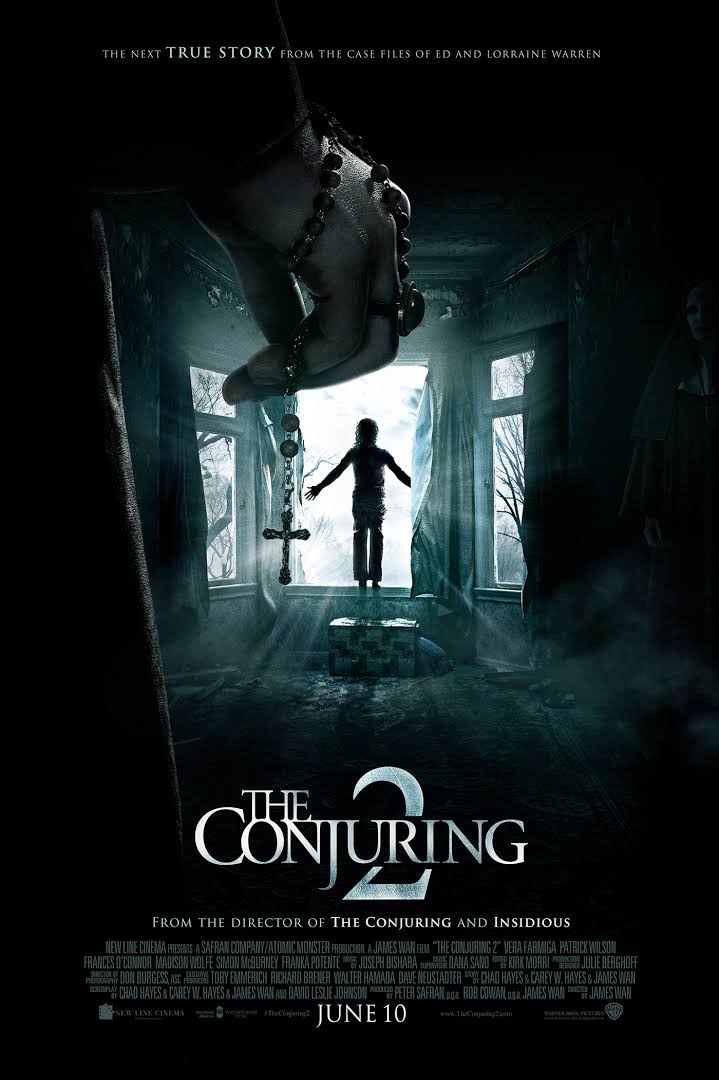
Conjuring2Outstanding horror film! Director James Wan has once again provided audiences with a brilliant work of the macabre and supernatural. From the writing to the directing to the acting and cinematography, Conjuring 2 is on par with, if not better than the first. Sometimes the best stories are true ones. And, although elements of the story have to be fictionalized in order to construct a cinematic narrative, grounding the Conjuring movies in the real work of Ed and Lorraine Warren (Patrick Wilson, Vera Farmiga) infuses a dynamic emotional response that directly impacts the increased frightening nature of these films. One of the observations that I appreciate most about, not only this but the predecessor, is not relying upon the jump-scare to curdle the blood. Are jump scares part of the movie? Well, of course! What fun would a horror film be without the entire theatre gasping for breath, jumping, or screaming together??? But Wan goes beyond the jump scare and channels his inner Hitchcock to build suspense and intrigue. The horror film is best appreciated in a group setting. It is a genre that specifically engages the audience on a visceral level. Wan is truly a master at his craft; and I love witnessing how he continues to prove his ability to develop creative horror films.

Ed and Lorraine Warren are back; and have been called upon, by the Catholic church, to investigate the, what’s been dubbed as the “Amityville” of London. Following a self-imposed sabbatical after the investigation of the infamous Amityville haunting on Long Island, Ed and Lorraine fly to London’s Enfield neighborhood to evaluate a reported haunting and possession. Struggling single mother of four Peggy Hodgson hopes that Ed and Lorraine will be able to drive the evil out of her home, and more specifically her youngest daughter Judy. In an effort to discover the truth behind the well-documented alleged demonic haunting and possession, Ed and Lorraine find that they have also become a target. Facing their most challenging case, Ed and Lorraine are determined to help the Hodgson family and drive the evil from the house.

Following the increasing trend for a film, including but not limited to horror, to begin with an elaborate prologue, Conjuring 2 starts with a fantastic moving shot of the famous eyelet windows of the 112 Ocean Avenue house in Amityville. Often filmed from the outside, this shot sequence takes place inside the attic. A much more intimate feel, this was an excellent choice for establishing the case that launched Ed and Lorraine Warren into the public eye. There have been numerous movies and documentaries based on the arguably most infamous haunting in the United States, so it was not necessary for Wan to spend too much time on it. It is, however, a very important scene because the plot/case of Conjuring 2 is directly related to the experience that the Warrens went through during the Lutz investigation. Beyond the establishing a connection between the Amityville and Enfield cases, beginning with the Warrens in the middle of the 112 Ocean Avenue investigation allows for Wan to visually show how and why the Warrens would seek a self-imposed sabbatical from supernatural and demonic investigations. Moreover, this sequence of events that provides copious amounts of plot development material are also instrumental in significant contributions to character development. Although this prologue lasts less than ten minutes, it contains prolific information vital to the plot of Conjuring 2.

It should not be of surprise that Wan uses the camera very strategically to tell this visually driven story. From the rule of thirds to lighting to creative use of angles and movement, the camera is instrumental in setting the macabre mood of the film. One of the visual storytelling elements that Hitchcock was most known for, especially in Psycho, is using the camera’s placement and angle to foreshadow something or someone. Wan takes a page from the Hitchcock handbook and utilizes the camera movement in such a way that you are predisposed to feeling certain that something or someone is about to appear or emerge from the shadows but your game is thrown off when that doesn’t happen–but then totally happens when you least expect it! Throughout the diegesis, you will encounter moment when the characters are faced with inner demons that parallel or symbolize the actual evil entities in the film. Having this subplot concurrent to the foreground aids in creating and maintaining an emotional connection to the characters. Shocking the audience both emotionally and physically. By eliciting dynamic and comprehensive responses to the horror on screen, the film becomes an immersive experience–that is the brilliance behind this dark and sinister tale.

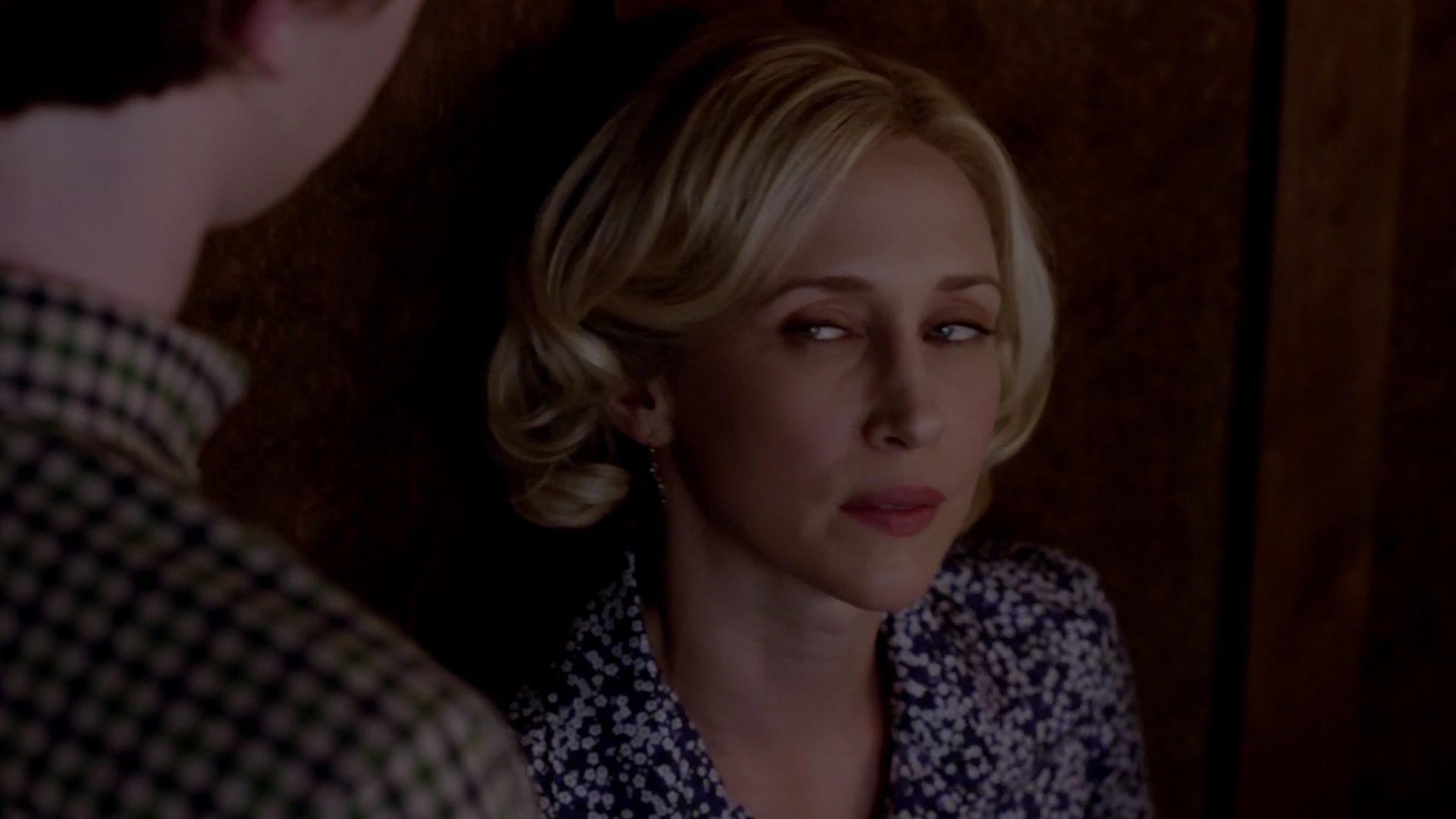
Beyond the exceptional direction by Wan, part of what makes the Conjuring franchise so successful is the exquisite casting. Patrick Wilson (Insidious) and Vera Farmiga (Bates Motel) are perfectly cast in these films. From what I have read about the real Ed and Lorraine Warren, Wilson and Farmiga respectively stay true to the real-life people they are portraying while adding in the necessary acting skills necessary to increase the impact and believability of the film. The quality of the acting that Wilson and Farmiga bring to the film is outstanding. Sometimes, a horror film can have an compelling plot but the actors are so uninteresting that it prohibits the story from making the impression that it should. Wilson and Farming make the characters of Ed and Lorraine Warren interesting to watch and add a performance quality to the film that keeps your attention the whole time. The degree to which they add a sincere care for the victims of hauntings to their respective characters is refreshing and will stay with yowling after the movie closes. As the Warrens are reoccurring characters in the Conjuring franchise, it is vitally important that they are as interesting to watch as the plot itself since their cases are the inspiration for the whole franchise, at least put to this point.

If there is one negative element in the film, it is the weak showdown. Not weak in that it was anticlimactic or uninteresting, but that it felt a little rushed. At 2hrs and 15mins, the film is longer than the average horror film, so it was not necessary to rush the climax of the film. It certainly does not mitigate the experience of the movie, but I feel that it could have been a little more intense. That being said, if you are looking for an excellent movie to kickoff your weekend, then this one is it! At last check, it out-performed both Now You See Me 2 (which should’ve been entitled Now You Don’t) and Warcraft. Even if you have not seen the first Conjuring, you will still enjoy this installment. However, seeing the first one will help you to better understand the Warrens and their unconventional line of work. Can’t wait to see where James Wan and the Warrens take us next!

Peering Through the Hole into “Bates Motel”

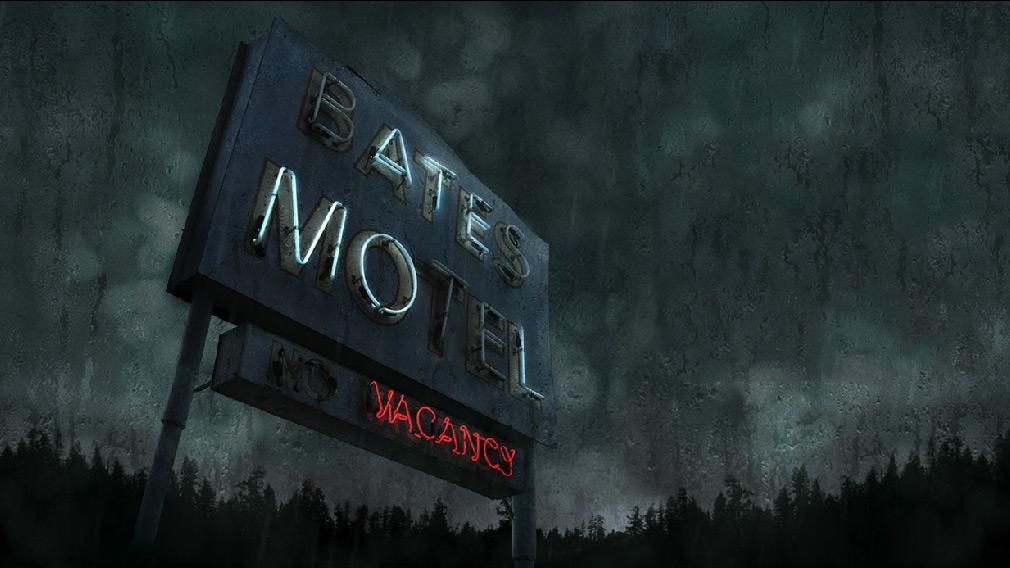
BatesMotelTVPremiering in 2013, the longest running scripted drama in the history of the Arts and Entertainment (A&E) channel is Universal Television’s Bates Motel starring Freddie Highmore, Vera Farmiga, Max Thieriot, Nestor Carbonell, and Olivia Cooke. Based on the iconic film Psycho (1960), directed by the master of suspense Alfred Hitchcock with story by Robert Bloch, Bates Motel takes us back to Norman’s early days when he was just a teenager–who was anything but normal. If you have kept up with the series, it is at a huge turning point in the character development of Norman and it just keeps getting better and better. Often shows as dark and heavy as Bates Motel do not have staying power or begin to wane after 2-3 seasons. Not this one. Just like Hitchcock’s masterpiece Psycho continues to impress, terrify, and influence even today’s suspense/horror movies, Bates Motel provides audiences with a glimpse into how Norman came to be while concurrently focussing on others who are directly and indirectly connected to the development of the most infamous psychopath in all cinema history. From visual and verbal nods even in today’s horror films to inspiring theme park attractions to television shows, the drama at Bates Motel continues to beckon audiences and intrigue those who find the characters fascinating.

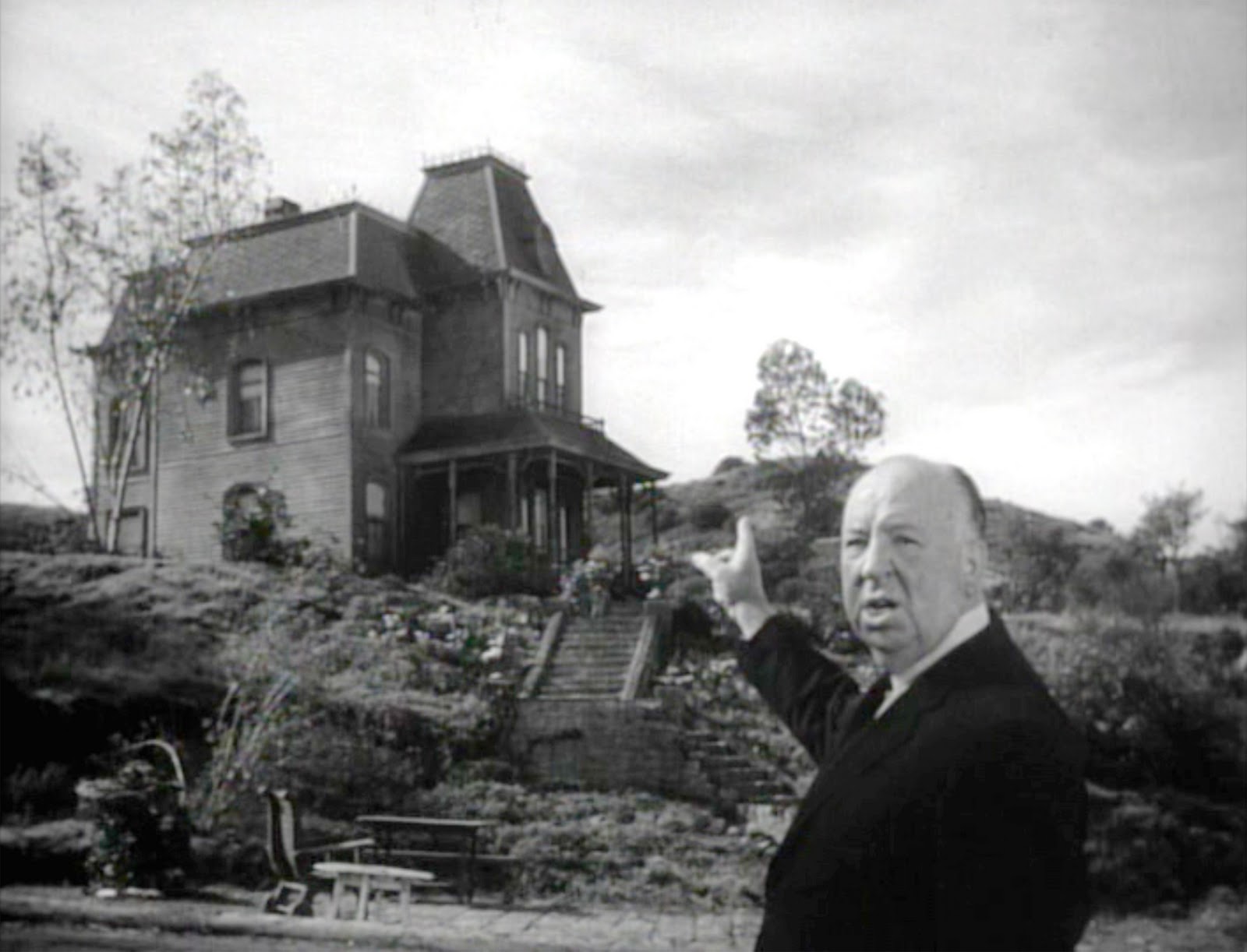
Hitch_HouseSadly, executive producer Carlton Cuse confirmed that the show’s next season is slated to be the last, and will adapt the events of the series’ namesake. Although I wish the show could go on, it is clear that we are approaching the events that started it all. That being said, this upcoming season is sure to be exciting as we get to witness the gap between where we are and where Marion Crane checks into the infamous motel begin to narrow and close. Whether we are going to end the series at the point Marion walks in or recreate the diegesis from Hitchcock’s film leaves to be seen. One of the reasons that a series like this one can even be produced is that it has prolific material from which to pull and interpret–the fact that the character of Norman Bates has been studied for years, much in the same way the film itself has been explored–provides writers and producers ample opportunity for inspiration.

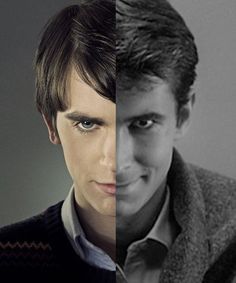
Norman and NormanSince we are given little information about Norman in the movie–note: that does nothing to mitigate the experience or effectiveness of the plot–his childhood to adolescent years and transition into adulthood is open for interpretation. For many years, film scholars like myself and others have often hypothesized what psychological and emotional experiences plagued Norman and affected his development. It would be all too easy and even a copout to state that he simply suffers a psychological disorder that was present when he was born. What I appreciate about the show’s portrayal of Norman is taking the cognitive and emotional atypical condition he was likely born with and throwing other experiences into the mix. It’s nature v nurture on a whole new level. Through the storytelling of Bates Motel, we have witnessed how his upbringing has had a profound impact on his development into the single most famous psychopath in cinema and now television history.

Emma_DylanThe show is not limited to the development and history of Norman, but also includes influential people in his life. Of course there’s Mother (Norma), but we also have grown to love his estranged brother Dylan, close friend Emma, and frienemy Sheriff Romero. Obviously Norman is obviously interesting to watch, but the writers and producers of the show make sure that each of the principle and reoccurring characters are fascinating as well. Dylan represents the only male figure in Norman’s life who consistently tries to help him, even though Norman often cannot see the love in his brother’s actions. Much like Norman, Dylan has also encountered much negativity and abandonment issues as a kid. Unlike Norman though, he found ways to deal with it and build a life for himself. In recent times, Norman keeps pushing the one positive male role model in his life away to further isolate himself. His close friend and coworker Emma is a very interesting female figure in his life. Unlike Mother or other females we have encountered over the series, he loves Emma and has done nothing to bring about permanent harm to her–at least so far. Emma is the only person who really gets to see the Norman hidden behind all his bizarre actions and obsession with Mother. Like Norman and Dylan, Emma had her own struggles with cystic fibrosis. Each of the characters is dealing with their own respective psychological or physical problems.

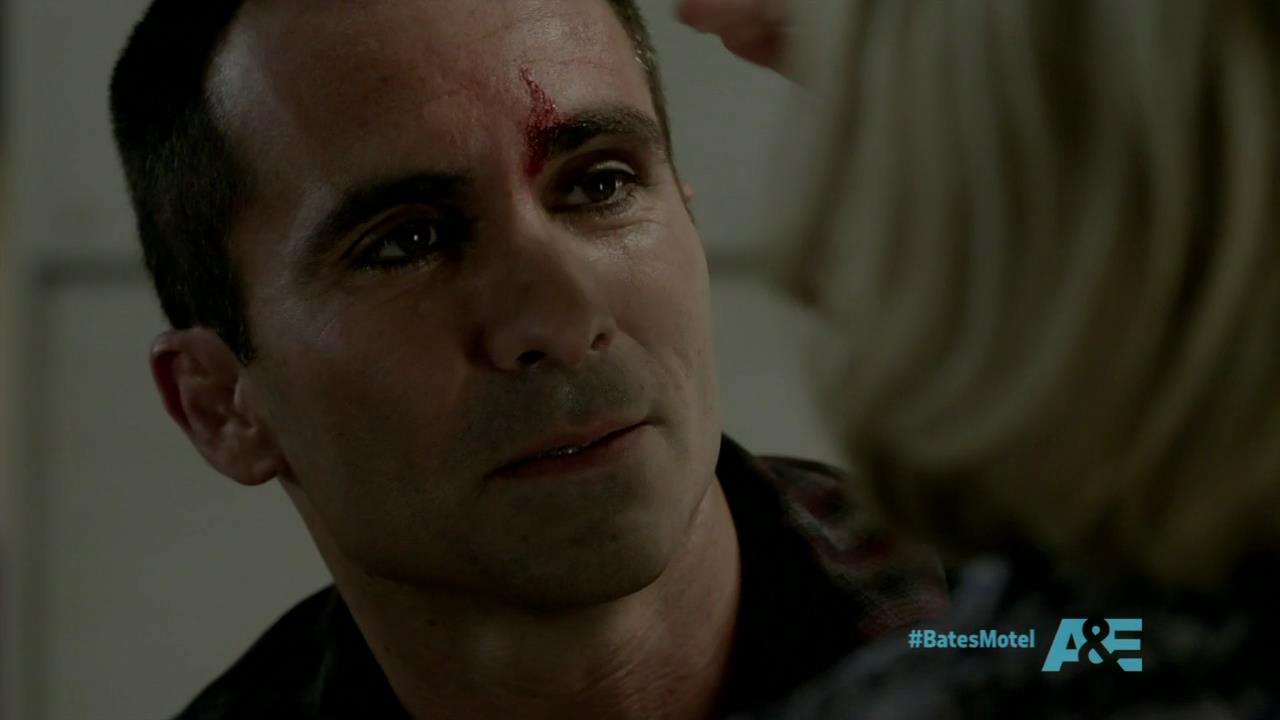
Romero_AlexLastly, prior to analyzing Norma, Sheriff Romero has played a key role in the life of Norman. Like Dylan he too is a consistent male figure in his life, but Norman has grown to resent Romero for his relationship with Norma. Romero has worked through his involvement in the drug trade and has grown as a result of it. Again, we have an individual with their own personal conflicts amidst the consistent conflict of Norman. The only other character, besides Dylan, who really knows what Norman is capable of. Romero is constantly trying to protect Norma from what he dreads Norman is truly capable of.

NormaBates1“Mother, what have you done?!?” Norma Bates is probably the most fascinating character after Norman. She is the closest to him and has been directly and indirectly responsible for his atypical development from his time as a child into an adult. Although she all but denies Norman’s psycho-social and emotional problems, she truly does recognize they exist. Unfortunately, she is so incredibly attached to him, having been abused and abandoned herself in the past, that she cannot truly provide the help he needs. Fortunately, she finally got him the help he needed–and should’ve received years prior–at the Pine View facility as we have seen in this season. It’s too little help too late. For the longest time, she felt that mother knew best and that no one could help Norman the way she could. Oh the irony. The attachment she was so fond of is regrettably the very thing that would bring about her undoing. Despite her best intentions, she really was the most instrumental in creating a monster. Her fits of rage and jealousy transferred into the mind of Norman and intensified the predisposition to sociopathic behaviors already present. Had she taken him to get help as a child, it is entirely possible that he may not have turned out to be the “psycho” after all. But, mother will always be with Norman; and no woman is allowed to take the place of her in his life.

bates_motelWell, here we are! At the crossroads between seasons four and five. This upcoming season is sure to terrify and excite as we buildup to the single most famous scene in all of cinema history. The reason the shower scene is the single most famous scene can be recognized by analyzing the length, actions, and sounds included in those few seconds. You can learn more about that scene by reading my article The “Attraction” of  Horror: a “Psycho”analysis. After more than 50 years, the Bates Motel and Norman still haunt our dreams and provide direction and inspiration for today’s cinematic storytellers. An interesting thought on the direction of these immortal characters and setting is the potential for a live theatrical production. There is certainly enough dialog driven material that Psycho and Bates Motel can easily be translated into a live theatre experience. It takes rich material to be able to be so versatile. Here’s to the final season of A&E and Universal Television’s five year homage to the infamous and macabre happenings at the Bates Motel. Thank you Hitchcock for truly being the master of suspense.

License to Create: Theme Parks and Intellectual Property

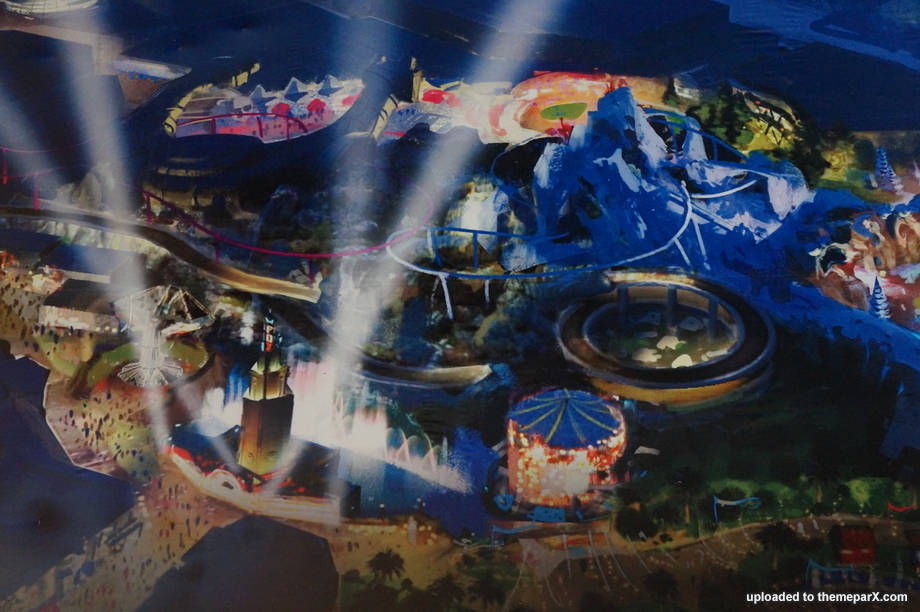
ThemeParkHighAngleLicense and registration please. With 20th Century Fox, Sony Entertainment, and Paramount Pictures entering the themed entertainment game as potential heavy hitters, and to some extent Warner Bros. as well, questions about cinema, television, and video game intellectual property (IP) begin to rise. Only having really had two main players in the industry for the last couple of decades, unless you count CBS/Paramount before selling off the amusement park investments to Cedar Fair, Disney and Comcast (parent company to NBC Universal) utilize their own respective IP libraries as well as licensed properties from other media companies. Not having as vast an IP library as Disney, many of Universal’s theme park properties have come from companies like TimeWarner, Viacom, and Fox. Whereas Disney primarily uses their own extensive library, they too have licensed other companies’ IP such as MGM Holdings, 20th Century Fox, and CBS. Although some of the once-licensed properties by either Disney or Universal have now been officially procured (i.e. Disney’s LucasFilm and Universal’s DreamWorks Animation), a common practice in the themed entertainment industry is to license, borrow, barter, trade, etc. But, with these new players demanding a slice of the hospitality and tourism pie, could we see more original television programming or movies?

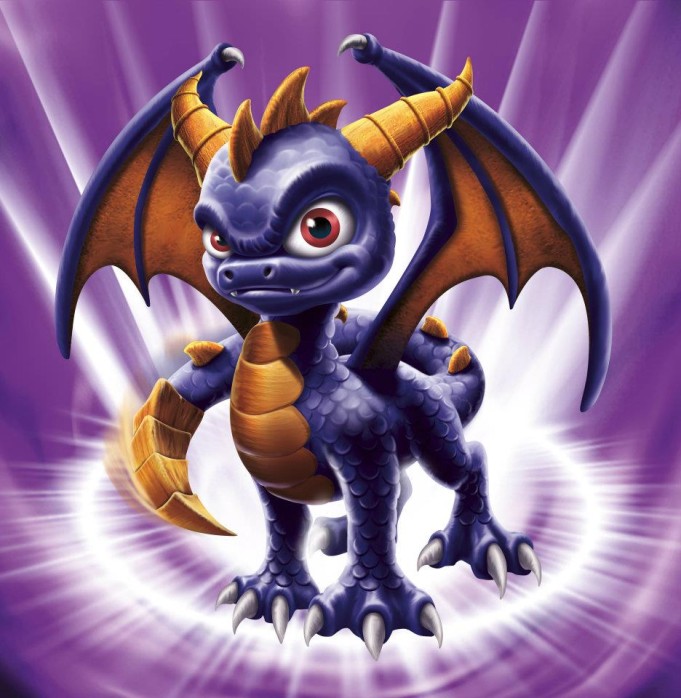
SpyroThink about it for a moment. Let’s look at some of the most well-known IPs from Sony, Fox, Paramount, and Warner Bros. Although there is a mild to moderate degree of subjectivity in what constitutes “well known,” I am going to go with commonly thought of properties. Starting with Sony. In no particular order, some of the most popular Sony properties include: James Bond (formerly MGM), Spider-Man, Men in Black, Smurfs, Terminator, Silence of the Lambs, Hotel Transylvania, Spyro, The Nanny, Wheel of Fortune, Jeopardy, Price is Right, Final Fantasy, and Crash Bandicoot. Switching gears to Fox. Some of the most well-known Fox properties include: Avatar, The Simpsons, Rocky Horror Picture Show, The X-Men, Bones, New Girl, American Horror Story, Alien, X-Files, Die Hard, Futurama, and Family Guy. Although not well known in the US, Warner Bros. operates a theme park in Australia and what is now called Movie Park Germany. Some of the most popular Warner Bros., IP are: Harry Potter, Game of Thrones, Looney Tunes, DC Entertainment, Lord of the Rings, A Nightmare on Elm Street, Friday the 13th, and Lego Entertainment. Viacom, parent company to Paramount Pictures, is one of the original Hollywood studios and owns IP such as: Mission Impossible, Titanic (partnership with Fox), Star Trek (films and TV shows), Forrest Gump, and the valuable Nickelodeon. Obviously the aforementioned lists are not exhaustive, but I wanted to try to paint as brief but effective a picture as possible to understand why IP is a hot topic.

JamesBondLogoRecognize some of those titles? You probably recognize most, if not all of them. Unfortunately, these companies have already licensed out some of those properties to Universal, Disney, and Six Flags. Avatar and Alien are licensed by Disney. Marvel Entertainment, Harry Potter, and Nintendo are licensed to Universal, DC Entertainment and Looney Tunes are licensed to Six Flags Parks, and the Nickelodeon IPs are split amongst different entities. Of course, when the licensing agreements were drawn up, it is unlikely that either Sony, Fox, Paramount, and to a lesser extent Warner Bros., thought that they would enter or re-enter into the themed entertainment industry. Now that this part of the tourism and hospitality (and live entertainment) is exploding, Sony, Fox, Paramount, and Warner Bros. need to rethink how to play catchup–and FAST. But, when you have licensed out some of your most valuable properties, how do you make up for it? The short answer is (1) refuse renewal when the license expires or (2) develop original content. Since some licenses run for decades, the former isn’t really an option unless the license is coming up for renewal in the next few years; so, we are left with one logical conclusion: pump out original content that is adaptable to a live experience. This is where research like mine comes into play since I have studied the relationship between cinema and theme parks, and moreover how to successfully translate a movie or TV show into an attraction. It’d be nice if one of these companies would snatch me up. But, I digress.

Film Strip BoardIt is entirely possible that Sony, Fox, Paramount, and Warner Bros. will be forced to generate new ideas for movies, tv shows, and video games. More specifically, original creative media content that can and needs to be able to be translated from the screen into a theme park near you. When developing original content that has the ability to be translated to a live experience, companies need to keep in mind that a high-concept plot with unique settings, characters, and action sequences are necessary for a movie turned attraction. There is a lot more to it than that, but at least this gives you an idea what is required and backed by empirical evidence. Although blockbusters are typically the sourced content for theme park attractions, not every blockbuster is appropriate. Take Titanic for example. It is a movie about the 20th century’s worst and most infamous maritime disaster. So, I don’t think Paramount or Fox will add “Titanic: Ride it Out” to its parks. The ability to cross-promote intellectual property is of great importance for the strategic exhibition and integration of movies, tv shows, or video games. One of the reasons why the Disney parks are so successful is because the Disney movies can be (1) seen in the cinema (2) character meet and greets in the parks (3) the platform for a video game (3) used in theming on the cruise line (4) A-list artists can record covers of the songs from musicals (and broadway musicals can be produced) and (5) the platform for attractions in the parks. Sony, Fox, Paramount, and Warner Bros. need to concentrate on producing movies and TV shows (and by extension video games) that can be used in strategic and creative cross-promotion.

X-Men TASReturning to the present state of IP in the parks. Fortunately, some of those companies still–at least to the best of my knowledge–retain the theme park licensing for a few of the properties that were mentioned earlier; but for the most part, the most well-known movies, video games, and TV shows are already licensed by other companies. Viacom/Paramount operates the Nick Hotel near Disney in Orlando, so it still retains some licensing to its Nick IPs. However, since other parks use some of the Nick characters, there is probably some red tape to go through in order to fully use them in the Paramount park in the United Kingdom near London that is under development. Just like Disney wants to get their hands on Universal’s Marvel properties, Fox really needs to work on getting the X-Men back. On that note: since The Avengers is Disney’s heaviest of hitters and the same for Fox and the X-Men, perhaps eventually we will see that Disney has access to The Avengers and Fox the X-Men. Disney doesn’t really need The Avengers as much as Fox needs the X-Men. The X-Men is arguably Fox’s most successful film franchise in the last couple of decades and it is still going strong. Another Fox property that is licensed by Disney is James Cameron’s Avatar. As for Sony, they have not licensed out as many of their properties to themed entertainment companies, with the obvious exceptions of Terminator and Men in Black. Another area to explore is the reason why non Disney and Universal parks are mostly being built overseas. But that is the topic for another article; however, it is directly linked to IP and copyright.

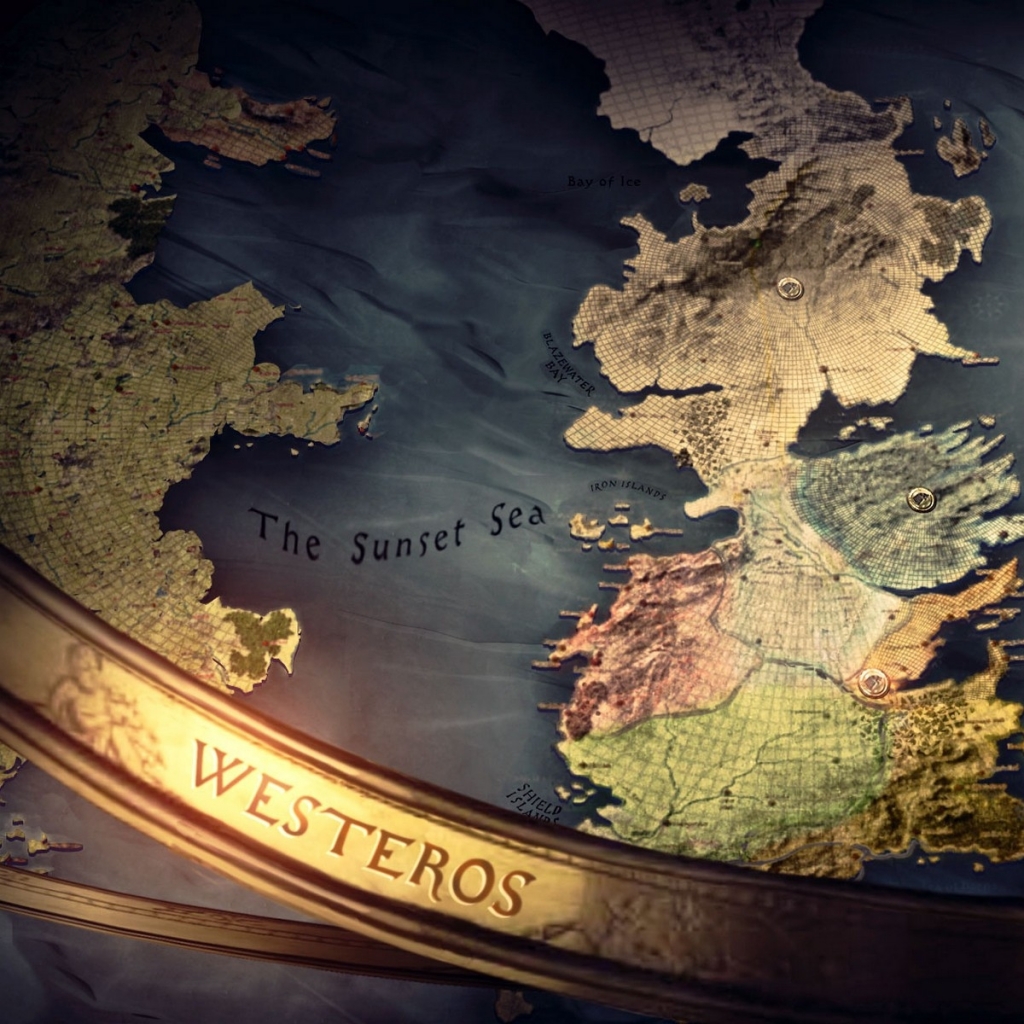
maps_game_of_thrones_a_song_of_1024x1024_wallpaperfo.comCurrent IPs that would make for great attractions in a U.S. Sony, Warner Bros., Paramount, or Fox theme park would be Game of Thrones, American Horror Story, X-Files, James Bond, Lord of the Rings (but that is a whole other discussion in and of itself), Hotel Transylvania, Spyro the Dragon, Maze Runner, Hunger Games (need to be licensed from Lionsgate), Ice Age, or Mission Impossible. Content is king. More innovative and original content from the big studios who also have theme park investments means that there will be more movies to see each year!! It will also open the door for new ideas from comics, literature, history, and legend. Instead of reboots and remakes, you will enjoy new ideas and narratives. So, the long and short of it is that media conglomerates with movie studio and theme park investments are at a crossroads. They can either not go full-force into themed entertainment and play around with the current IP in their respective libraries or can rise up to the challenge to develop original movies and tv shows that can also find their ways into theme parks in the U.S. and around the world.