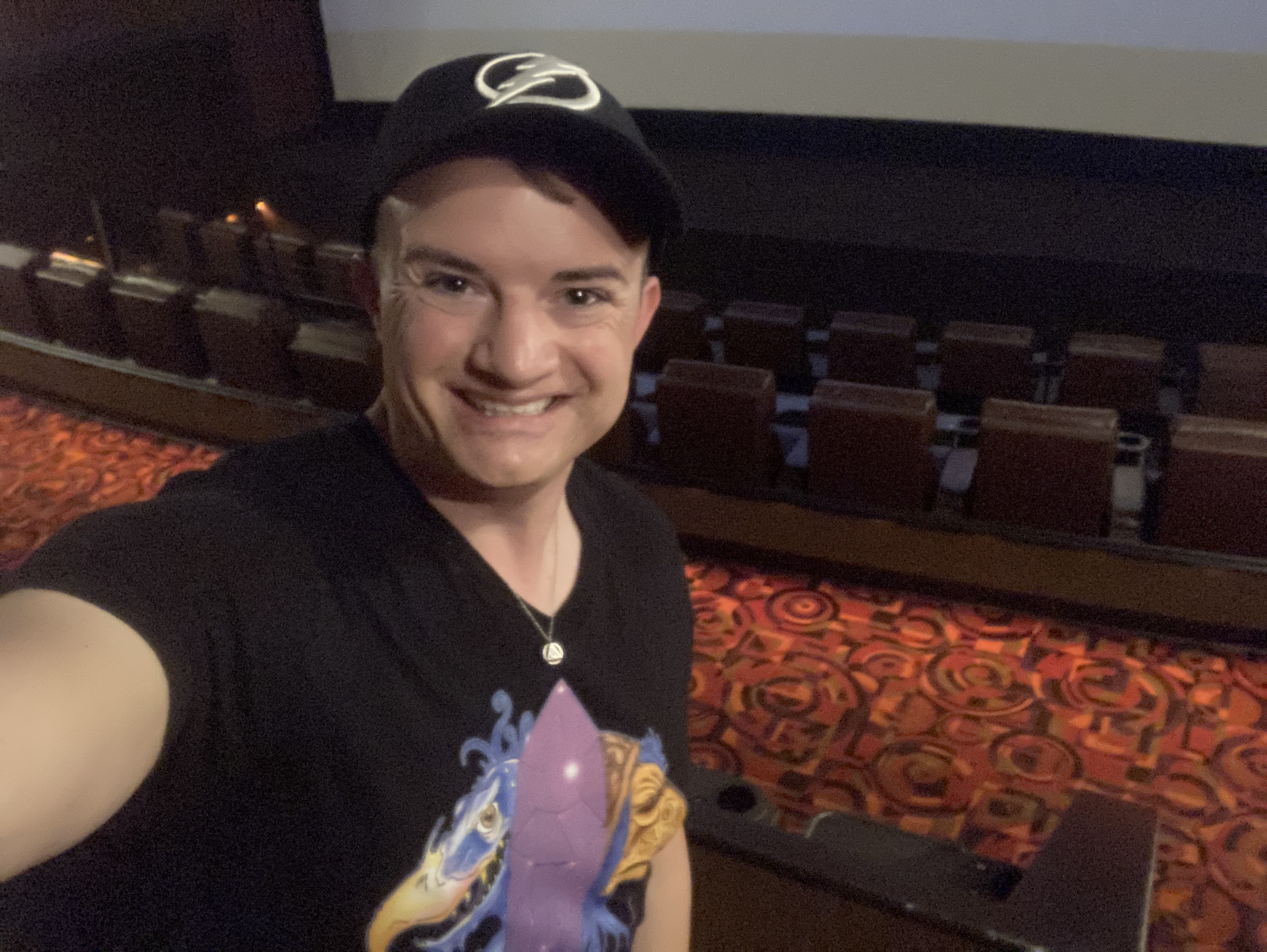
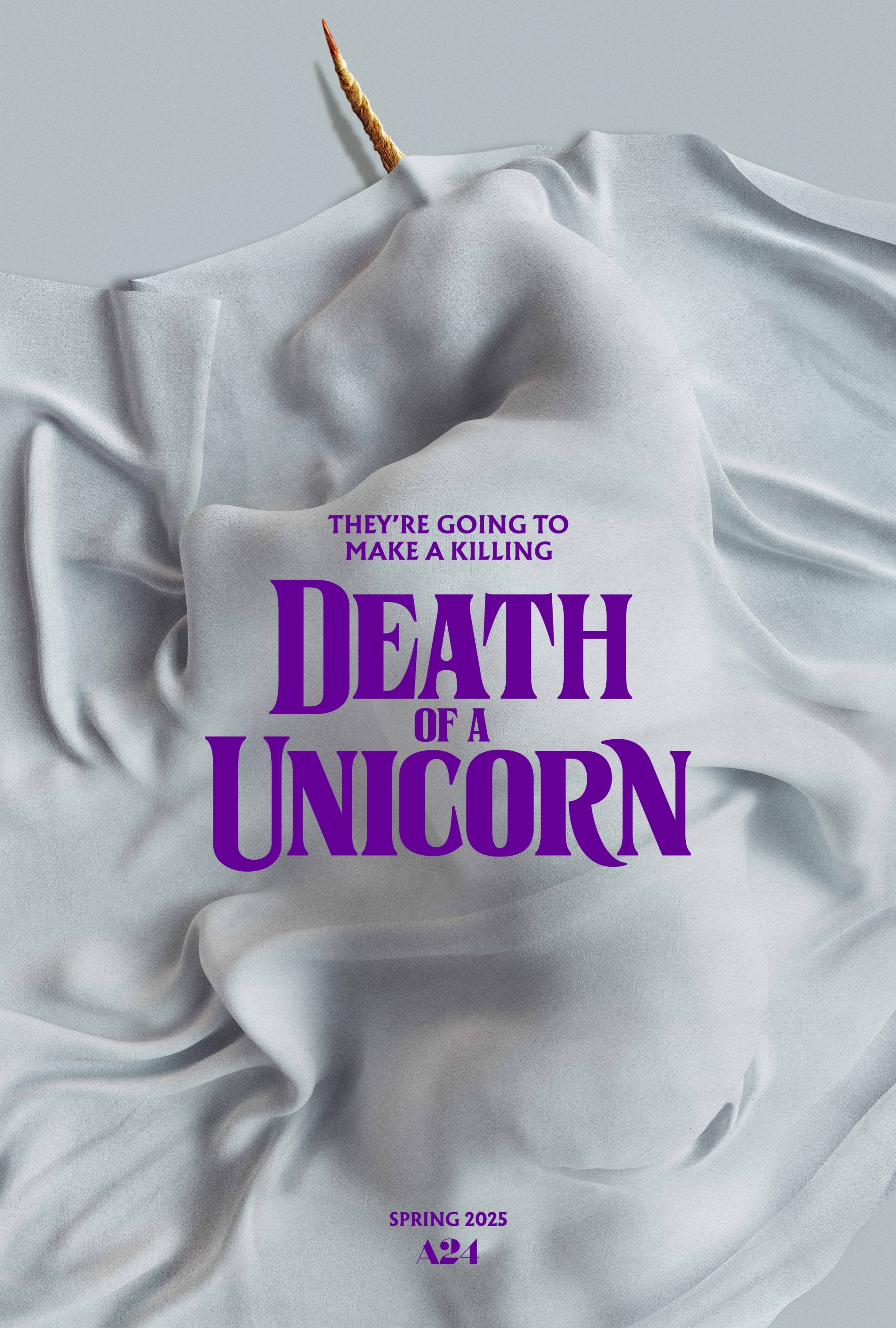
Loads of fun! Death of a Unicorn is Atypical for A24 in all the best ways possible. It’s entertaining, well-written, and smartly balances horror and comedy. While it delivers the social critiques and commentary that are par for the A24 course, the outside/action plotting is strong!
When a man and his daughter accidentally hit and kill a unicorn with their car, his boss tries to exploit the creature’s miraculous curative properties — with horrific results.
While the first act drags a bit, the rest of the movie is a wildly engaging roller coaster ride as folklore and the contemporary world collide in a unicorn gorefest that simultaneously explores the flawed nature of a self-centered moral compass and acts of greed disguised as altruism. Knowing very little of actual unicorn mythology and lore, this movie piqued my curiosity to learn more about these magical creatures because the literary and cultural history is rather fascinating.
Looking to the unicorns themselves, this movie employs a combination of both practical and digital effects to bring the illusive creatures to life. By combining puppetry and computer generated imagery, the unicorns feel lifelike and the reactions from the cast appear to be borne out of genuine fear and desperation for survival. Speaking of the cast, I feel that Rudd and Ortega were miscast in the movie. I don’t buy either one of them in their respective roles, and feel that a better casting may have helped the delivery of the first act.
Clearly, writer-director Alex Scharfman has a fondness for old school creature features, and I can appreciate much of how he adapted the classic creature feature to fit a contemporary sensibility. Death of a Unicorn could become a modern creature feature that is revisited throughout the years–only time will tell.
What I appreciate most is that you can read the whole critique on big Pharma and abuse of natural resources and exploitation of wildlife, BUT you could just as easily enjoy it for the Jurassic Park-inspired survival story. Honestly, it did JP better than JP3 onward.
While I may not be high on the first act or the casting of the two leads, this is still one of my favorite A24 films. In fact, it probably ranks as the most entertaining A24 release for me.
Ryan is the general manager for 90.7 WKGC Public Media in Panama City and host of the public radio show ReelTalk about all things cinema. Additionally, he is the author of the upcoming film studies book titled Monsters, Madness, and Mayhem: Why People Love Horror. After teaching film studies for over eight years at the University of Tampa, he transitioned from the classroom to public media. He is a member of the Critics Association of Central Florida and Indie Film Critics of America. If you like this article, check out the others and FOLLOW this blog! Follow him on Twitter: RLTerry1 and LetterBoxd: RLTerry
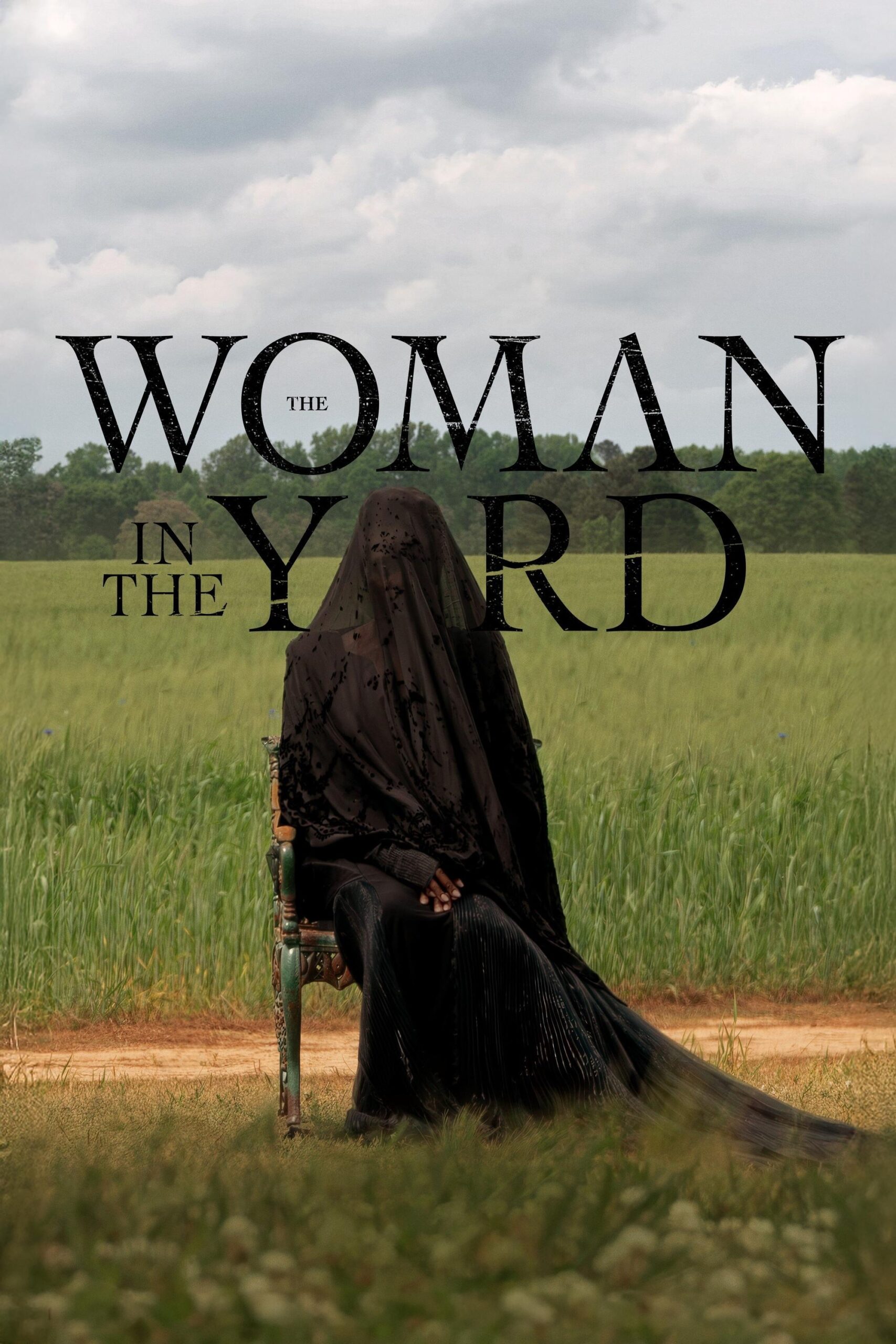
Immersive setting and thoughtful premise meets with poor plotting. The Woman in the Yard is a haunting reflection of trauma, grief, and loss that accomplishes little beyond delivering unsettling imagery. The rich southern gothic atmosphere draws viewers into the story, but the experience ultimately falls flat due to poor writing. That said, I appreciate what the film tries to do with its intriguing premise, but the insufficient plotting and meandering diegetic direction hamper what could’ve been a rather fantastic psychological horror film.
Ramona (Danielle Deadwyler) becomes crippled by grief after her husband dies in a car accident, leaving her to care for her two children alone in her rural farmhouse. Her sadness soon turns to fear when a spectral woman in black (Okwui Okpokwasili) appears on her front lawn, warning her “today’s the day.” As the mysterious figure creeps closer and closer to the house, Ramona realizes she must protect her children from the evil woman who simply won’t leave them alone.
In the vein of The Others, this film takes place in an isolated house in the countryside featuring a mother and her kids. Except instead of leaning into a New England gothic aesthetic, The Woman in the Yard exudes a rich, dimensional Southern gothic atmosphere. From the house to the yard to the ominous, mysterious woman in black, this film draws us into the story. Unfortunately, the story into which we are drawn, leaves much to be desired.
If I were to simply focus on the atmosphere of and settings within the film, The Woman in the Yard would rank highly for me, but it’s disappointing that such a rich world is wasted on such a vague plot and meandering narrative. Even the performative dimension is compelling. All four performances of the main (and pretty much only) cast members were solid. I only wish they had been given more to do in order to drive home the themes of the film.
I opened with comments concerning the various themes in this film concerning grief, loss, and trauma, and I enjoyed how these internal feelings were externalized for the audience. The use of mirrors, shadows, and (digital) double exposure gave this film a tangible, experiential depth. But, regrettably, the imagery and performative dimension is pretty much all that we get in this film, for the plotting is weak and lacks discernible direction.
Without getting into spoilers, our central character of Ramona must battle the various affects of the trauma incurred from the car accident that left her injured and her husband dead, which have manifested themselves in the woman in black and related paranormal and supernatural occurrences in the isolated Georgia farmhouse. She is challenged to resolve that which she is battling in order to provide for her children after the tragic passing of her devoted husband and father to their kids. Just like those that experience a life-changing traumatic event (often in the aftermath of a tragic accident) begin to reflect upon their life and examining their impact on and relationships with others, Ramona is reflecting upon her life. The psychological process of reflecting on life is dramatized in and expressed through the use of mirrors, mirrored imagery, and (what in analog terms would be) double exposure. This part of the film works incredibly well! But the plotting isn’t there to sufficiently support it for storytelling cinematic storytelling purposes.
The woman in black is a paranormal manifestation of something in the film that I cannot reveal as to avoid spoilers, but I loved this character! She is creepy, intriguing, mysterious, ominous, and more of what makes a great monster in a horror movie. Between the Southern gothic atmosphere and the woman in black, I very much expect to see this movie adapted into a Halloween Horror Nights house. The character of the woman in black is rather terrifying, yet you won’t encounter much in the way of traditional scares. Her character (and her chair) are so thoughtfully crafted that her mere presence is enough to send adrenaline through your body. In terms of “rules” for a monster, they are established early on, and everything to follow functions within those rules. I would not be surprised if the woman in black is borne out of real folklore, because so much of what happens feels connected to campfire ghost stories and superstitions.
While The Woman in the Yard may lack in the plotting department, it delivers many elements that can be sufficiently enjoyed. It may not be one that I will revisit any time soon, but I still enjoyed the movie well enough.
Ryan is the general manager for 90.7 WKGC Public Media in Panama City and host of the public radio show ReelTalk about all things cinema. Additionally, he is the author of the upcoming film studies book titled Monsters, Madness, and Mayhem: Why People Love Horror. After teaching film studies for over eight years at the University of Tampa, he transitioned from the classroom to public media. He is a member of the Critics Association of Central Florida and Indie Film Critics of America. If you like this article, check out the others and FOLLOW this blog! Follow him on Twitter: RLTerry1 and LetterBoxd: RLTerry
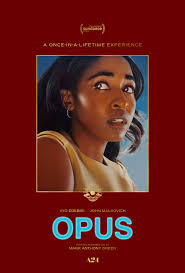
An enigmatic puzzle with missing pieces. What starts as a fascinating psychological mystery quickly devolves into a series of disjointed, cryptic sequences that offer more questions than answers. Opus is certainly a haunting experience that delivers striking visuals, but the stylistic storytelling lacks substance, resulting in a film that is ultimately hollow. Like with so many A24 and Neon films, Opus is rich in atmosphere, but lacks strategic plotting, proper pacing, and demonstrable working knowledge of screenwriting mechanics. Moreover, it falls into an all too familiar trap of prioritizing aesthetic over storytelling. Opus is yet another example of modern arthouse cinema mistaking ambiguity for depth. The film posits many otherwise thoughtful questions, but leaves you wondering why you should even care about what you just watched.
Journalist Ariel (Ayo Edebiri) works for an acclaimed music magazine but has grown tired of her arrogant boss Stan (Murray Bartlett) assigning her good pitches to more senior writers. But following the reclusive, visionary pop star Alfred Moretti (John Malkovich) emerging from hiding after more than thirty years, Ariel’s boss is invited to his secluded, remote compound where he will be releasing a new album. Ariel and her boss are invited to attend as press. But not long after arriving, Ariel deduces that the compound’s collection of ardent admirers of Alfred are actually a cult with deadly plans for the guests.
Most of the film’s problems can be traced back to its screenplay. Like with many (if not most, in my opinion) writer-directors, this story likely made much more sense in Mark Anthony Green’s head, than it did on paper. I find that writer-directors often have excellent movie ideas and eyes for shot composition, but lack a working knowledge of screenwriting mechanics. Had Green collaborated with a more established screenwriter, then the film may not have had the plotting issues that plagued it the whole time.
Adding to the film’s plotting issues is its reliance on repetition rather than escalation. Scenes blend into one another with minimal variation, creating a sense of stagnation rather than rising tension. Ariel’s, our central character’s, journey is more about cycling through eerie encounters and vague hallucinations than actually uncovering deeper truths. Without a clearly defined external goal for Ariel, Opus feels like a film more concerned with its own mystique than engaging its audience. The goal could’ve been something as simple as getting the article published, but the film never quite has a throughline on which to land the diegetic plane.
While strong, the performative dimension of the film is underscored with style over substance. Ayo Edebiri’s performance is layered and emotionally compelling. Unfortunately, the film gives her little to work with beyond surface-level tension. John Malkovich, always a commanding presence, delivers an eerie gravitas, but his role feels more like a cryptic device than a fully developed character.
One of the biggest shortcomings in character development is the lack of meaningful relationships. While Opus teases conflicts between Ariel and her boss Stan, these tensions never evolve into anything substantial. All around, the film’s characters never form real, emotional connections, leaving their interactions feeling hollow. Without compelling relationships, the film struggles make us care about any of the characters, much less the central character of Ariel.
Opus seems content to let its themes remain vague, as though interpretation itself is the art. This approach works in moderation but ultimately leaves the film feeling like an unfinished composition—beautiful in pieces but lacking a resonant core.
A24 has perfected the art of marketing “prestige horror” films that emphasize mood over traditional storytelling. While this approach has resulted in some modern masterpieces such as “The Blackcoat’s Daughter,” “Hereditary,” and “Midsommar,” it has also encouraged a wave of films that mistake ambiguity for intelligence. Opus is a prime example of this trend, prioritizing its hypnotic cinematography and eerie sound design over a screenplay that provides emotional or intellectual engagement.
This raises the question: Has arthouse cinema become so obsessed with being enigmatic that it has lost sight of storytelling? Moreover, has the proliferation of “arthouse” films become the very thing they opposed: the mainstream? Films like Opus appear to be forcing audiences to assign meaning where there may be none, and delivering a film that looks great but is ultimately forgettable. The present trajectory of many arthouse film is trending is becoming the new cinematic fast food: tasty but forgettable and lacking in nutrition. In striving for profundity, these films, risk alienating viewers who crave narrative satisfaction alongside visual artistry.
There’s no denying Opus is visually arresting and technically impressive. Mark Anthony Green’s direction is meticulous, and Ayo Edebiri delivers a gripping performance. But beneath its meticulously crafted atmosphere lies a film that lacks emotional weight or thematic clarity. For fans of slow-burn psychological horror and puzzle-box storytelling, Opus may still be a rewarding experience. For others, it’s yet another reminder that style, no matter how dazzling, can never replace substance or sheer entertainment value.
Ryan is the general manager for 90.7 WKGC Public Media in Panama City and host of the public radio show ReelTalk about all things cinema. Additionally, he is the author of the upcoming film studies book titled Monsters, Madness, and Mayhem: Why People Love Horror. After teaching film studies for over eight years at the University of Tampa, he transitioned from the classroom to public media. He is a member of the Critics Association of Central Florida and Indie Film Critics of America. If you like this article, check out the others and FOLLOW this blog! Follow him on Twitter: RLTerry1 and LetterBoxd: RLTerry
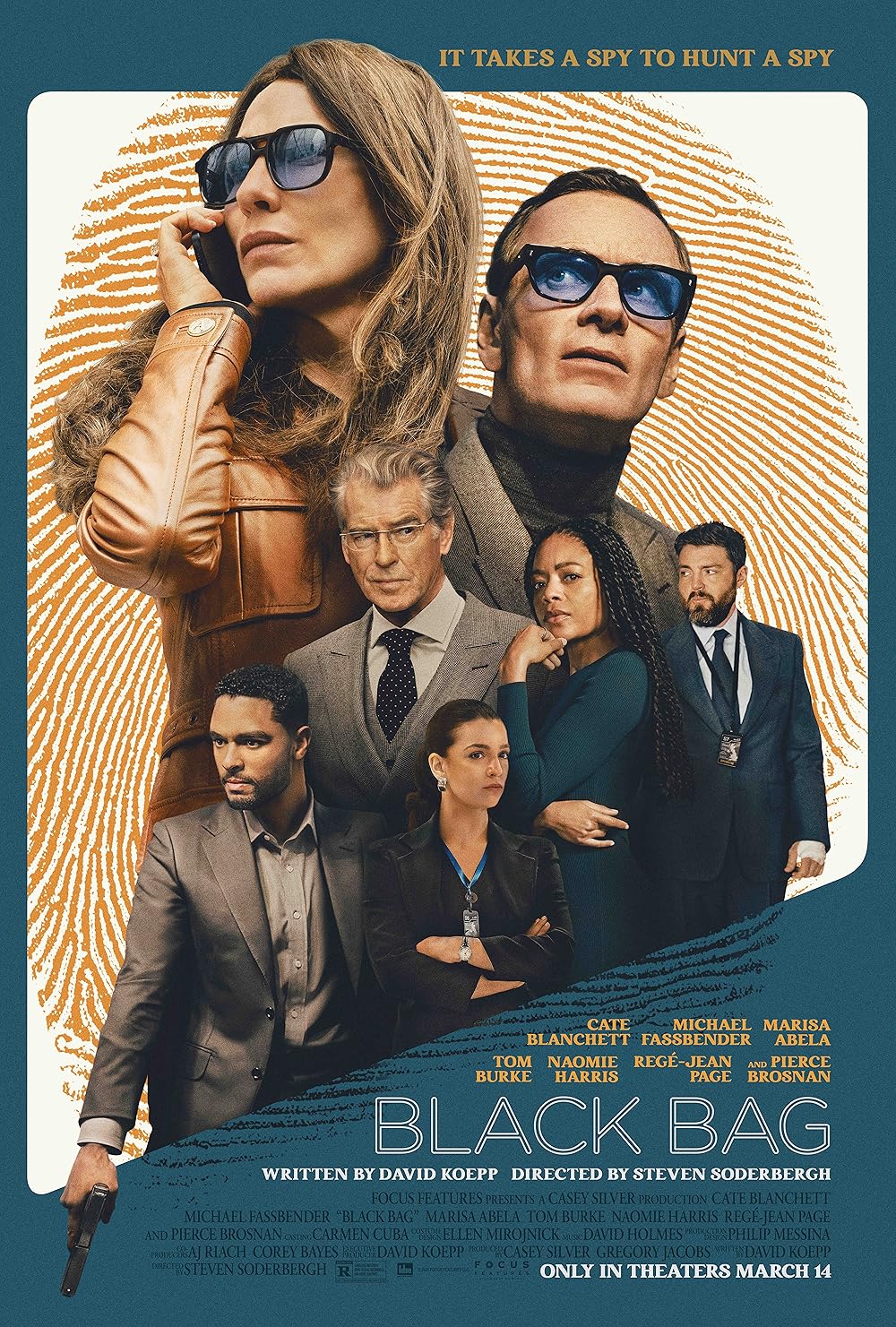
A sleek and suspenseful espionage thriller. Steven Soderbergh teams up with screenwriter David Koepp to craft a cinematic world of intrigue and deception in Black Bag. The duplicitous nature of the film is witnessed in the gripping marital drama that underscores the covert spy activity. Rooted in themes of trust, betrayal, and the cost of secrecy, this film places audiences deep within the labyrinthine world of British intelligence, where loyalty is as much a weapon as it is a liability.
When his beloved wife, Kathryn, is suspected of betraying the nation, intelligence agent George Woodhouse faces the ultimate test — loyalty to his marriage or his country.
Michael Fassbender and Cate Blanchett lead the charge as George Woodhouse and Kathryn St. Jean, a married couple whose bond is tested when George is tasked with unmasking a mole inside the British National Cyber Security Centre (although not stated, the Centre is reminiscent of MI6). When suspicion falls on Kathryn, the mission becomes personal, forcing the couple into a high-stakes psychological chess match where every move could be their last. David Koepp’s screenplay strikes a deft balance between razor-sharp dialogue and simmering tension, drawing audiences into a narrative that is as much about human connection as it is about spycraft.
Fassbender delivers a layered performance, portraying a man caught between duty and devotion, while Blanchett’s enigmatic presence keeps audiences guessing until the final frame. Their electric chemistry brings an emotional weight to the thriller, grounding the high-stakes espionage with raw, personal stakes.
Adding depth to the intrigue is an exceptional supporting cast, including Naomie Harris as a perceptive psychiatrist and Regé-Jean Page as a brash but brilliant operative. Each performance contributes to the film’s palpable atmosphere of uncertainty, where shifting alliances and hidden motives drive the tension ever higher.
Soderbergh’s signature directorial style is on full display, with dynamic camerawork, crisp editing, and a refined aesthetic that gives Black Bag an effortlessly cool veneer. Complemented by David Holmes’s pulsating, jazz-infused score, the film moves with a rhythmic intensity that keeps the tension taut from start to finish.
David Koepp’s screenplay is a masterclass in taut, intelligent storytelling, seamlessly blending espionage thrills with deeply personal stakes. The interplay between George and Kathryn is laced with suspicion and longing, making every conversation feel like a battle of wits. Koepp’s ability to navigate shifting alliances and hidden motives ensures that no scene feels wasted, keeping audiences engaged in a labyrinth of deception. While the plot’s complexity demands careful attention, the payoff is both satisfying and thematically rich, cementing Black Bag as a sleek and sophisticated entry in the spy thriller genre. My only negative critique of the screenwriting is that Koepp’s screenplay does suffer from some poor pacing in the first act.
While he doesn’t play a prominent role in the film, seeing former Bond Pierce Brosnan return to (what we may as well call) MI6 was a nice treat and nod to his tenure as the definitive fictional British spy.
While some may find the intricate plotting requires a close watch, the payoff is worth the investment. More than just a spy thriller, Black Bag is a stylish, smart, and suspenseful exploration of trust in a world where deception reigns supreme. A must-watch for fans of sophisticated espionage cinema.
Ryan is the general manager for 90.7 WKGC Public Media in Panama City and host of the public radio show ReelTalk about all things cinema. Additionally, he is the author of the upcoming film studies book titled Monsters, Madness, and Mayhem: Why People Love Horror. After teaching film studies for over eight years at the University of Tampa, he transitioned from the classroom to public media. He is a member of the Critics Association of Central Florida and Indie Film Critics of America. If you like this article, check out the others and FOLLOW this blog! Follow him on Twitter: RLTerry1 and LetterBoxd: RLTerry
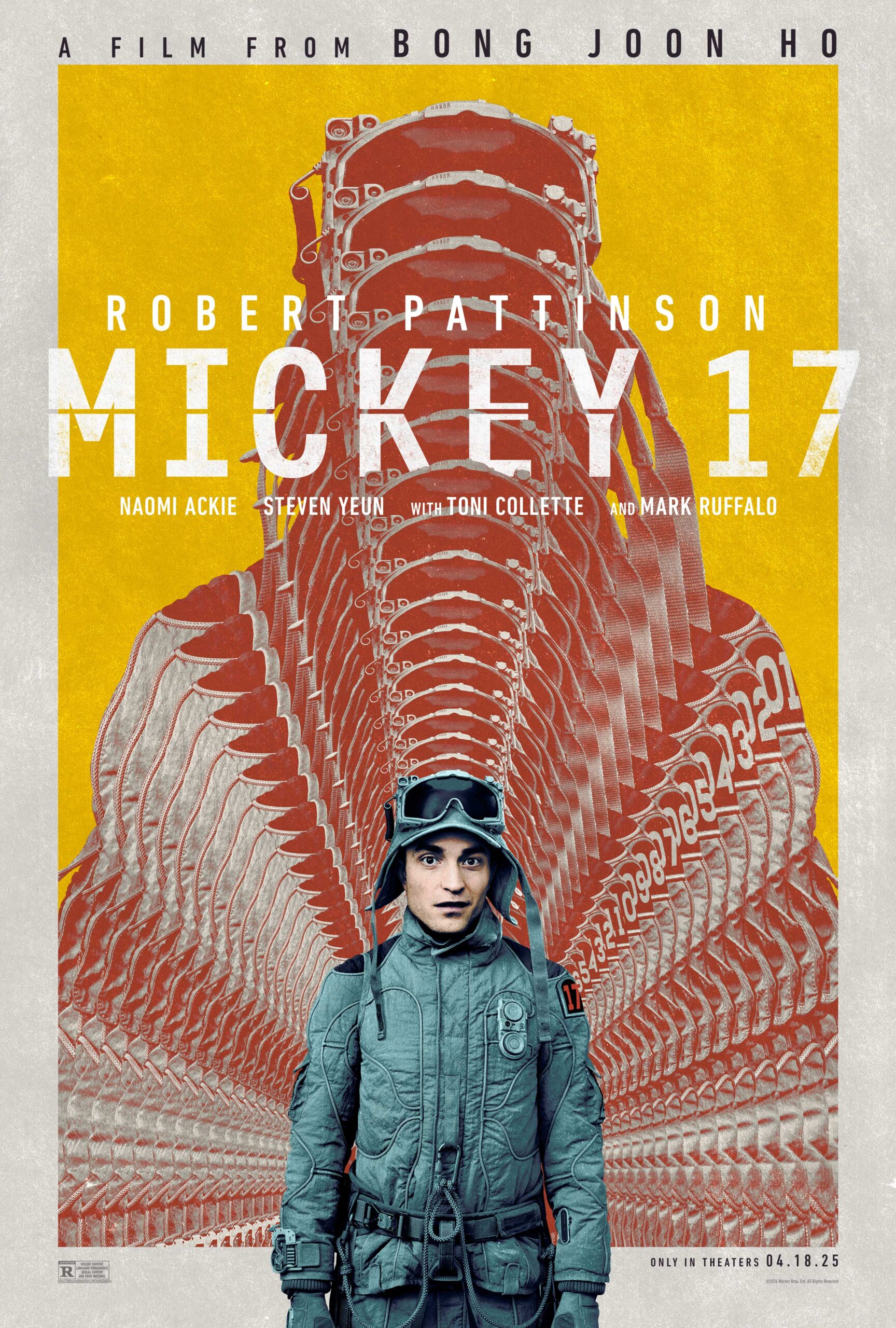
Ambitious but disjointed. Bong Joon-ho’s newest film Mickey 17 excels in technical achievement but the full impact of the story demonstrates greater concern for its satire, message, and world building than it does its plotting and structure. Blending multiple genre conventions, Joon-ho’s science-fiction, dark comedy begins with an intriguing premise underscores with existential questions, but ultimately doesn’t feel cohesive from beginning to end. Despite the exhaustive satire–which is entertaining at first–the film works excellently as a critique of the prolific mediation of society, obsession with the idea of self-made celebrity, and the camera fame. Additionally, it presents an exploration of humanity’s fixation on replication and surveillance. Perhaps the film doesn’t call out any particular app or platform, it certainly drives home the point that a monster can be created through obsession with one’s image, control, and manipulation of others.
Mickey Barnes (Robert Pattinson), a disposable employee, is sent on a human expedition to colonize the ice world Niflheim. After one iteration dies, a new body is regenerated with most of his memories intact.
Despite an intriguing premise, the narrative often succumbs to prolonged scenes and sequences, subplots that lack meaningful purpose, and over-explanation in come places whilst lack of purpose exists elsewhere. While the third act is strong and completely engaging, the first act is protracted and the second act is plagued by poor pacing brought on by a wandering direction. The protracted first act delays audience immersion into the core narrative. What would’ve served the plot better as a brief prologue, turns into most of the first act. Even though the film maintains a modicum of innovation and freshness, it struggles to sustain momentum, resulting in a clunky and disposable experience.
The film delivers a relatively strong performative dimension, which helps to keep the audience engaged–however weak the engagement–in the story. And, Robert Pattinson performance strikes a nice balance between nuanced and manic, which mimics the film’s darkly comedic tone. Between his and the other leading actors performances, collectively they add a rolling punchline to the monotony of many scenes and sequences in the film. Mark Ruffalo’s depiction of the authoritarian leader, Kenneth Marshall, is audacious and campy, but doesn’t take long for this performance to become exhaustive–a little goes a long way with Marshall. Playing Marshall’s wife is horror-fan favorite Toni Collette, and even her character overstays her welcome in most of the scenes in which she appears.
Both the plotting and character issues can be connected to the screenwriting, which lacks direction, purpose, and refinement. Mickey 17 is another example of a director with a great, even innovative movie idea, but should work with a screenwriter with a command of proper screenwriting conventions and mechanics to craft the story for the page, and eventually the screen. This issue is not unique to Joon-ho, but a recurring problem I find with many (if not most) writer-directors. Few directors can write as well as they direct; and the inverse is also true–few screenwriters can direct as well as they can write.
Mickey 17 serves as a critique of the mediation of society, wherein informative, entertaining, and surveilling media technologies devalue the individual resulting in individuality with dimension being reduced to a character or commodity to be traded and exploited for the sake of ratings and celebrity. Mickey’s existential crisis of repeatedly dying and being reprinted underscores the alienation experienced in a society that commodifies human existence. Furthermore, Keneth Marshall’s obsession with control and his self-made celebrity mirrors the obsession many have, in the real world, with their “celluloid” self–or more accurately today–their digital self.
Everything Marshall said or did was ran through an image consultant and production crew on how it would look on camera. Looking at the real world, each of those squared images on Instagram or vertical video on SnapChat or Tik Tok, only show an edited version of the subject–the framing and editing is specifically manipulated and articulated to shape the audience’s perception. While this is to be expected in motion pictures and television shows, many of these self-made celebrities and influencers on social media want the audience believe they are being authentic, when it’s all a facade. In this obsession with the camera and “framed” image, society is exchanging that which is real with a projected authenticity; furthermore, the lines between what which is real and that which is fictionalized (or augmented) are becoming increasingly blurred.
Bong Joon-ho’s Mickey 17 blends satire with science fiction but the film’s underdeveloped plot and uneven character portrayals prevent it from reaching the potential this film demonstrably had with the talent behind it.
Ryan is the general manager for 90.7 WKGC Public Media in Panama City and host of the public radio show ReelTalk about all things cinema. Additionally, he is the author of the upcoming film studies book titled Monsters, Madness, and Mayhem: Why People Love Horror. After teaching film studies for over eight years at the University of Tampa, he transitioned from the classroom to public media. He is a member of the Critics Association of Central Florida and Indie Film Critics of America. If you like this article, check out the others and FOLLOW this blog! Follow him on Twitter: RLTerry1 and LetterBoxd: RLTerry

 R.L. Terry ReelView