
 You’re about to enter a dimension, not only of sight and sound, but of mind. That’s the signpost up ahead. Next stop, Jordan Peele’s The Twilight Zone. Debuting on April 1st, the revival of the classic anthology series The Twilight Zone, created by Rod Sterling, hit CBS All Access. For many resisters to paying for a “broadcast” channel’s streaming app (whereas most apps are free or included with a cable/satellite subscription), CBS finally figured out how to force wallets. Between TZ and the new Star Trek featuring the highly anticipated return of Patrick Stewart as his most famous character of all time Captain Picard, CBS knows precisely how to get you to subscribe to its service. I’d love to see difference in subscribers before Peele’s Twilight Zone and after. Have you seen the new series?
Although TZ has been revived before, it never quite took off the way the original did, and still commands an audience. Regularly ranked as one of the best written shows of all time by the WGA, IMDb, and other respected organizations and sites, this show left an indelible mark on television. Furthermore, it has even influenced recent cinema and television as evident in shows/movies such as Black Mirror, Us, Are You Afraid of the Dark, Ex Machina, and more. Rod Sterling’s groundbreaking show creatively tackled complex issues such as conformity, the uncanny, human frailty, fear of the unknown, self-destruction, faith and lack thereof, paranormal/supernatural, and more. Specifically, it was a welcoming place for all kinds of people to explore these topics. No matter how the central character’s tragic flaw affected him/her, whether for the positive or negative, you could always count on the episode’s moral compass pointing north and a closing monologue from Sterling to tie everything up.
Right out the gate, I feel that the series premiere was on the weak side, but it made up for the sluggish start in episode 1 with episode 2 (released with E1), an adaptation of one of the most popular episodes in the original series Nightmare at 20,000 Feet. I thought it would be fun to analyze and review each episode in the seasons of this show. The challenge of this new series is to deliver the same powerful, memorable stories as the original. Since this is an anthology series, and therefore each episode is a complete story in and of itself, it is not fair, at this early stage, to generalize a review of the show–not yet anyway. So, you’ll find reviews of each episode in this blog. For the sake of readability, I’ve limited each episode to one paragraph. Simply click an episode to jump to that part of this running review.
Season One Evaluation
In short, this premiere season fell flat until Episode 10. It’s thanks to that single episode that we have hope that Peele’s series can perhaps overcome the plethora of struggles it has demonstrated it has in the future seasons. Pacing is a big issue, not to mention largely missing that Twilight Zone magic in most of the episodes. With the exception of Episode 10, the rest of the episodes do not justify their “hour long” runtimes. The plots that we have witnessed are better suited for a half-hour runtime. Striving to not be so on-the-nose or polarizing is something else that I would like to see moving forward. Some of the episodes this season depict unfair representations of groups of people that do not help facilitate progressive and beneficial discussions. Instead of being concerned with perpetuating ill-informed or prejudicial representations of types of characters, this episodes need to place focus on the root cause not the symptoms. Moreover, the future episodes should place more value in allowing the audience to make up their minds on how they view a conflict, allegory, or situation more than the episode telling you how to think, feel, or behave. Episode 10 gives us reason to look forward to season 2.
Episodes
- The Comedian
- Nightmare at 30,000 Feet
- Replay
- A Traveler
- The Wunderkind
- Six Degrees of Freedom
- Not All Men
- Point of Origin
- The Blue Scorpion
- Blurryman
The Comedian
 If you haven’t watched either E1 or E2 yet, I recommend starting with E2 because this first episode drags as it searches for its dimension. At its core, this episode is about the perils of fame, treating people as disposable commodities, and be careful what you wish for. Solid themes around which to build a show. Despite Peele having a shared writing credit on this first episode, the Sterling-esque monologue/narration and plot do not appear to have a singular unifying voice. Much like his recent Us struggles to tell a singular, coherent story. It’s an ambitious interpretation of Faust, but the episode isn’t capable of following up the ambition with effective delivery. If you recall, the majority of the original TZ episodes were half-hour shows. The original series wasn’t produced simply to entertain, but was written to tackle socio-political, religious, and psycho-social topics. This was accomplished through thought-provoking stories with am emphasis on the writing more so than the visual design. Now that I have the negative out of the way, I would be remiss to not highlight what it did well. The performances by lead Kumail Nanjiani and supporting cast Diarra Kilpatrick, and Tracy Morgan were fantastic! Additionally, the cinematography and editing were on point. One of the key differences between the original series and Peele’s new one is the production quality. Even though I have no issues with the production value and design of the OG, I do greatly appreciate this new one for the cinematic quality to the story. Had The Comedian been a 30min episode, I think that it would have been better executed.
Nightmare at 30,000 Feet
 Parks and Rec‘s Adam Scott figuratively steps into the shoes and sits in the airline seat of William Shatner in an adaptation of one of the most popular, recognizable and oft parodied episodes of the original Twilight Zone. Completely grounded in the premise of the original, but writers find a way to provide us with a new interpretation that brings the iconic plot into the 21st century. If you’re wondering if it’s an unnecessary, pretentious remake in the vein of Psycho (1998) or The Lion King (2019), then you can exercise relief as this episode will have you on the edge of your airline seat. Without going into spoilers, you’ll likely not think of podcasts or aircrafts in the same way next time you travel. Unlike the previous episode, this one is much stronger. I wish the series had launched with this as the premiere instead of The Comedian. When you think of the bizarre, uncanny nature of many of the original series episodes, you think of that intersection of shadow and substance a which these stories occur. And this reimagination of Nightmare at 20,000 Feet holds moderately strong to the pacing, tone, and structure of the original. Although the writing of episode 2 is tighter than episode 1, it still falls a little shy of the exemplary writing of the source material. For example, the original at 22mins delivers a more powerful punch with all the character and plot development therein than this new one does in nearly 1hr. That’s not to say that episode 2 is not effective and enjoyable–it is. But just not AS effective or memorable as the original. At the core, this story is about the worldview of having people think you’re crazy is almost worse than actually being crazy; furthermore, it also touches on the fear of terrorism. The windup is a little slow, but then as soon as he sits in his seat, you are in for the flight of your life. That is, until the final scene and closing words from Peele confuse instead of clarify (much like Us).
Replay
 After the fantastic second episode in Jordan Peele’s revival of The Twilight Zone, the third episode gets bogged down in politics instead of focussing on the moral or thought-provoking message. The science-fiction element of the now-retro camcorder that rewinds time gets overshadowed by the message of remembering one’s roots, but that theme gets lost when the plot chooses to divert attention to the relationship between white law enforcement and the black community. Taking its inspiration from another classic original episode, this one perpetuates and reinforces a real division that exists in some areas of the country between two groups of people. Although this episode could have been used as an allegory that could be applied to many different issues of prejudice and unfair treatment, it chooses to focus on one particular socio-political issue that runs the risk of further alienating audiences than unifying them. At its core, it is not about any particular theme but instead highlights the issue of white law enforcement brutality against black individuals. Replay could have been a powerful episode that inspires productive, positive change; but in lieu of a call-to-action, it reinforces the idea that most white law enforcement officers treat black individuals grossly unfairly. Statistically speaking, that is simply not true. But due to media attention and high profile cases that do show mistreatment that needs to be condemned, there is a growing idea that this is the state of affairs in general. Yes, this is a real issue that has been highlighted in the news for years now, but I am afraid an episode like this seeks to divide instead of mend or evoke constructive change. In terms of the plot, the episode executes its setup quite well, but feels stretched to fill the “hour” much like the previous two episodes. Our lead characters are developed effectively and we even get a backstory that is strategically revealed as we work our way through the story. Like with the first two episodes, we also witness excellent performances by the three lead characters in this episode. I appreciate Peele’s desire and ambition to approach this series like Sterling did; but it needs to deliver episodes that can be applied more generally to present-day audiences that can stand the test of time instead of focussing on message delivery that makes it a time capsule.
A Traveler
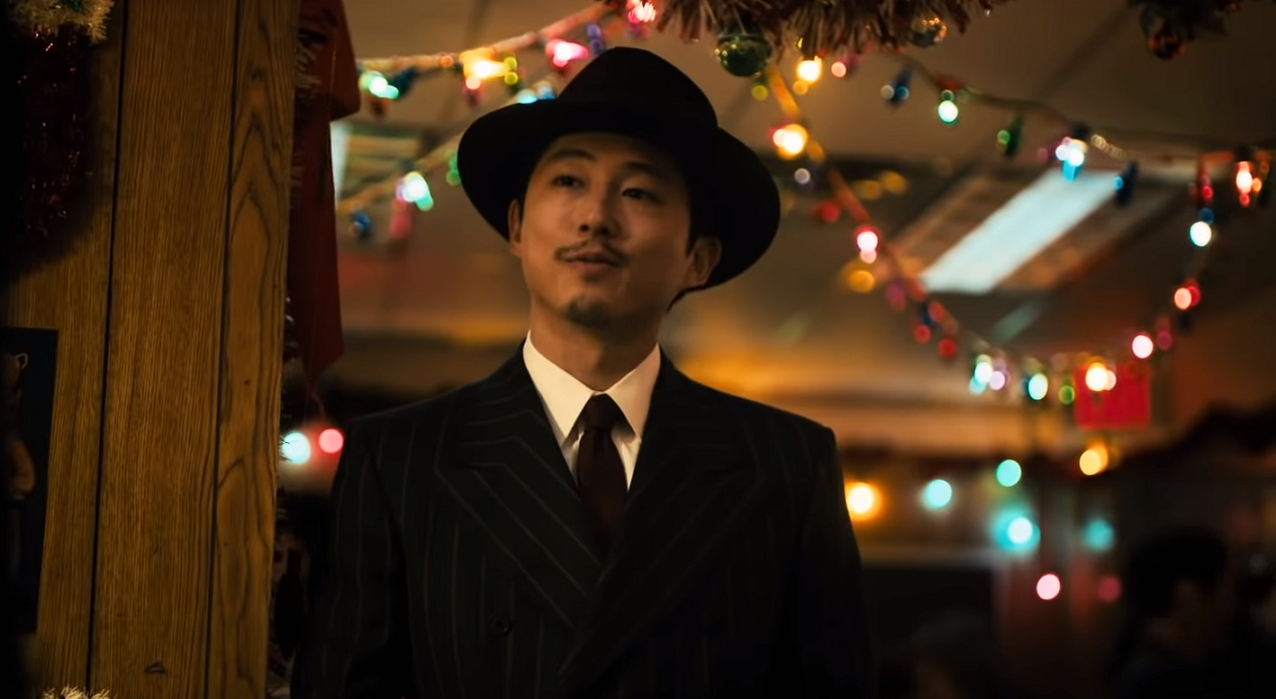 It’s Christmastime in the Twilight Zone. More so than any of the previous three episodes of Jordan Peele’s Twilight Zone, this episode sets up its characters and plot more effectively than any other. The beginning truly feels like a Sterling-inspired episode. Whereas the previous stories in this new anthology series struggle to find their respective places within the library of Twilight Zone episodes, this one starts out as close to the pacing, tone, and feel of the original series as we have seen so far. The setup is so effective, that we don’t even need the opening commentary by Peele in his brilliant Sterling-fashion. Although this episode, like all previous ones, feels stretched for time, it attempts to follow the “joke” structure of the original series closely. I don’t mean joke as in funny-haha, I mean joke in that the OG episodes quite regularly setup the plot/characters in Act I, reinforced the plot/characters in Act II, then disrupts that pattern with a twist in Act III. If this were a typical joke, then that twist would be the punchline (“I’ll have 3 chili dogs, salt & vinegar french fries, and a diet soda”). In the case of A Traveler, Acts I and II are outstanding, but then the twist in Act III is a let down. The payoff does not equal the windup. Instead of adapting or reimagining any single classic episode for the new series, this episode channels several classic episodes in order to repackage into a new story. Like with the previous three episodes, this one takes a classic approach and attempts to comment on ethnocentrism, appropriation of property, and forcing a native people out of its land if it doesn’t conform to the “superior” group, but this analogy never quite solidifies. Without spoiling the twist, it is a twist that would have worked very well during the run of the original series, but doesn’t work as well in 2019. I appreciate the reason for the mysterious traveler’s sudden appearance, but just doesn’t do it for me. One of the best parts of the original series is that the end often prompts the audience to vicariously interact with the story by deciding what they would do. But that power is withheld by the audience by allowing a character to voice what should come from the audience. Moving forward, I hope to see future episodes that stick close to the pacing and tone of the original, but still provide the audience with the ability to interact with the story.
The Wunderkind
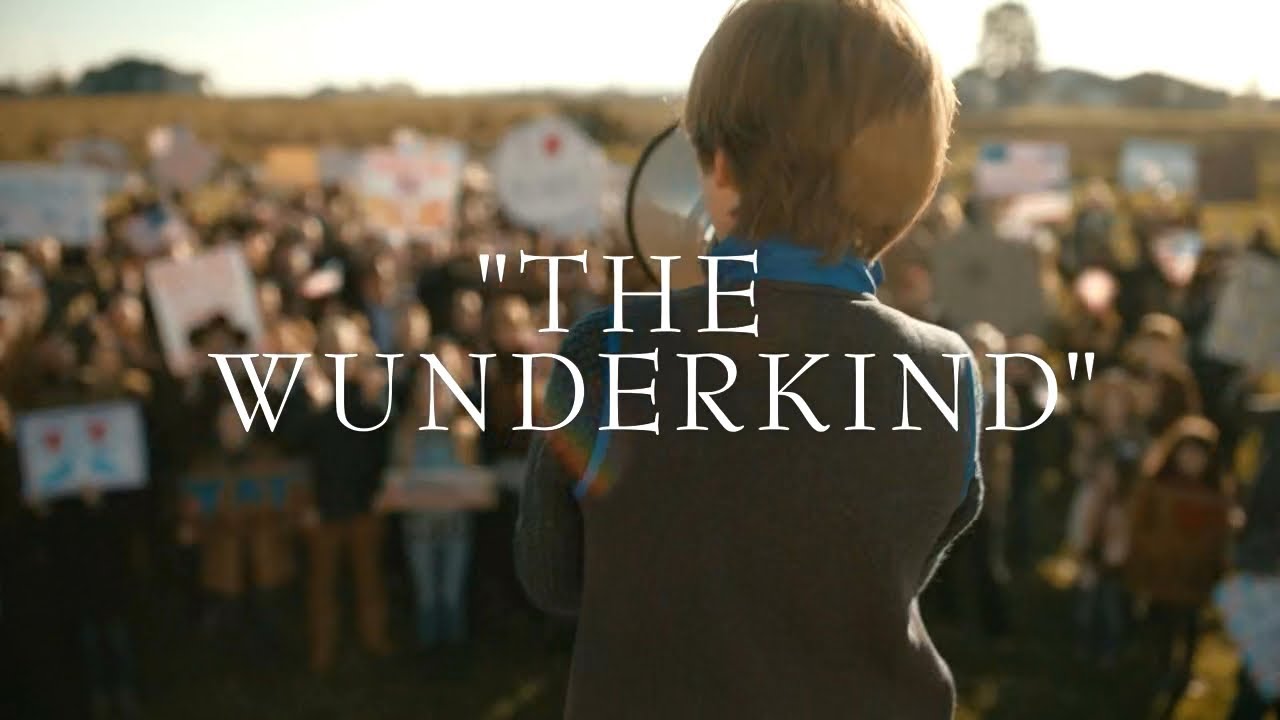 Aside from episode two which was a direct adaptation from the OG, this is the episode that feels more like Sterling’s Twilight Zone than any of the others in terms of tone and substance. Parts of the plot of this episode feel like they are inspired by the famous It’s a Good Life episode about the boy whom wishes you out into the cornfield or kills you in front of him if you disagree with anything he says or feels. It’s his way or the highway. Clearly, this episode is a commentary on a child-like spoiled president, so it doesn’t take a political analyst to pinpoint the inspiration for the character of Oliver. Although many, if not most, of the most memorable TZ episodes contain a strong science-fiction or supernatural element, this one is a political satire. Unfortunately, that means that it may not sit as well with many TZ fans; however, I am a lifelong fan of the OG (the jury is still out on this one) and I enjoyed it. Albeit foreshadowed, the twist at the end is still very Twilight Zoney. Where this episode shows weakness is in the writing (again). I know that I mention the writing often, but it does seem to be this iteration’s Achilles heal. Like with previous episodes in Peele’s TZ, this one is also stretched to fill the nearly hour run time. Had this been a half-hour episode, then I feel that it would have exhibited better pacing. It starts out quite well, but get’s incredibly sluggish in the middle, then finishes strong enough. What I find particularly interesting about this episode is the commentary, not only on the president, but on the American public that despite knowing presidential politicians are manipulative, still readily believe whomever the newest or perhaps most unique candidate is. The takeaway from this episode is to be ever vigilant of the nature of those whom seek your vote or approval because it is likely that there is a significant self-serving angle to serving the public.
Six Degrees of Freedom
 Heavily inspired by classic Twilight Zone stories, this episode never truly leaves the launchpad. Six Degrees of Freedom features a six-man spacecraft crew on a mission to lay the groundwork for a colonization of Mars since Earth is nearly destroyed. After a reported impending nuclear attack, the crew decides to launch instead of a more conventional evacuation. With Mars nearly 300 days away and a presumed destroyed Earth behind them, they embark on the mission. The crew has a lot of time to ponder the tragic events they narrowly escaped and the overwhelming responsibility of what to do on Mars. The setup in this episode is classic Sterling, and works incredibly well. In fact, I was excited that this episode was going to feel like a 21st century interpretation of previous plot–the soul of the plot remaining in tact, but with an updated setting and more diverse characters. Abort. This episode does not deliver what it promises in the opening. We may have a more diverse cast, but all of the characters are flat, lacking in any substantive dimension. Unlike the crew of the Nostromo, this crew comes off as lacking in training and preparation for this mission. I get that the pressure of a doomed mission, lengthy periods in space, and the trauma of the alleged destroyed Earth are brilliant plot tools to wear down the rational, disciplined mindsets of the crew; and the breakdown, manifest itself in an undesirable human trait that contributes to the psycho-social breakdown of the crew, but these crew don’t seem like they are qualified for their respective jobs to begin with. Perhaps the goal of the teleplay was to showcase this crew of six (interestingly, six is the Biblical number of man) as a microcosm for out present society, but that analogy is lost in the vapid dialogue and lack of context for the interpersonal conflict. This launch never truly reaches the orbit of Sterling’s Twilight Zone.
Not All Men
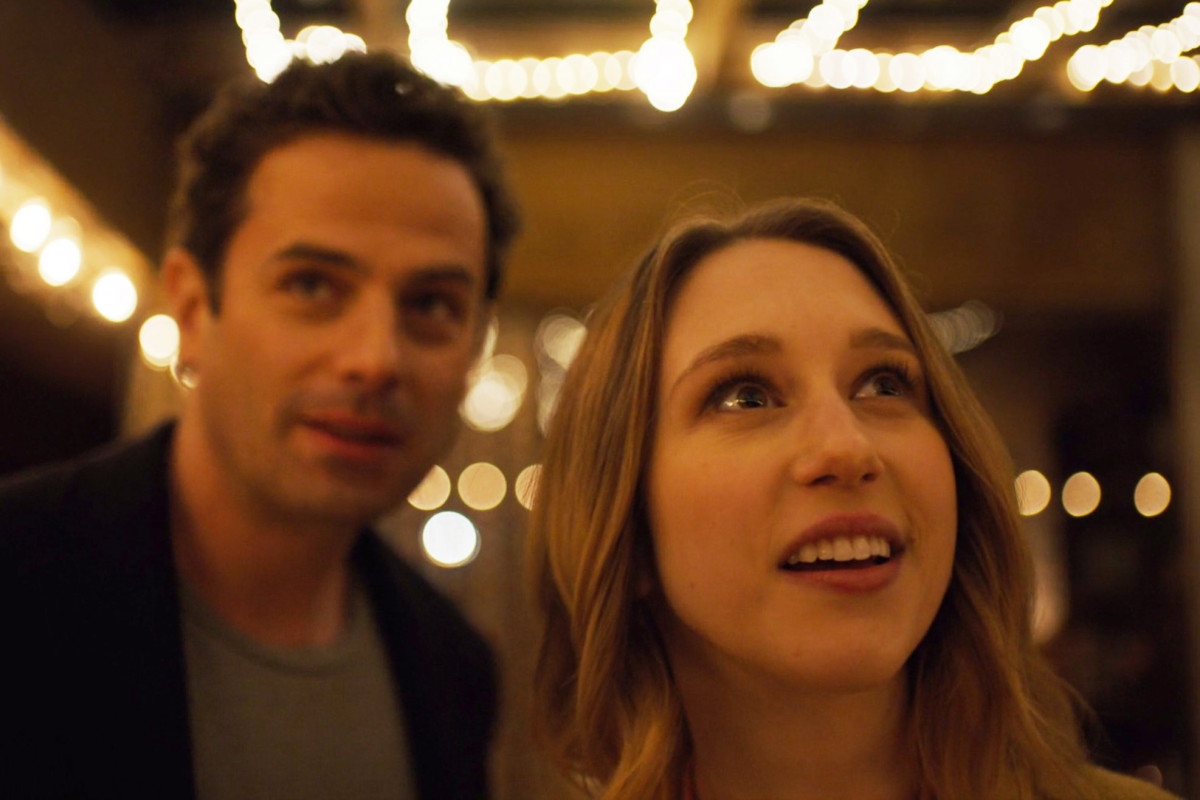 Loosely based on the classic Twilight Zone episode A Good Man is Hard to Find, this episode of Peele’s show is built around the idea of personal choice. Unfortunately, it lacks the power it could have had by only focussing on the idea of toxic masculinity. Whereas the show could have packed a more powerful punch by showing both men and women grappling with a refusal to give in to primal behaviors and violence, it just shows one group effected by the meteor. I know why; toxic masculinity is constantly in the news and on social media; but the truth is that both men and women can exhibit toxic behaviors that have a negative impact upon society. The twist of the meteor acting as a kind of placebo was a nice TZ touch that I appreciated immensely, but wish the episode truly drove home the point that we ALL have toxic behaviors and thoughts that could significantly impact our outward actions unless we make the intentional choice not to act upon them. Case and point: revenge. Revenge can become an all-consuming monster unless it’s checked. We have to weigh our selfish or self-centered tendencies against the greater good of society and more personal relationships. I love the idea of the plot of this episode, but wish the execution had been more effective. As has been the pattern established so far, this episode boasts excellent acting, cinematography, and direction.
Point of Origin
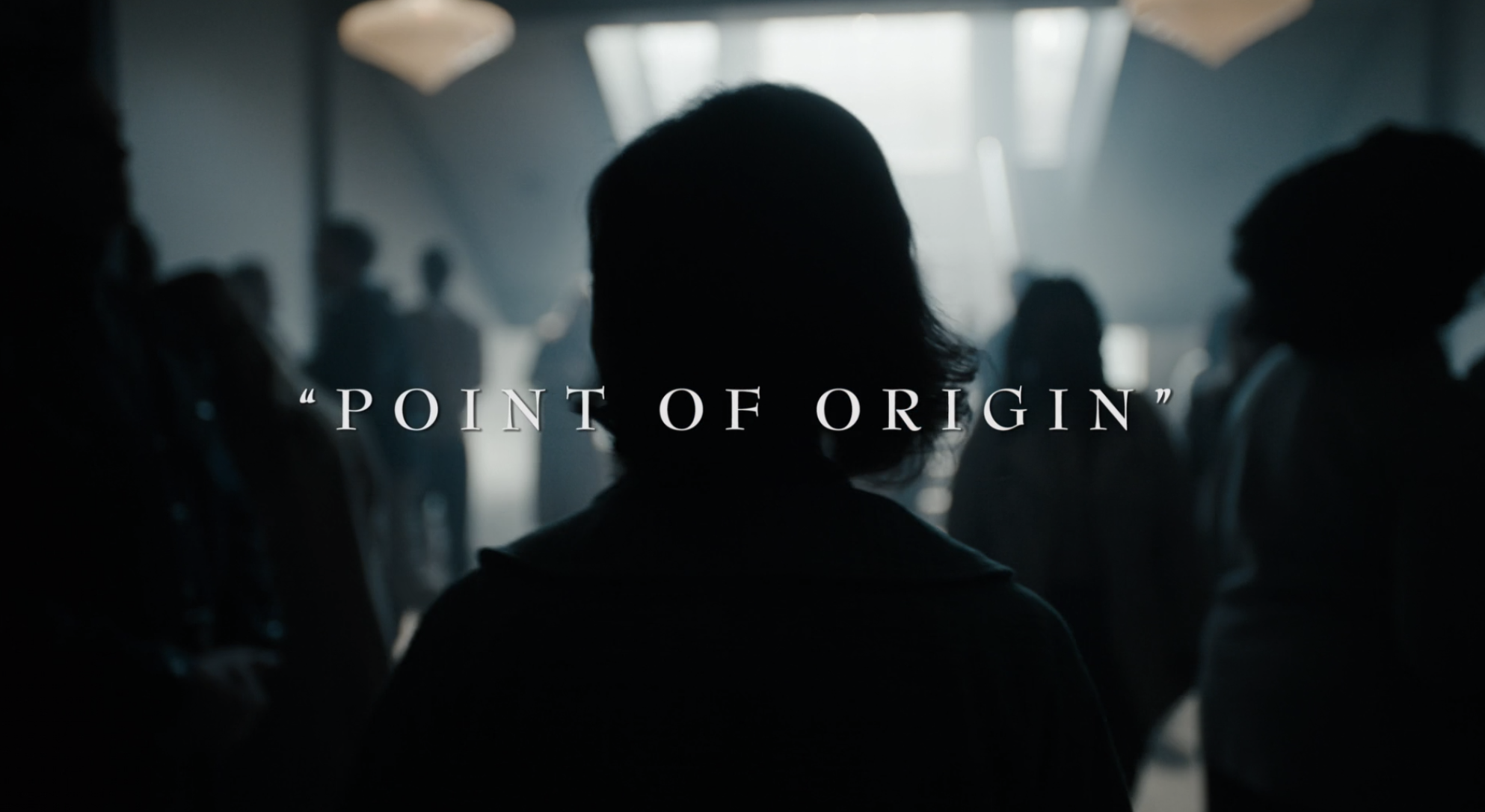 An apt title for an episode that truly feels grounded in the original Sterling series. Instead of feeling like a sermon, the original series often depicted a story that didn’t answer some posited philosophical or sociological question but ended just before a directed action was requested of the audience. The main idea of most of the episodes (much in the same way Black Mirror does) was to confront the audience with a thought-provoking question and leave it at that. Allow the audience to decide what they are going to do with the story and commentary therein. Although this episode is clearly on immigration, it moves the conversation from the familiar to the unfamiliar–to another dimension altogether. Although the character of eve is completely unlikable (problematic in my mind), she is the vessel though which we experience what it would be like if you were accused of being an illegal immigrant, brought here as a child with no memory of life before. While we are never given a full explanation WHY the interdimensional beings fled their home to make a new life in ours, it is ultimately unimportant. The stark contrast from the life Eve built for herself to the soul crushing surroundings she finds herself in, works well to depict what it must feel like to be forcibly extracted from all you’ve ever truly known and thrown into a frightening situation. Elements of this episode are incredibly terrifying.
The Blue Scorpion
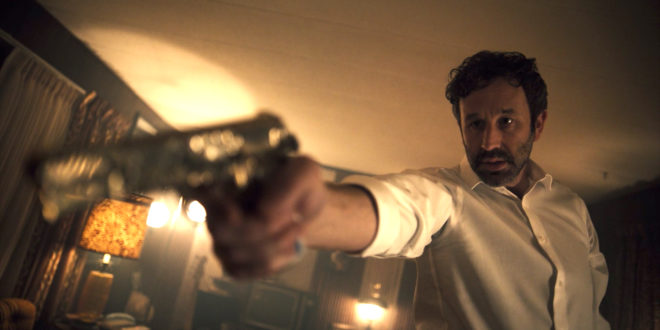 Probably the least enjoyable of all the Season 1 episodes. The Blue Scorpion wants so much to comment on gun control–and not in a subtextual way. It is way too obvious. When providing social commentary, Rod Sterling’s original Twilight Zone was seldom on the nose. From the opening scene, this episode is up front and center with its topic. All that’s missing is a Powerpoint presentation to accompany this episode. Not to mention it struggles with the same pacing problems that all the episodes have–taking what might work well in 30mins, and stretching it to fill the “hour long” runtime. Had the episode taken a more creative approach to the obsession with and lack of legislation regarding firearm access and use in the United States, then perhaps this episode would have played out much stronger. As it is, the sledgehammer approach is not only polarizing but shows a lack of understanding of why the original series worked so well. While it is common knowledge–also demonstrably evident in this series itself–that Peele displays a great admiration for the legendary show, he seems to have missed the whole point of why it worked and still works so well. Thankfully there are comedic elements in the episode in order for it not to be entirely depressing.
Blurryman
 While most of the season has been lackluster and continues to provide evidence that Netflix’ Black Mirror is the more thoughtful “new” Twilight Zone, episode 10 of Peele’s series is the most Twilight Zone of the first season; furthermore, this single episode provides hope for the otherwise forgettable series. Until Ep10, if I was to attribute an over all title to Season 1, I would have called it “Twilight Zone: Failure to Launch,” but thanks to this single episode, the series leaves us with a glimmer of hope for the subsequent seasons. If you select just one episode of this series to watch, make sure it is this one. Not only does it provide excellent technical elements and a fantastic cast, the writing is exemplary. Even though from an editing perspective the final scene is wonky, a bit clunky if you will, this teleplay is the best of the season. It nearly overcomes the pacing problem as well. More than any other episode, this one almost justifies its “hour long” runtime. Of all the twists that we have encountered this season, Blurryman has the best one. With meta horror and meta science-fiction being popular storytelling methods nowadays, I was waiting for this season to deliver a meta episode. And sure enough, this is it! All the way down to Jordan Peele playing himself and the writer of some of the episodes visiting the sets of her episodes (i.e. the bar from The Comedian). Zazie Beetz plays a teleplay writer for The Twilight Zone and she begins to see and get stalked by a blurryman on the set of the show. The episode follows her on her descent into madness as the entity, primarily visible to her except at the very beginning, pushes her to question her reality. Unlike the previous episodes, wherein there is no need to worry about talking about spoiler content, this is one that needs to be experienced without any knowledge of the twists and turns after the first act. The only negative critique I really have of the episode is failing to achieve what the Twilight Zone Tower of Terror at Disney’s Hollywood Studios was able to accomplish when the iconic attraction opened in 1994. Once you watch this episode, you will know precisely what I am talking about.
You can catch Ryan most weeks at Studio Movie Grill Tampa, so if you’re in the area, let him know and you can join him at the cinema.
Ryan teaches screenwriting at the University of Tampa. If you like this article, check out the others and FOLLOW this blog! Interested in Ryan making a guest appearance on your podcast or contributing to your website? Send him a DM on Twitter!
Follow him!
Twitter: RLTerry1
Instagram: RL_Terry














 R.L. Terry ReelView