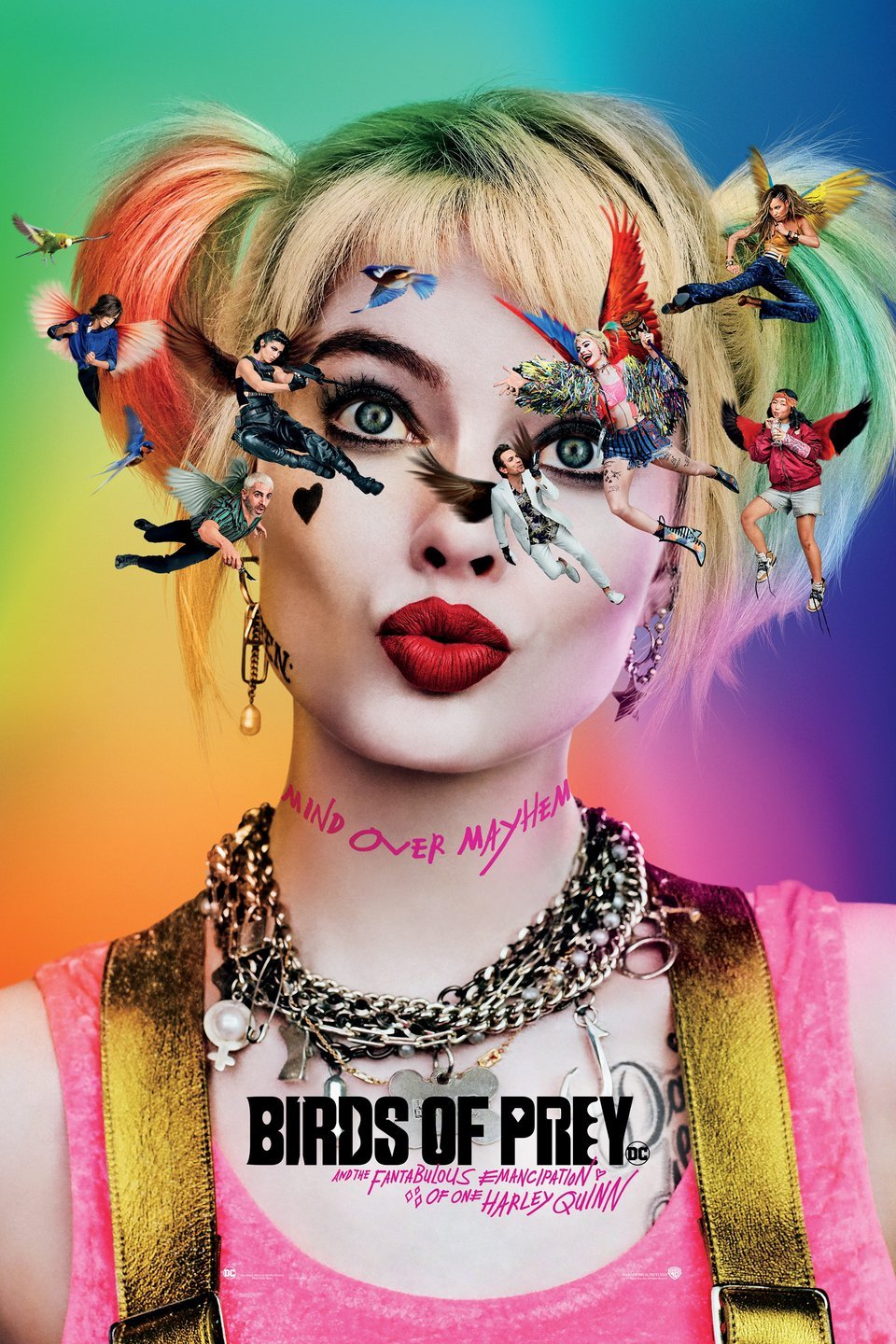
 Harley Quinn Returns. Warner Bros. and DC’s Birds of Prey: and the Fantabulous Emancipation of One Harley Quinn (from hereon out Birds of Prey, haha) is energetic, entertaining, and electrifying! Margot Robbie is a knockout! This out of this world comicbook movie is well written and directed, and even has an intimate feel in the foreground on the backdrop of outrageous, larger than life chaos. Par for the course in Gotham. Fortunately for this movie, most of the footage from the trailer was taken from the first few minutes of the movie. So, you never feel as though you’ve seen whole thing in the trailer. If Batman Returns and Deadpool had a baby, and that baby’s nanny was Kill Bill, then this is the movie that you would get! It has the brilliant camp and production design factors with the sass and action of the former two, along with the strength and determination of the latter. A winning combination, considering that Batman Returns is the best Batman movie of all time (and yes, I will die on that hill). While the trailer may make this seem like an ensemble cast for most of the movie, it really is about Harley Quinn with the other characters coming into play more significantly in the latter half of the movie. This was a strategic move by the writer and director in order for the the movie to be driven by the fallout of the breakup between Harley and Mr. J, that anti-hero anarchist spirit, and high energy optimism that defines Quinn. What we have here is a good, solid story. Yes there is the theme of female empowerment and sisterhood, but that is on the nose. The real power of this movie, and why Suicide Squad cannot even hold a candle to it, is the thoughtful story, precision plotting, and character driven conflict with plenty of reactions. Birds of Prey takes what we have grown accustomed to in comicbook movies (both DCEU and Marvel), and places it in that semitruck at the beginning of the movie, then watches as all the rules and tropes explode as the truck collides into the chemical plant! No tortured psyches, skybeams, sense of duty, or derivative action sequences here, Birds of Prey delivers explosive action and hilarious antics! All this and more awaits you in this beautiful mess of a movie.
It’s open season on Harley Quinn (Margot Robbie) when her explosive breakup with the Joker puts a big fat target on her back. Unprotected and on the run, Quinn faces the wrath of narcissistic crime boss Black Mask (Ewan McGregor), his right-hand man, Victor Zsasz (Chris Messina), and every other thug in the city. But things soon even out for Harley when she becomes unexpected allies with three deadly women — Huntress (Mary Elizabeth Winstead), Black Canary (Jurnee Smollett-Bell), and Renee Montoya (Rosie Perez)–in their respective efforts to locate the expert pickpocket Cassandra Cain (Ella Jay Basco). (IMDb summary)
If Quintin Tarantino was to direct a comicbook movie, this is precisely the kind of movie that he would write and direct. Birds of Prey director Cathy Yan and screenwriter Christina Hodson (Bumblebee) certainly seem to have channeled their love of the films of Tarantino and Waititi in the development the outstanding screenplay for Birds of Prey. It has the non-linear storytelling and violence of Tarantino paired with the tongue-in-cheekness and characterizations of Waititi. From journalist and graduate student at NYU Tisch School of the Arts to directing a major motion picture for global brands such as Warner Bros. and DC, Yan is certainly a director to watch as she continues to grow in her career. She is the kind of director that DC needs in order to develop comicbook/superhero movies that are highly engaging yet have a great deal of heart. Although I did not know the screenwriter of Bumblebee was also the writer for this movie, in retrospect, I can completely see it! Hodson knows how to craft a thoughtful story in the middle of explosive action, all the while, keeping the focus on the characters whose conflict drives the story. On the surface, this may seem like an action-driven story, but in all reality it is character driven at its core.
While some may find (and have found) the narrative exposition and nonlinear storytelling to be distracting, I find that the combination makes perfect sense for how the plot is being laid out for us; it works very well for this movie. There are similarities between the tone of Deadpool and Birds of Prey but they are different movie experiences. Each uses narrative exposition, but use that tool in different ways. Deadpool engages in breaking the fourth wall in a very Mystery Science Theatre or RiffTrax way, whereas Harley Quinn uses it in a diegetic manner. Same tool, but expressed very differently. I greatly appreciate how Quinn used this narrative device in the same way that you and I tell stories to our friends. How often have you found yourself telling recalling an event from your life and telling that story to your friends, and you get to a point at which you realize you need to preface something, and then jump back to setup that point? Probably a lot of the time! I know I certainly do. It’s like you’re so excited to get to a point in the story, but then you forget that your friends need to know what happened to setup why its important or significant. And that is precisely what Quinn is doing with her narration and what the director and writer did with the setup of the main action plot. The method that the story is laid out in front of us is a very organic way of oral storytelling. When you orally communicate a story, there is no edit button, back space, page jumps, or anything else that we use in writing to linearly tell a story (linearly being the most conventional). So yes, it is nonlinear, but otherwise it would not feel as relatable or natural.
We have both wonderfully entertaining performances and well-developed characters! The strength of this movie is built upon the characters and the conflict therein. While we do spend most of the movie with Quinn, we are methodically introduced to key characters that effect the main action plot subplot along the way. Quinn’s external goal is to retrieve the Bertinelli diamond, which is driven by her internal need for a relationship. While I won’t go into details as to how she eventually retrieves the famed diamond, as I do not want it get into spoiler territory, I will comment on her internal need for a relationship that drives the main action plot. She is longing for a relationship after Mr. J. dumps her. She feels an emptiness inside. Ironically, she desires to belong to something or someone. Ironic in that a harlequin lives to serve. What she could never have known is that she would find the sense of belonging in the relationships she forms with our supporting cast of characters that she encounters along the journey to retrieve the diamond. What she finds is NOT a romantic relationship, but a sisterhood that provides her with all the love she needs and a group to whom she can love in return. None of us (or most of us, anyway) want to be alone; we want relationships in our lives. Many find that through romantic relationships while others find it through close friendships. Sometimes both, if you’re fortunate in that way. Between her pet hyena, a pick pocket, and the newly formed group Birds of Prey, Harley Quinn’s internal need for relationship is met beautifully! It’s also this subtext that creates that intimate story amidst the backdrop of chaos.
I mentioned Batman Returns in my opening paragraph. And if you’ve seen the movie, you may be wondering why and where does Birds of Prey have elements that nod to and remind me of Tim Burton’s masterful Batman movie. Clearly, if you are wondering, then you (1) haven’t seen the greatest of all Batman movies or (2) have forgotten about the incredible art of Batman Returns. For starters, Quinn’s costume choices are very much Burton-inspired and there are several moments of dialogue that feel right out of Returns. What we love about Batman Returns is the camp factor and over-the-topness of the costuming and production design. Furthermore, there is one series of scenes in particular that are ostensibly taken right out of Returns. And this isn’t a spoiler. The production design, architecture, and set decorating in the Amusement Pier scene at the end of Birds of Prey are heavily inspired by the defunct zoo setting (Penguin’s lair) in Batman Returns. It is a fantastic combination of German expressionism and French surrealism. I absolutely love the design of the fun house and the execution of the explosive showdown! Birds of Prey strikes a perfect balance of bringing old and new fans alike together for a great comicbook inspired movie!
I highly recommend this movie to all fans of comicbook or superhero movies! Whether you are a DC or Marvel fan, or the rare DCMarvel fan, I feel strongly that you will fall in love with this movie. Although it is still incredibly fresh on my mind, and hasn’t had proper time to steep, presently I feel that it may wind up at No.3 of all-time favorite comicbook/superhero movies for me with No.1 being Batman Returns, No.2 Batman 89, and No.3 Birds of Prey.
Ryan teaches screenwriting at the University of Tampa. If you like this article, check out the others and FOLLOW this blog! Interested in Ryan making a guest appearance on your podcast or contributing to your website? Send him a DM on Twitter or email him at RLTerry1@gmail.com! You can catch Ryan most weeks at Studio Movie Grill Tampa, so if you’re in the area, feel free to catch a movie with him!
Follow him!
Twitter: RLTerry1
Instagram: RL_Terry

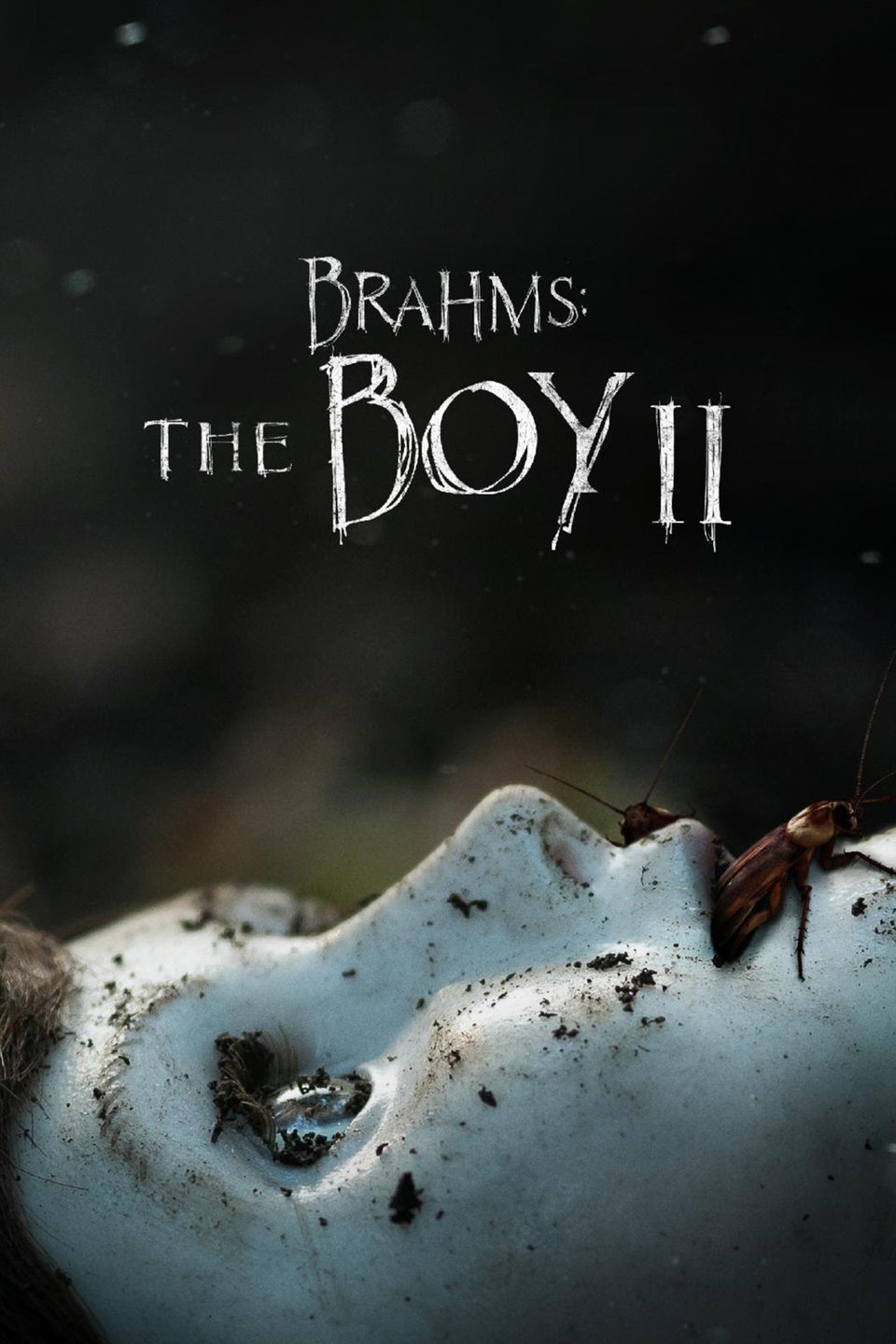 While the ending of Brahms: the Boy II may ruin the rest of the movie for you, at least you can make it to the end, because The Assistant will put you to sleep faster than Ambien. Much like with the first The Boy, this one also has a fantastic setup, but the outlandish, from-out-of-left-field, bizarre showdown will undo any and everything done well in the first two acts. The scariest part of the movie is the very beginning when the catalyst for the entire story occurs. Even though horror sequels do not tend to be as strong or as appealing as the original–and that’s assuming the original IS good, which The Boy is not–there are surprises such as Ouija: Origin of Evil and Annabelle: Creation, both of which were far superior to the original. The aforementioned are excellent horror films! This is important to know because that is why I was cautiously optimistic for Brahms: the Boy II. Even though the first one was bad, there was hope that the sequel would be good, especially after the trailer wasn’t half bad. Needless to say, I was completely wrong. The same problems that plagued the first one, plague this one too. The writer certainly knows how to setup a story, even deliver some tension-filled conflict, but then drops the ball and get lazy in the third act. I don’t think anyone truly went into this movie wanting a compelling story, thoughtful social commentary, or anything along those lines, but it billed itself as a fun movie. And it was not. If your movie isn’t going to be “good,” then it at least needs to be entertaining all the way through. Although, this movie was far more entertaining and engaging than The Assistant. And that’s not saying much.
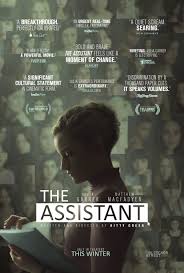 The Assistant is one of those intimate dramas that undoubtedly began with the intention to explore the sexist nature of office culture, the film industry, and why whistle blowers are afraid to come forward. There is a thoughtful, relevant, timely topic in this film that needs to be dramatized more, but instead this one seeks to put you to sleep instead because the screenplay gives these characters nothing to do, no goals, or any meaning behind the action plot. Not much of a plot to begin with. With such an opportunity to craft a thought-provoking film WITH a compelling plot, I wonder why it wound up just feeling like a “day in the life of” and that’s pretty well it. As I tell my student, “a day int he life of” is not a plot in and of itself. Interestingly, the trailer made this one look like Office Killer, but it’s definitely not horror nor even horror-adjacent, in the conventional sense. This same story would have worked so much better had it gone the horror route to comment on office culture like the neo cult classic Office Killer. Thankfully, I watched The Lodge before these two movies the week they all released, and that film helps to make up for the time spent with these two.

 R.L. Terry ReelView