The “Attraction” of Horror: a ‘Psycho’analysis (part 1 of 2)

HitchcockAttractionJust as audiences are fascinated by horror movies and seek to watch that which would be repulsive in real-life, they are equally fascinated in immersing themselves into the experience by way of a theme park attraction. This phenomenon is not limited to horror movies, because rides like Jurassic Park the Ride (Jurassic Park River Adventure in Florida), Revenge of the Mummy, and Pirates of the Caribbean beckon millions of guests a year. In addition to attractions based on the movies, movie studio executives and theme park engineers created attractions that embody what Carl Leammle first envisioned, by taking the audience behind the magic of the movies. This is the case with the (now closed) Backlot Tour at Disney’s Hollywood Studios and Hitchcock: The Art of Making Movies at Universal Studios Florida (Murdy, 2002). The relationship between the cinema and theme parks is a strong one and creates an energetic synergy that entertains millions of people each year by eliciting laugher, screams, tears, and smiles.
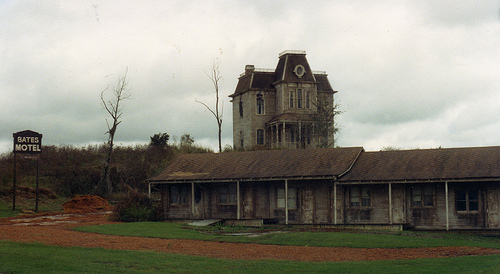
BatesMotelFloridaThe most admired and revered part on the famous studio tour at Universal Studios Hollywood is the Bates House and Motel. As the tram passes the iconic motel and house that set the bar against which all other slasher films would be judged, an actor portraying Norman Bates charges toward the tram wielding the famous butcher’s knife (Murdy, 2002). Even though the audience knows this is a tour behind the scenes of the most utilized backlot and studio in the world (Milman, 2001), there is something uniquely special about this chance encounter on the tour. And, that something is what the designers of the guest experience on the studio tour use to bring about the successful convergence combining both the original movie and the live experience. In order to successfully complete the transposition from the movie to the live experience, the attraction designers tapped into the uncanny or unheimlich (Freud, 1919) of Psycho and utilized the elements of terror and shock to facilitate the aura of horror that exists just by looking upon the timeless motel and house.
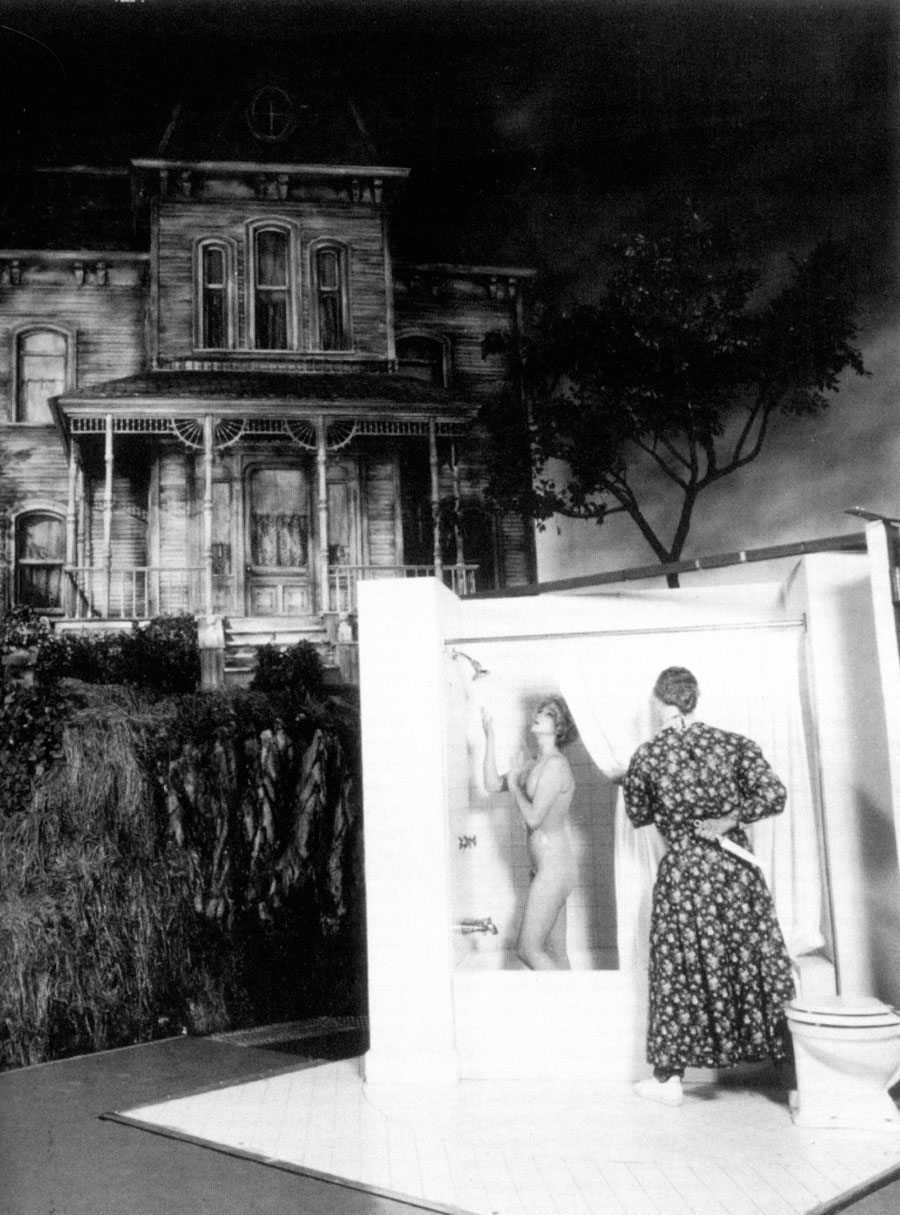
Psycho_SoundstageCentral to Psycho and the single most famous scene in cinema history (Cosgrove, 2013) is the groundbreaking shower scene. And, it is the highlighted element at the former Universal Studios Florida attraction Hitchcock: The Art of Making Movies. One of the opening day attractions located in the former Production Central area of the park (Singer, 2013), this attraction took park guests into the world of suspense and horror as meticulously crafted and defined by Alfred Hitchcock (ThePsychoMovies.com). Although it was replaced with a less critically important and pivotal movie themed attraction in 2002 (mostly to attract younger audiences), it is an excellent example of the fusion of horror cinema and themed entertainment attractions. In addition to the Art of Making Movies attraction, there was a recreation of the infamous motel and house in the park built for the filming of Psycho IV: The Beginning in 1989-90 (MovieMassacre.com, 2014). For those who have seen Psycho, the very sight of the motel and house is enough to strike fear into the mind and bloodstream. It is representative of the very best that horror cinema is able to offer society. In no attraction, based off a work of horror, is there a better example of the very essence of horror films than in the synergistic experience of beholding the four-fold elemental process of the Hitchcock: The Art of Making Movies attraction (Singer, 2013).
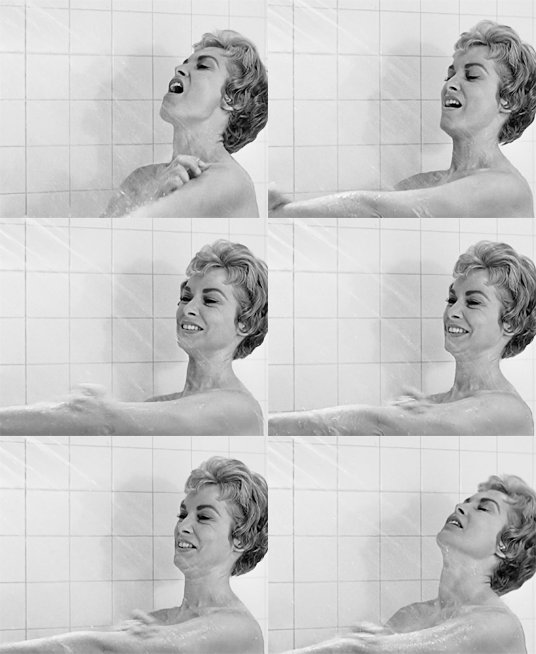
PsychoShowerClensePrior to ‘psycho’analyzing  the attraction of horror, it is imperative to understand why the shower scene is the single most famous scene in all cinema. The shower scene is a roller-coaster of emotions; and, in many ways, this scene in and of itself follows the basic structure of a story (introduction, rising action, climax, falling action, and denouement). The scene begins with Marion closing the shower curtain as we get a closeup shot of her face as the shower turns on.  Given this closeup, the facial expressions are easily denoted on her face. The flows of emotions on her face resemble the face of someone who is being cleansed from or baptized for their transgressions. This emotional transition is made more clear when comparing this scene to the earlier one with Marion and Norman in the office when she suddenly feels as if she “stepped into a private trap” and wants to see if she “can step back out of it” (Psycho, 1960). In addition to the metaphoric sin cleansing affect of the shower, Marion is also physically and emotionally exposed and vulnerable. And, what about that showerhead? Throughout the movie, there are eyes on Marion (real estate buyer, boss, police officer, mother’s eye, etc…). The frequent cuts to the showerhead essentially imply the showerhead as yet another eye watching Marion. Furthermore, the frequent cuts to the showerhead also help to create the sensation that something is not right.

Following the symbolic cleansing in the shower, the audience witnesses the shadowy figure emerging from the bathroom door and walking up to the infamous shower. Due to Hitchcock’s use of the cinematic rule of thirds, we are already expecting the entrance of someone before the door ever opens. Through the eyes of the camera, we see Marion’s private space is violated by this shadowy figure. The camera slowly zooms in to the figure through the opaque curtain until the moment when the shadow throws open the curtain and there is a closeup of Marion’s face exhibiting total terror as the knife is raised against her.
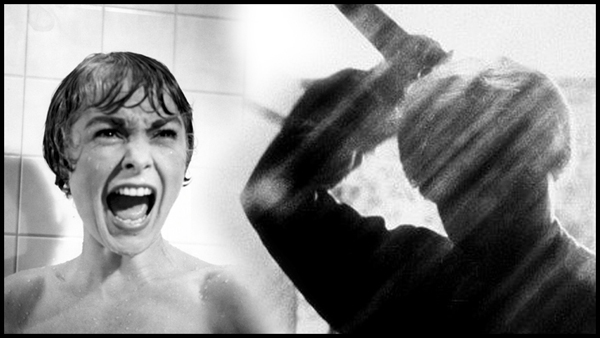
PsychoShowerScreamImmediately after the shots of Marion’s iconic scream and the knife, the speed of the cuts increases exponentially. Aside from having to creatively cut the film in such a way that neither Marion’s naked body nor a knife officially penetrating her body is seen, the speed was necessary to enhance the disorientation and violence of the relatively short montage. Through both objective and subjective shots, we are both mother and Marion within hundredths of seconds of one another. The precise cuts in the film give the illusion that Marion is being stabbed multiples times; however, there is only one shot that captures the knife barely penetrating Marion’s vulnerable and exposed flesh. The terrifying key to this scene is the fact that very little violence is actually seen; most of what is shock-inducing is what is not seen and implied through the artful use of music, cuts, and angles. Hitchcock once said, “there’s nothing more frightening than an unopened door.” This implies that there is a greater fear of what in unseen than that which is visible in the diegesis on the screen.
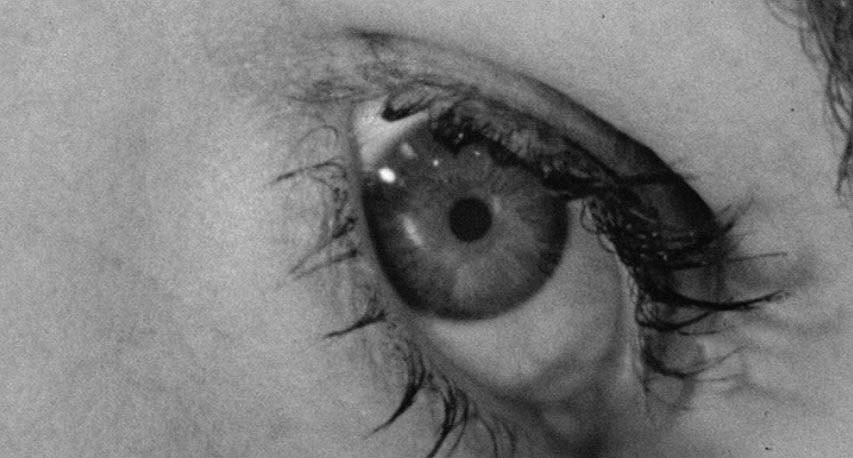
MarionCraneEyeIt is nearly impossible to closely read this scene without acknowledging the most famous orchestral screeches in cinema history. Those famous screeches greatly enhance the disorientation and terror of the scene. Coming out of nowhere, the terrifying sounds from the orchestra create the sound design for the knife penetrating Marion and slashing her to death. One could cut to black and allow the music to be heard throughout this iconic scene, and the audience would still feel anxious, macabre feelings and shock. Interestingly, this same action would also reveal how short the shower scene really is. Regarding the sound design, there is much more of the water heard than the sounds of murder. Following the murder, the score greatly slows down and deepens. This musical movement allows the audience to reflect upon what has just occurred and begin to contemplate the various consequences of mother’s actions.  Lastly, the camera slowly spirals out from Marion’s eyes symbolizing that everything Marion planned has just gone down the drain through this seemingly random act of violence, and then there is a cut to the drain of the bathtub itself cementing this metaphoric notion. Keeping with the reoccurring theme of eyes, this also reinforces the fact that the eye is the window to the soul and someone is always watching.

CONTINUED NEXT WEEK. Check back next Monday 🙂
BatesMotelAETVDon’t forget to watch Bates Motel on A&E tonight! It’s the season finale and it’s going to be intense!
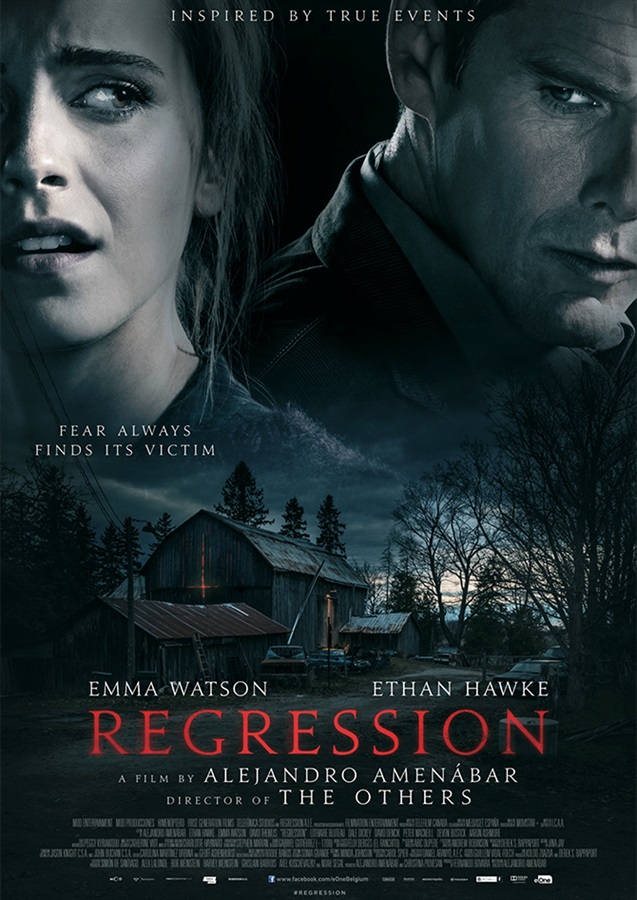
“Regression” movie review

RegressionIntimately disturbing and suspenseful. Emma Watson and Ethan Hawke star in a film that is one part crime drama and one part supernatural thriller. Inspired by actual cases and claims of growing Satanic cults in the Midwestern part of the country in the late 80s and early 90s, Regression follows one detective’s journey through science, superstition, and organized religion to discover the truth of what happened to a seventeen year old young lady named Angela (Emma Watson) who claimed her father molested her. Opening with the interrogation of her father, Detective Bruce Kenner (Ethan Hawke) is confronted with the conundrum of a suspect who does not deny the vomit-inducing allegations, but is greatly struggling to remember what happened. Cool color temperatures, dreary weather, effective acting, and a creepy small town all come together to make creepy psychological thriller of good versus evil.

Occurring at a time that reports of Satanic cults with blood curdling rituals began to hit a high, Regression brings you face to face with now-discredited psychological therapy practices, blood sacrifice, and sexual deviance. Follow detective Bruce Kenner as he attempts to put the puzzle of what actually happened to Angela together in order to solve this perplexing mystery. First approaching this as a disturbing but typical minor molestetion case, Kenner quickly learns that there is much more to this case than meets the eye. As evidence is uncovered and truths are made known, this investigation goes much deeper and crosses public safety and family boundaries.

This is one of those plots that is difficult to analyze without giving away key parts of the mystery. If you enjoy watching films that contain prolific symbolism and question institutions that exist for physical and spiritual protection, then you will undoubtedly find this film, from the Weinstein Company that flew under the radar, intriguing. Although it is definitely a slow burn, it never moves too slowly and does provide enough of a hook to keep you going. Be sure to pay close attention to every line of dialogue because (hind sight being 20/20 and knowing the ending) there are definitely clues dropped here and there that all point to the answers for which Kenner is looking.

The investigation at the core of the plot is three fold: spiritual, scientific, and legal. Bruce Kenner partners with both a local psychology professor and a reverend to uncover what happened to Angela. As one might expect in a movie such as this, the professor and reverend have vastly different approaches to this mystery. For psychology students or professionals watching this film, you will witness the practice of regression as it plays a significant part in the investigation. The aforementioned practice also raises awareness to invasive psychological therapy techniques. As this film technically falls within the horror genre, it is definitely not short on social commentary. With physical evidence in short supply and a suspect who cannot remember what happened, Kenner relies upon the psychological evidence gather by the professor. Little do our investigators know that these aggressive interview techniques play more into the mystery than they could have known.

Ugh. There is so much more about be plot I’d love to analyze but that would take the fun out of watching it and ruin the mystery for you. So switching gears. From a technical perspective, the film is not remarkable in any way. Neither is it lacking in cinematography or direction. However, movies in this sub genre of horror can so often feel and look like a Lifetime original movie, especially because it includes a significant female character who claims to have been molested. Thankfully, director Alejandro Amenabar (The Others) provides audiences with a “Lifetime” plot that is still cinematic enough to avoid the stigma of “another Liferime movie in theatres.” Emma Watson and Ethan Hawke display excellent acting prowess along with a few of the other key players in this narrative. For the most part, the acting is on par with this crime drama. All the filmmaking elements come together nicely to keep your attention for the hour and a half runtime.

If you enjoy mysteries that confront science and religion, then you will definitely enjoy this film. Right now, it is one of the movies included with your Amazon Prime subscription. Rated R for some visual sexual content, it is pretty tame as far as rated R movies go. There is a gritty and real feel to the movie that might be a little too terrifying for some viewers. However, this IS a psychological thriller that contains many of the earmarks of a good horror film.

“On Cinema and Theme Parks” (part 12 of 12)

My BookThe world of the business of media convergence is a fascinating and rapidly changing world! And, the convergence of cinema and theme parks is a dynamic example of how one form of media can be integrated into another in order to create a new experience for audiences around the world. Media conglomerates with theme park investments are often exploring what to do in order to remain competitive and increase the number of guests through the turnstiles. Sometimes this means using their own IPs to develop new rides or attractions, maybe an entire new park altogether, or perhaps striking a deal with another media company in order to use another’s IP as the source material for new attractions.

The opposite is also true. Media conglomerates with theme park interests may look to their own respective parks for the inspiration for the next movie. This was definitely the case with Disney’s Pirates of the Caribbean and is the case in the film Tomorrowland, in which an entire section of a park is the basis for a movie. It is all storytelling. But the stories being told take different shapes and are told through various means. And, even video game companies are getting in on the action. On May 7, 2015 Universal Parks and Resorts and Nintendo announced a first-ever partnership. Universal Parks and Resorts acquired the theme park rights from Nintendo to include the legacy video game company’s characters and games in new attractions and character meet and greets (BusinessWire, 2015).

At their respective roots, both movies and theme park attractions (and even entire parks themselves) tell stories. The medium through which they tell their stories is very different, but nevertheless helps to support one another. Media conglomerates have demonstrated this concept by taking existing movie/TV IPs and translating them into attractions and taking existing theme park attractions and translating them into movies. At its heart, the purpose of this study is to develop recommendations for media conglomerates when making decisions that are potentially worth millions of dollars, and could be a major success or a big flop.

Despite the more artistic or niche films still being amongst the individual favorites of the participants, the shared favorite movies were high concept and aimed at broad audiences, and typically fell into the science-fiction or fantasy/adventure genres. Specifically, the movie Jurassic Park and the Jurassic Park ride were cited numerous times. If an attraction were too disconnected from the story or plot of the movie, serving as the basis for the ride, then it appears to be received negatively. On the contrary, when a movie-based theme park attraction combines the best of the plot or characters, in a given movie, with a conventionally thrilling ride design, then it is received very well and enjoyed immensely.  Furthermore, the attraction needs to tell a story within the length of the ride from queue to exit. Fluid, coherent stories are driving forces behind the likability of an attraction or movie. Prompting the generation of emotional connections or responses from audiences/guests, in respect to the story of a movie or attraction, is key to creating reflections that will evoke nostalgic memories down the road; and thus, compel the audience member or park guest to experience the movie or ride again—perhaps with friends, family, or their children.

Well-executed themed design to support the story of a theme park attraction based on a movie is just as important as the story or intellectual property themselves respectively.  Story is the plot or sequence of events that take place during the ride experience (again, this is from the queue to the exit). Theme encompasses the building design, audiovisual elements, physical movement, and special effects during the attraction. The goal of an attraction or park area’s theme should be to completely immerse the park guest into the world being used as the basis or inspiration for the ride or section of the park. Everything from the employees to the restaurants to the surrounding buildings needs to work together to create an experiential degree that essentially transports the guest from the real world into the world of the park or ride. When developing themed areas of a park, designers need to be careful not to allow the outside world into what should amount to an escape from reality. Not that iconic brands or companies cannot be integrated into the theming of a park at all; but it needs to be more indirect, thus allowing the theme to continue and the story not be broken by outside invaders, so to speak.

The reason many attractions at movie-based theme parks were originally developed was to take Tom Gunning’s (1986) idea of the cinema of attractions and translate it literally. However, with the increasingly digital climate of movie making, the practical, analog effects and techniques that once made for the basis of attractions, are no longer foundation enough for successful attractions in today’s marketplace of themed entertainment ideas. Simply stated, it just isn’t exciting to watch an editor sit behind a computer creating digital effects. Despite the making of a movie just not being as secret or magical nowadays, it is still important for a movie-based theme park to hold onto its roots and work to creatively develop new ways of exhibiting this art that still mystifies to this day—just in different ways than it used to. For movie-based theme parks that exist on studio lots or house sound stages, it is imperative that studio tours continue and build areas that can be rented out for current productions. Even though many people know how movies are made presently, the art, skill, and magic of how similar effects and shot sequences were accomplished before the aid of computers (at least to the extent they are instrumental today) in classic movies has a place in the modern movie-based theme park. Hitchcock: the Art of Making Movies was cited as an example of this type of offering guests want to see alive in the parks.

The goal of a movie or theme park attraction is to generate some type of pleasurable experience in the movie patron or park guest. For both movies and themed parks, the idea needs to be to craft a story that will stimulate physiological and psychological/emotional responses from the audience/guests. A movie should contain a story or sequence of events that generate fear, affection, anxiousness, or levity in the bodies of the patrons. These responses are very much physiological. In the environment of a theme park attraction based off a given movie, these same physiological responses need to be generated by the use of movement and special or visual effects. When generating these physical responses, the patron or guest will instinctively develop psychological or emotional responses to accompany the complementary physiological response. Even if the physiological strain placed on the bodies is by all accounts a negative one, the park guest will most likely be compelled to experience it again and again because studies have shown an attraction to or affinity for sensations of pleasurable un-pleasures.

The principal idea behind this study is to create a predictable model for producers and designers. And, there has been a prolific amount of information to supply the evidence that creative designers, producers, and project managers need in order to make well-informed decisions in the beginning stages of the themed entertainment or motion picture production process. Developing a model for creative decision-making is not as simple as ‘include these things and your idea will be successful,’ as the creative process can be very subjective. However, with enough supporting evidences, a media conglomerate or other company with theme park investments can make decisions with sufficient empirical evidence pertaining to the projected success of an attraction or theme park. This study has outlined a model that is grounded in scholarly research, anecdotal evidence, and first-person focus groups and interviews.

For the complete study, head over to AMAZON and purchase the book. These 12 sections merely touch on some of the main points from the study but by no means take the place of reading the whole book. Hopefully these sections prompt a desire to experience the book/study in its entirety. It’s written to be enjoyed by anyone who loves movies and theme parks. What good is a study if it’s written of that only academics can understand. I have uncovered fascinating knowledge and insight into the craft of the relationship between cinema and themed entertainment that I want to share with the world.

To return to the beginning of the series, click HERE


“Captain America: Civil War” movie review

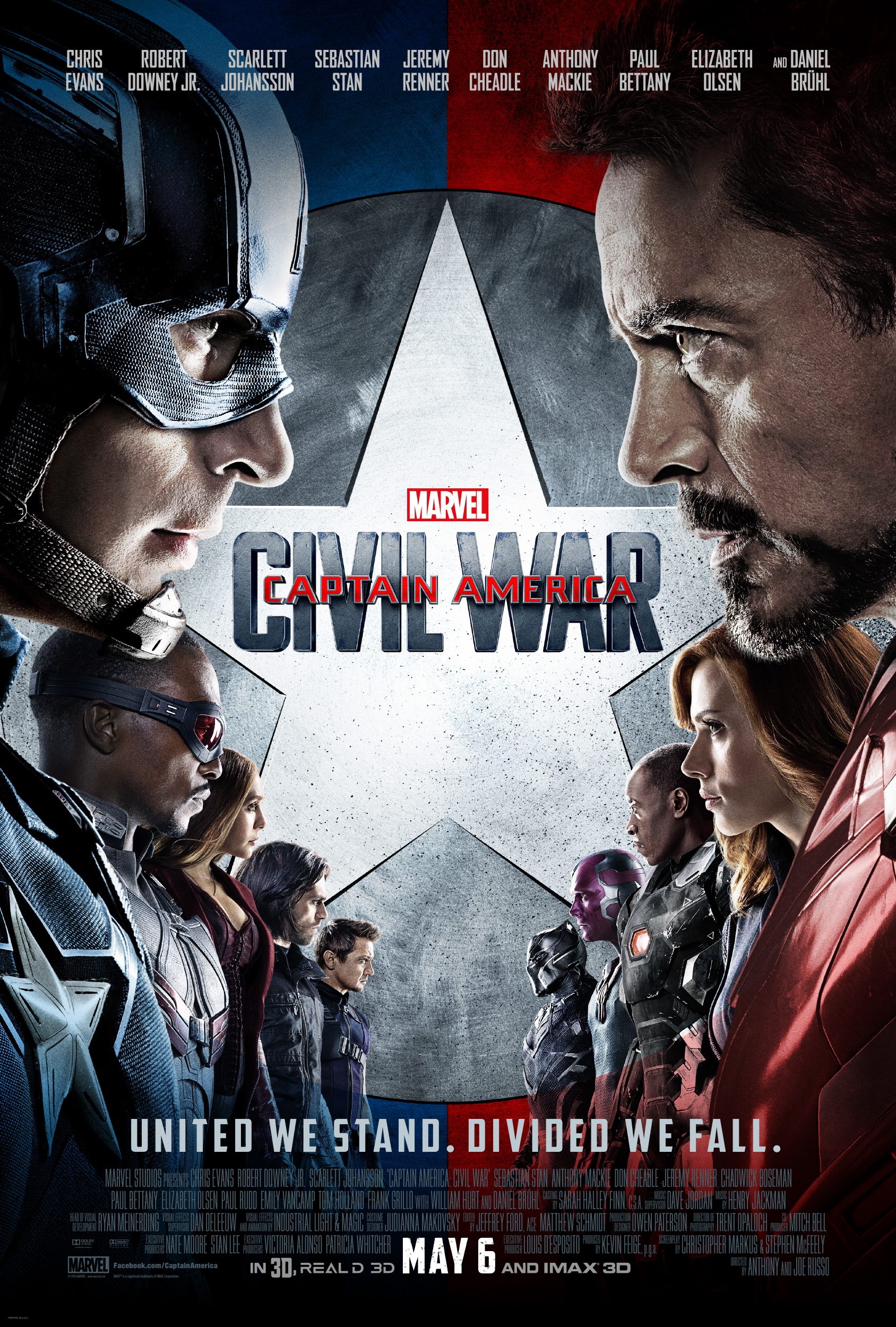
Civil_War_Final_Poster‘Marvel’ous! Nearly a complete departure from the conventional comic book superhero movie genre. Avengers 2.5 is a politically-charged superhero movie that will catch you off guard and provide you with a mostly non-cartoonish plot filled with well-developed conflict and character development. Witness some of your favorite Marvel superheroes secede from the Avengers and oppose those who they once fought side-by-side. Along the way, you also get to meet some new additions to the team that will provide some awkward comedic sequences in this otherwise serious movie. Deep dark secrets come to the surface that threaten the very possibility of the team ever having any hope of reunification. Captain America: Civil War is a brilliantly produced film that will have even those who typically do not care for most superhero films leaving the theatre satisfied and anticipating the next installment in the series. Although it is really an Avengers movie, there is still enough focus on the title character to support the choice of titles for this action-packed epic adventure.

Captain America: Civil War takes place not long after the catastrophic events at Sokovia and following another destructive battle, the United Nations and U.S. Government decide to intervene and put The Avengers in check. Opposing the team signing onto an international agreement defining how this group of “vigilantes,” Captain America (Chris Evans) falls away from the group and seeks his own destiny frocked with vengeance and misplaced allegiances. With the once unified team fracturing, a covert former Soviet operative is plotting the destruction of The Avengers from the inside out. Much in the vein of the American Civil War, The Avengers are split and Captain America forms his team while Iron Man (Robert Downey Jr) attempts to hold the team together and honor the agreement with the United Nations. The once inseparable Black Widow (Scarlett Johansson) and Hawkeye (Jeremy Renner) must choose sides and decide where allegiances truly lie.

It isn’t often that a genre typically filled with high concept, shallow plots can surprise you with a narrative radiating with anthropological and political themes and subtext. The brilliance of Captain America: Civil War is that it provides the audience with equal parts action-packed fight choreography and well-developed dramatic plot with prolific amounts of character conflict. Furthermore, the story will exceed your expectations of the ability to tap into one’s superficial response to action-packed stimuli and activate the deeper emotions of allegiance, betrayal, and self-preservation. For those who have not seen the previous movies in the Captain America series–another admirable element of this installment, is not causing those who have yet to watch the previous CA movies to feel left out of the excitement. Provided you have seen the preceding Avengers movies, this one will keep you trekking along with your favorite Avengers universe characters. There are certainly minor elements or past relationships that are introduced in the previous CA movies, but most likely you will be able to pick up on the aforementioned as you watch Civil War.

Another observation of this installment in the Captain America/Avengers franchises respectfully, is the movie’s success in both including current characters and introducing new ones without the film ever feeling too crowded, as it was with Batman v Superman. In addition to the Avengers minus Hulk and Thor, the audience is introduced to an adolescent Spider-Man (Tom Holland) and are re-acquainted with Ant Man (Paul Rudd). As I am not familiar with the comics, I cannot comment on this Spider-Man in respect to staying true to the comic, but I found this incarnation of Spider-Man to be on the verge of annoying. Perhaps that is how he is suppose to be, but it did not fit in with how he has been historically portrayed in cartoons and movies. However, the inclusion of both the respective characters did not feel forced as it so easily could have. Since the film primarily focussed on Captain America and secondly Iron Man, the large cast of characters was handled efficiently. The writers could include all these characters in one narrative, but shift the focus from character or character thus never overstimulating or overwhelming the audience with the development of such a dynamic ensemble cast.

Ordinarily, I do not speak so highly of superhero movies; but this film left me feeling quite satisfied and pleased with how well the film played off as a serious movie complete with plenty of opportunity for emotional connections. That being said, the one sequence of the movie that I did not find as entertaining or fitting is the elaborate “civil war” battle on the tarmac. Was it choreographed well? Yes. Was it instrumental in moving the plot forward? Yes. Did it effectively fit in with the rest of the mood and pacing of the film? No. Moreover, that entire sequence of scenes just felt awkward. And, that is mostly due to the inclusion of the naivety and immaturity of Spider-Man and witty/sarcastic/near-juvenile antics of Ant Man. Perhaps if only one adolescent-like character had been added, that part of the film would not have felt so awkward. As to not give away the reasons for the solemn mood of the film, I cannot go into much detail; but, the manner which this scene was written and directed just felt out of place and interrupted the otherwise excellent pacing and mood of the story. I agree that most serious movies need comedic relief in order to generate an emotional rollercoaster, but this was just a little too funny with respect to the rest of the film.

The summer blockbuster season is officially underway with the undoubtedly successful opening weekend of Captain America: Civil War aka Avengers 2.5. Unlike last year’s Avengers: Age of Ultron, this installment will take you on fantastic journey of emotional mountains and valleys of character and plot development. This film proves that a superhero movie can be both fantastically action-packed and dramatic. The political subtext will also provide friends and family countless hours of discussion and analysis. Although this is not an adult superhero movie in the way Deadpool was, there is still language and violence that may not be appropriate for young kids. Still, one of the earmarks of a summer blockbuster is a movie that can attract and please both teens and adults, and this is definitely a great example. Hopefully, this movie is an indicator of an exhilarating summer season at the cinema.

PS. Notice the nod to Disney’s D23 Club? I did!

“On Cinema and Theme Parks” (part 11)

My BookThis is the second to last part for this series of excerpts from my peer-reviewed book and research study. So, if you’ve enjoyed reading and following, head over to Amazon to order a copy of the complete study with lots of added material from the focus groups and interviews.

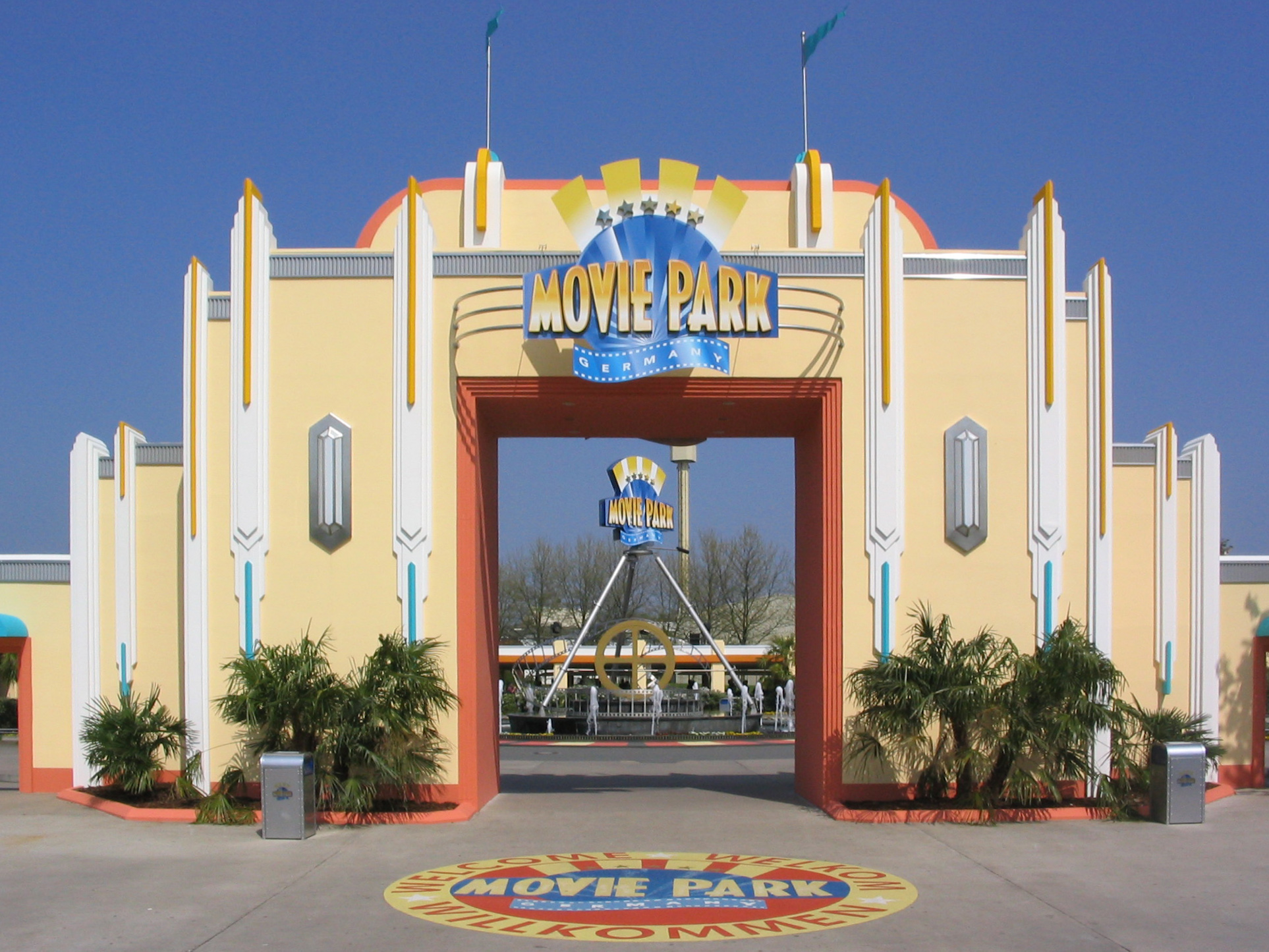
Away from hustle and bustle and bright lights of Hollywood, past the palm treelined streets and white sand beaches of Florida, and beyond the Roman ruins on a century-old Italian studio lot is another example of the convergence of cinema and theme parks. Movie Park Germany is a cinema-based theme park in Bottrop-Kirchhellen. It “is a unique theme park, which is devoted entirely to movies. The former Warner Bros Movie World has six theme areas and more than 40 attractions and shows. It will not take long before you feel like a movie star or cartoon hero!” (About Us, 2014).

Moviepark-TorMuch in the vein of Universal Studios Florida, Movie Park Germany blends both the benefits of an amusement park with movie-based themes throughout the whole park. Its motto is “Wow! I’m in the Movies.” According to the website, “Our visitors will not only have the opportunity to meet well-known series Heroes but also get to enjoy first class entertainment like an action-packed stunt show as well as two song and dance shows. For those guests who like it a bit more spooky, the park transforms itself at sunset into an extraordinaire chamber of horrors. In short: There’s a personal highlight for everyone!” (Movie Park Germany, 2014). Unlike Universal Studios parks which have a Halloween theme for two months a year, Movie Park Germany holds on to the very cinema theory that birthed out of Germany and found its way to Hollywood—German Expressionism. Some of the first movies were horror movies, and it is refreshing to see that this park is holding on to its horror heritage throughout the year (Movie Park Germany, 2014).

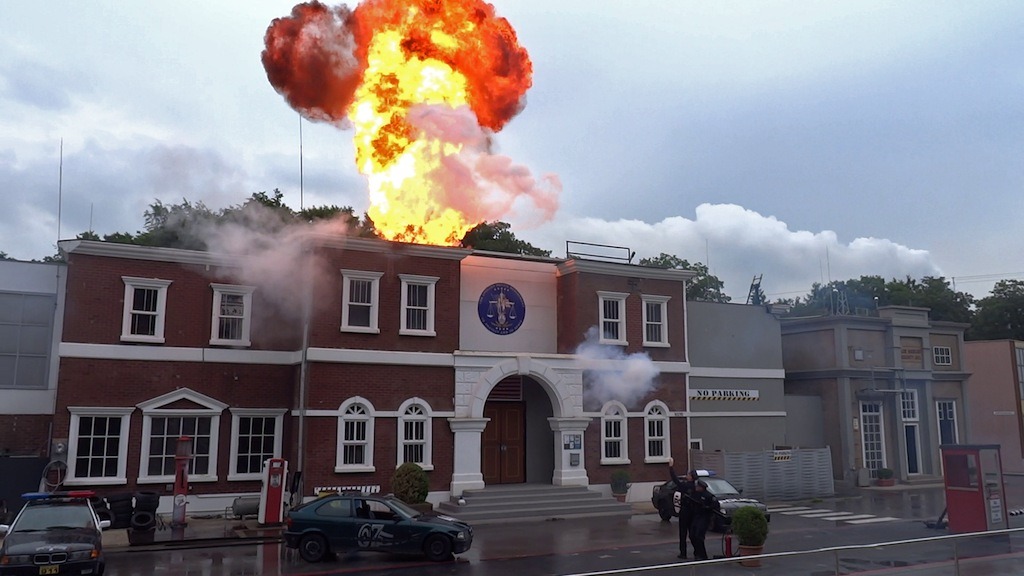
MovieParkGermanyTourClearly, the idea to create synergy between cinema and theme parks is at the forefront of media conglomerates and business holdings companies. It takes the best of 43 what each has to offer respectively and combines them to create a business entity that has the power to entertain, educate, immerse, and inspire all at the same time. For the guest this means that they can experience the magic of movies and TV in dynamic ways, and for the owners, this means unparalleled cash flows to fund movies, reinvest in the parks, or fund other ventures. But, one set of questions remains. How should a media company choose to theme the parks, what rides to make based on movies, and should a theme park attraction be in the minds of studio executives when looking at screenplays for future movies? At the end of the day, studio executives/media moguls who also run theme park divisions need to know what connections and moves to make in order to assure the mutual success of both the movies and the theme parks.

The final part in this series will be uploaded next week! It will include themes learned from the empirical research method used in this study. The focus groups were located in Florida, New York, Ohio, and California.

In order to return to the beginning of this series, click HERE!