THE LITTLE MERMAID (2023) movie review

written by Dr. Leo Genco
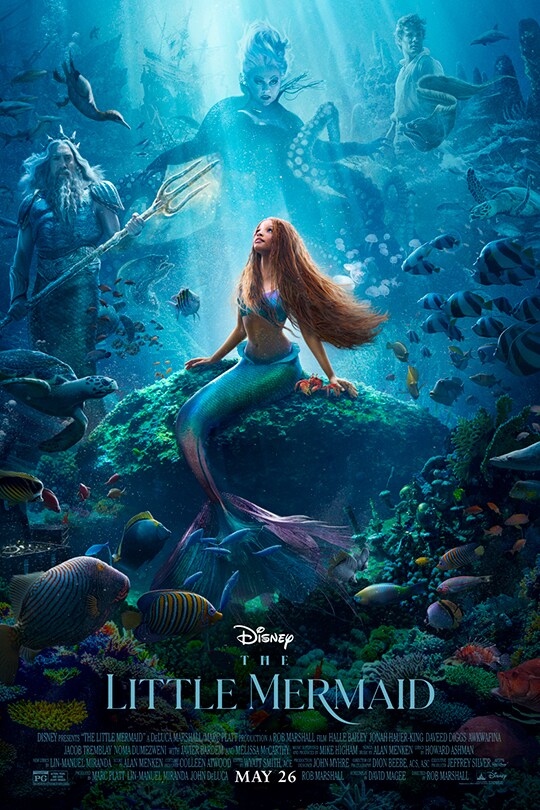
Some treasures are best left under the sea. This familiar Disney formula is only good for one thing: lining the coffers. The Little Mermaid has wonderful, bright, appealing visuals with a few new decent songs, that prove Disney is unable to capture the magic of their 2D animated films. This is unfortunate, because under the sea of this movie is the potential for a great innovative rendition of The Little Mermaid. Why? Well, Disney attempted to provide a newer telling of the original while pandering to the original material. This creates a dichotomy of moral themes in the movie, and it shows. There is a lot to unpack. If you want to skip to what the movie does right, you can skip to the end.

Let’s get the most obvious issues out the way, since they were consistently topics of discussion prior to the film’s release: race, ethnicity, and gender swapping of characters. These changes are typically common to improve diversity, and it can be done. You can look at Nick Fury in the Marvel Comics, or John Stewart as the Green Lantern in the DC Comics. One of the best race change movies is the Preacher’s Wife. The issue with the change here is how the director and writers tried to justify the change. Instead of changing the race of a whole group to maintain consistency, only individuals are changed and are rationalized through a simple bit of dialogue exhibition. Most of the human characters are an eclectic group of non-white ethnicities and races but Prince Eric is still white! The story justifies these differences by changing the location of the kingdom and having the queen adopt Eric into the family. The kingdom is not a port for the mainland but on an island, somewhere in the Americas, and this causes massive changes in the story. The whole scene with the chef and Sebastian was removed. Someone will wonder if the scene was cut because the chef was French. The essence of the original was stripped to justify the demographic changes, which would not be a problem if the movie did not pander to the original material.

The singing varies between songs and actors. The cast of a mix between stage and film actors would do that, but the main problem is how the songs were constructed. For some reason, the director added more characters into the script, but they did not contribute to the songs at all. It is very common in musicals to have the background and side characters sing the chorus and harmony for the lead singer. But this is not true for The Little Mermaid. People are expecting a chorus for Under the Sea and Kiss the Girl. This is not coming from a nostalgia perspective of the original songs. Under the Sea is a song about the sea living as a musical band of species. The dialogue before Kiss the Girl called for the various sounds of nature. For both songs we are expecting a strong sound, especially when the chorus hits. Sadly, both songs are reduced to two or three singers max and are sung as a solo piece for the majority. Overall, songs match the deaf tone of the movie.

While the animation of the under the sea creatures on par with the Lion King (take that as you will), I am not talking about the animals but the human actors who had little to not animated faces throughout their dialogue. Only three characters were animated, Queen Selina, Grimsby, and Ursula. When I say animated, I mean that their facial expression, voice, and body language spoke. Everyone seemed stiff, which is weird because Halle Bailey is a stage actor. You would think Ariel would have the most body expression because she can’t talk for half the movie. Ariel needs to be animated the most. Arial did not seem to be a curious, explorative person, but a blank manikin until a scene which required an over-the-top reaction. Luckily, this was not consistent throughout the movie. As I will mention later, the acting in the new scenes was great.

For some movie goers, background context to main characters is essential. I, on the other hand, prefer context to characters that is required to understand the journey of the main character. This means, that background context should progress information for the main character, not for the audience. The early introduction to multiple character’s background hurt the movie in two ways: (1) these small scenes for a backstory break up the pacing of the storytelling, creating jarring transitions between scenes, and (2) too many themes or messages were introduced into the film too fast. When you introduce a backstory, you need to follow through and close that story, and when you give too much information at once, people tend to forget or care about the small stories. On top of that, the movie told Ursula’s backstory but did not provide a satisfying delivery of her end. Overall, the introduction of the characters with backstory was not the best way to start the movie.

Two things carried the movie for me, the new scenes and songs and the queen and Grimsby. Adding new scenes and songs felt real. The acting in the scenes felt genuine, minus the random dancing scene halfway through the movie. These scenes had fresh magic Disney needed, but again, the director pandered to the original movie, and this created a lot of disconnect. The problem when recreating 2D animation as a real-life movie is the expression that comes from drawn imagery. This is why the drawings of human movement are different from how humans move. It allows the animator to create expressions you are physically unable to express but want to. The new scenes of the movie did not have a previous expectation of certain expressions. I believe this element allowed the actors more freedom to act.

God bless queen! Out of all the characters, the two actors who were able to pull it off throughout the whole movie was the queen and her trusty councilman, Grimsby. They were amazing. They had facial and body expressions. I had chills when the queen was on screen. Grimsby was played perfectly and became that comedy relief when the gender swapped bird, Scuttle, failed. I loved these characters, and I enjoyed every minute of screen time with them. While I would put Ursula in this category, her character was written incorrectly. While she was played very well, her lines were the least to be desired. She was written more as a grown woman who throws temper tantrums like a child than the cunning slimy sea witch, she was in the original 1991 movie. So, the queen and Grimsby saved the movie, at least for me.

Dr. Genco is a guest contributor and fellow university colleague. Follow him on Instagram at Leo.Genco.

40 YEARS OF FLASHDANCE…What a Feeling! a retrospective review

What a feeling! Grab your leg warmers and can of Aqua Net as we hit the dance floor to celebrate the cultural phenomenon that was and still is Flashdance.

The Oscar (and Grammy) winning dance movie Flashdance turns 40 this year on April 15th. Can you believe it’s been four decades since the iconic movie defined the music, dance, and fashion of the 1980s??? Forty years of electrifying music and dance that dazzles the senses. Winning the late Irene Cara and legendary composer Giorgio Moroder the Best Original Song Oscar and Grammy for Flashdance…What a Feeling! (Moroder was also nominated in the same year for his Scarface score) and earning Michael Sembello an Oscar nomination for Maniac, the titular 80s movie Flashdance remains an icon of music and dance that has transcended the decades and continues to be emulated in other media today. This is not a movie to be taken seriously; it’s a movie to be felt and experienced. And to its credit, it has remained popular. Take your passion and make it happen!

In case you are new to planet earth, Flashdance tells the story of Alex Owens (Jennifer Beals), a beautiful young woman who works a day job in a steel mill in Pittsburgh and dances in a bar at night. When Alex discovers that her handsome boss, Nick Hurley (Michael Nouri), is both interested in her and supportive of her performing career, she renews her efforts to get accepted into a prestigious dance conservatory. Although Alex is frightened of failure, she is cheered on by Nick, as well as by her mentor, former ballet performer Hanna Long (Lilia Skala).

More than a cultural smash hit, it was a tremendous success at the box offie too, because Flashdance is the third highest grossing film of 1983 behind Return of the Jedi and Terms of Endearment. In retrospect, this movie is veritably responsible for reviving the modern movie musical with its sexy complex dance sequences, bold fashion, and use of popular music.

Not many films can be recognized by a single shot, this is expressly true with those that may not have even seen the film, but Flashdance is instantly recognized by Beals’ silhouette leaning back on the chair with water dousing her. That cinematic moment has been parodied and paid tribute to in dozens of movies and TV shows from Elvira: Mistress of the Dark to Family Guy and even Deadpool 2. From Beals’ off-the-shoulder grey sweatshirt in the famous bra-removal scene to her knee-high leg warmers, bikini bottoms, and taut physique, many scenes in this movie will forever be engrained in our minds. It’s remarkable how this cheesy, low-budget dance film influenced the culture of an entire decade and continues to reassert itself in popular culture to this day. The incomparable footprint left by this movie can be felt everywhere.

It’s funny, whenever critics and fans talk about Flashdance, it’s almost never about the plot. Is there anything inordinately wrong with the plot–no–but there is nothing particularly remarkable or subversive about it either. It’s a simple variation of the rags to riches story or simply realizing a dream despite obstacles. At the intersection of performance art and motion pictures is where this movie lies, and lies there incredibly comfortably and confidently.

Flashdance is a movie which uses a paper-thin plot to connect sequences of montages and dance numbers, one right after the other–yet–somehow audiences, for forty years, are raptured by the music and dance. I cannot think of another movie that defied the odds of success and became a legitimate classic in the way Flashdance did.

It’s as if Bruckheimer and Adrian Lyne studied the elements of what makes a movie successful in the box office (and in popular culture), and then took those basic elements and loosely connected them together. Catchy music, bold fashion, sexy or provocative dances, mild/brief nudity, and relatable characters, these are the elements that Bruckheimer and Lyne put together in order to create movie magic and fantastic success. Then cap it all off with pure, unfiltered triumph in front of those that once looked down upon, and were skeptical of the central character.

Never once do you buy that Alex is a welder; furthermore, in retrospect, it’s clear that there are multiple people serving as the dancing Alex (which is something that is film is widely known and yet rocks it!). But it doesn’t matter. Why? Because it’s nearly impossible to watch this movie and not get drawn into its glitzy fantasy! But while we are on the topic of the Alex’ dancing in the film, I feel it’s important to highlight the talent that brought the exotic dancing to life! Working as Beals’ dancing body-doubles were accomplished dancers Marine Jahan, Sharon Shapiro, and breakdancer Richard “Crazy Legs” Colón.

Despite the contrived plot, the movie is not without deeper meaning. Some of the themes that can be closely read in Flashdance concern ideas such as identity, class, and cultural norms/expectations whether or not there is any absolution. Without stooping to pedantic commentary, the movie provides thoughtful content for those that seek a greater understanding of what the film has to say about the human experience. “When you give up your dream, you die.” A bit cliche perhaps, but still serves as the reminder that we do need our dreams in order to have something toward which we strive. We may never experience or realize that dream, but it’s the pursuit that is most meaningful.

We witness that there are many layers to Alex; she is a complex individual with multiple interests. She is just as confident and comfortable on a dance floor as she is welding as she is at a fine dining restaurant. This is such an important message that continues to be relevant–if not even more so–today! Flashdance is a reminder that diversity within a given group is so very important. Often times, popular culture projects prejudices, behaviors, and expectations onto a given group of people (or onto an individual within a group). Diversity of groups of people should never mean uniformity of thought within that group, it means there are a variety of individuals within any given group of people that have their own fears, beliefs, goals, and dreams. Alex may be a woman, but she is by no means obligated to only behave like a typical woman. Neither does she disparage those that would behave more typically; this movie celebrates variety! Variety of dance, variety of music, variety of people.

The degree to which this movie influenced virtually every area of popular culture is incalculable. Even exercise videos changed overnight. I posit that it’s entirely possible that 80s and 90s aerobics videos wouldn’t be the same if it wasn’t for Flashdance. For example, the footprint of this movie can be seen in the music, movements, and fashion of those Jane Fonda style aerobics videos. Even descendants of this stylistic athletic fashion can be observed in nearly every downtown and suburban area today; but we now refer to it as athleisure apparel.

Flashdance is the very definition of a crowd-pleasing film that defied the expectations of critics in 1983 and continues to be beloved by contemporary critics and audiences of all walks of life. The legacy of this movie is felt throughout media of all kinds! Even those that have never seen the movie recognize it by the music or iconic water dance shot. It’s a light-hearted melodrama that you cannot help but love. Just close your eyes, and feel the timeless rhythm of Flashdance!

Ryan teaches Film Studies and Screenwriting at the University of Tampa and is a member of the Critics Association of Central Florida and Indie Film Critics of America. If you like this article, check out the others and FOLLOW this blog! Interested in Ryan making a guest appearance on your podcast or contributing to your website? Send him a DM on Twitter. If you’re ever in Tampa or Orlando, feel free to catch a movie with him.

Follow him on Twitter: RLTerry1 and LetterBoxd: RLTerry

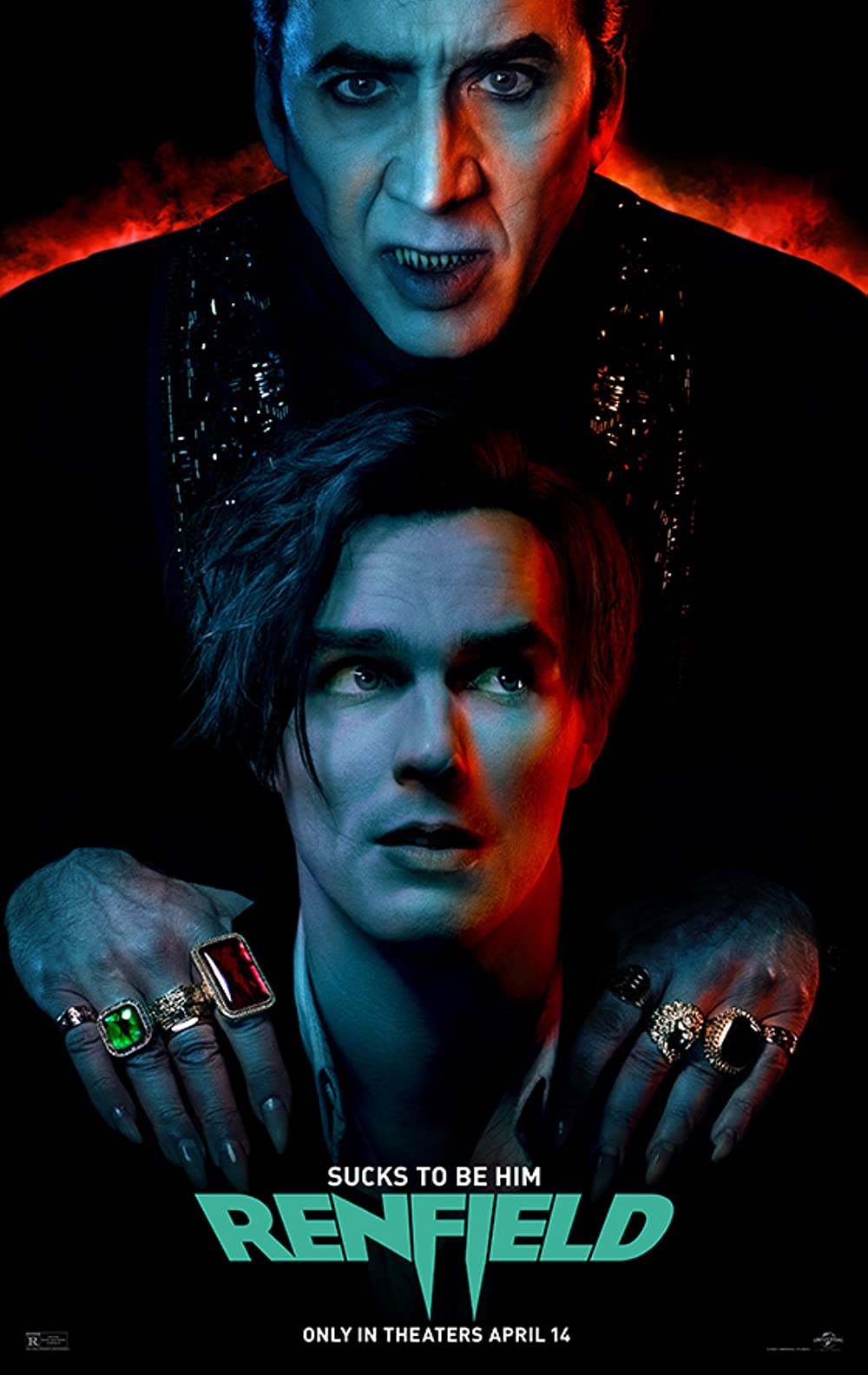
RENFIELD horror comedy review

Fangtastic! John Wick meets Van Helsing meets Warm Bodies in this imaginary adaptation of the Dracula mythos inspired by the original Universal Monster classic. While that may sound like the most unusual combination of movies, it works surprisingly well in Renfield from the birthplace of the American horror film.

Renfield, the tortured aide to his narcissistic boss, Dracula, is forced to procure his master’s prey and do his every bidding. However, after centuries of servitude, he’s ready to see if there’s a life outside the shadow of the Prince of Darkness.

Just like Dracula and Renfield, in the original Dracula, metaphorically exist in two realms simultaneously, this movie also exists in two realms: horror and comedy. And these two genres are both satisfied in the characterization and conflicts of this highly entertaining movie. Suffice it to say, it’s a really good movie–shocking–I know.

After the questionable trailers (which I try to avoid as much as possible; a practice of mine since marketing companies don’t usually know when to hold the cards back), I went into this movie with tempered expectations at best. Moreover, I honestly went in with low expectations for what I thought was going to be a ‘we set out to make a movie that is so bad that it’s good.’ The problem with that is that a filmmaker cannot intentionally create a so bad it’s good movie. It’s lightning in a bottle when it happens because the intention was to create a good movie, that just happened to turn out (to usually be) campy.

Spiritual sequels often struggle to find that place wherein the legacy film and new, reimagined approach intersect in ways that don’t rewrite or retcon the past yet provide a new experience. There have been countless official and unofficial adaptations of Bram Stoker’s Dracula, not to mention, hundreds of vampire movies that are directly inspired by the Dracula mythos. Therein lies the challenge: how to craft something new from that which is proliferated. Renfield works because the writers selected a character that factors significantly into the original material, yet has never been truly explored as a character following the events of Dracula.

Oh yeah, the recreations of the original Dracula, complete with (what looks to be) non-CGI gothic sets and lighting, made for a fantastic way to open the film.

Nicolas Cage, Nicholas Hoult, and Awkwafina were excellent casting choices, especially Cage’s Dracula, whom resembles Bela Lugosi even more than Walter Matthou’s in Ed Wood. Cage and Hoult demonstrate fantastic chemistry, and they scenes are among the best in the film. Hoult and Awkwafina may not have the chemistry that he has with Cage, but they still manage to play off one another well enough. Hoult not only looks like our original Renfield, but he finds an exemplary balance between tragedy and comedy. This film certainly provides him with a vessel to showcase his outstanding acting chops. Awkwafina brings a subdued version of her comedic brand, and it works great! Often times, her characters have annoyed me because they are often obnoxious, but not this time.

The violence is amped up to the nth degree! And it is wildly campy! I was reminded of the level of laughable violence and gore in Tucker and Dale vs Evil! While it could have been so easy for the violence and gore to be tasteless and gratuitous, it never crosses that line. Why? Because it is on a comic levels that is designed to elicit laugher instead of wincing, visceral, uncomfortable pain. Every sequence with kills is going for a laugh and not a scare or provocation. And the kills are wonderfully creative and on-brand for the tone of the film.

Renfield successfully connects the original film to this new adaptation in ways that pay respectful homage to the original but craft new expressions that are sure to please audiences. Perhaps the original isn’t a prerequisite for this one, BUT you will have far greater appreciation for the flashbacks and references to the original. If you’re a horror fan, particularly of the original Universal Monsters, then you definitely don’t want to miss Renfield!

Ryan teaches Film Studies and Screenwriting at the University of Tampa and is a member of the Critics Association of Central Florida and Indie Film Critics of America. If you like this article, check out the others and FOLLOW this blog! Interested in Ryan making a guest appearance on your podcast or contributing to your website? Send him a DM on Twitter. If you’re ever in Tampa or Orlando, feel free to catch a movie with him.

Follow him on Twitter: RLTerry1 and LetterBoxd: RLTerry

AIR movie review

Nothin’ but net! “AIR” is an outstanding biographical drama that will inspire anyone with a gut feeling, that they’re onto something great, to ”Just Do It!” The allstar cast shines brilliantly, and the screenwriting is excellent! Definitely look for this high stakes, high energy underdog story next awards season.

Sonny Vaccaro and Nike pursue basketball rookie Michael Jordan, creating a partnership that revolutionizes the world of sports and contemporary culture.

Who would have ever thought that the origins of the single best known athletic shoe would have this much ‘sole.’ It’s funny, emotionally moving, and educational. More than the risky financial move that would either launch the struggling NIKE company to success or shutter the athletic division, this story is one of resilience. Resilience in business and in character. In many ways, this movie is “Mrs. Harris Goes to Paris” meets “The Social Network,” two films to which this one will undoubtedly be compared.

Every scene in this film exemplifies exceptional screenwriting and directing. The story snaps, crackles, and pops, and the vision for direction is consistently building to the end of the story, with every scene delivering a well-defined setup–>development–>resolution.

Highly recommend watching this heartfelt motion picture!

Ryan teaches Film Studies and Screenwriting at the University of Tampa and is a member of the Critics Association of Central Florida and Indie Film Critics of America. If you like this article, check out the others and FOLLOW this blog! Interested in Ryan making a guest appearance on your podcast or contributing to your website? Send him a DM on Twitter. If you’re ever in Tampa or Orlando, feel free to catch a movie with him.

Follow him on Twitter: RLTerry1 and LetterBoxd: RLTerry

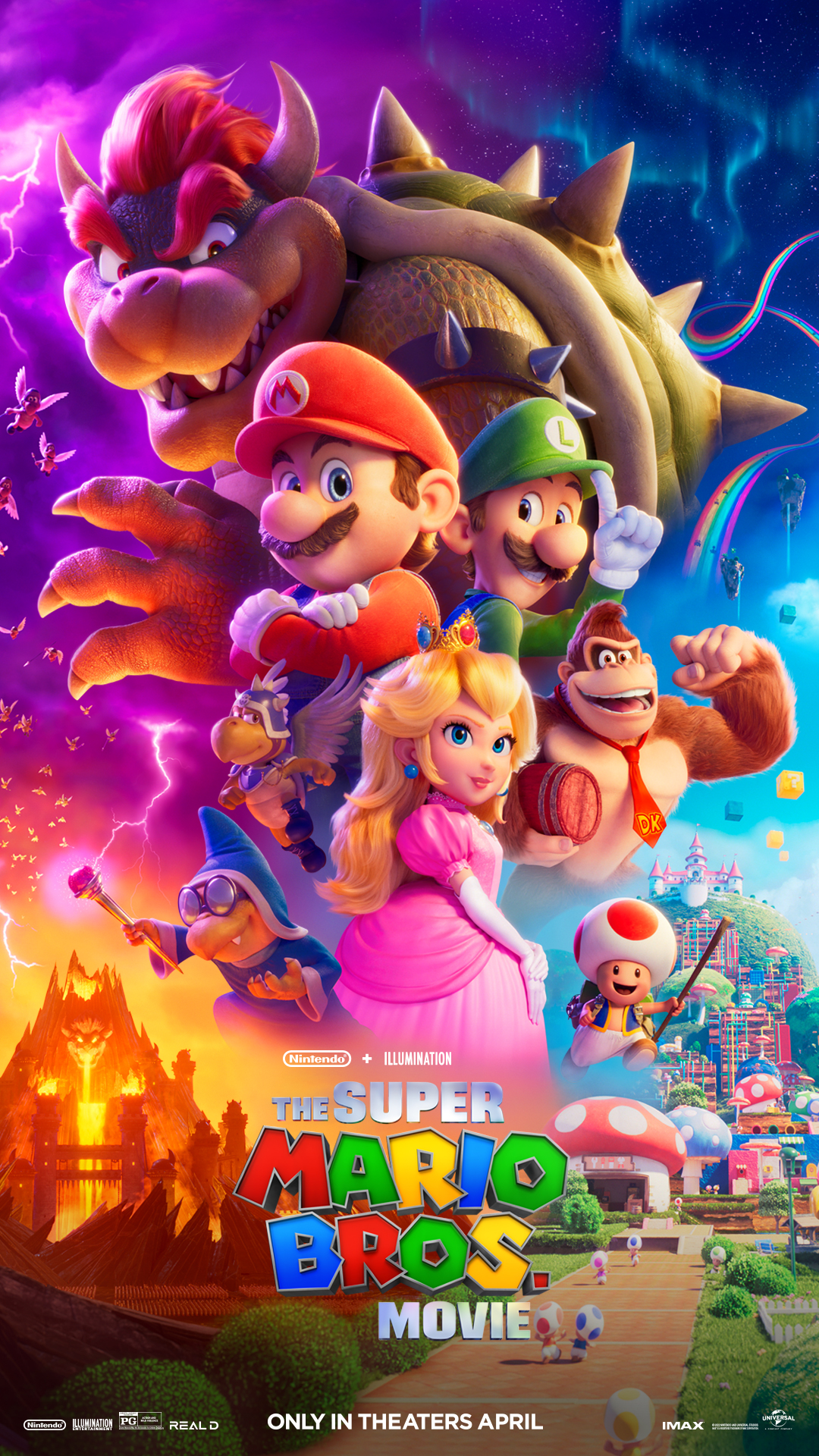
THE SUPER MARIO BROS. MOVIE review

Game Fin. The highly anticipated animated adaptation of the timeless game series is more accurately titled The Super Princess Peach Movie, because you will spend significantly more screen time with the superhero-like Princess Peach than you will the title characters. Mario and Luigi take a backseat (and Luigi, a WAY back seat) to the flawless Princess Peach on an adventure to save the Mushroom Kingdom.

While some have characterized this movie as a love letter to the Mario universe of games, the irony is that the screenwriters were demonstrably more concerned with easter eggs and cameos than they were telling a good, meaningful story with the beloved interactive media characters and worlds.

A feature film adaptation of a video game is on shaky narrative ground when the original video game has greater stakes than the movie version. Never once are you second-guessing Princess Peach’s–uhh, I mean–Mario’s ability to defeat King Kupa and save the legacy Nintendo realm.

Most of the humor is either short-lived or falls flat. While we don’t look to these types of movies to deliver deeply moving character development, movies like this should at least seek to deliver clever plotting to engage the audience beyond a superficial level. There are no twists nor are there any real turns after the movie sets up the story (a term which is giving the movie way too much credit) that is about to unfold.

The best scenes in the movie are the ones with Donkey Kong, because there is better executed setup and delivery in the conflict. Furthermore, Donkey Kong is the only character that has any kind of measurable agency in the movie.

Movies that feature a character(s) that is either exceptional at everything or continually fails in order to make another character(s) look more superior offer very little to be desired, much less craft a movie that is rewatchable. The movie works as a fun nostalgic trip through the legacy of the Mario universe of games, but the one-dimensional characters and vapid plot greatly hold this movie back from the quality it very well could have been.

I’ll give the movie this: I did make me want to download an N64 emulator and buy an N64 bluetooth or USB controller for my computer so I could relive my childhood playing Mario 64. So if it prompts others to get together with friends or their kids to play these timeless games, then the movie does have a positive affect upon the audience.

Ryan teaches Film Studies and Screenwriting at the University of Tampa and is a member of the Critics Association of Central Florida and Indie Film Critics of America. If you like this article, check out the others and FOLLOW this blog! Interested in Ryan making a guest appearance on your podcast or contributing to your website? Send him a DM on Twitter. If you’re ever in Tampa or Orlando, feel free to catch a movie with him.

Follow him on Twitter: RLTerry1 and LetterBoxd: RLTerry