“Dark Tower” movie review

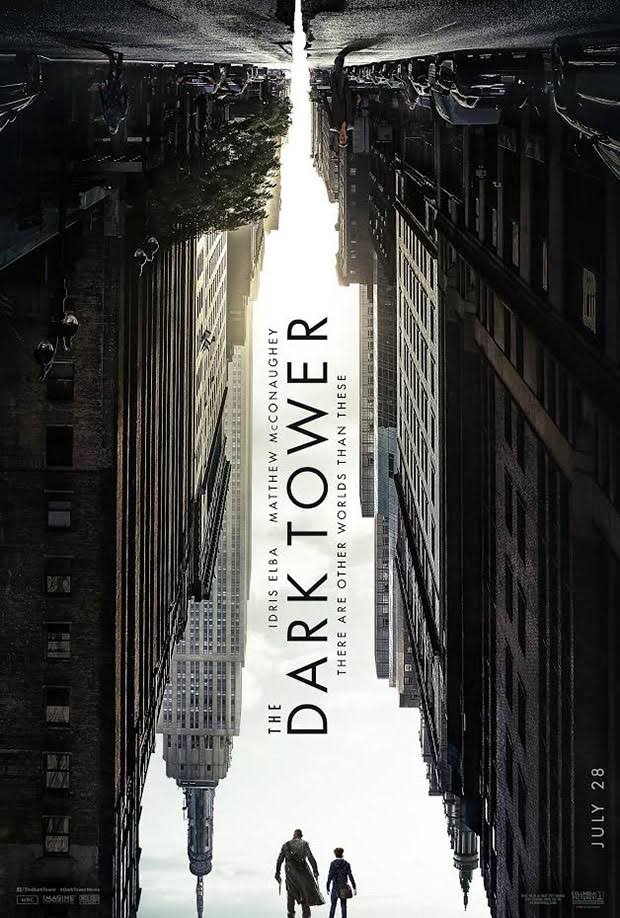
A paint-by-the-numbers “epic” story with a prolific number of Stephen King references. Adapted from the Dark Tower series of novels by Stephen King, Dark Tower introduces movie audiences to one of King’s masterpiece works of literature. Unfortunately, the movie takes place in the middle of the series and fails to leave audiences wanting to see more. For the most part, it offers up little more than an enhanced SyFy Channel original movie or a one-time HBO film. With a powerhouse leading cast consisting of Idris Elba and Matthew McConaughey, it constantly feels that the actors were held back from that which we are normally accustomed. That is, not to say that there aren’t enjoyable parts of the movie–certainly seeing all the King references are fun and it is a great premise. I only wish the story and characters had been allowed to develop over the course of three films. Although there is sufficient evidence to suggest that some movies in the recent past that have been forced into a trilogy instead of a strong, concise single film, this is an example of a one-time film that truly needed the room of three films to develop and emotionally connect with audiences. There is never a dull moment in the film, nor an opportunity to become bored because the film is incredibly rushed and turning points are forced into place.

At the center of the universe stands a massively tall dark tower that keeps the bulk of evil forces at bay. Under attack by Walter (McConaughey), the last gunslinger Rolland (Elba) must destroy Walter and his following before they destroy the dark tower and wreak havoc on Keystone Earth and the other planets in the universe. Harvesting children with “the shine” from earth, to use their minds to destroy the tower, is the method employed by Walter and he has his eyes on a child whose shine is greater than any other. After Jake (Tom Taylor) evades capture by Walter’s henchmen, he finds himself on Mid World where he meets gunslinger Rolland. Under constant siege by Water, Rolland and Jake must make a arduous journey to Walter’s headquarters where he is mounting his attack against the tower. With the fate of the universe at stake, Rolland, Walter, and Jake face-off in an epic battle of good versus evil.

There is not much to dissect here. One thing is for sure–and I have not read the books–BUT, from what I know of the books, fans of the literature will not like the film because it takes what happens over the course of “King” sized novels and condenses it down to little more than a short story turned 2hr film. Not having read the books, I was not set up for disappointment. That being the case, I enjoyed the film for the most part. But it was obvious that it was incredibly rushed and there was little if any development in plot or character. No emotional investment to be found. It’s a shame; the premise of the film is fascinating and I think there is a high degree of probability that I would have enjoyed following the franchise had it been more than one film. The way the movie ends does lend itself to possible sequels, but after the very “television” feel of this one, it is going to have a hard time convincing future audiences to invest time and spend money on it. If anything, this film does prompt me to read the novels upon which it is based. One argument that could be made in the film’s defense is the same one that can be made when looking at many of the films based upon King’s works. His novels are so dense, internally driven, and detailed that is is difficult to successfully translate effectively from page to screen. Obviously, there are exceptions to this trend (i.e. the upcoming IT theatrical release).

If you are a fan of fantasy and adventure films with a hint of science-fiction, then you will likely enjoy this movie. If you love the series of books, I feel fairly confident that you will not like this adaptation. Perhaps this film will inspire a network to spearhead an epic television series. I think that is where this story will be best shown.

Written by R.L. Terry

Edited by J.M. Wead

“Dunkirk” film review

Journalism meets cinematic visual storytelling. Christopher Nolan’s war epic Dunkirk provides audiences with a different kind of war movie experience. Different in that the narrative is nonlinear and highly experimental. From a technical perspective, the film is flawless. The cinematography, sound design, and score all work together to create an immersive experience in which that fourth wall is nearly removed. One of my friends that I saw the film with last night described it as being a fly on the wall within each timeline. With little dialog, the focus is on the various groups of the army, air force, and civilians. The stylistic film reminds me of photo/video journalism. Dunkirk demonstrates that an emotionally satisfying experience can be delivered without conventional storytelling. In many ways Norma Desmond would be proud of Nolan’s film because “[he] didn’t need dialog, [he] had faces.” Dunkirk invites audiences in for a rare glimpse into the reality of war, and the reality of not only the armed forces but the civilian assistance that truly made the difference and just why this particular war story is so remarkable. Be sure to brush up on your knowledge of the events of Dunkirk before watching the film. You’re definitely going to need to have a base of knowledge of the theatre before becoming the proverbial fly on the wall.

Instead of a plot synopsis, here is what Wikipedia has as a summary of the history of Dunkirk Evacuation. This is definitely going to be helpful prior to watching the film.

During the Second World War (1939–1945), in the May 1940 Battle of France, the British Expeditionary Force (BEF) in France aiding the French, was cut off from the rest of the French Army by the German advance. Encircled by the Germans they retreated to the area around the port of Dunkirk. For years, it was assumed that Adolf Hitler ordered the German Army to stop the attack, favouring bombardment by the Luftwaffe. However, according to the Official War Diary of Army Group A, its commander, Generaloberst Gerd von Rundstedt, ordered the halt. Hitler merely validated the order several hours after the fact. This lull in the action gave the British a few days to evacuate by sea and fortify defences. Winston Churchill, the British Prime Minister, ordered any ship or boat available, large or small, to collect the stranded soldiers. 338,226 men (including 123,000 French soldiers) were evacuated – the miracle of Dunkirk, as Churchill called it. It took over 900 vessels to evacuate the Allied forces and although over two-thirds of those rescued embarked via the harbour, almost 100,000 were taken off the beaches. More than 40,000 vehicles as well as massive amounts of other military equipment and supplies were left behind, their value being less than that of trained fighting men. The British evacuation of Dunkirk through the English Channel was codenamed Operation Dynamo. Forty thousand Allied soldiers (some who carried on fighting after the official evacuation) were captured or forced to make their own way home through a variety of routes including via neutral Spain.

If you are approaching Dunkirk from a desire to see a Saving Private Ryan, then you may want to rethink going to see this film. With little convention in the storytelling, this film puts you on the beach, in the air, or on the sea alongside the civilians, pilots, soldiers, and officers. The focus is not on the characters, special effects, or the bloody atrocities of war, but focussed on highlighting a significant event in WWII history that has largely gone unknown except for those in France and the UK. You are very much like a journalist who is capturing the imagery with your camera. It’s a snapshot of war, not necessarily the story of war. War history buffs, this IS a film for you!

Of Mice and Movies

Twitter is a’buzz with the latest from the 2017 D23 Expo. Not to be outdone, Facebook, Instagram, and the theme park blogosphere are all but fully consumed with the big announcements for Walt Disney World out of D23 in Anaheim. BIG changes are coming, and will radically modify the existing attraction offerings at Epcot and Disney’s Hollywood Studios (DHS). While there were many announcements, the biggest ones are arguably the detailed look at the new Star Wars Land, the update on Toy Story Land (opening next summer), Ellen’s Energy Adventure (Epcot) getting replaced by Guardians of the Galaxy. Lastly, the final big announcement that will really hit close to home for many who have been going to DHS for a large portion of his or her life–the announcement of the closure of The Great Movie Ride (GMR) to make way for Mickey and Minnie’s first [dark] ride at Walt Disney World. And it’s that last announcement that speaks volumes regarding the direction that the Walt Disney Company is moving.

Although it’s been fairly common knowledge that the Ellen attraction was going to be replaced with something more contemporary and relevant, the announcement of the closure of GMR came as a shock to many (note: this change WAS hinted at within the last few months). Fortunately, the Grauman’s Chinese Theatre facade is slated to be largely untouched, so it will remain the icon of the park; however, GMR will go by way of The Streets of America. On the plus side, this change paves the way for Mickey and Minnie’s first [dark] ride in the parks period. That’s right. Neither Mickey nor Minnie had a ride based off their respective characters. Strange, right? Since “it all started with a Mouse.” Yes, Mickey has been included in other attractions (i.e. Philharmagic, Fantasmic, etc), but this presents the first time that he will have an actual ride in the parks. Of all the changes coming to Walt Disney World, this represents the most symbolic, and some might argue, the most significant. In order to understand just why this particular change is so important, and to many controversial, we have to look back at a brief history of The Great Movie Ride and by extension DHS itself. If you have read my article entitled A Theme Park in Flux, published back in September 2016, you may be familiar with the following. For all others, let’s hop in the wayback machine!

It’s the mid 1980s. And Disney Imagineers are pictching the idea to add an attraction that explores iconic films to Epcot’s Wonders of Life pavilion. The name of that attraction: The Great Movie Ride. At the same time, Disney is working with MGM/UA to build movie and television production facilities to be the Florida counterparts to the California operations. Concurrent to Disney, Universal Studios and Nickelodeon are doing the same thing just up the road from Disney. Anyway. Led by Michael Eisner at the time, he made the executive decision to–instead of adding a movie-based attraction to Epcot–to build an entire theme park with a filmmaking or film industry theme. Long story short, in 1989 then Disney-MGM Studios opened up with facility tours and two attractions: GMR and the former Studio Backlot Tour inclusive of Streets of America and Residential Street. After the licensing deal with MGM was ended, the park changed its name to Disney’s Hollywood Studios in 2008 and removed all the MGM branding. Shortly thereafter, Residential Street was removed and Lights Motors Action was added. Since that time, all attractions in that area of the park have been closed to make way for Star Wars and Toy Story Lands.

Speeding up to present day. The decision to remove GMR from DHS represents the end of an era. With the closure of that iconic attraction, the park’s original concept, original idea, the very soul of the park is being rewritten. What was once material for waxing nostalgic at the parks–nostalgia being a significant draw to theme parks–will now merely be a distant memory. It’s not that theme parks should avoid evolving to remain relevant–quite the contrary. They need to! But to remove an attraction that represents the original identity of the park, stirs up quite a lot of emotions. Many might argue that this is the equivalent of closing Epcot’s iconic Spaceship Earth because Epcot’s direction has shifted from an educational component to food and thrills. More than riding the movies, DHS (much like Universal Studios) was a park that immersed park guests into filmmaking itself. Granted, the filmmaking process is not as magical as it once was, given that most of the magic exists within a computer and is comprised of 0s and 1s; still, there was a magic to the whole thing that park guests found fascinating, and enjoyed approaching films from a different perspective. If GMR isn’t safe, if the tides of time wash this park-opener attraction off the maps, then is any attraction safe???

Keeping roots in the original concept of a park is truly important, but it seems the powers that be do not feel that any connection to the soul of the park, the history of the park, is important. Not that I don’t think Mickey and Minnie deserve a ride. Of course they do! And there are likely other places where their new attraction could have gone. Take One Man’s Dream for instance. If you’ve been to DHS, you know this as the Walt Disney museum with a focus his early filmmaking days as well as the plans for Disneyland and Walt Disney World. It’s a biographical museum, of sorts. Great attraction. Does it need to be at DHS? No. It’s an example of an attraction that can be moved to another location without a negative impact left by its absence. Disney Springs would be a great location for the museum, and would probably see more guests than it does now. The present One Man’s Dream location could be retrofitted and remodeled for a new attraction. In fact, that area of the park is referred to as the Animation Courtyard. Therefore, it’s best suited for a new attraction where Mickey and Minnie are the stars! For years, I’ve thought that GMR needed to be refurbished. So, I am fully aware that many of the scenes lack sufficient relevance to the kids and teens today–even some young adults. But, because the attraction needed a massive refurbishment does not mean that it should be removed altogether.

It is clear from the announcements at D23 that Disney’s Hollywood Studios will see a complete departure from its founding theme and concept–old Hollywood and the magic of the movies–and move to a sort of diegetic immersion. Instead of learning about the movies, the guests will feel as if they are IN the movies. Instead of celebrating movies, Star Wars and Toy Story will provide guests with a complete escape from the outside world and into the world of these popular franchises. The addition of these properties and lands is exciting! They look beautiful and will offer some fascinating attractions; but, I wish it had not come at the expense of losing the very foundational idea that inspired Disney’s Hollywood Studios.

The best laid plans…

“The Big Sick” movie review

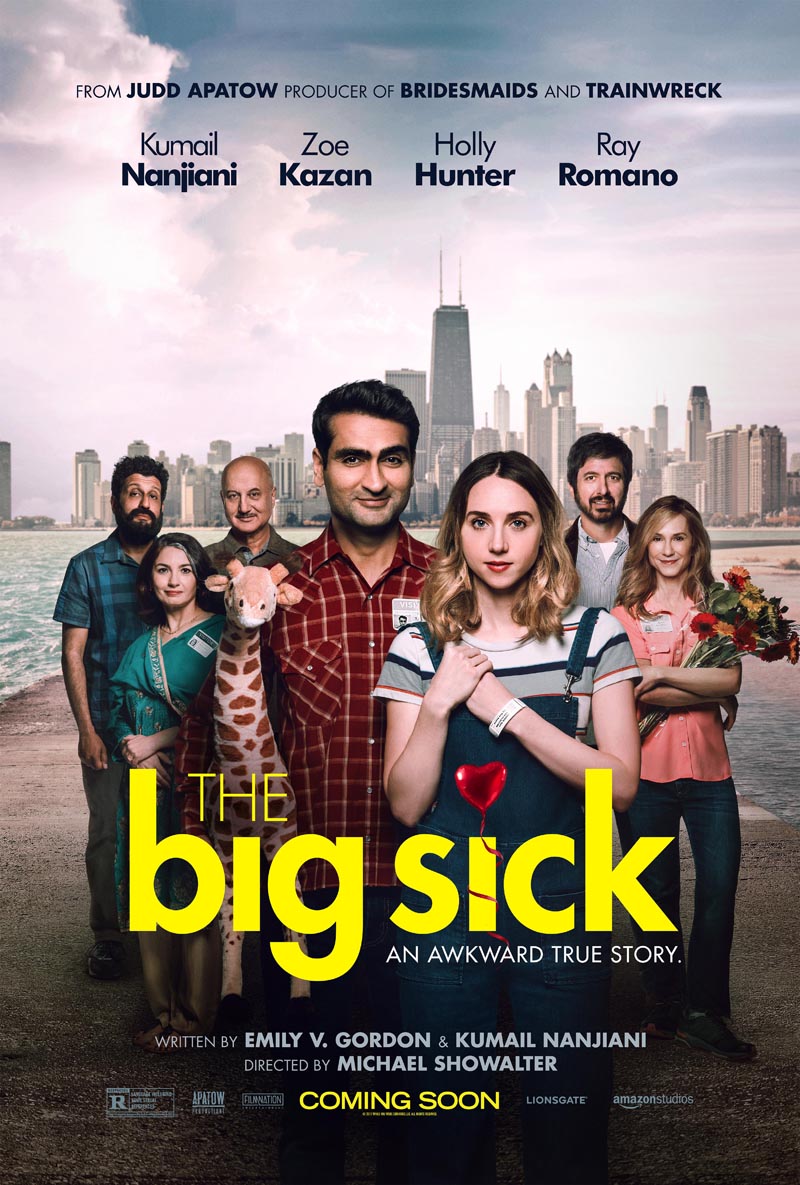
Organic and relatable. From Amazon Studios and Lionsgate comes Judd Apatow’s The Big Sick directed by Michael Showalter. Despite being billed as a romantic comedy (romcom), it is more like a family drama with comedic moments. What makes the plot of The Big Sick so incredibly relatable is its central focus on two star-cross’d lovers caught between two seemingly incompatible worlds. Beyond featuring two people who fall in love quickly, then realize how there is little chance of a future in which they are together, this story has little in common with Romeo & Juliet. No feuding families or riots here, just two 20-somethings who are trying to make it in this world, and by sheer happenstance fall for each other. However, much like the families from which Romeo and Juliet came, there are two opposing forces at work in this love story. It is clear from the screenplay and cast that all the elements are at work to generate a response from the audiences that would make this an endearing classic in the vein of Terms of Endearment. The relatability and organicness of this film comes from the fact that the entire cast–not just the lead characters–are every-day 21st century Americans who are facing the real mountains and pitfalls of romance, acceptance, honesty, and devotion.

The Big Sick tells the true-life story of the courtship between Pakistani-American Kumail (Kumail Nanjiani) and Chicago native Emily (Zoe Kazan). Kumail is a stand-up comic–or rather–he is desperately trying to be. He’s good enough for a small venue but he dreams of performing at the Montreal Comedy Festival. Emily is a graduate student at the University of Chicago studying psychology. Between family backgrounds and professional interests, the two of them could not be more different. When Kumail and Emily fall in love with each other, everything seems to be going so incredibly well over the next few months; but when Emily learns that Kumail cannot take the next step from dating to engagement because of his Pakistani family’s traditions regarding arranged marriage to a Pakistani girl, their relationship falls apart. As circumstance would have it, Emily must be placed under a medically-induced coma in order to stabilize after her health takes an acute turn downward. With Emily’s parents (Holly Hunter and Ray Romano) in town, Kumail must deal with his ex-girlfriend’s health condition and the fact that her her parents despise Kumail after he led their daughter on. Realizing that he cannot allow his family to determine his fate, Kumail is determined to win over Emilys parents and show Emily that he can be who she needs him to be.

What sets The Big Sick apart from a typical par-for-the-course romcom is the dimension and depth of the plot and characters. Ordinarily, a romcom contains a lighthearted story that requires little critical thinking and analysis because it is meant to be simply entertaining with a little heart along the way. Great for date nights and girls nights. Often times, in a traditionally structures romcom, the female character is the most interesting with the rest of the cast playing a lesser role. However, in this film, the most interesting character is the male love interest. Furthermore, the character chemistry and plot are greatly helped by Kumail and Emily being interesting respectively. The underdog trope is often applied to romcoms, and it certainly played a role in this film. In addition to the character and plot development on screen, the audience also goes through some soul-searching. Incidentally, the movie opens the door of discussion regarding the predisposition to how Pakistani and Americans view marriage and dating. Just like past films that commentated on marriage or dating between the black and white communities–which is what was needed in the not so distant past–this film raises awareness regarding marriage and dating as it relates to middle-eastern and American relationships. A timeless plot told through a contemporary setting.


“Baby Driver” movie review

Exhilarating! Edgar Wright’s Baby Driver is an accelerated non-stop comedic action-thriller that will have you in high-gear the entire drive time. Wildly entertaining! It offers up the best car chases, excellent characters, and displays solid writing in this subgenre of action films. During the golden age of Hollywood cinema, grand getaways, robberies, and car chase movies were a staple. Sony/Tristar, et al, demonstrate that one of the foundational plot types that provided audiences with thrills back then can be effectively resurrected today to embody the engine that drove those motion pictures and install it into a new, sleek body design to mesmerize and impress audiences of today. Certainly, Baby drives to the beat of his own mixtape in this movie, but the film itself goes further and integrates the rhythm of action into the sound design of the motion picture. Not to be left behind on the 80s throwback movies and TV shows bandwagon featuring hipsters and mixtapes, Wright crafts a summer film that rises above the all too cliché CGI robots taking to the sky and pirates swashbuckling across the seas to remind us that little can compare to the squeal of the wheel, love, and the witty turning of phrase. In short, Baby Driver is a self-aware pop-culture film but has the soul of a James Dean motion picture.

Meet Baby (Elgort). Yes, that’s B-A-B-Y Baby. He’s the unparalleled talented getaway driver for Doc’s (Spacey) Atlanta crime ring. With earbuds in place, playing classic rock or his own mixtapes, Baby drives, speeds, and maneuvers to the beat of his tunes. No police force is a match for his ability to evade his would-be captors in order to return Doc’s henchman (and woman) to the secret lair. As chance would have it, Baby meets Debora (James), the girl of his dreams, at his usual diner. All that stands in his way is one more job for Doc, or so he thinks. With payment in full of his debt to Doc on the horizon, Baby sees this as his opportunity to make a clean break and to ditch his shady lifestyle of crime. But when Doc approaches Baby with yet another job, Baby must decide to whom his allegiances lie and protect those he loves.

Any veteran filmmaker will tell you that it’s vitally important to hook the audience within the first three to five minutes of a film. Fail to hook producers at the beginning of the screenplay, and it’s file-thirteen for those 120 pages. As a director, it’s encumbered upon him or her to grab hold of the audience’s attention, creating the urge to want more, to know more. The first scene of Baby Driver is an incredible display of excellence in writing, directing, and the technical elements of motion picture creation. The magic of this scene lies in the ability for Wright to wow the audience, without leaving anyone “out there in the dark” (Sunset Blvd) overly-stimulated or left with the feeling of utter exhaustion. The scene is perfectly stimulating. It sets the bar high for the film, and continues to keep it up there for the entire runtime. Just like the pace of Baby’s driving, the pacing of the film is exquisitely handled and couldn’t be better! The biggest difference between this robbery/getaway film and similar films such as The Fast and the Furious is substance. In addition to the incredible cinematography and sound design paired with out of the world car chases, the film provides heart, soul, and qualitative substance that forms the foundation upon which the more superficial elements are laid.

The cast couldn’t have been more brilliantly selected. One of the hallmarks of an Edgar Wright film is the charismatic leads that display solid chemistry on screen. Just who are our heroes in this film? You’ll just have to watch it and decide for yourself. I love it when films take the more conventional concept of heroes and villains and turns it on its head. For whomever you decide are the heroes, you’ll certainly find yourself actively rooting for their survival and rooting for the villains to meet their demise in shockingly creative ways. When Kevin Spacey isn’t busy being the President of the United States, or more recently, an ex-President, he is the king pin of an Atlanta-based crime syndicate that stages fantastically wild robberies. And Baby is indebted to him and must reluctantly aid and abet as the best getaway driver ever to hit the screens in recent years–think a modern-day James Dean. Jaime Foxx plays the veteran head henchman extremely well and adds his own repulsive, yet comedic charm to his role. It would have been far too easy to play off Spacey and Foxx’s conventional talents to steel focus away from the central plot, but Wright strikes a perfect balance between his leads and the story. Elgort and Spacey’s on-screen chemistry was crafted with strategic precision in order to quickly solidify the frenemy relationship between the two characters. With Elgot increasing in popularity, Wright could have deflated to playing up the attractive bad boy tropes but instead allows Elgot’s Baby to develop organically throughout the film.

If you are seeking a summer film that clearly demonstrates a movie in which all the creative elements work seamlessly together in the manner in which they were respectively intended, then don’t miss Baby Driver while it’s in theatres. The energy you will feel in this film is nearly unparalleled by any in recent times, and that’s because both the major and minor components work together like a well-oiled machine. You will be at full throttle as you are instantly transported from your auditorium seat to the passenger seat in Baby’s car.

Written by R.L. Terry

Edited by J.M. Wead