WHEN CINEMA SANG: TOP TEN MOVIE SONGS OF THE 1980s

When we look back at the films of the 1980s, it’s impossible to separate the images on screen from the songs that scored them. This was the decade when movie music didn’t just underscore the action—it defined it. A single track could embody the spirit of a film while simultaneously capturing the mood of an entire generation. And remarkably, so many of those songs remain with us today. They’re still streamed on playlists, still belted out at karaoke, still instantly recognizable from their opening chords. The 1980s gave us movie songs that became cultural landmarks, and in many ways, they’ve never stopped playing.

Among the long arc of cinema history, the 1980s stand out as the high-water mark of the movie song. This was the era when a soundtrack single could leap to the top of the charts overnight, transforming into a cultural event in its own right. Whether it was an infectious pop hook or a soaring power ballad, these songs weren’t just background music; they were stitched into the fabric of the films and the culture itself. Think of the triumphant synth-drenched pulse of Flashdance…What a Feeling, the high-octane rush of Danger Zone, or the emotional catharsis of Wind Beneath My Wings. The decade leaned into the marriage of sound and image with unapologetic boldness, and in doing so created songs as enduring as the films they came from—sometimes even more so.

Why have they endured? Partly because they articulated universal experiences—ambition, risk, heartbreak, friendship—in melodies and lyrics that were at once sincere and unforgettable. The 1980s were an era of spectacle, melodrama, and unabashed emotion, and the songs mirrored that ethos. They became sonic shorthand for youth, energy, rebellion, and joy. In an age when MTV amplified every movie track into a visual pop event, these songs weren’t merely incidental—they were emotional anchors, marketing juggernauts, and narrative engines. Nothing’s Gonna Stop Us Now carried Mannequin’s optimism beyond the multiplex and into wedding halls. Dolly Parton’s 9 to 5 gave voice to working-class frustration while climbing the radio charts. And Don’t You (Forget About Me) is now inseparable from Judd Nelson’s raised fist in The Breakfast Club. These weren’t just songs in movies; they became shorthand for the decade’s imagination.

Why don’t we have these same kind of songs today? There’s been a cultural shift–most noticeably in the 2020s, but has its roots in the mid to late 1990s. By the 1990s and 2000s, the conditions that made such songs possible began to fade. Pop soundtracks increasingly licensed pre-existing hits rather than commissioning originals. Franchise filmmaking turned toward instrumental scores and brand cohesion rather than big, show-stopping anthems. And as music videos lost their central cultural role, so too did the symbiotic relationship between cinema and pop radio. The cultural machine that once elevated a movie song into a generational anthem simply no longer works the same way.

Reflecting upon more recent years, much of 2020s pop and movie music is created in a climate of deep cynicism and fragmentation. Songs today are often crafted for algorithms, for virality on TikTok, or as ironic counterpoints in film soundtracks rather than as emotional anchors. Other songs carry with them a tone of anger or polarization. Audiences, steeped in skepticism toward institutions, media, and even each other, tend to reward irony, detachment, or knowing self-parody over the kind of unguarded sincerity that defined the 80s. A song that earnestly belts out its hopes risks being labeled “cheesy” or “dated,” whereas in the 1980s, that very boldness was the point.

One of the most striking contrasts between the 1980s and the 2020s is the sense of permanence. The movies and music of the 1980s were made with a boldness that seemed intent on lasting—on making an impression that would outlive the decade itself. By contrast, much of today’s popular culture, both in film and in music, feels designed for rapid consumption rather than long-term resonance–its largely disposable.

Songs today are often crafted not for endurance but rather for algorithms—engineered to spike on streaming platforms, go viral on TikTok, or capture a brief window of attention on curated playlists. In that sense, music has become increasingly functional: it serves a moment, a meme, a mood, but rarely aspires to the kind of cultural monumentality that defined the best of the 1980s. The hooks are short, the structures lean toward repetition, and the lifespan of a hit can sometimes be measured in weeks rather than years. The same phenomenon is evident in today’s movies. Franchise blockbusters dominate the box office, but their cultural imprint often fades once the next installment arrives. Films are built as nodes in larger intellectual property ecosystems, not as singular artistic statements. Just as contemporary songs often feel interchangeable—quickly eclipsed by the next release—so too do many films function as disposable content, part of a cycle of endless consumption rather than enduring cultural landmarks.

By comparison, the movies and songs of the 1980s embraced scale and spectacle not just for immediate impact but for legacy. A hit song wasn’t simply filler for a soundtrack; it was an anthem meant to outlive its film, designed to thrive on the radio, MTV, and in the cultural memory. Similarly, films were often built as self-contained phenomena: E.T., Top Gun, Back to the Future—movies that carried an aura of event cinema and refused to feel like disposable installments. This is not to say that contemporary culture lacks quality (although that appears to be increasingly true, in the opinion of this scholar and critic), but rather that its structures encourage disposability. With so much “content” (the use of content versus film or music is intentional) being produced at such speed, both music and movies are often designed to capture attention briefly rather than to linger. The result is a cultural landscape that feels ephemeral, where few works are positioned to endure in the way that 1980s soundtracks and films continue to do.

Suffice it to say, the movie songs of the1980s sought to define a generation; today, music and movies often just try to define a moment.

It appears all too clear that in the 1980s, movies weren’t just stories we watched; they were songs we sang, dances we learned, and emotions we carried. It wasn’t simply a golden age of movie music—this era was the last time cinema’s soundtrack felt like the heartbeat of the culture. In our present times, wherein pop culture often reflects uncertainty and disillusionment, the 1980s (extending into the 1990s) stand as the last great era when music from movies felt larger than life, confident enough to aim for forever. Moreover, these songs transcend generations by speaking directly to universal desires—love, empowerment, joy, escape—modern songs often feel locked, chained to their cultural moment or fixated on a particular socio-political lament.

The 1980s–when cinema sang! What the 1970s did for cinematic scores, the 1980s did for music that wrapped us in the cinematic experience.

This week, on my show ReelTalk on WKGC Public Media, I sat down with returning guest and friend of the show music professor Dr. Steven DiBlasi to countdown our Top Ten Movie Songs of the 1980s. Our respective lists both aligned and diverged, covering the wide spectrum of great, memorable movie songs. This is where I am going to direct you to listen to the show (approx 1hr) to avoid spoilers, but if you’re more of a reader than a listener, then you can find our ranked lists below.

Listen

Top Ten Movie Songs of the 1980s

Mine (Ryan’s)

Dr. DiBlasi’s

  • 10. Stir It Up (Beverly Hills Cop)
  • 9. Trust (Batman)
  • 8. Danger Zone (Top Gun)
  • 7. Wind Beneath My Wings (Beaches)
  • 6. Nothing’s Gonna Stop Us Now (Mannequin)
  • 5. 9 to 5 (9 to 5)
  • 4. Goonies R Good Enough (The Goonies)
  • 3. Maniac (Flashdance)
  • 2. NeverEnding Story (The NeverEnding Story)
  • 1. Flashdance…What a Feeling (Flashdance)
  • 10. In Your Eyes (Say Anything)
  • 9. The Heat is On (Beverly Hills Cop)
  • 8. Don’t You Forget About Me (The Breakfast Club)
  • 7. Footloose (Footloose)
  • 6. Fight the Power (Do the Right Thing)
  • 5. Take My Breath Away (Top Gun)
  • 4. Purple Rain (Purple Rain)
  • 3. Eye of the Tiger (Rocky)
  • 2. The Power of Love (Back to the Future)
  • 1. Ghostbusters (Ghostbusters)

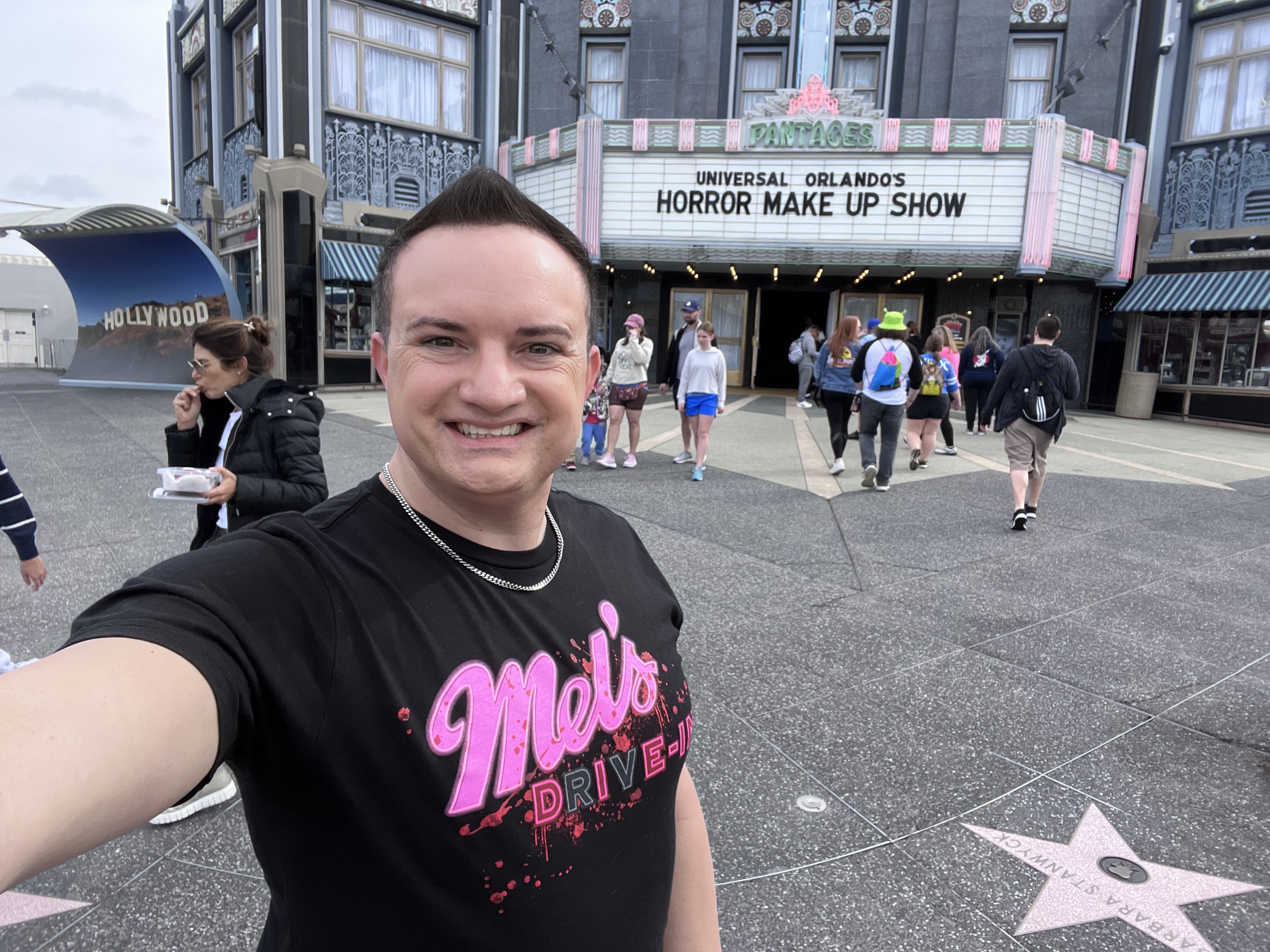
Ryan is the general manager for 90.7 WKGC Public Media and host of the public radio show ReelTalk “where you can join the cinematic conversations frame by frame each week.” Additionally, he is the author of the upcoming film studies book titled Monsters, Madness, and Mayhem: Why People Love Horror. After teaching film studies for over eight years at the University of Tampa, he transitioned from the classroom to public media. He is a member of the Critics Association of Central Florida and Indie Film Critics of America. If you like this article, check out the others and FOLLOW this blog! Follow him on Twitter: RLTerry1 and LetterBoxd: RLTerry
TOP 10 FILM SCORES OF THE 1970s: AN ECLECTIC DECADE OF TRANSFORMATION

Film scoring in the 1970s was nothing short of revolutionary. This was a decade in which composers and filmmakers experimented with sound in bold, unprecedented ways. Sweeping orchestras still had their place, but they now shared the stage with eerie minimalism, jazz-infused soundscapes, synthesizers, and even progressive rock. The result was a period of extraordinary breadth and innovation—one that gave us some of the most iconic film music ever written.

At the heart of this decade stood John Williams and Jerry Goldsmith, two composers who dominated in very different ways. Williams revived the lush, symphonic tradition and brought it back to the masses with scores that became cultural phenomena. Goldsmith, meanwhile, was the chameleon—endlessly inventive, prolific, and daring, whether working with avant-garde techniques, electronic experimentation, or lyrical orchestrations. Yet the decade was not defined by them alone. Outsiders like Goblin, with their phantasmagorical score for Suspiria, or directors such as John Carpenter, who electrified horror with nothing more than a chilling piano rhythm in Halloween, proved that iconic film music could be born outside the studio system. Jazz, soul, and early R&B also found their way into major works, mirroring the diverse cultural pulse of the era.

The soundscape of the 1970s was one where tradition collided with innovation. Bernard Hermann closed out his legendary career with Taxi Driver, a jazz-infused urban nightmare that distilled both character and city into sound. Jerry Goldsmith, the consummate innovator, moved effortlessly from the operatic choral terror of The Omen to the avant-garde dissonance of Alien and the melancholy trumpet of Chinatown—not to mention his enduring Star Trek theme, launched in The Motion Picture. Mike Oldfield’s Tubular Bells, adapted for The Exorcist, demonstrated that minimalist rock could chill as deeply as any orchestra. And Williams resurrected the grand symphonic tradition with Jaws and Star Wars, reintroducing sweeping themes and leitmotifs to a new generation. Taken together, these works made the 1970s both a bridge and a launchpad: honoring the past while daring to explore the future.

Audiences witnessed a resurgence of the full-bodied symphonic score, reviving the golden-age practice of leitmotif-driven composition. But while many scores channeled old Hollywood, these same scores were blazing new trails–trails that future filmmakers would tread and further develop in their own voices. Yet the 1970s were hardly a return to tradition alone. From fragmented jazz and abrasive brass to minimalist repetition that conveyed inevitability, film scores proved that music could disturb and destabilize as effectively as it could uplift. Musical expressions across a wide spectrum were represented and fused throughout the decade. This eclecticism was witnessed in the integration of jazz, rock, and popular styles into film scoring. Jazz, long associated with improvisation and urban grit, seeped into dramas and thrillers, while progressive rock and folk elements brought an otherworldly quality to European cinema.

This embrace of contemporary genres reflected the cultural currents of the 1970s, when popular music increasingly shaped the everyday soundscape. Although electronic instruments are often associated with the 1980s, experimentation with synthesizers truly began in the 1970s. By blending traditional compositional techniques with new technology, composers created atmospheres that felt immense, uncanny, and otherworldly. Horror, in particular, became the proving ground for these sonic experiments. From the satanic choral grandeur of The Omen to the eerie repetition of The Exorcist, the avant-garde unease of Alien, and the surrealism of Suspiria, horror films became laboratories for innovation—setting trends that rippled across genres.

The eclecticism of 1970s film scoring mirrored the turbulence and transformation of American life during that same decade. The United States was navigating a shifting cultural landscape—post-Vietnam disillusionment, Watergate’s erosion of political trust, an energy crisis, and social movements that challenged the norms of race, gender, and identity. Just as the nation was renegotiating its sense of self, film music was renegotiating its role in storytelling. The return of grand symphonic scores reflected a yearning for stability, heroism, and mythmaking in a time of uncertainty. At the same time, the rise of dissonance, minimalism, and electronic experimentation resonated with audiences living through an era of anxiety and rapid change. Just as the decade was defined by eclectic fashion, political unrest, and artistic upheaval, so too was its film music characterized by hybridity, boldness, and the breaking of old rules. The cinema became a cultural mirror, wherein the nation’s contradictions—fear and hope, nostalgia and progress, tradition and innovation—were set to music.

The 1970s also reasserted film scores as cultural touchstones, in ways not witnessed since Herrmann’s Psycho. John Williams work and name became instantly recognizable beyond the movie theatre, entering the cultural lexicon in a way few film scores had before. Jerry Goldsmith pushed the boundaries of what film music could evoke, Nino Rota created hauntingly elegant themes with operatic weight. Meanwhile, Mike Oldfield’s Tubular Bells proved that a minimalist rock piece could achieve global recognition and forever alter the sound of horror. Collectively, these works and more reestablished film music not merely as background support, but as a defining element of a film’s identity—inseparable from its success and enduring in the popular imagination.

The 1970s forever changed how we would hear cinema.

This week, on my show ReelTalk on WKGC Public Media, I sat down with music professor Dr. Steven DiBlasi to countdown our Top Ten Film Scores of the 1970s. Our respective lists both aligned and diverged, covering the wide spectrum of great, memorable film music that was the 1970s. Below, you will find our respective Top 10 lists, but for the full conversation (approx 1hr), you’ll want to listen to the episode!

Listen

Top 10 Film Scores of the 1970s

Mine (Ryan’s)

Dr. DiBlasi’s

  • 10. Taxi Driver (Bernard Herrmann, 1976)
  • 9. The Godfather (Nino Rota, 1972)
  • 8. Chinatown (Jerry Goldsmith, 1974)
  • 7. The Omen (Jerry Goldsmith, 1976)
  • 6. Alien (Jerry Goldsmith, 1979)
  • 5. Star Wars (John Williams, 1977)
  • 4. Jaws (John Williams, 1975)
  • 3. Suspiria (Goblin, 1977)
  • 2. Halloween (John Carpenter, 1978)
  • 1. The Exorcist (Mike Oldfield, 1973)
  • 10. The Petrified Forest (Toro Takemitsu, 1973)
  • 9. Days of Heaven (Ennio Morricone, 1978)
  • 8. Space is the Place (Sun Ra, 1974)
  • 7. A Clockwork Orange (Wendy Carlos, 1971)
  • 6. Don’t Look Now (Pino Donaggio, 1973)
  • 5. Shaft (Isaac Hayes, 1971)
  • 4. Taxi Driver (Bernard Hermann, 1976)
  • 3. Chinatown (Jerry Goldsmith, 1974)
  • 2. Hurricane (Nino Rota, 1979)
  • 1. Star Trek: TMP (Jerry Goldsmith, 1979)

Ultimately, the 1970s was a transformative decade of film music, both a bridge and a launchpad. It bridged the golden age of orchestral scoring with the bold experimentation of the modern era, while launching the blockbuster tradition and electronic innovation that would dominate the decades to come. The eclecticism of 1970s film music remains its hallmark, and its influence can still be heard in how cinema sounds today.

Ryan is the general manager for 90.7 WKGC Public Media in Panama City and host of the public radio show ReelTalk “where you can join the cinematic conversations frame by frame each week.” Additionally, he is the author of the upcoming film studies book titled Monsters, Madness, and Mayhem: Why People Love Horror. After teaching film studies for over eight years at the University of Tampa, he transitioned from the classroom to public media. He is a member of the Critics Association of Central Florida and Indie Film Critics of America. If you like this article, check out the others and FOLLOW this blog! Follow him on Twitter: RLTerry1 and LetterBoxd: RLTerry
SUNSET BOULEVARD 75th Anniversary Retrospective

The magic of Sunset Boulevard is still capturing the “eyes of the world” from all those “wonderful people out there in the dark” seventy-five years later.

NormaDesmond

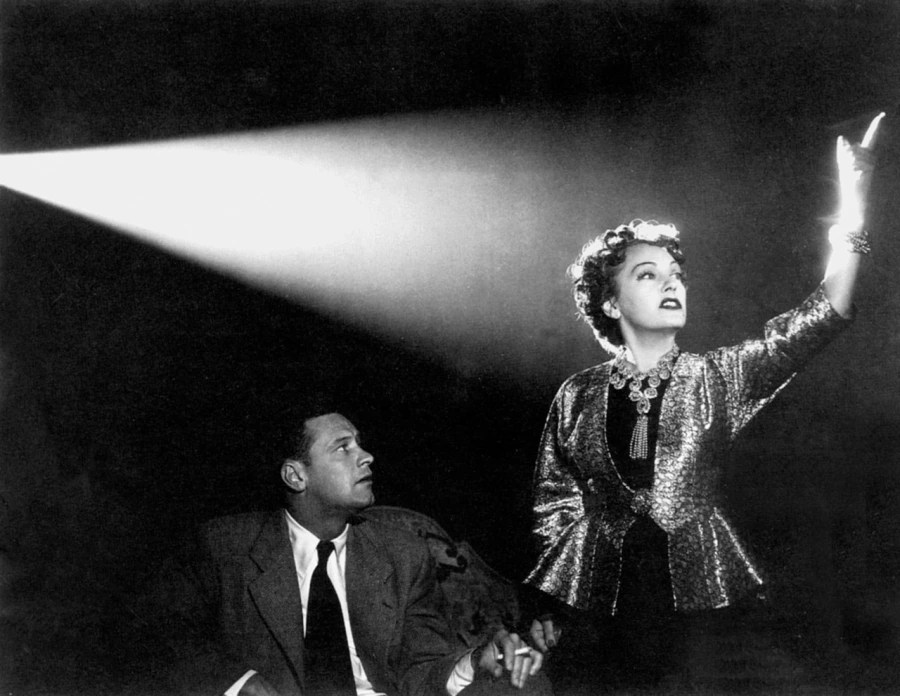
There is little question that Billy Wilder’s masterpiece Sunset Boulevard still captures the eyes, hearts, minds, and souls of audiences seventy-five years later. It continues to stare unblinking into the soul of Hollywood—and, perhaps uncomfortably, into the faces of all those people out there in the dark. Billy Wilder’s mordant masterpiece starring Gloria Swanson as Norma Desmond endures not only because of its sharp wit, noir elegance, and unforgettable performances, but because it remains a mirror for an industry—and an audience—forever tempted to trade substance for novelty. Its barbed satire of fading stars, disposable talent, and a studio system eager to discard the past feels eerily prescient in an era when algorithms decide what stories are worth telling and studios recycle intellectual property like celluloid scraps. Watching it now, one realizes the film is not merely a relic of old Hollywood’s cynicism—it is an indictment of the complacency of contemporary audiences and the short-term greed of the modern industry. Sunset Boulevard has not grown old; it’s the world around it that has refused to grow up.

Since its release on 10th of August in 1950, it has been the inspiration to countless films. But what does it mean to you? What makes it special or stand out to you? Perhaps you just see it as an iconic film; or just maybe, you see it as representing something personal to you. From classic noir cinematography to some of the most quoted lines of all time, Norma Desmond’s spirit lives on. So much for Joe Gillis’ line about her “still waving proudly to a parade that has long since passed her by;” she is still as alive today as she ever was. Serving as a mirror to the current state of Hollywood, Billy Wilder’s film shed light on the darker side of celebrity that still haunts to this very day. This timeless movie provoked Hollywood to take a cynical and honest look at itself, and the dangerous price of stardom–especially when the star is fading into obscurity. Poignantly arriving near the end of the Golden Era (or Studio System), this cinematic masterpiece continues to be the epitome of a Hollywood and anti-Hollywood film for all eternity. Beyond what it meant historically or industry-wise, it holds meaning and significance for many who watch it. One of its strengths to withstand the test of time is the fact is its ability to connect with people visuals and emotionally. That, combined with solid technical aspects, makes for a dynamic cinema experience.

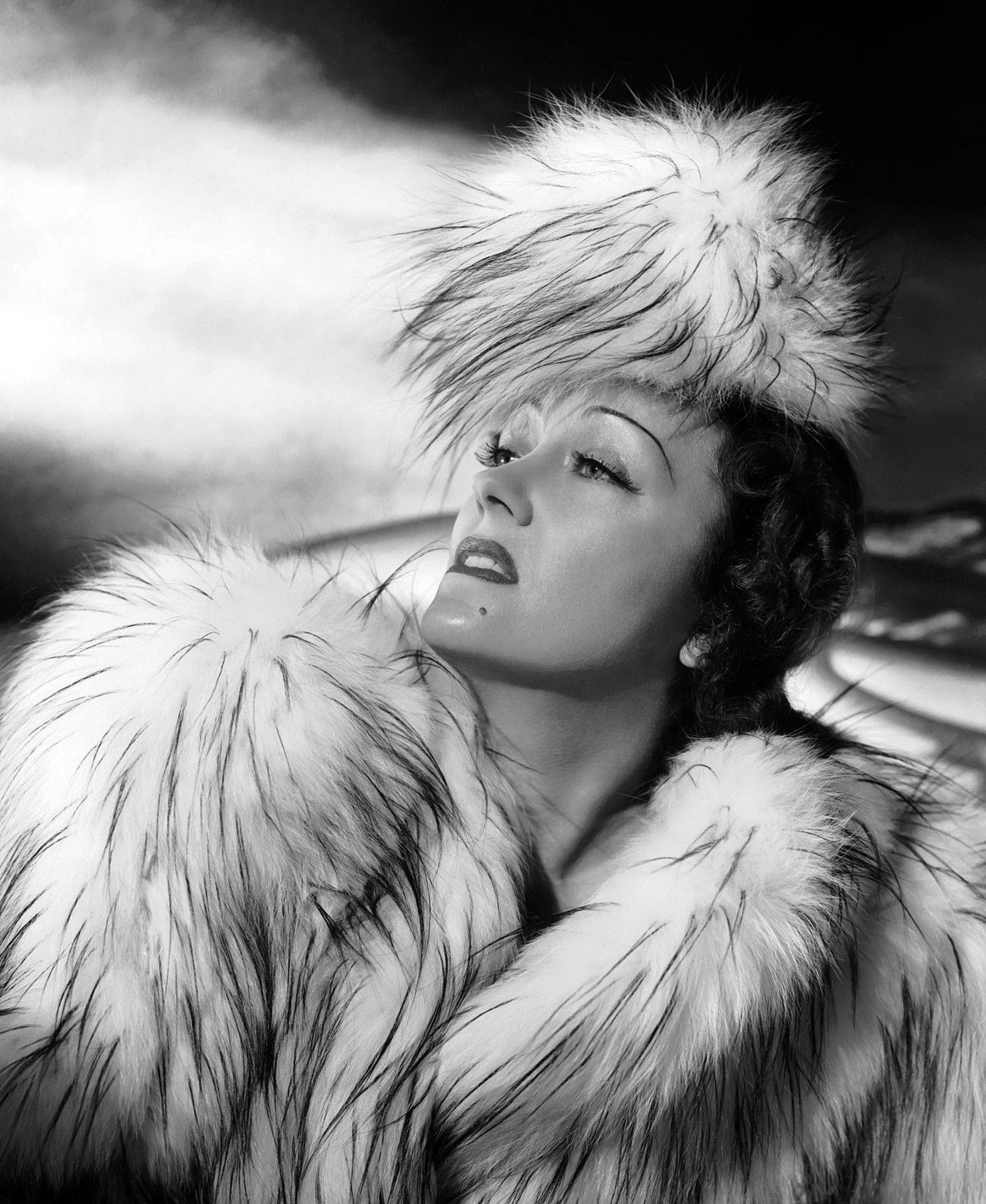
Part of what still beckons the “eyes of the world” is the movie’s ability to tell the story within a story. Gloria Swanson’s performance as Norma Desmond is so perfectly calibrated that audiences sometimes forget she was playing a role at all. Billy Wilder and Charles Brackett deliberately wove elements of Gloria Swanson’s real life into Norma’s backstory, yet the parallels are only part of the truth. Swanson was both exactly Norma Desmond and nothing like her—especially when you consider her remarkable adaptability and forward-thinking nature. She saw greatness in the character and the film, and saw this as her triumphant return to the screen in an important picture. In many ways, Gloria took a role that was essentially making a mockery of everything she once stood for. Like Norma Desmond, Swanson was one of Hollywood’s highest paid performers from the teens until the early 1930s. Following the advent of talkies in 1927 and the changes in the studio system thereafter, her career floundered. Yet, she carried herself with poise, theatricality, and unapologetic glamour—qualities that translated naturally into Norma’s imperious, otherworldly presence. If you’re looking for a real life “Norma Desmond,” then look to silent film actress May Murray—she did live in the past after her star faded, and was reported to have been rather eccentric. Gloria, however, proved that those ghosts didn’t have to haunt you if you kept moving forward. Which she did—in radio, television, theatre, fashion, and even technology.

1941: American actress Gloria Swanson (1899 – 1983) plays glamorous film star Leslie Collier in ‘Father Takes a Wife’, directed by Jack Hively. (Photo by Ernest Bachrach)

The role of Norma Desmond was originally offered to Mae West and then Mary Pickford, but both turned it down. Pickford recommended Gloria. Suffice to say, the role cannot be imagined to have been brought to life by anyone else. No one could capture the character of Norma Desmond like Gloria Swanson. Throughout the movie, we witness the psychological breakdown of a woman who is already seriously afflicted with chronic depression and even agoraphobia. I feel as though many actors, and even some industry professionals who are not performers, can truly understand what must have been going through the mind of Norma Desmond. Actually, even for those who are not involved in entertainment or media can still see someone who felt betrayed and left alone to drift away. We’ve all been there. Feeling like we have so much to give the world, our community, or to the arts, and no one to take or acknowledge it. Norma isn’t going through anything that we have not been through. Essentially, Norma’s significant other, or partner, was her celluloid self, the studio, the industry. And when her partner left her, never to return, she developed serious psychological and cognitive disorders. Each person who chooses to watch her downward spiral into insanity, should be able to identify with her on some level regarding something in their life. For Norma, it was being back on screen again. For you, it may be something else.

Paramount-Gate-287x162

Fascinating elements of this story include the bewildering world of what lies between the glory and the fall of a celebrity who feels as though she built Hollywood, more specifically Paramount Studios. Never before had there been a movie that was developed around the idea of what happens to a star after they are rejected by the very business that created them. Serving as the inspiration to the opening scene of American Beauty nearly 50 years prior, Wilder set the standard in the dead body of the protagonist narrating the film. Like the fog over London, Gillis’ spirit hovers over the entire movie, narrating the course of events that lead to his demise. Joe gets to do what any of us would enjoy doing–getting to observe what happens after we die and how everyone reacts. Just like having a soundtrack to your life would be amazing, getting to narrate your story after you die would be equally, if not more so, enamoring.

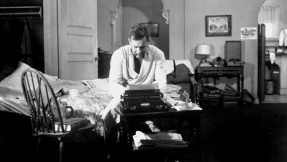
William (Bill) Holden’s character of Joe Gillis is the prime representation of a starving artist. He lives in a tiny apartment, has a few credits to his name and is in danger of having his car repossessed. That describes many artists today, thus allowing other aspiring screenwriters and filmmakers to identify with his frustrations. Like a true film noir, the ending is tragic for the protagonist. Part of the suspense is wondering just when will he meet his end and why. For those who are trying to make it in the industry as a screenwriter, the grief and depression Joe must been feeling is something with which aspiring screenwriters can empathize.

Sunset Boulevard contains something for everyone: elements of mystery, action, romance, and deceit are woven meticulously throughout the film. This allows for the story to transcend decades of movie evolution and maintain such a high regard in the minds of all the “people out there in the dark.” And, even land a spot on the Great White Way in Andrew Lloyd Webber’s Sunset Boulevard Broadway musical. It’s been rumored that Paramount plans to make a movie version of the Broadway show, but that rumor has been floating around Hollywood for years. As much as the the musical is a tribute to the original, the movie will always be more impactful because the stage simply cannot bring you as close to eyes of the actor as the screen can. And, Norma “can say anything with [her] eyes.” But, thanks to Barbra Streisand keeping the songs alive, “With One look” and “As if We Never Said Goodbye” are brilliantly written to capture the feelings and state of mind of Norma.

GillisWriting

Regarding the screenplay itself, it is not a matter of what’s going to happen as much as it is how’s it going to happen. This pioneering non-linear structure served as yet inspiration for another film that would not be produced for nearly 60 years. Along with All About Eve and Citizen KaneSunset Boulevard played an instrumental role in the development of the 1994 blockbuster Pulp Fiction. A lesser known 2001 movie borrows many plot points from Sunset Boulevard including the movie title being a street name, entitled Muholland Drive starring Naomi Watts, Justin Theroux, and Laura Harring. Sort of a neo-noir, this is a more modern twist on the foundation Wilder laid with his masterpiece. On that note, now-a-days, non-linear films aren’t necessarily anything special, but at the time, Sunset Boulevard broke ground that would be the standard in abandoning traditional story structure. To me, the screenplay was written in such a way that many people can find his or her own story in the screenplay. Perhaps, someone feels like they are Norma–all but forgotten. Perhaps, there is a starving artist out there who can understand the predicament Joe Gillis was in–just trying to get ahead. To a lesser extent, there may be Betty Schaefer’s watching the movie who feel they have a lot of talent, but very little is recognized and want to find a creative outlet.

Unlike previous films, this movie was also ahead of its time in terms of including dark sarcasm and humor as chief elements in the film. Other aspects that capture the ears of the world, to Miss Desmond’s disapproval, are the famous lines from the movie. Ironically, Desmond despised dialog; however, her movie possesses the coveted numbers 7 and 24 spots on AFI’s Top Movie Quotes list. At number 24, “…I am big! It’s the pictures that got small;” and at number 7, ranking above “Louis, I think this is the beginning of a beautiful friendship” and “what we have here, is a failure to communicate” is the often misquoted “Alright Mr. DeMille, I’m ready for my closeup.” There are many other more obscure, yet brilliant lines of dialog and exchanges between characters, landing the screenplay in the WGA’s Best Screenplays of All Time list at number 7! It’s important to now only appreciate the movie as a movie, but to appreciate the story itself. Let us never forget that “someone sits down to write a picture” and fool ourselves into thinking that most of the time the “actors make it up as they go along.” Part of what makes this a timeless classic, and even a sort of Bible if you will, is the brilliant writing.

“[Cinema] is BIG. It’s the [movies} that got small.” In Sunset Boulevard, Norma Desmond’s defiant declaration—“I am big. It’s the pictures that got small”—was meant as a lament for the silent era’s fall to talkies; but in 2025, it resonates as a prophecy for cinema in the age of streaming. Norma wasn’t just talking about herself; she was articulating a truth about the grandeur, spectacle, and communal magic of the movies—an art form designed for towering screens and shared gasps in the dark. Today, as streaming platforms flood audiences with bite-sized content, algorithm-churned thrillers, and disposable franchise spin-offs, the scope of cinema has been compressed to fit living rooms and phone screens. Norma was right: cinema is big, but it’s the movies that have been miniaturized—scaled down in ambition, craft, and cultural weight—until they often feel like little more than moving thumbnails. The tragedy isn’t Norma’s inability to adapt, but that the industry has stopped aspiring to be as big as she was.

One of the elements that stands out in the movie is the meticulous placement of lighting. Film Noirs are one of the best examples of how effective lighting can be in playing an intricate part of the storytelling process. Lighting can show us whether or not someone may have two personalities, whether someone is dark and sinister. Since films did not have access to color, in the same way we do today, lighting in a grayscale movie was very important. Since colors could not be distinguished, lighting played that role. In many ways, the lighting in a film noir is like the Norma of the movie itself. Color has caused lighting to be used in a different way. For more practical reasons that aren’t always artistic in nature. Furthermore, another element that makes a film noir a film noir is the cinematography. After all, the term noir is French for dark. So, essentially film noir simply means dark film. It holds up to the definition due to the physically dark scenes; and furthermore, the state of being psychologically dark. The 9-time Academy Award nominated cinematographer John F. Seitz is responsible for creating the haunting visuals and shadows that dominate most of the movie.

GIllisPool

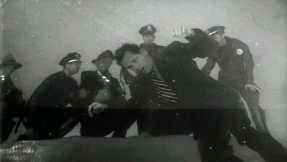
One of the shots that is the most puzzling is how Wilder was able to shoot Joe Gillis’ floating body in the pool. Now-a-days, that is simple enough–even YouTubers do it–but in 1950, how does one accomplish such a special effect? The use of mirrors in the film went beyond macabre and haunting set pieces; a mirror was also used to shoot this scene. Seitz placed a mirror at the bottom of the pool and shot facing down towards the mirror while Holden floated in the water with the police officers around the deck. This gave the illusion the camera was in the water facing up.Thanks to the iconic cinematography, the mansion “stricken with a creeping paralysis” appeared lonely and massive. There is no better example of this than when Gillis descends the grand staircase to a party where he and Desmond are the only guests on an expansive tile dance floor recommended by Rudolph Valentino.

“Alright, Mr. DeMille, I’m ready for my closeup.”

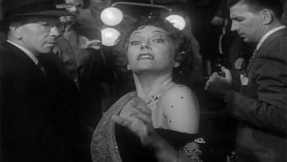
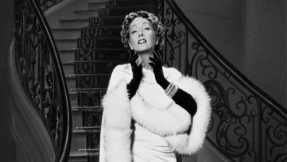
Some of the most memorable cinematography comes at the end of the movie. Wilder and Seitz chose to shoot parts of the finale in slow motion to create an uneasy feeling in the minds of the audience. As Norma begins to descend the grand staircase one final time, she is shot in slow motion, as if it were Norma’s dream coming to life–her big come-back. Pardon, she never left; the pictures left her. In her mind, she is playing princess Salome entering the palace; when in all reality, it’s not movie cameras, but news cameras documenting her psychological decline into insanity. With her famous line “I’m ready for my closeup,” she encroaches upon the camera operator determined to get the closeup she wants, even though it is fixed at a medium shot. The audience, she is so desperate to connect with again, is tragically out of her reach.

Sunset Boulevard serves as a haunting reminder that cinema’s survival depends on more than novelty—it thrives on depth, craft, and stories that demand to be remembered. Wilder’s film shows us a Hollywood already willing to discard its own history for the next marketable thing, a cycle that feels alarmingly familiar in an age of streaming debuts and algorithm-curated “originals” designed for convenience over impact. Norma Desmond’s tragic insistence that she is still “big” speaks not just to her own faded glory, but to the enduring power of cinema when it aspires to grandeur rather than pandering to trends. The film urges today’s audiences to resist the allure of quick, disposable entertainment and to champion works that challenge, inspire, entertain, and linger in the mind. If we let convenience replace artistry, aesthetics to replace great storytelling, we risk playing our own part in the slow fade-out of the movies we claim to love.

Sunset Boulevard means a lot of things to a lot of people. And, each person may have their own respective reasons as to why this film holds a special place in the minds and heart of those who love cinematic art. This movie truly embodies the latin inscription around Leo the Lion in MGM’s logo “Ars Gratia Artis.” Art for Art’s Sake. To me, it is one of the purest examples of artistic cinema. It also served as a mirror, to the dismay of the big producers of its day, highlighting the state of the industry at that time. People still remain mesmerized at this timeless feature because of all it has to offer. This is partly due to the fact that it as relevant today as it was in 1950. It’s entirely possible that there are Norma Desmonds today in their decaying estates watching their movies on TCM or AMC under the delusion that they remain stars that command the attention of the world.

Regardless if you are a filmmaker or a connoisseur of movies, Sunset Boulevard captures the eyes of the world today. And, it will continue to be a source of inspiration and entertainment for decades to come.

Ryan is the general manager for 90.7 WKGC Public Media in Panama City and host of the public radio show ReelTalk “where you can join the cinematic conversations frame by frame each week.” Additionally, he is the author of the upcoming film studies book titled Monsters, Madness, and Mayhem: Why People Love Horror. After teaching film studies for over eight years at the University of Tampa, he transitioned from the classroom to public media. He is a member of the Critics Association of Central Florida and Indie Film Critics of America. If you like this article, check out the others and FOLLOW this blog! Follow him on Twitter: RLTerry1 and LetterBoxd: RLTerry

THE NAKED GUN (2025) movie mini review

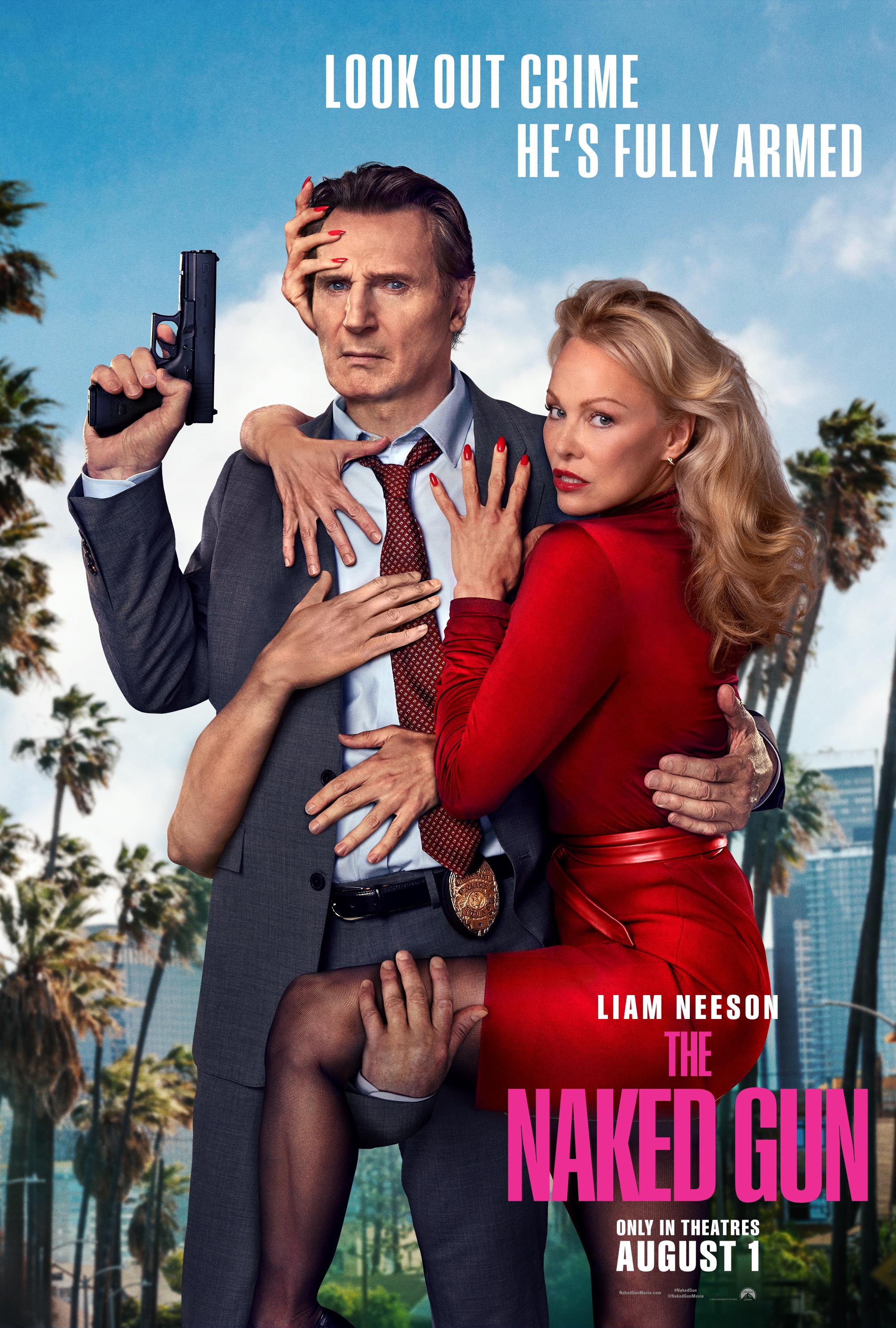
Best comedy since SPY! The Naked Gun (2025) is a spectacular noir/detective-comedy that has it all: smart screenplay, sensational cast, and it clocks-in at just under 1.5hrs. This reboot/reimagining of the beloved classic tiptoes along a treacherous tightrope: how to honor a slapstick legacy while avoiding the hollow echo chamber of recycled gags. Remarkably, thanks to a razor-sharp script, a fully committed cast, and a surprisingly fresh narrative, it pulls it off with chutzpah and precision. Directed by Akiva Schaffer, The Naked Gun is a masterclass in tonal balance, threading the needle between absurdity and plot progression, all while leaving room for character beats that land harder than a collapsing filing cabinet. Every setup pays off, every non sequitur doubles as a stealth punchline, and, most critically, the story and characters matter.

At the center of the madness is Liam Neeson, weaponizing his deadpan gravitas in a way that would make Leslie Nielsen nod in approval from the great beyond. As Frank Drebin Jr., he’s not playing his father’s shadow—he’s illuminating a new one. His comedic chops are precision-engineered. Neeson doesn’t mug for the camera or chase punchlines; he commits, deadpanning his way through verbal landmines, visual gags, and escalating mayhem with the kind of straight-faced sincerity that made Leslie Nielsen legendary. The secret ingredient to his delivery? His restraint. Marrying glamour and goofiness is Pamela Anderson, fresh off her outstanding performance in The Last Showgirl. Her tone, cool gaze, and knowing glances lend a classic noir energy to the role, but it’s her self-awareness and comic precision that elevate the performance. She glides through scenes with old-Hollywood poise in the vein of Lauren Macall, only to puncture the atmosphere with a well-timed double entendre or whip-smart aside.

In a cinematic landscape where many reboots are content to wink at the audience and roll credits, The Naked Gun dares to be funny—consistently, inventively, and unapologetically so. It doesn’t just recapture the soul of the original; it gives it a new pair of shoes and sends it running headfirst into traffic. And you’ll be laughing all the way.

Ryan is the general manager for 90.7 WKGC Public Media in Panama City and host of the public radio show ReelTalk “where you can join the cinematic conversations frame by frame each week.” Additionally, he is the author of the upcoming film studies book titled Monsters, Madness, and Mayhem: Why People Love Horror. After teaching film studies for over eight years at the University of Tampa, he transitioned from the classroom to public media. He is a member of the Critics Association of Central Florida and Indie Film Critics of America. If you like this article, check out the others and FOLLOW this blog! Follow him on Twitter: RLTerry1 and LetterBoxd: RLTerry
THE FANTASTIC FOUR: FIRST STEPS movie review

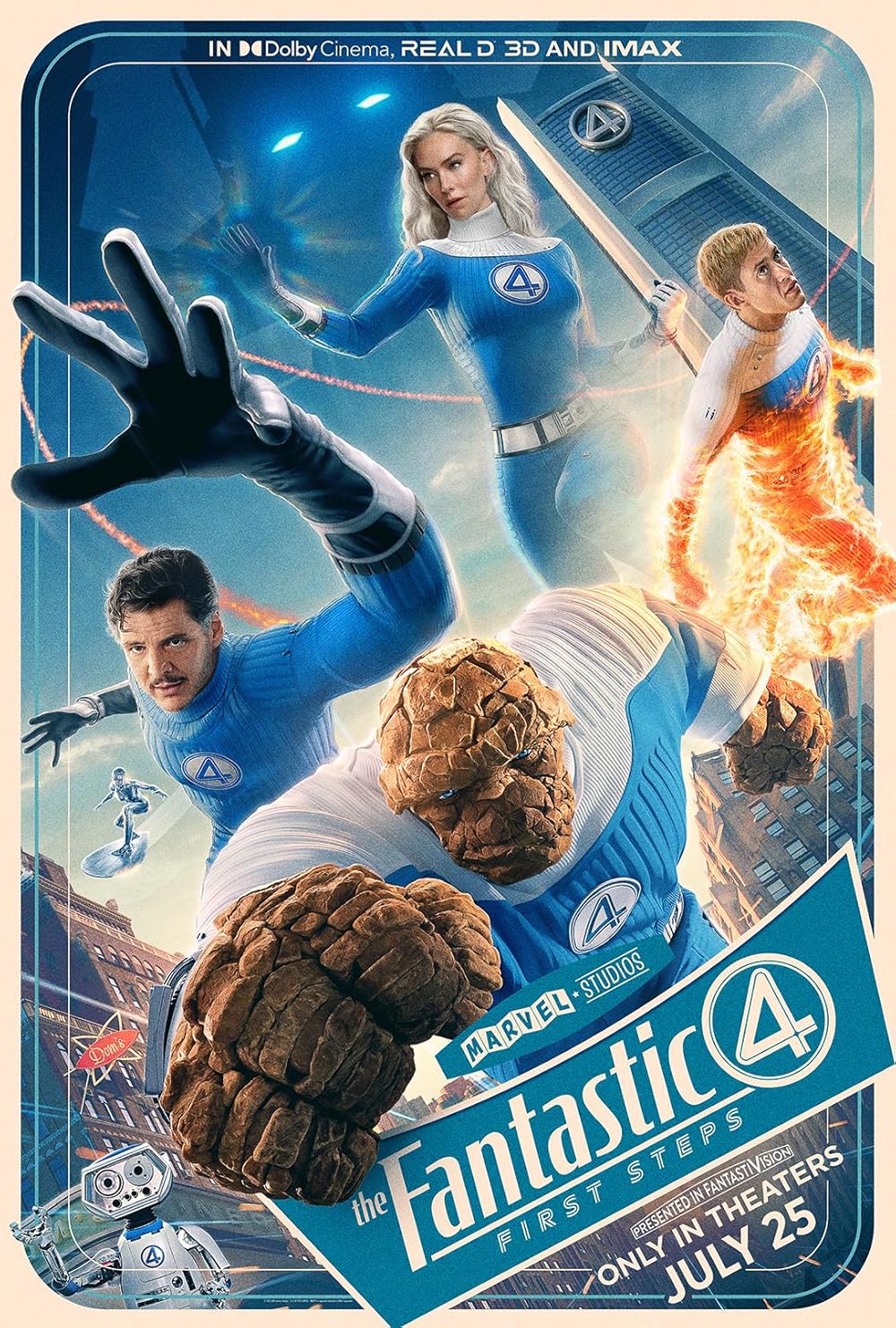
Fantastic? Let’s not get ahead of ourselves. Somewhere, Doctor Doom is laughing—because the real villain here is the script. The Fantastic Four: First Steps is a superhero movie that boasts an eye-catching retrofuturistic aesthetic and the welcome return of a classically evil villain, but it stumbles narratively with a lopsided screenplay, fragmented character dynamics, and a superfluous Silver Surfer who’s more prop than presence. With a protracted first act, truncated second act, and anticlimactic third, the swing the screenplay makes results in a foul ball–not a complete miss. Ultimately, it feels like a blueprint more than a building—an origin story more concerned with establishing than enthralling. It may offer the glimmer of potential, but that potential is still waiting for a film that knows how to make the most of these characters and each other. For a franchise reboot that proudly wears its Jet Age design language on its sleeve—from sleek, chrome-laced laboratories to wardrobe choices evocative of a Tomorrowland dreamscape—it’s ironic that the narrative propulsion of First Steps feels so grounded.

Mister Fantastic, Invisible Woman, Human Torch, and the Thing face must defend the Earth against the evil Galactus and his henchman Silver Surfer.

One of Fantastic Four: First Steps‘ undeniable triumphs is its commitment to a bold, 1960s retrofuturistic aesthetic that feels lovingly ripped from the pages of a Silver Age comic book or the Saturday morning cartoons of yesteryear. From the clean, curved architecture to the brightly colored jumpsuits and analog-style gadgetry, the film creates a world brimming with mid-century optimism—where science gleams, and adventure is just a rocket launch away. It’s visually delightful, evoking a kind of lost future that’s both nostalgic and fresh. However, the illusion occasionally falters due to jarring technological inconsistencies—most notably, the inexplicable presence of flying police cars in a world where most other vehicles appear rooted in vintage combustion-era design. And, I’d be remiss not to mention the futuristic pregnancy test that doesn’t jive with the world around it. These moments by no means sink the aesthetic, but they do momentarily snap the viewer out of the carefully constructed retro bubble.

Had the screenplay been better developed, then it may have been a “fantastic” superhero movie. The first act overstays its welcome by devoting undue time to setup that borders on exposition overload. By the time the plot remembers to move forward, the second act breezes by in a montage-like sequence of conflicts and discoveries, depriving the audience of organic development. Then, just as stakes are positioned to crescendo, the third act fumbles its own climax—settling for a resolution that feels more contractual than cathartic. While I appreciate the under two-hour runtime, I would not be surprised if there are entire scenes and sequences left on the cutting room floor.

But the most glaring issue isn’t pacing—it’s people. Or rather, the lack of connection between them. The titular quartet never quite gels. Chemistry between Reed, Sue, Johnny, and Ben is virtually nonexistent, with interactions that feel less like family dynamics and more like coworkers meeting on a Monday morning Zoom call. Attempts at humor or sentimentality fall flat, not because the lines are poorly written (though many are), but because the actors rarely feel like they’re occupying the same emotional wavelength. Pescall and Kirby have solid chemistry, and separately Quinn and Moss-Bachrach have fantastic comedic chemistry; but collectively, Marvel’s first family is lacking in sufficient chemistry. However, compared to previous cinematic attempts, seeking to adapt the Fantastic 4 for the big screen, this one is the strongest attempt.

Silver Surfer’s inclusion is more puzzling than pivotal. A character of mythic stature reduced here to a glorified Uber driver with a shiny board. She floats in and out of scenes with little impact on the plot, contributing neither urgency nor depth. Her presence suggests a franchise desperate to expand its cosmic CV but unsure of how to weave her meaningfully into the narrative tapestry. In fact, Silver Surfer could be removed from the story, and pretty much everything plat out much in the same way. No mistaking it, there IS an interesting backstory there, but it was barely tapped and even less developed. I am not suggesting Silver Surfer needs a movie or TV series, but a few more minutes of development in this movie, wouldn’t have hurt anything.

I did enjoy the refreshing return of a classic villain in Galactus. So often, modern cinema and television go to great lengths to demonstrate how villains are merely misunderstood or solely formed by societal factors–not Galactus. He’s neither misunderstood nor sympathetic. Just evil. In an era where antagonists are often softened by tragic backstories or moral ambiguity, the choice to lean into a classically malevolent foe is surprisingly refreshing. The character brings weight and threat to the film, standing as a stark reminder that sometimes the best villains are the ones who like being bad.

To the movie’s credit, audiences can watch it without having to know much about the Fantastic 4 and there is little need to watch any preceding movies or TV series. That said, I’ve been told that there are TV series and movies that will help to better understand or appreciate certain elements–but not required. When it’s all said and done, The Fantastic Four: the First Steps is sufficiently enjoyable and doesn’t overstay its welcome. Feels like a late summer movie, and there’s nothing innately wrong with that.

Ryan is the general manager for 90.7 WKGC Public Media in Panama City and host of the public radio show ReelTalk “where you can join the cinematic conversations frame by frame each week.” Additionally, he is the author of the upcoming film studies book titled Monsters, Madness, and Mayhem: Why People Love Horror. After teaching film studies for over eight years at the University of Tampa, he transitioned from the classroom to public media. He is a member of the Critics Association of Central Florida and Indie Film Critics of America. If you like this article, check out the others and FOLLOW this blog! Follow him on Twitter: RLTerry1 and LetterBoxd: RLTerry