Unknown's avatar

About R.L. Terry

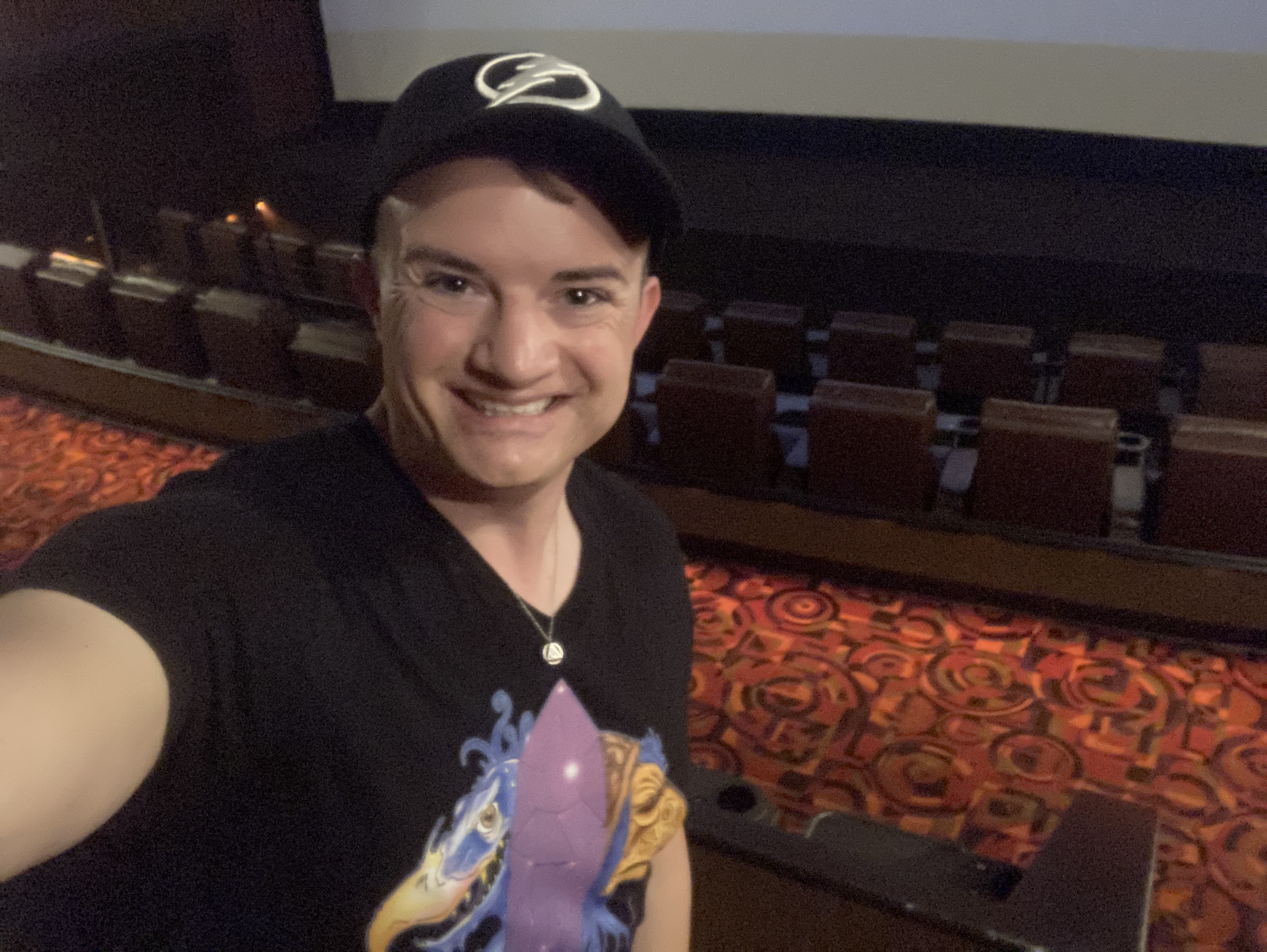
Ryan “Professor Horror” Terry teaches film studies and screenwriting at the University of Tampa. He holds graduate and undergraduate degrees in film and media studies. He has regularly published film reviews since 2014 and has been a featured speaker at Tampa Bay Comic Con, Spooky Empire, and the historic Tampa Theatre. His work has appeared in both political and entertainment magazines.

M3GAN horror movie review

Old school plot meets 2020s world. Universal and Blumhouse’s M3GAN sets the bar high for 2023 horror movies. Solidly written, this horror movie proves that some ideas and themes are simply timeless! M3GAN can be read as a cautionary tale of the terrors of technology. Moreover, a closer reading reveals that it also concerns itself with an exploration of the responses to grief, sudden life change, and fears of parenting. While the movie takes itself seriously, the conflict and violence is done for laughs–and it certainly delivers both chilling and laughable moments! I can easily see it becoming a house at a future Halloween Horror Nights at Universal Orlando and Hollywood.

A robotics engineer at a toy company builds a life-like doll that begins to take on a life of its own. Short synopsis, but that’s pretty much it. Simple, yet effective storytelling.

From the 1930s to the 1950s, horror/sci-fi movies were often about the dangers of technology. Ultimately, it can be boiled down to fear of the unknown, but this exploration of when technology rebels against its creator is a premise that remains timeless as technology is always changing. Back in the early to mid 20th century, it was robots; and here we are in the 21st century, and it’s still robots (well, more accurately androids or AI). The possibility of intelligent robots turning on us has always stoked fear because of the loss of control. Even in Terminator and Terminator 2, we witness the attempt to wipe out humanity. I appreciate this movie’s premise and themes for taking direct inspiration from and paying homage to all the horror-scifi movies to comes before it that fall within this subgenre of horror.

M3GAN reminds me of a feature length episode of Black Mirror or The Twilight Zone. Written by Akela Cooper (writer of Malignant), the pacing and structure are lean and never lag; however, there are elements of the story (provided by James Wan) that should have been better developed. These shortcomings do not significantly impact the movie’s immense enjoyment factor. Where the film most noticeably struggles is in the direction by relatively new director Gerard Johnstone. That’s not to say that it’s poorly directed–not at all–but had the directing been stronger, the performative dimension would have benefitted. Still, I’m eager to continue to follow Johnstone as he develops as a director.

Universal and Blumhouse take the terror of a killer android and place it within a child’s toy. Again, this isn’t new, but it is a new approach to the Talkie Tina episode of The Twilight Zone or Child’s Play. Much like Black Mirror was a better Twilight Zone than Jordan Peele’s Twilight Zone remake, M3GAN may be a better Child’s Play than the remake/reboot of Child’s Play from 2019. I haven’t rewatched the Child’s Play remake since it released, so I will be careful not to presume M3GAN to be better. But my gut reaction is that I enjoyed this movie more than the quintessential killer doll legacy property.

Beneath the outside/action plot of the self-aware killer robot, are themes of grief/loss and parenting fears. After Katie loses her parents in a tragic car accident, she is placed under the guardianship of her (moderately) estranged aunt Gemma whom is an engineer for a Funko-like toy company (in the movie, the toy company is named Funki). Clearly, Katie’s aunt is uninterested in being a parent–she wasn’t even interested in being an aunt–but Katie has nowhere else to go except to her father’s weird family in Jacksonville, FL. So Gemma reluctantly becomes her guardian. Where the film is particularly fascinating, in the area of commentary on parenting in the 2020s, is Gema and Katie’s interactions (or lack thereof) with one another.

Gemma takes an analytical approach to parenting by identifying logistical problems and providing measurable solutions. When Katie doesn’t respond as anticipated, Gemma is at a loss as to what to do. Gemma lacks the empathy and emotive responses that a parent (biological or adopted) needs to exhibit when rearing a child. Gemma’s life plan was abruptly interrupted and introduced to dynamics over which she had little control. In her desire to control, she builds M3GAN as both a groundbreaking toy and as a surrogate parent-like figure in Katie’s life. Through the events of the movie, Gemma learns that there is more to being a parent than providing food, shelter, clothing, and companionship. Furthermore, this serves as a cautionary tale of parents turning child rearing and education over to technology. Without human empathy, critical thinking, and intuition, a child’s cognitive and social development may be warped.

The other area on which this horror movie provides commentary is on grief/loss. Not a new theme in horror movies, it is explored in a new way in M3GAN. Katie suffers the worst loss a child can: the death of both parents. Because of the lack of real empathy and emotive care from aunt Gemma, Katie forms an unhealthy attachment to M3GAN. Because Gemma and Katie never talk about what happened (and the therapist is pretty much useless), Katie never goes through all the stages of grief and therefore never processes (to what extent a child can) the tragedy and how to move forward. M3GAN provides that which is (and should be) provided by parents and friends, but as the events of the movie unfold, we learn just how dangerous that attachment can be for Katie and those around her.

While the writing is mostly strong (save a couple of setups that aren’t followed through in a substantive way), the direction is weak in places. Over all, fairly well directed. But the performative dimension is where the movie struggles. Even though some of the characters are more-or-less caricatures of types of people we have in our lives, there are several scenes in which the performances aren’t campy enough to be funny nor are they realistic enough to be taken more seriously. Some performances fall somewhere in the middle. Perhaps it’s a casting issue, but this is where a director needs to be strong enough to get the appropriate performance out of the actor.

For those that are so often worried about a horror movie with a PG-13 rating (a sentiment that I’ve never understood), rest assured that M3GAN is wildly entertaining and, yes, you still get some fun kills and bone-chilling scenes. That said, I imagine that there will be an unrated or R-rated release of the movie on BluRay. If this movie is an indicator of that we are to expect from 2023 horror, it may be a banner year! Only time will tell, but regardless, it is one that horror fans are sure to enjoy!

Don’t wait for M3GAN to his Peacock or Prime, if you’re a horror fan, then you want to see it on the big screen! You’re definitely in for a wild ride that will have you jumping and laughing.

Ryan teaches Film Studies and Screenwriting at the University of Tampa and is a member of the Critics Association of Central Florida and Indie Critics of America. If you like this article, check out the others and FOLLOW this blog! Interested in Ryan making a guest appearance on your podcast or contributing to your website? Send him a DM on Twitter. If you’re ever in Tampa or Orlando, feel free to catch a movie with him.
Follow him on Twitter: RLTerry1 and LetterBoxd: RLTerry

Ryan’s Top 10 Films of 2022

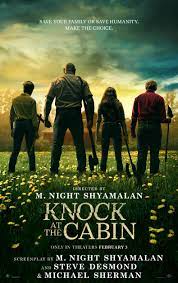
It’s that time of year again! Time to rank my Top 10 films of 2022. And boy oh boy, this was a tough list. Not because there were so many great films from which to choose–just the opposite–I truly struggled to identify ten films that I liked well enough to rank in a Top 10. Whereas I thought the struggle last year (see 2021) was real, this year’s arduous task of selecting ten films that I thought were outstanding made last year look as strong as 1983 or ’84. After two lackluster years for cinema, perhaps 2023 will surprise us! Since I don’t watch trailers nor overly concern myself with what is being released, you won’t find a Top 10 Most Anticipated Films list from me; however, there are a few for which I am eager: Mission Impossible, Barbie, Knock at the Cabin, S6ream, and Oppenheimer. But I digress, let’s get back to 2022.

Teaching film studies and screenwriting provides me with a particularly refined lens through which I closely read films. And not only the individual 2022 films themselves, but the year as a whole. By surveying an entire year’s films (and by extension, one can apply this to a decade when conducting an historical retrospective), common themes and motifs can reveal themselves. As an academic, this is fascinating because the recurring themes and motifs can, and often do, indicate societal or storytelling trends. For example, a close read of–say–horror films of the 1950s, reveals that society was concerned with the terrors that lie out in space. No surprise really, considering the U.S. was fully engaged in the space race.

So what did I find to be the most common observation in 2022 films? It’s two fold (1) one of storytelling mechanics and (2) one of social commentary or philosophy. 2022 was the year of writer-directors that should stick to being directors and allow a screenwriter to do the writing. There were many films this year that began with a great premise or basic story idea, that wasn’t executed effectively. The other observation from the year is that a great many films simply reeked of the stench of applied postmodernism (commonly referred to as woke). Will this proliferation of the dangerous ideology of applied postmodernism seeping from dark corners of scholar-activism into the mainstream be limited to 2022 or is this simply the beginning? Only time will tell.

While there are some writer-directors that are proficient (or even exceptional) at both screenwriting and directing, I find that most directors are not equally skilled as writers (and the inverse is also true). That’s not to suggest that most directors today do not have great, original ideas for films; but their films would fair better if they were to work with a screenwriter to more effectively craft and structure the director’s idea for the screen. Just like in life, ideas may make more sense in your head than they do to others; therefore, you have to know how to present your idea to others in a manner that does not need an interpreter or a companion explainer guide.

I’ve written at length about the dangers of applied postmodernism in films. But to recap, applied postmodernism is a toxic ideology that is an explicitly anti-liberal, anti-universal approach to achieving social justice. Furthermore, it’s a movement or practice of FIRST positing systemic problems THEN looking for evidence to support them; this practice’s goal is to reveal hidden biases and under examined assumptions about the world. Applied postmodernism manifests itself in identity politics. This position embraces a fantasy utopia world dreamed up by naive, arrogantly bigoted enlightenment thinkers whom think of the world in terms of what ought to be versus what actually is (and how it affects the world on a global scale).

Now that we have the observations out of the way, let’s get down to brass tacks!

Here are my Top 10 films of 2022:

10. TICKET TO PARADISE

Refreshing and utterly delightful! George Clooney and Julia Roberts shine in Ticket to Paradise! Not only does this outstanding romantic comedy deliver a highly entertaining and heartfelt performative dimension, the script is solid! Excellent plotting for the familiar yet fresh story paired with dialogue that snaps, crackles, and pops! It’s an honest romcom featuring authentic true-to-life characters (albeit slightly exaggerated for dramatic purposes) that will resonate with audiences across the relationship spectrum. Whether you are in a new love, still in the honeymoon phase, or a cynic, you will find characters and predicaments that are inspired by real life. It’s been a long time since the romcom dominated cinemas, but Ticket to Paradise is a great example of the classic romcom being reimagined for today’s audiences.

9. I WANT YOU BACK

Heartwarming! From the outstanding cast chemistry to the clever writing, you need to make I Want You Back part of your Valentine’s Day celebrations at the cinema (for the limited theatrical run) or on Amazon Prime Video. Much like Broken Hearts Gallery showed us that the romcom can be reimagined for today’s teen and 20-something audiences, Jason Orley’s I Want You Back is the romcom reimagined for 30-something audiences. If it can make cynics like me once again believe that my “plane mask buddy” (you’ll just have to see the film to get the reference) is still out there, you too will find the story incredibly endearing! It’s been a long time since I’ve witnessed such excellent chemistry between an ensemble cast in a comedy, and it is the characters that will command a rewatch of this soon-to-be quintessential romcom.

8. THE PALE BLUE EYE

The unsettling atmosphere will transport, while the macabre mystery intrigues. Scott Cooper’s The Pale Blue Eye is both a period murder-mystery drama and serves as an imaginative origin story for Edgar Allan Poe. With skeletons in every character’s closet, the enigma of a mystery will beckon audiences to solve the mystery along with Christian Bale’s character. Based on the novel by the same name, the film adaptation is in the same vein as The Cursed from earlier this year and Antlers from last year. Both of which are among my favorites of the last two years. So, if you liked either of those films, you will mostly likely enjoy this one as well. Despite the runtime of 2-hours, no scene ever lingers too long. If you enjoy period murder-mysteries, then you’ll undoubtedly enjoy this film.

7. THE UNBEARABLE WEIGHT OF MASSIVE TALENT

Massively fun! Nicolas Cage IS Nicolas CAGE in the hilarious yet thoughtful and action-packed The Unbearable Weight of Massive Talent. You don’t want to miss this highly entertaining motion picture on the BIG SCREEN! On one hand, it’s a fictionalized self-referential character study, but on the other, it’s Taken. It’s a metanarrative that delivers both the exploration of the fascinating career, larger than life persona, and highly publicized financial problems of the screen legend. In other words, this film is in full Cage Rage mode from beginning to end. For the film studies enthusiast, scholar, or just film fan, there is also a running commentary on the evolution of filmmaking spanning over 100 years. The Cage Mythos is alive and well in this film. Cage both embraces and pokes fun at the prolific number of myths inspired by his vast career.

6. THE CURSED (technically 2021, but wasn’t released until 2022)

A throwback to classic Universal Monster and Hammer Horror! After it was received positively at Sundance, The Cursed received a theatrical release. I was first cued into this film after seeing many positive comments on Film Twitter, so naturally, I had to check it out! From it’s foreboding atmosphere to its less is more approach with the werewolf-like creatures and the creepy orchestral score, fans of classic supernatural monster horror will undoubtedly find immense enjoyment in this film. Director Sean Ellis pulls out all the in camera stops in order to craft an incredibly haunting, intense film that is sure to become one of the best horror films of 2022, if not amongst the best in the last few years. Aesthetically, the film will remind you of Barry Lyndon meets The Wolfman meets Burnt Offerings. For fellow sedentary adrenaline junkies (the psychological description for horror fans), The Cursed will satisfy everything we want out of a werewolf film.

5. MRS. HARRIS GOES TO PARIS

A peerless delight! A throwback motion picture as exquisite as the House of Dior itself! Refreshing, uplifts the human spirit. A film to inspire dreamers and doers. Easily one of the best pictures of the year. Slip into Director Anthony Fabian’s meticulously crafted film that is sure to make a beautiful statement in any cinema! Lesley Manville delivers a command performance as the title character that will tug at your heartstrings. While the setting may be in the pretentious world of haute couture, this adaptation of Paul Gallico’s timeless novel takes audiences on a journey that is just as relatable and relevant as it is whimsical! Mrs. Harris Goes to Paris is an endearing fairy tale that feels very close to story in which we could find ourselves.

4. HATCHING

A provocative exploration of the deadly consequences of image obsession and the dangers of forcing others to meet your expectations–hatching them in your own image. Director Hanna Bergholm delivers more than a spine-chilling social commentary on the dark side of social media influencers, Bergholm delivers an inventive cinematic exercise that shines in both form and function. Terrifying puppetry is back! Most of the buzz going into this film was on the use of practical puppetry for the bird-like creature, and that buzz is well-earned! Not since Jim Henson’s The Dark Crystal have we witnessed such nightmarishly beautiful puppetry on the silver screen.

3. BARBARIAN

Outstanding! Each and every layer of this masterful horror film is crafted with care and precision. Barbarian strikes an uncanny balance of unsettling terror juxtaposed against clever irony and humor. Writer-director Zach Cregger delivers the best horror film so far this year, and among the strongest in recent years. Not only does the film boast exceptional shot composition, the screenplay is sleek and no scene goes wasted. The fine-tuned plot mapping and story structure provide a solid foundation upon which the thoughtful story is told. Just when you feel that you may have it figured out, Cregger throws you for a loop–a loop that was setup earlier in the film unbeknownst to you.

2. GDT’s PINOCCHIO

Positively avant-garde! Easily among the best pictures of the year, period. Guillermo del Toro’s Pinocchio is a brilliant stop-motion picture that will stir the hearts and minds of any audience! In many ways it’s reminiscent of 80s dark fantasies such as The NeverEnding Story and The Dark Crystal. Which should come as no surprise that del Toro worked in collaboration with the Jim Henson Company. Audience will be completely transported to the post-World War I Italian world that del Toto meticulously recreates, complete with the fascist movement, which underscores much of the film. Not since Kubo and the Two Strings have we had such a gorgeous, imaginative animated feature film

And the No.1 film of 2022 is…

  1. TOP GUN: MAVERICK

What a picture! Cinema at its finest! Top Gun: Maverick is the high energy, funny, exhilarating motion picture cinemas and audiences need–and–it’s full throttle heart! Furthermore, the absolutely brilliant combination of screenwriting, directing, and all the technical elements combine to acknowledge and build upon the nostalgia without resting its laurels on it or hiding behind the cultural and cinematic touchstone that was the original Top Gun. I didn’t know a long-awaited sequel more than 30-years from the original could be THIS good–in fact–it’s better than the original. We are talking Wrath of Kahn compared to Star Trek the Motion Picture here. Maverick represents that some stories, characters, and themes are truly timeless. 

Ryan teaches Film Studies and Screenwriting at the University of Tampa and is a member of the Critics Association of Central Florida. If you like this article, check out the others and FOLLOW this blog! Interested in Ryan making a guest appearance on your podcast or contributing to your website? Send him a DM on Twitter. If you’re ever in Tampa or Orlando, feel free to catch a movie with him.
Follow him on Twitter: RLTerry1

THE PALE BLUE EYE period mystery review

The unsettling atmosphere will transport, while the macabre mystery intrigues. Scott Cooper’s The Pale Blue Eye is both a period murder-mystery drama and serves as an imaginative origin story for Edgar Allan Poe. With skeletons in every character’s closet, the enigma of a mystery will beckon audiences to solve the mystery along with Christian Bale’s character. Based on the novel by the same name, the film adaptation is in the same vein as The Cursed from earlier this year and Antlers from last year. Both of which are among my favorites of the last two years. So, if you liked either of those films, you will mostly likely enjoy this one as well. In addition to the aforementioned, the film also reminds me a little of Tim Burton’s Sleepy Hollow (1999). Unlike the film’s to which I have likened this one, The Pale Blue Eye is heavier on mystery than it is horror. While Edgar Allan Poe’s short stories and poems have been the inspiration for hundreds of films, and his writing itself, foundational in the development of the American Horror Film (expressionism+surrealism+Freud+Poe), this is one of few films that feature Poe himself–or rather–a fictionalized version of the towering literary figure. What I appreciate about this imaginative origin story is showing a different side to Poe–a side that is actually funny and quirky. Because this is a mystery, I am unable to discuss details as that could spoil important plot points. But it’s important to note that this film’s mise-en-scene strikes a balance between one that is concerned with atmosphere and proper plotting. So often, films that are heavy on atmosphere are lacking in the story-structure department, but not this one. Despite the runtime of 2-hours, no scene ever lingers too long. If you enjoy period murder-mysteries, then you’ll undoubtedly enjoy this film. The Pale Blue Eye hits cinemas on December 23rd and Netflix on January 6th.

Ryan teaches Film Studies and Screenwriting at the University of Tampa and is a member of the Critics Association of Central Florida. If you like this article, check out the others and FOLLOW this blog! Interested in Ryan making a guest appearance on your podcast or contributing to your website? Send him a DM on Twitter. If you’re ever in Tampa or Orlando, feel free to catch a movie with him.
Follow him on Twitter: RLTerry1

BABYLON (2022) film review

Whoa, that’s a lot of movie. Damien Chazelle’s decadent film of bombastic proportions is simultaneously mesmerizing and repulsive, coherent and incoherent, thoughtful and thoughtless. Suffice it to say, it’s interesting to behold. This overstuffed fever dream collage of 1920s and 1930s Hollywood is trying to tell so many stories, that it winds up not telling any of them effectively enough. There are competing A-stories (outside/action plots), each vying for to be the story about which the audience empathizes with the most. To dramatize these ideas, Chazelle assembles a mise-en-scene that’s ostensibly a combination of Singin’ in the Rain, Boogie Nights, Sunset Boulevard, and Once Upon a Time in Hollywood, with a little Caligula and Wolf of Wall Street thrown in to provocative proportions. Ultimately, what we have here is more of an exercise in montage–the assembly of a motion picture–more so than we have a clearly defined narrative. Undoubtedly, this will become a film that is shown in film studies classes in the future, and will be used for close reading discussions, much like I show Boogie Nights in my American Cinema class. There is a prolific amount of imagery to analyze, as the film follows four different Hollywood stories that all intersect one another. Just for whom was the film created? Certainly not general audiences. It is likely going to be most appreciated by Chazelle himself and with some critics and scholars (tho, not this scholar nor the majority of the critics with whom I screened this film).

Decadence, depravity, and outrageous excess lead to the rise and fall of several ambitious dreamers in 1920s Hollywood.

One thing is clear, Chazelle’s intention was to craft a boisterous love letter to the allure and power of cinema whilst negatively critiquing the Hollywood system that creates and destroys careers on a whim. Furthermore, the film seeks to provide thoughtful commentary (just how thoughtful? that is for you to decide) on the superficial, fleeting nature of fame and celebrity. Where the film excels is in the both the performative dimension and Chazelle’s direction. Unfortunately, Chazelle’s screenplay is all over the place.

While audiences may not remember the four individual story threads that make up the outside/action plot, audiences will definitely remember the prologue and final scene. Chazelle certainly captures the unbridled decadence that is probably not unlike the level of debauchery that ran rampant after the great movie people migration from Europe (mostly Germany and France) and eastern U.S. (avoiding Edison’s motion picture patent policing) after the first World War. It was certainly the wild west with a seemingly unending source of money (coupled with massive debt). To borrow from Outback’s former slogan no rules, just right, that describes the atmosphere of the greater Los Angeles area. No order, only chaos. Which is not unlike this film–lots of chaotic images and plot points.

The prologue to Babylon is truly a spectacle that words simply cannot capture accurately. That’s not to say that all of the creative decisions were plot or character-driven–I’ve said it before–that even provocative imagery can be used to further the plot or character; and therefore, that which would otherwise be evaluated as gratuitous, is actually purposeful. However, much of what goes on in the opening scenes is simply gratuitous for the sake of shocking the audience–for an extended period of runtime. I am reminded of the opening to Boogie Nights, and how at first glance it may seem gratuitous, but actually the opening scene is needed for plot and character development. It’s not so much shocking as it is crafted for a strategic purpose.

While elements of the prologue are justifiable, in the relationship to plot and character, there are many moments that are no more than prolific debauchery simply because Chazelle could. Now, what I did find most interesting–and to the point that I greatly appreciate the prologue–is that much of the deplorable chaos is underscored by the score from Fritz Lang’s masterpiece Metropolis in the Babylon scene with MechaMaria. Something Chazelle wove into the scene for the film scholars in the crowd.

Jumping to the end of the film, there is a–what amounts to a–clip show featuring iconic films from the 100+ years of cinema history we have. I get it, Chazelle is communicating to audiences that being part of filmmaking means that you’re part of something bigger than yourself, something that will live on decades and (by extension) centuries after you pass away. It’s this artform that will continually be rediscovered and influence people and cultures (good, bad, or indifferent). While it’s clearly designed to be an emotionally moving moment in the film, as indicated by the tears in the character in that scene, it comes off as lazy, derivative montage that does little more than remind the audience of better films for the rather long sequence of imagery. Instead of being a deeply, moving scene, it’s rather vapid.

The four competing A-stories depict four different (but not too dissimilar in substance) Hollywood stories. (1) an A-list star that feels the pain as he watches his star fade with changing times (2) An up and comer that is thrust into the spotlight for a brief time, just to continue to fall due to tragic flaws and a talent that simply didn’t transition to talkies (3) an immensely talented individual subject to the prejudices of the general public and Hollywood executives and (4) and an animal wrangler turned studio executive by being in the right place at the right time, but even that level of fame and success is not invincible to human error and poor judgment. Any one of these stories would have made for a great A-story, with others falling in line thereafter. But each one of them feels like it’s vying for the main outside/action story. This is where Chazelle should have worked with a screenwriter that could have taken his concepts and ideas, and fashioned them into a much better structured and plotted narrative.

Perhaps it’s a film ahead of its time, or perhaps, it truly is the Heavens Gate of 2022. Maybe it will see success on down the road like Boogie Nights and Showgirls has, but only time will tell. Presently, it’s a wild, bloated film that lacks basic storytelling.

Ryan teaches Film Studies and Screenwriting at the University of Tampa and is a member of the Critics Association of Central Florida. If you like this article, check out the others and FOLLOW this blog! Interested in Ryan making a guest appearance on your podcast or contributing to your website? Send him a DM on Twitter. If you’re ever in Tampa or Orlando, feel free to catch a movie with him.

Follow him on Twitter: RLTerry1

AVATAR: THE WAY OF WATER movie review

AKA The Way of Woker. James Cameron’s highly anticipated followup to Avatar (2009) is an ambitious world-building visual effects extravaganza that is a predictable, poorly paced and plotted movie, which is plagued by many problematic elements in both substance and form. Moreover, it’s a 3-hour movie that feels like a 3-hour movie, for which no amount of impressive visual displays can compensate. Often times, a filmmaker’s ideology can be interpreted through a critical analysis (or close reading), but the blatantly anti-west (or pro applied postmodernism) sentiment is right there on the surface of this troublesome movie. Suffice it to say, all the themes can be summarized as the destruction of modernity, which is manifested in various motifs. From beginning to end, Cameron’s Avatar: the Way of Water is anti-military (literally uses Marines “semper fi”), anti-western medicine, and propagates postcolonial theory (which I write about in my review of Black Panther: Wakanda Forever). It’s one thing to critique or question a societal observation; it’s another to actively work to completely deconstruct and shame entire groups of people and cultures. Cinema is a powerful tool because film is a reflection of life and can help us better understand the human experience; however, Cameron’s latest movie is a reflection of his disdain for the west (by extension, modernity), and wielded more like an offensive weapon than clever storytelling tool. The themes, reeking of applied postmodernism, aren’t the only problematic issues plaguing this 3-hour epic, but the story structure itself suffers from poor pacing and a proliferation of subplots that fail to work together to craft a compelling narrative.

Jake Sully and Ney’tiri have formed a family and are doing everything to stay together. However, they must leave their home and explore the regions of Pandora. When an ancient threat resurfaces, Jake must fight a difficult war against the humans.

Overstuffed with one-dimensional characters devoid of character arcs, Cameron appears to be more concerned with his ideology than creating thoughtful characters. Heroes that are projected as nearly flawless and invincible seldom connect with audiences because it is often our flaws, failings, and lessons-learned that connect us to one another. When villains fail to display any likable qualities, the villain fails to connect with audiences, thus erasing any possible entertainment value. More specifically, central and opposition characters should share similar goals; however, what makes villains and heroes different is HOW they express their methodologies to reach the goal(s). The most interesting characters of opposition are those with human dimension and characteristics that can be appreciated; likewise, the most interesting central characters are those with flaws and weaknesses that make them relatable. Our heroes are flawless and our villians utterly detestable. That is NOT a good character mix or balance.

Moreover, the film’s characters demonstrate a gross representation problem. Nearly all the human characters are white men–not one person of color and only one prominent female character. In a day and age in which reasonable, fair representation in media is important (again, as film is a reflection of life, it should look like real life), Cameron ignores fairness in representation. While some may find this to be a coincidence, it is not. Every diegetic element of the mise-en-scene montaged into a film is intentional. Because of the clear manifestation of postcolonial theory, this can be read as Cameron’s method for perpetuating the sentiment that white people (particularly men) are toxic by nature. Before you say I am extreme in this interpretation, in a recent interview, Cameron stated, “testosterone is a toxin that must be worked out of the system.” Not only is this a shameful statement, it’s grossly inaccurate. Neither testosterone nor estrogen are problems that need solved. Both are biology, plain and simple. Each respectively amoral.

Cameron’s anti-military sentiment is the most provocative of all his themes concerning the complete destruction of modernity (the goal of applied postmodernism). Where he crosses the line, is referencing the para-military presence as Marines, and evoking the rallying cry of semper fi. Undoubtedly, this is not going to sit well with the U.S. military and general public (nor should it). Ostensibly painting one’s country/military in a negative, inaccurate light is inexcusable. Again, it’s one thing to critique, it’s another to actively shame and attack. If he wanted to use a para-military force, he would have been better off crafting this one to be FORMER military that have been privatized for exploratory and extraction purposes. Sell swords as Game of Thrones would put it. Even that may have painted the military in a negative light, but it wouldn’t have been so blatant and aimed at a particular branch of the U.S. armed forces.

With all the themes, symbols, and motifs Cameron includes in the movie, the plotting is insufficient to support such a mess of ideas and stories. Perhaps he should revisit the screenwriting tenants of writing lean or starting a scene as close to the end as possible, and ending it as soon as possible. These tenants of screenwriting help to prevent a bloated, fatty screenplay. As it stands, the storytelling in Avatar: the Way of Water is clunky and forced. Often times the reason for something happening is simply because the plot needed it. This makes for a predictable story, one that is devoid of anything remotely constructive, fun, or inspirational.

Lastly, I’d be remiss if I failed to mention the many references to Flight of Passage in the World of Pandora at Disney’s Animal Kingdom. Many of the creatures from the flagship attraction and surrounding area are found within this movie. I rather enjoyed identifying elements that were lifted from the hugely popular and impressive attraction. If you do see this movie and have been to Pandora, then look to see if you can find some of the land and sea creatures from the attraction.

At the end of the day, this movie is a reminder that spectacular visual effects does not a great movie make.

Ryan teaches Film Studies and Screenwriting at the University of Tampa and is a member of the Critics Association of Central Florida. If you like this article, check out the others and FOLLOW this blog! Interested in Ryan making a guest appearance on your podcast or contributing to your website? Send him a DM on Twitter. If you’re ever in Tampa or Orlando, feel free to catch a movie with him.

Follow him on Twitter: RLTerry1