

Imaginative and provocative! Yorgos Lanthimos’ adaptation of POOR THINGS is a fascinating motion picture that takes audiences on a whimsical, otherworldly exploration, but unfortunately suffers from sluggish pacing midway through the adventure. This interpretation of Frankenstein, in both substance and form, delivers a labyrinth of social commentary on expectation versus reality, pretense versus disillusionment and the consequences of metaphoric prisons.
Brought back to life by an unorthodox scientist, a young woman runs off with a lawyer on a whirlwind adventure across the continents. Free from the prejudices of her times, she grows steadfast in her purpose to stand for equality and liberation.
The most striking element of the film is stunning production design! It’s whimsical and dark, gothic and post-modern all at the same time. Audiences will be completely transported to a highly stylized variation of the real world that is clearly inspired by the gothic imagination of Tim Burton filled with quirky characters that feel lifted right out of a Wes Anderson film. If it sounds like a Frankenstein’d film, you’d be correct because the very apparatus of the film is a bunch of pieces sewn together to create a new whole that arrives on screens by way of The Isle of Dr. Moreau. There is even a nod to a famous sene and shot in Metropolis!
From what I could tell, the entirety of the film was shot on a sound stage with highly theatrical, emotive sets and costuming. Lanthimos combined the best of German Expressionism and French Surrealism to craft a 19th century world that both felt part of our own, yet, not of our world. I liken the highly stylized designs to the motion pictures of Tim Burton in the 1980s-90s with exaggerated shapes, harsh shadows, and a substantial helping of dark whimsy. This intentional move to create a world that resides in this liminal space between that which we know to be real(istic) and fantasy works to the film’s advantage because we are prompted at the very beginning that we are about to embark on a bizarre adventure. Lanthimos’ story needed this stylized version of our 19th century world to be the playground for his quirky characters so that we believe and become vested in the journey.
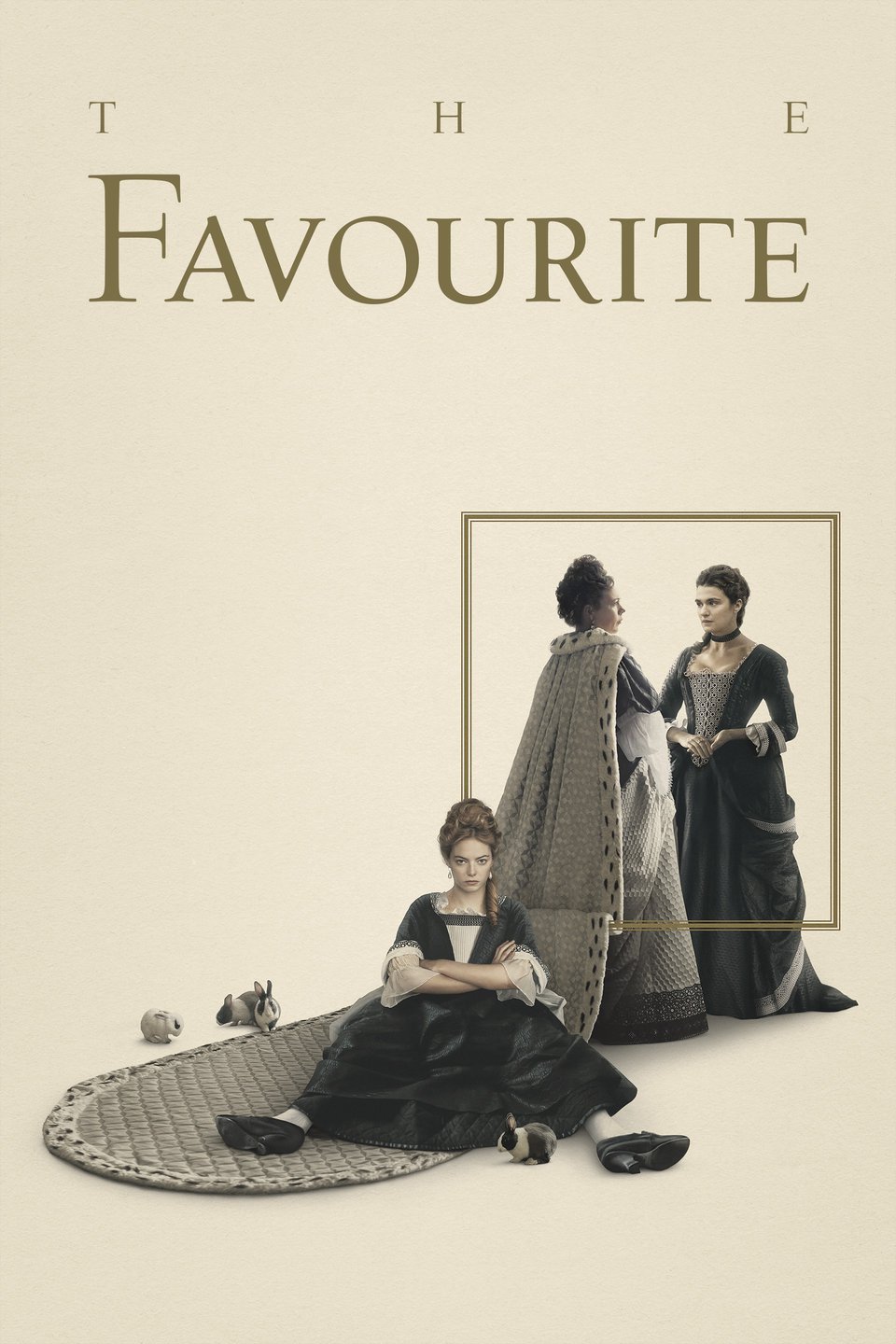
Without getting into plot points that spoil the film, it’s difficult to go into the degree of detail that I would like in order to analyze the very apparatus of the film itself, as it is in many ways self-reflexive of the narrative itself. But, I’d be remiss to not spend some time on spotlighting the Frankenstein’s creation-like form the film takes in telling this reimagined interpretation of Frankenstein. It is not simply by chance that this Lanthimos film looks different that his previous works such as The Lobster, The Killing of a Sacred Deer, and The Favourite, he intentionally took discernible tropes and elements of his own cinematic authorship and combined it with the gothic-inspired stylized worlds of Burton with the quirky characters and dry humor of Anderson to create a new experience for audiences. In essence, he Frankenstein’d his film, which is populated by Frankenstein and Isle of Dr. Moreau characters and animals. There are animals that are right out of the latter and characters that are expressions of the former.
Poor Things captures the imagination and whisks audiences away to this whimsical world, but this adventure is not without its rich subtext and theming. Honestly, this is going to be one of those films wherein each member of the audience may read it differently. In my screening alone, I overheard conversations ranging from #MeToo to modernity versus postmodernism to capitalism versus socialism and even a critique of the affects of Victorian culture on society.
My reading of the film consists of arguments around the ideas of the expectation versus reality, the expectations placed upon us by the world and society in which we live (which can feel like a prison) and the reality of when the world and society do not meet our expectations placed upon it. Moreover, we can expand upon this idea by including what happens to us when we become disillusioned by the pretenses and facades that are projected by various individuals in our lives—we learn who and how they really are. And lastly, the film depicts many different images of prisons. These prisons can be our family of origin, our occupation(s), or the norms and mores of society—we feel trapped and long for adventure; we long to stimulate our senses with new experiences that challenge the status quo.
Tony McNamara and Alasdair Gray’s screenplay is mostly well-crafted; however, after a solid first act, the second act drags on and on to the point there are many redundant scenes and repeated sexual exploits that cross the line from being able to justify them dramatically to self-indulgent and gratuitous. As a film professor, my philosophy for sex, drugs, and violence in screenplays (and in motion pictures) is that as long as it can be justified dramatically and adds to character or world-building, then it is appropriate. However, it’s when these elements are used for shock value or to indulge warped fantasies that they become inappropriate. And I must say that the sexual content of the film borders on gratuitousness.
I don’t bring this up as some sort of moral judgment on the film as much as I bring it up because it’s due to this borderline gratuitousness that the second act gets bogged down, which it could have easily been written much more leanly. Beyond the repeated sexual exploits of the second act, there are other sequences and scenes that simply drag. Sufficient time developing the story is one thing, but some of the sequences and scenes become superfluous and excessive, revisiting the same conflicts or relationships over and over to the point that it feel pedantic.
Fortunately, after the protracted second act, the third act returns to proper pacing and delivers a satisfying resolution. However, there is a coda (of sorts) that I could take or leave. It is definitely setup, but was it necessary? I’ll leave that up to you.
For everything in the film that works so incredibly well, it needed another editing pass to mitigate the self-indulgent second act that continues to the improper pacing. Fortunately, the cast is superb and the candid, brutal honest of the film is intoxicatingly funny. Because of the phenomenal production design, it is a film that will be best experienced on the BIG screen, so I advise not waiting until it’s available to rent on-demand to watch at home.
Ryan teaches Film Studies and Screenwriting at the University of Tampa and is a member of the Critics Association of Central Florida and Indie Film Critics of America. If you like this article, check out the others and FOLLOW this blog! Interested in Ryan making a guest appearance on your podcast or contributing to your website? Send him a DM on Twitter. If you’re ever in Tampa or Orlando, feel free to catch a movie with him.
 R.L. Terry ReelView