Full Review of Howl-O-Scream at Busch Gardens Tampa

“Enjoy it while YOU last!” Howl-O-Scream (HOS) opened at Busch Gardens Tampa this past weekend! With two new houses, new scare zones, and the Fiends show’s new venue, it’s definitely an exciting event to attend this Halloween season, and one you don’t want to miss. More apparent than in years’ past, HOS is definitely growing in production value as it continues to draw upon the same visitors and locals in central Florida as HHN does. I’m often asked which event is better. And there is no one answer or even a simple answer, at that, with which to respond. The truth is, both events are equally enjoyable; but, it’s important to note that they are really two different experiences. What I appreciate year after year at HOS is the scare-factor. I’m consistently more scared at HOS than at HHN. Since Busch Gardens knows that they cannot compete with Universal on familiar TV and movie IPs that Universal can license, they choose to focus on the element of the jump scare–and it’s successful. If you’re like me, you’ll find yourself jumping more at HOS than you will at HHN. On the topic of IPs and by extension, production value, HOS has delivered some excellent houses that are on the verge of being on par with the HHN original IPs. Once Busch Gardens is able to license a familiar horror/suspense/thriller television show or motion picture, it will be quite the rival for HHN. Another area that HOS has capitalized on moreso than HHN is the availability of full bars. HHN does not offer full bars at the event (instead they have specialty drinks and beer). HOS offers several full liquor bars during the event, so you can get basic cocktails and such to enjoy while you scream your lungs off. With the addition of Reoccurring Nightmare tickets, HOS now offers the equivalent to the Rush of and Frequent Fear passes at HHN.

Like with HHN, there is no better night to experience HOS than opening night! The scare-actors are at full energy, the houses are at full nightmare status, and you get to experience the horrors with others who comprise the fan base of theme park Halloween events. Since Busch Gardens does not replace all the houses each year, I usually like to start with the new ones. This year, Busch Gardens Howl-O-Sceam debuted Demented Dimensions and Undead Arena LIVE. Both are excellent! The first house my friends and I visited was Demented Dimensions. Since Demented Dimensions is located in the Pantopia area of the park, we had to brave the streets of a deadly old folks home and a sinister circus. We got the biggest kick out of seeing actual senior members of our community put on bloody garbs and scary masks and haunt our steps through their scare zone. Good for them! This is a sign that BG HOS seeks to involve anyone who wants to spend the evening scaring park guests. Following a daring escape from the dentureless jaws of the hoard of old folks, we proceeded to brave the insidiously fun Carnie Camp. Quite the freak show, this circus will have you narrowly escaping the sinister carnies as you make your way through the three rings. Lastly, we had to pass through Wasteland (a scare zone reprise from last year) that looks like something out of a nightmarish Mad Max world). Following our emergence from Wasteland, we crossed over into another dimension–a demented dimension. Demented Dimensions, taking the place of Zombie Mortuary, is filled with a sensory overload of twists, turns, and physics-defying spectacles as you walk though this homage to that which only exists in your nightmares. Having arrived before the majority of the crowd, my friends and I had the house to ourselves. The best part about that is being the target of every scare-actor in the house. The theme of the house was quite fluid and continually immersed me within the multi-dimensional experience.

From Demented Dimensions to the treacherous high seas, the next house on our agenda was Black Spot, the pirate themed house from last year. Largely unchanged, this house is still a top notch one and has a near-Universal quality about it. Feels like what you would experience if Magic Kingdom’s Pirates of the Caribbean ever became haunted. Such an enjoyable thrill! I enjoyed it as much this year as I did last year. Like with Demented Dimensions, we had this one to ourselves too, so the scare-actors were out in full force to frighten us as we navigated the dark seas. After making it safely back to shore, we decided to take in the first showing of Fiends now located in the Stanleyville Theatre in the round stage. Even before the show started, I was nearly convinced that this experience was going to be even better than last year because of having a more traditional house layout as opposed to the dining hall feel of Dragon Fire Grill. Prior to the show and between the trivia on screen, the audience is reminded that if you are easily offended by anything that you may want to sit out of Fiends. And that is quite valid. I’ve often thought that Fiends would benefit from taking the adult humor up a notch and taking that envelope and pushing it even further. That is exactly what you get with this year’s show. Having been a part of HOS for all 19 years, each year is a riff on pup culture much in the same vein as the Bill and Ted show at HHN. Fiends returns from the dead funnier than ever! With excellent writing, a hilarious cast, and strategic riffs on pop culture, you have got to make time to see this show when you go to HOS.

After laughing to death at Fiends, we had to face the haunted circus once again. On our way to Death Water Bayou we spotted a motel off the main drag on a side street. Looked quite lonely, sitting on the side of the road with its exterior that seemed frozen in the 1950s. The Motel Shellburn is home to Motel Hell, a house that debuted last year at HOS, and still my favorite house this year. What sets this house apart from the rest of the lineup is the attention to detail and storytelling. From the entrance to the exit, this house IS definitely of an HHN quality. Unless I am mistaken, the exit for this year is different from last year. When you exit the motel, you’ll find yourself in a memorial garden of sorts. And watch out, because you’ll encounter terrifying scare-actors in the cemetery too. Located not far from Motel Hell is the merky depths of Death Water Bayou. If you read my review of this year’s HHN, you’ll remember that I commented on how Universal essentially copied this house for their Dead Waters. Getting to compare the houses back to back, I am convinced that the HOS version of this concept is definitely scarier and just more enjoyable. However, Dead Waters is a little longer than Death Water Bayou. Like with some of the other houses, this one stands out to me because of, like with Motel Hell, the theming outside of the house. I like how it looks like we are walking though a bayou and into a shanty in the back waters of Louisiana. The story of the house begins to immerse you even before entering in through the shadowy front door.

One great aspect to Busch Gardens’ Halloween event is coasters in the dark! All the coasters are open this year at HOS–even newly refurbished Kumba. While a lot of the park guests are there for just the haunted houses, that leaves many of the queues sparsely populated, which means walking right onto the coasters! After leaving Louisiana, we flew to Egypt for Cobra’s Curse and my personal favorite Montu! Nothing beats riding a coast at night! At HHN, for traditional roller coasters, other then Revenge of the Mummy, you have to go from Universal Studios Florida over to Islands of Adventure. Fortunately, Busch Gardens has your coaster need taken care of with all six thrill rides open! That includes Montu, Cobra’s Curse, Kumba, Shiekra, Cheetah Hunt, and Falcon’s Fury. If you arrive early enough to HOS, you will definitely have time for the houses AND the rides! We certainly did. Well, we went to all the houses except Zombie Containment Unit. Wasn’t a big fan of it last year nor the year before, so didn’t want to wait for it this year. The Playground scare zone returns for another disturbingly frightening year, and you’ll have to pass through it’s haunts when you walk from the Moroccan area back towards Pantopia.

From coasters alive with excitement, to one that is a ghost of its former self, we returned to unearth something evil. Unearthed is now in its third year but still just as thrilling as it was when it debuted in 2015. The animatronic tree you pass before entering into the excavation chambers is still so incredibly impressive! Unearthed is another house that encroaches upon HHN quality. Although the house is not new this year, I am pretty sure that there were some extra scares in it this year as opposed to years past. The last house on our agenda was another new one. Just like with the Ringling Bros. circus, Circus of Superstition also closed after last year. But, Gwazi field is still bustling with live undead entertainment at Undead Arena LIVE. In the vein of the circus, this house takes a classic approach to haunts in that it really does feel like a traditional fun house, completely with dead ends, mirrors, and getting split up from your group. If you are more than a group of two, then the carnie barker will split you up into two separate groups as you make your way through the maze. There are scares round every corner as you desperately attempt to find your way out of the mind bending labyrinth of undead terrors.

Well, there you have it! A comprehensive review of Howl-O-Scream 2017. I hope you decide to face your fears at Busch Gardens’ annual event. HOS is going on now through October 29th (last Sunday of October). Tickets are reasonably priced but vary depending on when you choose to go. Consider upgrading to the Reoccurring Nightmare ticket to enjoy all nights of the event.


 

A Short History of How the Cinema Shaped Theme Parks (part 2)

dlr_castleFollowing the ending of the Studio System, the now bankrupt motion picture studios were purchased by various conglomerates looking for new sources of income. One of the sources of income that studios began investing into was the concept of movie-based theme parks. With the opening of Walter Elias Disney’s Disneyland in 1955, Universal Studios made the decision to incorporate stand-alone attractions into its newly reopened studio tour. Both Disneyland and the future Universal Studios used their intellectual property (IP) as the basis for creating theme park rides, shows, and attractions. Although movie studios as a “park” began with Laemmle, in its current incarnation, the convergence of cinema and theme park began with Disneyland, and later was perfected by Walt Disney World and Universal Studios Florida. Since the movie studios already had dedicated movie-going audiences, it made sense to capitalize on the idea of incorporating the concepts from the movies into attractions that the general public could enjoy and be immersed in. This action both acts as advertising for the respective studios and generates income for the movies and park improvements…

For the full article on the Thrillz website, click HERE!


A Short History of How Cinema Shaped Theme Parks (part 1)

studiotourtramEver since the late 19th and early 20th centuries, audiences from around the world have been drawn to the temple of the height of the visual and performing arts, the cinema. In many ways, the early days regarded the cinema as an attraction, an amusement. In fact, many of the first silent films were shown in carnivals. Nickelodeons dotted the landscape in drug stores and clubs. Elaborate and ornate movie palaces housed some of the first big screens, and orchestras played along with the narrative. Over the last century, cinema has gone from existing in sideshows to achieving a dominant presence in our society that has evolved into the very rollercoaster to which many critics and lay people compare it; and, not only metaphorically…

For the full article, click HERE to be redirected to Thrillz! YOUR source for theme park news, reviews, and information from around the world!


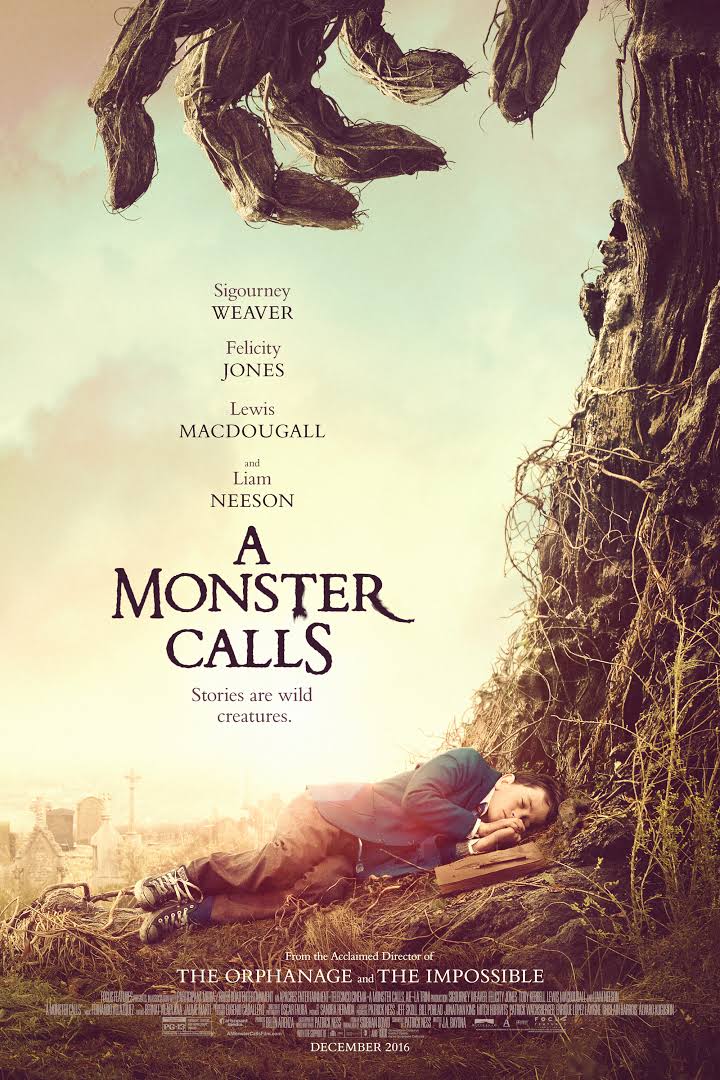
“A Monster Calls” movie review

monstercallsA breathtakingly beautiful and dynamic film that typifies the art of visual storytelling in the gothic style. Focus Features’ A Monster Calls directed by J.A. Bayona is nothing short of a Terms of Endearment, in theme anyway, for a new generation. You are certain to laugh and cry your way through the film. Based upon the novel by the same name, written by Patrick Ness and illustrated by Jim Kay and conceptualized Siobhan Dowd, Bayona’s adaptation of the novel plays out to be a deep, rich story that will touch the hearts and minds of each and everyone in the audience. For anyone going through the stages of grief, this film will especially ring true and perhaps bring about comfort. Although the protagonist Connor, played by Lewis MacDougal, is twelve years old, this dark melodrama with a plot revolving around terminal illness is not typically something that will appeal to kids of Connor’s age. Despite the fantasy elements and the young protagonist, A Monster Calls is more suited for older teens and adults; however, by the same token, the movie isn’t entirely going to initially appeal to adults since the protagonist is quite young. I screened the movie last night in an auditorium filled with patrons of all ages and there was not one dry eye in the audience. Looking at the film from the outside and analyzing the plot and cast, it would appear that it may not attract droves of people because of the gothic fantasy nature, typically aimed at kids and young teens, with content and theming best suited for older audiences; however, the film truly transcends age barriers and stereotypes to touch those who are young or young at heart.

While most twelve year old boys are busy with school and learning to develop socially or even romantically, or just simply playing video games and having Stephen King type adventures, Connor (MacDougal) is dealing with far more than a kid should every have to deal with. Connor’s mother (Felicity Jones) is very ill and Connor is forced to grow in many ways kids should not quite quickly to take care of her. Not entirely going through this terminal illness alone, Connor has a grandmother (Sigourney Weaver) who looks in on him and his mother–a grandmother with whom he shares little in common. With Connor’s father settling down in Los Angeles, Connor feels very much alone while dealing with his mother’s illness. Expressing his emotions and thoughts through water color and sketch artwork, Connor uses his penchant for beautiful art as a form of therapy. Just when all seems lost, an unexpected ally in the form of a rather gothic tree-like monster (Liam Neeson) appears in his window one night. Apprehensive at first, Connor befriends the monster who guides him on a journey of courage, truth, and faith that combine in a powerful fusion of imagination and reality.

This is certainly a year for fantastic monsters and fantasy, isn’t it? However, A Monster Calls is definitely not your typical fantasy. It deals with deep emotions, dark themes, and material usually better suited for adults. Why then choose such a young protagonist? Perhaps the author Patrick Ness wanted to reach those kids who are going through tough times and who are dealing with situation that most kids won’t face until they are much older. Some kids are just forced to grow up more quickly than others. It’s important that cinema and literature not forget them because words on pages or moving pictures may be the only source of comfort, escape, or allegory. Director J.A. Bayona appears to have successfully translated the novel to screen–from what I know. Interesting that the movie opens with the narrator describing Connor as being too old to be a kid but to young to be an adult. By extension, that is precisely where this movie fits in. It’s too “old” to be a kid’s movie but too “young” to be an adult movie. And that’s okay. Growing up is hard, and when faced with a family member or close friend with a terminal illness, life is exponentially more difficult emotionally and even psychically. Unconventional as it may seem, this film is powerful and transcends the age spectrum to provide a strong emotional journey that audiences can appreciate and from which people may receive comfort. If for no other reason, having a kid starring in a melodrama brings audiences of all ages together–many who may be going through something similar as the child, parent, spouse, or lover of someone who is terminally ill. It’s okay to grieve and let go.

From the opening credits alone, I was confident that this was going to be a visually stunning movie. The water color animation and brushstrokes are reminiscent of the story of the three brothers in Harry Potter. Absolutely beautiful. Much in the same way Kubo and the Two Strings was an innovative animated film, A Monster Calls also contains unconventional and innovative methods of telling its story. Similar to how the animated story of the three brothers in Harry Potter was integrated into the diegesis of a live action movie, so it is with this film. The more I thought about the technical and emotional elements of A Monster Calls, it is clear that it’s truly a dynamic means of cinematic art. Dynamic in that there are three different types of storytelling methods used diegetically each highlighting a different form of art: (1) motion pictures (2) visual art (3) oral storytelling. It’s been said that the novel is an extension of oral storytelling, the play an extension of the novel, and motion pictures an extension of the play. At the root of all those methods of communicating through art is the very concept of storytelling. And A Monster Calls has the art of storytelling in spades. There are so many levels to the diegesis in this film; much like an onion or matryoshka doll, this film has a message of how to deal with grief at its core but there are many different routes to get to that central theme. Each layer teaches Connor and the audience something different and valuable. The cinematic storytelling elements of direction, cinematography, editing, and score are all equally beautiful.

Structurally, A Monster Calls is an intimate story reinforced and surrounded by artistic German expressionism calling attention to its own artifice. From the exterior shots to interior rooms, the various sets appear to be meticulously constructed on a stage and the wardrobe much like perfect costumes. The art tells the story effectively with little exposition required. Fernando Velazquez’ score is so incredibly moving that you may find yourself listening to the score as it too truly assist in the overarching means of telling this story. The design of the monster is brilliant and ominous all at the same time. Almost animatronic in nature, the tree plays out like there is a puppeteer on the inside articulating the movements. The monster feels just as much like an actor as the actors playing the human characters. Liam Neeson was a perfect choice to cast as the tree’s voice. His deep bass is comforting, warm, and wise-sounding. But just who is the tree (in the story)? Although we are never told whose spirit inhabits the tree that has seen thousands of years go by, there are a couple of hints as to who it might be if you pay close enough attention to subtleties in the film. At the end of the day, whether it’s the spirit of someone or the personified life of the tree itself, it is of little consequence to the movie. Still, its definitely fun and interesting to talk about as my friend and I did after the film.

If you enjoy movies such as The Iron GiantThe Giving Tree, or Terms of Endearment, then you will immensely enjoy this film. Presently in advanced screenings and limited releases, you may need to wait a few weeks before it is at a theatre near you. Although slated for a January wide-release, it may make its way through many markets before then. Originally set for an October release, it makes since to have held it until Oscar season since this is one of those films that could grab the attention of the academy. Definitely bring your tissues.

“Nocturnal Animals” movie review

nocturnalanimalsA meta-thriller that is equally shocking, seductive, bizarre, and beautiful all at the same time. Tom Ford’s adaptation of the best-selling novel Tony and Susan (1993) will either repulse or intrigue you from the opening credit sequence. There is definitely a pronounced shock value in this cinematic erotic mystery that includes an incredible amount of symbolism and theming just eager to be interpreted and dissected. Not typically found in mainstream cinema, the avant-garde seems to be the inspiration for many films this year. Nocturnal Animals is one of those films that is destined for discussion in a film or media studies graduate class. With solid acting, writing, and cinematography, you will be sucked into this twisted mystery within the world that the wealthy live in and the real world that most of us live in. You will likely find yourself thinking about what everything means, how it might apply to you, or simply appreciate non-linear storytelling. Although the film certainly rests upon the flashback as a chief storytelling method, Ford plays his cards right and creates a film in which all three stories are equally interesting. You may have heard it said–even by me–that some good movies are poor films; but, this is a case of a good film but a poor movie. That is usually the case with films that fall into the artistic or avant-garde stylistic way of conducting a visual story that contains a strong emotional impact.

Susan Morrow (Amy Adams) is an incredibly successful art gallery owner in Los Angeles. However, the marriage to her second husband is not nearly as successful. He’s often away on business trips to New York. One evening, Susan receives a manuscript written by her first husband (Jake Gyllenhaal)–a once struggling writer and graduate student turned college professor and now professional author. She finds the novel gripping and disturbing. As she continues to pour over the pages dripping with intrigue, she is impacted on a personal level as she uses the world of the novel as a mirror on her own life. Taking her to dark places in her past, Susan finds herself on a path of self-evaluation as she is presently going through emotional and financially hard times.

Cognitive cinema. Focus Features’ Nocturnal Animals is one of those films that requires higher thinking in order to truly appreciate the symbolism and theming. Not that it cannot be enjoyed as a beautifully dark and disturbing story, but there is so much that can be analyzed in this film. From the sequence of obese nude females dancing with sparklers, ringmaster hats, and cheerleader regalia to the reoccurring imagery of crosses and death–both in terms of emotional and physical–director Tom Ford provides audiences with a film that can only be characterized as a mystery that is meta-thriller meets hints of erotica. Even now, I am analyzing the symbolism and theming as I write this review. There are so many elements to talk about. And I think that is the best part about a movie like this. Don’t watch it alone. Not because it is too intense or scary but because you will want to talk to someone about the theming or emotional commentary. I find myself with a deep desire to analyze the film with someone, but none of my friends or colleagues have seen it yet. Visually driven. Even without the dialog, Ford’s Nocturnal Animals can be understood through the imagery in and of itself. Trace amounts of Tom Ford’s legacy as a high fashion designer can easily be seen in the design of this film. And I am not just talking about Adams’ stunning wardrobe and hair/makeup. In many ways, this film–as a whole–is symbolic of high fashion clothing. It can be read in some of the same ways fashion is read and appreciated. Because this is only the second feature length film from Ford, there are elements of the story that give the impression that his talent for visual storytelling is still in the development process as there are times that his method of directing is that of an observant student or scholar of cinema.

There are three distinct narrative threads in this film. (1) is the main story that we open up to at the interpretive and conceptual art exhibit establishing Susan, her gallery, her husband, and lavish lifestyle (2) is the narrative of her first husband Edward Sheffield (Gyllenhaal)’s novel Nocturnal Animals and (3) is the story of the rise and fall of the relationship between Susan and Edward. Juggling three plots is no easy task. Contrary to how it may appear, the narratives are not confusing or incoherent. Each plays an important role in the overarching theme and story of the film. The incoherency is found in the interpretation and analysis of what everything means. It’s as if the film is providing the audience with puzzle pieces that can be arranged to depict something different for everyone. Perhaps you want to read the film as commentary on the relationship between Susan and Edward. Maybe you view it as symbolic of the estranged relationship between Susan and her current husband. Or maybe the novel is self-reflexive of the life Susan has created for herself.

Each story is stylized in such a way that they complement one another–do not necessarily correlate or match each other, but the narratives are complementary. Although the audience is asked to draw their own respective conclusions to the story, presumably Susan’s once lavish and charmed life will continue to rot and crumble as her husband is likely cheating on her just like she cheated on Edward. Still, there is a lot left up to interpretation in the best possible way. The Roger Ebert website review of this film commented that there are parallels between this film and Alice Through the Looking Glass. Fascinating take on this film. That is probably the best analogical interpretation of Nocturnal AnimalsLooking at the film in such a way that Susan is Alice and the two other narrative threads are her adventures in Wonderland opens a whole new window through which to view the events as they unfold. On the surface level, there is a clear theme of revenge woven throughout the plot. This is indicated by a painting that catches Susan’s attention on her way to a board meeting. The metaphysical thrilling aspect to the subplot of revenge is the revenge the past has on the present and the present on the past. In a manner of speaking, Susan is listed by ghosts of her past, present, and future. Okay, perhaps not in the same way Scrooge was visited, but there are certainly some commonalities.

If you enjoy films that make you think, then this is definitely one to watch! As it was on a limited release until this weekend, you may not have heard of it but look for it at your local movie theatre. Fans of Blue Velvet will likely enjoy this film as well. Intriguing writing, solid acting, and beautiful cinematography make this a fascinating movie to prompt deep discussions afterwards.