“Mamma Mia! Here We Go Again” movie musical review

You won’t be able to resist the singing and laughter! A major summer box office win for Universal Pictures! Ten years ago, I loved Mamma Mia! and now I equally enjoyed the sequel that seemingly came out of nowhere. I danced, I jived, I had the time of my life, and you will too! The entire original cast is back, and not only them, but select supporting and atmospheric characters as well. Mostly filled with new additions to the Mamma Mia! musical soundtrack, you still get the crowd favorites, those showstopping numbers Dancing QueenSuper Trouper, and of course Mamma Mia. Selections from other songs from the original motion picture (and ABBA Gold album) also make appearances. In our world that seems to be filled with so much negativity, hate, and sadness, a movie like this is needed to lift the human spirit, let go of all your cares, and give yourself over to the timeless music of ABBA and the hilarious antics of Mamma Mia: Here We Go Again. Just like I will be the first to tell you that if you’re searching for the most fun show on Broadway, to select Mamma Mia!, the same rings true for the sequel to the original adaptation. It is so much fun! It might be kitschy fun, but immensely entertaining and very well produced. While some movies and movie musicals comment on society or deal with hard topics, this is a refreshing film that reminds us that it is okay to attend the cinema for no holds barred fun in order to uplift the human spirit.

It’s been ten years since Sophie (Amanda Seyfried) threw her wedding to find her dad, and she is working diligently to remodel and reopen her mother’s hotel. Sadly, Donna (Meryl Streep) has passed away and left the responsibility of running the hotel to her daughter. In order to do her mom proud, Sophie is putting the finishing touches on the grand opening party when she receives some troubling news and a storm wreaks havoc on the hotel. Channeling inspiration from her mother, Sophie reflects on all the stories her mother told her about how she met her dads and came to the island. We get to spend a significant amount of time with young Donna (Lily James) as she makes her way in this world. From graduation to making a home out of the farmhouse and falling for Harry, Bill, and Sam along the way. Sophie learn how her life parallels her mom’s in so many ways. Reuniting with Rosie (Julie Walters) and Tanya (Christine Baranski), she moves forward with determination to see her mother’s dream all the way through. Just when she’s had enough surprises in her life, Sophie finally comes face to face with her estranged grandmother Ruby (Cher).

There is beauty in simplicity. Mamma Mia: Here We Go Again delivers an amazingly fun movie musical built upon a simple plot with iconic songs. It’s a juke box musical. While it may lack the depth, introspect, or critical value of other movie musicals, it possess a power to make an emotional connection that doesn’t hit you hard or seek to change your worldview on an issue, but instead uses the power of song and dance to make you smile. Genuinely smile. The kind of infectious smile and laughter that fills the auditorium at the movie theatre. Sometimes filmmakers are so concerned with upholding the art of cinema, packing in powerful messages, or visualizing deep themes that the desire to entertain for fun gets forgotten. Not only is this the most fun at the movies you will have this summer, but it’s a movie that is solidly produced. It has a command cast featuring performances by Meryl Street and Cher and a lovable cast of familiar and new characters. Whereas the original movie relies mostly on top tier ABBA songs that are generally known to fans and public, this movie employs mostly second and third tier ABBA songs. Fortunately, these lesser known songs will soon find their way into karaoke libraries and mix tape play lists on Spotify and AmazonMusic.

Do yourself a favor and head to the movies this weekend to smile, laugh, and sing along with Mamma Mia: Here We go Again! I enjoyed it so much, that I could definitely watch it again myself. But tomorrow night I need to watch Universal Pictures’ other release this week Unfriended: Dark Web (coincidentally, another sequel that came out of nowhere).
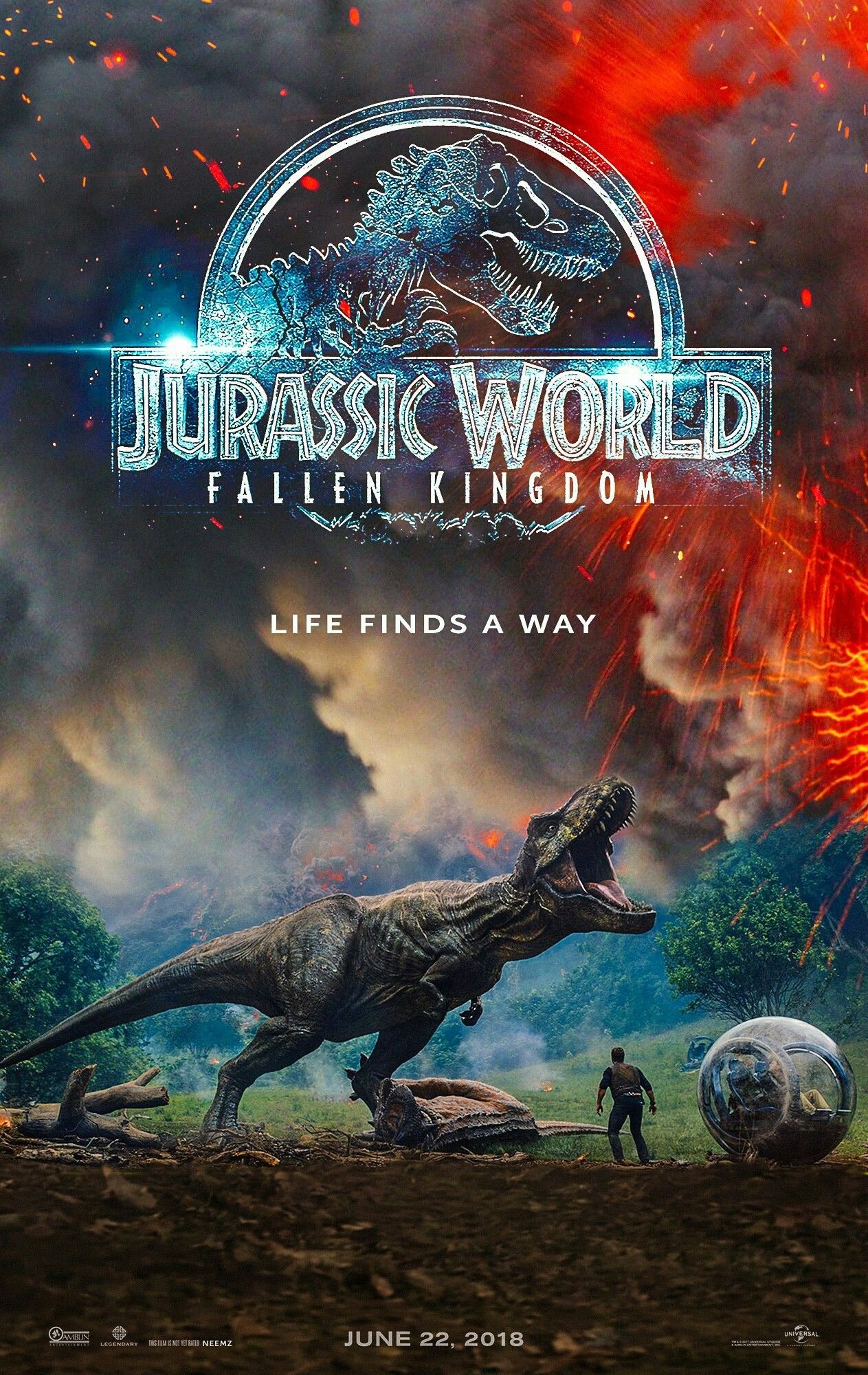
“Jurassic World Fallen Kingdom” movie review

“Your (executives) were so pre-occupied with whether or not could, they didn’t stop to think if they should.” Ironic, isn’t it. A haunting but accurate assessment by Dr. Ian Malcolm. Let me say first, Jurassic Park is my favorite movie of all time, followed closely by Sunset Boulevard and Psycho, so it’s difficult to separate fanboy me from critic me. However, I shall do my best to keep my personal bias in check. As a longtime fan of the franchise that captured my imagination as a kid and with the original filled with depth, irony, tragedy, and more, I was excited as I sat down in the theatre last night to watch Jurassic World Fallen Kingdom (JWFK). And suffice it to say, my friends and I enjoyed our time and felt entertained; however, it’s simply not a great movie. And it pains me to write those words. At the end of the day, the movie suffers from a poorly written screenplay. Some may even describe the screenplay as a generic, vapid paint-by-the-numbers summer popcorn crunching blockbuster movie. The movie is not without its thrills, but I wish more attention was paid to the plot. Director J.A. Bayona takes suspension of disbelief to far reaching levels. The life of this franchise is in the balance; how I hope it finds a way to overcome the weak sequels since the strong original in 1993 that still holds up (and I’m not talking about the technology). Reasons for why it holds up could be entire articles in and of themselves (a lot has to do with the screenplay), but we are here to talk about JWFK.

Three years after the destruction of the Jurassic World theme park, Owen Grady and Claire Dearing return to the island of Isla Nublar to save the remaining dinosaurs from a volcano that’s about to erupt. When the search and transport operation meets with capitalistic opposition, the mission takes them to an underground arms market, they must stop the demented auction from placing humanity it mortal danger. During their covert operation, they encounter terrifying new breeds of gigantic dinosaurs, while uncovering a conspiracy that threatens the entire planet.

Unlike the soft opening of Jurassic World, the sequel begins with an opening scene similar to the tone of the opening of Jurassic Park. Encouraging, right? It’s dark, filled with tension, and ends with a kill. All this, and it doesn’t feel overstuffed with dinosaurs. Like a screenplay should, it hooks the audience without lots of gimmicks. The focus is on the drama, and not simply “look what we can do with dinos.” After this scene, I was looking forward to the rest of the movie. And even in the senate hearing with Dr. Ian Malcolm, this could’ve been used as a great setup for a dynamic ethics debate but it was not followed through. Like other ideas of Colin Trevorrow’s, many turning points, characters, and events are introduced but not developed. These elements often play off as mere plot devices to hurriedly cause something to be able to happen without having to truly develop it. Every character is flat. No dimension to anyone or anything, really. I cannot help but take note of the many opportunities that Trevorrow had to truly craft a cinematic story, and ostensibly ignored it. In an effort to help the vapid screenplay, J.A. Bayona attempted to add dimension to the flat plot but only so much can be done to fix a flawed story.

Examples of characters as mere plot devises are systems analyst Franklin and paleo-veterinarian Zia. Both were setup to be developed further beyond their main skill, but were abandoned. They exist only so two important actions can happen, but that is the extent of their respective development. Such wonderful opportunities to include strong characters, buy they are left as flat as the plot, lacking in any subplot or goals of their own. There is also a fantastic opportunity to provide some exposition on the days before John Hammond’s innovative theme park resort destination. We meet his former partner Benjamin Lockwood, and he explains how the first DNA was extracted in a state of the art lab in the basement of his mansion. There is also a nostalgic shot of a model of the original park’s Visitors Center, complete with Jungle Explorers and the famous gate. Although we have lost Sir Richard Attenborough, there is certainly ways of crafting a flashback to the first time DNA was extracted or even just a few moments of exposition through dialogue to learn about the early days and ultimately why Hammond and Lockwood split. We are given a reason that likely led to the split, but I imagine there was more to it, including the direction to go with the dinosaurs. Again, this is another example of exposition and dimension lost. Could’ve been used as character building and development time.

On the topic of nostalgia, there is plenty of fan service in the movie. Lockwood delivers a line taken directly from Hammond at the end of Lost World and we get to revisit the site of the Jungle Explorer that T-Rex pushed over the retaining wall in the original. There are other moments as well that remind me of the raptor kitchen and more. Furthermore, there are moments in the movie that act as a mirror to the original. Instead of seeking to lock the dinosaurs up, the goal is to free them. But I won’t get into details.

Whatever Universal and Amblin are doing presently, they need to stop and throw out the playbook from Jurassic Park III, Jurassic World, and now JWFK. I liked Jurassic World well enough but I thought the next installment was going to be more gripping, thrilling, exciting, but it went out with a whimper. I was cautiously optimistic when I heard it was going to be darker, closer to the horror that was the original 1993 blockbuster, but it wasn’t terrifying at all. And what parts were creepy, were already shown in the trailer (but that’s the marketing company’s fault, not the director or writer). Crichton is likely rolling over in his grave right about now, rest his soul. The next writer in the Jurassic franchise needs to be someone who understands what it takes to create a great story that CAN sell tickets and reach blockbuster status while holding up years down the road. Take the iconic Tim Burton Batman and Batman Returns, for examples. The reason why these, especially Returns, hold up so well is because Returns is a classic Tim Burton film that happens to have Batman characters, whereas the original is a Batman movie directed by Burton. So, the third installment in the Jurassic franchise needs to attach a writer and/or director who can write/direct a science-fiction horror movie that happens to have dinosaurs and legacy Jurassic Park characters.

While many critics are calling for this franchise to go extinct, this film scholar believes strongly that it can be saved. Much like Claire and Owen are determined to save the cloned dinos from a second extinction, Universal and Amblin need to go back to the beginning and study WHY the first one worked well. The short answer is the screenplay, followed by casting, and lastly the directing. An approach could be to write the screenplay without dinosaurs; write a solid, compelling narrative. Make sure there is a clearly defined goal with clearly defined opposition to the goal, simple plot, and complex characters. Then find places to add in the dinosaurs as anti-heroes. It’s far more effective to retroactively add dinos in and modify the screenplay than write it with a focus on seeing dinosaurs and write a story around them. The former is narrative-heavy with supporting, terrifying action sequences whereas the latter is spectacle heavy with a one-dimensional narrative. Subtext, subplot, and theme need to be infused back into the Jurassic franchise.

At the end of the day, I enjoyed myself. I did not feel as if my time was wasted. You know what, I had fun. And for that, I appreciate the movie. It may not have truly memorable characters or scenes, but it was a fun watch. If more fans speak up, perhaps the next film will go back to its DNA and deliver a sequel that would make the original proud.

For my review of Jurassic World click here.

Ryan is a screenwriting professor at the University of Tampa. If you like this article, check out the others and FOLLOW this blog!

Follow him!

Twitter: RLTerry1

Instagram: RL_Terry

Thrillz (theme parks): Thrillz.co

Are Theme Parks Pricing Millennials Out of the Ability to Experience the Magic?

If you’re a Millennial like me, then you may have asked yourself the same question. In fact, I read an article recently on another Theme Park website that explored how changing demographics are changing the theme park business. Fascinating article. However, there was an item of mention that troubled me. When commenting on the observation of the addition of food and wine festivals, expensive up-sell experiences, and line-skipping passes to appeal to adults without kids, it was stated in the form of this development being great for Millennials. And that got me to thinking. Is it, though? Considering the current economic climate and the career status of those who are in their early 20s and to early to mid 30s, are these new trends truly accommodating of this group?

Instead of limiting this topic to the changing population (baby booms versus baby busts), I think it’s more effective to explore this topic of how changing demographics are changing the theme park business with the addition of the income criteria coupled with population. This is an important element to add to the discussion because it’s no surprise that it’s taking much longer to land a full-time position earning a truly livable wage for us than it did for our parents (see images 1-3). In fact, the Pew Research center (image 4) shows that our parents had far more purchasing power when they were rearing us than we do today. Essentially, non high-level mangers or non-executives have exponentially less disposable income correlating to the cost of living than our parents did in the 1980s, 90s, and early 2000s. Furthermore, it’s much harder to get a mortgage than it was 10-20yrs ago, rent rates are way up, and student loans enter repayment. When theme parks keep adding expensive up-sell experiences in order to capture the young single adult or young couple without kids (as we are currently in a baby bust that doesn’t look like it will change with GenZ), I am not entirely sure they are considering the financial burdens and increasing cost of living that 20 and 30-somethings currently face. Our parents COULD afford more vacation than we can today.

Whenever I see a Twitter, Instagram, Facebook, or blog post about a new experience at Disney Parks especially, but also Universal Parks, lesser so at Busch Gardens and SeaWorld (who DO tend to cater to where current finances are for Millennials), I wonder who is actually paying for these experiences? Most of these special tour and dining experiences are in excess of $100/person and often much more. After paying for either day tickets or annual passes, hotel nights (if applicable), plane tickets or fuel for the car, I find it difficult to believe that the typical Millennial is able to afford these experiences. Therefore, if the typical Millennial possesses an inability to afford all the increases and special experiences in the parks, then perhaps this “changing of the theme park business” is actually not a good thing for those of us who are in our 20s and 30s. Seems to me, that the more logical course of action would be to follow the median economic status of the biggest group of park guests.

According to the the article that inspired me to write mine, the largest group of park guests is trending toward late GenX and Millennials (with GenZ not being too far behind) without kids. It makes perfect sense for the parks to add in “adult” activities in order to entice Gen-Xers and Millennials such as food and wine festivals, line-skipping passes, and special events, but the prices of these events is outpacing the income of the group that the theme parks know will soon surpass the number of “families” that are guests at the parks. The disadvantage of a proliferation of high-priced up-sells is alienating the very group of current and potential park guests that is outpacing the more traditional families that have been the main source of income for the parks. More than anything else, in terms of spending money on entertainment, Millennials are looking for a good deal–more than our parents–because we have much higher overhead and less purchasing power than they did when they were out ages taking their kids (us) to the parks. Therefore, it’s important for the current theme park business model to recognize the desire for Millennials to continue to support and enjoy the parks as more traditional families get smaller and Baby Boomers getting older with currently empty or soon-to-be-empty nests.

Although it seems common sense for the parks to adapt their respective business models to accommodate the finances of Millennials, the opposite appears to be coming to pass. Instead of packing better deals for young professionals without kids, the trend seems to be catering to only upper-middle and upper class individuals and families. The antithesis of what should be done in order to capture the next generation planning vacations to the parks. If the trend of continuing to add expensive additions to your park ticket continues, then theme parks will become as exclusive a destination as a European vacation or exotic cruise. “This park wasn’t built to cater only to the super rich, everyone in the world has a right to enjoy…” as Dr. John Hammond countered the lawyer’s desire to charge exorbitant prices during the lunchtime debate scene in Jurassic Park (one of my favorite scenes from the iconic film)Disney and Universal should borrow a line from Hammond and modify the business model to create magic for Millennials–especially Disney Parks, as they are increasingly catering to only the super rich.

So yes, we are experiencing theme parks changing their business models to adjust for fewer families and more singles/couples without children. And Food and Wine festivals are a huge hit! I truly enjoy them. But, in developing offerings that attract adults without kids, the parks are in danger or pricing Millennials out of enjoying the magic. Millennials are looking for those after-hours events, food and wine fests, and line-skipping passes but not at the cost of not being able to go to begin with. Theme parks should reevaluate the pricing structure and take the current economic times facing millennials into question. Millennials represent the majority of folks soon to be going to the parks as young professionals, with the traditional families of 3-5 becoming less common. But, Millennials are burdened by rising rental costs, rising student loan repayment cost, lower salaries than our parents, and rising cost of transportation.

“A Quiet Place” horror film review

Heart-pounding. Spine-chilling. A creepy creature-feature that will leave you speechless. The demonstrable excellence in terrifying visual storytelling can effectively be summed up by the queen of silent film herself Norma Desmond, “we didn’t need dialogue, we had faces” (Sunset Boulevard). A Quiet Place truly earns its place among “certified fresh” horror films. Not since Don’t Breath and 10 Cloverfield Lane have I encountered such a thrillingly intelligent motion picture. Writer-director John Krasinski’s post-apocalyptic horror masterpiece showcases the power of visual storytelling within the horror genre. Furthermore Krasinski brilliantly channeled the soul of the iconic (mostly Universal Pictures) silent and early horror films for his modern interpretation of the creature-feature. No gimmicks here. Only a solid plot that builds an incredible, immersive cinematic experience upon the foundation of a simple plot with simple limitations. Simple plot, complex characters. That basic screenwriting principle is where so many filmmakers and writers go astray. Film is a visual medium, often supported by well-crafted, lean dialogue, and this film has visual storytelling in spades. This film represents one of the best examples of embracing the concept of “show don’t tell.”

Shhhh. Don’t make a sound. One family finds themselves surviving a post-apocalyptic world now inhabited by an alien species that hunts by sound.

There has certainly been a resurgence of exceptional horror films over the last few years. I mentioned Don’t Breath and 10 Cloverfield Lane earlier, we also have the Academy Award nominated Get Out from last year and many others. While many may shrug their shoulders at horror because it is a proliferated genre with many cheep, tawdry horror flicks, this same genre can be incredibly intelligent in how it makes an observation of society and offers commentary, a new perspective, or provides a means to a discussion. Some of the most critically acclaimed films over the decades have been horror. Being among the first films commercially released, horror has also stood the test of time and provides audiences with a experience that challenges worldviews, provokes physiological responses, and fuels nightmares and imaginations.

One of the most brilliant aspects to A Quiet Place is the film’s innate ability to instantly hook the audience with loud silence. Going into the movie, audiences know that the arachnid-like creatures kill anything within an earshot. Therefore, the audiences hang onto every bump, snap, or thud as the tension rises and suspense is drawn out to terrifying levels. Impeccable audience engagement. It takes a special kind of movie to completely immerse the audience into the world of the film in a multidimensional way. In terms of viability of the film and cross-promotion, this movie certainly has what it takes to be a popular and successful adaptation for a house at Universal’s Halloween Horror Nights or Busch Gardens’ Howl-O-Scream. Definitely has a place among the best horror film experiences to date.

The successful suspense and tension building can be attributed to seldom getting a good look at the alien-arachnid-like creatures. Had the audience seen the creature repeatedly throughout the film, it would lose fright value. As Hitchcock stated, “there is nothing scarier than an unopened door.” Meaning, the filmmaker’s ability to transfer the terror on screen to the minds of the audience is far more powerful and impressive than relying upon on-the-nose scares and jump-scare gimmicks. Well-crafted suspense and rising tension carries far more weight, and has the ability to support a narrative so much more effectively than a cheap scare. Although the atmosphere in this film may remind you of Don’t Breath, and rightly so, Krasinski’s film does not quite measure up to the macabre, terrifying atmosphere that Fede Alvarez provided audiences; however, Krasinski’s A Quiet Place is extremely close to the aforementioned and deserves the accolades that it has received.

In terms of how to closely read A Quiet Place, the film provides exceptional social commentary on the perils parenting and, by extension, protecting one’s offspring. In fact, I imagine that the experience for parents watching this film exceeds the levels of terror felt by those of us who do not have kids. There is also plenty of material on how far a parent is willing to go in order to protect their children. I also appreciate the film’s commentary on expected mothers, and how they stop at nothing to protect their unborn child from that which seeks to do it harm. Responding to and working through grave tragedy is another heavy and shocking subject matter in the film. We all respond to death differently; many of us grieve differently than one another. Some bottle up all the negative feelings for fear of how to deal with them, and others blame themselves because they feel that there is something that could’ve been done differently to protect a lost loved one. On a lighter note, the film also provides metaphor on how to work with and handle your older kids when they seek to push the boundaries–boundaries that may be dangerous and place them in harm’s way. There is so much here to talk about, and I have just touched on the surface. That is why horror is the best genre for creatively exploring psycho-social constructs and other observations about humanity and the world in which we live.

Quietly make your way to your seat in the auditorium. A Quiet Place is definitely a film to be experienced on the big screen with a theatre full of others who seek to be frightened. Enjoy the refreshing originality of a film that could have so easily went by way of so many other creatures features that lack anything memorable, and just blend into the background with countless others in this subgenre of horror. It may not have the well-defined external goal and end game of Don’t Breath, but it is certainly exciting and fun! You’ll certainly be absorbed into this terrifying post-apocalyptic world, where YOU are afraid to go bump in the night.

Star Wars and Nintendo: Battle of the Parks

The big question is which will be the bigger draw??? Although it first debuts in Tokyo for the 2020 Summer Olympics, Universal Studios Japan’s Super Nintendo World is one of the most highly anticipated theme park expansions, rivaled only by Star Wars: Galaxy’s Edge (Star Wars Land) at Disney parks in the US debuting next year! Two enormous intellectual properties (IPs) that will undoubtedly drive up guest attendance by exponential amounts. But which will prove to be the more popular expansion? Arguably, both lands will significantly impact the attendance of, character meet-and-greets in, and merchandise of the parks. The competition is heating up between Universal and Disney parks and resorts–reminds me of the US and Russian space race of the mid-1900s. While there is no doubt that both lands will be major successes, therein lies a question of which one will prove to be more popular. Not that it truly matters in the grand scheme of things, but it’s one of those things that is interesting to talk about and synthesize some research.

After the opening of both Wizarding World of Harry Potter (WWoHP) lands at Universal Studios Florida (and subsequently the Hollywood expansion), it was no surprise that Disney World was running to catch up, hence the opening of Pandora: the World of Avatar. As amazingly beautiful and detailed as Pandora is, it has not managed to draw the continued crowds and fandom that the WWoHP has been doing since 2010. According to the website Touring Plans, the increase from 2015 to 2017 attendance at Animal Kingdom rose marginally on the average whereas the Miami Herald reports that the increase at Universal Orlando during this same time period was more significant, and the forthcoming TEA Connect and AECOM reports are predicted to show greater growth at Universal than Disney World. Suffice it to say, the fanbase for Harry Potter far exceeds that of Avatar; however, the great battle for the crowds is currently between Star Wars: Galaxy’s Edge combined with Toy Story Land and Super Nintendo World with further Harry Potter/Fantastic Beasts developments in the worksTo understand which is likely to out-perform the other, one has to delve into the individual fanbases and economic impact of both properties primarily in question–Star Wars and Nintendo.

Unfortunately, there is little to no empirical way to quantify the number of fans either property has because of all the variables. Furthermore, movie ticket DVD/BluRay/VOD sales cannot be weighed against video game console and interactive media (video games) sales to determine fanbase size because it would not be an equitable means of measurement. Understanding the fanbase is crucial to predicting which property will be the bigger draw, which will have the biggest economic impact on its respective park. At the end of the day, both expansions are winners. Both will prove to provide vast positive affects upon the parks. Still, the friendly competition gives rise to the question which will be the bigger success. While the number of fans cannot be realistically quantified, the amount of revenue generated by Star Wars and Nintendo CAN be quantified, and that is precisely what Statista does. According to Statista (and the more than 18K sources from which the company compiles the information), Star Wars has generated $7.5B in revenue compared to Nintendo‘s $75B. What??? Yes, that’s right. Nintendo exceeds Star Wars in revenue 10x. While Nintendo may far exceed Star Wars in revenue generation, it’s important to note that Star Wars is the leading movie franchise in terms of merchandise sales. Yes, more than Harry Potter (and I’m house Ravenclaw). And merchandise sales is a HUGE component of theme park operations and sales.

Since park guests base their visit on more than just a single land, the presence of Toy Story Land at Disney World and Wizarding World of Harry Potter should also be taken into account when determining whether Disney World or Universal Orlando will see the bigger boost to attendance and increase in revenue. Arguably, Harry Potter (inclusive of Fantastic Beasts) is the bigger franchise family based on book sales, ticket sales, current theme park attractions, etc. Therefore, Star Wars land has to be big enough to not only compete against Nintendo World but also Harry Potter. One of the biggest advantages that Star Wars has over Nintendo and Harry Potter is merchandise sales and collections. Star Wars has exponentially more memorabilia and collectors than Nintendo, mostly because of the success of the films and the fact that Star Wars predates Nintendo by several years. But I imagine that Universal will continue to rely upon WWoHP for the bulk of the merchandise sales at the park since it can compete with Star Wars Land on that playing field. Analyzing the fandom of Nintendo is a little more difficult than that of Star Wars because Star Wars is the big umbrella under which all the movies, video games, and merchandise fall. Fans identify themselves as a Star Wars fan, whereas the fans of Nintendo’s product line are more prone to identify with a particular game franchise (Mario, Pokemon, Zelda, etc) more so than identifying with Nintendo proper. All evidence points to both brands being strong, viable candidates that will provide a close competition.

Both Star Wars and Nintendo are worldwide phenomena–no question. Combine Star Wars with Toy Story and conversely Nintendo with Harry Potter, and you have two powerhouse destinations for theme park fans. With the recent expansions at Universal Studios Florida and Hollywood, Disney World/Disneyland needs to ramp up their game–go into hyperspeed. Star Wars: Galaxy’s Edge pulls into space dock in 2019 just in time for episode IX. We are still a few years away from a domestic Super Nintendo World, and do not know much about it; however, we do have an idea of what to expect at the Universal Studios Tokyo and can by extension apply that knowledge to Universal Orlando. From what we know so far, Star Wars land will be a completely immersive environment that will essentially transport park guests to a “galaxy far far away.” If the WWoHP is the best example of the successful translation from book to screen to theme park for a world of fantasy, then Star Wars land will be on par with the best.

An interesting element to think about is the future of both Star Wars and Nintendo. It’s old news at this point that the most recent Star Wars movie The Last Jedi was not popular with longtime fans–new fans, yes–longtime fans, no. Nintendo is successfully holding onto both the old and new fans because the video games and consoles continue to appeal to those who had an NES as a kid or just bought last year’s Switch. Even legacy properties are holding onto what made them popular, but incorporating trends in interactive media (the term now often used to define that which was formerly video games). Mario Builder is an example of the aforementioned concept. If Star Wars continues to lose its longtime fans, abandons them for the new fans, then the new land may not fair as well as Nintendo World. Fantastic Beasts and Where to Find Them was a new generation Harry Potter movie that largely appealed to BOTH the old and newer fans. Therefore, it could be said that Universal Orlando’s most popular themed lands may have a longer life than Star Wars if the movies keep dropping the older fans. Just something to think about.

The Battle of the Parks is hot, and will just keep getting hotter! Fortunately, healthy competition breeds innovation, so whether or not Universal or Disney has the better new land expansions, the real winner in this battle is the consumer! Both parks will greatly benefit from the expansions and only time will be able to tell which one wins this race to be the best.