WICKED: FOR GOOD movie musical review

Some movies soar on broomsticks; this one never quite gets off the ground.
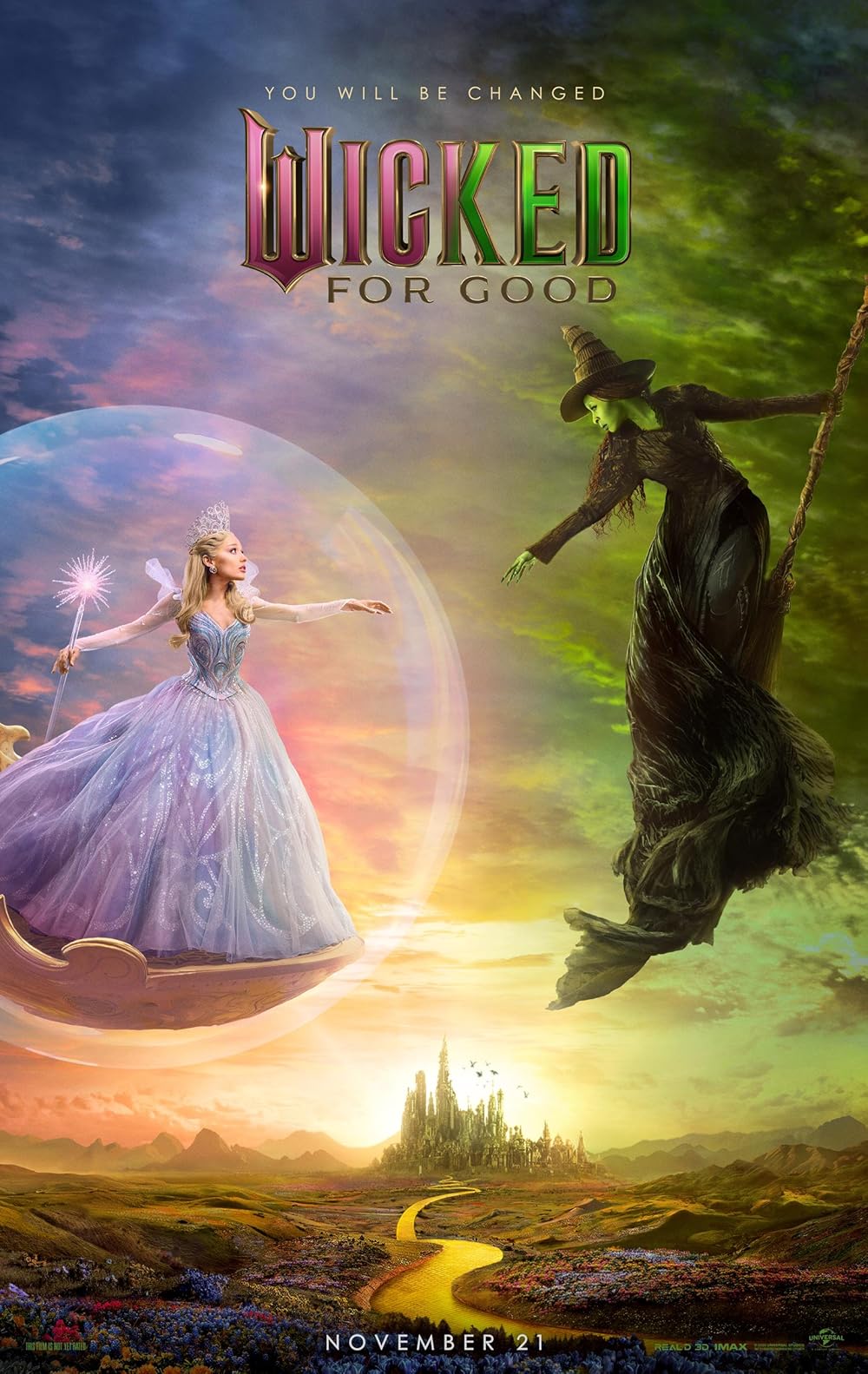
Wicked: For Good arrives with sky-high expectations, a beloved Broadway pedigree, and a cinematic world forever shaped by the 1939 Wizard of Oz. And while the heart for the material is undeniably present—director Jon M. Chu’s affection radiates through nearly every frame—the execution is fraught with problems that prevent the film from casting the spell it so eagerly attempts. It’s a movie overloaded with spectacle yet starved of narrative discipline, regrettably proving that sometimes a production can have all the right ingredients and still mix the potion incorrectly. There’s no question Jon M. Chu loves this material—his enthusiasm is evident. But passion alone isn’t enough. The film desperately needed stronger producing and organizational forces to ground the project, refine its pacing, and balance its emotional register. Instead, we get a production that feels at once over-managed and under-shaped.

Now demonized as the Wicked Witch of the West, Elphaba lives in exile in the Ozian forest, while Glinda resides at the palace in Emerald City, reveling in the perks of fame and popularity. As an angry mob rises against the Wicked Witch, she’ll need to reunite with Glinda to transform herself, and all of Oz, for good.

The most glaring issue in this movie is the pacing. This story never needed to be two movies. One Broadway show, one complete screen adaptation—simple math. Instead, Wicked and Wicked: For Good, collectively, feel like a single narrative forcibly stretched and compressed simultaneously. Scenes either end abruptly or linger with self-importance, giving the whole film a stop-and-start rhythm that betrays any emotional momentum. Moments that should breathe are suffocated, while others that should be tightened sprawl endlessly. Narratively, the film leans heavily on contrivances rather than character and plot development. Plot turns feel telegraphed or unearned, creating a sense that events are happening because the script demands it—not because the characters have earned the journey. Emotional beats are pushed rather than developed; the film tugs at heartstrings it hasn’t taken the time to weave. Many sequences feel manipulative instead of meaningful, leaving the viewer aware of the strings being pulled rather than swept up in the melody.

The film maintains the emotional equivalent of flooring the accelerator from beginning to end. Everything is heightened, everything is urgent, everything is presented at maximum volume. Without quieter resets, the story becomes exhausting rather than exhilarating. The lack of modulation leaves little room for nuance, making even potentially impactful moments blur together into one extended crescendo.

And then there’s the Oz problem itself–it was bad enough in the first movie, but this one amplifies all the flaws in this picture. From the opening Universal logo and Wicked title card, both stylized to resemble their 1930s counterparts, it’s clear the film wants to position itself adjacent to the classic Wizard of Oz. (And yes, I am aware that the Broadway show is based on books and not the 1939 classic, but this is a screen adaptation that is going to by default be connected spiritually and literally to the events, imagery, and characterizations of the original movie, but I digress). Whenever Wicked intersects with that iconic imagery, the visual and narrative disconnect is jarring. Tonally, textually, and aesthetically, nothing matches. Two of the most egregious examples are the Wicked Witch of the West’s castle, a location fundamentally misaligned with its 1939 counterpart in both history and design, and Glinda’s bubble. Hello??? She is clearly a magical being and travels by a magical bubble. To rob her of those elements is to rob her original characterization. For a film so eager to evoke some level of nostalgia, its disregard for consistency with cinema’s most beloved fantasy feels baffling.

The editing is among the film’s most distracting flaws—awkwardly timed transitions, uneven scene construction, and moments that feel spliced for convenience rather than cohesion. The cinematography dazzles with color and movement but contributes little to storytelling. It’s all flash, no narrative substance: beautiful images that ultimately amount to little more than digital confetti. And we cannot talk editing without addressing teh cringe CGI–the kind of digital spectacle that feels less like movie magic and more like a rough animatic accidentally exported at full resolution. Emerald City looks less like a tangible place and more like a high-end screensaver—everything polished to a rubbery sheen, with no texture, grit, or atmospheric depth. Characters often appear detached from their surroundings, as if composited into a digital diorama rather than inhabiting a lived-in world. Instead of mixing practical sets with digital enhancements, the film leans heavily on full-CG environments and even characters, resulting in octane-fueled and intimate moments feeling artificial. It’s like looking upon a world of fantasy that feels more like a giant animated backdrop with actors placed within versus a world that feels tangible.

Not even the presence of Michelle Yeoh is enough to elevate the film’s sense of class or gravitas. Although, it’s hard to blame her, given that she’s phoning in a performance built on scraps of narrative substance. In this second installment, her character is little more than an ornament of prestige, offering neither meaningful development nor any real impact on the story. Jeff Goldblum, likewise, delivers a surprisingly muted turn, coasting on his trademark charisma without ever fully engaging. When two performers known for commanding the screen seem this disengaged, it speaks less to their abilities and more to a film that gives them virtually nothing with which to work.

Wicked: For Good reaches for greatness but ultimately fails to stick the landing. It’s a film overflowing with heart yet undercut by structural missteps, contrived plotting, mismatched continuity, and a visual approach that prizes spectacle over substance. For a story about defying gravity, it’s ironic that this adaptation never quite lifts off the ground.
Ryan is the general manager for 90.7 WKGC Public Media and host of the show ReelTalk “where you can join the cinematic conversations frame by frame each week.” Additionally, he is the author of the upcoming film studies book titled Monsters, Madness, and Mayhem: Why People Love Horror. After teaching film studies for over eight years at the University of Tampa, he transitioned from the classroom to public media. He is a member of the Critics Association of Central Florida and Indie Film Critics of America. If you like this article, check out the others and FOLLOW this blog! Follow him on Twitter: RLTerry1 and LetterBoxd: RLTerry
BLACK PHONE 2 horror movie review

Don’t answer the call—best to let go to voicemail.

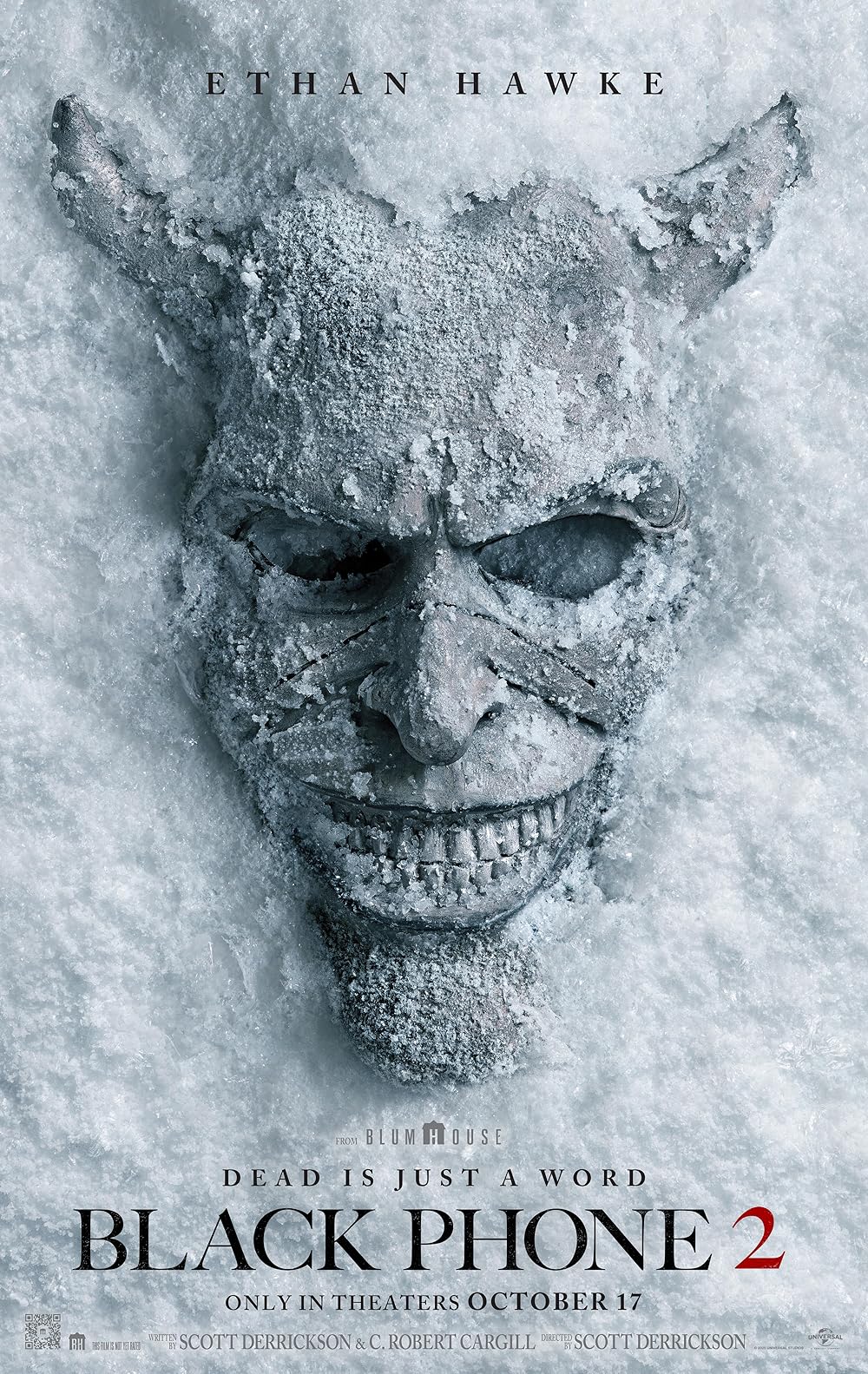
Atmospheric but empty. Black Phone 2 may ring with eerie potential, but what you’ll hear on the other end is mostly static. You just as soon use a telegraph service to form a connection between the big screen and audience than the calls this movie desperately makes. Derrickson demonstrates that he can certainly direct the heck out of a horror movie, but it might be time for someone else to write the next call–or at the very least, he should perhaps stop hiring his friend as a writing partner. While the film succeeds in delivering a chilling, oppressive atmosphere, reminding us that Derrickson remains one of horror’s more visually articulate directors, it also reinforces the unfortunate truth that he’s a far better director than writer. What we have here is another casualty of the writer-director syndrome; which is to suggest that one can be a stylistic filmmaker or even auteur without need to wear both hats. Some filmmakers are better directors, some better writers–and that’s okay! While Black Phone 2 begins with promise, it quickly devolves into a frustrating exercise in squandered ideas, tonal inconsistency, and narrative disarray.

Bad dreams haunt 15-year-old Gwen as she receives calls from the black phone and sees disturbing visions of three boys being stalked at a winter camp. Accompanied by her brother, Finn, they head to the camp to solve the mystery, only to confront the Grabber — a killer who’s grown even more powerful in death.

The film ambitiously sets out to expand upon the supernatural mythology introduced in the 2022 original. Derrickson clearly wants to explore the dream world as a deeper psychological battleground—echoing the meta-horror energy of A Nightmare on Elm Street III: Dream Warriors. But instead of capturing that sequel’s inspired creativity and emotional cohesion, Black Phone 2 feels more like a discount version of a superior brand. The screenplay introduces a fascinating set of “rules” for how this dream realm operates, only to immediately ignore or contradict them, leaving the audience confused rather than intrigued. Internal logic is sacrificed for jump scares and contrived character beats that go nowhere.

And speaking of characters—if you can call them that—most are little more than human wallpaper. Half the ensemble feels like a collection of movie people consisting of broadly sketched types that serve a single plot function before fading into irrelevance. Others border on offensive caricature, perpetuating inaccurate and disparaging stereotypes. For all intents and purposes, about three-and-a-half characters can be removed from the movie, and the story play out much the same. Why that half-character? Because, they do help develop the plot in a measurable way–albeit a modicum of development. When a film’s supporting cast functions more like furniture versus people, no amount of spooky atmosphere can save it. The best written and developed character was Demián Bichir’s Armando.

Still, there are moments, scenes, and even entire sequences that remind us of Derrickson’s undeniable craftsmanship. His camera captures dread beautifully; his sense of timing and space within the frame conjures genuine unease. There are glimpses of a haunting, emotionally resonant movie buried somewhere beneath the fractured structure and incoherent script. Unfortunately, those glimpses are fleeting. And that’s the great tragedy here—not just for Black Phone 2, but for a growing trend in contemporary filmmaking: the writer-director who insists on doing it all, in the name of authorship.

Once upon a time, filmmakers understood that collaboration was the lifeblood of cinema. Directors directed. Writers wrote. And when both crafts worked in harmony, we got films that not only looked great but meant something. Somewhere along the line, “auteur” became synonymous with “solo act,” and too many directors convinced themselves that to have a voice, they had to pen the script too. The result? Movies that look immaculate but feel hollow—visual symphonies built on shaky foundations.

Derrickson is a perfect example (another is Jordan Peele). As a director, his command of tone and atmosphere is nearly peerless; his work in horror often hums with intelligence and mood. But Black Phone 2 exposes the limits of his pen. The foundation for a compelling story is here—the bones of something rich and psychologically resonant—but the film never benefits from a writer who truly cares about character, motivation, or thematic depth. It’s as though Derrickson fell so in love with his own concept and craft that he forgot to ask whether the story itself deserved that devotion.

A gifted director needn’t be the writer to be an auteur. In fact, some of the greatest auteurs—Hitchcock, Spielberg, even Fincher–are those who know the value of letting a skilled screenwriter shape the clay before they bring it to life. Black Phone 2 might have been a haunting triumph had Derrickson trusted someone else, other than his friend, to write the words for the world he so clearly knows how to visualize. Instead, we’re left with a reminder that even the most talented filmmaker can’t build a cathedral on a cracked foundation.

By the time the credits roll, Black Phone 2 feels like a series of individually thoughtful scenes strung together by a story that never quite finds its pulse. It’s a patchwork of ideas that might have worked—had they been developed, connected, or earned. The result is a film that looks and sounds like a horror movie, but never feels like one worth the cost of time.

Ryan is the general manager for 90.7 WKGC Public Media in Panama City and host of the public radio show ReelTalk “where you can join the cinematic conversations frame by frame each week.” Additionally, he is the author of the upcoming film studies book titled Monsters, Madness, and Mayhem: Why People Love Horror. After teaching film studies for over eight years at the University of Tampa, he transitioned from the classroom to public media. He is a member of the Critics Association of Central Florida and Indie Film Critics of America. If you like this article, check out the others and FOLLOW this blog! Follow him on Twitter: RLTerry1 and LetterBoxd: RLTerry
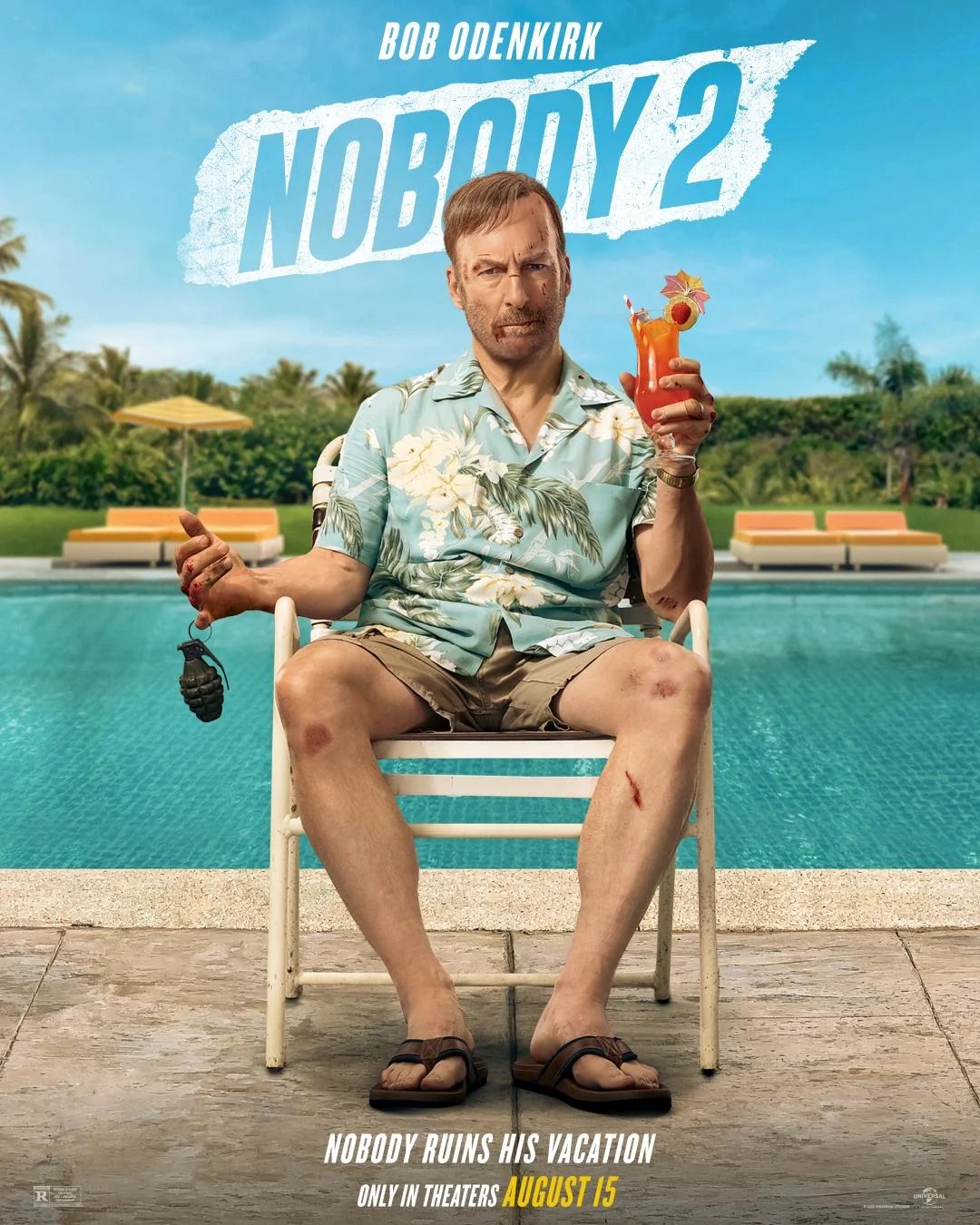
NOBODY 2 action movie mini-review

Lowbrow thrills, high-budget spectacle. Proof that sometimes all a B-movie needs is an A-list wallet to unleash maximum mayhem. At at one-and-a-half hours, its a fast-paced wild ride. Nobody 2 is precisely what you expect, plus you get treated to a rare appearance by big screen icon Sharon Stone.

Workaholic assassin Hutch Mansell takes his family on a much-needed vacation to the small tourist town of Plummerville. However, he soon finds himself in the crosshairs of a corrupt theme-park operator, a shady sheriff, and a bloodthirsty crime boss.

It’s as if the followup to 2021’s Nobody stumbled out of a neon-lit drive-in and somehow found itself with a blockbuster budget to burn. Where the first film offered a sly, bruised take on the “ordinary man goes berserk” formula, this sequel leans into the gleefully exaggerated: bigger fights, louder explosions, and a grin-worthy parade of bad guys to pummel. It’s still got that B-movie backbone—lean plotting, brisk runtime, and the sense that logic is secondary to spectacle—but it all works like a well-oiled machine.

While Bob Odenkirk’s Hutch delivers his outlandishly entertaining, no holds barred, logic-defying fight sequences, there’s the ace up the sleeve of Nobody 2: Sharon Stone. In a world where her film appearances have become a rare pleasure, her turn here as a campy, hyper-stylized villain is worth the ticket price alone. With every razor-edged line reading and wardrobe flourish, she seems to be savoring the role, delivering the kind of larger-than-life menace that feels ripped from the pages of a pulp novel. Stone doesn’t just play the villain—she plays with the villain, reveling in the absurdity without ever letting the stakes slip.

If the original Nobody was a gritty surprise, Nobody 2 is an unapologetic mash-up of grindhouse spirit and Hollywood muscle. It’s loud, it’s ludicrous, and it’s a fantastic time at the movies.

Ryan is the general manager for 90.7 WKGC Public Media in Panama City and host of the public radio show ReelTalk “where you can join the cinematic conversations frame by frame each week.” Additionally, he is the author of the upcoming film studies book titled Monsters, Madness, and Mayhem: Why People Love Horror. After teaching film studies for over eight years at the University of Tampa, he transitioned from the classroom to public media. He is a member of the Critics Association of Central Florida and Indie Film Critics of America. If you like this article, check out the others and FOLLOW this blog! Follow him on Twitter: RLTerry1 and LetterBoxd: RLTerry
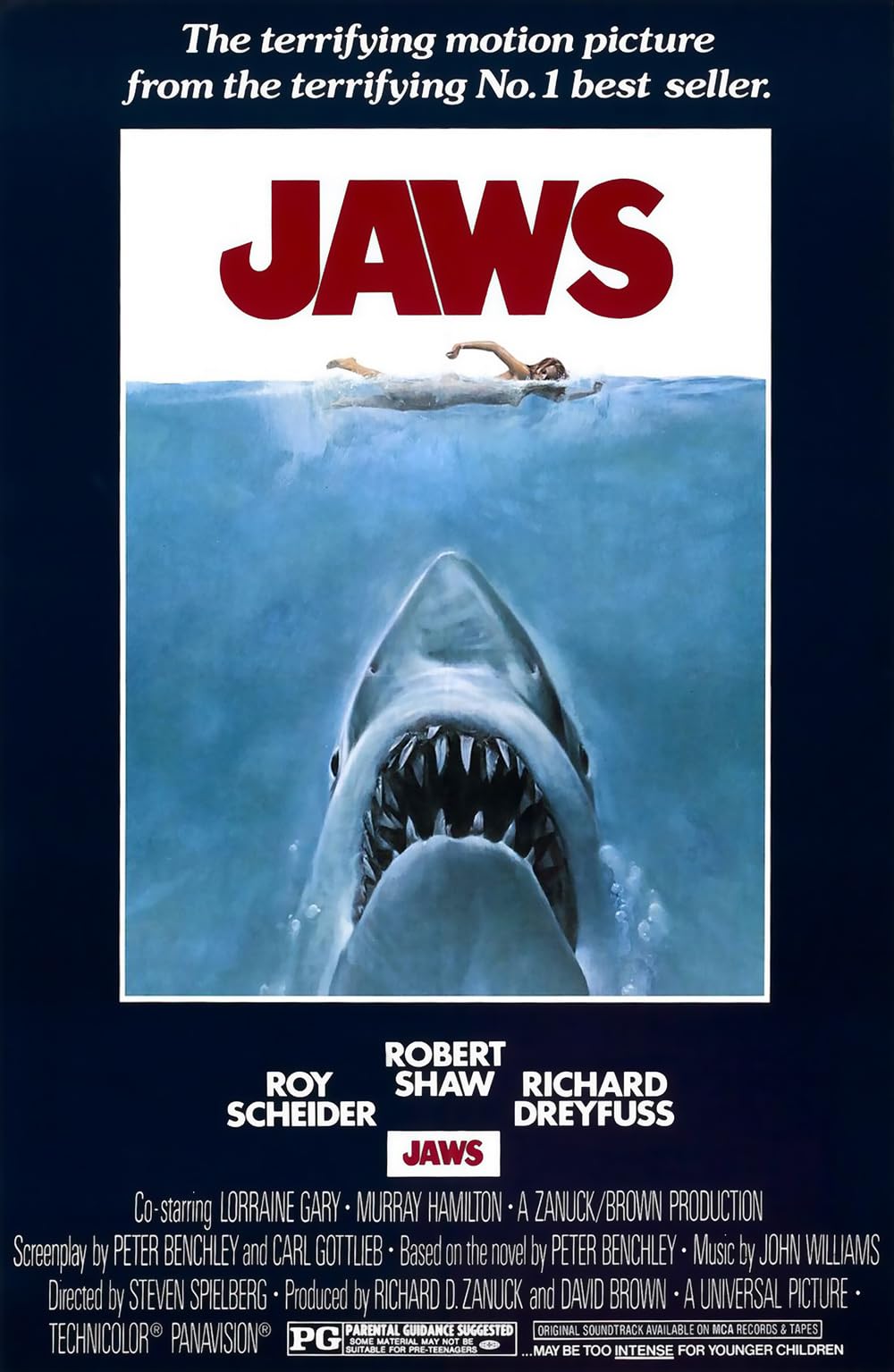
JAWS 50: Celebrating Fifty Years of Cinematic Legacy

“[We’re] gonna need a bigger boat” as we celebrate the 50th anniversary of the massive, radical game-changing effects of Steven Spielberg’s career-defining JAWS.

Jaws was the first official blockbuster. Looking back at the original crowds of 1975, you’d think the movie was a one-night-only big event. Hence the term blockbuster. The adjective blockbuster, commonly attributed to big summer movies, literally derives from the fact that queues for the box office wrapped around city blocks. It busted the block, so to speak. And the rest is history! Coupled with the summer release date and ticket sales, the allure of Jaws generated levels of enthusiasm and interest never seen before. The film took in so much money at its opening, that it nearly made up the entire production budget by the end of the first week. Furthermore, distribution and marketing companies began to use Jaws as a model for future marketing efforts in order to attempt to generate another blockbuster effect.

Fun fact, two years earlier The Exorcist commanded massive crowds of people that wrapped around blocks to see the provocative motion picture. But, the initial release of the film was rather small and it’s marketing was much more reserved. In contrast, Jaws‘ marketing was unlike anything that had been seen before and it’s initial release was a extreme wide release, and upon that initial release crowds were already wrapping around the block. The Exorcist may have achieved the massive crowds first, but it was earned over time; whereas with Jaws, it was instantly a blockbuster from day one.

Never before had there been such a popular and critically successful film in cinemas. Much in the same way Alfred Hitchcock’s Psycho is often credited, and rightly so, for being the first modern horror film and forerunner to the classic slasher; likewise, Spielberg’s adaptation of Peter Benchley’s novel Jaws is credited as the first modern creature feature horror film and forerunner to the blockbuster (or event movie). I am not negating King Kong, Creature from the Black Lagoon, or other predecessors; it’s important to take note of the word modern. Aside from excellent, visionary direction, both Psycho and Jaws have three important elements in common (1) powerhouse cast (2) strategic suspense and (3) a brilliant, oft-parodied, burned in your mind musical score.

Instead of building a thriller on shock value, disturbing imagery, or jump scares, author Peter Benchley’s screenplay for Jaws focussed on crafting a cinematic atmosphere that had an intimate, claustrophobic feel built upon well-crafted drama through character development and conflict, at the center of which is a little heart. Different from contemporary creature features, Jaws picks off swimmers in the single digits and those attacks all happen at a single beach on a small island off the coast of Massachusetts. And instead of an entire agency hunting down the man-killer shark, three unlikely men are forcibly thrown together in order to track down and eliminate the terror from the waters off Amity Island.

Simply stated, Jaws is thematically rich from beginning to end, and there is no way to capture all the nuances of the film in this section; however, I’d be remiss not to spend some time on the emotive power of the landmark horror film. At the core of Jaws’ expressive meaning, it explores themes of greed, scientific hubris, and the consequences of unchecked ambition. Suffice it to say, the most prominent theme in the film is the folly of man. The folly of man is expressed through the character-driven story more than it is the search and destroy of the shark.

Chief Brody’s fear of the water and his struggle to protect his community from the shark reflect universal anxieties about the unknown and the fragility of human safety. In a manner of speaking, Chief Brody journey is one of redemption for the death of the little Kitner boy. Matt Hooper represents scientific hubris and dangers of unchecked bravado. And Quint’s obsessive quest to hunt and kill the shark serves as a cautionary tale about the dangers of pride and arrogance, highlighting the destructive power of man’s hubris in the face of nature. Interestingly, all three men are seen as outsiders. Chief Brody and his family are new to town, Hooper is a white collar guy in a blue collar town, and Quint is socially an outsider, despite being a fixture in the community. During the 1970s, there were growing fears of outsiders coming into communities to upset the natural order of things.

Keeping the principle cast and environment small, Spielberg was able to focus attention on character development and interpersonal relationships in order for the drama to perform strongly and naturalistically. Big things do come in small packages. Coupled with the strong performances from the entire leading cast, this brilliant combination of cinematic elements works together to give us some of the most memorable lines, scenes, and cinematography in movie history. Furthermore, real people swept up into an impossible situation and foolish decisions enable the audience to identify with the characters and the setting in ways that make the terror feel all the more real and close to home–or the beach.

While Bruce is often thought to be the villain of Jaws–and no mistaking it, he is definitely an antagonist–I argue that the true opposition to the goal in the plot is Amity’s mayor. If we accept the goal is to apprehend or kill the man-eating shark, then Mayor Vaughn serves as opposing that action. Perhaps you’ve never thought of the true villain of Jaws being Mayor Larry Vaughn. A close analysis of the plot reveals that Jaws (Bruce) functions more as a catalyst for the principle conflict between Chief Brody and Mayor Vaughn. Other than the death at the beginning of the film, the Mayor is indirectly responsible for the remaining deaths. After all, it’s due to his utter complacency, negligence, and classic greed that led to the other deaths.

For most of the film, we spend far more time with Chief Brody’s continued conflict dealing with the social pressures, desires, and ill-fated decisions of his boss than we do with shark attacks. Mayor Vaughn fails to acknowledge the sheer gravity of the dangerous situation, and close Amity’s beaches in order to keep his citizens safe. Interestingly, even Jaws channels some of the anxiety of the 1970s. After all, the primary reason why Mayor Vaughn refused to close the beaches was because it would economically depress his town that literally depends on the summer dollars. In effect, he fed them to the shark. Seems like a villainous action to me. Bruce was just being a shark, Vaughn was the true villain.

Jaws forever changed cinemas and became the inspiration for countless other filmmakers. Another prominent filmmaker even cited it as part of his inspiration for a film that would be like a combination of Jaws and a haunted house, set in space where “no one can hear you scream.” In addition to serving as inspiration, many films have tried imitating it, putting their own spin on the premise. Even comedic satires featuring similar plot points have released over the years. The film’s box office success solidified Spielberg as a visionary director. Interestingly, the movie sparked a renewed interest in marine biology and conservation. Its timeless appeal continues to captivate audiences with thrilling storytelling, unforgettable characters, and groundbreaking practical effects. Jaws will forever hold a special place in the annals of film history and continue to be a holiday horror film that hundreds of thousands around the U.S. watch every 4th of July. 

Ryan is the general manager for 90.7 WKGC Public Media in Panama City and host of the public radio show ReelTalk “where you can join the cinematic conversations frame by frame each week.” Additionally, he is the author of the upcoming film studies book titled Monsters, Madness, and Mayhem: Why People Love Horror. After teaching film studies for over eight years at the University of Tampa, he transitioned from the classroom to public media. He is a member of the Critics Association of Central Florida and Indie Film Critics of America. If you like this article, check out the others and FOLLOW this blog! Follow him on Twitter: RLTerry1 and LetterBoxd: RLTerry
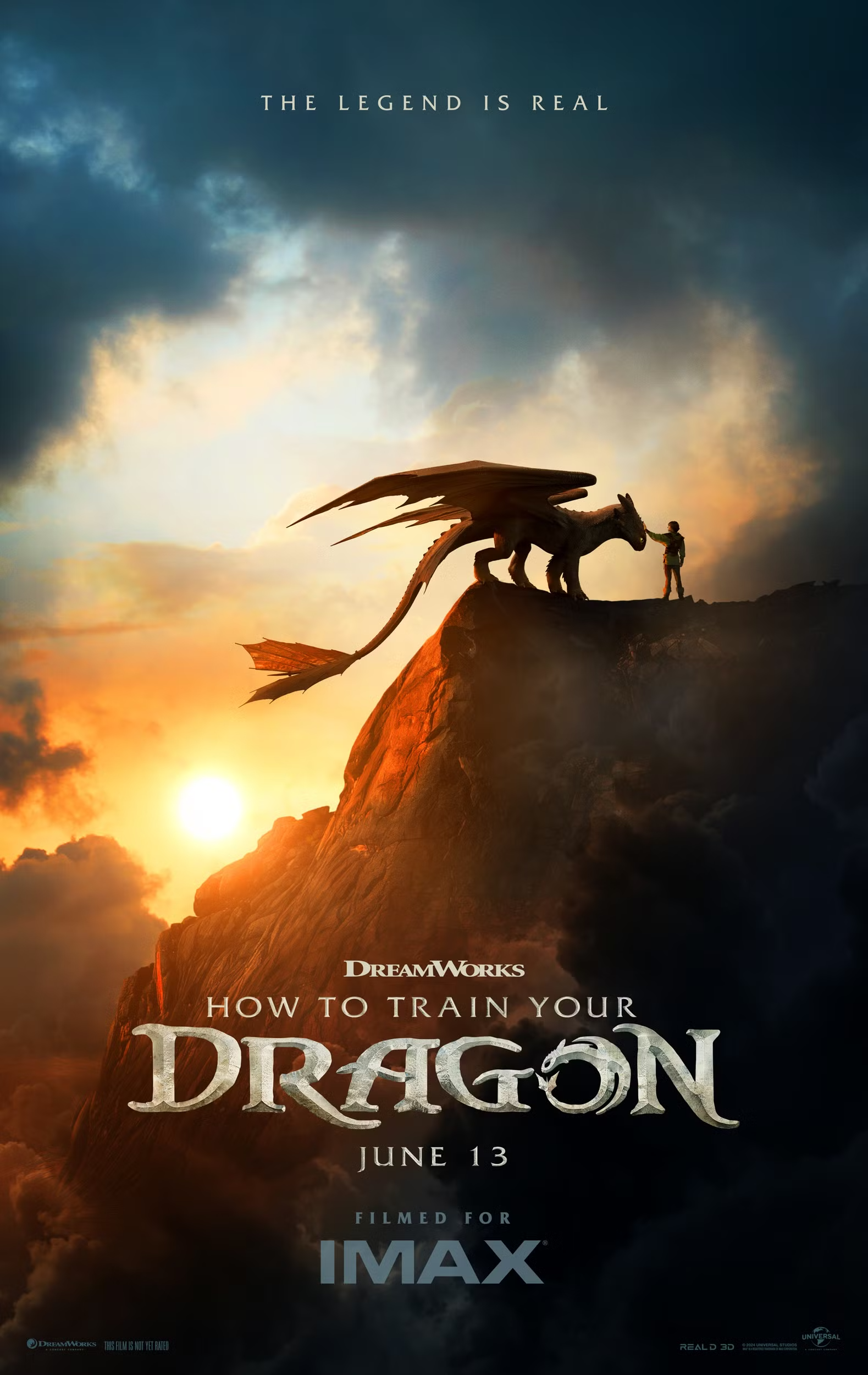
HOW TO TRAIN YOUR DRAGON (2025) movie review

Timeless. Universal and DreamWorks’ live-action remake of the Academy Award-nominated How to Train Your Dragon (2010) proves that some stories continue to resonate through the ages. Of course, “ages” in this context is only fifteen years. Returning to helm this project, HTTYD veteran writer-director Dean DeBlois crafts a fantasy world that’s incredibly tangible–even the dragons. His combination of puppetry, practical effects, and CGI give the dragons and the land of Berk a naturalism that feels connected to the world on screen. While this live-action remake plays it very close to the original, in terms of scenes and sequences, the heartfelt story will still capture your imagination and serve as a fantastic film for Father’s Day this weekend.

On the rugged isle of Berk, a Viking boy named Hiccup defies centuries of tradition by befriending a dragon named Toothless. However, when an ancient threat emerges that endangers both species, Hiccup’s friendship with Toothless becomes the key to forging a new future. Together, they must navigate the delicate path toward peace, soaring beyond the boundaries of their worlds and redefining what it means to be a hero and a leader.

While it would be easy to chalk 2025’s HTTYD up to an exercise in business theory, given that much of the movie is shot-for-shot of the original, it would be disservice to the audience experience for those that may be seeing this story on the big screen for the first time. Because anyone under the age of 18 (if not 21) either wasn’t yet born or doesn’t remember watching it in the cinema in 2010. And this is a BIG SCREEN movie. If fact, I’d argue that watching HTTYD in a premium format at your local cinema is the best way to return to Berk, particularly if you did see the original animated film in cinemas (as did I). I’ve read reviews that fill the spectrum from “lifeless and lazy” to “better than the original;” neither extreme reaction or interpretation is entirely accurate, in my opinion. Given that much of the story is the same, all the way down to shots, scenes, dialogue, and sequences, I’m choosing to review the film as if watching it for the first time, as many will be watching it for the first time on the big screen.

Since the story is largely unchanged from the original, I don’t want to spend a significant amount of time on it; however, there are themes that leapt off the screen this time even more than when I first saw the original. Perhaps its’ because a lot has happened in our country and around the world in the last fifteen years.

In true allegorical fashion, HTTYD crafts a parable of prejudice and reconciliation that resonates with our contemporary sociocultural landscape. Through its depiction of dragons as misunderstood creatures feared and vilified by Viking society, the film speaks directly to the way some cultures and communities are often dehumanized by dominant cultures. Initially framed as mindless beasts bent on destruction, dragons embody the constructed image of “the other”—not inherently evil, but made threatening through narratives rooted in ignorance and fear.

Through Hiccups’s hero journey, our own fears and prejudices are challenges. His character arc hinges on that pivotal moment with Toothless when he is about to kill him. Not only does Toothless challenge Hiccups’s prevailing ideology, but reframes his worldview of dragons and the people of Berk entirely. “I looked at him, and I saw myself,” he says, distilling the film’s core thesis: true empathy begins when we stop projecting monstrosity onto others and instead recognize shared sentience. In contrast, his father Chief Stoick represents the institutional stronghold of fear and tradition. His transformation from dragon-slayer to dragon-defender is a microcosm of generational reckoning—a character arc that underscores how systemic prejudice can begin to unravel when met with vulnerability and truth.

Thematically, the film’s narrative expands beyond simplistic binaries of good and evil to explore the broader existential anxieties that provoke violence and division. In doing so, HTTYD transcends fantasy and enters the realm of social commentary. It reminds us that the instinct to “other” those who are different is not innate but learned—and, crucially, unlearnable. At a time marked by cultural polarization and survivalist rhetoric, the film dares to imagine a world in which peace is possible—but only if we choose empathy over fear.

Writer-director DeBlois crafts a Berk that feels like a real place, perhaps a place from our own world history. Instead of layer upon layer and scene upon scene of blue and green screens, DeBlois opts to eschew the sterile sterility of digital backlots in exchange for a fantastical world grounded in the tactile weight of reality. Rather than relying on synthetic blue-screen environments, the production team committed to crafting full-scale Viking arenas, longhouses, and coastal villages—sets brimming with texture, history, and atmospheric weight. Filmed on location in Northern Ireland, the practical environments not only enhance the visual authenticity but immerse the audience in a world that feels as lived-in as it is mythic. These tangible structures blend seamlessly with the region’s craggy terrain, lending the film a geographic and cultural specificity that deepens the narrative.

Likewise, the film’s flight sequences are not mere visual spectacle—they are balletic displays of aerodynamic realism. Thanks to a synergy between practical rigging and digital enhancement, the VFX team captures the exhilarating sweep and dive of dragon flight with a physicality rarely achieved in CGI-heavy cinema. Specialized camera systems were deployed to trace every soar and swoop with kinetic precision, preserving the wonder and danger of airborne movement. The result is not just believable—it’s breathtaking. This nuanced and layered approach to the fusion of practical and CGI effects was also in part what made the dragons feel incredibly real. Dragon puppets were used to inform the CGI timing, lighting, and choreography. Later, CG animators seamlessly replaced the physical heads with digital models, preserving actors’ eye-lines and interactions. Mason Thames is rarely acting opposite a tennis ball on a boom pole; his Hiccup is interacting with a dragon set piece that is fully articulate.

Whether the original breathtaking animated film is one that you’ve seen a dozen times or you’ve never seen the original, the live-action remake of the critically acclaimed HTTYD is worth your time at the cinema. Furthermore, this film would make for an outstanding diversion for dads and their kids over this Father’s Day weekend, regardless of ages. Some stories, characters, and themes are timeless, and can still speak to us years later.

Ryan is the general manager for 90.7 WKGC Public Media in Panama City and host of the public radio show ReelTalk “where you can join the cinematic conversations frame by frame each week.” Additionally, he is the author of the upcoming film studies book titled Monsters, Madness, and Mayhem: Why People Love Horror. After teaching film studies for over eight years at the University of Tampa, he transitioned from the classroom to public media. He is a member of the Critics Association of Central Florida and Indie Film Critics of America. If you like this article, check out the others and FOLLOW this blog! Follow him on Twitter: RLTerry1 and LetterBoxd: RLTerry