Innovative New Interactive “Harry Potter” Dark Ride Coming to Universal Orlando?

WWHP_LogoRecently, there have been rumors floating around regarding a possible new addition to Universal Orlando’s Islands of Adventure. Between the recent acquisition of the film rights to the Harry Potter franchise and the the newly uncovered patent, these evidences provide support that assists in substantiating these rumors; however, there has yet to be a formal announcement. This possible new addition brings up some issues to consider. Already, there are park regulars who are not welcoming this decision. Why not? Because Universal would tear down the Dragon Challenge (formerly Dueling Dragons) roller coaster in Hogsmeade and replace it with an interactive dark ride that would enable park guests to test out their technique and spells. Think Toy Story Midway Mania but perfected and with an increased experiential factor. Even before this rumor, Universal is increasingly being thought of as a theme park overrun with 3D screen attractions. Anecdotally, this is an accurate observation since the most recent additions to the park are all on similar ride platforms (just with different thumbing). One of the elements that I have researched is the requirement that the park guest experience physical movement and be emerged into a psychical atmosphere that transports the guest from the real world into a world of fantasy, adventure, or horror. Although this new ride sounds impressive and innovative, it bears a striking resemblance to many of the attractions that already exist. While no one would really complain about an indoor attraction, as Florida is notoriously hot and humid more than half the year, the concept of a ride moving in front of 3D screens does not appear to be eliciting the response that was intended.
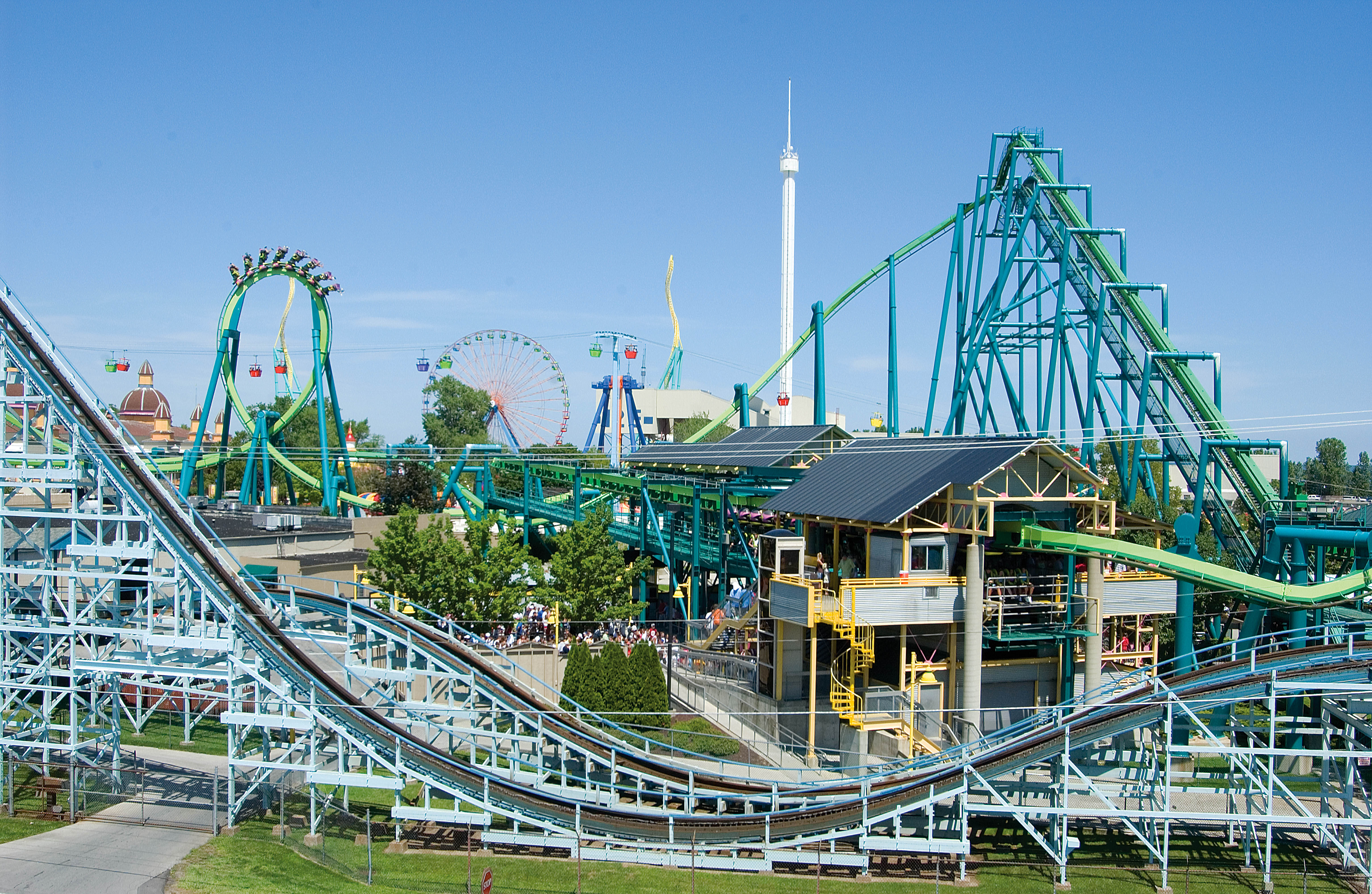
CedarPointOne of the primary elements that separates a theme park from an amusement park is the concept of continuous storytelling complete with proprietary theming. While amusement parks build more rollercoasters and other visceral thrill rides, theme parks create thrilling atmospheres and experiences. It’s a fine line. Take Cedar Point v. Walt Disney World for instance (while ignoring the former’s seasonal operation). Both parks offer amusement, thrill, and entertainment; yet, they are both vastly different experiences. Remember in geometry: while both are polygons, every square is a rectangle but not every rectangle is a square? That principle applies to this analogy as well with WDW being the square and Cedar Point being the rectangle. What makes the difference? Intellectual property, theming, and story. If one were to total up the number of roller coasters or traditional thrill rides at both Cedar Point and WDW respectively, obviously Cedar Point’s numbers would dwarf WDW’s. That’s because the focus of the park experience is different at both places. The focus of Cedar Point is on the thrill while the focus at WDW is the experience (or immersion). The former does not adhere to any cohearant or continuous theming while the latter has built a vast empire on theming and story. A similar argument can be made with cinema. Literary and cinema researchers Linda Williams and Geoff King both write about narrative vs spectacle. Amusement Parks like Cedar Point are almost entirely focussed on the spectacle of the park experience while WDW concerns itself more with the narrative of the experience (although, WDW does strike a balance between the two). Much like WDW, Universal Orlando Resort (and Universal Studios Hollywood) seek to create a thrilling atmosphere complete with rides, shows, and a high caliber experiential factor. Whether it’s the story OF the movies or about the stories told by cinema, Disney and Universal Parks transport the park guest from reality into fantasy.
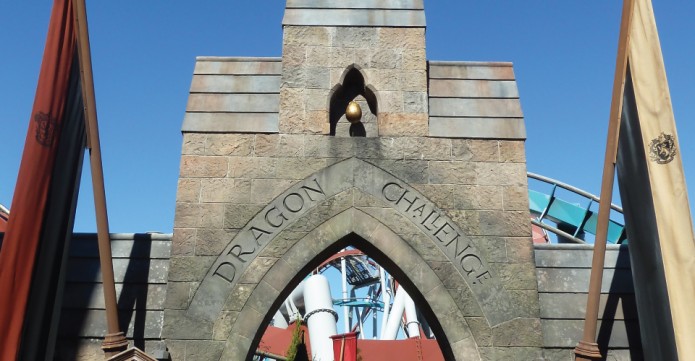
Dragon-Challenge-695x361So, what does all that have to do with this possible (but likely) new Harry Potter dark ride at Universal’s Islands of Adventure (IOA)? A lot, actually. The controversy or concerns seem to stem from Universal’s trend away from physical to virtual environments. Not that 3D/virtual environments aren’t accompanied by the physical. For example, Escape from Gringotts pairs simulated elements with physical production design; however, there is a measurable trend to relying heavily upon 3D IMAX screens as opposed to tangible production design. A great example of this trend is the new King Kong attraction at IOA. The outside of the show building and the queue are impressive. It looks and feels just like you are a character in the movie–cool right? After you pass through the massive gates to Kong’s jungle, the attraction is 75-80% 3D screens. Likewise, the Transformers attraction at Universal Studios Florida/Hollywood is also comprised of mostly 3D screens.

DragonChallengeLosing a traditional roller coaster in exchange for another 3D dark ride could likely rub some park guests the wrong way. Although park guests of the Disney and Universal Parks are there for the experience, story, and incredible themed design, this does not negate the desire for more traditional amusement within these worlds of fantasy. Looking at the parks of Central/West Central Florida, it is clear that Busch Gardens has the largest number of roller coasters, and there are many park regulars, including myself, who go there for the traditional thrill rides. On a side note: I also find the methods Busch Gardens integrates the animal encounters and experiences outstanding–best of what a zoo and amusement park offers. Anyway. With Universal possibly removing a roller coaster that can cycle guests very quickly (due to the two tracks of Fire/Ice) and replacing it with a greatly mitigated cycling attraction like a 3D dark ride, it could prompt longer waits for a similar experience (Transformers v Spider-Man) that can be had at the other 3D attractions. Another forecasted closure in the near future is Revenge of the Mummy. Again, this is a popular traditional (indoor) high speed roller coaster that may be replaced by a 3D style attraction. Even though Universal and Disneyland has to work around issue of being land-locked when planning expansions and improvements whereas WDW has geographic room for expansions, is replacing traditional roller coasters with 3D dark rides the way to go?

I am totally excited for expansions to the Wizarding World of Harry Potter (WWHP) in light of the film rights acquisition and the new movies. I am even more excited to see additions made to the parks that I frequent the most! However, I don’t believe it best planning to sacrifice more traditional rides. The best solution would be to design an attraction that would provide a platform for gusts to test out their magical skills while experiencing the visceral thrill of a coaster type ride. As with all industries, theme parks too have to change with time and with the desires of those who buy the tickets. Theme parks are a business model usually owned by media conglomerates. If the addition of 3D attractions is what increases revenue, then that is the decision that is to be made. The business of filmmaking is also very similar in that respect. I hope that the possible new attraction is one that breaks the mold of the typical 3D screen moving ride and reaches new innovative design heights! We will just have to wait and see and we learn more about these upcoming changes.
Reimagining Halloween in the Parks this Year: the Mind of Horror v. the Eye of Terror

After taking break from posting last week, as it was a holiday, I am happy to provide you with another stimulating article once again on the themed entertainment industry! All week long, I have been thinking about what to write this week. I’ve covered some of the recently opened or previews of attractions and theme parks opening soon; but, I thought that I would take a slightly different approach this week. Over the last year, the United States and other countries have been experiencing a rise in violence. Whether that violence has (1) always been there, but because of the great mediation of society (a proliferation of media capturing devices and distribution outlets), we simply see it more often or (2) if there truly is a signifiant rise in mass violence compared to past decades, is not what I am here to discuss. I would, however, like to discuss the upcoming Halloween events in the parks this year, and specifically, how they might have to adapt or change as a result of the recent mass shootings.

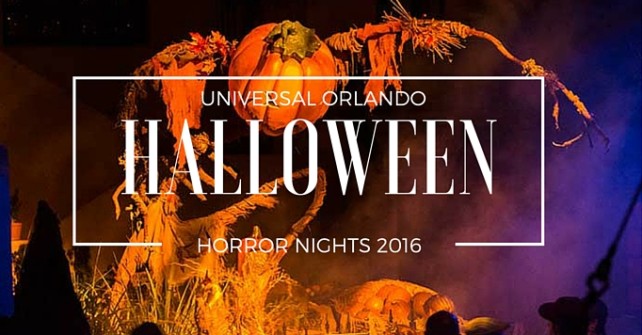
HHN2016Already, Universal Orlando has alluded to the fact that it may be revisiting some of its offerings for this year’s Halloween Horror Nights (HHN), and it would not surprise me if Busch Gardens Tampa Bay makes a similar decision with Howl-O-Scream (HOS), as both parks primarily draw from the Central Florida area and of course tourists still flock to the parks for the annual celebration of the macabre. The recent massacre at the Pulse Night Club will undoubtedly have an affect upon the planning and logistics of primarily HHN followed by HOS to a lesser extent. Since the horror film, and by extension the haunted house attraction (or scare zone) are both grounded in the same anthropological (inclusive of sociology) and psychological theories, there is definitely an opportunity to explore this area of themed entertainment. As Disney’s Mickey’s Not So Scary Halloween Party and SeaWorld’s Spook-tacular do not include glorified violence or death, I will not spend time analyzing how those events may change, because they are mostly benign. Suffice it to say, there will likely be some changes coming to HHN and HOS this year. What are those changes? Well, I am not prevued to those decisions; but can extrapolate from logic and theory what may happen in light of recent events in Orlando and beyond. It is important to note that both Universal Orlando and Busch Gardens Tampa Bay mostly likely have to revisit some of the scare zones or houses this year but not implement changes that may have a negative affect upon drawing from guests outside the Central Florida area. Striking a balance between curtailing some of the violence in respect to those who died and still satisfying those who were not emotionally or psychologically impacted is the key.

HOS2016The events certainly still have to feel like Halloween but perhaps reimagining some of the offerings will aid in finding that delicate balance. It is entirely possible that many who have enjoyed going to HHN and HOS in the past may back off this year in an effort not to come face-to-face with violence as it has greatly impacted many people. Here’s an interesting question: does horror have to be violent? Yes and no. Some of the greatest horror movies of all time are not terribly violent at all, but the eye witnessing violent acts certainly creates terror in the minds and bodies of the audience (or park guest). Alfred Hitchcock once said, “there is no greater threat than an unopened door.” This is indicative of the master of suspense’s ability to generate the fear of something or someone that may not even be a threat. There is another Hitchcock quote (or, at least I believe it’s Hitch) to the effect of “greater is the fear that’s in the mind than on the screen” (if you know of this exact quote, please let me know). That being said, likewise, seeing Freddy, Jason, Leatherface, or Michael is equally terrifying because of the trademark violence they have displayed on the screen over the years. It is important to year-round or seasonally operating Halloween-themed attractions to include both the physical and psychological/emotional aspects of horror in order for the guests to have a dynamic and full experience facing that which terrifies them and from which guests would otherwise run away.

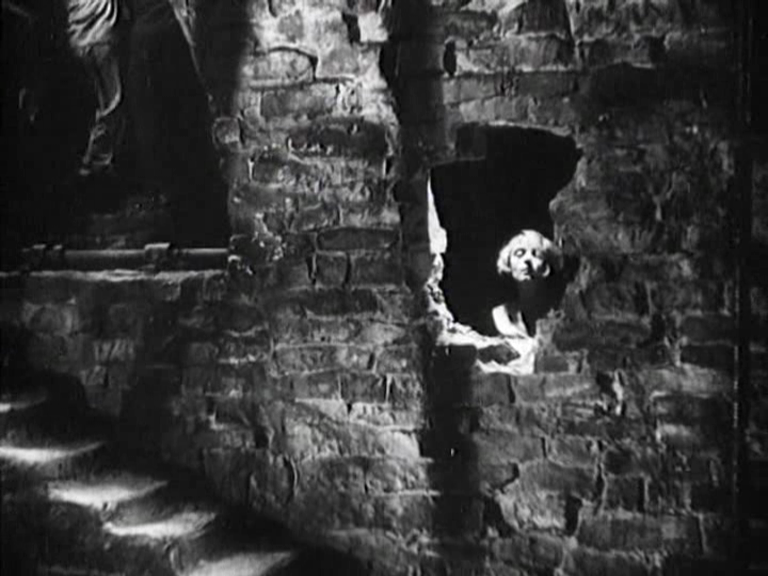
unheimlichThroughout history, from the fights in the Roman Coliseum to Michael Myers’ slaying of people in Halloween, audiences have been both entertained and repeatedly drawn to stories and shows that highlight horrific acts of violence or feelings of terror and anxiety. Perhaps there is a deep seeded reason as to why millions of people find entertainment value in horror films. This question has been tackled by many psychiatrists and psychologists, each has come up with a different explanation as to “why horror?” Most notably, famed psychiatrist Sigmund Freud provided great insight into an explanation of why people find horror films fascinating in his essay on the Uncanny.  In his study on the uncanny, Freud takes on the literary imagination (this same literary analysis can and is used to analyze film and themed entertainment) by dividing his theory up into three sections. He first defines the concept of the uncanny, then performs an examination of the context required for understanding the experience of the uncanny, and finally explores the affects of the uncanny on the psyche through literature and fiction. Some of the running themes throughout his essay are loss of eyes, castration, the double-ego, and self-reflexivity. Through the framework laid out by Freud, scholars and film critics can explore the themes in horror film as it relates to the human subconscious; and for purposes of our discussion, the horror attraction.

Freud explains the realm of the uncanny as the place at which aesthetics and psychoanalysis merge, because it deals with a particular feeling or sensation combined with emotional impulses. The substances or manifestations of the uncanny are elements that are fearful and frightening. Proceeding with Freud’s definition of the uncanny being a class of frightening elements, plaguing the psyche, ushering an individual back to what is familiar (heimlich) and known (as opposed to what is unknown). Freud refers to the uncanny as that “which should have remained secret and hidden, but has come to the light.” Furthermore, he goes on to further describe the uncanny as the “mark of the return of the repressed.” The concept of the uncanny is a type of unwilling or mistaken exposure to something surprising, unexpected, or horrific. Freud claims that the source of the uncanny in literature is the recurrence of something long forgotten and repressed. However, not everything that returns from the psychic depths of repression is uncanny. The mere return of repressed feelings and experiences is not sufficient for the uncanny to occur. It requires something repressed having returned but represented by an unexpected and outside the realm of reality. This is easily accomplished in literature (and by extension, movies, theme park attractions, and plays) because fantasy is different from reality.

Just because something works as uncanny in a work of literature doesn’t mean it can work in real-life as well. During times of tragedy felt by an entire group of people or nation, the same concepts which work in literature and film may not work as well, for a period of time anyway, in themed entertainment. Within literature, if the author makes a pretense to realism, then he or she opens the door to supplying the story with the uncanny. Often times, the uncanny in literature and film is the projection of the psyche of the central character on another object or person combined with a warped view of the objective and subjective of a given situation. It’s like something within the fictional world creeps into the real world. Within the horror genre, there are many different stories or narratives that exist. And, each type of horror film tells its story in different ways; however, they are all concerned with getting the same emotional response from the “people out there in the dark,” as famously stated by Norma Desmond in the timeless film noir classic Sunset Blvd. Sometimes the audience will go on a journey into the crazed mind of a psychopathic serial killer or they may witness a supernatural monster terrorizing a small Bavarian village. In either case, Freud believes that the writers of horror, and by extension themed entertainment designers, are concerned with exposing the audience to “other” scenes. And, these “other” scenes are rooted in the subconscious.

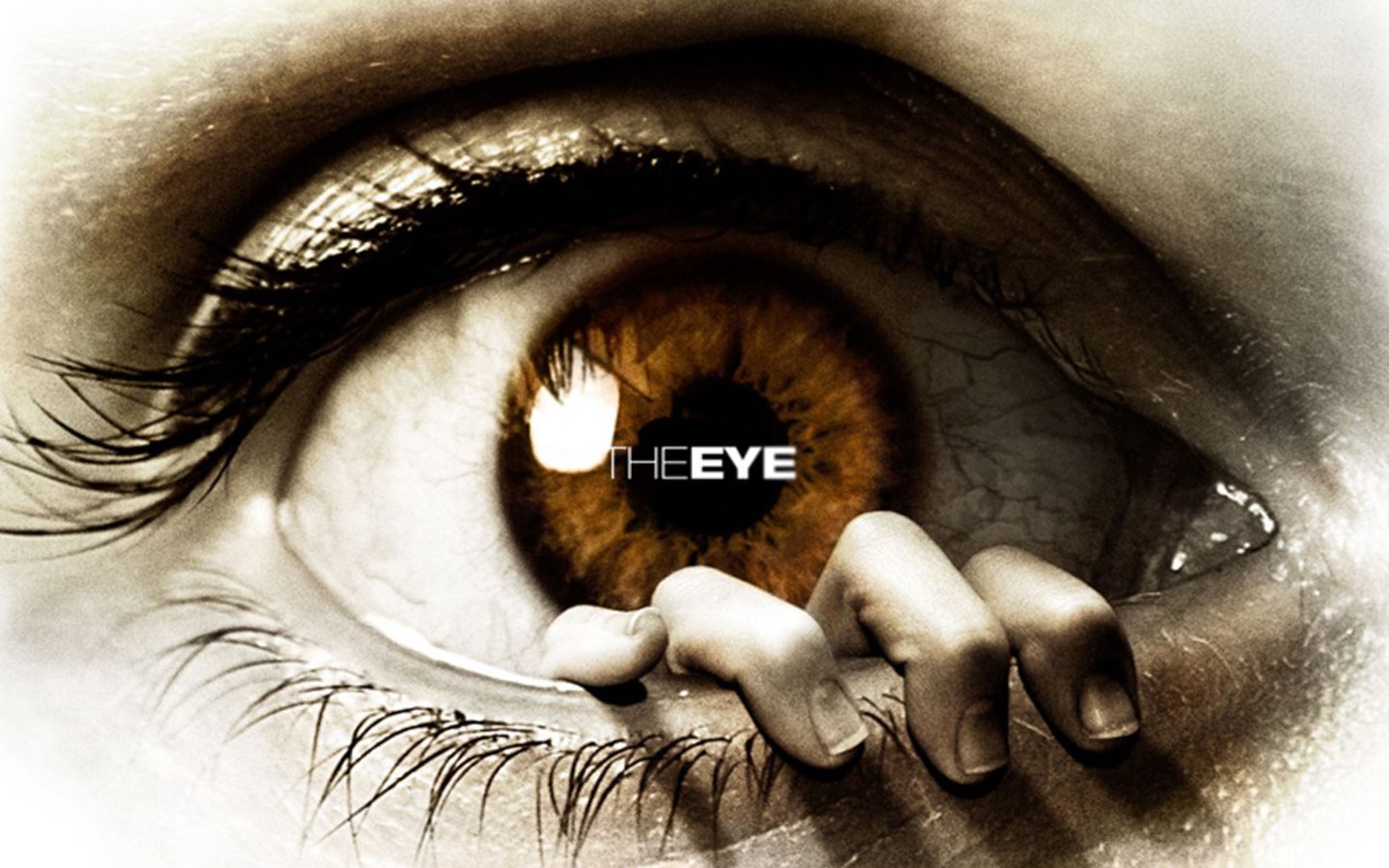
eyeofhorrorMoreover, Carol Clover also provides insight into the fascination with the horror theme park attraction. After all, horror films and theme park attractions are mostly concerned with what you actually see. Horror attractions, much like their movie counterparts, are visual stories that are translated into experiential narratives. The Halloween themed attractions in the parks have to include different eyes. The three principle types of eyes used in horror attractions are the assaultive gaze (active, penetrating), reactive gaze (passive, penetrated, the most common in horror storytelling), and repeated gaze (masochism for characters and spectators alike). This is one reason why extreme closeups (ECU) of the eye are popular in horror films turned attractions. The eye is extremely symbolic in narratives driven by fear. The design of horror attractions and films is extremely fascinating because of the convergence of visual storytelling and engineering. It’s more than blood, gore, screams, and knives; there is almost a poetry behind it. A brilliantly insightful quote from Clover is, “Inasmuch as the vision of the subjective camera calls attention to what it cannot see–to dark corners and recesses of its vision … and what might be … just off-frame–it gives rise to the sense not of mastery but of vulnerability.” At the end of the day, both HHN and HOS highlight our vulnerability and prey on our fears of that which assaults the eye and should remain hidden.

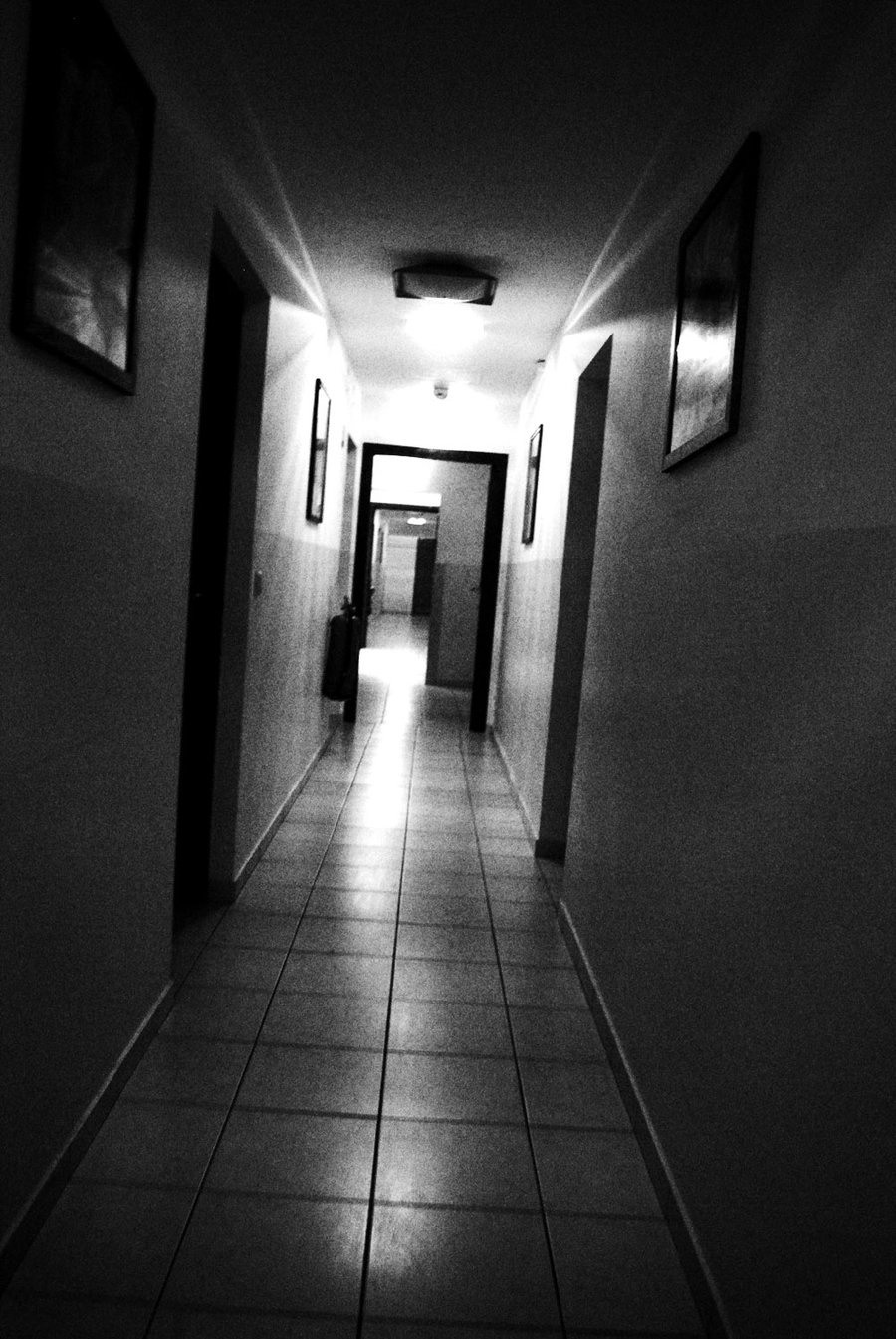
corridorBut what about HHN and HOS this year? Looking to the past, and how Universal Orlando handled mass violence in society that had a profound impact on a group or whole culture of people may help shed light on what might be expected this year. During HHN XI (2001), Universal Creative pulled Eddie, the chainsaw wielding maniac with a complex and fascinating backstory, from the lineup after the attacks on 9/11/2001. It was decided that the mood of the United States was such that it would have been in poor taste to include such a violent icon in the theming. In addition to the removal of the HHN icon, most signs of blood, gore, and the glorification of violence were removed–even names of characters and zones were modified. Because of the recent deaths of nearly 50 people (some of whom were connected to the parks as employees, bloggers, or past performers), we might witness a similar reimagination of events at Halloween Horror Nights and Howl-O-Scream this season. Hopefully, I have been able to open a discussion on how things could be reimagined at the annual Halloween events this year. An attraction can be equally terrifying even if there is no violence to be seen. However, the inclusion of cliche horror film violence is an integral part of the modern Halloween attraction experience. Even Carol Clover explores the importance of men, women, and chainsaws in horror storytelling. Perhaps the creative engineers and designers at the parks will look beyond what has typically been a staple of these events and embrace other avenues of terror that will still prompt screams. In all likelihood, we will probably see the dial turned back on the knives and guns during HHN and HOS but that certainly does not mean that the attractions will be any less terrifying. It’s entirely possible that the mind of horror will outweigh the eye of terror in the theming, planning, and design of HHN and HOS this year.

The “Attraction” of Horror: a ‘Psycho’analysis (part 2 of 2)

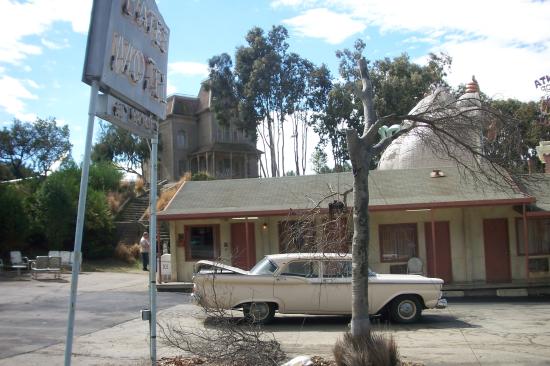
UnivHollywood_BatesMotelSuccessful movie-themed attractions (stage shows or rides) create an atmosphere that is often built upon a foundation consisting of confrontation and direct simulation rather than long, sustained narratives (King, 2000). This is true of the horror film as well. Horror is a genre nearly as old as cinema itself. The horror film, according to Linda Williams, contains three basic elements: narrative, character, and setting. These same elements can be found in movie-themed attractions at theme parks (2000).

Regarding Psycho in particular, the setting consists of very liminal* spaces such as the opening hotel, the Bates house, and bathroom. This same idea can be applied to a theme park attraction because the park guests are often corralled into smaller, intimate places that serve to advance the next element. Narrative is the foundation that both themed attractions and movies are built upon. The narrative, or diegesis, is the story. Diegetically, horror films contain a story that is segmented into the following sequence: order–>disorder–>order. Increasingly, the modern horror film is often left in disorder, or an order that is dissimilar from the original (2000). Movie-themed attractions usually introduce the park guests to a short-form story based on the original, and the ride is the vehicle that takes the guests through the story that can consist of threats and chases, followed by triumphs. In regards to the character element, the characters are those who are the instruments through which the plot is advanced. Normally, characters are people or animals, but can also be inanimate objects of significance (Williams, 2000). The park guests usually encounter characters from the source material along the journey of the ride.

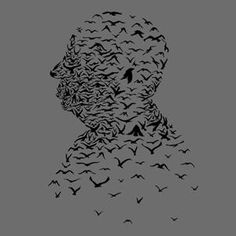
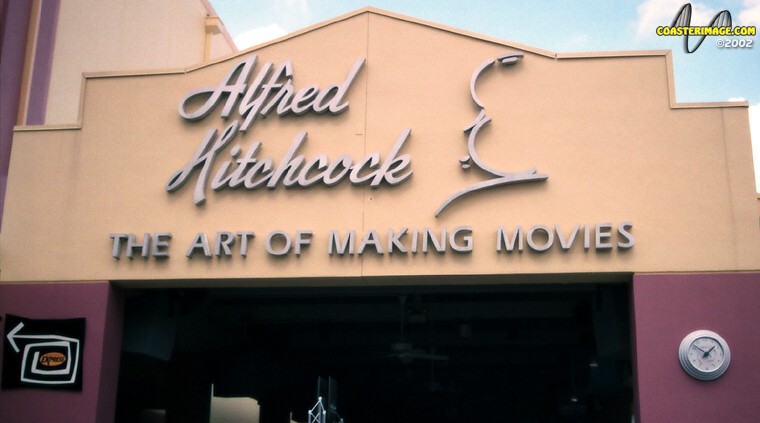
HitchcockBirds“Alfred Hitchcock: the Art of Making Movies” (Universal Studios Florida) was divided up into four distinct parts, with the famous shower scene being the central focus (ThePsychoMovies.com, 2014). Just like a horror movie is divided up into parts, or has a cinematic structure, so too did the Hitchcock attraction. Hitchcock: The Art of Making Movies was divided up into the following areas: preshow, 3D theatre, Psycho stage, and interactive area. There are may parallels between the famous shower scene and the live attraction. In the movie, the sequence leading up to the shower scene is very much a preshow in the same way the attraction contains a preshow area. The preshow in the movie is when Norman is gazing through the peephole into the room of Marion as she undresses. Just like Norman is visually gathering information about Marion, the park guests in the preshow area gather information about Hitchcock’s career. The preshow is the area that preps the audience for what they are too experience. By using the same principles of creating suspense that Hitchcock used, the preshow area reveals just enough to elicit feelings of anticipation and anxiousness.

Next, the park guests sit through clips of 3D versions of Dial M for Murder and The Birds. This preps the mind for experiencing the horror in the next room. Likewise, between the time Norman looked upon Marion through the peephole and puts on the wig and dress, he sits in the kitchen and presumably debates with mother on what to do. Following that scene, we return to the bathroom and enter the shower with Marion. After the 3D movie, the park guests enter the Hitchcock Stage and look upon recreations of the motel, shower, and house.

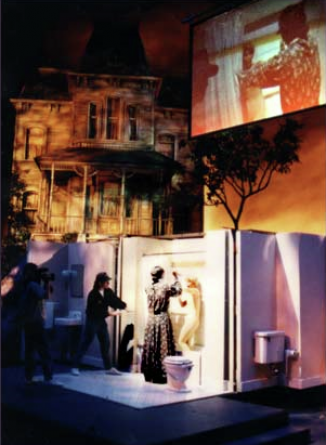
The main show at the attraction is the Hitchcock Stage where the infamous shower scene is reenacted before a live audience. In addition to the Bates House and Motel, there is a recreation of the tub/shower used by Hitchcock to film the scene. At this point in the movie, Marion is thoroughly enjoying her shower, and the audience gets both objective and subjective camera shots from inside and outside the shower. All of a sudden a shadowy figure approaches the opaque shower curtain and throws it open, wielding a knife. The sinister figure stabs Marion repeatedly and through more than fifty cuts (editing cuts), the scene is played before the people in the dark. Likewise, this same scene is brought to life for the studio audience at Hitchcock: The Art of Making Movies. Through mechanical engineering and film production techniques, the cast of the show reveals how the master of suspense filmed this iconic scene.

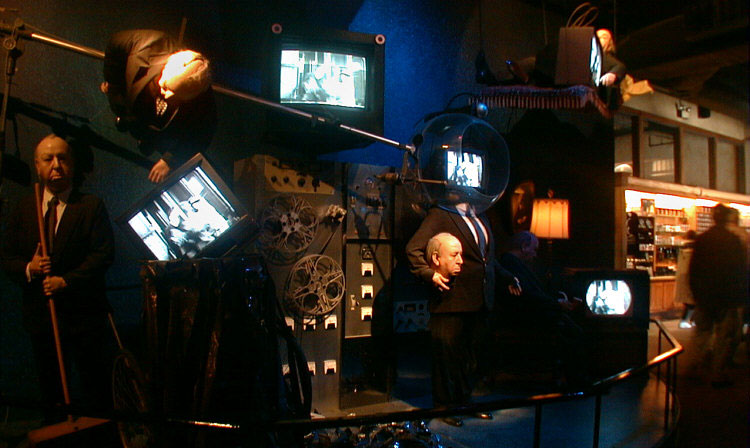
HitchcockAttractionFinalRoomFollowing the show on the Hitchcock Stage, the park guests walk into a museum-like interactive room revealing many of Hitchcock’s secrets and techniques in some of his most notable films. It parallels the end of Psycho when the psychiatrist is analyzing Norman and explaining how and why he did what he did. Just like Norman is the master of slasher films, so is Hitchcock the master of the art of suspense and horror cinema. A close reading of these areas reveals that they each take an element of the setting, narrative, or characters and use the tool of spectacle to bring them to life for the live audience. The preshow area acts as the prime for the horror/suspense pump that is gearing up. Watching the 3D scenes from The Birds and Dial M for Murder serves to generate feelings of ensuing chaos and acts as the big event that causes something to go wrong in the otherwise narrative that is in order (remember: orderdisorderorder). Following the 3D Theatre, is the central Psycho stage that takes any order and casts it to the wind and enables the horror of the shower scene to come to life for the naked eyes of the audience.

Hitchcock AttractionThis was a main attraction at the theme park until its dismantlement in 2002 to make way for the Shrek: 4D experience. From the aforementioned explanation by one of the producers of the attraction, the audience was completely immersed in the magic of bringing a Hitchcock thriller to life, and got to witness the most famous single scene in all of cinema history. This was all done with practical effects, just as Hitchcock would have done it. But, with the advent of computer generated imagery and incredibly accurate and time efficient non-linear video editing, most of the effects can be generated in other ways. Although it remained one of the most popular attractions at the theme park until its closure, Universal saw the future of attractions and decided to do away with nostalgia and pave the way for digital simulated attractions (Singer, 2013).

Click HERE for Part 1

*(adjective) 1. of or relating to a transitional or initial stage of a process; 2. occupying a position at, or on both sides of, a boundary or threshold

On Cinema and Theme Parks (part 3)

Continued from Part 2My Book

Some of the most impressive and revolutionary changes to the movie-based theme parks came to fruition in the 1970s and 1980s. This is the time that horror became the chief source of inspiration for attractions at Universal Studios Hollywood (Riley, 1998). The ride that ushered in the plethora of attractions based on some of the best horror movies of all time was Jaws. JawsThe Jaws Ride was opened as part of the studio tram tour in 1975, and was an immediate hit with the park guests. It was quickly followed by Kongfrontation and Earthquake: Ride it Out (Murdy, 2002). Just as audiences are fascinated by horror movies and seek to watch that which would be repulsive in real-life, they are equally interested in immersing themselves into the experience by way of a theme park attraction. This phenomenon is not limited to horror movies, because rides like Jurassic Park the Ride (Jurassic Park River Adventure in Florida), Revenge of the Mummy, and Pirates of the Caribbean beckon millions of guests a year (IAAPA, 2014). In addition to attractions based on the movies, movie studio executives and theme park engineers created attractions that embody what Carl Laemmle first envisioned, by taking the audience behind the magic of the movies. This is the case with the (now closed) Backlot Tour at Disney’s Hollywood Studios and Hitchcock: The Art of Making Movies at Universal Studios Florida (Murdy, 2002). The relationship between the cinema and theme parks is a strong one and creates an energetic synergy that entertains millions of people each year.

Not every movie-themed attraction is a smash hit with the guests, just like not every big-budget movie is a hit with movie patrons. Although well-intentioned by the producers of both, or even the media conglomerate that has major investments in or owns both, may desire and believe they did what it took to create the next blockbuster ride or movie, sometimes the guests fail to view the movie or attraction with the same lens the designers and backers used to create the film or ride. In terms of movie or intellectual property-based attractions, major theme parks can make mistakes or lose out because of the ownership of some parks changing from one conglomerate to another.

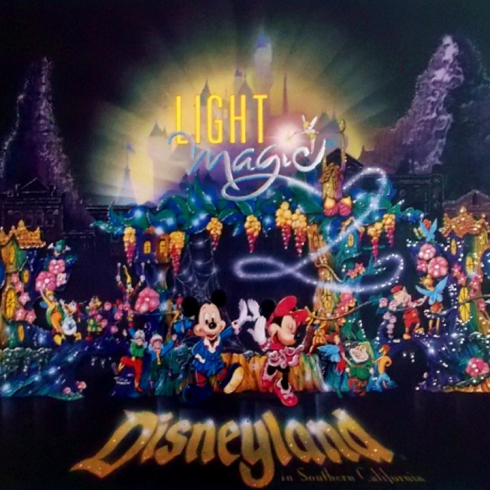
LightMagicNot every flubbed theme park attraction is a “ride;” sometimes it is a show or parade. The failure of a show/parade can be seen in the four month—yes, four—run of Disneyland’s Light Magic “street-tacular” (Krosnick, 2014).  More than another light parade, Light Magic condensed the number of parade floats ordinarily expected in a Disney parade to four large stages that, along the parade route, would burst into light, pyrotechnics, and digital projections. It was complete with a pantheon of Disney characters and music. Unfortunately, if you chose to stand in the wrong spot, all you get is darkness and vaguely familiar shapes of characters. Following a very poor reception by Disneyland passholders, the negative word of mouth was so severe that it effectively caused the closure of the new entertainment offering that sent $20MIL down the drain.

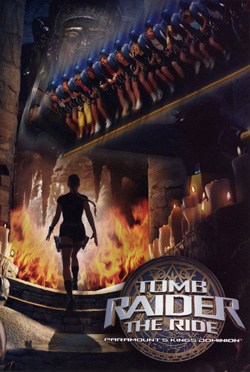
TombRaiderRideAccording to Theme Park Tourist (2014), popular seasonally operating Paramount’s Kings Island (purchased by Cedar Fair in 2007 and all Paramount property removed) spent $20MIL on a ride that lasted a mere five years. Based on the hit video game and blockbuster action movie Tomb Raider: The Ride was on par with Disney and Universal in respect to story, setting, and special audio/visual effects; however, after Paramount sold off its theme park investments to Cedar Fair, the ride got rebranded as The Crypt, a generic theme, and all direct associations with the movie and game Tomb Raider were removed following the 2007 operating year.  Interestingly, the ride attendance continually dropped following the rebranding, and the ride was eventually moved to Kings Dominion in Virginia in 2012. Although there may be other reasons as to why the ride became less popular and eventually moved to another park, it is conceivable to conclude that there is a special relationship between attractions and movies in a theme park. (Krosnick, 2014).

Continue to Part 4

Click here for Part 1

Click here for Part 2