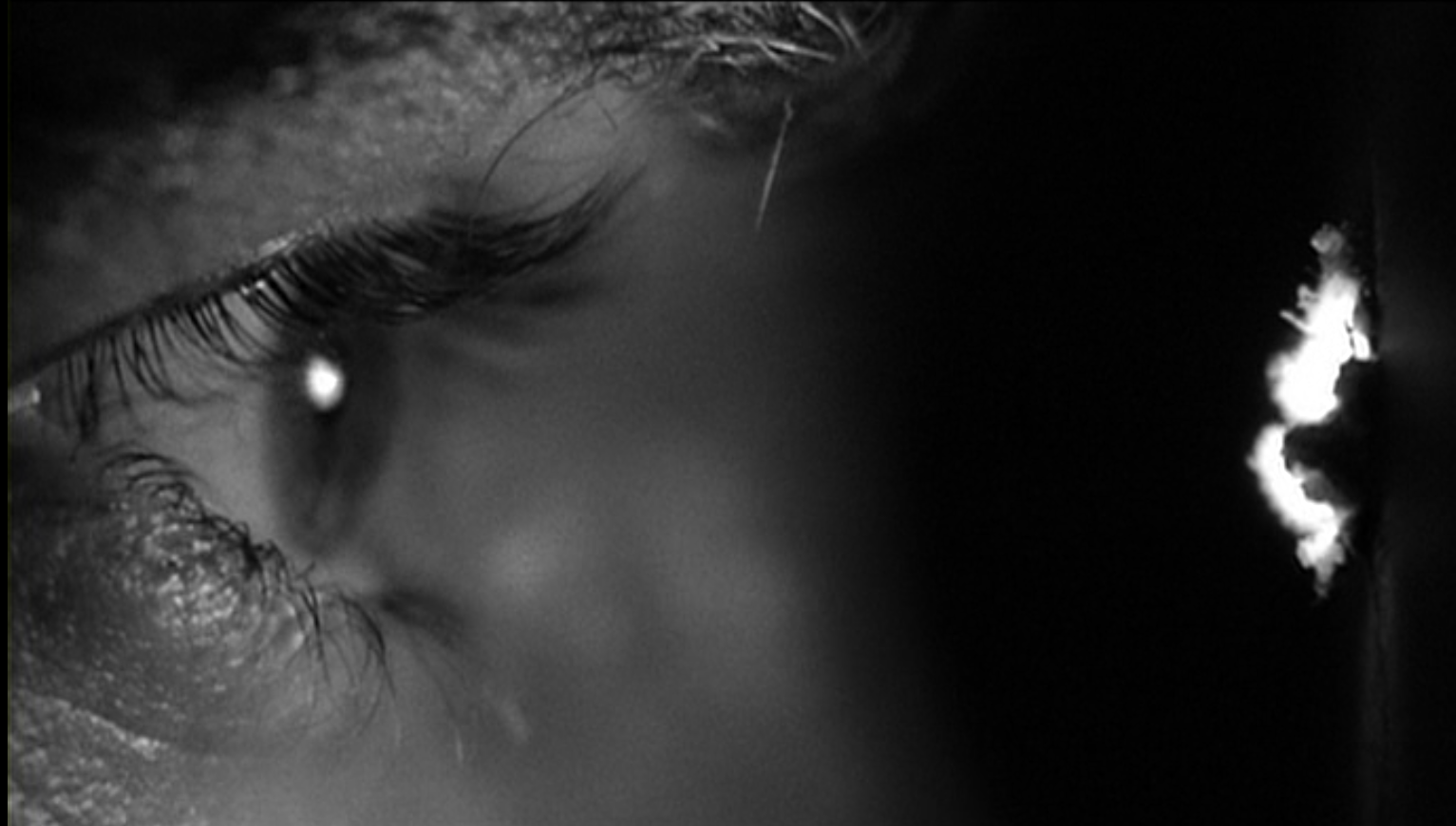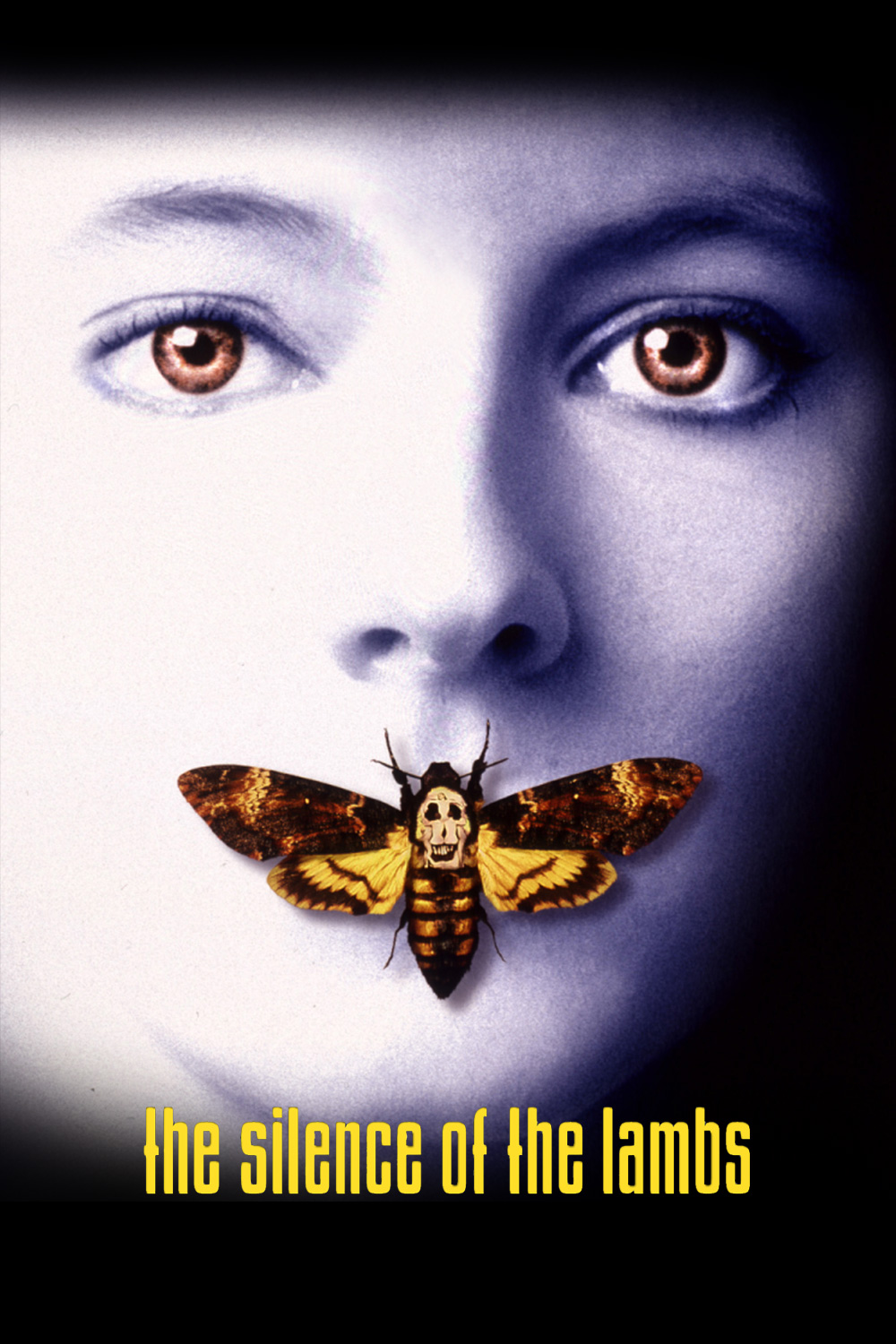
Sinister Summer: “The Silence of the Lambs” retrospective

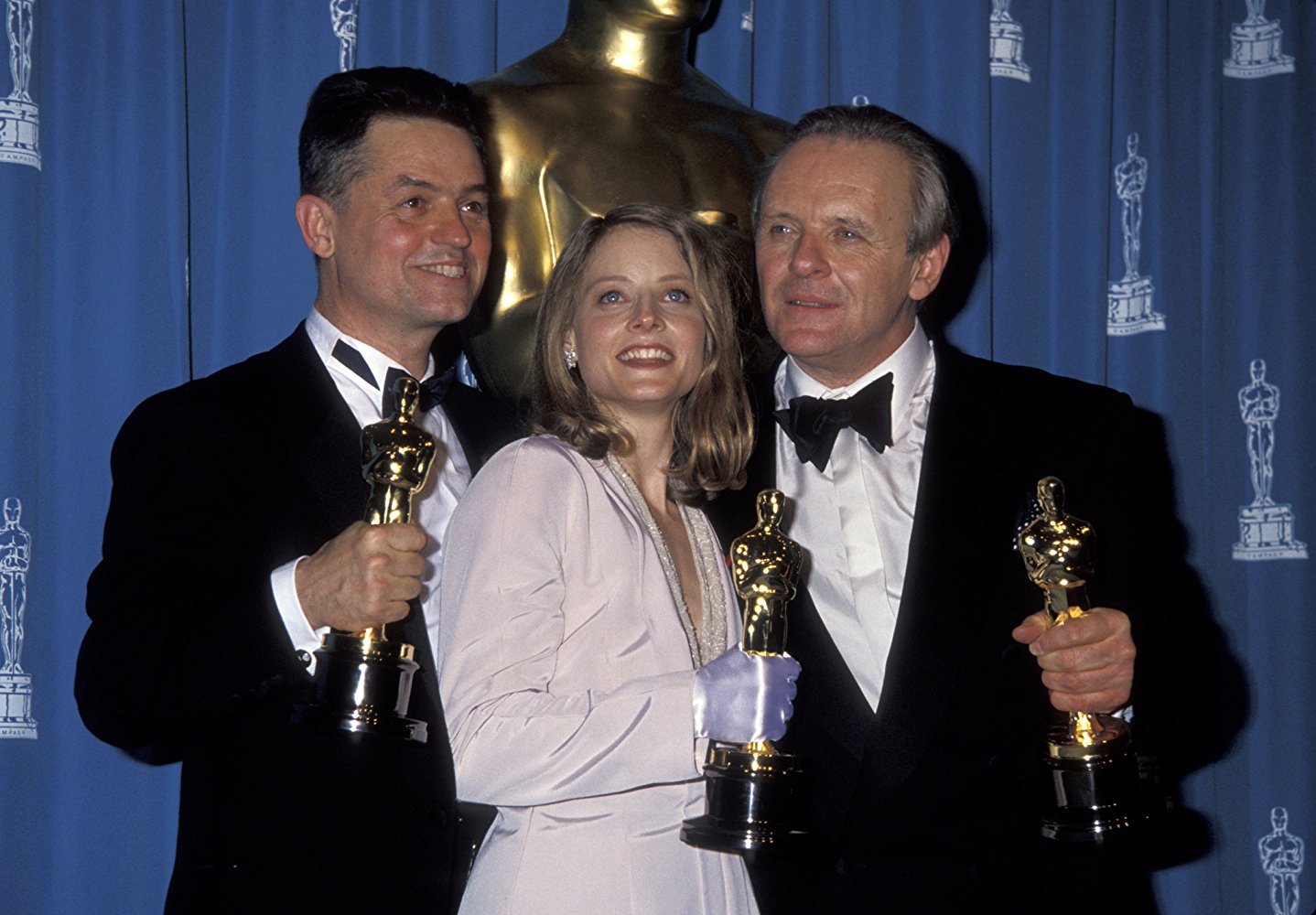
“Good evening, Clarice.” How many of you have never thought of fava beans and chianti in the same way since then? Quite literally inventing a new genre that combines elements of horror, suspense, and crime to create the crime thriller, The Silence of the Lambs remains the motion picture that typifies the genre. More than 27 years later, Silence still holds up and continues to terrify audiences today. Whereas this iconic film may not be considered horror, by today’s understanding and expectation by many, it was certainly widely considered horror when it was released in 1991. A sleepy success, I might add. Essentially, Silence is an indie film that flew in under the radar but soon grew to be immensely popular and critically acclaimed. Silence is also one of only three films to win “the big five” Academy Awards (picture, director, lead actor, lead actress, and screenplay). This, in and of itself, serves as demonstrable evidence that The Silence of the Lambs is one of the most influential and profound films of all time–across all genres. Furthermore, there is not one single moment that I would change because it is cinematically perfect just the way it is. It is arguably a dark crime-thriller, but it is also very much a horror film. When asked which category I put it in, I respond with horror. Why? Because there is certainly intent to horrify audiences during particular scenes in the film; whereas, a crime-thriller tends to not overly concern itself with the intent to horrify. The intent to horrify is what defines it as a horror film first and crime-thriller as a very close second.

A senator’s daughter is kidnapped, and it is believed to be the work of a serial killer. After serial killer “Buffalo Bill” (Levine) leaves a trail of mutilated bodies of female victims behind, FBI forensic psychology director Jack Crawford recruits Clarice Starling (Foster), a sharp cadette, to interview famed psychiatrist, cannibal, and psychopath Dr. Hannibal Lecter (Hopkins). Crawford hopes that Lecter can provide insight into the case in order to apprehend Buffalo Bill. While tracking down Buffalo Bill with assistance from Lecter, Starling must confront her own internal fears in order to overcome all obstacles to catching Buffalo Bill before he kills again.
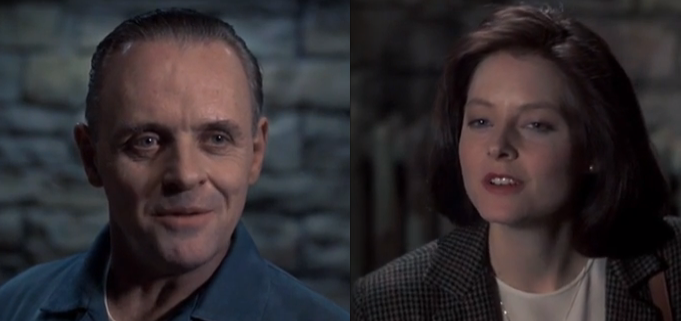
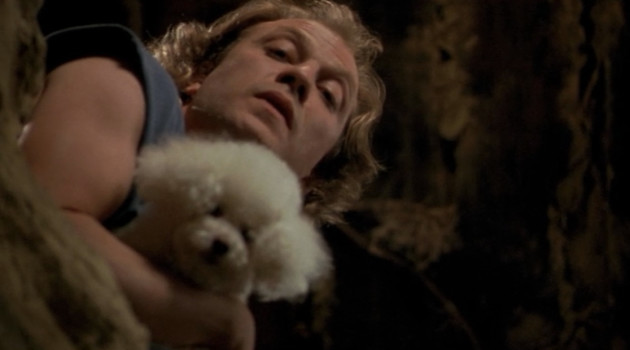
Most notable in Silence of the Lambs are the performances of Anthony Hopkins, Jodie Foster, and don’t forget Ted Levine. While Hopkins and Foster get most of the attention, Levine delivers a command performance as Buffalo Bill. Delivering a spine-chilling and exhilarating performance as Dr. Hannibal Lecter is Sir Anthony Hopkins. The performance was so intensely perfect that he won his Oscar for male actor in a leading role with fewer than 15mins on screen. Hopkins gave us an uncompromising performance that caused audiences to be frightened and yet love him at the same time. Furthermore, this performance ushered him into the company of the likes of Jason, Freddy, and other icons of horror. Foster’s Academy Award winning role as Clarice Starling was gripping, engaging and pivotal. Her phenomenal performance gave a much-needed voice to feminism–a voice that was sorely missing at the time–and is still needed today. She was strong, feminine, smart, vulnerable, and clever all at the same time. Not nearly receiving the accolades he should, Ted Levine’s Buffalo Bill is masterfully delivered. His terrifying portrayal of this character was dark, twisted, and mesmerizing. In fact, his oft quoted line “it rubs the lotion on its skin or else it gets the hose again” appears in memes, parodies, and other media. His character was even used in an episode of Family Guy. Levin’s Buffalo Bill, much like Lecter and Starling, was instantly iconic. What is the common element found in each of these performances? Uncompromising devotion to the character that brings about a believability that few actors have been able to encroach upon.
What a screenplay! One of the foundational parts of visual storytelling that I feel is largely missing from many modern horror films is a solid screenplay. Adapted from the novel written by Thomas Harris, Ted Tally’s Oscar-winning screenplay for Silence is incredible. Although there are some differences between the screenplay and the novel, the screenplay is widely seen as an excellent adaptation and even praised for its more unnerving ending compared to the novel. While some negatively criticize the screenplay for portraying transgendered (or more broadly queer) individuals as being predisposed to abnormal or violent behaviors, Tally’s screenplay comes to the defense by including dialogue that transgendered individuals are prone to pacificity plus no scientific correlation between, what we would now call the LGBTQ community, and violence. Starling is never objectified by Lecter; and any other character objectifying or patronizing her, she quickly diverts attention back to the case. She isn’t modeled as a sex symbol; funnily enough, Lecter refers to her clothes as frumpy, cheap, and her entire persona is barely beyond her background as “poor white trash” from West Virginia. The screenplay contains a healthy, progressive message for feminism–more specifically–women working in a man’s world. Foster’s Starling gave a voice to those women who are working diligently to prove that they are just as capable (and in some cases maybe even moreso) as any man in a given profession. Some film scholars and critics have referred to Silence of the Lambs as one of the most feminist films of all time. Prior to Silence, there were few horror, crime, or film noir motion pictures with strong female protagonists (Ridley Scott’s Alien being another example).

Executing his impeccable vision for this iconic film, the late director Jonathan Demme guided this film from screenplay to screen, blazing new trails for a genre not typically known for high caliber, excellent motion pictures. Moreover, the film was so successful that junior executives at studios would pitch other screenplays as “the next Silence of the Lambs.” Most remarkably about the direction of the film is the success at overcoming prejudices held against visually and psychologically disturbing stories that involve graphic language, cannibalism, nightmarish serial killers, nudity, self-mutilation, and (although mostly off-screen) violence. There are Hitchcockian tones in the suspense and violence that can be seen in the off-screen violence, framing, lighting, and angles. That which is in the mind is more frightening than what the naked eye can see. Demme’s Silence is arguably seen as a model for other horror and thriller filmmakers, and is often imitated but never has been replicated. The power of subtlety. Demme communicated so much emotion through subtle movements and strategic dialogue rich with subtext. One element that is common amongst Best Picture winners is the ability to take what was then “present day” and make it timeless. The plot, characters, and setting feel ageless. Genuine fear can be felt throughout the film because Demme channeled that which terrifies him in real life. It’s authenticity is uncanny. Much like Psycho was groundbreaking for modern horror films featuring psychopaths and twist endings, Silence of the Lambs was groundbreaking in that it relied upon the everyday world rather than supernatural forces to shock with unbelievable credibility and realism.
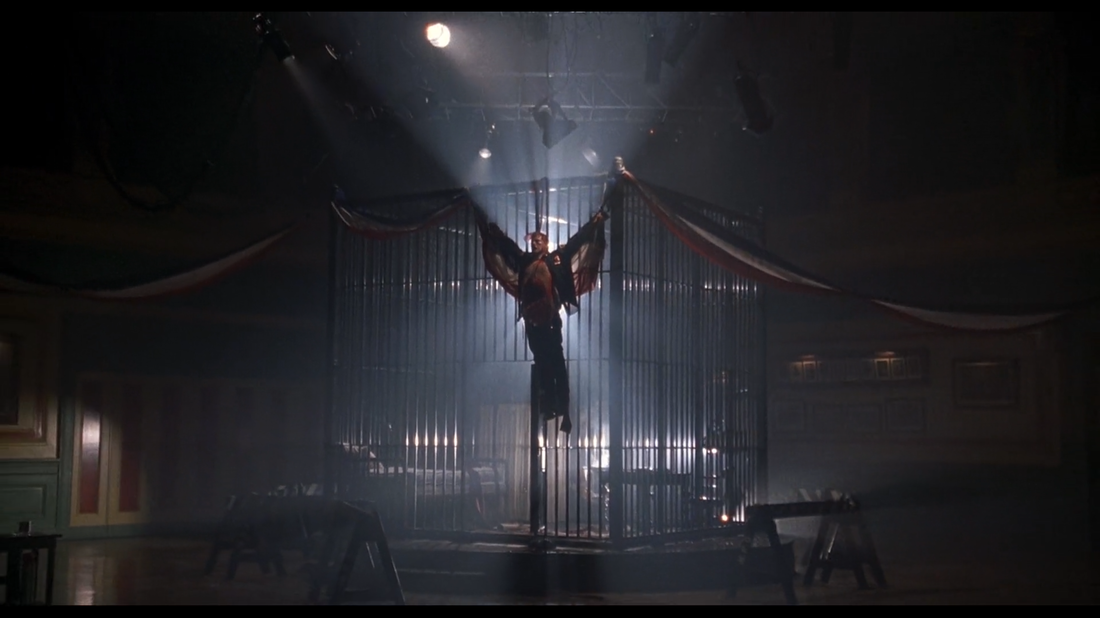
While the director, screenwriter, and actors are the principle forces behind the success and timelessness of Silence, the film would not have won best picture without amazing editing, music, cinematography, and other technical elements. The best editing and cinematography occurs when you don’t see the seams or think about camera placement or angle. Superior editing and cinematography enable the characters and plot to maintain center stage. The world Demme desires to portray in the motion picture was to be as real as possible. Hence why you won’t find lengthy shadows, set decoration that stands out from the world that it inhabits, and music that enhances but never overpowers a scene. Demme and his director of photography Tak Fujimoto worked together to strategically include a motif of birds that are literal and metaphoric. This is evident in not only Clarice “Starling” but in the crows at the beginning, stuffed owl in the Your Self Storage unit, and even in the line at the crucial turning point, “it’ll be terns for us too.” Birds are an important element in films, not limited to horror films. Specifically terns was used in place of turns because terms are a protected bird species, much like the mind of Dr. Lecter. Birds are a common motif or symbol in films, and can be used to represent different concepts or ideals.

Thematically, Silence is incredibly rich. These themes are brought out through the strange relationship shared by Lecter and Starling. There is a high level of respect mutually expressed by both characters, albeit unconventional. This strained relationship is observed in the similarities between Lecter and Starling. Examples of the parallels between Starling and Lecter include the feeling, they both experience, of being ostracized by the world in which they respectively live and work. Lecter from the human race, for his psychopathy and cannibalism; and Starling by the law enforcement profession because she is a women in a time that women were not commonly pursuing careers in law enforcement. They both occupy a prison. Whereas Lecter’s prison is a literal one, Clarice’s is a metaphoric one because of the men that literally and figuratively tower over her, establishing her boundaries. Clarice may not have a doctorate but she can easily match wits with Lecter in the shared power they both have to manipulate and persuade with cunning. Less obvious is the shared past they both have as victims of abnormal upbringings. Lecter was a victim of child abuse, and this ca be inferred in his dialogue with Clarice (note: Demme should have underscored this a little more) with Clarice being left an unloved orphan to be raised by distant relatives. Shared childhood trauma. These similarities are what forge the bond between these two strong characters. Demme and Fujimoto reinforced these themes and relationships with visual storytelling elements in order to personify and manifest in dynamic ways that hook and mind and eye.
Jonathan Demme’s The Silence of the Lambs remains one of the most iconic films in cinema history and will continue to have an evergreen shelf-life. It’s a multidimensional motion picture that frightens and intrigues. It is an arthouse film that achieved commercial success. Perhaps Red Dragon and Hannibal do not live up to the quality of experience of Silence but they by no means infringe on the ability for Silence to terrify us today. From the buildup to the introduction of Dr. Lecter to the trademark moth cocoon in the throat of the original victim. Furthermore, Demme continues to drive up the suspense and tension that create frightening thoughts and imagery through the use of interiors and exteriors of houses and buildings that represent the minds of characters (i.e. Buffalo Bill’s house and lair). We continue to seek this film out for its ability to manipulate our minds and eyes through strategic and artistic use of story and image. And you know what? We love these characters. We like and can identify with Clarice, have an unconventional respect and even like Dr. Lecter, and are completely intrigued and disgusted by Buffalo Bill.


Ryan teaches screenwriting at the University of Tampa. If you like this article, check out the others and FOLLOW this blog! Interested in Ryan making a guest appearance on your podcast or contributing to your website? Send him a DM on Twitter!

Follow him!

Twitter: RLTerry1

Instagram: RL_Terry

Thrillz (theme parks): Thrillz.co

“Searching” Spoiler-Free Full Review

Remarkably spellbinding! Searching takes the concept of “screen life” movies to impeccable levels. Although the concept of a film relying entirely on computer screens is not new, this is the first time that it has been executed perfectly. The first wide-release film to take this approach was 2015’s Unfriended, and it was quite the pioneer in its approach to essentially adapting Agatha Christie’s And Then There Were None, with the end result being pretty good. The following films to take the approach, including the more recent Unfriended: Dark Web, failed to tell a coherent story. Learning from the successes and failures of this cinematic concept of the past “computer screen” films, writer-director Aneesh Chaganty, along with co-writer/producer Sev Ohanian, crafts a suspenseful thriller that truly understands the power of the internet and how it enables and affects our actions. There is genuine emotion felt in this film. You will truly care about the lead characters and remain hooked for the entire film. Chaganty seems to have taken a page right out of the Alfred Hitchcock playbook for suspenseful storytelling that relies upon character development, twists of the everyday, and only use on-screen violence or graphic details to supplement the story. This tension-filled voyeuristic crime drama is successfully created–not through viruses, the supernatural, dark web or illegal activities–but through the mundane things we do everyday. Perhaps this film uses modern technologies to tell the story, but the soul of this film is brilliant old-fashioned suspense. And that solid foundation is why this film will do incredibly well.

Following the tragic death of wife and mother Pam, David (John Cho) and his daughter Margot are forced to move on with their lives, doing their best to cope with the loss of their loved one. Over the couple of years since his wife’s death, David and his daughter have drifted apart but still maintain a relationship. Loss of a mother and wife has a major impact upon a family. After Margot fails to return home after a study group session at a classmate’s house and repeated unreturned texts and phone calls, David fears that something terrible has happened to his daughter. When another classmate informs David that Margot never showed for a trip on which she was invited, David reports her as missing to the police. Detective Vick (Debra Messing) heads up the investigation into the whereabouts of Margot that immediately leads nowhere. Lead after lead leads the investigation to believe that Margot may have simply ran away. Convinced that his daughter did not run away, because of so many elements of the investigation not adding up, David turns to the one piece of evidence that was initially overlooked by the police, Margot’s laptop. Following the cookie crumbs left in the seemingly mundane websites visited by Margot, David begins to connect the dots that will hopefully lead him to what happened to his daughter.

No spoilers here. In fact, I urge those who have seen it to NOT spoil it for everyone else. In a manner of speaking, this film feels very much like Psycho must’ve felt when it was released. Hitchcock mandated that no one be allowed to enter the auditorium after the movie began; and furthermore, he insisted on an adherence to strict show times. In fact, much of how our modern cineplexes are run today are a product, in part, by the release of Psycho. The closest I will get to spoiling is informing you that there is an amazing twist ending. Just when you think the story is coming to a close, watch out! Taking what Unfriended (the original, not crappy indirect sequel) did well, and learning from what Dark Web failed to do, Chaganty’s Searching provides audiences with a fantastic experience visually, and anchors the plot with strategic, effective emotional beats.

The story is just as much emotional as it is visual. Possibly even more emotionally and psychologically-driven than the images the frame can capture. Whereas other films that rely upon what we do on our computers fail to have genuine, authentic characters, Searching depicts everyday, real life people doing what millions of others do. How often have many of us been able to talk to complete strangers about something that we are uncomfortable talking to our family or closest friends about? That is precisely what Margot does. Providing additional commentary on the mediation of society through digital media, Chaganty highlights our digital selves versus our actual selves. This is evident in the healthy social life Margot was leading her dad to believe she was experiencing; when in actuality, she was quite alone and simply focussed on school work and little else. David realizes that he didn’t know his daughter at all.

Previous “computer screen” concept movies pretty much involved never leaving the primary computer screen–easily becoming visually exhausting. Chaganty’s thriller chooses to switch from iMac, to iPhone, to PC (with Windows XP), to online news footage. These changes prohibit the setting from ever becoming too familiar or boring. The minor changes keep the senses heightened. Hitchcock earned his moniker by consistently delivering suspenseful cinematic excellence; and this suspense was executed with visual precision coupled with strong emotion. Chaganty very much patterns his modern suspenseful crime drama after the exemplary work of Hitchcock. Different from previous films using real-time on a computer to allow the plot to unfold, this film takes place over a week–closer to more traditional “movie time.” One may be inclined to conclude that the tension feel less intense because of not watching the plot unfold in real time, but that is definitely not true with Searching.

From the moment Margot’s missed facetime and phone calls fail to waken her father to the heart-pounding conclusion, the tension is in high gear. Hitchcock describes suspense as the having to do with the audience having sympathy for the characters and an intense need for something dramatic or shocking to happen. While the audience does not want something bad to happen to the lead characters, they are still at the movie in hopes that something terrible happens. Ironic, isn’t’ it? Much like Hitch delivered suspense through information, Chaganty does the very much the same with Searching. Another way Hitch delivered and ensured a suspenseful atmosphere in his films was having two important events happing concurrently. With David and Vick very much leading their own investigations respectively, we often experience this dichotomy. And Hitch is certainly famous for his twits, and this film contains some fantastic red herrings and twists to the tension-filled plot.

Presently in a limited release, with the film opening everywhere August 31st, Searching is a phenomenal whodunit build upon effective suspense and visceral tension. You will be glued to the plot and feel the emotional rollercoaster experienced by David as he searches for his daughter. Chaganty has proven himself through demonstrable evidence that he understands suspenseful storytelling. Because the film exists in the everyday world we live in, it may get you thinking twice about the degree to which your own life is mediated by technology. The social commentary in the movie also reminds us to be ever vigilant who we correspond with through live video and chats. For you never know to whim you are really speaking.

If you’ve enjoyed this article, be sure to check out all my past ones! You can search for a film by title to see if I’ve written on it. Don’t forget to follow my blog by clicking the blue button in the upper left!

Sinister Summer: “Jaws” Retrospective Horror Film Review

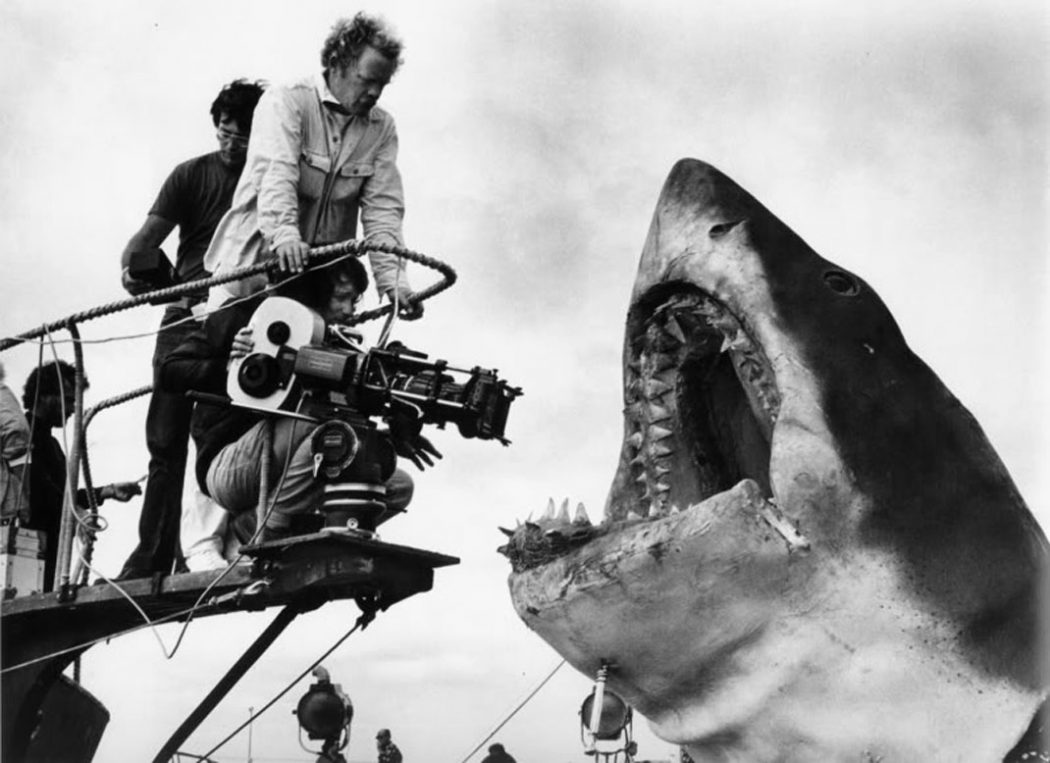
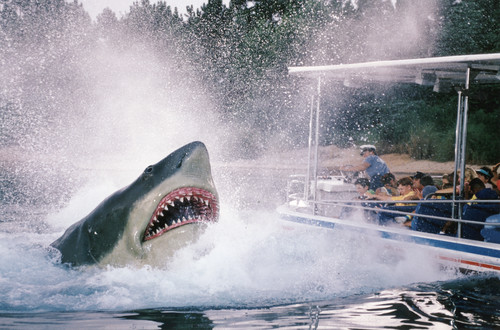
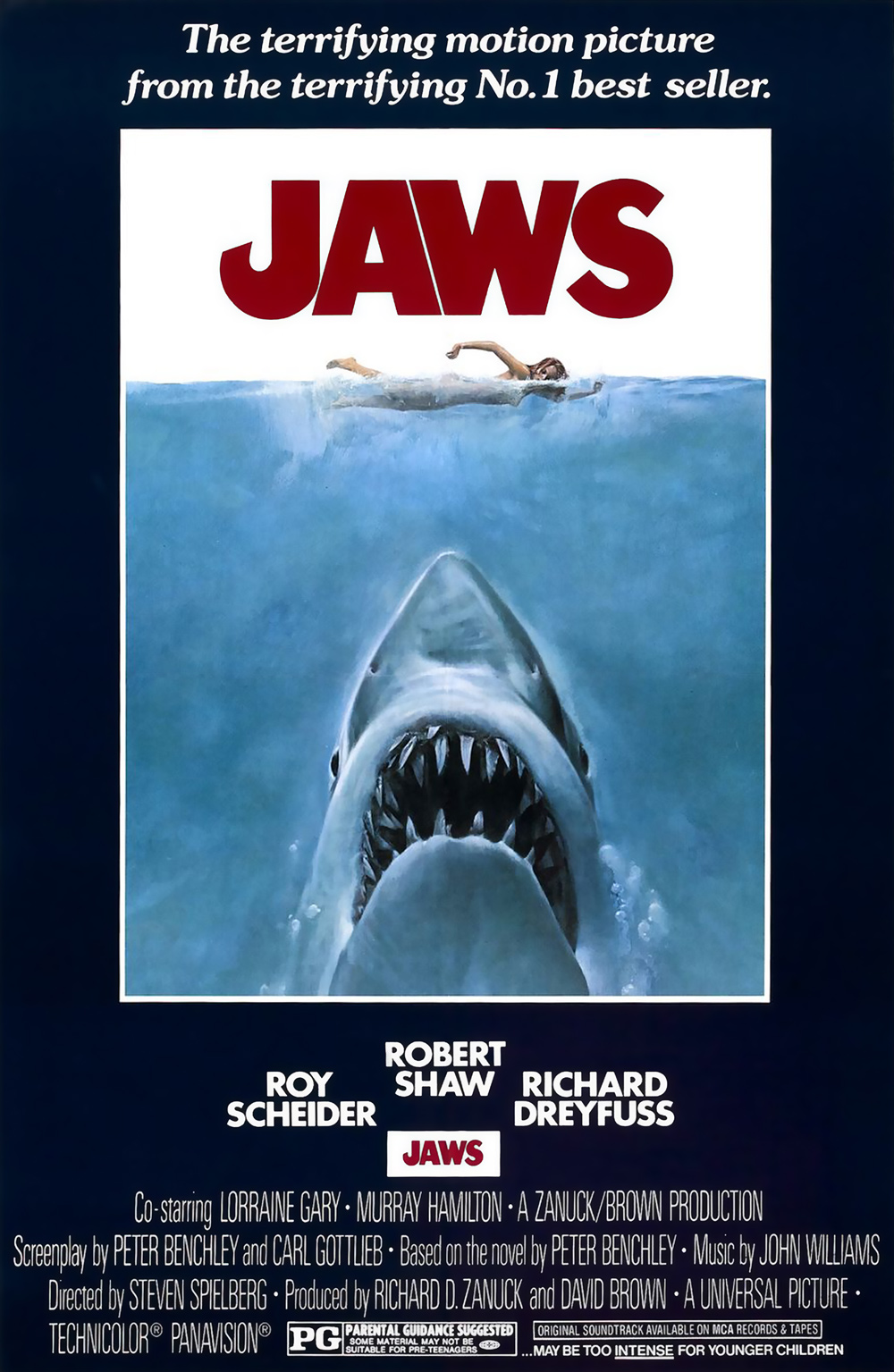
The original blockbuster! With The Meg opening tonight, the next article in my Sinister Summer series is a retrospective on Jaws (1975). And, we still “need a bigger boat” after all these years. Beginning with the iconic minimalistic score by John Williams, Steven Spielberg’s Jaws is still keeping people out of the water more than forty years later. Beyond the film, you can still face off with the most famous shark in cinema history at Universal Studios Hollywood. A favorite for folks to watch on July 4th each year (as I do), this film became the standard for the modern horror creature feature. And at only four minutes on screen, Bruce (Jaws’ nickname), successfully terrified audiences then and continues to frighten beachgoers today. For all intents and purposes, this iconic film set the bar for and essentially created this subgenre of horror movies featuring man-eating monsters from the natural world that exist in places where we typically find joy and relaxation. The ocean, theme parks, rivers, lakes–these innocent places become the setting for unimaginable terror.

If you are old enough to have watched it in theatres in 1975 or fortunate enough to have attended the special 40th Anniversary screenings back in 2015, then you can attest to the film’s evergreen ability to scare you out of your wits. When I watched it on the big screen in 2015, the auditorium was filled nearly to capacity with kids, teenagers, and adults. To see this iconic film on the big screen was truly a memorable experience. Especially so around where I live, since the gulf beaches are just down the road. The atmosphere was incredibly fun. All of these fans, most of which had likely seen Jaws before, were gathered together to relive the terrifying experience of a man-eating shark terrorizing a small New England town during the July 4th holiday season. But why would so many people pay to see a film that they had seen at no additional cost on TV or watched on DVD/BluRay?

Much in the same way Alfred Hitchcock’s Psycho is often credited, and rightly so, for being the first modern horror film and forerunner to the classic slasher; likewise, Spielberg’s adaptation of Peter Benchley’s novel Jaws is credited as the first modern creature feature horror film and forerunner to the blockbuster (or event movie). I am not negating King Kong, Creature from the Black Lagoon, or other predecessors; it’s important to take note of the word modern. Aside from excellent, visionary direction, both Psycho and Jaws have three important elements in common (1) powerhouse cast (2) strategic suspense and (3) a brilliant, oft-parodied, burned in your mind musical score.

It probably seems like you were born with John William’s two-note Jaws theme in your head, much like Bernard Hermann’s Psycho screeches. The terrifying suspense of Jaws comes in the form of a PG movie. That’s right, Jaws is rated PG. But this film delivers a bigger and more memorable punch than any gory torture porn horror film ever could. The groundbreaking structure of both these legendary films are the prototypes from which their respective branches of horror films are derived. They are the blueprint, if you will, for suspense and horror. The manner in which the suspense is drawn out for most of the movie assists in the ability to enjoy it over and over again, without it ever feeling like a B movie. The drawn out suspense engages you emotionally and psychologically. The feeling of dread lingers and lingers. In fact, you don’t truly see Bruce until the third act of the film when he jumps out of the water in an attempt to bite off the arm of Chief Brody. This intentional drawing out of suspense makes the delivery of that moment pack a powerful punch, an assault on the eyes and mind. Both Psycho and Jaws benefit from an excellent cast. The respective casts could not have been any better. Interestingly, in order to not allow the cast to overpower the story or shark, Spielberg didn’t choose actors with an instant command presence. But they displayed a strong presence nevertheless. It never feels as if they are acting, but truly become the characters they are portraying. The relatability of the characters is partly due to the screenplays, but it takes phenomenal actors to successfully bring these characters to life. Spielberg would repeat this same successful approach to creating blockbusters E.T. the Extra Terrestrial and Jurassic Park.

For more on suspense, checkout this video featuring Hitchcock himself.

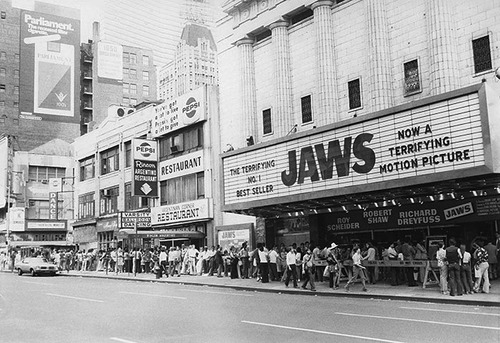
When Jaws is referred to as the original blockbuster, it’s not simply due to being the first film to break the $100mil box office sales mark, toppling the records previously set and held by The Exorcist and The Godfather. That is a valid observation, but is ultimately incidental. Reasoning behind this thriller’s ability to create the concept of a blockbuster movie is the fact Jaws was seen as an event not to be missed. Looking back at the original crowds of 1975, you’d think the movie was a one-night-only big event. Hence the term blockbuster. The common adjective attributed to big summer movies literally derives from the fact that queues for the box office wrapped around city blocks. It busted the block, so to speak. And the rest is history! Coupled with the summer release date and ticket sales, the allure of Jaws generated levels of enthusiasm and interest never seen before. The film took in so much money at its opening, that it nearly made up the entire production budget by the end of the first week. Furthermore, distribution and marketing companies began to use Jaws as a model for future marketing efforts in order to attempt to generate another blockbuster effect. After Jaws in 1975, the next big blockbuster would be George Lucas’ Star Wars IV: A New Hope in 1977. All these factors contribute to the iconic status of Jaws in terms of its contribution to film business.

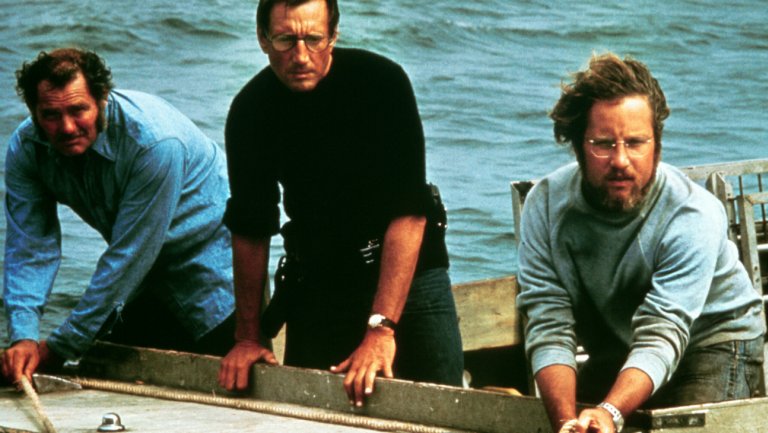
Instead of building a thriller on shock value, disturbing imagery, or jump scares, author Peter Benchley’s screenplay for Jaws focussed on crafting a cinematic atmosphere that had an intimate, claustrophobic feel built upon well-crafted drama through character development and conflict, at the center of which is a little heart. Different from contemporary creature features, Jaws picks off swimmers in the single digits and those attacks all happen at a single beach on a small island off the coast of Massachusetts. And instead of an entire agency hunting down the man-killer shark, three unlikely men are forcibly thrown together in order to track down and eliminate the terror from the waters off Amity Island. Keeping the principle cast and environment small, enabled the drama to perform strongly. Big things do come in small packages. Coupled with the strong performances from the entire leading cast, this brilliant combination of cinematic elements works together to give us some of the most memorable lines, scenes, and cinematography in movie history. Furthermore, real people swept up into an impossible situation and foolish decisions enable the audience to identify with the characters and the setting in ways that make the terror feel all the more real and close to home–or the beach.

While Bruce is often thought to be the villain of Jaws–and no mistaking it, he is definitely an antagonist–I argue that the true opposition to the goal in the plot is Amity’s mayor. If we accept the goal is to apprehend or kill the man-eating shark, then Vaughn serves as opposing that action. Perhaps you’ve never though of the true villain of Jaws being Mayor Larry Vaughn. A close analysis of the plot reveals that Jaws (Bruce) functions more as a catalyst for the principle conflict between Chief Brody and Vaughn. Other than the death at the beginning of the film, the Mayor is indirectly responsible for the remaining deaths. After all, it’s due to his utter complacency, negligence, and classic greed that led to the other deaths. For most of the film, we spend far more time with Chief Brody’s continued conflict dealing with the social pressures, desires, and ill-fated decisions of his boss than we do with shark attacks. Mayor Vaughn fails to acknowledge the sheer gravity of the dangerous situation, and close Amity’s beaches in order to keep his citizens safe. In effect, he fed them to the shark. Seems like a villainous action to me. Bruce was being a shark, Vaughn was the villain.

Often the central character’s development hinges on the direct and indirect conflict with the opposition to the goal of the plot. In this scenario, Mayor Vaughn stands between Brody and Bruce. The moments in which Brody demonstrates measurable growth in his character arc are when he attempts to stand up to the Mayor showcasing a contrast between public safety and a combination of politics and economics. Unfortunately, we never witness Brody truly standing up to the Mayor to enact measurable change per se; however, it isn’t needed because we witness several moments of Brody shouldering the responsibility of protecting the citizens of Amity as a civil servant. By contrast, Vaughn is more preoccupied with a warped view of  civic responsibility that places more importance on increasing the bottom line of the local businesses than public safety. He rationalizes his position opposing the advice of Brody by engaging in classic psychological defense mechanisms such as denial, displacement, and projection. Vaughn’s actions throughout the film depict an elected leader with misplaced priorities in order to better his own career.

The success of Jaws and reasons why it continues to stand the test of time has more to do with the beauty in simplicity and strategic marketing than Spielberg’s filmmaking. Don’t get me wrong, Spielberg is an excellent storyteller and directed many of our favorite films such as this one, Jurassic ParkE.T.Poltergeist (with Tobe Hooper), and more, but it’s the strong screenplay and innovative marketing efforts that give Jaws the chutzpah it has. Jaws quite literally changed the way studios market “blockbuster” films. Prior to Jaws‘ release, the only films to get wide, general releases were B-movies and exploitation films, but Universal Pictures took the chance at cramming Jaws into as many screens as possible, and it paid off in spades! Jaws wasn’t the first film to book theatres in this was, but it was the first to be well-received by by critics and fans. The film was an instant success!

Even if you trust the statistics that you are more likely to be injured or die in a car accident than be attacked by a shark, Jaws still leaves you wondering what may lurk in the depths of the ocean, and by extension lakes and rivers (thanks in part to Animal Planet’s River Monsters). There is a lingering feeling, even if in the back of your mind, that a man-eating shark could live in our oceans. That is the power of this film and why it has continued to pervade popular culture for more than 40 years. Its influence on popular culture is certainly not limited to the dozens or imitations such as Lake PlacidPiranha, Deep Blue Sea, or parodies like Sharknado, but it serves as the inspiration for Discovery Channel’s Shark Week, the Monster Jam monster truck Megalodon, theme park attractions, and the music is often used in unrelated TV shows and movies. Lines, imagery, music, and characters are permanently embedded in the psyche of the general public.

The Psychology of Horror: An Exploration of Freud’s ‘Uncanny’ through “Psycho”

“Oh no, don’t go in that house!” “Watch out! He’s right behind you.” Some of the most memorable movies of all time are horror films, of which, some of the best and most revolutionary were made in the 1930s and 40s by the original production house of horror Universal Studios. The early horror films set the foundation upon which all other horror films would be judged. Ask anyone, and the single most famous scene in all of cinema is the famous shower scene from Hitchcock’s Psycho, widely regarded as the most pivotal horror film in all cinema history. The aforementioned scene gains a greater eerie feel upon the close of the movie when the audience realizes that Norman has little to no control over his mind and actions. There is something about horror films that beckons the audiences to find enjoyment in that which in real life would not be enjoyable—and not only see it once but repeat it over and over again. And furthermore, find the unfamiliar and grotesque fascinating to behold as what should remain hidden comes to light. The return of the repressed.

Throughout history, from the fights in the Roman Coliseum to Michael Myers’ slaying of people in Halloween, audiences have been both entertained and repeatedly drawn to stories and shows that highlight horrific acts of violence or feelings of terror and anxiety. Perhaps there is a deep seeded reason as to why millions of people find entertainment value in horror films. This question has been tackled by many psychiatrists and psychologists, each has come up with a different explanation as to “why horror?” Most notably, famed psychiatrist, Sigmund Freud provided great insight into an explanation of why people find horror films fascinating in his essay on the Uncanny.

Although many of the conclusions drawn by Freud have been challenged over the years, he spent a great deal of time on the uncanny; and his analysis on such has helped a great deal in understanding the psychology behind horror. The word uncanny comes from the German word unheimlich, which is literally translated as something unfamiliar. However, that which is unfamiliar is not necessarily uncanny. In particular, he was interested in the return of the repressed. And, in this return of the repressed, “other” scenes, to which we do not have direct access, would reveal themselves. It is this revelation that is what Freud terms the uncanny. This theory is an explicitly aesthetic inquiry regarding what in art (or life) produces sensations of dread and horror, repulsion, and a return to such unpleasurable sensations. There are many elements or groups of elements that Freud deemed as uncanny. Each one is burdened to exceed intellectual uncertainty in order to fit the definition of uncanny as laid out by Freud.

In order to fully understand unheimlich, it is necessary to understand the antithesis of the aforementioned which is heimlich. The word Heimlich means something that belongs to the familiar, something not strange, and is friendly. Diving into a deeper reading of the word Heimlich, it can also mean something that is concealed from the conscious—not accessible by our conscious mind. Freud even goes as far as to suggest that this refers to something that is kept from sight so that others do not get to know about it. Knowing the definition of Heimlich, it is easier to understand how and why Freud chooses to use it in his evaluation of art (in which, we have literature, theatre, and cinema). According to Freud, “unheimlich is the name for everything that ought to have remained…secret and hidden, but has come into the light.” In his study on the uncanny, Freud takes on the literary imagination (this same literary analysis can and is used to analyze film) by dividing his theory up into three sections. He first defines the concept of the uncanny, then performs an examination of the context required for understanding the experience of the uncanny, and finally explores the effects of the uncanny on the psyche through literature and fiction. Some of the running themes throughout his essay are loss of eyes, castration, the double-ego, and self-reflexivity. Through the framework laid out by Freud, scholars and film critics can explore the themes in horror film as it relates to the human subconscious.

Freud explains the realm of the uncanny as the place at which aesthetics and psychoanalysis merge because it deals with a particular feeling or sensation combined with emotional impulses. The substances or manifestations of the uncanny are elements that are fearful and frightening. Proceeding with Freud’s definition of the uncanny being a class of frightening elements, plaguing the psyche, ushering an individual back to what is familiar (heimlich) and known (as opposed to what is unknown). Freud refers to the uncanny as that “which should have remained secret and hidden, but has come to the light.” Furthermore, he goes on to further describe the uncanny as the “mark of the return of the repressed.” The concept of the uncanny is a type of unwilling or mistaken exposure to something surprising, unexpected, or horrific.

Freud claims that the source of the uncanny in literature is the recurrence of something long forgotten and repressed. However, not everything that returns from the psychic depths of repression is uncanny. The mere return of repressed feelings and experiences is not sufficient for the uncanny to occur. It requires something repressed having returned but represented by an unexpected and outside the realm of reality. This is easily accomplished in literature (and by extension, movies, and plays) because fantasy is different from reality. Just because something works as uncanny in a work of literature doesn’t mean it can work in real-life as well. Within literature, if the author makes a pretense to realism, then he or she opens the door to supplying the story with the uncanny. Often times, the uncanny in literature and film is the projection of the psyche of the central character on another object or person combined with a warped view of the objective and subjective of a given situation. It’s like something within the fictional world creeps into the real world. And, this is definitely manifested within the character of Norman Bates in Psycho.

Within the horror genre, there are many different stories or narratives that exist. And, each type of horror film tells its story in different ways; however, they are all concerned with getting the same emotional response from the “people out there in the dark,” as famously stated by Norma Desmond in the timeless film noir classic Sunset Boulevard. Sometimes the audience will go on a journey into the crazed mind of a psychopathic serial killer or they may witness a supernatural monster terrorizing a small Bavarian village. In either case, Freud believes that the writers of horror are concerned with exposing the audience to “other” scenes. And, these “other” scenes are rooted in the subconscious. Freud’s psychoanalytic theory is a perfect lens through which to evaluate horror films and the effects of them.

The character of Norman Bates became a revolutionary breakthrough in cinema and entertainment as Freud’s psychoanalytic theory gained prominence in a major motion picture. Not only using it as a character archetype but using the motion picture’s exposition, via the psychiatrist at the end of the film, as a way to explore the subconscious of Norman. Keeping inline with the pace and substantive matter of the film, Hitchcock meticulously and skillfully used the characters and dialog to frame and reveal Norman’s feelings, subconscious thoughts, and conscious behaviors despite the aforementioned being very pleasant. Although the feelings and behaviors were unpleasant, subconsciously Norman enjoyed them. And, Freud touches on this too. He refers to it as the pleasurable unpleasureable. Despite Freud’s revelations of the subconscious mind, the subconscious is not something anyone has access to or can, much less, exhibit control over its goals. Therefore, as Norman was unable to exhibit control over the actions and tendencies of his subconscious mind, he did not realize he subconsciously allowed his mother to take control over his body and turn this “normal” guy into a serial killer.

Understanding Freud’s theory of the uncanny can best be fully grasped and comprehended by applying it to a particular scene(s) in a work of horror. In this case, the actions leading up to, and including, the infamous shower scene in Alfred Hitchcock’s masterpiece Psycho will be used. Before the screeches of the violins, before the more than fifty cuts (edits) to the film, and before the audience slowly spins away from the lifeless eye of Marion Crane (Janet Leigh), Norman Bates (Anthony Perkins) shows signs of being intrigued with generating erotic feelings of arousal in his mind and body. Prior to removing the portrait of the bird from the wall of his office, Norman exhibited mostly homosexual-ish signs. He did not appear to be sexually attracted to Marion and behaved more like a new girlfriend than a potential sexual partner. However, this is all about to change.

To quickly navigate the scene prior to applying Freud’s theory of the uncanny to it, Norman bids farewell to Marion after a good dinner turns to the creepy side. Marion begins to disrobe and prepare to take a relaxing shower. Unbeknownst to her, Norman has removed a portrait of a bird from his wall and is using a peephole to gaze into her room. After spending some time on an extreme closeup of Norman’s eye, Marion puts on a robe and sits down at the desk. Norman replaces the picture on the wall and heads back to his house. Marion does some math (pertaining to the $40 thousand she stole) and then gets in the shower. Not long into the relaxing hot water, Marion is attacked by a shadowy figure resembling an old woman. She is stabbed repeatedly and left to die. We slowly spin out from Marion’s lifeless eye to close out the scene.

There is a great juxtaposition in the Norman before his peeping-tom voyeuristic actions and during (and after) his choice to peep into the bedroom on the unsuspecting Marion. It is as though there was something repressed–hidden down deep inside–Norman that unexpectedly returned to the surface of the conscious. This return then prompted him to go from exhibiting homosexual (or perhaps asexual) behaviors to clear hormone-driven heterosexual male behaviors.  Although on the juvenile side, Norman clearly shows that he not only wants to be friends with Marion but to experience sexual relations with her. And, he gets his rocks off by watching her disrobe. Interestingly, the fact he is behaving similarly to a 14 or 15-year-old male plays directly to the notion that these heterosexual emotions were repressed since he was young.

But, Norman does not continue indefinitely gazing into the room of Marion; he eventually replaces the picture and heads to his house and sits. Perhaps he is in contemplation of what he wants and what he knows he cannot have. He clearly wrestles with this uncanny appearance of these feelings he is not used to experiencing. An important aspect to the uncanny is that the individual has no control over when this return of repressed unfamiliar feelings emerges. So, this isn’t something that he, in all likelihood knows how to control. So, instead of controlling it, these repressed feelings begin to take over his conscious by using pathways in the unconscious (the home of that which is uncanny).

Back in the bathroom of Marion’s room, Marion steps into the shower and is soon attacked by a dark shadowy old-woman-like shadow. This shadow is Norman dressed as his mother. Since the uncanny lives in the unconscious, over which we can exhibit no control, it develops its own mechanisms of dealing with this return of the repressed. By killing the object that aroused these unconscious feelings, the unconscious is able to then return to a balance. Of course, this isn’t truly a balance because it is directly linked to socio-pathological behaviors that rely on violence to purge the emotions and drive them back to the unconscious where they belong.

Norman’s initial response, following the iconic brutal murder of Marion, was denial and projected blame onto Mother. From the time the audience is first introduced to Norman, they are presented with an individual who is timid, shy, and nervous. But, when Mother breaks through his cognitive defense mechanisms, he becomes aggressive, destructive, and volatile. As a result of this cognitive struggle between the conscious and subconscious, the presence of Mother causes pain, anguish, and both internal and external conflicts within the mind of Norman. As the psychiatrist Dr. Fred Richmond, in the movie, stated, “At times he could be both personalities, carry on conversations. At other times, the mother half took over completely. Now he was never all Norman, but he was often only mother. And because he was so pathologically jealous of her, he assumed that she was jealous of him. Therefore, if he felt a strong attraction to any other woman, the mother side of him would go wild.”

Through the psychiatrist’s psychoanalysis, rooted in Freud’s theories, the audience learns that Mother was a permanent part of his mind. After watching the movie, the audience is only ever faced with a brief moment of the pathological side of Norman. However, this brief moment is enough for the psychiatrist to conduct a preliminary evaluation of Norman’s psyche. Playing to the unheimlich of the film, umheimlich referring to what’s “uncanny” about the film (or more literally translated as unfamiliar), despite the mere glimpse into the crazy side of Norman, the audience begins to allow fear and terror to take over and imagine what he is truly like. Oddly enough, even though the audience is terrified of Norman, they also sympathize with him because of the trauma exercised on Norman from his domineering mother, thus debilitating Norman for the rest of his life.

Using Freud’s model and theory of The Uncanny to evaluate these famous scenes from Psycho, it is clear that Freud was ahead of his time and was able to explain what would drive someone to behave in such a horrific manner. By breaking it down this way, Freud actually makes Norman seem like someone that could exist in real life, and that is perhaps the most terrifying aspect to the movie. The fact that Norman could be your next-door neighbor, is enough to spark fear and horror into the lives of those who watch this masterpiece.

If you enjoyed this article, please share and SUBSCRIBE! The button is at the top of the page.

Ryan is a screenwriting professor at the University of Tampa. If you like this article, check out the others and FOLLOW this blog!

Follow him!

Twitter: RLTerry1

Instagram: RL_Terry

Thrillz (theme parks): Thrillz.co
“Red Sparrow” film review

Intense. Riveting. Spine-tingling, A masterful spy thriller crafted in a classical fashion with sex appeal. Red Sparrow will harness your full attention from the opening. Directed by Francis Lawrence, this spy movie is the level of excitement that 2015’s Bridge of Spies wished it was. Whereas many espionage movies fail to develop a plot that keeps you guessing from beginning to end–allowing you to feel like a covert operative or detective–this film delivers a mesmerizing story filled with intriguing characters and close calls. In many ways, this film contains elements that could be likened to a Hitchcockian suspense thriller with influences from Billy Wilder and David Fincher. Jennifer Lawrence displays an uncanny performance that truly shows the versatility of the Oscar-winning actress. With tensions rising between the US and Russia in real life, this films comes at a perfect time because we may find ourselves in a cold war that’s reminiscent of the latter part of the 20th century. Not for those who are weak in the stomach, this film contains cringy visceral horror that will get under your skin. Without the need to rely on science-fiction gadgetry to carry the story, this film provides well-developed characters and an intriguing plot that’s filled with twists and turns.

Prima Bolshoi Ballet ballerina Dominika Egorova (Jennifer Lawrence) is faced with a bleak and uncertain future following a severe career-ending injury while on stage performing. Her high-ranking uncle persuades her to attend Sparrow School: an institution that trains seductive spies in order to pry information from targets by using extreme sensuality. Sparrows turn their minds and bodies into weapons for the state. Being determined to remain special, Dominika completes the sadistic training more quickly than the other students and is recruited for a covert assignment to track and report on an American CIA operative (Joel Edgerton) who Russia feels will lead them to the mole within their own ranks.

The beautiful opening of Red Sparrow is abruptly ended when Dominika suffers a horrific injury that instantly ends her ballet career. This acutely intense moment will cut you directly to the bone–you will undoubtedly wince or cringe, feel the break in your own legs. This is but a taste of what is to come throughout the movie. In an exquisite fashion, the gorgeous dance at the opening is juxtaposed against the alleged drug deal gone bad. Paralleling one another, the event that unfolds concurrently enable the plot to get a quickly paced fantastic start out the gate. Unfortunately, this excellent start does lead into a slower paced latter half of Act I. However, there is important background information that is revealed during Act I that foreshadows and sets up the remainder of the turning points in the plot. You will also notice the use of the color red in many places during the movie. Analyzing the shades of, and placement of the crimson hue has the potential to generate conversations between cinephiles.

The color red is not the only symbol in the movie that can be analyzed; there is a theme of your body belonging to the state. Essentially, this can be read as a commentary on celebrity. As a prima ballerina, Dominika’s body was weaponized for the stage and figuratively belonged to the Bolshoi and by extension to the public. Much in the same way her Sparrow weaponized body literally belongs to The State. It’s her body, but the Bolshoi and The State determine her career. But she is determined to not allow herself to become a commodity that can be abandoned, traded, or punished. This can be said about conventional celebrities and the public. In a manner of speaking, the public decides whether or not you are worth seeing on screen and how you should behave. Back during the days of the Studio System, this was a big problem because the Studio controlled your image, who you dated, slept with, when/if you had kids, your marriage, and more. There was mass exploitation in that system, and one of the reasons why it was ended. The empowering message of rebelling against The State, who is determined to own you and your body, can be witnessed through the covert actions of Dominika.

In the grand Hitchcockian fashion, there is a lot of suspense that increases tension but does not always provide a release. Though Hitch would have handled the level and pacing of the suspense more perfectly, you can read his famous bomb theory in Red Sparrow. Hitchcock knew how to take a two-dimensional situation and find a third-dimensional approach to impress the audiences and hold firm their attention. And to the film’s credit, there are a few times that the level of suspense coupled with the symphonic score channels Hitch. Unlike many spy movies that rely too heavily on a love story, the film brilliantly leaves you wondering whether or not Lawrence and Edgerton are in love or rather it is a facade employed in order to extract vital information for their respective allegiances. The level of romance and eroticism is just enough to add the sex-appeal to the relationship without the movie becoming about the romance between two individuals who serve two opposing countries.

Not for the faint of heart, there are some incredibly intense moments in the film that might make you queasy in the stomach. But the movie chooses to place more emphasis on the action, plot, and characters more so than that which threatens your eye. It’s certainly a new breed of spy movie, but it’s one that is incredibly interesting and will hold your attention for the more than 2hr runtime.