One Movie Punch “Glass” Full Review

Not a total train wreck, but the plot is full of cracks nevertheless.

After the success of 2017’s Split, M. Night Shyamalan’s Glass was the highly anticipated conclusion to the macabre take on the superhero genre. Unfortunately, the film fails to deliver the intense plot that audiences wanted. After the big reveal that Split was connected to Unbreakable (2000), the audience was predisposed to anticipating the same level of suspense and thrill that was found in the aforementioned two films. Plot twist. The plot misses the mark. Glass is the final installment in this superhero universe trilogy that postulates that comic book characters are, albeit exaggerated, inspired by real-life super humans. Out of left field, this movie was completely unexpected until the uncredited cameo of Bruce Willis’ character of David Dunn from Unbreakable. Despite the lackluster narrative, the film is not without its entertainment value. It is sufficiently enjoyable, but leaves you with a feeling of “meh.”

For the full review, visit the One Movie Punch website for the audio review and transcript! And if you don’t do so, follow One Movie Punch on Twitter and subscribe with your podcast service.

Ryan teaches screenwriting at the University of Tampa. If you like this article, check out the others and FOLLOW this blog!

Follow him!

Twitter: RLTerry1

Instagram: RL_Terry

Thrillz (theme parks): Thrillz.co

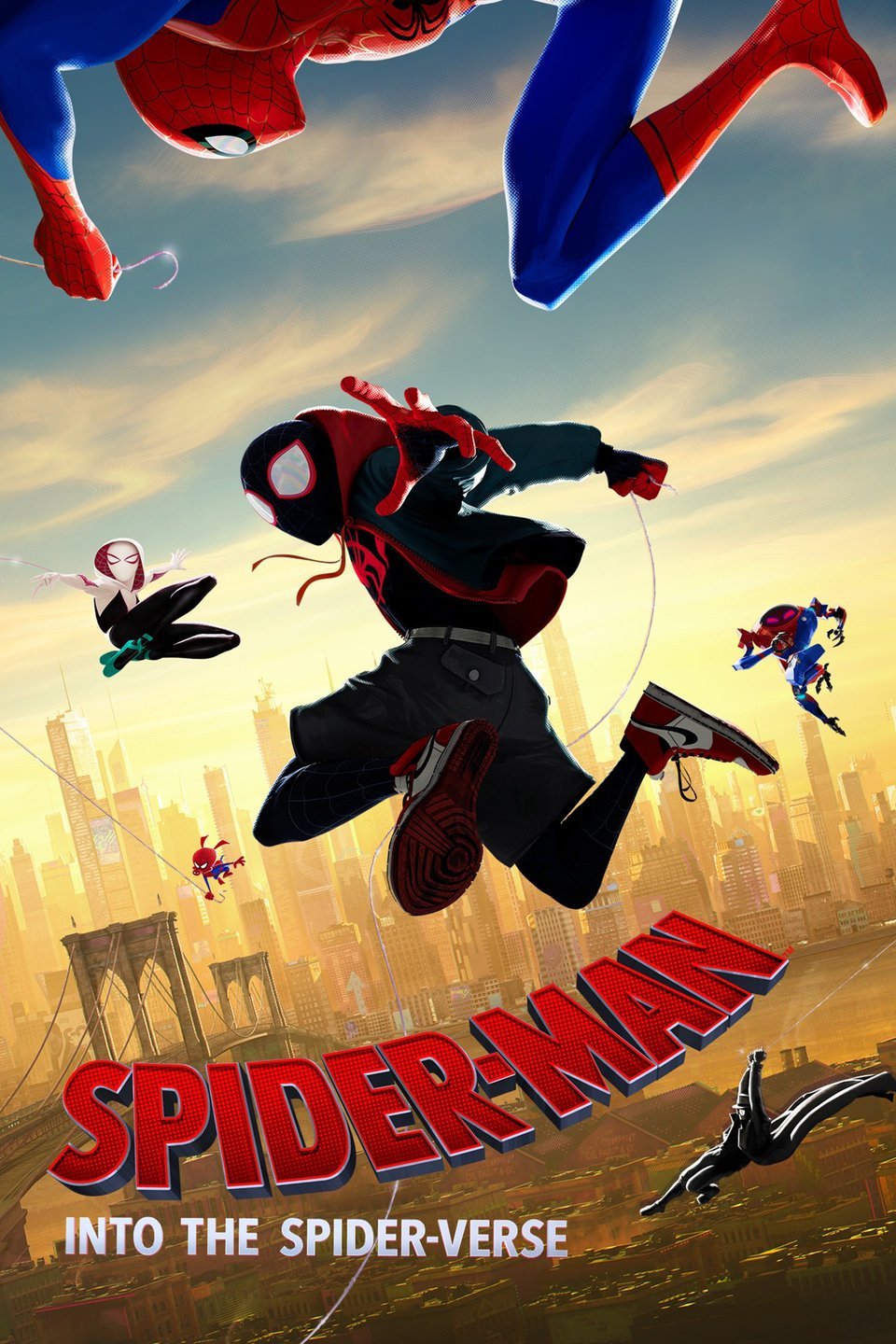
“Spider-Man: Into the Spider-Verse” brief film review

Now THIS is the amazing Spiderman! Eat your heart out Tom Holland and move over Incredibles and Ralph for the best animated feature of 2018. Even if you do not care for comic book or superhero movies, by in large, but love excellent motion pictures (animated or live-action), then I can almost guarantee that you will thoroughly enjoy and greatly appreciate Sony’s Spider-Man: Into the Spider-Verse. Although there have been a handful of animated films that I have liked in recent years, I have not felt emotionally and physiologically engaged with an animated feature to this degree since Kubo and the Two Strings. What both these animated features have in common is groundbreaking artistic precision that typifies the art of animated visual storytelling. Not only does Spider-Verse blow all other animated films out of the water this year, in terms of its contribution to the art and science of motion pictures, I put it on par with Kubo. The attention to production design details and mindblowing editing set the bar incredibly high for animated features moving forward. While the visuals have been likened to an acid trip, do not allow that to dissuade you because never once did I find the avant-garde artistic expression dizzying or obnoxious. It was completely immersive. There was genuine, tangible emotion felt in every frame. And the Stan Lee cameo was priceless. Underscoring everything on screen is the phenomenal screenplay upon which this mesmerizing animated feature is built. Undoubtedly, you will find yourself emotionally invested in the central character of Miles and the chief supporting cast, including the fantastic villain King Pin. There is so many layers to this story, and it works on several levels such as: family, love, self-sacrifice, and more. Highly recommend this film!

Ryan teaches screenwriting at the University of Tampa. If you like this article, check out the others and FOLLOW this blog! Interested in Ryan making a guest appearance on your podcast or contributing to your website? Send him a DM on Twitter or email him at RLTerry1@gmail.com! You can catch Ryan most weeks at Studio Movie Grill Tampa, so if you’re in the area, feel free to catch a movie with him!

Follow him!

Twitter: RLTerry1

Instagram: RL_Terry

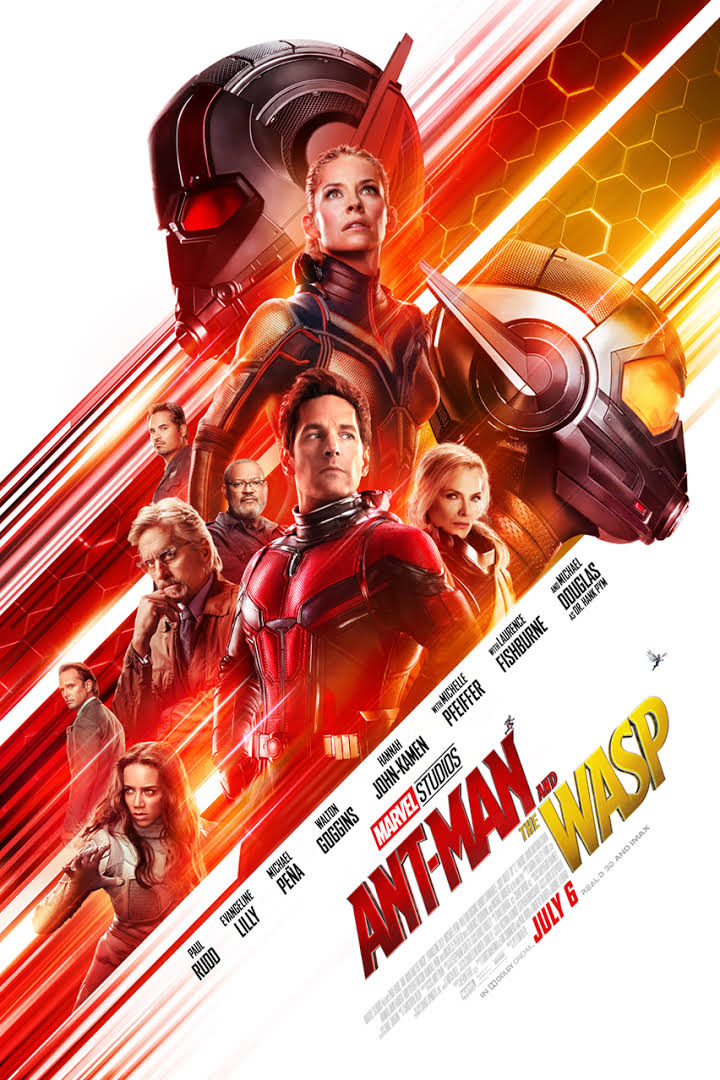
Marvel “Ant-Man and The Wasp” movie review

fANTastic! Although this installment may lack the grandeur of many of the Marvel Studios films, including the recent Avengers: Infinity War, director Peyton Reed delivers a fun, heartfelt, action-packed movie in the Ant-Man series that is sure to be a crowd pleaser. As someone who doesn’t typically fawn over superhero movies, with some exceptions like Batman Returns, I went into this movie with moderate expectations at best. Needless-to-day, my expectations were exceeded and I had a great time. Perhaps the story is rather shallow and even paint-by-the-numbers, but the straight-forward story is made fun and exciting by the incredible cast. This installment in the MCU is also marked by the significance of the captivating Michelle Pfeiffer’s return to the superhero genre. It’s been more than 26yrs since she wowed audiences with her roll as the definitive Cat Woman, and she still packs a punch during her short time on screen in Ant-Man and The Wasp. Is this a movie that requires a close reading or in-depth analysis? Certainly not. But, there is a running theme of change/size that is both literal and metaphoric. This may not be the at the top of your MCU favorites, but I can honestly state that you will not feel as if your time is wasted if you choose to take the quantum leap into this micro superhero movie.

After the events in Germany, Scott Lang (Paul Rudd) is under house arrest. Dealing with the consequences of being both a superhero and a father, Lang is challenged to still be a loving father to Cassie while figuring out how to continue his role as Ant-Man. Compounding the demands of being a father and superhero, Lang is also working diligently from home to build his security company in order to be the provider he wants for his daughter. Just when he has his routine down, and is getting close to being released from house arrest, he is kidnapped by Hope van Dyne (Evangeline Lilly) and Dr. Hank Pym (Michael Douglas) to help with a mission to rescue Janet van Dyne (Michelle Pfeiffer) from the quantum realm, a result of disarming a nuclear bomb many years prior. The search and rescue operation is thwarted by a ruthless southern businessman and a mysterious new ghost-like adversary. Under the ever-oppressing constraint of time and place, Ant-Man and The Wasp must cooperate in order to protect the quantum technology from falling into the wrong hands that could prohibit Dr. Pym from rescuing his wife.

While the movie, by in large, is pretty basic (solid, but basic), there is a great example of Hitchcock’s MacGuffin! If you’re unaware, a MacGuffin is the object that drives the plot forward, begins the domino effect, but ultimately does little more than trigger the plot. The definitive example of this is the money Marion Crane steals from the real estate office that sends her on the journey that lands her at the Bates Motel in Psycho. Not nearly as macabre, the MacGuffin in Ant-Man and The Wasp is the size-shifting office building of Dr. Hank Pym. Sometimes it was as large as a city block, and other times it was the size of a roller suitcase. In fact, if it isn’t already, I imagine that we will soon see this AS luggage that can be purchased at a Disney Park near you. The theme of size is demonstrated through small objects that become large and large objects that become small. Furthermore, this idea of playing around with size can also be witnessed figuratively through egos. Some egos are inflated–large–and need to shrink down to size or others are barely there and need to grow in order to not be overrun or overlooked. This theme is also displayed in how small people or objects can rise to the occasion, become a metaphoric giant in order to stop those who pose as obstacles to the goal. It is well-known that ants can carry several times their body weight, and we see characters in this film shouldering more than their fair share, but still manage to overcome any resistance or hurdles to accomplishing the mission.

Be sure to state for the mid-credits scene because it will answer the question that has been on your mind, “where was Ant-Man during Infinity War”? There is also a post-credit scene that is cute but won’t provide any further insight into the next Ant-Man or Avengers movie. With the return of Michelle Pfeiffer to the superhero genre, I am excited to see how the MCU will integrate her into the narrative because she possesses a powerful screen presence that should not be under-utilized. Unfortunately, this could mean that we may not get to see her reprise her role as Cat Woman in a future DCEU film, but her beauty and charisma will certainly add a touch of class and strength to the MCU.

While most MCU movies are suitable for all audiences, there is some content in the dialogue that may not be appropriate for those under 13. So parents and siblings, just be aware of this before taking children to this film. It’s not nearly as adult as Deadpool but it leans more toward a teen and adult film more than kids.

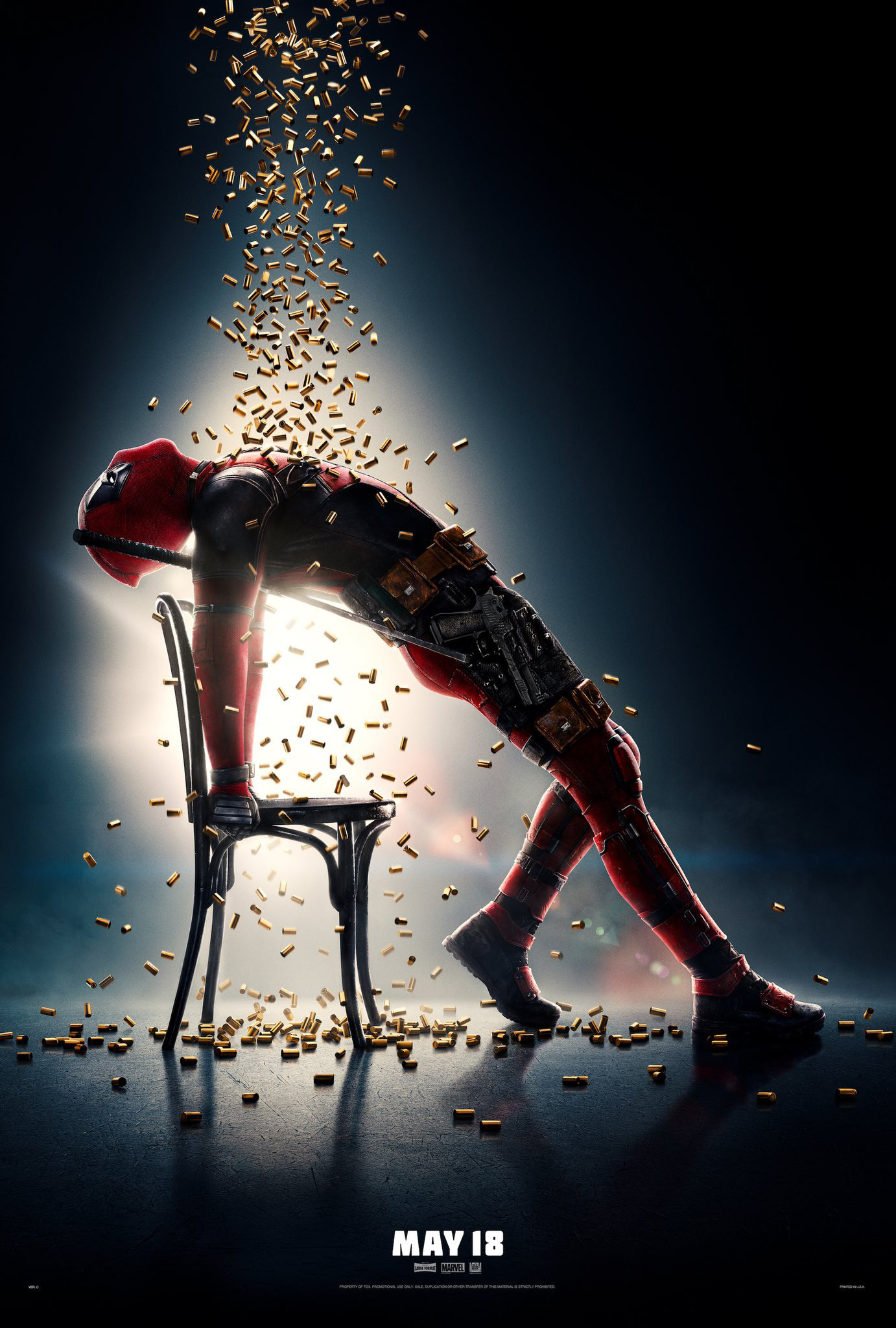
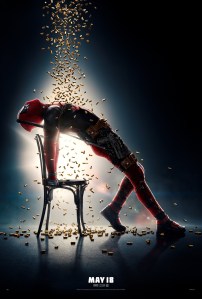
“Deadpool 2” movie review

“Deadpool, can you hear me?” Subversive, irreverent, brilliant, meta. It very well may be better than the first. How often do we get to say that about direct sequels? Ryan Reynolds’ witty, crass, charmingly naughty superhero is back to take even the most unrelentingly serious movie patron, and drive them to complete laughter. The square peg of the X-Men’s round universe returns with non-stop action, antics, and fourth-wall breaking humor virtually deconstructing everything from the opening credits to the post-credit scenes. Nothing new there; however, Deadpool assures the audience that the story they are about to see is a family movie. And after watching it, it may be unconventional, but it’s a solid family film. Maybe not “family entertainment,” by the Disney definition, but about family nevertheless. Speaking of which, we may have just watched the final Deadpool as we know it before it gets the Big D sanitization treatment, should Comcast (NBC Universal) not swoop in to save 20th Century from the otherwise inevitable Disney acquisition. Deadpool 2 isn’t just better than the first one simply because it’s funnier, more risqué, or more clever; in measurable ways, it possesses stronger villain(s), stronger opposition to the goal, and a better plot overall. Not your everyday “family” film, but filled with emotional tugs at your heart strings, all the same. Just with a heaping helping of self-aware and self-deprecating bawdy humor.

For two years, Wade Wilson/Deadpool (Ryan Reynolds) has continued his mercenary work, taking down villain after villain, crook after crook; but, after he fails to kill one of his targets on an extra-special day to him, he is faced with tragedy. Through a series of bizarre events–yes, even bizarre for Wilson–Wilson finds himself in a maximum-security prison ran by the DMC (Dept of Mutant Control) along with a renegade 14yo mutant named Russell. When Cable (Josh Brolin), a high-tech assassin, arrives from the future to take out a target that he claims leads to total destruction, Wilson must battle inner and outer demons in order to get his heart into the right place. Knowing he’s facing the most dangerous villain he’s ever encountered, Wilson forms the X-Force, a diverse “superhero” group of many talents in order to apprehend the target to prevent the world from plunging into complete chaos.

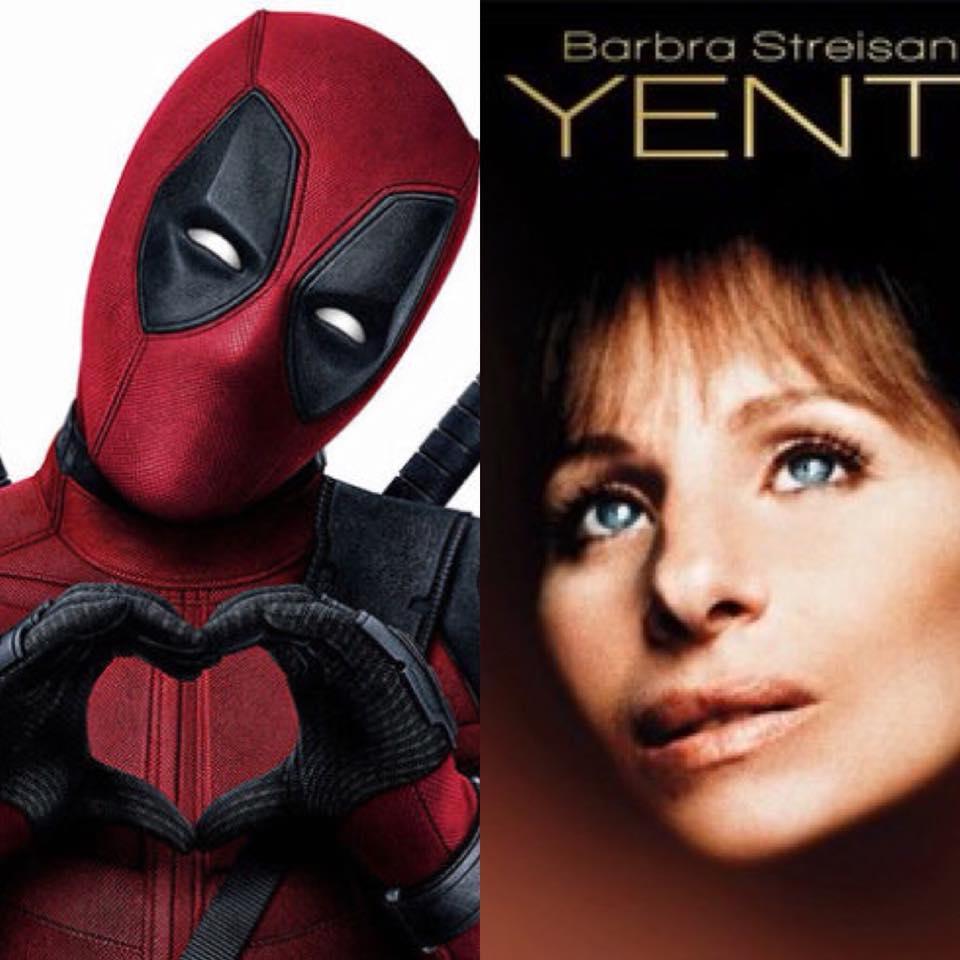
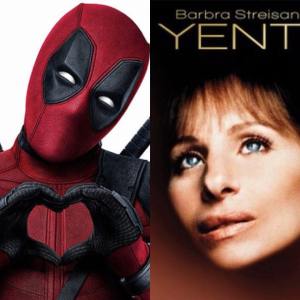
There is a comedic power in the plot of Deadpool 2 that invites the audience, at every turn, to laugh with the movie as it laughs at itself. There are a few running schticks throughout the film, but my favorite is the continued references to Barbra Streisand’s groundbreaking film Yentl featuring the iconic Streisand ballad Papa, Can You Hear Me? To which, Deadpool points out sounds an awful lot like Do You Wanna Build a Snowman from Disney’s Frozen. And it’s the implication of Disney appropriating Streisand’s song where the “Disney joke” was likely cut from the movie. Other jokes carry over from the first film such as the X-Men mansion with only Negasonic Teenage Warlord and Colossus roaming around. Some of the schticks from the first movie are transformed for this direct sequel. Contrary to the Wade Wilson from the first film, this one, this one diverts from his persistent aversion to companionship and a desire to be the “lone ranger,” as it were, and expresses a need for family. This desire for family serves as the backdrop of running jokes, gags, and extreme snark.
Streisand isn’t the only female vocal artist highlighted in the film, Dolly Parton’s 9 to 5, Pat Benatar’s We Belong, and Cher’s If I Could Turn Back Time are all featured, all that we were missing was Cyndi Lauper’s Time After Time. Unlike the completely unconventional opening credit sequence from the first Deadpool, this sequel’s opening credit sequence takes a page out of the James Bond handbook, complete with the new single Ashes by Celina Dion. Like the opening credit sequence from the first film, this one also replaces the names with jokes that certainly aid in setting the irreverent mood of the film. Although a film should never primarily rest upon the music, as the plot should stand on its own, the score and featured songs are incredibly important assets that can greatly enhance the experience. Deadpool 2 contains a few montages set to song that will certainly have you rolling over laughing. Sometimes it’s the complete contrast or juxtaposition that the lyrics provide against the action in the foreground that drive the audience to complete hysterical laughter.

For all the first film got right, one of the elements missing from it was a well-developed, dynamic villain (more specifically, opposition to the external goal). Deadpool 2 provides solid central opposition to the external goal (which, for spoiler sake, I won’t mention) flanked by two villains taken directly out of the X-Men comics (and X-Men: the Animated Series). Cable, mentioned earlier, and the Juggernaut. Not to pigeonhole Cable into the villain category, there is more to this villain than first meets the eye. He can be more accurately described as an anti-hero because of his reasons for returning to the past to stop Armageddon, so to speak. Knowing Cable’s backstory, his goals, and that which he sees as opposition to his goals, gives him a character depth seldom seen in many superhero villains. When a villain (or anti-hero) can get the audience to empathize with his or her plight, then the villain succeeds in being well-developed and complicated. Having a complicated villain enables the audience to love or love to hate the villain. But in both cases, the audience loves to see the villain (or anti-hero) on screen. Supplementing the cast of villains in Deadpool 2, is the iconic X-Men character Juggernaut. His introduction into the film comes at a strategic turning point that launches the plot into the showdown.

The film makes an important observation about the lack of plus-sized lead characters in superhero movies. Russell is a plus-sized mutant who wants so desperately to be a superhero, but sends the message to Wilson (and by extension, the audience) that there should be room for non-athletic types in the superhero universe. It’s an important message that I think would have played out more effectively had the actor not been so childish. I understand that the character is a 14yo mutant who is still struggling to find his place in this world and understand his powers, but I kept seeing the actor and not the character. The ability to bring a character to life without the actor showing is part of the art of acting. In most cases, the audience wants to see the character, not the actor playing him or her. I liked the character of Russell, just think he could have been portrayed by another actor who could have more effectively driven the message home that diversity in the superhero universe mans more than male, female, straight, gay, etc. It should also incorporate a diversity of body types. Having non-athletic body types represented in lead characters–superheroes specifically–is an element that I hope continues to improve.

There truly is so much to enjoy about Deadpool 2. Behind the ballsy jokes, suggestive poses, and hilarious meta observations, is solid writing and direction. With the Disney acquisition of 20th Century Fox all but complete, with the wild card of Comcast’s (NBC Universal) bidding 19% more than Disney in cash that could alter the direction of the deal, I hope that we did not witness the last Deadpool free of Disney sanitization. Knowing that they strong-armed Fox into cutting a Disney joke from the film during post-production, does not help matters any. Hopefully, the third installment of Deadpool will be just as funny, if not funnier than the first two. Oh yeah, it should go without saying but this NOT a superhero movie for kids.

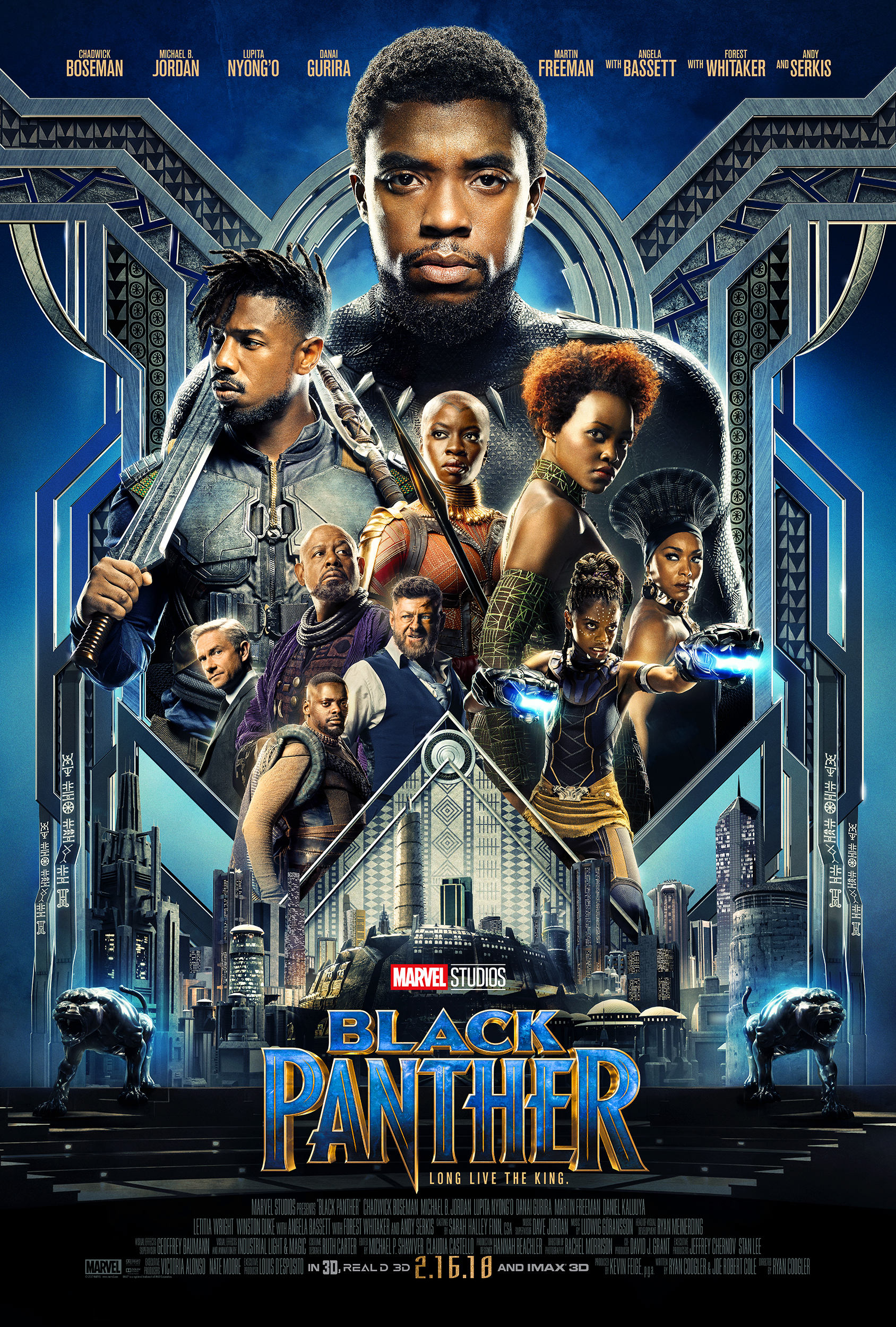
“Black Panther” movie review

A groundbreaking new perspective on the typical high concept superhero movie. Marvel’s Black Panther directed by Ryan Coogler is the type of movie that began with the desire to make a bold statement and then a narrative was built around the message. If you’ve heard it’s unlike any superhero movie you’ve seen before, then you’ve heard correctly. One of the things I’ve always appreciated about the Marvel universe (and DC by the same token) is the diversity of the characters. There are characters from a variety of backgrounds, creeds, cultures, ethnicities, etc that are represented in the characters. However, just because the characters were there does not mean they received reasonable screentime (or page time in comics). Up to this point, X-Men’s Storm (my favorite Marvel character) seems to be the only black character who receives comparable screen and page time to that of her white male or female counterparts. In a world that should teach us that our universe is a diverse place, filled with incredible people from a variety of backgrounds and origins, the representation of black heroes lagged behind. The beauty of Black Panther is not that is was simply created to finally give a predominantly black cast in a superhero universe the spotlight, the beauty is that the movie has something to teach everyone. There is a particularly strong message for young black boys and girls that their mythology is as fascinating as the Greeks and Romans, and that they can achieve greatness through teamwork, education, and loyalty.

Chadwick Boseman plays King T’Challa, of Wakanda, the fictional African nation housing secret sci-fi technology, who must step up and embrace the weighty responsibility of his birthright after the assassination of his father. When T’Challa returns home Wakanda to take his rightful place as king, a powerful enemy suddenly reappears and challenges T’Challa’s claim to the throne — and as Black Panther — T’Challa gets tested when he’s drawn into a conflict that puts the fate of Wakanda and the entire world at risk. Faced with treachery and danger, the young king must rally his allies and release the full power of Black Panther to defeat his foes and secure the safety of his people. (IMDb)

Although there is a lot of technology in Wakanda (and by extension, in the film), the focus is not on gadgetry or superpowers but on how T’Challa can be a better king than his father who made a poor judgment call that ultimately cost him his life and put the land of Wakanda at risk of rape, pillage, and plunder. That is a message that resonates with everyone–we all want to strive to be better as we go through life. Perhaps we are trying to be better than we were as kids or maybe you are trying to be a better parent than yours were. Whatever the case, we can all place ourselves in T’Challe’s boots. There is also a powerful message regarding how isolation can be detrimental to society at large. Not that the film is advocating the loss of sovereignty–Wakanda is highly sovereign–but there is the message that a country with so much to offer should return some of that to the world in order to help create a better society, more opportunities for growth, and the sharing knowledge that can heal and protect.

The cast is incredible! So many talented performers who truly bring their respective characters to life. My only negative critique regarding the cast is the underused Michael B Jordan as the main opposition character. His charisma shines brightly on screen! But sadly, he does not get much screen time. He is the type of opposition character that you love to see, but unfortunately, you don’t get that much time with him. Although many may be quick to liken Black Panther to Captain America—and for good reason, both shoot straight and almost piously righteous–there is a big difference between the two–and it’s a good one. Black Panther is humanized by his endearing relationship with his brilliant sister Shuri portrayed by the delightful Letitia Wright. Honestly, she was my favorite character in the entire movie. Every moment she was on screen was outstanding. She was the only one who wasn’t bruting–always positive–and has the BEST lines. Just her character alone is enough to give the movie rewatchabiity. On the topic of dialogue, I would like to have seen a powerful monologue that embodied the message of the film and evoked strong emotion. There are emotional parts, but I think an acute moment would have done the film well.

The film opens with a beautiful long tracking shot of exquisite editing that has a mystical feel to it. The opening alone is enough to hook your attention for the remainder of the narrative. No surprise here that all the technical elements were exemplary. There were only a few times that the visual effects felt artificial. For all the action movie tropes in the film, it plays as more of a character-driven story than action-driven. And that’s the brilliance of Black Panther. Simple plot, complex characters–that’s what I tell my screenwriting students at the University of Tampa.

Intensely riveting, Black Panther is clearly a standout Marvel film distinguished from the others in the MCU. All the elements that give it the fresh take on the superhero movie genre work to its advantage. You’ll certainly be left with a lasting impression.