“A Quiet Place” horror film review

Heart-pounding. Spine-chilling. A creepy creature-feature that will leave you speechless. The demonstrable excellence in terrifying visual storytelling can effectively be summed up by the queen of silent film herself Norma Desmond, “we didn’t need dialogue, we had faces” (Sunset Boulevard). A Quiet Place truly earns its place among “certified fresh” horror films. Not since Don’t Breath and 10 Cloverfield Lane have I encountered such a thrillingly intelligent motion picture. Writer-director John Krasinski’s post-apocalyptic horror masterpiece showcases the power of visual storytelling within the horror genre. Furthermore Krasinski brilliantly channeled the soul of the iconic (mostly Universal Pictures) silent and early horror films for his modern interpretation of the creature-feature. No gimmicks here. Only a solid plot that builds an incredible, immersive cinematic experience upon the foundation of a simple plot with simple limitations. Simple plot, complex characters. That basic screenwriting principle is where so many filmmakers and writers go astray. Film is a visual medium, often supported by well-crafted, lean dialogue, and this film has visual storytelling in spades. This film represents one of the best examples of embracing the concept of “show don’t tell.”

Shhhh. Don’t make a sound. One family finds themselves surviving a post-apocalyptic world now inhabited by an alien species that hunts by sound.

There has certainly been a resurgence of exceptional horror films over the last few years. I mentioned Don’t Breath and 10 Cloverfield Lane earlier, we also have the Academy Award nominated Get Out from last year and many others. While many may shrug their shoulders at horror because it is a proliferated genre with many cheep, tawdry horror flicks, this same genre can be incredibly intelligent in how it makes an observation of society and offers commentary, a new perspective, or provides a means to a discussion. Some of the most critically acclaimed films over the decades have been horror. Being among the first films commercially released, horror has also stood the test of time and provides audiences with a experience that challenges worldviews, provokes physiological responses, and fuels nightmares and imaginations.

One of the most brilliant aspects to A Quiet Place is the film’s innate ability to instantly hook the audience with loud silence. Going into the movie, audiences know that the arachnid-like creatures kill anything within an earshot. Therefore, the audiences hang onto every bump, snap, or thud as the tension rises and suspense is drawn out to terrifying levels. Impeccable audience engagement. It takes a special kind of movie to completely immerse the audience into the world of the film in a multidimensional way. In terms of viability of the film and cross-promotion, this movie certainly has what it takes to be a popular and successful adaptation for a house at Universal’s Halloween Horror Nights or Busch Gardens’ Howl-O-Scream. Definitely has a place among the best horror film experiences to date.

The successful suspense and tension building can be attributed to seldom getting a good look at the alien-arachnid-like creatures. Had the audience seen the creature repeatedly throughout the film, it would lose fright value. As Hitchcock stated, “there is nothing scarier than an unopened door.” Meaning, the filmmaker’s ability to transfer the terror on screen to the minds of the audience is far more powerful and impressive than relying upon on-the-nose scares and jump-scare gimmicks. Well-crafted suspense and rising tension carries far more weight, and has the ability to support a narrative so much more effectively than a cheap scare. Although the atmosphere in this film may remind you of Don’t Breath, and rightly so, Krasinski’s film does not quite measure up to the macabre, terrifying atmosphere that Fede Alvarez provided audiences; however, Krasinski’s A Quiet Place is extremely close to the aforementioned and deserves the accolades that it has received.

In terms of how to closely read A Quiet Place, the film provides exceptional social commentary on the perils parenting and, by extension, protecting one’s offspring. In fact, I imagine that the experience for parents watching this film exceeds the levels of terror felt by those of us who do not have kids. There is also plenty of material on how far a parent is willing to go in order to protect their children. I also appreciate the film’s commentary on expected mothers, and how they stop at nothing to protect their unborn child from that which seeks to do it harm. Responding to and working through grave tragedy is another heavy and shocking subject matter in the film. We all respond to death differently; many of us grieve differently than one another. Some bottle up all the negative feelings for fear of how to deal with them, and others blame themselves because they feel that there is something that could’ve been done differently to protect a lost loved one. On a lighter note, the film also provides metaphor on how to work with and handle your older kids when they seek to push the boundaries–boundaries that may be dangerous and place them in harm’s way. There is so much here to talk about, and I have just touched on the surface. That is why horror is the best genre for creatively exploring psycho-social constructs and other observations about humanity and the world in which we live.

Quietly make your way to your seat in the auditorium. A Quiet Place is definitely a film to be experienced on the big screen with a theatre full of others who seek to be frightened. Enjoy the refreshing originality of a film that could have so easily went by way of so many other creatures features that lack anything memorable, and just blend into the background with countless others in this subgenre of horror. It may not have the well-defined external goal and end game of Don’t Breath, but it is certainly exciting and fun! You’ll certainly be absorbed into this terrifying post-apocalyptic world, where YOU are afraid to go bump in the night.

“Blade Runner” (1982) movie review

BadeRunnerStill a visionary masterpiece? On the rare occasion that I do not feel compelled to see one of the weekly new releases, I enjoy taking my Thursday night and watching an older movie that would be fun to review. As it turns out, it dawned on me that I had never seen Ridley Scott’s Neo-Noir Blade Runner despite the fact that it it a critically acclaimed film and highly regarded by many of my contemporaries. I have found that sometimes you have seen clips, heard people reference it, and simply hear the title so much that you think you have seen it. Then you realize that you’re familiar with the ideas, concept, or story but not the movie itself. So, I decided to watch it for Throwback Thursday and review it today. Unfortunately, I have been struggling with connecting with the film as so many other filmmakers and film lovers have. When watching a movie from 30+ years ago, I do my best to place myself in the shoes of the audience then. But, I am having difficulty this time. As a peer-reviewed cinema researcher, I believe that no matter how old a film is that it should still be relevant and impact audiences many decades down the road. Truthfully, I am not entirely seeing why it is such a regarded film still to this day. However, it is definitely an artistic masterpiece due to the technical elements of the production. So in many ways, yes, it still IS an iconic visionary masterpiece; but, fails to connect or resonate with audiences today.

Travel to a dystopian Los Angeles in the year 2020, or present day Detroit; take your pick. Many have fled the city for colonies on other planets or to the far north of the city to escape the rampant chaos. In the early to mid 2010s, Tyrell Corporation invented Replicants (or human-like androids) to carry out menial tasks and hard labor in a modern slavery fashion. Each unit was programmed to last for a specific amount of time (4yrs +/-). When a small band of Replicants decided that they wanted to take their lives into their own hands, they return to earth from the planet they were slaving way on and are determined to force Tyrell Corp to fix them. These Replicants led by Roy (Rutger Hauer) will stop at nothing. Over the years, when the Replicants began to pose a threat to humanity, special operations forces known as Blade Runners were trained to “retire” the androids. Former Blade Runner Rick Deckard (Harrison Ford) has been reactivated and forced to retire the small band of Replicants that pose a threat in the already dystopian Los Angeles. Follow Deckard as he conducts an investigation and is fearful of his own life as he attempts to track down and “retire” the remaining Replicants before they achieve long-lasting life. All seems pretty routine until he encounters a special Replicant named Rachael (Sean Young) at Tyrell Corp.

It doesn’t take long to understand that this film is a neo-noir detective movie that takes place in a dystopian future. Neo-noir is regarded as a film noir style movie produced after the classic film noir period (which was relatively short (~1940s-50s). This genre [although, technically, there is sufficient evidence to suggest that film noir is more of a style not a true genre] follows many of the same tropes and elements found in film noir (think Billy Wilder’s Sunset Blvd, Double Indemnity, classic detective movies, or Orson Welles). Often, the protagonist is a solitary individual who finds him or herself in over his or her head who faces or exhibits perpetual pessimism, fatality, or menace in a plot consisting of cynical attitudes and sexual motivations. From a technical perspective, film noir (or neo-noir) is stylistically dark, high contrast, low key lighting, contains strategic shadows, and shots filled with symbolism and dichotomy. The plots are usually slow burning and contain social commentary or a self-reflexive narrative. Once analyzing this movie as a neo-noir, it becomes more fascinating but still lacks that timelessness that can be found in some of the examples mentioned earlier in this paragraph. As a artistic film, I am impressed with the vision of Ridley Scott. As a classically-regarded and praised film, I am not very impressed. Although, I find that it is an excellent example of how many in the early 1980s viewed the future and that is is a fantastic example of neo-noir style filmmaking.

One of the biggest problems I had with the film is the fact that I had trouble loving the protagonist or hating the antagonist, or feeling sympathy for either of the aforementioned. In screenwriting, it is imperative that the audience make a firm connection with either the protagonist or the antagonist. Note: the antagonist in a film/neo-noir is not always the “bad guy.” Whereas even Gloria Swanson’s Norma Desmond in Sunset Blvd made a strong connection with the audience in that we feel great sympathy for her plight, yet she is the antagonist in the story–or many agree as such. Harrison Ford’s Deckard in Blade Runner never quite garnered strong support from me in the same way his nemesis Roy failed to elicit disdain. Both Deckard and Roy are fairly static characters–meaning they lack dynamic development. There is, however, an indirect glimmer of character development in Roy at the very end that plays significantly into the plot for a brief but strategic moment. As regularly reoccurring throughout the narrative the character of Rachael is, she can almost be removed from the film and change little in the overarching story. For the most part, she simply exists and pays into Deckard’s motivation, but mildly so. She neither causes him to view Replicants differently or becomes his sole goal. It is clear from early on in the plot that Deckard already had reservations in retiring Replicants. Rachael simply amplifies or intensifies the feelings that were already brewing.

Looking back at movies from the mid to late 20th century that take place in the early to mid 21st century can be quite entertaining. Sometimes the future portrayed in the film, in one form or another, has actually come to pass. Although, other times, the future is incredibly inaccurate. The dystopian Los Angeles in Blade Runner is definitely the latter. Yes, there are themes of unchecked immigration, authoritarian power, and capitalism that can be read as not so different from today; but, for all intents and purposes, the future is much more grim in the movie than in today’s reality. Perhaps that’s why it can be difficult to connect with this movie. It takes place in a “future” that never happened, and probably won’t happen in the now near future. I think that’s the danger when writing or directing a movie set in a future that relies heavily upon technology directly related to the plot. Some movies can pull it off. Take Back to the Future for instance. It works because the technology in the culture of the future isn’t significantly integrated into the essence of the plot or are solely responsible for some dystopian world. The futuristic technology merely exists and helps to move the plot along. In Blade Runner, the whole reason for the plot is because futuristic technology in our present day has turned on its creators and became the catalyst for a world drowning in chaos.

If you have never seen Ridley Scott’s Blade Runner, I definitely encourage you to do so, especially if you enjoy film or neo-noir movies. It provides us with a glimpse into how the world viewed a possible future in the early 1980s; and prompts us to think about life and how we might behave if we knew that we only had a few years to live. Survival of the fittest maybe? Or, fight or flight? If I was a psychologist, I think that this would be fascinating to analyze from a psycho-social perspective. At the end of the day, the film was quite the visionary masterpiece for its day and still remains a favorite of many filmmakers, scholars, and just film lovers alike.

*This review is in reference to the original theatrical release

The Hollywood Studio System: Employment Then and Now

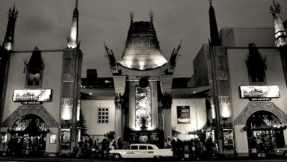
One of the last remnants of Hollywood’s Golden Age, Grauman’s Chinese Theatre stands as a tribute to the movies that started it all.

One of the last remnants of Hollywood’s Golden Age, Grauman’s Chinese Theatre stands as a tribute to the movies that started it all.

In light of the recent film Hail, Caesar!, I thought it would be interesting to take a closer look at the old studio system and whether resurrecting some of the practices might actually prove to be a positive affect upon employment in media and entertainment.

The entertainment industry is evolving more quickly than it ever has, and film production companies and distributors are of no exception. Just like the advent of television had a major influence on the sharp decline of movie patrons in the 1950s and 60s, the advent of on-demand and streaming “television” and movie content today is having a major impact on entertainment sources today. But this article does not aim to analyze distribution, production, nor revenue; its aim is to analyze the state of employment opportunities in the film and narrative television industries. What better way to begin to explore this controversial topic than with the studios that started it all.

HISTORY

The famous entry gate to Paramount Pictures as seen in the 1950 film, all about the studio system, “Sunset Blvd.”

The famous entry gate to Paramount Pictures as seen in the 1950 film, all about the studio system, “Sunset Blvd.”

The rise and fall of the former “studio system” lasted for a period from the 1920s to the late 1960s, with the 1940s to the 1960s being the period of the downfall. During this time, there were five major film studios known as the Big Five, essentially controlling the film industry from production to distribution. The Big Five consisted of Paramount, MGM, RKO, Loew’s, Fox Pictures, and Warner Brothers. Though not as prominent, three smaller studios known as the Little Three, consisting of United Artists, Universal, and Columbia Pictures, were the chief competition. Regarded as the end of Hollywood’s Golden Era, the landmark Supreme Court decision in United States v. Paramount in 1948 marked the delcine of the Studio System. In short, over about a 15-20 year timespan, studios began opening their lots to independent filmmakers–independent of the Big Five (not independent by today’s definition), terminating permanent staff members, and refraining from entering into longerm contracts with performers and movie houses. Although the Walt Disney Company was not part of the Big Five nor the Little Three, it is the only studio today still operating as a studio from the old Studio System.

PRESENT DAY

The Bronson Gate at Paramount Pictures as seen today

The Bronson Gate at Paramount Pictures as seen today

With the major studios today only producing about 20 films a year, the majority of films releasing in first-run movie theatres are produced by independent producers. As stated earlier, this is not independent as we think today; independent by this definition means movies produced outside of the major studios, but often distributed by them (or a subsidiary). Think: Star Wars or Jurassic Park. Since the fall of the Studio System, big banks are more reluctant to invest in or finance films, so producers are responsible for securing their own funding. Less funding means fewer job opportunities for film and television graduates. Most film and television professionals in the entertainment business today are independent contractors–being attached to films and television shows for however long the production time or run-length is. Although a long-running television show provides more employment stability than films do, both are high risk professions. Of course, along with the high risk comes potentially great rewards.

According to Hollywood folk lore, making a wish at the famed Bronson Gate is said to bring good luck. This is me (30lbs ago!) on the Paramount Studio tour in March 2015.

According to Hollywood folk lore, making a wish at the famed Bronson Gate is said to bring good luck. This is me (30lbs ago!) on the Paramount Studio tour in March 2015.

Why would the return of some semblance of the old Studio System be a good turn of events in today’s economy? Simply stated: more jobs and opportunities for budding professionals and college graduates. Why is that? Any first-year film student can tell you that studios keep a low threshold of permanent staff members in administration and production. The majority of talent and crew on each film is independently contracted. And with gaining entry into a union becoming increasingly difficult, it leaves many potentially talented professionals out of work or in low-pay positions on low and moderate budget films. If the Studio System were to return, they would have the collateral that big banks are looking for to invest in films. After all, film, television, and to some extent theatre, are the United States’ largest exports even though they are only recently counted as part of the U.S.’ GDP (gross domestic product) in terms of evaluating the health of the economy. If there were more permanent positions in production with studios and production companies, the unemployment rate would drop significantly in entertainment because budding professionals and college graduates could land positions in which they could grow and excel.

An aerial shot of the Desilu Stages in Hollywood in the 1960s

An aerial shot of the Desilu Stages in Hollywood in the 1960s

But what about exploitation and monopoly? Are those not reasons why the Supreme Court stepped in? Yes. However, there are many reasons why personnel in entertainment today, as permanent staff members, would not undergo the same treatment. The reason: unions. SAG-AFTRA, IATSE, TEAMSTERS, and EQUITY do an excellent job at protecting creative peoples’ rights and opening doors of opportunity. But, it is becoming increasingly difficult to gain access into these organizations. And with the unions being the gatekeepers to opportunity in the industry, where is a budding professional or college graduate supposed to go? If studios produced more in-house movies and television shows, then that would require them to hire permanent staff members. Those seeking a career in the industry would find their place. Some may argue that production companies offer internships to recent graduates; but with lawsuits increasing in the last few years, internships are increasingly being seen in a negative light. One hypothesis is that unpaid internships are taking the place of entry level jobs. With the number of entry-level jobs decreasing since the recession began, the unemployment rate in entertainment is rising.

One way to combat the increased unemployment in entertainment business is to bring back the large studios that have the financial assets to offer and hire permanent positions. This would enable the studios to hire a number of cinematographers, writers, directors, etc. And, those individuals would work on the films produced by the respective studios. If studios were to increase the number of films produced each year, as they once did, then there would be more opportunities for professionals. Regarding the monopoly studios had on movie houses, the present laws on the books would not allow for a studio to have complete control over a particular theatre chain.

There is plenty of room for studios and production companies large and small. Unlike the days of the Studio System, in which outside companies could not shoot films or television shows on another company’s lot, the smaller studios should be allowed to still rent the stage and lot space as they do today. Of course, if Studios were producing more movies on their lots, that may cause the smaller companies to have to look elsewhere for locations. But, that could be a good thing; because if they purchased land for a backlot or sound stages, that would create more jobs for craftsman. In order to combat the rising unemployment rate in the entertainment business, professionals need to get together to develop ideas as to how to hire more personnel. Bringing back the Studio System is just one idea as to how to create more full-time jobs in film and television production.

One of the entrances to MGM Studios (now owned by Sony Pictures) in Hollywood

One of the entrances to MGM Studios (now owned by Sony Pictures) in Hollywood

With studios forced to produce more movies in order to make payroll, that could potentially mean more writers can sell their scripts and perhaps more original ideas will make their way to the silver screen. This action could create human resource databases at the various studios and production companies that would advertise vacant positions. Just like applying for a job at Disney World, you could see what positions are available. Bringing back a new Studio System would allow for studios to advertise full and part-time regular positions. For instance, you could see which studios are hiring cinematographers, directors, composers, etc. Professionals in the creative and technical arts would also benefit from employer provided health insurance and retirement. Although as independent contractors, film and television professionals make more money than working as a regular employee, regular employees benefit from regular paychecks and benefits, and to an extent job security.

Technology is making the production of movies and television shows more efficient than ever, so a major studio could hire permanent staff members to work as producers, directors, screenwriters, cinematographers, etc. Employment opportunity and stability are key elements to the health of an industry–even creative ones. Even though the old Studio System ran unchecked for many years, causing the eventual breakup, carefully constructed and regulated today, the return of a new Studio System could mean more jobs and opportunity for college graduates pursuing entertainment business careers. And just maybe, more movies!


BIBLIOGRAPHY

  • US adds entertainment and innovation to GDP, Time Magazine, http://entertainment.time.com/2013/08/01/hey-america-entertainment-just-made-you-hundreds-of-dollars-richer/
  • History of the Studio System, Encyclopedia Britannica, http://www.britannica.com/EBchecked/topic/394161/history-of-the-motion-picture/52153/The-Hollywood-studio-system
  • Paramount Pictures v United States, 334 U.S. 131 (1948)
  • Glatt v. Fox Searchlight Pictures, New York Southern District court, http://www.nysd.uscourts.gov/cases/show.php?db=special&id=300
  • US Bureau of Labor Statistics, http://www.bls.gov/ooh/entertainment-and-sports/home.htm
  • Glatt v. Fox Searchlight Pictures Inc. 2013 WL 2495140 (S.D.N.Y.) – See more at: http://blog.legalsolutions.thomsonreuters.com/legal-research/westlaw-topical-highlights-labor-and-employment-july-10-2013/#sthash.J9tcpnM1.dpuf
  • Hollywood Studio System Collection, http://mediahistoryproject.org/hollywood/
  • Bigelow v. RKO Radio Pictures, Inc., 327 U.S. 251 (1946)