A triumphant return to classical Hollywood storytelling.
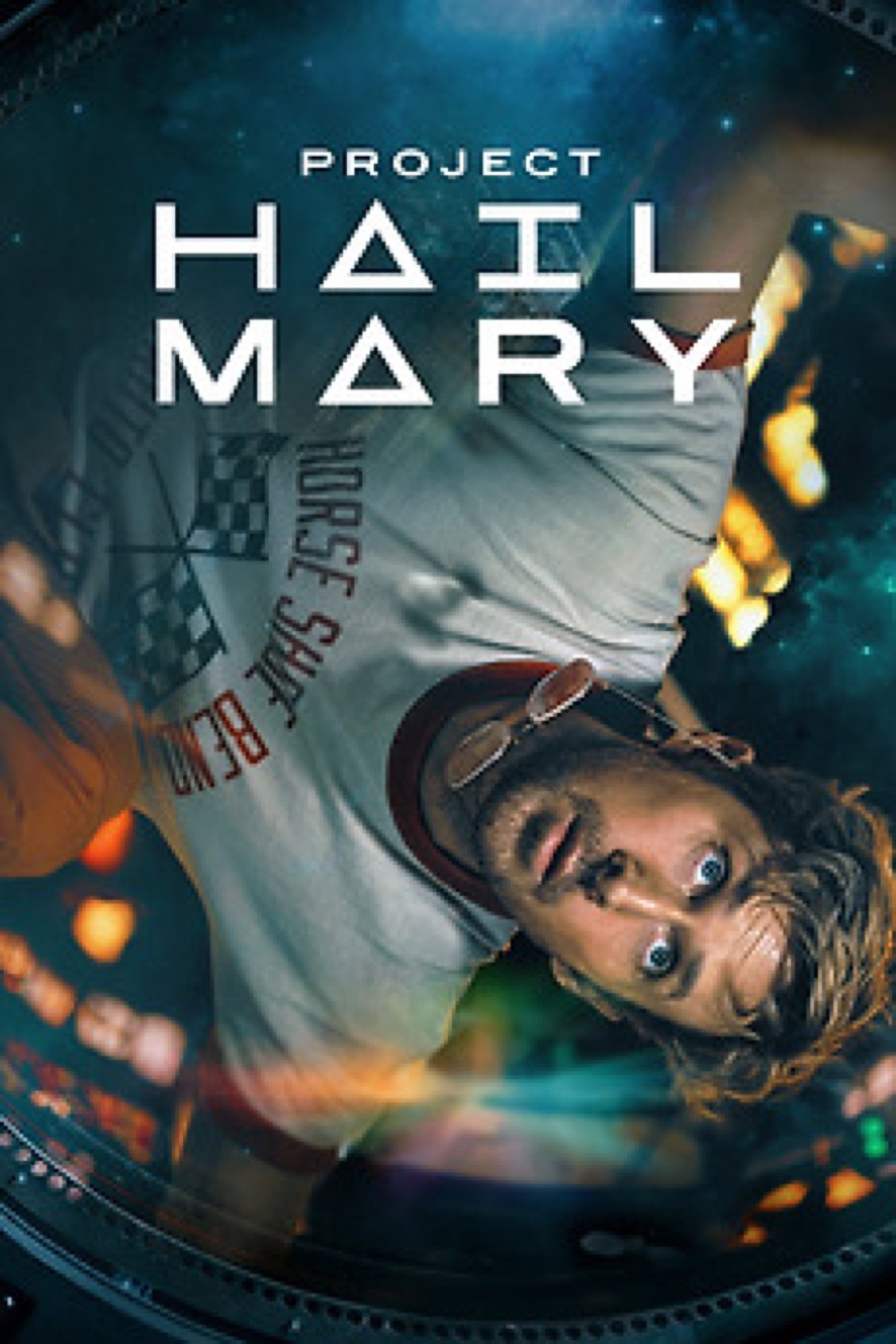
There is something refreshingly old-fashioned about Project Hail Mary. Not old in the sense of dated, but old in the sense of dependable—like a well-built machine designed to do exactly what it promises. It embraces the kind of classical Hollywood storytelling that has quietly fallen out of favor in an era increasingly defined by irony, cynicism, and ideological sorting. This is a film that wants to entertain first, inspire second, and lecture not at all. And in today’s cinematic climate, that alone feels almost radical.
Based on the Andy Weir novel, science teacher Dr. Ryland Grace (Ryan Gosling) wakes up on a spaceship with no recollection of who he is or how he got there. As his memory slowly returns, he soon discovers he must solve the riddle behind a mysterious substance that’s causing the sun to die out. As details of the mission unravel, he calls on his scientific training and sheer ingenuity–but he may not have to do it alone.
Project Hail Mary functions simultaneously as a robust science-fiction adventure and a genuinely compelling motion picture about responsibility, sacrifice, and cooperation. It understands that spectacle is most meaningful when tethered to character, and that the audience’s emotional investment—not the complexity of the plot—is what ultimately determines whether a story lands.
And while I am quite high on this film, it isn’t without its shortcomings–particularly when it comes to plotting and pacing. But, in its defense, where plot mechanics falter, the emotive and performative dimensions cary the load. To be sure, the screenplay is not airtight. There are moments where the finer points of the science become a little vague, and occasional plot turns feel more convenient than convincing. The narrative relies on a few leaps of logic that may cause scientifically minded viewers to raise an eyebrow. And structurally, the pacing occasionally sags—particularly in the flashback sequences, which linger longer than necessary and could easily have been trimmed by twenty minutes without sacrificing clarity.
But here is the crucial distinction:
The film earns its emotional beats. And when a movie earns those beats, audiences are willing to forgive a surprising number of narrative imperfections.
At the center of Project Hail Mary lies one of the most unexpectedly affecting friendships in recent science fiction: the bond between Dr. Ryland Grace and the alien known as Rocky. What begins as a pragmatic partnership evolves into something deeper—something recognizably human, despite the interspecies divide. Their relationship is built not on ideology, identity, or tribal affiliation, but on mutual trust and shared purpose. That simplicity is precisely what gives it power. Their friendship resonates because it taps into a fundamental truth about storytelling. Ultimately, it underscores that meaningful connection is more compelling than conflict.
As I survey contemporary movies, in a cinematic landscape that often frames difference as division, Project Hail Mary instead frames difference as collaboration. It suggests that survival, both literal and cultural, depends less on asserting dominance and more on extending cooperation. And that message lands without a trace of sanctimony.
Perhaps the film’s most striking quality is its tone.
At a time when many contemporary movies lean into cynicism—often dividing characters into moral camps or ideological tribes—Project Hail Mary takes a different path. It offers a story built on cooperation, empathy, and shared responsibility. It reminds us that our actions ripple outward. That survival is collective. That progress requires partnership. And that, sometimes the most heroic act is simply choosing to help someone else. In an industry increasingly drawn to provocation and polarization, this film dares to be earnest. And that sincerity is its greatest strength.
Ryan Gosling’s Dr. Grace embodies one of Hollywood’s most enduring archetypes: the reluctant hero. He is not fearless. He is not morally pristine. He is not even particularly eager to save the world. He’s simply a man confronted with responsibility—and forced to rise to meet it. That arc feels deeply relatable because it reflects the way real courage often works. Heroism is rarely the absence of fear; it is the decision to act despite it. The film understands this intuitively, allowing Grace’s transformation to unfold gradually rather than through grand speeches or sudden epiphanies. In doing so, it restores dignity to the idea of ordinary people doing extraordinary things.
On a purely technical level, Project Hail Mary is an impressive achievement. The visual effects are sophisticated without becoming overwhelming. The production design conveys scale without sacrificing intimacy. The sound design—particularly in the depiction of Rocky’s communication—demonstrates a level of creativity that enhances rather than distracts from the narrative. Most importantly, the film uses technology in service of storytelling rather than spectacle for its own sake. That discipline is increasingly rare.
For my fellow Star Trek fans out there, this film reminded me of one of the best episodes of The Next Generation, and that is the Darmok episode where in we get the overcoming of language barriers to form collaboration between Captain Picard and an alien creature (a Tamarian) that only communicates in metaphor. It’s a powerful episode (watch it). And of course we get the memorable quote (and one for which I have a t-shirt) “Darmok and Jalad at Tanagra.” Perhaps we could say, for this movie, “Darmok and Grace at Tau Ceti.”
Project Hail Mary may stumble occasionally in its plotting and pacing, but its emotional core remains remarkably strong. It is a film that trusts audiences to care about characters, to invest in relationships, and to believe—however briefly—that cooperation is still possible. It is not a perfect movie; but it is a deeply satisfying one.
And in a world of cynical storytelling, that feels like a small miracle–a Hail Mary.
Ryan is the general manager for 90.7 WKGC Public Media and host of the show ReelTalk “where you can join the cinematic conversations frame by frame each week.” Additionally, he is the author of the upcoming film studies book titled Monsters, Madness, and Mayhem: Why People Love Horror. After teaching film studies for over eight years at the University of Tampa, he transitioned from the classroom to public media. He is a member of the Critics Association of Central Florida and Indie Film Critics of America. If you like this article, check out the others and FOLLOW this blog! Follow him on Twitter: RLTerry1 and LetterBoxd: RLTerry
A visually spectacular motion picture with a killer score that’s the storytelling equivalent of a bridge to nowhere. Denis Villeneuve’s DUNE: PART TWO is perhaps the most movie you will watch this year, as there is such a prolific amount of a variety of subplots and conflict that all converge in a single intersection to create figurative gridlock on the highway of cinematic storytelling. There is no argument, Dune: Part Two delivers cinematic scale and scope, but the grand potential of this modern-era epic is hampered by poor screenwriting.
Paul Atreides unites with Chani and the Fremen while seeking revenge against the conspirators who destroyed his family. Facing a choice between the love of his life and the fate of the universe, he must prevent a terrible future only he can foresee.
Word to the wise, be sure to rewatch the first movie before watching Part 2, because you will likely feel as lost as I was in trying to follow the central characters and main plot. With so much going on, the plot map is all over the place; in fact, one can hardly call it a map, as it’s lacking any meaningful direction. Think of an entire limited run series, jampacked into a single movie. I spent most of my time feeling completely lost in attempting to follow the outside/action plot. Fortunately, there is more action in this second installment compared to Dune: Part 1, but, ironically, more action makes for an even less engaging movie. And since the first part was sleep inducing enough, I was shocked it was possible to achieve twice.
The real star of this movie isn’t one of the A or B-listers, it isn’t the director or writer, but it’s Hans Zimmer. Zimmer’s score is mesmerizing and immersive. It truly feels like a character in and of itself. There is a beautiful otherworldly quality about his score that draws you in (too bad there’s nothing of great substance into which to be drawn) to the Duniverse. An extension of the environment is how the score plays throughout the movie.
Not even the movie’s performative dimension is sufficiently engaging, save Austin Butler, his deplorable character of Feyd-Rautha is the most entertaining out of the ensemble. Except for a few moments here or there, the performative dimension is completely uneven as some actors over-act, others under-act, some are clearly phoning-in, whilst others are visibly bored with their character. Character development, or lack thereof, is another storytelling process that is rushed in some places and creeping along in others. Ultimately, there lacks any characters with whom the audience can empathize or with which to connect as there isn’t a single likable character in the whole Duniverse. But perhaps that’s the idea: sometimes in the real world, it can be difficult to identify the most likable side in a conflict, and that is what we have here. One of life’s complexities.
During the second act (and I use that term loosely as it feels like one big second act) of the movie, there is a sequence of scenes that take place on a grayscale planet–and it looks gorgeous!!! This was probably my favorite part of the movie because it felt like an old-school gladiator-like epic in a classic sword and sandle picture.
If there were miniatures used in the film, I had difficulty identifying them. Nearly everything that wasn’t a sand dune felt like it was computer-generated. When the special/visual effects, ships, and palaces feel more computer than practical, it takes me out of the movie. That’s not to say the CGI isn’t high fidelity–it certainly is. Speaking to the quality of Dune: Part Two‘s CGI, it is exceptionally well-made. But the problem is, and yes, I know I’ve said it a hundred times, you cannot replace the way real light bounces off real objects into the camera lens. Had this movie leaned into practical effects, models, and sets more, then used the CGI for extreme wide shots or to fill in what couldn’t be made through craftsmanship, then it may have helped to compensate for the poor writing.
It’s well-known that Frank Herbert’s novel was a response to the global powers and conflict during the Cold War. That thematic idea is carried into David Lynch’s original Dune in 1984 and even in the SyFy Channel limited run series from 2000. Even though there are elements of the Cold War commentary in this adaptation of Dune, the socio-political themes and critiques are far less cohesive. While I greatly appreciate the ability to read a film differently over the years and identify what a film’s message or commentary could mean at that given time, the ability to be read differently over time does not negate the need for coherency, cohesion, and consistency. What Villeneuve and Jon Spähts’ movie is missing is consistency in representation in their interpretation of the socio-political commentary they find is more important or relevant to spotlight today.
On a side note, one of the parts of the movie that I did find surprising was Rebecca Furguson’s character’s (I don’t even remember her name) unborn baby being treated like a person. There is even a scene in which it is all but acknowledged that a human exists within her character’s womb. Certainly caught me off-guard, because the manner in which this part of the movie is presented challenges the dominant ideology so often found in media and pop culture today.
If you plan to watch it, definitely watch it in cinemas in a premium format such as Dolby. I must say, I am glad I screened it in Dolby because the score, sound design, and the grand scale is what I enjoyed most.
Ryan teaches Film Studies and Screenwriting at the University of Tampa and is a member of the Critics Association of Central Florida and Indie Film Critics of America. If you like this article, check out the others and FOLLOW this blog! Interested in Ryan making a guest appearance on your podcast or contributing to your website? Send him a DM on Twitter. If you’re ever in Tampa or Orlando, feel free to catch a movie with him.
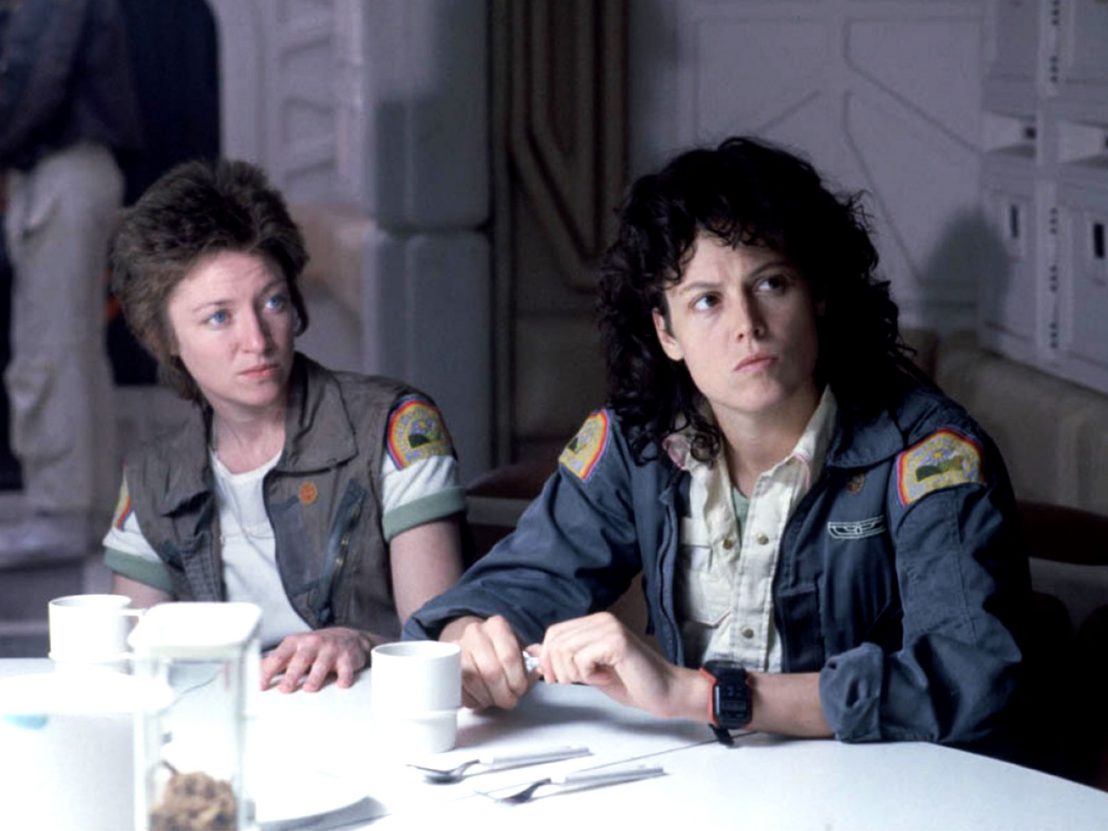
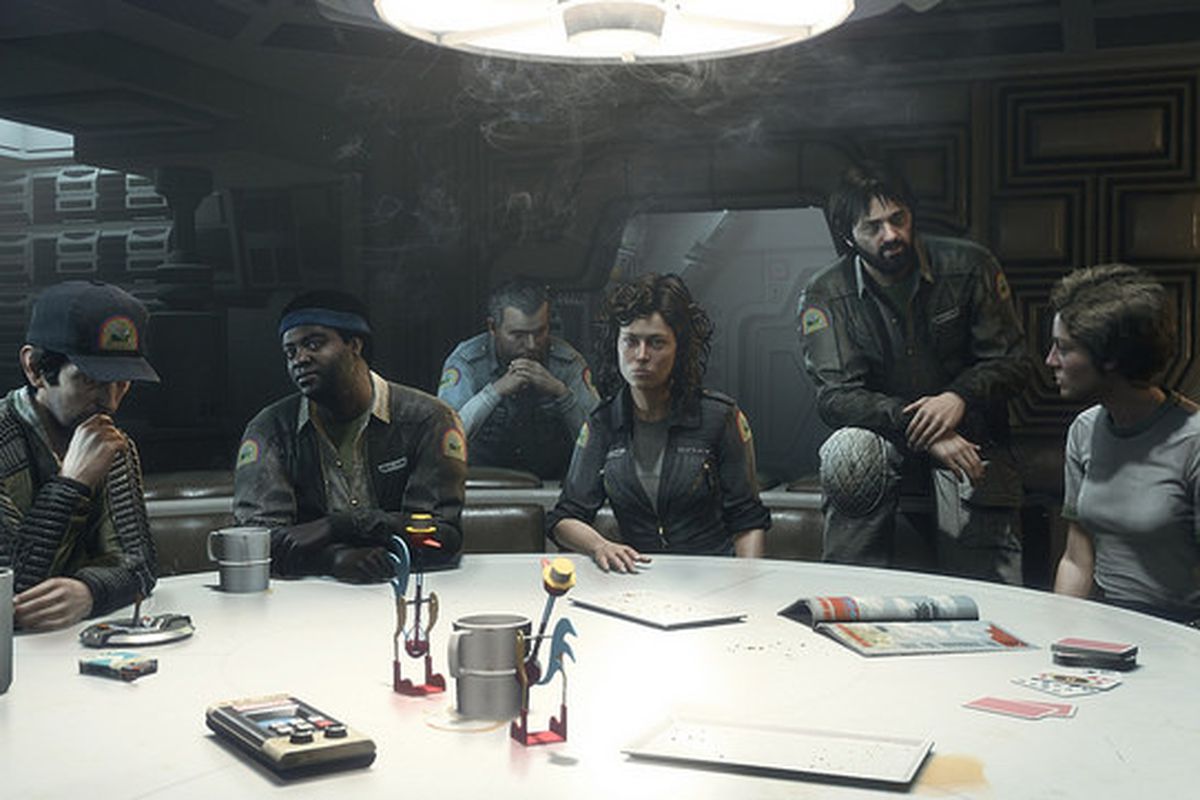
This. Is. ALIEN. You are with. Sigourney Weaver. Aboard the spaceship Nostromo. Caution. The area you are en-ter-ing is extremely dan-ger-ous. Something has gone wrong… If you get why I punctuated that the way I did, then you remember the ALIEN scene on the former Great Movie Ride at Disney’s Hollywood Studios (oh how I miss that attraction). Ridley Scott’s science-fiction horror masterpiece that convinced you that “in space, no one can hear you scream” is still the definitive science-fiction/space horror film. Furthermore, it reinvented the space-horror movies from the 1950/60s. Sitting between Halloween and Friday the 13th, this film came as a surprise for the horror genre because it countered the direction that the horror genre was going by reimagining the emerging slasher genre in a setting that is more terrifying and limiting than a house or town in which a serial killer is slaughtering teenagers. Just 10 years after the Apollo moon landing, this film takes on characteristics of that which is frightening about this new frontier that we are exploring. What if there is a killing machine monster out there? Scary stuff.
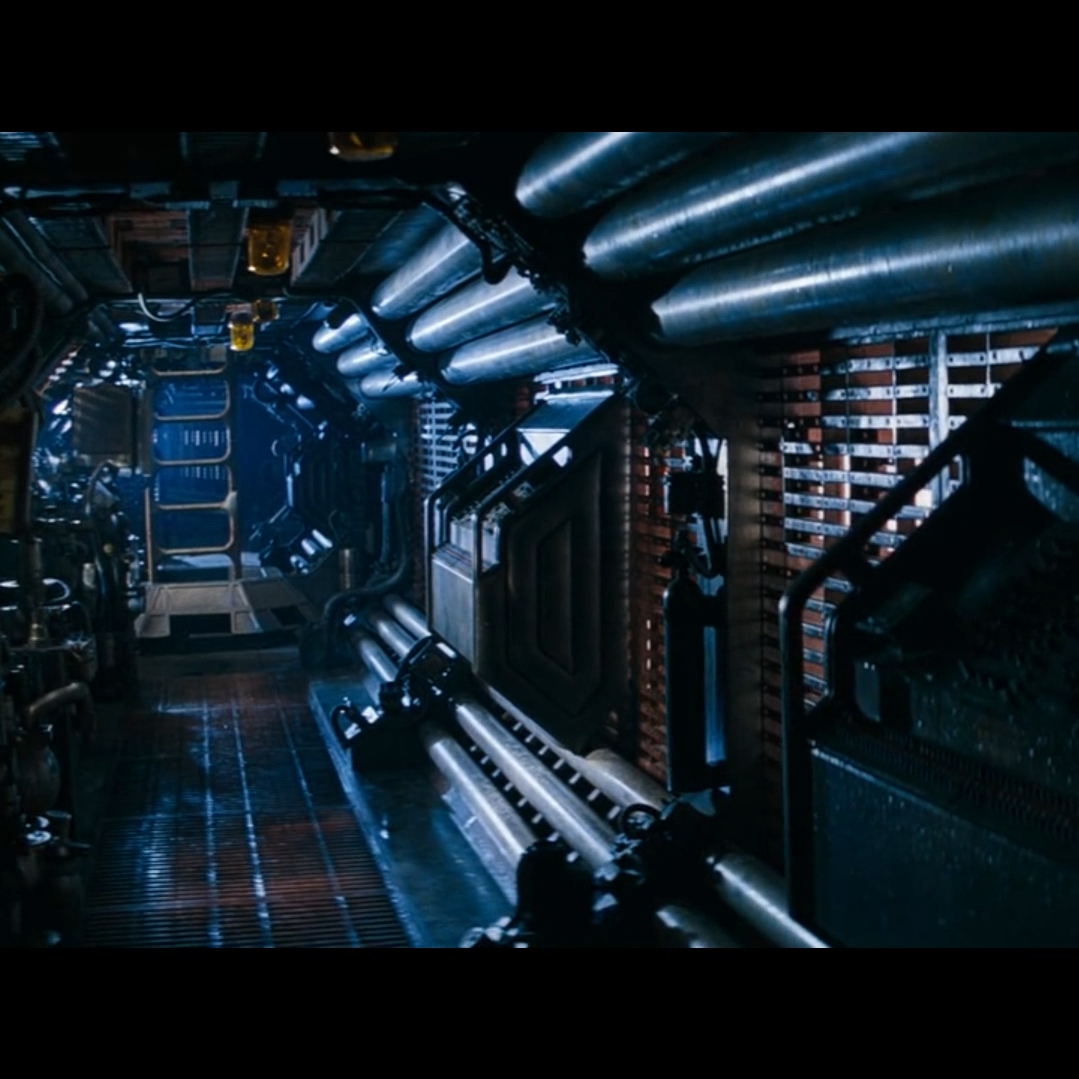
Until ALIEN, movies and TV shows set in space depicted a clean, optimistic, new world. ALIEN subverts this expectation by delivering a used, broken-in, aged space. The Nostromo was nothing like the U.S.S. Enterprise from Star Trek or the Star Destroyers from Star Wars. The design of the Nostromo communicated a dirty, dingy space that is far less appealing than the world of the United Federation of Planets. The effect of this upon audiences was fantastic because it made the future look far more realistic than anything that had come before it. The world of ALIEN truly felt like a future that was used. Indirectly, this intentional design also shows us that the passengers aren’t heroes, highly intellectual explorers, or uniquely skilled individuals. The rough design of the Nostromo parallels the roughness, lack of refinement in the characters. Again, they feel like real people, a people that we could connect with in ways that we could never connect with the characters from space-horror and monster movies in the past. The future, as illustrated in this film, is relatable. From the design of the Nostromo to the development of the characters themselves, audiences are invited into a world stepped in expressive meaning and emotion.
Beyond taking the horror genre into space and integrating some of the psychological horror and slasher elements outlined in Psycho, Halloween, and others, Scott’s Alien also provided horror audiences with a new type of final girl, social commentary on gender roles, heteronormativity, and human sexuality. Much like the Freudian components of Hitchcock’s Psycho, this horror film also explores the deep fears and desires that are often suppressed by the subconscious. Furthermore, the film also explores the fears associated with child birth by “impregnating” men resulting in body horror trauma. The counterarguments to heteronormativity is manifested in Ellen Ripley as an androgynous female who behaves in a very masculine way, the film provides an opportunity to talk about gender roles.
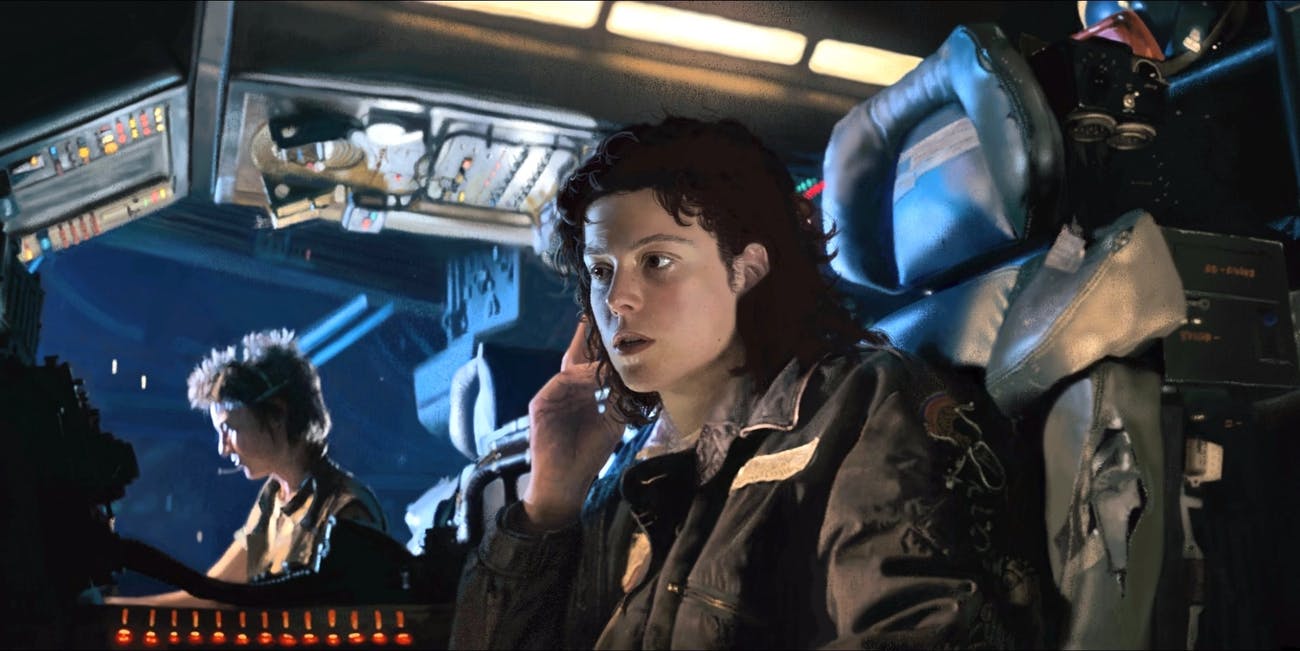
Although Ripley is, for all intents and purposes, not even on our radar for nearly 45mins into the film, following a tragedy, she is thrust into the forefront of this mission. Scott’s Alien dared to challenge the status quo in order to deliver the first female action hero, and place her in center stage. The long and short of it is that Ripley subverts the typical science-fiction hero trope to embody both the feminine and masculine to redefine what a hero is within the sci-fi/horror genre. Breaking gender norms for the time, she was neither arm candy, simply a side kick nor required rescuing by a male character. Her character and actions were not defined by gender. She is our final girl, and so much more. Not only did the character of Ripley contribute significantly to horror, she also broke ground for female heroines in the world of cinema at large.
Like Clarice Starling in Silence of the Lambs, Ridley is also someone who is equal parts female and male. In fact, you could argue that she takes on more masculine characteristics as the narrative plays. This playing with the roles of men, women, and their respective bodies and minds can be realized when viewing the character of the xenomorph as the “monstrous feminine.” The monstrous-feminine is a psychological construction generated by male anxieties about the female body and sexuality. Scott’s Alien depicts the maternal body as monstrous. More specifically, the film repeatedly examines the scene of birth or origin. Interestingly, there are three different representations of the concept of birth in the film. In terms of the production design, Alien can be likened to a gothic horror set in space. Scott’s brilliant design conveys to the audience the extreme isolation and claustrophobia. There is also an fascinating dichotomy in the worlds that are represented in this film by pitting the mechanization and technology of the organization for which our explorers work and the monstrous origin world of the alien, which we learn more about (whether you like the films or not in the prequels).
Your central character need not always be the first or second character we encounter in a screenplay. This is true with Ripley as she emerges as the central character midway through the film. However, we are given hints at her destiny throughout the first act in subtle ways. It was important to the plot to establish her as a woman in order to make her actions later on in the film so kickass and assumption shattering. Had she been seen as “masculine” or strong from the onset, then we would not be as impressed with her actions–we would expect them. Part of her power as a strong female character in horror is taking what we assumed about her (or a female character in general) and subvert our predisposition. Whereas Ripley is not the first female heroic character in a horror film, she is one that never becomes subjected to the male gaze or becomes some fantasy version of a woman. Even though female heroic characters who wear sexy clothes, wield phallic guns, or use their bodies as femme fatals can be strong characters, they are still some heteronormative fantasy for a male screenwriter or director.
Essentially, the aforementioned female characters lack an authentic humanity. Ripley is strong, vulnerable, independent, scared, mortal; these elements that make her believably human. There is so little suspension of disbelief in her character that she could nearly exist in real life. Furthermore, her character is incredibly complex; she exhibits strong intuition and intelligence, chutzpah, is brash, talks about PTSD, outspoken, rigidly wants to go by the book instead of saving a man’s life, has a natural beauty but doesn’t spend much time on hair or makeup. All these traits portray someone who has incredible depth and dimension. She is a survivor. No matter how grizzly, messy, constricting, or frightening her soundings become, she remains steadfast, collected, and brave. As the 1970s saw many changes in censorship, ratings, guidelines, etc., the ability to show gorier, more visceral body horror special effects, and on screen violence allowed Scott to confront the character of Ripley with cinematically innovative ways to test her resilience and survivorship.
The character of Ellen Ripley is also a strong pillar of the American horror film by virtue of her representation of gender politics. Even before it became popular, in more recent times, to use both male and female characters in motion pictures as a conduit to comment on the state of affairs for a particular group within our society, Ridley Scott crafted a visual masterpiece that did just that. Highly innovative, forward thinking, and progressive. The subtext of the film confronts us with a woman trying her best to fit into a man’s world. In addition to that subtext, research into the screenplay for this film shows that all the characters were written as gender neutral. Interesting stuff, right?!? Another gender-related observation in the character of Ripley, is her both metaphorically and physiologically clothing herself in masculinity all while remaining a women. In one scene, Ripley steps into a space suit. And this space suit can be read as Ripley playing the role of a man while remaining a women at her core in order to challenge the patriarchal system to prove that she is capable of anything that a masculine hero is.
Ripley is a highly intelligent character, realizes that about herself, and does not allow herself to be patronized or undermined. She does her job aboard the Nostromo like a legit boss. She knows procedure and protocol, and will follow it in order to protect her crew. Figuratively, she is protecting the ship from being willfully penetrated by a foreign object. This could be read as a commentary on rape. She is forcefully overruled, and we all know what happens next. Further commentary depicts male characters “forgetting” that Ripley is the senior officer. But because she is female, they feel they know better. I bet they wish they had followed her orders. Although much of what I’ve written deals with the masculine qualities of Ripley, her character would not have been as powerful a character if it wasn’t for her feminine side as well. When all hell is breaking loose, she soothes the nerves of the crew and offers comfort. Exemplary motherly qualities. Had a man been in her role, then he would most likely have not exhibited such love for the crew. Her success as a hero has as much to do with the touch of a women as it does the chutzpah of a man.
Another motherly quality found in Ripley is her persistent urge for the crew to function as a group. Through the brilliant cinematography, we are consistently shown a group that is fractures and continually fails to band together until it is too late. Interestingly, each character meets his or her demise because of a tragic flaw and failure to group together to function as ONE crew instead of self-centered individuals. Had the group functioned as one, then more may have survived. This hypothesis is witnessed in the Ripley in Act 3 because she essentially embodies all the good qualities found in the other characters (think Captain Planet). She combines what everyone did well into one character. That is why she is the final girl. Only by combining all the qualities of the crew was she able to go toe-to-toe with the Xenomorph killing machine.
There are actually three prominent female characters in Alien. Ripley, the Xenomorph, and The Nostromo. Although Ripley is our central character, I would be remiss to not mention the other two that could be analyzed individually themselves. Much like Ripley exhibits both masculine and feminine characteristics, so does the Xenomorph with a mouth that oscillates between vaginal and phallic in nature. And finally, The Nostromo ostensibly gives birth to all the astronauts at the beginning of the film; and therefore could be referred to as the mother ship. Playing around with gender does not stop there. The facegrabber impregnates a male character and he gives birth to the Xenomorph. Underscoring so many elements and conflicts in this film is this idea of subverting gender identity with the intent to horrify by tapping into primal heteronormative fears. And let’s face it, child birth is terrifying.
The extent to which the special effects still hold up terrifying well in this motion picture is just one of many reasons why CGI can never replicate the way real like bounces off real objects and into the camera lens. Practical effects have literal depth and dimension–nothing simulated or recreated here. Practical effects offer the actors the opportunity to engage and interact with the world in which their respective characters live, work, play, and sometimes die. The single scene that stands out to me, and remains one of the best of all time is the “chestbuster” scene.
What an entrance! In addition to terrifying the audience, it threw the cast for quite the loop too; furthermore, this scene represents the first good look we have at the alien creature, even though it’s in its infant stage. Interestingly, the actors were literally taken by surprise because they had a general idea of how the scene was going to play out, but they were not informed as to specifics. Suddenly, Kane begins thrashing around so violently that everyone has to hold him down on the table, requiring everyone to move in closely to the body (a prosthetic one at this point). Just as the crew is holding onto Kane tightly, the alien BURSTS through Kane’s chest! His innards and blood spew everywhere! The actors’ reactions are grounded in realism, because these are authentic, unrehearsed reactions, which only adds to the gravity of the entire scene. Genuine reactions. You cannot get that with CGI. I mean, how is one supposed to fear for their life when acting next to a tennis ball on the end of a stick or string???
Unfortunately, all the sequels failed to live up to the substantive nature of the original and devolve into a generic futuristic action-adventure series; but the original ALIEN delivered a nightmare-inducing “haunted house” meets Jaws movie set in the far reaches of space where “no one can hear you scream,” and provided us with the breakthrough character of Ellen Ripley.
Ryan teaches screenwriting and film studies at the University of Tampa. If you like this article, check out the others and FOLLOW this blog! Interested in Ryan making a guest appearance on your podcast or contributing to your website? Send him a DM on Twitter or email him at RLTerry1@gmail.com! If you’re ever in Tampa or Orlando, feel free to catch a movie with or meet him in the theme parks!
A thought-provoking science-fiction exploration of the depths of self and space. Fox Searchlight’s Ad Astra starring Brad Pitt and Tommy Lee Jones is a visually stunning tour de force that will stick with you long after the credits roll. Not since Stanley Kubrick’s masterpiece 2001: A Space Odyssey have I experienced such a pure science-fiction motion picture. The plot is so simple, yet the characters highly complex. And the questions posited by the film provide an opportunity to not only engage your senses but also your mind. On the surface, it’s a search and rescue; but beneath that premise, the conflict is built around the idea of man vs himself and father-son relationships. What happens to our minds and relationships when we devote ourselves so intensely to our academic or vocational pursuits that life is flying past us? More specifically, this film’s thesis can be summed up in one impactful, memorable quote from the movie, “he could only ever see what wasn’t there and missed what was right in front of his face.” Perhaps I do not have it quoted precisely correct, but that line spoke volumes to me. Because I will admit to you that I often become so consumed by my studies, social media presence, and what I do not yet have that I sometimes neglect to value what I have right in front of me. In many ways, this film serves as a mirror to not only me, but to all those who allow work or other ancillary elements of our lives to consume our every thought instead of appreciating the relationships we have and the needs/wants that have been met. Powerful stuff. Not only does this film deliver an outstanding original story, but the cinematography, score, editing, and production design are stellar. It’s a testament to the ability motion pictures have to evoke us emotionally and physiologically. We may spend most of the movie with one character, but it never feels boring (maybe a little slow in places, but definitely not boring). Certainly one to watch while it is in theaters for the full cinematic experience.
Astronaut Roy McBride (Brad Pitt) travels to the outer edges of the solar system to find his missing father (Tommy Lee Jones) and unravel a mystery that threatens the survival of our planet. His journey will uncover secrets that challenge the nature of human existence and our place in the cosmos. (IMDb)
While I compare this movie to 2001: A Space Odyssey, their respective plots are different, so it does not feel like a movie that secretly seeks to remake the science-fiction classic. The strength of Ad Astra lies in the exemplary screenwriting. We have a clearly defined central character, an external goal, and the subplot driven by the need that supports the motivation to achieve the goal. Every scene meticulously peals back layers that reveal to us the depths of Pitt’s character of Roy and consistently point us to his journey to locate his father on Neptune. Although Roy is not an extremely dynamic character, and there may not be a hero’s journey, we do witness a positive growth arc. In a manner of speaking, he experiences an existential redemption that corrects the course of his psychological trajectory. If you’re seeking a contemporary film that boasts an excellent opportunity for a character study, then the two principle characters in Ad Astra will be brilliant subjects. Jones’ character of Clifford McBride may not have nearly the screen time that his son has; however, his presence is felt throughout the film. We see the father in the son, and by extension we can extrapolate that Roy was on the path to become his father. Not unlike the path that Scrooge was on before his encounter with Marley and the three ghosts. Only when faced with the reality of what his future looks like, and the effects on friends and family thereof, does Roy see the need to change. Man is often his worst enemy, an enemy that we are eternally cursed to battle in perpetuity.
Not only does this film deliver outstanding writing, but it equally delivers mesmerizing visuals that earn the film high marks in technical achievement. Never do the effects detract away from the narrative, but they are incredibly impressive. Everything feels real. Like this is a story that could believably take place in say 2100 (maybe it could have been called 2100: A Space Odyssey). When speaking on science-fiction movies with my screenwriting students, I mention that many sci-fi screenwriters spend so much time on the technology and world building that the characters suffer. Needless to say, I will be able to use this movie as a prime example of how to write a character-driven science-fiction motion picture. The technology that is used in the film feels just a few decades ahead of what we presently have, so we can connect with the people and the technology that is used much better than in more fantasy-like science-fiction movies. The cinematography shines brightly in the dark of space. If I didn’t know better, I’d say this film was shot in space because of just how real the movement of the characters was and the technique through which each and every scene was lit and shot. So smooth are the movements of the camera and the editing that brings the story together that, as the audience, you forget that you aren’t a fly on the wall of this spectacular film.
Preparing for my own review, I often like to peruse what others have said. So I sometimes read reviews or listen to podcasts to get a feel for other opinions that are out there in order to expose myself to a wide variety of opinions as a way of collecting evidence to support my own opinion on a film. And upon doing that for this review, it didn’t take long before I came across a few options that fixated on the lack of screen time for Roy’s estranged wife played by Liv Tyler. Furthermore, opinions along these lines suggested that there needed to be a more significant female presence in the film. I disagree with these opinions because this is a film about a father-son relationship and the idea of a man battling his own internal demons, so to speak. Liv Tyler plays an important role in representing that which Roy lost as a result of his self-centered career-driven behaviors. However, she also serves as a totem for him because it is the thought of a life without her entirely that brings Roy back to earth. She is an important character in this story despite not having much to say. Her presence is a powerful reminder to Pitt that he does not want to wind up like his father. Even if Tyler was not in the movie, at the end of the day, this IS a movie about the relationship between a father and son. While mother-daughter, mother-son, or father-daughter movies are much more common, there is a need in our cinematic library for father-son movies to explore those relationships.
Do yourself a father and go see Ad Astra in theaters! Experience it in Dolby Cinema or IMAX if you can because the visual spectacle elements of this film deserve that crystal clear, larger than life treatment. At little more than two hours, the film’s pacing is pretty good for most of the story; that being said, there are a few places that my attention did drift. But it wasn’t for long, and was always hooked again. Perhaps this movie could have been shortened to 1:45-50 instead of the just over 2hr run time. I am already thinking of seeing this film again, because I know there are elements that I may have missed the first time through.
Ryan teaches screenwriting at the University of Tampa. If you like this article, check out the others and FOLLOW this blog! Interested in Ryan making a guest appearance on your podcast or contributing to your website? Send him a DM on Twitter or email him at RLTerry1@gmail.com!
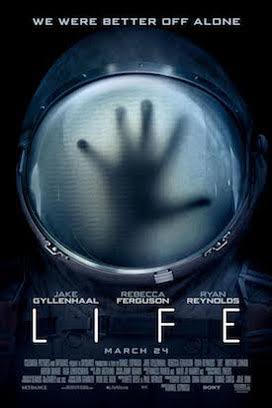
Chilling! In space, no one can hear you scream. Although that tagline is associated with Ridley Scott’s groundbreaking space-horror Alien, director Daniel Espinosa’s LIFE delivers an intensely dark thriller that will have you screaming and cringing from the moment life on Mars is discovered. In the same vein as Alien, LIFE is a science-fiction horror that may look like Gravity and might even have the strong orchestral sounds of Interstellar, but provides audiences with an entirely different experience. Borrowing from Alien and Gravity, Sony and Columbia Pictures craft a new space-horror narrative that can sufficiently serve as a standalone film–and be great in that–but also has potential for a sequel or two. Interestingly, there are parallels to Ridley Scott’s Alien beyond the premise; LIFE also features the same number of crew members and other more subtle elements. That being said, LIFE is definitely not a knockoff Alien nor is it trying to be Ridley Scott’s critically claimed film as it does not contain the social commentary on gender, sex, and family. However, imitation is the highest form of flattery, and LIFE pays both homage to the film that likely inspired it but delivers a comprehensive science-fiction horror experience that provides ample twists, turns, and even some emotional connection along the way.
A group comprised of engineers and researchers on board the International Space Station (ISS) are on the brink of one of the most important discoveries in human civilization: life on Mars. Rory Adams (Ryan Reynolds), David Jordan (Jake Gyllenhaal), Miranda North (Rebecca Ferguson), Sho Murkami (Hiroyuki Sandana), Hugh Derry (Ariyon Baker), and Ekaterina Golovkina (Olga Dihovichnaya) represent several different counties, all working in cooperation on this groundbreaking mission. After the satellite, carrying the Martian sample, is retrieved from spiraling out of control towards the ISS is secured, the group of astronauts are faced with the crisis and task of retrieving it. After a daring retrieval, what should be a joyous discovery–something out of a scientists dreams–soon becomes a living nightmarish game of hide and seek. When the specimen from Mars begins to grow rapidly and become more and more intelligent, it stops at nothing to continue to feed the alien’s insatiable appetite and its goal to find a new home.
Initial impressions of LIFE leave you with noticing just how much like Alien it feels. It’s been nearly forty years since the Ridley Scott cinematic masterpiece, but in that time, no other science-fiction/horror film has come this close to delivering a similar (note: not as high on the cinematic totem pole as its predecessor) experience to that which first terrified audiences in 1979. One of the primary differences between Alien and LIFE is just how much closer to home this horrifying experience occurs. Whereas with the former, the alien encounter takes place hundreds of lightyears away, the latter’s narrative takes place just outside of our atmosphere on the ISS. Not that LIFE feels more intimate than Alien–it doesn’t–but the proximity of this story might add a little something more to the edge that you’re already sitting on as the horrific events unfold on the space station. Pacing is similar to Alien in that LIFE has a slow burn during the first act. To balance this slow burn or to keep audiences from thinking that it’s taking forever for the movie to really get started, the film begins with the “big event” right at the very beginning. The “big event” being the apprehension of the satellite carrying the Martian specimen. But for all it’s similarities, this movie provides a different experience that can certainly stand on its own. LIFE may have been inspired by Alien, but it is certainly not a ripoff.
I’ve been quite critical of the CGI-effects of films in more recent years, but the brilliance of the alien life form in LIFE is the degree to which it feels organic. In the beginning, the life form is little more than a single-celled organism; however, as the plot thickens, the organism begins to take a more chilling form and shape. Eventually, the alien develops a frightening grin and a mysterious-like form. One of the scariest parts of Ridley Scott’s Alien was the degree to which the Xenomorph feels so real that, even in your seat, you could feel the acidic slime and your body likely felt the excruciating pains of that iconic moment when the alien shoots out of the stomach. Part of that can be attributed to the use of pneumatics, animatronics, miniatures, and other practical effects standards. Yes, the alien life form in LIFE is computer-generated, but it also has a very real nature to it. Instead of focussing on how to make the alien as impressive as possible, it would appear that the special effects artists (whose work can be seen in the Transformers movies) focussed more on the small details that ordinarily give a CGI character away. Just like with the brilliant visual effects work in Ex Machina, the visual effects of the alien are flawless.
There is an inherent level of unpredictability in LIFE even after the unavoidable similarities to Alien. LIFE plays around with the final girl trope and the killings have a strategy or method to their madness. Conspicuously missing from the characters of LIFE in a comparison to Alien is a Ripley-like character. Does the film portray strong female characters? Certainly. But LIFE keeps you guessing because the order of the deaths do not follow any predictable pattern. Do not allow yourself to fall into the trap of being predisposed to the order of the killings to be based up on star billing. Speaking of the characters, effectively managing an ensemble cast is always difficult. So often, some characters in the ensemble get lost or do not receive nearly as much development as the more obvious leaders. Not true with LIFE. True that there is not a large degree of character development all the way around, but each of the characters is treated with equal screen time and emphasis. That is, until death occurs. The excellent handling of this ensemble gives LIFE an extra dynamic that lacks in other ensemble cast films, thus helping this science-fiction horror to stand out from others that are similar in premise or plot. This movie has a “life” of its own.
2017 seems to be shaping up to be a year of excellent movies! We are just about to finish the first quarter of the year, and already there have been some great motion pictures. Furthermore, 2017 seems to be the year of the horror film because so many have made the theatrical distribution circuit. For those who love a good science-fiction thriller, you will not be disappointed with LIFE. Albeit the film may not be able to sustain the magic and horror for the entire runtime, it successfully delivers a terrifying experience for most of the film. If you don’t mind some cringeworthy moments and the dark tone of the film, then this is definitely one to see this weekend.
PS. I saw Power Rangers this week as well, and it was a delightful film! Yeah, it’s a little campy, but that’s to be expected. Definitely the best Power Rangers motion picture. All-in-all, it sufficiently pays homage to the 90s show but provides audiences with a new story. Go-go see it too!










 R.L. Terry ReelView